+INCLUDED LINK TO BABY ME

++++++++++++++

Before we went to Alaska when I was five:

*Me in California Photographs

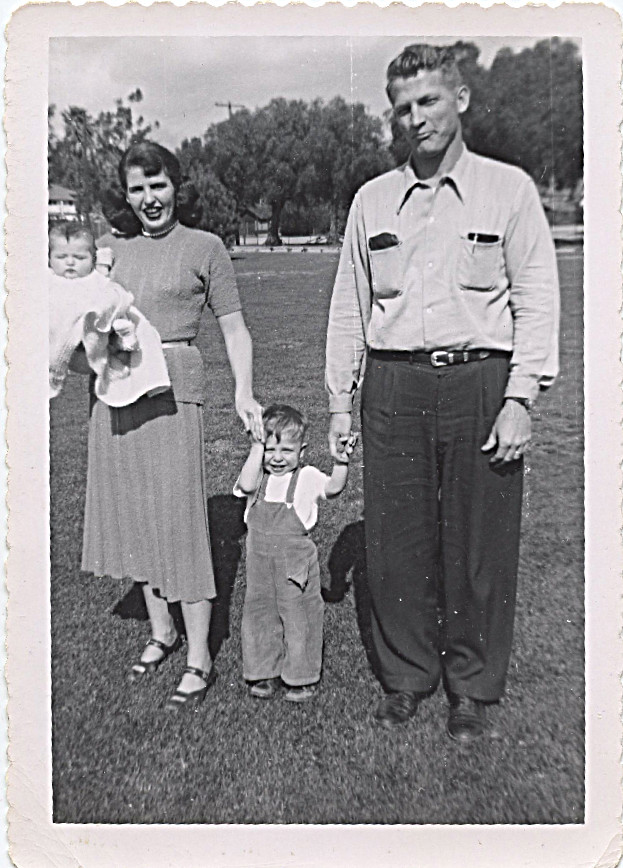
1951 - me as a baby with mom, dad and John - she wrote on the back of this picture that I looked like she did in her baby pictures - How did she feel about that -- really?

++++++++++++++

Just a few links to some pretty boring information being filed away!

++++++++++++++

*Cindy’s gym suit note

*1967 – The Alaska Department of Highways Letters RE: Eagle River Road Extension

*1960 August Final Plowing of the Fields – Oliver OC-3 and Plow

*1963 – August 20 note from dad – Got patent to 120 acres

++++++++++++++

+SUBSTANCE P – IT’S OUR BODY’S BIOLOGICAL LINK TO FEELING EMOTIONAL AND PHYSICAL PAIN

+++++++++++++++++

What do we know about pain?  What do we know about the connection between physical and emotional pain responses in the body and brain?

It took me many months of online research before I finally came up with what links our physical and emotional pain responses (and our pain thresholds) together.  I found it in

SUBSTANCE P — a small peptide (protein) released upon stimulation in the nervous system and involved in regulation of the pain threshold.  Substance P (P = pain) works the same in our body whether we have a broken bone or a broken heart.

I’m not sure it helps when we HURT from any pain to say to ourselves, “Oh, that pain is just me feeling Substance P.”  But it might help to realize more clearly that there is a direct and definable link between our ability to experience emotional and/or physical pain in our body-brain.  Emotional distress, including sadness, loneliness and anxiety,  is as real a pain in our body as is any physical pain we can ever experience.

And when terrible physical and emotional pain was forced upon us from early child abuse and neglect experiences, I believe the entire balance of how all these complex pain response systems in our body is altered for the rest of our lifetime.

And I also find it fascinating that Substance P is connected to our ‘puke center’.  In our early evolving brain-mind, what was toxic needed to be vomited out ASAP for our continued survival.  As we became increasingly complex beings, we eventually could not puke out mental, emotional and psychological toxins, poisons and traumas.  We had to find ways to endure in spite of them.

(Epigenetic changes are one of the ways we do this – see yesterday’s post.  These changes have a lot to do with where so-called ‘mental illness’ comes from.)

Substance P is connected to our immune system.  That doesn’t surprise me one single bit.  It is intimately involved with maintenance of our well-being – including the healing of all of our wounds.  Once we truly accept the fact that emotional wounds ARE physical wounds, I believe we can better get on with the business of healing.

+++++++++++++++++

Substance P has effects on mood, memory and sleep, and has been implicated in posttraumatic stress disorder (PTSD).

It is involved with depression and the actions of antidepressant drugs.

Substance P is involved with sadness.

Substance P is also involved with anxiety and stress responses and disorders.

+++++++++++++++++++++++++++

FULL ARTICLE (abstract below) CAN BE PURCHASED ONLINE OR ORDERED IN FROM A LIBRARY:

Psychol Bull. 2007 Nov;133(6):1007-37

Substance P at the nexus of mind and body in chronic inflammation and affective disorders.

Rosenkranz MA.

Department of Psychology, University of Wisconsin-Madison, WI 53705, USA. marosenk@wisc.edu

For decades, research has demonstrated that chronic diseases characterized by dysregulation of inflammation are particularly susceptible to exacerbation by stress and emotion. Likewise, rates of depression and anxiety are overrepresented in individuals suffering from chronic inflammatory disease. In recent years, substance P has been implicated in both the pathophysiology of inflammatory disease and the pathophysiology of depression and anxiety by 2 parallel fields of study.

This review integrates the literature from these 2 parallel fields and examines the possibility that substance P dysregulation may be a point of convergence underlying the overlap of chronic inflammatory disease and mood and anxiety disorders.

First, the involvement of substance P in peripheral inflammation and in the immune events associated with chronic inflammatory disease is discussed, with a focus on inflammatory bowel disease and asthma.

Next, the function of substance P in the communication of peripheral inflammation to the brain is considered.

Finally, to complete the bidirectional loop of brain-immune interactions, substance P expression in anxiety and depression as well as its potential role in the neural regulation of peripheral inflammation is reviewed.

PMID: 17967092 [PubMed – indexed for MEDLINE]

+++++++++++++++++++++++++++

From Wickipedia:

In the field of neuroscience, substance P (SP) is a neuropeptide….that functions as a neurotransmitter and as a neuromodulator.[1][2] It belongs to the tachykinin neuropeptide family. Substance P and its closely related neuropeptide neurokinin A (NKA) ….Substance P is released from the terminals of specific sensory nerves, it is found in the brain and spinal cord, and is associated with inflammatory processes and pain.

Function

Substance P is an important element in pain perception. The sensory function of substance P is thought to be related to the transmission of pain information into the central nervous system. Substance P coexists with the excitatory neurotransmitter glutamate in primary afferents that respond to painful stimulation.[11] SP has been associated with the regulation of mood disorders, anxiety, stress,[12] reinforcement,[13] neurogenesis,[14] respiratory rhythm,[15] neurotoxicity, nausea/emesis,[16] pain and nociception.[17] Substance P and other sensory neuropeptides can be released from the peripheral terminals of sensory nerve fibers in the skin, muscle and joints. It is proposed that this release is involved in neurogenic inflammation which is a local inflammatory response to certain types of infection or injury.[18] …. Substance P receptor antagonists may have important therapeutic applications in the treatment of a variety of stress-related illnesses, in addition to their potential as analgesics.

Vomiting

The vomiting center in the brainstem contains high concentrations of substance P and its receptor, in addition to other neurotransmitters such as choline, histamine, dopamine, serotonin, and opioids. Their activation stimulates the vomiting reflex. Different emetic pathways exist, and substance P/NK1R appears to be within the final common pathway to regulate vomiting.[19] Substance P antagonist (SPA) aprepitant is available in the market in the treatment of chemotherapy-induced nausea / emesis.

Pain

Substance P is involved in nociception, transmitting information about tissue damage from peripheral receptors to the central nervous system to be converted to the sensation of pain. It has been theorized that it plays a part in fibromyalgia.

Cell growth

Substance P has been known to stimulate cell growth in culture,[20] and it was shown that Substance P could promote wound healing of non-healing ulcers in humans.[21] It has also been shown to reverse diabetes in mice.[22][23]

Vasodilation

Substance P also has effects as a potent vasodilator. ….As is typical with many vasodilators, it also has bronchoconstrictive properties, administered through the non-adrenergic, non-cholinergic nervous system (branch of the vagal system)

+++++++++++++++++++++++++++

+WHY I SHARE THESE PIECES OF WHO I AM NOW — BECAUSE I COULDN’T THEN?

+++++++++++++++++++++

HERE ARE SOME LINKS TO NEWLY UPLOADED PHOTOGRAPHS FROM MY CHILDHOOD:

+++++++++++++++++++++

*Age 10 – Picture of my brother John and me

+++++++++++++++++++++

*Age 3 – 3 children with grandmother, closeup of me and grandmother

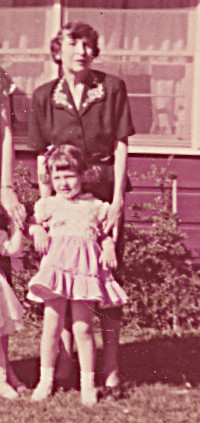
1955 Linda closeup with grandmother in front of the Glendora, (L.A.) house before Alaska - I was 3
1955 Linda closeup with grandmother in front of the Glendora, (L.A.) house before Alaska – I was 3

+++++++++++++++++++++

*1959 – The jeep road leading from Eagle River road into the valley

*1959 – Children in the homestead snow

+++++++++++++++++++++

*1960 – Precious picture dad, John, Cindy, Sharon and a wheelbarrow of seed for the fields

(I wish I was part of the family in this picture — where was I for this big event?)

+++++++++++++++++++++

*1960 (circa) Mom planting the fields

*1962 – Log house nursery

*1963 – June 11 – Family Portrait

+++++++++++++++++++++

*1963 5 kids and mom by cabin (possibly on trip to Santa Fe)

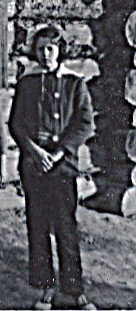
1963 just turned 12 -- and so sad -- I KNOW this sadness, it's rarely ever left me it was so made a part of who I am in this body.
1963 — I had just turned 12 — and so sad — I KNOW this sadness, it has rarely ever left me. Sadness was built into my body from the time of my birth. This is what it looked like when I was nearing the threshold to cross into my womanhood.

+++++++++++++++++++++

*1965 – Tucson rented house on Hawthorne St.

*1967 (circa) Dad and the red Toyota

*Adding wood ends onto the Jamesway (circa 1968?)

+++++++++++++++++++++

*Poem my father wrote to my mother

*Two pictures of Bill and Mildred together

+++++++++++++++++++++

*My Childhood Guardian Angel on the Mountain Top

It was to this mountain and to this land that I formed a secure attachment.  It was this place, this land and all that lived and moved and breathed on and around it that I loved.  This place was the heart of my heart, and this Angel on the Mountain was the heart of my heart’s heart.

My Angel on the Mountain.  She has her wings spread out to her sides, her long white gown draping over the mountain.  Her head is tipped slightly to her right.  She has a halo.  I could never as a child imagine anything or anyone more beautiful.  If my mother had imaginary friends, and me her imaginary enemy -- if she was completely mixed up on who and what was real, and could not tell her children from her dolls of play ----  WELL perhaps who am I but my mother's daughter -- because I HAD an angel, not a pretend angel, not an imaginary angel -- I HAD AN ANGEL.  She was MY angel.  Right there on that mountain top.
My Angel on the Mountain. She has her wings spread out to her sides, her long white gown draping over the mountain. Her head is tipped slightly to her right. She has a halo. I could never as a child imagine anything or anyone more beautiful. If my mother had imaginary friends, and me her imaginary enemy — if she was completely mixed up on who and what was real, and could not tell her children from her dolls of play —- WELL perhaps who am I but my mother’s daughter — because I HAD an angel, not a pretend angel, not an imaginary angel — I HAD AN ANGEL. She was MY angel. Right there on that mountain top.

+++++++++++++++++++++

This is just a picture, and a poor one at that, my mother took of some old trapper's cabin.  But I look at it, and I think, "If I could step into that place, and still have access to people I love, I would be in the closest thing to heaven I can imagine on this earth."  Yet, at the same time, I don't think heaven is more than a passing flash here on earth -- whatever it is, I think (and hope) it comes later.
This is just a picture, and a poor one at that, my mother took of some old trapper's cabin. But I look at it, and I think, "If I could step into that place, and still have access to people I love, I would be in the closest thing to heaven I can imagine on this earth." Yet, at the same time, I don't think heaven is more than a passing flash here on earth -- whatever it is, I think (and hope) it comes later.

+WHAT HAPPENS TO US IN CHILDHOOD AFFECTS OUR BODY FOR THE REST OF OUR LIVES

+++++++++++++++++++++

I WANTED TO MENTION THIS:

++++++++++++++++++++++++++++++++++

Epigenetics is some serious stuff!  I know this information appears technical, but when we consider it we can see that this information is talking about changes in the ‘DNA control mechanisms’ rather than in the DNA itself that causes all kinds of serious disorders.

Epigenetic changes are often adaptations to toxic, threatening and malevolent conditions in our environment, particularly our early one.  Severe child abuse and neglect constitutes such a condition.  While the DNA itself is not changing in these epigenetic cases, the mechanisms that tell the DNA what to do — every single second of our lifetime — changes and THESE changes can be passed on down to future generations along with the physiological changes they cause.

This is a very new field of study.  Epigenetic changes are one of the reasons that early childhood severe stress and trauma is so dangerous.  The passing-down of these ‘directional mechanism’ changes means that we have a whole new level other than actual DNA code to consider as we look at how genetics influence development – including the development of adult-onset diseases including many so-called mental illnesses.

++++++++++++++++++++++++++++++++++

from Wickipedia:

Epigenetics

In biology, the term epigenetics refers to changes in phenotype (appearance) or gene expression caused by mechanisms other than changes in the underlying DNA sequence, hence the name epi- (Greek: over; above) –genetics. These changes may remain through cell divisions for the remainder of the cell’s life and may also last for multiple generations. However, there is no change in the underlying DNA sequence of the organism;[1] instead, non-genetic factors cause the organism’s genes to behave (or “express themselves”) differently.[2] ….

++++++++++++++++++++++++++++++++++

The following is an example of how this information looks in the research.  This is an abstract coming from research on epigenetics.  I thought about this topic today after a friend of mine whose husband has Parkinson’s disease told me today that his mother never wanted him, and that he was orphaned from birth.  I thought about the kinds of stressors on his developing body and how they probably correspond to his adult-onset Parkinson’s.  I thought about my cancer, which I will always believe was triggered by unimaginable stress during my childhood.

Epigenetic adaptations and changes are among the very real problems that originate in malevolent childhoods that are a part of what we would hope to alleviate as we work toward intervention and prevention of child abuse.

++++++++++++++++++++++++++++++++++

Lancet Neurol. 2009 Nov;8(11):1056-72.

Epigenetic mechanisms in neurological diseases: genes, syndromes, and therapies.

Urdinguio RG, Sanchez-Mut JV, Esteller M.

Cancer Epigenetics and Biology Program, Bellvitge Biomedical Research Institute, Barcelona, Catalonia, Spain.

Epigenetic mechanisms such as DNA methylation and modifications to histone proteins regulate high-order DNA structure and gene expression. Aberrant epigenetic mechanisms are involved in the development of many diseases, including cancer. …

Moreover, aberrant DNA methylation and histone modification profiles of discrete DNA sequences, and those at a genome-wide level, have just begun to be described for neurodegenerative disorders such as Alzheimer’s disease, Parkinson’s disease, and Huntington’s disease, and in other neurological disorders such as multiple sclerosis, epilepsy, and amyotrophic lateral sclerosis.

In this Review, we describe epigenetic changes present in neurological diseases and discuss the therapeutic potential of epigenetic drugs, such as histone deacetylase inhibitors.

PMID: 19833297 [PubMed – in process of publication]

++++++++++++++++++++++++++++++++++

+I FOUND ANOTHER ‘BROKEN’ DOLL PIECE MY MOTHER WROTE IN 1955

Dangers of Doll Play — In My Mother’s House

From mother’s 1955 – May 22 writings about Cynthia

Every day she adds 5 or 6 new words to her vocabulary without realizing that she’s doing it…..[including]… , boo-hoo, boo-hoo” for her beloved doll’s make-believe crying….

She plays beautifully and is especially fond of “doll play.”  Her pet is Linda’s big doll with hair.  At first she wasn’t allowed to play with it but Linda finds no enjoyment in playing with dolls and leaves it on the floor so – Cindy has adopted it.   She talks to it, she scolds it, she spanks it – saying “naughty, naughty doll” and then picks it up and cuddles it loving and kissing it.  She brushes the hair and sticks numerous hair-pins in it and then says “There.”  She gives them all a bottle or some imaginary food off of a toy plate, puts them to bed, covers them and kisses each and every one and says “Night.”  She’s a real “little mother” – it just seems to come naturally to her.  She loves the carriage, beds, etc. – it’s so sweet to watch her play!”

This is just another reference to my mother’s opinion of doll play.  The fact that I did not want to play with dolls was brought up to me thousands of times during my entire childhood – of course, as added proof that I was BAD.  The fact that Cindy did like to play with dolls was just another proof in my mother’s reality that she was GOOD.  Today I take this as further evidence that my mother’s psychosis was anchored in her very young childhood play with dolls.  I believe her dissociative disorder, with her imaginary friends and ‘enemy’ originated there.

That’s a whole other level of crazy-making for her to have expected me, being the one she abused, to want to, or even to be able to play with dolls.  I can ‘smell’ dissociation here.  There would have been no possible way for me to have confronted anything to do with so-called mothering and so-called baby care without having the abuse hit me square – in my entire being.

I was not quite four when mother wrote this, right around the time of *Age 3 – THE TOILET BOWL.  Cindy witnessed this horrific event.  How could trauma not enter her play?  I don’t have to imagine how this 22 month old little sister of mine learned to include scolding and spanking into her play.  And mother thought it was cute?  Sick.  So terribly, terribly sad and sick!  Little bitty trauma dramas enacted by a little bitty child who had witnessed her sister being attacked by the same mother they shared.

Yet neither my sister nor I grew up to become mothers who abused our own children.  We somehow knew we had been given the chance to parent right, and we did.

+++++++++++

this comes from whole page posted here:

*1955 – May 22 – Mother writing about 22-month old Cindy

see also related links:

+MY LITTLE POEM ABOUT MY CHILD-SELF MOTHER

*MY MOTHER NEVER OUTGREW HER DOLLS

+BEING MY MOTHER’S IMAGINARY SWORN ENEMY

+++++++++++

MORE INFO

About.com:  Borderline Personality Disorder

from from Kristalyn Salters-Pedneault, PhD
Why is it called “borderline” personality disorder? What exactly does “borderline” mean? This week, learn about the BPD name controversy, and weigh in. Do you think the name “borderline personality disorder” should be changed? And to what?

Why is it Called “Borderline Personality Disorder?”
When BPD was first named, “borderline” referred to individuals who did not fit neatly into the two broad categories of mental disorder: psychosis or neurosis. But now that we have a better understanding of mental illness, many people think “borderline” is a misnomer.

Weigh In: Should the Name Change?
Now that you know a little more about the controversy, what do you think? People from all angles: people with BPD, their loved ones, clinicians- weigh in!

Should BPD Remain on Axis II?
Another controversial topic- should BPD remain an Axis II disorder in the next edition of the Diagnostic and Statistical Manual of Mental Disorders?

More Topics

+THE MOST IMPORTANT LETTER I’VE EVER WRITTEN – WHEN I DISOWNED MY MOTHER

++++++++++++++++++++++++++++++++

After these pages and their links are posted here, I am going outside to recreate my flower beds.  I made a special 50-mile round trip to a town near here to buy flowers last evening.  It will never cease to please me that I can actually recreate flower beds now, in mid October, with flowers that will last until spring, even if they have to slow down their growth and blooming during the ‘colder’ months of our Arizona high desert winter.

This reminds me of how so much of my life is like tending a garden, trying to rid myself of weeds, changing with the seasons.  Now, if I can learn how to see the re-creation of myself as recreation rather than being a chore, I could definitely have more fun with this whole process!

Celebrate the seasons.  I try to do that.  Sometimes it’s just a little harder to celebrate the seasons of my soul.

++++++++++++++++++++++++++++++++

POST AND THE LETTER AND JOURNAL ENTRIES LINKED TO HERE ABOUT MY DISOWNING MY MOTHER

MAY TRIGGER — PLEASE BE CAREFUL OF YOURSELF!

++++++++++++++++++++++++++++++++

Once I completed my process of disowning my mother I never went back on it.  I never spoke to her again [she died in 2002] , and only saw her like the flash of some fading shadow as she entered my father’s hospital room after his disastrous surgery in Alaska the fall of 1990 and instantly turned and left.

I did not find this letter I wrote disowning my mother among the few of my letters she had saved that were with her other papers.  I went searching for my copy of this letter because I knew I had made and kept one.  I also found my journal entries for the days surrounding the writing and the mailing of this letter and they are included below the letter itself in the following link.

++++++++++++++++++++++++++++++++

*Age 36 – My May 10, 1988 Letter Disowning My Mother

++++++++++++++++++++++++++++++++

I am including this link to the letters I wrote my mother in the year prior to my disowning her.  These ones she saved, and I found them among her papers.  They provide a context and a contrast to what eventually followed their writing — my ‘disownment’ of my mother.

As I read these later letters, I can see how much healthier and happier I was overall than I was at age 20 — but boy, did I go through a LOT in those ensuing 15 years!  What I see NOW, another 20+ years down the road of my life, is that my entire self was organized and oriented around being a mother.

When my baby left home nearly six years ago I suffered a crash I could NEVER have imagined — and I HOPE I am rebounding (very slowly) now though I still feel like whatever SELF I had when I wrote these letters was crushed nearly beyond recognition or retrieval once the major self-organization factor of being a full-time mother vanished.

Perhaps in part because being the best mother I could be (as a counteraction to my mother’s treatment of her children) occupied so much focus for me, and because I didn’t really have much of a SELF to start with thanks to my mother, being a mother myself put me in ‘orbit’ around the ‘sun’ that my children were to my existence for 35 years.

Did my organizing-orienting sun explode or implode when my children left home?  That’s sure what it STILL feels like to me.  I believe that if I had been able to develop a clear, strong and healthy SELF in the right way during the right developmental stages, that ‘crash’ would have been a minuscule fraction of what it has turned out to be for me.  I will be extremely grateful until the moment I leave this world that I was able to let my children go — and take their wonderful selves with them.  I did not create a trauma bond with my children.  I am completely clear that any problems I have in dealing with them being gone are my own to deal with and have nothing to do with them.

++++

How many times in a lifetime do ‘ordinary’ people reinvent themselves?  Again — and still — I have no ‘ordinary’ points for comparison.

*Ages 35 – 36 – My 1987 Letters to My Mother

++++++++++++++++++++++++++++++++

+SO TANGLED UP IN LIES – MY AGE 20 LETTERS ‘HOME’

++++++++++++++++++++++++++++++++++

It does me no good to be embarrassed, humiliated or ashamed of the young 20 year old woman I was when I wrote these letters that my mother saved among her papers all these years.  They show me how powerfully effective dissociation is to survival.  I simply found a way to invent a ‘self’ and a life using whatever spare parts of a mind-self I found lying around once I left my home of origin.

As I comment at the end of the second letter, the left brain has amazing abilities to fabricate realities that, if never challenged by the right brain, the body memory brain, the higher cortex or a clear, strong and healthy self, simply appear to be THE reality of a person’s life.  I could not see that everything I had ever known about my life was a sham — and a shame.

I had created an entire semblance of some kind of life already by the time I was 20.  I had left home, entered the Navy (from Alaska) , gone through training (Baltimore and San Diego), gotten pregnant, out of the Navy (Rhode Island and back to San Diego) , endured a pregnancy, a terrible and traumatic delivery that nearly killed me, and the first 6 months of my daughter’s life alone, moved to San Francisco, married the father in Honolulu, moved to Sacramento and then to Ohio, spent time with my husband, done drugs, quit doing drugs, separated from my husband and was about to move to Fargo, North Dakota — all in two-and-a-half years.  I had a dissociated life — but by golly, the body that I was living in had survived all of it and kept on going.  My poor self?  Lost.  My poor mind?  Doing the best it could do to make sense of any of it.

I would say, “Don’t bother reading these letters,” but “Who am I to say?”

++++++++++++++++++++++++++++++++++

*Age 20 – My March 7, 1972 letter to my parents

*Age 20 – My May 1, 1972 letter to my mother

++++++++++++++++++++++++++++++++++

+FIGHTING MY MOTHER’S DARKNESS – BEING AFRAID OF MY OWN YOUNG ADULTHOOD LETTERS?

+++++++++++++++++++++++++++++++++++

For as long as this part of my project will take me, I am going to do something that is extremely difficult for me to face.  I have a collection here of a few of the letters my mother saved that I wrote to her in my adulthood before I disowned her.

I want to tear them up, throw them away, burn them to ashes.  I want to do anything but read them or to face them head on.  Yet, I think now about what my daughter told me the other night about my struggle in facing my mother’s letters she wrote in the years that I was in my teens.  She told me  that just because my struggle is so great there is probably something important I can learn by going ahead with my project.  Well, the struggle seems greatest when I am faced with myself in my own adult letters.

Am I this afraid of actually seeing the lies of my childhood continued into my adulthood?

Yes, I am.  I feel as I might should I be standing outside of a burning building ready to race inside to try to save myself, no matter what the cost.  I feel sick inside.  I fear there is sickness in these letters, and I will not only see it there, I will feel it here today in my own body as I re-read my own words.

It is one thing to take a hard, close look at my mother’s writing because they are ‘out there’, outside of me.  But my own words?  Do I have the courage to examine the extent that I bought the lies about Linda, the extent that I ate them, swallowed them, internalized them until I could not tell the difference between where my mother left off and I began?

What are my hopes?  What goodness do I think I might be able to gain by spending time with past self?  How much of my past self remains with me today?  Can I see what I hate and change it?  Is it an absolute, stupid and complete waste of time working with my own letters?  How do I see the process as being different from examining my mother, and my grandmother, through their letters?

What am I afraid to learn?  Do I have the courage, willingness and perseverance to find out?

++++++++++++++++++++++++++++++

I suspect at this moment, before I step into this next unknown contained within my own letters, I am afraid that I will face within myself something that tells me that everything that happened to me in my childhood was all my fault and that I deserved it.  This fear is not reasonable.  This statement is not reasonable.  There was no REASON in my childhood.  That is what my mother’s severe mental illness was all about.

I fear I will see from my vantage point today how completely rotten and faulty the foundation of my self was, and therefore of my life was,  as I passed out from under the shadow of the roof of my parents’ home into my own dim adulthood future.  I bought the lies of my childhood because they were present with the first breath I ever took and I had no way of knowing this.  I was raised without being loved.  I was raised being told that I was evil, not human.  I was raised to believe that everything about me was wrong.  I did not leave those lies behind me.  They were built into me.  They became a part of me.

It was bad enough that what happened to me for 18 years at the hands of my mother ever happened to me at all.  But what feels worse to me is knowing that I carried it all within my body-brain-mind right out of my childhood with me — and I didn’t even know it.

It comes down to being raised and ‘built’ in a world of darkness.  My mother’s darkness was not my own, yet I had to find for myself a light that allowed me to survive her.  Her darkness was put onto me and into me, it surrounded me and permeated every aspect of my childhood from the time of my birth.  But from my side of the story it was a false darkness to me.  I didn’t know this.   I didn’t know the darkness came from my mother and not from me.

I didn’t know that in the insanity and abuse of my childhood I came to find and create my own false light to endure in false darkness.  I know this now because I can see that if someone had removed me from my mother’s care when I was born, there would have been no darkness for me to adjust to.  I wouldn’t have had to deal with any of it.  I would be a different person.

+++++++++++++++++++++++++++++++++++

I can’t explain this right now, I guess.  I can’t explain how the darkness of my mother’s mental illness robbed me of the light of love, hope, trust, safety and security that I needed in order to grow into my own strong, healthy, happy self.  Being robbed of this light forced me to come up with my own light, but it was a false a light because it was designed to fight my mother’s darkness, not my own.

I could not simply step out of my childhood and into my adulthood, into the ‘ordinary’ light of a benevolent world as if I had lived in it my entire life.  I had been formed in and by an entirely different, dark and malevolent world.  I did not have eyes that were designed to see in the bright light of ‘ordinary’ day.  My eyes were designed to see in a world of my mother’s pitch darkness.

+++++++++++++++++++++++++++++++++++

What will I see when I step into the world of my own early adulthood letters?  With whose eyes will I look at the world, in and with what light?  Whose darkness might be hiding in them?  Or, better yet, whose light?

+++++++++++++++++++++++++++++++++++

+SHORT AND SWEET — ALL THE MISSING 1966 LETTERS! HERE’S ALL I HAVE….

+++++++++++++++++++++++++

Can’t beat this — this is all there is of:

*1966 Mother’s Letters

+++++++++++++++++++++++++

+OH GREAT, MY ‘MOTHER’ IN HER 1965 LETTERS – SELF ABSORBED, MISERABLE, WHINING AND ‘DEAD’

+++++++++++++++++++++++++++++++++

I have to say that as I work with the transcription of my mother’s October through December 1965 letters I can ‘feel’ and ‘see’ and ‘smell’ insecure attachment disorder smeared all over them — well, perhaps rude to say — but like feces.

She is NOT a happy woman.  She appears completely, miserably self absorbed.  She does not seem to be even remotely involved with any of her children.  I get the sense that our mother was, well, DEAD.  We didn’t HAVE a mother present — she isn’t even in her letters.  She doesn’t exist.

None of her children seem to have any more importance to her than would a piece of furniture — if even that much.  She does not appear to have ANY joy in anything, certainly not in us — not even in her 4 1/2 or her 8 month old sons.  I wouldn’t even BELIEVE it would be possible for anyone to whine as much as she does in these letters — if I wasn’t reading it with my own eyes!

Someone stole our real mother, aliens maybe, and left us this empty plastic shell of a mean mother instead.  Is this my depersonalization and derealization that makes my mother herself not feel real to me in these letters — hollow, shallow, empty and without dimension?  No, I think that’s how she really was.

I have completed transcription of as many of these as I can find for 1965 — not very many!  All of dad’s letters to her, and all but one of grandmother’s letters to her are missing — makes me wonder if she destroyed them.   One way or the other, they appear to be lost.

*1965 MOTHER’S LETTERS

+++++++++++++++++++++++++++++++++