++++
Something related to my abusive childhood experiences with Christmas stands out so clearly and powerfully I am not going to ignore it. I can’t put bows or shiny tinsel or colored lights on this post to pretty it up. I can only present what I know.
I have already written a holiday season post presented on December 8, 2009 – +CONSUMERS BEWARE OF TRAUMA TRIGGERS LURKING IN ‘HOLIDAY SEASON MAGIC’. I would rather not write another one, but tonight is Christmas Eve, and in America it is hard to escape from the reality that the holiday season is often a complicated one for abuse survivors of any age.
How well does our internal experience of the holiday season match what we see mirrored back to us about what we think the holidays are SUPPOSED to be like? How closely does our personal experience match other people’s? How much mirroring and ‘reflecting back and forth’ actually goes between ourselves, our own reality, and the social environment we are immersed within?
How might our early infant-child experiences of maltreatment be influenced by our mirror neuron system?
++++
Much has been written in recent years about our brain’s mirror neurons which allow our brain to fire parallel patterns in the motor areas of our brain as the one’s that are firing in the brain of somebody we are watching perform an action. Whether or not these mirror neurons operate in regard to empathy or not is still open to neuroscientific debate.
Do our mirror neurons allow us to predict the actions of others? Are mirror neurons a part of what allows us to form a Theory of Mind because they help us to understand other people? How do they operate in allowing us to learn actions that better facilitate our existence in the world? How might mirror neurons interact with our ability to understand gestures and body movements as a part of human language and signaling communication?
We know that the patterns of signaling communication between a very young infant and its earliest mothering caregiver create the circuits, pathways and patterns of development within the human emotional-social limbic brain. These patterns of communication are supposed to operate through a mutual reflective, attuned, mirroring process. Trauma interrupts the optimal development of this early forming brain as it communicates a need to change development to match conditions in a malevolent world.
An infant-child’s experiences within an abusive, neglectful, malevolent world do not magically skip the holiday season even if and when, as happened in my childhood home, an infant-child’s parents PRETEND the holidays are a safe, secure, happy and wonderful time. Patterns of trauma that built our body-brain in early malevolent conditions do not magically disappear from our adult body during the holiday season, either.
Trying to match ourselves to a HAPPY holiday reality that we see reflected within our culture and mirrored back to us can create an incongruous, dissociated experience.
++++
Song, music, story, dramatic expression, dance, movement, gestures, active story telling and eventually written literature and film carries power to invoke imagination through a sharing of experience between human beings. Our mirror neuron system is involved in how we process information contained in these forms of expression.
As members of a social species, we respond to patterns that resonate with our own experience either because we can recognize ourselves within the messages being communicated, or because we have an active imaginal interaction with them.
I bring this up today because I am going to share with you a story that moved me as a young extremely abused child. I didn’t read the story in print. I watched the movie version. Looking back, I now understand that my 6, 7, 8, 9-year-old experiences with this movie was not a ‘normal’ one. I loved the story because it was the first time I ever saw my own inner experience as a child clearly and accurately mirrored and reflected back to me in the fullest possible way.
Of course as a child watching this movie on television I did not know that it was speaking back to me the reality of my own heart, mind and life. I was simply mesmerized because I was involved with the story as if it was happening inside of me rather than on the outside.
I resonated with the story. It and I were in harmony as if we were telling this story together as two people might sing a song together, perfectly matched either note for note or harmonizing together perfectly. It was this TOGETHER-WITH feeling that I had never experienced before that tells me now that only in this movie did I experience a sharing of the emotions that had formed and filled my body-brain-mind-self from the time of my birth.
The little girl character in this story matched me. I knew there was some matching between my experience and that portrayed in Cinderella, for example. But I also knew inside the marrow of my bones that I did not match any chance of a happy ending like Cinderella had. My story could only match one with a different kind of ending, and this story I am including the text of today more closely matched what might be my kind of happy ending.
+++++++++++++++++
The Little Match Girl (or The Little Match-Seller)
Hans Christian Andersen wrote “The Little Match Girl” (Danish: Den Lille Pige med Svovlstikkerne, meaning “The little girl with the sulphur sticks”). The story was first published in 1845 and has been adapted to various media including animated film, and a television musical.
I don’t remember which movie version of the story I saw on television as I watched it over repeated holiday seasons of my young childhood. Here is the text of the story.
The Little Match-Seller
Most terribly cold it was; it snowed, and was nearly quite dark, and evening– the last evening of the year. In this cold and darkness there went along the street a poor little girl, bareheaded, and with naked feet. When she left home she had slippers on, it is true; but what was the good of that? They were very large slippers, which her mother had hitherto worn; so large were they; and the poor little thing lost them as she scuffled away across the street, because of two carriages that rolled by dreadfully fast.
One slipper was nowhere to be found; the other had been laid hold of by an urchin, and off he ran with it; he thought it would do capitally for a cradle when he some day or other should have children himself. So the little maiden walked on with her tiny naked feet, that were quite red and blue from cold. She carried a quantity of matches in an old apron, and she held a bundle of them in her hand. Nobody had bought anything of her the whole livelong day; no one had given her a single farthing.
She crept along trembling with cold and hunger–a very picture of sorrow, the poor little thing!
The flakes of snow covered her long fair hair, which fell in beautiful curls around her neck; but of that, of course, she never once now thought. From all the windows the candles were gleaming, and it smelt so deliciously of roast goose, for you know it was New Year’s Eve; yes, of that she thought.
In a corner formed by two houses, of which one advanced more than the other, she seated herself down and cowered together. Her little feet she had drawn close up to her, but she grew colder and colder, and to go home she did not venture, for she had not sold any matches and could not bring a farthing of money: from her father she would certainly get blows, and at home it was cold too, for above her she had only the roof, through which the wind whistled, even though the largest cracks were stopped up with straw and rags.
Her little hands were almost numbed with cold. Oh! a match might afford her a world of comfort, if she only dared take a single one out of the bundle, draw it against the wall, and warm her fingers by it. She drew one out. “Rischt!” how it blazed, how it burnt! It was a warm, bright flame, like a candle, as she held her hands over it: it was a wonderful light. It seemed really to the little maiden as though she were sitting before a large iron stove, with burnished brass feet and a brass ornament at top. The fire burned with such blessed influence; it warmed so delightfully. The little girl had already stretched out her feet to warm them too; but–the small flame went out, the stove vanished: she had only the remains of the burnt-out match in her hand.
She rubbed another against the wall: it burned brightly, and where the light fell on the wall, there the wall became transparent like a veil, so that she could see into the room. On the table was spread a snow-white tablecloth; upon it was a splendid porcelain service, and the roast goose was steaming famously with its stuffing of apple and dried plums. And what was still more capital to behold was, the goose hopped down from the dish, reeled about on the floor with knife and fork in its breast, till it came up to the poor little girl; when–the match went out and nothing but the thick, cold, damp wall was left behind. She lighted another match. Now there she was sitting under the most magnificent Christmas tree: it was still larger, and more decorated than the one which she had seen through the glass door in the rich merchant’s house.
Thousands of lights were burning on the green branches, and gaily-colored pictures, such as she had seen in the shop-windows, looked down upon her. The little maiden stretched out her hands towards them when–the match went out. The lights of the Christmas tree rose higher and higher, she saw them now as stars in heaven; one fell down and formed a long trail of fire.
“Someone is just dead!” said the little girl; for her old grandmother, the only person who had loved her, and who was now no more, had told her, that when a star falls, a soul ascends to God.
She drew another match against the wall: it was again light, and in the lustre there stood the old grandmother, so bright and radiant, so mild, and with such an expression of love.
“Grandmother!” cried the little one. “Oh, take me with you! You go away when the match burns out; you vanish like the warm stove, like the delicious roast goose, and like the magnificent Christmas tree!” And she rubbed the whole bundle of matches quickly against the wall, for she wanted to be quite sure of keeping her grandmother near her. And the matches gave such a brilliant light that it was brighter than at noon-day: never formerly had the grandmother been so beautiful and so tall. She took the little maiden, on her arm, and both flew in brightness and in joy so high, so very high, and then above was neither cold, nor hunger, nor anxiety–they were with God.
But in the corner, at the cold hour of dawn, sat the poor girl, with rosy cheeks and with a smiling mouth, leaning against the wall–frozen to death on the last evening of the old year. Stiff and stark sat the child there with her matches, of which one bundle had been burnt. “She wanted to warm herself,” people said. No one had the slightest suspicion of what beautiful things she had seen; no one even dreamed of the splendor in which, with her grandmother she had entered on the joys of a new year .
Literature Network » Hans Christian Andersen » The Little Match Girl
This translation posted on The Literature Network
+++++++++++++++++++
I can say what a terribly sad state of affairs it was that watching this story made me feel warm inside, and this is true. I can also say what a miracle it was that I was exposed to an art form that allowed me to experience what it felt like to have my inner experience matched and mirrored back to me. I finally felt that majestic feeling of mutual resonance that allowed me to know that someone out there knew my reality.
Although I wasn’t literally freezing or starving to death physically as a child, my world was that cold on the inside. I knew what it felt like to be beaten. I knew what it felt like to be alone. I knew what it felt like to be unloved. But I had no words for my own experience. I did not even have the ability to think about my own experience or about my own feelings as I experienced my experiences. All I could do was endure.
I had lost the only person who ever loved me when we left my grandmother behind in Los Angles the year I turned six when we moved to Alaska.
Did I empathize with the little match girl or did I simply completely know with the entirety of my being what her experience was? I think what mattered to me most was that I knew that little match girl would know completely how I felt. On a very deep unconscious level I knew that this little match girl was having my feelings. I watched her have them in this story.
Is this experience what empathy is all about? How starved I was for affection. How starved I was for warmth and love. How starved I was for understanding. How fundamentally starved I was for a mutual experience of sharing my inner reality with any other single person in the universe.
How including rather than excluding is the human experience that I could feel this understood and connected to a century old story portrayed by an actress showing through the hard cold screen of a television set?
Others might have the luxury of being able to feel compassion for the girl in this story. I certainly didn’t. Others might pity her. How many would experience harmonious, resonating empathy WITH her?
I never pitied myself as a child. I did not experience anger or resentment. I had no fight left in me because my mother had put the full force of her considerably powerful and successful efforts into obliterating any trace of Linda from my existence. But she could not touch the warmth inside of me I felt watching that movie as the power it had to touch me reached out of that television like the light of that little girl’s shooting star.
I had no ability to imagine my life as being different or better. I did not know how overwhelmingly sad I was. I only felt the great sorrow of knowing that I could not die and be with my grandmother like this girl in the movie got to do. I knew I couldn’t have this same happy ending to my story because my grandmother wasn’t dead yet.
++++
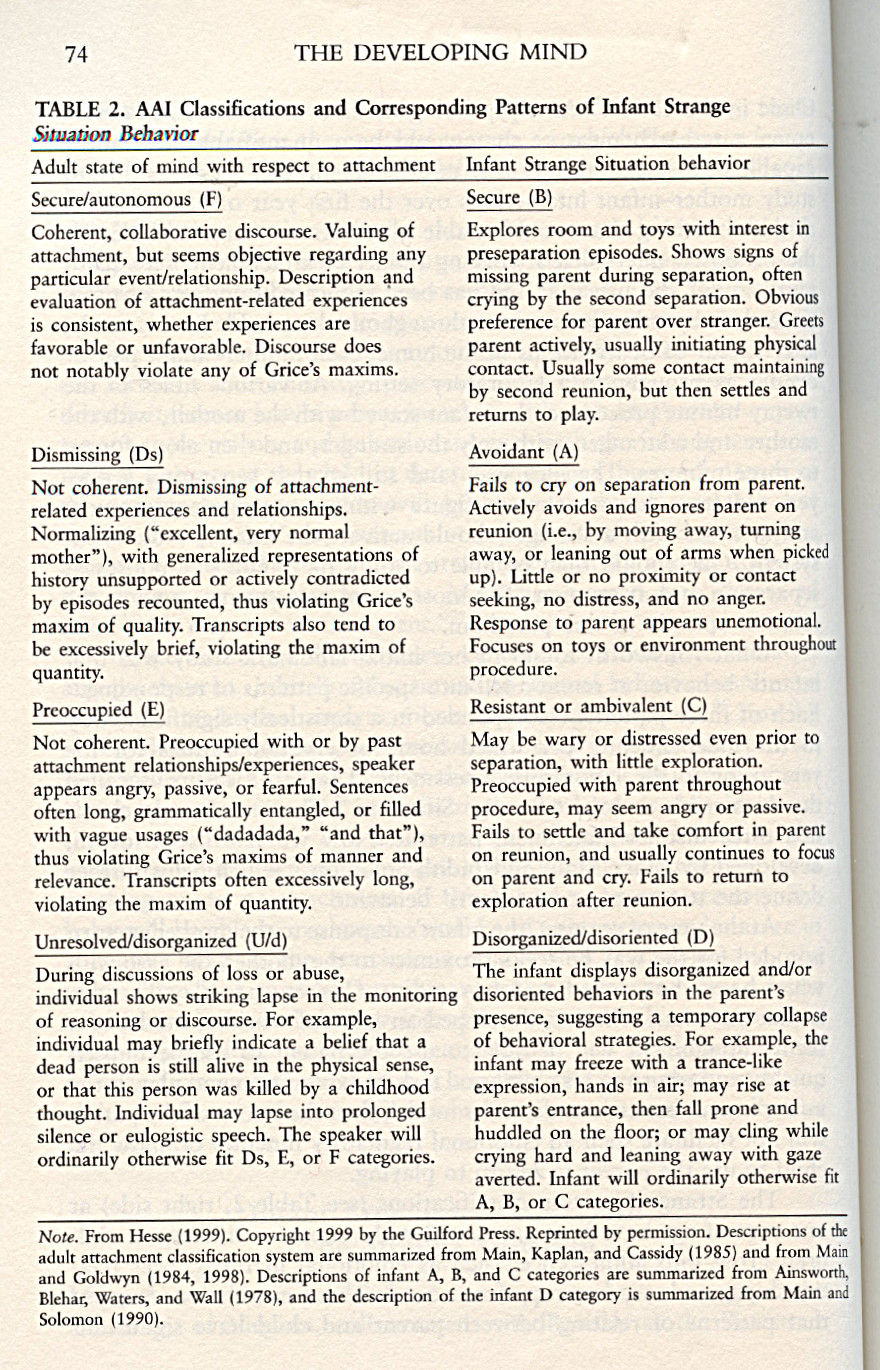
Before we moved to Alaska I had the opportunity to experience a little bit of an attachment relationship with my grandmother, but my mother was able to interfere with and mostly completely prevent my grandmother from having contact with me. This experience of ‘feeling felt’ is SUPPOSED to build our early-forming emotional-social right limbic brain:
“In The Developing Mind, Daniel J. Siegel uses the phrase “the feeling of being felt” to describe relationships that shape the mental circuits responsible for memory, emotion, and self-awareness. Brain-altering communication is triggered by deeply felt emotions that register in facial expressions, eye contact, touch, posture, movements, pace and timing, intensity, and tone of voice.”
Looking back I believe that being able to watch this movie changed my life. It created for me one of the few times in the 18 years of my infant-childhood that I clearly experienced the feeling of ‘feeling felt’. This is a critically important experience for us to have as members of a social species. It involves looking out into our social world and seeing in other people our own experience mirrored back to us.
In today’s world of sanitized and ‘prettified’ young children’s stories, even to the outright fabrication of happy endings for stories like Andersen’s and the other old fairy tales, I would have been deprived of even having this single most significant self-building experience of being able to see my own reality mirrored back to me from the social human world outside of me.
I might wish to believe that infant-children are no longer suffering in the kinds of childhoods I had, that their lives have been sanitized and prettified right along with the stories they have access to through the media including books. But I know this is not true.
I am not talking about monsters portrayed in imaginary form. I am talking about the impact this movie had on me BECAUSE it involved a human girl in a human world with humans that ignored her, mistreated her, did not help her, and let her die. HUMANS do this to HUMAN children, and we cannot pretend that they don’t simply because we have changed and banned the stories that might let these children see their own reality mirrored back to them so that they can have the feeling of ‘feeling felt’ which will be the most important experience humans can ever have.
It is only through having this experience of ‘feeling felt’ that we can ever truly know that we exist at all as an individual self, and that we are not here in this world fundamentally isolated and alone. It is this feeling that lies at the heart of safe and secure attachment. It is this feeling that is supposed to be at the basis of our early forming social-emotional brain and that directs our development toward life in a benevolent. When it is missing in a malevolent world our development changes to help us survive.
++++
There is one other aspect of our humanity that I want to mention here. There are times when we cannot use a mirroring, reflecting empathy process with someone else. There are times when we cannot truly give back to someone else that feeling for them that they are being truly felt by us. There are times when we reach a line we cannot cross in our own ability to feel what another person is feeling.
When we reach this line we cannot fake it. It is at these times when we cannot share with another person our feelings that need to be shared — so that they can experience that we truly feel what they are feeling — we have something else to give them. That something else is compassion. Not pity, not sympathy, but a compassion that means we are WITH that other person with a genuine concern for their well-being that lets us both know we are not alone.
According to Dr. Dacher Keltner, there is an additional aspect to compassion that makes it different from empathy. He states in his article, The Evolution of Compassion:
“Compassion has a biological basis in the brain and body. It can be communicated in the face and with touch. And when experienced, compassion overwhelms selfish concerns, and motivates altruistic behavior.”
As children, both the imaginary little match girl and me needed NOT to be left alone in a malevolent world. We needed someone not only to empathize with our feelings; we needed someone to DO something to help us. I never even knew as a child that I had this need. Someone on the outside of my world needed to care enough to not only tell me I needed help, but to show me by actually caring enough to help me.
There never was anything about Christmas, or about any other holiday of my childhood that made this fact less true. When I mirror back to myself my own memories of the holidays of my childhood, the memory of myself seeing myself reflected back to myself in the story of The Little Match Girl always stands out in stark contrast to all the phony, fake efforts at holiday cheer my abusive mother created in her pretend version of reality.
++++++++++++++++++++++++++++++++
Don’t forget to check out — Brain Facts – A primer on the brain and nervous system
++++
— NEW: CLICK ON POST, PAGE AND/OR COMMENT TITLE
AND LOOK FOR ‘YOU RATE IT’ STARS AT BOTTOM OF PAGE —
Please feel free to comment directly at the end of this post or on
+++++++
Your Page – Readers’ Responses
+++++++++++++++++++++++++

 Stop the Storm
You must be logged in to post a comment.