<0> Bleary Blue Followed by Wet

Go ahead. Don’t pay attention. After all, as the rain falls it isn’t full of salt. We have delusions of grandeur? We can do whatever we want to? And get away with it.

A few big fires? A few big floods?

We can always couch our truth in the knowledge that everyone is free to believe as they wish. Shared truth? Not to worry. It’s on the way.

{0} Feeling of memory

recognize(v.)

early 15c., recognisen, “resume possession of land,” a back-formation from recognizance, or else from Old French reconoiss-, present-participle stem of reconoistre “to know again, identify, recognize,” from Latin recognoscere “acknowledge, recall to mind, know again; examine; certify,” from re- “again” (see re-) + cognoscere “to get to know, recognize” (see cognizance).

With ending assimilated to verbs in -ise, -ize. The meaning “know (the object) again, recall or recover the knowledge of, perceive an identity with something formerly known or felt” is recorded from 1530s. Related: Recognized; recognizing.

AI Overview:  The word “recognize” comes from Latin, combining the prefix re- (“back again”) and the root cognoscere (“to know”). It entered English in the early 15th century via the Old French reconoistre (“to know again”) and fundamentally means to know or identify something or someone from prior experience. 

Breakdown of the word’s origin:

  • Latin: The ultimate source is the Latin verb recognoscere, which means “to know again, acknowledge, or examine”. 
  • Old French: This Latin word was adopted into Old French as reconoistre, meaning “to know again”. 
  • Middle English: The word entered English through Anglo-French, initially as recognisen or racunnysen, which could mean to “resume possession of land” or to know something again. 
  • Modern English: The word evolved to the modern form “recognize,” with its primary meaning of identifying something or someone previously encountered

understand(v.)

Old English understandan “comprehend, grasp the idea of, achieve comprehension; receive from a word or words or from a sign or symbol the idea it is intended to convey;” also “view in a certain way,” probably literally “stand in the midst of,” from under + standan “to stand” (see stand (v.)).

If this is the meaning, the under is not the usual word meaning “beneath,” but from Old English under, from PIE *nter- “between, among” (source also of Sanskrit antar “among, between,” Latin inter “between, among,” Greek entera “intestines;” see inter-). Related: Understood; understanding.

That is the suggestion in Barnhart, but other sources regard the “among, between, before, in the presence of” sense of Old English prefix and preposition under as other meanings of the same word. “Among” seems to be the sense in many Old English compounds that resemble understand, such as underfinden “be aware, perceiver” (c. 1200); undersecan “examine, investigate, scrutinize” (literally “underseek”); underðencan “consider, change one’s mind;” underginnan “to begin;” underniman “receive.” Also compare undertake, which in Middle English also meant “accept, understand.”

It also seems to be the sense still in expressions such as under such circumstances. Perhaps the ultimate sense is “be close to;” compare Greek epistamai “I know how, I know,” literally “I stand upon.”

Similar formations are found in Old Frisian (understonda), Middle Danish (understande), while other Germanic languages use compounds meaning “stand before” (German verstehen, represented in Old English by forstanden “understand,” also “oppose, withstand”). For this concept, most Indo-European languages use figurative extensions of compounds that literally mean “put together,” or “separate,” or “take, grasp” (see comprehend).

The range of spellings of understand in Middle English (Middle English Compendium lists 70, including understont, understounde, unþurstonde, onderstonde, hunderstonde, oundyrston, wonderstande, urdenstonden) perhaps reflects early confusion over the elements of the compound. Old English oferstandan, Middle English overstonden, literally “over-stand” seem to have been used only in literal senses.

By mid-14c. as “to take as meant or implied (though not expressed); imply; infer; assume; take for granted.” The intransitive sense of “have the use of the intellectual faculties; be an intelligent and conscious being” also is in late Old English.

In Middle English also “reflect, muse, be thoughtful; imagine; be suspicious of; pay attention, take note; strive for; plan, intend; conceive (a child).” In the Trinity Homilies (c. 1200), a description of Christ becoming human was that he understood mannish.

Also sometimes literal, “to occupy space at a lower level” (late 14c.) and, figuratively, “to submit.” For “stand under” in a physical sense, Old English had undergestandan.

AI Overview:  The word “recognize”

  • Origin: It comes from the Old English word understandan. 
  • Components: The Old English under here meant “among” or “between,” not “beneath,” while standan meant “to stand”. 
  • Meaning: The literal meaning was to “stand among” or “stand in the midst of” something. 
  • Evolution: This metaphorical “standing among” the elements of a concept developed into the modern meaning of “to comprehend” or “to grasp an idea”

comprehend(v.)

mid-14c., “to understand, take into the mind, grasp by understanding,” late 14c., “to take in, include;” from Latin comprehendere “to take together, to unite; include; seize” (of catching fire or the arrest of criminals); also “to comprehend, perceive” (to seize or take in the mind), from com “with, together,” here probably “completely” (see com-) + prehendere “to catch hold of, seize.”

The (partial) range of senses in Latin prehendere was “to lay hold of, to grasp, snatch, seize, catch; occupy violently; take by surprise, catch in the act; to reach, arrive at;” of trees, “to take root;” of the mind, “to seize, apprehend, comprehend,” though this last sense is marked “very rare” in Lewis & Short.

It is a compound of prae- “before” (see pre-) + -hendere, found only in compounds, from PIE root *ghend- “to seize, take.” De Vaan regards the compound as Proto-Italic. Related: Comprehended; comprehending.

Compare the sense development in German begriefen, literally “to seize,” but, through the writings of the 14c. mystics, “to seize with the mind, to comprehend.”

AI Overview:  The English word “comprehend” comes from the Latin word comprehendere, meaning “to take together, unite, seize, or grasp”. This Latin verb is a combination of com- (“with, together”) and prehendere (“to catch hold of, seize”). The root prehendere itself comes from the Proto-Indo-European root ghend-, meaning “to seize, take”. Over time, the metaphorical sense of “seizing” information with the mind developed, leading to the English meaning of “to understand” or “grasp by understanding”. 

Here’s a breakdown of its etymology: 

  • Proto-Indo-European (PIE) root: ghend- “to seize, to take”.
  • Latin: prehendere “to catch hold of, seize”.
  • Latin: comprehendere “to take together,” combining com- (with, together) and prehendere.
  • Middle English: comprehenden mid-14th century.
  • Modern English: comprehend with the sense of understanding or taking into the mind.

know(v.)

Old English cnawan (class VII strong verb; past tense cneow, past participle cnawen), “perceive a thing to be identical with another,” also “be able to distinguish” generally (tocnawan); “perceive or understand as a fact or truth” (opposed to believe); “know how (to do something),” from Proto-Germanic *knew- (source also of Old High German bi-chnaan, ir-chnaan “to know”), from PIE root *gno- “to know.”

For pronunciation, see kn-. Once widespread in Germanic, the verb is now retained there only in English, where it has widespread application, covering meanings that require two or more verbs in other languages (such as German wissen, kennen, erkennen and in part können; French connaître “perceive, understand, recognize,” savoir “have a knowledge of, know how;” Latin scire “to understand, perceive,” cognoscere “get to know, recognize;” Old Church Slavonic znaja, vemi). The Anglo-Saxons also used two distinct words for this, the other being witan (see wit (v.)).

From c. 1200 as “to experience, live through.” The meaning “to have sexual intercourse with,” also found in other modern languages, is attested from c. 1200, from the Old Testament (Genesis iv.1). Attested from 1540s in colloquial phrases suggesting cunning or savvy (but often in the negative).

As far as (one) knows “to the best of (one’s) knowledge” is late 14c. Expression God knows is from c. 1400. To know too much (to be allowed to live, escape, etc.) is from 1872. To know better “to have learned from experience” is from 1704.

As an expression of surprise, what do you know attested by 1914. Don’t I know it in the opposite sense (“you need not tell me”) is by 1841.

know(n.)

“inside information,” 1883, in in the know, from know (v.) Earlier it meant “knowledge, fact of knowing” (1590s).

AI Overview:  The word “know” comes from the Old English word cnāwan, which meant “to know, perceive, or recognize”. This, in turn, derived from the Proto-Germanic knew- and ultimately traces back to the Proto-Indo-European root \`ǵneh₃-\`, meaning “to know”. The “k” was once pronounced, but the sound was lost over time, particularly during the Middle English period. 

Tracing the word’s path:

  • Proto-Indo-European (PIE): The original source is \`ǵneh₃-\`. 
  • Proto-Germanic: This PIE root evolved into \`knew-\` or \`knē-\`. 
  • Old English: The word became cnāwan or gecnāwan. 
  • Middle English: From Old English, it became knowen or knawen. 
  • Modern English: The word evolved into its current form, “know”. 

Cognates:

The same PIE root \`ǵneh₃-\` is the source of other words related to “to know” in different languages: 

  • Latin: gignōskein (Greek), noscere (Latin)
  • German: kennen and können
  • Sanskrit: jñātá

remember(v.)

mid-14c., remembren, “keep or bear (something or someone) in mind, retain in the memory, preserve unforgotten,” from Old French remembrer “remember, recall, bring to mind” (11c.), from Latin rememorari “recall to mind, remember,” from re- “again” (see re-) + memorari “be mindful of,” from memor “mindful” (from PIE root *(s)mer- (1) “to remember”).

The meaning “recall to mind, bring again to the memory” is from late 14c.; the sense of “to mention” is from 1550s. Also in Middle English “to remind” (someone), “bring back the memory of” (something to someone); “give an account, narrate,” and in passive constructions such as hit remembreth me “I remember.” An Anglo-Saxon verb for it was gemunan.

The insertion of -b- between -m- and a following consonant (especially where a vowel has dropped out) is regular: compare number (n.), chamber (n.), humble (adj.).

Remember implies that a thing exists in the memory, not that it is actually present in the thoughts at the moment, but that it recurs without effort. Recollect means that a fact, forgotten or partially lost to memory, is after some effort recalled and present to the mind. Remembrance is the store-house, recollection the act of culling out this article and that from the repository. He remembers everything he hears, and can recollect any statement when called on. The words, however, are often confounded, and we say we cannot remember a thing when we mean we cannot recollect it. [Century Dictionary, 1895]

In complimentary messages, “remember (one) to (another), recall one to the remembrance of another,” as in remember me to your family, is attested from 1550s.

AI Overview:  The word “remember” comes from the Latin root memor, meaning “mindful”. It evolved through Old French remembrer to Middle English remembren and entered English in the mid-14th century, with its meaning essentially being to “keep in mind” or “recall to mind”. 

Step-by-step breakdown:

  • Latin root: The core of “remember” is the Latin word memor, which means “mindful” or having a good memory. 
  • Late Latin rememorari : This verb means “to call to mind again” and is formed from re- (meaning “again”) and memorari (“to be mindful”). 
  • Old French remembrer : The Late Latin verb was borrowed into Old French as remembrer, also meaning “to remember, recall, or bring to mind”. 
  • Middle English remembren : In the 14th century, this Old French word was adopted into Middle English as remembren, retaining its original meaning of keeping something in mind or preserving it unforgotten. 
  • Modern English “remember”: Over time, the word has stayed remarkably consistent in its core meaning, with the “member” part of the word simply being the result of the full word’s historical development. 

memory(n.)

late 13c., “recollection (of someone or something); remembrance, awareness or consciousness (of someone or something),” also “fame, renown, reputation;” from Anglo-French memorie (Old French memoire, 11c., “mind, memory, remembrance; memorial, record”) and directly from Latin memoria “memory, remembrance, faculty of remembering,” abstract noun from memor “mindful, remembering,” from PIE root *(s)mer- (1) “to remember.”

Sense of “commemoration” (of someone or something) is from c. 1300. Meaning “faculty of remembering; the mental capacity of retaining unconscious traces of conscious impressions or states, and of recalling these to consciousness in relation to the past,” is late 14c. in English. Meaning “length of time included in the consciousness or observation of an individual” is from 1520s. 

AI Overview:  The word “memory” comes from the Middle English memorie, ultimately from the Latin word memoria, meaning “remembrance” or “faculty of remembering”. It derives from the Latin word memor, meaning “mindful” or “remembering,” which traces back to the Proto-Indo-European root *(s)mer- (1), meaning “to remember”.  

Detailed Breakdown:

  • Latin root: The ultimate source is the Latin word memoria. 
  • memor : Memoria is an abstract noun derived from the Latin adjective memor. 
  • memor: meaning: Memor means “mindful” or “remembering”. 
  • Proto-Indo-European root: Memor itself comes from the Proto-Indo-European root *(s)mer- (1), which means “to remember”. 
  • Anglo-French Connection: The word entered English through Anglo-French memorie, and directly from the Latin memoria. 

This linguistic journey shows how “memory” has been a central concept across cultures, connecting words for remembrance, mindfulness, and the act of remembering itself. 

destiny(n.)

mid-14c., “fate, over-ruling necessity, the irresistible tendency of certain events to come about; inexorable force that shapes and controls lives and events;” also “that which is predetermined and sure to come true,” from Old French destinée “purpose, intent, fate, destiny; that which is destined” (12c.), noun use of fem. past participle of destiner, from Latin destinare “make firm, establish” (see destination).

The sense is of “that which has been firmly established,” as by fate. Especially “what is to befall any person or thing in the future” (mid-15c.). In Greek and Roman mythology, personified as the three Fates or powers supposed to preside over human life.

destination(n.)

1590s, “act of appointing, designation,” from Latin destinationem (nominative destinatio) “purpose, design,” from past-participle stem of destinare “determine, appoint, choose, make firm or fast,” from de- “completely, formally” (see de-) + -stinare (related to stare “to stand”) from PIE *steno-, suffixed form of root *sta- “to stand, make or be firm.”

From 1650s as “purpose for which anything is intended or appointed.” Meaning “predetermined end of a journey, voyage, or transmission” (1813) is short for place of destination (1787) “place to which a thing is appointed or directed.”

AI Overview:  The word “destiny” originates from the Latin word destinare, meaning “to determine” or “to decide,” and entered English in the 14th century via the Old French word destinée. It entered the language from the past participle of the verb destiner, meaning “to destine”. 

Etymology Breakdown

  • Latin Root: The Latin verb destinare means “to determine,” “to appoint,” or “to make firm”. 
  • Old French: The word moved from Latin to Old French as destinée, the noun form of the past participle of the verb destiner. 
  • English Entry: The word entered English in the 14th century. 

Meaning Evolution

  • Early Use (1590s): The earliest recorded use of the word was in the late 16th century, referring to the “act of appointing” or “designation”. 
  • 17th Century: By the 1650s, its meaning broadened to include the “purpose for which anything is intended or appointed”. 
  • Later Meanings: By the 18th century, it also referred to the “predetermined end of a journey or voyage,” which evolved from the idea of a place of destination. 
  • Modern Meaning: Today, “destiny” most commonly refers to a predetermined course of events, or fate

inspiration(n.)

c. 1300, “immediate influence of God or a god,” especially that under which the holy books were written, from Old French inspiracion “inhaling, breathing in; inspiration” (13c.), from Late Latin inspirationem (nominative inspiratio), noun of action from past-participle stem of Latin inspirare “blow into, breathe upon,” figuratively “inspire, excite, inflame,” from in- “in” (from PIE root *en “in”) + spirare “to breathe” (see spirit (n.)). ,

And the Lord God formed man of the dust of the ground, and breathed into his nostrils the breath of life; and man became a living soul. [Genesis ii.7]

The sense evolution seems to be from “breathe into” to “infuse animation or influence,” thus “affect, rouse, guide or control,” especially by divine influence. Inspire (v.) in Middle English also was used to mean “breath or put life or spirit into the human body; impart reason to a human soul.” Literal sense “act of inhaling” attested in English from 1560s. Meaning “one who inspires others” is attested by 1867.

Entry linked to inspiration

spirit(n.)

mid-13c., “life, the animating or vital principle in man and animals,” from Anglo-French spirit, Old French espirit “spirit, soul” (12c., Modern French esprit) and directly from Latin spiritus “a breathing (of respiration, also of the wind), breath;” also “breath of a god,” hence “inspiration; breath of life,” hence life itself.

The Latin word also could mean “disposition, character; high spirit, vigor, courage; pride, arrogance.” It is a derivative of spirare “to breathe,” and formerly was said to be perhaps from a PIE *(s)peis- “to blow” (source also of Old Church Slavonic pisto “to play on the flute”). But de Vaan says the Latin verb is “Possibly an onomatopoeic formation imitating the sound of breathing. There are no direct cognates.” Compare conspire, expire, inspire.

In English it is attested from late 14c. as “divine substance, divine mind, God;” also “Christ” or His divine nature; also “the Holy Ghost; divine power.” Also by late 14c. as “the soul as the seat of morality in man,” and “extension of divine power to man; inspiration, a charismatic state; charismatic power,” especially in reference to prophecy.

The meaning “supernatural immaterial creature; angel, demon; an apparition, invisible corporeal being of an airy nature” is attested from mid-14c. The word is attested by late 14c. as “ghost, disembodied soul of a person” (compare ghost (n.)). Spirit-rapping, colloquial for spiritualism in the supernatural sense, is from 1852. Spirit-world “world of disembodied spirits” is by 1829.

It is attested from late 14c. as “essential nature, essential quality.” The non-theological sense of “essential principle of something” (as in Spirit of St. Louis) is attested from 1680s and was common after 1800. The Spirit of ’76 in reference to the qualities that sparked and sustained the American Revolution of 1776 is attested by 1797 in William Cobbett’s “Porcupine’s Gazette and Daily Advertiser.”

It also is attested from mid-14c. in English as “character, disposition; way of thinking and feeling, state of mind; source of a human desire;” in Middle English freedom of spirit meant “freedom of choice.” It is attested from 1580s in the metaphoric sense of “animation, vitality,” and by c. 1600 as “frame of mind with which something is done,” also “mettle, vigor of mind, courage.”

From late 14c. in alchemy as “volatile substance; distillate” (and from c. 1500 as “substance capable of uniting the fixed and the volatile elements of the philosopher’s stone”). Hence spirits “volatile substance;” the sense of which narrowed to “strong alcoholic liquor” by 1670s. This also is the sense in spirit level (1768), so called for the liquid in the clear tube.

According to Barnhart and OED (1989), the earliest use of the word in English mainly is from passages in the Vulgate, where the Latin word translates Greek pneuma and Hebrew ruah. A distinction between soul and spirit (as “seat of emotions”) became current in Christian terminology (such as Greek psykhē and pneuma, Latin anima and spiritus) but “is without significance for earlier periods” [Buck]. Latin spiritus, usually in classical Latin “breath,” replaced animus in the sense “spirit” in the imperial period and appears in Christian writings as the usual equivalent of Greek pneuma.

in brief, conceive light invisible, and that is a spirit. [T. Browne, “Religio Medici“]

AI Overview:  The word “inspiration” originates from the Latin word inspirare, meaning “to breathe into” or “to breathe upon”. It carries the deeper sense of inflating with spirit and has both a physical meaning of breathing air into the lungs and a figurative one of receiving divine influence or a sudden creative impulse. 

From Latin to English

  • The word entered English through Old French and Late Latin. 
  • Its earliest meaning in English (around the early 14th century) was theological, referring to a divine influence on writers or people. 
  • The literal meaning of “breathing air into the lungs” only became common in the mid-16th century. 

Deeper Meanings

  • The Latin root spirare means “to breathe,” and it is also the root for “spirit”. 
  • This connection is reflected in the idea of inspiration as a “breath of life” or a divine animating force. 
  • The word also has roots in the Biblical Greek word theopneustos, which refers to something “given by the inspiration of God”

insight(n.)

c. 1200, innsihht, “sight with the ‘eyes’ of the mind, mental vision, understanding from within,” from in (prep.) + sight (n.). But the meaning often seems to be felt as “sight into” (something else), and so the sense shifted to “penetrating understanding into character or hidden nature” (1580s). Similar formation in Dutch inzigt, German einsicht, Danish indsigt.

AI Overview:  The word “insight” comes from Middle English and was formed by combining the prefix “in-” with the word “sight,” literally meaning “sight into” or “mental vision”. Its meaning evolved to describe a deep, penetrating understanding or a sudden intuitive grasp of something’s hidden nature.  

Formation and Meaning

  • In- + Sight: The word is a straightforward combination of the prefix “in-” and the noun “sight”. 
  • “Mental Vision”: The earliest sense of “insight” in the Middle English period (c. 1200) referred to “sight with the ‘eyes’ of the mind,” a form of inner understanding. 
  • “Penetrating Understanding”: By the 1580s, the sense shifted to describe a “penetrating understanding into character or hidden nature”

Cognates and Similar Concepts

The formation of “insight” is mirrored in other Germanic languages, including: Dutch: inzicht, German: Einsicht, Danish: indsigt, Swedish: insikt, and Icelandic: innsýn

hunch(v.)

“raise or bend into a hump,” 1650s; earlier “to push, thrust” (c. 1500), of unknown origin. Perhaps a variant of bunch (v.). Related: Hunched; hunching.

also from 1650s

hunch(n.)

1620s, “a push, a thrust,” from hunch (v.) in its older sense. The figurative meaning “a hint, a tip” (a “push” toward a solution or answer), is recorded by 1849 and led to that of “premonition, presentiment” (by 1904).

AI Overview:  The word “hunch” emerged in the late 15th century with the original meaning of “to push or shove,” possibly as a variant of the obsolete verb “hinch”. The sense of “to bend into a hump” appeared by the mid-17th century, and the noun meaning “a hump” or “a figurative push toward a solution” led to the final figurative meaning of “an intuitive feeling” or “presentiment” by the mid-19th century. 

Evolution of “Hunch”

  • To push or shove (c. 1500): The earliest known use of “hunch” as a verb was to mean “to push or thrust” something. 
  • To form a hump (mid-17th century): The verb and noun senses shifted to mean “to raise or bend into a hump” or simply “a hump”. This is seen in words like “hunch-backed”. 
  • A figurative push (mid-19th century): This led to the noun sense of “a push toward a solution or answer”. 

An intuitive feeling (mid-19th century): The figurative “push” then evolved into the modern sense of “a presentiment, intuition, or gut feeling”.


+LOTZA INFO – FOLLOW THE LINK IN THIS POST ABOUT TELLING OUR STORY!

++++

I was reminded today that readers might still like to be able to locate the links to older blog posts – so please check out all the titles on this page from September 10, 2011!

+MANY LINKS HERE: BLOG POSTS ON ‘DISCLOSURE’ OF TRAUMA’ AND TELLING OUR STORIES

++++

+CHILD ABUSE STORIES – HOW TO WRITE WITHOUT WORDS?

++++++++++++++++++++++++++++++

Dare I say I am due for a special miracle, one I can state and define — and request?  I want to be able to write my part of the book about my childhood — with my daughter.  I am completely stuck, so it seems.  I ran out of words for experiences that had no words in the first place — and so it seems, have no words now.  It is really tough to write stories and a book without words.

I fear I lack the writing talent I need to tell my own story.  I am disappointed.  Perhaps I am too impatient.  Perhaps this is as an organic process just like growing up was inside of my body during all those 18 years of hellish abuse.

My goal was to have my rough draft part of this writing about my childhood done by October.  It is October.  I am half way through it.  That’s all.  I ran out of steam.  My writing motor broke.  I am stalled.  I am resistant.  Stubbornly so.  How well do I really want to know myself?  I fear not well enough to accomplish this task.

Yet in this ‘stopping’ I wrote about in my last post (+MYSTERY OF THE SELF-OBLIVIOUS-SELF) there would be a natural slowing down state.  I don’t have air bags on my heart.  Perhaps I am moving ahead this slow because there are great dangers in even going near my own self — my own memory — my own experiences — to look for my own story.  I felt this the other night, lying in bed that night.  “I remember this body when it was small.  I remember living in this body when I was young.  This body remembers.”

I fear I have left that young body abandoned with what it knows, what I know, alone.  Perhaps I parked it in some foreign airport lot, lost the ticket, never having gone back to find out what my story was and is all about.  “Who the hell cares?”

That’s the same voice I hear as I continue to battle my way to a new freedom with my fingers on my keyboard.  Continually I hear that voice, and that voice has all kinds of words — none of them helpful.  None of them nice.  All of them scathing and condemning, shaming, humiliating.  Now, THOSE words are life-stopping words!  I push past them in my learning to read music and to play keyboard.

Mostly I can do that because the gift of the perfect piano teacher showed up in my life.  On a piece of paper, on a bulletin board at our local food co-op, there was his name and number.  $12 per hour.  Comes to my house.  One of the sweetest souls I have ever met — full of music, full of kindness, full of hope, full of a perfect willingness to allow me to follow my own pathway at 60 years old into this new fountain of play.

Fingers dripping with the magic from that fountain of learning, invisible nectar, my fingers are getting faster.  On both hands.  Important with keyboard!

I am waiting for the magic moment that will come along with my magic fingers — the moment when my physical ears and the ears of who I truly am — the ears of my soul self can BOTH hear the sounds coming out of this instrument.  Verbal abuse, terrible verbal abuse from the moment I was born washed away from me my ability to hear with both of my sets of ears.

My brain did not form itself with kindnesses attached to sound.

That is also a very long story, and I am not going to worry about finding any words to tell it.  THIS story is in the music.  This music, note upon note — coming into the light of making sense to me on the page and making sound for me on the keyboard.  I am thrilled.

Perhaps there is some special kind of healing going on with the music that is unlocking a door inside of me.  Maybe this music will show me where that door even is, for I do not know that I have ever seen it — that door, to my own Secret Garden.  Maybe I am getting ready to let myself find that door, to stand in front of it — at a full stop — before I begin to open it.

There are secrets in the music.  There are secrets inside of me.  What happened to me might not YET have words for the telling — but it would be MY way to tell it first in sound.  A writer without words is a butterfly without wings.  I will let you know how I grow some.

++++++++++++++++++++++++++++++

+MYSTERY OF THE SELF-OBLIVIOUS-SELF

+++++++++++++++++++++++++++++++

Maybe it’s an ‘aging’ thing now that I am 60 that such a thought as I just had would enter my mind.  “I hate writing so much about myself.  I sound so self-centered!  But the truth is that I always hope something I write will mean exactly the same thing — and a good thing at that — after I am dead and gone.”

Dead and gone.  Yet have I yet truly lived?  Have I spent my entire adulthood trying to ‘be something’ or to ‘be someone’ in somebody else’s eyes (including, perhaps strangely, even in my own eyes)?

Do I have a clue who I really am?  How can I be 60 and not?  Is such a thing possible, that I could walk around on this earth for my lifetime, sleeping in between, and NOT know who I am?

Because early relationship trauma so changed the way I formed during my most formative first 18 years of life (especially 0-2), I truthfully just barely know what a human being is.  I will never have the ‘inside scoop’ on being a social member of my social species.  I am more closely autistic in my right-social-emotional brain regarding ‘all things social’ than I am to ordinary-normal.

So if I simply objectively include myself inside the circle of ‘human’ I could see my overall disadvantages looming over me.  I have far more reasons NOT to know who I am than the other way around.

But I am also thinking about getting stopped on the road in this little town a week ago for ‘sliding’ through a stop sign I consciously THOUGHT I had stopped at — good enough!  Only a deputy was parked right in front of me on the roadside.  I saw him.  So I made EXTRA sure I ALMOST stopped!

I am thinking about that now.  What if I have to COMPLETELY STOP ‘trying’ to be myself before I can begin to know who I truly am?

Completely stopped, like I need to do as I slide around this nearly-always-empty-road town I live in.  Completely stop.  What might that mean?

Can I erase from my consideration all thoughts about what I SHOULD be in other people’s eyes?  My severely mentally ill abusive Borderline mother kept her eye on me as much as she could my entire childhood.  I suppose I instinctively KNEW I was ‘in her eye’.  (When I got into high school she forced me to sit in the center of the back car seat so she could train her rear view mirror directly on my face — she would stare at me, hate-glare at me — turn her evil eye on me any time she wanted while she was driving. SPOOKY — and I could not escape!)

++

In part I am thinking all of this because of my living alone and preferring my life that way.  Really, I can’t imagine my life with someone else in MY home!  I don’t enjoy running around looking for a society-fix, either.  I have a few good friends — but the hardest lesson I am learning is that they love me for who I am — even though I really have very little clue WHO that ME is — let alone why they would value me in their lives.

I think this has everything to do with my not having the ability to trust humans.  So I try to practice FAITH in people, instead.  Faith, to me, is about believing when I have no actual proof – although I work to recognize the proof people give me that they care.  It is all a very long story, and is all about how severe abuse created an insecure attachment body-brain for me from birth.

But these trauma changes to my physical development are about HOW I am in my body in the world — NOT about WHO I am.

So I thought, “Maybe part of my need to be alone is about the stopping thing.  Stopping being ‘somebody’ in other people’s eyes.  Maybe if I can completely stop the ways I have always related to myself — as I TRY to be myself — I will actually come to know who I ACTUALLY am!”

++

Yet I also know that ‘derealization’ and ‘depersonalization’ are aspects of dissociation — a big part of how my body operates in the world as a result of being formed in trauma.  These states of being are related to being robbed of the FEELING state of FEELING one’s self alive in one’s own body in one’s own life.  It’s all mostly a mystery to me……………………

+++++++++++++++++++++++++++++++

+THE END OF TRAUMA DRAMA – MAKING OUR OWN LEGITIMATE MESSES

++++++++++++++++++++++++++++++++++++++++

I know someone who is now leaving a 20-year relationship with an alcoholic who has made past attempts at sobriety but who is not ‘cutting the mustard’ — and probably never will.  Hearing about this last night no doubt stimulated the dream I remembered when I awoke this morning.

Dreaming about a house often means this symbol is reflecting one’s life — or life in general as it might apply to somebody else.  I recognized even as I woke up in my dream as I was having it last night what was going on.  The house I dreamt was massive.  As such dream houses can be, it was filled with twists and turns, nooks and crannies, room after room after room.  I was responsible for the whole thing.  Which was fine, as the house reflected my life as I might generalize it to somebody else’s.

All fine and good, but everywhere I went in the dream there was a mess.  Flooded rooms, piles of broken objects, rooms full of useless junk — mess after mess after mess.  And there I was spending my entire dream time cleaning messes up.  Until it dawned on me NOT ONE of these messes was mine.  I had not made one of them.  They ALL belonged to somebody else.

That’s when dawn awakened me in my dream in a stroke of insight.  “What am I doing here?  Why do I let these people into my house (life)?  Why am I spending my time cleaning all these messes up when I have NOTHING to do with making them?”

++

So I quit.  I quit cleaning up — and immediately quit dreaming!

As soon as I woke up in real time I knew what had triggered this dream.  I knew the actions this person I heard about is taking are designed to free her life of someone else’s messes.  Clear as day.

I also recognized that now that I am 60 I do not have those kinds of messes anywhere in my life, nor will I let them in.  They will not accumulate.  I am not trapped by them in any way.  What a good sense of freedom I have this morning, of being proud of myself considering my traumatic past that I was able to walk into this life I have today — one that is not all cleaned up!  It is clean because I let nobody into my life that can mess mine up in the first place!

Who wants to live their life being a slave to someone else’s trauma drama?  True, my life is not perfect if perfect is measured by material success or even perfect physical health.  True, I suffer from consequences in my physical body that are the direct result of forming my body in the first place for the first 18 years of my life in conditions of a holocaust.

True, there have been times in my life long ago when I didn’t know any better.  I had to follow my instincts to always move forward in my life toward growth and healing so that I could walk my way out of my own messes.  Those times were hard.  They were fraught with emotional chaos.  I could see nothing clearly.  But eventually I found my way increasingly out of the darkness I was born into — that was so dark I had no idea such a thing as light even existed — into the life I live today that is free from every mess except the one piled up in one of my closets.

And even that mess, I realized yesterday in conversation with a friend, is a reflection of something good.  It is there because I am going into my 6th year of living in this house.  Moving continually has never let me keep anything anywhere I have lived in one place long enough for it to need to be cleaned in its own right.  It is a GOOD thing I have a messy closet!

Albeit I am afraid of the Brown Recluse spider in Arizona that thrives in any undisturbed place — and is a TERRIBLY dangerous creature.  I am afraid to clean the depths of my closet.  But that fear is a real one — and the mess in that closet is a legitimate one.  And it is MY mess, and my mess only!  I made it all by myself, and however I end up cleaning it up — I will do that all by myself, as well.

And it is for SURE that I will find NO skeletons in any closet of mine.

Clarity is a precious commodity!

++++++++++++++++++++++++++++++++++++++++

+AWAKENING THE SINGER WITHIN!! BIG OLD-FASHIONED JOY!

+++++++++++++++++++++++++++++++++++

I think in an ideal world every neighborhood in America would have its own healing social group!  A time and a place where people could come together and talk about how they are becoming better people every day, how they are learning about hard things they have gone through, how all of us can support and care about one another no matter what our difficulties have been and might be now.

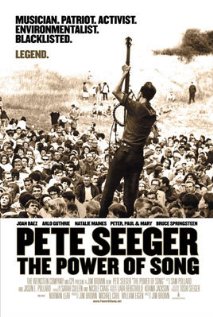
We could share what inspires us!  Well, at least I have this amazing blog space, and all the fantastic people who stroll by for a visit.  So today I want to mention another movie I just watched on disc from Netflix.  I L-O-V-E-D it!

Pete Seeger: The Power of Song (2007)


My heart and soul were so warmed by this story I watched last night that I am still smiling inside and out from it this morning!  When we think about “What can one person do to help change the world?” we can think about what Pete Seeger did.  We ALL have gifts!  Most of us not such amazing ones as Pete had – but what if we all went digging around in our inner forgotten closets and cupboards, under our beds, out in the garage – maybe even in our inner junk piles – where we have ACCIDENTALLY misplaced the gifts we have EACH been given?

What if we dug around, found a gift, recognized its connection to something about us we have ALWAYS loved, that has ALWAYS contributed to our inner joy and peace, and then shined up these gifts, made repairs if needed, and then put them to GOOD USE?

This movie, for one thing, reminds us that we ALL have within us the God-given power to SING!!!  That is what Pete did!  He not only reminded thousands upon thousands of ordinary people that humans can SING, he encouraged people to remind others – until the circle ripples of SONG filled the spaces in the air where crying and dead, dead silence USED to be.  At the same time, and greatly through the power of unity and joy that music is a part of, the world began to change.

Singing is about LOVE.  There is NOTHING to be ashamed of in that word, in that experience – LOVE.

When I think how abused and traumatized infants and children receive overwhelming experiences of the OPPOSITE of love – HATE!!  And as I think about how survivors can never escape having gone through trauma that changed them in their physiological development in so many permanent ways – I think about the POWER of song, the POWER of music to awaken the soul to LOVE – inside and out.

Please consider finding a way to watch this movie.  Those of you who subscribe to Netflix can get the movie in on disc.  It can be purchased through amazon.com HERE.

This movie is the only authorized biography of Pete Seeger, a great American musician and hero of generations.  Wickipedia story about him HERE.  Born 1919, as far as I know this humble, good man is still living!!!!  Although many didn’t and might still not agree with his political views, Pete exercised what needs to remain an American right to hold to one’s own self what a person feels to be true.  Pete harmed no one – and helped so many more than a few they cannot be counted.

Hats off to you, PETE!  Thank you for being you!!  Thank you for knowing your gifts and for sharing them.  Thank you to your parents and to others who so guided you in your own right direction!  And thank you to our Creator, the Greatest Mystery of all time, for Your generosity in providing all of us with GIFTS!!!

AND MAY WE ALL REMEMBER TO SING!!

++

By the way, as a total beginner to reading and playing music, I am learning this on keyboard – what fun – (work, too) – love it!  Listen here:  Mana- Hechicera

+++++++++++++++++++++++++++++++++++

+TEACH ME LOVE

+++++++++++++++++++++++++

Whether or not humans choose to believe their own false ideas and vain imaginings that tell them there is no God and nobody has a soul, reality exists otherwise.

I do believe in God and that everyone has a soul.  Therefore I cannot form a coherent or comprehensive view of myself without considering what this means to me.  Today I created another ‘page’ attached to a heading tab at the top of this blog simply called — GOD LOVE.

Being so abused from the time I was born that I could not begin to conceptualize what love might be, or even that it actually existed, has made certain aspects of my living and my healing journey complicated in regard to love.  I may never know in this lifetime in my conscious mind what love is.  That does not stop me from questing for that understanding.

++

I wrote a post today that is attached to GOD LOVE.  In it I describe as clearly as I now understand it at my age of 60 what ‘being’ Mother’s ‘devil child’ was about and what it did to me by the time I was 17.  I also describe a bit about my soul’s journey through those years of abuse and out into the world I entered when I left home.  SEE:  *CHILD ABUSE AND THE JOURNEY OF MY SOUL

I will welcome all ‘reasonable’ comments to anything I write at GOD LOVE at the same time I reserve all rights to NOT post what I am not comfortable with and to edit what I do post if that feels comfortable.  Those pages are about comfort, something I new NOTHING about the first 18 years of my life and something I will probably never completely understand while I life on this earth in my trauma-changed body.

++

I also posted the contents of a soul-related talk by an expert on the subject that I consider most important at *NO MATTER WHAT – HAVE NO ENEMY.  There is nothing in those words that gives me spiritual permission — or any other kind of permission — to think ill of anyone, including my parents.

This new section and my collection of writings over there are necessary for me at this point in my healing journey because it is my soul that in-formed me as a child.  It is my soul that brought me through those horrendous years of insane abuse.  It is spiritual assistance from God’s unseen realms that protected me from death and disintegration through my difficult first years of life as a soul.

It is my hope that forever in this lifetime I will seek truth, and that forever after my mortal body parts ways with my soul upon my physical death that I will do the same.  I pray to God to teach me love.

+++++++++++++++++++++++++

+ABUSIVE PARENTS, THEIR ORPHANED CHILDREN, SOCIETIES THAT DON’T CARE

+++++++++++++++++++++++++++++

I am really studying that little book I mentioned in my earlier post today on parenting:  When We Grow Up by Bahiyyih Nakhjavani.  My soul’s version of ‘moving forward’ and ‘traveling onward’ very much includes LEARNING anything that I think will help me (and possibly others) accomplish exactly this kind of movement.  In other words, I desire to study things that help me understand myself in the world a little more — one word, one idea at a time.

In reading this little book I am confronting some important concepts about how OTHER PEOPLE are SUPPOSED to be watching out for parents to make sure parents are taking care of their offspring correctly.

My society-culture failed me.  Society-culture is ALWAYS at fault when an infant-child is mistreated, neglected and/or abused.  Society is SUPPOSED to be guarding children by not ONLY watching the little ones to make sure they are OK, but also by watching the grownups in charge of caring for children to make sure the job is being done right.

And, yes, there IS a right way to be a person in this lifetime — and there is a right way to take care of the next generation of little ones who are growing up to take their parents’ place in the circle of humanity.  Knowing that human social order is in a stage of decay so that it can be built up RIGHT starting now and into the future is at least some comfort to me — at the same time that I can see in this little book that those of us who were hurt as little people WERE ORPHANS.

Yup, that’s it.  We were orphans!  What my parents did to me did not qualify them to be my parents, plain and simple.  I was left alone in the hell they created for me — and essentially raised myself.

Human cultures have a long ways to go to get things right.  We are as a species barely at the developmental stage of unruly, selfish teenagers.  I hope we stay on the right road!!!!  And God knows which road is the right one.  Humans just have to figure that out and make different choices.  Taking care of little babes and children would be a very good start in the right direction — and I mean ALL babes and children!

+++++++++++++++++++++++++++++

+MUSINGS: HEALING TRAUMA REQUIRES COMPANIONSHIP

+++++++++++++++++++++++++++++++++++++++

People with different languages, cultures and religious understanding refer to a Supreme Being by many names, but I most simply rely on this single short word – God.  I believe God creates each individual soul of a person at the moment of conception because God loves each and every person who has ever lived.  I also believe once a soul is created it is sent, like an arrow out of a bow, into a forever future of destiny.  I found this in a book about parenting:  When We Grow Up by Bahiyyih Nakhjavani

The journey of the soul is a long one, which begins at conception when the ‘spirit encircles the body…in the womb’ [reference].  And while its end is to reflect with faithfulness the light of God, that light being eternal makes the journey endless also.  What a joy therefore to discover companions on the way, to discover that these to whom we were entrusted in the first stages of the journey are moving with us step by step.  Through sunshine to the light of God we go, parents and children both.  And no matter what our age or education, no matter what the differences between us, the soul within us being ageless and cultureless travels onward, conscious only of direction.  Though we are all ultimately alone before our God, we catch the echoes of parallel footsteps continually, and rejoice in the companionship we find between the generations.” (pages 59-60 – I added bold type emphasis)

++

As I work for the first time in my 60 year long life to put my memories of my childhood into a sequential line covering those 18 years of abuse, so far I am mainly conscious of one part of my experience AS A CHILD surviving abuse and continuing to endure THAT IS THE SAME as what I experience as an adult:  I always instinctively moved forward.

The soul, which by the way is also genderless although by nature connected to a gendered body in this material world, must have this innate characteristic.  That’s what enduring and surviving seems to be:  Moving forward no matter what.

Humans, as members of a social species, are designed to benefit from companionship.  Our beginning physical journey happens because of the companionship between mother and fetus.  Humans follow a long course of development post-birth.  During these early stages we are absolutely dependent upon caregivers for our life.  We are also dependent on these caregivers to train us in good ways and to provide for our education.

Infant and child abuse is NOT what God and nature intended.  As I locate myself in my memories in the time and place of my childhood experiences I can always see that some part of ME continued forward.  I am only now beginning to be able to recognize that this ME was my SOUL me.

Because my Borderline Personality Disordered mother was SO severely, psychotically ill, she could not – and DID NOT – allow me to take possession of my body, my self, my personality, my self awareness, my ability to choose to be me – in any way if she could prevent it.  I see now that ALL of my mother’s abuse had this single end goal:  To prevent Linda from ever being born as an individual self.

I also now increasingly understand (as I discover this in my book writing and see how these patterns worked) that my mother needed ME to be her stand-in for the evil-bad-child the devil was coming to get.  Her need, and how she met this need, take so-called ‘splitting’ and ‘projection’ to such an extreme level it would be nearly impossible to comprehend the comprehensiveness of HOW she met this need by torturing and traumatizing me if I hadn’t been there in her inner Borderline core of hell.

++

At the same time I am tracking how hard Mother had to work to maintain her patterns of obliterating ME as a person-and-as a person separate from her, I see that the physical developmental stages and physiological changes I was destined to go through as a living, developing child, CHALLENGED Mother to work harder and harder and HARDER to make sure I as a person was never born.  This meant that the abuse had to escalate on all levels right along with my growth stages.

The ME that WAS still alive as an individual WAS my soul.  It is very eerie for me to look back, inside, through into myself as a child and recognize my soul.  Personally, it would be very nice if ALL humans were able to pass from their initial pure innocent stages into increasingly more ‘human’ ones of involvement in this material life while at the SAME TIME being able to maintain clear contact with the eternal element of who God created us to be:  Our soul.

But I don’t think – no, I KNOW that what I experienced was extremely, extraordinarily NOT NORMAL.  I therefore was deprived of the opportunity to grow through my childhood in anything like a NORMAL way.  This NORMAL way, at least in mainstream American culture, would have created a rift between my experience of the culturally-all-important EGO SELF and my true SOUL SELF.

++

As I worked through the difficult process of identifying what happened to me in my age-10 memory of abuse, I recognized that my EGO self ‘came to’ during the weeks covered by this memory stage of my development.  I awoke as a conscious self – and if I had not acquiesced to Mother’s will at this time, I would not have lived past this age of 10.

So acquiesce I did – and live I did.

I believe that all of the religions God has provided to mankind over the span of our evolution have each served to illuminate the way to keep our two wings of being human in balance and in harmony.  Our spiritual nature and our material (ego-self) nature exist only as we start our soul journey here, but not once our body dies and our soul moves forward into other worlds of God.  Yet our soul has opportunities in this lifetime to grow and to learn because we have free will here – and only here.

If my conscious, thinking choice decision making self had remained awake and alive past this event I experienced of abuse by Mother when I was ten, she would have killed me.

My soul chose.

My soul willed me to keep my body alive.  My conscious self thus had to go back to sleep and stayed asleep for a very long time.

I cannot make any sense of myself in childhood or of myself as an adult without trying to learn what my soul has always known.  If I lived in a culture truly steeped in common knowledge about the truth of the life of the soul my journey would be easier now.  But, no, I live in a culture more than steeped in the hubris of the ego self.

Yet I also know that trauma challenges shallow understandings of life.  When I watched the two movies mentioned in my last posts — +PLEASE. NO MORE WAR – A MOVIE WORTH WATCHING and +”MAKE ART NOT WAR” – ANOTHER GREAT TRUE MOVIE – I can very clearly see stars of these movies are struggling with concerns related to BOTH their soul and their ego-material nature.

Trauma awakens the depth of the soul in ways that I believe only survivors of horrendous traumas can truly comprehend.  Companionship, connection of humans with humans, is the way that the soul and the ego self can put together into one-whole the truth of experiences that MUST be shared with others to be healed.

I also believe that on profound levels the SOUL knows it has the keys to healing at the same time the ego-self knows that it alone does NOT have these keys.  Physiological diseases such as BPD can block the soul’s ability to access the truth of what is needed for healing.  In addition, as these two movies demonstrate, it takes companionship of souls with other souls to move forward with healing on this plane of existence as very real steps of progress are made to enable the WHOLE person to heal.

As a child I had no companionship.  While I was cared for by God and the angels I had no conscious awareness of this fact.  Consciousness was a luxury I did not have.  Yet my soul has always desired to move forward, always forward, and that was and is exactly what I have always done, just as the stars of these two movies did.

BEING alive can happen without consciousness, but I don’t believe that THRIVING while being alive can.  I stayed alive as a child but nothing in my world allowed me to thrive.  Both of the stars of these movies remained alive in the face of massive traumas, but as the movie shows, it was sharing companionship with others that provided the opportunity for both ‘the soul and the ego-self’ to find ways to thrive — which is what healing is all about.

+++++++++++++++++++++++++++++++++++++++