The most important work we can do, individually and globally, is the healing and prevention of traumas so that we don't pass them down to future generations. This blog is a working tool to contribute to this good work.
Monday, April 6, 2015. While I don’t understand my point exactly in writing this post it seems to be one that has moved past the perculation stage into WRITE ME NOW. So here is a little more about my personal conflicts with the concept of “resiliency” as it may be achieving a generic standing within the “healing trauma” circles.
The adult human body is made up of about 37 trillion cells. The United States Census Bureau estimates that the world population exceeded 7 billion on March 12, 2012. To do research that tried to extrapolate meaningful information about ALL cells or ALL people based on a small sample of ONE would be ludicrous.
Nobody can determine each individual’s experiences with trauma in such a way that the data generated could be made useful to anyone, let alone everyone! So naturally what I have lived through and what I know as a result of my studies about what happened to me and how I survived it will never fit into any clear “significant probability” statistic with meaning. I can, however, share parts of my story to illustrate points important to me.
I am sharing a story included on this blog that I certainly am NOT going to read right now. I may never return to read it again. (This is often the case with my own childhood stories once written, which is why my ace professional researcher and writer daughter is my editor for our books. She has not yet proofed the story at this link.)
What I wish to say about the experience detailed in this story as it connects to my standpoint on “resiliency” is that had I NOT gone through this event I do not believe I would have come out of my childhood having ANY sense of what “feeling loved” felt like.
The story is of trauma, true, but for me having my family gathered around me as I was nearly bleeding to death was the ONLY clear time of my 18-year childhood that I felt I belonged to this family. It was the ONLY time that the feeling I lived with all of rest of my childhood from birth that I was at any moment, out of nowhere (my mother was psychotically mentally ill with me as her abuse target as my book at link below describes) going to be brutally attacked was absent.
This event COULD have been a very low spot – what I call a risk factor moment — in my horrifying childhood rather than being the powerful, necessary (to me) resiliency factor moment that I built upon to successfully raise my own children and to care about others. (In my case, I believe in what I call “borrowed secure attachment” rather than in “earned secure attachment” – a online search of terms “stop the storm borrowed secure attachment” will highlight some related posts.)
There is no possible “resiliency measurement tool” that could capture what truly traumatic childhoods are/were like. But in the interest of preserving the integrity of useful data through meticulous research what is found MUST be processed by thinkers steeped in the depths of what early trauma IS. The impeccable artistry and beauty of individual survivor’s lives must not be lost in the mad rush to understand what numbers-only are telling us.
Only with this understanding can any useful thinking about a vague concept like “resiliency” be made to pull its weight in efforts to understand and stop trauma and to assist those who survive it to increase their well-being across their lifespan.
I learned all I was going to find out in the 18 years of my childhood about what love-of-Linda was going to feel like. All I was going to learn about what love might be like PERIOD I learned during those moments. I believe traumatized children notice every possible useful bit of information and make PROFOUNDLY amazing good use of those tidbits. That kind of resiliency, if we are going to call it that, is to me nothing more or less than the will to survive coupled with accumulating the tools necessary to do so.
++++
Here is our first book out in ebook format. Click here to view or purchase –
I occasionally get the bright idea that I could wander around the web and find sites related to healing infant-child abuse trauma so that I could promote my blog-info in a little comment inviting readers to come over here for a visit to my Stop the Storm blog. The only problem is that I never get that far and instead end up wanting to present other people’s blog work here for my readers to visit, learn from and support.
So, a word of thanks to any of my blog readers who might leave a link to my blog when they go visit someone else’s and leave a word about my work in a comment. Just copy this and paste into your comment https://stopthestorm.wordpress.com/
So what follows are some links for places I visited today! (I was following a Google search for ‘child abuse trauma blog’)
+++++++++++++++++++
I want to highlight a post on the blog of Dr. Kathleen Young (a therapist in Chicago) entitled Treating Trauma: Top 10 for 2010. These are among these top posts Dr. Young mentions:
Depersonalization Disorder. In this most read post of 2010 I defined depersonalization, as a normative experience, a symptom of other diagnoses or a type of dissociative disorder. I also shared research that explored the role of childhood interpersonal trauma in depersonalization disorder.
Complex PTSDdescribes a variant of PTSD that applies to those who have experienced prolonged, repeated abuse from an early age. This was one of my favorite posts of the year as it is at the heart of much of my practice. It was also inspired by a fantastic training I attended in 2010: Contextual Therapy: Treating Survivors of Complex Trauma.
Verbal Abuse: Words Can Hurt. I am so glad this topic got a lot of attention, given how little we understand the impact of verbal abuse. Here I shared research that indicates that parental verbal abuse alone can impact the child’s brain development in ways that lead to language processing issues and symptoms common to complex PTSD.
Understanding Dissociationwas another favorite post of mine. Dissociation and trauma often go hand in hand, and yet it is not well understood even by trauma therapists! One take away idea: while dissociation helps you survive childhood trauma, it may be maladaptive later in life.
Does Self-Care Mean Others Don’t?is the most recent post in my top ten and part of a bigger conversation about self-care. The comments in response to both these posts are well worth reading and my favorite part of this entry. Your feedback and responses make me think and grow. That is what I love about blogging and what keeps me committed to it as we get ready for 2011.
I also found this Child Abuse Effects blog hosted by survivor/educator Darlene Barriere (Canadian). Worth a visit and a click around – lots of information from professionals and readers alike along the left side of the blog.
Here is a blog about child abuse though I can’t quite figure out what it is actually CALLED! My Windows says it has something to do with someone named Karen Holmes – comes complete with heart-touching comments — CLICK HERE to read
“Chris Knight Capone’s moving novel “Son of Scarface” is not another book about Al Capone. What it is, is the unnerving story of an abused child, through the eyes of the child abused, seeking to unravel the mysterious life of his beloved father and the mother who physically and emotionally battered her son and daughter.
“Son of Scarface” is a book about healing and the tribulations of one man’s lifelong struggle to identify the past and heritage hidden from and denied him.”
+++++++++++++++++++
Here on SelfGrowth.com (scroll down a little) there’s a
By Daphne Simeon, M.D., Orna Guralnik, Psy.D., James Schmeidler, Ph.D., Beth Sirof, M.A., and Margaret Knutelska, M.A.
“In conclusion, this study is the first systematic demonstrationof an association between depersonalization disorder and childhoodinterpersonal trauma and suggests that emotional abuse may playan important role in the genesis of depersonalization symptoms.In contrast to physical and sexual abuse, psychological maltreatmentappears underestimated and neglected in the psychiatric literatureand merits more attention. Finally, the various dissociativedisorders may lie on a spectrum of severity associated withdifferent types of childhood traumatic antecedents.”
Well, if this is the jolly time of year I sure don’t feel one bit jolly. Family is too far away. Trying to go ‘out in public’ to make some kind of human connection is, well, just about hopeless. So here I am home alone again, as usual.
by Petr Kratochvil -- on publicdomainpictures.net
I wouldn’t MIND that so much if the ratio weren’t so completely lopsided. Maybe one percent of the time when I am ‘out there’ where the ‘other people’ are I MIGHT feel a little bit connected to someone. But like a groove worn all the way through one of those old fashioned LP vinyl records, my being alone just seems to be a fundamental fact of my existence – no matter how much I wish it (I) were otherwise.
I will go out on Christmas day to a local community dinner and that will help — in part because I know the people who have no other place to go that gather there are more like me than most people are in the world. That still won’t guarantee that I will feel CONNECTED, though, because of my lack of ability to feel connected to other people is a consequence of the serious insecure attachment pattern built into my body-brain from the time I was born (thanks to my insanely abusive mother who was able to pull off her horrific abuse of me without anyone’s intervention).
So while I would much rather be able to write of a different tale, I am left with the one that is the true one for me. It is NOT that I ‘don’t need people like other people do’ as someone told me once. It’s that I desperately need people and always have — but I honestly don’t believe I have the internal wiring necessary to ever feel true connection with others even when I am around them (with the exception of a very very very few people who are closest to me).
++
Even though I am living in the same body that trauma built during my first 18 years of life, I didn’t know THEN that I would eventually, as an adult, have to try to consciously PRETEND that my being around others is the same for me as it looks like as I watch most everyone else. In fact, I didn’t even know as an adult that I pretended to be a socially-engage-able person.
Now I know that I didn’t have a safe and secure attachment with ANYONE during my childhood — not ANYONE — and therefore all of the incredibly complex wiring didn’t get put into place for me. I can no longer genuinely pretend that being with others is remotely satisfying or soothing to me.
++
There is always The Watcher. The Watcher is not alone, of course. There are a multitude of Others who watch the Watcher. The Watcher is never truly engaged with other people. The Watcher ‘goes away’ if I am EVER truly and wholly engaged. But that is so seldom that it rarely happens.
There are The Coaches, too. There is the one that tries to help me keep up with others during social engagement, trying to give me cues to help me read other people’s social cues. I can’t keep up. I can’t trust or know or believe or act like I know what all the social cues people learned through human interactions from the time they were born even ARE — let alone how they operate and how I am supposed to respond to them.
There is a Verbal Coach who tries to help me stay in synch in conversation, tries to keep me in beat with the rhythm of the verbal exchange. The Watcher is always there watching me AND the coaches — because The Watcher has no emotion (more like a Razor’s Edge).
Mostly when I am attempting to engage with other people I am extremely aware of being The Outsider. I was an outsider in the life of my family for the first 18 years of my life. Being The Outsider is probably as natural a state for me as being an adequately engaged human social being is for most other people.
I say ‘most other people’ because the ONLY people who are not naturals in their essence at social engagement are those who were either born with rare shyness genes, autism spectrum genes (etc.), or are those of us who suffered from extreme trauma, abuse and unsafe and insecure attachment relationships — alone — birth to age one and most usually AT LEAST birth to age two while the social-emotional-preverbal language brain-nervous system was forming itself.
ALL of these people who are not ‘naturals” (with the exception of the shyness gene people as long as they were not an abused/neglected infant) are NOT native language speakers and are missing most of the most primary and fundamental human social connection body-brain wiring/circuitry necessary to truly be able to connect — and to FEEL connection to and with other people.
++
So here come the holidays. At least I am fortunate that I do not have to deal with any negative family charades which must be very difficult for severe infant-child abuse survivors that DO.
++
I used to pretend to be a socially OK person because I used to be able to BORROW the attachment patterns of other people. I was very very good at being an attachment-chameleon — which by itself was NOT a ‘bad’ thing. Being able to borrow the attachment patterns of other people enabled me NOT to abuse my own children because I could borrow the attachment abilities they were born with at the same time I was able to respond appropriately to them so that their attachments could grow and develop in safe and secure ways. Borrowing attachments also allowed me NOT to be as socially isolated all of my adult life as I am now.
I know this now, looking back from my age-59 vantage point at all the different kinds of relationships I used to be able to maintain at different stages of my adult life.
Borrowed Attachment is directly connected to having a Disorganized-Disoriented (Reactive) Insecure attachment pattern. I simply was able to organize and orient myself around other people’s attachment patterns. (And yes, as I have said before on this blog, being this dependent upon others was like being on life support. I was borrowing from them what I did not and could not have myself — like being dependent on a life support system.)
At least in my life my own insecure attachment patterns have not caused undo hardships on others. While these others might WISH that I was able to form strong, clear and sustained attachment connections with them, I simply can’t, and these others are not harmed. They are simply unable to form the kinds of connections with me that they might rather have because I cannot form attachments of my own with them.
++++
Rather than go into any more detail here about any of this, I just want to present a stark contrast to how I am feeling and to how I am as an isolated being unable to form attachments in the world (except with the ‘chosen few’ who love me enough in spite of all my difficulties).
My daughter told me of how my 9-month-old grandson attended a meeting with his mother and father today at a bank. One of the women there wanted to take the baby off so that his parents could concentrate on paper signing. Back came the woman in only a few moments with baby and his tear streaked cheeks and hearty bawling.
Back to his parents he quickly quieted back to contentment.
“Most excellent!” I assured my daughter. “That’s EXACTLY what you want the little one to be doing at this age. He is wonderfully demonstrating his secure attachment.”
I also told my daughter that a baby that will, at this age and up to around the age of one, happily go off with strangers is NOT likely to have a happy life. A healthy infant HAS to have powerfully strong safe and secure — loving and happy — attachments with its earliest caregivers FIRST AND FOREMOST because EVERYTHING else in its growth and development has already depended on this and will for the rest of its life depend on this firm, good and RIGHT foundation.
++
Given my mother’s severe Borderline (abusive) condition I never stood a chance and I will the price for what she did to my attachment system as it built itself into my growing body-brain for the rest of my life — holidays or not.
There must be a post that needs to be written this morning that goes along with this title that is resounding within my mind this morning: ‘False starts and blind inner promises’. In thinking about the comment made to yesterday’s post about the beauty of tree burls and how as severe early abuse survivors we cannot grow our first early twigs out into the world because we are in continual danger of being attacked, and about how tree burls ARE formed in response to threats in the environment so that the growing tree must form scar tissue into itself – I am also thinking about how I feel ‘at dead center’ here in my home now, and in my yard. I can only venture out once in a great while and when I do returning home within two or three hours seems to be essential for me to regain any calm equilibrium inside of myself.
I haven’t met my first grandchild yet who was born last March 11th. I have three grown children all living in Fargo, North Dakota. They want me to come up to visit them this summer, but the truth is that I cannot find a Linda who can make that journey. I am not strong enough. I don’t feel well enough. Now they are talking about flying down to see me.
This all leads me to thinking about how at 58 years old, as a direct result of all the trauma I survived during the first 18 formative years of my life, I don’t so much not ‘have a leg to stand on’ as I ‘don’t have a limb to go out on’. Yes, this also brings to mind ‘Rock-a-bye Baby’ and what happens ‘when the bough breaks’.
I knew about all of the rest of my ‘knowing’ about the implications contained in yesterday’s tree burl post, but I didn’t want to think about it and I didn’t want to write it. I didn’t want to ‘be negative’ at the same time I didn’t want to be realistic. I just wanted to END with the beautiful part and not acknowledge the serious ramifications and implications of growing a body-brain-mind-self in such a malevolent environment that most of who I had the potential to become was never able to branch out into the world and grow strong and true.
Being all bound up with my gifts, talents, strengths and abilities, with most of my potential hidden within the inside of me – rather than being expressed and formed and extended out into the ‘bigger world’ is a reflection of the physiological changes that happened to me as I tried to grow and development within the horribly toxic, threatening and truly dangerous world my mother created for me in my infant-childhood.
BUT I went off into that ‘bigger world’ at age 18 without having one single clue about what I had been through or about what had happened to me. This is where the title for this post appears. I have lived a life of ‘false starts’ and ‘blind inner promises’ because I had determination, a powerful will to do what it took to survive, to always move forward, to always do the best that I could as I organized my whole life on my most fundamental levels around trying to provide the best care I could for my children.
I was running blind.
I need to go outside this morning and trim the suckers that are growing in great masses at the base of my Pomegranate tree. When my brother was here in April we completely decked the suckers, but they only came back as fast as they possibly could. They grow thick and green like a thicket from the underground roots, but they are weak and wild and will not be productive as they crowd out the fruit-bearing branches and suck water and nutrients from the rest of the tree.
I had the thought in contrast to the tree burl image that in so many ways, being as blind as I was when I left home, that I simply set off into whatever direction I saw in front of me as I made decisions about my life and went off and ‘did things’. Things could certainly have been far worse then they were, but now at age 58 most of what I have done appears to me now to be little more than a ‘false start’ like these tree’s suckers.
I had ‘blind hopes’ because I had no idea about who I was or what I wanted in my life. I didn’t know what was possible, what was realistic, what motivated me, what I was searching for. I could not miraculously form good strong fruit-bearing branches upon the tree-that-is-me at age 18. I did not know about dissociation. I did not understand that I could create branches in my life by going off in disconnected directions, spending the time of my life and my life force while I THOUGHT I knew what I was doing — but didn’t.
I don’t have a life history now of having continued to build a strong foundation of roots in my life, connected to a good strong self-trunk with wide healthy branches out there soaking in sunlight so I can celebrate my participation in my OWN ongoing life.
I have been burning up my inner resources all of my life and never knew it until now. The amount of inner resources it took to endure and survive my childhood alone were probably equal to what a safe and securely attached person would use over the span of their entire lifetime. When I tell my children now that I am ‘too tired to travel’ I know I mean exactly that: I am resource-less rather than resource-full like my inner bank account is empty.
This, to me, is the long-term consequence that appears in so-called clinical terms as Posttraumatic Stress Disorder (PTSD) that has all its own ‘suckers’ within me (depression, dissociation) that siphon off my strength.
Nobody stopped me at the threshold where I left my ‘childhood’ and crossed into my ‘adulthood’ and helped me take inventory of where I was coming from, how I had been formed, what I had endured, what had done to me, what I had to take with me and what I had left over after surviving hell itself. Nobody then helped me to realize where and how I had to heal before I could move forward.
The major branches that I SHOULD have formed as a growing and developing self in a body were nearly ALL turned within. I entered adulthood chasing after what I thought was a life as the life that had formed me chased after me – because it was all still inside of me.
While I am thankful I found resources to raise my children so that they are stable and able to continue to grow good, strong branches of self into their world and into their future, I have to say that my ability to take care of myself has been very limited. Today even the chirping of birds can ‘irritate my nerves’ as I live and breath too close to the edge of continual sensory overload. The world seems too busy, too fast, too loud, too noisy, too demanding, too stimulating — and far more than I can easily handle.
I live in a rural area. Yet knowing that even the sound of a crinkling plastic bag irritates my senses as I remove a slice of bread lets me know that the body I formed growing up from birth in an environment of continual threat of harm and of harm itself is very real and has its own very real limitations that I was able to somehow ‘outrun’ during most of my adult life. But I cannot do it now.
When we think about stopping child abuse, awareness of this kind of damage that child abuse often causes is what needs to motivate us. There is long term physiological cost to surviving malevolent childhoods. Yes, we are beautiful — but our ability to form a body-self that can grow our beauty out into the world with joy and wellness has been greatly injured by all the early wounds we have received.
No, I don’t want to have to say this. No, I don’t want to have to know this. No, I don’t want to have to live with these long term consequences that changed the physiology of this body I have to live in for my entire life. But when any of us think that ‘infant-child abuse is a serious matter’, these changes, along with the difficulties and life-loss they create, are a great part of what we HAVE TO consider.
At the same time survivors of severe abuse deserve to know the degree of harm that was done to them so that they can more fully understand how their development and their entire life has been affected. There is no magic band-aid to FIX the changes that happened to our body. But there is information about these changes, how they affect us and how we can live better with the help of this wisdom.
Why do the ‘experts’ diagnose an individual while they ‘assess’ a family? Is the distinguishing factor a cultural assumption-belief that a family is made up of autonomous individuals? Wrong. Everyone one of us is formed from our start within an environment that influenced our development, and in severely infant-child abusing families it is obvious to me that the abusing parent is ‘spilling over’ into their child’s ‘personal space’ as the autonomy of the child is left out of the developmental story. If all children were treated like autonomous people all their universal rights would be respected and met, which is obviously so NOT the case when infant-child abuse happens.
I do not believe healthy autonomy exists within unsafe, insecurely attached abusive human relationships and environments that condone abuse. If abuse is allowed to happen at all, as far as I am concerned it is being condoned: Allowed = condone.
I do not believe that when considering and/or dealing with MOST so-called ‘mental illnesses’ that we can have it both ways. We cannot ‘diagnose’ individuals without ‘diagnosing’ the family that formed that individual. If we are not willing to accept THIS as reality, then we better ‘assess’ individuals while we ‘assess’ the family that formed them.
In my view, assessment is the direction that offers the most factual and realistic opportunity to affect true HEALING. All other approaches to most ‘mental illness’ problems — which includes abuse because I believe abuse only happens as an expression of ‘mental illness’ — address ‘symptoms’ without assessing or addressing actual cause.
We can continue to believe the old myth and fallacy that ‘mental illness’ is genetic. Genes manifest themselves through epigenetic processes that happen when our genetic-expression ‘machinery’ detects a need for a body to adapt to a particular kind of environment. Our genetic well-being (and therefore our overall well-being) is thus directly tied to the conditions of ill-being or well-being of the environment that forms us – during every instant of our lifetime.
++++++++++++++++++++++++
If we were to listen to the best orchestra in the world play the most complex and beautiful song we can imagine (assuming the piece appeals to our cultural tastes), what we would be listening to in any ongoing instant of time is simply a reflection of what has ‘happened in the past’ as it transfers into ‘what is happening in the present’. Because we would have no reason to be listening along as a part of this musical experience while at the same time anticipating any abrupt STOP in the music in the middle of the song doesn’t mean that all possibilities for what COULD or MIGHT happen in the future don’t exist.
If we included in our symphony experience a conscious awareness of the nearly unbelievable history that has led up to this moment in time, we would be overwhelmed. All of the billions of decisions that led to our specific birth as listeners, the decisions that were made back in time that led to the existence of every musician, of everyone who made every instrument we are listening to, who wrote the songs, how this ‘event’ was able to exist because ‘it got put together’ is not something we often include in our conscious awareness. Our excluding of these thoughts and the information they might relate to does not mean that ALL that information is not a part of what we experience.
If we are going to simply say that so-called ‘mental illness’ is a result of ‘bad genes’ we are excluding vast amounts of information related to what we think we are talking about in a very similar way.
If we think about information in a familiar framework today, we can think about binary code. Because life as we know it, including our own, actually happens on an atomic and molecular basis where information is transmitted through electrical signals and pulses of information, all we come down to is the equivalent of binary code.
If we think about our entire history as a species, our entire specie’s story of our life here on earth as being contained within our DNA, we only have one part of the story. Somehow this story is continuing on and we each have our part in it.
While DNA contains the story of our past, it is the DNA’s ‘middle people’ that transform the story of the past into the story of the present. I don’t know exactly HOW this happens, of course. In fact, there are probably only a very few researchers alive today who are beginning to detect the truth about how our epigenetic processes work.
Right now it is assumed that epigenetic mechanisms are able to detect conditions within the environment so that these mechanisms can tell our DNA genetic codes how to combine with one another, how to operate, and how to express the DNA information.
Right now it is assumed that even though the epigenetic changes that happen in one generation can be passed down through successive generations (and often are), it is believed that these changes are NOT changing our DNA – or our human story.
BUT it is also becoming known that it is probably true that if the conditions that created patterns of change in DNA expression — as contained in the epigentic changes of DNA communication about the environment and hence in our DNA’s expression — remain in existence long enough, our DNA might very well EVENTUALLY change in adaptation.
++++++++++++++++
This means to me that unlike my symphony image, being human means that the ongoing song-story that we are a part of CAN and DOES change as it goes along, and these changes can be passed down the generations through epigenetic processes that very well MIGHT and CAN change the very essence of our specie’s story within our DNA.
I am coming to understand that this ENTIRE PROCESS is about attachment. In a great, safe and secure world full of plenty and without toxicity, our epigenetic ‘middle people’ do not have to instruct our DNA to make extreme changes to adapt to trauma. This version of the picture happens when attachment can happen within a benevolent world.
On the other hand, when attachment is unsafe and insecure within a malevolent environment, our epigentic ‘middle people’ have a much bigger job to do. They have to tell our DNA about these hostile and malevolent conditions in our environment so our DNA can change its expression to best ensure ongoing life IN SPITE of the traumas and difficulties present.
Playing in an orchestra with well constructed instruments that do not break to pieces in the middle of a song is one thing. But if, all of a sudden, every instrument develops some kind of critical ailment, the song is going to CHANGE drastically as a result.
If all the instruments remain intact and fine, but suddenly some mysterious sneezing gas is released into the musical arena, the song that was playing is going to change itself, also.
We cannot afford to pretend that the exact conditions of our earliest developmental environment does not profoundly influence the way our DNA manifests itself. Just because the potential exists of a beautiful song does not mean that within conditions of some environments that beautiful song will NOT be played.
Serious attachment difficulties in early human relationships are obviously far worse than sneezing gas sneezes. But we have to realize that the nature and quality of our earliest attachment experiences directly communicate to the growing and developing human body-brain what the condition of the world ACTUALLY is – and what it is going to be like in the future.
Our entire physiological systems are designed to tell us – just as clearly as if they were receiving instructions in binary code – what is to be approached and included as life-sustaining in our lifetime along with what is to be avoided and excluded because it is NOT life-sustaining in our lifetime.
This is ATTACHMENT information: Attach to the good and healthy, do not attach to the bad and unhealthy.
This all begins to be orchestrated (actually from before our conception) through our earliest HUMAN attachment interactions. In environments of unsafe and insecure early attachment relationships the growing body-brain is fed the information that the world AS A WHOLE is not a good, healthy place to attach within or to! Epigenetic changes then happen and development is correspondingly altered. Our DNA code is told about these difficult conditions by our genetic ‘middle people’ – and VOILA! Changes happen that are as difficult to live with as was the original environment that caused them to happen in the first place.
+++++++++++++++++++++++++
Discovering what the range of these changes is can be done either through what we call ‘diagnosis’ or through what we call ‘assessment’. In the end, we are talking about the same process of identifying what was WRONG in the earliest attach-to-the-world environment that led to these changes happening in the first place.
But we cannot POSSIBLY talk about either ‘diagnosing’ or ‘assessing’ any individual person while we separate their difficulties from the environment that influenced the entire development of all aspects of their body from the start.
Although it might not seem to be much of a major ‘thing’, this little excerpt from my mother’s July 7, 1957 letter to father (he’s in Alaska, we’re still in California) paints a very big picture of the contrast in the way my mother felt toward me (nearly 6) and my sister who just turned 4.
This dynamic my mother created with Linda being the BAD child and my sister being the GOOD child existed throughout our childhoods. There was NOTHING I could do to change how my mother felt about me. To my mother, I was as innately, inherently and completely a BAD child as my sister was a GOOD one.
My mother wrote:
I was hoping I could tie up our shots here tomorrow but Cindy still can not [sic] have hers. She’s well (or better) one day and sick the next.
Now she has developed a very bad glandular condition. On the same order as Linda’s (suppossed [sic] mumps) only much worse!
The big difference is with Cindy. She never complains and is such a good girl! Linda would have fussed all over the place.
Today we decided to go out to breakfast for a change and Cindy said she wasn’t hungry. (She seldom is anymore.) She looked listless and just not well. I felt her and she was truly burning up – but it was another ‘scorcher’ of a day!! But I felt the others and they were not as hot to the touch and I knew Cindy’s heat was not all due to the weather. She wouldn’t eat so I ordered her some peaches, which she enjoyed.
I felt her glands and her left one under her ear was thesize of a small egg!
I brought her right home and took her temperature = 104 [degrees].
This afternoon I brought her to Hankins Medical Group in Azusa. The doctor gave her a very thorough exam and said it’s a bad cold (or virus) which has settled in her glands. They gave her a shot and she’s to have two more for the next two days.
Poor darling Cindy! She never even winces – how I love and adore that child of ours! She’s such an angel – I die when she’s sick.
I gave her some birthday presents and she was better tonight — .
Oh, Bill the other day AllOnHerOwn she made the sweetest picture, which I’ll send you, of you. I [sic] when we got married, holdinghands. She did us very well, even – hands, arms feet etc. The thought was so sweet – she’s our “own love child.”
All afternoon I’ve had the nagging thought that I need to write a post about what I think about Precious’ mother, Mary. By the end of the film,Precious: Based on the Novel “Push” by Sapphire, Mary is left as a despicable monster, literally an untouchable.
No matter what, wasn’t Precious’ mother still a human being? Why would she not be worthy of compassion? Where is the line we draw that determines who we feel sorry for, who we empathize with, who we have pity or sympathy for, who we hate and who we love?
I have referred to my own mother as ‘a monster’. I know what she was like, especially when she was in the throes of one of her maniacal rages. Does this mean that my mother ‘deserved’ to be hated?
Did Precious’ mother deserve to be hated? Did her father?
The key to this movie’s final, finished finesse lies in the barely perceptible yet still obvious twist of the shoulder of social worker, Ms. Weiss away from her when Mary reaches out a pleading hand and touches her as Weiss walks out of the interview. Weiss didn’t say to Mary, “You are a sick woman. You need help. Here’s a card with a number on it. Call and there will be someone there who will care about you.”
++
Wanting to rescue an abused child does not require hate for the abuser. Watching this film, wanting Precious to escape the horrors of her home did not require that I hate her mother, either. My personal passion as a viewer of this film was focused on waiting for the moment when Precious could separate herself from her mother, from that twisted, hate-filled environment, from danger, from darkness into a place of safety and security. Had that moment never arrived in this film I would not be writing this post. Had that moment never come, I would hate this movie, but I would still not hate the mother.
Yet the mother was left in the film as a vulnerable target for us to despise with disgust. The rapist father? I consider myself extremely fortunate to not be the victim of rape, incest or of any form of overt sexual abuse. I cannot possibly know what it would be like to view this film if I did have such a history.
I do have a history of having a parent in the home, my father, who knew my mother’s terrible abuse of me continually happened and did nothing to intervene, protect me or stop it. In one of the final scenes of this movie, Precious’ mother discloses the details of the first time her boyfriend sexually assaulted her three-year-old daughter and how she did nothing to intervene. We are told in nearly point-blank terms that Mary suffered from a severe insecure attachment disorder: “Who would love me?”
Precious’ mother did not protect her daughter. Instead, her own brokenness demanded of her that she HATE her daughter for ‘stealing’ her boyfriend’s attention away from her. How are we to forgive a woman who could participate IN ANY OF THIS? How are we supposed to not HATE her?
It is the power of art – the writing of this story, the directing of this film, the talent of the actresses portraying the characters that designates that we hate this girl’s mother. If we DO NOT hate her, we have not participated as willing audience members in the intention of this art form.
That’s quite all right with me. I personally don’t want to be on the side of darkness where hatred breeds and seeds itself into the lives of its victims. I would rather be able to loosen my mental and emotional grip enough to allow something other than hostile hatred, disgust and a feeling of “She is despicable” to envelope me.
I know that darkness. I spent the first 18 years of my life in that darkness. What makes this movie shine is the fact that Precious did not allow the darkness present in her life to consume her. Never in the film are we shown that Precious swallowed any portion of the force-fed poison of hatred. That, to me, is the power of being able to turn around finally and walk away into a different world where the abuser is not physically in it.
++++
I was fortunate as I plowed my way through web pages about this movie tonight, and found this year-old post:
The film was evidently still known by it’s literary title, Push, at the 2009 Sundance showing: Read the entire interview HERE. What I was looking for appears part way down the interview’s script, as entertainer (comedian, now Oscar winner) Mo’Nique, who played the part of Precious’ mother,responds to the questions posed by Kohn:
You deliver a fairly intense monologue at the end of the movie that really ties it together. Do you see Mary as a sympathetic character?
Yes, I think that all of us know Mary. I had to put her shoes on. If I were that person, I would want forgiveness. You do feel sorry for her because you begin to understand she’s mentally ill. She ain’t just being a bitch. She’s sick, and the society that we’re in, they threw her away. Nobody asked any questions, nobody got involved. That illness doesn’t just start. People know for years. We wanted to bring that world and put it right in your face. To say, they exist; they’re your neighbor. It might be your mother; it might be your sister. It might be you. What we were trying to do is not make it an action-and-cut Hollywood movie. I think Mr. Daniels did a great job.
What guidance did he provide?
He said, “I need you to be a monster,” and that was it: “Be a monster. I need people to hate that character.” Then he asked me before we started filming, “Do you think that everybody gets redemption?” I said, “No, especially if you don’t ask for forgiveness and mean it.” The moment he said action, the monster she was.
You brought to the table what you understood about the character.
Well, I was molested. The person who molested me was a monster. So I had to go to that person, because I know what it was like for me. [Daniels] said action, and be that monster.
There has been talk that the movie is a tough sell. How do you see it working in the marketplace?
It’s honest. You can’t be afraid, and you have to go and work at being fearless. If you go into it saying, well, if I don’t believe it, then you won’t believe it. As long as I believe it, you will believe it. This is a universal film. Do you know what I mean?
It’s all over the world – molestation and abuse, mental and verbal. It’s all over. It’s not just black. It’s not just white. It’s every color, every walk. It’s everywhere. I haven’t met any Martians, but I promise if we have some, it is going on with them, too.
+++++++++++++++++++++
SHARE A PRAYER
O God, refresh and gladden my spirit. Purify my heart. Illumine my powers. I lay all my affairs in Thy Hand. Thou art my Guide and my Refuge. I will no longer be sorrowful and grieved, I will be a happy and joyful being. O God, I will no longer be full of anxiety, nor will I let trouble harass me. I will not dwell on the unpleasant things of life.
O God, Thou art more friend to me than I am to myself. I dedicate myself to Thee, O Lord.
I don’t think I’m alone in how I feel right now. In fact, I’m quite sure other commenters have talked about this — feeling like we MUST act phony around other people, never truly feeling OK being our authentic (often quite miserable) severe infant-child abuse survivor self.
I spent the day physically active, working hard to concentrate on every screw I placed, every rock I placed, every paint brush stroke, every step I took throughout the day — so I could, if possible, neither THINK or FEEL.
The fact of the matter is that I don’t want to be alive. I wondered about this today in terms of how I felt as a child way before I could ever think in terms of not wanting to be alive. I think it’s something my body knew, my soul knew – but I had no words for anything I felt. I had no thoughts about anything I felt, either.
But for all my suffering for those 18 first years, did I not want to be here? Do I feel the same today as I did back then only now I know what and how I feel? Today I realized it’s not accurate for me to say “My heart is breaking.” My heart is broken. It broke when I was very very very young and small, and I honestly think, except for distractions over the years of my life, that my heart has always been broken and always will be. At 58 I’ve run out of rope waiting for a miracle.
As I’ve written before, being diagnosed with advanced, aggressive breast cancer nearly 3 years ago was most difficult because I KNEW I didn’t want to be here. I can’t say that I went through any of my treatments because I truly wanted to. Authenticity would have me dead by now. I fought it for everyone else, and I am mad as hell I am still here – and that’s the authentic truth.
As one commenter suggested today, no amount of compassion or forgiveness, empathy or understanding, no amount of intellectual fact finding is ever REALLY going to take the pain away of what was done to us.
++++
One thing I did today was toss every single piece of my mother’s writing I have already transcribed into the compost pile. (For some reason all pictures are included in the slideshow, but below that is the description that goes along with the fence pics!)
This slideshow requires JavaScript.
++++
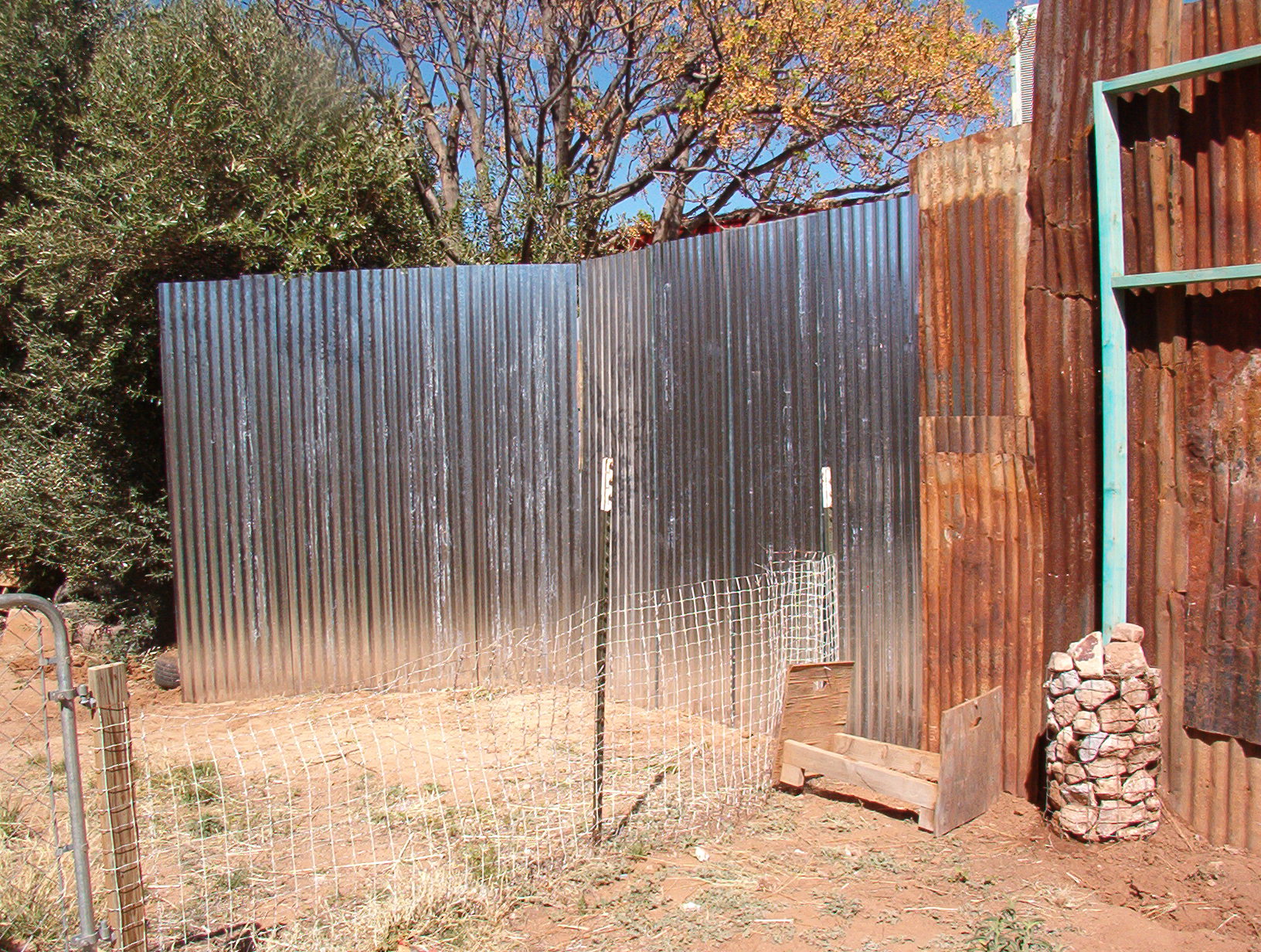
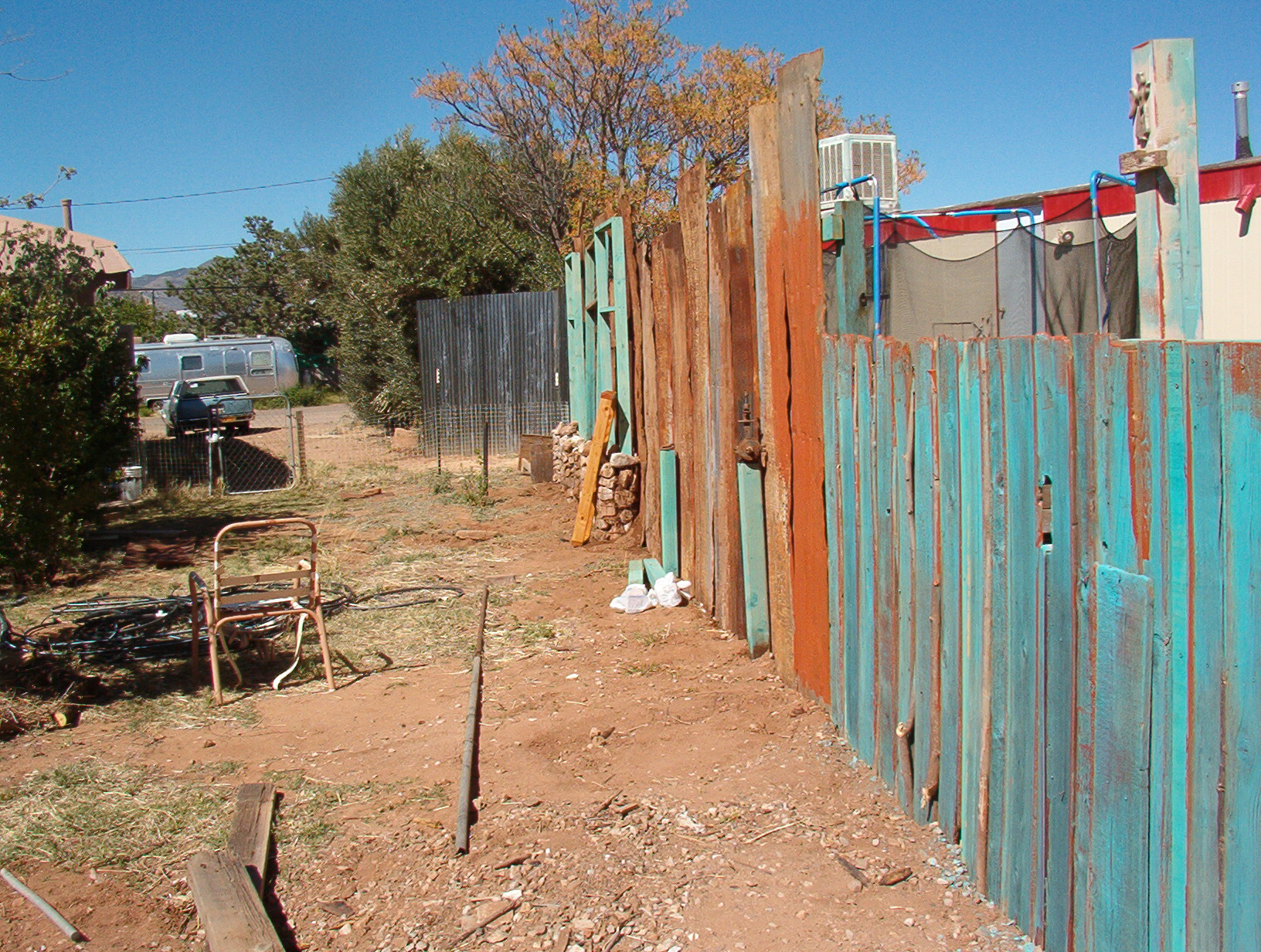
I also finished the fence:
I ran out of recycled rusty steel so yesterday spent $160 for materials to finish these two 8-foot sections (8' tall, some of the rusty stuff is 10', with one piece 12') - stuff today is FLIMSY! and costly!Looking north at the entire fence (that's the neighbor across the street's trailer, my El Camino) - I don't know yet if/how I'm going to close this end off - the tall upright forms, held by rocks in wire, are designed to (anti-wind) stabilize the tall steel pieces I have to way to cut. Now, all I need are 3 climbing rose bushes to plant and train on themI was lucky a couple of years ago - went to our 'dump' area and they actually had some paint there to take, this yellow is from there, watered down, still have a little left to touch up tomorrow - interior paint, but what the heck!3-block form for adobe bricks I made today, it's soaked with motor oil so the mud will slide out - not ideal dirt here, too sandy, will add a little cement and hope it works - plan to level the yard, taking 'extra' and turning it into bricks - I love making adobe, haven't done it since I lived in Taos, New Mexico in 1994-5 (that was perfect mud to mix with sand)
++++
So, without being able to see the man I love I am miserable. There is no reprieve now. I have to work every second of 24-hours (even when I try to sleep) – yes, it makes me soul weary! I ‘try’ to feel grateful. I ‘try’ to think about how I might ‘help others.’ I ‘try’ to have hope. But most of the time I feel like I am running up hill on empty.
In honor of April as Child Abuse Prevention Month, please remember when the big and little problems of your everyday life pile up to the point where you feel like lashing out, don’t take it out on your kids. Try any or all of these simple alternatives:
1. Stop in your tracks. Step back. Sit down.
2. Take fave deep breaths. Inhale and exhale slowly.
3. Count to 10. Better yet, to 20. Say the alphabet out loud.
4. Phone a friend or relative.
5. Still mad? Punch a pillow. Or munch on an apple.
6. Do some sit-ups. If you have someone to watch your children, take a walk.
7. Flip through a magazine, book, newspaper, or a photo album.
8. Pick up a pencil and write down your thoughts.
9. Take a hot bath or a cold shower.
10. Lie down on the floor or just put your feet up.
11. Listen to the radio or your favorite music.
12. Call the Prevention & Parent Helpline at 1-800-CHILDREN, from anywhere in New York, in English and Spanish. The Parent Helpline can connect you to programs and services where you can get help.
For some reason I skipped this year months ago when I transcribed many, many of my mother’s other letters for other years. The first day of 1958 coincided with the start of our 6th month in Alaska. We lived in the rented log house whose lease was up on July 1.
During April and May my father hiked back into the Eagle River Valley and found the land he staked claim to as our 160 acre homestead. In June my grandmother arrived for her first visit (a month) to the territory.
The cabin (shack) we moved into July 1958 and left October
By the end of July we had moved into a primitive rented cabin. By mid-October we moved into an apartment in Anchorage.
The Jeep truck my parents named "The Monster" and the apartments we moved into in 1958 for my 2nd grade year
If you read little else of these letters, read the one written December 29, 1958 — it’s a classic mother letter! It describes what happened – from my mother’s point of view – when my mother took the only outside job with a boss that I ever knew her to have during my childhood. It was a part-time evening job that she held for a little over a month. My guess is that her true Borderline colors were flying, and others reacted to her (heaven forbid!). She could not control her work environment the way she controlled her home and children. The result was a natural disaster.
After working many hours today on transcription, I am tired and sick of my mother! Now, I have to decide what I am going to do about the rest of the 1957 letters that I have left until the very last.
I feel like I have spent the day in a place without any light at all, in the complete darkness of my scrambled, devastating childhood — little of which, of course, shows up in my mother’s bizarrely surreal letters.
++++++++++++++++++++
Borderline Personality Disorder People with BPD, and their family members, sometimes wonder why certain people get the disorder and others don’t. Sometimes there is a clear environmental cause (e.g., a history of psychological trauma), but research suggest that there are also biological factors.
Genetic Links to BPD
Studies of BPD in families show that first degree relatives (siblings, children, parents) of people treated for BPD are 10 times more likely to have been treated for BPD themselves than the relatives of people with schizophrenia or bipolar disorder.
Will My Kids Get BPD Too?
If you have BPD, your kids are at greater risk of having BPD themselves. But, there is also a good chance that they will not have BPD. And, there are things you can do to reduce their risk.
Can BPD Be Prevented?
If the causes of BPD are in part biological, is there anything that can be done to decrease your risk for BPD?
BPD Family Resources
Sometimes it may seem like there is help available for the person with BPD, but not for his or her loved ones. Fortunately, there is a growing appreciation for the need of BPD families to have their own sources of information, treatment, and support.
All children in New York deserve a healthy, happy and safe childhood. This April, it’s your turn to make a difference for the kids in your neighborhood!
To raise awareness of April as Child Abuse Prevention Month, Prevent Chid Abuse New York (PCANY) and its sister chapters around the nation mobilize Pinwheels for Prevention campaigns. As part of these campaigns, New Yorkers make a promise to prevention by distributing pinwheels and hosting educational events throughout the state. Pinwheels are a symbol of a happy, carefree childhood and the belief that getting it right for kids early on is less costly than trying to fix problems after things have gone wrong. Doesn’t every child deserve this opportunity?
Everyone has a role to play in preventing child abuse and supporting families. You can get involved by planting pinwheel gardens in a public place, wearing pinwheel label pins, displaying car and storefront window clings, hosting events for families, and signing a promise to prevention. Businesses, schools, community-based organizations, civic groups, educators, volunteers, decision-makers and families participate.
PCANY offers you the tools to be an active part of Child Abuse Prevention Month. Please contact us to learn more about how to mobilize a campaign in your community. It’s your turn to make a difference for a child!
For more information about mobilizing a Pinwheels for Prevention campaign event near you, please visit our web site or call 1-800-CHILDREN.
First of all, I would like to apologize to any readers of yesterday’s post, +HOOKED ON ‘D’ SMILES – THE HAPPINESS CENTER, who may have inexplicably ended up feeling blue after they read it. I understand now that I should have placed a “This Post May Trigger” warning at the top of it. I didn’t because I had no idea that such a reaction to ‘happiness’ might happen. I did not know that post would trigger my loss and grieving that would wash over me for the rest of the day, and that I would have to go to work to understand where it came from.
I ended up understanding what had happened to me yesterday after I wrote that post because I found myself about a half hour later feeling not like a frog who could blithely and easily hop off my lily pad onto a different one and go on my way, but like a frog whose feet were glued to a stone as I sank into the depths of a sadness that seemed to come from nowhere. My insecure attachment system had been triggered in all its complicated glory, and powerful body-memory emotions nearly swallowed me whole. In fact, I don’t feel today quite like the same person I was yesterday when I wrote that post in the first place.
I understand that as we learn, grow and heal change is SUPPOSED to be part of the process. At the same time I know there is risk involved, risk of feeling what our body has to tell us about the reality of our present life as we have been deeply and permanently affected by the severe deprivations, traumas, abuses and maltreatments of our infant-childhood. When these changes happen, our first response is not likely going to be one of those glowing, authentic, genuine ‘D’ smiles tied to our happiness center that I wrote about yesterday.
++++
As I began today to think about what my next learning-writing step was going to be, I realized that what I encountered yesterday is affecting me today. What I found in the next pages of Dr. Dacher Keltner’s 2009 book, Born to Be Good: The Science of a Meaningful Life, confirms what I know in my whole body. I see that as an extreme infant-child trauma and abuse survivor that most often what is presented by experts to be accurate and truthful, even ‘proved’ information simply ends up making me feel worse about myself.
In its subtle way, nearly everything I encounter about well-being in the world makes assumptions that are not the truth for everyone, certainly not for us survivors. Something that is presented as truth across all people and ISN’T is, most fundamentally, a lie. Perhaps the most important accomplishment of my work on this blog is to highlight the fact that when we read this kind of information our body will ALWAYS rebel against the lie.
We can train our self to recognize when swallowing the lie creates what is actually a wise immune-system response of rejecting toxic poison. The lie resonates with the contamination our connection with our own self that our early abusers did to us. We will know when this happens because our body-feelings well TELL US. It is time for us to pay attention.
It is for presenting the lie as truth yesterday that all of us are ‘born equal’ in regard to our ability to experience the ‘D’ smile that I apologize for. I mentioned yesterday something of the fact that when happiness was not the fare of our early attachment experiences, our happiness center in our left brain simply lost its neurons as our body-brain developed. But I didn’t say enough. My body told me soon after the post was published that all I did was drop a sprinkle of truth into a sea of suspicious lies. I might as well have dumped a pot of boiling water over my head and then stupidly wondered why I didn’t ‘feel so good’.
Let me try to present an example of the disguised lie being cleverly presented with the so-called truth. I found it nicely presented in the very next section of Keltner’s book that appears after what I wrote about yesterday. After my crashing experience of yesterday, I was hyper-alert today to this kind of information that can hurt severe early abusers because assumptions are made about the ‘truth’ that are not true for us.
++++
A longitudinal study is one in which the participants are followed over long periods of time. Repeated ‘measures’ are taken over time about certain characteristics, or variables, these longitudinal studies are designed to understand. Keltner presents one of these studies, and states:
“Ravenna Helson is a pioneer in the study of women’s lives. In the early states of her scientific career in the 1950s, she was interested in the intellectual creativity of women – an area almost entirely ignored by psychological science – and interviewed female pioneers in mathematics and the physical sciences. She then turned her scientific imagination to the question of how identity develops…. In 1959…Ravenna initiated what would become the longest longitudinal study of the lives of women ever conducted, the Mills Longitudinal Study. This study has followed the lives of approximately 110 women who graduated from Mills College in 1959 and 1960 for the past fifty years, and continues to this day. It has led to basic discoveries about how identity shifts over the course of life for women, and how it remains the same.” (page 113)
Ravenna contacted Keltner in 1999 to ask him to add a branch to the study. Because he is an expert at understanding human facial expressions, she wanted him to take a look at the high school yearbook photographs of her study’s participants in order to explore
“…whether her Mills participants’ smiles, captured when they were graduating from college, would say anything about the next thirty years of their lives…. Relying upon one yearbook photo as a potential measure of the person’s identity was problematic in this regard, to say the least.” (pages 113-114)
Keltner agreed to accomplish this photographic analysis and
“…took this measure of the warmth of the smile and related it to the treasure trove of measures Ravenna had gathered on these Mills alumnae…when they were twenty-seven, forty-two, and fifty-two. This included measures of their daily stress, their personalities, the health of their marriages, and their sense of meaning and well-being as they moved into middle age.” (pages 114-115)
++++
Now right here is where my risk-for-contamination from the ‘toxic lie’ meter went off today – loud and clear. Keltner is NOT saying that any measure of early childhood trauma that might have affected these participants’ development from the start of their lives is included in the research analysis. I found online the University of California at Berkeley laboratory that continues to work with this Mills study, and see that over 100 research articles have been published about some combination of findings related to this study.
Finally, it seems, researchers are including measurements of the participants related both to attachment and to emotional regulation in ongoing research. That is progress. But nowhere on their website do I see any direct connection to the kinds of early trauma measurements The Center for Disease Control is using in their Adverse Childhood Experiences (ACE) studies. The ACE Questionnaires that the CDC uses are perfectly designed to gather information about early childhood trauma that would directly apply to the findings Keltner presents as truth and fact in his words that follow.
Because Keltner makes no reference whatsoever to the possible impact early traumas had on building the happiness centers and the early brain of the women in the Mills study, as a severe infant-child abuse survivor I have to take his findings with such a huge grain of salt that it chokes me. In fact, if these kinds of research findings are presented without including both attachment and early infant-child trauma information, I consider them just plain toxic to my own well-being.
Keltner states:
“What we discovered about the benefits of the warm smile [as assessed from the year book photographs] would fit the analysis of the smile developed here….
“Mills alumnae who showed warmer, stronger D smiles when they were twenty reported less anxiety, fear, sadness, pain, and despair on a daily basis for the next thirty years. The smile mitigates anxiety and pain, most likely through the effects smiling has on stress-related cardiovascular arousal. The strong D smilers also reported feeling more connected to those around them; the smile helps trigger greater trust and intimacy with others.” (page 115)
OK, readers, count the flaws in cause-and-effect logic just presented in Keltner’s last paragraph. I can accept that the D smilers “reported less anxiety, fear, sadness, pain, and despair on a daily basis for the next thirty years,” but there is something wrong with the logic that follows from a severe infant-childhood survivor’s point of view.
We are left swallowing the toxic suggestion that if we were ‘better’ people and we smiled a D smile more often, we would have our ‘anxiety and pain’ mitigated. Well, wouldn’t that just be so nice! How survivors must wish to have the same chances as non-survivors do to react to all the experiences of life in the way that they can and do.
For researchers to suggest that there is something superior about “strong D smilers” compared to others is ludicrous. If early severe infant-childhood abuse survivors had felt “more connected to those around them” – and others had been more connected to them — while their brains were built in the beginning, the traumas and abuse would not have probably happened in the first place.
I find Keltner’s strange mixing of truth with intimations of control of the factors of one’s life by smiling to be toxic to me. One of the lessons I learned from my post-post experience yesterday is that not only was I nearly NEVER encouraged or allowed to be happy as a child from birth, and therefore could not build a big, strong, D smiling happiness center in my brain, but opposite to that immeasurable loss the corresponding fact that unbearable suffering overwhelmed my right brain in its development, as well.
I don’t ‘simply’ suffer from the consequences of not being able to feel happiness from birth, but also suffer from great pain that I doubt someone like Keltner can ever begin to imagine or understand. But for researchers to make the stupid assuming jump between happy D smilers having better lives because they self-empowered themselves in their choices and decisions as opposed to non-D smilers who have less lifelong well-being because they evidently just don’t TRY HARD ENOUGH makes me mad.
That’s right up there with saying, “Of course you didn’t fall off the edge of the world. You simply didn’t walk far enough. That has to be a fact because the world is flat and if you had walked far enough you would have fallen off. That you are here now telling your tale has nothing to do with the world being round. It is simply proof that you didn’t try hard enough to walk far enough.”
Severe infant-child abuse survivors cannot argue with 98%+ of the research findings that ignore the facts of our existence.
++++
Keltner does not rest with just throwing a poisoned sugar cube at us, either. He pours an ocean of sappy sweet (toxic-shaming) sugar over his following pages without having a clue about how his statements are completely biased against severe infant-child abuse survivors:
“The warmth of a woman’s smile also predicted a rising trajectory in her sense that she was achieving her goals. Women with warmer smiles for the next thirty years became more organized, mentally focused, and achievement-oriented. Forget what people have told you about creativity and achievement emerging out of despair and anxiety. Not so. Dozens of scientific studies have found that people who are led to experience brief positive emotions are more creative, expansive, generative, synthetic, and loosened up in their thought. Our Mills women who showed warmer smiles reflected these benefits of positive emotion across their lives.” (pages 115-116)
Nothing like a blithe inconsideration for what has been stolen from survivors, or for the weight of the burdens we had to bear from the time we were tiny and that still reside within the fiber of our body-brain. Rethinking this paragraph from a survivor’s point of view, and realizing the fact that “despair and anxiety” built our body-brain from the start as they built themselves into us, how hard do we have to work to even begin to achieve what non-abuse survivors can with relative ease? From my point of view, I am not so much interested in how the “good-built” people get better. I want to know how the “trauma-built” people do.
Maybe Keltner could enlighten me (on my father's left) on how this overwhelmed, ostracized, isolated, unloved, battered, hated, hurt, lonely, shunned, rejected, rigid, terrorized, terrified, anxious, dissociated, full of despair, hopeless, helpless and terribly sad so-called 'child of the devil' (from the time of my birth) might be able to build into herself the kind of safe and secure attachment happy left brain and correspondingly a without-traumatized-emotion right brain that would have made me into a D-smiling woman like Keltner's research showcases and promotes. I am not feeling sorry for myself. Infant-child abuse lifelong consequences are real.
Keltner continues with the toxic syrup:
“Our results concerning the relationships of the Mills alumnae were perhaps even more striking. These women were brought to UC Berkeley to spend a day with other individuals, as well as a group of scientists who wrote up personal narratives based on their impressions of the women. Women with warm smiles made much more favorable impressions upon the scientists in this context, suggesting that the smile enables more positive social encounters.” (page 116)
Yes, I suppose a warm smile has this effect on others. But how does this work for survivors whose nervous system was built upon despair and anxiety, who had to develop massive dissociational abilities in order to survive, who have then entirely different body-brains as a result? I want to know how many severe abuse survivors in the 1950s ever made it into a college in the first place so that they could be included in this study?
“Turning to marriage, those women who displayed warmer smiles were more likely to be married by age twenty-seven, less likely to have remained single into middle adulthood, and more likely to have satisfying marriages thirty years later…. Women with warmer smiles had healthier marriages.
“Finally, women with warmer smiles at age twenty reported a more fulfilling life at age fifty-two. Across young and middle adulthood, women prone to expressing positive emotions experience fewer psychological and physical difficulties and greater satisfaction with their lives.” (116)
Keltner has the cart before the horse as far as I can tell. If a person starts off life advantaged, and that means with safe and secure early attachment that build all the self worth and strong, clear sense of self and a great big happiness center at the same time they are not battered, beaten, shamed, shunned, neglected, tortured, etc. so that their left brain ‘negative emotional center’ is not massive and overwhelming, of COURSE they will have a better life!
So, in the end I am at least most impressed with other researchers who have the smarts to understand that without measures of attachment and emotional regulation all the findings of this 50-year+ study show nothing but the benefits of having an advantaged life. I will try to locate the findings of studies that HAVE now included these measures, but I see no indication that any of the 100 papers written from the Mills study include any assessment of the most important factor influencing the well-being of a person throughout their lifetime – presence, absence and/or degree of early developmental deprivation, abuse and trauma.
If researchers are not adding in some measurement of infant-childhood traumas such as the Center for Disease Control’s Adverse Childhood Experience questionnaires, the research findings are still going to be incomplete and relatively useless. By excluding this information from human well-being research, the findings are invalidated. The problem with trying to gather this information from the Mills Study participants at this late stage is that nobody can ever go back and find out these measures from the participants of the Mills study that are already dead. Considering the CDC’s finding that severe early abuse survivors die on the average of 20 years earlier than non-survivors, the most important information that this study could have offered will be forever missing.
++++
At the same time that I am disappointed with important research that takes place from a position biased in favor of non-child abuse privilege, I can refuse to buy the corresponding bias that suggests that there is something wrong, faulty and inadequate about those of us who never had equal positive advantages in the first place.
I would rather these researchers include a disclaimer with their findings: “We are biased in favor of the privileged people who were not traumatized in their early-infant childhood periods of development. We don’t care about our biases so we present our findings as fact for all and refuse to include measures of infant-childhood trauma into our research design. We have the education, the University and federal backing, and all the power so we can do exactly as we wish. The rest of you be damned.”
Their implied meaning? “The rest of you could change yourself to be like US if you wanted to. You just don’t try hard enough to smile that big genuine happy center D smile. You got what you deserved, and continue to get what you deserve because you just aren’t as good as we are. Accept your lot or change it, but don’t expect us to really give you any useful, truthful information you can use to improve your lives. We only care about ourselves.”
Yes, I am disgusted. Interesting, disgust is a genuine human facial expression connected to an automatic physical response against eating toxic things that will poison us. Research findings that blame, shame and condemn survivors because advantaged biases are not recognized, and because the most important information is ignored, are toxic to early abuse survivors.
I bought the research yesterday and swallowed the poison that presented and highlighted the kinds of opportunities I never had from birth coupled with the horrible suffering I did have and left me feeling somehow accountable for the consequences of how what was done to me affected me. The research findings told me about advantages that happy babies and young children have for the rest of their lives in contrast to the heavy penalty we survivors live with in terms of our lifetime of suffering. Nowhere did I see any compliment given to those of us who endured and survived what many might not have been able to, even though we did not end up able to be like those D smiley people.
I am not so gullible today. It is my firm belief that any research whose funding can be tracked on any level into a federal ‘giving pool’ source, must be required to include consistent and accurate measurements of early trauma and attachment. Otherwise, the research is biased toward the privileged against infant-abuse survivors and is therefore polluted, contaminated, toxic and useless.




 Stop the Storm
You must be logged in to post a comment.