
+THINKING ABOUT THE DIFFERENCE BETWEEN CHILD ABUSE AND NEGLECT – MY REVIEW OF ‘THE GLASS CASTLE’, A BOOK I HAVE NEVER READ

++++++++++++++++++++++++++++++++++++++++++++++

Differences between Child Abuse and Neglect

++++++++++++++++++++++++++++++++++++++++++++++

I am going to pretend this morning that I am critiquing a book.  “All things are possible under the sun,” and like performing surgery on an invisible patient I am going to express my thoughts about a book I have never read.

My sister told me about this book last night in our telephone conversation.  She first heard about it while operating her used book store in Ballard (Seattle).  Customers coming up to her seeking information asked over and over again, “Where can I find the book written by that woman who was abused when she was a girl?”

“What book is that?” my sister wondered.  So she found herself a copy and eventually read it.  Perhaps you have read it, too.

++++

The Glass Castle: A Memoir by Jeannette Walls

(1,311 customer reviews)

++++

So am I writing today about the book and its story, or am I just writing about what my sister told me about the book from her ‘take’ of it?  Well, a little of both, I guess.  Will I ever read the book?  I’m truthfully not at all sure.   I make it a polished habit not to read anything while I am engrossed in my own story hunting and writing because I do not wish to contaminate my thinking.

Perhaps I have a strange attitude, but it is born from knowing some important information about myself and about how “I” and my brain-mind operate.  Because I have suffered from dissociation ever since I was a very tiny child, and because I now know this, I understand that my brain-mind can put whole batches of information places I do not know about – most, if not all of the time.

I do not want to be writing away while I am in one dissociated state or another and have whole conglomerations of thoughts pop into my sphere of consciousness when I am not aware it is happening, or aware of where the information is coming from.

My sister assures me that because my-our story is so different from Walls’, and because my writing style is so different from hers, this should never be a problem for me even if I DO read her book.  But I lack my sister’s confidence.

So I am left today with thoughts bubbling around beneath the surface of my thoughts today coming from my sister’s description of the story printed on this book’s pages.

++++

I know neither me nor my siblings have anything like a corner on the market about what it is like to grow up with a crazy parent.  Walls evidently has us beat.  She grew up with two of them.  But my siblings and I can be assured that we are also closer to belonging to the eclectic group of nutty parent survivorship than we are to being a part of the ‘close to ordinary’ or ‘ordinary’ childhood survivor group even though our story, and particularly my story, is about severe child abuse rather than mostly about the kind of child neglect Walls describes.

Yet what my sister reiterated several times last night in her conversation with me about this book is that the public does not seem to understand that there is a fundamental difference between being neglected as a child growing up and being abused.  Walls’ did not seem to suffer from abuse, no matter how neglectful and nutty her parents were.  She and her siblings were obviously seriously deprived of an ‘ordinary’ childhood experience, and suffered from severe deprivation due to neglect, but these children-people were evidently not abused as children the way my sister and I understand child abuse.  Not even close.

From my sister’s description of this book, it sounds as though at one point or another one or the other of Walls’ parents were lucid.  It also sounds like Walls’ parents were able to (1) love them and (2) not commit ‘soul murder’ on them.  Because it is the very early infant and very young childhood growth windows concerned with loving secure attachment that build the foundation of the developing brain, ANYONE who has any kind of safe and secure attachment to loving early caregivers is off to a running start from the beginning of their lives.

This running start allows fundamental brain structures, patterns, and brain circuits to form themselves in an adequate way so that they will continue to operate during all the ensuing time that little person experiences the events of their ongoing childhood.  Without these relatively dependable positive early caregiver interactions the infant-child’s brain will not be based on ‘ordinary’ benevolent world information.  This fact creates a situation where the growing child is left to play an entirely different ball game, with entirely different rules, on an entirely different playing field than any relatively safe and securely attached brain-mind child will ever know.

++++

The quality of these very early attachments determines how a young child can bond and attach to siblings as well as to parents.  Walls and her siblings were evidently attached to one another.  It sounds as though the very youngest child was left bereft of the sustenance of the attachment to her siblings, and was also left under the care of parents whose mental illnesses caused further and further deterioration of their brain-minds.  She did not turn out so well.

Walls’ story sounds entertaining, mesmerizing, fascinating, titillating, if not entrancing.  Yet while it sounds like a story of terrible neglect and madness, of starvation and deprivation, it is not the story of terrorism that my and my siblings’ story is.  I don’t think the Walls children were raised in hostile enemy territory or brutalized by acts of parental terrorism.

I believe that because the root of my mother’s mental illness was established in a childhood dissociative disorder, and because her mental illness originated in disoriented and disorganized insecure attachment conditions, and because what grew into her brain-mind and out into the way she lived her life caused her children to be projections of my mother’s fragile imaginary friendship – and in my case her imaginary enemy – needs, none of us stood any chance of developing our self as we “grew down into the world” in any ordinary fashion.  This is created for the Lloyd children a very different reality than the one the Walls children evidently grew up in.

Walls’ story sounds like it expresses living madness, but it  does not sound like her parents were terrorists.  We as a nation now clearly know what terrorist actions are like from the experience of the events from the September 11, 2001 attack on the World Trade Center and the Pentagon.  Those acts of terrorism were different than any that might be taken in a military combat situation against trained troops sent directly into a war zone.  9/11 devastated innocent civilians.

Terrorism penetrated the boundaries of our nation and overtook the boundaries of everyone who was attacked and left dead or devastated – on every level.  This attack changed us as a nation.  How much more so does terrorism change the development of infant-children?  The experience of 9/11 was a very different one than allowing our homeless to starve to death on our nation’s streets.

My sister told me that one commentator of Walls’ book portrayed her story as being told “without self pity.”  While the ongoing endurance and positive life outcome for Walls and her older siblings sounds if not heroic, at least miraculous and amazing, let us not lose sight of the differences between stories told by people who were directly abused through acts of brutality and terrorism from very early in their life from those stories told by people who did NOT suffer from soul murder, boundary violations by their caregivers, acts of violence and torture, and deprivation of vitally required early caregiver love and attachment.

It is critical that we know the difference between child neglect and abuse.  It is not helpful for the purposes of understanding, intervening, preventing, protection of children or healing the effects of severe child abuse and/or neglect to be comparing peanut butter with a light socket.  It is important that we be able to accept the ‘pain-full’ reality that belongs to the stories severe child abuse survivors tell, and know the difference between this level of overwhelming pain and so-called ‘self pity’.

In any case, we are left needing to examine the resiliency factors that allows victims of both severe childhood neglect and abuse to endure and sometimes to thrive.  Those resiliency factors are ALWAYS there if we look, and know what we are looking for (and at).  Some might call these “the wild cards.”  I do not.  I believe there is nothing imaginary or ‘wild’ about them.  They are very real factors that exist in a child’s life that allow them to “go on being” under extremely malevolent early developmental conditions.  If and when I ever choose to read Walls’ book, these resiliency factors are what I would be looking for in the story that she tells.

To not recognize and accept that powerful resiliency factors DID exist for Walls’ and her siblings, just as they existed for myself and my siblings, is to deny the fundamental construction of our human species.  Just as identifiable and definable circumstances create miserable childhoods, so also do identifiable and definable resiliency factors allow children to survive them, and sometimes to thrive in spite of them.

Reality, folks.  Do not forget reality.  None of us are super human.  Not me, not my siblings, not Walls, not her siblings.  Turning any kind of childhood tragedy into any kind of ongoing adult triumph means that we had powerful gifts provided to us in the midst of childhood traumas of any kind – or we would not be here to tell our stories.  Pretending otherwise is just that – imagining a world where reality’s rules do not apply.

We have a word for pure imagination:  Fantasy.  It is only in the world of fantasy that we can imagine that severe child abuse is the same thing as severe deprivation through neglect — and creates the same consequences.  Reality dictates otherwise.

++++++++++++++++

In my case, my mother malevolently and maliciously controlled every aspect of my growing and developing self for 18 years so far as was possible for her to do.  She accomplished this through physical, emotional, verbal, psychological, mental and spiritual abuse.  I do not make this statement with ‘self pity’.  I make it in recognition of fact.  She did everything she could imagine to make me miserable.  That she succeeded should be no surprise to anyone, not even to me.

In the Walls’ case, those children each had a self TO rescue, and a self with which to help rescue one another.  My mother’s violating abusive intentions were always intended to destroy her enemy she thought was me.  That I came out of my childhood with any semblance of a self at all is a miracle.  As a result of extreme child abuse, everything I ever do is about trying to find and rescue my damaged self.  I do not believe this would be the case if my childhood history had been of neglect instead of abuse.

That, dear readers, amounts to a waste of what should have been a perfectly good life time.

++++++++++++++++++++++++++++++++++++++++++++++
+RUPTURE IN RELATIONSHIPS ALWAYS NEEDS REPAIR – MY MOTHER’S REPAIR LETTER

++++++++++++++++++++++++++++++++++++++
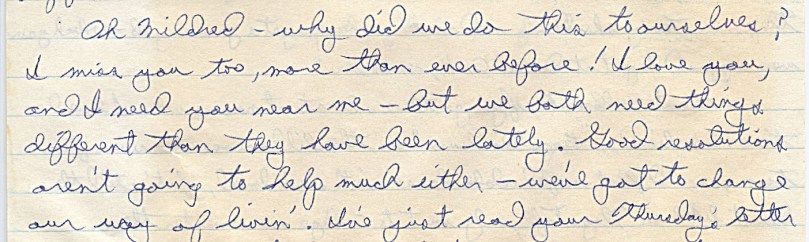
The saga continues.  Dr. Allan Schore writes in great detail about how patterns of rupture and repair are built into an infant’s developing brain — either under optimal conditions or under malevolent ones.  Nobody can ever be completely ‘in synch’ with others all of the time.  Ruptures are to be expected.  It is critical that healthy patterns of repairing these ruptures get built into the new brain through safe and secure early care giver interactions.

Without healthy, safe and securely attached rupture and repair patterns, insecure attachment patterns will predominantly ‘rule’ the brain — and a person’s resulting actions.  The dominant patters will be of rupture without hope of repair.  Humans do not do well with that scenario, and thus adapt as they find ways to accomplish the needed repair.

I DO believe that my parents were doing the best that they could do with one another — given what they knew and what they had to work with.  This letter gives us some clues about how the ‘repair after rupture’ part of their relationship worked.

*1963 – September 9 – Mother’s “repair” response letter to dad

In context:

++++++++++++++++++++++++++++++++++++++
Please don’t rush by the active link I put up there in the post!  This link leads to important insecure attachment information: 

patterns of rupture and repair

This information describes how in early infant-caregiver interactions, the infant is never the one who causes the rupture.  It is always the caregiver, and it is vitally important that the one who causes an infant-caregiver  rupture is the one who repairs it.  Once an infant can move around in the world by itself some distance from its caregiver, rupture and repair patterns already built into the brain begin to expand their affects — and these expanded patterns begin to build what we can call the

‘shame reaction pattern’.

The increasing complexity of the brain-mind and nervous system are fundamentally tied into how the rupture-repair patterns were established in early infant development, and continue to be ‘directed’ by information the growing infant-child receives throughout the ‘shame reaction’ stage of early human development.  As this new stage of mobilization within the wider world is safely and securely negotiated with others, what our body-brain knows about rupture and repair can be expanded to include our every more increasingly complex interactions between ourselves and other members of our social species.  — see

shame and the nervous system

++++++++++++++++++++++++++++++++++++++

+UNEQUAL POWER BETWEEN CLIENTS, PATIENTS AND MEDICAL PROFESSIONALS = DANGEROUS!

+++++++++++++++++++++++++++++++++++++

Healer, Heal Thyself!

Digest for Power In The Helping Professions

+++++++++++++++++++++++++++++++++++++

I would like to recommend a book that is used in the training of the best psychotherapists and analysts.  I believe it should be a required study for anyone in any branch of the medical professions!

If you are of curious mind and don’t mind stimulation of your thinking, I would suggest this book not only for medical professionals, but for anyone who has ever had the feeling that medical treatment can be inhumane in terms of the attitudes of the supposed helpers – including those who consider it their main job to dish out drugs!  Clients and patients BEWARE.  If your ‘professional’ does not KNOW the information in this book – there’s a problem!!

I think these professionals are around sickness so much, their own minds and attitudes get sick, and they can be so cocky and sure of themselves and their power that they can become extremely toxic when they are ‘out of balance’!  This book has information that can help professionals be accountable for their biases, attitudes and often their stupidity and rudeness.  It will help consumers to be more responsible for their own care.

Beware, be-wary, be-aware.  If you ever walk out of any professional medical appointment of any kind and feel icky, disrespected or even contaminated, it is NOT you that’s the problem.  I guarantee it!!  Take a look at this book — get a copy from your public library — order yourself a copy — it is worth every penny you will pay for it!!

Power in the Helping Professions by Adolf Guggenbuhl-Craig (Paperback – Feb 23, 2009)

And, yes, something happened to me today that instigated the posting of this title — but I am too mad to write about it now!

+++++++++++++++++++++++++++++++++++++

Prevent Child Abuse New York Blog


October is Parent Involvement MonthPosted: 09 Oct 2009 02:41 AM PDTToday’s youth are tomorrow’s leaders. Their success, in and out of the class room, is the foundation of a prosperous future for all of us.

October is Parental Involvement Month, a time to highlight various ways parents can work with their children’s school to accomplish a shared goal—helping children learn and be successful.

Studies have continually shown that students from families of all different backgrounds and incomes who have involved parents are more likely to: earn higher grades and test scores and enroll in higher level programs; be promoted; pass their classes and earn academic credits; attend school regularly; have better social skills, show improved behavior, and adapt well to school; and graduate and go on to post secondary education.

Quite simply, research shows that students learn more, have higher grades, and have better school attendance when parents are involved.

Tips for becoming more involve in your child’s education:

  • Look for school activities or events that you could be involved in.
  • Attend Parent teacher meetings at your child’s school
  • Eat dinner together as a family.
  • Help your child with homework.
  • Take your child on regular trips to the library.
  • Have a family game night. Have your child keep score.
  • Have a family reading night. One person can read aloud, or everyone can read silently.
  • Talk with your children about their day. What was the best part?

PSA on parental involvement from our friends at Prevent Child Abuse New Jersey.

+++++++++++++++++++++++++++++++++++++

+AFTER 100s OF LETTERS, THIS ONE’S GETTING CLOSER TO SHOWING THE REAL WITCH MOTHER

++++++++++++++++

(This letter also posted:  *1963 – September 4 – Letter from dad to mother)

++++++++++++++++

Hang onto your hat, the top’s down and we’re going for a ride……

1963 August 6 - Here for the first time in all my mother's letters we can begin to catch a glimpse of a glimmer of the real Mildred

++++++++++++++++

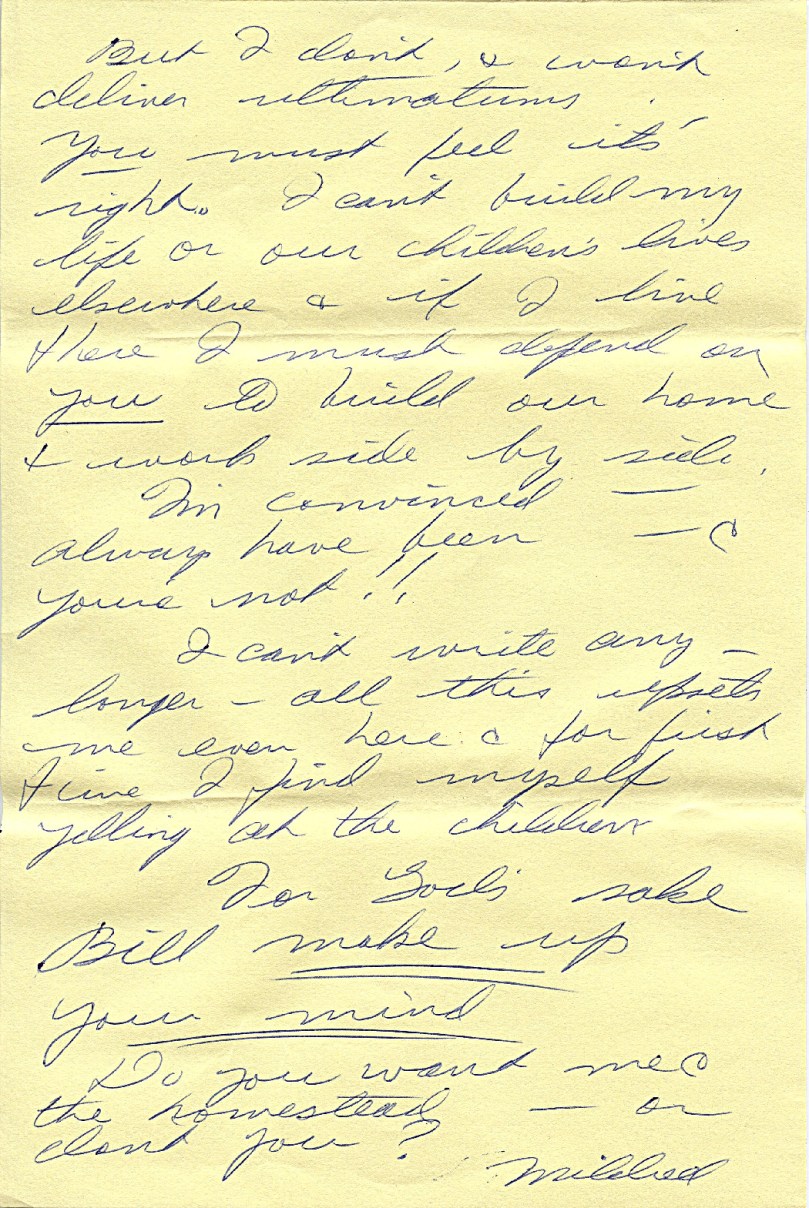
This letter is mother’s (to me, shocking) response to dad’s long (to me, thoughtful and honest) letter of —*1963 – September 3 – Dad’s Letter to Mother While the Rest of Us Are In New Mexico.   Here is an excellent opportunity to look at the pitiful and destructive dynamics in my parents’  relationship.  This is a rare letter because in it she is honest about how she felt both about her mother and my father — and neither honesty nor the truth was my mother’s strong suit in these hundreds of letters of hers I am transcribing.

This letter shows the kind of ‘switching’ that my mother would do, and shows how, even on pieces of paper with a pen as a weapon she would work herself up into a rage filled frenzy.  The best thing for us children would have been — a long time prior to when this letter was written — for our parents to have chosen a place for us to live in so we could get on with some semblance of growing up while having our needs met.

We were growing up anyway.  *1963 – Trip to Santa Fe – Here at Grand Canyon – mom and kids It was not OUR choice for five of us plus my mother to run over two thousand miles away from my father, or to be jammed into a tiny motel room in a strange town, to start school late in the year, to have no certainty about what was going to happen next in our lives.  And as much as any of us children might have loved the homestead, it was not our biggest need to have ourselves dragged back there as pawns in my mother’s sick, distorted ‘mind games’ with my father.

++++

Another factor that is of course not mentioned in these letters flying back and forth between my parents is the fact that we had lost what might as well have been another member of our family — the log house.  It had been sold.  In order for massive ‘trauma drama’ to be enacted within a family, there must be a stage and a setting.  The dynamics of my mother’s chaos worked prior to this time with three main settings:  the log house in Eagle River, the homestead, and the Panoramic View Apartments in Anchorage.  She had lost the log house, and that fact — like a child growing up and leaving the family — changed how mother’s, and hence our drama was to play itself out after this time.

(For background on the truth of mother’s actions during the year prior to the time this letter was written in 1963, read particularly her late summer, fall and winter letters here: *1962 – MOTHER’S LETTERS and the letters *1963 – Mother’s Letters written prior to our leaving Alaska in August of 1963)

In this September 6, 1963 letter she tells dad:

I don’t mind if we don’t live there this winter as it isn’t our fault but I’m not the one for you if you feel we should buy a house.  I can’t return under such circumstances.  I simply can’t.  I know I’ll yell, scream and fuss again and I won’t….Bill if we don’t live on the homestead I don’t want to live in Alaska with you.

It seems clear to me from letters months and years prior to this that it has always been mother who orchestrated the moves off the mountain and  Dad simply obliged her.

From my point of view, certainly toward the second half of this letter, mother is writing ‘crazy-talk’!  She tells him,

But I don’t, and won’t deliver ultimatums.  You must feel it’s right.  I can’t build my life or our children’s lives elsewhere and if I live there I must depend on you to build our home and work side by side….I’m convinced – always have been – and you’re not!!

++++++++++++++++

Please follow this link to read

*1963 – September 6 – Mother’s Wicked Response to Father From Santa Fe

++++++++++++++++++++++++++++++++++++++++++++++++++

In a letter September 5, 1963 she stated about the opposite of her letter 1 day later:

You’ll know what you want to do after your trip – live there now or next summer.  I don’t care.

I want you – I love you – and will work out our problems together.

I am absolutely lost without you!!

Write soon and often.  Your ever loving wife, Mildred -”

++++++++++++++++

+OK — AND THEN — THERE’S MY DAD’S WIT!

+++++++++++++++++++++++++++++++++++

I can’t resist this.

See comments and you’ll know why!

Who needs Shakespeare when you've got Hank Williams?

+++++++++++++++++++++++++++++++++++

+HECK OF A LETTER! MY FATHER’S SEPTEMBER 3, 1963 LETTER TO MY MOTHER

++++++++++++++++++++++++++++++++++++++++

*1963 – September 3 – Dad’s Letter to Mother While the Rest of Us Are In New Mexico

++++++++++++++++++++++++++++++++++++++++

This September 3, 1963 letter is — of course — a private one my father wrote to my mother just after she and we kids arrived in Santa Fe, New Mexico while he stayed in Alaska and worked.  It describes that immediately after they received title to 120 acres of the homestead, they mortgaged it.

This letter is telling because it describes my father’s thoughts as they parallel all the confused, “mixed up” statements my mother makes in her ongoing letters.  He is her husband.  He appears to participate with her in all of it.  My father writes in this letter about the homestead, more than four years after they first moved onto it:  “But after all the wondering, worrying, fretting, back-and-forthing, this is it!  Either that’s our home or it isn’t, and now’s the time to decide.

Reading this letter does not help me one single bit in understanding my father!  That disappoints me, but it’s a fact.  Their marriage was none of my business.  The decisions they came up with over time directly affected all of their children, as any parental decision is likely to do.  But here I feel as if I am still trying to peer though a closed door without a window to see anything about what’s really going on past it — no different now than if I was trying to understand their world when I was a child myself (though it certainly never occurred to me to think about trying to).

How does one judge ‘normal’ or ‘ordinary’?  Even to me now their problems seem so strangely proportioned.  They are not talking about what color to paint the house they’ve been living in for 20 years here.  It seems that chaos was so ‘ordinary’ in our lives that nobody, certainly not my parents, ever noticed they were in the thick of it.  Perhaps it’s like thinking that living in the center of a tornado was normal.  Our family reality just WAS, without question,  in part because there never was any other reality visible within our world to compare our version of life against.

++++

This letter belonged to a private conversation between my parents.  The contents of it related to decisions that of course affected all of their children.  Yet, 46 years after it was written I still feel like a voyeur reading it, let alone transcribing it, let alone publishing it here on the world wide web.  Obviously it survived.  Obviously it somehow found its way into my house, into my hands, onto this clipboard of mine sitting here beside my computer at this moment.

But I ask myself the questions, “What is your purpose in doing this, Linda?  What do you hope to learn, think you might be able to come to understand about your parents, about their thinking, about their relationship, about the way they made their decisions together — and about how they observed their lives separately and then combined their two separate selves to create a marriage and hence created THE LIFE of their children?”

Do I see in this letter, for example, any of the mental, emotional, verbal and psychological abuse I suspect — no, I KNOW — went on with my mother as perpetrator and my father as victim — during my childhood?  It seems that they so shared their reality that there wasn’t a separate ‘her’ and a separate ‘him’.  I could say that was ‘ordinary’, but I also know long after I left home my father divorced my mother after staying with her for more than 30 years.

Was my father such a ‘giving’ man and such a ‘giving in’ man that he simply found a way to let her push him, push at him, for all those years and he just kept moving in whatever direction the force of her force — forced him?

Reading my father’s letters leaves me feeling as if I am standing dangerously close to an erupting volcano.  I am completely cloaked with soot and ashes.  I see the roiling lava swiftly approaching me where I stand.  Yet my feet are so fixed in place that I cannot move to safety, even if I had the thought to do so.

The air becomes so dark with smoke that I can no longer see my hands in front of my face.  I hear a deafening roar, and a cracking, breaking sound.  The earth begins to quake beneath my feet and I crumple to the ground and I cannot get up.

Unlike my mother in her childhood story of a city devoured by flames, I am completely alone.  My only hope is that my father will love me enough to save me.  He never did.

This September 3, 1963 letter shows me why he never could.  It unsettles me to realize that my father was absent to me because he absolutely shared my mother’s reality.  There was no ‘other dad’.  Just this one.  He did not exist in my world, only in hers.

++++++++++++++++++++++++++++++++

So what can I make of it when father writes this in his letter?

I enjoy the notes and post cards the kids have sent.  I love them all (the kids, I mean), and not just as a group but each one for himself and herself.  It all seems so familiar, writing something like that, only difference is there’s one more now.

I do not know!  The very old, often beaten into me by my mother, thought pattern arises — “We would all be fine if it wasn’t for Linda.  Linda is the cause of all the troubles in the family.  She’s more trouble than all the other children put together.  ‘Trouble’ should have been her middle name.”

Yes, my left intellectual brain knows now that I was my mother’s dissociated imaginary enemy.  But that fact does not always comfort me.  I have to reach for it — like I would have to reach for an umbrella before I wandered out into a soaking rain.

Mental illness.  Illness that affects the mind.  This letter is in the thick of it, and it’s an effort at this moment as I transcribe this letter not to feel sucked right back into it!  Crazy.  Crazy making!  “Stop this train!  I want to get off!”

++++++++++++++++++++++++++++++++++++++++

Letter appears in context with  *1963 – Mother’s Letters

++++++++++++++++++++++++++++++++++++++++

++++++++++++++++++++++++++++++++++

JUST FOR YOUR INFORMATION:

Depression and Heart Disease: 5 Facts You Should Know

+LINK TO MY MOTHER’S HIGH SCHOOL PICTURE – AND A PIECE OF NEWS

+++++++++++++++++++++++++++++++++++++++++++++++

*1943 Mother – Her Senior High School Picture (and her high school sweetheart’s)

+++++++++++++++++++++++++++++++++++++++++++++++

*1963 – August 18 – Letter From Dad to Grandma

++++

*1963 – August 19 – Letter From Dad to Mother – He’s in Alaska, we’re on way to Santa Fe, New Mexico

++++

*1963 – August 26 – Letter from Dad to Mother –

++++

*1963 – August 5 – Fire Damaged Copy of Patent Number 1232827 for 120 Acre Homestead

++++

*1958 – August 26 – Mother Voted on the Alaskan Statehood Referendum

++++

*1966 – May 3 – Letter from Eagle River Baptist Church – Mother Born Again

++++++++++++++++++++++++++++++++++++++++++++++++++++++++++++++

This just in from:

Prevent Child Abuse New York Blog


New Medical Specialty Approved for Treating Child Abuse

Posted: 07 Oct 2009 08:31 AM PDT

After nearly a decade of work, physicians have succeeded in getting the American Board of Pediatrics to offer a specialty in child abuse treatment. Supporters of the specialty said such experts are needed to teach medical students and residents about child abuse.

The first exam in the specialty will be offered at sites around the country on November 16. An estimated 225 physicians are expected to take the test, which will be given on alternate years, and the first certificates will be issued by January 2010. The boards issue certificates in 37 general specialty and 94 subspecialty areas. Board certificates are held by about 85% of physicians licensed in the U.S.

+++++++++++++++++++++++++++++++++++++++++++++++

+STEALING OUR CHILDREN’S LIGHT

++++++++++++++++++++++++++++++++++++++++

Every time we try to get our adult attachment needs met through our children we are placing them in our darkness and stealing from them the light they need to build their own strong self so they can live their own good life.  Doing so is the surest way to destroy our children’s lives — which is certainly not what we hope for.

It is critically important that we foster our children’s attachment to us as parents, not the other way around – and not mutually.  Yes, parents need to be bonded with their children, but that is not the same thing as parents having to have their attachment needs met by their children.  Parents are their children’s care givers.  We can only activate our care giving system when our attachment-need system is deactivated, or turned off.  Otherwise the whole natural process of raising healthy-minded, safely and securely attached children is contaminated, and unresolved trauma is passed down the generations.

Adults, particularly those who were not raised themselves by securely attached adults who knew how to meet their own attachment needs appropriately outside their parenting relationship – and thus have a resulting insecure attachment disorder coupled with an empathy disorder themselves — need to become crystal clear about what their own attachment needs are and how to get these needs met appropriately without involving their children.

If we ourselves have an insecure attachment disorder, we will be forever at risk for passing this insecure attachment pattern down to our offspring no matter how hard we try not to.  We need information, we need it NOW and we need it desperately!

I am most strongly recommending the writings of Dr. Daniel J. Siegel.

— WEBSITE:   Mindsight Institute

Parenting From the Inside Out by Daniel Siegel and Mary Hartzell (Paperback – April 22, 2004)

Better Parents, Better Spouses, Better People (Wired to Connect: Dialogues on Social Intelligence, 2) by Daniel J. Siegel and Daniel Goleman (Audio CD – 2007) – Audiobook

The Developing Mind: How Relationships and the Brain Interact to Shape Who We Are by Daniel J. Siegel (Paperback – Oct 22, 2001)

The Mindful Brain: Reflection and Attunement in the Cultivation of Well-Being by Daniel J. Siegel (Hardcover – April 1, 2007)

The Neurobiology of “We”: How Relationships, the Mind, and the Brain Interact to Shape Who We Are (Sounds True Audio Learning Course) by Daniel J. Siegel (Audio CD – May 1, 2008) – Audiobook

Mindsight: The New Science of Personal Transformation by Daniel J. Siegel (Hardcover – Jan 12, 2010)

Healing Trauma: Attachment, Mind, Body, and Brain by Daniel J. Siegel, Marion F. Solomon, and Marion Solomon (Hardcover – Jan 2003)

The Healing Power of Emotion: Affective Neuroscience, Development & Clinical Practice (Norton Series on Interpersonal Neurobiology) by Diana Fosha, Daniel J. Siegel, and Marion F. Solomon (Hardcover – Nov 16, 2009)

Trauma and the Body: A Sensorimotor Approach to Psychotherapy by Kekuni Minton, Pat Ogden, Clare Pain, and Daniel J. Siegel (Hardcover – Oct 13, 2006)

++++++++++++++++++++++++++++++++++++++++

Adequate parenting means we can respond adequately to the needs of our children.

Please also see on this blog:

*COLLINS ON RESPONDING TO NEED – Part One

*COLLINS ON RESPONDING TO NEED – Part Two

*COLLINS ON RESPONDING TO NEED – Part Three

*COLLINS ON RESPONDING TO NEED – Part Four

*COLLINS ON RESPONDING TO NEED – Part Five

*COLLINS ON RESPONDING TO NEED – Part Six

**Attachment Styles and Caregiving from Collins Article

**Attachment Styles from Collin’s Article

++++++++++++++++++++++++++++++++++++++++

+OK – MORE LINKS TO MORE NEW PICTURES

What a gift that land was — and what a tragedy we couldn’t make a happy home there!

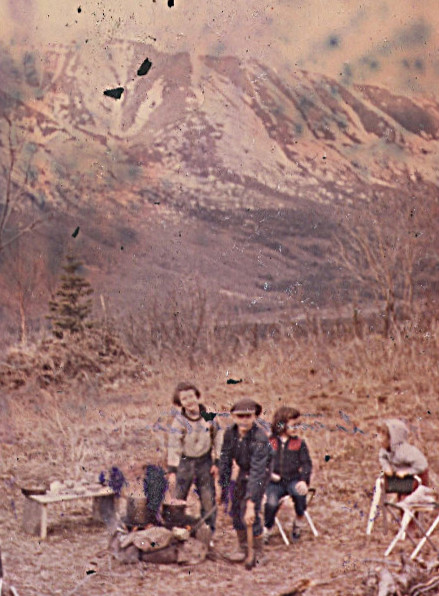
1959 - May - Oh, the happy homesteaders!  Oh, that our family could have happily made our home here --
1959 - May - Oh, the happy homesteaders! Oh, that our family could have happily made our home here -- Oops! Does Cindy need her pants knee patched?

*1960 Walking Up Mountain in Snow (Me and Cindy)

++++

*1960 – April 3 – Dad Stuck in Snow on Tractor

++++

*1959 – May – Walking the Mountain – Barely A Road

++++

*1959 – Children New To the Mountain – Loving IT!

++++

*1959 – Jeep Truck With Jamesway, Pollard, Tractor

++++

*1959 – Can barely see it – trailer parked at bottom of Horror Hill

++++

*1959 – January – Dad and Jeep station wagon at Pollard’s house

++++