+TEARS, BEING LOST, ORGANIC CHOCOLATE CAKE BAKING IN THE OVEN…..

+++++++++++++++++++++++++

Has there ever been a time since the moment I was born when I wasn’t lost?  I don’t think so.  (Maybe I didn’t even find my way to my right mother!)

I just found a piece of paper lying face down on the floor by my computer chair.  I was looking for something to write a telephone number down on so I could order some yarn so I can warp my loom.  I tore the bottom off of this paper and used it.  This is what was on the top half:

January 14, 1988

The years go by.

I want a dream

a vision

something I can live by

Art Therapy

living in Albuquerque

Yet if I’m empty inside — then what?

It’s so easy to forget what I’m doing and why.

+++++++++++++++++++++++++

This must have fallen out of something in my pile of journals.  The cats love to tumble around and must have knocked it loose.  I feel disheartened reading this, realizing this was written just after I made the decision to apply for art therapy graduate school.

Whenever I have stopped to think back at that stage of my life, I have always ‘remembered’ that I knew what I was doing then, or certainly that I didn’t know what I know now about how lost I’ve been all of my life.  I didn’t know I felt lost — even then — even after making such a big decision for my life and my future.  Or so I thought….

This paper shows otherwise.  It makes me MAD and SAD to see this lostness I still feel now WAS with me back then — yet why would I think it would not have been?  Has any decision I’ve ever made in my life ever moved me off of my dead center spot of being lost?

What have I been thinking these past 21 years?  That I have only been lost some of the time?  That I have ever had a reprieve?  True, I had hope then that led me to move with my children from northern Minnesota to New Mexico by fall 1988 and complete graduate school (1990) to become a nationally registered art therapist.  But what good did that effort do me?

I guess I better scoot back from my keyboard.  My tears might short circuit it.  Then where would I be?  It surprises me how quickly the tears came once I began to write this.  It’s a good thing I have a soon-to-be delicious organic chocolate cake (mix from our local food co-op) baking itself in my oven; I hear the egg timer ticking.

Healthy, right? And it has a matching organic chocolate frosting mix to go with it!

Tick, tick, tick.  There go the years of my life.  I would not be this lost if I had not had my mother for a mother.  I wouldn’t even be this lost if she had at least let me PLAY — at all — in my childhood.  What a strange realization.  What a true one.

+++++++++++++++++++++++++

I was going to make the following easier to read, but just don’t have it in me right now.  There’s a lot of information here — even just for scan reading.  I know it is about my dissociated mother, who was a professional at making me her dissociated daughter!  It’s about everyone’s mother who was borderline or otherwise dissociated, including depressed.

Maternal dissociation is directly connected to a mother’s inability to play with her infant, a critical participatory activity between mother and infant that builds the right limbic emotional social brain and conditions the infant’s nervous system.

My mother was so sick that her inability to be playful with me she ended up so abusing me that she interrupted my play-brain-growth by preventing my play and by distorting my attempts to be a child throughout my entire childhood.

When a mother dissociates (especially in rage) while in interaction with her young infant the infant’s developing brain-mind essentially ‘falls through its own cracks’.  Dissociation is, I firmly believe, directly communicated from the mother’s brain and nervous system to the infant as it grows and develops its own brain and nervous system.  The long term consequence of this harmful degree of dissociation is being lost in one’s own life.

++++

You will need to know this before you take a look at the link below:

Dissociation in mothers affects how the nervous system in her infant develops.

The ANS, or autonomic nervous system has two branches, or arms.

One arm is the sympathetic branch, or the GO part of our ANS.

The other arm is the parasympathetic branch, or the STOP part of our ANS.  I remember which is which by thinking ‘pair a brakes’ for ‘para’ — STOP.

Dissociation in the mother is communicated to the infant and destabilizes the ‘ordinary’ development of the infant’s ANS.  The information below relates to maternal dissociation:

+SCHORE ON BRAIN AND NERVOUS SYSTEM DEVELOPMENT

ANS – Dr. Allan N. Schore – “Affect Regulation and the repair of the self,” chapter 4
Selves on the brink between imploding and exploding
Dissociation:  “The neurobiology of the later forming dissociative reaction is different than the initial hyperarousal response (for models of the neurobiology of dissociation (see Scaer, 2001; Schore, 2001c) (schore/ar/125)”
Autonomic Nervous System (ANS) and DISSOCIATION

++++

“As episodes of relational trauma commence, the infant is processing information from the external and […]

Read Full Post »

+++++++++++++++++++++++++

+CONTINUALLY TRYING TO CREATE MYSELF IN TIME AND SPACE

+++++++++++++++++++++++++++

I tell myself to put my fingers on this keyboard and make them move.  “Speech is silver.  Silence is golden.”  I choose to go for the silver.  I was forced for the first 18 years of my life to be as silent as a child can be.  Silence will not heal me.

Writing is all tangled up today with what I choose to write about.  Having a disorganized-disoriented insecure attachment MEANS that having access to one single, integrated, cohesive, coherent Linda is extremely difficult.  I will not admit defeat and say it is impossible.  I am coming to understand, and believe, that using my words – putting them together in lines across the page – will help me become more organized, oriented, integrated, cohesive and coherent.  So here goes…..

I am thinking a jumble of thoughts, all tied into very old and continual thoughts about myself in my body in my life since my beginning.  I was not allowed to be a person.  My mother interfered with my normal, ordinary development every single step of my development.  I have paid a price for her terrible abuse of me.  The biggest one is that I didn’t so much as LOSE my self, I didn’t get one in the first place.

++++

So I have to imagine what it would be like to have one of those illusive organized, oriented, integrated, cohesive and coherent selves.  How do all these aspects of such a strong, clear, healthy self operate in time and space, which is what I guess being in a body in a life, in the world is all about?

Today, I want to know the difference between having goals, destination and purpose and having hopes, dreams and wishes.

I want to know because it seems to be I wouldn’t have to question these things the way I do now if I HAD any real idea what they mean.

My mother interfered with my development regarding everything, so why wouldn’t I expect that having a clear sense of goals, destination, purpose, hopes, dreams and wishes would be a part of what I am missing?

She never hesitated to control and abuse me in any way that she could.  Her abuse included confining me in space and time beginning when I was very, very small.  She withheld food, prevented me from even going to the bathroom when I got older.  She woke me from sound sleep to beat me, or didn’t let me sleep.  When I got older she forced me to overeat.  I could go on and on, but this isn’t what I want to say right now.  Not being free to be a growing child, not being safe or allowed to play greatly harmed my development in every single way.

What I want to say is that great sense of loss and grief I feel is tied as much to my loss of access to my inner needs, wants, desires, ability to have intentions, and the ability to find ways to know what brought me happiness as a person and what gave me pleasure.  I didn’t grow up knowing much of anything except how to survive my mother’s torture and abuse.

++++

This thinking is tied to what I believe about people like me with disorganized-disorganized insecure attachment.  I believe I organized and oriented myself around being a mother for the 35 years I had children under 18 in my care.  Today it seems that I used the goal of caring for them as well as I could, the destination I saw for them in the future as leaving home well and happy people, my purpose in life of being their mother, to organize and orient my self in the world.  My hopes, dreams and wishes were tied up in that whole process.

Having them grow up and leave was wonderful.  Yet I was left again being the disorganized-disoriented insecurely attached-to-my-own-self and the world just as I had always been for the first 18 years of my life.

Without the strange and complicated relationship I formed after they left again leaves me feeling inwardly desperate, destitute, lost and confused – again disorganized and disoriented.

I was able to obtain the goals for my education, but the process was extremely confused, and in the end I am still lost.  I can ‘make things’ with my hands, but even being able to use the ‘goal-destination-purpose’ and ‘hopes-dreams-wishes’ thinking only lasts for short periods of time and nothing about me seems connected and tied together.

I want to understand how the brain-mind changes that I have continue to cause me great difficulties in these areas.  Somehow I sense that COMMITMENT has always been a key and central piece of anything I have ever accomplished.  If I say I hope to write, that writing is tied to my dreams and wishes, how do I connect that to my goals, my destination, my purpose?

Because my right brain, left brain, corpus callosum that connects them together, and my higher executive function cortex did not form in an ordinary fashion and instead will suffer from severe trauma influence for the rest of my life, I cannot simply accept that I am going to ‘naturally’ find a solution to my dilemmas.  I have to continue to focus my will toward the goal of better understanding how all these changes – that result in what I am naturally missing – connect to my overall feelings of hopeless sadness in my life.

How does changed me find my self in time and space so that I don’t constantly know that I don’t ‘fit in’, am lost, and want to ‘leave here’?

I don’t know yet, but I wanted to say I am working on these things.  Today.  I continually have to try to learn how to create my self in time and space because this process was completely interrupted for me growing up with such abuse.  I have a trauma bond with myself that makes it hard for me to get through life feeling whole and successful.  There is a rupture between my self and myself and the world I am constantly trying to find ways to repair.

I have to start with the little things, and writing here is one of them.  Now, I will go eat breakfast as I move my self forward in the time and space that is today.

+++++++++++++++++++++++++++++++

It strikes me after putting the above words into their order that the most important word in the whole piece is PLAY.  I was not allowed to play, and as many of my childhood memories show, my mother had an uncanny ability to turn whatever childhood play thoughts or actions I had into something painful for me.

Beginning with playful interactions between infants and their early caregivers, and moving all the way through childhood, play is nature’s way of building an organized and oriented self in the world.  I suffered terribly from the lack of play and from interruption of play every step of my development because of my mother’s abuse.

My sister just gave me a simple example of how play interacts with a growing brain-mind-self regarding hopes, desires and wishes on the one hand, and goals, direction toward a destination and purpose on the other.

She took her granddaughters to a fund raiser bake sale today.  The seven year old bought muffins and a specially formed little bundt cake with a hole in its center.  On the way home she ate the muffins but carefully protected and saved the cake.  At the urging of grandma and her 10 year old sister she finally, shyly told them her PLANS for her special cake.

She wanted to take it home, fill the center with pudding, put a candle on it, and have a birthday party with her Barbie dolls.  This, of course, is what she was allowed to go home and immediately accomplish.  Even her sister, who thinks she’s too grown up to play Barbies, came to the party.  Through each step in her process she was building another healthy, happy aspect of her brain-mind-self.  Severely abused children are very often deprived SO MANY or ALL TIMES of this kind of experience — and this kind of loss is big part of what happened to change us.

I see that everything I am thinking about this morning is simply contained in that pattern of child play.  Play is how children learn to be social (after their infant brain forms through early mirroring caregiving).  Play can involve rules, or not.  Child play does allow the brain not only to build its happy-joy center, but also all the other brain patterns and circuits I am beginning to understand as they in-form our lives.

The arenas of damage my mother orchestrated against me were many and devastating, but today it is particularly the damage done to me by her abuse of my play drive and abilities that has harmed me immeasurably in my adulthood.

Today I also realize that the absence of my sadness that being with my boyfriend gave me was directly tied into play.  He was my playmate.  That is a big part of the joy and happiness I felt when I was with him.  I didn’t know this until today.  I have no built-in experience of play-joy from childhood.  I didn’t even recognize my happy feelings with him were directly connected to play.  My playmate doesn’t want to play any more.  Certainly that gives me great sadness.

What can I learn about play at 58?  How can I begin to understand that a lot of the sadness I feel stems from never having play in my childhood?  My siblings played together, and they all remember my part in their play – by my absence from all of it!

That especially the lack of play in my childhood (coupled with the rest of the terrible abuse) directly created my adult brain-mind-self’s great difficulty with the ability to dream, wish, hope or to plan, have a goal, a sense of direction, a destination for myself in my life, or a sense of purpose — in-forms my sense of grief, loss, and feeling lost like I don’t belong ‘here’ — is not a small piece of information.

+++++++++++++++++++++++++++++++

+WRITING LINDA NOT HERE

++++++++++++++++++++++++++++++++

Strange thing, can’t write since finishing last post — not entirely sure what that ‘transparent moment’ did to me — but the writing Linda isn’t here right now…..  wonder if she’ll come back.

Thanks for stopping by anyway!!

++++++++++++++++++++++++++++++++

+I WILL NEVER BE ORDINARY. IT IS TIME FOR ME TO KNOW THIS TRUTH.

++++++++++++++++++++++++++++++++++++

I try to be as positive as I can about the work I am doing with my writing about the permanent and lifelong trauma-centered changes that plague survivors of severe abuse and trauma that happened during their early infant-child developmental changes.

Today’s transcription of my quarter of a century old letters my friend just returned back to me has left me feeling anything but positive.  The reality of the kinds of childhoods like mine, and like the kind I am talking about and describing, is horrible.  There is no way to pretty up the picture about what was done to us and what happened to us as a result.

I am faced with the tragedy of what my mother’s abuse did to me — not just during my childhood, but throughout my entire life up until this very instant in time.  Primarily I balance my mother’s abuse by the other side of my child abuse history.  No one was there for me to form a safe and secure attachment with.  THIS LACK, I believe, had as much to do with how my body-brain-mind-self had to change in order to survive as did the abuse itself.

I believe that having a safe and secure attachment to at least one other person from birth particularly through age 5 is a critical resiliency factor to balance out the terrible harm of abuse in infancy and childhood.  When I consider the terrible abuse of my childhood, it is ALSO the absence of having any other person I could form at attachment to and with that profoundly harmed me.

It is not JUST the presence of abuse that truly creates a malevolent childhood.  It is also the complete absence of safe and secure attachment to ANYONE else.  That absence, I believe, amplifies the impact of the trauma of abuse nearly beyond belief.  That absence, in particular, coupled with the abuse, so changes a person’s development that trauma becomes the underlying pivotal factor of their ongoing existence.

No matter how benign our adult life may appear from the outside, the reality of this kind of childhood trauma within us manifests itself in every feeling, thought, action, decision and experience that we have.   How to live well in spite of the trauma-centered developmental changes that happened to us is so far past my ability to understand today that I can’t imagine it.

++++

I am having a transparent moment, as if all the illusions I have ever had about myself being an ‘ordinary’ person in an ‘ordinary’ world have now completely evaporated.  Is this a feeling of complete hopelessness that I am experiencing?  It can’t be.  I won’t let it be.

Having illusions about who and how I am in this body in this lifetime is not the same thing as having hope.  Just because today, finally, all my illusions have vanished because I have challenged them and found that they do not fit me, does not mean that I have no right to find a way to a better life in this world.

At this moment I feel as if I have one foot poised in the air over a threshold I am crossing into a new vision of myself in my life.  I can, for the first time ever, looking backward through the time of my life and see myself being born a pure and innocent child, full of potential, full of life, full of the ability to respond to the world I was born into.

That this world welcomed me with trauma and abuse, which held me firmly within its grasp for the first, formative, 18 years of my life does not mean that I, as a human being, have changed in my essence.  But I do have to work with this body, nervous system, and brain that changed itself to survive the horrors of that ongoing trauma.  It is my mind I am working to change, to the best of my ability, not because it is in any way ill, but because it is mine.

My mind can no longer afford to feed itself on a diet of illusion and false belief that what happened to me did not affect me in ways that I now KNOW it did.  And with this knowledge I now have the most profound hope I have ever had.  It is time for me to learn how to experience life MY way, my CHANGED way, without ever again expecting anything about myself to be — ordinary.

There is an invisible line that is crossed during a severely abused infant-child’s life where the option to develop in an ‘ordinary’ way is removed.  To deny this fact is to suffer from delusion.

++++++++++++++++++++++++++++++++++++

*Ages 29-33 – Eight Letters to a Friend

++++++++++++++++++++++++++++++++++++

*Commentary on the eight letters to a friend – ages 29-33

++++++++++++++++++++++++++++++++++++

SOME OF THE KEY TYPICAL TROUBLESOME WORDS, CONCEPTS AND EXPERIENCES THAT ARE DIFFERENT FOR SEVERE CHILD ABUSE SURVIVORS – SEEN FROM MY NEWLY INFORMED PERSPECTIVE.

These things connect to what continues to ‘trouble’ us because they are all connected to the changes that our body-brain-mind had to make in order to survive early severe abuse during our infant-child developmental stages:

Choice

Feeling guilty – the whole concept of guilty

Concept of procrastination as being a source of our problems

‘shirking’ responsibility – the whole concept of ‘response-ability’ as it applies to us

dealing with things on a self-honesty level

concept of ‘changing’

the concept of feelings, feeling feelings, experiencing feelings

emotional brain not form ‘ordinarily’; emotional dysregulation = chronic problem

feeling lonely, depressed, crying – all different for us than for ‘ordinary’ people

experience of ‘feeling low’ and low on energy is different

‘anger’ has a different meaning to us – both our own and other people’s

being with other people

feeling trapped

our experience of the experience of ‘being sick’ and recuperating is altered

our experience of being kind to ourselves

our experience of giving ourselves ‘permission’

how we experience anticipation of enjoyable experiences

experience of worry different

experience of ‘wishful thinking’ is different

experience of disappointment different

Experience of trust is different

Our experience of the passage of time is VERY different!

Our experience of friendships is different

Being willing to reach for and experience ANY kind of self-help we can find

Finding that it does not REALLY help us at all

blaming-shaming ourselves that it doesn’t

not being able to immediately and completely trust our impressions of people

my ‘who-to-trust/not-trust’ center in my infant brain could not form correctly

making a mess of our own thinking trying to change these first impressions!

Our sense of safety with others is THE number ONE issue – we have to trust it

Intense feelings of isolated-alone, trust them, they are REAL beyond belief

Realize that ‘ordinary’ people do not experience them with the pain we do

Yes, we will do everything possible to ‘protect our feelings’ – naturally

Have to be hyper aware of what feels threatening and scary to us – it’s real

There are memories and feelings we can’t touch because it isn’t good for us to

Repression of trauma is not the same thing as dissociation

we can’t ‘work through issues’ like others if we dissociate

not helpful to feel guilty-shame for what we cannot possible accomplish!

Terrible ambiguity can exist about our abuser(s) – ordinary people can’t imagine

Confused-meshed identity and relationship with abuser

Commonly called ‘defense mechanisms’ don’t begin to describe true insanity

Have to be realistic about ‘recovery’ goals – ours will be different than ‘ordinary’

Be careful of what we believe of what therapists who do truly not know us, tell us

We don’t really know what love is or what it feels like – we weren’t built that way

I strongly suspect that ‘love’ is different from ordinary for us

We will never stop learning about what ‘ordinary’ people automatically know

We did not grow into our thinking abilities like ‘ordinary’ people do

Not helpful to be told by others we are ‘rationalizing’ as a defense when we think

We need help learning about our thinking process because abuse changed it

Our disorganized insecure attachment means that we do not grieve the same

Extremely helpful to understand insecure attachment and love relationships

Our own pain-loneliness puts us at risk for attaching harmfully in relationships

Our sense of ‘time passing’ is different; things do not ‘end’ in time like ordinary

Difficulties with accountability if we don’t know source of our difficulties

Terrible troubles with goals-future plans, our higher cortex formed differently

We have a different version of a selfhood – not the ordinary one formed by age 2

When we feel alone in the world, a lot of it is because we are lonely for our self

(a self-centered-self is cultural and evolutionarily a recent luxury we didn’t get)

We had no say in the matter – we developed a trauma-centered self from birth

12-step program talk about ‘unmanageability’ = not from our ‘planet of origin’

12-step program talk about ‘acceptance’ = not from our ‘planet of origin’

12-step program talk about ‘powerlessness’ = not from our ‘planet of origin’

12-step program talk about ‘resentments’ = not from our ‘planet of origin’

the set-point for our nervous system is not at ‘calm’ like ‘ordinary’ is

(these points are included at the end of the link presented above)

++++++++++++++++++++++++++++++++++++

+LOOKING BACK – I DID NOT UNDERSTAND MY MOTHER’S ABUSE OF ME. I DID NOT UNDERSTAND.

+++++++++++++++++++++++++++++++++++

What follows is taken from a letter I just wrote to a friend.  We have established an amazing reconnection after more than 40 years without contact, having found one another through the book Dorothy wrote which I read last summer during my travels:  Eight Stars of Gold: Notes from a Mid-century Alaska Homestead Journal by Dorothy Pollard Price

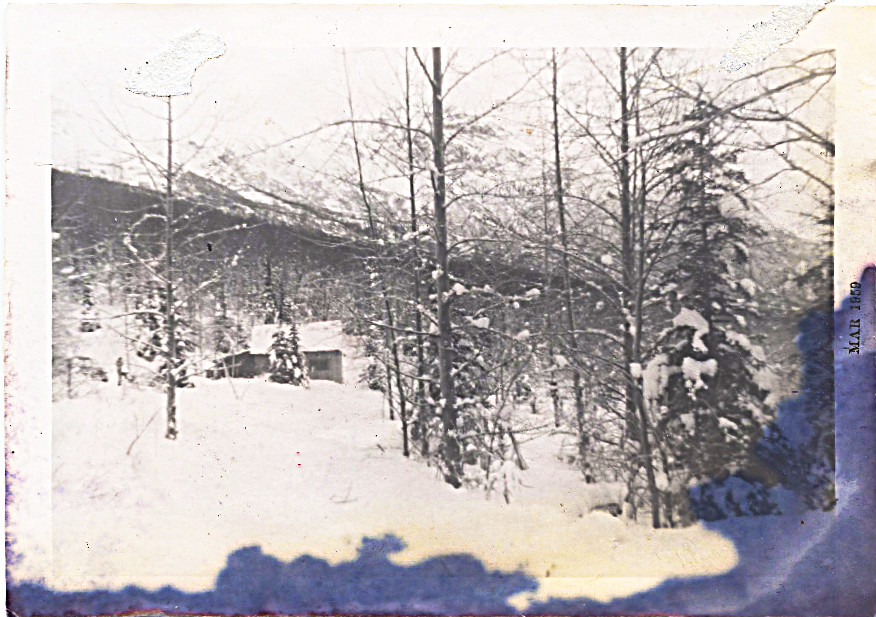
Their homestead (fire damaged photograph of my dad, our jeep, their home)
Dorothy's homestead 1959 (fire damaged photograph) Our homestead was 1,500 feet elevation up the mountain to the left above here

Dorothy, her husband and two sons were our neighbors whose homestead was below ours at the foot of the mountain.  This letter is about a memory I have of something that happened one day on their property when I was a little girl.

+++++++++++++++++++++++++++++++++++

Dear Dorothy,

This just crossed my mind — again.  I was thinking that I don’t remember anybody from my childhood while my sister, Cindy can remember everyone.  I think I mentioned this before.

But I do have this strange memory.

Remember when there was a Bible Camp by your place when we first went back there — maybe spring of 1959?  [Way back in the valley, down a narrow, rough jeep trail]

I would have been 7 — I remember some about the camp.  I remember sitting on the ground at the edge of the road — maybe your driveway — next to your son, J.   [he was my age].  Our legs were hanging over the dirt bank; I remember sitting there with him, my palms flat on the ground on either side of me, swinging my legs and kicking my heels against the earthen bank.  We were talking.  I think I was just feeling like a kid at the moment

Not allowed.  Mother saw me and came and got me, yanked me up and dragged me away by my arm, embarrassed me in front of J.

I got in lots of trouble, and I didn’t understand any of it.  She said I was boy crazy.  She was really making sexual accusations I of course DID NOT understand — I never understood why she was so angry with me all the time.

++++

This memory is tied to an earlier one when we first moved to Alaska and lived in the log house — I had just turned 6 there.  One of the V. boys, the one about my age, crossed the highway and came down our driveway.  I remember it had rained.  There were golden leaves wet on the damp ground.  Everything smelled so wonderful.  The rain had brought skinny earthworms up and they lay mostly lifeless on the driveway’s mud.  Many had drowned in puddles.

I was standing there looking at them and thinking (I’d never seen worms like that in Los Angeles before) that they looked like broken rubber bands — thinking of my grandma because for some reason she always picked up rubber bands when she saw them on the pavement and in the gutters where people threw them away after they took them off their rolled newspapers.  Grandma always put them around her left wrist, often she’d have a whole bunch of them there.  I missed my grandma.

Whichever of the boys it was told me he would give me a nickel if I let him see my belly button.  So I pulled down the waistband of my white pedal pushers just far enough to show him.  He gave me the nickel and went home.  I was going back to watching those gray worms and thinking about my grandma.

But my mother opened the front door of the house and screamed for me, “LINDA!  LINDA!  GET IN THIS HOUSE RIGHT THIS MINUTE!”

I knew from her voice she was very mad at me.  I had no idea why.   I went back into the house and all hell broke lose.  Mother said she had watched me from the window pull my pants all the way down in front of this boy.  I didn’t.  I tried to tell her what had happened, that he had asked to see my belly button and given me a nickle.  She told me I was lying, that it was my idea.

NOTHING I could do or say convinced her otherwise!  She just got madder and madder at me because I had done this horrible thing AND I was lying.  She knew what she had seen with her very own eyes!  Crazy making.  Insane crazy making — and the violence and brutality that went with this……so terrible……

This incident was brought up again, all over again that Bible Camp day.  Both ‘crimes’ were added to my mother’s abuse litany — and brought up over and over again (along with hundreds of others) every time she beat me again and again throughout the years of my childhood.

++++

There was never anyone, not one single person that acted as a ‘reality check’ person for me in my childhood.  I was so abused — and I didn’t understand.  I did not understand.

It started when I was born, had been going on long before we moved to Alaska.

I think it bothers me I can’t write more about the abuse.  Not on my blog, not for a book.  There are a few memories I can get close to, and thousands I cannot.

++++

Not at all sure why I wanted to write this to you, Dorothy.  I don’t want to cause you sadness.  I guess when you mentioned my not seeing F. [her other son] when I was in Alaska this summer — I don’t remember him.  I don’t remember anyone.  I should be able to.  So much, so very much of ME, of my childhood, was robbed from me — Linda suffered.  Linda was always suffering.

Gotta go — obviously — not easy to say these things —  Just that those few brief moments of sitting there with J.  are among the ONLY moments of my childhood when I felt like a child — or made the mistake of feeling free to be a child.

I guess that is part of what’s so important about the Chocolate Lily memory — mother had no way to take that away from me.  She wasn’t there.  She never knew it happened.  She could not interfere with any part of that experience.  She couldn’t steal it, pervert it, distort it, rob me of it, contaminate it — it has remained simple and pure and good and so important to me for my entire life!!!

++++

Thanks, Dorothy, for reading this, and for having such a wonderful heart!  love, always, Linda

+++++++++++++++++++++++++++++++++++

I am also reminded of a comment I wanted to make about the Center for Disease Control’s (CDC) research and the interpretation of their findings.  Not only were people without HMO insurance not included in their initial ACE studies, there is also no room in their studies for talking about the depth of horror child abuse can create within the broad categories they are using to distinguish between TYPES of abuse.  They are measuring MULTIPLE trauma sources, not degree, intensity of abuse, chronicity, duration, age of onset, etc.

They are also not assessing the presence or absence of secure attachment figures in an abused child’s life OTHER THAN THE ABUSER, which is, in my thinking, the single most important resiliency factor that mitigates the impact of child abuse on a child’s development and lifelong degree of well-being.

I also know from my own experience that I was 30 years old before I had a clue I had been abused at all.  When research on child abuse is based on self-report, this has to be taken into consideration.  How many people are like I was until age 30 when I sought therapy, having no frame of reference about what is normal and ordinary for a childhood, and what is horrendous and despicably torturous abuse?

The researchers need to add a description of what constitutes some infant and child abuse scenarios along with their questionnaires — something I doubt the CDC has ever thought about.  After 18 years of suffering from insane violence and cruel abuse, I DID NOT UNDERSTAND that I had been abused!!  No clue.  Not a clue!  Not one single clue!

I had a trauma-centered body, a trauma-centered brain, a trauma-centered mind — and no self to be aware with.  Hard to believe?  What happened to me was absolutely, completely normal in my world.  I had been born to believe I got what I deserved and I deserved what I got.  Simple as that.

+++++++++++++++++++++++++++++++++++

+SIMPLE MOMENTS OF HUMAN KINDNESS CAN SAVE AN ABUSED CHILD’S SELF-LIFE

++++++++++++++++++++++++++++

I woke up on this sunny, warm morning thinking about the post I wrote last night, feeling concerned about the darkness in it.  Somehow two topics came into my mind almost like they came to me as a balance weight against that darkness that was the history of the making of Linda.  One topic is about the Brownie scout leader I had when I was eight.  The other topic is my strange cat, Gerri.

I will only know by writing this piece how the darkness and the light within the story of the Brownie scout leader and my cat fit together.  I know attachment lies at the root of this piece of writing.

++++

I will start with Gerri because she is here with me in the present.  She is (I know nothing about cat breeds so I will do the best I can to describe her) a mostly black tortoise shell calico cat.  She has splashes of white markings and light tan, almost peach legs, with some tan speckles throughout her fur.  Her coat is so thick I can scrunch my fingers into it, but also a little oily and waxy.  It reminds me of a soft version of the undercoat a buffalo might wear.

Her eyes are round and always big, yellow with a pitch black slit in them.  She reminds me of an owl when she looks at me, and her look is always a stare as if she is continually looking for threat and danger.  She often looks worried as if I might eat her.  There is always tension in her small body (she is not a big or heavy cat).  I will never know her whole background or history, but what I do know explains for me why she is such an unusual and strange cat.  I don’t expect her to ever be ‘ordinary’ the way the three now mostly grown kitten-cats I rescued are.  But I am seeing the REAL Gerri emerging within this precious original cat!

Those of you who read my postings on my 1982 journal remember that I reached a point all those years ago when I packed up my spinning and weaving and put it all away when I entered college, and my life changed.  As I transcribed those journal pages I realized how sad it was that I let go one of the few parts of myself that were really an important and positive part of me.  I looked at the beautiful maple loom sitting in the corner of my living room and realized that I can place some important energy in my present life getting that part of myself that loves to work with fleece and yarn back into my life.

++++

Now the story about the loom and Gerri intertwine.  About four years ago I happened to hear about this loom that someone in a town about 50 miles from where I live had to give away.  I was fortunate to get this woman’s number and called her.  The following weekend the loom was in my house.  The woman who brought it here was a friend of the woman who owned it, whose Alzheimer’s had progressed to the point she had to be placed in a full-care institution.  It turns out this woman who owned the loom (I never met her) also had two cats that needed a home, too.  I offered to take the cats.

The next weekend the cats arrived, Gerri being one of them and a huge fat white cat named Poe being the other one.  The wisdom of my hindsight came very quickly into play as the woman who brought the cats in their cardboard cat carrier boxes brought them into my house, opened them up immediately, and the cats got away.  I should have insisted immediately that the cats be left in their boxes for awhile until I had time to meet and greet them before I let them out.

Poe only disappeared for a few hours.  The little black one was gone for four months.  I hoped she was still in my house and had not escaped at some sly moment when the door was open, but I didn’t know for sure.  All I could do was keep food, water and litter filled and wait.

Eventually I heard the black one.  I had not written her name down when she had been left at my house, so I called her by the name the little neighbor boy suggested.  Gerri.  After her four months of sneaking out at night and hiding thoroughly during the day, I began to see fleeting shadows of Gerri darting along the outside walls of the house from hiding place to hiding place.  As she became more trusting and daring she would appear here and there away from the walls.  That’s when I began to realize that big fat Poe bullied her.

I ended up finding a home for Poe.  No bullying allowed in my home!  It has taken 3 ½ years for Gerri to transform into my pet.  Gerri is missing her front left paw.  She was stepped on by a horse when she was so tiny she could barely walk, and the woman who owned the loom had taken her to the vet’s and saved her life.  The more I come to know Gerri, the more I realize that she has cat version posttraumatic stress disorder.  I would call her absolutely ‘mentally ill’ and neurotic if I didn’t know better.

Also, the more I have gotten to know Gerri, the more I wonder if her previous owner’s increasing dementia didn’t severely further traumatize this cat.  It makes me worry for pets who are under the care of Alzheimer people before they progress into total near-oblivion.  The hyper startle response this little cat has, her nervousness, her obvious distrust of the world she lives in, her difficulty in forming attachment to me, all make me think that there were many times in her 14-year life that she was threatened not only by a giant horse, and a huge bullying white cat, but also by her increasingly demented owner.

++++

But Gerri seems to realize more every day of her life that she is now safe from harm and secure in my care and affection.  Nothing will ever take away from her either the background experiences of suffering that she’s had, or her physiological responses to those traumas.  But I am watching her become, a little more every day, more and more of the fine cat, Gerri that she is.

She loves to be brushed, and I don’t mean she’s a little fond of it.  She gets ecstatic!  I keep a brush on the bathroom floor, and every time I use the toilet Gerri gets some profoundly happy moments!  I have even seen her let herself be chased by the sweetest of my three half grown kittens.  Gerri is queen of the house now.  She will never eat while the other three do, but she watches them from the middle of the kitchen floor with interest.  She will even curl up now on a corner of my sheet-covered bed in the sunlight during the day, allowing herself to be present with three other cats on the bed!

But it is what happens at night when I first go to bed that tickles me most.  I don’t know why she just started this a week ago.  It’s like some ancient Gerri-is-a-cat genetic memory has kicked into gear.  She always knows about 15 minutes before I head to bed that it is TIME, and she begins to prance around me, waiting.  As soon as the lights are off and I am snuggled under my covers and stop moving, Gerri rushes into the living room.  It took me a couple of days to put two and two together to figure out what her new routine actually was.

I would here her return to my room as she made the strangest cat deep growling  cat talking sounds.  Then they would stop, she would leave the room, and soon she would be back repeating her verbal display.  After awhile she would jump onto my bed and nestle down somewhere near my feet where she spent the night.  Eventually I noticed the pile of cat toy soft balls piled under my bed near my head.  “Oh!  She’s HUNTING for me!”

In order for this game to repeat itself for the first few nights Gerri had to move all the balls back into the living room during the day so she could hunt for them again at night.  Now I round them all up and hide them for her.  At first I kept the hiding simple and obvious so she would have no trouble finding them.  I didn’t want to discourage her from hunting for them.  Now I can be a little more challenging in where I put them in the morning, because she still finds them all at night and brings them back for me.

Now HERE is the connection to my Brownie scout leader when I was eight.  I am Gerri’s attachment person.  She hunts for me because she loves me and she is taking care of me like a momma cat would hunt and bring her kill to her kittens.  I am like her mother at the same time she is mothering me.

++++

When I was eight, shortly after my family had left Los Angeles and moved to Alaska, my mother was still practicing the “Let’s be a GOOD (public face) mother so I make an impression on all these new people I am meeting here!” façade.   Eventually, and it only took less than two years, she stopped caring a hoot what anyone thought about her in her new location and became again completely the mean mother she was to me.

In the meantime, I was allowed to attend Brownies for about a year, which culminated in my being allowed to attend Brownie day camp for a week the June we first began homesteading.   Mother drove me to the Eagle River Shopping Center parking lot and the Brownie leader picked me up and drove me to camp and back again.

I am thinking about how the attachment and child development experts tell us that the ability to form secure attachments lies within each individual child.  When insecure attachment happens instead, the ‘fault’ does not lie within the victim-child.  It lies with the inadequate early caregivers.  I have never forgotten the time I spent at that Brownie camp.  It was one of the very, very few times I actually GOT TO BE A CHILD!  I loved the activities, enjoyed being with the other children, and was treated grandly by every one of the adults.

Yet one particular experience that happened on a return trip back to the shopping center that remains a ‘flashbulb’ memory for me (the same as trauma can create flashbulb memories, so also can extremely positive events, especially when a child is immersed in the darkness of trauma on an ongoing basis).  We had left the camp a little early, and the Brownie scout leader asked me on the return trip if I liked flowers.  I trusted this woman completely by now, and I can remember my own ecstasy when I responded back to her with the full life-force and enthusiasm I was capable of, “Oh, YES!  I LOVE flowers.”

“OK,” this woman responded back to me with a smile.  “Just wait.  I am going to show you something very special.”

She turned off of the paved highway and drove down a narrow dirt road and parked near the edge of the great Knik River.  She walked ahead of me on a slippery damp wet packed black mud pathway along the shore until we came to a small open area where she showed me the Chocolate Lilies growing there.

So beautiful, I thought!  I had never before seen a brown flower!  But when I smelled them, the STUNK!  How could something that looked so beautiful smell so bad?

Well, I have NEVER forgotten those shining moments or the kindness of that woman.  Yet I also realize that woman’s attention and generous kindness to me where probably not one single bit out of the ordinary for her.  I had no idea at all that people ordinarily treat children that way, treat each other that way.  For me, that week at day camp, and my ‘commutes’ with this woman remained the safest, most secure, most kind and happiest days of my entire childhood.

Hope from human kindness means the universe to abused children -- budding flowers in spring -- the Chocolate Lily

++++

Which again takes me back to myself and little traumatized kitty Gerri.  I understand that getting stepped on by a horse and losing your paw can be put in the category of trauma that just happens sometimes.  But neither Gerri nor I ever deserved anything less than perfect kindness.  That we didn’t get it, changed us.  But just as there is a perfect cat Gerri inside that furry body sleeping in the sun at the foot of my bed right now with her three furry companions (the first she has ever let into her life), there always remains a perfect Linda present in this body no matter how difficult it is for me to remain ‘in touch’ with her.

++++

So, in response to the dark reality of the post I wrote last night, I want to remind all of us that because we are still alive there HAD TO BE shining moments of safe and secure attachment with someone somewhere and some time in our childhood.  I won’t talk here about the unspeakable tragedy it is that abused children have to make a few tiny moments of glowing kindness into enough of a sustaining memory to last them throughout their terrible, dark, dangerous, traumatic childhoods.

But I also believe that I would have had a different life course in the end than I did if I had NOT had those few shining moments with that perfect stranger.  Her kindness sustained me throughout my childhood because those moments with her were the only true Linda being Linda and being accepted, treated kindly and being genuinely and completely happy that I can think of.  But the quality of my attachment experiences with this woman kept the channel of secure attachment open for me within my own body-brain-mind.

I have no doubt that in those few joy-filled moments with that woman who cared enough about me to take a little detour to show me new flowers that I loved, in those few secure attachment moments borrowed from the ‘ordinary’ world, that woman saved my life in the same way I am saving little Gerri’s and she is saving mine.

Hope beats within the heart of these moments.

+++++++++++++++++++++++++++++++++++++++++++

+DOES OUR NATION HAVE A CONSCIENCE REGARDING ADULT SURVIVORS OF SEVERE CHILD ABUSE?

++++++++++++++++++++++++++++++++

Please be sure to take a look at the slide show presented in this link I included at the bottom of last evening’s post about the Center for Disease Control’s latest research on the long term suffering caused by severe child abuse that occurs during the early stages of brain-body development:

“adverse childhood experiences” (ACEs)

++++++++++++++++++++++++++++++++

I believe it is critical that this kind of “new” information be coupled with understandings about the body-brain-mind evolutionary changes that those of us who survived the kind of malevolent experiences that the above research is highlighting had to make.

The kinds of life long difficulties the research points to happen not only because of the abuse itself, but because of these changes our body-brain-mind had to make.  Our bodies were designed in, by and for trauma.  We were never designed to live an ordinary life with an ordinary body-brain-mind.  We have to become completely clear about what these changes are and how they affect us.

Researchers and clinicians are going to continue to try to apply a piecemeal solution to an extremely complicated problem just as they always have.  Their efforts will NOT bring about any more positive a solution than they have thus far — which is PATHETIC — if the evolutionary adaptation to trauma during early development due to trauma and abuse is not the PRIMARY and PIVOTAL information used to assess ‘damage’ and effect lasting positive change for survivors.

Otherwise we will continue to be looked at as flawed people.  We are not remotely flawed.  We were terribly wounded as little infant-children, and we endured.  We are perfectly designed to survive what we had to survive or we would not be here!  Even though the adaptive changes we had to make prevent us from smoothly ‘fitting into’ an ordinary world,  they can still be not only recognized, but respected, honored and even applauded and celebrated for being the amazing human resiliency factors that they are.  If we value human life at all, we will know this truth in our bones.  And I believe for any healing to occur for us at all, this point of truth is where all efforts must begin.

The flip side of the coin of surviving intolerably horrible childhoods is that our body adapted for short-term heavy duty survival in trauma.  We are not adapted to a quality of life for the long haul.  THAT portion of our lives is what we need appropriate help with if we are to keep on living in a ‘benevolent’ world.

Nature designed us to live to our childbearing years and not much longer.  The ‘ordinary’ world we grew up into grants us a longevity we were not made for.   Sorry folks, this is the truth as I understand it as a survivor with this kind of trauma-changed body.  No wonder we are likely to contemplate or commit suicide.  I believe our body knows this truth.  This can make just staying alive yet another choice we have to make with conscious effort.

Everyone needs to get their thinking straight on these issues!  What ARE the priorities?  We survivors cannot magically remake our body-brains into ‘ordinary’ ones once the traumas of our childhood have ended.  These changes are with us for the rest of our lives.  Nobody tells us this fact or truly helps us live better with the changed body-brain that we have.  Surviving severe infant-child trauma and abuse is a costly affair.

Please, take a look at that link at the top here.  The Center for Disease Control is not a lightweight institution.  Their findings leave indelible marks on minds within the professional community.  To allow child abuse to continue at all, and to allow those adults who survived the kinds of abuse the ACE study highlights to continue to suffer, can only happen in a culture without a conscience.  For our culture to not consider the evolutionarily altered body-brain-mind development that survivors were forced to make in order to stay alive is even worse.

We will never be able to solve the problems related to severe early abuse and trauma — and survival of it — if we refuse to correctly describe and name what happens to change the course of our human development and how we responded.

++++++++++++++++++++++++++++++++

A WORD TO WISE WOMEN:

IF YOU HAVE A HISTORY OF SEVERE CHILD ABUSE, CONSIDER YOURSELF AT HIGH RISK FOR GETTING BREAST CANCER.  Today’s release of the news article at link below does not apply to you in the same way as it does to ‘ordinary’ women.  A mammogram beginning at age 40 should always be considered necessary for child abuse survivors who choose to be proactive on behalf of their well-being.

If your insurance requires a referral from your doctor, never hesitate to tell her/him the truth about your abuse history.  You can also mention the Center for Disease Control’s newly published findings on the major link between child abuse and the risk for serious adult disease.  We are not ‘making this up!’

Task Force Opposes Routine Mammograms for Women Age 40-49

+DEGREES OF CHANGEABLITY = HOW WELL WE CAN PLAY THE CARD GAME OF LIFE?

++++

The Theory of Mind that a child forms by around the age of five is built upon the brain-mind bedrock that was itself built from every single early caregiver interaction that child experienced from birth.  If those early experiences were unstable, unpredictable, toxic and malevolent, there is no possible way that child can move on to their Theory of Mind developmental stage with an ‘ordinary’ foundation of benevolent safe and secure attachment.  Abused children have no choice but to end up with alterations in their eventual Theory of Mind.

++++

Having “the capacity to reflect on the role of mental states in determining human behavior” is, according to developmental neuroscientist Dr. Daniel Siegel, critical to being able “to provide sensitive and nurturing parenting.”  (see his writing at bottom of post)  Siegel calls having this capacity ‘mindsight’.  This is a BIG subject, and is directly tied to our early childhood development of a Theory of Mind (TOM).

Having this “capacity to reflect on the role of mental states in determining human behavior” affects ALL of our interactions with others, and I would add, all of our interactions between our self and our self, and our self and the whole world around us – because we are human and we process all information by using our human faculties.  Theory of Mind is HOW we are in the world.

Theory of Mind is directly tied to a developmental process that begins at birth that allows humans to understand others’ thoughts, feelings, and intentions behind actions.  Without an adequate (ordinary) Theory of Mind, an abused child cannot possibly understand EITHER others or their own self in an ordinary way.  The ability to recognize states of mind, to tolerate them in self or others, and to transition between them is connected to how an individual’s Theory of Mind operates.

This is a HUGE and critically important concept.  I encourage readers to follow some of the links above and to think about Theory of Mind as it affects all of our lives from the first thoughts we have until the last ones.  We are a social species.  If our Theory of Mind cannot develop through safe and secure early attachments, it will be ‘off center’ and ‘out of balance’ for the rest of our lives.  If we have a history of early and severe abuse, we have been given no choice but to try to understand and apply consciously to ourselves the kinds of ‘rules’ and ‘patterns’ of interaction with self and others that securely attached from birth people have built within themselves and never have to think about.

Ongoing life happens because of ongoing communication that involves patterns of signaling (down to the molecular level).  The signals must be sent, received and understood accurately for life to continue at all.  Any problems with communication signaling will be reflected in some kind of lack of well-being.  It is, to me, as simple as that.

++++

When I consider the statistics that tell us between 50% and 55% of us were raised from birth under ordinary safe and secure attachment conditions, I have to wrap my thinking around the fact that the other 50% to 45% of us were not, and that loss left us with some degree of insecure attachment disorder.  Given the vastness of degrees of difference among us according to how we were treated from birth, it is hard to make any blanket statements.  But I will say that I don’t like to think in terms of ‘damage’ due to irregular or malevolent early caregiving experiences.  I think in terms of ‘changed from the ordinary’.

I envision it like all of us are prepared one way or the other to get along in the ‘game of life’.  If I think about this like we are all prepared by our early experiences to join in a game of cards, I can see how all the problems we experience then play themselves out.

Somebody has to know the rules to the game.  Let’s say the securely attached half of us know these rules.  The rest of us don’t.  We end up with varying degrees of confusion, varying ideas about what this card game is about, how we are to participate, and what all aspects of the game MEAN to self and others.

I think about personality disorders like my mother had, or like someone who has a Narcissistic Personality Disorder.  I am beginning to understand that their difficulties in forming a solid, ordinary Theory of Mind in their early childhood left them prepared to take their place in the Card Game of Life in a very particular way.  My mother’s rules were rigid, bizarre and enforced – period.  Anyone who was forced to be a part of her card game had no choice but to play by her rules.

What if you and I were playing a card game and I drew a 2 of clubs.  But I had no tolerance for a 2 of clubs.  I believed I HAD to have a queen of diamonds.  If I was my mother, that 2 of clubs would BE a queen of diamonds, and there would be nothing you could do but play the game by my rules in spite of my delusion.  To try to challenge me or convince me of a different reality would cause WWII X to break out (at the very least).

Or, what if you were playing cards with me as I am in the world as a result of my having to grow up under my mother’s rules.  I simply would never really understand any part of this game.  Anything that I might know about playing remains illusive to me.  I have to reinvent myself in the game with every card that’s played – by me or by anybody else.

++++

My mother’s version of getting along in the world worked for her because she could exclude any incoming information that she believed on some level to threaten her.  I have great difficulty with excluding any information.  It all comes in, and I am left in the opposite camp from my mother.  I have to continually deal with everything on some level as if it is a new situation that I have never experienced before.

My way of being in the world is costly and exhausting.  My mother’s way, or the way of people with personality disorders (I believe) works better in many ways because it eliminates or greatly reduces the amount of information that has to be consciously experienced and dealt with.  Personality disorders simply allow a person to continue to play the Card Game of Life by a constricting set of rules that was set in place in their childhood and is not subject to change.  Only through a costly application of personal conscious will and effort can those patterns of interaction between the self in the world with others be changed.

I, on the other hand, have to apply great effort to find any kind of an ongoing structure from which to order, organize and orient myself in this world of others.  My mother built herself a mental box that she remained within her entire life.  It was her version of safety in the world.  That her version didn’t match external reality was not of the least concern to her.  She couldn’t afford to let it be.

I don’t have such a box, so I am not limited in my ability to feel unsafe and insecure in the world.  I am forced to recognize that I don’t really have much of a clue about how ordinary people get along in the world with each other.  My mother really didn’t, either, but her personality disorder protected her from ever having to experience that fact.

My mother did not have to feel the experience of being completely baffled, confused, disoriented, disorganized, unsafe and insecure in the world.  She could not have tolerated that reality, so from a very young Theory of Mind developmental stage, she invented her own reality.  Because her version of reality so completely included the need to project her own sense of badness out onto me, and because her focus was so intense, powerful and all consuming, there was absolutely NO ROOM for me to develop any sense of my own cohesiveness as an individual self.  I could only exist entirely as a fixated-upon card within the deck of playing cards she held in her hand for the first 18 years of my life.

The only tiny fragments of self identity that I could form happened in spite of my mother’s focused hatred of me.  They could not become integrally connected to one another because of my mother’s nearly constant interruption of my process.  I could not think with a Theory of Mind of my own because there was no room in my mother’s card game for that to happen.  I am left now trying to piece together all the millions of tiny fragments of my self into a beautiful vase that is Linda even though that vase was never allowed to exist in the first place.  This has left me with a Dissociative Identity Disorder without the identities.  And yes, this CAN happen because it DOES happen.

++++

Where does this leave me in regard to Siegel’s statement about having the capacity to reflect on the role of mental states in determining human behavior?”  I am nearly at ‘ground zero’ where anything and everything is possible.

I came out of my childhood with 2 strong and related missions in life:  “Be good so you don’t get into trouble,” and “don’t hurt anybody else if you can help it.”  I at least had those two cards in my hand, and as it turns out they both acted as wild cards.  I have been able to ‘act as if’ I had a clue about playing the Card Game of Life, but this is a very expensive way to get along in life.

I have always felt as if I am on the outside looking in on ‘ordinary’ life.  I am conscious of what this state feels like.  I see my condition as being the opposite of my mother’s.  She was locked up on the inside of herself looking out, and had to manipulate every possible experience to fit her inner reality.  She did not have to be conscious of how her reality operated in the world or how she affected others.  I am continually left trying to figure everything out as I go along.

In the end, the price of my mother’s way of being in the world cost her every single caring, loving relationship that she could have had.  In the end there was no way around the fact that she was locked in the box of her personality-disordered, insecurely-attached self and was absolutely alone.

At least with my way of being in the world I can keep on trying, always trying to understand, to re-form my Theory of Mind and the way I am with myself and others in the world.  I understand I have never had, nor will I ever have, the benefit and luxury of being an ordinary person in ordinary relationship with ordinary people in any ordinary way.  But I do have the luxury my mother never had of at least being able to comprehend this truth so that I can try to change some things about how I am in the world for the better.

I suffer from having too much flexibility in my being while my mother suffered from having too little.  My state of being in the world involves uncertain and nearly constantly changing reflections.  My mother had no ability to tolerate any reflection at all.  I retained the gift of changeability.  My mother (and others with severe personality disorders) left that gift behind them in their early childhoods.

I would rather suffer from too much changeability in myself than have none at all.  At least having my wild cards, having the capacity to know that they are wild cards, having the capacity to learn how I am different from ‘ordinary’  people and knowing I can realistically change lets me stay in the game.

+++++++++++++++++++++++++++

“Moreover, the capacity to reflect on the role of mental states in determining human behavior is associated with the capacity to provide sensitive and nurturing parenting….this reflective function is more than the ability to introspect; it directly influences a self-organizational process within the individual…..the reflective function also enables the parent to facilitate the self-organizational development of the child….the coherent organization of the mind depends upon an integrative process that enables such reflective processes to occur….integrative coherence within the individual may early in life depend upon, and later facilitate, interpersonal connections that foster the development of emotional well-being.  (Siegle/tdm/312)”

+++++++++++++++++++++++++++

This post follows these others in my exploration about secure versus insecure attachment:

+DISSOCIATION AND THE TRAUMA-SPECIALIZED BRAIN 11-11-09

+SECURE AND INSECURE ATTACHMENT AND THE CHILDHOOD NARRATIVE 11-13-09

+EXPLODING MOTHER, IMPLODING ME: SOME FUNDAMENTAL DIFFERENCES BETWEEN US 11-14-09

+WHEN ABUSIVE PARENTS STEAL THEIR CHILD’S THUNDER 11-16-09

++++++++++++++++++++++++++++

+BREAKING THE TABOO — TALKING ABOUT SUICIDE

++++++++++++++++

It is time for me to break my own self imposed vow of silence about the subject of suicide.  I am certainly not responsible for anyone else’s thoughts about the subject, or for anyone else’s actions.  I feel like I am breaking a social taboo by mentioning it at all.  Can we learn to talk as openly and honestly about suicide as we can talk about any other realistic health concern or threat to our well-being?

++++++++++++++++

The following helped me when I read it today — written to a woman who had just lost her husband to suicide:

++++++++++++++++

“SEVERANCE FROM THIS WORLD”

“Thou hast written of the severe calamity that has befallen thee – the death of thy respected husband.  That honorable personage has been so much subjected to the stress and pain of this world that his highest wish became deliverance from it.  Such is this mortal abode – a storehouse of afflictions and suffering.  It is negligence that binds man to it for no comfort can be secured by any soul in this world, from monarch down to the least subject.  If once it should offer man a sweet cup, a hundred bitter ones will follow it and such is the condition of this world.  The wise man therefore does not attach himself to this mortal life and does not depend upon it; even at some moments he eagerly wishes death that he may thereby be freed from these sorrows and afflictions.  Thus it is seen that some, under extreme pressure of anguish, have committed suicide.

As to him rest assured; he will be immersed in the ocean of pardon and forgiveness and will become the recipient of bounty and favor.”  ‘Abdu’l-Baha

From the book Baha’i World Faith:  Selected Writings of Baha’u’llah and ‘Abdu’l-Baha, published by the National Spiritual Assembly of the Baha’is of the United States, 1943, 1956.  This is from the 5th printing of the 1956 edition, 1971, pages 378-379

++++++++++++++++

There is barely a single moment of a single day of my life that my ‘not wanting to be here on this earth’ does not overshadow me.  I consider myself fortunate that I have friends and a sister that I can talk about my feelings about suicide openly and completely honestly with.  I hate the thought, and I hate the feelings within me that are connected to it.  I have even asked my favorite astrologer, Zane, for a reading that might explain where in my natal-birth astrological chart there might be something I can learn about myself to club this thought to death!  Permanently would be awfully nice.

I have reason to believe that not being loved or wanted and instead being loathed, hated and greatly abused from birth has something to do with my not wanting to be here even now.  I know I have overwhelming pain and sorrow within me from my 18 year history of severe abuse.  It has always been there.  How my not wanting to be here in a body is tied to that pain, I will probably never know for certain.  The important thing is that one day at a time, I am still here.

I do not believe that guilt-tripping, shaming, denying, avoiding, or judging myself for my difficulties being alive in this body on this earth are helpful.  Having received a serious diagnosis of advanced breast cancer 2 ½ years ago put me in direct contact with my dilemma.  I fought the cancer primarily because of my children, and I think they know that.  (My boyfriend also told me at the time if I didn’t finish my chemotherapy treatments he would not see me any more.  I have some resentments about this!)

My children also clearly know my child abuse history and my struggles to live with the consequences of that abuse.  I might wish that not to be true all I want – but the facts about surviving a torturous childhood are best allowed to breath in the bright light of conscious day.

The ending last June of my relationship with the man I am in love with has not made being inside myself any easier.  I continue to suffer greatly from this loss.  Because I have a severe insecure attachment disorder stemming from my extremely abusive childhood (which also affects my attachment in my body to this world), I understand that there is not a single fiber of my being that has not been painfully touched by my continuing loss.  I also understand that probably most of this blog’s readers know exactly what I am talking about.

The choice to take one breath after another, to continue living each day as it comes, is not a minor one.  It is one we all make from our first breath until our last, whether we choose to think about it consciously or not.  The excerpt I placed at the beginning of this post uses the word ‘anguish’.  I use the word ‘agony’, because on some level I feel it every moment of my life (yup, that good old Substance P).

The advanced and I believe sophisticated dissociational survival-protection system within my body-brain-mind cannot erase all of the pain that I am split-off from consciously identifying.  Fortunately, I believe that about 90% of it is remotely being stored away from my ongoing experience of being alive.  But what my body does know and remember affects me continually.

I can ‘make it go away’ more sometimes than others, but it remains a part of me constantly because the pain is a part of my body.  Living with that level of pain is not easy.  Readers, I believe you know what I mean – and I take comfort in that knowledge – as much as it profoundly saddens me that any single one of us had to endure the kind of sufferings that we have.

++++++++++++++++

The Adverse Childhood Experiences Study: New York’s Response

Posted: 15 Nov 2009 10:09 PM PST

Recent medical research on “adverse childhood experiences” (ACEs) reveals a compelling relationship between the extent of childhood trauma and serious later in life health and social problems.   The social science knowledge base and the practical experience of social service providers become important in terms of understanding and responding to adverse life experiences in childhood and adolescence. The ACE research can be linked with prevention and intervention knowledge that involves evidence-based mental health practice, prevention of health risk behaviors, substance abuse treatment, integrated treatment of co-occurring disorders, community development, and service delivery and policy evaluations.  Social workers located in discrete professional settings can mobilize comprehensive responses to address the causal role of adverse childhood experiences by bringing together various professions to create more coherent systems for the development of children and the support of parents.

Capital Region ACE Think Tank and Action Teams have utilized ACE research to connect various areas of concern (workforce issues, trauma-informed practice, prevention and intervention, treatment of co-occurring disorders, cross-systems/service integration).  This webinar outlines the ACE research, emphasizing this connection to social service knowledge for response strategy, and reports on new research on the Prevalence of Adverse Childhood Experiences Among Homeless People.  The mission and purpose of local ACE Think Tank and Action Team Meetings is discussed, outlining the policy journey in the NYS Capital Region along with next steps.  NYS has the opportunity to demonstrate leadership in ACE response, promoting resilience, recovery, and transformation.

Proudly presented in partnership, the State University of New York at Albany’s School of Social Work, the New York State Parenting Education Partnership and Prevent Child Abuse New York are pleased to announce the next in a series of professional development webinars, presented by Professor Heather Larkin.

++++++++++++++++
Why has it taken so long to ‘figure out’ something as obvious as the connection between child abuse and long term life difficulties OF ALL KINDS?  STUPID is as STUPID DOES!  Am I a little bitter?  You bet!!  Try “Too little, too late!” on for size, folks.
++++++++++++++++

+WHEN ABUSIVE PARENTS STEAL THEIR CHILD’S THUNDER

+++++

Experts say that we cannot be truly autonomous and secure adults if we lack the ability to have safe and secure attachments.

I wanted to write today about Dr. Siegel’s next statements about secure-autonomous attachment.  I find, as usual, that I am nearly completely lost in trying to understand what he is saying (see bottom of this post) because I do not come from a childhood of safe and secure attachments.  Instead my 18 years of abuse from birth gave me the opposite – a disorganized-disoriented insecure attachment disorder.  To begin to understand what Siegel is saying, I have to turn his words upside down and backwards so that they can make sense to ‘opposite’ extra-ordinary ME.

++++

In order to keep my thoughts from appearing and flying away in their often random way, I had to find my own internal image to attach them to so that they could have an order I can understand.  What came to me in relation to what Siegel is saying about secure versus insecure attachment was:  “stolen thunder.”  In working with my own internal image I came to understand three basic questions about how parents raise their children.  In fact, I think it might be the simplest ‘test’ possible to determine the quality of the parenting we received and of the parenting we give our own children.

++++

1.  Does a parent help their child’s own personal power, uniqueness, expression and self to grow?  In other words, do they help their child’s thunder to grow or do they interfere with their child’s growing thunder (self=personal power)?

Yes or No

2.  Does a parent actually steal their child’s thunder away from them so that the child is diminished rather than helped and allowed to grow and thrive?

Yes or No

3.  Does the parent then project their own garbage onto and into their child?

Yes or No

++++

These questions are, of course, only showing us what the very tip of the iceberg is like about how parents can act toward their children.  But I think the answers give a pretty clear indication about what lies below the surface:

As I thought about my mother’s interactions with me from my birth, I realized that 1. was No; 2. was Yes; 3.  was Yes.  N-Y-Y.  She did not allow my personal thunder to grow, she stole it away from me and projected her garbage onto me.  (This is exactly what I believe my mother’s mother and grandmother did to her in her childhood.)

I thought about my father and 1. was No; 2. was No; 3.  was No.  N-N-N.  He did not help me to grow my own thunder, but he did not steal it away from me, either.  Nor did he project his garbage onto me.  I basically did not seem to exist in his world at all.

I thought about my interactions with my own children and 1. was Yes; 2. was No; and 3. was No.  Y-N-N.  My foremost effort with my children was to allow them and to help them grow into their own self and to grow their personal thunder.  I did not steal their thunder away from them or deny them the opportunity to grow their own strong, clear self.  I did not confuse, overpower or disempower them.  I did not project my own garbage onto them.  I had what the child development attachment experts would call an ‘earned secure’ attachment with my children.  (I think about this from my own perspective as my having built a ‘borrowed secure’ attachment with my children.)

NOTE:  Our patterns of trying to give our thunder away is a topic for some future writing…..

++++

Out of curiosity I wanted to know where the phrase “steal my thunder” even came from.  At trivia-library.com I found it to be 300 years old:

Origins of Sayings – Steal My Thunder

About the history, origin and story behind the famous saying

STEAL MY THUNDER

Who Said It: John Dennis

When: 1709

The Story behind It: John Dennis, English critic and playwright, invented a new way of simulating the sound of thunder on stage and used the method in one of his plays, Appius and Virginia. Dennis “made” thunder by using “troughs of wood with stops in them” instead of the large mustard bowls usually employed. The thunder was a great success, but Dennis’ play was a dismal failure. The manager at Drury Lane, where the play was performed, canceled its run after only a few performances. A short time later, Dennis returned to Drury Lane to see Shakespeare’s Macbeth. As he sat in the pit, he was horrified to discover that his method of making thunder was being used. Jumping to his feet, Dennis screamed at the audience, “That’s my thunder, by God! The villains will not play my play but they steal my thunder.”

++++

I have a different association with thunder.  I used to be terrified of electrical storms.  Gradually, after more than 25 years spent in friendships with traditional-believing Native Americans in northern Minnesota, I came to understand another perspective on these storms.

I had a friend who was a lawyer and Chief Magistrate, and not given to ‘flights of fancy’.  One time she told the story of driving a stretch of deserted 2-lane highway after leaving Canada as she headed home.  She glanced in her rear view mirror and saw a massive bird speeding towards her along the line of road.  It shone copper, and when it reached her car it lifted over it and swooped down in front of her and continued down the road.  It was so big its wing tips reached over the shoulders on both sides of the road.  My friend was stunned and shaken, and pulled off the road and stopped as she watched it disappear ahead of her.

Traditional Anishinabeg (Ojibway, Chippewa) and other Tribal teachings tell of how thunder is the sound of the voice of these great Thunderbirds, and lightning is the light flashing from their eyes.  I am no longer afraid of electrical storms.  Finding, claiming and growing my own personal thunder remains a bit more of a challenge!

++++

My entire recovery from the terrible child abuse I suffered has been about the healing of myself and the claiming of my personal power to be my self, in my power, in my life.  How does having one’s personal thunder — or not — apply to my understanding of the following words by Dr. Daniel Siegel?  I guess my discussion of this information now belongs in tomorrow’s post:

“Moreover, the capacity to reflect on the role of mental states in determining human behavior is associated with the capacity to provide sensitive and nurturing parenting….this reflective function is more than the ability to introspect; it directly influences a self-organizational process within the individual…..the reflective function also enables the parent to facilitate the self-organizational development of the child….the coherent organization of the mind depends upon an integrative process that enables such reflective processes to occur….integrative coherence within the individual may early in life depend upon, and later facilitate, interpersonal connections that foster the development of emotional well-being.  (Siegle/tdm/312)”

+++++++

This post follows:

+DISSOCIATION AND THE TRAUMA-SPECIALIZED BRAIN 11-11-09

+SECURE AND INSECURE ATTACHMENT AND THE CHILDHOOD NARRATIVE 11-13-09

+EXPLODING MOTHER, IMPLODING ME: SOME FUNDAMENTAL DIFFERENCES BETWEEN US 11-14-09

+++++++

MORE INFORMATION ABOUT BORDERLINE PERSONALITY DISORDER

(IN MEMORY OF MY MOTHER)

Borderline Personality Disorder

In the Spotlight | More Topics |
from Kristalyn Salters-Pedneault, PhD
Most people with a diagnosis of BPD have at least one (if not more) co-occurring disorders. Common comorbid conditions include mood and anxiety disorders and substance use problems. But other disorders can occur alongside BPD as well.
In the Spotlight
Eating Disorders and BPD
Recent research is revealing how often BPD and eating disorders co-occur, why they may be related and how to treat these two types of disorders when they do co-occur.
More Topics

Alcoholism and BPD
There is a remarkable overlap between substance abuse disorders and borderline personality disorder. One study found that about 60% of patients in psychiatric hospitals who have been diagnosed with BPD also have a co-occurring substance use disorder such as alcohol dependence.

+++++++++++++++++++++++++++++++++++++++++++++++++++