+THE HEALING OF DISSOCIATONS – A 50-YEAR MISSING PIECE OF ME HAS RETURNED

+++++++++++

I woke up this morning thinking about all the wounds we received in the war zone of our abusive childhoods.  Often as the war raged on around us we ended up being the targets.  In this battlefield we were the victims.  Some of us received so many wounds they cannot be counted.

My mother’s war with the world began in her own childhood and so wounded her that her war never ended until the day that she died.  I was born a casualty of her war.  I had no choice, no weapon, and I could not escape.  I could not fight back or defend myself against her.  No one was there to tend my wounds when they were inflicted, either.  And yet for all the wounds I suffered both visible and invisible, my strength and resiliency still enabled me to survive and endure.

Like my mother, I carried all my wounds out of my childhood, but unlike my mother I did not carry on the war.  Perhaps that happened in part because she began to attack me on all levels as soon as I was born.  I was too young, too little, to begin to feel anger at her for what she was doing to me.  I continued to grow up through and past the age of rage without knowing what it even was.

But it’s not the rage that fueled my mother’s war against me that I woke up thinking about today.  I woke up thinking about the healing of wounds.

++++

When severe abuse begins so early it impacts the formation of the regions, circuits, pathways and operation of the brain so that we end up with what Dr. Martin Teicher and his Harvard Medical Group refer to as “an evolutionarily altered brain” as a result, the wounds that caused these changes to happen are most difficult to heal.  These wounds include dissociation.

I am thinking this morning about how long ago people lived for a much shorter time.  Their experiences were fewer and their universe was so much smaller than ours.  Their lives were centered on the core basics of staying alive in an often threatening and dangerous world throughout their entire life span.  In those worlds the ability to dissociate during or in the aftermath of traumas must have continued to serve a purpose that is difficult for me to define in the world I live in today.

Yet for those of us who endured unimaginable severe trauma during our infant-child developmental stages, the dissociation we were given as a result of our survival makes it more difficult for us to continue living in the ‘ordinary’ world we grow up to enter.  Nature has not evolved a way to ‘put us back together again’ to be like a pre-early trauma exposed person.  We are stuck with dissociational brain patterns and abilities that are directly linked to the hundreds if not thousands of near-mortal wounds from physical and mental injuries that we received many years ago.

Our wounds within can thus remain open, painful and at times extremely difficult for us to live with as we attempt to live an ‘ordinary’ life of well-being in an ordinary world without the kinds of dangers to our existence that we were programmed to survive because they existed in the times of our origins.

Without ‘medical’ care back then when we needed it most, and without access to the kind of help with our wounds and our resulting dissociation that we need now, how do we heal ANY of our wounds?

++++

The very length and complexity of our modern life experience is working against us now.  We cannot crawl wounded deep into a secluded cave and trust we will be protected and kept safe by our brethren standing guard over us while we receive adequate care and access the kind of quiet, unstimulated time that we need in order to heal.  (Yes, I believe we have these memories within our DNA that tell us what we need for our healing to occur.  These memories are available to us in the same way the memories in our bodies enable us to make adaptations to trauma from conception.)  If we cannot pursue nature’s intended courses of healing for even one of our childhood wounds, how do we carry on with hundreds if not thousands of them within us?

++++

Nature never planned for our species’ infants and children to be in danger without protection and adequate care.  Only under the most dire circumstances would offspring have been sacrificed.  The continuance of our species required that the most helpless tiny ones survive in the best condition possible.  And yet here we are at the most supposedly sophisticated period in our species’ evolution with harm being perpetrated in wars against offspring as if the little ones no longer matter as our species’ most prized hope for going forward into a better world.

Everything around us is busy and complicated.  Our multiple critical wounds are seldom if ever healed.  And then we are expected to live a ‘good life’ not only in spite of our wounds, but also as if the injuries never happened and the wounds do not exist.

++++

This again brings me back to healing.  Any wound has to go through a natural process of healing, often to the stage of creating permanent scar tissue at the end.  All healing requires our body’s immune system be involved.  I believe this includes the healing of our inner mental and emotional wounds as well.  On some level it is always some aspect of our physiological immune system’s negotiation on behalf of our increased well-being that accomplishes all of our healing.

I mention this today because last night I felt one of my many, many wounds close itself in healing.  I will never be able to forget how the wound originated in the first place, or how it has felt for these past 50 years to live with the wound open and unhealed.

This healing involves how I feel in relation to animals, especially to pets.  My healing came from a few simple words a trusted friend recently wrote to me about grieving the loss of both our human and our animal loved ones.  My friend was talking about her love and grief for a pet she lost years ago when she said to me, “Yes, pets are family and more.”

It was her last two words that healed me — “and more.”  Suddenly I understand that I can give myself permission to look into the eyes of not only my pets, but of all animals and SEE and FEEL and be connected with the life within them that is their SELF, and I can love them wholly – “and more.”

It feels like a channel of love and healing that has been blocked for the last 50 years has been opened so that the healing light and love that opened this channel can now flow through it unimpeded.  What I knew and felt when I was a little girl and my heart broke when my pet black rabbit, Peter, died has come back to me.

I have not asked my friend what her two simple words “and more” mean to her.  I needed to know what they mean to me.  It wasn’t the loss of Peter himself that most wounded me.  It was my reaction of dissociating myself from ever being able to feel again the loving connection I felt for that little animal.  Since that dark and rain soaked night he died, the part of myself that knows animals are not remote and distant objects that continue their own existence in a world separated from me has been missing.

My mother told me that night when Peter died that he was a bad rabbit who got what he deserved.  He was dead because that’s what is supposed to happen to all bad animals and bad children like me.  In the midst of the terrible depth of my grieving over the loss of my beloved pet through a violent death, she told me she wished I was dead just like Peter was because that is what I deserved.

The wound of this experience caused me to dissociate my ability to experience love, appreciation, and connection to and with animals (exception noted at the end of this post).  That part of me was removed from my existence until last night when I was in conversation with my sister about those two words, “and more” in relationship to animals in our lives.

Like my friend, my sister has never lost her ability to love animals, especially dogs.  I see this morning that the other side of this unhealed wound I have carried all these years has also prevented me from receiving the love that animals freely give to me.

I can understand today that the trusting innocence of who I was as a young child is reflected and mirrored back to me in the eyes of animals.  I have not been able to tolerate that kind of powerful experience with my own vulnerabilities for 50 years.  I have not been able to reclaim my own portion of passion regarding a deep love, valuing and sustaining friendship with animals until now.  Healing has touched that dissociated wound inside of me and – lo and behold – I can feel this fragmented piece of myself is back.

++++

I know every person alive has been wounded in some way at some time.  The healing of our wounds gives us an added dimension of awareness on an emotional and mental level about the better side of being alive.  Any healing that includes an improvement of connection between myself, myself and the living world I live in is especially significant for me.

Any healing gives me hope that more healing is possible.  Scar tissue might not be especially pretty to look at from the outside, but its presence means that a wound has healed, and I’m not sure there is anything I can experience that is better than that.  Yet at the same time that today I feel this wound has healed I can feel the blackness of overwhelming sadness that created this dissociational wound in the first place.

It helps me to know that I will not go backward in this healing process.  The sense of invading danger will leave me.  It will dissipate in the light of this new day.  (I will be extra tender to myself until this has happened as if I just went through surgery — because I did!)

Life can now pulse again for me where no pulse has been for 50 years.  I am different today as a result of this healing.  I know I am one step closer to being a more complete, integrated and whole ME because of it.  I have to practice being this bit-more-whole me now.  I feel different.  I see my animals around me differently.  They are back in the circle of my life and I am back in their world for the first time since before my black rabbit died.

I am reminded today that miracles of healing do happen – because they can.

This was a missing piece of myself I could recover, and that could be restored to me because it was one that was once an integral part of who I am.  I remembered my self before my rabbit died and my mother was so mean to me about his death.  I re-membered this part of myself so it can be joined with who I am today.  That’s exciting!

++++++++++++++++++++

NOTE:  Last summer when I visited my brother in Alaska I felt my love and connection with moose when one came to graze under my brother’s deck.  I was close enough to that glorious animal to have reached out and touched him if I had wanted to.  I realized then that my ability to love moose had never been removed from me.  Maybe having this August experience was a necessary step toward my healing so that I could again reclaim that same love and connection I felt as a child with all animals.  Now I also understand fully the “and more.”  It is my responsibility (ability to respond) to care for them at the same time that they take care of me.
1959 JUST homestead birthday - Copy
Holding that warm, fuzzy, whisker-wiggling little black rabbit, Peter, in my arms -- MY pet rabbit -- had made this sad little child happy.

++++++++++++++++++++

<!–[if !mso]>

+THE POWER OF JOURNALING – ASKING A QUESTION THAT HAS AN ANSWER

+++++++++++++++++++++++++++++++

I am in a battle with myself over whether or not there is any value to myself or to anyone else in my reading and transcribing my quarter of a century old journals.  Part of me wants to burn them all.  I think about how to contain the fire I could make of them so no smoldering ashes would escape and float away to light some part of this dry high desert landscape around me on fire.

Maybe I could tear them all into tiny pieces and soak them in water and then cook them into papier mache mash and make something beautiful out of them.  Maybe I could tear them up and dig them into the damp earth of my composting pile where I know the hungering masses of worms and slugs there would chew them up gladly and digest them into soil.

Maybe I could box them all up and take them camping when my sister comes next month to visit.  We could burn them more safely in the contained campground fire pit, have a little releasing ceremony and let all the words that record what all the versions of Linda talked about for 25 years vanish as if they had never been.

++++

What is the value of this journaling process that so many therapists (and others) seem so fond of recommending?  We could just as well write our words on an area of flat dirt and then sweep them away when we are finished.  We could just as well write them with chalk on slate or with grease pencil on a mirror or a piece of glass, and erase them as soon as they no longer hold any meaning to us.

Who are we telling the intimate details of our lives to as we sit alone and tarry over our silent words so studiously copied as if we are creating lessons for ourselves out of nothing but the contents of our minds?

Does journaling help us tolerate our hard times, I would say ‘better’, but I really mean ‘tolerate them at all’?

Or does the writing simply contain the passage of time as we transition through all the changes that happen to us along the way of our lifetime, both outside of us and within?

Does journaling help us to think more clearly?  Do we create a dialog with our self because we are so alone there is no other person alive we can trust enough to pass ourselves on to?

What is it about writing the words our souls tell us in hidden places between two covers of a journal that helps us or heals us?  And in today’s world where keyboards replace ink or lead, our words simply join some cyber network, taking their place in simultaneous land where they enter themselves into an invisible cue, waiting for whom to go back and read them?

++++

Or do those of us who write do so simply because we are writers?  Could we find a writing gene somewhere in our constitution if we knew where to look for it?  Do we write because we care about certain things in a particular way that non-writers can’t even imagine?

++++

That would be all fine and worthy if I could SEE what matters about the process of journaling for me in the end.  What I am finding instead is that the same concerns I wrote about 25 years ago are really right here inside of me today if I let them be.  Questions.  I asked thousands of questions on those pages that I had no answers for.

I recorded my inner conflicts and turmoil and suffering.  I recorded how it felt to be so lost from myself and others that I could only ask the questions themselves and could never find any answers, no matter how committed I was to finding them.  The answers were intangible.  They were invisible.

++++

My journals portray my journey, each word on a line in the order I could see them.  Writing was my way of trying to organize and orient myself in my body in my life.

Time has moved forward.  My children grew up, left home intact, and have orchestrated their own lives free from trauma.  Because I was their mother, far from perfect but ‘good enough’, their journey will always remain connected to mine but not central.

In the meantime my journals reveal all the turbulence, all the missteps and attempts I have made to catch up to a Linda who was living a life that never has been coherent or integrated or cohesive or well planned.  I know now that I was always trying to make sense of myself in my life even though I was missing all the most important pieces.

I mistakenly thought I could create an ordinary life without knowing the extreme, long term abuse I suffered from birth and for the 18 years of my childhood had changed the way my body-brain developed, and had therefore changed me.

Not only was the development of my right and left brain hemispheres changed, and the corpus callosum that connects them and transmits information between the two changed, but also the development of my higher level thinking cortex part of my brain was changed, as well.

I have avoided writing about the development of my ‘executive cortex’.  When I am ready to do so I will have to consider how child abuse deprived me of an ‘ordinary’ ability to process information about the future and affected all my choice and decision making abilities.

Normal, ordinary brains that form without a history of severe abuse and trauma continue to grow all the way through the teen and early adult years.  A normal, ordinary cortex does not finish its development until somewhere between ages 25 and 30.  A severely abused and traumatized child’s cortex atrophies early and never finishes its development to become normal and ordinary.

++++

Nobody was there to stop me just as I crossed the threshold out of my parents’ home and into my own life when I was 18 to tell me that what I had just endured of a childhood was hell, wrong, and extremely hurtful to me.  Nobody explained to me that the trauma I had suffered from birth had so changed the way I had to grow and develop so I could survive it that it meant I now have a different brain that works fine in terrible, toxic, malevolent, threatening, dangerous and self-obliterating conditions but was not designed like an ordinary brain to work well in an ordinary, benevolent world.

Maybe nobody told me this in 1969 when I left home because nobody knew it.  Certainly if all the infant and child development experts didn’t know these basic facts, if the human brain development neuroscientists and physiologists didn’t know, I need not blame myself for not knowing this critical information about my chances for achieving any quality of well-being in an ‘ordinary’ life, either.

++++

So what exists in the last 25 years of my journals in their piles on the shelves beside my computer desk is a simple chronicling of one severe child abuse survivor’s disorganized, disoriented incoherent life story about how the changes my body and brain had to make so that I could survive the hell of my childhood could not possibly have prepared me to live any kind of an ordinary life.

++++

I look up above me right now as I sit here outside my door writing in the high desert gentle sunlight of this early November 2009 morning and watch the wispy tendrils of clouds drifting, white against the distant blue sky, and I know that’s the same sky that caps the lives of everyone living below it.  At the same time I know there are two kinds of people on this planet, plain and simple, no matter where they plant their feet on this grand planet earth.

There are those whose early caregivers loved them and cared for them appropriately when they were an infant-child the way human evolution has dictated in order for an ordinary-functioning brain to grow and develop.  They provided safe and secure attachment for their offspring.

And then there are the rest of us who were not loved, who were treated malevolently by our early caregivers.  The traumatizing circumstances of our early environments demanded of our growing early body-brain that we change and adapt or we die.

There are degrees of change just as there are degrees of trauma, but because I know so clearly what the circumstances of my infancy and childhood were as a result of my mother’s psychotic break when I was born and because of her severe mental illness, I no longer have to ask the thousands of questions I used to ask in my  journals without being able to find any answers.

There remains only one single answer that matters to me now.  It’s the same answer for every one of those questions I have been asking all of my adult life as I tried to make myself into a ‘better’ and a different more ordinary person who could then live a more ordinary life of ordinary well-being.

The reason I cannot become an ‘ordinary’ person is because I have an ‘extra-ordinary’ brain that had to grow, develop and form under the ‘extra-ordinary’ circumstances of severe trauma and abuse that was my infant-child environment.  My trauma-changed-body and brain does not receive ‘ordinary’ information from the environment in ‘ordinary’ ways.  It does not process information in ‘ordinary’ ways, either.  There is very little about severe-abuse-and-trauma-survivor Linda that is ‘ordinary’ or can EVER be ‘ordinary’.  Just because I look ordinary on the outside tells me nothing about how I am different on the inside.

If I continue to ignore what I now know about being a changed-by-severe early abuse and trauma person, I will condemn myself to the continued struggle of asking questions forever that I will never find the answers for.

++++

I realize now that all my journal writings up until this point in time have created a chronicle of my journey through adulthood with a changed body and brain, and what this has been like for me.  Continued research is now chronicling the life long changes severe abuse creates for its survivors on a much larger scale.  The outcomes appear extremely bleak and grim for survivors.  We have to put the facts together and realize that the very foundation in our body and brain has been changed, and these changes give us a changed life outcome.

It is not possible for us to escape the consequences of what was done to us until we begin to understand how we changed and how those changes continue to affect EVERYTHING about us and our lives.

++++

For those of us who journal, we will see in our own words how exploring ourselves in our life will change as we begin to include this vital information in our thinking.  Just because everyone else has remained ignorant of the changed body and brain because of early trauma and abuse survival information, does not mean we have to remain ignorant of the facts ourselves.  We owe it to ourselves not to continue archaic patterns of thinking about ourselves in the world.

In fact, those of us who experience this ‘extra-ordinary’ reality are the REAL experts.  We know, down to our last cell in our body, what being changed by child abuse and trauma did to us.  We know our truth.  Now we have to empower ourselves to know what we have known all along.

Together we can define what living in a trauma-changed body is like.  On this planet earth, under this arching blue sky, we have to begin to understand that what humanity’s right arm might know about being ‘ordinary’ is balanced by what humanity’s left arm knows about not ever being allowed to both be ‘ordinary’ and remain alive.  We can no longer afford to let ‘ordinary’ condemn us to a lifetime of suffering because of who we are – different from ordinary.

We can join together to learn how to end the suffering of all of us.  A reality of privilege can no longer remain the standard we measure survival against.  If what happened to us had happened to ‘them’, they would have been changed just as we were or they would have died.  That is the reality of being human in an imperfect world.  What happens – and happened – to infants and children that causes these changes must become the primary concern for all of us.

Otherwise we will continue to ask all the wrong questions for which there are no answers.  We need to ask the right question, “How does severe early trauma and abuse change developing humans into ‘extra-ordinary’ beings, and how do those changes affect them for the rest of their lives?”  This IS a question we can find the answer to when we are willing to consider the truth – both individually and as a species.

+++++++++++++++++++++++++++++++

PS.  What will I do with my old journals?  I still do not know.

++++++++++++

+History of Childhood Maltreatment Linked to Higher Rates of Poverty

+++++++++++++++++

The following study confirms what common sense would tell us:

“Adults who were physically abused, sexually abused, or severely neglected as children were significantly more likely to be unemployed, living below the poverty line, and using social services than people without a history of childhood maltreatment.”

+++++++++++++++++

IMPORTANT INFORMATION FROM:


Prevent Child Abuse New York Blog


History of Childhood Maltreatment Linked to Higher Rates of Poverty

Posted: 05 Nov 2009 02:18 PM PST


The long-term impacts of childhood maltreatment include higher rates of unemployment, poverty, and use of social services in adulthood, according to a new study by David Zielinski, Ph.D., of the National Institute for Mental Health. Research has shown that negative early life experiences can adversely affect a person’s physical and mental health in adulthood. Zielinski evaluated data on childhood maltreatment and socioeconomic well-being from the National Comorbidity Survey.

Adults who were physically abused, sexually abused, or severely neglected as children were significantly more likely to be unemployed, living below the poverty line, and using social services than people without a history of childhood maltreatment. Having experienced more than one type of maltreatment increased these risks further. Maltreatment was also linked to lower rates of health care coverage and greater use of social services such as Medicaid, especially among adults who had experienced childhood sexual abuse.

In the first comprehensive study of the long-term socioeconomic effects of abuse and neglect, Zielinski shows that childhood maltreatment carries significant costs to the individual and to society. Not only does the public share the burden in supporting maltreatment-related social services, but also those related to unemployment insurance, poverty-based public assistance, and publicly funded health insurance. Other societal impacts include the loss in employment productivity and tax revenues, from federal and state income taxes as well as state and local sales taxes.

Previous research has shown low socioeconomic status to be a risk factor for the perpetration of child abuse and neglect. Additional research has found that parents who were maltreated as children are more likely to abuse and neglect their own children than those without a history of maltreatment. Targeted assistance for maltreatment victims may help break this cycle. For example, Zielinski suggests that enhanced access to job training and job counseling programs may be especially helpful for victims of physical abuse or multiple types of maltreatment, who were most likely to be unemployed among those who had experienced maltreatment.

+++++++++++++++++


+DISSOCIATION: PRESERVING A SELF IN HIDING

++++++++++++++++++++++++++++++++++++++++

We are born with the capacity to learn about who we are, and to remember ourselves throughout our many and varied experiences.  This is meant to happen as we grow from birth being cared for by loving caregivers, people who give us care consistently over time.

It is natural that caregivers understand an infant is not them, but is somebody else, a separate unique individual.  They communicate this knowledge by everything they say and do with the infant.

These patterns of interaction are building the infant’s growing brain.  Humans are designed from birth to be able to see their own separate and unique self as it is mirrored back and reflected to them by their caregivers, who are their attachment humans.

If a parent such as my mother was lacks the capacity to understand that her infant is NOT her, she will overwhelm her infant with information from herself that has absolutely no relevance to her infant’s developing connection with itself.  The infant will miss the critical interactions with its caregiver that are meant to feedback to it information about its own self.

If the infant has access to additional caregivers who are themselves of healthy brain-mind-self, the infant can get at least some of the feedback about its own self from them, and this information will be critical to the infant’s brain-mind-self growth and development.

Without access to other appropriate (secure attachment) caregivers, the infant’s brain-mind-self will not develop in an ordinary way.  Its body will of course continue to develop, but the self of the infant-child cannot possibly find its way into being a cohesive, integrated, clear and affirmed self-hood.

++++

Whatever the break was that happened within my mother’s brain-mind-self, it had consumed her by the time I took my first tiny breath into my body in this world in my lifetime.  She was prevented from ever looking at me and being able to allow my individual self to be born.  She could only see some split-off part of herself in me that she hated and wanted to destroy.

Her mental illness (I believe psychotic borderline) left no room for Linda to be present in my body or in my life.  All I could do was remain buried alive, hidden from her view, protected only by the miracle of life that demands that people remain intact, separate from one another.

In the meantime all the trauma she caused me from birth built my brain, the only one I have to use to get along in this world.  That my brain could not include clear and definable connections to my own selfhood HAD to be the result of my mother being not only my primary caregiver, but with the exception of early contact with my 14-month-old brother and very occasional exposure to my father or grandmother, she was my sole caregiver.

++++

I can try to describe every resiliency factor I can think of that probably contributed to me being able to survive my childhood with my mother so that I appeared on the adult end of my life to be mostly intact and ‘ordinary’.  At the same time, however, I have to include my dissociational abilities as being the most important resiliency factor I have.

The real me I was born as could remain hidden and protected from my mother where she could not reach me.  At the same time the self of me could not come out into the world to play, grow, learn and live.  My self could not be recognized, could not express myself.  My needs were not met except as they invisibly allowed me to continue to exist without my mother ever being able to stop me except by killing my body (which I helped her not to do).

++++

Evidently I was born strong.  But who and where and how the essential me is in the world still remains extremely difficult for me to detect.  I can sit here writing on this pad at this moment in time with this pen in my hand and hope I am at this moment able to open a clear, true pathway that allows the real me, the hidden-away-from-my-mean-mother me, to speak these words.

It’s like I have to keep the deep, pure waters within myself perfectly still without a single small ripple in order for the real me to appear in my life.  I do not believe this is the way ordinary people have to engage their self.  Life is busy.  It is full of stimulation and changes.  One’s self is supposed to be able to maintain its integrity in spite of external (distracting) factors.

It is only when the environment I am in is quiet, peaceful, safe and predictable that I can experience my core self.  Once anything hits my inner still pool and causes a ripple, my inner me vanishes and I cannot reach her.

When a disturbance happens, a frantic feeling that translates into anxiety follows, as professionals call this state along with the host of other labels they insist on using to describe what my fragile connection to my own true self looks like or seems like from the inside of me.

I am left having to be so careful – so full of care concerning my self in this world — now at 58, because nobody was there in the beginning to do it for me.  I can think about my connection to my self in today’s world as being like a frequently ‘dropped call’.  When life challenges me, the resulting disturbance inside of me causes a ‘call lost’ reaction.  Then some version of Linda has to keep on going, the best way that it-I can until circumstances change and complete calm around and within me returns.

Believe me, this is a hard, hard way to be in this world.

++++++++++++++++++++++++++++++++++++++++

This is a duplicate of *Age 58 – November 5, 2009 – A hard way to be in the world

written for my adult story pages on dissociation

++++


+BEING THE ‘ME’ I DISSOCIATE FROM

+++++++++++++++++++++++++++++

I believe there is a difference between being a self and having a self.

‘Having a self’ is complicated for those of us who grew up under severe abuse situations that created dissociational patterns in our brains.   Sometimes it seems I have a different self for every single moment of my life that passes by me in time that is especially dependent upon whatever demands are being made of me at any given moment.   All of them are, of course, specifically confined to this body I was born with.  The whole process, whatever it is, seems connected to memory and to feeling because it involves ongoing experience and the passage of time.

Fortunately, I do have a single self that is the one I call ‘being in the world’.  It seems to be the ME that all the other versions are a dissociation from.

As I grew up from birth,  ‘being a self’ only happened when my mother was absent from being near me, and therefore from hurting and terrifying me.  ‘Being a self’ only happened when I had no feelings, and no thoughts, as I describe here:

*Age 58 – The simple state of just being in the world

+++++++++++++++++++++++++++++

NOTE:  For me, writing itself can be a disorganizing and disorienting experience.  Many times I am acutely aware that the version of Linda that writes a post vanishes as soon as the post is completed and published.  I cannot then go back and edit a post, remember what I wrote, or often even reread it.

I am having this experience today in relation to the post I wrote yesterday.  I can only hope that there is something in it that touches the minds, hearts and lives of all those much-appreciated readers who have stopped by my blog today as the count is the highest it has ever been since I began this blog last April.

Please always know you are welcome to leave your comments!  They are always welcome and appreciated!  Linda

++

+DISSOCIATION IS ORDINARY AND NORMAL WHEN OUR CHILDHOODS ARE NOT

++++++++++++++++++++++++++++++++++

Breaking free from denial (magical wishful childhood thinking) about our histories of child abuse is essential at some point for any recovery to be initiated.  In these next journal pages I began my attempt at that process.

This section of my age 31 journal covers my entry into trauma and addiction treatment.  My childhood experience of severe trauma was recognized and validated in this treatment process, but evidently once therapy began in earnest I was expected to turn my journal writing into my therapists and I complied.  I have no record of that treatment process.  The treatment center closed when the owner died about 10 years ago and evidently all records were destroyed.

From my 2009 perspective of today, I suggest that very few, if any severe child abuse survivors made it through their childhood without dissociating.  I now understand that even though I did not dissociate during the incidents of abuse I experienced for 18 years, I did dissociate BETWEEN them.  This means, as I have said before, that my experience of my own childhood is in dissociated fragments.  What I know now is that “as it was in the beginning, so shall it forever be.”

I do not believe there is any way to ‘heal’ myself from this fact.  It is just as important, however,  for me to recognize the dissociation built within me as it is to recognize the horrors and traumas that caused it from the time of my birth.  No therapist I have ever had helped me to understand what dissociation truly is, how it affected my childhood development and how it affects me today.

And as I begin to understand these aspects of myself now, I also am coming to understand that I am NOT BROKEN, I am simply different from ‘ordinary’ people as a result of having survived extraordinarily traumatic childhood experiences that changed me during my critical stages of child development.  In my case, I do not see dissociation as the proverbial and supposed ‘defense mechanism’ professionals seem fond of naming it.

My dissociation is not ‘psychological’ in any Freudian sense.  There is simply more than one way to ‘be’ in the world because there is more than one kind of world to ‘be’ in.  How our body-brain-mind-self gets made in the first place is a result of which kind of world we were living in while our development took place.

My dissociation happened because the separate incidents of horrible trauma that happened to me as an infant-child made no sense.  There was therefore no way for my brain to ‘associate’ them together.  The only pattern present was unpredictable, violent, scary insane chaos and nobody’s brain can build itself in any ‘ordinary’ way under these kinds of malevolent circumstances.

I was not, of course, even remotely aware of my dissociation as I wrote the June pages of my 1983 journal.  I simply recorded what I thought I remembered from my childhood, but even this was a significant step.  I had never done it before.  In the end, it is not the details of the traumas themselves that I may or may not remember (over 90% of them I’m sure I never will remember consciously) that matter.  It is how my growing body had to adapt and change as a result of experiencing these traumas that matters to me now.

++++++++++++++++++++++++++++++++++

*Age 31 – Journal Starting June 10 to 27, 1983

++++++++++++++++++++++++++++++++++

++++

I do not wish to leave the information contained in these links behind as I continue with my posting.  Please consider them for your study:

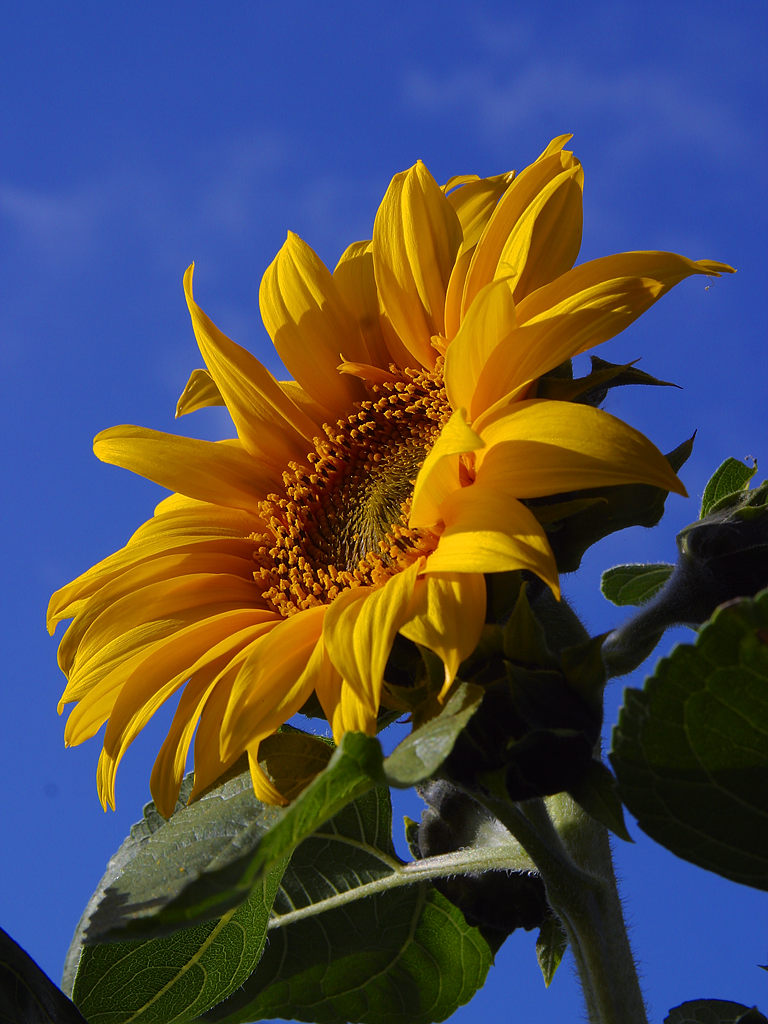
+SUNFLOWER, SELF, DISSOCIATON AND THE SEEDS OF LOST MEMORIES

++++++++++++++++++++++++++++++++++

I have had the image of sunflowers (in relation to the self and dissociation) in my mind for days now, so I guess I need to go ahead and write what I am thinking so  my thoughts can move off to something else.

Under ordinary conditions an infant is born into this lifetime with the potential to create a wonderful whole and healthy self.  All its experiences are integrated and stored at its center as they grow to fruition during a lifetime.

When severe trauma in a malevolent environment surrounds an infant-child, and dissociation has to take over the job of handling the memory of traumatic experiences, all this person’s ‘seed memories’ will not be central at the center of the flower of self.  The self will not be able to organize and orient itself in the ordinary way.  Instead, many or most of the seeds of experience will be missing, not connected and integrated at the center of self.

Perhaps it’s like the birds steal all the seeds away.  Perhaps it is like the seeds are simply missing, or scattered somewhere so we cannot find them.

seeds - sunflower
How can a self form right if trauma steals all the seeds of our memories?

Yet our trauma memories and reactions can pop up, unanticipated, unexpected, any time they are triggered.  We cannot control this.  It makes life hard.  It makes us different.  We cannot search for and find all our lost memories, all the lost parts of our self and put all the seeds back in our center where an  ‘ordinary’ person’s seed-memories have been stored all along — even if we want to.  And some part of our self flies away or gets lost with each disappearing part of our history.

Yet we are the same as everyone else.  We are all STILL sunflowers, even if our self is a different kind of self.  We are still beautiful, turning to follow the sun as we stand with everyone else in the field of life.

++++++++++++++++++++++++++++++++++

sunflower
Sunflower -- I am thinking of the sunflower as an image of a self -- Photo courtesy PDPhoto.org
sunflower-sunset
Lots of sunflowers, lots of people in the field of life

Sunflower as the image of self, all the seeds organized as a part of the flower, in the center, memories of our expriences -- unless - - - -

++++++++++++++++++++++++++++++++++

IN MEMORY OF MY MOTHER:

Borderline Personality Disorder

In the Spotlight | More Topics |

from Kristalyn Salters-Pedneault, PhD
BPD is a disorder that is often misunderstood and frequently stigmatized. Do you dread telling people about your diagnosis? Are you tired of trying to correct the myths about BPD that are out there? This week’s newsletter is for you!

In the Spotlight
The Stigma of BPD
The general public today is as afraid or more afraid of people with mental illness than they were decades ago. And people with BPD are among the most highly stigmatized groups.
More Topics
BPD Mythology – Help Challenge These Myths!
Borderline personality disorder is a very real and serious mental illness. It is not a “personality problem” or just a set of maladaptive ways of coping with the world.
Should You Tell Others Your Diagnosis?
Lots of you report that you’re afraid to tell other people about your BPD diagnosis. When is it safe to tell? Here are some guidelines…

++++++++++++++++++++++++++++++++++++++++++++++++++++++++++++

+MISSING IN ACTION: WHATEVER HAPPENED TO THE SELF OF LINDA?

++++++++++++++++++++++++++++++++

I went ‘Missing In Action’ in the combat zone of my childhood with my severe Borderline mother from the moment I was born.  That I was still MIA at age 30 should not surprise me as I continue  my forensic autobiographical search for whatever happened to the self of Linda — even half my lifetime ago:

*Age 30 – Journal from January 1982 through April 1982

Here are a few snippets from the journal:

++++++++++++++++++++++++++++++++

January 19, 1982

I was never socialized or given any experience as I grew up in getting along in this “real world.”  I was practiced in being extremely obedient, being isolated.”

++

2009:  For most of my life all I was able to do in any of my thinking regarding the reality of the abuse in my 18 years of childhood was to make observations as if I was a mechanical reporter, as per the above.  I never understood the implications or the ramifications.  We take for granted that we are supposed to KNOW things even though nobody ever TOLD us.  I completely lacked any basis for comparing my life to an ‘ordinary’ childhood, even when I was 30 years old.

I’ve always had a sort of “vacancy” feeling.  Nothing about my childhood connected to anything in this “real world.”  It was as if I was hatched out of an egg the day I landed at boot camp at 18.  There was nothing to do with or about what had happened to me before that time.  Everyone was busy with their own lives, lived in their realities, and did not care about one person who appeared in their lives — at any time — that person being me with my past history that nobody cared about, either.  I was either going to ‘make it’ on my own, or not at all, just as it had been in my childhood.

++++

January 26, 1982

“Received a beautiful cream sweater and a blue skirt from Mom today.  It feels good that she loves me and I need to write thanks and love.

++

2009:  Classic example of my continued delusions about being the daughter of the mother who tormented and abused me for 18 years.  Except for very limited in-school contacts, my childhood consisted of fear, abuse and dissociation.  My internal state was a void, a vacuum.  I lived the days of my life no differently than an android would.  Once I went through treatment and stopped self-medicating myself with pot, the medication was simply switched to prescription antidepressants.  The same purpose was served.  “Zombie juiced.”  Just keep Linda doing what Linda does because she knows nothing different.

My life could have been far worse.  I was safe.  I lived with a reasonable, kind man.  The people in my life were reasonable.  I thought what I was doing was reasonable.  I tried to parent my daughters the best that I could, and certainly I did not abuse them.  But how can an empty hollow shell of a person be a ‘good enough’ parent to children?  I can only believe that with kindness and the best love I could give them, the life force and personality of my children carried them forward as they grew up — but perhaps more like growing plants would than children who lacked a securely-attached mother.

This is where professionals coin the term “earned secure attachment.”  But I KNOW it wasn’t as good as the ‘real thing’.  How could it be, to be raised by a mother who does not have her self intact?

Yet I can see that with my disorganized-disoriented insecure attachment disorder I was able to organize and orient myself around a life as portrayed in my journals.  But it was a hollow life.  I was a hollow person.  I did not know what questions to ask anybody about what was ‘wrong’ with me, and nobody offered me the information I needed to understand what was REALLY going on with lost-soul Linda.

How I could I know that what I DO is not who I AM?  Now I would see that what I do is like a reflection of who I am, like light rays from the sun are reflected in a mirror.  I had no sun, no self — not that I knew or knew of, anyway.  Today I’m not sure I’m much better – but I do know the difference.  I can FEEL it, especially now that my children are gone from home.

Humans are not designed to organize and orient themselves around external factors of any kind.  We can, of course, organize and orient how we spend our TIME around external factors, but not our SELF!  Without a clear, strong, healthy sense of a non-dissociated self, I have been left all my life with a nearly unbearable sadness at my center.  That sadness is what the doctor was medicating with those antidepressants, and that I used to medicate with nonprescription drugs.

Is there another way for those of us who have such histories of terrible abuse of one kind or another to MEET, GREET and FEEL our true inner self — a process that is supposed to be firmly in place before we are two years old?

++++

April 6, 1982

I don’t question myself all the time anymore on what I’m doing and am much better at getting through days and doing what needs to be done and what I want to do.

I’ll have to watch this as meds change and be sure it’s not something that is really affected by the depression.

My head feels clear and I like that.”

++

The doctor was decreasing my antidepressants, and that concerned me.  He was talking about taking me off them completely by summer for a ‘drug holiday’.

Why did I believe that questioning “myself all the time…on what I’m doing” was a BAD thing?  I had a lot of questioning that needed to be done — a life time of questioning!!  Did I need stasis or did I need to make real and legitimate changes in my life?  Nobody supported me in asking the questions, or in trying to discover who I was or what I needed.  People did support me when I was ‘nice’ and did not rock the proverbial boat.

Obviously, I believed that I liked myself better that way — why would I want to FEEL FEELINGS and learn the truth about myself?  Yet, there was a Linda in there somewhere, hiding in the shadows of my life, who needed to peek herself out and begin to ask questions about her self in the world.  I needed answers.  It has taken me a very long time to begin to get some.

++++

April 21, 1982

I found a poem-story of my daughter’s father and her birth written on this date here in this journal.  I wonder what I meant by

I had a child to catch

my man

I sure don’t remember that being the case at the time!  It’s a whole story I have yet to tell, the story of being pregnant and giving birth and what followed.  But this poem is an introduction.

++++++++++++++++++++++++++++++++

I do not wish to leave the information contained in these links behind as I continue with my posting.  Please consider them for your study:

+’RED HIGH ALERT’ EMOTIONS AND ASSISTANCE FROM ASTROLOGY

+++++++++++++++++++++++++++++

Well, I had to cook up something entirely different today.  I found yesterday that going back to my age 29 journal was an incredibly difficult and painful experience.  There is nothing easy about any part of my life thanks to the treatment I received at the hands (and mouth) of my psychotic severe Borderline Personality Disordered mother.  So how do I live with, process, understand and begin to heal the powerful, intense and nearly overwhelming emotions I experience — frequently — as a consequence of my childhood?

My emotions reached the ‘Red High Alert’ stage yesterday.  I knew I had to find some way to ‘self sooth’ them down as many notches as I possibly could.  That meant I had to reach for some external resource for help, but which one?

I found and played a tape recording of an astrological reading I had done for me last March of 2009 specifically about the difficulties I have with my emotions by a man I consider to be a blessed and extremely talented and knowledgeable astrologer:  Zane (see Zane’s Page).

I learned a long time ago that because of the severity and extent of the child abuse I suffered, which began at my birth and lasted until I left home at 18, I have to consider and access the best of the best help I can find — anywhere I can find it — in order to live with and try to heal from the consequences of that torture.  Astrology is one of those avenues of assistance I have turned to in some of the toughest times of my adult life.

++++

I believe it takes a full lifetime of study coupled with incredible efforts at self-healing, and a whole lot of gifted talent for any individual to truly practice astrology.  I barely know enough personally to begin to understand the influences that the natural world exercise over me in this lifetime so that I can begin to gain assistance and insight from the best astrologers I can find.

Some people find it helpful to have ‘daily’ sorts of readings through which certain influences on their lives are made more clear as their lifetime progresses.  I am not interested in accessing that kind of astrological information.  I simply need to know what forces operated at my birth, throughout my childhood, and continue to operate during this very difficult lifetime I seem to have found myself in.  Zane is the most skilled and qualified astrologer I have ever found.

The internet provides a wealth of information about the basics of astrology.  There are websites that provide a free natal chart.  As with any search on the web, consumers need to pay careful attention to the information they obtain, but time spent considering the topic is, I believe, time well spent.  If you choose to consult with Zane at Zane’s Page, you can email him with specific questions or to set an appointment with him should you choose to purchase one of his readings.

++++

It is not my intention to either explain or defend astrology in this post.  Today I simply transcribed the reading I had with Zane last March.  I find the information helpful to me, and where I have differences of opinion with Zane, I note them within the text.

If you are interested, please follow this link to the whole report text:

*Age 57 – March 2009 (whole text) Astrological Reading About My Emotions

Transcribed from tape of telephone consultation

++++

Or refer to individual sections of the reading here:

MY EMOTIONS

MY DIFFERENT KIND OF LOGIC

MY FEELING DIFFERENT FROM OTHER PEOPLE

MY MARS AND JUPITER:  BEING A TEACHER

POTENTIAL AND PSYCHOLOGY

SUMMARY AND CONCLUSION

+++++++++++++++++++++++++++++++

+HOW DO WE BUILD A LIFE WHEN WE DO NOT KNOW WHO WE ARE?

+++++++++++++++++++++++++++++++

Sometimes we can go back and pick up the pieces of ourselves we left behind back somewhere in our lives.  In my journal entries right before my 30th birthday I can see one of those clear threads — and threads is an appropriate word!   As a child of a severely abusive Borderline mother, I have found myself a clue about who I am from my own writings half a lifetime ago……

I used to spin and weave back then.  I love it, but I made a decision to pack it all up and walk away.  Today I realized I want very badly to let that part of ME back into my life — and 29 years later I am going to find a way to do it.  I deserve it.

People who do not have to become dissociated from their own self through severe child abuse have, in my thinking, a chance to build a life that reflects who they truly are.  Those of us who were so severely abused that our selves never got to grow in the first place, can have an unbelievably difficult time living a life that is connected to our SELF.  Weaving and spinning was directly connected to ME, and I know that because, even looking back ‘then’, I can FEEL it.

How is it for others who have come from childhoods similar to mine?  Do we all need to pay very close attention on a physical, feeling level to those little clues we might come across that let us know which things in our life truly matter to us?  I tried to ‘reason’ my way through life.  From the time I went into ‘recovery’ onward I have worked to understand that my feelings not only matter, they are critical to letting me know WHO I am.

It can be hard to give ourselves permission to follow up on those clues.  If others are at all like me, I created a whole life of responsibility without knowing who the person was (ME) that was actually creating that life.  It was like I was living in a dream life I had built the best I knew how to, but it was not a healthy one for ME, and it was not built from the center of who I am because I had no idea who I was.  Does that make any sense to anyone out there?

*Age 29 – Journal Entries – Trying to Orient and Organize A Lost Self

+++++++++++++++++++++++++++++++

Try this for fun:

Myer Briggs personality type

http://www.humanmetrics.com/cgi-win/JTypes2.asp

+++++++++++++++++++++++++++++++

+++++++++++++++++++++++++++++++

Borderline Personality Disorder

“…[they] often engage in destructive behaviors not because they intend to hurt you, but because their suffering is so intense they feel they have no other way to survive.”

In the Spotlight | More Topics |
from Kristalyn Salters-Pedneault, PhD
I’ve gotten quite a few questions about the connection between lying and BPD. Lying is not one of the symptom criteria for BPD, but loved ones report that they see a connection between lying and BPD and that this is one of the most difficult behaviors to deal with.
In the Spotlight
Lying and BPD – Is There a Connection?
There isn’t a lot of good research on a possible connection between BPD and lying. However, the fact that BPD is associated with shame and impulsivity may set you up for a tendency to tell lies.
More Topics
Readers Respond: Do You Tell Lies?
This is probably a silly question, because of course everyone lies sometimes. But do you find you tell lies more than other people? What triggers your lying? What do you lie about? Do you agree that there is a connection between BPD and lying, or do you think this is just part of the stigma of BPD?
Will I Have BPD Forever?
At one time, experts did believe that BPD was a life sentence; they thought that BPD was not likely to respond to treatment and that BPD was always chronic and lifelong. Turns out the experts were wrong!

About.com

Borderline Personality Disorder

In the Spotlight | More Topics |

from Kristalyn Salters-Pedneault, PhD
I’ve gotten quite a few questions about the connection between lying and BPD. Lying is not one of the symptom criteria for BPD, but loved ones report that they see a connection between lying and BPD and that this is one of the most difficult behaviors to deal with.

In the Spotlight

Lying and BPD – Is There a Connection?
There isn’t a lot of good research on a possible connection between BPD and lying. However, the fact that BPD is associated with shame and impulsivity may set you up for a tendency to tell lies.

More Topics

Readers Respond: Do You Tell Lies?
This is probably a silly question, because of course everyone lies sometimes. But do you find you tell lies more than other people? What triggers your lying? What do you lie about? Do you agree that there is a connection between BPD and lying, or do you think this is just part of the stigma of BPD?

Will I Have BPD Forever?
At one time, experts did believe that BPD was a life sentence; they thought that BPD was not likely to respond to treatment and that BPD was always chronic and lifelong. Turns out the experts were wrong!