
+ATTACHMENT – HOW WE ARE WHO WE ARE

++++

Trying to understand the research and literature on secure and insecure attachment patterns seems to me to be a bit like this image:

Picture a cold winter day.  Someone comes out of their house, shuffles through the snow to a wood pile, brushes a pile of snow off of a corner of the tarp that covers it, pulls the cover back and begins to pile stove size logs into their arm.  They pull the tarp back over the pile, return to their house, and go through the process of adding the wood into a fire.  All is well, warmth is achieved, and life goes on.

When attachment specialists write about attachment styles and patterns they divide their thinking in half.  Half talk about how attachment can be ‘measured’ for infants at about a year of age.  The other half talk about attachment styles and patterns in parents as they relate to their infants that created the attachment styles and patterns one can measure in the infants.

I have found no clear description about how the birth to age one experience an infant has with its earliest caregivers BUILDS its age-one attachment pattern that continues through to create the attachment patterns it has in adulthood.  The topic of attachment is chopped into pieces just like a tree needs to be if its pieces are going to fit into a stove.

Going back to the image I just presented of the woodpile as it might relate to the study of attachment.  To get the WHOLE picture we would have to include a lot more information.  Where did the seed come from that grew into the tree that eventually found itself in pieces heading into a wood stove or a fireplace?  What were all the steps that had to happen for the seed to find itself into the ground, for it to crack open into life, grow into a sapling, into a tree big enough to use for firewood?  What was the process that went on as someone found the tree, cut it down, hauled it home, chopped it up, and made a covered pile of firewood?

Where do we turn for the whole story about human attachment from conception to death?

++++

Dr. Daniel J. Siegel has written what is, I believe, the only book that approaches parenting from an attachment point of view:  Parenting From the Inside Out by Daniel Siegel and Mary Hartzell.  Please read this book for a fuller understanding of what I am going to write about today.

Today I scanned in 13 pages for your study taken from another of Siegel’s books, The Developing Mind: How Relationships and the Brain Interact to Shape Who We Are (The Guilford Press, 1999)) — available for purchase by clicking on the title link –

These pages can be seen at this link:

**Siegel – Attachment Measurement (kid and adult)

++++++++++++++

As critically important as this attachment information is, I still think it is dense, complicated, hard to read, hard to understand, and hard to relate to anyone’s ongoing experience of their life with others and with their own self.

Because these early attachment experiences actually build the foundation of the human social-emotional brain (and direct the development of the body), it is critical to understand that the attachment patterns that can be ‘measured’ at age one happened one tiny step after another from birth.  The same patterns that can be seen in a one year old continue to operate for a life time – because they built the body-brain-mind-self of the person from the start.

++++

All the specialized fields of research are themselves each like a single piece of firewood cut from a whole tree.  The fields of study examine and report on their little piece of the tree, but nobody seems willing or able to put the whole picture together and look at the whole.

Attachment, in my thinking is the whole tree from which all other aspects of being human connect to and originate from.  Every single other facet of study concerning ‘the human condition’ stems from this tree.

Nowhere along the line of a lifetime, from conception to death, can attachment be ‘simply’ considered to be like the pile of firewood under the tarp.  Human attachment is about the entire process of the journey of each of us – like the firewood — from seed to ashes.  And just as the entire journey of our proverbial tree was influenced by the conditions within its environment from start to finish, so too are we.

++++

In yesterday’s post I laid out which of all the horses related to the betterment of the human condition I would lay my money on.  Coming to understand the attachment continuum of our lifetime – what it is, how it operates, how it determines the manifestation of our genetic potential, how it directs the building of our body-brain-mind-self’s foundation, how it affects our relationship with our own self, with others of our species, and with the entire environment we live and die within – is, in my belief, the most important conscious learning we can ever pursue and accomplish.

Improving our ability to experience safe and secure attachment will improve the quality of our life.  Finding ways to overcome whatever our degrees of unsafe and insecure attachment will be the most effective tool we can have to improve our degree of well-being within our own self and within the world we live in.

Yet where in the fragmented, disjointed, cut-into-tiny-pieces world of academic information can we look for the attachment-related facts we need to improve our lives?

Sadly I would have to say – nowhere.

Siegel’s book on parenting (link above) is probably the most complete effort anyone has accomplished to help us understand how our adult attachment patterns affect us as parents.  His work cannot possibly be comprehensive in my thinking (give us a picture of the whole of the living tree) for several reasons.

First of all, as you will notice if you follow the link to the 13 scanned pages, the terms used to describe attachment patterns seen in infants does not match the terms used to describe attachment patterns in adults.  This fact has made it difficult for me to think about the life continuum of attachment.

Pneumonia is pneumonia, diarrhea is diarrhea, and cancer is cancer no matter what age is of the body that might be suffering from these conditions.  Attachment patterns ARE physiological patterns within the body-brain.  They are not imaginary events that can be arbitrarily called one thing for an infant and something else for an adult.

In addition, as you read the 13 scanned pages you will be learning about the two accepted measurement tools available to measure attachment accurately – one for infants at about a year of age and the other for adults.  Both of these measurement tools are designed for use in a professional research setting.  To my knowledge, no one has ever yet designed accurate assessment (rather than measurement) tools that can be used in public settings to either assess infant or adult attachment patterns.

++++

Most people can read the information about how attachment is measured in infants and think about what we know in our real life about infants and their caregivers.  We can imagine the clinical experience as it happens around us in our lives.  We can begin to use our common sense to make the connection between the information about early mother-infant brain building interactions that Schore describes and the year-old patterns of interactions an infant has with its mother as presented in these 13 scanned pages.

This still does not leave us with any clear idea about how we could translate the clinical measurement tool so anyone could assess infant attachment in the ‘real world’.

Nor does the presentation of information about adult attachment measurement presented in the 13 scanned pages give us any everyday working idea about how we could assess our own adult attachment patterns.  It does not present a means to assessing adult attachment ‘on the streets’ or ‘in the trenches’ so that ordinary people could better come to understand how attachment patterns are affecting all our relationships – everywhere – every day and every night of our lives.

We are left reading the 13 scanned pages and trying to imagine an ordinary context in the same way we might be able to imagine the whole story about how a seed was planted that eventually ended up in firewood pieces giving warmth within someone’s home.

++++++++++++++
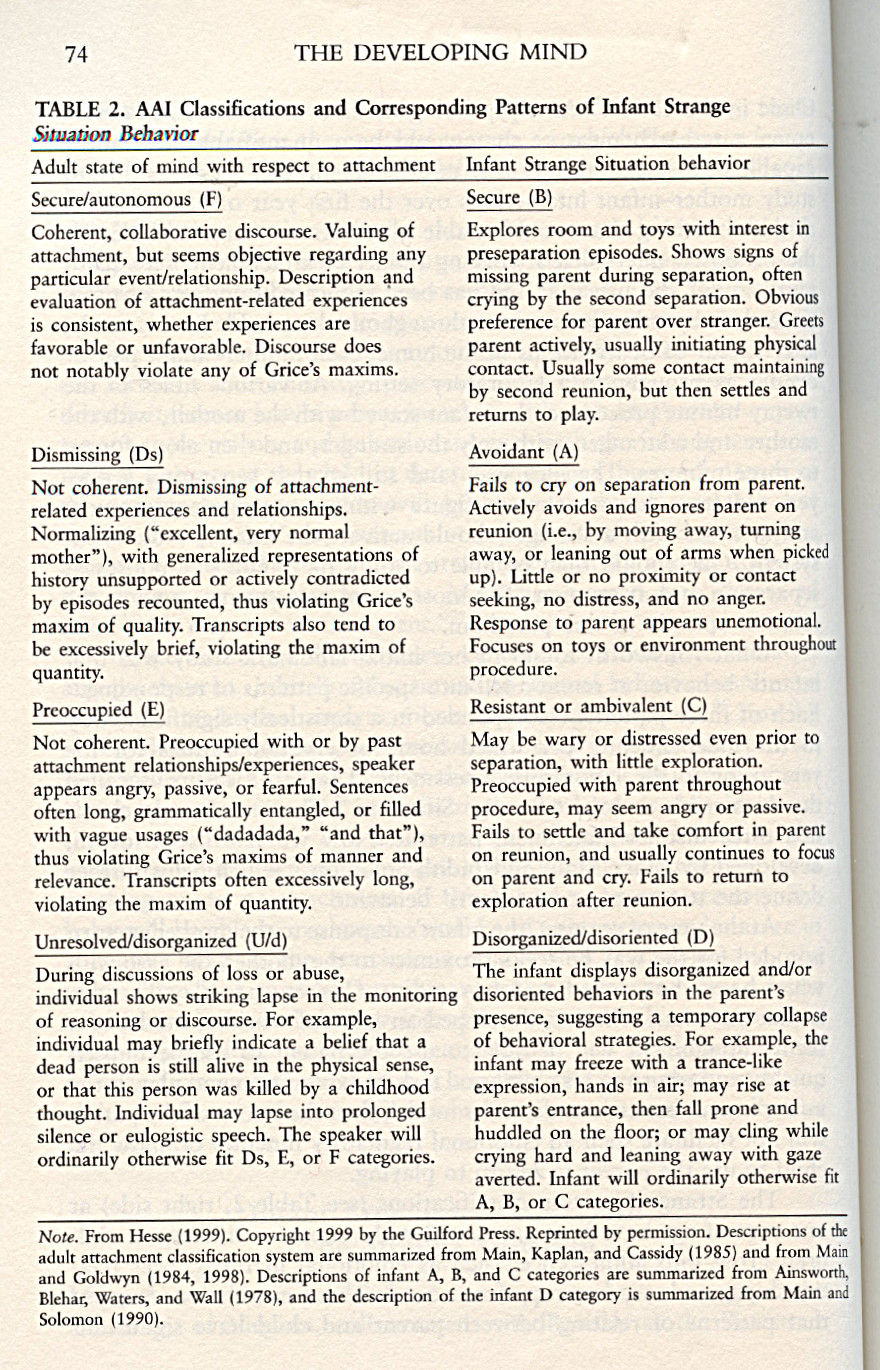
This scanned table about adult attachment refers to something called Grice’s maxims.  Here is the clearest description of these maxims, which originated historically in Kant’s philosophy, that I can find:

Grice’s Conversational Maxims

Maxim of Quantity:

1. Make your contribution to the conversation as informative as necessary.
2. Do not make your contribution to the conversation more informative than necessary.
Maxim of Quality:

1. Do not say what you believe to be false.
2. Do not say that for which you lack adequate evidence.
Maxim of Relevance:

Be relevant (i.e., say things related to the current topic of the conversation).
Maxim of Manner:

1. Avoid obscurity of expression.
2. Avoid ambiguity.
3. Be brief (avoid unnecessary wordiness).
4. Be orderly.

These maxims are considered to be reflected within rational ‘cooperative discourse’, and have been incorporated into the rating structure of the Adult Attachment Interview (AAI) used clinically and in research to assess adult attachment.

The AAI is a research tool.  People who administer the interview and rate it must go through specialized training.  This tool’s usefulness even in research is complicated because there are many factors about it that cannot be easily controlled, such as how the environment where the interview is given influences responses, how the person of the interviewer interacts with the ‘subject’, how interviewer’s biases might influence ratings, etc.

If I go back to my wood pile analogy and change the ‘end result’ of a tree’s lifetime into a toothpick or a piece of toilet paper instead of a log of firewood, and then expect us to be able to exactly imagine the entire process accurately that the seed went through to get to its end, we have a more accurate picture of how hard it would be to connect the results of an Adult Attachment Interview back through all the experiences of a person’s life back to their beginnings.  That would be if we even believed that the results of an AAI accurately described an adult’s attachment pattern in the first place.

++++

In the end, the simplest description of what an adult’s insecure attachment pattern might look like ‘on the streets’ or ‘in the trenches’ has to do with having some ability to tell a coherent life story – or not.

If I look at the piece of toilet paper version of how an AAI result might look, I would consider the ‘lowest’ grade of adult attachment that is not even mentioned in the 13 scanned pages.  It is called the ‘Cannot Classify Category’ and looks something like what 1998 research article describes:

Discourse, memory, and the adult attachment interview: A note with emphasis on the emerging cannot classify category

This brief report focuses on the emergence of a new Adult Attachment Interview (AAI) category, Cannot Classify. The Adult Attachment Interview classification system is discussed with emphasis upon differences in AAI categories as they relate to strategies or lapses in strategy for the integration and focus of attention and memory. The Cannot Classify category is understood to differ from the other AAI categories in that it appears to represent a global breakdown in the organization and maintenance of a singular strategy for adhering to the discourse tasks of the AAI.”

++

strategies or lapses in strategy for the integration and focus of attention and memory

This is what the researchers are looking for when they try to pin down what varying styles of adult attachment patterns look like.  That doesn’t give the rest of us much to go by in terms of learning about our adult attachment patterns, does it?

The fascinating point is that right within the few words of that sentence lies the heart of our concerns – TRAUMA.  What happened, when it happened, how it happened, what strategies either did or did not exist to integrate the experience of trauma, how these trauma experiences influenced and were influenced by attention and memory processes are all connected to attachment patterns.

++++

Attachment patterns are patterns of dealing with trauma.  If trauma built the early brain in the first place, these patterns show up in infant insecure attachment patterns such as the 13 scanned pages describe.  If trauma built the early brain, the same trauma-formed patterns continue into adulthood and manifest themselves in the disruptions of conversation about one’s self in one’s life that the AAI is designed to define.

Because our concern is with ‘trauma dramas’ that repeat themselves throughout a person’s lifetime, it is essential that we recognize what we are looking FOR as we find it in what we are looking AT.  We are looking for early infant-caregiver traumatic interactions (or their absence in safe and secure attachment) that built social-emotional brain in the first place because that is where the seed of who we are as a body-brain-mind-self originated.  We can tell the trauma was there at the beginning and that it influenced all later development if an insecure attachment pattern exists – in infant-children and in adults.

++++

So, if I disappoint my readers my not being able to clearly describe what adult attachment IS, let alone how it operates, how we identify the patterns, or how we change them, I hope you will be patient.  I might as well take what I have on hand and go into my back yard thinking I can build myself a space shuttle that actually works.

Humans had the capacity to figure out how to fly to the moon long before we did so.  We have the capacity to find a way to clearly assess human attachment, but we haven’t done so yet.  Because most of what goes wrong in human lives can be traced to the quality of attachment that formed the brain foundation and lies at the root of all of our social interactions – including the one we have with our own self – I believe this field of study should become the single most important one we pursue.

I have faith in US.  WE can figure this out – if and when we want to.  After all, as members of a social species our attachment patterns determine WHO we are in the world because they determine HOW we are in the world.

+++++++++++++++++++++++++++++++++++++++++++++++++++++

+INSECURE ATTACHMENT BREEDS CHILD ABUSE

+++++++++++++++++++++++

I did not intend to write myself around in a big circle about attachment today, but I did.  I guess that is what my ‘global’ thinking just naturally does.  In the end my conclusion is that child abuse continues to happen quite simply because we let it.

+++++++++++++++++++++++++

As usual I have a collection of thoughts that I can’t make sense out of until I write them down.  Once I open a Word page and begin to place all these letters together, one after the other, in rows I begin to see a THING, a post, as it forms itself on my computer screen.

Hum.  What is it I want to say?  I think about myself at age 18, having been sent away from my parents’ home out into the world some thousands of miles away from Alaska and into Navy boot camp.  What did I know of the world outside the doors of my childhood home(s)?  Nothing.

What did I know about interacting with other humans on the level playing field of so-called adulthood?  Nothing.  What did I know about what had been done to me, all the violence and hatred, fear and sadness my childhood had built up inside of me?  Nothing.

Who could I talk to about what had been done to me?  Nobody.  Who cared?  No one.  Did any of this matter to the bigger world outside of my own skin?  No, it didn’t.

++++

Sometimes I find myself thinking about what good I could do with the profits of a bestseller if I actually could write one and it sold well.  How could one book, or even two or three generate enough capitol to do anything that could make much of a difference toward improving the quality of life – either for survivors of child abuse or for the offspring of those trauma-changed people?

Whenever I think about efforts that might be designed to prevent child abuse my thoughts return to my mother like a compass needle pointing North.  I can’t say that women like me, who become pregnant in their teens and face the world alone are at highest risk for abusing their children.  I didn’t abuse mine.  My mother wasn’t married until she was 23.  She and my father wanted children, planned them, brought them into the world as if they were part of some perfectly orchestrated drama with the stage set and all the necessary actors trained, present and accounted for.

Would it have made a difference in my case if someone had given my parents an infant-child growth and development chart that described the needs of a human social-emotional brain in some up-beat, attractive, catchy format that would have told them clearly what safe and secure human attachment LOOKS like and FEELS like especially between a mother and her offspring?

Well, gee.  Any kind of a cutesy, informative infant-child brain growth and early development chart presented to MY MOTHER in a little pamphlet would have had to say inside as soon as she opened it up:

1)  DO NOT HATE YOUR BABY

2)  YOUR BABY IS NOT SATAN’S CHILD

3)  YOUR UNBORN INFANT DID NOT TRY TO KILL YOU AS SHE WAS BEING BORN

4)  YOUR INFANT-CHILD IS NOT A CURSE UPON YOUR LIFE

5)  YOUR BABY WAS BORN PERFECT AND IF YOU CANNOT LOVE HER, GIVE HER AWAY TO SOMEONE WHO WILL

OK.  So what if I don’t think about my mother and about other mothers and fathers who obviously have something seriously wrong with the way their own early social-emotional brain-body-mind-self developed.  Do I aim at simply trying to heighten the overall public mindset about the critical impact that all early interactions with an infant have on its growing brain?

Would anyone who had been so specifically enlightened have EVER recognized what my mother was doing to me even if they had learned this infant-brain building information.

Nope.

++++

I reached a dead end in my thinking.  Don’t you hate it when that happens?  Where do I go next?  Toward educating the mates of mothers such as mine was?

When I turn my thinking in the direction of my father the first thing that comes to mind is adult attachment disorders.  In order to begin to think about what kind of information could have reached my father, I think about how I could perhaps put proceeds from a bestseller into an effort to enlighten the public about what human attachment is, about how our attachment patterns are formed through our earliest brain-building experiences with our mothering caregiver, and about how those attachment patterns form how we relate to others – including our mates and offspring – for the rest of our lives.

My mother was a gregarious, charming, extremely attractive woman.  She LOOKED like quite the catch.  She ACTED like quite the catch.  My father was quiet, reserved, gentle, handsome, smart and educated.  He also appeared at quite the catch.  Mildred meets Bill, Bill marries Mildred.  End of story for the next almost 40 years until my father gave up and divorced my mother.

How to have reached my father so that he could possibly have understood that something was terribly, terribly wrong in my home of origin?

OK.  So my father did not abuse me.  So my father never once intervened to protect me.  Nobody would have spotted what was happening to me through studying my father.

UNLESS……What?

++++

Let me talk for a moment about how infant-childhood formed insecure attachment patterns operate in adult relationships.  First of all, if we still believe that about 50% of infant-children grow up in ‘normal’ families with good enough safe and secure attachment so that their social-emotional brain foundation operates in safe and secure patterned ways, we would pretty well know just from a description of how safe and secure adult attachment operates that even if a securely attached person should choose a mate who is insecurely attached, chances are that relationship will not last.

In fact, given that the securely attached person has a much better formed social-emotional brain from the start, they are likely to recognize the insecurely attached pattern from the beginning and then will smartly avoid any involvement in the first place.

Think about the groups of brain-changed primates I wrote about in yesterday’s post.  Those primates expertly found one another according to the patterns of signaling that each transmitted, received and understood.  If we understood ourselves better as humans, our changed-brain detection systems are every bit as capable of knowing the truth about one another as any ‘lower’ primate does.

Humans ignore the signals of secure and insecure social-emotional brain patterns.  We ignore the signs of insecure attachment.

++++

This brings to mind a strange collection of images.  First I think about the Ray Bradbury story that was made into a movie, Something Wicked This Way Comes.  Bradbury wrote the signs of Wicked into the story.  Signs of Wicked exist in humans.  Do we know what they are?  That depends.

In a social-emotional brain-body that has had trauma built into it and then responds to the world with insecurely attached patterns, changes in the Wicked, or Danger detection systems have been changed.  Although primates would still evidently be able to detect signals and signs from one another clearly enough to act on these differences, humans have reached a social evolution point where they can choose to ignore them and still survive.

Another image that comes to my mind is about how all kinds of living creatures can detect and ‘predict’ earthquakes.  They can sense the coming of a Tsunami.  That happens because they have no interference with their ability to remember signs and signals and to act on them the best way that they can.

Living creatures have amazing abilities to know when threat and danger is coming so that they can avoid the consequences of related potential harm whenever possible.  While humans might not have senses refined enough to be able to sense and predict earthquakes and Tsunamis that other living creatures do, we are certainly supposed to be able to do so in regard to human relationships.  If we LACK the ability to sense and detect danger that lies ahead if we chose to become ‘involved’ with another person, that only happens if we have an insecure attachment-formed early social-emotional brain.  Unfortunately, in a best-case scenario, this group includes – on some level – at least half of our adult population.

++++

If suddenly we gained our ability (I can’t say regained because we never got to build a securely attached social-emotional brain in the first place) to detect ‘Something Wicked This Way Comes’ both in ourselves and in those around us, we would still have to be able to ACT appropriately (better) in response to this information.  Very few of us with insecure attachment patterns are going to be able to do this.

We would need to be able to recognize the signs of insecure attachment patterns BOTH within our own self and within other people.  It is the nature of insecure attachment patterns that we are lacking in the ability to recognize the signs within EITHER others or within our self.  This does not mean that the signs do not exist and it does not mean that we cannot learn to understand what they are.  Once we do this, we empower ourselves to make different choices every single step of the way.

Those of us trained to drive a vehicle on public roads are trained to know what a green, yellow and red light mean when we encounter one at an intersection.  This brings to my mind one of my very favorite ideas:  BIFURCATION POINT.  A bifurcation point is a decision point where a choice is made.

Some people describe chaos as a state where all possibilities exist.  As we move forward through space and time in our life, we make billions and billions of choices we don’t think about.  For every choice we make we are ordering chaos into patterns.  One of my favorite books, Eskimo Realities, by Edmund Snow Carpenter, describes an ancient cultural approach to bringing life into existence through the ordering of chaos.

++++

My mother and father reached a significant bifurcation point when they met one another in the winter of 1948-1949.  Both of them ignored (for whatever reasons) the warning signs and signals about the Something Wicked that would come if they continued their relationship on down wedding lane.  What happened to me was obviously a result of their choices – or I would not exist.  The rest of what happened to me, the 18 years of severe abuse I suffered from my mother with my father’s full support of my mother, also happened to be because of the choices they made at their significant bifurcation points.

Trauma Altered Development that changes the way an infant-child’s body-brain-mind-self forms itself in a malevolent environment happens every infitesimally small bifurcation point at a time.  Every single brain neuron that responds to the conditions of an infant-child’s early environment does so at the molecular bifurcation point of early brain development.  The resiliency factors that we have as humans within our DNA operate in response – continually – to and within our environment.  This is how our attachment patterns come into being within us.

++++

At this point in my writing today as some inner force nudges each letter into existence on this page boils down to one single word.  INFLUENCE.

Our early environment, as it communicated its condition to us during our earliest development through our attachment experiences with our earliest mothering caregiver, influenced the molecular decisions our body-brain chose to make as it built itself.  Every time a bifurcation point was reached our body-brain physiologically, automatically and without our conscious informed consent made a decision and a choice for us.

What we need to understand is that ALL of these influences and the corresponding choices that were made within our body-brain are essentially and fundamentally ABOUT attachment in the world.  Because we are a social species (not something we have a choice over), which means that social attachment patterns are at the core of our existence, and because being a social species means that we have a prescribed range of possible responses to an influence when it occurs, ALL OF OUR RESPONSES at every bifurcation point we encounter and pass through in our lifetime means that we are having a social attachment-related experience.

We have no choice but to be influenced by all the containing parameters of the species to which we belong – our social one – in whose image we are created.

This means to me that if there is one thing that would most benefit us from learning about so that we can empower ourselves to make the best and wisest conscious choices at every bifurcation point we reach, it would be about how our human attachment systems operate.

++++

I could duck briefly under the umbrella of ‘ongoing life’ here and simply state that as long as we remain attached to this world we remain alive.  When we are no longer attached to this world we die.  We need basics, like air, water and food to remain attached and alive.  We have ongoing attachment systems within us that let us utilize this air, water and food.  All of our attachment systems are connected and operate together throughout every instant of our ongoing life.  Our connections to one another as members of a social species are, most simply put, a part of the same ongoing attachment-to-life system.  Our environment influences us, and our attachment systems respond.

Consciousness cannot be in any way disconnected in our thinking from attachment.  The same brain that formed itself within us during our critical windows of early infant-child development allows or disallows consciousness to manifest according to how our early attachment experiences influenced our growth.  This was no less true for my father as it was for my mother or for my self, or for any of the rest of us.

Our brain-building human attachment experiences influenced what we are conscious of and how.  There is only one other point that comes to mind as I write these words:  CARING.  Although what we care about and how is obviously tied to the body-brain we were built with from the start of our life here, I believe that it is at the level of CARING that we can most influence not only one another, but our own ongoing experience in the world.

The saying “You can lead a horse to water but you cannot make it drink” comes to mind.  Interestingly, some say that this might be the oldest proverb in the English language.  If a horse doesn’t care to drink, it won’t.

What might influence human caring?  A donkey or a chicken could detect the signs and signals from the environment that an earthquake or a Tsunami is coming until it was ‘blue in the face’, but if nobody pays attention, if nobody gives a damn, if nobody cares, what is the point?

So, again, what might influence human caring?  One thing and one thing only comes to mind:  PAIN.  Yet the word ‘pain’, as it came into modern English in the 14th century, has roots to both ‘punishment’ and through Sanskrit roots to ‘he revenges’.  These ideas are connected in our language to ‘vengeance’, ‘payment’, and ‘penalty’.  In order to find the oldest 9before the 12th century) connecting concept in the roots of our language, I had to go back to the word ‘bear’ as in ‘to bear’.

It all goes back to what influences we tolerate, either through choice or because we have to.  The word ‘tolerate’ in our language goes directly back in its roots to ‘to bear’, which of course goes back to ‘carry’.

As severe infant-child abuse survivors, we had no choice but to tolerate, bear and carry within our body-brains the malevolent treatment we received.  Our deprivation-traumas changed how we developed.  That means our attachment patterns within our self to the world changed.  These changes happened according to the degree of safe and secure or unsafe and insecure attachments we had with our earliest caregivers.

How much we continue to bear remains up to us.  When and if it ever comes down to how I choose to spend any future book sale proceeds, I will allocate them exactly and specifically to public education efforts about the human attachment continuum because attachment is how our life originates and how it continues.

++++

What each of us had to bear when we were little is exactly what we continue to bear unless and until we care enough to change.  Caring enough will happen as people come to understand exactly what IT is that they are bearing in the first place, and that different options DO exist so they don’t have to bear IT any more.  Neither do they have to pass what they are bearing down to future generations.

IT is made up of the unsafe and insecure attachment patterns that were built into our body-brain when we were tiny while our body-brain was being built.  Conditions of our early life influenced our entire existence in the direction of survival in either a benevolent or a malevolent world.

While everyone after the age of consciousness can be influenced to be informed enough to care enough to learn to make better attachment-related choices, it is only each individual person who can actually make their own choices.  As a social species we have the power collectively to care enough to prevent – what?

I have come around full circle to the concept of free will, free choice, freedom.  Our word ‘free’ (before the 12th century word) ties back to Sanskrit ‘own, dear’.  ‘Own’ goes back to roots before the 12th century to ‘owe’.  ‘Owe’ goes back before the 12th century to Sanskrit ‘he possesses’.  The word ‘dear’ also goes back in our language to before the 12th century as it connects to ‘costly’.  Not surprisingly, by following the connections through the concept of ‘cost’ back through ‘constant’ to before the 12th century we end up here:  ‘to stand’.

What are we able to bear?  What are we able to stand?

What are we willing to bear?  What are we willing to stand?

Are we as a society willing and able to bear that little tiny infants and children are being maltreated?  Are we as a society willing and able to stand for infant-child abuse to continue along with its cost to individual and collective well-being?

Or are we willing and able to care enough to stand up and stop it?

Think about the nature and quality of your own human attachment system.  Who do you include and who do you exclude?  If other people do not care about other people’s children enough to take a stand against all maltreatment of all children, the tragedy of child abuse will remain a reality quite simply because we choose to bear it.

++++++++++++++++++++++++++++++++

Don’t forget to check out — Brain Facts – A primer on the brain and nervous system

++++

— NEW:  CLICK ON POST, PAGE AND/OR COMMENT TITLE

AND LOOK FOR ‘YOU RATE IT’ STARS AT BOTTOM OF PAGE —

Please feel free to comment directly at the end of this post or on

+++++++

Your Page – Readers’ Responses

+++++++++++++++++++++++++

+CALM THE CRYING BABY — IMMUNE SYSTEM STIMULATES VAGUS NERVE TRAUMA ALTERED DEVELOPMENT

+++++++++++++

I have been in HOT pursuit of an idea all day.  This thought has lingered inside of me for 4 years in a ‘body knowing’ place because of what I know as a survivor of severe abuse and malevolent treatment from birth until I left home at 18.

In order for this idea to be given form I need to link it to other people’s related thoughts, and many of these ideas are only recently appearing as science races into a new place of truth about what it means to be a human — and how we develop in interaction with our environment from out conception.

I am not a scientist.  Even if I come up with a theory, and develop an hypothesis, I cannot create or perform research to either prove or disprove my ideas.  So, I have to use the interactive thinking the web provides and see what I can come up with.

And I found something very exciting – but I could not find it until I included the words ‘fish’ and ‘evolution’ into my search on the ‘vagus nerve’ and ‘the immune response’.

It has been my thinking that there has to be a point within the body — and within the body of a developing infant-child exactly ‘where the fire meets the gunpowder’.  A tiny person is powerless to stop trauma that happens to it from outside of its body.  It is therefore forced to try to stop the trauma ON ITS INSIDES.

This STOP action is the job of the vagus nerve as it controls the parasympathetic STOP arm of our Autonomic Nervous System and interacts with our immune system.  Right at this point where the developing body has to try to STOP the force of the impact of trauma ON ITS INSIDES is where Trauma Altered Development is forced to kick in.

It is RIGHT here, at this present moment in time where I cannot think into the future and must patiently await for science to confirm what I know is true – that RIGHT here where the fire meets the gunpowder, where a developing infant-child has to adapt within a malevolent environment and alter who it is becoming that EPIGENTIC forces that interfere with normal development by altering the immune system-vagus nerve-Autonomic Nervous System and brain interactions in preparation for survival within a toxic, malevolent unsafe and insecure attachment environment come into play.  The research proving this point is coming, but it is not entirely here yet.

This, I believe, is where and how what Dr. Martin Teicher calls evolutionarily altered development happens.  When a tiny growing body cannot STOP the ongoing affects of trauma happening to it from outside its body, the STOPPING happens on the inside.

This form of Stop the Storm of the impact of trauma — within a developing little body — causes things to happen like what happened to change my mother into the monster she became.  She could not afford to experience the suffering deprivation-trauma caused her so her body found a way to STOP it.

++++

My idea goes back to the very beginnings of how severe abuse and neglect in a malevolent environment force a newborn to begin to alter its development in adaptation to the deprivation-traumas that surround and impact it.

Thinking about how a tiny little body has so much work to do to grow its Central Nervous System including its brain, and about how its Autonomic Nervous System is able to at least control its heart rate and breathing from birth, knowing that an infant’s immune system is already in operation, I think about how all these developing processes interconnect.

I believe that it is the job of the immune system to protect and defend us within our environment.  I therefore suspect that it is our immune system that responds to the toxins in our environment – and if our earliest caregivers actually maltreat us and are themselves toxins in our early world, then our immune system must respond accordingly.

In this response to threat, to trauma, all our development is changed.  I suspect that there is an intersection within us where our immune system affects our Autonomic Nervous System (ANS).  The vagus nerves are intimately connected with the parasympathetic STOP arm of our ANS.  (I have collected pages of information and active links today on the subject.)

I think about how development altered through trauma ends up often making people into such changed people that their lives become very difficult in adulthood, both for themselves and for those around them.  I think about my mother’s birthday post I wrote for her last night, and I think about how compassionate would be the opposite of the way she turned out.

++++

I have spent the best part of this day searching for information I read online a few years back about how information transmitted through the vagus nerve reaches male brains differently than it does female’s.  I remember reading that men receive the information from one branch of the nerve – the left one – only while women receive information into both sides of their brains through both branches of the vagus nerve at the same time.

I combed through every gender and the brain link I presented last Sunday, and found nothing about this!  So I have been on the hunt, in pursuit, ever since.

I just found a fascinating article connecting the vagus nerve to compassion—something that my mother, through her trauma altered early development, did not grow up to possess – compassion.  Something about her adaptation to early deprivation and trauma changed her – and eliminated the possibility of having this experience from her for the rest of her life.

This article 9referenced below) follows exactly my line of expanding thought about how early trauma interacts with our immune system, our developing brain, and impacts our Autonomic Nervous System’s development.  It seems very probable to me that the evolutionarily altered person Dr. Martin Teicher describes due to developmental changes through early exposure to trauma experiences changes related to what this article is describing.

Compassion at the Core of Social Work: A – Florida State University

This article by Dan Orzech contains the following:

THE SEAT OF COMPASSION:

THE VAGUS NERVE?


“… Dacher Keltner, PhD, believes that the seat of compassion may just lie somewhere else: the vagus nerve. Keltner is a professor of psychology at the University of California, Berkeley, and coeditor of Greater Good, a magazine about prosocial behavior such as compassion and forgiveness. For the past several years, he has been examining the novel hypothesis that the vagus nervea bundle of nerves that emerges out of the brain stem and wanders throughout the body, connecting to the lungs, heart, and digestive system, among other areas-is related to prosocial behavior such as caring for others and connecting with other people.

The vagus nerve is considered part of the parasympathetic branch of the autonomic nervous system. That means it’s involved in relaxation and calming the body down-the opposite of the “fight or flight” arousal for which the sympathetic branch of the autonomic nervous system is responsible. Medicine has traditionally focused on the vagus nerve’s role in controlling things such as breathing, heart rate, kidney function, and digestion. But researchers lately have experimented with stimulating the vagus nerve to treat epilepsy as well as drug-resistant cases of clinical depression (see sidebar).

Keltner has been exploring the idea that the vagus nerve-which is unique to mammals-is part of an attachment response. Mammals, he says, “attach to their offspring, and the vagus nerve helps us do that.” Researchers have already found that children with high levels of vagal activity are more resilient, can better handle stress, and get along better with peers than children with lower vagal tone.

In his laboratory; Keltner has found that the level of activity in peoples vagus nerve correlates with how warm and friendly they are to other people. Interestingly it also correlates with how likely they are to report having had a spiritual experience during a six-month follow-up period. And, says Keltner, vagal tone is correlated with how much compassion people feel when they’re presented with slides showing people in distress, such as starving children or people who are wincing or showing a facial expression of suffering. Among other things, Keltner is interested in the implications of these findings for human evolution. “Much of the scientific research so far on emotions,” he says, “has focused on negative emotions like anger, fear, or disgust”-what Keltner calls the “fight or flight” emotions. “We tend to assume,” says Keltner, “that evolution produced just these fight/flight tendencies, but it may have also produced a biologically based tendency to be good to other people and to sacrifice self-interest.

Evolutionary thought is increasingly arising at the position that the defining characteristic of human evolution is our sociality We are constantly cooperating, constantly doing things in interdependent fashion, and constantly embedded in relationships. From an evolutionary perspective, that suggests that we should have a set of emotions that help us do that work.”

MORE:

WATCH THIS VIDEO – HE SAYS WHAT I’VE BEEN LOOKING FOR – THE VAGUS NERVE CONTROLS OUR IMMUNE SYSTEM!!  I believe that it is here that an abused developing infant-child experiences the start of its Trauma Altered Development.


Dacher Keltner in Conversation

43 min – Feb 5, 2009
Why have we evolved positive emotions like gratitude, amusement, awe and compassion? Dacher Keltner, professor of psychology at UC Berkeley
fora.tv/2009/02/05/Dacher_Keltner_in_Conversation

+++++++++++++++

HIS BOOK:

Born to Be Good: The Science of a Meaningful Life by Dacher Keltner

++++

The Evolution of Compassion

Dacher Keltner

University of California, Berkeley

++

Dacher Keltner
Professor
Ph.D., Stanford University

Campus Contact Information
Departmental Area(s): Social/Personality; Change, Plasticity &
Development;
Director: Berkeley Social Interaction Laboratory

Interests: Social/Personality: emotion; social interaction; individual
differences in emotion; conflict and negotiation; culture

+++++++++++++++++++++


Well, this is enough thinking and research for one day!  I am not going on to read the following today!!  It has just always made perfect sense to me that something in a traumatized tiny developing body causes its immune system to respond – and triggers the vast array of changes that we see in severe infant-child abuse survivors.  I believe the answer lies along this track.

What happens to an infant’s physiological development when no one calms the crying baby?

WHAT HAPPENS WHEN PARENTS HIT AND TERRIFY THE BABY?  Immune systems changes to development through interaction with the vagus nerve, that’s what.

++++

Vagal activity, early growth and emotional development – Elsevier

by T Field – 2008 – Cited by 1Related articles
The vagus nerve is a key component in the regulation of the autonomic nervous system and Infant growth and development. Several studies have documented a ….. including the hypothalamic-pituitary–adrenal axis and the immune system

++++

Parental Meta-Emotion Philosophy and the Emotional Life of …

by JM Gottman – 1996 – Cited by 228Related articlesAll 5 versions
nerve. The tonic firing of the vagus nerve slows down many physiological processes, such as the …. a central part of the immune system that is …..

++++

Calm Sleeping Baby – Baby Massage

Relaxation and enhancement of neurological development. Massage provides both stimulation and relaxation for an infant, Massage stimulates a nerve in the brain, known as the vagus nerve. Strengthens the immune system. Massage causes a significant increase is Natural Killer Cell numbers.

++++

Tears – Wikipedia, the free encyclopedia

Strong emotions, such as sorrow or elation, may lead to crying. lysozyme) fight against bacterial infection as a part of the immune system. A newborn infant has insufficient development of nervous control, so s/he “cries without weeping. of the facial nerve causes sufferers to shed tears while eating.

++++

TOUCH IN LABOR AND INFANCY: Clinical Implications

Increases in infants’ vagal activity during massage may lead to an increase As noted earlier, massage has been shown to increase activity of the vagus nerve, As in animal studies, massage has shown immunesystem benefits in humans. autonomic nervous system; a disturbance in the development of sleep-wake

++++

INFANT IN PAIN

Oct 29, 2009 Does your infant suffer from colic? Reflux? Projectile Vomiting? In her book, Molecules of Emotion,8 Dr Candice Pert (a recognized system interference are a hindrance to normal immune system function. Scientists are still discovering exactly how the immune and nerve systems interrelate.

++++

[PDF] Emotion

File Format: PDF/Adobe Acrobat – View as HTML
vagus nerve— a branch of the parasympathetic autonomic nervous system — may be involved in positive …. New research on the immune system suggests a biological …… Handbook of infant development

++++

[PDF] Phylogenetic origins of affective experiences: The neural …

File Format: PDF/Adobe Acrobat – Quick View
by SW Porges – Cited by 3Related articlesAll 3 versions
The healing power of emotion: Affective neuroscience, development ….. how the autonomic nervous system interacts with the immune system, nervous system. The vagus nerve exits the brain stem and has branches …… Porges SW, Doussard-Roosevelt JA, Portales AL, and Greenspan SI (1996) Infant regulation of the

++++

Evolution and Emotions

File Format: Microsoft Powerpoint – View as HTML
Neurological Development and the Limbic System. R-Hemi has closer connections to limbic system than L-Hemi. R-Hemi develops earlier in infancy than L-Hemi. Emotions appear in Stim vagus nerve, slows Heart 1 (H1). ….Effectiveness of the immune system; ability to ward off illness,

++++

The Brain and the Neuro-psycho-immune System – Anne Baring’s Website

When Cannon stimulated the vagus through electrodes implanted in the …. Emotions are in the digestive system, in the immune system, The nervous system consists of the brain and network of nerve cells We remember most the most vivid memories – this was probably of great help in evolutionary development,

++++

Vagus Nerve Is Direct Link From Brain To Immune System

++++

Deep Brain Stimulation … – Blogs – Revolution Health

which explains how the brain and the immune system are interconnected through the vagus nerve. “It turns out that the brain talks directly to the immune

++++

How the Dalai Lama can help you live to 120… « Terryorisms

Oct 5, 2006 … it is the way the immune system responds to the mind. Let me explain. You immune system is controlled by a nerve call the vagus nerve

++++

The Dana Foundation – Seeking the cause of deadly inflammation ….

May 3, 2007 And the vagus nerve story is progressing on multiple fronts, for device development, for understanding classical physiology, meditation, “Look, everybody knows that meditation is good for your immune system.


++++

Breakthrough “Neuro Nutrition” Targets the Brain and Vagus Nerve

Jul 6, 2008 … The Vagus Nerve is the body’s most powerful anti-inflammatory … the Vagus Nerve, has a direct ability to restore the human immune system

++++

NSLIJ – Scientists Figure Out How the Immune System and Brain …

When they stimulated the vagus nerve, a long nerve that goes from the base of Many laboratories at The Feinstein Institute study the immune system in

++++

Cholinergic anti-inflammatory pathway – Wikipedia, the free …

Kevin Tracey found that the vagus nerve provides the immune system with a direct connection to the brain. Tracey’s paper in the December 2002 issue of

++++

The vagus nerve, cytokines and depression

The vagus nerve mediates behavioural depression, but not fever, in response to peripheral immune The immune system, depression and antidepressants

++++

Article: Scientists figure out how the immune system and brain ….

Jul 21, 2008 Scientists figure out how the immune system and brain communicate When they stimulated the vagus nerve, a long nerve that goes from the ……..In a major step in understanding how the nervous system and the immune system Pain & Central Nervous System

++++

Brain ‘talks’ directly to body’s immune system – The Hindustan …

Brain ‘talks’ directly to body’s immune system – Report from the Asian News Pain & Central Nervous System Week, Vagus Nerve Stimulation Can Suppress

++++

FASCINATING IDEAS HERE — DOES THE VAGUS NERVE HELP ORGANIZE CONSCIOUSNESS AND THE SELF?

[PDF] Does vagus nerve constitute a self-organization complexity or a …

File Format: PDF/Adobe Acrobat
by B Mravec – 2006 – Cited by 3Related articles
nervous system modulates immune functions via vagus nerve (5, 6). from the immune system to the brain via the vagus nerve

++++

[PDF] Evidences for vagus nerve in maintenance of immune balance and …

++++

Brain ‘talks’ directly to body’s immune system

post: Nov 14, 2007

He discovered that the vagus nerve speaks directly to the immune system through a neurochemical called acetylcholine.

++++

Vagus Nerve Schwannoma: effects on internal organs?

I just gave a talk the vagus nerve and the immune system–the vagus nerve > probably plays a very important role in many important chemoregulatory


++++

BiomedExperts: The vagus nerve mediates behavioural depression ….

We propose that behavioural depression is mediated by the vagus nerve indicate that the recently proposed vagal link between the immune system and the


++++++++++++++++++++++++++++++++

MY MOTHER’S DREAM – March 29, 1960
The whole family was out walking and suddenly we looked up to see a dark rainbow appear – then it got bright and behind it a skyline appeared outlining massive dormed buildings such as I’ve never seen and skyscraper buildings – then it all disappeared and a big wind came.

We realized it was a hurricane. We could hardly stand up against the wind. We saw big apartment buildings on the sides of the streets but the entrances faced another street and we were on the wrong side. The wind grew stronger – finally a door appeared and we went in the building and the person asked us what was wrong? We told her of the great wind but as we pointed outside – all was silent and the wind was gone … and I awoke.

++++

Stop the Storm of the intergenerational transmission of unresolved trauma carried on through the maltreatment of little infant-children.  If we don’t do this, changes in development will continue to rob these children of their own life free from Trauma Altered Development.

If we don’t stop the trauma from happening on the outside, the tiny developing body will do everything in its power to stop its affects on the inside.  This is what happened to my mother.

++++++++++++++++++++++++++++++++

Don’t forget to check out — Brain Facts – A primer on the brain and nervous system

++++

— NEW:  CLICK ON POST, PAGE AND/OR COMMENT TITLE

AND LOOK FOR ‘YOU RATE IT’ STARS AT BOTTOM OF PAGE —

Please feel free to comment directly at the end of this post or on

+++++++

Your Page – Readers’ Responses

+++++++++++++++++++++++++


+GENDER AND THE BRAIN — DIFFERENCES AND EARLY TRAUMA

++++++++++++++++++++++++++++++++++++++
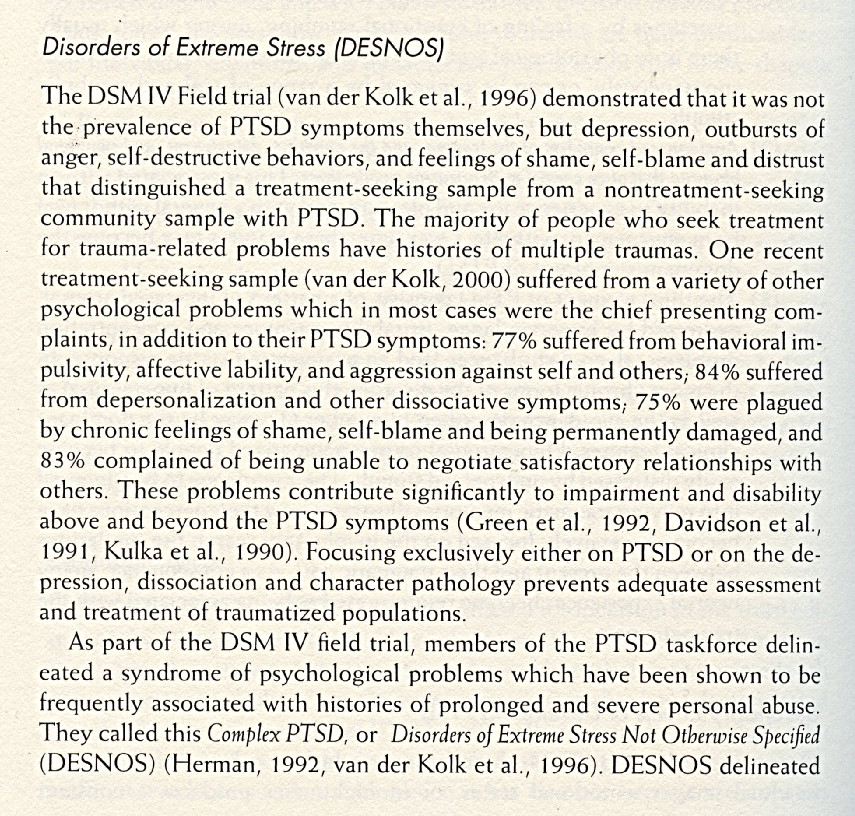
While severe early infant-child maltreatment will often cause Trauma Altered Development, those changes will occur according to our gender.  As we begin to understand how maltreatment of infants and children changes the way a body-brain-mind-self grows through adaptation to trauma, we must consider the physiological differences between the female and the male brain.

++++++++++++++++++++++++++++++++++++++
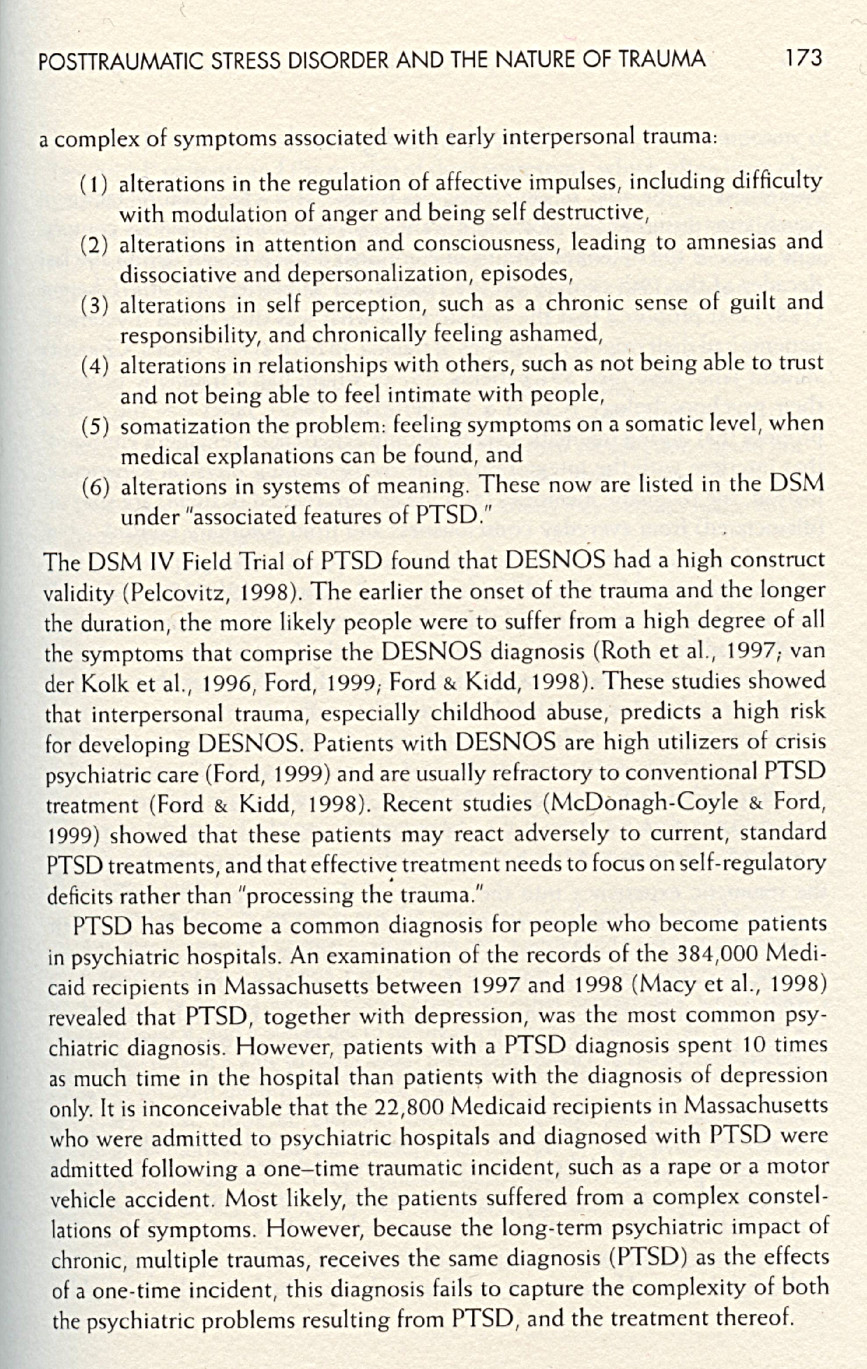
I have been thinking about a man’s comment posted yesterday to +PTSD AND SEVERE ABUSE SURVIVORSHIP – CONCLUSION, which included the following:

There are times when I am doing certain things that I have mastered so purely, that when I am in the middle of “being”, I am, whole, relaxed and alive.


There is no me and you, there just IS, if that makes sense.


This tells me that when we can let go of all the memories of pain, anger, abandonment, being on the defensive all the time, that WE can get for ourselves what was not there
.”

This brings to my mind a topic that I haven’t included yet on my blog – physiological differences between a female and a male brain which affects how we receive and process information.  As we learn about how severe early maltreatment changes an infant-child’s growing and developing body-brain, we must also consider that gender differences occur every step of the way.

I replied to this comment in terms of the fact that memory not only builds an early forming body-brain, but also forms itself into that body-brain.  We cannot ‘let go’ of these memories.  They ARE integrated with who we are – body-brain-mind-self – from the time of our beginnings.

We continually make new memories into our body.  We can achieve amazing consciously altered changes in the present.  Yet we have no choice but to process our self in our lifetime with the structural foundation of the body-brain that was made for us – through secure and safe attachments in a mostly benevolent world, or through insecure and unsafe attachments in a mostly malevolent one.  Our fundamental physiology evolved in our infant-early childhood according to the signals we received from our environment so that we could adjust and alter our development accordingly.

BUT – I need to put the big BUT in here:  Male and female brains are different from our conception.  There is much yet to be learned about what these differences actually are and how they affect us.  When I talk about Trauma Altered Development, it is important to include the concept that our developing early brains are responding to input from the environment differently — according to our sex — from the start.

++++++++++++++++++++++++++++++++++++++
What follows is a presentation of links to LOTS of information about the differences between the female and male brain, and about how severe maltreatment of infant-children during development changes them – each according to their body-brain’s gender.

As you read them, think “adult” rather than just “child” — if we survive our abuse, these trauma consequences do not simply disappear!

++

Here is a link to an excellent (and readable!) article – highly recommended!

Understanding the Effects of Maltreatment on Early Brain Development
In Focus: Understanding the Effects of Maltreatment on Early Brain Development

The effects of abuse and neglect on the developing brain during children’s first few years can result in various mental health problems. For example:

  • Diminished growth in the left hemisphere may increase the risk for depression (Teicher, 2000).
  • Irritability in the limbic system can set the stage for the emergence of panic disorder and post-traumatic stress disorder (PTSD) (Teicher, 2000).
  • Smaller growth in the hippocampus and limbic abnormalities can increase the risk for dissociative disorders and memory impairments (Teicher, 2000).
  • Impairment in the connection between the two brain hemispheres has been linked to symptoms of attention-deficit/hyperactivity disorder (ADHD) (Teicher, 2000).
  • Severely neglected children who have been deprived of sensory stimulation-including touch, movement, and sound-may be at risk for Sensory Integration Disorder (SID) (Parent Network for the Post-Institutionalized Child, 1999).
  • Children who have been raised in environments that totally disregarded their needs for comfort, stimulation, and affection may be at risk for Reactive Attachment Disorder (Parent Network for the Post-Institutionalized Child, 1999).

We are learning more about the serious, long-term consequences of abuse and neglect on brain development, and subsequent physical, cognitive, emotional, and social growth.”

++++++++++++++++++++++++++++++++++++

An interesting collection of information about sex differences in the brain is presented on the Medical Education Online website, I encourage readers to click on this link for a straightforward description of what some of these fundamental differences are.  Note the description of differences between the sexes in their emotional-social limbic brain structure and operation.
++

Another interesting presentation of research related to this topic can be found at:

Female, male brain differences studied

BY: MELANIE MORAN

5/05/2006 – New research attempting to shed light on the age old question of how male and female brains differ has found that timing is everything.

I personally strongly suspect that a severely abused infant experiences brain developmental trauma-related changes as their brain-mind grows to experience TIMING.

My own experience through a severely abusive infant-childhood left me with permanent changes in regard to how I create, store, process and consider my own memory of myself in the world.  I suspect that because I am female my dissociation might have originated and therefore operates differently than it would if I had been born a boy.

++

Sex Hormones Influence Human Cognitive Pattern

There are consistent differences between men’s and women’s cognitive skills, indicating, whatever the source, that their nervous systems also differ. Cognitive sex differences appear well before puberty, are present across cultures, and to some extent parallel differences seen in nonhuman mammals. Nonetheless, we must keep in mind that in the larger comparative context, the similarities between men’s and women’s brains far outweigh the differences.”

++

Here’s another great article that describes in part how women relate to young children differently than men do:

Understanding the Difference Between Men and Women

by Michael G. Conner, Psy.D,

What is very interesting about the differences between men and women is their access to right brain. Women are more connected to their right brain because the connective tissue is greater. Men can access their right brain but they have to “listen” for the messages it provides. It is easy for most men to ignore what the right brain has to offer.

The right brain is focused, for the most part, on information that is not left brain. The right brain “makes sense” of the qualities of voice such as tone, pitch, volume. It also “makes sense” of facial expressions, gestures, body language and the feelings we get. In a sense, our right brain is our emotional radar. It picks up on information that is felt, perceived, heard or seen. This is one reason why women are so much more aware of how children and adults are feeling. This comes in handy to a mother because it allows a mother to “read” and understand an infant based on behaviors and sounds. That’s important because children can’t speak. It is also why women are usually much more attuned, sensitive and unable to ignore an infant who is upset. Mothers seem to know more for reasons that they cannot explain fully to fathers.”

++

This Psychology Today article, The New Sex Scorecard by Hara Estroff Marano, about sex differences and the brain, states, “Males and females, it turns out, are different from the moment of conception, and the difference shows itself in every system of body and brain.”  It’s an excellent, easy to read description about our differences, and from here we can begin to think about how early infant-child trauma during our body-brain develop can affect us differently.

++

Are There Differences between the Brains of Males and Females?

Renato M.E. Sabbatini, PhD

The conclusion is that neuroscience has made great strides in the 90s, regarding the discovery of concrete, scientifically proved anatomical and functional differences between the brains of males and females.”

++

Male brain vs. female brain I: Why do men try to figure out their relationships? Why do women talk to their cars?

These sex differences emerged during the course of human evolution because men and women often faced different selection pressures. Men have come to acquire systemizing and mechanistic skills because such skills were necessary for inventing and making tools and weapons. At the same time, low empathizing ability was helpful for men in tolerating solitude during long hunting and tracking trips, and for committing acts of interpersonal violence and aggression necessary for male competition. (It is very difficult to kill other people if you strongly feel for them.) Similarly, women have come to acquire empathizing and mentalistic skills because they facilitate various aspects of mothering, such as anticipating and understanding the needs of infants who cannot yet talk, or making friends and allies in new environments, in which ancestral women found themselves upon marriage.”

++

Differences in Male and Female Brain Structure

depression and chronic anxiety are diagnosed far more often in women; this may have to do with differences in the chemical composition of the brain, as one study has shown that women produce only about half as much serotonin (a neurotransmitter linked to depression) as men and have fewer transporters to recycle it.

Or, it may have to do with how the various sides of the female brain respond to emotions and pain. Men, on the other hand, are more likely to be diagnosed with autism, Tourette’s syndrome, dyslexia and schizophrenia, to name a few.

Additionally, disorders like schizophrenia and Alzheimer’s disease can show up differently in men and women.

Based on the location of neurons, brain injuries may affect men and women differently.

This sort of knowledge could affect drug treatments, or at least explain why some drugs work differently in men and women. It extends beyond just drugs, though. One study has found that men and women’s brains fire differently when they do plan a visually guided action, like reaching for an object. This may necessitate changes in physical therapy after a brain disorder that affects one side of the brain, like a stroke.”

++

Gender-Specific Differences Found In Human Brain

Men and women’s brains are distinctly different. While men have more neurons in the cerebral cortex, the brain’s outer layer, women have more neuropil, which contains the processes allowing cell communication.”

++

Gender differences seen in brain connections

Human brains appear to come in at least two flavours: male and female. Now variations in the density of the synapses that connect neurons may help to explain differences in how men and women think.

+++++++++++++++++++++++++++++

The Effect of Childhood Trauma on Brain Development

As recently as the 1980s, many professionals thought that by the time babies are born, the structure of their brains was already genetically determined. However, emerging research shows evidence of altered brain functioning as a result of early abuse and neglect. The key to why this occurs appears to be in the brain.

The following studies highlight some of the effects of maltreatment on brain development:

Bremner, J. D., Southwick, S. M., & Charney, D. S. (1991, fall). Animal Models for the Neurobiology of Trauma. National Center for PTSD Research Quarterly, 2(4), 1-7. (PDF Format – Acrobat Reader required)

Clinicians will notice parallels between the behavioral and biological sequelae of inescapable stress and the phe-nomenology of PTSD symptoms in their patients. The animal model of inescapable stress parallels the experience of being pinned down in combat or being the victim of repeated assaults. Inescapable stress produces a variety of behaviors in animals including abnormal alarm states, aggression, sensitivity to stress, altered sleep patterns, deficits in learning and memory, and withdrawal. These behaviors resemble those seen in patients with PTSD. For instance, evidence from animal findings of alterations in noradrenergic brain systems is consistent with emerging findings of abnormalities in noradrenergic systems in patients with PTSD as evidenced by abnormal responses to the alpha-2 noradrenergic receptor antagonist yohimbine. The identification of specific neurobiological abnormalities may lead to the development of new psychopharmacological and psychotherapeutic treatments based on the pathophysiology of PTSD.

Bremner JD, Randall P, et al. (1997). MRI-based measurement of hippocampal volume in posttraumatic stress disorder related to childhood physical and sexual abuse: A preliminary report. Biol Psychiatry, 41, 23-32.

Bremner, J. D. (1999). The Lasting Effects of Psychological Trauma on Memory and the Hippocampus.

Childhood abuse and other extreme stressors can have lasting effects on brain areas involved in memory and emotion. The hippocampus is a brain area involved in learning and memory that is particularly sensitive to stress

Bremner, J. D. (2000). The Invisible Epidemic: Post-Traumatic Stress Disorder, Memory and the Brain. (PDF)

The biology of soul murder: Fear can harm a child’s brain. Is it reversible? (Nov. 11, 1996). U.S. News & World Report

Excerpt: “Once viewed as genetically programmed, the brain is now known to be plastic, an organ molded by both genes and experience throughout life. A single traumatic experience can alter an adult’s brain: A horrifying battle, for instance, may induce the flashbacks, depression and hair-trigger response of post-traumatic stress disorder (PTSD). And researchers are finding that abuse and neglect early in life can have even more devastating consequences, tangling both the chemistry and the architecture of children’s brains and leaving them at risk for drug abuse, teen pregnancy and psychiatric problems later in life.

Centers for Disease Control and Prevention (CDC). (2008). The Effects of Childhood Stress on Health Across the Lifespan

This booklet summarizes the research on childhood stress and its implications for adult health and well-being. Of particular interest is the stress caused by child abuse, neglect, and repeated exposure to intimate partner violence. Intensive and prolonged stress can lead to a variety of short- and long-term negative health effects. It can disrupt early brain development and compromise functioning of the nervous and immune systems. In addition, childhood stress can lead to health problems later in life including alcoholism, depression, eating disorders, heart disease, cancer, and other chronic diseases. This publication provides violence prevention practitioners with ideas about how to incorporate information on childhood stress into their work.
http://www.cdc.gov/ncipc/pub-res/pdf/Childhood_Stress.pdf (warning large file)

Chamberlain, D.B. (1989). Babies Remember Pain. Pre- and Peri-natal Psychology, 3(4), 297-310.

We are still enthralled by popular myths that babies don’t feel, don’t think, don’t remember, and have no sense of self. Scientific research shows these myths to be false and calls into question painful procedures and rituals at birth that are both inhumane and unnecessary.

De Bellis, Michael D. (1999). Developmental Traumatology: Neurobiological Development in Maltreated Children With PTSD. Psychiatric Times, 16 (11),

Science shows that child abuse may be associated with alterations of the body’s major stress systems. These neurobiological effects may cause delays or deficits in a child’s ability to achieve age-appropriate behavioral, cognitive and emotional regulation.

+++++++++++++++++++++++++++++

What about differences in brain between the sexes when it comes to Trauma Altered Development related to malevolent early treatment?

Here is an excellent article on differences in brain development between girls and boys:

Gender Differences in the Sequence of Brain Development

by Leonard Sax, M.D., Ph.D.

The most profound difference between girls and boys is not in any brain structure per se, but rather in the sequence of development of the various brain regions. The different regions of the brain develop in a different sequence, and different tempo, in girls compared with boys.”

++

Gender Differences in Dissociation:  A Dimensional Approach

From abstract:

Considering that epidemiological research on dissociative disorders has suggested a 9 to 1 predominance of female cases, this study investigated the relationship between gender and dissociation using a dimensional approach. A total of 2,153 participants from different diagnostic groups completed the Dissociative Experience Scale. …. There were no significant sex differences in the distribution of high dissociators. Our findings suggest that men and women do not generally differ in dissociative psychopathology.”

++

Sex differences in brain maturation in maltreatment-related pediatric posttraumatic stress disorder

These data suggest that there are sex differences in the brain maturation of boys and girls with maltreatment-related PTSD.”

++

Developmental traumatology part II: brain development

(study of 44 maltreated children and adolescents with PTSD and 61 matched controls )

Results: PTSD subjects had smaller intracranial and cerebral volumes than matched controls. The total midsagittal area of corpus callosum and middle and posterior regions remained smaller; while right, left, and total lateral ventricles were proportionally larger than controls, after adjustment for intracranial volume. Brain volume robustly and positively correlated with age of onset of PTSD trauma and negatively correlated with duration of abuse. Symptoms of intrusive thoughts, avoidance, hyperarousal or dissociation correlated positively with ventricular volume, and negatively with brain volume and total corpus callosum and regional measures. Significant gender by diagnosis effect revealed greater corpus callosum area reduction in maltreated males with PTSD and a trend for greater cerebral volume reduction than maltreated females with PTSD. The predicted decrease in hippocampal volume seen in adult PTSD was not seen in these subjects.

Conclusions: These data suggest that the overwhelming stress of maltreatment experiences in childhood is associated with adverse brain development.”

++

Brain Development:  Evidence of Gender Differences (text review page)

++

(I couldn’t access the text of this online, but you can order it if you want)

Brain structures in pediatric maltreatment-related posttraumatic stress disorder: a sociodemographically matched study
Biological Psychiatry, Volume 52, Issue 11, Pages 1066-1078

++

Developmental Problems of Maltreated Children

Research has estimated that 10% to 61% of maltreated children have mental health problems….  Undoubtedly, differences in maltreatment status, duration, and severity as well as the way psychopathology was measured account for some discrepancies in prevalence.”

[Linda note:  Whether or not a child has a safe and secure adult attachment is a MAJOR factor that affects a traumatized child’s resiliency.]

Maltreated boys display higher rates of aggression than maltreated girls whereas maltreated girls displayed higher rates of internalizing problems (e.g., depression, anxiety, somatic, etc.) than maltreated boys

Health, Growth and Motor Delays, and Compromised Physiological Systems

These fast facts highlight key issues related to the occurrence of developmental problems for maltreated children younger than the age of 3:

  • Twenty-two percent to eighty percent demonstrate acute and chronic health problems
  • Eleven percent demonstrate failure to thrive
  • Twenty percent demonstrate growth delays
  • Four percent to forty-seven percent demonstrate gross and fine motor delays

The occurrence of developmental problems for maltreated children younger than the age of 3

  • Twenty-three percent to sixty-five percent of maltreated children demonstrate cognitive delays
  • Fourteen percent to sixty-four percent of maltreated children demonstrate speech and language delays

Common problems seen in maltreated children younger than the age of 3:

  • Poor emotional comprehension
  • Heightened arousal to negative emotions
  • Increased expression of negative emotion
  • Increased evidence of insecure attachment relationships
  • Poor peer relations and social competence

Diagnosable mental health difficulties in very young children. The occurrence of developmental problems for maltreated children younger than the age of 3 is summarized in these prevalence data:

  • Fourteen percent to thirty-seven percent of maltreated children demonstrate externalizing problems such as aggressive behavior and oppositional behavior
  • Approximately 11% of maltreated children demonstrate internalizing problems such as depression, anxiety, and somatic [physical] complaints
  • Maltreated children exhibit the following specific disorders:
    • Reactive Attachment Disorder — approximately 7%
    • Post Traumatic Stress Disorder or the PTSD symptom of hypervigilance approximately 7%
    • Adjustment Disorders — 40%
    • Regulatory Disorders — 22%”

+++++++++++++++++++++++++

NEW:  CLICK ON POST, PAGE AND/OR COMMENT TITLE

AND LOOK FOR ‘YOU RATE IT’ STARS AT BOTTOM OF PAGE —

Please feel free to comment directly at the end of this post or on

+++++++

Your Page – Readers’ Responses

++++++++++++++++++++++++++++++++

+DEGREES-OF-WELL-BEING IS ABOUT SOCIAL HEALTH, NOT “MENTAL” OR “BEHAVIORAL”

++++

At the same time that I do not personally like the use of the words either ‘mental’ or ‘behavioral’ health in regard to the well-being of humans, I cannot fight the world on this point, but I sure can examine what is meant by the words themselves.  The human ‘mind’ is a nebulous, invisible, intangible nonexistent physical entity.  It is not a THING we can detect through our ordinary senses.  We are always forced to follow some magical ‘this is subjective but we’ll all pretend it isn’t” course in our thinking about the concept of MIND.

Dr. Daniel J. Siegel’s work and writings talk about how humans both develop a mind and the ability to have what he calls ‘Mind Sight’.   Siegel serves as the Executive Director of the Mindsight Institute, an educational organization that focuses on how the development of insight, compassion and empathy in individuals, families and communities can be enhanced by examining the interface of human relationships and basic biological processes.  His work accurately describes how the mind does not exist separately from the physiological body that comes to manifest it.

If we are going to continue to use the term ‘mental health’ it must be done within the context that Siegel presents.  ‘Behavioral health’ must also be firmly anchored into an accurate understanding that behavior, just like ‘mind’, stems from physiological processes within a person’s body and is completely open for subjective interpretation.

By using either one of these terms on a grand scale, either ‘mental health’ or ‘behavioral health’,  we are pretending that we are talking about a THING.  A thing is an object.  Humans are not objects.  We are living beings who exist in relationship with our environment, within our own body and to everyone and everything around us.  To try to define our well-being in the world in terms of our mind or our behavior as if they are separate THINGS that have nothing to do with our physiological body is STUPID!

++++

We CAN talk about human well-being at every stage of our existence from conception until death.  Before I would trust any individual national, state, regional, local or individual opinion on any topic of human health, I would want to know what our global ‘best of the best’ have to say about it.

The World Health Organization’s website has a page devoted to Mental Health, where they say:

Mental health is not just the absence of mental disorder. It is defined as a state of well-being in which every individual realizes his or her own potential, can cope with the normal stresses of life, can work productively and fruitfully, and is able to make a contribution to her or his community.”

The World Health Organization defines some specifics about “the early signs of mental disorders”:

A mental or behavioural disorder is characterized by a disturbance in thinking, mood, or behaviour, which is out of keeping with cultural beliefs and norms. In most cases the symptoms are associated with distress and interference with personal functions.

Mental disorders produce symptoms that sufferers or those close to them notice. These may include:

  • physical symptoms (e.g. aches and sleep disturbance)
  • emotional symptoms (e.g. feeling sad, scared, or anxious)
  • cognitive symptoms (e.g. difficulty thinking clearly, abnormal beliefs, memory disturbance)
  • behavioural symptoms (e.g. behaving in an aggressive manner, inability to perform routine daily functions, excessive use of substances)
  • perceptual symptoms (e.g. seeing or hearing things that others cannot)

++++

Well, I am getting nowhere here, so I am going back to look at the origins of the word ‘mind’ itself.  Interestingly, I have to continue to search for the actual date this word came into our modern English language.  My hard-copy dictionary gives the date as being before the 12th century.:

Main Entry: 1mind

Function: noun

Etymology: Middle English, from Old English gemynd; akin to Old High German gimunt memory, Latin ment-, mens mind, monEre to remind, warn, Greek menos spirit, mnasthai, mimnEskesthai to remember

1 : RECOLLECTION, MEMORY <keep that in mind> <time out of mind>
2 a : the element or complex of elements in an individual that feels, perceives, thinks, wills, and especially reasons b : the conscious mental events and capabilities in an organism c : the organized conscious and unconscious adaptive mental activity of an organism
3 : INTENTION, DESIRE <I changed my mind>
4 : the normal or healthy condition of the mental faculties
5 : OPINION, VIEW
6 : DISPOSITION, MOOD
7 a : a person or group embodying mental qualities <the public mind> b : intellectual ability
8 capitalized, Christian Science : GOD 1b
9 : a conscious substratum or factor in the universe
10 : ATTENTION <pay him no mind>

++++

Very interesting origins!  I looked up the word “mental” and found:

Main Entry: 1men·tal

Function: adjective

Etymology: Middle English, from Late Latin mentalis, from Latin ment-, mens mind — more at mind

Date: 15th century

1 a : of or relating to the mind; specifically : of or relating to the total emotional and intellectual response of an individual to external reality <mental health> b : of or relating to intellectual as contrasted with emotional activity c : of, relating to, or being intellectual as contrasted with overt physical activity d : occurring or experienced in the mind : inner <mental anguish> e : relating to the mind, its activity, or its products as an object of study : ideological f : relating to spirit or idea as opposed to matter
2 a (1) : of, relating to, or affected by a psychiatric disorder <a mental patient> (2) : mentally disordered : mad, crazy b : intended for the care or treatment of persons affected by psychiatric disorders <mental hospitals>
3 : of or relating to telepathic or mind-reading powers

Ah!  Here again, as with the word ‘symptom’ (see post on topic here) , we have a Renaissance-origin word:  ‘Mental’ as an adjective.

++++

It becomes immediately clear to me as soon as I try to discover the roots of human thinking behind a term like ‘mental health’ that we are evidently not willing to talk about what we are really talking about!

When the invisible unreal entity of MIND is considered independently from the human body that both HAS a mind and experiences life WITH this mind, what we are really talking about – as we can see from our consideration of the meaning of ‘mind’ and ‘mental’ in relationship to their origins —  is HOW A PERSON’S  SPIRIT REMEMBERS ITSELF in the world.

(If the treatment a developing infant receives from its mother is unsafe and insecure, that treatment is a warning to the infant that adjustments need to be made in order to survive within a malevolent world.  A mother’s treatment of her offspring ‘reminds’ it of the conditions of the environment.  All human ‘remembering’ (including how our DNA manifests itself) happens from conception within this framework.  Because we are a social species, all our ‘remembering’ happens through the body-brain we developed primarily before the age of one.)

No matter what the Renaissance thinkers intended as they began to talk about ‘mind’ and ‘mental’ the reality is that no consideration of mind is actually remotely scientific!  Just by making up a meaning and attaching it to a made-up word DOES NOT MAKE SOMETHING into a real, tangible THING.

++++

Are we really talking about something no less tangible than what one of my favorite words describes?

Main Entry: al·che·my

Function: noun

Etymology: Middle English alkamie, alquemie, from Middle French or Medieval Latin; Middle French alkimie, from Medieval Latin alchymia, from Arabic al-kīmiyā’, from al the + kīmiyā’ alchemy, from Late Greek chēmeia

Date: 14th century

1 : a medieval chemical science and speculative philosophy aiming to achieve the transmutation of the base metals into gold, the discovery of a universal cure for disease, and the discovery of a means of indefinitely prolonging life
2 : a power or process of transforming something common into something special
3 : an inexplicable or mysterious transmuting

al·chem·i·cal \-mi-kəl\ also al·chem·ic \al-ˈke-mik\ adjective

al·chem·i·cal·ly \-mi-k(ə-)lē\ adverb

There it is:  “an inexplicable or mysterious transmuting.”  We have transmuted the invisible process of how and who a human being is in the world into a tangible THING, giving the words ‘mind’ and ‘mental’ meaning AS IF we are talking about something REAL and tangible rather than something UNREAL and intangible.

++++

What happens if I turn my considerations toward ‘behavioral health’ instead of ‘mental health’?  Hummmmm – this search also is leading me toward the obvious – yet another Renaissance word:

Main Entry: be·have

Function: verb

Inflected Form(s): be·haved; be·hav·ing

Etymology: Middle English behaven, from be- + haven to have, hold

Date: 15th century

transitive verb 1 : to manage the actions of (oneself) in a particular way
2 : to conduct (oneself) in a proper mannerintransitive verb 1 : to act, function, or react in a particular way
2 : to conduct oneself properly

++++

If I make a gigantic leap and connect “to conduct oneself properly” in relationship to ‘behavioral health’ back through ‘mind’ as being a ‘remembering of the spirit’, and return full circle to the beginning of the post, I find in the World Health Organization’s discussion about the ‘symptoms’ of ‘mental illness’ and ‘mental disorders’ that they clearly present this qualifying statement:

A mental or behavioural disorder is characterized by a disturbance in thinking, mood, or behaviour, which is out of keeping with cultural beliefs and norms”

In other words, it is impossible to even begin to think even about ‘disorder’ itself, in relation to either a so-called ‘mental’ or a ‘behavioral’ one without first defining what any particular culture’s ‘beliefs and norms’ are.

Any consideration of ‘disorder’ has to be done within a consideration of the established social-cultural patterns of what’s considered to be ‘order’.  Disorder is itself another Renaissance word:

Main Entry: 1dis·or·der

Function: transitive verb

Date: 15th century

1 : to disturb the order of
2 : to disturb the regular or normal functions of

++

Even if I try to place the IDEA of disorder within the larger context of what ORDER might mean, I find myself looking at an English word that is connected not in our history of Renaissance-period thinking, but to our Medieval-period, or Middle Age Millennium of thinking:

Main Entry: 1or·der

Function: verb

Inflected Form(s): or·dered; or·der·ing \ˈȯr-d(ə-)riŋ\

Etymology: Middle English, from ordre, noun

Date: 13th century

transitive verb 1 : to put in order : arrange
2 a : to give an order to : command b : destine, ordain <so ordered by the gods> c : to command to go or come to a specified place <ordered back to the base> d : to give an order for <order a meal>intransitive verb 1 : to bring about order : regulate
2 a : to issue orders : command b : to give or place an order

OR AS A NOUN:

Main Entry: 2order

Function: noun

Etymology: Middle English, from Anglo-French ordre, from Medieval Latin & Latin; Medieval Latin ordin-, ordo ecclesiastical order, from Latin, arrangement, group, class; akin to Latin ordiri to lay the warp, begin

Date: 14th century

1 a : a group of people united in a formal way: as (1) : a fraternal society <the Masonic Order> (2) : a community under a religious rule; especially : one requiring members to take solemn vows b : a badge or medal of such a society; also : a military decoration
2 a : any of the several grades of the Christian ministry b plural : the office of a person in the Christian ministry c plural : ordination
3 a : a rank, class, or special group in a community or society b : a class of persons or things grouped according to quality, value, or natural characteristics: as (1) : a category of taxonomic classification ranking above the family and below the class (2) : the broadest category in soil classification

++

As a weaver, I find “akin to Latin ordiri to lay the warp, begin” fascinating!  That is exactly what a mother does for her infant — she lays the warp as her infant begins its life as a social being, and with that warp a person’s life is created.

++++

We cannot consider ‘mental’ or ‘behavioral’ ‘disorders’ outside of the context that gave birth not only to the words themselves, but to the cultural ideas and concepts that contain them.

It is clear to me that all of these words originated within a Christian mindset and cultural world view.  We continue to use these words AS IF (think alchemy again) we could transmute the concepts, values, beliefs, understandings and religious underpinnings beneath and behind them into something magically SCIENTIFIC.

Main Entry: sci·ence

Function: noun

Etymology: Middle English, from Anglo-French, from Latin scientia, from scient-, sciens having knowledge, from present participle of scire to know; perhaps akin to Sanskrit chyati he cuts off, Latin scindere to split — more at shed

Date: 14th century

1 : the state of knowing : knowledge as distinguished from ignorance or misunderstanding
2 a : a department of systematized knowledge as an object of study <the science of theology> b : something (as a sport or technique) that may be studied or learned like systematized knowledge <have it down to a science>
3 a : knowledge or a system of knowledge covering general truths or the operation of general laws especially as obtained and tested through scientific method b : such knowledge or such a system of knowledge concerned with the physical world and its phenomena : natural science
4 : a system or method reconciling practical ends with scientific laws <cooking is both a science and an art>

++

“Scientific’ is supposedly “the state of knowing : knowledge as distinguished from ignorance or misunderstanding.”  We are all familiar in our culture with the other end of the ‘nonscientific’ spectrum, and the conflict that often arises between them:

Main Entry: re·li·gion

Function: noun

Etymology: Middle English religioun, from Anglo-French religiun, Latin religion-, religio supernatural constraint, sanction, religious practice, perhaps from religare to restrain, tie back — more at rely

Date: 13th century

1 a : the state of a religious <a nun in her 20th year of religion> b (1) : the service and worship of God or the supernatural (2) : commitment or devotion to religious faith or observance
2 : a personal set or institutionalized system of religious attitudes, beliefs, and practices
3 archaic : scrupulous conformity : conscientiousness
4 : a cause, principle, or system of beliefs held to with ardor and faith

++++

Yet if we are honest with ourselves as a species, this entire discussion and any consideration of what the terms ‘mental health’ and ‘behavioral health’, as well as ‘mental disorder’ and ‘behavioral disorder’ is really describing is how comfortably –or not — an individual fits into the social system of which they are a member.

At the point that so-called ‘science’ wanted to begin to establish itself separately from ‘religion’ words began to be used in our language that were supposed to take ‘how spirit remembers itself’ and transmute them magically into something else – something tangible, literal, measurable and real.

++++

As we accept these terms and use them to describe ourselves and/or others, we are continuing only to consider human beings in the context of the social environment they live within.  We are not REALLY concerning ourselves with the actual conditions of well-being or lack of well-being that a person experiences from within their own skin.  We are a social species, so it is not at all surprising that the formulas we use in our thinking about how we fit into the larger social context are all reducible down to social relationships.

And, again, it is the earliest mothering caregiver interactions we experience during our infant brain developmental stages that entirely build the foundation of our social brain that will regulate our interactions within our own self and within our social environment for the rest of our lives.  These experiences ‘order’ our brain.  It is at this level that we have to look for what happens to us the rest of our lives.

It is at this very real level of interaction between our social environment (our mothering experiences) and our growing and forming social brain’s foundation that we can NOW understand the science of social interaction.  It has nothing to do with ‘religion’ as we usually understand it as lying at the foundation of our culture, our social order, or the words, concepts and terms we use to consider our ‘invisible’ ideas.

The Latin conception of ‘religio’ as tying and binding together is, in its largest sense, what mothering an infant adequately is all about.  Social interaction is the way humans, as members of a social species, find themselves in the world from the building of our early-forming social-brain on up.  Neurons tie themselves together and form circuits, pathways, patterns in our early-forming brain that are SUPPOSED to link us harmoniously to our own SELF and to other selves in the world around us – beginning with our mothering early caregiver.  How our brain is ‘ordered’ and organized happens through social attachment.

++++

Looking at the roots of our word ‘social’ I find it related in its origins to ‘man, companion, ally’ (and also, interestingly, as it relates to ‘sue’).  We are a social species, and therefore the issue of companionship – companionship with our mother, companionship with our developing self, and companionship with other members of our species – forms the foundation of who we are through the social brain we built.

Our word ‘companion’ is fundamentally connected in its origins to FOOD, and for all the words I have considered today, it is only in this simple word – food – that I find an origin in our language that goes back before the 12th century.

FOOD

Etymology: Middle English fode, from Old English fōda; akin to Old High German fuotar food, fodder, Latin panis bread, pascere to feed

++

NOW THIS IS TAKING US BACK TO WHAT MATTERS.  THIS WORD TAKES US BACK TO OUR HUMAN ROOTS.  THIS WORD IS ABOUT OUR ORIGINS.  With our mothers, beginning our human journey, we transition into the social ordering of our very foundational social brain through all the kinds and qualities of FEEDING that our earliest caregiver, our mother, gives to us.

This is the natural order of making a human being.  This is where our attachments in the world begin.  This is where all our feel-good physiological processes originate.

++++

If you are still reading this post, and have followed along this far, you will appreciate what a search through words in our language now gives us.  Mothering is about something both so simple and so profound that it lies at the basis of our species.  Mothers can either provide the best possible nourishment for her offspring or she cannot.

Main Entry: nour·ish

Pronunciation: \ˈnər-ish, ˈnə-rish\

Etymology: Middle English nurishen, from Anglo-French nuriss-, stem of nurrir, norrir, from Latin nutrire to suckle, nourish; akin to Greek nan to flow, noteros damp, Sanskrit snauti it drips

Date: 14th century

1 : nurture, rear
2 : to promote the growth of
3 a : to furnish or sustain with nutriment : feed b : maintain, support

nour·ish·er noun

++

All of my thoughts, in fact all of anyone’s thoughts, always return in their origins to the mother who brought us into the world and who was then responsible for forming the foundations of our earliest social-emotional brain.  We find in one single word the essence of all that matters in our beginnings.

Main Entry: 1suck

Function: verb

Etymology: Middle English suken, from Old English sūcan; akin to Old High German sūgan to suck, Latin sugere

Date: before 12th century

transitive verb 1 a : to draw (as liquid) into the mouth through a suction force produced by movements of the lips and tongue <sucked milk from his mother’s breast> b : to draw something from or consume by such movements c : to apply the mouth to in order to or as if to suck out a liquid
2 a : to draw by or as if by suction b : to take in and consume by or as if by suction

We draw the world into ourselves in our beginnings through our interactions with our earliest caregiver, our earliest representation of humanity in our world – our mother.  We take in and consume what she provides for us and build a brain out of it, build a nervous system, an immune system, and entire body that has at its basis of operation in the world the signals her treatment of us communicates to us about the condition of the world:  Is it a safe and secure benevolent world or is it an unsafe, insecure malevolent one?

The resiliency factors available in our own DNA memory or our species allow us to adapt to and adjust within the quality of the world our mother presents to us from our conception.  How our developing body-brain is ordered is dependent upon the interactions we have with ALL of our earliest caregivers, but most centrally upon the interactions with the mother that suckles us – by feeding us information about the condition of the world that we adapt ourselves to in our earliest development.

++++

We have reached the heart of the matter.  We cannot separate either our mind or our behavior from the body we live within, this same body that was guided in its development by the suckling we received from our mothering caregiver that built us.

What we are actually talking about is our degree of SOCIAL HEALTH.  This is, in my opinion, the most accurate term we can use to talk about how we are in the world as members of a social species.

The problem with adopting Social Health as an accurate term related to our degrees of well-being is that it simply does not allow us to continue using stigma against one another.  Social Health and well-being is about ALL OF US.  It is about our entire body, not only individually, but about the health of the culture we live within and on the largest scale, of the entire quality of health for every single one of the members of our species on our planet.

Main Entry: stig·ma

Function: noun

Inflected Form(s): plural stig·ma·ta

\stig-ˈmä-tə, ˈstig-mə-tə\ or stig·mas

Etymology: Latin stigmat-, stigma mark, brand, from Greek, from stizein to tattoo — more at stick

Date: circa 1593

1 a archaic : a scar left by a hot iron : brand b : a mark of shame or discredit : stain <bore the stigma of cowardice> c : an identifying mark or characteristic; specifically : a specific diagnostic sign of a disease
2 a stigmata plural : bodily marks or pains resembling the wounds of the crucified Jesus and sometimes accompanying religious ecstasy

Once we are given a ‘diagnosis’, we are then the recipient of a ‘brand’ or a ‘mark’ that sticks to us and separates us from ‘the others’.

Main Entry: 1stickFunction: noun

Etymology: Middle English stik, from Old English sticca; akin to Old Norse stik stick, Old English stician to stick

Date: before 12th century

1 : a woody piece or part of a tree or shrub: as a : a usually dry or dead severed shoot, twig, or slender branch b : a cut or broken branch or piece of wood gathered for fuel or construction material
2 a : a long slender piece of wood or metal: as (1) : a club or staff used as a weapon (2) : walking stick b : an implement used for striking or propelling an object in a game c : something used to force compliance d : a baton symbolizing an office or dignity; also : a person entitled to bear such a baton

We are cast aside, as if we are cut off as a branch would be broken from the main tree of human life.  We are both ‘stuck’ with the stigma and ‘struck’ by it because stigmas hurt people.

Social Health is an inclusive rather than an exclusive term.  Using it would stop stigmatization dead in its tracks.  Everyone would then be included; nobody would be marked, cast off, stigmatized, judged, condemned or punished as being different from anybody else.  Everyone has some degree of social health.

++++

Oh, but in the U.S.A. we are such big fans of uniqueness and individuality.  Social Health smacks of ‘socialism’ and unwanted oppression over the rights of the individual!  We want to be ‘free’ to be ‘different’ from everyone else.  We do not want to accept that after all, we are human beings just like everyone else is.

When we are ‘free’ to be ‘unique individuals’ and ‘different’ from everyone else, we can feel superior or inferior, better-than or less-than other people.  We can keep our stigmas, our prejudices, our arrogance and our ignorance.  We do not want to admit or accept that these aspects to our ‘social ordering’ within our culture are fooling no one but ourselves.

We continue to keep our illusions intact, and believe in ‘manifest destiny’ and ‘the right of imminent domain’.  After all, in America anyone and everyone can ‘pull themselves up by their bootstraps’ if they only want to.  After all, we are all born ‘all men are equal before the law’.

Never mind that laws are not enforced equally.  Never mind that infant-children can be neglected, battered, abused and maltreated within our national boundaries, forcing these victim-survivors to grow a completely evolutionarily altered body and brain that will change how they are in the world for the rest of their lives.  What is happening to The Great Society?

++++

Our primary concern is with health – every kind of health related to the conditions of being human.  Because we are a species of social beings, all of our health concerns boil down to social ones.  The adjective we use to talk about how we are as social beings in the world, in relationship with our own self and with one another needs to be accurate.  Social Health uses the right adjective.

Main Entry: health

Function: noun

Usage: often attributive

Etymology: Middle English helthe, from Old English ̄lth, from hāl

Date: before 12th century

1 a : the condition of being sound in body, mind, or spirit; especially : freedom from physical disease or pain b : the general condition of the body <in poor health> <enjoys good health>
2 a : flourishing condition : well-being b : general condition or state <poor economic health>

+++++++++++++++++++++++++

Please feel free to comment directly at the end of this post or on

+++++++

Your Page – Readers’ Responses

++++++++++++++++++++++++++++++++

+PRIMARY A-B-Cs — ATTACHMENT-BRAIN-CAREGIVER

+++++++++++++++++++++++++++

To begin to understand my mother, how she treated me, and how her treatment of me changed me, I need to understand the most primary A-B-Cs – The patterns of Attachment our forming Brain had with our earliest Caregiver formed the foundation of our brain from which our self-in-the-world originates.

++++

Babies are born with the basic ‘floor plan’ of their brain already laid out.  All the regions of every human’s brain are in the same place, just as our other organs and limbs are.  A baby is also born with billions more neurons, or brain nerve cells, than will actually be needed in the brain building stages that follow birth.

Genetics in interaction with the uterine experience have already influenced early brain development before birth.  If the infant has not suffered damage-changes within its mother, at birth it has more than enough neurons for what comes next.  I think about my son, who is soon to be 25.  He was a Lego maniac from the first time he picked up one of those bright plastic little pieces at the age of three.  He eventually ended up with a foot locker packed with thousands and thousands of individual pieces (which his mother is requiring him to keep forever).

If he was even now in a Lego playing mood, he would find enough variety and type of piece to create just about anything his imagination could design.  Tear them apart, make something entirely different.  Whatever pieces he might not use in one design can be kept in reserve, recombined, used later, or never used at all.  But he has the choice of keeping them all, and keep them he does.

An infant’s brain growth and development does not work in quite this same way.  Humans are born with far more than enough neurons, and most of them are not specified in the beginning as to what region of the brain they will go to or what kind of neuron they will turn into according to what job they will eventually perform.  This is because brain building is a flexible process.  While it is intended that some of the overly abundant neurons will die, the plan is that as many of them as possible find their way into use as a best possible brain is built.

The kind of interactions and the nature of experiences an infant has within the world it was born into direct the process of body-brain building so that the resulting brain will be adapted in the best way possible for the conditions of the world the infant was born into.  This adaptive brain building process is in full motion as soon as an infant is born.

As I have said, humans are designed to receive, understand and respond to signals from within the environment in the form of communications.  A growing human brain detects signals and builds itself in partnership with the environment itself, an environment that is presented to the infant through the kinds of interactions it has with its earliest mothering caregiver.

++++

Most of us probably think of a brain as a wrinkled, soft, squishy organ that we would not want to hold in our hands.  Because it is probably the most important organ we have, Siegel’s following description of it might give us a better idea about what we are talking about:

“The brain has an estimated one hundred billion neurons, which are collectively over two million miles long.  Each neuron has an average of then thousand connections that directly link itself to other neurons.  Thus there are thought to be about one million billion of these connections, making it “the most complex structure, natural or artificial, on earth.” [he gives a reference here to Green et al, 1998, page 427]  A neuron sends an electrical impulse down its long axons; this releases a neurotransmitter at the space at the end, called a “synapse,” which then excites or inhibits the downstream neuron.  A synapse is the connection that functionally links neurons to one another.  Because of the spider-web-like interconnections, activation of one neuron can influence an average of ten thousand neurons at the receiving ends!  The number of possible “on-off” patterns of neuronal firing is immense, estimated as a staggering ten times ten one million times (ten to the millionth power).”  (page 13 in the writings of Dr. Daniel J. Siegel in his book The Developing Mind: How Relationships and the Brain Interact to Shape Who We Are (The Guilford Press, 1999))

++++

The firing patterns in a mother’s brain specifically activate similar firing patterns in her infant’s brain as all the adaptive neurons within it are ‘learning’ what to do in relationship to being alive in a body in the world.  As an infant grows, and its newly forming brain gets up and running, the infant will be able to both receive the signals its caregiver is sending accurately, but will also get better and better at sending its own signals back to her.

A safe and securely attached infant will have its own signals received accurately by its mother and as she sends them back to the infant through am accurate mirroring process, the infant begins to clarify and BECOME ITS OWN SELF in the world.  This signaling happens with patterns and rhythms that are instructing the infant’s neurons where to go, what job to do, how to link them together into circuits and networks during this process that is designed to create brain.

An infant is born with a brain blueprint, but it is the experiences it has with its early mothering caregiver that make brain building happen according to emotional information the mother gives to her infant during the critical development stages her infant’s brain goes through.  Brain building happens in predictable stages.  Just as a Jacuzzi cannot be placed in a sky scraper’s pent house before all the steel structural components have been put into place, a baby’s brain cannot ‘think’ in the way we think about thinking from the start of its life.  A brain has to be built that an infant-child can do its thinking with.

The way an infant receives signals from its mother happen through its basic senses in the same way we receive signals from our environment during our entire lifetime.  It might be hard to believe, but at birth an infant already knows its mother.  It knows the feel of her, the rhythms of her, the sound of her and is tuned to her smell and her touch from the moment it is born.  If a newborn is removed at birth from its mother it will experience grief detectable in the physiological responses its body will demonstrate.  Foster and adoptive parents can be trained to recognize the ‘symptoms’ of a newborn’s grieving stages as it passes through and completes them.

++++

Beginning even before birth communication signaling between and infant and its mother is already taking place.  It is through the increasingly more complex abilities an infant comes to have, through the brain development it experiences in interaction with the mother, that the brain takes its genetic potential complete with the mechanisms that tell the genes what to do, combines it with information coming into the infant from its environment, and grows all the basic brain regions and the operational connections through them.

This early brain growth happens as mother-infant communication signaling involves emotion.  It is through emotional interactions in this dyad, this connection between the two – mother and infant – through smell, touch, rhythm (prosody or the music of speech complete with pitch, loudness and tone), and most importantly through facial expressions that human brains are extremely well prepared to receive, recognize and respond back to.  Nature has specifically designed women-mothers to participate appropriately in these early required emotional interactions with infants.

Siegel writes (in the above mentioned book):

The primary ingredient of secure attachment experiences is the pattern of emotional communication between child and caregiver….The way the mind establishes meaning – the way it places value or significance on experience – is closely linked to social interactions.  This connection between meaning and interpersonal experience occurs because these two processes appear to be mediated via the same neural circuits responsible for initiating emotional processes.”  (page 6)

The foundation of an infant’s initial brain region growth and development happens through emotional communication with its mothering caregiver.  Done ‘best’ in secure attachment environments, a ‘best world possible’ emotionally regulated brain is built in, by and for a benevolent world.  In turn, a dysregulated, jumbled, mis-qued disorganized, disoriented pattern of instability, lack of predictability, without safe and secure emotional attachment experiences builds a very different infant brain that is adapted to a malevolent world.

All the early infant brain building that goes on is directed by the nature of its early emotional caregiver experiences.  The adaptive, growing brain slides its neurons around, tells them where to go, what to do, how to connect to one anther, where to build pathways, roads and superhighways in response to these early emotional interactions.  It is the critically important emotional-social area of the brain that grows first through these caregiver experiences.  It is this area of the brain, once built, that will primarily orchestrate how a person is in the world for their lifetime.  Remembering the importance of Siegel’s words from yesterday’s post about this area of the brain, I repeat them here:

The centrally located “limbic system” … plays a central role in coordinating the activity of higher and lower brain structures.  The limbic regions are thought to mediate emotion, motivation, and goal-directed behavior.  Limbic structures permit the integration of a wide range of basic mental processes, such as the appraisal of meaning, the processing of social experience (called “social cognition”), and the regulation of emotion.  This region also houses the medial temporal lobe (toward the middle, just to the sides of the temples), including the hippocampus, which is thought to play a central role in consciously accessible forms of memory.

The brain as a whole functions as an interconnected and integrating system of subsystems.  Although each element contributes to the functioning of the whole, regions such as the limbic system, with extensive input and output pathways linking widely distributed areas in the brain, may be primarily responsible for integrating brain activity.

When we look to understand how the mind develops, we need to examine how the brain comes to regulate its own processes.  Such self-regulation appears to be carried out in large part by these limbic regions.”  (pages 10-11 – bolding is mine)

++++

If an infant’s earliest mothering-caregiver interactions happen through safe and secure attachment experiences, this area of the brain will organize, integrate and regulate emotion, social interaction, meaning and activity for a ‘best’ world.  In unsafe and insecure environments, this area of the brain will grow itself a different way.

The nature of these early experiences create patterns in the brain that appear as representations of experience, and these ‘mental models’ expand through associations and connections – or through patterns of dissociations and disconnections — to affect how a person is in the world.  Our emotional regulatory abilities, our mental processes, our states of mind, our ability to transition between states of mind, the way we remember ourselves in the world, are all connected in their roots to how our infant emotional brain was formed at the time of our beginning.

Sigel:

“…different mental processes are organized within a state of mind.  These states allow disparate [fundamentally different] activities of the brain to become cohesive at a given moment in time.”  (page 7)

Through our earliest mothering-caregiver emotional experiences, as this area of our infant brain is forming, the trajectory our self-in-the-world will take is determined and set into motion.  Understanding how early infant attachment experiences build our brain gives us an accurate way to look at our self and others in the world as we come to understand the fundamental and profound affect these early experiences have on forming the regions, patterns, circuits and operation of our core brain areas.

In cases such as my mother’s, I can begin to understand that who she was on the adult end of her development cannot be disconnected from how she was formed to operate in the world from her beginnings.  Her brain, as does all of ours, formed itself in response to the kinds of mothering-caregiver interactions she had and did not have.  Obviously, her brain did not form in the ‘best way possible’ for the ‘best world possible’.  Her brain formed in adjustment to deprivation-trauma.

My mother’s case is an extreme one.  Yet, again, we are talking about degrees of deprivation-trauma and degrees of ability to adapt to it.  Once we begin to understand the power safe and secure early attachment has to form a ‘best brain’ we can also begin to understand how degrees of insecure, unsafe attachment experiences change the growing infant brain’s foundation into ‘something else’.

My mother’s brain was not built by safe and secure attachment in a benevolent world.  My mother became a ‘something else’.  No doubt about it.  I know this because I am her daughter.

+++++++++++++++++++++++++

Please feel free to comment directly at the end of this post or on

+++++++

Your Page – Readers’ Responses

++++++++++++++++++++++++++++++++

+TO BE OR NOT TO BE A TRAUMA-CHANGED HUMAN — THE QUALITY OF MOTHERING HOLDS THE ABSOLUTE KEY

+++++

Early mothering-infant caregiver interactions build a human body-brain-mind-self from the foundation on up.  We cannot change the way Nature remembers to make a human being.  If Nature’s laws are broken, a surviving infant-child-adult will suffer the consequences from having to change its early physiological development in adjustment to deprivation-trauma for the rest of its life.

+++++++++++

I am again returning to the writings of Dr. Daniel J. Siegel in his book The Developing Mind: How Relationships and the Brain Interact to Shape Who We Are (The Guilford Press, 1999).

Siegel writes:

What are the mechanisms by which human relationships shape brain structure and function?  How is it possible for interpersonal experience – the interactions between two people – to affect something so inherently different as the activity of neurons?”  (page 9)

I have already laid out in my thinking that human infant-children have basic needs that are met through having their Universal Human Rights met as described in the December 12, 1989 United Nations General Assembly document from the Convention on the Rights of the Child.  Yesterday’s post describes my belief that mothers are ultimately responsible for the well-being of the children they bring into the world.  Just as mothers are biologically designed to carry and birth offspring, they are also biologically designed to provide all that is necessary for an infant to continue to develop in the best way possible most critically through the first year of an infant’s life.

If a mother cannot or chooses not to provide for the necessary memory-making processes her infant requires for its best development, another WOMAN can certainly provide these experiences to an infant under the age of one.  What an infant needs, as I will begin to clarify today, is MOTHERING.  I am not using the word ‘mothering’ interchangeably with ‘nurturing’, which is certainly something anyone can provide.  Mothering is based on the biological memory contained within our specie’s DNA that forms the structure of human-being-making.

An infant’s body, including its nervous system-brain, grows best under adequate care provided by its mother.  Next in line for an infant’s best care are other women who also have the ability to adequately meet the developmental needs of the infant.  As I will describe here, those needs are very specific.  The wonder of making a human from ‘scratch’ is that under ordinary circumstances, women have always known from the origins of our species how to meet the needs of infants.  It does not take a rocket scientist to tell us how to mother.  I believe if we have not experienced infant-child deprivation and trauma-related changes in our own development ourselves as women that we are automatically born with everything we need to raise our offspring right – and by right I mean in the best way possible.

Siblings and other children have, I believe, always been important in the early care of infant-children.  They can certainly be adequate for the job on some levels if they have also been built from conception in the best way possible.  But children cannot take over the job because it is an appropriately regulated brain within the mother than interacts with the developing brain of her infant that paves the way for all future development of her offspring.  It is the ‘interpersonal experiences’ an infant has with its mother (or other mothering female) that shape its early forming (foundational) body-brain.

Love between an infant and its father is no less important than mother-infant love.  Fathers are also important to the well-being of an infant’s development, but nature has designed their contribution (other than the obvious first one) to be in the role of provider and protector of the mother and the infant so that the earliest needs of growing humans can be met by women.  Men tend to excite and overstimulate infants.  They are not biologically designed for the early job of establishing all the nerve-growth factors that create a balanced, healthy brain and nervous system in a tiny person.

Fathers are naturally meant to participate actively with their offspring AFTER the first year of life at the time that an infant has grown a body-nervous system-brain (at about a year of age) that allows it to venture away from its mother further and further into the exciting, stimulating bigger world.  Before that time it is the primary safe and secure attachment an infant has with its mothering caregiver that builds the foundation for all growth and development that will follow.

++++

Over the millennia of human evolution mothering has always been a basic, critically important process that happened naturally.  Mothers were adequately mothered in their own development so that nothing interfered with their memory of how to mother, and they were naturally able to go on to have offspring of their own that they, in turn, adequately mothered.

I do not believe that women evolved to share the earliest infant interactional experiences with men.  Women evolved to share these experiences with other women.  Living in cultures that today isolate women from one another is contributing to the difficulties women are facing in being the best mothers they were naturally designed to be.  In today’s world it has become too easy for women to forget what mothering young infant-children is supposed to be like.  I think it is a pitiful symptom of the decline in the value our species has always placed on the mother-infant-child relationship that makes us now have to turn to neuroscience to tell us about the specifics of building a human being that we have always naturally known how to do.

Even though women are biologically prepared to mother, even those fundamental memories can be tampered with, changed and removed through interactions a human mother has with all those around her as her own DNA memories are telling her how to prepare herself for life in the world she is born into.  The more disconnected mothering becomes from its biological roots, the more complicated our return to mothering naturally becomes.

++++

It does no good whatsoever to sit around, whine and wring our hands when any problem appears that needs to be resolved.  If it takes an understanding of brain development to convince women that the mothering of their infant-child is the most important job they will ever do, then so be it.  If it takes an education in the importance of safe and secure attachment experiences before an infant is one year old to build a ‘best’ human body-brain, we better get to work.

If we were not adequately mothered ourselves, these regions that Siegel is describing (below) have already been altered during their early growth periods of our own infant-childhood in direct response to the deprivations-traumas we experienced during our own development.  Pay particular attention to the information Siegel is presenting on the limbic system.  This system is the main area of the brain being built by mother-infant interactional experiences from birth until age one – and is directed in its development by the degree of safe and secure attachment an infant has with its earliest, primary caregiver.

Siegel writes:

The brain is a complex system of interconnected parts.  The “lower structures” include those circuits of brainstem deep within the skull that mediate basic elements of energy flow, such as states of arousal and alertness and the physiological state of the body (temperature, respiration, heart rate).  At the top of the brainstem is the thalamus, an area that serves as a gateway for incoming sensory information and has extensive connections to other regions of the brain, including the neocortex, just above it.” (page 10)

Pausing for a moment, I will note here that human infants are not developed enough when they are born to be able to regulate or modulate much about themselves at all.  Their body can regulate respiration and heart rate, but they are not yet developed enough to even control their bodily temperature.  An infant is born with more fat cells on its back side to keep it warm, which works fine because adults naturally remember that holding a baby close to one’s body keeps its front side warmest!  Adult caregivers, especially the mothering ones, provide all the interactional experiences necessary to ‘train’ a baby during its development so that it can increasingly regulate everything about itself in the world.  This happens through natural processes – we hope.

Siegel continues, and we have to remember that he is describing brain areas and functions that develop within an infant-child during a succession of growth and developmental windows over time (note:  He wrote the following as one paragraph that I am breaking apart for ease of reading):

The “higher structures,” such as the neocortex at the top of the brain, mediate “more complex” information-processing functions such as perception, thinking, and reasoning.  These areas are considered to be the most evolutionarily “advanced” in humans and mediate the complex perceptual and abstract representations that constitute our associational thought processes.”

[My note:  These regions are formed later in an infant-child’s developmental journey.  The neocortex is not fully developed in humans until between the ages of 25-30.  However, as Dr. Martin Teicher notes, traumatized and abused children’s neocortex actually “atrophies early” and never finishes its course of development properly.  For these survivors, the best growth and development of their neocortex has been robbed from them during their Trauma Altered Development that also affected the development of all the other regions – and the nervous system and immune system – of the survivor during all their preceding critical developmental stages.]

The centrally located “limbic system” – including the regions called the orbitofrontal cortex, anterior cingulate, and amygdala – plays a central role in coordinating the activity of higher and lower brain structures.  The limbic regions are thought to mediate emotion, motivation, and goal-directed behavior.  Limbic structures permit the integration of a wide range of basic mental processes, such as the appraisal of meaning, the processing of social experience (called “social cognition”), and the regulation of emotion.  This region also houses the medial temporal lobe (toward the middle, just to the sides of the temples), including the hippocampus, which is thought to play a central role in consciously accessible forms of memory.

The brain as a whole functions as an interconnected and integrating system of subsystems.  Although each element contributes to the functioning of the whole, regions such as the limbic system, with extensive input and output pathways linking widely distributed areas in the brain, may be primarily responsible for integrating brain activity.

When we look to understand how the mind develops, we need to examine how the brain comes to regulate its own processes.  Such self-regulation appears to be carried out in large part by these limbic regions.”  (pages 10-11 – bolding is mine)

++++

If I cut the fluff, I can simply say that a screwed up, dysregulated mother will ‘download’ her screwed up, dysregulated limbic brain directly into her infant’s growing brain – especially the earliest forming limbic structures —  from birth to age one.  It is within the attachment, caregiving interactions a mother has with her infant that the infant’s brain is formed.  These interactions FORM the infant brain through the ongoing interactional experiences that an infant has with its mother.

Evolution has determined that this is the way growing a body-brain happens.  No infant is ever given the choice to say, “Gee whiz!  There’s something wrong with my mother!  She has an awfully dysregulated brain and she is forcing me to grow one, too!  Help!  Somebody get me a different mother NOW!”

Nope.  Doesn’t happen this way unless someone external to the mother-infant relationship is smart enough to helpfully intervene (and this usually means consciously informed in today’s world) because they know that a dysregulated-brained mother is creating a replica of her own brain as she builds the brain of her infant.

++++

Siegel continues, and this information is critically important.  Any of us who have ‘anxiety’ related disturbances in our body suffered changes in our Hypothalamic–pituitary–adrenal axis (HPA axis responsible for regulating the stress response), as it was formed in us through combinations of early deprivation-trauma to these developing regions:

The limbic and lower regions of the brain also house the hypothalamus and the pituitary, which are responsible for physiological homeostasis [Linda note:  or feedback control.  Our earliest attachment experiences build into our body a memory of how to BE in relationship to our center point of balanced equilibrium.  This point is set at CALM in the best safe and secure attachment environment, and is set somewhere else if we experience deprivation-trauma during this early developmental stage.], or bodily equilibrium, established by way of neuroendocrine activity (neuronal firing and hormonal release).  Stress is often responded to by the “hypothalamic-pituitary-adrenocortical (HPA) axis, and this system can be adversely affected by trauma.  This neuroendocrine axis, along with the autonomic nervous system (regulating such things as heart rate and respiration) and the neuroimmune system (regulating the body’s immunological defense system) are ways in which the function of the brain and body are intricately intertwined.”  (page 11)

[My note:  Autonomic Nervous System – ANS: Remember sympathetic GO arm and parasympathetic STOP arm “pair a brakes” as I have written about it earlier in relation to the age one onset of the physiological experience of shame.  I also believe, and I have tracked my thoughts through research, that it is the developing immune system itself that orchestrates through signals to the growing infant whether or not the world is a safe, secure benevolent place to be living in or not.  If the immune system, whose job it is to protect and defend us down to our most basic molecular level,  identifies deprivation-trauma, it signals the entire cascade of Trauma Altered Development to occur.]

++++

I will close today’s post by adding the following description Siegel presents about brain development as it applies most importantly to an infant’s early body-brain development before the age of one:

The activation of neural pathways directly influences the way connections are made within the brain.  Though experience shapes the activity of the brain and the strength of neuronal connections throughout life, experience early in life may be especially crucial in organizing the way the basic structures of the brain develop.  For example, traumatic experiences at the beginning of life may have more profound effects on the “deeper” structures of the brain, which are responsible for basic regulatory capacities and enable the mind to respond later to stress.  Thus we see that abused children have elevated baseline and reactive stress hormone levels.”  (page 13 – bolding is mine)

Researchers seem forced to use the term “may be” in their writings to avoid some kind of potential peer sanction against their own thinking.  There is nothing “may be” about how early experience IS “especially crucial in organizing the way the basic structures of the brain develop.”  What I hope to convey today is how profound and permanent adaptations to deprivation-trauma are in terms of infant body-brain-nervous system-immune system development.

Early attachment interactional experiences that an infant has with its primary mothering caregiver tells all the mechanisms that govern its early development HOW to build themselves in preparation for either a benevolent, safe and secure world or for an unsafe, insecure and malevolent one.  Once all these critical regulatory structural systems have been built – with or without the need for changes – they will operate on an implicit memory unconscious level, guiding a person’s future interactions from within the core of their body, for the rest of their lives.

If infant mothering is inadequate so that deprivations and trauma are allowed to occur during first-year critical growth stages, Trauma Altered Development is GOING to occur.  There is no possible way it can’t.  And there is no possible way to consider Trauma Altered Development without considering the quality of mothering an infant receives because it is those interactions an infant has with its mothering caregiver that either tell an infant’s DNA to respond to trauma or not to.

If deprivation-trauma does exist in an infant-child’s interactions with its mothering caregiver, this ONLY happens because the same kind of deprivation-trauma was built into the infant’s mother at the start of her life.  This is the way dysregulated trauma-based patterns of ‘being in the world’ topple on down through the generations.  It is in this way, and through these processes that the malevolent conditions of the world are signaled through direct mother-infant communications so that Trauma Altered Development –built right into the forming infant body-brain — can change a growing human into one that can survive in a malevolent world both in the present as well as in the future.

Trauma and the memory of the experience of trauma causes physiological developmental changes because they both build the traumatized infant’s body at the same time they build themselves into it.  This is not like knitting a sweater where an identified mistake can be fixed by unraveling the sweater back to the mistake and correcting it, so a person can start over again and do things right.

Trauma-related adaptive physiological changes that happen within a developing human infant cannot be corrected later.  Any future efforts made to give such a survivor a ‘better life’ have to happen WITH and WITHIN the body-brain that was altered in the first place.  Humans do not REALLY get a second chance to mother an infant right, and we need to drop the illusion that we do.

We have no power to change the way Nature remembers how to make a human being.  The way we form, through mothering-infant social-attachment interactions happens according to Nature’s laws.  If those laws are broken through unsafe, insecure, malevolent early experiences, the developing body-brain of the infant will build all that information into its most basic, fundamental trauma-changed structures.  Survivors of infant-child abuse and maltreatment are left to live with and within a trauma-altered body-brain for the rest of their lives.  I kid you not.

++++++++++++++++++++++++++++++++++++++++++++

PLEASE NOTE:  Do not take anything I say as a reason to alter any ongoing treatment, therapy or medication you are receiving.  Consult with your provider if you find something in my writing that brings questions to your mind regarding your health and well-being.

+++++++++++++++++++++++++

Please feel free to comment directly at the end of this post or on

+++++++

Your Page – Readers’ Responses

++++++++++++++++++++++++++++++++

+EARLY TRAUMA MEMORY CHANGES ‘THE BODY’ WE DO ALL OUR REMEMBERING WITH

++++++++++++++++++++++++++++++++++++++++++++

It is not possible to talk about how we developed into the people we are today without talking about memory.  It is not possible to talk about our Trauma Altered Development without first considering how all our experiences were processed by and stored within our body as memory that built us from our beginning.

Experience forms us.  If this were not true, early infant-childhood trauma would not have the absolute power to change our development that it does.  We cannot talk about how a human being develops or how it remembers itself in the world without thinking in terms of early attachment experiences.  Memory is not only built into the body-brain, it builds the body-brain that does the remembering.

I am including information in today’s post written by Dr. Daniel J. Siegel in his book The Developing Mind: How Relationships and the Brain Interact to Shape Who We Are (The Guilford Press, 1999).  Please see the scanned image below of his chart about the types and characteristics of memory.

It is much easier to think about ‘memory’ in terms of this single, simple word.  But there is nothing simple about memory.  Memory is what our DNA is made of.  We carry genetic memory within us from the instant we are conceived.  From that instant our experiences within the environment begin to tell our DNA about the conditions of the world we find ourselves within so that we can adjust ourselves in every way possible to survive within the conditions of the world we are being made in and for.

++++

All of the terms that Siegel uses in his chart (below) describe different kinds of memory processes.  Siegel says:

From the first days of life, infants perceive the environment around them.” (page 28)

More accurately, humans “perceive the environment around them” — and within them — from the instant of their conception.  Their DNA has already begun the process of adapting within the conditions of a person’s earliest world.  What Siegel is saying here is that the postnatal infant, once it has been born and now lives independently in a body outside of its mother, continues to process experience in the form of memory.  Memory happens at the point an individual encounters the world outside of its own skin, takes information about the world and uses it to create an increasingly advanced ‘self in the world’ (which of course includes the body).

Experience and early growth and development of an infant-child’s entire body, INCLUDING the brain, are intimately, fundamentally and absolutely intertwined and interconnected.  Siegel writes:

At birth, the infant’s brain is the most undifferentiated organ in the body.  Genes and early experience shape the way neurons connect to one another and thus form the specialized circuits that give rise to mental processes.  In this way, experiences early in life have a tremendously important impact on the developing mind.  The differentiation of circuits within the brain involves a number of processes including (1) the growth of axons into local and widely distributed regions; (2) the establishment of new and more extensive synaptic connections between neurons; (3) the growth of myelin along the lengths of neurons, which increases the speed of nerve conduction and thus…enhances the linkage among synaptically connected nerve cells; (4) the modification of receptor density and sensitivity at the postsynaptic “receiving” cell making connections more efficient; and (5) the balance of all of these factors with the dying away or pruning of neurons and synapses resulting from disuse or toxic conditions such as chronic stress….Experiences lead to an increased activity of neurons, which enhances the creation of new synaptic connections.  This experience-dependent brain growth and differentiation is thus referred to as an “activity-dependent” process.”  (page 14)

The entire process described in the above paragraph is how memories make us.  This is not an arbitrary choice.  Memory makes everyone through this same interactive experience-memory-body making process.  Looked at in this way, who and what we are on every level of our existence is a result of how we interact in our biological-physiological very real body with the experiences of our life within the environments we pass through — from conception to death.

++++

MIND is not a tangible ‘thing.’  Brain is not MIND.  MIND cannot operate separately from the physiological body that gives rise to it and informs it for a person’s lifetime.  The entire foundation for our growth and development from birth happens through our earliest interactions with our attachment caregivers.  If our earliest experiences are unstable, toxic, traumatic and malevolent, the direction of our growth and development will be changed.

Siegel writes:

Interpersonal experiences continue to influence how our minds function throughout life, but the major structures – especially those that are responsible for self-regulation – appear to be formed in the early years.  It is for this reason that we will look closely at the early years of life to understand the ways in which the mind develops and comes to regulate its own processes.”  (pages 14-15)

Siegel proposes “…that the mind develops at the interface of neurophysiological processes and interpersonal relationships.  Relationship experiences have a dominant influence on the brain because the circuits responsible for social perception are the same as or tightly linked to those that integrate the important functions controlling the creation of meaning, the regulation of bodily states, the modulation of emotion, the organization of memory, and the capacity for interpersonal communication.  Interpersonal experience thus plays a special organizing role in determining the development of brain structure early in life and the ongoing emergence of brain function throughout the lifespan.”  (page 21)

++++

It is not possible to consider human growth and development without considering the kinds of early attachment experiences an infant has with its caregivers.  In my thinking, the kind of interpersonal signaling that Siegel describes here even governs our conception and all our interactive experiences from the time that conception happens.

It is here that I have to say that because I am a survivor of early and long term severe abuse trauma that caused me to change in my development, I begin to take issue with Siegel’s thinking.   I do not have the luxury of taking the kinds of liberties in my thinking that nearly all non-traumatized people can afford to take.

I have found that research-writers frequently make a giant leap between ‘infant’ and ‘child’ in their thinking and this bothers me.  That is why I use the term ‘infant-child’ most often in my own writing.  An ‘infant’ is not the same as a ‘child’.  There is a universe of critical developmental impact and room for Trauma Altered Development to occur between these two stages of being.  Siegel makes that giant leap here as he continues:

One fundamental finding relevant for developing this “interpersonal neurobiology” of the mind comes from numerous studies across a wide variety of cultures:  Attachment is based on collaborative communication.  Secure attachment involves contingent communication, in which the signals of one person are directly responded to by the other.  Sounds simple.  But why is this type of reciprocal communication so important?  Why doesn’t it happen in all families?  During early development, a parent and child “tune in” to each other’s feelings and intentions in a dance of connection that establishes the earliest form of communication.  Mary Ainsworth’s early studies suggest that healthy, secure attachment requires that the caregiver have the capacity to perceive and respond to the child’s mental state.” (page 21)

++++

“Collaborative communication” even happens inside our own bodies as our cells signal one another.  It happens on our molecular levels as our DNA interacts with the environment we live in.  Without collaborative communication life cannot continue.  Life happens on its fundamental levels through this “dance of connection” that Siegel is describing.  These signaling patterns and the information that they transmit form our entire body on all levels, not ‘just’ the brain.  Our brain, as a part of our Central Nervous System (CNS) processes all the signaling information going on within our entire body.

Siegel states that neuroscience can now describe

“…the mechanisms underlying how these early reciprocal communication experiences are remembered and how they allow a child’s brain to develop a balanced capacity to regulate emotions, to feel connected to other people, to establish an autobiographical story, and to move out into the world with a sense of vitality.  The capacity to reflect on mental states, both of the self and of others, emerges from within attachment relationships that foster such processes.  These patterns of communication literally shape the structure of the child’s developing brain.  These important early interpersonal experiences are encoded within various forms of memory.”  (pages 21-22, bolding is mine)

These earliest attachment experiences do not ‘just’ form the child’s developing brain.  They contribute to the formation of the entire body including the nervous system and the immune system because they are communicating to the growing body information in the form of memories about either the benevolent or malevolent environment the infant-child is preparing to live in for the rest of its life.

++++

My thinking continues to deviate from Siegel’s as he begins in his writing to specifically discuss the impact of memory on an infant-child’s development.  I have to read between his lines and begin to translate what he is saying through the filter of my own experiences from birth.  Siegel states:

Memory is more than what we can consciously recall about events from the past.  A broader definition is that memory is the way past events affect future function.  Memory is thus the way the brain is affected by experience and then subsequently alters its future responses.  In this view, the brain experiences the world and encodes this interaction in a manner that alters future ways of responding.  What we shall soon see is that this definition of memory allows us to understand how past events can directly shape how and what we learn, even though we may have no conscious recollections of those events.  Our earliest experiences shape our ways of behaving, including patterns of relating to others, without our ability to recall consciously when these first learning experiences occurred.”  (page 24 – I added underlining to what Siegel had italicized)

I do not disagree with Siegel’s words, but from my point of view, his thinking is too limited to apply to what I, as a Trauma Altered Development survivor, most need to understand.  DNA is memory.  DNA has recorded within it all the information needed to remember how to make a body from a single cell.  DNA contains the record of what we need to know to be built from conception into a human being rather than into a leaf, a turnip or a toad.

It is not ‘just’ the brain that “experiences the world and encodes this interaction in a manner that alters future ways of responding.”  Our brain does not pursue a course of development that is in any way separate from the ongoing development of our entire body down to its basic molecular operations.  Experience is translated by the mechanisms that tell our DNA what to do every step of the way.  I now have to consider the research discovering and describing epigenetic changes has happened since the 1999 publication of this book.

While Siegel says “this definition of memory allows us to understand how past events can directly shape how and what we learn, even though we may have no conscious recollections of those events” I must expand my thinking to include how “past events” in the form of memories build the entire body.  I have to expand my concept of “learning” to include the learning that is contained within our DNA itself, within the mechanisms that tell our DNA what to do, within the cells of our body that signal one another and receive signals from the larger environment, and within our entire body that contains a brain that eventually grows and develops an ability to inform our mind.

Because I grew and developed from birth in a malevolent environment that influenced my development on all my levels except the fundamental DNA I was conceived with, I cannot take for granted that any of my ensuing development post-birth was not affected by the influence of trauma, and therefore altered.

The only way I can begin to truly understand myself in the world is to begin to understand that trauma and the memory of trauma built my entire body in the first place, and this trauma-formed (trauma in-formed) ‘remembering body built from trauma memory’ is itself the one that I remember every memory with.  Every memory I have, conscious or not, happens within this trauma changed body.

++++

Siegel:

In a direct way, experience shapes the structure of the brain.”  (page 24)

Add to this, in a direct way experience shapes the structure of the body itself.

Siegel:

The infant brain has an overabundance of neurons with relatively few synaptic connections at birth, compared to the highly differentiated and interconnected set of connections that will be established in the first few years of life.  Experience and genetic information will determine to a large extent how those connections are established.  Memory utilizes the processes by which chemical alterations strengthen associations among neurons for short-term encoding and actually activate the genetic machinery required for the establishment of new synaptic connections for longterm memory storage.”  (page 25 – bolding is mine:  I suspect trauma interruptions in the process lead to dissociation)

Experience interacts with our genetic information.  They do not operate separately or independently.  Human beings are created to be adaptable creatures within the realm of what is possible for each of us as individual members of our species.  At its most fundamental levels, all these interactions are stored within our body as memory, and from our beginning these memories are stored as implicit memory that, according to Siegel,

“…involves parts of the brain that do not require conscious processing during encoding or retrieval.  When implicit memory is retrieved, the neural net profiles that are reactivated involve circuits in the brain that are a fundamental part of our everyday experience of life:  behaviors, emotions, and images.  These implicit elements form part of the foundation for our subjective sense of ourselves:  We act, feel, and imagine without recognition of the influence of past experience on our present reality.”  (page 29 – bolding is mine)

People who do not have a body that developed, grew and formed in a malevolent environment of trauma have a different body than does an early traumatized survivor.  The differences in the kinds of early experiences between these two groups formed different memories into the body that will then be the body that remembers everything else in their life time.  That “we act, feel, and imagine without recognition of the influence of past experience on our present reality” includes everything about our self in the world as determined through our earliest caregiving experiences in the world that built us.

People who did not experience Trauma Altered Development do not have to concern themselves with how their past experiences influenced their present reality.  They can roll on down the road of their lives having been built in a ‘good enough’ benevolent world.  Those of us who suffered severe maltreatment during our formative stages will experience the impact of those traumas within the very fiber of our body in which we live our lives.

Nearly all people who experienced Trauma Altered Development have experienced adulthoods that are less than optimal – and most of us eventually are told that we have ‘symptoms’ that place us in some ‘dysfunctional’ category or another.  NONE of us have been told the facts that I just outlined above.  NONE of us have been told that it is not only the terribly harmful things that were done to us that are our problem, not the memory of these experiences that we might or might not consciously remember that is our problem, but that it is the body we live in that was itself built BY THE EXPERIENCES OF TRAUMA we endured and changed as a consequence – through which we live our life and remember everything else with for the rest of our life – that has made us into a different kind of person than non-early-traumatized people are.

This is what Siegel is not telling me.  Severe trauma so changes us in our development that we become what Teicher’s group calls ‘evolutionarily altered’ beings.  I want to know what that means, because I know that without having had these human resiliency factors that allowed me to transform trauma memory from birth into a body that could survive, I would not be here at all.

++++++++++++++++++++++++++++++++++++++++++++

from page 33, "The Developing Mind: How relationships and the brain interact to shape who we are," by Daniel J. Siegel

++++++++++++++++++++++++++++++++++++++++++++

PLEASE NOTE:  Do not take anything I say as a reason to alter any ongoing treatment, therapy or medication you are receiving.  Consult with your provider if you find something in my writing that brings questions to your mind regarding your health and well-being.

+++++++++++++++++++++++++

Please feel free to comment directly at the end of this post or on

+++++++

Your Page – Readers’ Responses

++++++++++++++++++++++++++++++++

+PTSD AND SEVERE ABUSE SURVIVORSHIP – PART TWO

+++++++++++++++++++

This second post about Posttraumatic Stress Disorder (PTSD) refers again to a book called Healing Trauma: Attachment, Mind, Body, and Brain – Hardcover (Jan 2003, W.W. Norton and Co.) by Daniel J. Siegel, Marion F. Solomon, and Marion Solomon, chapter 4 (pages 168-195) written by Bessel A. van der Kolk:  “Posttraumatic Stress Disorder and The Nature of Trauma.”

Today’s post follows the November 28, 2009 post

+PTSD AND SEVERE CHILD ABUSE SURVIVORSHIP – PART ONE

PLEASE NOTE:  Do not take anything I say as a reason to alter any ongoing treatment, therapy or medication you are receiving.  Consult with your provider if you find something in my writing that brings questions to your mind regarding your health and well-being.

+++++++++++++++++++

The following is taken from pages 172 of the above text.  I will consider this information in my writing below:

+++++++++++++++++++

It is now easier for me to work with this information because I have described my own version of an alternative way of thinking about the ongoing complications severe infant-child abuse and malevolent treatment survivors face as a direct result not only of the specifics of the actual horrific traumas they lived through, but also because of the very real physiological changes that surviving these traumas created in their infant-child growing and developing body.

(see yesterday’s November 29, 2009 post

+TRAUMA ALTERED DEVELOPMENT (TAD) – A NEW DESCRIPTIVE CONCEPT)

++++

An accurate primary and initial assessment of TAD for those of us who are Infant-Child Severe Maltreatment Survivors would allow us to know immediately how the changes our body-brain had to make created us to be different from ‘ordinary’ people who do not have the history of trauma that we do.

In this TAD assessment two critical resiliency factors would also need to be assessed because these two resiliency factors (one primary, the other secondary) are known to have the ability to nearly completely modify and modulate the power that early trauma has to change our developing body-brain.

The presence of safe and secure attachment to some early primary caregiver is the most basic and important resource an Infant-Child Severe Maltreatment Survivor had.  The current assessment tools available to assess adult secure and insecure attachment need to be simplified, refined and made accessible to the public.

Stemming from the degree of safety and security available through early caregiver attachment, the ability to play is a secondary but critical resiliency factor that impacts an Infant-Child Severe Maltreatment Survivor’s body-brain development.  I believe that assessment criteria and tools to measure this critical factor consistently and accurately can be developed and also made available to the public.

++++

NOTE:  In our new age of technology, the public has the right to be able to access critically important information about themselves and how their early infant and childhood experiences impacted their development.  At present this information remains ONLY available within ‘clinical’ settings, if even there.

++++

As far as I am concerned, anything and everything that is currently lumped under so-called ‘psychological’ categories belongs to the sinking Titanic of dark age medical model thinking that I referred to in yesterday’s post.

Until Trauma Altered Development (TAD) is assessed at the bedrock level of how Infant-Child Severe Maltreatment Survivors changed at their own bedrock (molecular) level, any attempt to moderate so-called ‘symptoms’ remains a crap shoot in the dark.

TAD assessment can connect the consequences of early trauma to altered physiological changes that an Infant-Child Severe Maltreatment Survivor’s body was forced to make to best ensure continued survival in early malevolent environments,

++++

Early caregiver attachment experiences from birth build the body-brain we will live with for the rest of our lives.

Van der Kolk (scanned text above) writes that it is not usually the symptoms of PTSD itself that brings those seeking help to a clinical setting.  Rather, he says that it is “depression, outbursts of anger, self-destructive behaviors, and feelings of shame, self-blame and distrust that distinguished a treatment-seeking sample from a nontreatment-seeking community sample with PTSD.”

Through an accurate TAD assessment, any ongoing difficulty an Infant-Child Severe Maltreatment Survivor has with emotions and social interactions can be traced to inadequate early caregiver interactions in a malevolent environment that built for the survivor an entirely different early-forming right-limbic-emotional-social brain.

When the foundation of the early forming right brain is altered because of maltreatment, the Infant-Child Severe Maltreatment Survivor’s later developmental stages involving shame, guilt and embarrassment will also be off course from ‘ordinary and optimal’ and will cause altered patterns of development in the body-brain.

++++

Van der Kolk states:

The majority of people who seek treatment for trauma-related problems have histories of multiple traumas.”

OK, I can certainly understand this, but here again, as I mentioned above, I do not agree with applying so-called ‘psychological’ and ‘symptom based’ medical model diagnostic thinking used in the author’s next statements.  I absolutely disagree with ever using terms such as ‘character pathology’ in reference to Infant-Child Severe Maltreatment Survivors!

One recent treatment-seeking sample…suffered from a variety of other psychological problems which in most cases were the chief presenting complaints, in addition to their PTSD symptoms:  77% suffered from behavioral impulsivity, affect lability, and aggression against self and others; 84% suffered from depersonalization and other dissociative symptoms; 75% were plagued by chronic feelings of shame, self-blame and being permanently damaged and 93% complained of being unable to negotiate satisfactory relationships with others.  These problems contribute significantly to impairment and disability above and beyond the PTSD symptoms….Focusing exclusively either on PTSD or on the depression, dissociation and character pathology prevents adequate assessment and treatment of traumatized populations.”

TAD assessments will clearly show that ‘impulsivity’, ‘affect liability’, most aggression, and dissociation are directly connected to changes in how an Infant-Child Severe Maltreatment Survivor’s nervous system, including their brain – and here, particularly their right brain – formed differently from ‘ordinary’ due to growth and development in trauma.

Chronic feelings of shame, self-blame and being permanently damaged” are also directly connected to trauma through developmental changes an Infant-Child Severe Maltreatment Survivor’s nervous system, including their brain – and here, particularly their later forming (after age one) left brain – had to make while developing in an early malevolent, trauma-filled environment.

Rather than referring to these changes as ‘character pathologies’, which in my thinking is the maltreatment, abusive stance taken by the medical model toward Infant-Child Severe Maltreatment Survivors, a TAD assessment can accurately and specifically pinpoint the origin of these changes in the body-brain and describe the consequences of them.

Receiving an accurate TAD assessment will show us exactly how our body was forced to adapt during our development through trauma so that we could survive it.   Yes, I do believe we KNOW we are different from ‘ordinary,’ but we are not ‘permanently damaged’.   We ARE permanently changed.

The changes Infant-Child Severe Maltreatment Survivors experience are fundamental and profound!  Everything about us was subject to adjustment for our trauma survival – our body, our nervous system and brain, our immune system, our mind, and our connection between our self and our self and between our self and the entire world around us.  NOT facing the truth and discovering the facts through TAD assessment will NOT resolve the difficulties we face with our continued survival into adulthood.

The only long term solution societies have is to STOP Infant-Child Severe Maltreatment!!!  Part of that solution is to provide the kind of TAD assessment Infant-Child Severe Maltreatment Survivors need, and to make available to us the resources necessary for us to live the best life we can in spite of the changes we had to make in order to stay alive because nobody STOPPED the Infant-Child Severe Maltreatment that happened to us.

It is the pathological character of the society we were born into that allowed what happened to us to happen at all, let alone allowed it to continue to the degree that trauma changed our physiological development.  If there is any self blame to be had, it is on the level far beyond OURS as the Infant-Child Severe Maltreatment Survivors.

++++

That the grand sinking Titanic of the archaic dark age’s medical model about Infant-Child Severe Maltreatment Survivors has at least THOUGHT about throwing us a life boat becomes apparent in van der Kolk’s next words:

As part of the DSM IV field trial, members of the PTSD taskforce delineated a syndrome of psychological problems which have been shown to be frequently associated with histories of prolonged and severe personal abuse.  They call this Complex PTSD, or Disorders of Extreme Stress Not Otherwise Specified (DESNOS).”

Great!  A life boat full of holes!  Gee, why are we NOT thankful for that?

A syndrome of psychological problems” be damned!  Infant-Child Severe Maltreatment Survivors do not suffer from a ‘syndrome’, and ours are not ‘psychological problems’!  For all the reasons I have repeatedly described, we simply need a TAD assessment that will tell us HOW our little body adapted down to our molecular level during our development in the midst of, and in spite of, toxic malevolent trauma.  Then we need resources that inform us how to live NOW with these profound trauma-caused changes that happened to us THEN.

The author continues:

DESNOS delineated a complex of symptoms associated with early interpersonal trauma.”

Again, we don’t have ‘symptoms’.  We have a different body-brain-mind-self that adapted to survival in a malevolent world and caused us to have Trauma Altered Development (TAD).

We don’t have symptoms, we have consequences.  Every single item in the list of so-called ‘complex symptoms’ (see them in the page scan below) that van der Kolk describes are directly connected to our TAD.  EVERY SINGLE ONE OF THESE ITEMS exist within us because of changes our body-brain was forced to make.  They are consequences of the changes our body had to make through our TAD.

The only real progress in the right direction I can see – given to us like faulty patches to a sinking life boat thrown to us from a sinking ship – is that at least an association ‘with early interpersonal trauma’ is finally being considered in the current medical model thinking.

But this tiny droplet of hoped for healing balm offered by the creation of a construct named “Complex PTSD, or Disorders of Extreme Stress Not Otherwise Specified (DESNOS)” is not what we Infant-Child Severe Maltreatment Survivors need in my book.

We need our entire society to understand and accept the truth that the Infant-Child Severe Maltreatment that happened to me and others – and continues to happen to children around us today – is nothing short of a form of parental-selected genocide that did not fulfill its intent to completely destroy us.  We are Infant-Child Severe Maltreatment Survivors because we are still alive, and we ONLY SURVIVED because we were able to adapt our body throughout our Trauma Altered Development to and within the malevolent environments that formed us.

++++

The rest of van der Kolk’s words (below) simply bring into my mind the image of the author being like a modern day Paul Revere, whose horse’s hooves pound along the streets of our nation as he screams a warning.  I am certainly not convinced, however, that even this author knows which message it is that most needs to be delivered.

The Trauma Altered Development that Infant-Child Severe Maltreatment Survivors experienced had no choice but to build itself into every part of who we are BECAUSE we live in a body, and our body had no choice but to change so that we could stay alive.

To describe any aspect of what happened to us in terms of a ‘diagnosis’ or a ‘symptom’, ‘complex’ or not, to call us ‘maladjusted’ or to tell us we suffer from any form of a ‘character pathology’ or ‘psychological problem’ is to continue to condemn us with stigmas and stereotyped prejudice which makes as much sense as applying all of the above labels to someone who is tall versus short, or who has red hair rather than blond.

If we wish as a society to remain in the dark ages about the consequences of Trauma Altered Development for Infant-Child Severe Maltreatment Survivors then at least we should have enough honor and common sense to admit it.  If we are appalled by the ignorance that is still applied to our circumstances, today is the day we can enlighten ourselves and get on with the legitimate task of figuring out how to accurately assess Trauma Altered Development so that we can begin to live well as the changed, extraordinary Infant-Child Severe Maltreatment Survivors that we are.

Our Trauma Altered Development did not affect WHO we are in the world, but it absolutely changed HOW we are in the world.  It is up to all of us to learn what that means.

+++++++++++++++++++

The following is taken from pages 173 of the above text:

Again, it is not a picture of ‘long-term psychiatric impact’ nor a ‘diagnosis’ that Trauma Altered Development affected Infant-Child Severe Maltreatment Survivors need.  We need to understand the changes our body had to make to guarantee our survival and specifically how those changes affect us, and specifically how to improve our quality of life and well-being in the world in spite of our TAD.

+++++++++++++++++++++++++++++++++++++++++

Please feel free to comment directly at the end of this post or on

+++++++

Your Page – Readers’ Responses

++++++++++++++++++++++++++++++++

+PTSD AND SEVERE CHILD ABUSE SURVIVORSHIP – PART ONE

+++++++++++++++++++++++++++++++++++++++++

I am certainly not a big fan of the concept of ‘complex trauma’ or of ‘complex PTSD’.  I believe that the entire field of so-called ‘mental health’ has to rethink every concept they have ever used ‘against us’ in the light of the new scientific evidence that clearly shows that severe early child abuse as it happens to a little one during its growth and developmental stages CHANGES the entire physiology of the survivor.

We are not ‘ordinary’ people with some sort of maladaptive, pathological ‘post trauma’ or ‘complex trauma’ ‘mentally ill’ ‘condition’!  We are extra-ordinary individuals whose bodies adapted in what are no doubt definable, physiologically sound, logical, adaptive, practical and understandable ways — to be known, understood and appreciated as the most state-of-the-art scientific research will demonstrate — as a direct consequence of having to develop a changed body-immune system-nervous system-brain-mind-self in order to survive in an extremely challenging, dangerous, traumatic and malevolent world.

Worn out, misinformed, misused, inaccurate and archaic terms, concepts, descriptions and thoughts about us based on ignorance of the true facts about adapting to early trauma and abuse, need to be put exactly where they belong — down the toilet — and not be applied to/against us.

Trying to squeeze early trauma survivors into ANY of the preexisting boxes created by ‘ordinary’ people to describe ‘ordinary’ people belong — exactly and specifically — TO THEM only, not to US!

What follows is an example of how difficult it is to translate ‘helpful’ and ‘factual’ information about the very subject we are interested in — the consequences of surviving trauma — into anything that either makes sense to or helps me as a survivor of extreme severe early and ongoing trauma of malevolent abuse from birth until age 18.

And I am FAR from alone!

Researchers and clinicians need to apply their newest research discoveries in an ongoing effort to help us all understand that every single change we were forced to make during our infant-child SURVIVORHOOD is, in fact, a super resiliency factor that kept us alive in the midst of — and in spite of — ongoing overwhelming traumas.

+++++++++++++++++++++++++++++++++++++++++

Every single piece of so-called mental health information available on the wide array of difficulties humans can face in their efforts to achieve well-being and get along in the world need to be considered differently by survivors of severe maltreatment that happened to them during the early years of their childhood.

Early and severe maltreatment in a malevolent early caregiving environment changes the way our body-immune system-nervous system-brain-mind-self develops to allow us to adapt so we can survive in a traumatic, toxic and dangerous world.

I want to talk about Posttraumatic Stress Disorder (PTSD) today.  I am referring to a book called Healing Trauma: Attachment, Mind, Body, and Brain – Hardcover (Jan 2003, W.W. Norton and Co.) by Daniel J. Siegel, Marion F. Solomon, and Marion Solomon, chapter 4 (pages 168-195) written by Bessel A. van der Kolk:  “Posttraumatic Stress Disorder and The Nature of Trauma.”

++++

from page 171:

++++++++++++++++++++++++++++++++++

(I am breaking up the following text from a single paragraph found in this book into segments so that I can comment on the author’s words.  What follows is taken from the above book, pages 171-172.)

The author is describing the ‘secondary effects of developing PTSD’:

Once people develop PTSD, the recurrent, unbidden reliving of the trauma in visual images, emotional states, or in nightmares produces a constant re-exposure to the terror of the trauma.  In contrast to the actual trauma, which had a beginning a middle [sic], and an end, the symptoms of PTSD take on a timeless character.”

It is important for us to understand that when a tiny infant-child’s entire body-being has to form in a malevolent environment of trauma as it is fed ongoing information by its early caregivers about a dangerous world, all the factors having to do with surviving the trauma by adjusting growth and development to it, become built right into the growing body-brain.  Being alive in an early malevolent environment is itself, “a constant re-exposure to the terror of the trauma.”

I do not believe that survivors of severe early trauma ever have a chance to build an ‘ordinary’ ongoing experience of time into their body-brain-mind-self in the first place.  An infant has only the most basic, rudimentary, simple ability to identify a ‘beginning, middle, to any ‘actual trauma’.  Any processing of the experience of time within a tiny infant-child has to be built into the body-brain over TIME from the start.  Therefore these ‘symptoms of PTSD’ that ‘take on a timeless character’ become incorporated into the body-brain of the little one from the start.

From the time I was born, I did not have the luxury of having a ‘beginning, middle or end’ to the trauma I experienced through my mother’s abuse of me.  The best I had were temporary pauses in the abuse while my mother was either exhausted from her attacks or occupied (temporarily) elsewhere.  I could never predict when the monster would return.  My trauma-stress-response system, as it was being built into my body-brain, was ON all of the time within a pattern made up of these unpredictable pauses and attacks.

++

Author:

The traumatic intrusions are horrifying, they interfere with dealing with the past, while distracting from being able to attend to the present.  This unpredictable exposure to unbidden memories of the trauma usually leads to a variety of (usually maladaptive) avoidance maneuvers, ranging from avoidance of people or actions that remind them of the trauma, to drug and alcohol abuse, to emotional withdrawal from friends or activities that used to provide potential sources of solace.”

‘Used to provide potential sources of solace’?  Few of us had anyone THERE to care for us properly, to keep us safe and secure, to love and protect us from the start – or the abuse would not have happened in the first place.

The above statement alone gives we survivors very clear idea about how careful we have to be when trying to make our OWN use out of the professional information being provided AS IF it applies equally to people whose body-brain did NOT grow and develop within an early (unsafe and insecure attachment) malevolent world, and to survivors who DID grow and develop within a malevolent environment.

We have to be extremely care-full about applying any ‘professional’ concepts to ourselves.  We have to think through every word they say!!  We have to include our own reality of early experience into the ‘solution’ equations.  We have to know the truth about how our early trauma FORCED our body-brain-mind-self into adapting, adjusting and changing so that we could survive our child abuse traumas AT ALL!

We ARE NOT THE SAME.  Our body-brain is not the same.  True, our ‘traumatic intrusions’ were horrifying, but we were far too little to even have a PAST to be interfered with.  We had no ongoing experience of ourselves in the world that did not include horrifying trauma and threat of trauma.

Yes, we were prevented from ‘being able to attend to the present’ – any ordinary ‘present’ in any ‘ordinary’ way.  We certainly were forced to attend in the present to surviving the horrifying traumas being heaped upon tiny little us while at the same time our growing and developing tiny selves were trying to accomplish all the required NORMAL developmental milestones everyone has to pass through as they mature from infancy to adulthood.  ALL of our growth and developmental stages and processes were thus interfered with because of the trauma we experienced in our infant-childhoods.

And of course, I take major issue with the use of the term ‘maladaptive’ in reference to any consequence that happened to us because of our severe early abuse. I believe this kind of ‘professional’ thinking and the attitudes that go with it is used against early severe child abuse survivors as a bludgeoning weapon that further pounds the consequences of our abuse and trauma into our being!!

Applying the concept of ‘maladaptive’ to us is just plain GOOFY!  We are the most ADAPTIVE people alive!  We survived what was impossible to survive from the time we were born, from the time we were little tiny people!  And, while our entire beings were busy adapting, we still went right on through every required human growth and developmental stage — in spite of the horror and terrible trauma we experienced in our childhoods!!

This “…variety of (usually maladaptive) avoidance maneuvers, ranging from avoidance of people or actions that remind them of the trauma, to drug and alcohol abuse, to emotional withdrawal from friends or activities that used to provide potential sources of solace” becomes extremely difficult to accurately assess among populations of severe early child abuse survivors.   I believe this kind of ‘profession thinking’ becomes like a net of ignorance conveniently thrown over the large group of ‘maladapted’ people because the effort it would take to truly think about the truth of our development as survivors takes just too much effort on the part of those ‘ordinary’ others who seek to provide us ‘help’.

++

Author’s paragraph continues:

Problems with attention and concentration keep them from being engaged with their surroundings with zest and energy.  Uncomplicated activities like reading, conversing with others, and watching television require extra effort.  This loss of ability to focus, in turn, often leads to problems with taking one thing at a time and gets in the way of reorganizing one’s life to et it back on track.

OK, readers!! Have at it!!

Understanding how to translate ‘professional’ lingo, theory, concept, and attempts to ‘repair’ us to make us into more ‘ordinary’ functioning people will nearly 100% of the time come from the above stated point of view.  THAT’S NOT US!  Not in the way ‘others’ think it is!

How many of us early severe abuse survivors can understand on ONE LEVEL exactly what the author is saying above?  Then, how many of us can NOW begin to understand that these ‘difficulties’ that we experience were directly built right into our growing and developing body-nervous system-brain-mind self in direct relationship to the degree and nature of the traumas present in the environment that FORMED US from the start?

Trauma changed how we developed!  We only continue to suffer from being told there is something ‘maladaptive’ or ‘pathological’ about us – BECAUSE WE SURVIVED?  That IS what we are being told.  There was no possible way we could have survived without the trauma changing us!  It’s a tough bottom line, but the way I see it, if there is any negative assessment given at all to anything about the way we ARE in the world because of how we had to change to survive our child abuse traumas, then we are yet again simply being re-victimized by others.

It does us no GOOD on any level to suck in anything negative NOW about who we had to become THEN in order to survive.

+++++++++++++++++++++++++++++++++++++++++

Well, I barely got started on this chapter, but I will continue in another post because this information is so important for us to understand without having to think about ourselves through the filter of ignorance that we usually find as we try to achieve a greater well-being in the world having endured ‘horrifying traumas’ that we were strong enough, determined enough, and resilient enough to survive!!

+++++++++++++++++++++++++++++++++++++++++

Please feel free to comment directly at the end of this post or on

+++++++

Your Page – Readers’ Responses

++++++++++++++++++++++++++++++++