+CHILDHOOD DISSOCIATION, DEPERSONALIZATION, DEREALIZATION – I NEVER HAD A CHOICE TO BE OR NOT TO BE

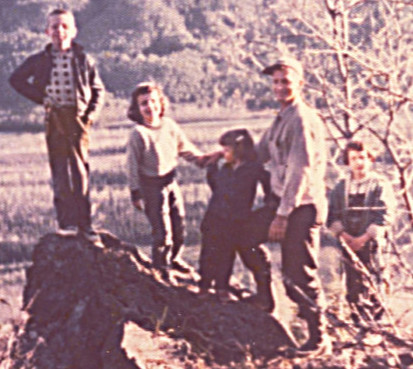
June 1959 - Age 7 - Me on the right - excluded from the family
May 23, 1959 - Age 7 - Me on the right - excluded from the family
July 1959 - Age 7 - Me on the right - cut off from the family
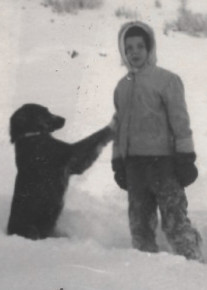
December 1959 - Age 7 - Me cut off from Smokey
December 1959 - Age 8 - Me cut off from Smokey

++++++++++++++++++++++++++++++++++++++++++++++

I cannot improve the focus in these pictures.  I expanded from the originals because I wanted to see the similarities between the three pictures in terms of my body language reflected in the three of them.

++++++++++++++++++++++++++++++++++++++++++++++
AND THIS IS HOW I SEE ‘THE WHOLE BALL OF WAX IN A NUT SHELL’

— the professionals back me up!

This describes what happened to me, to my mother, and the how and why of it all — the 18 years of severe child abuse I suffered — and how my mother became ‘mad’ enough to do it.

+++++++++++++++++++++++++++++++++++++++++++++++++++++++++++++

Guidelines for the Evaluation and Treatment

of Dissociative Symptoms in Children

and Adolescents

International Society for the Study of Dissociation

Journal of Trauma & Dissociation, Vol. 5(3) 2004

Digital Object Identifier: 10.1300/J229v05n03_09 119

++++++++++++++++++++++++++++++

Please follow (above) link to read this entire article and to find the exact references the authors are referring to in this section of their article (below):

“There is no consensus yet on the exact etiological pathway for the development of dissociative symptomatology, but newer theoretical models stress impaired parent-child attachment patterns (Barach, 1991; Liotti, 1999; Ogawa, Sroufe, Weinfield, Carlson, & Egeland, 1997) and trauma-based disruptions in the development of self-regulation of state transitions (Putnam, 1997; Siegel, 1999).

Newer theorizing ties maladaptive attachment patterns directly to dysfunctional brain development that may inhibit integrative connections in the developing child’s brain (Schore, 2001; Stien & Kendall, 2003).

From the vantage point of treating children and adolescents, a developmental understanding of dissociation makes the most sense.

That is, dissociation may be seen as a developmental disruption in the integration of adaptive memory, sense of identity, and the self-regulation of emotion.

According to Siegel (1999), integration is broadly defined as “how the mind creates a coherent self-assembly of information and energy flow across time and context” (p. 316).

In other words, Siegel sees the development of an integrated self as an ongoing process by which the mind continues to make increasingly organized connections that allow adaptive action.

Children and adolescents may present with a variety of dissociative symptoms that reflect a lack of coherence in the self-assembly of mental functioning:

1. Inconsistent consciousness may be reflected in symptoms of fluctuating attention, such as trance states or “black outs.”

2. Autobiographical forgetfulness and fluctuations in access to knowledge may reflect incoherence in developmental memory processes.

3. Fluctuating moods and behavior, including rage episodes and regressions, may reflect difficulties in self-regulation.

4. The child’s belief in alternate selves or imaginary friends that control the child’s behavior may reflect disorganization in the development of a cohesive self. 

5. Depersonalization and derealization may reflect a subjective sense of dissociation from normal body sensation and perception or from a sense of self.

+++++++++++++++++++++++++++++++++++++++++++++++++++++++++++++
This condition and these symptoms originate with insecure early attachments.  I believe they lie at the core of many (if not most) later-developing adult-onset ‘mental illness’ disabilities.

These descriptions of childhood dissociation apply to me, except for #4.  I did not have enough of a self to even imagine friendship, real or imaginary.  I also believe they all apply to my mother, with a shift in #4.  She developed the imaginary belief that she could CONTROL her imaginary friends — her children (me being the enemy) rather than being controlled by them.

I can see the lost, empty child in these pictures, cut off from being a member of a family, cut off from the development of a clear and cohesive self.  Devoid of a connected lifetime of experience, I appeared simply as a physical body taking up space in the universe, not as an animated LIVING child present as an identity within that body.

At any given moment my exact existence was only determined by the situation I was present in at that moment.  If the conductor of an orchestra points the baton at an individual with a particular instrument, it is time for all to hear that instrument play.  If we place our computer cursor over a particular link and click on it, we expect and anticipate that a particular action is going to occur.

From the moment of my birth my mother determined in her profound and comprehensive control of me how Linda was allowed to be in the world.  Because she never knew me as a human being, nor wished to, I existed as a puppet-fied manifestation of her inner psyche – as her projection of the BAD CHILD.

++++

There was no room for Linda to exist at all, and I can clearly see that emptiness of personhood and of selfhood in me in these pictures.  I appear as a child ‘stripped of a self’.

My emptiness, my dissociation was on an on-again, off-again condition.  The few times that I was left alone to be with myself simply existed in their own dissociative bubbles that never connected themselves to the ongoing experiences of me in my own body, in my own life.

I existed in relation to myself as I existed in the world these photographs captured – isolated, cut off, alone, unanimated, empty – like a husk of a child, a shell of a child – a body that existed to be battered, shoved, yanked, slapped, hit, punched, etc.  As an empty person to be screamed at, stormed at, thrown around in every imaginable way – at any time for any reason or for no reason whatsoever.

As an individual child-person, I was not allowed to exist.  I was not given permission to exist.  I ONLY existed as a figment of my mother’s twisted and brutalizing imagination

I no more had an identity or existed as a person (let alone as a child) than did the stone we stood on, the background trees, the tumbling rivers, the passing clouds, or the freezing snow.  I was less alive and less whole than was our dog, Smokey.  I was an apparition, a wraith, a mirage of a child.  Linda wasn’t there at all.

I was a missing child, and nobody noticed because nobody cared.  I experienced no difference between the cells of my body, the skin I wore like my clothing, the earth I walked upon or the air I breathed.  Moment to moment I could not count on anything.  I had always lived in an insecure, unpredictably unsafe world.

No child can for its self, its one self, if it is not allowed to.  I was never given permission to exist, so I didn’t.  I was as invisible and as intangible as the sound of rushing water or the wind.  I was given no more permission to exist than a leaf is, and less permission to exist than Smokey the dog was.  The homestead was more real to my mother, to both my parents, than I was.

++++

If I isolate the image of myself out of these photographs what remains is an unfocused child posed in a rigid standing posture.  That, sadly, is about all there was, a child existing by posing as a body – like a tree exists by posing with a trunk, limbs, branches, twigs and sometimes leaves – its root invisible beneath the soil.

But I had no roots.  From moment to moment I had no history of my own.  I didn’t even have the history of what mother did to me.  Even those experiences were not retained, kept, stored or retrieved in any stuck-together ongoing autobiographical coherent story-of-an-ongoing-child’s- life.  There ONLY existed each separate ongoing moment, and each of those moments was a likely to change into something else, something terrifying and painful, at any second. — unpredictably, unexpectedly, unfathomably.

Nothing mattered any more to me nor did I matter any more than if I was a snowflake, a scrap of cloth, or a pot to be scrubbed or pounded upon.  I simply existed without a self as a body that continued to grow over time without ME KNOWING I was in it.  I was my mother’s chosen ‘evil-bad’ projection, barely an object, not a person — and most definitely NOT a child.  Does an object have a sense of itself?

Just me age 7 in a body on a rock on a mountain
Just me age 7 in a body, rigid, at this second no more real than the grass I am standing on
Just me age 7 in the snow in a parka that meant more to mother than I did with a dog mother could love even though she could not love me
Just me age 8 in the snow in a parka that meant more to mother than I did with a dog mother could love even though she could not love me

++++++++++++++++++++++++++++++++++++++++++++

My mother was a master magician.  She was an expert at her craft.

Often she would banish me “from her sight”

— sometimes for days or weeks at a time —  so I would vanish from the family all together — body and all.

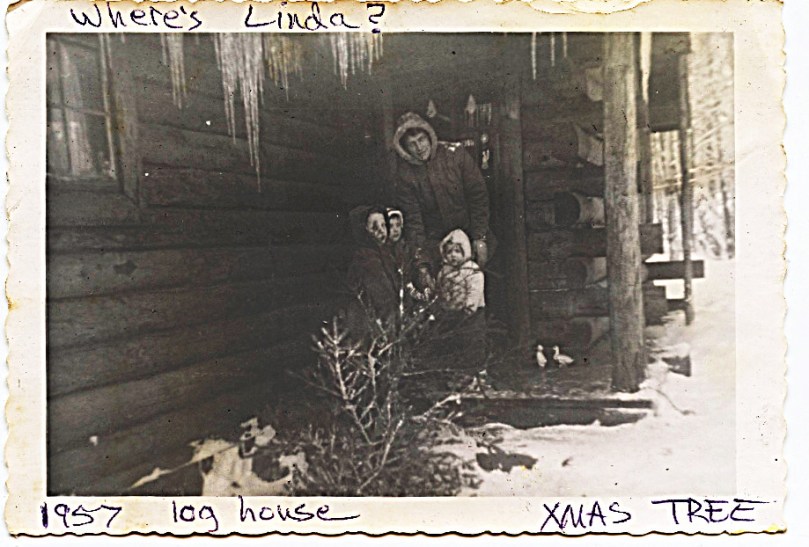
In the family pictures taken of  bringing in the Christmas tree in 1957 when I was 6, our first winter in Alaska, I am nowhere to be seen.

I have disappeared completely.

I am ‘missing in action’ and nobody seems to notice I am gone.

I am invisible.   I don’t exist at all.

I was erased.

+++++++++++++++++

See

++MY CHILDHOOD STORIES

Age 6 - Mother's magic -- Linda has completely vanished from the family picture of bringing in the Christmas tree

+WAS MY FATHER’S ‘SELF’ MISSING IN ACTION DURING OUR CHILDHOOD?

+++++++++++++++++++++++++++++++

Please don’t miss my siblings’ comments about my father at the end of this page —

*Age 8 – Photograph – Me, Smokey and Snow

+++++++++++++++++++++++++++++++

And included with comments at the end of this post —

+CRIMES OF MY FATHER: WAS HE AS BAD AS MY MOTHER WAS?

+++++++++++++++++++++++++++++++

I just watched my gold girl kitty, Goldilocks, sneak up on and capture a small lizard in my newest flower bed this morning.  Of course, she first nabbed its tail and if fell off in her mouth.  That’s OK.  Only in the most dire circumstances does a lizard have to sacrifice its tail, but when they do it is in an effort to survive the nearly unsurvivable.  Lizards are designed to grow a new tail — if they escape to a place of safety.

Of course Goldilocks was not about to let this poor little thing get away.  She tossed it into the air and followed it wherever it went.  Then the other two half grown kittens joined her.  Hunter, the boy, ended up with the lizard cornered on the sidewalk.  Once flipped onto its back it laid there — as if it was dead.

None of the three wanted to eat this prey, I’m sure there’s something about lizards that make them far more unpalatable than rodents are.  Yet as I watched Hunter watching this tailless lizard plopped onto its back with its silver belly to the sky, feet splayed out straight to its sides — I saw it miraculously flip itself over and try to get away again.

Of course Hunter would have pursued it as long as it had life left in its body to move.  So I chased away the kitten and picked the lizard up by its tiny little foot and tossed it into the massive azalea bush where I hope it can find its way to safety — and grow a new tail.

It made me think of my father, as my sister mentions in her comments perhaps nearly entirely invisible to us when we were children except for the few precious artifacts of his ‘truer’ self, his original self, his OTHER self that we were on occasion privileged to discover.

++++

My mother always said that she came to Alaska because father wanted to.  She said it was a good thing because he loved the out-of-doors.  He loved the mountains, he loved to hike and fish.  Before we left Los Angeles he was a member of the Mountaineers’ Club that accomplished search and rescue for hikers in the mountains surrounding the city.  He disappeared on week-ends, perhaps to escape her, but she hated that.

Move to Alaska.  Homestead.  For father’s benefit?  For ours?  Or because her sick mixed up disturbed mind found for itself the perfect obsession?

All of our lives with my mother were grueling.  I wonder what happens to the spouses and partners of those with serious, unrecognized mental disorders.  The 12-step program of Al-anon for people with active addicts and alcoholics in their lives says that the people who live with the addicts become ‘as sick or sicker’ than the addict.  Isn’t this just as true for spouses of people like my mother was?

Did everyone in my family, my father included, end up like this tailless lizard unable to escape the pervasive effects of my mother’s disturbed psyche?  Were we all her prey?  Did my father pay the price of losing himself by staying with her for nearly 30 years?  Did he flip onto his back and play dead during her attacks on him?  If he was so ineffective in being able to preserve his own self with her, how aware and concerned could he have been about what was happening to his children — especially to me?

++++

It is possible that given a less-than-optimal early developmental environment that a person’s self never develops ‘optimally’ in the first place.  Nor would a person’s connection to their ‘self’ develop optimally under malevolent early conditions, either.  Perhaps the human ‘optimal self’ is designed through the forces of evolution under harsh conditions to be as dispensable under severe trauma conditions as is a lizard’s tail.

Perhaps only when the forces of ongoing trauma are removed can the self and connection to it be reestablished — or even be established at all, such as in my situation.  My mother’s self did not develop properly in her early childhood, nor did her connection to her self.  There’s a very good chance that my father’s earliest developmental environment did not allow him the chance to develop his ‘best self’, either.  He was NOT a wanted child.  Putting these two wounded selves together was a recipe for disaster.  Need we be surprised that disaster was exactly what happened?

++++

PLEASE NOTE:

Just as a lizard has an ‘insecure attachment’ to its tail when its life is threatened, both of my parents came out of their early childhoods with insecure attachment disorders — primarily to their selves.  My father’s was an ‘organized’ insecure attachment disorder, the dismissive-avoidant one, I believe.  This allowed him to appear to function as a professional civil engineer and as a provider, even under incredible duress.

My mother’s was of the disorganized insecure attachment disorder variety, I believe of the worst kind — a disorganized-disoriented insecure attachment disorder.  Her true level of functioning was just about zero!  If she could manipulate her ‘stage’ according to her fairy tale wishes, she could orchestrate floor-waxing, curtain-washing and cookie-baking like a pro.  Anything else?  She was a disoriented, disorganized mess.

It took my father’s super human efforts, every single time, to try to get her, and us, out of the incredible messes she made — except for the most important one.  He could not rescue any of us — not even himself.  We would all have needed outside intervention and assistance for that to happen — and it never did!

+++++++++++++++++++++++++++++++

+++++++++++++++++++++++++++++++

This is interesting!

The following website belongs to Dr. Leland M. Heller, author of the book, ‘Biological Unhappiness’.

Here’s one review of the book by Zig Ziglar:

“Open this book and it will open your mind.  By combining proven medical procedure with hope and inspiration, Dr. Heller has made a significant difference in thousands of patients who had little hope for recovery.  “Biological Unhappiness” contains critical information for those who have lost hope.”

Zig Ziglar, motivational speaker, author, See You at the Top, Over the Top, Success for Dummies, Raising Positive kids in a Negative World.

Check out this fascinating website!

http://www.biologicalunhappiness.com

+++++++++++++++++++++++++++++++

+IN THINK IN MY MIND MY FATHER AND THE MOUNTAIN WERE ONE

+++++++++++++++++++++++++++++++++++++

*1959 July Birthday on homestead

*1959 – 1960 Serious winter – Dad smiling on tractor

— In my mind, the mountain and my father were one — I never expected either one to save me.  But never did I love him like I love that mountain place.

+++++++++++++++++++++++++++++++++++++

*1960 – May 7 – 4 of us all genuinely HAPPY! YAY!!!

*1959 June – Homesteader Sharon and the Hut

*1962 – Summer -Mother washing face after planting fields with dad

++++++++++++++++++++++++++++++

(Use your ‘back button’ on these or open them in new tabs or windows you can close after each picture-link view)

+++++++++++++++++++++++++++++

I hope one of my younger brothers might write the story of the fire that happened in my father’s apartment — with both his Alaskan sons sleeping there — that my family members — and these pictures survived.  It happened long after I left home.

+++++++++++++++++++++++++++++

+LINK TO PHOTOGRAPH OF MY FATHER

++++++++++++++++++++++++++++

Blog’s first picture of my father:

*1961 September – Dad In Suit and Baby David

++++++++++++++++++++++++++++

Please note that the

*1962 – MOTHER’S LETTERS

are now transcribed and posted (unless I find more later!)

++++++++++++++++++++++++++++

+TERRORISM – FEAR AND THE THREAT OF BRUTAL ATTACK

+++++++++++++++++

What is life like for the millions of our globe’s population that are destined to live their entire lifespan under the threat of brutal attack?

+++++++++++++++++

Do we remember the community terror instigated by the fear that Russia was going to launch nuclear weapons at America?

The following letter (link below) was sent home from public schools after the events of the Bay of Pigs April 15 – 21, 1961 and the Cuban Missile Crisis of October 14 – 28, 1962.  This was the closest the world has ever gotten to all-out nuclear war — so far.

— I remember my parents sending all of us older kids outside the Jamesway where I could still clearly hear through the canvas walls mother’s rantings at father about what she wanted him to do if/when the Russians invaded.  She told him to shoot her first and then gave him the order in which she wanted him to shoot the rest of us before he shot himself.

I remember standing at the kitchen of the log house doing dishes probably in the spring of 1962.  I kept looking over my shoulder out the window at the woods in back of the house waiting for the Russians in full military regalia to appear at the door.  I knew Alaska was only two miles from Russia at the narrowest passage point, and based on the adults’ terror at this time I was quite certain that an invasion was likely.

+++++++++++++++++

I could THINK about this externalized terror — and I could fear it.  I had no capacity, however,  to ever think about the terror that existed within my own home.  There was a concept for attack from ‘the outside’ enemy.  There was no concept for attack from ‘the inside’ enemy — the mother who birthed and abused me.

The entire culture surrounding me in my small childhood world feared the Russians and a devastating attack from them.  There was no culture about fearing my mother!

+++++++++++++++++

*Age 10 — 1962 Civil Defense Letter from School

+++++++++++++++++

+IMMUNITY AGAINST INSECURE ATTACHMENT DISORDERS BEGINS AT CONCEPTION

092609 post Origins of Emotional Abuse

++++++++++++++++++++++++++++++++++++
Emotional Abuse Recovery NOW

Annie Kaszina offers free assistance on her site and through her free email support to women who have experienced emotional abuse.  I personally find it disheartening that she does not equally offer her advise and expertise to men as well as to women, but I am mentioning her work here because I want to consider information presented in her writing about emotional abuse.

++++++++++++++++++++++++++++++++++++

Emotional abuse is not JUST a woman’s issue, it is a human issue.  Emotional abuse is not JUST an adult issue.  The seed potential for being both a perpetrator and a victim of emotional abuse begins – believe it or not – even before our conception.

No matter our sex, no matter what our genetic potential makeup may be, a mother’s emotional state influences her body to such an extent that her hormones and other body chemicals affect whether or not conception even takes place, as well as affects whether or not the tiny new human can or does implant itself on her uterine wall to further its growth and development from that time forward.

A mother’s hormones and internal chemical environment constantly signal through molecular communication what the world is going to be like that this new human is going to be born into.  Those signals about stress, distress or future well being influence how the genetic potential of a human manifests itself – from conception onward.

These early signaling processes particularly influence the future sensitivity of the new human.  I mention this now because Ms. Kaszina’s words this morning, as they arrived new and shiny in my email inbox, are concerned with emotional sensitivity.

Emotional sensitivity is not something that some of us have and some of us don’t have.  All humans have emotions.  All humans also vary in degree of sensitivity according to their fundamental genetic makeup, according to the information all kinds of molecular signaling has given them about the benevolence or malevolence of the world their body is growing up to live in, and according to the information that a newborn infant’s body-brain-self receives from its first early caregiver environment.

++++

We cannot possibly disentangle the topic of secure and insecure attachment disorders – from conception onward – from any discussion about so-called emotional abuse.  What we are actually considering when we talk about emotions and sensitivity, in my opinion, has to do with the quality and kind of human attachment system we developed from conception.

If adults do not provide safe and secure attachments to infants and young children from the beginning of their lives, HOW this tiny person develops will be affected on every level.  This most certainly includes emotional sensitivity.  If the safe and secure attachments do not exist in an infant’s life, its body-brain-mind will be forced to take a pathway in its development that is less-than-optimal.  An insecure attachment pattern, or insecure attachment disorder, WILL result from these conditions.  That is the way our social species is designed.

++++

If a person could actually weigh information, tons of it exists at our fingertips about secure and insecure attachments.  My purpose is to encourage readers to go poke around and take a look at this information for themselves.  Without including the facts about our human attachment system in our thinking about ANYTHING that has to do with ANY human relationship, we are like children ourselves who might expect to sit in a broken down car out behind a weathered barn in some countryside – hoping and hoping if we just hope enough that useless car will take us out away from our miseries.

++++

Every human being whose brain-mind did not develop in an early environment that included a caregiver to whom that infant could safely and securely attach – on a predictable and sustained level – will end up with an altered brain-mind that includes an insecure attachment disorder built into it.  All humans are amazingly resilient, and even a tiny infant can make amazing use of whatever safe and secure human attachment opportunities that DO actually exist in its early environment.

But at the same time we ARE human, and we are vulnerable and fragile.  Degrees of damage are exactly that!  If you spend some time following links included above, you will discover enough information for yourself to begin to understand what Dr. Allan Schore says about all insecure attachment disorders include empathy disorders.  Nobody is immune to the consequences of forming a body-brain-mind in a malevolent world.

++++

With this very brief survey as an introduction to the following words written by Annie Kaszina, I encourage readers to begin to realize that both ‘perpetrators’ and ‘victims’ of emotional abuse most likely suffer from an adult version of an insecure attachment disorder – either an ‘organized’ one or a ‘disorganized’ one.  If our first displays of our emotions were not consistently appropriately and adequately responded to from the time we were born by one or more early caregivers – our emotional self will have altered the way it developed.  This naturally affects both how we respond to our own and to others’ emotions.

If we are going to refer to these changed patterns as ABUSE, we need to include in our thinking that all these emotional patterns exist in our brain’s construction and operation.  They can sometimes be changed to some degree, but our emotional construction is as much a part of our body as are our organs and limbs.

++++

From my own childhood experience I can say that the environment of the home I grew up in, with my Mad Monster Mother at the helm, contained no real emotional health and well being except as it was accidentally provided – mostly to my siblings.  My entire blog is devoted to this HUGE topic.  My point this morning is that I encourage every reader to read the following words as if they are simply and completely referring to interactions between parents and children – not between adults.

Focus your inner vision.  Consider your childhood – whether you were a girl or a boy — for awhile ONLY as it either sustained the development of your authentic self emotionally – or did not.   Parents are not their offspring’s’ partners.  They have assumed the job of raising their children so that they themselves can later be other human’s partners.

Please ‘translate’ this information provided below through the lens of your own very young childhood perspective.  What you were given THEN is reflected in how you are NOW!  We had no choice as infant-children but to build into our growing body-brain-mind the attachment patterns our early caregivers ‘fed us’.

Down the road, the following is exactly how insecure attachment disorders (systems) can show themselves when we are all grown up.  We can repeat them with both the adults and the children in our lives.  We need to understand what this means by beginning to in-form our thinking about how these patterns established themselves PHYSIOLOGICALLY into our very young developing bodies — and remain within us for the rest of our lives.  Once recognized consciously, we can begin to alter the effects our inner attachment system has on the quality of our life.

++++++++++++++++++++++++++++++++++++

++++++++++++++++++++++++++++++++++++

Emotional Abuse Recovery NOW

Written and published by Annie Kaszina
Women’s Self-Discovery Coach
www.EmotionalAbuseRecoveryNow.com

To sign up to this ezine, go to www.EmotionalAbuseRecoveryNow.com

My name is Annie Kaszina and I spent over twenty years in an abusive marriage, before I learned how I could become the woman I want to be. Now I work with women who have been in controlling and abusive relationships, to facilitate their journey into joy and self-realisation.”

“You’re just too sensitive!”

“Has an abusive partner ever told you: “You’re just too sensitive?”

Okay, let’s be more precise about this; has your abusive partner repeatedly told you that you are too sensitive?  Because the chances are, if he has said it to you once, he’s said it a thousand times.  That’s how abusive relationships work; an abusive man throws the same complaints at you over and over again.

Why?

We’ll come to that in a moment.  First, let’s deal with the really important question: How has that left you feeling?

Clearly, I don’t know you, and I can’t know how you think, but I’m guessing that it leaves you feeling small, needy, pathetic and very, very flawed.  Accusing a partner of being ‘too sensitive’ tends to make them feel as if someone has exposed a very dark, unlovable, immature feeling at the very heart of their being.

In short, it makes them feel unlovable.

There is a reason for this.  When an abusive man says his partner is ‘too sensitive’, that is not just a throwaway remark, triggered by frustration; it is, actually, a well-calculated barb with a venomous hidden agenda.

“You’re too sensitive”, is code; a code that, I suspect, you have not been translating correctly, until now.  If you had, you probably would not have given your accuser the opportunity to wound you with that well-honed barb, time after time.

“But”, you might object, “I am very sensitive.”   You might even say: “I am too sensitive.”

There is a distinction here that we need to clarify.  When you say that you are ‘very sensitive’, or even ‘too sensitive’, what you actually mean is this: “I can feel hurt very easily; it doesn’t take much.  I really wish that it wasn’t like this, but it is.  There doesn’t seem to be much I can do about it.”

Acknowledging the acuity of their sensitivity tends to be a kind of apology that I often hear form abused women.  They wish they could change it, but they can’t; at least not with the tools currently available to them.

When an abusive partner, or other near one, tells you that you are ‘too sensitive’, it is, apparently, because they wish you could change.  (The subtext is that if you could change that it would, somehow, transform the abusive relationship.)  Not that they are offering you any clues as to how you might reduce that sensitivity.

In reality, they don’t know how you could reduce that sensitivity; nor do they care.  Much as they may criticize you for it, your sensitivity fits very nicely with their agenda.  But they are not in a rush to admit that to you.

Think for a moment about the circumstances in which have been told that you are too sensitive.  Most probably it happens when you feel hurt by something your abusive partner said; or else something they did, or did not do.  Had you been ‘less sensitive’, they figure, you would not have reacted.  In other words, you would have just ‘got on with it’, and spared them the trouble of having to consider your feelings.

This holds true for other circumstances in which your ‘hypersensitivity’ means that you would like to receive comfort or reassurance.

That is not what your abusive partner, or other near one, had in mind.

When they say: “You’re too sensitive”, what they really mean is this: “Please don’t visit your feelings on me, I don’t want to hear about them.”  There’s more as well – and it doesn’t get any better.

“You’re too sensitive” is shorthand for; “I’m really not prepared to take your feelings into account.  In fact, I thoroughly resent your visiting them on me.  As far as I am concerned, this is the way I believe our relationship should work: I can say whatever I like to you, and you will get on and deal with it, without making a fuss and trying to make me feel bad about it.  What’s wrong with you, anyway?  Why can’t you just get on with being in an abusive relationship without moaning about it?”

The question, “What’s wrong with you, anyway?” is the key to your partner’s thinking.  There must be something wrong with you, or else you would respond to whatever it is that they said or did in exactly the way they would have you respond.  In other words, what they wanted was no response from you.  (In an abusive relationship, all communication is intended to be a one way street.) Whatever it was that they said or di, they hoped that you would let them ‘get away with it’.  And you did not.

It’s not as if you took a strong stand; anything but.  A strong stand would have meant saying: “This is unacceptable.”  You would then make yourself scarce, as far as they were concerned.  Your abusive partner would duly get the message that they were out of order, and would need to clean up their act, or else lose you.

Whether or not they would clean up their act is another story.  If, instead, your refusal to accept abuse led to the earlier end of a damaging relationship that was bound to end in unhappiness anyway, then your strong stand has paid off handsomely.  That would save you time and misery.  And if it concentrated their mind, and led them to behave better in the future, even better.

But just asking an abusive man to behave, and/or speak to you, differently, is as ineffectual as saying to a child: “Oh, don’t do that!” All it conveys is your weakness and your reluctance to act.

It leaves your abuser free to repeat the pattern time and time again.  He will continue to speak and act as he pleases and, when you object, he will reproach you, again, for ‘being too sensitive’.

With that one simple phrase he has laid the blame for the hurt in the situation on you.  With one simple piece of sleight of mouth, he has dumped blame for the situation on you, so that he comes up smelling of roses.  Or, at least, as close to smelling of roses as he is ever likely to get.

How did you get into an abusive relationship like that in the first place?

Here’s the irony: it happened, in part, because of your sensitivity.  Not that there is anything wrong with being sensitive; there is not.  However, an abusive man has a finely tuned nose, and can smell sensitivity a mile off.  He knows that he can exploit that sensitivity to gain control over another person.  He knows just how to do that – as you have discovered, to your cost.

So what will you do differently about your sensitivity in the future?

First, you need to become much more vigilant; you learn that someone who is prepared to disregard your ‘sensitivity’ is telling you that they will completely and utterly disregard your feelings.  You give such people a very wide berth.  Second, you learn to honour and manage that sensitivity; treat it with respect and other people will treat you with respect, also.”

++++++++++++++++++++++++++++++++++++

— SEE ALSO —

+++++++++++++++++++++++++++++++++++

+INFO ABOUT BORDERLINE PERSONALITY DISORDER (BPD)

+++++++++++++++++++++++++++++++++++

New Resource for Parents: CDC Parent Portal

+++++++++++++++++++++++++++++++++++

Related Post:

+CHILDHOOD DISSOCIATION, DEPERSONALIZATION, DEREALIZATION – I NEVER HAD A CHOICE TO BE OR NOT TO BE

+++++++++++++++++++++++++++++++++++

+MY MAD MOTHER IN ABSOLUTE CONTROL

++++++++++++++++++++++++++++++

PART I:  My mother was a professional bully.  There are very few direct examples in her letters about how mother handled outside criticism about her thinking and decisions — or ANYBODY’S attempts to intervene.  Here in this letter mother effectively deflects whatever observations and opinions her mother must have expressed about our mother.

The homestead served the integral role in her madness of being her ‘isolation chamber’ for our family and for her actions.  She didn’t need a burning ring of fire around us.  She didn’t need a moat filled with starving crocodiles.  When we sat perched in our canvas hut high on the mountainside at the end of a long terrible road without any near neighbors, mother could rule her kingdom with her entire family as her captives.

++++++++++++++++++++++++++++++

July 31, 1962

Wednesday

Dear Mother,

Today Bill will send the message to you telling you it’s better, we [Linda note:  meaning as usual, I’m certain, HER] feel, that you wait for your trip until next summer.  More than likely we will make a trip ‘out’ before then but we have thought and thought about this and agree it’s best you wait.

I’ll send the letter along that I wrote last week telling you ‘same’ and why after I received your advisory letter.

Then I wanted to see you so badly I let my heart not my head rule and decided not to send it.

Then over the week-end we got a nice letter from Spoerry [landlord of log house] saying we could spend $150 to fix up drive-way and 450.00 new roof – also Reynolds can stay.  I had expected “no, no, no’s! from her on all 3 counts.

We’re thrilled to be able to remain on homestead now but my gosh the work that will have to be done here so we can stay and if I teach them I must get the place done now.

Floors must be put down and all ready before Labor Day when all of our furniture will be moved up here!!

I know you’re against our spending winter here and my teaching the children and I couldn’t stand to have you come and arguments start about it.  I know they would.

[Linda note:  There were NO possibilities for anyone to ever contradict my mother about ANYTHING – and she could control all outside input and influence – as commander-in-absolute-charge of our family!]

Believe me Mom, we all want to see you but it wouldn’t be happy with things as they’re.  I live in fear that what happened last year would occur again.  I’d be too sick, then, to do a thing this winter.  [Linda note:  I am not sure what happened the summer before – is she referring to the arguments with her brother and wife when they came to see us?]

You’re so right I must watch my health.  I must have a serene environment.  It wouldn’t be if you came and we disagreed.

It’s my life and I choose to live it here on our mountain and I won’t stand for interference on this point and I no longer want advise [sic]!  Our minds are made up and we’ve been busier and happier since we’ve decided.

We’ll have electricity this winter and a chemical toilet [never happened].  Next spring will dig a well [never happened] and have a bath-room [never happened] next summer.  Then you can come all summer if you wish.  Perhaps we could erect a little log cabin where you’d have some privacy [never happened].  It’s hard to all live together for any length of time.

I hope you’re not too dissappointed [sic].  I want so for you to be happy.  You’d be a whole lot unhappier if you come and it wasn’t pleasant.

And I’m afraid it couldn’t be when I’ve so much to do and all — .

Please write and tell me how you feel — Love, Mildred

[Interesting, the envelope mother used to mail this letter to grandmother has Spoerry’s, the owners of the log house, address crossed out on the front and grandmother’s written in.  Spoerry’s address is in Algeria.]

++++++++++++++++++++++++++++++

See in context:

*July 1962 – Mother’s Letters

*1962 – MOTHER’S LETTERS

++++++++++++++++++++++++++++++

See also for background context regarding homesteading:

*Dad’s April 2, 1960 Letter to Alaska Land Office

++++++++++++++++++++++++++++++

+++++++++++++++++++++++++++++++++++

+INFO ABOUT BORDERLINE PERSONALITY DISORDER (BPD)

+++++++++++++++++++++++++++++++++++

+WHAT DO YOU THINK OF PHYSICAL PUNISHMENT IN OUR PUBLIC SCHOOLS?

++++++++++++++++++++++++++++++++

26 states in the U.S. still allow spanking and other forms of corporal punishment in public schools.

I have only a vague memory of something my sister remembers very clearly from my childhood.  She tells me that each of my elementary school years my mother walked into the principal’s office at the start of the school year and left a paddle with my name on it with permission for it to be used on me if needed.

The paddle was one of those toy ones with the ball and string removed.  How humiliating for me!  Yet, did her action send up any possible red flags about what a terribly abusive mother she was to me?  How could it when the school itself approved corporal punishment itself?

Nobody every hit me in school that I remember, though my sister remembers having a teacher that would whack student hands if they missed a multiplication problem presented orally in a class quiz format.  My brother had a teacher in school that hit him, and ironically my mother blew a gasket over this!

Two of my Texas nieces are no longer being home schooled and have found upon entering public school that spankings in the principal’s office are a very real threat of terror in their new world.

I would add in relation to the article below that many children who have been neglected, maltreated and abused OFTEN act out in school — myself included evidently.  When those children are not shown another way of interacting socially, aren’t the already existing abuse patterns of violence in their lives being reproduced and reinforced in the only other major arena of functioning young children have in their lives — their school zone?

What do you think of spanking in American schools?

++++++++++++++++++++++++++++++++

++++++++++++++++++++++++++++++++

THE WALL STREET JOURNAL

By Sue Shellenbarger

  • September 1, 2009, 9:18 AM ET

Spanking Kids in School Still Common, Especially Among Disabled

Spanking kids in school has gone the way of the buggy whip – right?

Wrong, based on a new study by the ACLU and Human Rights Watch, as reported here and here. More than 200,000 U.S. schoolchildren were subjected to corporal punishment during the 2006-2007 school year, the study shows. And the South has a big lead in whacking schoolkids, with Texas, Mississippi and Alabama holding the top three spots.

Paddlings in school are still legal in 20 states, and the report suggests they are quite common, based on 202 interviews with parents, teachers, students and school officials, plus federal Education Department data. The courts haven’t afforded students in classrooms the same protection as criminals have against cruel and unusual punishment.

Many pediatricians now advise against corporal punishment; some research suggests spanking makes behavior problems worse. And while I admit to having harbored now and then a fleeting wish that my kids’ teachers could smack fellow students whose behavior disrupted class, I never would seriously advocate such a thing.

In the saddest finding of the ACLU study, children with disabilities, especially autism, drew corporal punishment at a far higher rate than others, the study found. Children with autism were often punished for behaviors linked to the condition, because teachers lacked the knowledge, training or patience to use other methods of behavior control.

Stefanie has posted before on how this touchy topic plays out in different families. I have known parents who occasionally spank their children, whose kids seem well-adjusted; my own mom and dad, who I thought were great parents, used spanking occasionally. Nevertheless, I find the idea of routine corporal punishment at school pretty appalling.

Readers, are spanking and other forms of corporal punishment ever warranted in schools? Should local school officials be free, as they are now, to choose disciplinary methods, in keeping with the values of their own communities? Or do we need a nationwide ban on spanking in schools?

++++++++++++++++++++++++++++++++

+EXTREME STATES AND BRAIN REWIRING

+++++++++++++++++++++++++++++

PLEASE READ THIS ARTICLE BEFORE READING THIS POST:

++++

Mind & Brain / Senses

Extreme States

Out-of-body experiences? Near-death experiences? Researchers are beginning to understand what’s really going on.

by Steven Kotler, Photo illustration by Josef Astor

From the July 2005 issue, Discover, published online July 24, 2005

+++++++++++++++++++++++++++++

HERE ARE SOME POINTS I PONDER AND QUESTION:

++++

”…I was also watching the chute’s open-close-open routine, despite knowing that what I was watching was technically impossible to see.”

Those of us with extreme early and chronic child abuse histories are very likely be able to ‘do this’.  We can have access to information about ourselves in the world that seems to defy ‘scientific’ or ‘rational’ explanation.  What’s more, these abilities appear to have been built into our growing brains.

++++

Interesting statement:

“…most out-of-body tales do not take place within the confines of an extreme environment. They transpire as part of normal lives.”

++++

“The out-of-body experience is much like the near-death experience, and any exploration of one must include the other. While out-of-body experiences are defined by a perceptual shift in consciousness, no more and no less, near-death experiences start with this shift and then proceed along a characteristic trajectory. People report entering a dark tunnel, heading into light, and feeling an all-encompassing sense of peace, warmth, love, and welcome. They recall being reassured along the way by dead friends, relatives, and a gamut of religious figures. Occasionally, there’s a life review, followed by a decision of the “should I stay or should I go?” variety. A 1990 Gallup poll of American adults found that almost 12 percent of Americans, roughly 30 million individuals, said they have had some sort of near-death experience.”

++++

Take a look at the information about this:

“When Whinnery reviewed his data, he noted a correlation: The longer his pilots were knocked out, the closer they got to brain death. And the closer they got to brain death, the more likely it was that an out-of-body experience would turn into a near-death experience. This was the first hard evidence for what had been long suspected—that the two states are not two divergent phenomena, but two points on a continuum.”

++

It makes me wonder about how a very young growing brain processes traumatic information.  Because an infant-child person is too young to even have a completely formed sense of self when traumas occur, how would their brain even process information related to “Am I out of my body or am I dead?”

It seems to me that a very young child would first have to develop enough of a brain ability to even know they were a self-alive-in-the-world before these kinds of concepts could even apply.  What happens if the trauma-generating experiences build the very question itself into the growing brain – “Am I alive or am I dead?”

++++

“The simplest conclusion to draw from these studies is that, give or take some inexplicable memories, these phenomena are simply normal physical processes that occur during unusual circumstances.”

++++

“What researchers have studied is the effect of a near-death experience. Van Lommel conducted lengthy interviews and administered a battery of standard psychological tests to his study group of cardiac-arrest patients. The subset that had had a near-death experience reported more self-awareness, more social awareness, and more religious feelings than the others.

“Van Lommel then repeated this process after a two-year interval and found the group with near-death experience still had complete memories of the event, while others’ recollections were strikingly less vivid. He found that the near-death experience group also had an increased belief in an afterlife and a decreased fear of death compared with the others. After eight years he again repeated the whole process and found those two-year effects significantly more pronounced. The near-death experience group was much more empathetic, emotionally vulnerable, and often showed evidence of increased intuitive awareness. They still showed no fear of death and held a strong belief in an afterlife.”

++++

So what might that mean for those of us severely abused and traumatized at a very early age?  Might there be something about those experiences that makes us perceive our being-in-the-world in a different way – from the very start?

++

“Morse, too, did follow-up studies long after his original research. He also did a separate study involving elderly people who had a near-death experience in early childhood. “The results were the same for both groups,” says Morse. “Nearly all of the people who had had a near-death experience—no matter if it was 10 years ago or 50—were still absolutely convinced their lives had meaning and that there was a universal, unifying thread of love which provided that meaning. Matched against a control group, they scored much higher on life-attitude tests, significantly lower on fear-of-death tests, gave more money to charity, and took fewer medications. There’s no other way to look at the data. These people were just transformed by the experience.”

++

To me, there’s obviously an incomparable difference in experience between what a 10-year-old might know from a childhood near death experience and what a 10-week or 10-month old infant might know.

What happens when a very young infant-child perceives that their survival is being threatened LONG before they can even begin to THINK?

++++

So what might out-of-body experiences, near death experiences, coma experiences and religious experiences share in common?

++

“Britton hypothesized that people who have undergone a near-death experience might show the same altered brain firing patterns as people with temporal lobe epilepsy….Britton thinks near-death experience somehow rewires the brain, and she has found some support for her hypothesis regarding altered activity in the temporal lobe.”

++++

What might they have to do with depression?

“She [Britton] then asked a University of Arizona epilepsy specialist who knew nothing about the experiment to analyze the EEGs. Two features distinguished the group with near-death experience from the controls: They needed far less sleep, and they went into REM (rapid eye movement) sleep far later in the sleep cycle than normal people. “The point at which someone goes into REM sleep is a fantastic indicator of depressive tendencies,” says Britton. “We’ve gotten very good at this kind of research. If you took 100 people and did a sleep study, we can look at the data and know, by looking at the time they entered REM, who’s going to become depressed in the next year and who isn’t.”

Normal people enter REM at 90 minutes. Depressed people enter at 60 minutes or sooner. Britton found that the vast majority of her group with near-death experience entered REM sleep at 110 minutes. With that finding, she identified the first objective neurophysiological difference in people who have had a near-death experience.

Britton thinks near-death experience somehow rewires the brain, and she has found some support for her hypothesis regarding altered activity in the temporal lobe: Twenty-two percent of the group with near-death experience showed synchrony in the temporal lobe, the same kind of firing pattern associated with temporal lobe epilepsy.

She also found something that didn’t fit with her hypothesis. The temporal lobe synchrony wasn’t happening on the right side of the brain, the site that had been linked in Penfield’s studies to religious feeling in temporal lobe epilepsy. Instead she found it on the left side of the brain. That finding made some people uncomfortable because it echoed studies that pinpointed, in far more detail than Penfield achieved, the exact locations in the brain that were most active and most inactive during periods of profound religious experience.”

++++

What about religious experience?

“Over the past 10 years a number of different scientists, including neurologist James Austin from the University of Colorado, neuroscientist Andrew Newberg, and the late anthropologist and psychiatrist Eugene D’Aquili from the University of Pennsylvania, have done SPECT (single photon emission computed tomography) scans of the brains of Buddhists during meditation and of Franciscan nuns during prayer. They found a marked decrease in activity in the parietal lobes, an area in the upper rear of the brain. This region helps us orient ourselves in space; it allows us to judge angles and curves and distances and to know where the self ends and the rest of the world begins. People who suffer injuries in this area have great difficulties navigating life’s simplest landscapes. Sitting down on a couch, for example, becomes a task of Herculean impossibility because they are unsure where their own legs end and the sofa begins. The SPECT scans indicated that meditation temporarily blocks the processing of sensory information within both parietal lobes…..

When that happens, as Newberg and D’Aquili point out in their book Why God Won’t Go Away, “the brain would have no choice but to perceive that the self is endless and intimately interwoven with everyone and everything the mind senses. And this perception would feel utterly and unquestionably real.” They use the brain-scan findings to explain the interconnected cosmic unity that the Buddhists experienced, but the results could also explain what Morse calls the “universal, unifying thread of love” that people with near-death experience consistently reported.

These brain scans show that when the parietal lobes go quiet, portions of the right temporal lobe—some of the same portions that Penfield showed produced feelings of excessive religiosity, out-of-body experiences, and vivid hallucinations—become more active. ….”

++++

And, this article’s conclusion:

“None of this work is without controversy, but an increasing number of scientists now think that our brains are wired for mystical experiences. The studies confirm that these experiences are as real as any others, because our involvement with the rest of the universe is mediated by our brains. Whether these experiences are simply right temporal lobe activity, as many suspect, or, as Britton’s work hints and Morse believes, a whole brain effect, remains an open question. But Persinger thinks there is a simple explanation for why people with near-death experience have memories of things that occurred while they were apparently dead. The memory-forming structures lie deep within the brain, he says, and they probably remain active for a few minutes after brain activity in the outer cortex has stopped. Still, Crystal Merzlock remembered events that occurred more than 19 minutes after her heart stopped. Nobody has a full explanation for this phenomenon, and we are left in that very familiar mystical state: the one where we still don’t have all the answers.”

++++

For myself, I am most interested in this statement:

“…in the parietal lobes, an area in the upper rear of the brain. This region helps us orient ourselves in space; it allows us to judge angles and curves and distances and to know where the self ends and the rest of the world begins. People who suffer injuries in this area have great difficulties navigating life’s simplest landscapes.”

I think when severe threat-to-life trauma in a malevolent early brain-forming stages of brain development happens, the entire orientation of a forming ‘self-in-the-world’ is changed.  Such a growing self does not receive the right information to orient themselves in the world.  That is why, in my considerations, malevolent early developmental caregiver interactions create a disoriented disorganized insecure attachment between the growing self and the world.

How does a growing brain orient itself in an environment of trauma and chaos?  Are we to believe that such an infant-child translates its threat-to-life experiences into expressions of ‘love and bliss’?

How ludicrous an idea is that one?  Yet I do believe all these same states of being described in this article – as they exist as human potential – are involved with the alterations a trauma-built brain has to go through in order to survive in a malevolent early world.

Something to think about considering the ‘injuries’ to the development of the self-in-the-world that an abused infant-child experiences.

How do we know we are we alive in a body even though we are not dead – and where exactly IS the line between the two?  After all, the experience of trauma is itself an extreme state experience — and our brain knows it no matter HOW YOUNG WE ARE.   It is entirely possible for trauma to ‘rewire the brain’ just as any other ‘extreme state’ experience can.

+++++++++++++++++++++++++++++

RECOMMENDED – VISIT THIS WEBSITE!!

Randi Kreger
* http://www.BPDCentral.com
* Stop Walking on Eggshells
* Stop Walking on Eggshells Workbook
* The Essential Family Guide to Borderline Personality Disorder

+++++++++++++++++++++++++++++

+LINKS TO MILLIONS OF WORDS ABOUT THE BORDERLINE (BPD) CONDITION

++++++++++++++++++++++++++

Borderline Personality

I am coming to the conclusion that those with a Borderline Personality Disorder are the most likely group of parents to severely abuse their children — and are especially at risk for picking out one single child to be The Chosen One for the worst of their abuse.

++++++++++++++++++++++++++

LOTS OF HOT LINKS FOR YOUR CLICKING (RESEARCH) PLEASURE!

The comments that book readers post in their reviews of books in response to published titles on Borderline Personality Disorder are enlightening.  (Even if they don’t address developmental brain changes caused by early childhood malevolent environments!)

I am posting some links this morning both to the titles themselves and to the comments readers have made in response to them.

Many of the comments describe actual real-time, real-life experiences that people have had (and are still having) with the disordered, disoriented brain that both creates the Borderline condition and is a response to a turbulent, malevolent childhood that in combination with genetic potential has manifested in BPD.

(Please note that the editorial reviews, separate from the reader reviews, are presented on the Amazon.com page below a book’s selling information.  Be sure to scroll down the page when you follow the ‘READER REVIEWS’ links!!)

ALSO remember that you don’t have to buy one of these books to read it.  If your local public library doesn’t carry a title, you can request them to find a copy for you!!

++++++++++++++++++++++++++

++++++++++++++++++++++++++

Bleeding Out: A Memoir of A Borderline Personalityby Merri Lisa Johnson (Paperback – May 31, 2010)

Sign up to be notified when this item becomes available.

++++++++++++++++++++++++++

Buddha & the Borderline: My Recovery from Borderline Personality Disorder Through Dialectical Behavior Therapy, Buddhism, and Online Dating by Kiera Van Gelder (Paperback – Jul 2010)

Buy new: $16.95 $11.53 — Available for Pre-order

++

Blogger’s Comment:  THIS book won’t be at the top of my ‘Must Buy’ List!

++++++++++++++++++++++++++

++++++++++++++++++++++++++

Borderline Personality Disorder For Dummies (For Dummies (Health & Fitness)) by Charles H. Elliott and Laura L. Smith

READER REVIEWS

++++++++++++++++++++++++++

The Borderline Psychotic Child: A Selective Integration by Trevor Lubbe

READER REVIEWS (no reviews yet, read editorial comments)

++++++++++++++++++++++++++

Diagnosis – Borderline Personality Disorder: Visions for Tomorrow – The Basics by Nami Texas and Deborah Colleen Rose

READER REVIEWS (no reviews yet – read editorial comments)

++++++++++++++++++++++++++

Helping Someone You Love Recover From Borderline Personality Disorder by Tami Green

READER REVIEWS (no reviews yet – read editorial comments)

++++++++++++++++++++++++++

One Way Ticket To Kansas: Caring About Someone With Borderline Personality Disorder And Finding A Healthy You by Ozzie Tinman

READER REVIEWS

++++++++++++++++++++++++++

Breaking Free from Boomerang Love: Getting Unhooked from Borderline Personality Disorder Relationships by Lynn Melville

READER REVIEWS

++++++++++++++++++++++++++

I Love You Madly! Workbook: Insight Enhancement About Healthy and Disturbed Love Relations by Robert M. Gordon

READER REVIEWS

++++++++++++++++++++++++++

Through The Looking Glass: Women And Borderline Personality Disorder (New Directions in Theory and Psychology) by Dana Becker

READER REVIEWS (no reviews yet – look at editorial comments)

++++++++++++++++++++++++++

The Borderline Personality Disorder Survival Guide by Alex Chapman and Kim Gratz

READER REVIEWS

++++++++++++++++++++++++++

Putting the Pieces Together: A Practical Guide to Recovery From Borderline Personality Disorder by Joy A. Jensen (Paperback – 2004)

READER REVIEWS

++++++++++++++++++++++++++

Universe, Disturbed by Janice Brabaw

READER REVIEWS

++++++++++++++++++++++++++

When Hope is Not Enough by Bon Dobbs

READER REVIEWS

++++++++++++++++++++++++++

Living in the Dead Zone: Janis Joplin and Jim Morrison: Understanding Borderline Personality Disorders by Gerald A. Faris and Ralph M. Faris

READER REVIEWS

++++++++++++++++++++++++++

Stop Walking on Eggshells: Taking Your Life Back When Someone You Care About Has Borderline Personality Disorder by Paul T. Mason and Randi Kreger

READER REVIEWS

*This book has an Amazon.com sales ranking of #612 – if that gives us any idea of the prevalence of BPD and seriousness of public concern for Borderline Personality Disorder and its consequences.

++++++++++++++++++++++++++

The Stop Walking on Eggshells Workbook: Practical Strategies for Living With Someone Who Has Borderline Personality Disorder by Randi Kreger and James Paul Shirley

READER REVIEWS

++++++++++++++++++++++++++

My Enemy, Myself: Personal Journey through Healing Childhood Sexual Abuse & Borderline Personality Disorder by Meri R Kennedy

READER REVIEWS

++++++++++++++++++++++++++

Surviving a Borderline Parent: How to Heal Your Childhood Wounds & Build Trust, Boundaries, and Self-Esteem by Kimberlee Roth, Freda B. Friedman, and Randi Kreger

READER REVIEWS

++++++++++++++++++++++++++

Get Me Out of Here: My Recovery from Borderline Personality Disorder by Rachel Reiland

READER REVIEWS

++++++++++++++++++++++++++

Sometimes I Act Crazy: Living with Borderline Personality Disorder by Jerold J. Kreisman M.D. and Hal Straus

READER REVIEWS

++++++++++++++++++++++++++

I Hate You, Don’t Leave Me: Understanding the Borderline Personality by Jerold J. Kreisman and Hal Straus

READER REVIEWS

This book has an Amazon.com sales ranking of #1,589.

++++++++++++++++++++++++++

The Essential Family Guide to Borderline Personality Disorder: New Tools and Techniques to Stop Walking on Eggshells by Randi Kreger

READER REVIEWS

This book has an Amazon.com sales ranking of #3,703.

++++++++++++++++++++++++++

Skills Training Manual for Treating Borderline Personality Disorder by Marsha M. Linehan

READER REVIEWS

This book has an Amazon.com sales ranking of #1,114

++++++++++++++++++++++++++

Borderline Personality Disorder: A Clinical Guide by John G. Gunderson and Paul S. Links

READER REVIEWS

++++++++++++++++++++++++++

Borderline Personality Disorder Demystified: An Essential Guide for Understanding and Living with BPD by Robert O. Friedel, Perry D. Hoffman, Dixianne Penney, and Patricia Woodward

READER REVIEWS

++++++++++++++++++++++++++

Understanding the Borderline Mother: Helping Her Children Transcend the Intense, Unpredictable, and Volatile Relationship by Christine Ann Lawson

READER REVIEWS

++++++++++++++++++++++++++

The Siren’s Dance: My Marriage to a Borderline: A Case Study by Anthony Walker

READER REVIEWS

++++++++++++++++++++++++++

A Peek Inside The Goo:: Depression & The Borderline Personality by Njemile Zakiya

READER REVIEWS

++++++++++++++++++++++++++

Dialectical Behavior Therapy Workbook: Practical DBT Exercises for Learning Mindfulness, Interpersonal Effectiveness, Emotion Regulation, & Distress Tolerance (New Harbinger Self-Help Workbook) by Matthew McKay, Jeffrey C. Wood, and Jeffrey Brantley

READER REVIEWS

This book has an Amazon.com sales ranking of #687

++++++++++++++++++++++++++

New Hope for People with Borderline Personality Disorder: Your Friendly, Authoritative Guide to the Latest in Traditional and Complementary Solutions by Neil R. Bockian, Nora Elizabeth Villagran, and Valerie Porr

READER REVIEWS

++++++++++++++++++++++++++

Lost in the Mirror, 2nd Edition: An Inside Look at Borderline Personality Disorder by Richard Moskovitz

READER REVIEWS

++++++++++++++++++++++++++

The Angry Heart: Overcoming Borderline and Addictive Disorders : An Interactive Self-Help Guide by Ph.D. Joseph Santoro and Ronald Jay Cohen

READER REVIEWS

++++++++++++++++++++++++++

Cognitive-Behavioral Treatment of Borderline Personality Disorder by Marsha Linehan

READER REVIEWS

++++++++++++++++++++++++++

Borderline Personality Disorder in Adolescents: A Complete Guide to Understanding and Coping When Your Adolescent Has BPD by Blaise A Aguirre

READER REVIEWS

++++++++++++++++++++++++++

Psychotherapy for Borderline Personality: Focusing on Object Relations by John F. Clarkin

READER REVIEWS

++++++++++++++++++++++++++

Integrative Treatment for Borderline Personality Disorder: Effective, Symptom-Focused Techniques, Simplified For Private Practice by John D. Preston Psy D ABPP

READER REVIEWS

++++++++++++++++++++++++++

The Narcissistic and Borderline Disorders: An Integrated Developmental Approach by James F. Masterson

READER REVIEWS

++++++++++++++++++++++++++

Borderline Conditions and Pathological Narcissism (Master Work Series) by Otto F. Kernberg

READER REVIEWS

++++++++++++++++++++++++++

The Narcissistic/Borderline Couple: New Approaches to Marital Therapy by Joan Lachkar

READER REVIEWS

++++++++++++++++++++++++++

Borderlines: A Memoir by Caroline Kraus

CUSTOMER REVIEWS

++++++++++++++++++++++++++

Mentalization-based Treatment for Borderline Personality Disorder: A Practical Guide by Anthony Bateman and Peter Fonagy

READER REVIEWS

++++++++++++++++++++++++++

Essential Papers on Borderline Disorders (Essential Papers in Psychoanalysis) by Michael H. Stone

READER REVIEWS

++++++++++++++++++++++++++

Women and Borderline Personality Disorder: Symptoms and Stories by Janet Wirth-Cauchon

READER REVIEWS

++++++++++++++++++++++++++

Self Help for Managing the Symptoms of Borderline Personality Disorder by Tami Green

READER REVIEWS

++++++++++++++++++++++++++

Psychotherapy Of The Borderline Adult: A Developmental Approach by M.D. Masterson

READER REVIEWS

++++++++++++++++++++++++++

Psychotherapy for Borderline Personality Disorder: Mentalization Based Treatment (Bateman, Psychotherapy for Borderline Personality Disorder) by Anthony Bateman and Peter Fonagy

READER REVIEWS

++++++++++++++++++++++++++

Psychodynamic Psychotherapy Of Borderline Patients by Otto F. Kernberg, Michael A. Selzer, Harold W. Koenigsberg, and Arthur C. Carr

READER REVIEWS

++++++++++++++++++++++++++

Borderline Patients: Extending The Limits Of Treatability (Basic Behavioral Science) by Harold W. Koenigsberg M.D., Otto F. Kernberg M.D., Michael H. Stone M.D., and Ann H. Appelbaum M.D.

READER REVIEWS (no reviews yet – look at editorial comments)

++++++++++++++++++++++++++

Borderline Personality Disorder (The Facts) by Roy Krawitz and Wendy Jackson

READER REVIEWS

++++++++++++++++++++++++++

Treatment of Borderline Personality Disorder: A Guide to Evidence-Based Practice by Joel Paris MD

READER REVIEWS

++++++++++++++++++++++++++

Dynamic Psychotherapy With the Borderline Patient by William N. Goldstein

READER REVIEWS (no review yet – read editorial comments)

++++++++++++++++++++++++++

Understanding your Borderline Personality Disorder: A Workbook (The Wiley Series in Psychoeducation?) by Chris Healy

READER REVIEWS

++++++++++++++++++++++++++

Borderline Personality Disorder: Clinical and Empirical Perspectives by John F. Clarkin, Elsa Marziali, and Heather Munroe-Blum

READER REVIEWS (no reviews yet – read editorial comments)

++++++++++++++++++++++++++

Borderline Personality Disorder: Struggling, Understanding, Succeeding by Colleen E. Warner Psy.D

READER REVIEWS (no reviews yet – read editorial comments)

++++++++++++++++++++++++++

Schema Therapy for Borderline Personality Disorder by Arnoud Arntz, Hannie van Genderen, and Jolijn Drost

READER REVIEWS (no reviews yet – read editorial comments)

++++++++++++++++++++++++++

Understanding and Treating Borderline Personality Disorder: A Guide for Professionals and Families by John G. Gunderson and Perry D., Ph.D. Hoffman

READER REVIEWS

++++++++++++++++++++++++++

Borderline and Beyond, Revised by Laura Paxton

READER REVIEWS

++++++++++++++++++++++++++

Borderline Personality Disorder: The Latest Assessment and Treatment Strategies by Melanie A. Dean

READER REVIEWS

+++++++++++++++++++++++++++++++++++++++++++++++++++++

+++++++++++++++++++++++++++++++++++++++++++++++++++++

The Borderline Personality Disorder Survival Guide: Everything You Need to Know about Living with BPD [BORDERLINE PERSONALITY DISORDE] by Alexander L.(Author) ; Gratz, Kim L.(Author); Hoffman, Perry D.(Foreword by) Chapman (Paperback – Dec 31, 2007)

Dialectical Behaviour Therapists: Challenging Therapeutic Pessimism Related to Borderline Personality Disorder by Rachel Rossiter (Paperback – Jul 16, 2009)

Borderline Personality Disorder: The NICE Guideline on Treatment and Management by National Collaborating Centre for Mental Health (section of the Colleges Research Unit) (Paperback – Jun 15, 2009)

Borderline Personality Disorder: New Research by Marian H. Jackson (Hardcover – Feb 2009)

Borderline Personality Disorder (Medical Psychiatry Series) by Mary C. Zanarini (Hardcover – Sep 14, 2005)

Borderline (The Toni Barston) by Terri Breneman (Paperback – Aug 20, 2007)

The Treatment of the Borderline Patient: Applying Fairbairn’s Object Relations Theory in the Clinical Setting by David P. Celani (Hardcover – May 1993)

Personalities: Master Clinicians Confront the Treatment of Borderline Personality Disorders by Henk-Jan Dalewijk (Hardcover – Feb 28, 2001)

Sexual aversion an issue for borderline patients: new observation. (borderline personality disorder).(Adult Psychiatry): An article from: Clinical Psychiatry News by Bruce Jancin (Digital – Jun 1, 2005) – HTML

A Developmental Model of Borderline Personality Disorder: Understanding Variations in Course and Outcome by Patricia Hoffman Judd and Thomas H. McGlashan (Paperback – Oct 1, 2002)

Borderlines: Autobiography and Fiction in Postmodern Life Writing (Postmodern Studies 33) by Gunnthórunn Gudmundsdóttir (Paperback – Jun 2003)

An analogue investigation of the relationships among perceived parental criticism, negative affect, and borderline personality disorder features: the role … from: Behaviour Research and Therapy] by J.S. Cheavens, M. Zachary Rosenthal, and S. Daughters (Digital – Feb 1, 2005) – HTML

From Borderline Adolescent to Functioning Adult: The Test of Time by M.D. Masterson (Hardcover – Aug 1, 1980)

The Metaphor of Play by Russell Meares (Paperback – Sep 29, 2005)

PTSD/Borderlines in Therapy: Finding the Balance by Jerome Kroll (Hardcover – Jun 17, 1993)

Memory of childhood trauma before and after long-term psychological treatment of borderline personality disorder [An article from: Journal of Behavior Therapy and Experimental Psychiatry] by I.P. Kremers, A.E. Van Giezen, and A.J.W Van der Does (Digital – Mar 1, 2007) – HTML

BORDERLINE CONDITIONS AND PATHOLOGICAL NARCISSISM (Unknown Binding – Jan 1, 1975)

Becoming a Constant Object in Psychotherapy with the Borderline Patient by Charles P. Cohen (Paperback – Feb 28, 1996)

Split Self/Split Object: Understanding and Treating Borderline, Narcissistic, and Schizoid Disorders by Philip Manfield (Hardcover – Jun 1992)

Schema Therapy for Borderline Personality Disorder (Unknown Binding – Jan 1, 2009)

Mentalization: Theoretical Considerations, Research Findings, and Clinical Implications (Psychoanalytic Inquiry Book Series) by Fredric N Busch (Paperback – Feb 25, 2008)

Trauma reenactment: rethinking borderline personality disorder when diagnosing sexual abuse survivors.: An article from: Journal of Mental Health Counseling by Robyn L. Trippany, Heather M. Helm, and Laura Simpson (Digital – April 25, 2006) – HTML

Drug Tx for borderline personality disorder.(EVIDENCE-B… PSYCHIATRIC MEDICINE): An article from: Clinical Psychiatry News by Jan Leard-Hansson and Laurence Guttmacher (Digital – Sep 20, 2007) – HTML

Borderline personality disorder in mom predicts teen’s social problems.(News): An article from: Pediatric News by Sarah Pressman (Digital – April 3, 2007) – HTM

Key Papers on Borderline Disorders: With IJP Internet Discussion Reviews by Paul Williams (Paperback – May 2002)

Let Me Make It Good: A Chronicle of My Life With Borderline Personality Disorder by Jane Wanklin (Paperback – Jun 1997)

My Work With Borderline Patients (Master Work) by Harold F. Searles (Paperback – Oct 1994)

Borderline Personality Disorder: A Practitioner’s Guide to Comparative Treatments (Springer Series on Comparative Treatments for Psychological Disorders) by Arthur Freeman EdD ABPP, Mark H. Stone PsyD, and Donna Martin PsyD (Paperback – Jan 29, 2007)

Approach by Michael H. Langley (Hardcover – Jan 1994)

Eclipses: Behind the Borderline Personality Disorder by Melissa F. Thornton (Paperback – Nov 1997)

Borderline Personality Disorder: A Patient’s Guide to Taking Control by Arthur Freeman and Gina M. Fusco (Paperback – Nov 1, 2003)

Cognitive characteristics of patients with borderline personality disorder: Development and validation of a self-report inventory [An article from: Journal … Therapy and Experimental Psychiatry] by B. Renneberg, C. Schmidt-Rathjens, R. Hippin, and Back (Digital) – HTML

A Primer of Transference Focused Psychotherapy for the Borderline Patient by John F. Clarkin (Hardcover – Jun 28, 2002)

Cognitive Therapy of Borderline Personality Disorder (Psychology Practitioner Guidebooks) by Mary Anne Layden, Cory F., Ph.D. Newman, Arthur Freeman, and Susan Byers Morse (Paperback – Mar 28, 2002)

Psychotherapy for Borderline Personality by John F. Clarkin, Frank E. Yeomans, and Otto F. Kernberg (Hardcover – Dec 18, 1998)

Borderline Psychopathology and Its Treatment (Master Work) by Gerald Adler (Paperback – Oct 1994)

Psychotherapy of the Quiet Borderline Patient: The as-if Personality Revisited by Vance R. Sherwood (Hardcover – Aug 28, 1994)

Current and Historical Perspectives on Borderline Personality Disorder (Current Issues in Psychoanalytic Practice : Monographs of the Society for Psychoanalyst) by Fine (Hardcover – Oct 1, 1989)

Relationship Management of the Borderline Patient: From Understanding to Treatment by David Dawson (Hardcover – Jul 1, 1993)

Treating the borderline family: A systemic approach (Family therapy) (Unknown Binding – 1989)

The Borderline Personality: Vision and Healing by Nathan Schwartz-Salant (Paperback – Jun 1989)

Management of Countertransference with Borderline Patients by Glen O. Gabbard (Paperback – Feb 28, 2000)

Splitting, Protecting Yourself While Divorcing a Borderline or Narcissist by William Eddy (Paperback – 2004)

Understanding Borderline Personality Disorder (Co-occurring Disorders Series) (Co-occurring Disorders Series) by Juergen E. Korbanka (Paperback – April 15, 2004) – Import

Practice Guideline for the Treatment of Patients with Borderline Personality Disorder (American Psychiatric Association Practice Guidelines) (American Psychiatric Association Practice Guidelines,) by American Psychiatric Association (Paperback – Nov 2001)

Cognitive Analytic Therapy and Borderline Personality Disorder: The Model and the Method by Anthony Ryle

Imbroglio: Rising to the Challenges of Borderline Personality Disorder by Janice M. Cauwels (Hardcover – May 1992)

Borderline Personality Disorders: The Concept the Syndrome the Patient by Peter Hartocollis (Hardcover – Aug 1977)

Borderline Personality Disorder by John G. Gunderson (Hardcover – Nov 1984)

Borderline Disorders: Clinical Models and Techniques by Eda G. Goldstein (Hardcover – Oct 5, 1990)

Treating Borderline States in Marriage: Dealing with Oppositionalism, Ruthless Aggression, and Severe Resistance (The Library of Object Relations) by Charles C. McCormack (Hardcover – Feb 1, 2000)

The Angry Heart: An Interactive Self-Help Guide to Overcoming Borderline and Addictive Disorders by Joseph, Ph.D. Santoro (Hardcover – Jul 2001)

An Introduction to the Borderline Conditions by William N. Goldstein (Paperback – Jul 1997)

Borderline and Beyond, Workbook and Personal Journal, Revised by Laura Paxton (Paperback – Nov 21, 2001)

The Essential Family Guide to Borderline Personality Disorder: New Tools and Techniques to Stop Walking on Eggshells [ESSENTIAL FAMILY GT BORDERLINE] (Unknown Binding – Oct 31, 2008)

The Legacy of Abandonment In Borderline Personality Disorder by A.J. Mahari (Kindle Edition – Jan 5, 2007)

The Fate of Borderline Patients: Successful Outcome and Psychiatric Practice by Michael H. Stone MD (Hardcover – May 4, 1990)

Borderline Personality Disorder: Tailoring the Psychotherapy to the Patient by Glen O. Gabbard, Jon G. Allen, Siebolt H. Frieswyk, and Donald B. Colson (Hardcover – Jan 15, 1996)

Six Steps in the Treatment of Borderline Personality Organization (The Master Work Series) by Vamik D. Volkan (Paperback – Jun 1995)

Advances in Psychotherapy of the Borderline Patient by Joseph LeBoit and Attilio Capponi (Hardcover – Jul 1979)

Comparative Treatments for Borderline Personality Disorder (Springer Series on Comparative Treatments for Psychological Disorders) by Arthur Freeman EdD ABPP, Mark H. Stone PsyD, and Donna Martin PsyD (Hardcover – Nov 18, 2004)

+++++++++++++++++++++++++++++++++++++++++++++

+++++++++++++++++++++++++++++++++++++++++++++

BLOGGER’S CHOICE

The Metaphor of Play by Russell Meares (Paperback – Sep 29, 2005)

Buy new: $35.95 $32.53

19 Used & new from $27.95

Usually ships in 9 to 12 days

Eligible for FREE Super Saver Shipping.

Other Editions: Kindle Edition, Hardcover, Paperback

Excerpt – page 3: “… of the disturbance was officially given a name – the borderline personality. The aim of this book is to show how …”

++++++++++++++++++++++++++++++++++++++++++++++++

Editorial Reviews

Review

In my Opinion The metaphor of play is a profoundly important book by one of the greatest contemporary thinkers and researchers in the field of psychotherapy.Dougal Steel, Australian and New Zealand Journal of Psychiatry
Product Description
Personality disorder can be conceived as the result of a disruption of the development of self. This thoroughly updated edition of The Metaphor of Play examines how those who have suffered such disruption can be treated by understanding their sense of self and the fragility of their sense of existence.
Based on the Conversational Model, this book demonstrates that the play of a pre-school child, and a mental activity similar to it in the adult, is necessary to the growth of a healthy self. The three sections of the book: Development, Disruption and Amplification and Integration introduce such concepts as the expectational field, paradoxical restoration, reversal, value and fit, and coupling, amplification and representation.

This highly readable and lucid presentation of the role of play in the development of self will be of interest not only to therapists but also to those interested in the larger issues of mind and consciousness.

About the Author
Russell Meares is Emeritus Professor of Psychitary at the University of Sydney and leads a program at Westmead Hospital, Sydney for the treatment of, and research into, borderline personality.

++++++++++++++++++++++++++++++++++++++++++++++++