+WHY I SHARE THESE PIECES OF WHO I AM NOW — BECAUSE I COULDN’T THEN?

+++++++++++++++++++++

HERE ARE SOME LINKS TO NEWLY UPLOADED PHOTOGRAPHS FROM MY CHILDHOOD:

+++++++++++++++++++++

*Age 10 – Picture of my brother John and me

+++++++++++++++++++++

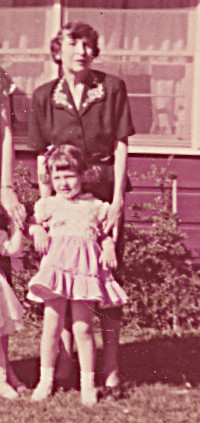
*Age 3 – 3 children with grandmother, closeup of me and grandmother

1955 Linda closeup with grandmother in front of the Glendora, (L.A.) house before Alaska - I was 3
1955 Linda closeup with grandmother in front of the Glendora, (L.A.) house before Alaska – I was 3

+++++++++++++++++++++

*1959 – The jeep road leading from Eagle River road into the valley

*1959 – Children in the homestead snow

+++++++++++++++++++++

*1960 – Precious picture dad, John, Cindy, Sharon and a wheelbarrow of seed for the fields

(I wish I was part of the family in this picture — where was I for this big event?)

+++++++++++++++++++++

*1960 (circa) Mom planting the fields

*1962 – Log house nursery

*1963 – June 11 – Family Portrait

+++++++++++++++++++++

*1963 5 kids and mom by cabin (possibly on trip to Santa Fe)

1963 just turned 12 -- and so sad -- I KNOW this sadness, it's rarely ever left me it was so made a part of who I am in this body.
1963 — I had just turned 12 — and so sad — I KNOW this sadness, it has rarely ever left me. Sadness was built into my body from the time of my birth. This is what it looked like when I was nearing the threshold to cross into my womanhood.

+++++++++++++++++++++

*1965 – Tucson rented house on Hawthorne St.

*1967 (circa) Dad and the red Toyota

*Adding wood ends onto the Jamesway (circa 1968?)

+++++++++++++++++++++

*Poem my father wrote to my mother

*Two pictures of Bill and Mildred together

+++++++++++++++++++++

*My Childhood Guardian Angel on the Mountain Top

It was to this mountain and to this land that I formed a secure attachment.  It was this place, this land and all that lived and moved and breathed on and around it that I loved.  This place was the heart of my heart, and this Angel on the Mountain was the heart of my heart’s heart.

My Angel on the Mountain.  She has her wings spread out to her sides, her long white gown draping over the mountain.  Her head is tipped slightly to her right.  She has a halo.  I could never as a child imagine anything or anyone more beautiful.  If my mother had imaginary friends, and me her imaginary enemy -- if she was completely mixed up on who and what was real, and could not tell her children from her dolls of play ----  WELL perhaps who am I but my mother's daughter -- because I HAD an angel, not a pretend angel, not an imaginary angel -- I HAD AN ANGEL.  She was MY angel.  Right there on that mountain top.
My Angel on the Mountain. She has her wings spread out to her sides, her long white gown draping over the mountain. Her head is tipped slightly to her right. She has a halo. I could never as a child imagine anything or anyone more beautiful. If my mother had imaginary friends, and me her imaginary enemy — if she was completely mixed up on who and what was real, and could not tell her children from her dolls of play —- WELL perhaps who am I but my mother’s daughter — because I HAD an angel, not a pretend angel, not an imaginary angel — I HAD AN ANGEL. She was MY angel. Right there on that mountain top.

+++++++++++++++++++++

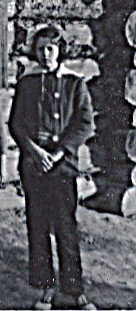
This is just a picture, and a poor one at that, my mother took of some old trapper's cabin.  But I look at it, and I think, "If I could step into that place, and still have access to people I love, I would be in the closest thing to heaven I can imagine on this earth."  Yet, at the same time, I don't think heaven is more than a passing flash here on earth -- whatever it is, I think (and hope) it comes later.
This is just a picture, and a poor one at that, my mother took of some old trapper's cabin. But I look at it, and I think, "If I could step into that place, and still have access to people I love, I would be in the closest thing to heaven I can imagine on this earth." Yet, at the same time, I don't think heaven is more than a passing flash here on earth -- whatever it is, I think (and hope) it comes later.

+THE MOST IMPORTANT LETTER I’VE EVER WRITTEN – WHEN I DISOWNED MY MOTHER

++++++++++++++++++++++++++++++++

After these pages and their links are posted here, I am going outside to recreate my flower beds.  I made a special 50-mile round trip to a town near here to buy flowers last evening.  It will never cease to please me that I can actually recreate flower beds now, in mid October, with flowers that will last until spring, even if they have to slow down their growth and blooming during the ‘colder’ months of our Arizona high desert winter.

This reminds me of how so much of my life is like tending a garden, trying to rid myself of weeds, changing with the seasons.  Now, if I can learn how to see the re-creation of myself as recreation rather than being a chore, I could definitely have more fun with this whole process!

Celebrate the seasons.  I try to do that.  Sometimes it’s just a little harder to celebrate the seasons of my soul.

++++++++++++++++++++++++++++++++

POST AND THE LETTER AND JOURNAL ENTRIES LINKED TO HERE ABOUT MY DISOWNING MY MOTHER

MAY TRIGGER — PLEASE BE CAREFUL OF YOURSELF!

++++++++++++++++++++++++++++++++

Once I completed my process of disowning my mother I never went back on it.  I never spoke to her again [she died in 2002] , and only saw her like the flash of some fading shadow as she entered my father’s hospital room after his disastrous surgery in Alaska the fall of 1990 and instantly turned and left.

I did not find this letter I wrote disowning my mother among the few of my letters she had saved that were with her other papers.  I went searching for my copy of this letter because I knew I had made and kept one.  I also found my journal entries for the days surrounding the writing and the mailing of this letter and they are included below the letter itself in the following link.

++++++++++++++++++++++++++++++++

*Age 36 – My May 10, 1988 Letter Disowning My Mother

++++++++++++++++++++++++++++++++

I am including this link to the letters I wrote my mother in the year prior to my disowning her.  These ones she saved, and I found them among her papers.  They provide a context and a contrast to what eventually followed their writing — my ‘disownment’ of my mother.

As I read these later letters, I can see how much healthier and happier I was overall than I was at age 20 — but boy, did I go through a LOT in those ensuing 15 years!  What I see NOW, another 20+ years down the road of my life, is that my entire self was organized and oriented around being a mother.

When my baby left home nearly six years ago I suffered a crash I could NEVER have imagined — and I HOPE I am rebounding (very slowly) now though I still feel like whatever SELF I had when I wrote these letters was crushed nearly beyond recognition or retrieval once the major self-organization factor of being a full-time mother vanished.

Perhaps in part because being the best mother I could be (as a counteraction to my mother’s treatment of her children) occupied so much focus for me, and because I didn’t really have much of a SELF to start with thanks to my mother, being a mother myself put me in ‘orbit’ around the ‘sun’ that my children were to my existence for 35 years.

Did my organizing-orienting sun explode or implode when my children left home?  That’s sure what it STILL feels like to me.  I believe that if I had been able to develop a clear, strong and healthy SELF in the right way during the right developmental stages, that ‘crash’ would have been a minuscule fraction of what it has turned out to be for me.  I will be extremely grateful until the moment I leave this world that I was able to let my children go — and take their wonderful selves with them.  I did not create a trauma bond with my children.  I am completely clear that any problems I have in dealing with them being gone are my own to deal with and have nothing to do with them.

++++

How many times in a lifetime do ‘ordinary’ people reinvent themselves?  Again — and still — I have no ‘ordinary’ points for comparison.

*Ages 35 – 36 – My 1987 Letters to My Mother

++++++++++++++++++++++++++++++++

+SO TANGLED UP IN LIES – MY AGE 20 LETTERS ‘HOME’

++++++++++++++++++++++++++++++++++

It does me no good to be embarrassed, humiliated or ashamed of the young 20 year old woman I was when I wrote these letters that my mother saved among her papers all these years.  They show me how powerfully effective dissociation is to survival.  I simply found a way to invent a ‘self’ and a life using whatever spare parts of a mind-self I found lying around once I left my home of origin.

As I comment at the end of the second letter, the left brain has amazing abilities to fabricate realities that, if never challenged by the right brain, the body memory brain, the higher cortex or a clear, strong and healthy self, simply appear to be THE reality of a person’s life.  I could not see that everything I had ever known about my life was a sham — and a shame.

I had created an entire semblance of some kind of life already by the time I was 20.  I had left home, entered the Navy (from Alaska) , gone through training (Baltimore and San Diego), gotten pregnant, out of the Navy (Rhode Island and back to San Diego) , endured a pregnancy, a terrible and traumatic delivery that nearly killed me, and the first 6 months of my daughter’s life alone, moved to San Francisco, married the father in Honolulu, moved to Sacramento and then to Ohio, spent time with my husband, done drugs, quit doing drugs, separated from my husband and was about to move to Fargo, North Dakota — all in two-and-a-half years.  I had a dissociated life — but by golly, the body that I was living in had survived all of it and kept on going.  My poor self?  Lost.  My poor mind?  Doing the best it could do to make sense of any of it.

I would say, “Don’t bother reading these letters,” but “Who am I to say?”

++++++++++++++++++++++++++++++++++

*Age 20 – My March 7, 1972 letter to my parents

*Age 20 – My May 1, 1972 letter to my mother

++++++++++++++++++++++++++++++++++

+FIGHTING MY MOTHER’S DARKNESS – BEING AFRAID OF MY OWN YOUNG ADULTHOOD LETTERS?

+++++++++++++++++++++++++++++++++++

For as long as this part of my project will take me, I am going to do something that is extremely difficult for me to face.  I have a collection here of a few of the letters my mother saved that I wrote to her in my adulthood before I disowned her.

I want to tear them up, throw them away, burn them to ashes.  I want to do anything but read them or to face them head on.  Yet, I think now about what my daughter told me the other night about my struggle in facing my mother’s letters she wrote in the years that I was in my teens.  She told me  that just because my struggle is so great there is probably something important I can learn by going ahead with my project.  Well, the struggle seems greatest when I am faced with myself in my own adult letters.

Am I this afraid of actually seeing the lies of my childhood continued into my adulthood?

Yes, I am.  I feel as I might should I be standing outside of a burning building ready to race inside to try to save myself, no matter what the cost.  I feel sick inside.  I fear there is sickness in these letters, and I will not only see it there, I will feel it here today in my own body as I re-read my own words.

It is one thing to take a hard, close look at my mother’s writing because they are ‘out there’, outside of me.  But my own words?  Do I have the courage to examine the extent that I bought the lies about Linda, the extent that I ate them, swallowed them, internalized them until I could not tell the difference between where my mother left off and I began?

What are my hopes?  What goodness do I think I might be able to gain by spending time with past self?  How much of my past self remains with me today?  Can I see what I hate and change it?  Is it an absolute, stupid and complete waste of time working with my own letters?  How do I see the process as being different from examining my mother, and my grandmother, through their letters?

What am I afraid to learn?  Do I have the courage, willingness and perseverance to find out?

++++++++++++++++++++++++++++++

I suspect at this moment, before I step into this next unknown contained within my own letters, I am afraid that I will face within myself something that tells me that everything that happened to me in my childhood was all my fault and that I deserved it.  This fear is not reasonable.  This statement is not reasonable.  There was no REASON in my childhood.  That is what my mother’s severe mental illness was all about.

I fear I will see from my vantage point today how completely rotten and faulty the foundation of my self was, and therefore of my life was,  as I passed out from under the shadow of the roof of my parents’ home into my own dim adulthood future.  I bought the lies of my childhood because they were present with the first breath I ever took and I had no way of knowing this.  I was raised without being loved.  I was raised being told that I was evil, not human.  I was raised to believe that everything about me was wrong.  I did not leave those lies behind me.  They were built into me.  They became a part of me.

It was bad enough that what happened to me for 18 years at the hands of my mother ever happened to me at all.  But what feels worse to me is knowing that I carried it all within my body-brain-mind right out of my childhood with me — and I didn’t even know it.

It comes down to being raised and ‘built’ in a world of darkness.  My mother’s darkness was not my own, yet I had to find for myself a light that allowed me to survive her.  Her darkness was put onto me and into me, it surrounded me and permeated every aspect of my childhood from the time of my birth.  But from my side of the story it was a false darkness to me.  I didn’t know this.   I didn’t know the darkness came from my mother and not from me.

I didn’t know that in the insanity and abuse of my childhood I came to find and create my own false light to endure in false darkness.  I know this now because I can see that if someone had removed me from my mother’s care when I was born, there would have been no darkness for me to adjust to.  I wouldn’t have had to deal with any of it.  I would be a different person.

+++++++++++++++++++++++++++++++++++

I can’t explain this right now, I guess.  I can’t explain how the darkness of my mother’s mental illness robbed me of the light of love, hope, trust, safety and security that I needed in order to grow into my own strong, healthy, happy self.  Being robbed of this light forced me to come up with my own light, but it was a false a light because it was designed to fight my mother’s darkness, not my own.

I could not simply step out of my childhood and into my adulthood, into the ‘ordinary’ light of a benevolent world as if I had lived in it my entire life.  I had been formed in and by an entirely different, dark and malevolent world.  I did not have eyes that were designed to see in the bright light of ‘ordinary’ day.  My eyes were designed to see in a world of my mother’s pitch darkness.

+++++++++++++++++++++++++++++++++++

What will I see when I step into the world of my own early adulthood letters?  With whose eyes will I look at the world, in and with what light?  Whose darkness might be hiding in them?  Or, better yet, whose light?

+++++++++++++++++++++++++++++++++++

+AFTER 100s OF LETTERS, THIS ONE’S GETTING CLOSER TO SHOWING THE REAL WITCH MOTHER

++++++++++++++++

(This letter also posted:  *1963 – September 4 – Letter from dad to mother)

++++++++++++++++

Hang onto your hat, the top’s down and we’re going for a ride……

1963 August 6 - Here for the first time in all my mother's letters we can begin to catch a glimpse of a glimmer of the real Mildred

++++++++++++++++

This letter is mother’s (to me, shocking) response to dad’s long (to me, thoughtful and honest) letter of —*1963 – September 3 – Dad’s Letter to Mother While the Rest of Us Are In New Mexico.   Here is an excellent opportunity to look at the pitiful and destructive dynamics in my parents’  relationship.  This is a rare letter because in it she is honest about how she felt both about her mother and my father — and neither honesty nor the truth was my mother’s strong suit in these hundreds of letters of hers I am transcribing.

This letter shows the kind of ‘switching’ that my mother would do, and shows how, even on pieces of paper with a pen as a weapon she would work herself up into a rage filled frenzy.  The best thing for us children would have been — a long time prior to when this letter was written — for our parents to have chosen a place for us to live in so we could get on with some semblance of growing up while having our needs met.

We were growing up anyway.  *1963 – Trip to Santa Fe – Here at Grand Canyon – mom and kids It was not OUR choice for five of us plus my mother to run over two thousand miles away from my father, or to be jammed into a tiny motel room in a strange town, to start school late in the year, to have no certainty about what was going to happen next in our lives.  And as much as any of us children might have loved the homestead, it was not our biggest need to have ourselves dragged back there as pawns in my mother’s sick, distorted ‘mind games’ with my father.

++++

Another factor that is of course not mentioned in these letters flying back and forth between my parents is the fact that we had lost what might as well have been another member of our family — the log house.  It had been sold.  In order for massive ‘trauma drama’ to be enacted within a family, there must be a stage and a setting.  The dynamics of my mother’s chaos worked prior to this time with three main settings:  the log house in Eagle River, the homestead, and the Panoramic View Apartments in Anchorage.  She had lost the log house, and that fact — like a child growing up and leaving the family — changed how mother’s, and hence our drama was to play itself out after this time.

(For background on the truth of mother’s actions during the year prior to the time this letter was written in 1963, read particularly her late summer, fall and winter letters here: *1962 – MOTHER’S LETTERS and the letters *1963 – Mother’s Letters written prior to our leaving Alaska in August of 1963)

In this September 6, 1963 letter she tells dad:

I don’t mind if we don’t live there this winter as it isn’t our fault but I’m not the one for you if you feel we should buy a house.  I can’t return under such circumstances.  I simply can’t.  I know I’ll yell, scream and fuss again and I won’t….Bill if we don’t live on the homestead I don’t want to live in Alaska with you.

It seems clear to me from letters months and years prior to this that it has always been mother who orchestrated the moves off the mountain and  Dad simply obliged her.

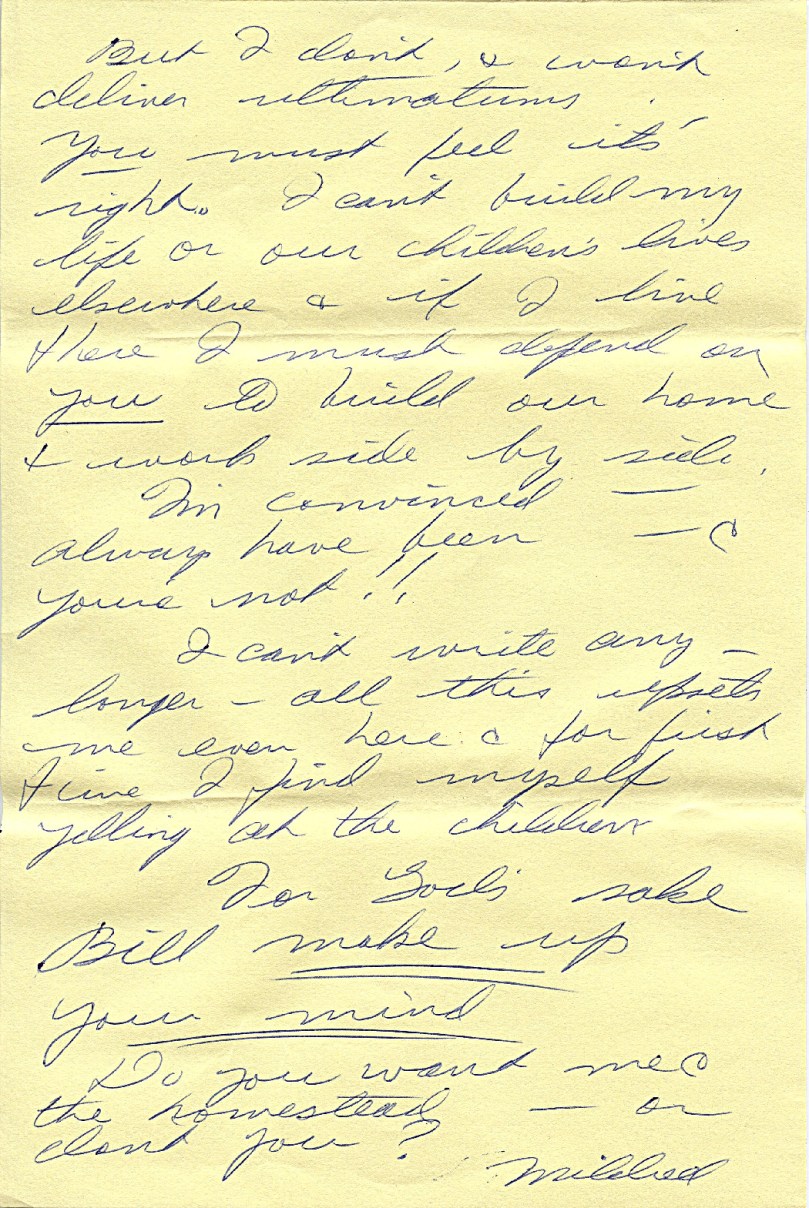
From my point of view, certainly toward the second half of this letter, mother is writing ‘crazy-talk’!  She tells him,

But I don’t, and won’t deliver ultimatums.  You must feel it’s right.  I can’t build my life or our children’s lives elsewhere and if I live there I must depend on you to build our home and work side by side….I’m convinced – always have been – and you’re not!!

++++++++++++++++

Please follow this link to read

*1963 – September 6 – Mother’s Wicked Response to Father From Santa Fe

++++++++++++++++++++++++++++++++++++++++++++++++++

In a letter September 5, 1963 she stated about the opposite of her letter 1 day later:

You’ll know what you want to do after your trip – live there now or next summer.  I don’t care.

I want you – I love you – and will work out our problems together.

I am absolutely lost without you!!

Write soon and often.  Your ever loving wife, Mildred -”

++++++++++++++++

+STEALING OUR CHILDREN’S LIGHT

++++++++++++++++++++++++++++++++++++++++

Every time we try to get our adult attachment needs met through our children we are placing them in our darkness and stealing from them the light they need to build their own strong self so they can live their own good life.  Doing so is the surest way to destroy our children’s lives — which is certainly not what we hope for.

It is critically important that we foster our children’s attachment to us as parents, not the other way around – and not mutually.  Yes, parents need to be bonded with their children, but that is not the same thing as parents having to have their attachment needs met by their children.  Parents are their children’s care givers.  We can only activate our care giving system when our attachment-need system is deactivated, or turned off.  Otherwise the whole natural process of raising healthy-minded, safely and securely attached children is contaminated, and unresolved trauma is passed down the generations.

Adults, particularly those who were not raised themselves by securely attached adults who knew how to meet their own attachment needs appropriately outside their parenting relationship – and thus have a resulting insecure attachment disorder coupled with an empathy disorder themselves — need to become crystal clear about what their own attachment needs are and how to get these needs met appropriately without involving their children.

If we ourselves have an insecure attachment disorder, we will be forever at risk for passing this insecure attachment pattern down to our offspring no matter how hard we try not to.  We need information, we need it NOW and we need it desperately!

I am most strongly recommending the writings of Dr. Daniel J. Siegel.

— WEBSITE:   Mindsight Institute

Parenting From the Inside Out by Daniel Siegel and Mary Hartzell (Paperback – April 22, 2004)

Better Parents, Better Spouses, Better People (Wired to Connect: Dialogues on Social Intelligence, 2) by Daniel J. Siegel and Daniel Goleman (Audio CD – 2007) – Audiobook

The Developing Mind: How Relationships and the Brain Interact to Shape Who We Are by Daniel J. Siegel (Paperback – Oct 22, 2001)

The Mindful Brain: Reflection and Attunement in the Cultivation of Well-Being by Daniel J. Siegel (Hardcover – April 1, 2007)

The Neurobiology of “We”: How Relationships, the Mind, and the Brain Interact to Shape Who We Are (Sounds True Audio Learning Course) by Daniel J. Siegel (Audio CD – May 1, 2008) – Audiobook

Mindsight: The New Science of Personal Transformation by Daniel J. Siegel (Hardcover – Jan 12, 2010)

Healing Trauma: Attachment, Mind, Body, and Brain by Daniel J. Siegel, Marion F. Solomon, and Marion Solomon (Hardcover – Jan 2003)

The Healing Power of Emotion: Affective Neuroscience, Development & Clinical Practice (Norton Series on Interpersonal Neurobiology) by Diana Fosha, Daniel J. Siegel, and Marion F. Solomon (Hardcover – Nov 16, 2009)

Trauma and the Body: A Sensorimotor Approach to Psychotherapy by Kekuni Minton, Pat Ogden, Clare Pain, and Daniel J. Siegel (Hardcover – Oct 13, 2006)

++++++++++++++++++++++++++++++++++++++++

Adequate parenting means we can respond adequately to the needs of our children.

Please also see on this blog:

*COLLINS ON RESPONDING TO NEED – Part One

*COLLINS ON RESPONDING TO NEED – Part Two

*COLLINS ON RESPONDING TO NEED – Part Three

*COLLINS ON RESPONDING TO NEED – Part Four

*COLLINS ON RESPONDING TO NEED – Part Five

*COLLINS ON RESPONDING TO NEED – Part Six

**Attachment Styles and Caregiving from Collins Article

**Attachment Styles from Collin’s Article

++++++++++++++++++++++++++++++++++++++++

+LINKS TO NEW PAGES ADDED TODAY INCLUDING MY CHILDHOOD ART

New links today

++++++++++++++++++++++++++++++++++++++++

*Age 9 – Happy Photo of Me and Baby David

++++++++++++++++++++++++++++++++++++++++

*Grandmother’s Notes On Analyzing Mother’s Handwriting

++++++++++++++++++++++++++++++++++++++++

*A FEW OF MY CHILDHOOD HANDMADE GREETING CARDS

++++

I included in this link (above) ‘The Reindeer Envelope’ that is considered in far more detail in this link below!

++++++++++++++++++++++++++++++++++++++++

See more - click on the link below

*Age 8 – The Reindeer Envelope – My Own Art Work Analyzed By Me – The Art Therapist

++++++++++++++++++++++++++++++++++++++++

And one of my mother’s letters:

*1963 – July 1 – Mother’s Letter About the Death of Her Father

++++++++++++++++++++++++++++++++++++++++

I will add here, because the topic of “I love Mother” greeting cards applies, that never in my childhood until I was 17 years old did I EVER feel angry at my mother.  I had no possible concept of that.  I had no concept of love, so I had no idea if she or my father loved me.  Nor did I have any concept of loving them — or anyone — except for my pet rabbits who were ‘one’s to me, as was the homestead, the mountains, the valley and all they contained.

Making ‘loving cards’ so one could ‘give loving cards’ was simply something one did — like eating, walking, sleeping.  Today I certainly don’t care one little bit about whether they loved me or whether I loved them.  It absolutely couldn’t matter then — what happened IS what happened, no matter what words they would have used themselves to explain their actions.  It doesn’t matter to me at this moment if I loved them or not.

Being able to read the images that my tragic, said and yet incredibly wise, strong and evidently directed self created is what matters to me.  That I can see my protective process in these images, especially in the reindeer one, gives me a renewed appreciation for the resiliency and resourcefulness of the human spirit.  That image shows that I was going to make it — and, by golly, I DID!  THAT’S WHAT MATTERS!

++++++++++++++++++++++++++++++++++++++++

+BEING MY MOTHER’S IMAGINARY SWORN ENEMY

Deadly Child’s Play

+++++++++++++++++++++++++++++

The consequences of some childhood imaginative play can be so destructive when carried into adulthood that we have no real choice other than to call it deadly.  My mother’s play fit this category.

For all the writings that attempt to describe and explain the behavior that some Borderline Personality Disorder parents, particularly mothers, engage in with some or all of their children, fit this category.

The reference for this post about the symptoms of dissociative disorders in children can be found below.  There is only one single aspect of the material contained in it that I wish to address right now:

4. The child’s belief in alternate selves or imaginary friends that control the child’s behavior may reflect disorganization in the development of a cohesive self.

+++++++++++++++++++++++++++++

I am also writing a reply to a comment my second to the youngest (1961) brother wrote today.  I believe that my mother suffered from a pre-Borderline Personality Disorder condition from the time she was no older than 6 years old.  I believe that what went wrong for her prior to that age had already spawned this condition so that without immediate and adequate childhood intervention, the course of the progression of her mental illness was – by today’s enlightened standards and knowledge about the disorder – entirely predictable.

She was, therefore, already mentally ill when my father married her.  The ‘up side’ of her disorder allowed my mother to appear as a vivacious, charming, stunningly gorgeous catch of a wife.  That she was too vivacious, charming, stunning and gorgeous could not have alerted anyone at that time to the terrible troubles that lay down the road of her life – and down the road of anyone’s life that she captured in the web of her illness.

My mother had a mind that could ‘think’ only in terms of the imaginary world of her early childhood.  My father fit the image of her perfect imaginary Perfect Husband – with only one fixable flaw.  As she used to tell us, he did not smoke a pipe.  That was easy.  She convinced him to start smoking one.

The birth of a son for a first child also fit her perfect imaginary world image of motherhood.  EVERYONE wanted a boy to be born first.  It amazed me that my oldest brother’s wife could hear the hysterical tone of my mother’s psychotic mind in the ‘voice’ used to comment in my brother’s baby book.  My brother and I were evidently still so captured in my mother’s web, even three years ago, that we could not detect that crazy woman’s crazy voice.  My astute objective sister-in-law sure could!

++++

So, yes, in response to my brother’s comment, my mother did become the woman she already was when my father married her – just more so.  By the time I was born, through complications of my being a breach birth that nearly killed the both of us, and due to a psychotic break that seemed to have happened to her while she birthed me, Linda, the first born daughter and second child to be born into this perfect imaginary married life of motherhood for my mother, was assigned a role all of her own.

I need to mention that according to the way my mother described all during my childhood how I tried to kill her before I was born, that the devil sent me to kill her — that part of the psychosis could easily have happened with its resulting consequences no matter which sex I had been born as.  After all, back then she had no way of knowing if I was a boy or a girl until I actually appeared.  Which brings me to the clearest way I have yet found to explain and describe what happened to me next – and through contamination, to my siblings.

My mother did not have imaginary friends from childhood that controlled her as the above number 4 symptom of childhood dissociative disorder suggests.  She formed her imaginary mental and emotional structure, I believe, while playing alone with her dolls.  They were her initial imaginary friends, and she could, of course, control them absolutely.  When she began to have children of her own she simply slid her imaginary friend structure over on top of us.  With one exception.

For whatever reasons, no doubt stimulated by the difficult circumstances of my birth, I was NEVER my mother’s imaginary friend.  I was her imaginary mortal enemy – so bad that I was assigned the status of being so evil that I was not human.   I was a demon, the spawn of the devil, the devil’s child.  I strongly suspect that her psychotic break in labor was facilitated by the use of the anesthesia used at that time for women in labor, Twilight Sleep.  This drug combination is know to have induced severe nightmarish hallucinations that were SUPPOSED to be ‘not remembered’ along with the pain of birthing.  For some women, particularly those with pre-Borderline or other psychosis-related underpinnings, administration of this drug became their demise.

In taking a short-cut here, I can clearly see the pattern my mother applied to her children as we were forced to assume the cloak of her imaginary friend/enemy projections upon us.  First born (1950) son was the Hero, second born (1951) daughter the sworn mortal Demonic Enemy Satan’s Child, third born daughter (1953) God’s Child, the Angel Saint, fourth born daughter (1955) the Fairytale Princess, fifth born son (1961) the Alaskan God Son.  I cannot yet name imaginary friend status of the sixth son (1965).

My mother had no conscious capacity to recognize these patterns.  I think my father believed her fantasies without question, as well.  I doubt he had any more of a capacity to recognize what he was dealing with than she did.  She was his wife, the mother of his children, and he evidently believed her — lies about Linda.

I see us all in a police line up.  I see us all having our mug shots taken, and instead of our actual name and identity being recorded, we each have our chosen imaginary friend – or enemy – designation attached to our existence in my mother’s – and my father’s – world.

++++

We were all simply a part of my mother’s mentally ill child’s play.  I differ from authors who might suggest the ‘imaginary’ role belonged to my mother – witch, waif, etc.  The imaginary designations with their resulting and correlating treatment we received from her, belonged to her broken mind.  The source of all of our suffering, including to a large extent the suffering of her imaginary Perfect Husband, came from whatever combination of trauma and adaptation to trauma and neglect that my mother made well before she was six years old.

Because my mother was by physiology a female, and raised a ‘traditional doll playing girl’, her psychosis centered around home and family.  Had she been a boy, who knows where her psychotic imaginary play would have taken her in adulthood.  Perhaps she would have been likely to murder us, chop us into little pieces and store us in a wall, bury us in the yard, or eat us.

Fortunately, that’s not the story being told here.  What I know of what happened to me was on the level of soul murder, and that’s bad enough.  Because the imaginary friend status assigned to my siblings was not enemy, they were able to ‘escape around the edges’ and form some self of their own.  My history with her was of her continually controlling me and abusing me as much as she possibly could.  When it comes to being able to empathize with my mother enough to truly understand her underlying unconscious motives, nobody who did not share my mother’s psychosis can ever know what it all seemed like and felt like inside of herself.  I probably come the closest because she so pervasively invaded and obsessively controlled me.

++++

Herein lays the difference between siblings that are not often apparently abused by a mentally ill parent and the Chosen One that is insanely and chronically abused.  My mother did not have the ‘benefit’ of knowing who her imaginary enemy was until I was born.  Once she KNEW, she then had a specified target upon which she could focus the full destructive intent of her psychosis.  And believe me, that’s exactly what she did.

All the moving around we did, what my mother refers to in her letters as “shifting” from place to place, simply HAD to happen as a result of the unanchored mercurial madness of her extremely disturbed mind.  It began very early in her marriage and became far more pronounced with the progression of her illness once we reached Alaska when I was five.

This “shifting” deprived all of us of any stable footing beneath our childhood feet.  Coupled with the toxic contamination of being raised by an unstable mother who was obviously capable of severe depressions and violent rage attacks, all six of her children can no doubt say that they “did not have a happy childhood.”  This does not mean that there were not positive aspects to our childhood, because there were.  Yet each of our separate, individual experiences of our childhood, even with the underlying madness, depended to the largest extent upon which one of my mother’s inescapable imaginary friends – or enemy – identities we had been assigned at our birth.

Excluding and excusing my father from responsibility for either his active or passive participation in my mother’s madness places him on the level of being a child rather than of being an adult.  He was no doubt a traumatized adult, but as one of my commenter’s wisely points out, he WAS an adult and we were his children.  At the same time that he might have been my mother’s imaginary husband, he was our very real father, as she was our very real mother.

There is no judge and jury here.  There is no real question of accountability.  It’s far too late for that.  My intention is to uncover what I can of the clues, the evidence and the seeming facts about my childhood of unimaginable suffering.  That it could have been worse is obvious.  That it never got any better is equally obvious.  I am, at best, simply a survivor of a childhood that should NOT have been allowed to happen.  And it wouldn’t have, if anyone, anywhere, had cared enough to pay adequate attention and take some appropriate action on behalf of my parents’ traumatized children.

++++++++++++++++++++++++++++++++++++++

Because the early experiences of my mother’s own childhood left her with a disorganized-disoriented insecure attachment disorder, focusing on fighting her ‘war’ against the enemy that was me allowed her to find a purpose (other than homesteading so she could have her imaginary Kingdom) that to some extent allowed her to organize and orient her inner life.  Hers was a war waged in the private confines of our home.  It was a war of terrorism.  It was a clandestine war, as most wars against innocents are, with me as the victim because my mother lacked the capacity to know I was her precious little girl, not her enemy.

Main Entry: clan·des·tine
Pronunciation: \klan-ˈdes-tən also -ˌtīn or -ˌtēn or ˈklan-dəs-\
Function: adjective
Etymology: Middle French or Latin; Middle French clandestin, from Latin clandestinus, from clam secretly; akin to Latin celare to hide — more at hell
Date: circa 1528

: marked by, held in, or conducted with secrecy

++++++++++++++++++++++++++++++++++++++

REFERENCE as presented in this October 1, 2009 post:  +CHILDHOOD DISSOCIATION, DEPERSONALIZATION, DEREALIZATION – I NEVER HAD A CHOICE TO BE OR NOT TO BE

++++

Guidelines for the Evaluation and Treatment

of Dissociative Symptoms in Children

and Adolescents

International Society for the Study of Dissociation

Journal of Trauma & Dissociation, Vol. 5(3) 2004

Digital Object Identifier: 10.1300/J229v05n03_09 119

++++++++++++++++++++++++++++++

Please follow (above) link to read this entire article and to find the exact references the authors are referring to in this section of their article (below):

“There is no consensus yet on the exact etiological pathway for the development of dissociative symptomatology, but newer theoretical models stress impaired parent-child attachment patterns (Barach, 1991; Liotti, 1999; Ogawa, Sroufe, Weinfield, Carlson, & Egeland, 1997) and trauma-based disruptions in the development of self-regulation of state transitions (Putnam, 1997; Siegel, 1999).

Newer theorizing ties maladaptive attachment patterns directly to dysfunctional brain development that may inhibit integrative connections in the developing child’s brain (Schore, 2001; Stien & Kendall, 2003).

From the vantage point of treating children and adolescents, a developmental understanding of dissociation makes the most sense.

That is, dissociation may be seen as a developmental disruption in the integration of adaptive memory, sense of identity, and the self-regulation of emotion.

According to Siegel (1999), integration is broadly defined as “how the mind creates a coherent self-assembly of information and energy flow across time and context” (p. 316).

In other words, Siegel sees the development of an integrated self as an ongoing process by which the mind continues to make increasingly organized connections that allow adaptive action.

Children and adolescents may present with a variety of dissociative symptoms that reflect a lack of coherence in the self-assembly of mental functioning:

1. Inconsistent consciousness may be reflected in symptoms of fluctuating attention, such as trance states or “black outs.”

2. Autobiographical forgetfulness and fluctuations in access to knowledge may reflect incoherence in developmental memory processes.

3. Fluctuating moods and behavior, including rage episodes and regressions, may reflect difficulties in self-regulation.

4. The child’s belief in alternate selves or imaginary friends that control the child’s behavior may reflect disorganization in the development of a cohesive self.

5. Depersonalization and derealization may reflect a subjective sense of dissociation from normal body sensation and perception or from a sense of self.

++++++++++++++++++++++++++++++++++++++

  What are the Causes of Borderline Personality Disorder?

  Conditions Related to Borderline Personality Disorder

  Treatments for Borderline Personality Disorder

  Getting Help for Borderline Personality Disorder

  Life With Borderline Personality Disorder

  Symptoms of BPD

  Diagnosis of BPD

++++++++++++++++++++++++++++++++++++++

Check out this super website!

Baby Brain Development

++++++++++++++++++++++++++++++++++++++

+BELOW THE SURFACE – THE CONNECTION BETWEEN SEVERE EARLY CHILD ABUSE, EAGLES AND BUZZARDS

++++++++++++++++++++++++++++++++++

In two of the places I have lived for any length of time in my life I’ve been able to watch one of two kinds of great soaring birds.  Both in Alaska and in northern Minnesota I watched the great soaring eagles.  Down here in the high Arizona desert right on the Mexican-American border I watch great soaring buzzards.  Each of these two bird species operates with completely different energy and drive systems.

I think about these birds today in relation to the forensic autobiographical work I am doing as I try to understand what happened to my mother in her early childhood that pushed her so far over the Borderline wall that it destroyed her life, and nearly destroyed mine in the process.

Common sense tells us that an eagle is not meant to be a buzzard.  A buzzard is not meant to be an eagle.  And yet, strange as it might seem, the developmental alterations and adaptations that a tiny developing human body must make to adjust to a malevolent early world ends up creating some fantastic combinations than we can begin to see as if they were the result of some cross-hybridizing between these two impressive species of birds.

Both species are able to soar around, floating on air currents, surveying the world far beneath them.  They have the same intent — to stay alive.  But how they do so differs greatly between the two.

++++

Eagles are designed with a super adrenaline system as their source of energy.  They are birds of prey with keen eyes that can see the smallest movement of prey from hundreds of feet in the air.  They can swoop down to earth at incredible speeds and unerringly nab their meal.

Buzzards, on the other hand, are designed with a thyroid-based very low energy source.  They are not solitary hunters that are designed to swoop and kill.  They are designed to hunt dead prey with conspecifics.  They can still see from hundreds of feet up in the air where they soar in great lazy circles.  Once one hunter spots food the rest are notified, and they simply settle themselves down to earth for a shared feast – the more putrefied the better.  This is the easy life!  The buzzard has broken out of the predator-prey cycle.

See:  +TOMKINS ON EVOLUTION OF AFFECT

Contained in a section from the above link Silvan Tomkins notes the following:

“In man, the thyroid is relatively larger than in any other land animal and is larger than the adrenal in comparison with the ape and virtually all the wild land animals who have a larger adrenal than thyroid.  In the fetus and human infant the adrenal gland is larger than the thyroid.  At the time of birth there begins a gradual decline of the adrenal gland dominance which continues until the twenty-first year at which time the thyroid is 2 ½ times the size of the adrenal glands.  Crile attributes some of the volatility of the infant to this early, more primitive endocrine balance.  (Tomkins/aic/157)”   [Affect – Imagery – Consciousness” volume 1:  The Positive Affects and volume 2:  The Negative Affects by Silvan S. Tomkins (Professor of Psychology, Princeton U) Springer Publishing Company, NY 1962]

In other words, what this information tells me is that very young human infant-children are designed with a hyper-drive adrenaline system that will respond to trauma with much more force and power than an adult human is even capable of.  I imagine that this is so that the tiny human’s body can receive trauma-related signals from its early environment while there is still yet time for biological developmental processes to shift all possible growth and development to allow for future survival (with hopes of reproducing offspring) in a most hostile and malevolent world.  Early malevolent conditions thus stimulate massive adrenaline responses in the human infant-child that have the most profound impact possible on the development of a tiny human being — for one single purpose — to give it the best possible odds for continued survival.

Infant-children are by design vulnerable prey.  It is important to understand that Nature has designed both predators and prey with similar, finely tuned compatible stress response systems.  If an infant-young child is born into an early malevolent environment, particularly when the predator is its early caregiver(s), the potential buried in genetic memory that allows prey to survive will become activated so far as is possible — but not without life long consequences being caused by these alterations.

++++

From the instant of our conception to the instant of our death, we are, as individuals, on some level ‘in charge’ of the property of our body.  We seldom consciously know, however, what direction the ‘development’ of that property is taking.  These changes happen on the molecular signal and response level.  Evolution has provided us with massive amounts of genetic information and sophisticated mechanisms that tell our genetic memory what to do in any given situation.  Is our property dry?  We best find water.  Is our property too swampy and wet?  Find a way to dry it out.  Is our property in need of soil amendments?  Find some.  Is our property in need of protection?  We better find some of that, as well.

All of this works smoothly and effortlessly – no matter what the conditions are surrounding the fetus-infant-child as it grows and develops just so long as physical life of the ‘property’, or the body, is maintained.  Whatever problems forced adjustment to malevolent early conditions create will, however,  show up eventually as the altered body, including altered brain-mind, later experiences conflict with the more benevolent world such an individual might find themselves living in during their life span.

Our body is our real estate.  It is the ONLY estate we will ever have.  But the conditions of our earliest beginnings do the major job of developing this property, and once that major development has occurred, we will NOT be able to change it.

The young human body is geared like an eagle is to respond from its adrenaline base.  If all is well in early childhood, the adult human becomes more like a buzzard who can soar around in a relatively relaxed state with its human social-specie mates in a state of cooperation and sharing of the relatively easy-to-spot-and-devour requisites for staying alive.  What I see of my mother is that her early distress environment signaled her body, including her brain-mind, to anticipate and prepare for a malevolent world of trauma and deprivation.  She existed in a chronic state of amplified anxiety that manifested itself in all sorts of destructive ways throughout her entire life time.

++++

She also communicated to my growing infant-child body that the world was malevolent, and shared with me – by building it right into my body – that an adrenaline-based anxiety system was needed as the best bet for staying alive.  My developing body-brain-mind-self had to adjust itself to survive the world that she knew from her own early childhood, and then created for me.  Hence, I have all sorts of anxiety-related manifestations within myself that damage my ability to exist in a benevolent rather than then malevolent world I was designed to exist in.

When it comes to the truth of a harsh reality, the problem for both my mother and for myself is that we simply LIVED TOO LONG.  The adjustments and adaptations that our body-brain-mind-self was forced to make as we developed came from our genetic memory ability to manage the property of our body in a world that far more closely matched an evolutionarily remote malevolent world of human earlier beginnings than it later matched the far more benevolent one we left home to join.

As I see it, the length of time we survived comes from a combination of factors.  Our genetic memory contained powerful adaptive potential, and the world we grew into was not completely distressful enough to destroy us physically at an early date.

There is no magic wand to be waved, no simple switch to flip that will ever readjust a human body once it has grown into adulthood to be a ‘different body’ designed to survive in a malevolent world.  The hands of the clock of evolutionary time can not be simply wound forward so that we can NOW live in a wonderful, benevolent world of plenty of safety and security.  What we need to do is face the facts, own the truth, understand the FULL consequences of infant-child development in a toxic and dangerous world of trauma and deprivation, and then learn how to recognize these consequences for what the truly are.

+++++++++++++++++++++++++++++++++++

+CHILDHOOD DISSOCIATION, DEPERSONALIZATION, DEREALIZATION – I NEVER HAD A CHOICE TO BE OR NOT TO BE

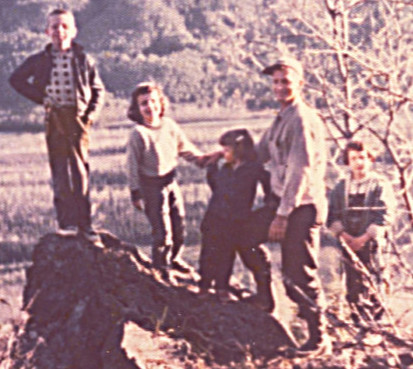
June 1959 - Age 7 - Me on the right - excluded from the family
May 23, 1959 - Age 7 - Me on the right - excluded from the family
July 1959 - Age 7 - Me on the right - cut off from the family
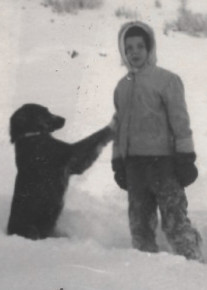
December 1959 - Age 7 - Me cut off from Smokey
December 1959 - Age 8 - Me cut off from Smokey

++++++++++++++++++++++++++++++++++++++++++++++
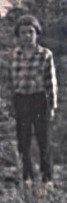
I cannot improve the focus in these pictures.  I expanded from the originals because I wanted to see the similarities between the three pictures in terms of my body language reflected in the three of them.

++++++++++++++++++++++++++++++++++++++++++++++
AND THIS IS HOW I SEE ‘THE WHOLE BALL OF WAX IN A NUT SHELL’

— the professionals back me up!

This describes what happened to me, to my mother, and the how and why of it all — the 18 years of severe child abuse I suffered — and how my mother became ‘mad’ enough to do it.

+++++++++++++++++++++++++++++++++++++++++++++++++++++++++++++

Guidelines for the Evaluation and Treatment

of Dissociative Symptoms in Children

and Adolescents

International Society for the Study of Dissociation

Journal of Trauma & Dissociation, Vol. 5(3) 2004

Digital Object Identifier: 10.1300/J229v05n03_09 119

++++++++++++++++++++++++++++++

Please follow (above) link to read this entire article and to find the exact references the authors are referring to in this section of their article (below):

“There is no consensus yet on the exact etiological pathway for the development of dissociative symptomatology, but newer theoretical models stress impaired parent-child attachment patterns (Barach, 1991; Liotti, 1999; Ogawa, Sroufe, Weinfield, Carlson, & Egeland, 1997) and trauma-based disruptions in the development of self-regulation of state transitions (Putnam, 1997; Siegel, 1999).

Newer theorizing ties maladaptive attachment patterns directly to dysfunctional brain development that may inhibit integrative connections in the developing child’s brain (Schore, 2001; Stien & Kendall, 2003).

From the vantage point of treating children and adolescents, a developmental understanding of dissociation makes the most sense.

That is, dissociation may be seen as a developmental disruption in the integration of adaptive memory, sense of identity, and the self-regulation of emotion.

According to Siegel (1999), integration is broadly defined as “how the mind creates a coherent self-assembly of information and energy flow across time and context” (p. 316).

In other words, Siegel sees the development of an integrated self as an ongoing process by which the mind continues to make increasingly organized connections that allow adaptive action.

Children and adolescents may present with a variety of dissociative symptoms that reflect a lack of coherence in the self-assembly of mental functioning:

1. Inconsistent consciousness may be reflected in symptoms of fluctuating attention, such as trance states or “black outs.”

2. Autobiographical forgetfulness and fluctuations in access to knowledge may reflect incoherence in developmental memory processes.

3. Fluctuating moods and behavior, including rage episodes and regressions, may reflect difficulties in self-regulation.

4. The child’s belief in alternate selves or imaginary friends that control the child’s behavior may reflect disorganization in the development of a cohesive self. 

5. Depersonalization and derealization may reflect a subjective sense of dissociation from normal body sensation and perception or from a sense of self.

+++++++++++++++++++++++++++++++++++++++++++++++++++++++++++++

This condition and these symptoms originate with insecure early attachments.  I believe they lie at the core of many (if not most) later-developing adult-onset ‘mental illness’ disabilities.

These descriptions of childhood dissociation apply to me, except for #4.  I did not have enough of a self to even imagine friendship, real or imaginary.  I also believe they all apply to my mother, with a shift in #4.  She developed the imaginary belief that she could CONTROL her imaginary friends — her children (me being the enemy) rather than being controlled by them.

I can see the lost, empty child in these pictures, cut off from being a member of a family, cut off from the development of a clear and cohesive self.  Devoid of a connected lifetime of experience, I appeared simply as a physical body taking up space in the universe, not as an animated LIVING child present as an identity within that body.

At any given moment my exact existence was only determined by the situation I was present in at that moment.  If the conductor of an orchestra points the baton at an individual with a particular instrument, it is time for all to hear that instrument play.  If we place our computer cursor over a particular link and click on it, we expect and anticipate that a particular action is going to occur.

From the moment of my birth my mother determined in her profound and comprehensive control of me how Linda was allowed to be in the world.  Because she never knew me as a human being, nor wished to, I existed as a puppet-fied manifestation of her inner psyche – as her projection of the BAD CHILD.

++++

There was no room for Linda to exist at all, and I can clearly see that emptiness of personhood and of selfhood in me in these pictures.  I appear as a child ‘stripped of a self’.

My emptiness, my dissociation was on an on-again, off-again condition.  The few times that I was left alone to be with myself simply existed in their own dissociative bubbles that never connected themselves to the ongoing experiences of me in my own body, in my own life.

I existed in relation to myself as I existed in the world these photographs captured – isolated, cut off, alone, unanimated, empty – like a husk of a child, a shell of a child – a body that existed to be battered, shoved, yanked, slapped, hit, punched, etc.  As an empty person to be screamed at, stormed at, thrown around in every imaginable way – at any time for any reason or for no reason whatsoever.

As an individual child-person, I was not allowed to exist.  I was not given permission to exist.  I ONLY existed as a figment of my mother’s twisted and brutalizing imagination

I no more had an identity or existed as a person (let alone as a child) than did the stone we stood on, the background trees, the tumbling rivers, the passing clouds, or the freezing snow.  I was less alive and less whole than was our dog, Smokey.  I was an apparition, a wraith, a mirage of a child.  Linda wasn’t there at all.

I was a missing child, and nobody noticed because nobody cared.  I experienced no difference between the cells of my body, the skin I wore like my clothing, the earth I walked upon or the air I breathed.  Moment to moment I could not count on anything.  I had always lived in an insecure, unpredictably unsafe world.

No child can for its self, its one self, if it is not allowed to.  I was never given permission to exist, so I didn’t.  I was as invisible and as intangible as the sound of rushing water or the wind.  I was given no more permission to exist than a leaf is, and less permission to exist than Smokey the dog was.  The homestead was more real to my mother, to both my parents, than I was.

++++

If I isolate the image of myself out of these photographs what remains is an unfocused child posed in a rigid standing posture.  That, sadly, is about all there was, a child existing by posing as a body – like a tree exists by posing with a trunk, limbs, branches, twigs and sometimes leaves – its root invisible beneath the soil.

But I had no roots.  From moment to moment I had no history of my own.  I didn’t even have the history of what mother did to me.  Even those experiences were not retained, kept, stored or retrieved in any stuck-together ongoing autobiographical coherent story-of-an-ongoing-child’s- life.  There ONLY existed each separate ongoing moment, and each of those moments was a likely to change into something else, something terrifying and painful, at any second. — unpredictably, unexpectedly, unfathomably.

Nothing mattered any more to me nor did I matter any more than if I was a snowflake, a scrap of cloth, or a pot to be scrubbed or pounded upon.  I simply existed without a self as a body that continued to grow over time without ME KNOWING I was in it.  I was my mother’s chosen ‘evil-bad’ projection, barely an object, not a person — and most definitely NOT a child.  Does an object have a sense of itself?

Just me age 7 in a body on a rock on a mountain
Just me age 7 in a body, rigid, at this second no more real than the grass I am standing on
Just me age 7 in the snow in a parka that meant more to mother than I did with a dog mother could love even though she could not love me
Just me age 8 in the snow in a parka that meant more to mother than I did with a dog mother could love even though she could not love me

++++++++++++++++++++++++++++++++++++++++++++
My mother was a master magician.  She was an expert at her craft.

Often she would banish me “from her sight”

— sometimes for days or weeks at a time —  so I would vanish from the family all together — body and all.

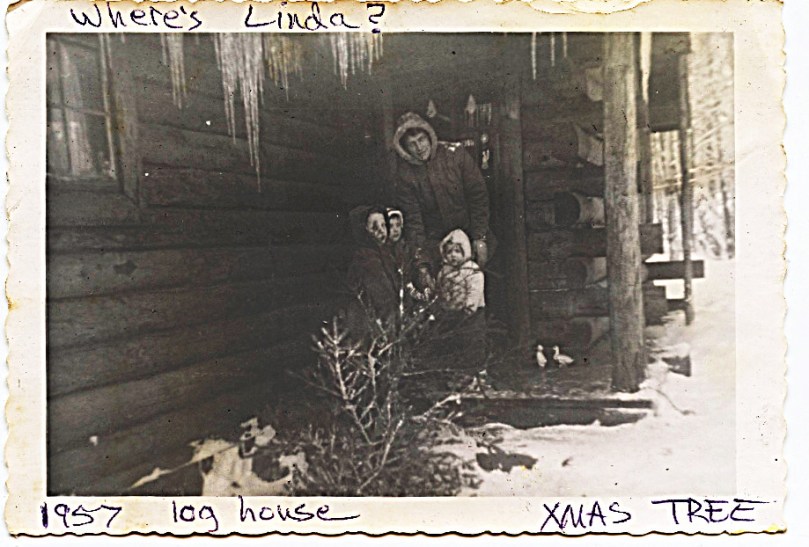
In the family pictures taken of  bringing in the Christmas tree in 1957 when I was 6, our first winter in Alaska, I am nowhere to be seen.

I have disappeared completely.

I am ‘missing in action’ and nobody seems to notice I am gone.

I am invisible.   I don’t exist at all.

I was erased.

+++++++++++++++++

See

++MY CHILDHOOD STORIES

Age 6 - Mother's magic -- Linda has completely vanished from the family picture of bringing in the Christmas tree