+CHILD ABUSE HURTS – LINKS ON GENETIC CHANGES CAUSED BY EARLY ABUSE

++++++++++++

In case readers run out of things to ponder on these winter days, here are some links to research on how child abuse affects how DNA manifests and operates — called EPIGENETICS.

*GENETICS OF DISORGANIZED ATTACHMENT

Early Brain development and Human Development

Epigenetics and the Human Brain

The epigenetics of child abuse : Article : Nature Reviews

Child Abuse Causes Lifelong Changes To DNA Expression And Brain

Epigenetics? – Abuse affects genes – Epigenome NOE

Epigenetics and the Human Brain

Child Abuse Epigenetics | Channel N

News: Childhood trauma has life-long effect on genes and the brain

Child Abuse May ‘Mark’ Genes In Brains Of Suicide Victims

Epigenetics | Not Exactly Rocket Science | Discover Magazine

epigenetics « Inside the Brain

EpigeneticsBegin Before Birth | Begin Before Birth

++++++++++++

+OUR NATION’S GAP IN CHILD WELL-BEING: A LOOK AT STATE RANKED #5

+++++++++++++++++++++++

When I began writing this blog April 2009 I never anticipated where my journey would take me.  Yet as I examine how I am feeling and thinking at THIS moment in time, and as I look back at my thinking process that has led me directly to this point, I realize that all the signposts were there along the way that I would get HERE sooner or later.

When I began to write in 2009 I did not in any way align myself with the ‘guilty’.  Having been a victim of pervasive and horrible abuse without reprieve from the moment I was born until I left home at age 18 had certainly contributed to my blind-sightedness about how my own experience fit into the grand continuum of degrees of benevolent-malevolent treatment of infants and children.  My layers of blindness have been peeling away until at this moment I believe I am very nearly at the core of what concerns me most.

When looking at the range of harm done by the intra- and intergenerational transmission of unresolved trauma (the overall topic of this blog) I now very clearly understand that suffering is suffering, trauma is trauma, overwhelming experiences of malevolent treatment all happen within the context of the society we live in.  Infant-child suffering is happening all over the place around me, and I am left asking the same two questions of myself that I would have asked of anyone outside of my family who did absolutely nothing to help me when I was an infant-child:  “Why are you not SEEING my suffering and why are you doing NOTHING to help me?”

There are days when I come very close to giving up ‘my work’ completely.  The big picture is – well – exactly that – A VERY BIG PICTURE!

The undercurrent of this blog is a discussion of how early deprivation, neglect, trauma and malevolent treatment of ALL KINDS can and usually does alter human physiological development on all levels so that infant-children ESPECIALLY between ages 0-3 (the span of the most critical developmental body-brain windows of growth) has to CHANGE itself in degrees according to experiences in the environment that are NOT OPTIMAL.  ALL experiences 0-3 profoundly determine directions of body-brain development FOR EVERYONE in accordance with degrees of safety and security of attachment or their absence with primary caregivers.

I understand now that no matter how horrible any individual early trauma survivor’s stories may be, the essence of what matters is how that person’s PHYSIOLOGICAL development was forced to change in response to their traumas.  This process is happening to some degree for every single infant-child who is NOT optimally safe and secure during their most critical periods of body-brain development.  Any lack of well-being experienced at the start of life will create ‘channels’ of lack of well-being PHYSIOLOGICALLY that will determine an adult’s life course.

It was inevitable that I would recognize myself (along with other adult severe early trauma survivors) in the river along with all the CURRENTLY SUFFERING little people within our nation.  (I can’t begin to talk about lack of child well-being outside of our nation’s boundaries – the conditions for our own children are bad enough).

I have selected this one of our 50 states to focus on in this post concerning some of the lack of child well-being issues within our nation:  Massachusetts.

++++++++

This report, available through searching the KIDS COUNT pages for ‘violence’ – “A State Call to Action:  Working to End Child Abuse and Neglect in Massachusetts” – is reporting on information collected in the 1990s.  Considering how damaging this ‘past’ information is I cannot begin to imagine what a similar report might contain that covers the current state of affairs in our recession.

According to KIDS COUNT data — KIDS COUNT overall rankMassachusetts now rates #5 in the nation on overall indicators of child well-being.  When this report was created In April 2001 the state ranked in the top 10%, yet, according to this 216 page report the problems in the state fall exactly along the lines the United Nations reported in their 2010 report card on child well-being among the globe’s 24 richest nations with the United States having very nearly the widest gap between rich and poor (Credit for all citations below to:  Massachusetts Citizens for Children – Kids Count):

However, contrast between the state’s overall progress and the incidence of child maltreatment is stark and confounding.  In the decade from 1987 to 1997, Massachusetts saw an 98% increase in the number of children reported for abuse or neglect, compared to a national increase of 54% during the same period.  Based on the latest data, roughly 46 of every 1,000 children in our state is involved each year in a child abuse or neglect report.  Each year, thousands of newborn children in Massachusetts go home from hospital only to return later with unthinkable injuries – injuries that for most will be life-changing and for some will be life-ending.

“Although Massachusetts ranks consistently in the top three to four states in per capital income, we have been unable to translate this extraordinary wealth into reductions in childhood poverty, family violence or child maltreatment.  States with fewer resources but clear vision are leading a national reform of child protection that is innovative, pro-active and effective.

“Since May 1999, over 200 Massachusetts policymakers and advocates have participated with Massachusetts Citizens for Children in the “Summit Initiative on Child Protection and Family Support.”  Motivated by a shared belief that overall current systems do not reflect our state’s deep and longstanding commitment to improving children’s lives, they collaborated to achieve a consensus for change.  This State Call To Action [full report also available at this link] reflects their collective vision on how Massachusetts can successfully deal with child maltreatment and reclaim its historic role of leadership in meeting the essential needs of all its children.  (page 9)”

Access full report here:  A State Call to Action:  Working to End Child Abuse and Neglect in Massachusetts

This report, which represents the combined hard work and dedication of a LOT of people, was generated in response to

“…the National Call To Action to End Child Maltreatment, initiated by Children’s Hospital and Health Center-San Diego at its January 1999 “Conference on Responding to Child Maltreatment.”  This effort to end child abuse and neglect has now brought together over 30 of this country’s leading organizations in a coalition to address this national crisis.”

I want to know what the results of the intentions and the efforts this report represents are NOW a decade later.  As far as I can tell, the most accessible current information is available HERE.

There is a link on this page to “Who’s For Kids and Who’s Just Kidding?” – This is a November 2010 citizen’s guide to candidates’ stands on these issues:

– Reducing Child Poverty

– Supporting Low-Income Working Families

– Providing Early Education and Care

– Improving Children’s Health

– Preventing Child Sexual Abuse

– Protecting Children In Foster Care

– Improving Juvenile Justice

These are among the questions posed to the candidates – good ones to be posed to ANY candidate for any position in America!

Massachusetts boasts the third highest per capita income in the nation, yet 12%, or nearly 170,000 of our state’s children are living in poverty; 6% or 88,000 live in extreme poverty in households with annual earnings of only $11,000 for a family of four.  What will you do to bridge this persistent economic divide and to ensure greater economic security to lift these children out of poverty?

What will you do to address the harmful impact of the growing gap between low and high income earners in Massachusetts?

What will you do to tangibly improve the conditions of poor children and their families in the Commonwealth’s poorest cities, such as Holyoke, Lawrence, Springfield and New Bedford?”

Taking a look at some of the issues presented in this Massachusetts ‘flyer’ makes me wonder what’s happening in the very poor and middle income states within our nation.  Interspersed with this information being reported here are questions for the candidates:

PROVIDING EARLY EDUCATION AND CARE

– 43% of 3rd graders in the Bay State do not read at grade level, and two-thirds of these children are from low-income families.  The impact of reading failure on these children and our state is enormous, with many likely to become our lowest income and least skilled citizens tomorrow.

– Science has never been clearer about the long-term effects of early environment and experience on a child’s brain architecture.  Research confirms that providing high quality early education and care to children from low-income homes yields a 10% to 16% return on investment to the economy through better reading skills, greater high school graduation rates, college attendance, and healthier lives.

[me:  not to mention the power of a little one 0-3 growing an optimal body-brain IN EVERY WAY in a safe and secure attachment within a VERY low stressor environment, which also includes its effects on preverbal-verbal development]

– Organizations and schools have worked tirelessly over the past decade to press the state to build a system of universal access to affordable, accessible, and high quality services with well-trained teachers.  They have supported parents in playing a critical role in their child’s educational success.  To meet those goals, Massachusetts formed the nation’s first Department of Early Education and Care in 2005.

FACTS ABOUT OUR KIDS:

– 61% of Massachusetts’ 480,422 children ages birth through 5 years old have parents who are in the labor force, and most of these parents have child care needs.  92%of children under age seven are cared for regularly by someone other than a parent.  However, the quality of these arrangements varies enormously.

– Children from low-income families entering kindergarten are typically 12 to 14 months below national norms in language and pre-reading skills.  [bolding mine]  By 4th grade, many of these children will not be able to read or understand up to half of what is taught to them in the 4th grade curriculum, and most will continue to be poor readers even through high school.

– Only 32% of kindergarten and preschool teachers in Massachusetts hold a Bachelor’s degree versus 50% nationwide.  And only 16% of child care workers have graduated from a four-year school.

– By the end of fiscal year 2009, state funding for Universal Pre-K declined from $12 million to $7.5 million while funding for full-day kindergarten programs declined from $33.8 million to $22.9 million.

IMPROVING CHILDREN’S HEALTH

– Thanks to the expansion of health care coverage under Massachusetts law, the state has some of the best child health outcomes in the country.  In fact, Massachusetts ranks among the top three best states on key indicators of child health, including infant mortality, the death rate for children and the rate of births to teen moms, according to the latest KIDS COUNT data.

– Currently, only 2% of children are officially uninsured in the state.  Furthermore, 80% of children on Medicaid receive an annual health screening and 91% of our two-tear-olds are immunized.  Massachusetts is one of only six states where at-risk children are eligible for early intervention, special education and preventive health and mental health services under the Individuals with Disabilities Education Act (IDEA).

– Despite these accomplishments, Massachusetts is still a tale of two states with regard to physical, dental and mental health outcomes for children living in the poorest communities.

FACTS ABOUT OUR KIDS

[lists double or more increases in percentages between low-income and the state percentages for child problems with infant mortality, teen births, environmental poisoning such as lead]

– Dental decay is the most common chronic childhood disease and is at epidemic levels among many low-income Black and Hispanic children.  It often leads to speech, nutrition and learning difficulties.  [low-income counties affected are listed]

– Mental health care needs in children are more prevalent than leukemia, diabetes, and AIDS combined.  However, parents of children with mental illness report serious issues ranging from long waits for services and inadequate training of school personnel to high out-of-pocket expenses. [also states that state Medicaid only covers an inadequate amount of only $250 a year for child prescriptions – also lists questions for candidates]

– Nearly 37,000 Massachusetts children were confirmed abused or neglected in 2008.  Cases of child sexual abuse rose 16% from the previous year, physical abuse rose 12% and neglect 10%.

– Child sexual abuse is “a silent epidemic,” according to the American Medical Association.  Surveys of adults indicate that one in four women and one in six men have experienced some for of sexual abuse before the age of 18.  Many victims suffer into adulthood with depression, anxiety, post-traumatic stress, eating disorders, relationship problems and further sexual or physical victimization.  Among sexual abuse survivors, 70% to 80% report excessive drug and alcohol use and are more likely than their non-abused peers to develop psychiatric disorders and to attempt suicide.  Girls who report childhood sexual abuse are three times more likely to become pregnant before age 18.

– An estimated $23 billion dollars are spent each year as law enforcement agencies, courts, child protection, health and mental health systems, and social service programs struggle to deal with the aftermath of this epidemic. Prevention and early identification of victims and abusers hold the best promise of reducing the human and economic costs.  Despite this, most communities have not been mobilized for prevention, most adults are not protecting children from people who might abuse them, and most parents are not communicating to their children about a major health and safety risk.

– 50% of 650 Massachusetts citizens polled ranked “safety from abuse” as most important to a child’s well-being with quality education, medical care, economic security and child care compromising the remainder 50%

– 90% of Massachusetts residents polled believe that child sexual abuse is a serious problem in the Commonwealth, 85% believe child sexual abuse can be prevented, and 67% said they were interested in local trainings to learn how – up from 48% in a previous survey.

Since 2002, a coalition of over 20 Massachusetts organizations has been working through the Enough Abuse Campaign to develop and test innovative programs to prevent child sexual abuse.  Hailed as a “trailblazing effort” by the U.S. Centers for Disease Control and Prevention (CDC) the Campaign operates in a dozen communities across the state.

[Information included here about foster care placements and kinship care needs]

On Juvenile Criminal Issues:

– Black youth are more than nine times as likely to be held in secure confinement as white youth – yet there is no evidence that black youth commit more crimes, or more serious crimes, than white youth.

– Massachusetts is one of only 12 states that consider 17-year-olds adults under the criminal law.

– Massachusetts has the 11th highest rate of juveniles sentenced to life without the possibility of parole in the country.

The stark racial disparities in the Massachusetts juvenile justice system call into question the fundamental fairness of the system and represents one of the foremost civil rights challenges of our time.

Massachusetts does not collect basic juvenile justice system data, e.g. what types of crimes youth are being prosecuted for.  This lack of data makes it impossible to evaluate the effectiveness of prevention and intervention efforts. [questions for the candidates here includes those on probation and rehabilitation issues]

+++++++++++++++++++++++

+FOR THOSE WHO CARE: ‘KIDS COUNT’ IS OUR PREMIER SOURCE FOR INFO ON OUR NATION’S CHILD WELL-BEING

++++++++++++++++++++++++++++++++++++++

Are you one in the caring compassionate category who likes to keep your finger on the pulse of quality-of-life for our nation’s infants and children? Did you know that there’s a project sponsored by The Annie E. Casey Foundation dedicated to “Helping vulnerable kids and families succeed?”  Below you will find links to the most up-to-date and accurate information about the ‘state of the union’ of our nation’s most at-risk offspring.

Click here to reach KIDS COUNT DATA CENTER where anyone can “access hundreds of measures of child well-being.”  I ‘friended’ KIDS COUNT on Facebook so that I receive all kinds of valuable information on the state of our nation’s vulnerable little ones ASAP!  This is the link to KIDS COUNT main page.

+

KIDS COUNT The Annie E. Casey Foundation is now on Facebook. Become their fan and receive updates on current and future work related to children and families: http://ow.ly/3DarQ

+

On KIDS COUNT main data bank website you can access DATA BY STATE

  • Data within the bounds of a single state or territory
  • Includes community-level data
  • Search by location or topic
  • Create profiles, maps, rankings, line graphs, or raw data

As well as DATA ACROSS STATES

  • Data spanning the U.S.
  • Compare states or cities
  • Search by topic
  • Create maps, rankings, line graphs, or raw data

There is even a KIDS COUNT DATA CENTER HELP PAGE

Some of the information you can access on this site (well, the full report pdf file didn’t open on my computer but might on yours!)

This is the list of key indicators the KIDS COUNT collects national data on about child well-being for The 2010 KIDS COUNT DATA BOOK:

Updated on 1/26/2011

·  CONGRESSIONAL DISTRICT DATA AVAILABLE 12/1/2010

Congressional District data are now available for over 20 indicators including many of the poverty and employment indicators obtained from the 2009 American Community Survey.

Access the profile for your congressional district in Data By State and/or watch this short video to see how you can get started.

NEW EMPLOYMENT DATA AVAILABLE 11/23/2010

The Economic Well-Being section in Data Across States has been updated. Data includes estimates from the 2009 American Community Survey. Updated data for the U.S., states, and cities:
§ Children below 250% poverty
§ Children in low-income working families by age group
§ Children living in low-income households where no adults work
§ Children living in families where no parent has full-time, year round employment
§ Children living in families where no parent has full-time, year round employment, by race (US and states only)
§ Children age 6 to 12 with all available parents in the labor force
§ Median family (with child) income
§ Low-income working families with children

POPULAR TOPICS — Updated on 1/26/2011

+++++++

This is an example of other information that KIDS COUNT disseminates.  This information appeared on my Facebook page yesterday:

The Nation’s Report Card – Kids Scores in Science

Fewer than one-half of students perform at or above the Proficient level in science at all three grades

“Students throughout the nation in grades 4, 8, and 12 participated in the 2009 National Assessment of Educational Progress (NAEP) in science. The assessment was updated in 2009 to keep the content current with key developments in science, curriculum standards, and research. To establish the baseline for future science assessments, the overall average score for each grade was set at 150 on a 0 to 300 scale.

  • Thirty-four percent of fourth-graders, 30 percent of eighth-graders, and 21 percent of twelfth-graders performed at or above the Proficient level.
  • Seventy-two percent of fourth-graders, 63 percent of eighth-graders, and 60 percent of twelfth-graders performed at or above the Basic level.
  • One percent of fourth-graders, 2 percent of eighth-graders, and 1 percent of twelfth-graders performed at the Advanced level.
  • Scores were higher than the nation in 24 states/jurisdictions at fourth-grade and 25 states/jurisdictions at eighth-grade.
  • At grade 12, there was no significant difference in scores for White and Asian/Pacific Islander students, and both groups scored higher on average than other racial/ethnic groups.”

Explore more national and state results.

For more information, browse the report online or download a copy of the report.

++

This information also appeared on my Facebook page yesterday from KIDS COUNT on data they have collected:

Children in low-income households where housing costs exceed 30 percent of income (Percent) – 2009 (updated November 2010)

++++++++++++++++++++++++++++++++

+A MOST IMPORTANT LINK HERE ON FEEDING OUR NATION’S 22.5% HUNGRY LITTLE ONES — GET INVOLVED!

+++++++++++++++++++++++

Taking a look at JUST ONE component of the suffering of millions of our children I see this:

More than one in five children (22.5 percent) live in families who are food insecure – meaning they struggle against hunger and report not having enough to eat

Do you personally know any of these most-hungry infants and children?  Do you have them in your household?  In your neighborhood?  In your city or county?

YES you have them in your nation – and not a ‘handful’ of them, either?

THIS IS THE WEBSITE FOR FEEDING AMERICA

There is an interactive national MAP for FEEDING AMERICA ACROSS THE NATION here

This website is presenting undeniable FACTS about ONLY one measure of our nation’s offspring’s’ lack of well-being.  PLEASE take a look – and then TAKE ACTION.

Take a look at the 2010 report about Hunger in America.

Find your closest Food Bank.

Register with Feeding America.

Take Action Now!

CARE AND CAREGIVE!!

+++++++++++++++++++++++++++++++++++++++++++++++++++++++++++++

While we cannot argue about the United Nation’s facts about the suffering of a large percentage of America’s infants and children, or their facts regarding the appalling gap in our nation between the rich infant-children who ‘have’ and the poor ones who ‘have not’, we can PRETEND that everyone in our nation is created equal because we choose to IGNORE these facts.

Trauma, deprivation, abuse, neglect, exposure to violence to self and to others, affect the way an infant-child’s body-brain develops. This blog is packed with posts containing information about this fact.  Infants and children ESPECIALLY FROM AGE 0-3 will suffer from the greatest physiological changes to their development due to the malevolence in their earliest caregiving environments.

When Trauma Altered Development happens, those who survive it will NOT BE CREATED EQUAL – in their body-brain – to those who had a more benevolent early beginning.  THIS IS A FACT!

++

The growing GAP in our nation between those who HAVE and those who DO NOT HAVE is becoming easier to ignore because of this GAP.  Many Americans live in their RICHER neighborhoods while the POOR live in theirs.  “Out of sight, out of mind?”

In this post I want to highlight something that EVERYONE in our nation can do to help.  In people who were raised within a ‘good enough’ early environment if not an optimal safe and secure attachment home, our EMPATHY AND COMPASSION caregiving system was SUPPOSED to be developed within our physiology RIGHT.  This means that we are able to DETECT the suffering of others of our species so that we can RESPOND WITH APPROPRIATE CAREGIVING.

It is a very real physiological fact that trauma and malevolence we are exposed to in our earliest 0-3 developmental stages alters the development of our attachment systems which causes our EMPATHY and COMPASSION and ABILITY TO RESPOND WITH APPROPRIATE CAREGIVING do NOT develop optimally.  I would say ‘normally’ but it seems to be that what our species is OPTIMALLY capable of offering individuals who are raised 0-3 in the BEST conditions is NOT HAPPENING.

Looking at the end result, that we as a nation are content to allow growing and LARGE numbers of our offspring to suffer – and hence suffer in their physiological development so that their entire lifespan will lack the basics of well-being – means to me simply that THE MAJORITY OF AMERICANS somehow MISSED out on optimal development as members of their species.  “The proof is in the pudding!”

OPTIMAL growth and development in safe and secure attachment caregiving environments ESPECIALLY 0-3 means that these too-rare gifts of our species – empathy, compassion and abilities to respond with appropriate caregiving to others – has evidently NOT HAPPENED for the majority of Americans – no matter how MATERIALLY well-off they may have been in the beginning of their lives or how well-off they are now.

Evidently even though America still remains among the globe’s 24 richest countries, our wealth with its increasingly uneven distribution has NOTHING to do with the condition of our nation’s PEOPLE as human beings.

How are we as individuals and as members of a (once great?) nation able to ignore facts such as I presented in this recent post?

+PLEASE CHECK OUT THIS REPORT ON AMERICA’S CHILDREN IN RECESSION TIMES

++++++++++++++++++++++++++++++++++++++

+++++++++++++++++++++++

+RECESSION BUDGET CUTS – DESTROYING HOPE FOR THOSE THAT SUFFER MOST

++++++++++++++++++++++++++++

We must not lose sight of the facts about the immediate and long-term consequences that malevolent trauma has on growing infant-children.  There is nothing about being an American that changes the outcome that severe stress-distress has on physiological development during a little one’s MOST CRITICAL stages of early growth.

As this blog repeats over and over again neglect, abuse, deprivation, exposure to violent conflict including verbal abuse to ANYONE in an infant-child’s environment and other conditions of an early unsafe, insecure, inadequate early attachment environment WILL IMPACT physiology in development, thus changing the body a survivor will live in and with for the rest of their lifespan.

I want to highlight here yet again the important work the Center for Disease Control has been accomplishing to PROVE the link between Early Adverse Childhood experiences and lifelong adult suffering of all kinds.  As states within our nation deliberate about how to meet their budgets IN THE RED it will MOST OFTEN happen that assistance to the most desperate infant-children, their families, along with assistance to poor and sick who are MOST LIKELY adult survivors of infant-child malevolent environments will be cut.

+++++++++++++++++++++++++

CHILD ABUSE SURVIVORSHIP IN THE NEWS:

Childhood Trauma May Shorten Life By 20 Years

CDC Research Finds Problems in Childhood Can Be Lifelong

By JOSEPH BROWNSTEIN
ABC News Medical Unit
Oct. 6, 2009

+++++++++++++++++++++++++

++++

The Center for Disease Control’s Adverse Childhood Experience (CDC-ACE) study is not without limitations.  All 17,421 participants were insurance members which means that information from the many other uninsured levels of our society were not included.   If they had been (or are in the future) how much more child abuse connected lifelong adult devastation would be seen?

I would like to see the model of this study expanded through the use of the ACE questionnaires in a far wider variety of settings, preferably included in every human well-being study our nation produces.  At the moment, I want to simply highlight the important work the CDC has been doing over the past 14 years with its studies of the consequences of child abuse for survivors for your thought and consideration by presenting some information from their website on Adverse Childhood Experiences as follows:

The Adverse Childhood Experiences (ACE) Study is one of the largest investigations ever conducted on the links between childhood maltreatment and later-life health and well-being. As a collaboration between the Centers for Disease Control and Prevention and Kaiser Permanente’s Health Appraisal Clinic in San Diego, Health Maintenance Organization (HMO) members undergoing a comprehensive physical examination provided detailed information about their childhood experience of abuse, neglect, and family dysfunction. Over 17,000 members chose to participate. To date, over 50 scientific articles have been published and over 100 conference and workshop presentations have been made.

The ACE Study findings suggest that these experiences are major risk factors for the leading causes of illness and death as well as poor quality of life in the United States. Progress in preventing and recovering from the nation’s worst health and social problems is likely to benefit from the understanding that many of these problems arise as a consequence of adverse childhood experiences.

Here is one website about the study:

The Adverse Childhood Experiences (ACE) Study:  Bridging the gap between childhood trauma and negative consequences later in life.

++++

About the study:

The ACE Study was initiated at Kaiser Permanente from 1995 to 1997, and its participants are over 17,000 members who were undergoing a standardized physical examination. No further participants will be enrolled, but we are tracking the medical status of the baseline participants.

Each study participant completed a confidential survey that contained questions about childhood maltreatment and family dysfunction, as well as items detailing their current health status and behaviors. This information was combined with the results of their physical examination to form the baseline data for the study.

The prospective phase of the ACE Study is currently underway, and will assess the relationship between adverse childhood experiences, health care use, and causes of death.

More detailed scientific information about the study design can be found in “The relationship of adult health status to childhood abuse and household dysfunction,”* published in the American Journal of Preventive Medicine in 1998, Volume 14, pages 245-258.

++++++++++++++++++++++++++++++

The ACE Pyramid represents the conceptual framework for the Study. During the time period of the 1980s and early 1990s information about risk factors for disease had been widely researched and merged into public education and prevention programs. However, it was also clear that risk factors, such as smoking, alcohol abuse, and sexual behaviors for many common diseases were not randomly distributed in the population. In fact, it was known that risk factors for many chronic diseases tended to cluster, that is, persons who had one risk factor tended to have one or more others.

Because of this knowledge, the ACE Study was designed to assess what we considered to be “scientific gaps” about the origins of risk factors. These gaps are depicted as the two arrows linking Adverse Childhood Experiences to risk factors that lead to the health and social consequences higher up the pyramid. Specifically, the study was designed to provide data that would help answer the question: “If risk factors for disease, disability, and early mortality are not randomly distributed, what influences precede the adoption or development of them?” By providing information to answer this question, we hoped to provide scientific information that would be useful for the development of new and more effective prevention programs.

The ACE Study takes a whole life perspective, as indicated on the orange arrow leading from conception to death. By working within this framework, the ACE Study began to progressively uncover how childhood stressors (ACE) are strongly related to development and prevalence of risk factors for disease and health and social well-being throughout the lifespan.

++++++++++++++++++++++++++++++

Major Findings

Childhood abuse, neglect, and exposure to other traumatic stressors which we term adverse childhood experiences (ACE) are common. Almost two-thirds of our study participants reported at least one ACE, and more than one in five reported three or more ACE. The short- and long-term outcomes of these childhood exposures include a multitude of health and social problems. The ACE Study uses the ACE Score, which is a count of the total number of ACE respondents reported. The ACE Score is used to assess the total amount of stress during childhood and has demonstrated that as the number of ACE increase, the risk for the following health problems increases in a strong and graded fashion:

  • alcoholism and alcohol abuse
  • chronic obstructive pulmonary disease (COPD)
  • depression
  • fetal death
  • health-related quality of life
  • illicit drug use
  • ischemic heart disease (IHD)
  • liver disease
  • risk for intimate partner violence
  • multiple sexual partners
  • sexually transmitted diseases (STDs)
  • smoking
  • suicide attempts
  • unintended pregnancies

In addition, the ACE Study has also demonstrated that the ACE Score has a strong and graded relationship to health-related behaviors and outcomes during childhood and adolescence including early initiation of smoking, sexual activity, and illicit drug use, adolescent pregnancies, and suicide attempts. Finally, as the number of ACE increases the number of co-occurring or “co-morbid” conditions increases.

Content source: Division of Adult and Community Health, National Center for Chronic Disease Prevention and Health Promotion

+++++++++++++++++++++++++++

Adverse Childhood Experiences Study Questionnaires – AVAILABLE TO EVERYONE

This is the simplest version of the ACE questionnaire I have seen that consists of ten questions: What’s YOUR ACE Score?  Help me calculate my ACE Score.

+++++++++++++++++++++++++++

+CHILDREN BEAR TRAUMA SCARS IN THEIR GENES – IN TODAY’S NEWS

++++++++++++++++

In today’s news — something I figured out two years ago on my own — because it makes ‘body sense’ — and I was right:

View this article on Time.com

Genetic Scars of the Holocaust: Children Suffer Too

By JEFFREY KLUGER Jeffrey Kluger Thu Sep 9, 4:45 am ET

The Holocaust is a crime that never seems to quit. Even as the ranks of survivors grow smaller each year, the impact of that dark passage in history continues to be to be felt. And it’s not just the victims who feel the effects; it’s their children too.

Psychologists have long been intrigued by the emotional profile of so-called second-generation Holocaust survivors. Parents who lived through the camps were forever changed by the horrors they witnessed. In the 21st century, many – probably most – would be recognized as suffering from post-traumatic stress disorder (PTSD). Back then, the absence of such a diagnosis meant the absence of effective treatments too. As a result, a generation of children grew up in homes in which one, and sometimes both, parents were battling untold emotional demons at the same time they were going about the difficult business of trying to raise happy kids. No surprise, they weren’t always entirely successful. (See photos of Auschwitz after 65 years.)

Over the years, a large body of work has been devoted to studying PTSD symptoms in second-generation survivors and it has found signs of the condition in their behavior and even their blood – with higher levels of cortisol, a stress hormone, for example. The assumption – a perfectly reasonable one – was always that these symptoms were essentially learned. Grow up with parents afflicted by the mood swings, irritability, jumpiness and hypervigilance typical of PTSD and you’re likely to wind up stressed and high-strung yourself. (See more on how children are also vulnerable to posttraumatic stress.)

Now, a new paper adds another dimension to the science, suggesting that it’s not just a second generation’s emotional profile that can be affected by a parent’s trauma, it may be their genes too. The study, just published in the journal Biological Psychiatry, was conducted by a team headed by neurobiologist Isabelle Mansuy of the University of Zurich. What she and her colleagues set out to explore went deeper than genetics in general, focusing instead on epigenetics – how genes change as a result of environmental factors in ways that can be passed onto the next generation. (See pictures of an army town coping with PTSD.)

To conduct their work, Mansuy’s team raised male mice from birth and continually but unpredictably separated them from their mothers from the time they were one day old until they were 14 days old. Thereafter, the animals were reared, fed and cared for normally, but the early trauma took its toll.

As adults, the subject animals exhibited PTSD-like symptoms such as isolation and jumpiness. More tellingly, their genes functioned differently from those of other mice. The investigators looked at five target genes associated with behavior – most notably, one that helps regulate the stress hormone CRF and one that regulates the neurotransmitter serotonin – and found that all of them were either overreactive or underreactive.

These mice, for the purposes of the study, were the equivalent of first generation of Holocaust survivors. The same mice then fathered young and, like most males of the species, had nothing to do with their upbringing. The pups were raised by their mothers with none of the trauma and separation their fathers had suffered, and yet when they grew up, not only did they exhibit the same anxious behavior, they also had the same signature gene changes.

“We saw the genetic differences both in the brains of the offspring mice and in the germline – or sperm – of the fathers,” says Mansuy.

Mouse studies, by their definition, are limited, particularly when the animals are being used as stand-ins not merely for human biology, but for human behavior. Still, in this case, the nonhuman models were actually an advantage, since you could hardly run a control experiment in which second-generation survivors of the Holocaust were separated from their fathers, ensuring that you were studying inherited – not acquired – traits. What’s more, says Mansuy, “with animals, you can study the brain in detail.”

That doesn’t mean that some studies couldn’t be conducted in human subjects that sought similar findings. Straightforward analysis of blood, plasma and sperm from volunteers could reveal signs of genetic changes similar to those seen in mice. And a deeper analysis of the mouse genes should yield other target genes to study in people. “We’re now doing a high throughput study of hundreds of genes that go beyond the first five,” says Mansuy.

The Holocaust is hardly the only life crisis that can shape behavior and genes. Survivors of Afghanistan, Iraq or Darfur – or even those who grew up in unstable or abusive homes – can exhibit similar changes. But Holocaust survivors remain one of the best study groups available because their trauma was so great, their population is so well known, and so many of them have gone on to produce children, grandchildren and even great-grandchildren. Humans, alas, may never run out of ways to behave savagely toward one another. But the better we can understand the price paid by the victims – and the babies of the victims – the better we might be able to treat their wounds.

See the top 10 medical breakthroughs of 2009.

Buy reprints of TIME’s health and medicine covers.

++++++++++++++++

+A WORD TO THE WISE – – – –

++++++++++++++++++++++++++++++++

Check out this NOVA PBS video on EPIGENETICS.  The epigenetic process is one of the ways that early infant-childhood stress, abuse and trauma changes the way our body-brain develops and can affect how our DNA information is ‘transcribed’ into action for the rest of our lives.

++++++++++++++++++++++++++++++++

A word to the wise from

Prevent Child Abuse New York Blog


The Costs of Disinvestment: Why States Can’t Afford to Cut Smart Early Childhood Programs

As New York and other states continue to struggle with budget shortfalls that have placed programs that focus on early childhood on the chopping block, we’d like to mention a recent issue brief from the Partnership for American’s Economic Success (PAES), part of the Pew Center on the States.   The brief offers policymakers a succinct argument for maintaining and even increasing investments in early childhood as a strategy for smart budgeting during the economic downturn.  PAES highlights the demonstrated economic gains in both the short term and the long term of supporting early childhood investments with solid examples from states.

Quite simply, children are our future.  Investing in their success is perhaps the best way to guarantee future prosperity.  Budget cuts that deprive children of a strong developmental start mean society and taxpayers lose too.

Effective pre-k programs reduce costly grade retention and special education services.  Each child that is held back a grade costs the state $16,000 per year.

Better-prepared pre-k graduates make kindergarten teachers more effective, which reduces costs because ready learners have a tendency to reduce teacher turnover, as well as enabling the whole class to learn more and progress more quickly.

Programs that start children on the path to successful adulthood—such as early education and parent support/home visiting—spur the workforce development in multiple ways.

Read “The Cost of State Disinvestment: Why states Can’t Afford to Cut Smart Early Childhood Programs.”

++++++++++++++++++++++++++++++++

+HEALING TRAUMA AT OUR BODY-BRAIN CENTER

+++++++++++

I didn’t realize it when I wrote my post last Sunday, +TRAUMA TELLS THE BODY WHAT TO DO, that I was preparing my own way for the study of Dr. Kerstin Moberg’s book, The Oxytocin Factor: Tapping the Hormone of Calm, Love, and Healing.  But then I don’t imagine that Dr. Moberg knew exactly as she was writing her book how much its information can help severe infant-child abuse survivors and other traumatized people.

When I take a look at this next image that I scanned here from her book, I think about how it is for a tiny growing body-brain when it has to develop in adaptation to the environment it was born into when the stress scale has bottomed out and the calm and connection scale (of safe and secure attachment) has completely inadequate weight to it – or is nearly completely empty.

It is important to realize that what this image is showing is a required balance between stress and calmness.  Adequate early body-brain forming environments must include this balance for a body-brain to form and operate correctly.  Obviously too much stress and the wrong kind of stress for anyone is not a good thing.  But too much calmness isn’t good, either. Infant-child neglect often causes such a lack of stimulation during early developmental stages that critical regions of the brain do not receive the stimulation they need to grow hardly at all!

Another point I want to make is that if grave imbalance exists in an infant-child’s developmental environment the set point of the nervous system is NOT set at this central balance point where calm is even possible.  For people who survived terrible trauma in their early lives such as I did, the set point for our nervous system is AT the stress reaction point.

As odd as it might seem, looking back at my own infant-childhood with my new neuroscientific and physiological development insights, I can see that the long, long periods of forced isolation that were part of my mother’s patterns of severe abuse of me where probably – and actually – a very good thing.  During these periods when she had me ‘out of her sight’, even though during these times I was also out of any kind of loop that would have offered me normal infant-child opportunities to interact with others and with my environment in play and discovery, overall these times offered my developing body-brain opportunities for NOTHING TO HAPPEN.

These periods were actually rest and restoration times when my overwhelmed and over stimulated senses, forced into overload from the beginning of my life through the terrorizing and terrifying actions and presence of my Mean Mother, during which my body could actually calm itself down so that internally the effects of her nearly continual earthquake-tsunami abuse of me could somewhat dissipate before the next attack came.

Of course these patterns of wild, severe, over stimulating and overwhelming abuse paired with long periods of my being forced to endure the silence of remote, isolated aloneness harmed me greatly.  This pattern became a most fertile ground for patterns of dissociation to build themselves into my body-brain because nothing but the deprivation of being left completely alone to physiologically try to end my suffering alone (unconsciously, of course), offered me to possible way to connect my ongoing experiences to one another on any level other than the physiological one.  Nothing ever made sense, and nobody or nothing ever helped me to make sense of my malevolent experiences, either.

++++

So leading back to the topic at hand, oxytocin and Dr. Moberg’s book, I want to say that importantly I completely TRUST everything this researcher says.  Because I have continual problems with trust that happens in relationship to a sense of my feeling safe and secure in the world (and NOT), I hold this trust in high value.

At the time Moberg published this book she had already published over 400 scientific articles.  She is considered the world’s leading expert on oxytocin and on the calm-connection half of our autonomic nervous system (ANS) and all the processes that are connected to it.  She is talking about what severe infant-child abuse survivors missed most during our earliest growth and developmental stages:  The opportunity to experience safe and secure attachments that would have allowed us to experience peaceful calmness and connection to others so that our body-brain could build into us a body-brain-nervous system with the balance depicted in the above image included.

Because my infant-childhood was filled with extreme, chronic, ongoing and severe abuse and trauma, I read Moberg’s book from a perspective that means I want to know how things SHOULD have been so that I can better know what I am MISSING at the same time I hope to find information that can help me to consciously CHANGE this set point within my body-nervous system-brain for the BETTER.

As I read Moberg’s account of current research patterns being weighted at 90% study of the stress response compared to 10% of study on the other half of the system, I understand why I am still searching for help, healing and answers.  There is no hope for truly understanding what was so damaging during our early physiological development about being immersed in continual overwhelming trauma if we don’t have the information we need about how things were truly SUPPOSED to be different.  I believe the best hope for healing ourselves on every level does not lie in the drugs we might take to override systems in our body.  We need to get the true picture of what is REALLY GOING ON.

No matter what we read, no matter what anyone tells us, we cannot fool our body.  Our body, the Earth Suit we live in, absolutely knows the truth.  When we encounter the truth in research it will resonate inside of us.  Our body knows the truth when it-we hear it.  Moberg’s book, her work and dedication to research about the calm connection system in the human body as it is designed to operate in counter-weight with our stress response system holds truth that I believe is imperative for us to understand.  As we gain these understandings, we will FEEL them in our body and know them in our brain-mind.  Once I have completed my reading of this book, I will enter the universe of the internet to look for research related to this topic that has occurred in the 6-7 years since the book was written.  I can only hope that the scientific world has taken Moberg’s work seriously enough to pick up this critical study of what contributes to the other half of our well-being as a species:  The ability to calm ourselves down and connect to others.  This is absolutely the study, in my mind, of safe and secure attachment of ourselves in our body in the world we live in.  Again, I will keep you posted.

+++++++++++++++++++++++++++

I wanted to make a little note here today at my sister’s suggestion about my present experiences as I teach myself to read music and play this amazing piano keyboard that I was blessed with being able to bring into my life.  As my sister pointed out, as I continue applying myself to this study and practice and as I gradually improve, I will probably not remember the process of learning itself.

I don’t remember learning to tie my shoes, but I do have faint memories of being at the age of trying to learn my right hand from my left.  I invented a learning strategy that involved remembering a pattern of freckles on my right wrist where I would have worn a watch if I had one (like the one my father wore).  All I had to do was connect the freckles with ‘watch’ with how right in my mind a watch would have looked on my wrist to learn which side of me was right and not left!

I know this music learning experience is similar also to when I learned to ride a bicycle.  Once the motor learning has taken place, I expect that I will never have to consciously think about it again.  In the meantime, my actual process of learning is fascinating.  There’s nobody here to judge my process or progress but myself, and in the clear, plain and good spirit of PLAY I am able to leave all self judgment out of the picture.

What I am left with is the process of literally and consciously experiencing what it is like for ME, in this body, with this brain, to learn something this new and strange.  I also know that because of the severe trauma I was immersed in as my brain developed, neither my left nor might right brain hemisphere formed themselves ‘normally’.  I also know that the corpus callosum that transfers information between my brain hemispheres did not form correctly, either.

As I teach myself this new language of music and gain the motor skills required that will let me actually PLAY music, I am experiencing what I believe is a true healing in these regions of my brain.  Last night I began to practice playing scales with both hands at the same time.  I figured there is no way I am going to get my hands to be able to each first play different notes in different ways in different timings if I can’t get them to cooperate and first play the same notes in the same patterns at the same time.

Well, I am here to tell you I can’t remember the last time I experienced such a giggle session!  Part of me was directly the physical process complete with the intention of desired result – while another part of me fell into giggling bursts of delight to watch what my hands were ACTUALLY doing!  Instead of tangoing they were tangling, each finger with a mind of its own tumbling and fumbling over the keys.

Yet I believe that learning good things is healing.  All the healing I have ever done has been about learning.  Learning how to let myself learn is a learning itself both about what learning is like AND what healing is like.  That process is delightful in itself as I gently and kindly, slowly, patiently and firmly open my own channels for change within myself so that I can let something good and new grow itself into my body-brain-mind-self.

I have hopes, a goal, a direction.  I want to play music.  I know I can do this.  I give myself permission to move forward, to make the mistake-errors, to correct them, to learn-heal at my own pace. As I experience such delight even in this process of learning itself I realize this is just a bonus gift I could not anticipate and did not expect to love and enjoy.

So, needless to say, I have a long long way to go to begin to even get the two hemispheres of my brain to operate harmoniously, cooperatively and well together.  But what I look forward to and DO EXPECT TO HAPPEN is that eventually the two hemispheres of my brain will dance on that keyboard in relationship to one another.  Sometimes they will follow the same patterns together.  Sometimes they will be able to ‘say’ something musically that will be very different, one from the other.

I nearly absolutely and entirely and completely missed the opportunity as an infant-child to be safe, secure, and to play.  And I certainly did not get to giggle.  So, if at 58 I am finally able to giggle myself into this amazing new skill of reading and playing music, that’s a very good thing indeed!  No doubt I am helping myself heal at the center of who I am in this trauma-changed body.  I’ll keep you posted on this process, as well!

++++++++++++++++++++++++++++++++++++++++++

+CONSCIOUS AWARENESS AND EMOTIONAL AROUSAL REGULATION

+++++++++++++++++++++++++++

Try as I might, I just cannot think of any way that anyone exposed to severe infant-childhood trauma and abuse could NOT change in their body-brain development as a consequence.  The more that is learned about how epigenetic forces creatively alter the pathways of our genetic manifestation the more we are learning about where, how and when these changes can – and do – occur.

I came across a statistic once that suggested that 50% of who we are is in our genes, and 50% of who we are can be changed by the influence of the early environment (and the continued one) that we are developing within.  I think about that now, knowing how severe the infant-abuse was that I endured from birth (and for the next 18 years) and I find that this 50% ‘rule’ gives me a firm place to get my feet under me as I try to understand more and more about who and how I am in the world today.

I will always be 100% me, but as this blog’s commenter stated today, we all “mourn for the who-I-would-have-lived-to-be.”

How on earth could we possibly NOT mourn?

Yet for all the specific variations that exist in the trauma and abuse history of each survivor individually in terms of actual experiences we had, the range of possible changes that our body-brain was able to make in response to the trauma and abuse seem to be contained within increasingly defined (through new research) ways.

From my perspective as a severe early abuse survivor, I find this fact both exciting and extremely hopeful!  The mystery of the unknown is fine if we want to contemplate with wonder the marvels of creation or follow a storyline in some mass market paperback.  But the more mystery we can take out of severe traumatic infant-childhood survivorship, the better!

The 100% of me wants to know and understand how the 50% of me was changed in my development.  I see the wordless image right now in my mind of a complex archeological dig in progress.  Sooner or later all the pieces will be unveiled, one tiny brush sweep at a time, until the whole picture of the civilization of the past becomes revealed.

Severe infant-child trauma survivors are like members of a particular kind of ancient civilization – the civilization of the early attachment world we lived in from conception certainly through age 2 (where our self is clearly established) and on into and through about age 10 when our Theory of Mind is formed (using all the early formed body-brain circuitry established before age 2).

Severe infant-childhood trauma and abuse survivors had to grow their body-brain in a toxic environment.  Nobody gave us one of those fancy suits to wear to protect us from the toxins.  The only protection we had available to us was in the form of the internal changes we could make in our early development so that we could survive.  The newest research is telling us more and more about what these changes were and how they continue to affect us.  We were made in, by and for enduring within a malevolent world in very specific ways.  What we most need to know about how to live a BETTER life while living with these changes will be found in this research that tells us how the ancient civilization of our toxic early environment actually affected us.

+++++++++++++++++++++++++++++++++++++++++++++++++++++++

Because our right limbic emotional-social brain, as it connects into our body through our vagus nerve system, is directly formed through the kinds of attachment experiences we have with our earliest caregivers, it is to this region that we can pay special and care-full attention for clues about how to live a better life NOW.

Some of these clues can be found in Dr. Daniel J. Siegel ‘s book, The Developing Mind: How Relationships and the Brain Interact to Shape Who We Are, as I mentioned in yesterday’s post.

Siegel has also written what I consider to be the most up-to-date accurate parenting book available:  Parenting From the Inside Out.  The author describes how our early caregiver attachment experiences formed our own attachment patterns, how those patters are likely to affect our relationships with our offspring, and what we can do to make positive changes.

Please consider purchasing and reading these two books, and also make a visit to Siegel’s Mindsight Institute website, whose theme “Inspire to Rewire” lets us know that no matter what the toxic conditions of our earliest ‘ancient civilization’ were that changed us in our infant-child development, we CAN take control over how we experience our life NOW.

++++

I want to return to Siegel’s writing in The Developing Mind for awhile this morning because we do not exist in our Earth Suit without emotions.

We are born with emotion as we are born with a body.  How our earliest caregivers interact with us forms our emotional brain.

If these early caregiver interactions are neglectful, traumatic and malevolent, our emotional right limbic brain will have to form itself in adaptation to these interactions – as will our immune system, our nervous system, and our body.

One way or the other our Earth Suit has to encompass ways to handle our emotion.  The patterns we are given from our earliest caregivers’ interactions with us (most importantly our mother) will either help us to regulate our emotions smoothly, or will hinder us with emotional dysregulation.

Personally, I have to wonder if what is called ‘emotional dysregulation’ is even possible, because however our body-brain manages to stay alive incorporates SOME VERSION OF EMOTIONAL REGULATION or we would be dead.

However, the very extreme ways our body finds to adapt its regulation of overwhelming, toxic, traumatic and malevolent emotional experiences will not be in ideal ways for living a life of well-being in a benevolent world.  Those ways of regulating our emotions built into our brain in our toxic ancient civilization of our early life do not match the conditions of a more benign, benevolent present day civilization.

Nor will a severe early trauma survivor’s body-brain’s operation match those of people who were not raised in toxic early environments.

I think we have to empower ourselves for positive change by understanding how completely adaptable our body-brain became in early trauma.  That those adaptations appear in our present more benevolent life as ‘dysregulation’ has more to do with the relative safety and security of the world we find ourselves in NOW than it does with there being something WRONG within US!

True, looking at how someone can be so out-of-the-loop between emotion and higher cognitive functions that they can do something like the pilot did yesterday in Austin, blowing up his house with his wife and child inside and then flying himself to death into a building, obviously appears ‘dysfunctional’, dysregulated and WRONG!  At the same time, if I wanted to understand how the adult got to that point, I would need to accomplish a version of an archeological dig to find out what the environmental influences on his body-brain development were from the time he was conceived through at least age 2 before I could begin to understand the pathway and pattern his life took from that point forward.

++++

As humans, we seem tempted to couch our consideration of aberrant actions of others in terms of ‘good and evil’ and ‘right and wrong’.  Probably because I was raised from birth and for the next 18 years by a mother who was obviously capable of beating me thousands of times, or abusing me consistently and chronically for all that time, by a woman who was not capable of knowing I was human and not the devil’s child, I have a unique position when I look at what being human actually means.

My mother was not fundamentally different from anyone else.  Nor was pilot Mr. Joseph Stack.  Because we are all members of the same species, we are always actually doing the same thing only in different ways:  We are all, always, regulating our state of emotional arousal one way or the other.

My mother regulated her emotional arousal by torturing and abusing me.  Mr. Stack regulated his state of emotional arousal by taking the actions that he did.  Any consideration we might have that these people seem emotionally and mentally ‘dysregulated’ can only happen because we have the luxury of taking an outside perspective on them.  What we might understand about being human, about how humans are supposed to regulate their emotional states of arousal, does not match their understanding.

++++

So what are we really looking at when we turn our thinking toward another human being – no matter what they do?  Turning to Siegel’s writing in The Developing Mind I find that he talks about emotion regulation in terms of basic components that operate within our species no matter who we are.

The problems happen when a developing body-brain-mind-self does not achieve what is most vital and needed for successful living in a benign, benevolent world.  Siegel calls this desired “achievement” as having “a flexible and adaptive capacity for the regulation of emotional process.”  (page 244)

Neither my mother nor Mr. Stack had this “flexible and adaptive capacity.”  In all cases where trauma influences development – even if we are to believe that ONLY that the trauma is in a person’s genetics that manifested without malevolent early influences on development – it is always a resulting rigidity rather than flexibility coupled with an absence of the capacity to adapt appropriately to the conditions of a present benevolent environment that causes such terribly harmful actions and their consequences to happen.

The brain is, according to Siegel, SUPPOSED to develop

“…a rich circuitry that helps regulate its states of arousal.  The nature of this process of emotion regulation may vary quite a lot from individual to individual and may be influenced both by constitutional features and by adaptations to experience….

Attachment studies support the view that the pattern of communication with parents creates a cascade of adaptations that directly shape the development of the child’s nervous system [including the brain]….what parents do with their children makes a difference in the outcome of the children’s development….  It is important to realize that both temperament and attachment history contribute to the marked differences we see between individuals in their ability to regulate their emotions.”  (pages 244-245)

I read Siegel’s words literally.  Everyone has some version of an “ability to regulate their emotions.”  Therefore in my thinking the concept of ‘dysregulation’ really does not apply.  We are all, always, involved in processes of regulating our emotional arousal one way or the other.  What we see are variations, or the “marked differences” between individuals in their capacity to regulate their emotional arousal flexibly and adaptively.  It is the variety of ways, the variation in the ways that different individuals regulate their states of arousal through the “process of emotion regulation” that we can question, not the fact that this process is happening even in the most extremely harmful ways.

If we are going to make any use whatsoever of the concept of ‘emotional dysregulation’ we need to be clear that it only applies when there is a need for change in a person’s capacity to regulate their emotional arousal differently than the way they are doing it.

Once a human being’s body-brain circuitry has been built and established during their early trauma-full or trauma-free development, the patterns of operation for these circuits is automatic.  Trauma-free development enables far more mind-full, free-will dominated, conscious choice to be included in the operation of the feedback and feedforward physiological information-activity loops working in a person’s body-brain.  In this way although consciousness can be applied to override automatic processes, even the presence of the ability to BE conscious has entered the automatic range of options.

Having consciousness is an evolutionary advanced ability.  Trauma-formed early body-brains have had this evolutionary advanced ability interfered with.

I see no way for change to occur in emotional arousal patterns when, where and as needed — no matter how destructive and hurtful they may be to self and others — without there being a corresponding match in increased conscious awareness.  Even though from the outside we can look at my mother, or look at pilot Mr. Stack and consciously know that their patterns of regulating their emotional arousal were not flexible or adaptive within the conditions of the larger environment they lived in.  Yet because it is doubtful that the evolutionary advanced ability to gain conscious control over their emotional arousal regulation was available to these individuals, it is for those on the outside to know they were ‘emotionally dysregulated’.

++++

Learning about the concepts of emotional regulation and dysregulation has given me a new arena to look at my mother, at myself, and at others around me in a new light.  As I begin to understand that everything humans do is about regulating emotional arousal, and that the patterns of regulation we use was built into us through the conditions within our earliest caregiving attachment environment, I can begin to understand more about the experience of being human.

I did not form a right emotional-social brain in a benign, benevolent world.  Therefore my options for processing emotional regulation flexibly and adaptively were changed.  I have to become increasingly conscious of the automatic patterns of emotional arousal regulation that my body-brain uses if I want to change them.  It is helpful for me to know that these patterns I use are the same thing as my attachment patterns.  They have to do with how I am attached within my own body-brain to my own self and to everyone and everything in the world I live in.

Automatic physiologically-based reactions are survival enhancing because they are FAST.  Consciousness happened as an evolutionary advantage only because the environment allowed for enough TIME in enough situations that it was helpful.  Trauma itself has its own time frame reality.  SLOW is not what our survival-based fight/flight/freeze reactions are about.  They have to be FAST, so they have to be automatic.

If we have a body-brain built in, by and for a malevolent world of trauma, and if we want to change how we regulate our emotional states of arousal, we have to realize that we will have to make use of the much SLOWER processes related to consciousness and choice.  BUT, and this is important, as we consciously LEARN to do things differently, the plasticity of our body-brain will eventually move us closer to an automatic capacity to include our NEW learnings in our life.

I am paying attention to the process I am going through as I consciously learn to read music and play the piano keyboard.  I have to be almost painfully conscious of every single step in this process.  Yet my goal HERE is NOT to have to remain conscious of playing.  My goal is to so learn how to read music and to play this instrument that the entire process can move into unconscious, automatic action.

I had a few continuous seconds last evening of what this experience will FEEL like once the conscious learning has moved to unconscious automatic action.  I played five full lines of the music of this song I am learning automatically and without thought – and there it was!!  The feeling of being one with the music.  I WAS the music for those few seconds.  It was an experience I imagine might be like BEING a ray of sunlight or BEING a breath of wind.

At the same time I am extremely aware that when I sit down and put my fingers on those keys, rest my eyes on the first note of the song, I am changing my thoughts and my emotions through my intention, through my focus, and through this process.  No matter what I might be thinking when I sit down at that keyboard, no matter what I might be feeling, the moment I start the playing I can physiologically feel the switch happening in my body-brain.

Because I suffered extreme, ongoing, chronic trauma for my entire infant-childhood, I have no illusion that I will live long enough to be able to consciously change the body-brain patterns of emotional arousal regulation that happen mostly unconsciously and automatically for me.  But at least now I know what I am up against and why.  I live on full disability because of these trauma-changes that are built into me.

At the same time I remain extremely grateful that somehow I retained the capacity to increase my consciousness about how I am in my body-brain in the world.  Knowing that people like my mother and like Mr. Stacker did not seem to gain or retain this ability for consciousness makes me feel humble and contributes to my gratitude for myself as being different from them.  I do not take conscious awareness for granted.

Having degrees of this ability does not make me feel arrogantly superior to those without it.  I too narrowly escaped the traumatic horror of my infant-childhood with my consciousness ability relatively intact not to have a compassionate appreciation for how cherished a gift conscious awareness of ourselves in the world really is.

Leaving infant-childhood bereft of this gift of the ability to have mindful, reflective, conscious awareness of how we regulate our emotional arousal dooms us to a life where the trauma that engulfed us in the beginning will surround us and follow us to our death.

Leaving infant-childhood bereft of this gift of the ability to have mindful, reflective, conscious awareness of how we regulate our emotional arousal dooms us to a life where the trauma that engulfed us in the beginning will surround us and follow us to our death.  At the same time I can mourn for who I could have become if I had not been so traumatized as an infant-child, I can also celebrate that I did not lose the wonderful abilities that I DO have even though I survived such trauma.

++++++++++++++++++++++++++++++++++++++++++++++++

+RETHINKING THE CONSEQUENCES OF EARLY (DEVELOPMENTAL) TRAUMA

++++++++++

Most of us are familiar with the sideways “8” symbol for infinity.   It’s a simple image, but is designed to represent a continuation of something that flows smoothly without having an end in itself.

I was thinking about the symbol this morning in terms of how we use resources in our life from the time we are conceived.  When we came into this world as a fertilized egg we could live off of our own inner resources just long enough to receive signals from our mother’s body that told us it was ‘safe’ to attach to her uterine wall.  Signals from her body told us where to attach, and the ability to receive those signals and act on them allowed us to accomplish this required attachment.

During the length of time we remained attached to the world through our attachment inside our mother we grew an increasingly more complex body by using resources we received from our mother.  From the time we were born as a breathing being into this world outside our mother’s body we were still completely dependent on outside others to provide all our resources for us.  We needed our early caregivers to allow us to breath, to keep us warm, to feed us, to protect us from harm.

During our most dependent stages of growth and development outside our mother’s body we were using the resources given to us by our early caregivers to continue our growth and development which included our nervous system-brain, immune system, and our entire body.  Nature has designed this process to work very well!

If safe and secure attachments continue to exist as they operate through our early caregivers’ attention to us, we continue to grow along an ‘ordinary’ and optimal pathway.  If trauma is introduced into our growing environment, and if it is allowed to overwhelm what is needed for our ‘ordinary’ and optimal growth, changes in our development HAVE to happen so that we can continue to remain alive.

I was thinking about our early growth and development in terms of the infinity sign because in a benevolent world our increasing ability to find and use resources can be represented by an expanding infinity sign.  In a safe and secure attachment environment we have a need, resources are provided to us, we take those resources into our bodies, can use them to our best advantage and we continue to grow.

If trauma in an unsafe and insecure early attachment world that threatens our ‘ordinary’, optimal development by directly interrupting our ability to access and use the resources we need to grow up in a benevolent world, what is changing in our developing body-brains as a consequence is our ability to get the resources we need in order to continue to grow to fulfill our potential for living in a safe and secure world.

As I have said many times in the past, the changes our body has to make due to interruptions through trauma during our early development are not maladaptive or ‘pathological’.  They are necessary and required for continuation of our life.

When we grow up and find ourselves living in a far more benevolent world than the one was that we formed in, we simply (!!) do not have a body-brain-mind-self that is prepared to access and use resources in the same way that an ‘ordinary’ non-traumatized (in early childhood) person can.  Something about our infinity sign has been changed.  Something about how we detect, access and use resources changed as a result of growing a body-brain in an early environment filled not with safety and security but rather with a lack of safety and security = trauma.

++++

When I think about this sideways “8” sign as it passes resources back and forth between the world outside of the body and the world inside a person, I have to think about boundaries.  Where do I stop and where does the outside world begin?

As I continue to explore the existing information about posttraumatic stress disorder (PTSD), I will have to consider one of the fundamental and primary concerns that this diagnostic category of ‘mental illness’ is attempting to address – how we detect, access and use the resource of information from our environment.  This information comes to us in the form of stimuli – both from within our own body and from the world outside of us.  Severe early trauma has changed us in ways that make our stimuli information resource systems work differently from ‘ordinary’.

If there is some degree of lack of well-being exiting within either a fertilized egg or in its mother, the step of attaching safely and securely to the uterine wall is interfered with, the infinity sign of resource transactions required for continued life ceases, and that is the end of life for the new little person.  This kind of risk continues for us every step of our life.  Given enough trauma and given enough inability to overcome the trauma, life stops.

The resource transaction process continues because information passes freely between the world and a life form.  We might think of air and water and food and heat ranges as resources, but do we think of their presence, availability and quality as providing basic information about the condition of the world we live in?  Do we think of early caregiver interactions with offspring as directly providing information (a vital resource about vital resources) concerning the quality of the environment the little one is growing up in – and for?

++++

If a person was built from conception in a safe and secure world, they will have a resource management system designed in, by and for a benevolent world.  If that person later experiences severe trauma, they will process it according to the resource management system they received very early in their lives – because that system has built itself into their body.  This ‘ordinary’ person will still have to access and use plenty of resources to overcome the experience of later traumas – but they will do so differently than someone will who has resource management systems (i.e. body-brain) designed in, by and for a malevolent, traumatic world.

Most plainly put, the following stems from my on-paper doodling as it relates to this critical topic or resource management and the changes our developing body-brain had to make in an unsafe, insecure and traumatic early environment:

S surviving

T – trauma

O – orients

P – personality

The

S – surviving

T – trauma

O – orients

R – resource

M – management

If a newborn finds itself in a malevolent environment all its ongoing experiences will send it signals about the trauma-filled world it lives in so that it can alter its ongoing resource management systems as they develop to maximize its ability to survive in this malevolent world.

If a newborn finds itself in a benevolent environment all its ongoing experiences will send it signals about a safe and secure world so that it can continue our species’ best-case development pathway using information it has received about adequate resources in the world.

Our particular personality is one of our primary resource management assets – but its development is influenced by the information an infant-child receives from its environment.  (More on this later regarding how early trauma creates ‘personality disorder’ developmental conditions.)

++++

Information communicated through the ability to send and receive signals on the molecular level continues throughout our entire life span.  Not only is the information itself a vital resource, but so also is the ability to send and receive these signals.  Beginning from conception information is transmitted between the environment and the organism living in the environment.

As a result of the information we receive and through our potential to adjust to the world we live in, we end up with an orientation either to a safe and secure or a trauma filled world.  Child abuse during critical developmental stages communicates on the molecular level what the conditions of our early world are like.  Our body has the miraculous ability to receive these signals of information and to adjust our development accordingly.

On the most basic level, when we are considering the effects that severe and early trauma has on a developing infant-child, this is what we are talking about – orientation in the world that determines how our resource management systems develop and operate to maximize our chances of survival.

Those of us who had to develop in a malevolent world have a body that is designed through flexible adaptive abilities during early development to be oriented to survival in a malevolent world.  Everything our body-brain knows about being in the world was set by this initial orientation-in-the-world process.

Current clinical thinking about trauma uses a model that looks like this:

Pre-trauma > trauma > post-trauma

That model DOES NOT apply to me.

Because I was born into a world filled with trauma, and because my tiny body-brain had to adapt its development in response to surviving that trauma, trauma built itself into me.  My most fundamental physiological orientation is based on surviving trauma.  I never had a ‘pre-trauma’ state.  Without having one, I cannot have a ‘post-trauma’ state, either.

So what might a severe infant-child abuse survivor’s trauma model look like?

Trauma < > trauma < > trauma

This model represents to me the development of a body-brain on all levels that has trauma at its origins because trauma was present at ground zero when development occurred.  (I am saying ground zero, but in my case that point happened at the moment I was born.  Variations of trauma can exist in utero.  In my case it did not.)

++++

What do we do with such a infant-child abuse trauma model?  My suggestion:  Go back to the drawing board.  The existing model about trauma and PTSD simply do not make sense as it is currently being used to describe what happened to and continues to happen for early severe infant-child abuse survivors.

The operation of our infinity sign resource management system simply developed differently from ‘ordinary’.  We are optimally designed to survive in a malevolent world.  No amount of magical, wishful childhood thinking (termed denial) is going to make us into ‘ordinary’ people.  We were not built in an ordinary world nor designed for living in a benevolent one.

By rethinking what is known about the affects of severe early abuse during infant-child development I have no doubt that we can and will become clear about what our changed body-brain resource management systems are designed to do for us and how they operate.  Once we have this information, we can THEN realistically and most effectively begin to find ways to alter our present experience of being alive in a more benevolent world while having to do so in/with a body physiologically designed in, by and for a malevolent world.

To continue to ignore and deny that we do not fit existing clinical models of ‘mental health’ and that we need to come up with new and appropriate ones, means that the storm of trauma that created us differently in the first place has no real possibility of ending.  The consequences to all of us for not being willing to consider the truth about how a trauma-changed body affects our ability to live well in a more benevolent world means that the wake trauma creates in our beginnings will follow us on through the rest of our lives.

We can do better than this!

++++++++++++++++++++++++++++++++++++++++++++
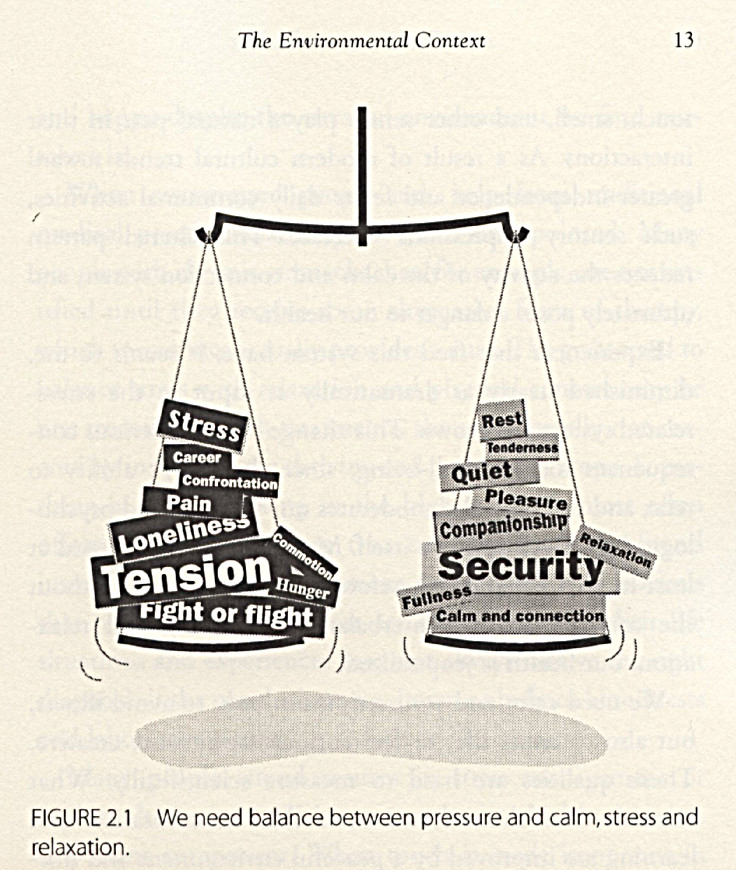
Please feel free to comment directly at the end of this post or on

+++++++

Your Page – Readers’ Responses

++++++++++++++++++++++++++++++++