+LINK TO MY MOTHER’S HIGH SCHOOL PICTURE – AND A PIECE OF NEWS

+++++++++++++++++++++++++++++++++++++++++++++++

*1943 Mother – Her Senior High School Picture (and her high school sweetheart’s)

+++++++++++++++++++++++++++++++++++++++++++++++

*1963 – August 18 – Letter From Dad to Grandma

++++

*1963 – August 19 – Letter From Dad to Mother – He’s in Alaska, we’re on way to Santa Fe, New Mexico

++++

*1963 – August 26 – Letter from Dad to Mother –

++++

*1963 – August 5 – Fire Damaged Copy of Patent Number 1232827 for 120 Acre Homestead

++++

*1958 – August 26 – Mother Voted on the Alaskan Statehood Referendum

++++

*1966 – May 3 – Letter from Eagle River Baptist Church – Mother Born Again

++++++++++++++++++++++++++++++++++++++++++++++++++++++++++++++

This just in from:

Prevent Child Abuse New York Blog


New Medical Specialty Approved for Treating Child Abuse

Posted: 07 Oct 2009 08:31 AM PDT

After nearly a decade of work, physicians have succeeded in getting the American Board of Pediatrics to offer a specialty in child abuse treatment. Supporters of the specialty said such experts are needed to teach medical students and residents about child abuse.

The first exam in the specialty will be offered at sites around the country on November 16. An estimated 225 physicians are expected to take the test, which will be given on alternate years, and the first certificates will be issued by January 2010. The boards issue certificates in 37 general specialty and 94 subspecialty areas. Board certificates are held by about 85% of physicians licensed in the U.S.

+++++++++++++++++++++++++++++++++++++++++++++++

+STEALING OUR CHILDREN’S LIGHT

++++++++++++++++++++++++++++++++++++++++

Every time we try to get our adult attachment needs met through our children we are placing them in our darkness and stealing from them the light they need to build their own strong self so they can live their own good life.  Doing so is the surest way to destroy our children’s lives — which is certainly not what we hope for.

It is critically important that we foster our children’s attachment to us as parents, not the other way around – and not mutually.  Yes, parents need to be bonded with their children, but that is not the same thing as parents having to have their attachment needs met by their children.  Parents are their children’s care givers.  We can only activate our care giving system when our attachment-need system is deactivated, or turned off.  Otherwise the whole natural process of raising healthy-minded, safely and securely attached children is contaminated, and unresolved trauma is passed down the generations.

Adults, particularly those who were not raised themselves by securely attached adults who knew how to meet their own attachment needs appropriately outside their parenting relationship – and thus have a resulting insecure attachment disorder coupled with an empathy disorder themselves — need to become crystal clear about what their own attachment needs are and how to get these needs met appropriately without involving their children.

If we ourselves have an insecure attachment disorder, we will be forever at risk for passing this insecure attachment pattern down to our offspring no matter how hard we try not to.  We need information, we need it NOW and we need it desperately!

I am most strongly recommending the writings of Dr. Daniel J. Siegel.

— WEBSITE:   Mindsight Institute

Parenting From the Inside Out by Daniel Siegel and Mary Hartzell (Paperback – April 22, 2004)

Better Parents, Better Spouses, Better People (Wired to Connect: Dialogues on Social Intelligence, 2) by Daniel J. Siegel and Daniel Goleman (Audio CD – 2007) – Audiobook

The Developing Mind: How Relationships and the Brain Interact to Shape Who We Are by Daniel J. Siegel (Paperback – Oct 22, 2001)

The Mindful Brain: Reflection and Attunement in the Cultivation of Well-Being by Daniel J. Siegel (Hardcover – April 1, 2007)

The Neurobiology of “We”: How Relationships, the Mind, and the Brain Interact to Shape Who We Are (Sounds True Audio Learning Course) by Daniel J. Siegel (Audio CD – May 1, 2008) – Audiobook

Mindsight: The New Science of Personal Transformation by Daniel J. Siegel (Hardcover – Jan 12, 2010)

Healing Trauma: Attachment, Mind, Body, and Brain by Daniel J. Siegel, Marion F. Solomon, and Marion Solomon (Hardcover – Jan 2003)

The Healing Power of Emotion: Affective Neuroscience, Development & Clinical Practice (Norton Series on Interpersonal Neurobiology) by Diana Fosha, Daniel J. Siegel, and Marion F. Solomon (Hardcover – Nov 16, 2009)

Trauma and the Body: A Sensorimotor Approach to Psychotherapy by Kekuni Minton, Pat Ogden, Clare Pain, and Daniel J. Siegel (Hardcover – Oct 13, 2006)

++++++++++++++++++++++++++++++++++++++++

Adequate parenting means we can respond adequately to the needs of our children.

Please also see on this blog:

*COLLINS ON RESPONDING TO NEED – Part One

*COLLINS ON RESPONDING TO NEED – Part Two

*COLLINS ON RESPONDING TO NEED – Part Three

*COLLINS ON RESPONDING TO NEED – Part Four

*COLLINS ON RESPONDING TO NEED – Part Five

*COLLINS ON RESPONDING TO NEED – Part Six

**Attachment Styles and Caregiving from Collins Article

**Attachment Styles from Collin’s Article

++++++++++++++++++++++++++++++++++++++++

+CHILDHOOD DISSOCIATION, DEPERSONALIZATION, DEREALIZATION – I NEVER HAD A CHOICE TO BE OR NOT TO BE

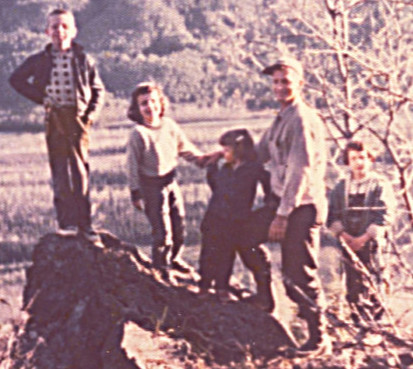
June 1959 - Age 7 - Me on the right - excluded from the family
May 23, 1959 - Age 7 - Me on the right - excluded from the family
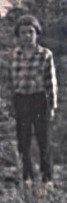
July 1959 - Age 7 - Me on the right - cut off from the family
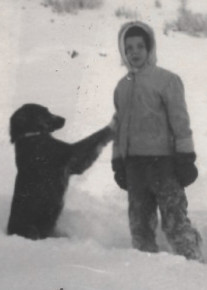
December 1959 - Age 7 - Me cut off from Smokey
December 1959 - Age 8 - Me cut off from Smokey

++++++++++++++++++++++++++++++++++++++++++++++

I cannot improve the focus in these pictures.  I expanded from the originals because I wanted to see the similarities between the three pictures in terms of my body language reflected in the three of them.

++++++++++++++++++++++++++++++++++++++++++++++

AND THIS IS HOW I SEE ‘THE WHOLE BALL OF WAX IN A NUT SHELL’

— the professionals back me up!

This describes what happened to me, to my mother, and the how and why of it all — the 18 years of severe child abuse I suffered — and how my mother became ‘mad’ enough to do it.

+++++++++++++++++++++++++++++++++++++++++++++++++++++++++++++

Guidelines for the Evaluation and Treatment

of Dissociative Symptoms in Children

and Adolescents

International Society for the Study of Dissociation

Journal of Trauma & Dissociation, Vol. 5(3) 2004

Digital Object Identifier: 10.1300/J229v05n03_09 119

++++++++++++++++++++++++++++++

Please follow (above) link to read this entire article and to find the exact references the authors are referring to in this section of their article (below):

“There is no consensus yet on the exact etiological pathway for the development of dissociative symptomatology, but newer theoretical models stress impaired parent-child attachment patterns (Barach, 1991; Liotti, 1999; Ogawa, Sroufe, Weinfield, Carlson, & Egeland, 1997) and trauma-based disruptions in the development of self-regulation of state transitions (Putnam, 1997; Siegel, 1999).

Newer theorizing ties maladaptive attachment patterns directly to dysfunctional brain development that may inhibit integrative connections in the developing child’s brain (Schore, 2001; Stien & Kendall, 2003).

From the vantage point of treating children and adolescents, a developmental understanding of dissociation makes the most sense.

That is, dissociation may be seen as a developmental disruption in the integration of adaptive memory, sense of identity, and the self-regulation of emotion.

According to Siegel (1999), integration is broadly defined as “how the mind creates a coherent self-assembly of information and energy flow across time and context” (p. 316).

In other words, Siegel sees the development of an integrated self as an ongoing process by which the mind continues to make increasingly organized connections that allow adaptive action.

Children and adolescents may present with a variety of dissociative symptoms that reflect a lack of coherence in the self-assembly of mental functioning:

1. Inconsistent consciousness may be reflected in symptoms of fluctuating attention, such as trance states or “black outs.”

2. Autobiographical forgetfulness and fluctuations in access to knowledge may reflect incoherence in developmental memory processes.

3. Fluctuating moods and behavior, including rage episodes and regressions, may reflect difficulties in self-regulation.

4. The child’s belief in alternate selves or imaginary friends that control the child’s behavior may reflect disorganization in the development of a cohesive self. 

5. Depersonalization and derealization may reflect a subjective sense of dissociation from normal body sensation and perception or from a sense of self.

+++++++++++++++++++++++++++++++++++++++++++++++++++++++++++++

This condition and these symptoms originate with insecure early attachments.  I believe they lie at the core of many (if not most) later-developing adult-onset ‘mental illness’ disabilities.

These descriptions of childhood dissociation apply to me, except for #4.  I did not have enough of a self to even imagine friendship, real or imaginary.  I also believe they all apply to my mother, with a shift in #4.  She developed the imaginary belief that she could CONTROL her imaginary friends — her children (me being the enemy) rather than being controlled by them.

I can see the lost, empty child in these pictures, cut off from being a member of a family, cut off from the development of a clear and cohesive self.  Devoid of a connected lifetime of experience, I appeared simply as a physical body taking up space in the universe, not as an animated LIVING child present as an identity within that body.

At any given moment my exact existence was only determined by the situation I was present in at that moment.  If the conductor of an orchestra points the baton at an individual with a particular instrument, it is time for all to hear that instrument play.  If we place our computer cursor over a particular link and click on it, we expect and anticipate that a particular action is going to occur.

From the moment of my birth my mother determined in her profound and comprehensive control of me how Linda was allowed to be in the world.  Because she never knew me as a human being, nor wished to, I existed as a puppet-fied manifestation of her inner psyche – as her projection of the BAD CHILD.

++++

There was no room for Linda to exist at all, and I can clearly see that emptiness of personhood and of selfhood in me in these pictures.  I appear as a child ‘stripped of a self’.

My emptiness, my dissociation was on an on-again, off-again condition.  The few times that I was left alone to be with myself simply existed in their own dissociative bubbles that never connected themselves to the ongoing experiences of me in my own body, in my own life.

I existed in relation to myself as I existed in the world these photographs captured – isolated, cut off, alone, unanimated, empty – like a husk of a child, a shell of a child – a body that existed to be battered, shoved, yanked, slapped, hit, punched, etc.  As an empty person to be screamed at, stormed at, thrown around in every imaginable way – at any time for any reason or for no reason whatsoever.

As an individual child-person, I was not allowed to exist.  I was not given permission to exist.  I ONLY existed as a figment of my mother’s twisted and brutalizing imagination

I no more had an identity or existed as a person (let alone as a child) than did the stone we stood on, the background trees, the tumbling rivers, the passing clouds, or the freezing snow.  I was less alive and less whole than was our dog, Smokey.  I was an apparition, a wraith, a mirage of a child.  Linda wasn’t there at all.

I was a missing child, and nobody noticed because nobody cared.  I experienced no difference between the cells of my body, the skin I wore like my clothing, the earth I walked upon or the air I breathed.  Moment to moment I could not count on anything.  I had always lived in an insecure, unpredictably unsafe world.

No child can for its self, its one self, if it is not allowed to.  I was never given permission to exist, so I didn’t.  I was as invisible and as intangible as the sound of rushing water or the wind.  I was given no more permission to exist than a leaf is, and less permission to exist than Smokey the dog was.  The homestead was more real to my mother, to both my parents, than I was.

++++

If I isolate the image of myself out of these photographs what remains is an unfocused child posed in a rigid standing posture.  That, sadly, is about all there was, a child existing by posing as a body – like a tree exists by posing with a trunk, limbs, branches, twigs and sometimes leaves – its root invisible beneath the soil.

But I had no roots.  From moment to moment I had no history of my own.  I didn’t even have the history of what mother did to me.  Even those experiences were not retained, kept, stored or retrieved in any stuck-together ongoing autobiographical coherent story-of-an-ongoing-child’s- life.  There ONLY existed each separate ongoing moment, and each of those moments was a likely to change into something else, something terrifying and painful, at any second. — unpredictably, unexpectedly, unfathomably.

Nothing mattered any more to me nor did I matter any more than if I was a snowflake, a scrap of cloth, or a pot to be scrubbed or pounded upon.  I simply existed without a self as a body that continued to grow over time without ME KNOWING I was in it.  I was my mother’s chosen ‘evil-bad’ projection, barely an object, not a person — and most definitely NOT a child.  Does an object have a sense of itself?

Just me age 7 in a body on a rock on a mountain
Just me age 7 in a body, rigid, at this second no more real than the grass I am standing on
Just me age 7 in the snow in a parka that meant more to mother than I did with a dog mother could love even though she could not love me
Just me age 8 in the snow in a parka that meant more to mother than I did with a dog mother could love even though she could not love me

++++++++++++++++++++++++++++++++++++++++++++

My mother was a master magician.  She was an expert at her craft.

Often she would banish me “from her sight”

— sometimes for days or weeks at a time —  so I would vanish from the family all together — body and all.

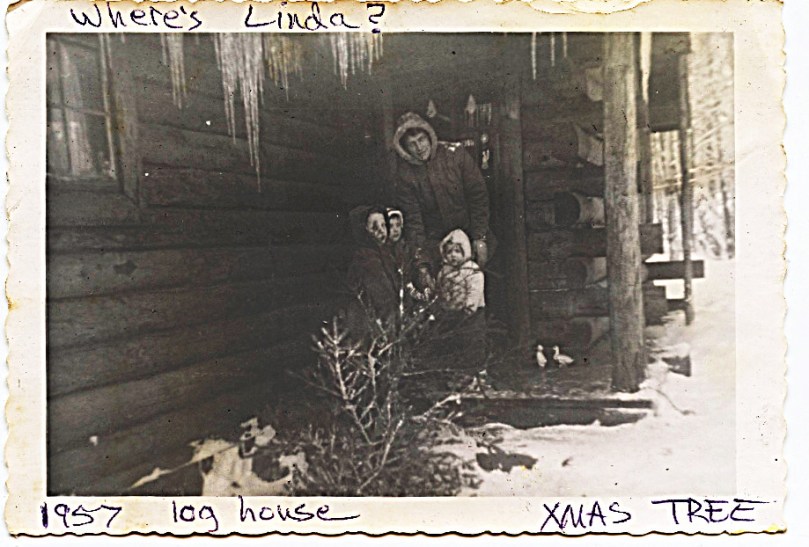
In the family pictures taken of  bringing in the Christmas tree in 1957 when I was 6, our first winter in Alaska, I am nowhere to be seen.

I have disappeared completely.

I am ‘missing in action’ and nobody seems to notice I am gone.

I am invisible.   I don’t exist at all.

I was erased.

+++++++++++++++++

See

++MY CHILDHOOD STORIES

Age 6 - Mother's magic -- Linda has completely vanished from the family picture of bringing in the Christmas tree

+HUMAN AND HORSE MOTHERING – WHAT’S IN COMMON?

+++++++++++++++++

I wanted to share something from a book I’m reading, The Body Language of Horses by Tom Ledbetter, Bonnie Ainslie.  My brother gave it to me while I was visiting him in Alaska.

I’ve never really had the longed for luxury of being able to spend time with horses.  I’ve always been too poor, too involved in keeping my children clothed and fed with a roof over our heads.

I find as I read this book that I feel like the authors are talking about me.  How can that be?  I am not a horse, yet I am like them.  Because of the extreme abuse I suffered from the time I was little, and because of the overall and overriding insanity present in the home I grew up in, I did not grow up to be an ordinary person.

I have tried to fit in.  I’ve tried to learn the ‘human language’ that others speak not most importantly with their words, but with their body language and the expressions on their faces.  Because my mother was psychotic, because she could not interact with me normally, I simply did not get the same brain circuitry.  Not even the regions of my brain developed according to ‘ordinary’ experiences or patterns, as I have been explaining in my writings.

I can, therefore, more closely relate to what these authors are saying about horses than I can any book I ever read about people.  I might understand a book about all sorts of other kinds of animals if one was written like this one is, but these authors express a rare and comprehensive understanding of how it is to be a horse.  I am amazed and I am feeling calmer as I read it.

Ainslie and Ledbetter explain that every time a human overwhelms a horse with human demands and misconceptions, the horse has no choice but to act like less than what it is – less than a horse.  I understand.  I was not allowed to be a child.  The way my mother treated me did not allow me to be a child just like some humans do not allow horses to be horses.

All the many parallels I find between horses and myself create inside of me a sense that I am so much more correct in my understanding of the changed body and brain of a severely abused child compared to how a child is SUPPOSED to have been allowed to develop that I really do feel like I am a member of nearly a completely different species than are ‘ordinary’ people.

And I know I am not alone.  Therefore, as I share this single paragraph from this book (so far) I wish readers to understand that human mothers create in their offspring the kind of person their infants and children grow into.  I am aware that genetics plays a part in who we become, but researchers are becoming more and more clear that severe abuse alters how genetic potential expresses itself.

Every time an infant and a young child is not given what it needs to develop into its optimal self some life long consequence to the negative is going to appear.  Only in situations where the most important resiliency factor of the AVAILABILITY of some other adequate early caregiver’s interference in the harmful influence of the severely maltreating mother is there, in the end, hope that the effects of the mother’s severe abuse will not permanently and seriously alter the person her offspring turns out to be.

I encourage readers to FEEL the following words.  Enlarge your perspective and imagine what these words are saying if you think about them in terms of the variances in the quality of human mothering and caregiving.  In human terms mothers are not forced, for the most part, to compete with other mothers for what is needed to care for their infants and children.

And yet the end result of a human continuum of living a quality, happy and successful life is still directly connected to what our mothers (or other early caregivers) gave to us.  Harm and hatred to infants DOES NOT allow them to develop into fundamentally happy people – and I don’t care how financially well-off such an offspring turns out to be.  Look at their relationships as well as financial standing.

+++++++++++++++++

From The Body Language of Horses by Tom Ledbetter, Bonnie Ainslie:

“The lead mare wins dominance by physical and psychological means.  She rules as long as she remains vigorous.  Her powers serve twin purposes – first choice of food and space (a) for herself and (b) for her young.  By natural selection, the other mares organize in declining order of priority, with the lowest and most subservient getting the last and least for herself and her foal.  Unless the pasture is inhumanely crowded, everyone subsists.  But the psychological effects on the foals are substantially important.  As Number One in its own age group, the lead mare’s baby becomes habituated to the deference of its peers and their dams.  If well bred, soundly constructed and not too severely disoriented by premature weaning, the Number One foal emerges as Number One weanling, most likely to succeed in what humanity calls the Game of Life.”  (P. 64)

+++++++++++++++++

We are not used to thinking about human success, including psychological success, in these terms.  We do not FIRST and FOREMOST understand that it is the health and well-being of mothers (early caregivers) that MOST affects the lifelong outcome of her offspring.

In American, in particular, we want to believe that everyone is equal, and that all can “make it” if they want to and if they work for it.  We do not want to face the fact that deprivations of a serious enough nature from conception to age 2 (and then through age 7) can so set a person off course that they will never be able to completely make up the difference.

Yes, humans may be far more complicated than horses are.  That means to me that we are at an even higher risk for negative consequences from malevolent mothering – not less.  Once our culture truly understands this fact, they will be able to give us the chances we TRULY need to find a way to live well in spite of our malevolent childhoods.

In my thinking, we have to be very clear and very careful about how we assess who and how we are in the world made mostly by people who had the benevolent childhoods we all deserved – and some received the opposite of.  Most do not become members of the ‘lower hierarchy’ because we choose to be there, any more than a horse chooses to me maltreated by a human being.

+++++++++++++++++

+SOME FANTASTIC LINKS ON CHILD ABUSE AND BRAIN CHANGES!

+++++++++++++++++++++++++

Greetings to each and every person who has visited this blog during the seven weeks of absence from writing here.  I am home now after more than 10,000 miles of traveling during the past seven weeks as I visited family and friends whom I love and who love me.

The time I spent in Alaska, the home of my heart, was everything I needed it to be in order for me to move forward with the writing of my book.

I will at this point be dividing my writing clearly between my book (which will not be appearing on this blog) and other assorted writing specifically for the blog.  As my precious Alaskan baby brother (now 44) told me, if it is my desire and my intention to write a book, then I need to do it.  He explained it to me this way:

A person might pick up tools and a block of wood intending to carve an image.  Perhaps they are not quite sure what image lies within the wood so they begin carving in process until that image becomes clear and the carving can then give it form.  If, however, that point never occurs where the image within the wood is found, shaped and born, all that will result from the effort of carving is a pile of wood shavings and dust.

I heard and understand the wisdom contained in my brother’s words, and I recognize that continuing to pour words out into my blog will not accomplish the creation of my book.  I will now separate the words that belong in my book from those that do not.

+++++++++++++++++++++++++

As I continue through the process of getting my ‘home legs’ under me, I will at least post a few interesting links here for reader consideration!  Please follow some or all of these links – THEY ARE IMPORTANT!  Please also join me in my gratitude to every single person who is involved with this quality of work to further our understanding about the impact of severe child abuse on human development – and the work of everyone committed to ending child maltreatment around the globe.

Please also remember the abuse being done to the fragile web of life on our glorious planet and the suffering of so many species being caused by the thoughtless harm of all kinds caused by humans.

And, for a load of Alaskan MOOSE FUN….

+++++++++++++++++++++++++

Back to School Tips: Parents Should Get Ready, Too!

Posted: 27 Aug 2009 08:21 AM PDT

Tips for parents on helping their kids succeed in school, adapter from information provided by our friends at Prevent Child Abuse New Jersey.

Amid the shopping trips for sharpened #2 pencils, crisp notebooks and new shoes, parents should start thinking about what they can do to become the best possible support system for their child this school year. The beginning of the new academic season is often the most important, as it sets the tone for a meaningful and successful year.  Research shows that students are more equipped to thrive academically and socially when parents are actively involved in their child’s education.

+++++++++++++++++++++++++

Emotional Abuse Recovery NOW

+++++++++++++++++++++++++

Going Big: Harlem Children’s Zone on This American Life

Posted: 18 Aug 2009 02:17 AM PDT

Hats off to This American Life for shining a spotlight on the solutions to the many problems that plague our nation’s impoverished families. Going Big, this week’s episode, profiles Geoffrey Canada, a pioneer in the fields of child and family support and poverty prevention. His organization, Harlem Children’s Zone, boasts tremendous outcomes for the families and community it serves, including:

  • l00% of students in the Harlem Gems pre-K program were found to be school-ready for the sixth year in a row.
  • 81% of Baby College parents improved the frequency of reading to their children.
  • $4.8 million returned to 2,935 Harlem residents as a result of HCZ’s free tax-preparation service
  • 10,883 number of youth served by HCZ in 2008.

Listen to the This American Life podcast.

Below is a five-minute video of moms talking about the challenges of raising children in Harlem and the difference HCZ is making in their lives.

This posting includes an audio/video/photo media file: Download Now

+++++++++++++++++++++++++

Brain Development Altered by Violence

By Dale Russakoff
Washington Post Staff Writer
Saturday, May 15, 1999; Page A3

LITTLETON, Colo.—More than a week had passed since Krystie DeHoff felt bullets and bombs explode all around her, since she ran in horror past young, dead bodies to safety. Now she was inching toward normality, shopping at King Soopers grocery, when the most innocent sound–a baby crying in his mother’s arms–set the Columbine High School massacre in motion again, this time in her mind. Her heart raced, her muscles coiled. She heard not a baby, but her classmates, shrieking. “All I could think was: MAKE HIM STOP!” she said.

READ MORE……

+++++++++++++++++++++++++

Using Mental Strategies Can Alter

The Brain’s Reward Circuitry

ScienceDaily (June 30, 2008) — The cognitive strategies humans use to regulate emotions can determine both neurological and physiological responses to potential rewards, a team of New York University and Rutgers University neuroscientists has discovered. The findings, reported in the most recent issue of the journal Nature Neuroscience, shed light on how the regulation of emotions may influence decision making.

READ MORE….

+++++++++++++++++++++++++

The Neural Self: The Neurobiology of Attachment

By Phil Rich, Ed.D., LICSW

It is its basis in biology that makes attachment theory unique among theories of psychology and child development. From the biological perspective, attachment is simply an evolutionarily-evolved process to ensure species survival, and is thus as much a part our biology as that of any animal.

From this perspective, cognitive schema and the resulting mental map is not merely a psychological phenomenon, but a physical entity, hard-wired into neural circuits and reflected in neurochemical and electrical activity within the central nervous system.

The mental map into which our experiences and memories are imprinted is thus a neurobiological structure, the result of synaptic processes, out of which human cognition and behavior emerges, resulting in LeDoux’s (2002) description of our “synaptic” self.

Siegel (2001) describes the pattern and clusters of synaptic firing as “somehow creat(ing) the experience of mind” (p. 69). He writes that “integration” reflects the manner in which functionally separate neural structures and processes cluster together and interact to form a functional whole – in this case, our selves.

READ MORE…..

+++++++++++++++++++++++++

Child abuse marks genes, affects ability to cope: Study

By Margaret Munro , Canwest News Service

+++++++++++++++++++++++++

Stress

Your Three Brains

The neurologist Paul MacLean has proposed that our skull holds not one brain, but three, each representing a distinct evolutionary stratum that has formed upon the older layer before it, like an archaeological site – he calls it the “triune brain.” MacLean, now the director of the Laboratory of Brain Evolution and Behaviour in Poolesville, Maryland, says that three brains operate like “three interconnected biological computers, each with its own special intelligence, its own subjectivity, its own sense of time and space and its own memory”.

READ MORE….

+++++++++++++++++++++++++

+TRAUMA MATH: THE SORROWS AND HAPPINESS OF “CRAFT SHOW APRIL”

I haven’t completely ‘returned’ or recovered from my out-of-town craft show adventure last weekend.  I say returned because my dissociation condition causes me to experience changes as if separate parts of me are ‘out there’ floating around like dandelion fluff in the breeze, drifting around until they eventually land.  I experience a waiting period while this happens, trying to learn every day more of what to do to speed up the process of consolidation of memory as best I can.

Some might call this a grounding process.  I went out and watered all of my plants, most of them looking pretty darn stressed if not dead.  I forgot to have one of the neighbor children come over to water them while I was gone on this 100 degree plus weekend.  Now I’m washing my blankets and clothing.  There’s no place for the washing machine in the house, so it sits out back on the cement rim that lies around the foundation of the house, hooked by an hundred foot extension cord running out my door and to a fifty foot hose.

Taking the small steps of being in my life, in my house, being in my body as I wait for all of the experiences of this past weekend to settle within me in some form of organized fashion.  That’s what the combination of the dissociative disorder and the PTSD do to me now.  They easily give me the feeling of ‘too much to deal with’ and a sense of being easily overwhelmed by any kind of unusual stimulation.

I believe that’s part of the role of the ‘recurring major depression’ that forms the third leg of my emotional and mental ‘disorder’ and ‘disability.’  It gives me the ‘down time’ I need to let things put themselves together after I experience more incoming information than I can handle at one time.

I am so fortunate at this moment in time to have a simple place that is my home.  One has to have the safety and security of some kind of ‘home’ for their body in order that the home of the mind can maintain itself.  I’ve been homeless before, several times, even when I still had young children under my care.  Today more than in several generations having a home or not having a home has come back to the forefront of our concerns — both individually and as a society.

Which leads me to this story I heard from a neighboring vendor, I’ll call her April, at the craft show last weekend.  I always listen with a special interest to stories told by new people I meet.  It’s the only way that I have to test my own theories or ideas, things that I am coming to believe about how our early childhood experiences come to form who we are as adults.

Because April never asked that anything she was telling me be kept confidential, I am not concerned about telling you what she told me.  After all, she had only just met me and spent a few hours in her booth across from mine as she sold kettle corn and ice water as I hoped to sell earrings and mosaics.

++

April is one year younger than me, another child of the early fifties, born and raised in Phoenix, Arizona.  She was second born of six children and spent her childhood with both of her parents and with her grandparents nearby.  Her father was an untreated bi-polar severe alcoholic and was extremely violent and abusive to his wife and all of the children.  Her father beat his wife during every one of her pregnancies, and over the years knocked out all of his wife’s teeth, and sent her to the hospital with concussions and broken bones many times.

April told of one severe attack of violence this man had perpetrated against his family, and her mother took herself and all of the children to her mother’s house for some kind of protection.  It wasn’t long before her father showed up at the door with his rifle, accompanied by three uniformed police officers who were there to make sure the wife and children returned home with the man of their family immediately.

We might think this unbelievable and barbaric, but that happened only 45 years ago.  It tells us about the conditions of life and of our culture that took so much hard work and effort to change — even a little bit so that things might be different and better for women and children in America today.

April appears as a very attractive, perky, positive, happy, kind, hard working, healthy woman.  There’s nothing about her that meets the eye of the public that would indicate the kind of terrible traumas that she has experienced in her life.  And yet it didn’t take long as we sat in her RV after Saturday’s craft show had closed for the day, talking over an ice cold beer and a container of grocery store deli chili that April had microwaved and generously shared with me, that I learned how close to the surface all of her difficult history is to her.  In fact I would say none of it has gone anywhere.  But what fascinates me is what April is doing with herself in relationship to it.

April is married to her third husband, a hard working truck driver who just lost one hundred thousand dollars of his 401K that he spent 32 years building for his retirement.  April has worked for the past 21 years as a massage therapist for a major hotel chain in Phoenix.  She still loves her work but in order, now, to hope for a retirement she decided to go into the business of traveling as a kettle corn vendor on weekends.

Certainly she had the resources of owning a RV and a sturdy steel trailer to haul her equipment.  She had the resources to buy everything she needed to set up her booth and cook that candied popcorn, including a portable generator.  But she also had the invisible inner resources to come up with her plan and the stamina and willingness to work extremely hard toward making her business a paying venture.

Just the physical work alone that it took to drive that rig, haul all that heavy equipment off of it, set up the canopy, stand there in 100 plus heat for two days trying to sell to a pitifully thin crowd at that show, and then pack it all up again and return home to get herself ready for a full week of work at her ‘real’ job — and do all this smiling and caring for and about every single person she saw along her way and mean it — provided me with an incredible experience to learn about, watch and benefit from personally.

April made sure that I had ice cold water to drink all weekend, that I had an iced wet cloth to lay on the back of my neck in that scorching heat, that I had chili and beer in the evening and a place to park my little truck next to her RV to sleep for the night, and that I had her friendship and her compassionate and sensitive encouragement every step of the way.  April offered these kindnesses in different ways to everyone around her.  She never complained, and even as she told me about her childhood there was no anger or blame.  She simply described what happened.

As she talked I of course listened to discover how it was possible that April was the person she turned out to be.  At first it was a mystery to me until I heard what might just be the secret of her ‘salvation’, the blessings caught among the curses.

++

April described to me how she had attended a cranial massage training institute and had been blindsided by the insensitive and unprofessional experience that she had by being a chosen volunteer for the  technique without being given any warning about what might happen.  While the instructors demonstrated in front of a large crowd of strangers, April experienced what had happened to her in the womb as her father had beaten her mother while she was carrying April.  During this session she remembered what it felt like when she also, as an unborn infant, had been pummeled by her father’s blows.

The conditions of ongoing violence in her home of origin never improved.  April left home very young, married and began having children of her own.  Of her three children, one is schizophrenic and facing a long prison sentence for attempted manslaughter and arson after he tried to burn down his girl friend’s home with her in it.  Among April’s five siblings, one became schizophrenic and two ended up with severe bi-polar conditions.  One of these, her brother, committed suicide.

April’s father died a few months ago and she admits she never loved him and that her father never loved her.  April’s mother suffers from several serious medical conditions in her later years that doctors suspect are directly connected to the many serious injuries that she suffered while being beaten by her husband.  April has struggled with all of these trauma related conditions in her family all of her life, and is left now still trying to find a way to manage continued contact with her mentally ill siblings.

April’s one healthy sister that she is very close to, was a real estate agent in California and her brother-in-law had a successful construction business.  Both sources of income have vanished, her sister’s family has lost both of the homes they owned.  Stress from these challenges caused the brother-in-law to have a serious heart attack and he is facing surgery.  April is not only very worried about her sister and her family, but she also is suffering from what really is the loss of one of the most important support people of her life.

++

So here is April woman-handling a physically and financially difficult new business, and optimistically being happy as she continues to face the challenges of her life.  Because of what I understand about how vital it is that an infant’s growing brain receives happiness stimulation in order for the left brain’s happy center to form in the first place — thus allowing it to be accessed later in life — I had to ask April what her perspective is on the differences between herself and her siblings.

She told me that during her recent physical exam her physician had told her that the reason her three siblings ended up with severe mental illness is probably because they had those specific combination of genetic possibilities in them that were triggered as their bodies were stressed during early childhood.  He further stated that evidently April and her other two siblings did not have these genetic sensitivities so they ended up without the mental illness.  (Even then April was a carrier of the genes because she has a schizophrenic alcoholic drug addicted son.  I did not ask her about her own parenting conditions nor did she tell me.)

This still did not explain to me how April manages to be so optimistically positive and so able to find active ways to cope in her life.  It did not explain that while she had for a period of time become what she termed “an active psychologically dependent alcoholic,” how she managed to extricate herself from her addiction so that it didn’t affect her in the present.

This is the point in the conversation where the secret was unveiled to me.  Part of her current difficulties with her bi-polar sister stem from what happened last January at the death of their father.  April was very clear about her lack of feeling for her father and her sister fell to pieces and became enraged at April for her detachment.  It turns out that the only person their father ever paid any affectionate attention to was this bi-polar sister.  She was his favorite and she was his pet.  (I don’t know whether or not there was sexual abuse occurring in this situation, though it sounds to me like a typical setup for such abuse to happen.)

What April told me next is the most important fact of this story.  While her sister was her very sick, abusive, violent ‘dysfunctional’ father’s pet, April was consistently the favored pet of her father’s mother.  And what is most important about THIS fact is that April describes this grandmother as being a very happy person — able to be happy in her own life and able to be extremely happy in her ongoing relationship with April.

THIS is, to me, a magic key to April’s life today.  The happy center in little April’s developing brain was fed, fostered and able to grow because of this happy, safe and secure relationship she had with her happy grandmother.  Because this happy center was so designed and built in April’s early-developing brain, that collection of neurons was already in her brain in spite of all the other nasty traumatic experiences that April still had to endure.

April lost touch with her happy self for many, many years.  But when she was ready to take a good hard look at herself and her life, and wanted to make it so much better, she had this precious resource within her brain of a well-built happy center to fall back on and to rely on as she sought to make happier changes for a happier life.  Still, today, it was and is April’s decision to exercise the heck out of these happy center neurons that is making the difference not only for her in her life, but also for all others that come into contact with her.

April described to me that she works at being happy all of the time.  She WORKS HARD at it.  But she is the one doing the work.  The fact that she was blessed with the conditions in her early brain developmental life, through a safe, secure and happy attachment relationship with at least one other person, her grandmother, does not take away the importance that April is still doing this good work herself.  She made the decision and is applying her own life force to  continue to make these positive changes.  Nobody else could do this for her.  Yet I believe that her early secure attachment with her grandmother helped to give her both the inner resources to do this work and the ability to want to try.

++

I could sense the very old competition for affection and resources that still exists between April and her sister regarding their father.  It was like, “She had our father but I had my grandmother.”  The unspoken pain was still there caused by a father who could not love his daughters — in fact could probably not really love anyone including himself.

There’s no way a child cannot crave a father’s affection and not notice when another sibling seems to be receiving it.  Yet in this situation the love from a terrible father could in no way compare to the seemingly healthy love from a happy, adoring grandmother.  April got the better end of the deal, and her sister is a deteriorating bi-polar in large part, I believe, because of these inequities.

(This creates another whole set of questions in my mind.  What happened in April’s father’s early life in relationship with his own mother, this happy grandmother, that set him up for a disastrous life?  It is not at all uncommon for grandmother’s to be able to love and attach securely to grandchildren when they could not do this for their own children.  And why did was this grandmother unable to intervene on behalf of all of her grandchildren?  Why did she single out only one as her ‘pet’?  But all this will be food and fodder for future writings.)

++

I understand that everyone who has even only a tiny happy center can still exercise that center through hard work to make it stronger.  But the original nerve cells/neurons that were present at birth — designated for this happy center but NOT used while this center built itself through early attachment relationships and therefore were lost — can NEVER be replaced.

What happy center neurons we DO have can increase their dendrites and the interactions between these dendrites through exercise.  That April is so clearly applying hard work to become more happy, even though she had a better happy center built in the beginning than her sister did, still lets us know that the effects of severe abuse continue for the lifespan.  If they didn’t, April would not have to work so hard to become more happy herself.

People who were raised from birth in safety and security that encompassed and enveloped them as it SHOULD have, have so much more to work with on every level as they face the ongoing challenges of life.  Being happy will always be easier for securely attached from birth people, just as it is for April who only had partial childhood experiences of secure attachment in the midst of trauma compared to her mentally ill siblings.

I describe this today in part as a gesture of support for everyone who has become even more challenged in their lives as a result of the economic difficulties the world is facing.  If you or anyone you know is being additionally challenged right now, please do not judge them harshly if they cannot be as optimistically happy as someone else might be able to be as they struggle to get through their hard times — ANY kind of hard times.

We need to support and encourage ourselves and one another in the work of trying to live a more happy and positive life with kindness to the best of our abilities.  We must be realistic and informed about the context of happiness and active coping just as we need to be about the actual traumas we have experienced.

Those who have suffered early developmental-stage traumas are always the most at risk when new traumas come along.  We can do the math — the aftermath of trauma — to find what is upsetting the balance of well-being in our lives and to find what helps to create a better state of balance every step of the way.

++

Thank you for reading this post — your comments are welcome and appreciated.  Linda
+SOCIAL ISOLATION – Research on the Brain Changes

I imagine that researchers can write about topics such as this one without being ’emotionally involved’ with their topic.  If so, then this is what makes my writing different from theirs.  The condition they write about is one I have intimate experience with — only my isolation began at birth, not at post-weaning.

What follows here are my ‘pre-notes’ for the following article that I will be considering in depth in following posts:

++

PMID: 18423591 [PubMed – indexed for MEDLINE]

http://www.ncbi.nlm.nih.gov/sites/entrez

Neurosci Biobehav Rev. 2008 Aug;32(6):1087-102. Epub 2008 Mar 18.Click here to read

Behavioural and neurochemical effects of post-weaning social isolation in rodents-relevance to developmental neuropsychiatric disorders.

Fone KC, Porkess MV.

Institute of Neuroscience, School of Biomedical Sciences, Medical School, Queen’s Medical Centre, University of Nottingham, Nottingham NG7 2UH, UK. kevin.fone@nottingham.ac.uk

ABSTRACT:  Exposing mammals to early-life adverse events, including maternal separation or social isolation, profoundly affects brain development and adult behaviour and may contribute to the occurrence of psychiatric disorders, such as depression and schizophrenia in genetically predisposed humans. The molecular mechanisms underlying these environmentally induced developmental adaptations are unclear and best evaluated in animal paradigms with translational salience. Rearing rat pups from weaning in isolation, to prevent social contact with conspecifics, produces reproducible, long-term changes including; neophobia, impaired sensorimotor gating, aggression, cognitive rigidity, reduced prefrontal cortical volume and decreased cortical and hippocampal synaptic plasticity. These alterations are associated with hyperfunction of mesolimbic dopaminergic systems, enhanced presynaptic dopamine (DA) and serotonergic (5-HT) function in the nucleus accumbens (NAcc), hypofunction of mesocortical DA and attenuated 5-HT function in the prefrontal cortex and hippocampus. These behavioural, morphological and neurochemical abnormalities, as reviewed herein, strongly resemble core features of schizophrenia. Therefore unravelling the mechanisms that trigger these sequelae will improve our knowledge of the aetiology of neurodevelopmental psychiatric disorders, enable identification of longitudinal biomarkers of dysfunction and permit predictive screening for novel compounds with potential antipsychotic efficacy.

++

First of all I will say that from my perspective as a survivor of severe abuse from birth, the consequences documented in this article go far beyond what the authors are describing.  While I cannot change the official diagnostic criteria for depression or schizophrenia, I can suggest that all these changes exist on a continuum rather than belonging simply to such ‘gigantic’ main categories.

I suspect that in 45 – 50% of cases infants and young children receive less than the optimal quality of caregiver interaction which leads to some form of ‘attachment disorder.’  Not only are these disorders empathy disorders, but they are  correspondingly reflected in alterations in the way young brains and nervous systems develop within these less-than-optimal environments.  Consequently these degrees of alteration will manifest themselves along the continuum of difficulties these authors are describing.

The process through which these alterations occur should be no mystery to us.  It simply reflects a flexible adjustment ability that allows an individual’s body to prepare itself for living in a less-than-optimal world as it develops in a less-than-optimal environment from its start.  We don’t get to have it both ways in life.  Tell a growing body that the world is hazardous and filled not with plenty but with deprivation, this body will change its developmental course to the best of its ability so it can survive in this same kind of world ‘later on.’

++

My friends and loved ones tell me that I am happier when I am not working on my research or writing.  They are right because I can live in a different ‘space’ that I can create that is separate from the truth.  But my being happier does nothing to help anyone else.  It takes willingness, fortitude and courage — as well as an abiding faith that my interpretation of current research can help someone else with a background similar to mine at least understand why they’ve never seemed to reach ‘the top of their game’.

As it is this ‘work’ wakens the darkness inside of me, wakens my woundedness, hurts me.  I cannot be detached, objective, scientific or write from some remote place where this subject matter cannot reach or touch me.  I have to write from a place of reality within myself, a place where I know — personally — what these authors are talking about.

++

Practically speaking, I don’t believe that nature ever means for those of us who suffered in a malevolent environment from birth to do much more than survive until we can reproduce offspring.  In the time of our harshest ancient history this is all that a member of our species could hope to accomplish.  How can we wonder or be surprised when these abused infants grow up and recreate the same kind of environment for their offspring?  They never knew any other kind of world, and even if they have experienced ‘better’ in their older years, ‘better’ is not what built their brains or their bodies in the first place.

I suspect that the DNA memories and their expression machinery that built us is far more ancient than the ‘happy, safe and secure memories’ that we expect in our supposed modern life. Those of us who were battered, beaten, neglected from birth had a very ancient set of DNA mechanisms activated because the very ancient memory of our species about how to endure and survive in a malevolent, hostile world is what we desperately needed in order to survive and endure ourselves.

So ours is not some long ago forgotten memory about being here on earth when hardship and trauma is all that there is.  Ours is not only recent memory, but constant memory as this ancient survival genetic code is activated continually throughout our lifespan.

++

But sometimes this ancient survival memory does not manifest in a smooth useful transition into the relatively benign world most others live in.  As a species we survived the hardest times of our history by taking the most extreme measures possible to do so.  If rape, pillage, murder and mayhem was what was needed to guarantee our survival, then that’s exactly what we did.  If times were truly harsh and there were not enough resources for a mother to ensure survival for herself and all of her offspring, very tough choices have always needed to be made.  When we see those same ancient genetically-linked behavior choices being made by over-traumatized women today we are puzzled if not appalled.

And, yes, I am including my own mother — ALL abusive mothers — in this descriptional category — though the choice is not usually conscious and is based on information their own bodies received in their early lives about the condition of the world and how best to survive in a dangerous one.  Certainly my mother was beautiful, if that’s what we choose to measure reproductive fitness by.  She was voted the most beautiful girl in her high school graduating class.  She had, when young, an hour glass figure, thick wavy auburn hair, emerald bedroom eyes, a perfect complexion, full lips and a ‘vivacious’ personality.

But if someone had paid attention and known what to look for, the indicators were there of terrible trouble in the long term in her own stories written when she was 10 and 11 years old.  SEE:  My Mother’s Childhood Stories.  It is obvious in these stories that she was creatively gifted, that her mind at that time was processing complex interactions as she tried to build a working ‘theory of mind.’  But, then, read her last story and tell me what you think!

++

The younger we are when traumas occur the wider the range of possible choices a developing organism has at its disposal.  As ‘windows of developmental opportunity’ close with age, the range of possible choices is equally diminished.  A physiological response to trauma at a very early age (which begins to happen at conception if needed), I believe, activates the ‘worst of the worst’ case scenario genetic interrelationships that an organism has in its arsenal/at its disposal.  Once these physiological choices have been made, a trajectory is established that is destined toward an ‘awful’ future.  To the extent that these choices are force-made early in development, human higher level choice options will be replaced by faster, more automatic survival-based patterns that have been recorded in our genetic memory from our ancient experiences in a very dangerous world environment.

++

Windows of developmental growth opportunity are times of maximum flexibility and more open ended possibility.  As time goes on and these windows narrow and/or close, flexibility is exchanged for ‘what works’ based on the nature and quality of early experiences.

Because all growth and development occurs in an interactional way, it is not possible to protect a developing infant from the consequences of extreme stress and trauma during the period of these growth windows EXCEPT to not allow the infant to be exposed to these experiences in the first place.

++

For those of you who detest the idea of playing a ‘blame game’, let me assure you that the consequences of keeping our heads buried in the ground of ignorance means that someone — meaning the victims of early neglect and maltreatment — will be paying the price of having an altered body and an altered life due to naturally occurring early developmental adjustments to exposure to a malevolent, hazardous and toxic world.  I believe that as time goes on and as we begin to  not only chew on but to digest the impact of trauma on developing people, we will find that about 85% of serious lifelong negative experiences in adulthood can be traced to adjustments bodies and brains were forced to make under stress of traumas experienced particularly up to the age of 2.  That fact would lead us to the startling realization that much of adulthood negative experience could be entirely prevented with completely adequate early caregiving of infants and young toddlers.

The problem is complicated by the fact that approximately 45% of our current adult population was forced to make adaptations within their own inadequate or partially (and yet significantly) inadequate years of development themselves.  That means these people often have no clue about what they missed because they don’t even know what they needed ‘back then’, and therefore cannot possibly know how to make it better for their own offspring.

It also means that trying to convince this 45% that there was and is a better way to build a human brain and body becomes an almost insurmountable task.  Adequate parenting has far less to do with what we might intend than it does with what we actually do.  Infants do not magically grow up and then receive the best human brain that our species’ advanced evolution might have to offer them.  These advanced brains are consequences of the best early infant interactions caregivers can provide.  And because we are a social species, the end product of our adult brain is formulated by our early social interactions.

To the extent and degree that ‘something is missing’ during these early growth windows of development, we are consequently ‘socially deprived.’  Believe me, when researchers translate their findings of any kind of animal research to the human realm, they are describing for us the possible (and probable) result of a range of isolation-based experiences and their resulting consequences.  For the fullest possible range of advanced human brain potentials to be realized, early infant and toddler experiences must be of the highest quality, taking place in a dependably safe and secure setting.  Anything less than this ideal will result in some form of genetic-memory alterations that are a depletion of the highest potential toward adaptation to life — in infancy and in the future — in a hostile world.

++

We can boil all of this down to the simplest of statements:  Less-than-optimal infancy = less-than-optimal brain development in, by and for a less-than-optimal world = less-than-optimal adulthood.

Should all adults be equally free to tamper with the nitroglycerin-like explosive potential of genetic adaptations possible in our human gene pool?  Right now, our society answers that question, “Yes.”  At the same time we also say that we have no, or very little control over the societal ills of child abuse, domestic violence, rape, crime, addictions and the origination of a wide range of so-called mental illnesses.

Reproductive fitness indicators are NOT negative.  They exist on continuums related to every single vital aspect of our species including such things as creative expression in dance, art, music, humor, verbal ability, memory, perseverance, focus, stamina, exploration —  among all the others.

In my boiled down version of what ails adults I will simply state that all of the above merely represent degrees of well-being versus ill-being.  All of the above are simply manifestations of how fit the world is and how fit we are to reproduce in it because all of the above are specifically linked to our species’ ‘reproductive fitness indicators’.

Early interactions with the environment from conception particularly to the age of 2, signal our entire genetic makeup to pick a direction of development based on incoming information.  I see it no differently than if we were putting together a team to play a sport.  Finding the best talent for one sport is different than finding the best talent for a completely different sport, but the choices still have to be made from a pool of available talent.

Each of us has a unique array of  ‘reproductive fitness indicators”, but they are still linked to what is possible within our human gene pool.  The problem comes when enough traumatic stress is applied during the developmental growth window for any one of our indicators so that indicator becomes a signal not of health and vital well-being for the member of the species in interaction with its environment, but becomes rather an indicator of reproductive unfitness in a less-than-optimal world.

All of our so-called ‘mental illness’ genetic and gene expression combinations seem to be directly linked in their origin to reproductive fitness indicators.  Remember above when I mentioned that I believe 85% of our adult problems could be prevented if early experiences were optimal for optimal development of the individual before the age (at a minimum) of two?  That would leave what I would guess is a 15% group that would end up with some kind of reproductive fitness indicator deficit no matter what the quality of early care would be.  That is because we carry within our human genome a collection of fitness indicator genes that can appear and combine in such a way that results will never be optimal.  That still seems to be a fact of life, though genetic research may well be able to mitigate those factors in the future.

We can celebrate the amazing potential adaptive abilities that exist for us as a species.  At the same time we must realize that how we raise our offspring — in every way — affects how these abilities manifest and express themselves.  We cannot bear and raise our offspring with impunity.  The ability to flexibly adapt to our environment has always been our greatest asset.  We need to understand what reproductive fitness indicators are and how they were influenced during the crucial stages of our development so that they reflect not only our individual fitness for reproduction, but also directly reflect the fitness of the environment we are bearing our young in.

We can ‘zoom in, zoom out’ all we want to as we consider these factors, but we cannot escape the fact that how a fetus, an infant, and a toddler is treated on all levels will affect the trajectory of their development with the end result that a deficit of care will reflect a deficit in development.  The only way we can change our perspective is to admit to ourselves and accept the fact that if we allow deficits to occur in early development, we are perfectly willing to accept the lifelong negative consequences that originate as a result.  We can never completely isolate ourselves from our species or from the total environment we all life in.

++

Your comments are welcome and appreciated.  Post to be continued….

ALONE NAKED IN THE WOODS SINGING

This entire post has been moved to the section on my childhood stories.  Please follow this link to read it from this location:

*MY ‘VISON’: ALONE NAKED IN THE WOODS SINGING