+GREAT BOOK ABOUT THE BEST IN HUMANS

+++++++++++++++

My book Born to Be Good: The Science of a Meaningful Life – Paperback (Oct 5, 2009) by Dacher Keltner has arrived.  I am eagerly embarking on its study about what’s best about humans.  My insanely abusive Borderline mother sure didn’t teach me anything about THAT!

Keltner resides in the camp of study about positive human emotions.  Interestingly, researchers could not really study what has always been termed ‘happiness’ equally with the survival emotions such as fear and rage until technology invented photographic equipment that operates as fast as our face moves when we express emotion.

The more survival-based emergency related emotions happen in bigger ways so that we can watch them happen more easily than we can (could) watch expressions related to happiness and well-being.  Just as we needed really FAST photography to accurately be able to watch the visual information transmitted and received between infants and mothers (that build our earliest fundamental brain regions), we also needed it to see what happens when we treat one another well and with kindness.

(For an example of how the extremely rapid fraction-of-a-millisecond mother-infant communication takes place please scroll down to page 22 in Dr. Allan N. Schore’s paper, EFFECTS OF A SECURE ATTACHMENT RELATIONSHIP ON RIGHT BRAIN DEVELOPMENT, AFFECT REGULATION, AND INFANT MENTAL HEALTH)

++++

Humans are born with the capacity to experience emotion.  We simply live them without thinking about what they are, what they mean, or what they are named.  In safe and secure infant-childhood environments we are helped by our caregivers to gradually learn about our emotions as we learn about our self and others in the world.  Eventually we learn what emotions are named and about how to ever more effectively regulate them.

Because this ability to regulate and differentiate emotions happens within our earliest infant-child attachment relationship environment, the process is either assisted or interfered with by our caregivers.  In my own case, as I study Keltner’s book, I doubt I will be able to think about very many instances from my infant-childhood at all where I would have even been allowed to experience the positive emotional states.

I find it interesting that even in the field of vastly expensive scientific research that the differentiation of ‘happiness’ and the study of this state had to wait until technology caught up with our desire and need to better understand the happiness aspect of who we are.

Dr. Keltner is at the cutting-edge of this research.  His study happens because he can use the new lens of sophisticated super-stop action photography to see our human finely tuned happiness communications in the same way that evolution of the lens allowed us to see new aspects of our world through microscopes and telescopes.

++++

Keltner states about the study of happiness in the first chapter of his book:

“The canonical [orthodox] studies of human emotion, studies of the universality of facial expression, of how emotion is registered in the nervous system, how emotion shapes judgment and decision making, had never looked into these states.  The groundbreaking studies of emotion had only examined one state covered by the term “happiness.”  But research is often misled by “ordinary” language, the language we speak rather than the language of scientific theory.  Happiness is a diffuse term.  It masks important distinctions between emotions such as gratitude, awe, contentment, pride, love, compassion and desire – the focus of this book – as well as expressive behaviors such as teasing, touch, and laughter.  This narrow concentration on “happiness” has stunted our scientific understanding of the emotions that move people toward higher jen ratios.  By solely asking, “Am I happy?” we miss out on the many nuances of the meaningful life.

My hope is to shift what goes into the numerator of you jen ration, to bring into sharper focus the millisecond manifestations of human goodness.  I hope that you will see human behavior in a new light, the subtle cues of embarrassment, playful vocalizations, the visceral feelings of compassion, the sense of gratitude in another’s touch to your shoulder, that have been shaped by the seven million years of hominid evolution and that bring the good in others to completion.  In our pursuit of happiness we have lost sight of these essential emotions.  Our everyday conversations about happiness are filled withy references to sensory pleasure – delicious Australian wines, comfortable hotel beds, body tone produced by our exercise regimens.  What is missing is the language and practice of emotions like compassion, gratitude, amusement, and wonder.  My hope is to tilt your jen ratio to what the poet Percy Shelley describes as the great secret of morals:  “the identification of ourselves with the beautiful which exists in thought, action, or person, not our own.”  The key to this quest resides in the study of emotions long ignored by affective science.”  (pages 14-15)

++++

My mother was extremely short on jen, as are all people who outright neglect, abuse and maltreat people – infants and children most included.  My mother’s experiences in her own abusive childhood seemed to completely obliterate any ability she was born with to understand what ‘being good’ was all about.  Certainly it was my experience with her that she was never able to ‘be good’ to me and in fact she did not believe I even had the capacity to ‘be good’ myself.

In fact, my mother projected her own ‘badness’ that she found intolerable inside herself out onto me and proceeded to spend the 18 years of my childhood ‘punishing’ me for being ‘that bad’.  This process was, I believe, entirely connected to abuse in her own childhood as she had been told her ‘badness’ made her unlovable, but if she could only be ‘good enough’ she would be lovable and loved again.  Something became permanently broken in my mother’s early ‘good-bad’ early forming brain, and it made her into a monster.

Knowing this about my Borderline mother makes me very curious about Keltner’s book whose very title —  BORN TO BE GOOD — addresses the underlying conflicts my entire childhood was consumed with:  Evil versus Good versus Evil versus Good……..  Every interaction I had with my mother from the time I was born was in reality a communication from her to me about how essentially and fundamentally un-good and totally evil I was.

The extremes of my mother’s psychosis were so severe that she literally believed I was satan’s child and was not even born as a human being.  I was condemned beyond salvation, though my mother believed through every word and deed she abused me with that she was doing her very super-human best to save me as she battled to accomplish the impossible task of turning me into ‘something good’.

Keltner’s book is about the best in human social interactions.  I want to know more about this because I certainly have vast personal experience about what the worst in human social interactions can be like.  I want to improve my own ‘jen ratio’.  What might this mean?

By first translating the broad term ‘happiness’ into the broader term ‘goodness’, Keltner then describes the kinds of minute human interactions that both communicate goodness and build it into self and others.  The term “jen ratio” is the kingpin of his writing    About jen itself Keltner states:

“…Confucius taught a new way of finding the meaningful life through the cultivation of jen.  A person of jen, Confucius observes, “wishing to establish his own character, also establishes the character of others.”  A person of jen “brings the good things of others to completion and does not bring the bad things of others to completion.”  Jen is felt in that deeply satisfying moment when you bring out the goodness in others.

Jen science is based on its own microscopic observations of things not closely examined before.  Most centrally, it is founded on the study of emotions such as compassion, gratitude, awe, embarrassment, and amusement, emotions that transpire between people, bringing the good in each other to completion.  Jen science has examined new human languages [My note:  New to scientific study, ancient to humans] under its microscope – movements of muscles in the face that signal devotion, patterns of touch that signal appreciation, playful tones of the voice that transforms conflicts.  It brings into focus new substances that we are made of, neurotransmitters as well as regions of our nervous system that promote trust, caring, devotion, forgiveness, and play.  It reveals a new way of thinking about the evolution of human goodness, which requires revision of longstanding assumptions that we are solely wired to maximize desire, to compete, and to be vigilant to what is bad.

“The jen ratio is a lens onto the balance of good and bad in your life.  In the denominator of the jen ratio place recent actions in which someone has brought the bad in others to completion….  Above this, in the numerator of the ratio, tally up the actions that bring the good in others to completion….  As the value of your jen ratio rises, so too does the humanity of your world.

“Think of the jen ratio as a lens through which you might take stock of your attempt at living a meaningful life.”  (pages 3-5)

++++++++++++++++++

I haven’t seen these two words in Keltner’s book yet, hope and enthusiasm, but this is how I feel as I enter into this new journey.  For all my awarenesses about the differences between how my body-brain-mind-self was formed in comparison to others who benefited from having a safe and secure attachment foundation rather than one formed in, by and for trauma, I enthusiastically hope that by understanding how we ALL have a jen ration operating in our lives I can begin to make my own ration better.

I will keep you posted (literally!) about my experiences with the information contained within the pages of Keltner’s BORN TO BE GOOD book I was fortunate to discover!

+++++++++++++++

+MAYBE TRAUMA IS THE RULE AND ‘SAFE AND SECURE’ IS THE EXCEPTION

+++++++

Given that the United States and the United Kingdom sit at the bottom of the measurement continuum regarding the well-being of their children among the 21 richest nations on earth, I am beginning to seriously rethink my own thinking about the impact of deprivation and trauma on early infant-child development.  Maybe a safe and secure attachment to caregivers and to the world is NOT the norm, as Dr. Daniel Siegel and others suggest at the same time they note that safe and secure attachment seems to exist in roughly half of our nation’s population.

What is life like for the other half who are not safely and securely attached?

Maybe the best possible infant-child interactions with a best possible mother in a best possible benign and benevolent world is a goal the human race is striving toward and is not something we have yet to obtain.  As excited as I have been at discovering Dr. Martin Teicher’s work about how infant-child abuse, deprivation and trauma can create an ‘evolutionarily altered’ brain designed by, for and in a malevolent world, maybe I have to admit that he and his researchers are just plain WRONG.

++++

What I read in the 2009 Child and Youth Well-Being Index (CWI) projections for 2010 for American children contributes to my revised thinking about the impact of deprivation and trauma on infant-child development.  These findings (below) clearly show us that what is acceptable and ‘normal’ and what is not is entirely subject to the perspective of experience.

This Special Report shows that the impact of the current recession on children in America will be dramatic.

• The percentage of children in poverty is expected to peak at 21 percent in 2010, comparable to that of previous economic recessions.

• More than a quarter (27 percent) or 8 million children will have at least one parent not working full-time year-round in 2010.

• For all families, median annual family income (in constant 2007 dollars) is expected to decline from $59,200 in 2007, to about $55,700 in 2010. For single female-headed households, median annual family income is expected to decline from $24,950 in 2007, to $23,000 in 2010. The steepest drop, however, will be among single male-headed households where median annual family income is expected to decline from $38,100 in 2007 to $33,300 in 2010.

The significant decrease in the family economic well-being domain is projected to cause negative ripple effects across the other domains which the CWI measures.

The Impact on Other CWI Domains

The significant decrease in the family economic well-being domain is projected to cause negative ripple effects across the other domains which the CWI measures.

While the overall impact of the recession on children’s well-being is expected to resemble similar impacts from recessions past, a few trends make this economic downturn unique.  Among them:

Social relationships domain: The rate of residential mobility for children normally decreases during a recession. Due to the greater severity of the housing crisis accompanying the current economic recession, however, this decline in residential mobility will be counterbalanced by the increased mobility of low-income families that lose their housing and either move or become homeless. For those children, there will be substantial negative impacts on peer and other neighborhood social relationships.

Health domain: Children’s overall health is expected to decline due to obesity. Though obesity has been on the rise for several years [already the highest of 21 rich nations], it is now likely to spike as the recession drives parents to rely more on low-cost fast food.

While this obesity increase is expected to bring down the health domain, however, there is some positive news. The total number of children with health insurance is expected to remain at just under 90 percent in 2010, due to the fact that government health insurance policies will provide a public safety net for children who are likely to lose private coverage.

Other projected impacts across the domains include:

Community connectedness domain: The connection that children have to their surrounding communities is likely to be negatively impacted by declines in Pre-Kindergarten participation.

Safety/behavioral domain: Children’s safety and behavior is expected to fare worse due to higher rates of violent crime where youth are both victims and perpetrators. This is based on historic recessionary trends of budget cuts for policing and juvenile crime prevention.

Finally, the focus of the CWI and its Key Indicators is on national averages across the U.S. and across the population of all children and youths. However, it must be emphasized that there will be a diversity of impacts of the current economic downturn geographically across the nation and across racial/ethnic subpopulations and socioeconomic groups. Low-income African American and Latino children are generally more susceptible to the consequences of economic fluctuations.  When the economy is doing well, their well-being gains are more dramatic; when the economy slumps, they are harder hit than their white counterparts because more children of color live in poverty to begin with.

++++

It is only in very recent history that life for members of our species on this planet could be said to be easy enough that our numbers are moving ever nearer to the double digit billions.  Yet while the shear masses of our numbers might indicate that we have, as a species, at last reached some suggested height of well-being as a whole, the lack of personal well-being for billions among us on this globe indicate otherwise – our nation’s children included.

Any question of optimism versus pessimism becomes mute in the light of reality.  As a survivor of severe abuse from birth that lasted for the following 18 years of my childhood, it is probably truer that I share more in common with the majority of people on this planet than I do with the privileged, advantaged minority of people who were born into a safe and secure benevolent world.

Taken from this global perspective, Dr. Teicher and others like him who suggest that adjustments in infant-childhood to deprivation and trauma make us into evolutionarily altered people are wrong.  Evolution moves forward.  Anyone who does NOT experience deprivation and trauma in their early life and is formed for a benign world rather than for a harsh and malevolent one might well be considered to be the evolutionary exception rather than the rule.

+++++++++++++++++++++++++++++++++++

+EARLY TRAUMA CHANGES HOW WE THINK AND TALK

++++++++++++++++++++++++++++++

When infant-children do not receive what they need NOT TO CHANGE their development in response to early trauma, well, their body-brain-mind-self has no choice but to change!  These changes then have no choice but to appear as altered patterns of being in the world, including patterns of verbal exchange.

This post concerns a posted comment and my reply to it.

+++++++

COMMENT FROM:  Randy Webb, aztraumatherapy.com —  2010/01/08 at 6:58am

TO:  *Chapter 3a Symptoms

I’ve noticed anecdotally that my clients who have reported experiences of trauma seem more likely than others who have not reported trauma to indicate “black and white” and relatively more “rigid” views of religion, definitions of happiness or success and other people’s behavior. Could these be indications of relatively less CNS plasticity and an indication of something getting “frozen” instead of “completing” some cycle of recovery in response to trauma?

+++++++

REPLY:

Your comment and question relate in my mind to my December 28, 2009 post:

+ATTACHMENT – HOW WE ARE WHO WE ARE

While the kinds of thinking you are describing can be reflected in cultural attitudes in the form of biases, prejudices and their resulting stereotypical thinking, because you are specifically noticing them in relation to traumatized people I will suggest that the nature and quality of early attachment experiences might lie at the root of what you are describing.

We are not used to thinking about what people say as being representations of the patterns of communication that exist on the molecular, physiological level of the body, they are.  Our earliest infant-child interactions with our mothering caregivers create us at these fundamental levels, and determine how our genetic potential manifests itself.

These interactions, which signal to our growing and developing body-brain-mind-self the condition of the world as being mostly either safe, secure and benevolent, or as being mostly unsafe, insecure and malevolent, will determine how we receive and process all information from the world around us.  The patterns of signaling communication in our body will eventually show itself both in the quality and nature of the ‘trauma dramas’ we experience for the rest of our lives, and in the patterns of spoken and unspoken communications – including our thoughts – that we use to describe ourselves in relation to the world we live in for the rest of our lives.

++++

The connection you are making in your own thoughts that led to your question are fascinating:   “Could these be indications of relatively less CNS plasticity and an indication of something getting “frozen” instead of “completing” some cycle of recovery in response to trauma?”

If we think about communication patterns in terms of how they were influenced and formed during our earliest developmental stages, CNS plasticity as it connects to how our immune system interpreted the quality of our experience and then signaled all our developmental pathways, yes, you are completely correct.

It becomes essential that we think about people’s traumas in terms of ‘age at first onset’ (see link to 12-28-09 post above).  People, who were formed without severe relational traumas in infancy, have a completely different CNS (including the brain and Autonomic Nervous System (ANS) homeostatic set point.  They formed a ‘trauma centered’ body-brain-mind-self from the beginning which limited and changed the range of possible ‘free choice’ options for response they will have in and to the world.  Their body has taken over for them far more aspects of ‘being alive’ that non-early traumatized people’s body do.

When people seem to be struggling with recovery from adult trauma, the most important first step we need to take in order to most help them is to determine the quality and nature of their earliest attachments during their early growth and development stages.  While birth to age one is the most critical stage, these critical windows of development continue certainly through age 4-6 while a person’s Theory of Mind is forming.

We can listen to adults talk about their lives and begin to hear disturbances in their ability to tell a ‘coherent life story’.  Unresolved trauma will show itself in disturbances in our patterns of processing information on all levels within the body.  The earlier the traumas happened, most certainly before the age of 2, the more an appropriate, flexible, and coherent ability to converse verbally about one’s experiences in their life will be absent.

If early trauma did not build a person’s body-brain-mind-self, the ‘frozen’ interruptions in signaling communication – as they appear as you say in decreased CNS (body) plasticity – can hopefully be overcome.  The more usual approaches to resolving these traumas will allow the ‘lessons’ from the trauma to begin to unfold and take hold – as the hold the unresolved trauma has on a person will lessen its hold over them.

HOWEVER, if trauma built a person’s body-brain-mind-self from the beginning there is no ‘recovery’ to be made in anything like the normal sense of this process.  Because our earliest experiences of attachment form us, these patterns (such as you are describing) are hard wired into us on all levels, including our CNS-brain.

People who suffered what I refer to as Trauma Altered Development are evolutionarily altered people, built in, by and for a malevolent world of deprivation and trauma.  All their communication signals have been adjusted on their most fundamental levels in response to this kind of a world.  All later traumas they may experience will be processed by their trauma altered body-brain.  These people are most likely not to be able to respond with the ‘plasticity’ or resiliency that non-early traumatized people can.

++++

If infant development has been sent of course through early relational deprivation and trauma, the later stages leading to a plastic, flexible, adaptive, resilient and accurate Theory of Mind will not occur correctly.  Early trauma will show itself in patterns of behavior for these survivors, including thought and verbal communication, for the rest of their lives.

Treating trauma effectively in these survivors requires a detailed understanding about how trauma altered all aspects of their development from their beginning.  They have altered patterns of attachment to the world, to their own self, and to everyone else.  These physiological alterations have been permanently set into place.  They receive different information from the world in different ways and process this information differently.

I would say that while healing trauma in these survivors IS POSSIBLE, ‘recovery’ in the usual sense is not.  The trauma-changed body has no pre-trauma state to return to.  Their healing can utilize all the resilient powers of plasticity contained in the trauma changed body-brain, but these powers have to operate according to how a survivor was formed from their start.  Recognizing early trauma changes through the attachment signaling patterns they create is the first step.

++++++++++++++++++++++++++++++

+21 RICH NATIONS COMPARED ON CHILD WELL-BEING – U.S. AND U.K. AT THE BOTTOM

++++++++++++++++

Please spend some time reading the UNICEF 2007 Report Card on six measurements of the well-being of children.  The United States and the United Kingdom have total scores at the bottom of the 21 OECD [Organization for Economic Co-operation and Development] industrialized nations included in this study (page 2).

While every measurement is extremely important, the one that is of greatest concern to me in regard to the well-being particularly of infants and very young children is the finding that the United States rates highest in the percentage of births per 1,000 women

ages 15-19.  See Report Card page 31, Figure 5.2f.

This report states this about teenage births:

For most girls growing up in an OECD country, the norm today is an extended education, a career, a two income household, delayed childbearing and a small family.   And it is in this context that teenage pregnancy has become a significant problem: giving birth at too young an age is now associated with wide ranging disadvantage for both mother and child – including a greater likelihood of dropping out of school, of having no or low qualifications, of being unemployed or low-paid, and of living in poor housing conditions.   But as always, association is not the same as cause.   Many girls who give birth in their teens have themselves grown up with the kind of poverty and disadvantage that would be likely to have negative consequences whether or not they wait until they are in their twenties before having children.  Becoming pregnant while still a teenager may make these problems worse, but not becoming pregnant will not make them go away.

Beyond the immediate problem, teenage fertility levels may also serve as an indicator of an aspect of young people’s lives that is otherwise hard to capture.  To a young person with little sense of current well-being – unhappy and perhaps mistreated at home, miserable and under-achieving at school, and with only an unskilled and low-paid job to look forward to – having a baby to love and be loved by, with a small income from benefits and a home of her own, may seem a more attractive option than the alternatives.   A teenager doing well at school and looking forward to an interesting and well-paid career, and who is surrounded by family and friends who have similarly high expectations, is likely to feel that giving birth would de-rail both present well-being and future hopes.

It is as an approximate measure of what proportion of teenagers fall on which side of this divide that the teenage fertility rates shown in Figure 5.2f may be an especially significant indicator of young people’s well-being.”

++++++++++++++++

I consider these findings also especially significant in light of this blog’s strong emphasis on the critical importance of safe and secure attachments as a foundation of body-brain-mind-self development of people.  Take a look at these findings.  The United States and the United Kingdom appear to be failing miserably on these measures of child well-being and are at the bottom of this combined initial attempt to measure attachment on the national level.

On page 22, Figure 4.0 shows young people’s family and peer relationships – and an OECD overview is presented in graphic form.  The Report states:  “The quality of children’s relationships is as difficult to measure as it is critical to well-being.  Nonetheless it was considered too important a factor to be omitted altogether and an attempt has therefore been made to measure the quality of ‘family and peer relationships’ using data on family structures, plus children’s own answers to survey questions.”

++++

Among the measurements on behaviors and risk-taking of young people presented beginning on page 26, Figure 5.0, the Report states:   “Any overview of children’s well-being must attempt to incorporate aspects of behaviour which are of concern to both young people themselves and to the society in which they live.   This section therefore brings together the available OECD data on such topics as obesity, substance abuse, violence, and sexual risk-taking.”

Again, the United States and the United Kingdom are at the very bottom in their total scores on these measurements.  Page 27, Figure 5.1 Overview — Children’s health behavior the United States is at the bottom.  Page 28, Figure 5.1d, the United States has the highest percentage of young people age 13 and 15 who report being overweight.    “…the EU [European Union] Health Commissioner has said:   “Today’s overweight teenagers are tomorrow’s heart attack victims”.”

“…in most countries young people’s health behaviours do not deviate very far from the average for the OECD as a whole.  The exceptions are Poland, where children’s health behaviours are considerably better than average, and the United States whose overall ranking suffers because of high levels of obesity.”

++++++++++++++++

The great majority of young people growing up in all OECD countries score themselves above the midpoint on the ‘life satisfaction ladder’.”  Fortunately, United States’ young people are among this majority (page 37).

An interesting observation in this section of the Report about student agreement with negative statements about personal well-being in regard to feeling ‘out of place’ comes from Japan (page 38):

The most striking individual result is the 30% of young people in Japan who agreed with the statement ‘I feel lonely’ – almost three times higher than the next highest-scoring country. Either this reflects a difficulty of translating the question into a different language and culture, or a problem meriting further investigation, or both.”

++++++++++++++++

From the Report Card:

The true measure of a nation’s standing is how well it attends to its children – their health and safety, their material security, their education and socialization, and their sense of being loved, valued, and included in the families and societies into which they are born.

++

When we attempt to measure children’s well-being what we really seek to know is whether children are adequately clothed and housed and fed and protected, whether their circumstances are such that they are likely to become all that they are capable of becoming, or whether they are disadvantaged in ways that make it difficult or impossible for them to participate fully in the life and opportunities of the world around them.   Above all we seek to know whether children feel loved, cherished, special and supported, within the family and community, and whether the family and community are being supported in this task by public policy and resources.

All families in OECD countries today are aware that childhood is being reshaped by forces whose mainspring is not necessarily the best interests of the child.   At the same time, a wide public in the OECD countries is becoming ever more aware that many of the corrosive social problems affecting the quality of life have their genesis in the changing ecology of childhood.   Many therefore feel that it is time to attempt to re-gain a degree of understanding, control and direction over what is happening to our children in their most vital, vulnerable years.

That process begins with measurement and monitoring. And it is as a contribution to that process that the Innocenti Research Centre has published this initial attempt at a multi-dimensional overview of child well-being in the countries of the OECD.”  (page 38)

++++

Any part of the Innocenti Report Card may be freely reproduced using the following reference:

UNICEF, Child poverty in perspective: An overview of child well-being in rich countries, Innocenti Report Card 7

2007 UNICEF Innocenti Research Centre, Florence. © The United Nations Children’s Fund, 2007

Full text and supporting documentation can be downloaded from the UNICEF Innocenti Research Centre website.

This Report Card provides a comprehensive assessment of the lives and well-being of children and young people in 21 nations of the industrialized world.   Its purpose is to encourage monitoring, to permit comparison, and to stimulate the discussion and development of policies to improve children’s lives.

The report represents a significant advance on previous titles in this series which have used income poverty as a proxy measure for overall child well-being in the OECD countries.   Specifically, it attempts to measure and compare child well-being under six different headings or dimensions: material well-being, health and safety, education, peer and family relationships, behaviours and risks, and young people’s own subjective sense of well-being.   In all, it draws upon 40 separate indicators relevant to children’s lives and children’s rights (see pages 42 to 45).

Although heavily dependent on the available data, this assessment is also guided by a concept of child well-being that is in turn guided by the United Nations Convention on the Rights of the Child…. The implied definition of child well-being that permeates the report is one that will also correspond to the views and the experience of a wide public.”

* The United Kingdom and the United States find themselves in the bottom third of the rankings for five of the six dimensions reviewed  [material well-being, health and safety, education, peer and family relationships, behaviors and risks, and young people’s subjective sense of their circumstances]

* There is no obvious relationship between levels of child well-being and GDP per capita.  The Czech Republic, for example, achieves a higher overall rank for child well-being than several much wealthier countries including France, Austria, the United States and the United Kingdom

+++++++++++++++++++++++++++++++++++++++++++
SEE ALSO – The United States has been taking internal measurements on our nation’s children’s well-being for over 30 years.

CHILD WELL-BEING STATISTICAL REPORT, SPECIFIC TO THE UNITED STATES:

The 2009 Foundation for Child Development — Child and Youth Well-being Index (CWI) Report

Children and youth live unique lives and as such, at some point, each experiences a range of social conditions.   The Index is comprised of Key Indicators associated with different stages of the life course in the first two decades of life.

The CWI includes the following 28 Key Indicators organized into seven domains of child well-being in the United States that have been found in numerous social science studies to be related to an overall sense of subjective well-being or satisfaction with life.

Family Economic Well-Being Domain

1. Poverty Rate (All Families with Children)

2. Secure Parental Employment Rate

3. Median Annual Income (All Families with Children)

4. Rate of Children with Health Insurance

Health Domain

1. Infant Mortality Rate

2. Low Birth Weight Rate

3. Mortality Rate (Ages 1-19)

4. Rate of Children with Very Good or Excellent Health (as reported by parents)

5. Rate of Children with Activity Limitations (as reported by parents)

6. Rate of Overweight Children and Adolescents (Ages 6-19)

Safety/Behavioral Domain

1. Teenage Birth Rate (Ages 10-17)

2. Rate of Violent Crime Victimization (Ages 12-19)

3. Rate of Violent Crime Offenders (Ages 12-17)

4. Rate of Cigarette Smoking (Grade 12)

5. Rate of Binge Alcohol Drinking (Grade 12)

6. Rate of Illicit Drug Use (Grade 12)

Educational Attainment Domain

1. Reading Test Scores (Ages 9, 13, and 17)

2. Mathematics Test Scores (Ages 9, 13, and 17)

Community Connectedness

1. Rate of Persons who have Received a High School Diploma (Ages 18-24)

2. Rate of Youths Not Working and Not in School (Ages 16-19)

3. Rate of Pre-Kindergarten Enrollment (Ages 3-4)

4. Rate of Persons who have Received a Bachelor’s Degree (Ages 25-29)

5. Rate of Voting in Presidential Elections (Ages 18-20)

Social Relationships Domain

1. Rate of Children in Families Headed by a Single Parent

2. Rate of Children who have Moved within the Last Year (Ages 1-18)

Emotional/Spiritual Well-Being Domain

1. Suicide Rate (Ages 10-19)

2. Rate of Weekly Religious Attendance (Grade 12)

3. Percent who report Religion as Being Very Important (Grade 12)

Taken together, changes in the performance of these 28 Key Indicators and the seven domains into which they are grouped provide a view of the changes in the overall well-being of children and youth in American society.   Each domain represents an important area that affects well-being/quality of life: economic well-being, health, safety/behavior, educational attainment, community connectedness (participation in major social institutions), social relationships, and emotional/spiritual well-being.   The performance of the nation on each indicator also reflects the strength of America’s social institutions: its families, schools, and communities.   All of these Key Indicators either are well-being indicators that measure outcomes for children and youths or surrogate indicators of the same.

SEE ALSO:

THE CHILD AND YOUTH WELL-BEING INDEX (CWI)

Foundation for Child Development and the CWI

++++

Check out this article:

How Is the Economic Recession Affecting U.S. Children?

The 2009 Child Well-being Index

by Eric Zuehlke

+++++++++++++++++++++++++++++++++++++++++++
+TAKING THE PAUSE FROM CHILD ABUSE “TALK”

+++++++++++++++++++++++++++

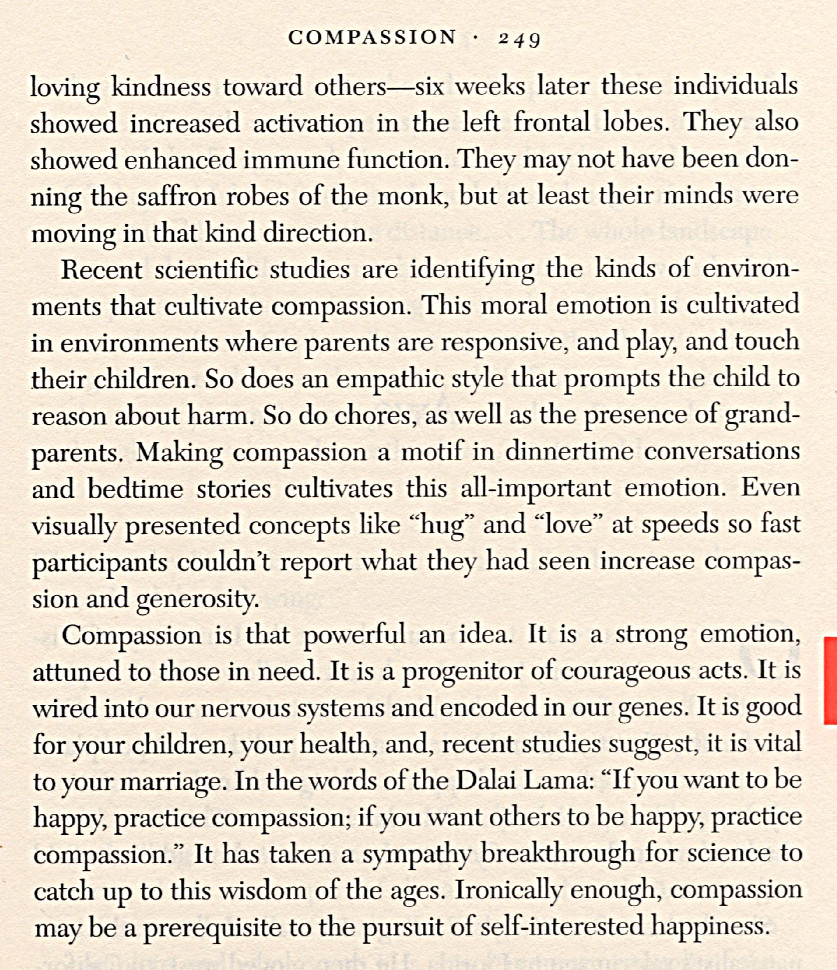
There are many serious things I could think about today but again it is a gorgeous day, over seventy degrees, and I am choosing to do other things.  Out of respect for all who are suffering from subzero temperatures and battling snow, I must go outside and continue the work of expanding my garden.

Groups of neighborhood children thrilled at helping me yesterday.  Today they are going south of the line to attend their 35-year-old uncles funeral in Mexico today.  He died in a terrible car wreck after being chased at high speeds the night before last in what was probably a drug deal gone bad.  Out of respect I will go out along the roadsides today and fill the back of my trusty 1978 El Camino with rocks I can haul back here.

When the children are free again tomorrow, they will thrive on helping me sculpt the soil they have already learned to love the smell off as we plan for new life that will come from the seeds we will plant when we know the nights will again be consistently warm enough.

All that I can write about suffering and child abuse can wait for another day.  My sister came for her visit and left yesterday.  I miss her.  We talked nearly constantly for the three days and four evenings she was here, much about our abusive childhood.  But, more on that later…….

+++++++++++++++++++++++++++

+SILENCE. TURN AROUND AND WALK AWAY?

+++++++++++++++++++++++++++++

I cannot imagine anyone WANTING to write about or talk about child abuse.  Why spoil a perfectly gorgeous day by even thinking about that so dark side of life, especially when those days lie so far back hidden in the dim and distant past?

Why no simply enjoy, if not cherish, everything that seems so good and right in one’s present moment?

If nobody wants to speak or write about those days and nights of misery, those months, those years of abuse and torture — so the silence can continue without words — can each of us forget equally?  Both those of us who have endured abuse equally with those who have not?

Who will tell those stories?  “I don’t want to,” people say.  So they don’t.  “What’s the point of it?”

Today I join those people who have to still admit we don’t know the point of it.  I don’t know the good of it.

Turn around and walk away?

+++++++++

What matters?

From service dog to SURFice dog…

turning disappointment into a joyful new direction

+++++++++++++++++++++++++++++

+ATTACHMENT: SMART AND STUPID RESEARCH

++++

Personally I am tired of wandering around in the darkness wondering why I am not a particularly HAPPY person with some kind of an active, exciting, thrilling, fulfilling life full of social connections and emotional well-being.

Sure, my childhood sucked.  But, so what?  “Too bad, so sad, be glad you are grown up now and can make any choice you want to make about yourself in your life.  Get over it!  Get on with it!  Quit feeling sorry for yourself!  Your life is what you make of it.  Still having problems?  You must have bad genes.”

My response is, “Oh, yeah?  Says who?  What can ‘the research’ tell us?”

++++

My sister sent me an interesting link the other day that presents information directly connected to what I wrote in my December 26, 2009 post where I mentioned that I suspect my social-emotional brain shares some characteristics with autism.  Take a look at this Yahoo news article about research coming from a study of school children:

Texas study confirms lower autism rate in Hispanics

For every 10 percent increase in Hispanic schoolchildren in a given district, the researchers found, the prevalence of autism decreased by 11 percent, while the prevalence of kids with intellectual disabilities or learning disabilities increased by 8 percent and 2 percent, respectively.

The reverse was seen as the percentage of non-Hispanic white children in a district increased, with the prevalence of autism rising by 9 percent and the prevalence of intellectual and learning disabilities falling by 11 percent and 2 percent.

The observed relationships remained for Hispanic children after the researchers accounted for key socioeconomic and health care provider factors, although “urbanicity” of a district, median household income, and number of health care professionals did explain the increased percentage of autism among districts with more non-Hispanic white kids — a finding the researchers call “curious.”

Whether lower autism prevalence in Hispanics is attributable to other, still-unexamined socioeconomic, health care delivery or biological factors “remains a crucial area for further research,” Palmer and colleagues conclude.”

SOURCE: American Journal of Public Health, December 2009.

++++++++++++++++

Well, will you look at that.  All that time, effort and money spent on this research study and did they think to include a measurement of what matters most?  Did they include any kind of questions about size of immediate family, number of siblings, size of the dwelling, or amount of contact with extended family?

I can’t access the full research article online, but here’s what its abstract says:

Am J Public Health. 2009 Dec 17. [Epub ahead of print]

Explaining Low Rates of Autism Among Hispanic Schoolchildren in Texas.

Palmer RF, Walker T, Mandell D, Bayles B, Miller CS.

University of Texas Health Science Center.

In data from the Texas Educational Agency and the Health Resources and Services Administration, we found fewer autism diagnoses in school districts with higher percentages of Hispanic children. Our results are consistent with previous reports of autism rates 2 to 3 times as high among non-Hispanic Whites as among Hispanics. Socioeconomic factors failed to explain lower autism prevalence among Hispanic schoolchildren in Texas. These findings raise questions: Is autism underdiagnosed among Hispanics? Are there protective factors associated with Hispanic ethnicity?

++++

Researchers are evidently content to conclude their research with such statements as “this is a curious finding,” while they continue to ask their unanswered questions like, “Are there protective factors associated with Hispanic ethnicity?”  There is no reason I can think of to expect that degrees of human attachment don’t affect genes for autism just like it does for schizophrenia, suicide, depression, PTSD and other ‘disorders’ of the body-brain.

I have lived for the last ten years in a small town in southeastern Arizona on the Mexican-American border line.  The fence lies right behind my back yard.  99.9% of this town’s community is Hispanic.  Every family I know has a lot of children.  The children are cherished.  Every family has extended ties to extended family.  Their median income is low.  Many children often share a bedroom.  I have watched them as they grow from infanthood in the closest of interactions with one another within all age groups.  They are social and they are connected to one another.  Nobody is alone.

Duh, researchers.  Do you think that MAYBE the research findings might have to do with safe and secure attachment that builds for these people an excellently formed early social-emotional brain so that autism is not as likely to appear among their culture?

Is there some kind of STUPID gene operating among researchers that prevents them from bothering to consider collecting what is the most obvious information that would answer their questions?  Or is there some kind of implicit agreement among researchers to keep skipping the gathering of the most important attachment related information so they can keep on doing more and more stupid research without gaining any true understanding – because it gives them job security?

++++

I know this pattern exists.  The same kind of researcher ‘stupid gene’ operated during the South African – Kenyan youth research project on the consequences of trauma.  Follow this link for a description of the kinds of information the researchers collected on the 2000 teenagers in their study.  Did they include any standardized, accurate and useful assessment of attachment relationships among their subjects?  Of course not!  How could they justify spending more and more money on research to answer the puzzling results they found?

The most striking finding was the discrepancy in the rate of PTSD between South African and Kenyan adolescents in the context of equally high rates of trauma exposure (and even higher for specific types of trauma in the Kenyan sample).  The lower rate of PTSD in Kenya adolescents is difficult to explain.”  Seedat et al, 2004, p 173

Note the “difficult to explain” statement.  Read for yourself, “Give me more money so I can use my stupid genes and do more research.  I want to keep my job.”

These researchers noted at the conclusion of their massive project that for all the money spent and for all the extensive effort they put into their research, the were left unable to

“…account for higher rates of PTSD in the South African students, despite higher rates of exposure in Kenyan youth to both sexual assault and physical assault by a family member, as these are traumas that are likely to be repeated.  Further, these traumas were most likely to e associated with a PTSD full-symptom diagnosis.  This discrepancy is one for which we do not have an adequate explanation.”  Seedat et al, 2004, p 174

Obviously these Kenyan children were not necessarily safe and secure in their own home, so how might we consider that attachment information might help explain the difference in outcome between these two groups of extremely traumatized youth?

No standardized or valid attachment assessment tool exists.  These researchers do not seem to be bothered by its absence.  Even though they did not use the word ‘attachment’ in their research conclusions, these researchers did ‘wonder’ if the patterns of differences they observed might be related to the long history of cultural disruption that South Africa has endured in contrast to the retained cultural integrity of Kenya.

Can degrees of safe and secure versus unsafe and insecure attachment be related to degrees of cultural integrity?  The findings of both of these two research studies point in that direction.  Because neither study contained any (nonexistent) standardized collection of attachment information, both studies are left simply pointing in a “a direction for further research.”  Of course this doesn’t bother the researchers.  It guarantees their job security.

++++

The hole in the bucket of both of these studies validates my thinking.  It is the degree of safe and secure attachment that an infant-child has in its beginning with its mothering caregiver that most influences how a person’s genes manifest themselves as the very young body-brain develops.  The protective factors against any so-called ‘mental illness’, be it depression, aspects of autism, or PTSD are activated very early in a person’s development.

Looking at the end result of degrees of attachment security, even within school age children, tells researchers nothing about how their ‘subjects’ got to be the way they are.  I want to know, “How safe and securely attached were these children to their mothers and their other earliest caregivers from the time they were born – as their body-brain developed in interaction with the experiences the little one had in its environment?”

In my thinking, cultural integrity protects mothers and therefore protects the infants who benefit in their earliest, fundamental development from safe and secure attachment.  As the early body-brain is forming, information from the environment has already told an individual’s genes how to respond and adapt.  Although safe and secure attachment is certainly not guaranteed to children like those in Kenya, not EVEN in their home, the underlying structure of their body-brain seems to have included residency factors that protect them from PTSD.

++++

Without trying to explain the research today that describes the physiological impact that early stress has on development (notes for a lot of this research can be found HERE), I will simply present some links here today related to research that is showing how child abuse changes genetic expression:

Child Abuse Causes Damage at Genetic Level

++

Child abuse ‘impacts stress gene’

++

Infant Abuse Linked To Early Experience, Not Genetics

++

Gene protects adults abused as children from depression

Influence of child abuse on adult depression: moderation by the corticotropin-releasing hormone receptor gene.

++

The Neurobiology of Child Abuse and Neglect

++

Do Genetics and Childhood Environment Combine to Pose Risk for Adult PTSD?

Association of FKBP5 polymorphisms and childhood abuse with risk of posttraumatic stress disorder symptoms in adults.

++

Selected Publications of the Members of the Attachment Parenting International Research Group

++

And also, the results of a Google search for child abuse brain development

++++

Researchers need to come up with an accurate way to measure degrees of safe and secure versus unsafe and insecure attachment and add this measurement tool into the design of all research about the affects that trauma has on human beings throughout the lifespan.

Every research study being done that does not include a measure of degrees of attachment is missing the critical piece of information about how attachment creates resiliency factors that protect humans from ongoing problems related to trauma experiences.

All funding channels that support trauma-related research need to mandate that an assessment of the quality of human attachment be included.  Of course, this means that attachment patterns need to be taken most seriously as a primary factor that profoundly influences trauma research results.  Let’s do smart rather than stupid research!  Find a way to accurately measure degree and quality of human attachment – NOW!

++++

Please note:  I will be taking a break from the blog until Wednesday, January 6, 2010.  Best wishes for a Happy New Year 2010!

+++++++++++++++++++++++++++++++++++++
+EXCLUSIVE INTELLECTUAL PROPERTY OWNED BY SEVERE ABUSE SURVIVORS

++++++++++++++++++++++++++

I received this valuable comment about my blog writing through a ‘personal channel’ yesterday:

“YOUR WRITING IS SO INTELLECTUAL THAT I AM ALMOST OVERWHELMED.  YOU DON’T CONVERSE THAT WAY, I HOPE!”

There have been times in my life when such a comment would have stopped me dead in my tracks and I would not write another single word.

++++

Some time back I wrote a piece where I described the one thing from all the codependency jargon that makes sense to me.  When we find ourselves feeling like we have to explain and/or defend ourselves we are in a codependent stance.

So here I am today considering taking a dose of my own medicine.  What is happening inside of me that makes me feel defensive?  How is my writing tied into my own feelings of inadequacy?  Why is important to me that I please others, that I have something of value that is useful that I can offer to others?  It seems obvious that I am comparing and contrasting myself with those outside of myself – that the operation of assessment and judgment is going on within me.

I suspect that what is both my true underlying and the overriding concern is acceptance, which is an attachment issue.  Do I feel safe and secure enough inside myself to trust that what I write about and how I write is exactly fine with me?  Can I be open to feedback and think about it constructively in terms of what I might need to change to accomplish my goals more successfully?

What might it be in my writing that is either corresponding to Grice’s maxims of rational discourse – or not?  I am really not in conversation here because my approximately 70 readers a day are silent ones.  How confident do I feel inside of myself, how competent do I feel about what I write and how?

++++

When communication is taking place that allows for resonance and mirroring between people (and even between people and animals) there are patterns of ‘rupture and repair’ that guide the flow of discourse.  One person sends out signals and watches for how they are accepted or rejected, and pauses for response.  Patterning within the social-emotional brain govern how our verbal interactions take place between people just as they govern how our nonverbal communication does.

Researchers have found that Grice’s maxims include an accurate enough description of appropriate patterns of verbal communication that they lie at the foundation of all adult attachment research.  These maxims mirror safe and secure social-emotional brain operations as they appear in the behavior of verbal speech.

The response I received yesterday is partly about the differences between spoken and the written communication.  It brings to mind this philosophical riddle that raises questions regarding observation and knowledge of reality:  “If a tree falls in a forest and no one is around to hear it, does it make a sound?”  The answer to this question is technically “No.”

I first encountered this question shortly after I finished Naval boot camp when I was 18 years old, and it fascinated me.  This was true mostly because I spent the better part of my childhood being bonded not to humans, but to the natural world surrounding me when I could escape from my mother and spend time outside on the mountainside of our Alaskan homestead.  My personal answer to this question has always been “Yes.”  I did not grow up with a social brain that put humans at the center of reality.

In the natural world all of existence is in intimate relationship with all of its members.  Everything is included.  Nothing is excluded.  Perhaps it was because I was excluded as a member of my family that being in the natural world meant so much to me.  I was included in that world and there was nothing my mother could do to change either that fact or my experience of it.

I met both of the requirements for complete acceptance and inclusion in the natural world:  (1) I was alive, and (2) I was there.  I didn’t need words.  I didn’t even need thoughts.  I simply needed to be in a body, to BE a body present WITH every possible part of life around me.  With the exception of one time, never were there any people in that natural world with me.

++++

On that one day, the summer after I graduated from high school but had still not reached my August 31st 18th birthday, a boy from my brother’s class (a year ahead of me) walked up the mountain to see me.  I had no idea why.  To my knowledge he had never noticed me before.  We had never spoken.  But this boy put forth a lot of effort to find me way up there on the mountain.

He did not arrive by car.  He walked.  How far I don’t know.

When this boy unexpectedly knocked on our door, I greeted him and went outside to visit.  It was a glorious mid-summer Alaskan afternoon.  The sky was that deep blue that I always called ‘postcard blue’.  There was no wind.  It was warm.  Wildflowers bloomed across the hillsides.  Tall emerald green grasses covered the fields.

Only on this day, with this boy, for the first and only time did I feel present in that natural world I loved with another person.  For perhaps two hours we walked the land.  I showed him the beauty that surrounded our home.  There was no physical contact as we sat at the top of the steep ravine that led down to the roaring tumbling creek.  After a time, this boy simply said good-bye and left.

I have never known why he came to see me, and I remain curious.  What I do know is that as soon as he was out of sight around the first bend of our road heading down the mountain, my mother attacked me like she had never done before.  You would have to imagine what it would be like to be attacked by a full grown rabid grizzly bear to begin to understand what that beating was like.  Only my mother included her words.

Up and down the length of our house she dragged, shoved, pushed and hurled me as she pounded my body and face with anything she could grab for hours.  I had seen my mother in her rages against me all of my life, but never had I seen her this angry.  I did not understand any of it.  Not that I had ever understood her attacks, but the power of this one put me into an inner state of shock it took me many years to even partially recover from.

It wasn’t until I was in my thirties that I came to understand that her entire violent and vicious rage against me that afternoon had been grounded in sexual fantasies within her mind about what had gone on between myself and that boy as soon as we crossed out of sight through the tall grass over to the edge of the ravine where she could not see us.  For many years one phrase that she had screamed at me hurt me as if I had been slashed head to toe with a razor sharp butcher knife:  “You are no better than a snake in the grass!  You are not fit to be a mother!  I hope God never sees fit to give you children!”

++++

Now if I return to the comment at the top of this post, I would say that if I were actually facing someone in person how I would tell the story about that summer afternoon might be different than how I write it.  It is certainly not a topic that would come up in ordinary conversation.  At present I cannot imagine a time, a situation, a place or a person that I would ever tell the entire story to on the deepest level.  And this would be only one of thousands and thousands of brutally violent and violating ‘encounters’ I had with my mother from the time I was born.

When it comes to Grice’s maxims I know that it is not humanly possible to follow those rules for rational discourse when attempting to talk about, or write about, severe experiences of trauma that happened to me in my childhood.  The rules for discourse require that an order be followed through a definable pattern that makes sense to the two (or more) people that are conversing TOGETHER.

Together means that there is an empathetic resonance happening between the people engaged in conversation.  Take another look at Grice’s maxims:

Maxim of Quantity:

1. Make your contribution to the conversation as informative as necessary.
2. Do not make your contribution to the conversation more informative than necessary.
Maxim of Quality:

1. Do not say what you believe to be false.
2. Do not say that for which you lack adequate evidence.
Maxim of Relevance:

Be relevant (i.e., say things related to the current topic of the conversation).
Maxim of Manner:

1. Avoid obscurity of expression.
2. Avoid ambiguity.
3. Be brief (avoid unnecessary wordiness).
4. Be orderly.

This is NOT how I can verbalize my childhood.  Not in words, not in conversation and not in my writing.

These maxims apply to considered and considerate conversation.  It would not be considerate of me – toward me or to my readers – to delve into minute, graphic detail about the actual experiences of abuse I suffered from my mother.  To do so would overwhelm all of us – especially me!

Maybe if I only had ten or twenty or fifty or a hundred violent and violating experiences of abuse in my childhood I would have been able by now at 58 to converse ‘rationally’ with myself or with anyone else about the exact nature of those experiences.  Maybe if I had less than a thousand of them I could ‘tell the coherent story’ of my childhood.

As it is, my entire way of being in the world happens because I do not access the overwhelming memories of overwhelming childhood trauma I experienced.  I would be a fool to ever believe that these traumas can be integrated into who I am in the world in any better way than they already are.  Integrated trauma means that something useful has been learned from the experience that can facilitate a better chance of surviving a similar related trauma in the future.  The only thing to learn from the kind of terrible isolation and abuse I suffered during the 18 years my mother could hurt me was that child abuse survival has a high price, and that it SHOULD NEVER HAPPEN AT ALL.

++++

I have upped the ante in what I think about, talk about, and write regarding my personal history of severe infant-child abuse.  Literal detailed disclosure of the specifics on separate incidents is NOT my concern.  Understanding what happened to me as a consequence of what my mother did to me is my concern.  This understanding has to be accomplished consciously, and therefore involves an intellectual process.

My mother’s abuse of me forced my body-brain-mind-self to change and adjust its development so that the actual body-brain-mind-self I am left to live my life with and AS is NOT the same one that I would have had should the abuse never have occurred.  These changes are not minor.  They are not insignificant.  And all of the fundamental changes my body-brain-mind-self had to make are permanent on the physiological level.

Time cannot run backward.  I cannot return to being a newborn infant so that I might receive different information from my caregiving environment that would give me an entirely different body-brain-mind-self through my developmental stages.  And just as I cannot RETURN to my infant-childhood for a better chance of developing a different body in a better world, neither can I TURN to any single professional expert source or resource for the information I most need in order to understand exactly how what my mother did to me changed me, and what that means.

Neither am I going to be content with a little piece of an answer, handed to me as a toothpick that relates to a much bigger living tree of information about who and how I really am in this world.  I realize that I join the ranks of those other people who also had extremely abusive infant-childhoods.  None of us have ever really been told the truth about how profoundly our human development was changed so that we could survive what was happening to us.

We will discover this truth within our own self, and as we do so and begin to use the words that matter most to describe the changes we experienced as a result of our abuse, we will be giving birth to our own intellectual property on the topic.   This intellectual property belongs to us because we have this information inside of us.  It is who we are because it is who we had to become to survive.  We are finding new words and new ways to tell our stories about what really happened to us.

++++

Maybe I am on a mythological quest to find this grand tree of knowledge that will give me the answers I need.  I guarantee if it ever falls I want to be among the first to hear the sound of its falling.  I find glimpses of its existence in the direction much seemingly unrelated research is going, and in its findings.  I had intended to present two specific examples in today’s post, but I have run out of………..

+++++++++++++++++++++++++++++++++++

+TRAUMA SIGNALS THROUGH ATTACHMENT

+++++++++++++++++++

Human attachment patterns exist within and are communicated by the body either through the use of words or not.  Degrees of safe and secure or unsafe and insecure attachment are physiological communications about either the presence of or the absence of unresolved trauma.  This is true for humans at every stage of our development from birth until death.

++++++++++++++++++++++++++

The first thought that came to my mind the first time I encountered a description of the research strategies used to assess infant-mother attachment such as was presented in yesterday’s post was that under no circumstance can I possibly imagine my mother agreeing to participate in such an activity.

Nor can I imagine any severely abusive parent being willing to agree to participate in such research.  Nowhere have I seen a discussion in the research about this fact.  It is not the researcher’s concern.  Abuse is not what they directly intend to measure even though I believe it would clearly be seen in the patterns of attachment between an abused and maltreated infant and its primary caregiver.

As described in the 13 scanned pages presented yesterday about parent-infant attachment research, it is clear that attachment patterns cannot be shown to be related to either personality traits or to intelligence.  They have also found that a mothering caregiver’s attachment patterns are not formed directly in relationship with any particular personality trait of their infant, either.

Attachment patters are being shown to be transmitted from caregiver to infant as the research shows the remarkable fact that a pregnant mother’s attachment patterns have great power to predict and to form her infant’s attachment patterns.  Research is showing that these transmitted patterns of infant attachment are carried by her offspring through from infancy into adulthood.

One big hole in the research that I find when I look at it from my own point of view is that while researchers seem to clearly understand that an infant can have entirely different attachment patterns with different attachment caregivers, nowhere in the research do I see these experts talk about the fact that caregivers can have different attachment patterns with their different offspring.  This matters a great deal in cases where a parent singles out one of their offspring for severe abuse even though they do not abuse all of their children.  This was the case in my childhood.

Assuming that a severely abusive mother would ever show up in a research setting such as the ones used in these studies, has research ever been done that shows how any mother might interact differently with her different offspring?  Not to my knowledge.  (I will have to hunt for this kind of research).

I think the results of the adult attachment research being presented in Siegel’s writing makes the assumption that the adult’s attachment patterns are so formed within the caregiver that the operate consistently across relationships that adult has with everyone, including her offspring (any and all of them).

++++

When reviewing the findings presented in the comparison table about how a particular mother’s own attachment patterns correspond to her infant’s, the reason why the name of the attachment patterns are different between adult and infant seems to be that while the infant’s classification is based specifically on the mother-infant relationship, the mother’s is based on what researchers determine to be her attachment states of mind.

Researchers suggest that not until the age of 18 months does an infant-child’s brain have the capacity for form and use ‘mental representations’ that are required for it to have a ‘state of mind’.  This belief is reflected in the process used to determine attachment depending on age.  Infant attachment is based on observable body behavior.  Adult attachment is assessed on the basis of verbal communication patterns.

I am not clear as to why researchers do not assess a mother’s attachment to her infant by reproducing a clinical scenario like the one they used to watch how an infant responds in the Strange Situation.  I don’t think they watch the mother.  They are watching the infant.  If they DID watch the mother, what visible patterns would they see in the mother as she came and went from her infant?  How does she hold it?  How does she let go of it?  Does she reach for her infant?  What do her facial expressions communicate to the infant or the tone and pitch of her voice?

++++

Adult assessment of attachment is designed to notice patterns of communication and signaling used in a verbal interview.  These same patterns of communication happen between infants and their caregivers even though verbal communication is NOT what matters to the infant.  It is the patterns of communication signaling that is being assessed in both infants and adults.  The communication of emotion is at the core of these assessed signals for both.

Because of their youth, infants do not use clear mental representations or process their emotions through the filter of a clear state of mind.  What they feel is what they do, and what they do shows in the actions their body takes.  If you take a look at the information contained in the 13 scanned pages it is clear that because infants cannot yet use words, they are left still communicating with their body.

It is the nature and the quality of a mother’s ability to read, resonate with and to respond appropriately to all the body-based signals of communication her infant has expressed to her from the moment of its birth that create the bedrock of her infant’s social-emotional brain as they also steer and direct the development of her infant’s nervous system, immune system and body.  These patterns of interactions between a mother and her infant, the same ones that built the infant, show in the infant as it interacts with its mother during these attachment assessment experiences.

That the physiological, actual body-based actions of a one-year-old infant very accurately are reflected in how its mother TALKS about her own experiences of childhood fascinates me.  It shows me that words and the expression of them simply exist on the end of a physiological-response continuum that just gets more sophisticated in its expression the older we get – the more our brains develop – and according to the more options we have to express our emotions.

Language is body-based.  It happens through our body.  Infants use language from the moment they are born, certainly well before they can use actual words.

++++

My suspicion is that the farther down the attachment scale into insecure attachment patterns a mother might be appearing to slide — which researchers assess through verbal communication — the more she is communicating as she did when she was an infant.  I say this because as researchers watch a mother’s ability to follow Grice’s maxims disintegrate as she attempts to TALK about her childhood, the closer she is getting to body-based emotion that she cannot put into words.

We don’t expect an infant to be able to talk about its ongoing experience of trauma in words.  At the same time we also know that it is the nature of ongoing unresolved trauma to NOT be integrated into anyone’s ongoing experience of being a self in the world.  This is just as true when ongoing trauma exists in an infant’s reality as it is when it exists in an adult’s.

Experiences of trauma interfere with ongoing experience in a safe and secure world.  If trauma can be resolved, it becomes digested and integrated as safety and security return to the individual irregardless of a person’s age.  If trauma cannot be resolved, it is not integrated and it then shows itself in interruptions in patterns of signaling communication that can be seen in attachment relationships – again, irregardless of a person’s age.

Patterns of unintegrated and unresolved trauma are what researchers are ‘measuring’ in both infants and in adults while they watch and interpret movements of the body during these studies.  It just happens that words and verbal communication styles and patterns in adults are watched more closely than are their bigger bodily movements.

Unresolved and unintegrated trauma exists at the physiological level.  This trauma communicates its presence physiologically – even in words and in patterns of spoken communication.  It is not only the bigger the unresolved trauma is, but also the older it is that we can see in patterns of insecure attachment – at any age.

The older a trauma is, meaning the younger we were when it overwhelmed us, the more it appears body-based in its signals.  That is why an adult will appear increasingly inarticulate (does not follow Grices’s maxims) the more they approach their earliest traumas.  The more incoherent a mother’s attachment interview becomes, the more she is becoming her younger body-based (without words) self-in-the-world.  The memories the interviewer is asking her to access do not exist with words.  They do exist in her body.

The more insecurely and unsafely attached a mother was in her earliest body-brain formation stages of development, the more her early traumas actually changed the body-brain she lives in the world with.  Whether researchers are watching (listening to) body-based signals in words or not, in infants or in adults, they are watching degrees of safe and secure being in a benevolent world – or not.  They are watching early trauma changed body-brain development – or not.

++++

Actions are always body-based expressions.  The older we get the more options for actions we have.  As trauma-laden infants grow through their younger years into their adulthood, the more obvious the trauma drama patterns of communication become.  If we separate ourselves from our own experiences of trauma drama and picture them as occurring among actors on a stage, we can easily see that it is simply unresolved trauma itself that is communicating its presence.

If an infant that researchers watch behaves in a safe and secure manner with its mother, those researchers don’t see trauma drama.  If an infant behaves in ways that can be seen to represent increasing levels of unsafe and insecure attachment patterns with its mother, researchers can already watch trauma drama taking place.

We could ‘mute the sound’ for any trauma drama we might be watching, at any age, because words really tell us very, very little about the presence of trauma.  In fact, the older we get, the more present verbal communication according to Grice’s maxims is, the less trauma will be present!  Because unresolved trauma remains physiologically body-based, it best shows itself in the actions of the body.  Words themselves are the very, very tip of the proverbial iceberg.

++++

Speaking of attachment, trauma – resolved or not – I want to highly recommend a film to you.  My children gifted me with a Netflix subscription for Christmas, and I streamed this one and watched it last night.  It is a true story.

++++++++++++

The Children of Huang Shi (2008)

At is about young British journalist, George Hogg, who with the assistance of a courageous Australian nurse and a Chinese partisan fighter, saves a group of orphaned children during the Japanese occupation of China in 1937. Written by anonymous

+++++++++++++

As you watch this movie notice that you would completely understand the entire story, including all the emotions of it, without listening to a single word of dialog.  It is a powerful portrayal of the human condition with nearly its fullest spectrum of relationship to, with and within trauma.

As you watch this film notice also that at the same time this entire story is about trauma it is also equally about attachment.  We can never consider one without the other – never.

+++++++++++++++++++++++++++++++++++++++

IN MEMORY OF MY BORDERLINE MOTHER:

In the Spotlight | More Topics |
from Kristalyn Salters-Pedneault, PhD
Here we are again, preparing to begin a new year. I’m not one for new year’s resolutions (most people don’t keep them anyway), but thinking of changes you’d like to make this year can help. Getting treatment, or working on particular skills, or committing to developing a life more worth living might be on your list this year.
In the Spotlight
Time to Find Treatment? Here’s How!
When you’re ready to make the move into treatment, this article will give you tips on finding a good therapist who treats BPD.
More Topics
Building More Meaning: A Values Exercise
The first step toward finding meaning in your life is to determine what aspects of your life are meaningful to you. This exercise can help you assess what is meaningful to you.
Training Your Skills: Active Problem Solving
Sometimes it’s more effective to focus on the problem at hand than to focus on trying to control your emotions about the problem. Tackling problems head on can help you feel that your life is more manageable and less stressful.

+ATTACHMENT – HOW WE ARE WHO WE ARE

++++

Trying to understand the research and literature on secure and insecure attachment patterns seems to me to be a bit like this image:

Picture a cold winter day.  Someone comes out of their house, shuffles through the snow to a wood pile, brushes a pile of snow off of a corner of the tarp that covers it, pulls the cover back and begins to pile stove size logs into their arm.  They pull the tarp back over the pile, return to their house, and go through the process of adding the wood into a fire.  All is well, warmth is achieved, and life goes on.

When attachment specialists write about attachment styles and patterns they divide their thinking in half.  Half talk about how attachment can be ‘measured’ for infants at about a year of age.  The other half talk about attachment styles and patterns in parents as they relate to their infants that created the attachment styles and patterns one can measure in the infants.

I have found no clear description about how the birth to age one experience an infant has with its earliest caregivers BUILDS its age-one attachment pattern that continues through to create the attachment patterns it has in adulthood.  The topic of attachment is chopped into pieces just like a tree needs to be if its pieces are going to fit into a stove.

Going back to the image I just presented of the woodpile as it might relate to the study of attachment.  To get the WHOLE picture we would have to include a lot more information.  Where did the seed come from that grew into the tree that eventually found itself in pieces heading into a wood stove or a fireplace?  What were all the steps that had to happen for the seed to find itself into the ground, for it to crack open into life, grow into a sapling, into a tree big enough to use for firewood?  What was the process that went on as someone found the tree, cut it down, hauled it home, chopped it up, and made a covered pile of firewood?

Where do we turn for the whole story about human attachment from conception to death?

++++

Dr. Daniel J. Siegel has written what is, I believe, the only book that approaches parenting from an attachment point of view:  Parenting From the Inside Out by Daniel Siegel and Mary Hartzell.  Please read this book for a fuller understanding of what I am going to write about today.

Today I scanned in 13 pages for your study taken from another of Siegel’s books, The Developing Mind: How Relationships and the Brain Interact to Shape Who We Are (The Guilford Press, 1999)) — available for purchase by clicking on the title link –

These pages can be seen at this link:

**Siegel – Attachment Measurement (kid and adult)

++++++++++++++

As critically important as this attachment information is, I still think it is dense, complicated, hard to read, hard to understand, and hard to relate to anyone’s ongoing experience of their life with others and with their own self.

Because these early attachment experiences actually build the foundation of the human social-emotional brain (and direct the development of the body), it is critical to understand that the attachment patterns that can be ‘measured’ at age one happened one tiny step after another from birth.  The same patterns that can be seen in a one year old continue to operate for a life time – because they built the body-brain-mind-self of the person from the start.

++++

All the specialized fields of research are themselves each like a single piece of firewood cut from a whole tree.  The fields of study examine and report on their little piece of the tree, but nobody seems willing or able to put the whole picture together and look at the whole.

Attachment, in my thinking is the whole tree from which all other aspects of being human connect to and originate from.  Every single other facet of study concerning ‘the human condition’ stems from this tree.

Nowhere along the line of a lifetime, from conception to death, can attachment be ‘simply’ considered to be like the pile of firewood under the tarp.  Human attachment is about the entire process of the journey of each of us – like the firewood — from seed to ashes.  And just as the entire journey of our proverbial tree was influenced by the conditions within its environment from start to finish, so too are we.

++++

In yesterday’s post I laid out which of all the horses related to the betterment of the human condition I would lay my money on.  Coming to understand the attachment continuum of our lifetime – what it is, how it operates, how it determines the manifestation of our genetic potential, how it directs the building of our body-brain-mind-self’s foundation, how it affects our relationship with our own self, with others of our species, and with the entire environment we live and die within – is, in my belief, the most important conscious learning we can ever pursue and accomplish.

Improving our ability to experience safe and secure attachment will improve the quality of our life.  Finding ways to overcome whatever our degrees of unsafe and insecure attachment will be the most effective tool we can have to improve our degree of well-being within our own self and within the world we live in.

Yet where in the fragmented, disjointed, cut-into-tiny-pieces world of academic information can we look for the attachment-related facts we need to improve our lives?

Sadly I would have to say – nowhere.

Siegel’s book on parenting (link above) is probably the most complete effort anyone has accomplished to help us understand how our adult attachment patterns affect us as parents.  His work cannot possibly be comprehensive in my thinking (give us a picture of the whole of the living tree) for several reasons.

First of all, as you will notice if you follow the link to the 13 scanned pages, the terms used to describe attachment patterns seen in infants does not match the terms used to describe attachment patterns in adults.  This fact has made it difficult for me to think about the life continuum of attachment.

Pneumonia is pneumonia, diarrhea is diarrhea, and cancer is cancer no matter what age is of the body that might be suffering from these conditions.  Attachment patterns ARE physiological patterns within the body-brain.  They are not imaginary events that can be arbitrarily called one thing for an infant and something else for an adult.

In addition, as you read the 13 scanned pages you will be learning about the two accepted measurement tools available to measure attachment accurately – one for infants at about a year of age and the other for adults.  Both of these measurement tools are designed for use in a professional research setting.  To my knowledge, no one has ever yet designed accurate assessment (rather than measurement) tools that can be used in public settings to either assess infant or adult attachment patterns.

++++

Most people can read the information about how attachment is measured in infants and think about what we know in our real life about infants and their caregivers.  We can imagine the clinical experience as it happens around us in our lives.  We can begin to use our common sense to make the connection between the information about early mother-infant brain building interactions that Schore describes and the year-old patterns of interactions an infant has with its mother as presented in these 13 scanned pages.

This still does not leave us with any clear idea about how we could translate the clinical measurement tool so anyone could assess infant attachment in the ‘real world’.

Nor does the presentation of information about adult attachment measurement presented in the 13 scanned pages give us any everyday working idea about how we could assess our own adult attachment patterns.  It does not present a means to assessing adult attachment ‘on the streets’ or ‘in the trenches’ so that ordinary people could better come to understand how attachment patterns are affecting all our relationships – everywhere – every day and every night of our lives.

We are left reading the 13 scanned pages and trying to imagine an ordinary context in the same way we might be able to imagine the whole story about how a seed was planted that eventually ended up in firewood pieces giving warmth within someone’s home.

++++++++++++++

This scanned table about adult attachment refers to something called Grice’s maxims.  Here is the clearest description of these maxims, which originated historically in Kant’s philosophy, that I can find:

Grice’s Conversational Maxims

Maxim of Quantity:

1. Make your contribution to the conversation as informative as necessary.
2. Do not make your contribution to the conversation more informative than necessary.
Maxim of Quality:

1. Do not say what you believe to be false.
2. Do not say that for which you lack adequate evidence.
Maxim of Relevance:

Be relevant (i.e., say things related to the current topic of the conversation).
Maxim of Manner:

1. Avoid obscurity of expression.
2. Avoid ambiguity.
3. Be brief (avoid unnecessary wordiness).
4. Be orderly.

These maxims are considered to be reflected within rational ‘cooperative discourse’, and have been incorporated into the rating structure of the Adult Attachment Interview (AAI) used clinically and in research to assess adult attachment.

The AAI is a research tool.  People who administer the interview and rate it must go through specialized training.  This tool’s usefulness even in research is complicated because there are many factors about it that cannot be easily controlled, such as how the environment where the interview is given influences responses, how the person of the interviewer interacts with the ‘subject’, how interviewer’s biases might influence ratings, etc.

If I go back to my wood pile analogy and change the ‘end result’ of a tree’s lifetime into a toothpick or a piece of toilet paper instead of a log of firewood, and then expect us to be able to exactly imagine the entire process accurately that the seed went through to get to its end, we have a more accurate picture of how hard it would be to connect the results of an Adult Attachment Interview back through all the experiences of a person’s life back to their beginnings.  That would be if we even believed that the results of an AAI accurately described an adult’s attachment pattern in the first place.

++++

In the end, the simplest description of what an adult’s insecure attachment pattern might look like ‘on the streets’ or ‘in the trenches’ has to do with having some ability to tell a coherent life story – or not.

If I look at the piece of toilet paper version of how an AAI result might look, I would consider the ‘lowest’ grade of adult attachment that is not even mentioned in the 13 scanned pages.  It is called the ‘Cannot Classify Category’ and looks something like what 1998 research article describes:

Discourse, memory, and the adult attachment interview: A note with emphasis on the emerging cannot classify category

This brief report focuses on the emergence of a new Adult Attachment Interview (AAI) category, Cannot Classify. The Adult Attachment Interview classification system is discussed with emphasis upon differences in AAI categories as they relate to strategies or lapses in strategy for the integration and focus of attention and memory. The Cannot Classify category is understood to differ from the other AAI categories in that it appears to represent a global breakdown in the organization and maintenance of a singular strategy for adhering to the discourse tasks of the AAI.”

++

strategies or lapses in strategy for the integration and focus of attention and memory

This is what the researchers are looking for when they try to pin down what varying styles of adult attachment patterns look like.  That doesn’t give the rest of us much to go by in terms of learning about our adult attachment patterns, does it?

The fascinating point is that right within the few words of that sentence lies the heart of our concerns – TRAUMA.  What happened, when it happened, how it happened, what strategies either did or did not exist to integrate the experience of trauma, how these trauma experiences influenced and were influenced by attention and memory processes are all connected to attachment patterns.

++++

Attachment patterns are patterns of dealing with trauma.  If trauma built the early brain in the first place, these patterns show up in infant insecure attachment patterns such as the 13 scanned pages describe.  If trauma built the early brain, the same trauma-formed patterns continue into adulthood and manifest themselves in the disruptions of conversation about one’s self in one’s life that the AAI is designed to define.

Because our concern is with ‘trauma dramas’ that repeat themselves throughout a person’s lifetime, it is essential that we recognize what we are looking FOR as we find it in what we are looking AT.  We are looking for early infant-caregiver traumatic interactions (or their absence in safe and secure attachment) that built social-emotional brain in the first place because that is where the seed of who we are as a body-brain-mind-self originated.  We can tell the trauma was there at the beginning and that it influenced all later development if an insecure attachment pattern exists – in infant-children and in adults.

++++

So, if I disappoint my readers my not being able to clearly describe what adult attachment IS, let alone how it operates, how we identify the patterns, or how we change them, I hope you will be patient.  I might as well take what I have on hand and go into my back yard thinking I can build myself a space shuttle that actually works.

Humans had the capacity to figure out how to fly to the moon long before we did so.  We have the capacity to find a way to clearly assess human attachment, but we haven’t done so yet.  Because most of what goes wrong in human lives can be traced to the quality of attachment that formed the brain foundation and lies at the root of all of our social interactions – including the one we have with our own self – I believe this field of study should become the single most important one we pursue.

I have faith in US.  WE can figure this out – if and when we want to.  After all, as members of a social species our attachment patterns determine WHO we are in the world because they determine HOW we are in the world.

+++++++++++++++++++++++++++++++++++++++++++++++++++++