+DISSOCIATION: MEMORY OF ONGOING EXPERIENCE FROM THE PREY’S POINT OF VIEW

++++++++++++++++++++

I intended today to write a post about dissociation when I went outside to sit with my morning cup of coffee.  What greeted me there was a trauma-drama in full play, and not a pleasant one for me to watch.  Yet I know that life, and nature itself shows us things that often allow our right brain to watch visually as drama and image at the same time our left brain is offered information to THINK about.

I am going to separate my two ‘streams of information’ this morning.  This post is about how a severely abused and traumatized infant-toddler’s body-brain is forced to absorb information about the world, and about itself in the world in relation to its early attachment caregivers.  The information I am going to present in my NEXT post will be the scientific, rational, logical and far more abstract information.  We NEED this more technical information, but as survivors we will not be able to really understand it or make good practical use of the dry information that developmental neuroscientists provide for us if we cannot ASSOCIATE this information with our own ongoing experience.

People often use this term in the English language, “a game of cat and mouse.”  What I watched this morning as one of my cats toyed with a furry little mouse could have looked like a game from her point of view.  But what was this experience like for the little, tiny mouse?  Its life was at stake, and there was anything BUT a game going on from its point of view.

Those of us who were raised especially by extremely hate-filled abusive and traumatizing mothers from the time of our birth were like this little mouse.  Yet we were even more helpless against our giant predator.  At least this mouse was fully developed and could use all its possible defense abilities – not that they would in the end be effective at allowing it to escape and go on living.

I knew how this ongoing drama would end.  Yes, my cat WAS playing with her prey.  She was fully focused and concentrated on her ‘game’.  The mouse was fully focused on trying to avoid being killed.  And there I was, the bystander at the same time I was the only hope that little mouse had for staying alive.

++++

The mouse was quick, but the cat was quicker.  Every time I tried to sidetrack the cat she out maneuvered me, grabbed her little ‘toy’ and ran off to continue her ‘hunt’ somewhere else.  How could I help to give the mouse a chance to escape – to where?  There’s nowhere in my yard that mouse would be safe and secure.  There was no way I could catch the mouse and move it somewhere out of danger’s way, either.

There are a lot of mice here.  Part of the reason why, I know, is because my east neighbor whose property I just fenced off from my yard visually, continues to heap all his garbage for a family of seven against that fence, thus encouraging rodents to multiply.  Where there are rodents, there are rattlesnakes to eat them in this country.  Elimination of mice is normally a good thing.  I just didn’t want to WATCH the elimination happen.  Not today.  Not as I prepared to write a victimized-survivor post about dissociation!

But what I thought about as I continued to try to dissuade my cat from continuing her mission was how that little mouse, in the midst of the insecurity and lack of safety involved with its ongoing trauma, would NEVER do anything else but focus on its own survival.

These thoughts became entangled and intertwined with the technical information I was thinking about for my post on dissociation.  Because my mother was a predator, and because I was just as much her ongoing prey as this mouse was to my cat, there was NEVER a time in my infant-toddler-childhood that I was assured of enough safety and security to do ANYTHING ELSE other than survive.

At the same time I was more powerless and helpless than a mouse is under the attack of a cat, my brain, my nervous system, my immune system, my entire being was growing and developing in interaction with the experiences I was having in my early environment.  Nothing else but surviving the trauma of my mother’s attacks against me mattered.  Never was there a TIME when trauma wasn’t immediately threatening and impending, happening in the present moment, or just having finished happening – so that it could happen again.

My childhood was spent in a state of heightened trauma alertness from the beginning of my life.  As I watched my cat, she periodically caught the mouse in her mouth and carried him to another ‘play ground’ where she then let it go long enough that it could run a short distance and do what a little mouse will do:  Hide itself in an area that it thinks MIGHT best conceal it.

Of course the cat knew exactly where the mouse went, and right where it was.  She poked her paws into the spaces in the hiding places, batted the little creature, pushed and prodded it, and when it didn’t come out at a full run, she’s simply stick her head in, grab the mouse again, and move it on to another (to her) intriguing hiding playground.  Of course the most obvious places for this game to go on were in amongst my flower beds, a process which of course would have eventually led not only to the death of the mouse but to the destruction of my much-loved plants!

++++

Yes, watching my cat’s play-filled species determined extermination of this mouse was a trauma trigger for me.  I could not help but try to intervene on behalf of the little one who was going to lose its life if I didn’t.  I couldn’t catch my cat, so I sat out there for a long time chasing her away from the vicinity of the hidden prey.  I opened the back door thinking she would eventually get bored with out-waiting me and venture into the house.  Nope, that didn’t happen.

Instead, two of my other cats wandered out of the house.  They could tell immediately that Goldilocks was after prey, and all I could think of was, “Oh great!  There’s no way out of this.  I’ll take some pictures and then exit the playground so I don’t have to watch what I know is unavoidably going to happen.”

++++

So here are some pictures.  It’s been about an hour since I stopped watching the trauma-drama outside my door.  I just went outside again to see another one of my cats sitting under the Oleander bush satisfyingly smacking its lips and cleaning its jaw daintily with its paw.  “Mouse gone.  Game over.”

So, now in thinking about dissociation as the experts like to write about it, I have to say that nobody, absolutely nobody actually knows what dissociation is, what it does, what it feels like, how it operates, or where it came from like survivors do – particularly and especially those of us who endured and survived repeated, ongoing predatory attacks in our very early life of infancy and toddlerhood by our mothers.

If we then continued to endure trauma, abuse and attacks into and throughout our childhood, there is (in my thinking) no possible way that so-called dissociation did not build itself into our growing and developing body-brain.

I will never believe that dissociation is a so-called ‘defense mechanism’ for such survivors.  Our dissociation is simply HOW our brain regions, circuitry and networks were forced to grow and develop.

The mouse I watched today was in an ongoing peritraumatic state which was broken up A LITTLE TINY BIT by the moments the cat allowed it to nestle within its hiding places.  But these periodic reprieves from direct terror and assault were not enough to ever allow this mouse to go on about its life in anything like an ordinary (safe and secure) way.

Everything that mouse experienced both during direct assaults upon its life and during its reprieves, demanded that trauma-based body-brain operations continue to happen.  Those experiences are completely different in the midst of trauma and its trauma-based allowances of semi-reprieve than are ongoing experiences where trauma is not present or immediately threatened.  When any creature is forced to adapt to trauma environments during critical growth and developmental stages, both the experiences of trauma and reactions to it build themselves in.  The trauma in effect ‘moves in to stay’.

What this means to an early abused and traumatized human is that the emerging self goes into and remains in hiding as surely as this mouse did.  I don’t believe our parental-predators could ever reach our hidden self.  Yes, they could reach our little bodies with the attack of their words and blows, but our inner own self remained protected simply because of the nature of being human.

Every single person is a separate, individual entity that can only be accessed from the inside.  Even though everything that happens to us from the OUTSIDE profoundly affected our development, and could and did change the way our body that our self lives in, our self – its own self – remains ours and ours only.

The problem became one of us not being able to experience our self in our own life.  Experts refer to alterations in memory capacities (which is what the next post is about).  Dissociation means that we do not remember ourselves as being connected to our own ongoing experience in ordinary ways because our capacity to REMEMBER was affected PHYSIOLOGICALLY during our earliest development.

Enough said at the moment.  As you look at the following pictures think of each one as representing an environmental context for ongoing moments of my cat’s life – but from the point of view of the mouse.  No way was it important for the mouse (forget the cat here) to remember itself in one of these ‘pictures’ in any particular order.  All the mouse could do was attempt to stay alive.  The only way it could do that would be if it could find a safe enough place to hide and remain hidden.

Safe enough.  That is what every living creature needs so it can continue to remain alive.  But growing and developing a human body-brain as time moves on and the trauma continues means that the inner experience of being in the midst of trauma never leaves us.  Trauma is not only what happened to us, but became how we grew a body-brain to remember ourselves with.

+++++++++++++++++++++++

It's only a GAME of hide-and-seek if we play it with equal peers. It's only a GAME of cat-and-mouse if you are the predator.
Where could a victimized-prey hide to escape? Under the blue flax and sage bush?
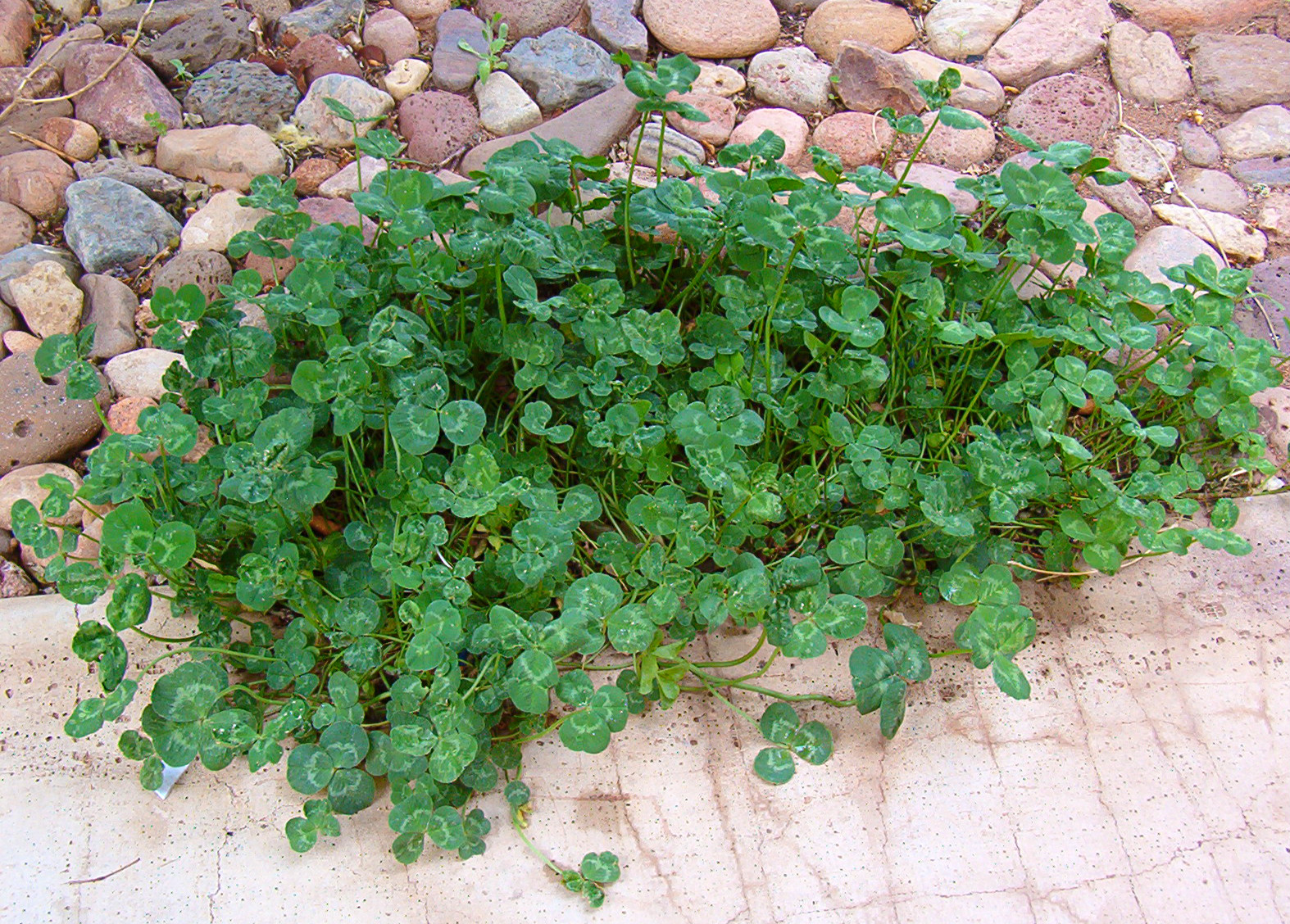
Is there a tiny little self tucked into hiding within the clover?
Under the poppies among the petunias? Is this a safe place to hide for survival?
Where is it safe for an abused and traumatized mouse -- or infant-child -- to hide?
Is it safe enough to stay alive under the newly blooming rose bush?
When I finally turned away from the trauma drama, the little mouse had hidden itself here among the tiny pansies.
The mouse was hiding in here last I saw of it. Each of these hiding places can be thought of as a momentary segment of the mouse's endangered life -- like victimized tiny children forming their abilities to remember their self in their life -- the separate events are just that -- dissociated experiences linked together only by one thing: Ongoing experiences of individual events of enduring and surviving trauma. Meanwhile, the SELF remains hidden unless we can contact and connect with 'self' within its own world

+++++++++++++++++++++++

+LOVING THE POSSIBILITIES – OUTDOORS WITH THE MUD

+++++++++++++++++++++++++++++

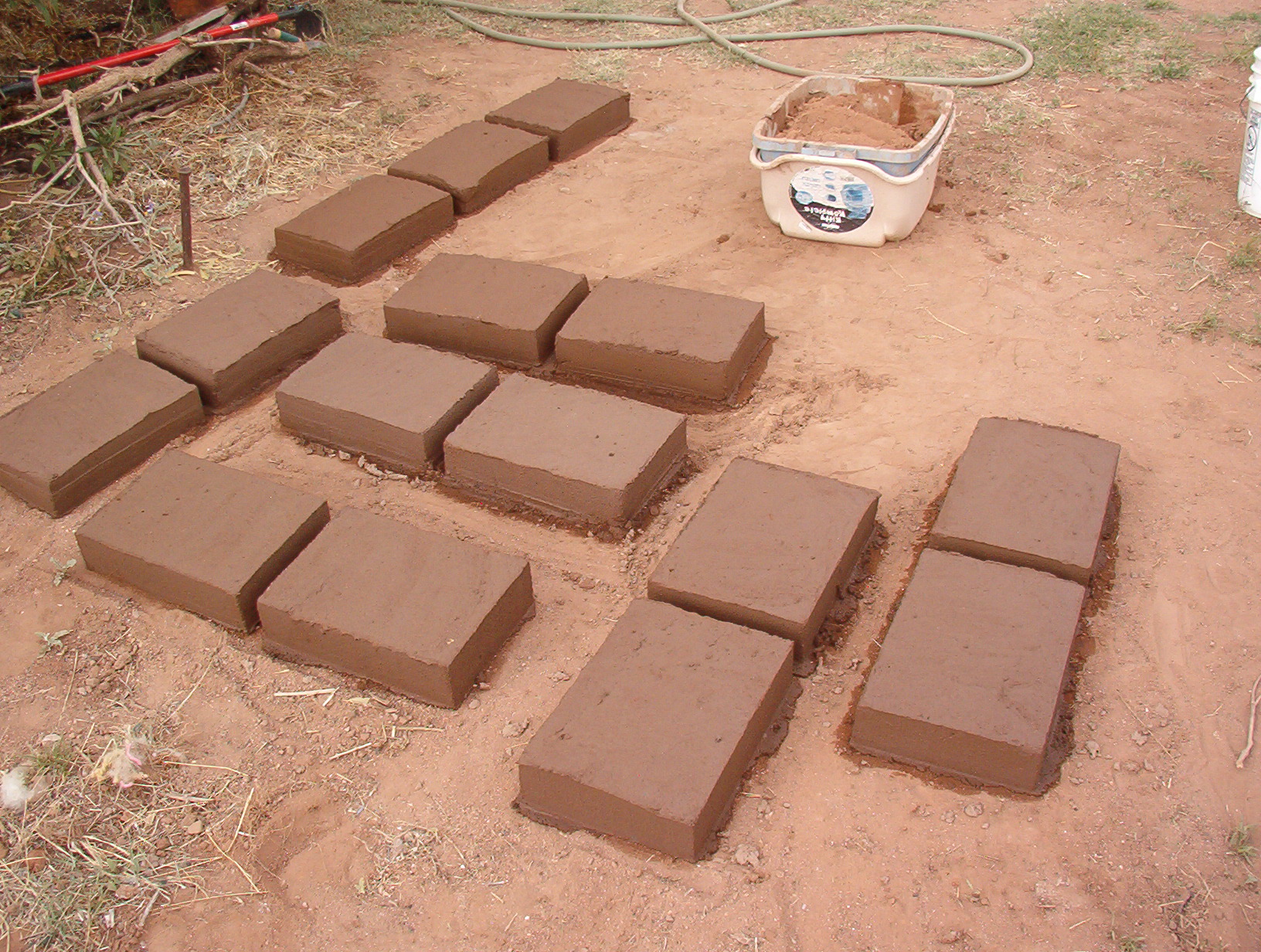
Light cloud cover screened the intensity of the sun today, creating a temperature veil that made it a most perfect day to work outside.  I was out there for hours, digging and hauling dirt, sifting for gravel that’s getting moved to the front of the house’s walkway.  I made 15 grand adobe blocks today and have dirt ready for tomorrow if the temperature stays cooler.  (More ‘modern’ people would be able to ‘make hay’ with a power cement mixer — it is WORK mixing in the 10% cement evenly and the WATER!)

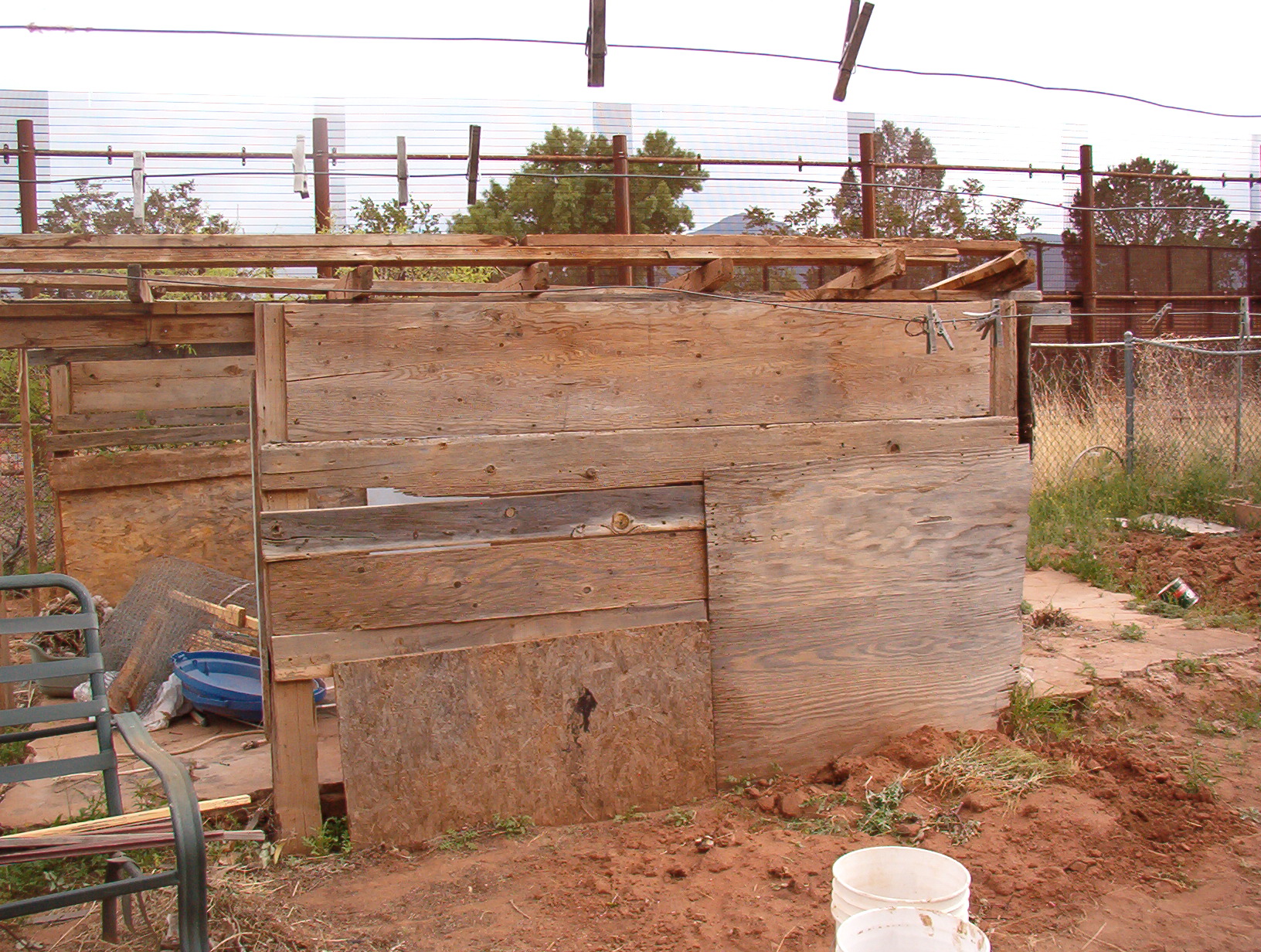
My vision of the back yard is taking form.  I want to tear down what’s left of that old, raggedy shed.  I’ll save the wood, clear the cement pad, and build a little adobe chapel!  There might not be another chapel so close to the Mexican-American border line anywhere in America!  How sweet that will be!

I will dedicate the little place as a prayer chapel for peace and tranquility.  Somehow I will include within it a very simple plaque with my most favorite words in the whole world on it (in English and in Spanish):

“Never sadden anyone, no matter whom, for no matter what.”

by The Bab

(This was on page 31 of the edition – not sure of the year – I found this in when I wrote it into my prayer book nearly 40 years ago – in Release the Sun: An Early History of the Baha’i Faith by William Sears)

I am beginning to see more clearly what isn’t here yet.   Let the fair winds continue to blow, I’ve got work to do!  Give this woman a shovel, a pair of gloves, a plastic bucket — some dirt and water — and WATCH OUT!  There is nothing better for my healing and well-being I could be doing right now – absolutely nothing.

+++++++++++++++++++++++++++++

These only bloom in the spring
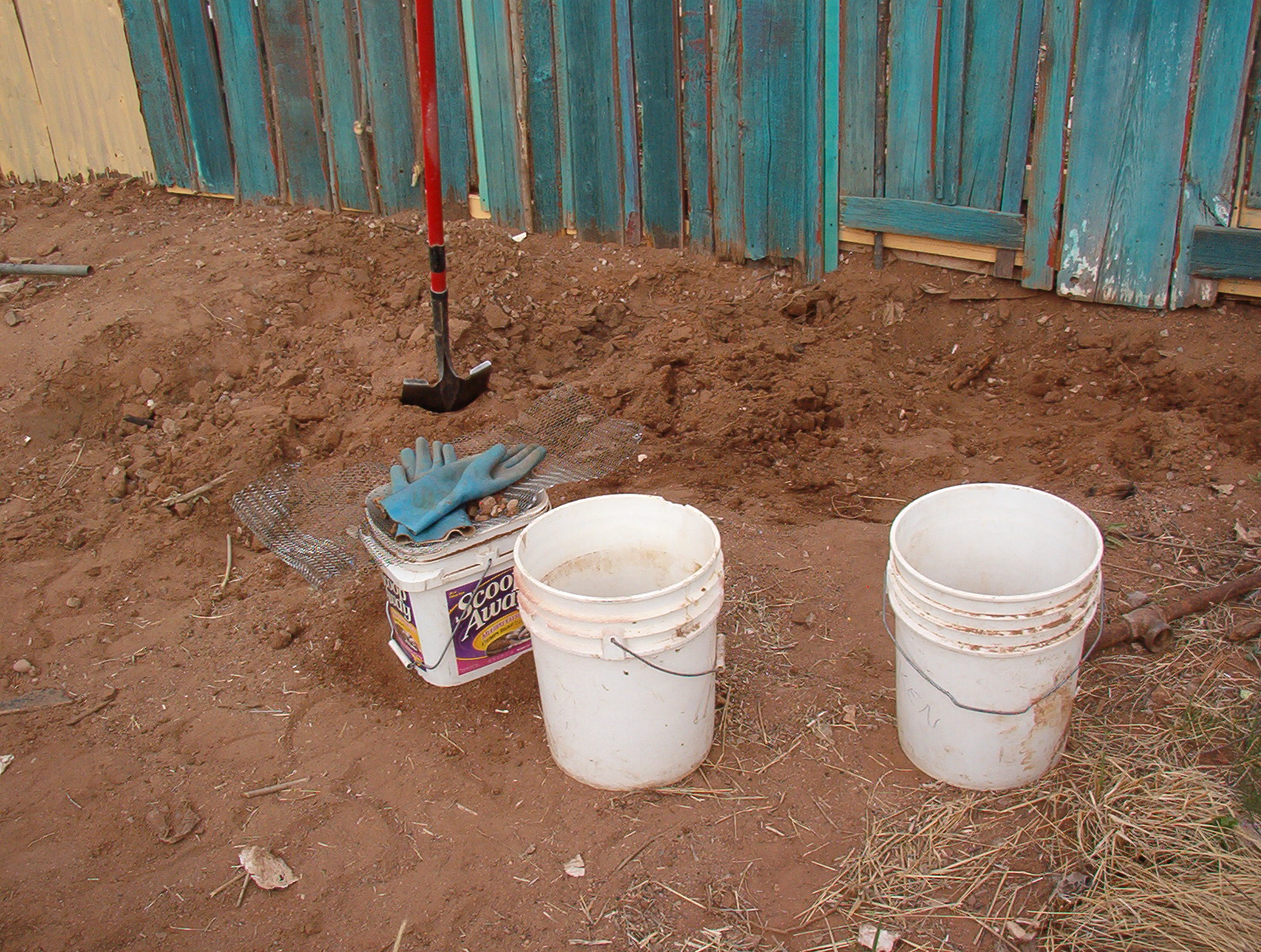
The first of many-yet-to-be gravel and adobe mines!
15 today
Lovin' it
Accumulating - continuing to dry and cure
So, this shed's gotta go. This is where all the rusty corrugated steel came from, blew off in 4 separate high winds last winter, Mexico-American border wall behind it - and - a Mesquite tree I believe I can trim and beautify (Can't see it, it's behind the shed)
For many years 'illegals' stayed in this shed, even since I've lived here until the 2nd wall-fence was put up that they can no longer cross behind my yard
Wait 'til you see what's gonna take its place! I can SEE it!

+++++++++++++++++++++++++++++

+TRAUMA AND DISAPPOINTMENT – POINTING TO OUR TRAUMA WOUNDS

++++++++++++++++++

All trauma is upsetting.  That’s what trauma does.  It upsets the status quo.  That’s what trauma is.  It’s an upset.  By its very nature, trauma involves disappointment.

The more an organism is prepared with resources to ‘cope’ with trauma the better off they are because this means they can ‘get over’ the trauma and get back to a state of status quo faster.  Without enough of the right kind of resources, the slower a return to the state of status quo becomes.  Or, without enough of the right kind of resources, a return to a state of status quo is impossible.

Available resources are directly tied to a very real state of safety and security in the world.  Having enough of the right resources means that we can achieve a return to the desired state of safety and security relatively quickly and easily.

Survivors of severe early infant-childhood abuse trauma had things happen to them in their lives way before they had the inner or outer resources to effect a return to a state of safety and security – because if they’d had an environment filled with the plenty of safety and security in the first place the traumas of abuse would not have happened to them in the first place.

That’s what an insecure attachment ‘disorder’ actually is.  The state not only of trauma but of scarcity and depletion of inner and outer resources, which creates unsafe and insecure status in and to the world, built itself right into the growing body-brain-mind-self from the start.

This means that the necessary status quo state of safety, security and calm connection is missing.  The normal physiological state for early abuse trauma survivors never was a status quo state of well-being.  Because this calm, safe, secure state is missing in our very body itself, survivors of early abuse trauma can struggle the rest of their lives just trying to figure out what this GOOD status quo state even feels like.

From there we have to figure out how to GET THERE from HERE – HERE being our trauma-built state of inner disequilibrium.

++++

Dr. Diana Fosha is one of the most hopeful and positive experts within the field of trauma, attachment and healing that I have encountered.  Here’s a link to one of her 2002 articles that I highly recommend, written primarily for professionals working with traumatized clients.  Because so few of us have access to any therapy at all, let alone to effective therapy with truly competent trauma experts, what Fosha says in this article is important for we survivors to know on our own:

TRAUMA REVEALS THE ROOTS OF RESILIENCE

++++

Here is the link to her book:  The Transforming Power of Affect : A Model for Accelerated Change by Diana Fosha (Hardcover – May 5, 2000)

I haven’t had the opportunity to read it myself, but I include it here because it is the feelings related to trauma that tend to trap me in some other place than a calm center of connected well-being.

Sometimes it seems as though all the powerful abuse trauma-related emotions that were going on within my body from the time I was born, that were not identified, recognized, differentiated, named or understood, just sat there within the cells of my body waiting.  Well, not only did they wait for a time they could make their presence known, they expanded and multiplied astronomically until they broke through the numbness and the blankness of all of my dissociation to become the ‘animals’, the rampaging beasts they often seem to me to be within me today because I did not grow up with a body-brain-mind-self that was able to recognize them as friends and allies.

Rather my reactions to life, with all the trauma triggers that are built into me, often disrupt my ongoing equilibrium – what little of it I can manage to find for myself.  My reactions to trauma triggers stimulate emotions that are not integrated together in a modulated, right-limbic-social-emotional brain built with stability, safety and security within it.  This region of my brain along with the rest of my brain and all the nervous system components that it is connected to, was not built with ‘normal’ or ‘ordinary’ regulatory abilities within it.

Where my experiences within my environment should have been able to hook themselves together in ongoing ASSOCIATED patterns of being, they were instead created in DISSOCIATIONAL patterns that are often profoundly disorganizing and disorienting to me today.  Often the best I can do is try to identify these patterns so that I can find the ‘willy-nilly’ way things were connected together inside of me and try to piece them together differently in more orderly, organized and oriented ways.

++++

Here is another book, again one I haven’t yet read but that looks vitally promising:

Sweet Sorrow: Love, Loss and Attachment In Human Life – Paperback (June 2009) by Alan B. Eppel

“In this volume the author proposes that it is the interplay of love and loss that lies at the epicentre of the human story. Support for this proposal is taken from neuroscience, art and psychoanalysis. It will also introduce the reader to important ideas and findings from Attachment Theory. An exploration of the relationship between love and loss can lead us to some understanding of the meaning of our lives. It shows how love and loss are inextricably bound at the centre of human experience, and form the essential dynamic of the human struggle.”

“Alan B. Eppel has been a practicing psychiatrist over the past thirty years and currently is director of Community Psychiatric Services at St. Joseph’s Hospital, Hamilton, Ontario, and an associate clinical professor in the Department of Psychiatry and Behavioural Neurosciences at McMaster University, Hamilton, Ontario.”

++++

I mention this book in connection with the topic of my last post, +MY FOGGY POST ABOUT DISAPPOINTMENT AS A TRAUMA TRIGGER, because the state of feeling disappointed is for me a very real experience of being in a state of disorganization and disorientation in my body in the world.

Expectations are a required ‘food’ for our brain as it works to combine information we have about our self in the world in an integrated way.  Our body-brain-mind-self processes life through ongoing feedforward and feedbackward information loops that take into account everything we know about our self in the world – IN TIME.

I complained in my last post about the invisibility of the root word origins for the word ‘disappointment’ in our English language.  Thinking about it more clearly today, I realize that just as individual people begin very early in their lives (hopefully) to recognize, identify, discriminate between, name and manage all the different emotional experiences we are capable of, so must the words that name these emotional states of being also go through some kind of growth process themselves.

‘Disappoint’ is a word related both to ‘appoint’ and to ‘point’.  Our right brain is our imaginal link to experience and contains within it a veritable ocean of potential meaning.  As we use words the two hemispheres of our brain pass information back and forth between them – sort of like pouring water from one glass to another until a level of balanced equality exists between the two containers – as we seek to gain understanding about our own self in our experience of our life.

I believe that ‘disappointment’ is intimately connected with overwhelming heartbreak.  As our brain-being tries to get along in life, we orient and organize our self IN TIME by using information as reference POINTS.  In fact, without reference points, we cannot orient and organize ourselves at all.

These reference POINTS IN TIME exist in us where associations have been successfully and satisfactorily made.  Those of us whose body-brains were formed within abusive traumatic early environments suffered far more dissociations in our experiences than we did associations, and are therefore suffering from a scarcity of these required reference points in time.

What could our inner self compass possibly find as reference points in a world of madness, abuse and trauma?  How could we establish our self with any stability in a dangerous world of chaos?  What could I point to as a KNOWN, as a dependable GIVEN in the world as I grew up?

I knew really only one thing as a given and one thing only:  I was terribly BAD and not only deserved everything that my mother did to me, not only earned everything she did to me, but I evidently liked and wanted her to do what she did to me because I CHOSE TO REMAIN BAD.  According to my mother, she magnanimously offered to me every possible (saint-given) opportunity to change my ways, and I never made the right choice.  I chose to defy her efforts with every breath I took.

How could I possibly use any information I got from that environment to find a stable inner or outer POINT of reference in the world?  What was the POINT in my even trying, though I DID try as hard as I possibly could to BE GOOD, not knowing I was absolutely and fundamentally and permanently being set up to fail?  After all, according to my mother, being born ‘the devil’s child’ did not even get me started off in life at the starting point of even being a human being in the first place.

Did I ever reach the POINT as a child of not trying?  No.  Did I ever surrender or give up?  No.  I didn’t see that I ever had a choice.  I just formed my entire being around the information I was given and kept on going.

++++

It is not a stretch of reality to consider ‘disappointment’ within the context of its right-brain meanings.  It involves every aspect of ‘point’ we can think of with our left brain.  We really come into this world as a single one-dimensional POINT in time and space.  From there we are supposed to be able to grow and blossom and bear fruit in our lifetime.  Some of us are born to parents who seem completely intent on stomping the life out of that little tiny point that is us from the moment we are born.  What we do, then, is survive IN SPITE of our parents.

That is the primary POINT of life – to stay alive in it.

When we experience our emotions and reactions in the present, the POINT of origin of our emotions lies in our body as it was formed way back there.  A pinhole-sized point of light continues to expand over distance and time.  The older we get, the more complex life becomes, the wider becomes the range of influence that our emotions can have in our life.

When severe trauma of abuse forms a person, the expanding rays of light from the early origin point of emotions suffers from distortion.  We then live with those distortions unless and until we can bring healing to all the wounded places within us – a job of a lifetime.

++++

Looking at Webster’s:

POINT

Date 13th century

Etymology: Middle English, partly from Anglo-French, prick, dot, moment, from Latin punctum, from neuter of punctus, past participle of pungere to prick; partly from Anglo-French pointe sharp end, from Vulgar Latin *puncta, from Latin, feminine of punctus, past participle — more at pungent

And tracing connections back through

PUNGENT

Etymology: Latin pungent-, pungens, present participle of pungere to prick, sting; akin to Latin pugnus fist, pugnare to fight, Greek pygmē fist

Date: 1597

1 : sharply painful…..

and through the synonyms to ‘pungent’ to

PUNGENT implies a sharp, stinging, or biting quality especially of odors <a cheese with a pungent odor> POIGNANT suggests something is sharply or piercingly effective in stirring one’s emotions <felt a poignant sense of loss — applies to what keenly or sharply affects one’s sensitivities <a poignant documentary on the homeless>

POIGNANT

Etymology: Middle English poynaunt, from Anglo-French poinant, poignant, present participle of poindre to prick, sting, from Latin pungere — more at pungent

Date: 14th century

1 : pungently pervasive <a poignant perfume>
2 a (1) : painfully affecting the feelings : piercing (2) : deeply affecting : touching b : designed to make an impression : cutting <poignant satire>
3 a : pleasurably stimulating b : being to the point : apt

synonyms see pungent, moving

STING

Etymology: Middle English, from Old English stingan; akin to Old Norse stinga to sting and probably to Greek stachys spike of grain, stochos target, aim

Date: before 12th century

Here I begin to see and feel the ‘image in the word’ as it relates to the origins of disappoint – sticking one’s self with a dry, sharp spike of rustling, life sustaining grain

PRICK

Etymology: Middle English prikke, from Old English prica; akin to Middle Dutch pric prick

Date: before 12th century

1 : a mark or shallow hole made by a pointed instrument
2 a : a pointed instrument or weapon b : a sharp projecting organ or part
3 : an instance of pricking or the sensation of being pricked: as a : a nagging or sharp feeling of remorse, regret, or sorrow

++

And of course, looking from the angle of Latin pungere – related to the origins of ‘poignant’ I see this connection:

PUNCTURE

Etymology: Middle English, from Latin punctura, from punctus, past participle of pungere

Date: 14th century

1 : an act of puncturing
2 : a hole, wound, or perforation made by puncturing
3 : a minute depression

+++++++++++++++++++

Our abusers punctured us full of holes.  Full of wounds, we continued onward.  Every time we were physically, emotionally, mentally hurt, our chance for building an ongoing safe and secure, organized, oriented attachment with our self in the world was ruptured and not repaired.  Every time we were hurt in any way, deprived, terrorized, terrified, we suffered from a disappointment based on how things are MEANT to be in the world for little ones who are completely dependent on their early caregivers.

How possible would it be to empty the ocean with a sieve?

First we were ‘poked full of holes’, wounded nearly beyond belief by the same people who were supposed to love us, cherish us, protect us, provide for us, defend us, and help us become integrated ‘associated’ people.  Then we are supposed to take our punctured selves out into the world and NOT be disappointed?

Maybe every single time I recognize the state of disappointment in myself I can learn to identify how that disappointment POINTS to my wounds.  From there, maybe I can begin to find ways to exercise my resilience to repair them.

++++++++++++++++++

+MY FOGGY POST ABOUT DISAPPOINTMENT AS A TRAUMA TRIGGER

++++++++++++++++

I’ve been doing pretty good these past few days.  I think I got spoiled.  Today was a crasher.  My word for my mood, or state of emotional being is FUNK.  I’m trying to sort out how I got here today thinking that maybe it will help me get out of this dark grey-blue-black mood, or feeling state.

So far, I can think of at least ten things that happened today that I reacted to with disappointment.  That’s one sure thing I know about myself:  I do not handle disappointment very well at all.  I also know that disappointment IS a feeling I felt as an abused child – often.  My mother was an expert at setting me up and then knocking me down.  She took sadistic pleasure in my innocent hope knowing she could shatter it in a heartbeat – which she always did.

Because I WAS a child, I could not out-guess her.  I walked blindly into her traps over and over and over again.  I was unsuspecting.  Part of how all this operated, I know, was because of the dissociated states I slipped into between all the violent attacks, that state where time always seemed suspended as if it didn’t exist at all.  My mother’s forced isolation did this to me, also.  Nothing made sense.  I could predict nothing, anticipate nothing.  But, unfortunately for me I still believed my mother when she said something good was going to happen, even though every time she took it away.  (see **FAMILY TIME – by Brother (1965) for my baby brother’s experience with my mother about this.)

++++

Main Entry: dis·ap·point·ment

Date: 1604

1 : the act or an instance of disappointing : the state or emotion of being disappointed
2 : one that disappoints <he’s a disappointment to his parents>

++++

Why in 1604 did this word suddenly appear in the English language?  Why does Webster’s not include any reference to this word’s roots?  Elsewhere I found a reference that the root is in ‘appoint’.  Somewhere else I read online it’s in ‘point’.  It all seems very confusing to me.

I think when I experience disappointment in my life it ALWAYS acts as a trauma trigger for me.  ALWAYS.

That means when something disappointments me NOW in my life, all the ick attached to disappointment in my 18 year abusive childhood comes plowing right on through and catches up with me every single time.

I don’t know how to NOT let this happen.

I didn’t catch the warning signs this morning when I encountered my first disappointment.  Looking back, I see that my disappointment was connected FIRST to a feeling of being surprised.  I had hoped to buy 3 (cheap) climbing roses bushes today at our local Alco store.  I looked at my bank balance online.  It was far lower than I had expected, and it ruled out flowers along with just about anything else until the 3rd of next month when my next disability check shows up in the account.

So, I EXPECTED the balance to be higher.  I was SURPRISED when it wasn’t.  Then I was disappointed not only that I’m about broke (again), but also that there will be no roses or anything else.  Then I was disappointed because I couldn’t have lunch today as I usually do with my woman friend.  I NEED that social contact.

I was swept up in the twisting snake of down-the-emotional-drain and didn’t catch it – in time.  On the day went.  No major disaster, just a series of expectations, hopes, surprises, and disappointments.

They pile up, and then knock me down.  Flat.

Now, how exactly do I pick myself up again?

Is there some way I can avoid this crash in the future?

How can I expand my “Window of Tolerance” for disappointment?

++++

One big disappointment of my life right now is that I’ve been working on this blog for a year now, and I am not one single word closer to being able to put together and publish a book than I was before I started writing here.  I see publishing a worthwhile and SELLING book as my ONLY hope out of my poverty.  It’s a big disappointment.

If I tell myself that it doesn’t matter if there’s ever a book, that it only matters if I can write something that might make sense to someone – and there’s nothing wrong with FREE info – then I’m better, but that has to be processed for me on some kind of ‘spiritual’ level having to do with my ‘purpose in life’ and ‘my mission’ in being alive.  I have no idea, most of the time.  I just TRY…..

++++

It was too hot today to work outside on my adobe-making project.  That was disappointing.  All-in-all, my disappointment ALWAYS cycles around to my difficulty in not being angry at my self.  GEE, I sure don’t have to wonder how that pattern came to be!  Every single time my mother punished me with intentional disappointment, I was blamed for it.  It was ALWAYS my fault because I was bad, because I wanted to be bad, because I wanted to ruin my mother’s life.

I am going to quit writing – enough said.  I imagine there are plenty of readers who know exactly what I am TRYING to say.  I am going to watch my NetFlix streaming Australian TV series, “McLeod’s Daughters,” which I am enjoying.  I could see myself living that life.  I would have loved it.

Or, as that other great movie puts it”  “Never give up!  Never surrender!”

++++++++++++++++

+DISSOCIATION RISK FACTORS IN UNEXPECTED PLACES

+++++++++++++++++++++

Well, here I am back again in my writing about – “how to stop” —  dissociation in regard to the book, Power of Now by Eckhart Tolle my sister is sending me.  Because I spent all of the 18 years of my abusive childhood in a dissociated state between the frequent, random and extremely traumatizing events of trauma my abusive mother rained on me from my birth, I have an inner need to be careful in using any so-called meditative or relaxation technique — and here’s why.

I am still not exactly sure that what I am going to post here is the exact form of the information I first encountered over six years ago that I have been trying to re-find ever since, but it’s close enough to what I was looking for that I will post it here.

It comes from Dr. Jon G. Allen’s book, Coping With Trauma: Hope Through Understanding, as I mentioned in my last post, +ONE READER’S SEARCH TERMS: ‘HOW TO STOP DISSOCIATION’.
This information comes from Allen’s chapter, ‘Emotion Regulation’ in a subsection titled, “Self-regulation Strategies’.  He says things here of specific relevance and importance to severe trauma survivors – especially to severe early relational trauma survivors – that is very affirming to me.  Remember that early attachment-related traumas alter the way the limbic, right, very ancient emotional brain develops and thus alters our abilities to moderate and regulate ALL of our emotions.  I keep Allen’s words in mind as I prepare to read Tolle’s book my sister is sending me.

Allen states:

“Trauma and stress aren’t new.  Techniques of self-regulation are ancient.  You may not have studied them, but you have used them.  Most methods of self-regulation, such as exercise and relaxation, are simple.  In relation to meditation, Jon Kabat-Zinn uses the phrase, “simple but not easy,”….  For persons struggling with traumas, I put it more strongly:  simple but difficult.  If it weren’t difficult, you’d already be using these strategies successfully rather than reading this chapter.  Three sources of this difficulty are worth thinking about:  methods of self-regulation require practice; they can be fraught with complications for persons with a history of trauma; and they require caring for yourself.

“The first source of difficulty:  learning to regulate your emotions is like any other skill – it requires practice and persistence….  Developing competence in emotion regulation is a lifetime task…..  To become proficient and to maintain your proficiency requires determination and commitment.  Such a major effort is no short-term project.  If you’re dealing with trauma, you’re in for the long haul….

“The second source of difficulty:  trauma-related problems can complicate the use of these techniques.  Techniques designed to enhance self-control may instead trigger anxiety, flashbacks, or dissociation.  Persons with a trauma history can easily be demoralized when the very things offered as helpful prove instead to be unusable or retraumatizing.  Fortunately, because of such a wide range of techniques there’s bound to be something for everyone.  But finding what works for you may be difficult.  It may take time and effort.  You may be in for a period of trial and error.  Caution is in order.  Many self-regulation techniques …have been studied extensively in the context of stress management, but they’ve just begun to be researched in the context of trauma, although they’re routinely employed in conjunction with other facets of trauma treatment….

“The third and often most serious difficulty:  techniques of self-regulation are intended to help you feel better – to even feel good.  This means taking care of yourself.  How can taking care of yourself be a seemingly insurmountable obstacle?  Taking care of yourself implies valuing yourself.  To the degree that the aftermath of trauma entails self-blame or self-hatred, taking care of yourself will go against the grain.  “Why should I do anything good for myself when I don’t deserve it?”  Your self-concept has a steering function, and this train of thought can lead to a self-perpetuating stalemate.  If you hate yourself, you won’t take care of yourself, then you’ll feel bad, hate yourself, ad infinitum.  You might believe that you must feel better about yourself first, then you’ll be able to use these techniques to take care of yourself.  Logical, but maybe self-defeating.  A good way to start feeling better about yourself is to take better care of yourself.  Working on self-regulation could come first.  It’s difficult, but some of the rewards start occurring right away, and they can enhance your motivation to continue.”  (pages 228-229)

++++

RELAXATION

“Relaxation is the simplest of the simple techniques, and it’s the direct antidote to the fight-or-flight response….

“It’s hard to imagine anything more innocuous than relaxation.  But relaxation can be problematic for persons who have been traumatized.  This paradoxical response has been observed frequently enough to acquire a name:  relaxation-induced anxiety….  With this anxiety, you might associate relaxation with letting your guard down; thus, in a relaxed state, you may feel vulnerable to attack.  You may feel that you need to be alert at all times.  Therefore, before letting yourself relax, you may need to do whatever is necessary to assure yourself that you’re in a safe place, protected from any intrusion.

“Relaxation entails focusing inward, on your breathing and on your muscles.  Your attention is directed away from outer reality onto you body.  When you let go of focus on outer reality, you might be prone to dissociate….  Rather than feeling relaxed, you might begin to feel spaced out or unreal.  Dissociation is the opposite of feeling grounded in outer reality.  Relaxation exercises tend to remove this sensory scaffolding.

“Fortunately, it’s not necessary to do body awareness exercises to relax.  Sitting quietly may be enough…..  (pages 231-232)

++++

IMAGERY

“Picture a field of wildflowers.  Hear the sound of a waterfall.  You’ve been using imagery all your life.  For most persons, visual imagery is especially vivid and powerful.  Interestingly, creating visual images activates the same parts of the brain involved in visual perception….  As traumatized persons know best, the power of imagery is a double-edged sword.  Imagery is tied to memory and to emotion.  Intrusive images of traumatic experience are common symptoms of PTSD [posttraumatic stress disorder].  Sights, sounds, smells, tastes, and body sensations all can be associated with reexperiencing trauma.

“Think of yourself as having a library of images.  Picture a section of the library devoted to traumatic images – but don’t open any of the books in that section now!  You have a section for imagery associated with positive experiences.  This is a section worth browsing in.  Spend lots of time there.  You may not have checked out some of the volumes for a long time.  Put them back in circulation.  Check them out regularly in your spare moments.

[My note:  Even an additional word of caution is needed here for severe infant-child abuse and trauma survivors:  Our positive experiences were very often as entangled with trauma as any other ones.  Our insecure attachment disorders in adulthood also can completely entangle positive emotion in negative and hurtful relationship histories.  See:  *Age 9 – BLOODY NOSE for an example of how trauma and abuse can contaminate the experience of positive emotion to create ‘trauma triggers’ where we might not expect them to exist.]

“You can use imagery flexibly and creatively.  You can piece together images from memory to imagine something that you’ve not actually experienced, like floating on a cloud.  Much of your anxiety and worry revolves around imagery, anticipating the worst.  Your images are also accompanied by changes in your physiological state, so anticipating the worst tends to promote it.  But you can create library shelves devoted to imagined scenes that are pleasurable and calming.  {my note:  I would add, safe and secure as a first requirement!]

“Many therapies use guided imagery…which simply means that you’re provided with suggestions for images that will evoke certain ideas and emotions [hypnotherapy].  You may be told to picture yourself lying on a beach on a beautiful sunny day, watching puffy clouds float by, hearing the sound of waves gently lapping at the shore, feeling the warmth of sand against your skin.  Many persons benefit particularly from imagining themselves in a safe place, for example, a secluded and protected place….

“In managing anxiety we use imagery in a virtually instinctive way, and mental escape through imagery is one way of coping with trauma.  Some persons in the midst of traumatic experience can dissociate themselves from the trauma by imagining themselves to be elsewhere….  [my note:  This presentation of one single aspect of ‘dissociation’ is NOT what dissociation IS, any more than a single leave of a gigantic tree IS the whole of the tree.]  But comforting imagery developed in situations of desperation may be problematic.  Some soothing images will be so closely linked to traumatic experience that bringing them to mind will also tend to revoke the traumatic memories.  These well-worn images may be haunted by trauma.  This section of your imagery library may be adjacent to the traumatic images section.  You might be better off moving to a new area and creating new volumes of fresh imagery.”  (pages 323-233)

++++

MEDITATION

“Of all the techniques described here, meditation probably has the most venerably history…having evolved in the context of early Eastern religions.  Meditation and prayer have much in common, and for many, the spiritual dimension forms the foundation of meditation.  But meditation can be separated from religion and spirituality.  Meditation overlaps with relaxation….

[I am skipping a great deal of what Allen is saying here about meditation – get this book, it’s a good one!]

“Mindfulness can be the antithesis of dissociation – the opposite end of the spectrum.  Dissociation is associated with a sense of unreality, mindfulness is a state of being highly aware of reality, not spaced out but tuned in.  This attunement is why meditation may be helpful in relation to dissociation.  Mindfulness could enhance grounding techniques that focus attention on current sensory experience.

“Like every other technique of self-regulation, meditation is not without risks….  Meditation can be used as an escape from living….  Mindfulness is the ideal antidote to dissociation, because it entails heightened awareness of reality, a sense of being fully grounded.  Yet sitting motionless for prolonged periods can have a trance-inducing effect.  For persons who are prone to dissociation, meditation can lead to a sense of loss of control rather than to enhanced control.  Like relaxation and guided imagery, meditation is conducive to opening up the inner world of thoughts and feelings.  For this reason, it can evoke anxiety, painful memories, or distressing images and ideas.  Although the intent may be to foster your ability to concentrate on one thing (your breathing), the actual effect may be that you get stuck in painful experience.  If you become emotionally overwhelmed, you may not be able to gently bring your attention back to the focus of awareness.  When coping with trauma, you might best be cautious, starting gradually and seeking the support of a therapist, a teacher, or a meditation group.”  (pages 233-235)

++++

BIOFEEDBACK

“Compared with most of the age-old methods of self-regulation described thus far, biofeedback is a recent innovation – only several decades old.  And, unlike the rest, biofeedback requires some technology.  The basic idea behind biofeedback isn’t complicated.  You can change what goes on in your body by your behavior and by what you imagine and think about.  Sid down, breathe deeply, imagine being in a pleasant spot, and you’ll relax – your heart rate will slow, and your muscles will relax.  [my note:  You will initialize the “STOP” arm of your autonomic nervous system (ANS) and activate your vagus nerve system – or the opposite with the following].  Start imagining your traumatic experience or anything else frightening, and your level of physiological arousal will zoom back up.

[I am leaving much of this information out here….]

“Fortunately, there’s a simple and inexpensive window into the physiology of one important aspect of the relaxation response – a little thermometer that measures finger temperature.  Finger temperature is a sensitive gauge of autonomic nervous system arousal.  With sympathetic nervous system arousal [the “GO” arm], blood flow is diverted into the large muscles in preparation for vigorous action.  With parasympathetic activation [the “STOP” arm], blood flows into the periphery – the tips of your fingers and toes.  When you’re nervous, your hands get cold; when you can warm your hands, you become calm.  You can tape a little thermometer designed for that purpose to a finger and have an excellent barometer of autonomic nervous system activity.  If you can get your finger temperature above 95 [degrees F] and hold it here for several minutes, you can rest assured that you’ve lowered your sympathetic nervous system arousal [my note:  and activated your calm and connection vagus nerve system], resulting in a pleasant, emotionally relaxed state….

“Once you become aware of how this relaxed state feels, and you’ve discovered how to get yourself there, you can do it without the little thermometer.  You can do it anywhere in the midst of any activity, to remain or restore calm.  Although we often think of relaxation in connection with slowing down and resting, it’s possible to be relaxed and active….

“Like any other technique that enhances relaxation, biofeedback can backfire.  It can contribute to a sense of vulnerability as you release tension and let down your guard.  And the inward focus may also open up traumatic memories and imagery.  This openness to inner experience can be productive and healing in the presence of a competent therapist; otherwise it might lead to overwhelming emotion and retraumatization.  When carefully prescribed and monitored, biofeedback has the specific advantages of bolstering awareness of the body and providing a sense of control and mastery.  Feedback is ideal for providing tangible evidence of self-regulation and mastery.”  (pages 235-237)

++

See also online search for terms:  NEUROFEEDBACK and NEUROFEEDBACK ATTACHMENT DISORDER

++++

Well, this is a lot of information, I know.  Hopefully there will be something contained in this post that can help severe trauma survivors approach some potential helpful-healing techniques that we may have been intentionally avoiding because we knew on some level that there are very real risks involved for us because of our trauma history.  We need to ALWAYS trust what our body-brain-mind-self tells us, even if we can’t explain what we know in words – either to our own self or to anybody else.

We have to be very careful with anything that creates a sense of disequilibrium, disorganization, disorientation and/or dissociation within our self!  We have to always trust what we instinctively and intuitively KNOW about our self in the world.  When my sister described the book she is sending me, I immediately knew I had to refresh myself on this information I first read over six years ago — because I know I am different from my sister.  In fact, I am different from just about everybody else EXCEPT other severe early abuse and trauma survivors.  I really do know what is best for me just as I can tell when I have a sneeze coming on.

What Dr. Allen writes in his book is a ‘must read’ for all of us who come from truly malevolent backgrounds — or as adults have suffered from severe trauma.

+++++++++++++++++++++

+ONE READER’S SEARCH TERMS: ‘HOW TO STOP DISSOCIATION’

+++++++++++++++++++++++

WordPress keeps a running list on my Admin page that shows me the kinds of search terms people are using that lands them on my blog.  Here’s one from yesterday:  “How to stop dissociation.”  Hey, now that’s quite the question?  Do I have any kind of answer at all?

For the most part, I think the truth is that neuroscientists (along with everyone else) is stumped by ‘dissociation’.  The word is thrown around like tumbleweeds in early fall high speed desert wind.  From my point of view, at every point where the brain can perform an action using circuits-regions-pathways-networks TOGETHER yet also perform an entirely different set of activities through a recombination of these areas or in solo operation, a risk for dissociation exists.

Add to this wide open field of possible dissociation factors the complex and sophisticated operation of our body as a whole, which uses all its known abilities to moderate and modulate stress and calmness levels through our many nervous system responses.  The truth of the matter is that those who suffer most from so-called ‘dissociation’ are probably the closest to being experts on the topic of any human on earth.

++++

My sister is graciously sending me a copy of the book, Power of Now by Eckhart Tolle.  There’s certainly nothing either new or original about the topic, but I hear the book contains very useful, practical, and do-able exercises for changing – basically – how our brain and nervous system processes information in the present moment.  I’ll bite.

Until I lay my eyeballs on the printed words in Tolle’s text, I don’t have a single clue how what he says is different than what’s in this book, for example:  Flow: The Psychology of Optimal Experience (P.S.) by Mihaly Csikszentmihalyi.

But after I thought about it for a little while the day my sister told me of her recent experiences implementing some of Tolle’s techniques, I realized that the state of mind, or state of being that she described to me sounded extremely – and eerily – familiar to me.  I KNOW that state, in the deepest regions of my being.  If it is anything like what it sounds to me, it’s the state of what I named for myself of MAJOR DISSOCIATION.

How interesting is that?  The problem for me at this moment, not having yet read this book, is that I’m not at all sure I want to intentionally exercise myself to reenter that state.  Supposedly it relates to NOT thinking and NOT feeling.  Sound familiar?

++++

CAUTION becomes the word for the day for me in regard to anything that non-severe early infant-child trauma and abuse survivors seem to find useful in their own process of achieving increased well-being.  Because I had to develop a very different body-brain, I need to be very careful about which doors I open and leap blindly through.

My inner sense of warning about ‘messing around with’ anything that can alter my state of being in any way comes from the knowledge that there are black holes, abysses and pitfalls within the operation of my bio-chemical makeup that do not exist for a ‘normally built from infancy’ person.

++++

I just went to my bookshelf to search for something I read about six years ago on this topic and have never been able to find again.  I ‘accidentally’ found this, written by Dr. Jon G. Allen in his book, Traumatic Relationships and Serious Mental Disorders.  Because I couldn’t find what I was looking for in it, I immediately stuffed it back among its multi-colored-spine relatives.

But wait a moment!  Why did these words appear at this moment?  I give up.  I don’t know, but I suspect there is a perfectly good reason.  So, having reclaimed the page, here’s what I ‘accidentally’ read:

“Although we generally admire persistence and deplore giving up, Carver and Scheier argue that being unable to give up unattainable goals is a huge problem:  ‘the person experiences distress (because of an inability to make progress) and is unable to do anything about the distress (because of an inability to give up)….  This situation – commitment to unattainable goals – is a prescription for distress’ (p. 195).  Many clients struggle with this plight in treatment.  They courageously persist in treatment for years in the face of ongoing symptoms and relapses.  In the midst of relapses, they become profoundly demoralized, often feeling as if they no longer have the will to keep trying.  At these junctures, many become suicidal – the ultimate expression of disengagement and giving up.  Working on trauma is a prescription for slow progress toward goals, the guaranteed precipitant of negative affect.  If the client has adopted the completely understandable goal of cure, freedom from symptoms, and freedom from relapses, depression will ensue.

“Particularly in the midst of relapses, clients long for wholesale and dramatic change.  But we must help them go in the opposite direction.  To ensure success and positive emotion that builds confidence in treatment, we must orient clients toward a view of improvement based on small, gradual changes….  Gollwitzer (1999) proposed a two-step strategy for goal attainment that I introduce to clients in the context of self-regulation.  The first step is goal setting, an important challenge.  What are realistic treatment goals?  Over the long term, gradual improvement with ups and downs is realistic – but by no means guaranteed.  But we must focus on the short term, where clients can experience concrete progress.  Gollwitzer emphasized that goals must not only be achievable (within the person’s capacity) but also be specific rather than general (e.g., ‘Say, “No!” when I do not want to do something’ rather than ‘be more assertive’).  Goals should be proximal (near future) rather than distal (distant future).  The combination of specific and proximal goals allows the individual to identify clear feedback that promotes self-monitoring.  It is helpful to formulate learning goals (e.g., learning how to calm oneself or discovering capacities to distract oneself).  Approach goals are preferable to avoidance goals.  For example, rather than setting the goal of not feeling anxious, the client might adopt the goal of calming himself by listening to music at the initial signs of anxiety.  The client must also eliminate distractions and temptations in the environment.  Perhaps most difficult in light of clients’ ambivalence and depression, success requires high motivation to attain the goal and a strong sense of commitment to it.

Gollwitzer made a convincing case that goal setting must be accompanied by implementation intentions, that is, specifying when, where, and how the goal will be implemented:  when situation x arises, I will perform response y.  This entails forming a clear idea of situation x in advance.  Situation x could be an emotional state in an environmental context.  For example, the client might formulate the implementation intention, when I am afraid and alone at home during the daytime, I am tempted to cut myself, I will take a walk abound the neighborhood.  Mentally rehearsing implementation intentions is helpful, and adhering reliably to plans ensures that intentions become habitual.”  (pages 316-317)

NOTE:  Mental rehearsal makes use of our mirror neuron system, essential for learning anything that involves actions taken by our body.

++++

Well, I can easily see how this passage from Allen’s book relates to “How to stop dissociation!”  From my personal perspective, stopping dissociation isn’t actually possible for those of us infant-child trauma survivors who actually have a nervous system-brain that was forced to build itself with major dissociation as one of one of our prime operating patterns.

I believe we can set the realistic goal of learning more about what conditions, situations and circumstances in our present-day life contribute to an all out pandemonium of dissociation.  But STOPPING dissociation as if it never built itself into our body-brain in the beginning is not going to be possible.  Finding ways to lessen the trouble that dissociation causes us NOW and lessening the opportunity for it to happen (be triggered) NOW is a possible goal.

++++

To give you an idea about how oblivious I truly believe the neuroscientific community is about dissociation, in the book, The Developing Mind: How Relationships and the Brain Interact to Shape Who We Are by Daniel J. Siegel (Paperback – Oct. 22, 2001) – I so far have added 12 page numbers of references in the text to dissociation that are not mentioned in the index of this book  (only 2 references are actually in the index)!  If I can follow through on a ‘motivational intention’ to do so, I will add the information I have found in Siegel’s book into a future blog post.

This is another great book by this author:

Coping With Trauma: Hope Through Understanding by Jon G. Allen

In fact, what I am looking for is in this book – and I will include this information in my next post.

+++++++++++++++++++++++

+MY SIMPLE LIFE – AT SUNSET TODAY

+++++++++++++++++++++++++++++++

Just a few simple pictures from my simple life around sunset today.

+++++++++++++++++++++++++++++
+++++++++++++++++++++++++++++
Life in decorated, recycled 5-gallon pickle buckets!
+++++++++++++++++++++++++++++
Drying adobe bricks - I can stand them up in less than 24 hours - YAY US!

+++++++++++++++++++++++++++++++

+THREE MORE OXYTOCIN LINKS – THE RELATIONSHIP GLUE!

++++++++++++++++++

Here are the next links from, The Oxytocin Factor: Tapping the Hormone of Calm, Love, and Healing by Kerstin Uvnas Moberg, Roberta Francis, Kerstin Uvnäs Moberg, and Translated by Roberta Francis (Hardcover – Sept. 16, 2003)

++++++++++++++++++

*Oxytocin – Chapter 6: Oxytocin’s effects

*Oxytocin – Chapter 7: The oxytocin tree

*Oxytocin – Chapter 8: Nursing: Oxytocin’s Starring Role

++++++++++++++++++

+CRITICAL – OXYTOCIN – THE RELATIONSHIP GLUE

++++++++

Oxytocin is the glue that holds all mammal relationships TOGETHER.  Without oxytocin the opposite of ‘together’ happens.  Infant-child abuse represents a ‘tearing apart’ and a ‘breaking apart’ of relationships rather than a ‘building up’.

I am posting two chapters today from this book, with more to follow in future posts:

The Oxytocin Factor: Tapping the Hormone of Calm, Love, and Healing by Kerstin Uvnas Moberg, Roberta Francis, Kerstin Uvnäs Moberg, and Translated by Roberta Francis (Hardcover – Sept. 16, 2003)

The information on this blog from Moberg’s book is very important.  We cannot think intelligently about infant-child abuse without the ability to think intelligently about attachment, and we cannot think about attachment intelligently without being able to think about oxytocin.

In situations where caregivers abuse and maltreat infants and children under their care – EVERY SINGLE TIME THIS HAPPENS – there is something wrong with the operation of the caregiver’s attachment system.  This means that at those times the perpetrator’s oxytocin-related system IS NOT WORKING PROPERLY.

*Oxytocin – Chapter 4: The body’s control centers

*Oxytocin – Chapter 5: How oxytocin works

++++

There are several posts on this blog that are concerned with oxytocin – FIND THEM HERE.

Of these posts, THESE ARE THE ONES about oxytocin that relate to Dr. Moberg’s work I have posted through today.

++++++++++++++++++++++++++++++++++++++++

From Kristalyn Salters-Pedneault, PhD, your Guide to Borderline Personality Disorder

I am a cognitive behavioral therapist, but not many people know what that means or how cognitive behavioral therapy (CBT) can be used to address BPD symptoms. This week, learn more about whether CBT could help you.

CBT for Borderline Personality

Cognitive behavioral therapy (CBT) is a type of psychotherapy that targets the “cognitive” (thinking-related) and “behavioral” (action-related) aspects of a psychological condition.
Dialectical Behavior Therapy – When Change Isn’t Enough

Dialectical behavior therapy (DBT) is a special kind of cognitive behavioral therapy designed for people with BPD. Dr. Marsha Linehan at the University of Washington noticed that people with BPD need more than just a change-focused therapy, they need better acceptance (by others and of themselves). The solution? DBT.
BPD in the News -Charges Brought in Assisted BPD Suicide

Dr. Lawrence Egbert, the head of the right-to-die group Final Exit Network (FEN) is currently facing charges for allegedly helping a woman with BPD commit suicide.
Life With Borderline Personality Disorder

While BPD can affect many areas of your life, your legal status and physical health, many people with BPD lead normal and fulfilling lives. Learn how BPD might impact you, and how you can improve your quality of life.

Must Reads

What is BPD?
Symptoms of BPD
Diagnosis of BPD
Treatment of BPD
Living with BPD

++++++++++++++

+DIGGIN’ IT — IN THE DIRT — IN THE GARDEN

+++++++++++++++++++++++

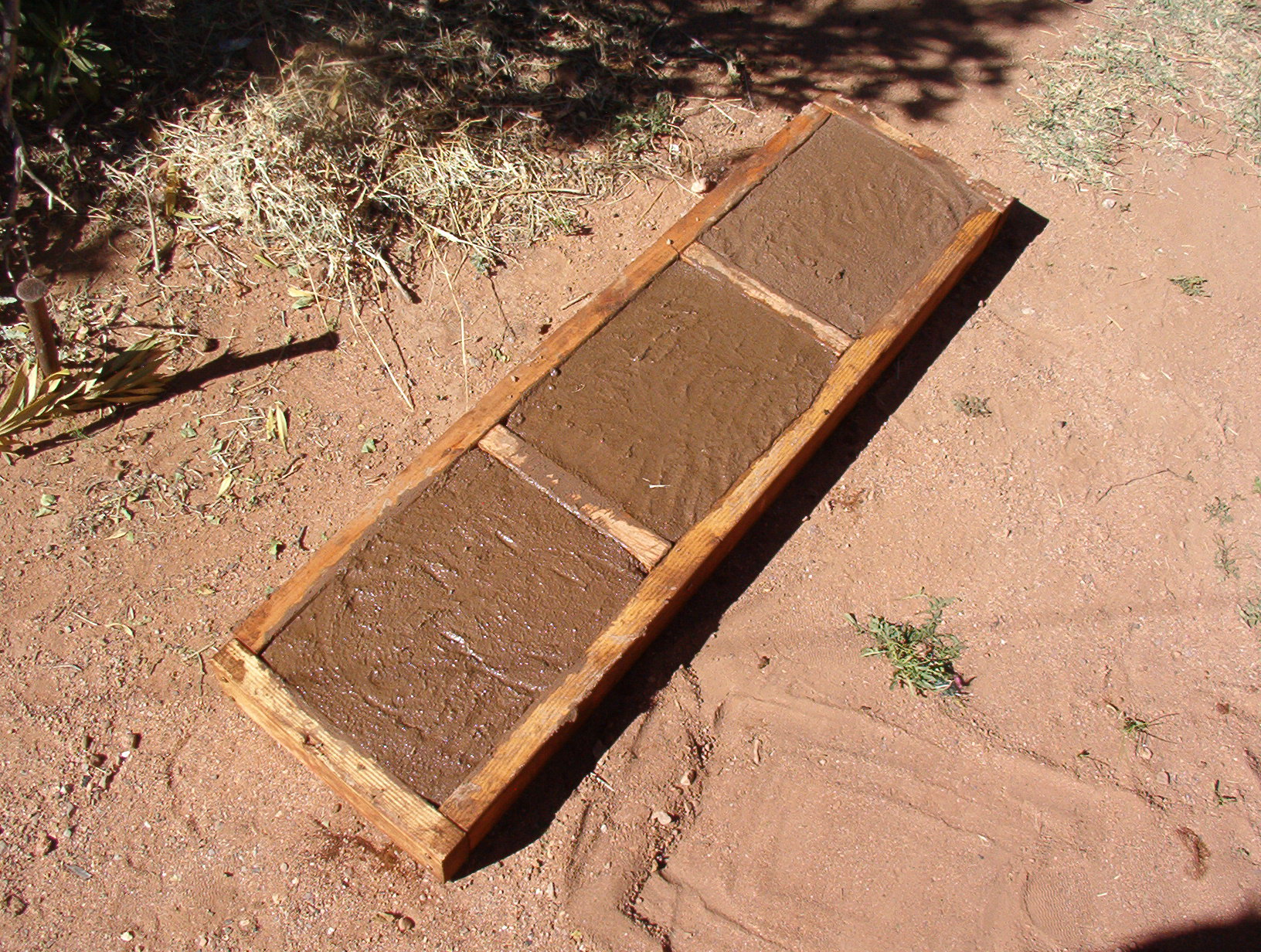
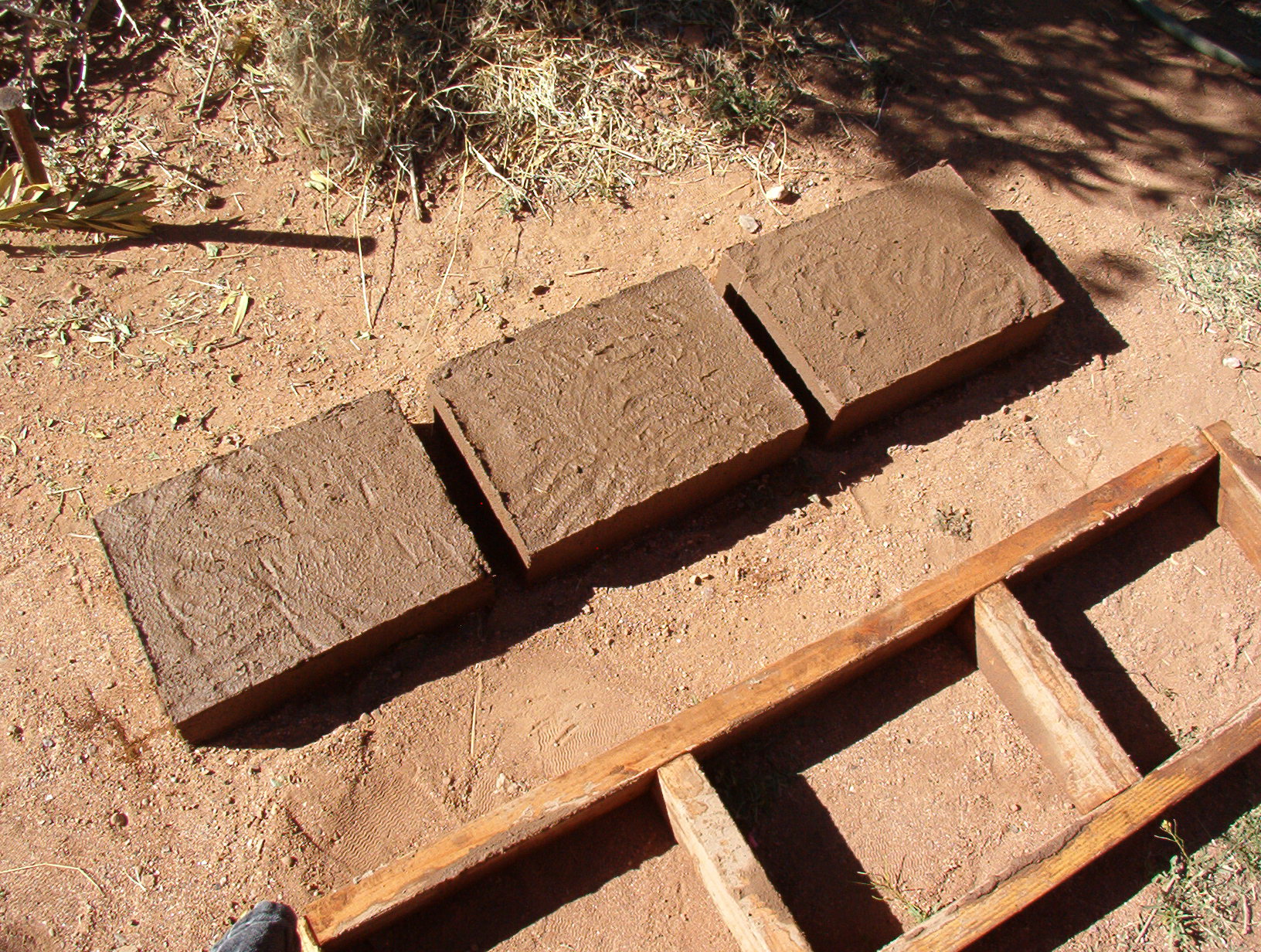
OR . . . My first new adobes - fun digging in the dirt - (4"x10"x14" each block)
I simply lifted up the form and there it is ready for the next batch of mud!

+++++++++++++++++++++++

Garden as Therapist and Community Organizer

By Craig Chalquist

Published in the Winter 2009 issue of Communities magazine – Issue #145

“When my therapist diagnosed me with Major Depression, she referred me to a psychiatrist, who prescribed an antidepressant. Neither asked me if I liked to garden.

This omission should not sound strange. American psychology rolls off the assembly line of American culture: a culture of hyper-individualism, where your moods and conflicts remain tucked away inside you. The presence or absence of your connection to nature, to plants and animals, to climate, or to community (it is thought) have nothing to do with your illness or health. The solutions, like the problems, are internal.

As a matter of fact, I knew little about gardening back then. I passed most of my days indoors, in aptly named apartments and in linoleum-floored classrooms where I learned how to be a psychotherapist. Sigmund Freud, Virginia Satir, Irv Yalom, and Aaron Beck were included in the curriculum. John Muir, Patch Adams, Josephine McCracken, and Alice Walker were not.

In the early 1990s, pastoral counselor Howard Clinebell grew tired of this artificial split between self and natural world. Aware that it impaired human health, he collected a number of natural practices he used in his counseling work: gardening, walking, appreciating scenery, gathering plants, being around animals, strolling near lakes and on seashores. He called this ecotherapy and published a book by that name.”

READ ENTIRE ARTICLE BY CLICKING ON THE TITLE – IT’S AN ACTIVE LINK

Craig Chalquist, Ph.D. is an author, educator, and core faculty member of the School of Holistic Studies at John F. Kennedy University in Pleasant Hill, California. His books include Terrapsychology: Re-engaging the Soul of Place and Ecotherapy: Healing with Nature in Mind (visit ecotherapyheals.com).
Articles by Craig Chalquist

+++++++++++++++++++++++