+ARE WE SUPPOSED TO HATE THE PARENTS OF ‘PRECIOUS’?

+++++++++++++++++++++

OK.  OK I found exactly what I was looking for.

All afternoon I’ve had the nagging thought that I need to write a post about what I think about Precious’ mother, Mary.  By the end of the film, Precious: Based on the Novel “Push” by Sapphire, Mary is left as a despicable monster, literally an untouchable.

No matter what, wasn’t Precious’ mother still a human being?  Why would she not be worthy of compassion?  Where is the line we draw that determines who we feel sorry for, who we empathize with, who we have pity or sympathy for, who we hate and who we love?

I have referred to my own mother as ‘a monster’.  I know what she was like, especially when she was in the throes of one of her maniacal rages.  Does this mean that my mother ‘deserved’ to be hated?

Did Precious’ mother deserve to be hated?  Did her father?

The key to this movie’s final, finished finesse lies in the barely perceptible yet still obvious twist of the shoulder of social worker, Ms. Weiss away from her when Mary reaches out a pleading hand and touches her as Weiss walks out of the interview.  Weiss didn’t say to Mary, “You are a sick woman.  You need help.  Here’s a card with a number on it.  Call and there will be someone there who will care about you.”

++

Wanting to rescue an abused child does not require hate for the abuser.  Watching this film, wanting Precious to escape the horrors of her home did not require that I hate her mother, either.  My personal passion as a viewer of this film was focused on waiting for the moment when Precious could separate herself from her mother, from that twisted, hate-filled environment, from danger, from darkness into a place of safety and security.  Had that moment never arrived in this film I would not be writing this post.  Had that moment never come, I would hate this movie, but I would still not hate the mother.

Yet the mother was left in the film as a vulnerable target for us to despise with disgust.  The rapist father?  I consider myself extremely fortunate to not be the victim of rape, incest or of any form of overt sexual abuse.  I cannot possibly know what it would be like to view this film if I did have such a history.

I do have a history of having a parent in the home, my father, who knew my mother’s terrible abuse of me continually happened and did nothing to intervene, protect me or stop it.  In one of the final scenes of this movie, Precious’ mother discloses the details of the first time her boyfriend sexually assaulted her three-year-old daughter and how she did nothing to intervene.  We are told in nearly point-blank terms that Mary suffered from a severe insecure attachment disorder:  “Who would love me?”

Precious’ mother did not protect her daughter.  Instead, her own brokenness demanded of her that she HATE her daughter for ‘stealing’ her boyfriend’s attention away from her.  How are we to forgive a woman who could participate IN ANY OF THIS?  How are we supposed to not HATE her?

It is the power of art – the writing of this story, the directing of this film, the talent of the actresses portraying the characters that designates that we hate this girl’s mother.  If we DO NOT hate her, we have not participated as willing audience members in the intention of this art form.

That’s quite all right with me.  I personally don’t want to be on the side of darkness where hatred breeds and seeds itself into the lives of its victims.  I would rather be able to loosen my mental and emotional grip enough to allow something other than hostile hatred, disgust and a feeling of “She is despicable” to envelope me.

I know that darkness.  I spent the first 18 years of my life in that darkness.  What makes this movie shine is the fact that Precious did not allow the darkness present in her life to consume her.  Never in the film are we shown that Precious swallowed any portion of the force-fed poison of hatred.  That, to me, is the power of being able to turn around finally and walk away into a different world where the abuser is not physically in it.

++++

I was fortunate as I plowed my way through web pages about this movie tonight, and found this year-old post:

Mo’Nique, PUSH Interview, Sundance 2009

By Eric Kohn

The film was evidently still known by it’s literary title, Push, at the 2009 Sundance showing:   Read the entire interview HERE.  What I was looking for appears part way down the interview’s script, as entertainer (comedian, now Oscar winner) Mo’Nique, who played the part of Precious’ mother, responds to the questions posed by Kohn:

You deliver a fairly intense monologue at the end of the movie that really ties it together. Do you see Mary as a sympathetic character?

Yes, I think that all of us know Mary.  I had to put her shoes on.  If I were that person, I would want forgiveness.  You do feel sorry for her because you begin to understand she’s mentally ill.  She ain’t just being a bitch.  She’s sick, and the society that we’re in, they threw her away.  Nobody asked any questions, nobody got involved.  That illness doesn’t just start.  People know for years.  We wanted to bring that world and put it right in your face.  To say, they exist; they’re your neighbor.  It might be your mother; it might be your sister.  It might be you.  What we were trying to do is not make it an action-and-cut Hollywood movie.  I think Mr. Daniels did a great job.

What guidance did he provide?

He said, “I need you to be a monster,” and that was it:  “Be a monster.  I need people to hate that character.”  Then he asked me before we started filming,  “Do you think that everybody gets redemption?”  I said,  “No, especially if you don’t ask for forgiveness and mean it.”  The moment he said action, the monster she was.

You brought to the table what you understood about the character.

Well, I was molested.  The person who molested me was a monster.  So I had to go to that person, because I know what it was like for me.  [Daniels] said action, and be that monster.

There has been talk that the movie is a tough sell. How do you see it working in the marketplace?

It’s honest.  You can’t be afraid, and you have to go and work at being fearless.  If you go into it saying, well, if I don’t believe it, then you won’t believe it.  As long as I believe it, you will believe it.  This is a universal film.  Do you know what I mean?

That’s what I wrote in my review.

It’s all over the world – molestation and abuse, mental and verbal.  It’s all over.  It’s not just black.  It’s not just white.  It’s every color, every walk.  It’s everywhere.  I haven’t met any Martians, but I promise if we have some, it is going on with them, too.

+++++++++++++++++++++

SHARE A PRAYER

O God, refresh and gladden my spirit.  Purify my heart.  Illumine my powers.  I lay all my affairs in Thy Hand.  Thou art my Guide and my Refuge.  I will no longer be sorrowful and grieved, I will be a happy and joyful being.  O God, I will no longer be full of anxiety, nor will I let trouble harass me.  I will not dwell on the unpleasant things of life.

O God, Thou art more friend to me than I am to myself.  I dedicate myself to Thee, O Lord.

– ‘Abudu’l-Baha

in Baha’i Prayers, Baha’i Publishing Trust, 1969

+++++++++++++++++++++
+MY REACTION TO THE MOVIE, ‘PRECIOUS’

+++++++++++++++++++

I started watching the movie, Precious: Based on the Novel “Push” by Sapphire last night and finished it today.  This post is not about the movie itself although there’s plenty TO say about it – and plenty that HAS been said.  This post is about my personal reaction to it.

My horrendous infant-child abuse history does not include incest or any other overt sexual abuse that I know of.  My history does include an insanely abusive mother.

I make no effort to alter my reactions to this movie from the way I first wrote them down.  They appear in three parts:  Comment, Description and Comment.

++++++++++++++++++++++++++++++++++++++++++++

COMMENT:

Precious:  “Someday I’m going to be normal.”

I had zero concept or normal, no idea how strange I was because my life was so strange.  I had no idea of how strange my life was.

++

Brutal

Brutality

A world no one outside can imagine

There is nowhere to go but forward through it all – one instant at a time.

++

No point of reference outside of the home.  No possible reality check

++

Twisted mentality

No way to know what is true.  No possible way.

++

Hate

Being hated

++

Being brave

Not the same thing as courage

It’s trying, continuing on

Trying

Because there’s no other option and no other choice

Brave

When things are hard

Being strong and tough

++

Precious:  “Sometimes I wish I were dead.”

I never got to that point.  I never knew it existed.

++

I had advantages.  Being white.  A working Dad.  Good health.  No sexual abuse.

++

No possibility of fighting back.

Zero.  A reality.  A fact of the situation.

Not the same thing as being a “victim”

When we react as a part of the reality of our environment, that’s not US – our self travels with us through all kinds of situations.

A situation can be victimizing – that does not make us a victim or mean we are one.

We can’t invent the wheel all by ourselves growing up.  We need help from someone for comparison –in this way, we are born as a blank slate.  If we’re isolated enough we can’t somehow magically know there are alternatives.

That’s what deprivation does.  It limits what we can conceive of.

++

Who gives us a chance?

++

Who can we tell our truth to?

++

So many obstacles.

I never imagined.  No ability to fantasize.  That’s a pretty big thing to have stolen from me.  Even being powerless otherwise, the power to imagine is something.

I was forced into a literal world.  One time in 2nd grade mother left us with a baby sitter at the apartment building in Anchorage that we had recently moved out of.  I actually took the liberty – naturally – to involve myself with play with my siblings and with the other children present.

We made a hospital with a blanket draped over a card table.  I was sick.  I was drinking water from a soda bottle in the pretend hospital when my mother arrived back from her plastic-selling party.

Twisted my reality.  Why was I pretending to be a baby and why was I drinking from a baby bottle?

“No mother.  It was a soda bottle.  It was pretend medicine.”

No.  It was a baby bottle and for the next eleven years this incident, added to my mother’s abuse litany, proved that I did not want to grow up.  That I wanted to remain a baby.  And, of course, that I was a liar.

This is my only memory of myself DARING to imagine, to fantasize.  It is one of thousands of incidents where my mother distorted, overwhelmed and devoured my reality and then used her distortions to brutalize me over and over and over and over……. Again.

She distorted everything – hurt me (damaged me) that she distorted the reality I lived in and hence MY reality.

++

I never wanted anything different.

I didn’t know it was even possible.

++++++++++++++++++++++++++++++++++++++++++++

DESCRIPTION:

Before the break came in the wall that confined this girl in her world of hell, her entire life was ‘small’ and it had made her ‘small’.

A severely abusive home-life removes nearly all opportunities for discovery about the self and the world.

A confinement box.

A cage.

Captured.

Captivated by the madness.

A captive of it.

A prisoner of war.

It makes self-based reactions and actions all but impossible.

The ability to fantasize and imagine is a sign a self exists, but it’s not enough.  It doesn’t indicate a self is present as a whole entity.  The fact that I lacked even this rudimentary skill simply means that during my childhood I never even ‘made it that far’.  Not even in my imagination could I escape ‘the box’.  The ability to fantasize and imagine is tied to an early ‘play stage’ of pretend – a stage of HATCHING related to exploration.

++

Simple human kindness has to be present somehow, somewhere, in order for a self to recognize that it is human – that the self even exists at all, let alone that the self is a human being.

++

If one can imagine-fantasize from within the barely cracked ‘egg’, this ability, because it exists, can be exercised once escape happens.

But nothing is ever going to be able to let all the blank places fill in where early development was missed, interfered with and aborted.

These blank spots are missing links in the chain of development.  A loved and properly parented child will express itself through an integration of self and the world in ongoing, continuous action and interaction.  When this chain is missing (and in pieces), when it is broken, those unintegrated fragments exist as dissociations in the continuity of a self in the world.

++

I think of a wooden plank boardwalk.  Experiences that come from a developing child-self being able to interact successfully with the world (with power) create solid planks.

As these planks are naturally created and laid in place, an entire continuous (and contiguous)  walk way is built in an ongoing way.

When an abuser introjects their madness (and meanness) into a child’s life – which is always inappropriate – the child misses out on laying a solid plank down.

Even when a child does the very best that they can do to ‘handle’ these abusive encounters, the board they are forced to add onto their continuously expanding (lengthening) boardwalk will still be in effect a rotten one.  It will be faulty and unsubstantial because the ratio of their own self influence in the encounter compared to the overwhelming influence that the abuser contributed makes it so.

In extremely abusive childhoods when no adequate early caregiver is present that helps the child to lay substantial solid boards into their growing boardwalk, there can be sections that are empty.

These gaps create problems that are permanent and last for a lifetime.  When attachment experts state that the inability to follow Grice’s Maxims in the telling of a coherent life story is the primary symptom of an insecure attachment disorder, they are describing what is missing.   They are pointing to the broken sections of a person’s life-experience boardwalk where past opportunities to connect one’s own self to the world have been ruptured and never repaired.

++

Because most extremely abusive parents traveled through their own infant-childhoods and into their adulthood with one of these completely faulty boardwalks themselves, one way or the other they are stealing the life force of their children and are, in effect, robbing boards from their children’s boardwalk and adding them in some fashion to their own.  Every time a caregiver abusively overwhelms an infant-child they are preventing that child from being able to lay down their own self-motivated and self-involved (appropriately) next step in development.  Every time these abusive transactions occur some variation away from healthy, normal and substantial is taking place.

++

Now, to get a truer picture of how severe early abuse affects the ongoing life of an infant-child, we need to comprehend that survivors are at the same time being given such a challenging walk through life that their boardwalk will never lay upon anything like level ground.

The world underneath them is being mined away by the abuse.  They, and their ability to live a happy life of appropriate well-being is being undermined.  What should have been their boardwalk becomes a suspension bridge spanning dangerous ravines and abysses.  Their walk through life has always been dangerous.  Their connection to stable ground and to a sense of safety and security has always been inadequate, faulty, and precarious.

What could have become ‘a walk in the park’ has been changed into a blindfolded awkward stumbling waltz over completely unseen and unprepared for hostile territory on a flimsy, shaky, faultily tethered fragile bridge constructed of rotten boards and wide gaping holes.

++

All the while this reality is happening for infant-child severe abuse and trauma survivors, those we encounter anticipate that we are just the same as they are.  We are expected to be the same; act the same, feel the same, think the same, know the same information about the world and about ourselves in it – in the same way – that non-early traumatized people do.  “Ain’t possible.”

If we pay attention to how we feel, we know we are aliens in an alien world.  We are like Precious, sitting like an alien stone in the back of her beloved math class, wishing she was animated and normal while having no real clue about how different she is or why.

++

On the far extreme, unlike this movie girl, I was incapable of even conceiving of what normal was – or even that it existed.  I had no way of comparing either myself or my experience to anyone or anything.  The ability to have that awareness was a missing board in my boardwalk.

In fact, given what we are shown in this film about the inside of Precious’ life, I would guess that even this glimmer of awareness about normal only happened because the writer of this story took the literary option of giving it to this character.

++++++++++++++++++++++++++++++++++++++++++++

COMMENT:

Hope.

Precious:  “I think them was in a tunnel.  And in that tunnel maybe the only light they had was inside of them.  And then long after they escape that tunnel they still shining for everybody else.”

++

Encountering our past in our present

Can be like falling into dark holes of the soul

++

Finally, she cries.  Finally she shows the pain.  Finally, she feels her pain.  Finally she cannot separate herself from it.  And right here when the doubt for surviving breaks through comes, “I’m too tired……”

A crisis of the soul:  What is love?  Who loves me?

++

Sick sick sick mothers

In a sick world where murky is too good a word.

Where right and wrong have to come from the outside

Because there is no hope of any REASON on the inside – where hate remains insanely justified.

The ONLY reason-able thing to do is to turn and walk away

To claim our OWN life

Separate from the madness (like separating an egg yolk from its white)

We are fortunate when things finally get this clear and normal no longer matters –

WE DO!

+++++++++++++++++++

See also:  “Precious” and the Oscars

+++++++++++++++++++

+ARE YOU A ‘SENSITIVE?’

++++++++++++++++++

I appreciate this link on information about sensitivity being sent to ‘my attention’.  It reminds me of the description of the ends of a ‘personality’ spectrum being like ‘hawks’ on one end and ‘doves’ on another — SEE:  *Allostasis and Allostatic Load for more information, including a presentation about even the differences in the immune system between these two types of people.

(Also this link to articles by Bruce McEwen on the subject)

Throughout human history, there have always been ‘sensitives’ that were specifically geared to gathering plants.  Even their immune system response is specifically geared to fight the kind of pathogens that are more likely to appear within this kind of environment.  These ‘dove’ people’s immune system is different than the ‘hawk’ people’s immune system as the ‘hawks’ are more likely to receive wounds in combat and the hunt for large game that required a different immune system response.

++++

I am a ‘dove’ person as is my oldest brother.  When ‘sensitives’ are exposed to severely traumatic, unstable and unpredictable early home circumstances, I believe we follow a different kind of ‘suffering’ pathway than do those who are less sensitive and ‘hawkish’ (like my mother).  (Perhaps some are naturally easier prey and others predators?)

This article posted here is interesting, to say the least!

++++++++++++++++++

http://www.livescie nce.com/health/ shy-brain- process-informat ion-differently- 100405.html

Study Sheds Light on What Makes People Shy

By LiveScience Staff

posted: 06 April 2010 08:07 am ET

The brains of shy or introverted individuals might actually process the world differently than their more extroverted counterparts, a new study suggests.

About 20 percent of people are born with a personality trait called sensory perception sensitivity (SPS) that can manifest itself as the tendency to be inhibited, or even neuroticism. The trait can be seen in some children who are “slow to warm up” in a situation but eventually join in, need little punishment, cry easily, ask unusual questions or have especially deep thoughts, the study researchers say.

The new results show that these highly sensitive individuals also pay more attention to detail, and have more activity in certain regions of their brains when trying to process visual information than those who are not classified as highly sensitive.

The study was conducted by researchers at Stony Brook University in New York, and Southwest University and the Chinese Academy of Sciences, both in China. The results were published March 4 in the journal Social Cognitive and Affective Neuroscience.

The sensitive type

Individuals with this highly sensitive trait prefer to take longer to make decisions, are more conscientious, need more time to themselves in order to reflect, and are more easily bored with small talk, research suggests.

Previous work has also shown that compared with others those with a highly sensitive temperament are more bothered by noise and crowds, more affected by caffeine,  and more easily startled. That is, the trait seems to confer sensitivity all around.

The researchers in the current study propose the simple sensory sensitivity to noise, pain, or caffeine is a side effect of an inborn preference to pay more attention to experiences.

They first used an established questionnaire to separate the sensitive from the non-sensitive participants. Then, the 16 participants compared a photograph of a visual scene with a preceding scene, indicating whether or not the scene had changed. Scenes differed in whether the changes were obvious or subtle, and in how quickly they were presented. Meanwhile, the researchers scanned each participant’ s brain with functional magnetic resonance imaging (fMRI).

Sensitive persons looked at the scenes with subtle differences for a longer time than did non-sensitive persons, and showed significantly greater activation in brain areas involved in associating visual input with other input to the brain and with visual attention. These brain areas are not simply used for vision itself, but for a deeper processing of input.

Role in evolution

The sensitivity trait is found in over 100 other species, from fruit flies and fish to canines and primates, indicating this personality type could sometimes provide an evolutionary advantage.

Biologists are beginning to agree that within one species there can be two equally successful “personalities. ” The sensitive type, always a minority, chooses to observe longer before acting, as if doing their exploring with their brains rather than their limbs. The other type “boldly goes where no one has gone before,” the scientists say.

The sensitive individual’s strategy is not so advantageous when resources are plentiful or quick, aggressive action is required. But it comes in handy when danger is present, opportunities are similar and hard to choose between, or a clever approach is needed.

Copyright © 2010 TechMediaNetwork. com

++++++++++++++++++

http://www.livescie nce.com/health/ shy-brain- process-informat ion-differently- 100405.html

Study Sheds Light on What Makes People Shy

By LiveScience Staff

posted: 06 April 2010 08:07 am ET

The brains of shy or introverted individuals might actually process the world differently than their more extroverted counterparts, a new study suggests.

About 20 percent of people are born with a personality trait called sensory perception sensitivity (SPS) that can manifest itself as the tendency to be inhibited, or even neuroticism. The trait can be seen in some children who are “slow to warm up” in a situation but eventually join in, need little punishment, cry easily, ask unusual questions or have especially deep thoughts, the study researchers say.

The new results show that these highly sensitive individuals also pay more attention to detail, and have more activity in certain regions of their brains when trying to process visual information than those who are not classified as highly sensitive.

The study was conducted by researchers at Stony Brook University in New York, and Southwest University and the Chinese Academy of Sciences, both in China. The results were published March 4 in the journal Social Cognitive and Affective Neuroscience.

The sensitive type

Individuals with this highly sensitive trait prefer to take longer to make decisions, are more conscientious, need more time to themselves in order to reflect, and are more easily bored with small talk, research suggests.

Previous work has also shown that compared with others those with a highly sensitive temperament are more bothered by noise and crowds,more affected by caffeine, and more easily startled. That is, the trait seems to confer sensitivity all around.

The researchers in the current study propose the simple sensory sensitivity to noise, pain, or caffeine is a side effect of an inborn preference to pay more attention to experiences.

They first used an established questionnaire to separate the sensitive from the non-sensitive participants. Then, the 16 participants compared a photograph of a visual scene with a preceding scene, indicating whether or not the scene had changed. Scenes differed in whether the changes were obvious or subtle, and in how quickly they were presented. Meanwhile, the researchers scanned each participant’ s brain with functional magnetic resonance imaging (fMRI).

Sensitive persons looked at the scenes with subtle differences for a longer time than did non-sensitive persons, and showed significantly greater activation in brain areas involved in associating visual input with other input to the brain and with visual attention. These brain areas are not simply used for vision itself, but for a deeper processing of input.

Role in evolution

The sensitivity trait is found in over 100 other species, from fruit flies and fish to canines and primates, indicating this personality type could sometimes provide an evolutionary advantage.

Biologists are beginning to agree that within one species there can be two equally successful “personalities. ” The sensitive type, always a minority, chooses to observe longer before acting, as if doing their exploring with their brains rather than their limbs. The other type “boldly goes where no one has gone before,” the scientists say.

The sensitive individual’s strategy is not so advantageous when resources are plentiful or quick, aggressive action is required. But it comes in handy when danger is present, opportunities are similar and hard to choose between, or a clever approach is needed.

Copyright © 2010 TechMediaNetwork. com

+LINKS TO NOTE ON CONVERSATION WITH MY SISTER

++++++++++++++++++

Mother believed I was not human, was the devil’s child who could do no right.  My sister two years younger than me was picked by mother as God’s child who could do no wrong–

*Notes from a conversation with my (1953) sister

++++++++++++++++++

+MY HEART IS NOT BREAKING – IT’S BROKEN

++++++++++++++++++++

I don’t think I’m alone in how I feel right now.  In fact, I’m quite sure other commenters have talked about this — feeling like we MUST act phony around other people, never truly feeling OK being our authentic (often quite miserable) severe infant-child abuse survivor self.

I spent the day physically active, working hard to concentrate on every screw I placed, every rock I placed, every paint brush stroke, every step I took throughout the day — so I could, if possible, neither THINK or FEEL.

The fact of the matter is that I don’t want to be alive.  I wondered about this today in terms of how I felt as a child way before I could ever think in terms of not wanting to be alive.  I think it’s something my body knew, my soul knew – but I had no words for anything I felt.  I had no thoughts about anything I felt, either.

But for all my suffering for those 18 first years, did I not want to be here?  Do I feel the same today as I did back then only now I know what and how I feel?  Today I realized it’s not accurate for me to say “My heart is breaking.”  My heart is broken.  It broke when I was very very very young and small, and I honestly think, except for distractions over the years of my life, that my heart has always been broken and always will be.  At 58 I’ve run out of rope waiting for a miracle.

As I’ve written before, being diagnosed with advanced, aggressive breast cancer nearly 3 years ago was most difficult because I KNEW I didn’t want to be here.  I can’t say that I went through any of my treatments because I truly wanted to.  Authenticity would have me dead by now.  I fought it for everyone else, and I am mad as hell I am still here – and that’s the authentic truth.

As one commenter suggested today, no amount of compassion or forgiveness, empathy or understanding, no amount of intellectual fact finding is ever REALLY going to take the pain away of what was done to us.

++++

One thing I did today was toss every single piece of my mother’s writing I have already transcribed into the compost pile.  (For some reason all pictures are included in the slideshow, but below that is the description that goes along with the fence pics!)

This slideshow requires JavaScript.

++++

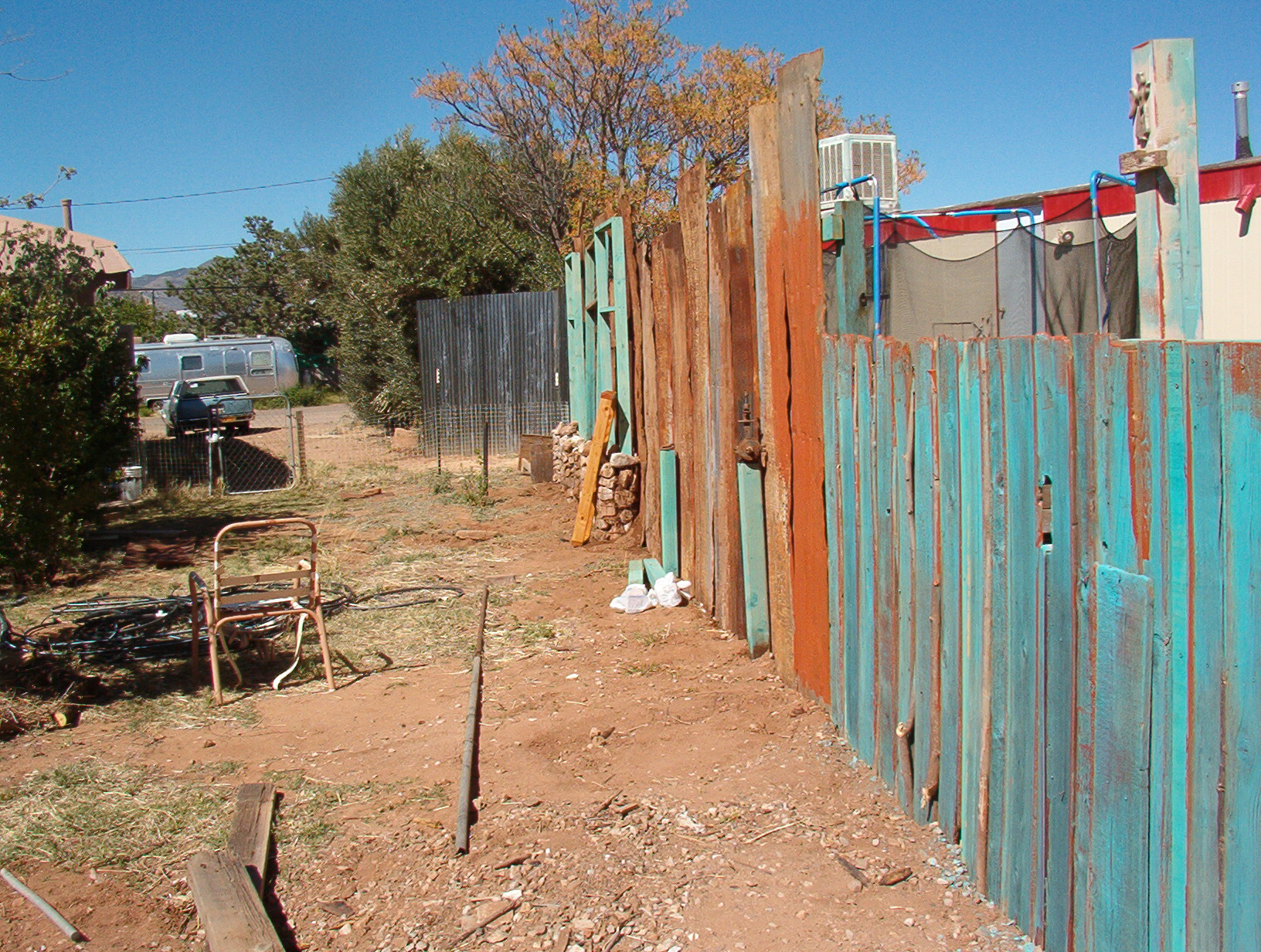
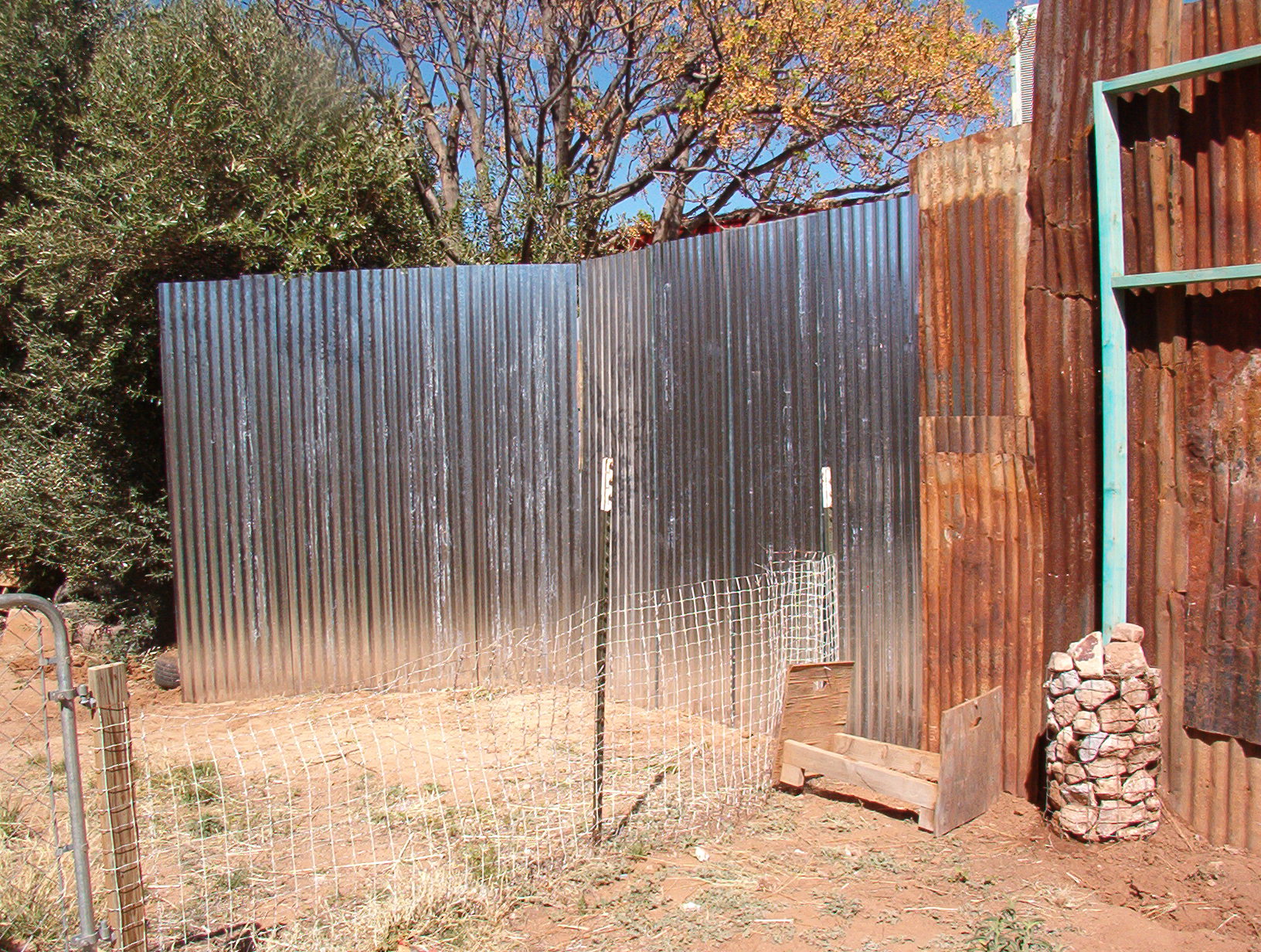
I also finished the fence:

I ran out of recycled rusty steel so yesterday spent $160 for materials to finish these two 8-foot sections (8' tall, some of the rusty stuff is 10', with one piece 12') - stuff today is FLIMSY! and costly!
Looking north at the entire fence (that's the neighbor across the street's trailer, my El Camino) - I don't know yet if/how I'm going to close this end off - the tall upright forms, held by rocks in wire, are designed to (anti-wind) stabilize the tall steel pieces I have to way to cut. Now, all I need are 3 climbing rose bushes to plant and train on them
I was lucky a couple of years ago - went to our 'dump' area and they actually had some paint there to take, this yellow is from there, watered down, still have a little left to touch up tomorrow - interior paint, but what the heck!
3-block form for adobe bricks I made today, it's soaked with motor oil so the mud will slide out - not ideal dirt here, too sandy, will add a little cement and hope it works - plan to level the yard, taking 'extra' and turning it into bricks - I love making adobe, haven't done it since I lived in Taos, New Mexico in 1994-5 (that was perfect mud to mix with sand)

++++

So, without being able to see the man I love I am miserable.  There is no reprieve now.  I have to work every second of 24-hours (even when I try to sleep) – yes, it makes me soul weary!  I ‘try’ to feel grateful.  I ‘try’ to think about how I might ‘help others.’  I ‘try’ to have hope.  But most of the time I feel like I am running up hill on empty.

++++++++++++++++++++

12 Alternatives to Lashing out at Your Child

In honor of April as Child Abuse Prevention Month, please remember when the big and little problems of your everyday life pile up to the point where you feel like lashing out, don’t take it out on your kids. Try any or all of these simple alternatives:

1. Stop in your tracks. Step back. Sit down.

2. Take fave deep breaths. Inhale and exhale slowly.

3. Count to 10. Better yet, to 20. Say the alphabet out loud.

4. Phone a friend or relative.

5. Still mad? Punch a pillow. Or munch on an apple.

6. Do some sit-ups. If you have someone to watch your children, take a walk.

7. Flip through a magazine, book, newspaper, or a photo album.

8. Pick up a pencil and write down your thoughts.

9. Take a hot bath or a cold shower.

10. Lie down on the floor or just put your feet up.

11. Listen to the radio or your favorite music.

12. Call the Prevention & Parent Helpline at 1-800-CHILDREN, from anywhere in New York, in English and Spanish. The Parent Helpline can connect you to programs and services where you can get help.

++++++++++++++++++++

+I PULLED THIS OUT OF MY EMAIL TRASH…

++++++++++++++++++++++++++

I forced myself to go back and pull this post out of my email trash which is exactly where I immediately dropped it when it appeared in my in-box yesterday.  I guess I’m in no mood to even try to figure out why this post even appeared in regard to child abuse.

“If you are witnessing child abuse in a public place:   avoid judging, assess the situation, and assess yourself. ”  What about reporting abuse?  There’s no mention in this entire post which was sent out by Prevent Child Abuse New York’s Blog, a reputable site that I have trusted often in the past as an excellent source of child abuse prevention information.

So, is this following piece simply ABOUT PREVENTION?  I just can’t eliminate the idea of ‘judging’ from any abuse toward a child!  How do you readers react to this piece?  I am just too tired to think about this, other than to say nothing like this (below) was remotely possible in my mother’s home, and none of these simplistic (nice) suggestions would have helped me or my siblings even one single tiny bit.

++++++++++++++++++++++++++

Responding to Child Abuse in a Public Place

Posted: 05 Apr 2010 08:18 AM PDT

We’ve all been there—in the grocery store or some other public place bearing witness to a small child throwing a tantrum and a parent who, unable to cope with the stress, lashes out. People often ask us what to do in these situations. The following information, courtesy of Prevent Child Abuse Minnesota’s Wakanheza Project, provides some direction on this issue.

The Wakanheza Project provides simple, usable tools and strategies that allow individuals, businesses, and communities to provide more welcoming, respectful environments for children, young people, adults and families.   If you are witnessing child abuse in a public place:   avoid judging, assess the situation, and assess yourself.  If you are ready, then . . .

1.   Offer assurance through a smile or a positive comment.
2.   Show empathy—imagine yourself in the other person’s shoes.
3.   Offer encouragement—say something positive that you see about the child or adult.
4.   Distract and redirect their attention away from the stressful situation.

The Wakanheza Project is built around the power of the Dakota word for child—Wakanhez—which translates in English as “Sacred Being” and six principles that can change the way people regard and treat one another.   The Wakanheza Project principles provide a lens for people to understand and effectively respond to stressful situations in order to create more welcoming environments.

Judgment: We make judgments every day to help us make decisions.   When we see a person who is struggling and we make assumptions and judgments about who they are and why they are behaving as they are, it is difficult, if not impossible, to see ways to be helpful; it is difficult to see then as fellow, worthy human beings.   It’s important to move those judgments out of the way in order to help out in situations.

Culture: The power and impacts of showing kindness and understanding through simple gestures including smiles and offers of assistance crosses cultural and language barriers.   We all bring culture to the world in many ways.   The Wakanheza Project offers the universal experience of empathizing with fellow humans and respectfully reaches across perceived cultural barriers (race, ethnicity, poverty, gender, age, religion, sexual orientation, etc.) to lend a hand.

Powerlessness: Violence typically arises from a sense of powerlessness.   We may witness people acting violently, misusing their power, but it is generally in response to a feeling of powerlessness.

Empathy: Empathy is defined as “the capacity for participating in the feelings or ideas of others.”   We all have this capacity, and when we practice it, place ourselves in the shoes of another, it becomes simple to show understanding and offer a helping hand.

Environment: People tend to respond very well to welcoming environments.   Parents and children can immediately sense whether a public environment is welcoming, and this sense will have a great impact on their behaviors within the building.

The Moment: The Wakanheza Project is all about suspending judgment, understanding the impacts of powerlessness and environment, rejoicing in culture, and practicing empathy.   We all have the ability, and the obligation, to show caring, kindness and respect in the moment. We do not know what happened before or what will happen next, but we can practice The Wakanheza Project in the moment and greatly increase the likelihood of peaceful, positive interactions in our communities.

The above information is drawn from Prevent Child Abuse Minnesota’s Wakenheza Project.

++++++++++++++++++++++++++

+CAN’T WRITE ABOUT SADNESS

+++++++++++++++++++++

Lately I haven’t been able to write here.  The part of me that could whip words around seems to be gone.  For how long, I do not know.

I did want to post the link to something my brother left here for me when he came to visit a week ago.  It is from the letter he wrote two years ago in support of my application for Social Security Disability.

*Statement from my oldest brother (1950)

Mostly lately I seem swallowed in sadness.  I miss more than I can ever say the man I love whose presence vanquished my sorrow.  This sadness has been with me since I was a very tiny baby, and has only been removed for temporary times through certain different circumstances at various times over these past 58 years.

Nothing is making the sadness go away right now.  I cannot see the future.  I miss my best friend.  I miss him terribly.  There’s no point in writing about that, so I don’t.

(I have my yard fence almost done.  I am making progress learning to read music and playing piano keyboard.)

+++++++++++++++++++++

+LINK TO MY MOTHER’S 1958 LETTERS

++++++++++++++++++++

It is not a fun process to be back at the job of transcribing my mother’s letters.  I finally finished doing these letters:

+1958 MOTHER’S LETTERS – FINDING LAND

For some reason I skipped this year months ago when I transcribed many, many of my mother’s other letters for other years.  The first day of 1958 coincided with the start of our 6th month in Alaska.  We lived in the rented log house whose lease was up on July 1.

During April and May my father hiked back into the Eagle River Valley and found the land he staked claim to as our 160 acre homestead.  In June my grandmother arrived for her first visit (a month) to the territory.

The cabin (shack) we moved into July 1958 and left October

By the end of July we had moved into a primitive rented cabin.  By mid-October we moved into an apartment in Anchorage.

The Jeep truck my parents named "The Monster" and the apartments we moved into in 1958 for my 2nd grade year

If you read little else of these letters, read the one written December 29, 1958 — it’s a classic mother letter!  It describes what happened – from my mother’s point of view – when my mother took the only outside job with a boss that I ever knew her to have during my childhood.  It was a part-time evening job that she held for a little over a month.  My guess is that her true Borderline colors were flying, and others reacted to her (heaven forbid!).  She could not control her work environment the way she controlled her home and children.  The result was a natural disaster.

After working many hours today on transcription, I am tired and sick of my mother!  Now, I have to decide what I am going to do about the rest of the 1957 letters that I have left until the very last.

I feel like I have spent the day in a place without any light at all, in the complete darkness of my scrambled, devastating childhood — little of which, of course, shows up in my mother’s bizarrely surreal letters.

++++++++++++++++++++

Borderline Personality Disorder People with BPD, and their family members, sometimes wonder why certain people get the disorder and others don’t. Sometimes there is a clear environmental cause (e.g., a history of psychological trauma), but research suggest that there are also biological factors.
Genetic Links to BPD
Studies of BPD in families show that first degree relatives (siblings, children, parents) of people treated for BPD are 10 times more likely to have been treated for BPD themselves than the relatives of people with schizophrenia or bipolar disorder.
Will My Kids Get BPD Too?
If you have BPD, your kids are at greater risk of having BPD themselves. But, there is also a good chance that they will not have BPD. And, there are things you can do to reduce their risk.
Can BPD Be Prevented?
If the causes of BPD are in part biological, is there anything that can be done to decrease your risk for BPD?
BPD Family Resources
Sometimes it may seem like there is help available for the person with BPD, but not for his or her loved ones. Fortunately, there is a growing appreciation for the need of BPD families to have their own sources of information, treatment, and support.

++++++++++++++++++++

April is Child Abuse Prevention Month

Posted: 05 Apr 2010 07:54 AM PDT

All children in New York deserve a healthy, happy and safe childhood. This April, it’s your turn to make a difference for the kids in your neighborhood!

To raise awareness of April as Child Abuse Prevention Month, Prevent Chid Abuse New York (PCANY) and its sister chapters around the nation mobilize Pinwheels for Prevention campaigns. As part of these campaigns, New Yorkers make a promise to prevention by distributing pinwheels and hosting educational events throughout the state. Pinwheels are a symbol of a happy, carefree childhood and the belief that getting it right for kids early on is less costly than trying to fix problems after things have gone wrong. Doesn’t every child deserve this opportunity?

Everyone has a role to play in preventing child abuse and supporting families. You can get involved by planting pinwheel gardens in a public place, wearing pinwheel label pins, displaying car and storefront window clings, hosting events for families, and signing a promise to prevention. Businesses, schools, community-based organizations, civic groups, educators, volunteers, decision-makers and families participate.

PCANY offers you the tools to be an active part of Child Abuse Prevention Month. Please contact us to learn more about how to mobilize a campaign in your community. It’s your turn to make a difference for a child!

For more information about mobilizing a Pinwheels for Prevention campaign event near you, please visit our web site or call 1-800-CHILDREN.

++++++++++++++++++++

+SPRING DREAM

++++++++++++++++++++

Although I know I had dreamed what had happened first, it is only the end of the dream I had last night that I can remember now.

I knew who the visitors were when I heard them coming down the road from the distance.  I lifted my head at the first sound of them, and plugged the tip of my shovel into the earth.  It stood there as I left the work I was doing preparing an irrigation ditch for the upcoming planting.

Dressed in flowing garb of every color, texture and fabric I could imagine, this group of men and women angled off across the wide field.  Laughing, talking to one another gaily, they stepped so lightly in all the right places as they moved they nearly danced their way toward me.  Tiny puffs of dust lifted from their footsteps, but never once did one of the twenty trample in what would soon be a planted row.

Some wore straw hats.  Some wore dark amber gilded turbans, and some wore lavender and sea green veils.  Some wore boots.  Some dainty slippers.  And some wore plain old shoes.

“We have come for her today,” their lilting voices sang.  “We have come for the one who sees today.  We have come for the Seer today.”

I next remember the banquet in the farm house.  Platters heaped with sumptuous food in all its true color filled the long table.  In the seats of honor, side-by-side sat the young woman and the man the Troupe had brought with them, for he had been found and brought forth some time ago.

It was this Seeker who now sat beside the radiant Seer, who had finally found her.  Both of them together had more patience than the stars.

I observed what was happening here as some passed plates, some sipped soup, others were teaching the Seer and the Seeker how to remember the stories of the generations.

I watched their hand motions that looked to me like a secret and specialized sign language.  I especially remember one particular gesture.  With palm of the left hand raised and held facing the face, the fingertips very lightly tap back and forth,  quickly and gently, along a line of forehead just higher than the eyebrows.

This Troupe, these Troubadours, intended only to instruct the Chosen two.  Once taught, these two would become the intermediaries between those who have no formal corporeal form and those that do.

++++

This post is dedicated to the creator of the SeerSeeker Yahoo Group

++++++++++++++++++++

+PAUSING TO MAKE TWO POINTS

++++++++++++++++++++

It’s time to pause and time to post two points:

(1)  When my daughter called last night to share updates on my premie grandson’s progress, she had this to report:

The only person who so far has been able to get the wee one to take his entire feeding at one time turned out to be his grandfather (my ex).  Grandpa has had a cold and had to wait until fully recovered to enter the premie ward and hold his first grandchild.  He arrived at feeding time, and proceeded to perfectly orchestrate a balance of tenderness, encouragement and stimulation that helped wee one to retain wakefulness long enough to consume his whole bottle.

My point?  Men have their place in newborn lives (and children’s!)!

(2)  It’s fun to paint a fence in southwestern desert style.  One can transform very old, dry and weathered boards in less than 20 minutes with a cup of paint mixed with more than a fair share of water!

Mexico line - painted fence = fun, fast and cheap!

++++++++++++++++++++