
+THINKING ABOUT ANIMALS, PEOPLE, COMPASSION

++++++++++++++++++++

ON THE DEVELOPMENT OF HUMAN COMPASSION — Neanderthals had feelings too, researchers say

“Spikins and col­leagues have em­barked on what they call the “u­nique chal­lenge” of chart­ing the de­vel­op­ment of hu­man com­pas­sion. They stud­ied ar­chae­o­log­i­cal ev­i­dence for the way emo­tions, as they claim, be­gan to emerge in our early an­ces­tors and then de­vel­oped to more re­cent hu­mans such as Ne­an­der­thals and our­selves. The re­search by Spikins, An­dy Need­ham and Holly Ruth­er­ford is pub­lished in the re­search jour­nal Time and Mind.”

“In mod­ern hu­mans start­ing 120,000 years ago, com­pas­sion was ex­tend­ed to strangers, an­i­mals, ob­jects and ab­stract con­cepts, ac­cord­ing to the Spikins group’s mod­el.

“Compas­sion is per­haps the most fun­da­men­tal hu­man emo­tion. It binds us to­geth­er and can in­spire us but it is al­so frag­ile and elu­sive,” Spikins said. “This ap­par­ent fragil­ity makes ad­dress­ing the ev­i­dence for the de­vel­op­ment of com­pas­sion in our most an­cient an­ces­tors a un­ique chal­lenge, yet the ar­chae­o­log­i­cal rec­ord has an im­por­tant sto­ry to tel­l.”

++

Why Do We Anthropomorphize?

By Rick Nauert PhD Senior News Editor

Neuroscience research has shown that similar brain regions are involved when we think about the behavior of both humans and of nonhuman entities, suggesting that anthropomorphism may be using similar processes as those used for thinking about other people.

Anthropomorphism carries many important implications. For example, thinking of a nonhuman entity in human ways renders it worthy of moral care and consideration. In addition, anthropomorphized entities become responsible for their own actions — that is, they become deserving of punishment and reward.

Although we like to anthropomorphize, we do not assign human qualities to each and every single object we encounter. What accounts for this selectivity? One factor is similarity. An entity is more likely to be anthropomorphized if it appears to have many traits similar to those of humans (for example, through humanlike movements or physical features such as a face).”

++

How Much Babies Know
Emily Sohn

“Scientists who specialize in brain development do agree on one thing: The ways in which babies sort objects into groups is a key sign of brain development.”

“Infants are learning how things move around in the world by watching their caretakers do actions and then deciding which things are like those objects, based on having the same parts,” Rakison says. “Then, they model the action.”

Young infants will learn nearly anything, Rakison says. As they get older, they become less likely to accept scenarios that don’t make sense—like cows with wheels or cars that hop.

Certain categories, however, may be so important that even very young infants learn them quickly. In his most recent experiments, Rakison showed spidery images to 5- and 9-month-olds.

The babies looked longer at realistic-looking spiders than at squished or scrambled spiderlike shapes. Babies as young as 10 months were also quicker to respond with fear to fake snakes and spiders than they were to cute stuffed rabbits, even when researchers acted as if they themselves feared the fluffy toys.

The results suggest that babies are born with some sense of what spiders and snakes are. “I’m not saying that they know [these animals are] bad or scary or dangerous,” Rakison says. “They’re simply prepared to learn.”

++

Your Brilliant Baby in Week 22: Knowing Which Objects Move Themselves

Baby’s Brain in Week 22

“By now your baby is paying close attention to how people and animals, as compared to objects, move. Baby realizes that animate objects (you, the cat, her big brother) move on their own, and inanimate objects (her binky, chairs, the balls she loves to watch roll) move only when carried, pushed, pulled, or tossed by an external agent. Baby seems driven to understand that animate objects engage in self-motion and that inanimate objects don’t.”

Your Brilliant Baby in Week 33: Discovering Which Objects Bump!

Baby’s Brain in Week 33

“By now, Baby has a firmer grasp on how the world gets around. She understands how people and animals move as compared to balls and toy cars. She’s likely surmised that animate objects don’t necessarily move in straight lines but may change direction without any obvious force acting upon them (although no, she doesn’t get that whole “free will” concept yet). And she seems to understand that a person has the capacity to look like he is going to get a drink or water but then changes course and turns on the computer instead.”

++

Infant Brain Development

(Scroll down past the video for the very nice outline of infant brain development!)

++

People With Autism And Asperger Syndrome Process Faces As Objects, Yale Study Of Brain Abnormalities Finds

ScienceDaily (Apr. 21, 2000)

+++++++++++++

OXYTOCIN

Compassion Cure

A natural hormone boosts social skills for autistic patients

By Michael Rosenwald

++

‘Cuddle chemical’ could treat mental illness

Maia Szalavitz

“Overall, oxytocin’s role in the brain appears to be to link social contact with pleasure. Without it, social species could not function. This, of course, includes humans. Evidence is emerging that oxytocin plays a central role in many aspects of human life, including romantic and social interactions and parenting. “It’s the glue of society, so simple yet so profound,” says Paul Zak, director of the Center for Neuroeconomics Studies in Claremont, California.”

“Eric Hollander of Mount Sinai School of Medicine in New York is studying what happens when you give oxytocin to autistic adults. He has found that it improves their ability to recognise emotions like happiness and anger in people’s tone of voice, something autistic people struggle with. A single intravenous infusion produced improvements that lasted two weeks (Biological Psychiatry, vol 61, p 498).

Hollander has also found that oxytocin increases his volunteers’ ability to recognise faces and interpret emotional expressions. Prior studies have already shown that when autistic people see faces, they activate brain areas normally used to recognise inanimate objects. Hollander says his preliminary results show that when given oxytocin intravenously, autistic people are more able to recruit the normal face-recognition area, the fusiform gyrus. Oxytocin also reduced their repetitive behaviours.”

“One argument for starting oxytocin treatment early in a child’s life is that it appears to play a crucial role in brain development during infancy, helping babies learn to associate social contact with calmness and pleasure. For example, rats that receive more grooming from their mothers are better able to manage social stress. “In rats which get lots of attention from mom, there is a higher level of oxytocin in certain parts of the brain than in those that get less. These are systems shaped by early life experience,” says Young.

Zak adds: “We find in animal studies that if the mother neglects the baby, the number of oxytocin receptors atrophies.” Similarly, studies of monkeys raised without mothers find that they have lower oxytocin levels than monkeys reared normally.

The influence of oxytocin on mother-infant attachment can be seen in humans, too. Children who suffer severe early neglect – for example, raised without individual attention in a bare orphanage – often have symptoms indistinguishable from those of autism. A 2005 study found that children who had spent the first few months or years of their lives in a Romanian orphanage had lower than normal oxytocin responses to contact with their adoptive mothers (Proceedings of the National Academy of Sciences, vol 102, p 17237).

As a result of such work, Hollander is interested to see whether oxytocin can help alleviate disorders associated with early neglect. One of these is borderline personality disorder, which is overwhelmingly associated with childhood trauma. People with this disorder have severe relationship problems, find social stress difficult to cope with and rejection unbearable.

If oxytocin can help treat borderline personality disorder, then it could help rescue abused and neglected children from a lifetime of mental health problems. These children are at higher risk of developing virtually every psychiatric illness, from post-traumatic stress disorder to addiction, depression, anxiety disorders, antisocial personality disorder and schizophrenia.”

+++++++++++++

‘WILD CHILD’

THE CIVILIZING OF GENIE

By Maya Pines

Wild Child Speechless After Tortured Life

+++++++++++++++++++++++++++++++++++++++++++++++++++

Extinct and Endangered Animals

++

Tigers could be extinct in 12 years if unprotected

By IRINA TITOVA, Associated Press Irina Titova, Associated Press – Sun Nov 21, 7:26 pm ET

ST. PETERSBURG, Russia – Wild tigers could become extinct in 12 years if countries where they still roam fail to take quick action to protect their habitats and step up the fight against poaching, global wildlife experts told a “tiger summit” Sunday.

The World Wildlife Fund and other experts say only about 3,200 tigers remain in the wild, a dramatic plunge from an estimated 100,000 a century ago.

++

Published on Thursday, July 15, 2010 by The Independent/UK

Hudson Bay Polar Bears ‘Could Soon Be Extinct’

by Michael McCarthy, Environment Editor

++

World Wildlife Fund – Almost a quarter of the world’s animals are in danger of extinction

++

Should pandas be left to face extinction?

*UPDATE* – Pandas To Go Extinct (Hopefully!)

— (Not my opinion, obviously!)

+++++++++++++++++++++++++++
+AFRAID OF MY ANGER

+++++++++++++++++

Just noting how absolutely uncomfortable I am with being angry — at anyone or anything for any reason.  I have no idea what ‘healthy anger’ might be — no idea if there even is such a thing.  No idea if some of this ‘healthy anger’ might be useful in combating sadness?

I heard a long time ago that ‘depression is anger turned inward’.  No idea if that statement might be remotely true, either.  It’s all a muddle to me — but today?  Angry and afraid of it.

I just know that I NEVER NEVER feel my anger is ‘justified’ or that I have a right to EVER be angry.  Therefore if I do feel angry, I am WRONG to feel it and I have to ‘make it go away’ ASAP.  So how am I going to learn anything useful about or from my anger if I cannot tolerate even feeling it?  Hum…

Anger — all anger — confuses and disorients me.

+++++++++++++++++

+SEVERE EARLY ABUSE SURVIVORS AND OUR — SUPER THINKING!

++++++++++++++

Do all humans ‘HAVE’ to be parents?  My daughter emailed me the link to this web article Friday at 11 a.m. asking me what I thought of it.

Maslow’s Pyramid Gets a Much Needed Renovation

I answered it with my response 24 hours later.  What I think about the article and the ideas contained within it doesn’t matter to anyone, really.  Simply put, leave Maslow’s Pyramid alone.

What interests me most about this topic is my thought process.  I took a look at the information when my daughter’s email came in, didn’t have an immediate response, and relegated-delegated any further thoughts on the subject to ‘the future’.

This future arrived suddenly as I worked outside in my yard.  I wasn’t remotely aware that I was even ‘thinking’ about this article and my daughter’s request until THERE IT WAS!  My response!

The process I evidently went through in this past 24 hours about this silly little subject fascinates me.  Once THE ANSWER appeared — literally like it came as a boulder falling out of the sky and hitting me on the head in a cartoon — I now understand a little bit more about HOW I think.  (The email I sent to my daughter once I had THE ANSWER appears at the bottom of this post.)

++++

Because of the information I now understand about how I am different as a result of the Trauma Altered Development I had to go through to survive my extremely abusive infant-childhood I am always interested to learn a little bit more about ‘how I work’.  On this particular point I have no idea what an ‘ordinary or normal’ thought process might be like so have nothing to compare what I just experienced with.

What I DO know is that humans (I would say ESPECIALLY women!) are capable of ‘thinking’ in ways that our culture might not value.  When my daughter presented me with her question I simply tossed the whole dang question ‘into the hopper’ and ‘forgot it’.

Obviously I DID NOT forget it!  On all sorts of levels within my body-brain I have evidently been sorting through LOTS of information so that when THE ANSWER appeared, I KNEW instantly it was MY right one.

The image that came to me about this ‘whole body-brain’ ability to ‘think’ is that I didn’t so much toss the question to ‘a committee’ as I did to some part of my being that knows how to run an elevator!  Over these past 24 hours that elevator operator has been moving up and down all the floors in the skyscraper of my body-brain.  The operator stopped at each floor, opened the door, wandered around the groups of ‘people’ who live and work on each floor, gathering information on the topic from all of them.

Up-down-up-down, returning more than once to some floors to converse again with some members of ‘the group’ until finally a synthesis was made of ALL this information — and (as a commenter said this week) POP!!  There was THE ANSWER!

++++

For those of us severe infant-childhood abuse and trauma survivors being able to think without attention and without ‘attachment’ or ‘association’ to the thought process that is going on ‘behind the scenes’ — I believe — is something we learned to do in part because trauma was likely to and did appear ‘out of nowhere’ without our being able to predict or control it nearly ALL OF THE TIME.

Being able to form a MIND at all meant that we grew a body-brain that honed to perfection the human ability to apply the greatest flexibility possible to our knowing and thinking processes.  I believe these abilities are connected to ‘dissociation’ — but as my experience of these past 24 hours showed me — our abilities can be amazingly efficient, effective — and impressive!

++++

My response to:  Maslow’s Pyramid Gets a Much Needed Renovation

OK – I’ve thought about it — this is one of the stupidest things I have ever heard of

Parenting is a choice, like what to have for dinner, what car to drive, what TV show to watch

Confusing ‘being horny’ and heterosexual intercourse with ‘a drive to make babies’ is insane.

++++++++++++++

+TODAY’S PURSUIT OF HAPPINESS

+++++++++++++++++++++++++

Life, liberty and the pursuit of happiness —  the fundamental human rights declared in 1776 as The United States of America took its form as an independent nation.  Where do abused infants and children look for their portion of these rights?  To their caregivers.

As I work again today out in the sunshine on this glorious day, and as I pay attention to how I feel in my body, I know I am not happy.  I am aware that what I am accomplishing is to lessen my continual sadness.  “What, then,” I ask myself, “might contribute to something MORE than a lessening of sadness?  What — if you use the powers of your mind to think and dream, might actually give you some measure of happiness?”

Well, at least I am in PURSUIT OF HAPPINESS!  That’s the right direction for me to go as far as I can tell.

Happiness is NOT ‘just’ a lessening of sadness.

I’ve also been thinking about the ‘all right’ feeling as being a measure of a state of well-being.  Oh, how seldom, how very, very seldom have I EVER experienced THAT feeling state:  All is right.  I am all right.

Knowing one is all right in the world is, to me, the rock bottom accomplishment given to an infant-child by its attachment-caregivers from birth so it can build this feeling state into its body-brain from the beginning of its life.  From that time forward this feeling state remains built into the body and is therefore accessible to a person.

Being slapped and hit and yanked and punched and dragged around by hair and limb, having one’s skin punctured by grasping talons of fingernails, being screamed at and……..  Well, as I an other severe abuse survivors well know, these threatening, dangerous, traumatic and terrible-terrorizing conditions of infancy and childhood simply COULD NOT POSSIBLY build into our body a feeling of being ALL RIGHT.

Nope.

Never happened.

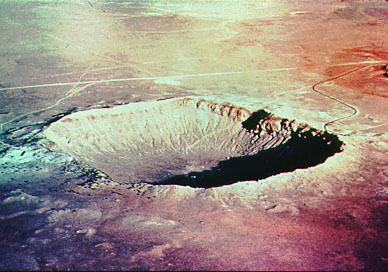
So here I am in adulthood sunk in the ‘depression’ of terrible sadness in the Meteor Crater I found myself born and battered in (not perched precariously at the top of a high precipice fighting to the death with her anger and rage against all perceived attacks, as my mother was).

Today I am practicing using my mind, thoughts and dreams to see if I can modulate-moderate the feelings of sadness into something that might resemble what I guess happiness is — or at least make progress toward an inner feeling of ALL RIGHT.

This is what I have come up with so far:  If I could finish this garden, and name it The Secret Garden,  then perhaps I could search out programs in this region of Arizona that work with abused children and invite them to come visit.

When I was five, and before our family moved from Los Angeles to Alaska, we visited an immense garden somewhere on a hill.  I have never forgotten that glorious garden, and every single time in all my 54 years since that day when I think of that garden I feel not only a little-bit-less-sad, but for a brief flash of time I feel almost-happy.

Perhaps if I can create a magical garden here, designed especially for the eye level and imagination of five-year-olds, and then these little people who have been traumatized, battered and abused could come wander around here, MAYBE they too could carry within their body-brain-mind-self a memory that would ALWAYS be happy enough to displace their sadness (or rage) and provide for them a glimmer of true — ALL RIGHT — joy!

Big people could come, too — but it is to the little ones’ joy that I now return to my digging and adobe creation.  May all of us today pursue our happiness!

+++++++++++++++++++++++++

+CROSSING THE LINE TODAY OF 50,000 BLOG HITS

++++++++++++++++++++

Very cool!  Thank you readers for finding your way here to this Stop the Storm blog 50,000 times as of today!

Your support means the universe to me!

Thank you!

++++++++++++++++++++

+THE ‘DESPERATE FEW’

+++++++++++++++++++

I don’t want to write this post at the same time that I know I must write it.  I don’t believe that what I am about to say is going to make any sense at all to very many people.

When I think about the malevolent (not pampered) world that is being described at the end of Dr. Martin and Fellow’s paper here *SYMTPOMS: 120909 Scan of Teicher’s Research – Trauma Altered Development Paper I think about my mother — and about others like her.

If we wrote books so that when we reached the very end of the story we found ourselves exactly right back at the beginning, we might more easily understand that as we look at some things from the inside, we are at the same time looking at them from the outside, as well.  I don’t think we would be comfortable realizing the truth of being alive as members of our species if we were forced to understand that what we value so influences our judgments that we cannot easily find that line — the one that separates beginning from end or inside from outside.

My mother judged the world differently from normal — on every single level.  Who she was made to be at the beginning of her life was exactly the same person that she was at the end of her life.  Looking at my mother this way I understand that there really WAS no middle.  Everything that happened to my mother and everything that she did for her entire life was the same — beginning to end — as she followed a pattern that was built within her body from birth.  That pattern WAS the choice of her life, and I do not believe that my mother could EVER override it.

She never changed because she could not.

And the pattern that was my mother meant that she could never distinguish what was inside of herself from what was outside of herself.

I believe that it is fortunate that very, very, very few people would ever be able to understand who-how my mother was in her life.

I also believe that as we look around at some others within our species whose actions seem to defy all that we judge to ‘be human’ we are at the same kind of loss-to-comprehend that we would be should we try to understand my mother.

++

I believe that there are extremes at the very, very, very far ends of the pampered-not pampered, of the benevolent-malevolent continuum of environmental conditions infants are born into and formed by.

I can’t imagine an outcome where too much benevolence (too much pampering as I define it as the absence of abuse and the provision of what we consider normal and necessary) could create truly desperate variations in human development that are as destructive as what too much malevolence (too much being not pampered) can and do create.

I do envision outcomes for infant-child development where the malevolence is mixed with inappropriate and false pampering that pushes development off the charts on the destructive-outcome end.  (This is a combination that I believe destroyed my mother.)

++

What I need to say here requires for understanding a perspective that lies beyond how I believe most people think.  I believe there are circumstances that combine malevolent early infant-childhood deprivation and trauma in such a way that the result is on the long, far end of what Teicher describes as the ‘evolutionarily altered’ brain-being.

I see this as happening when enough external and internal pressure is put on a tiny developing person that something inside of them literally SNAPS.  A break occurs that destines the not pampered infant-child down an impossible road of such desperation that no recovery from it will ever be possible.

These little ones grow up to become dangerous people.  Their physiological development (I think) so closely matches the most ancient human patterns that kept our species alive in the most desperate circumstances in the most desperate environments we lived in — that few among us today can even begin to imagine those conditions.  When THESE people change in their development, all hell breaks loose.

Yet we are doing ourselves a disservice to believe that just because we cannot easily ‘begin to imagine’ something that this something isn’t real.

If we continue to believe this way, we will not be able to critically think about the implications and consequences that are as equally real as ‘that which we cannot begin to imagine’.

We have to recognize this challenge to both our belief and to our ability to think about what we do not want to believe.

++

Enough of wandering in circles here.  I will go for the big circle — as ‘long ago’ trauma altered developmental response to terrible malevolent conditions meant the exact same response THEN that it still can today.

There are circumstances where the trauma-altered development of infant-children create monsters.

My mother was such a monster.

Yet if my mother had been a bitch wolf who found herself with a litter to raise in the worst environment of scarcity, deprivation and threat — and if THEN she had chosen to parcel out her attention and resources in such a way that perhaps some of her litter would survive and others wouldn’t — we would not raise our eyebrows very high over her actions.

Truly terrible terrifying trauma can, in some infant-children, trigger altered development that creates horrendous results:  “Mothers, limit and/or kill your offspring.”

My mother was astute enough NOT to kill me, but the pattern was there.  But I was tough, and I survived the worst she gave me anyway.

++

Picture a primitive, hostile human world of tough times, much threat, dangerously scarce resources:  Sexuality and violence changes.  Males, having their own physiology,  are more likely to end up creating havoc in the wider world (under a biologically-based imperative to ‘find food, create more offspring, expand territory, gather possessions, eliminate competition’), while females create their havoc close to and within their home — which always impacts their children.

We call what these people do in today’s world ‘crimes’ — the most serious, heinous crimes we cannot imagine — until they happen.

My mother was one of these desperate few.  And if I am correct in my thinking there is absolutely no mystery whatsoever on its most basic level about why and how she was able to do what she did to me.

+++++++++++++++++++

+ANYONE WANNA EAT BARK AND BUGS?

++++++++++++++++++++++

When, in my adulthood, I first heard people using versions of a saying, “The table was turned,” I envisioned in my mind someone being angry and turning a table upside down so that its legs stuck up in the air.  It took me a long time before I overcame my embarrassment enough to ask someone what they meant when they said this.

“Oh,” this person said to me.  “It’s like four people are sitting playing cards.  Each of them has their hand laying on the table top and someone turns the table so that everyone has someone else’s hand and THAT hand, rather than their original one, is what each plays the game through with.”

I mention this today because as I described what I have been thinking about pampered versus not pampered people to someone I am very close to yesterday that person responded to me with, “But the word pampered has such negative connotations!”

In other words, they were expressing a sentiment that would probably be common among those people I would say were raised from birth in a ‘benevolent’ world that I am now calling a pampered one.

I can see where this sentiment could come from.  Looking at Webster’s online dictionary for this word I found:

Definition of PAMPER

transitive verb

1 archaic : to cram with rich food : glut

2 a : to treat with extreme or excessive care and attention <pampered their guests> b : gratify, humor <enabled him to pamper his wanderlust — New Yorker>

pam·per·er\-pər-ər\ noun

Examples of PAMPER

  1. They really pamper their guests at that hotel.
  2. She pampered herself with a day at the spa.
  3. He was pampered all his life and doesn’t know how to function in the real world.

Origin of PAMPER

Middle English, probably of Dutch origin; akin to Dutch dialect pamperen to pamper

First Known Use: 14th century

Related to PAMPER

Synonyms: cocker, coddle, cosset, dandle, indulge, mollycoddle, nurse, baby, spoil, wet-nurse

Antonyms: abuse, ill-treat, ill-use, maltreat, manhandle, mishandle, mistreat, misuse

++++

Well, how about that?  I have my sense of the contrast between being pampered and NOT being pampered just about right for what I am intending to describe!  Look at the antonyms!

We are not commonly used to using one word to describe in contrast its opposite, but in this case my meaning is extremely clear when I use it to describe how severe infant-abuse survivors experienced their world — yes, when they NEEDED to and SHOULD have been treated exactly the opposite from the way that they actually were.

++

How many people among ‘the masses’, however, ever bristle and become concerned and defensive when someone calls someone else ‘mentally ill’, for example?

In contrast, how many of the pampered people are going to bristle and become concerned and defensive when someone calls them pampered?

++

We are very comfortable in our society in using definitive explanations for things that rely on a linear black-and-white, either-or pattern of thinking.  It’s EASIER than making sure we understand the full meaning of what we are talking about.

It is EASIER to simply say, “I was abused when I was little,” or “I was not abused when I was little” than it is to say “I was not pampered” versus “I was pampered.”

I could continue to accept this simplistic thinking if there weren’t so many drastic and terrible lifelong consequences for survivors of severe infant-child abuse that society THEN feels completely comfortable in blaming and shaming the survivors for.

It is THEN that I want to ‘turn the tables’ so that the pampered would need to play THEIR entire lifetime out living in the reality that severe abuse survivors know with their every breath.

And the survivors?  What would we survivors know of living the truly, from-birth pampered life even if someone were to suddenly give us one?

++

My case in point if ye be of those who can make this gigantic leap!  Nature has mirrored the experience of those whose body was built in ONE kind of world ONE way — and not the other way — permanently.

Pampered-from-birth (‘good enough’) people have a body that knows that reality.  Not pampered-from-birth people have a body that knows that reality.

Nature and its ways cares nothing for the individual personal comfort zone of anyone.  Nature only TRULY cares that a species does what it needs to do to ‘continue on being’.  This entire array of possible body building options that happens in direct response to either the pampered world that raised us or to the not pampered one is — and I am going to the Bigger Picture here — meant to accomplish this ‘continue on being’ by creating bodies that THEMSELVES signal-convey the kind of world that built the person who lives in it.

++

So we could turn another table of laid-out card hands here so that Nature received the personalized individual’s perspective on the experience of being alive and the individual people received the hands that clearly expresses what Nature cares about, intends and accomplishes.

How I am  in the world, having been raised in a not pampered infant-childhood directly signals to others (who could detect and understand these signals) exactly what the condition of my early world was like — because those conditions built me to be the way that I am.

Jump to the peacock’s tail.  A brilliant, resplendent, gorgeous and healthy peacock tail is simply a signal and a sign that the experiences of that bird happened in an environment rich in resources.  The tail has nothing PERSONAL to do with the peacock at all!

Another peacock with a pitifully shabby, dull and sickly looking tail is simply signaling to its hoped-for mates that this bird was not pampered in a world of plenty.

Which peacock’s tail is going to attract which kind of mating partner?

++

Well, as the ‘superior species’ we don’t like to be pared down to our actual size so that we can not only recognize but also accept that HOW we are in the world (based on the conditions of the world that formed us) does exactly the same thing.  HOW we is a signal that expresses the NOT personal reality of THE CONDITIONS OF THE WORLD and actually, as Nature intends, doesn’t have much to do at all with our personal wishes or concerns as individuals.

So again I will say when you read particularly the last paragraphs of Dr. Martin and Fellow’s paper here *SYMTPOMS: 120909 Scan of Teicher’s Research – Trauma Altered Development Paper you are reading a description of the MISMATCH that happens when not pampered people are born into a not pampered world and at the end of their earliest years are hatched out into a pampered one!

The problem is this mismatch.  The problems we endure as individual severe early abuse survivors IS THIS MISMATCH.

If pampered people were the only ones who lived in a pampered world — OK.  If not pampered people were the only ones who lived in a not pampered world — OK.

How can I say OK to a resource-scarce and traumatizing world?  Think about what our species had to go through so that we could be here asking that question.  Our species was able to experience pampering ONLY under conditions of plentiful resources.  When times were really, really tough, we were able to use an INNER resource that nature has NEVER let us lose:  We contain within our very young body the ability to ADAPTIVELY AND FLEXIBLY adjust to the conditions of the world we are born into.

Then we are able to move forward in time in a not pampered body — surviving — continuing on as individual representatives of our species — into a future where resources were better.  THEN the future generations could adaptively and flexibly adjust to these more pampered conditions — and babies could grow a body that reflected those improved conditions.

In other words, as I write this, I understand that ‘the tables’ are DESIGNED to turn.  Without that ability to adjust and adapt flexibly we would not have had the resilience we needed to survive — not as a species, not as individuals.

We need to understand the bigger picture so that we can depersonalize the facts.  Pampered people do not need to take offense when someone points out the truth of the benefits they received from a resource-rich environment from the time they were born.

AND not pampered people need to be FREE to be people who are not condemned and judged for the fact that our body did EXACTLY THE SAME THING that pampered people’s did:  Adjusted in development to the conditions of OUR environment — which happened to be a resource-scarce one.

If our proverbial turning table were laden on one side with rich and nutritious food an on the other side tree bark and bugs — and THEN this table were to be turned so that pampered and not pampered people had to consume a diet they were not familiar with — my points here in this post might be a little easier — or tougher — to swallow.

++

(Of course, I suppose ALL the female peacocks would go for the prettier tale, and in this example of female selection, who wins?  I don’t know……  What I do know is that this version of a mate selection process is about finding who came from the richest world that had the best resources — and who got them.)

++++++++++++++++++++++

+PREVENTING CHILD SEXUAL ABUSE

+++++++++++++

Things that don’t keep children safe, and why we can’t stop buying them

Posted: 18 Nov 2010 10:16 AM PST on

PREVENT CHILD ABUSE NEW YORK’S BLOG

It costs money, it’s illegal in at least one state, it uses information that is accessable for free, and people are buying it. One of the iPhone’s best-selling apps in recent weeks is called Offender Locator, an application that gives you the address of all registered sex offenders near you.

Surely, this is a fantastic development in child safety, right? Information that will keep your child safe, sent right to your phone. Unfortunately, like most issues concerning the sex offender registry, the information it provodes is at best not terribly useful, and at worst can be counter-productive to child safety.

How can this be? Answering this question reveals some important truths about child sexual abuse that are often not reported by the media. First of all, the majority of sexual offenses against children do not result in a sex offender getting convicted and registered. Most children don’t disclose their abuse while they are still children, many disclosures don’t result in any legal action, and many attempts at prosecution don’t result in the perpetrator being convicted of a sex crime. This means that an overwhelming percent of sex offenders aren’t registered as such. But what’s wrong with knowing the whereabouts of the ones who are registered? That answer depends on how that knowledge is used and the context it’s used in. Living in close proximity to a sex offender doesn’t necessarily put a child in danger, as sex offenders are very unlikely to kidnap a child. Sex offenders are much more likely to gain access to children in their families or jobs. That means it’s much more important to know if your sister-in-law’s new boyfriend is a registered sex offender than the guy down the street, but how many of us would ever think to use the registry for this?

Keeping children safe from sexual abuse is the responsibility of all of us, but it cannot be accomplished by relying on the database of registered offenders. Parents need to know the facts about child sexual abuse, and they need to be very mindful of situations when one adult is alone with one child. They need to realize that, in almost all cases, children who are sexually abused are abused by someone the parent, child or both turst. Parents need to realize that just because someone “seems nice” or is related to them doesn’t make them safe. This is an overwhelmingly big, dark, complicated realization, but once parents accept that, they can take real, useful actions to keep their kids safe.

+++++++++++++

+DID YOU GROW UP IN A METEOR CRATER?

++++++++++++++++++++++++++

Did you grow up in a meteor crater?  How safe and secure were you in there??  Were you left alone to try to grow your best body-brain-mind-self while showers of dangerous and life threatening rocks continued to bombard you?

I treated myself to an online search yesterday to try to figure out exactly what the difference is between analogy, metaphor and simile.  Which way does my mind work when I go to write and think in terms of images that do not let go of me?

Metaphor:  My home of origin was a meteor crater.

Analogy:  My home of origin was LIKE a meteor crater?

Simile:  This is how I write!  A simile happens when a writer goes on and on and on — continuing to use an image to interweave it with words in a long drawn-out thought.  That’s me!

Soooooo……

When the infant-child developmental experts write about how a little one’s body-brain changes in response to the stress of trauma, neglect and abuse in a malevolent world — I now translate that fact in my own thinking to this:  These little ones ARE NOT THE PAMPERED ONES.

Their home of origin was a meteor crater.

When the experts write about how in a ‘good enough’ safe and secure environment their best body-brain self is formed in a benevolent world, I translate that now to mean — THEY WERE PAMPERED!

Their home of origin was was NOT a meteor crater.

(Again – please read especially the last paragraphs of this paper:  *SYMTPOMS: 120909 Scan of Teicher’s Research – Trauma Altered Development Paper.)

++++

At age 59 I am beginning to realize that the ‘conditions’ that trauma built into my body from the start of my life while I tried to exist and grow within a nearly completely non-pampered environment — seem to be getting worse with each passing day.  I feel as though I am engulfed in a downward slide — but from where, to where?

As I asked myself (and my body) this question, the image of myself growing up in not only the bottom of a massive meteor crater but also of being bombarded nearly every moment with torrents of meteors continuing to fall on me, I knew that when I say ‘sliding’ I mean the bottom of the pit is SINKING at the same time the edges of the crater are eroding away and crumbling down on top of me.

“Oh, dreadful!  Oh, great!  After all this time THIS is only as far as I have gotten in this so-called process of recovery?”

++

Well, for ME understanding about the meteor crater and how I have always felt in my body, and feel now is a HUGE step of progress!  How strange it seems for me to say this — but discovery of REALITY versus swimming around in ignorant denial IS progress!

THIS matters:  It took me until I was 29 before anyone ever TOLD me I had been “an abused child.”  LORDY!

It has taken me double that number of years (plus) to begin to understand what that REALLY means!

While it certainly is nobody’s contest to stand around and make claims “MY childhood was worse than yours was!” I am now understanding that there are VERY REAL FACTORS that describe what happened to each of us individually during our little years — and these factors group themselves together in such a way that they are actually providing for us descriptive layers of filters.

You know that term — falling through the cracks.  Well, imagine that as you are falling through the cracks — down, down, down — you hit another level with cracks that are closer together.  Do you fall through those narrower cracks as well?

Down, down, down you go as you examine all these layers of filters that descriptions of infant-childhoods actually create.  Down, down, down you fall until — if your mother was truly TRULY unable to provide for you from birth even the most remote aspects of true mother love, you end up falling into a sieve made of the finest mesh — and STILL you continue to fall until you hit — and only THEN discover — what really happened to you.

++

I didn’t know this fact.  When I was first told “You were an abused child” I thought, “OK.  All THOSE people have the answers I need to make myself better.”

I have always thought in terms of those where were abused when they were little and those who were not.

It is NOT that simple.  This is NOT a clear black-and-white affair.  Degrees of infant-child trauma MATTER — as do the resiliency factors that were ALSO there in our body and in our earliest lives.

++

So today I ask, “How big was that meteor crater you were born into?  How dangerous to you was the continual stream of meteors that fell upon your little head?”

There is NO SHAME in letting ourselves know the truth.  As members of a social species — even though we live in an American culture that pays a whole lot of attention to ‘individuality’ and ‘uniqueness’ of people — being of a social species we ALWAYS feel best when we are more like others than we are different.

Being raised in a meteor hole in a meteor shower that DID NOT mean we were pampered or safe or secure — or even LOVED — means that we grew up (and grew our body-brain-mind-self) in EXCEPTIONAL rather than normal, ordinary or usual conditions.

That what trauma IS — out of the ordinary — extraordinary.

And those conditions CHANGED our development in ways that leave us reeling for the rest of our lives as we TRY to be more and more ‘like everybody else’.

We are NOT like everybody else!

In severely traumatizing childhoods — and I usually count this to be in the 5% category although in my thinking I am coming to realize it well might be 20% of our population who find themselves born into Meteor Craters and ongoing Meteor Showers — we will NEVER be like those others who are in the 80% – 95% of people who received some degree of pampering in their earliest years.

Remember:

Pampering = benevolent world = ‘good enough’ safe and secure

Not pampered = malevolent world = not ‘good enough’ safe and secure

++

So when I say I the bottom seems to be falling in the meteor pit I have ALWAYS been in, and the sides are crumbling over my head, I am also saying that for all the ‘self-help’ information that I have found these past 30 years was actually like (analogy!) random, disconnected, irrelevant and misleading bits of ‘facts’ scribbled on tiny pieces of confetti paper, tossed down to me over the edge of my crater into hurricane winds by ‘others’ whose lives exist either on solid ground way above my head or ‘others’ whose lives exist in a little pit MUCH shallower than the one that I know.

Maybe those same ‘others’ who read what I write now will say, “Oh, that is SO NEGATIVE!”

I no longer care a single tiny TWIT what those people think or say.  I can’t see them or hear them from where I am ‘down below’.

None of them ever helped me to understand how the extreme abuse I suffered changed my physiological development.  None of them even MENTIONED that this was possible, let alone that it happens and HAPPENED to me.

None of them ever told me that it was the ABSENCE of having anyone in my life during all of this trauma that actually provided for me a safe and secure attachment opportunity.  THIS MATTERS because in the midst of ANY TRAUMA over a lifetime, it is the presence of safe and secure attachment relationships that HEAL TRAUMA.

In the case of infants and children suffering from horrible traumas, the presence of SOMEONE to safely and securely attach to MAKES ALL THE DIFFERENCE IN THE WORLD to that little one’s outcome — PHYSIOLOGICALLY.  These safe and secure attachment relationships are ALWAYS the number ONE most important and powerful resiliency factor that mitigates the impact of trauma.

While it might be an unusual and uncomfortable way to look at infant-childhood to say that treating a little one WITH LOVE and caring kindness means that infant is a PAMPERED one — and therefore of the fortunate group — this is true.

Being treated this way was NOT a given for all of us.

So, who was there to pamper you when it mattered most?

++

So when I look at my poverty, at my inability today to tolerate stimulation or ‘excitement’, when I feel what it’s like to be alone, to not have a quality partner relationship, to be at a worse than dead-end ‘career wise’, when I struggle through the moments of my life toward WHAT for a future — I do NOT need to blame or shame myself.  I simply have to look around me at the vastness of this meteor crater that was built into my little body from the start and ask myself, “What CAN you do today to help yourself feel better?”

There IS always something, though that something be as tiny a little thing as are the spaces in the filters that I have fallen all the way through since the time of my birth.  And EVERYTHING that I long for, that I grieve for, EVERYTHING that helps me today — IS A FORM OF SOME KIND OF PAMPERING because PAMPERING is what I completely missed from the start of my life (except for the critical basics of shelter and food, etc.) and for the rest of my life pampering is what I desperately and RIGHTFULLY need.

At the same time I am negotiating within myself HOW it is that nothing I ever experience actually fills up this PIT.  I know today, “How could it?”  If I can stop the bottom from sinking out from under my feet, if I can stop the continual crumbling of that ‘way up there’ crater rim, I am accomplishing something good.

I also know that it will never be possible for severe infant-child abuse survivors — who were left alone without pampering BY ANYONE and terribly hurt by the ones who were SUPPOSED to take care of us — to know WHO we are in the world until we also realize HOW we are in the world.  In order to know for ourselves what we MOST need to know, we have to have the dedication to our own well-being to dare to leave the pack behind us as we search for our OWN truth about what REALLY happened to us — and how that changed us in our body-brain — for our lifetime.

Finally discovering that we were abused infant-children is a critical beginning — but it is ONLY the beginning for some of us.  We have a long, long way to travel toward comprehending our reality because the Meteor Crater we were raised in was really, really deep.

++++++++++++++++++++++++++

+PLEASE DON’T SPEAK ILL OF THE DEAD

++++++++++++++++++

“Oh, Mary’s dead.”

“How did Mary die?”

“She died of breast cancer.  You know she had both her breasts cut off several years ago.  But you know Mary.  (No, I didn’t know Mary.)  She was so messed up on drugs.  Always doing something.  What a mess.  And she kept on saying, “My cancer’s going to come back.  I know it’s going to come back.”  She invited it back, you know.  It did come back.  It killed her last week.”

No, I didn’t know Mary, but I guess most in the small town of Bisbee knew Mary.  Knew her as a druggie, as a “really messed up woman.”

“Please don’t speak ill of the dead,” I wanted to say to the gathered four people in my friend’s little office when I stopped in to see how things were going there on my way back from an appointment.  “Please, don’t speak ill of the dead.”

My heart pleaded, turned to soup, cried for this dead woman I never met.  I know too much now.  I know the signs, the signs of a truly sad and tormented life.  I know where it usually starts, way back at the beginning when these dead bodies were new and little ones, all pure and innocent, so ready for life and so tormented and tortured when still small — so many — they never recover from that.

Mary?  She never recovered.

And please, those of you who have never lived through cancer either, don’t tell us “You brought that cancer down on yourself.  You thought your cancer back.”

What these people are saying of this dead woman, “Shame on stupid you!!  Shame!  Shame!  How could you be so stupid, so dumb?  We are SO MUCH better than you.”

“Please, don’t speak ill of the dead!”

I heard this before from people when another man who lived here blew his brains out.  There wasn’t QUITE such a clamber in conversations I heard about him, but still people spoke ill of him — dead.  I spoke up for that man.

“Please don’t speak ill of the dead.”

Where is the respect?  Where is the love?  Where is the compassion for people who suffer, who fall through all the cracks, who try and try and try and try and still cannot hold on any longer.

I think of the Center for Disease Control’s study where they found their subjects with the worst childhoods died 20 years earlier on the average than everyone else.

PLEASE!

DO NOT SPEAK ILL OF THE DEAD!

I hear of the troubles — I can tell the infant-child abuse history — my heart grows so sad.  “God help me!  May I never speak ill of the dead.”

++++++++++++++++++