+THE DANGERS OF EMPATHIZING WITH ANOTHER’S TRAUMA

++++++++++++++++++++++++++++++

It’s been quite awhile since I have added the warning to a post:  BE VERY CAREFUL OF YOURSELF IF YOU CHOOSE TO READ THIS POST, IT MAY TRIGGER TRAUMA MEMORY FOR THOSE WITH EARLY AND SEVERE INFANT-CHILD ABUSE HISTORIES!  But here it is.  While what I describe here might be subtle and difficult to identify in a world with words, it is very real and with a trauma history, your body might very well let you know it.

There seems to be a kind of overlaying of experience that can happen at times when adult survivors of severe infant-child abuse are faced with the reality of someone else’s sorrow.  Of course as a survivor I cannot be at all objective so that I can report this feeling with accuracy.  I just know that it exists because I am so familiar with the experience.

If I choose a name for it, I would call it “the dark night of the soul.”  I know it so well because I spent the first 18 years of my life engulfed within its shadowy realm and didn’t know it.  Looking at it so early in the morning, having had a sleepless and troubled night, I can tell that I know this feeling.  At the same time I recognize it – and feel it – I don’t want to admit to myself how familiar its cold embrace actually is.

++

I know what has triggered this for me:  Stories of another person’s life whose experience of being so lost in life that they cannot see a possible way out of the darkness without help from of loving and supportive friends and family.

As adults we expect our self to know ‘the answers’ both about how we fell into the inky abyss and how we get out of it.  But sometimes it seems the risk for losing our way in the labyrinth of who we are versus who we have become simply exists because we do.

I can in no way speak about the experience of the person whose story was told to me in parts these past two days.  I can only speak for myself when I say that something has triggered my own deep body memories of living for the first 18 years of my life within a world within a world – all by myself.

At the same time my mother’s treatment of me was directly responsible for the darkness I was forced to live in – day in and day out, night in and night out – I also know that because I never escaped the darkness I didn’t know the light of day existed at all.  I think of someone sitting in public appearing to read a book.  Looking from the outside others could see the cover, perhaps the title along with the shape and size of it – but inside of this opened book there is another one that cannot be seen from the outside.  The book that is actually open and hidden inside is a completely different one – and in my case, not a nice one.

++

I can’t remember the last time I felt this exact feeling.  It’s almost like it has a physical form.  It has a sound.  It has a pressure against my body, both from the outside and from the inside.  I remember it because I could not escape it as a child, and because I had no altered perspective that would have let me know there was any other way to feel.

The sound is like a low, droning hum, like of a vicious animal that has me in its jaws.  I must remain completely still.  If I move it will crush me to death with its jaws.

The feel of this darkness is that it is so immensely bigger than I am that I hardly exist as all.  In fact, all I am is the one being nearly crushed to death by this force that fills the universe with me at its center.

I don’t think this feeling has a name.  If I were to call it ‘fear’ I would only be describing what someone on the outside of it might call it by its color.  “It looks like fear.  It smells like fear.  It tastes like fear.  It feels like fear, so it must BE fear.”

But it isn’t.  Fear exists for me when I know there is some alternative to it.  This feeling does not have an alternative because it comes from 18 years of body memory of being not snatched from safety into its sticky, thick, endless blackness.  It is something I was born into without an alternative.

++

To give it the most efficient adult name, I would simply have to call it ‘trauma drama’, but not so that its presence and clutch would be diminished or dissipated.  I would call it this with the complete understanding that while it is in operation in a person’s life, it happens both on the outside of the person — in the ongoing experiences of the external environment — at the same time that it goes on inside of a person.  It’s like these two realities attach themselves to each other like two huge, powerfully attracted magnets that cannot be pried apart from one another.

The quality of the experience of being squashed between these two trauma drama magnets is one of waiting for impending extinction.  It involves an altered sense of time.  Time both stops and feels ongoing without an end in sight.  “Things have been this way forever and they always will be the same.”  There is no escape, as if I have fallen into someone else’s nightmare that sucked me in and will not let go.

++

I did not realize that I made any kind of choice to recognize what this other person might be feeling in their time of crisis.  I didn’t know my insides would mirror the darkness that I must, through some version of my own empathy, imagine that they are feeling.  When two tuning forks are placed close enough together, and one is plucked and begins to hum, the one sitting next to it will begin to mirror back in resonance what the one next to it is playing until their vibrational patterns match exactly.

The risk and danger for me is that when I don’t recognize that my empathy for another in deep sorrow in their time of soul darkness is putting me at risk for waking up the dark giant of my own trauma body memories, when I don’t pay attention and step away or shield, screen or in some way protect myself, my own trauma will resonate with another person’s until I am left wrestling within the death grip of the monster of misery that consumed the first 18 years of my life.

My mother’s needs were so great, her emotional wounds so deadly, that when I was born the vibrational patterns of her constantly ringing tuning fork of herself completely overcame and overwhelmed whatever little infant-child vibrations of my own.  She consumed me.  Her need consumed me.  Her projections consumed me.  Her psychosis consumed me.

I was left to breathe my own breaths in the vacuum she created and cast around me like a net.  She consumed the light of the world around her like a black hole sucks in everything within its gravitational range.  There was nothing left for me except my very life that she did not ACTUALLY take away from me.  This feeling I have right now is what that experience of being her daughter felt like.

++

Now, being the 58 year old adult that I am, I still fight against the power of that vortex of trauma memory that does not lie back there in the dim past.  It lies within my body, within the unending body memory of what a continual state of trauma feels like.

At this moment I can see how valuable it is for me that I haven’t felt this feeling within my recent memory.  I have not been sucked into that nameless place where no escape feels possible, the place between inhale and exhale when I know I have run out of air and have no idea where or when or how the next breath of air will ever arrive – or if it will.

What I can see about this feeling state now at this moment, what I am understanding about my experience of it, is that it is NOT one I can dissociate from.  It is bigger, ancient to the time of my beginnings, and more enveloping.  It carries a more permanent risk for being there ‘forever’ than anything else that ever came to me after THIS feeling first came to me, very shortly after my birth most likely.

This feeling probably came to me the first time I ever experienced a direct attack from the monster that was my mother.  It came to me the first time I recognized on an instinctual level that my existence was threatened and that I would most likely not survive.  But I did survive.  And because I did this feeling came with me, as if I was captive within a womb of darkness that I could not be born out of.

++

At this instant as the first morning’s rays of THIS day’s sunlight change into colors the darkness of the night that just passed, I realize that although I resist the use of the term ‘recovery’ in relation to what needs to happen for those of us who were born into vast trauma, at this instant I will use that term:  I have the right to recover for myself the right to be alive.

That darkness seems to be about having lost sight of that right so early in my life that it only exists for me now when and as I CLAIM it – consciously and with effort.  Within my range of possibilities now I DO have some tools for grounding myself in my body today in spite of the horrendous history of trauma that formed my body when I was young and formed itself into me.

I see it like learning a second language, my first native language being one where nothing else existed but trauma.  At this moment I must feel the weight of my body upon my feet as I cross the floor.  I must feel the texture of my curtain against the tips of my fingers as I pull them open to let in the new light of day.  I must feel this hunger in my belly, walk into my kitchen and find food for my breakfast.

The memory of trauma is within me.  Last night it again nearly took me as its captive.  I must exercise in my brain what I have learned about time passing.  The trauma memories in my body are a part of me, but they are not the whole of me.  Not any more.

I will need to be very full-of-tender-care for myself today.  I need to understand that I will never be able to feel ‘normal’ empathy for another person’s experience of their own travails because I cannot draw that most important line within myself that would let me recognize their state without having my own similar one triggered.

These thoughts are also letting me know that not only do I have the right to recover my right to be alive, I have the right to recover my right to be alive, in my body, in this world, without experiencing suffering.  Knowing this was not given to me with my birth.  I have to work to keep this knowledge close to me, even though  might always wear it like a second skin.  Doing so certainly beats the alternative.

++++++++++++++++++++++++++++++

+MY FOGGY POST ABOUT DISAPPOINTMENT AS A TRAUMA TRIGGER

++++++++++++++++

I’ve been doing pretty good these past few days.  I think I got spoiled.  Today was a crasher.  My word for my mood, or state of emotional being is FUNK.  I’m trying to sort out how I got here today thinking that maybe it will help me get out of this dark grey-blue-black mood, or feeling state.

So far, I can think of at least ten things that happened today that I reacted to with disappointment.  That’s one sure thing I know about myself:  I do not handle disappointment very well at all.  I also know that disappointment IS a feeling I felt as an abused child – often.  My mother was an expert at setting me up and then knocking me down.  She took sadistic pleasure in my innocent hope knowing she could shatter it in a heartbeat – which she always did.

Because I WAS a child, I could not out-guess her.  I walked blindly into her traps over and over and over again.  I was unsuspecting.  Part of how all this operated, I know, was because of the dissociated states I slipped into between all the violent attacks, that state where time always seemed suspended as if it didn’t exist at all.  My mother’s forced isolation did this to me, also.  Nothing made sense.  I could predict nothing, anticipate nothing.  But, unfortunately for me I still believed my mother when she said something good was going to happen, even though every time she took it away.  (see **FAMILY TIME – by Brother (1965) for my baby brother’s experience with my mother about this.)

++++

Main Entry: dis·ap·point·ment

Date: 1604

1 : the act or an instance of disappointing : the state or emotion of being disappointed
2 : one that disappoints <he’s a disappointment to his parents>

++++

Why in 1604 did this word suddenly appear in the English language?  Why does Webster’s not include any reference to this word’s roots?  Elsewhere I found a reference that the root is in ‘appoint’.  Somewhere else I read online it’s in ‘point’.  It all seems very confusing to me.

I think when I experience disappointment in my life it ALWAYS acts as a trauma trigger for me.  ALWAYS.

That means when something disappointments me NOW in my life, all the ick attached to disappointment in my 18 year abusive childhood comes plowing right on through and catches up with me every single time.

I don’t know how to NOT let this happen.

I didn’t catch the warning signs this morning when I encountered my first disappointment.  Looking back, I see that my disappointment was connected FIRST to a feeling of being surprised.  I had hoped to buy 3 (cheap) climbing roses bushes today at our local Alco store.  I looked at my bank balance online.  It was far lower than I had expected, and it ruled out flowers along with just about anything else until the 3rd of next month when my next disability check shows up in the account.

So, I EXPECTED the balance to be higher.  I was SURPRISED when it wasn’t.  Then I was disappointed not only that I’m about broke (again), but also that there will be no roses or anything else.  Then I was disappointed because I couldn’t have lunch today as I usually do with my woman friend.  I NEED that social contact.

I was swept up in the twisting snake of down-the-emotional-drain and didn’t catch it – in time.  On the day went.  No major disaster, just a series of expectations, hopes, surprises, and disappointments.

They pile up, and then knock me down.  Flat.

Now, how exactly do I pick myself up again?

Is there some way I can avoid this crash in the future?

How can I expand my “Window of Tolerance” for disappointment?

++++

One big disappointment of my life right now is that I’ve been working on this blog for a year now, and I am not one single word closer to being able to put together and publish a book than I was before I started writing here.  I see publishing a worthwhile and SELLING book as my ONLY hope out of my poverty.  It’s a big disappointment.

If I tell myself that it doesn’t matter if there’s ever a book, that it only matters if I can write something that might make sense to someone – and there’s nothing wrong with FREE info – then I’m better, but that has to be processed for me on some kind of ‘spiritual’ level having to do with my ‘purpose in life’ and ‘my mission’ in being alive.  I have no idea, most of the time.  I just TRY…..

++++

It was too hot today to work outside on my adobe-making project.  That was disappointing.  All-in-all, my disappointment ALWAYS cycles around to my difficulty in not being angry at my self.  GEE, I sure don’t have to wonder how that pattern came to be!  Every single time my mother punished me with intentional disappointment, I was blamed for it.  It was ALWAYS my fault because I was bad, because I wanted to be bad, because I wanted to ruin my mother’s life.

I am going to quit writing – enough said.  I imagine there are plenty of readers who know exactly what I am TRYING to say.  I am going to watch my NetFlix streaming Australian TV series, “McLeod’s Daughters,” which I am enjoying.  I could see myself living that life.  I would have loved it.

Or, as that other great movie puts it”  “Never give up!  Never surrender!”

++++++++++++++++

+LINK TO MY MOTHER’S 1958 LETTERS

++++++++++++++++++++

It is not a fun process to be back at the job of transcribing my mother’s letters.  I finally finished doing these letters:

+1958 MOTHER’S LETTERS – FINDING LAND

For some reason I skipped this year months ago when I transcribed many, many of my mother’s other letters for other years.  The first day of 1958 coincided with the start of our 6th month in Alaska.  We lived in the rented log house whose lease was up on July 1.

During April and May my father hiked back into the Eagle River Valley and found the land he staked claim to as our 160 acre homestead.  In June my grandmother arrived for her first visit (a month) to the territory.

The cabin (shack) we moved into July 1958 and left October

By the end of July we had moved into a primitive rented cabin.  By mid-October we moved into an apartment in Anchorage.

The Jeep truck my parents named "The Monster" and the apartments we moved into in 1958 for my 2nd grade year

If you read little else of these letters, read the one written December 29, 1958 — it’s a classic mother letter!  It describes what happened – from my mother’s point of view – when my mother took the only outside job with a boss that I ever knew her to have during my childhood.  It was a part-time evening job that she held for a little over a month.  My guess is that her true Borderline colors were flying, and others reacted to her (heaven forbid!).  She could not control her work environment the way she controlled her home and children.  The result was a natural disaster.

After working many hours today on transcription, I am tired and sick of my mother!  Now, I have to decide what I am going to do about the rest of the 1957 letters that I have left until the very last.

I feel like I have spent the day in a place without any light at all, in the complete darkness of my scrambled, devastating childhood — little of which, of course, shows up in my mother’s bizarrely surreal letters.

++++++++++++++++++++

Borderline Personality Disorder People with BPD, and their family members, sometimes wonder why certain people get the disorder and others don’t. Sometimes there is a clear environmental cause (e.g., a history of psychological trauma), but research suggest that there are also biological factors.
Genetic Links to BPD
Studies of BPD in families show that first degree relatives (siblings, children, parents) of people treated for BPD are 10 times more likely to have been treated for BPD themselves than the relatives of people with schizophrenia or bipolar disorder.
Will My Kids Get BPD Too?
If you have BPD, your kids are at greater risk of having BPD themselves. But, there is also a good chance that they will not have BPD. And, there are things you can do to reduce their risk.
Can BPD Be Prevented?
If the causes of BPD are in part biological, is there anything that can be done to decrease your risk for BPD?
BPD Family Resources
Sometimes it may seem like there is help available for the person with BPD, but not for his or her loved ones. Fortunately, there is a growing appreciation for the need of BPD families to have their own sources of information, treatment, and support.

++++++++++++++++++++

April is Child Abuse Prevention Month

Posted: 05 Apr 2010 07:54 AM PDT

All children in New York deserve a healthy, happy and safe childhood. This April, it’s your turn to make a difference for the kids in your neighborhood!

To raise awareness of April as Child Abuse Prevention Month, Prevent Chid Abuse New York (PCANY) and its sister chapters around the nation mobilize Pinwheels for Prevention campaigns. As part of these campaigns, New Yorkers make a promise to prevention by distributing pinwheels and hosting educational events throughout the state. Pinwheels are a symbol of a happy, carefree childhood and the belief that getting it right for kids early on is less costly than trying to fix problems after things have gone wrong. Doesn’t every child deserve this opportunity?

Everyone has a role to play in preventing child abuse and supporting families. You can get involved by planting pinwheel gardens in a public place, wearing pinwheel label pins, displaying car and storefront window clings, hosting events for families, and signing a promise to prevention. Businesses, schools, community-based organizations, civic groups, educators, volunteers, decision-makers and families participate.

PCANY offers you the tools to be an active part of Child Abuse Prevention Month. Please contact us to learn more about how to mobilize a campaign in your community. It’s your turn to make a difference for a child!

For more information about mobilizing a Pinwheels for Prevention campaign event near you, please visit our web site or call 1-800-CHILDREN.

++++++++++++++++++++

+THINKING ABOUT COMPASSION

+++++++++++++++++++++++++

Maybe I think about things too much, but I am not sure I know what compassion is.  Sometimes I think I ‘have it’ and then I find myself looking around at other people and judging them for NOT having it!

I am thinking in specific about a man a little over 55 who worked a Title V job at our local thrift store and quit two weeks ago.  This man had a shady past, true.  He had shady behaviors while working at the store that probably would have gotten him soon fired if he had stayed.

The workers, all friendly acquaintances of mine over these past 10 years, strongly suspected that this man kept out the best of the donations to the store and figured out ways to steal them.  It was suspected that he was using a fraudulent identity.  He was known to concoct intricate stories about his life that were not true.  Someone in town had seen him selling drugs to young people.  Nearly everyone believed that after a few years clean from using drugs himself, that he had returned to his old habits.

A week ago today he walked in the back door of his girlfriend’s house where he also lived, grabbed a gun, and blew his brains out.  His girlfriend, who I’ve never met, was in the front room at the time this happened.  Over this past week I have listened to everyone I know who knew him talk about his death but only one spoke about him with compassion.  The rest seem to both judge him and want to hold him somehow accountable for the questionable way he lived his life.

I have someone whom I love very much in my life, a family member, who was able twenty years ago to kick the chronic and destructive use of alcohol, heroin and meth.  I spent time with him at the end of his active disease simply loving him because I could see how terribly sick he was and there was nothing else I could do for him.  I saw how the meth created the incredible web of lies, a complex, sinister and unfortunately almost believable arrangement of his life that he spun with his words that I eventually found out had absolutely zero basis in reality.

I see the death of this ex-thrift store employee in this light.  He died from a terrible disease.  His disease affected his living and it led directly to his death.

I find myself right now confused about arrogance (ignorance?), self-righteousness, judgment and criticism.  At the same time that I evidently recognize a whole other level to the demise of this man that many others don’t seem able to, perhaps I really am not exercising compassion because at the same time I have to fight with myself not to judge ‘the others’.

I don’t see this man as a ‘bad man’, and yet from other people’s accounts maybe he was.  I think he was sick and ACTED bad at times, but he’s dead now.  I want to say, “Give the man a break!  He suffered the ultimate crisis and he paid with his life.”

I want ME — and THEM — to be able to pray for him.  I believe he deserves to be blessed out of this life now by everyone who knew him and held gently and kindly in thought and in word, if some continue to be spoken about him.  I feel disappointed with these people I know and like — while at the same time I am, myself, judging them — and then judging myself.

I guess sometimes life can seem so tragic and complicated.  Then I remember what I believe – though I can’t say that I understand this either:  There is a God so much bigger than I can ever imagine and that God is, as my son told me emphatically when he was four years old, “the boss of all of us.”

Many times today I have thought about this wisdom.

Sunset photo compliments of http://www.FreeFoto.com

+++++++++++++++++++++++++

Oh, and here’s a mothering note.  One of the nurses caring for my grandson told my daughter that studies have shown that unlike men, mother’s bodies automatically adjust their temperature to stabilize the temperature of their newborns!  My daughter had noticed this as she cuddled and nursed her premie.  She happily told the nurse, “Yes, that’s what my mother always tells me, that mother’s are physiologically specially designed to care for newborns and young infants in ways that men ARE NOT!”

+++++++++++++++++++++++++

+TWO STATES OF BEING – PERPETUAL SADNESS VERSUS COMFORT

+++++++++++++++++++++++++++++++++
Survivors of severe trauma and abuse know sadness, I believe in a way that non-survivors never really can.  Where is our comfort?

A few days ago someone commented in response to a response I made to one of her blog posts about my perpetual sadness:  “It sounds like what they call Weltschmerz, Linda. That’s a condition where you are melancholy because of the suffering in the world.”

Some days I feel like I am on the bottom of a very large body of water, and though I feel fortunate that I can see light on the surface, it can be extremely difficult if not impossible for me to ‘get up there’.  I also find that I have emotion invested in many things that I don’t believe most people even notice.  Destruction of the natural world as plants, animals and the soil is torn up for never ending so-called progress and development is a big one for me.  I suspect this happens to me to a large extent because of my attachment and bonding to the pristine universe of the Alaskan wilderness I grew up with on our homestead.

I haven’t been writing much lately because my relationship with words is very weak right now.  Words seem mostly to belong to that surface place of light and not to the darker places deep within the large bodies of water or deep within the earth where my sadness seems to take me.

But there is a story I discovered over a month ago that I want to post.  I am going to share this story with you, written by someone else, because it is a story that resonated with two important states of my being.

The one state, as I mentioned, is the sad one related to the places in my heart and soul that have been stretched and exercised by nearly unbelievable sadness from the 18 years of abuse I suffered from my mother and within my home of origin.  This sadness is touched by suffering of others, and greatly by the silent suffering of the wondrous life of our planet that is so vulnerable to human caused destruction.

The other state I want to mention must run a parallel course for me with this first one, but in some way it is its opposite.  This second state is unfortunately often remote from me.  Yet when this state is activated, I feel I have found something so beautiful that if I can find ways to keep this state close to me it helps me carry on in spite of the sad one.  At this moment I don’t have a name, a word, for this second state, but perhaps by the end of this post I will.

++++

With minor editing, here is the story I found in one of the first year’s editions of our local weekly paper which began in 1985.  I will post the obituary for this author at the end of this post.  Grace McCool was published in The Bisbee Observer with a column she titled ‘Out of the Past’ for seven years:

The first Christmas known to be celebrated in Cochise County was on Dec 23, 1697 when Fr. Eusebio Francisco Kino, came north across the desert from Mexico and presented Coro, the chief of the Sobaipuri [soh-BY-per-ee or soh-by-poorh-ee] tribe of Indians who were then farming along our San Pedro River, a gift of 10 blue, grey, and black, needle-hoofed Andulusian breeding cattle.  These tribesmen had long heard of the cattle the Spaniards had brought to the New World and they were so delighted with this gift they presented the priest with corn, dried squash, and epary beans from their gardens.

On Christmas Day, Fr. Kino recorded in his diary, he said mass in the mud-walled village called Quiburi.  Within a few months he had baptized all of the 1,850 Indians living in 390 houses within the area and farther south along the river.  He re-named the town San Pablo de Quiburi.  [Quiburi — or “Many Houses” in the O’odham language of the Sobaipuri — The Sobaipuri Indians  were an Upper Piman group who occupied southern Arizona and northern Sonora (the Pimera Alta) in the 1400-1800s.  They were a subgroup of the O’odham or Pima, surviving  members of which include the Tohono O’odham, the Akimel  O’odham, and the Wa’k O’odham. They were one of several  O’odham groups present and the O’odham were one of  several indigenous groups present.]

These peaceful Indians (whose chief, Coro, wore three egret feathers in his headband as his badge of office) made a living from gardens cultivated with stone hoes and watered by small irrigation ditches from the San Pedro River.  They wore homespun garments laboriously spun and woven from the wild cotton which still grows in this area.

Outside of conflicts with the Apaches, who in the end wiped out the Sobaipuris, there seems to have been no meanness in these Indians at all.  Strangely enough, they had some idea of the Christian faith and they told Fr. Kino the legend of La Senorieta Azul, one of the prettiest stories of the Southwest.

[I have tried to discover where McCool acquired her information for this story, and cannot.  Nowhere does there seem to be recorded fact that the Apaches “wiped out the Sobaipuris.”  True, Apache aggression seems to have forced these peaceful farmers to leave their grounds along the San Pedro river, but forced migration is not the same thing as annihilation.  Nor does it seem clear exactly who the Sobaipuris were the ancestors of – possibly the O’odham (the tribe’s name for themselves rather than Pima.  The Apache people were very recent newcomers to the Southwest, arriving not much sooner than the Spaniards.]

A beautiful woman, dressed in a blue nun’s habit, came walking barefoot across the desert to them some 50 years before.  She carried neither food nor water.  She told the Indians of the Christian God and good luck always followed her several visits.  The Indians said she told them about the precious Baby in the Manger who was born to bring peace into the world.  At this time these people had never seen any Europeans.

This Legend of the Lady in Blue was known and believed by other tribes of Pima Indians.  Some whisper she still comes at Christmastime to bring blessings to lonely and desperate Indian women and children.  So widely known was this legend that nearly 200 years later Mangas Colorado, a feared and frightening Apache chief, had complained to Tom Jeffords, “Why does the Lady in Blue never visit our Apache camps?”

The only explanation ever given of the legend was made by Marie Coronel de Agdreda of Spain, head of a blue-robed order.  Although believed to have never left Spain, she said she spent much of her time visiting the New Spain Indians who she was able to describe in minute detail.  And on these supernatural visits she ministered to their spiritual needs.

Fr. Kino, the missionary to the Indians, was not a Spaniard.  He was an Italian, born in the Tyrolean Alps near Trent in 1644.  He was not only a great missionary, but he was also responsible for introducing stock-raising to our area with his Christmas gift of cattle to the Indians.  He was also a great explorer and cartographer.

When he was 21 years old, he became a novitiate in the Society of Jesus, following a bout with plague when he believed his life was spared by divine intervention.  He studied at Frieburg and Ingolstadt and became a distinguished scholar.”

+++++++++++++++++++++++++++

Obituary for Sarah Grace McCool published in The Bisbee Observer on January 30, 1992:

Sarah Grace Edgerton Bakarich McCool, 88, died Saturday, January 25, 1992 at her home, the Lazy Y-5 Ranch on Moson Road near Sierra Vista.

Her weekly column, “Out of the Pat,” has appeared in The Bisbee Observer for nearly seven years.

Mrs. McCool was born March 16, 1903 in Waterloo, Iowa to Frank and Etta Page.  She came West in 1929 with her husband, Michael Bakarich, and three children to settle in Bisbee.  They later filed the last homestead claim in Cochise County – in Horsethief Draw, next to the Clanton Ranch.

Much of the home building and daily chores at the Quarter Circle B Ranch, as it was known then, was done by her and the children since her husband worked in the mines.  During those early years, she gave birth to five more children and taught school.

In 1948 Michael Bakarich was killed in a mining accident, leaving her to raise eight children alone.  At about that time, she began her career as a writer.  Her interest in  history and the pioneers had been fueled by her search for her great uncle Al “The Kansas Kid” George, who came west in 1878 with a cattle drive and mysteriously disappeared.

She questioned many of the oldtimers and was rewarded with many tales worthy of recording.  Her research led her to write her first western history article for the Chicago Tribune.  She continued to write articles for the Bisbee Review, Douglas Dispatch, Tombstone Epitaph, Arizona Republic, Arizona Daily Star, and The Bisbee Observer.  She eventually found her uncle buried in Boot Hill, Tombstone.  He had been killed by Indians at the Black Diamond Mine.

Mrs. McCool met her second husband, Dr. M.M. McCool while writing an article on his work as a soils analyst.  They were married in 1950.  Dr. McCool died in 1954.  She continued to write and has published four books about the history of Cochise County and has had more than 1,500 articles printed in 16 different publications.  She was also a licensed local preacher in the Methodist Church.

At the time of her death she lived in the ranch house she helped build in 1935, but today the ranch is called the Lazy Y-5 and has expanded to 6,000 acres and incorporates the old Clanton Ranch.  Three of her children live on the ranch and most of the family lives in the area.  [The rest of the obituary lists survivors including seven of her children, 33 grandchildren, 38 great grandchildren and 10 great great grandchildren.]

++++

I located the telephone number of one of her sons who still lives on the ranch and left several telephone messages about my interest in digitalizing his mother’s writings which are currently contained in two fat three-ring binders at the local Bisbee museum.  My calls were never returned.

I realize that what I strongly knew once I encountered a few of McCool’s stories in the 1985 editions of The Bisbee Observer is that she writes in the oral tradition.  She is a storyteller.  My sense of her writing style was confirmed when I read her obituary.

I traveled to the amazing and beautiful Amarind Foundation’s museum last week when my brother was visiting, seeking to discover if McCool had utilized their resources for this article.  I don’t think she did.  I have asked around locally and cannot find a single person who knew her or anyone who seems even remotely interested in putting a collection of her stories into a format that will help insure they continue to be preserved – and appreciated.  I am considering contacting the University of Arizona to see if they have any interest in this project.

McCool’s writings are not necessarily historically accurate.  She wrote stories based on history of the southwest whose facts may or may not have validity.  The oral tradition is actually a preliterate (not nonliterate) skill and gift more highly developed among some members of our species even today.  Accuracy is not required for a story to be worth preserving, and this story of the Blue Robed Nun has survived – one way or another, one teller after another in the southwest desert regions for 350 years.

++++

This story captured my imagination and touched my heart.  At first I thought about posting the story in connection to a topic on denial.  I realize that as I read the story, as each word of the story unfolded to my eyes, I believed it absolutely, unequivocally, and without any tiny shred of doubt.  I FELT the truth of it.  I can’t say why that is true for me.  I understand that no matter how profoundly true the entire story is to ME, it could also be as profoundly and entirely NOT TRUE for some other people.

I think denial does operate in some similar way.  Some people know something to be true while others know the opposite to be true.

But this story is far too important to me personally to subject it to so limiting a topic as denial.  This story is about me.

When my brother was here last week I convinced him to take a drive to find an approximate location along the San Pedro River not far from Tombstone that was a settlement over many hundreds of years to assorted and various groups of people.  The San Pedro is protected as a National Riparian Area.

This picture doesn't show the high banks from the 'old' river - this is taken further south

Ancient groups and cultures found their homes along the shores of this north flowing river.  How long ago the Sobaipuri lived there nobody actually knows for sure.  But when my brother and I walked upon the rich soft soil that used to be the river’s bottom before the earthquake of 1887 drove the river mostly underground I could feel, through hundreds and hundreds of years of time, that ‘my people’ were near by.

I felt comforted, so I guess this is the word I can use for my other (infrequent) state of being.  Somehow knowing very clearly that these ancient people existed, that they lived peacefully and well growing food, weaving cloth, telling stories, working and walking along what are now high banks above the nearly vanished river, I felt connected because if I could miraculously be transported backward in time, well before the ravishes and violence that the Apaches brought with their raids and attacks and butchering, back to that place before these people were driven away so that I could live among them as one of them, I know I would be home in a way I NEVER am in this world around me today.

I felt comforted because for those few minutes I wandered among the tall grasses and between the bare dark branches of wizened desert trees not yet touched by the true warmth of spring, I actually felt that the problem, the trouble, is NOT ME.  The problem is that I feel I have lost my people.  My people, those people, lived too long ago and I live too recently.

If I could go back to them, somehow travel back through 500 years so that I could pick the wild cotton with my sisters and spin it and weave strong soft cloth, if I could dig the sharp point of my ancient hoe into the fertile soil, care tenderly for irrigation channels so they could carry the mountain snow pure water runoff  from the south into our gardens, I would not feel this sadness.  I know this for myself just as surely as I know the story about the Blue Robed Nun is true.

Unfortunately I have lost my mobility.  My income is very low.  My car is very old and wearing out.  I cannot afford any extra costs for gas that might let me traverse this land in the protected places like I got to do last week with my brother.  I know nobody to take me, nobody to go with me.  But having placed my feet upon that soft soil and having walked silently where these ancient ones once lived I carry that memory now within me as closely as I do my own blood.

+++++++++++++++++++++++++++

+MORE WORK OUTSIDE ON MY NEW BOUNDARY FENCE

+++++++++++++++++++++++++++++++

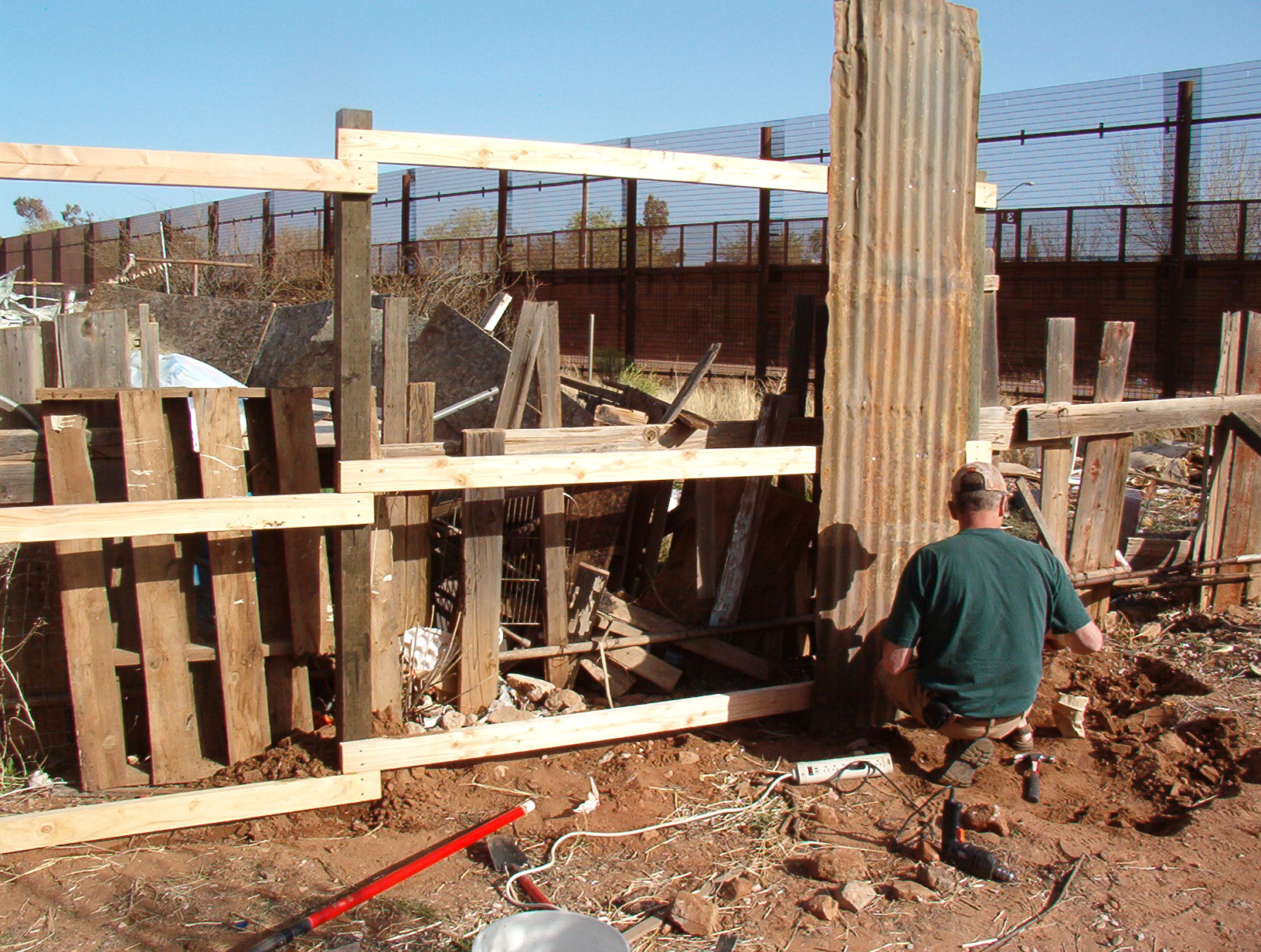
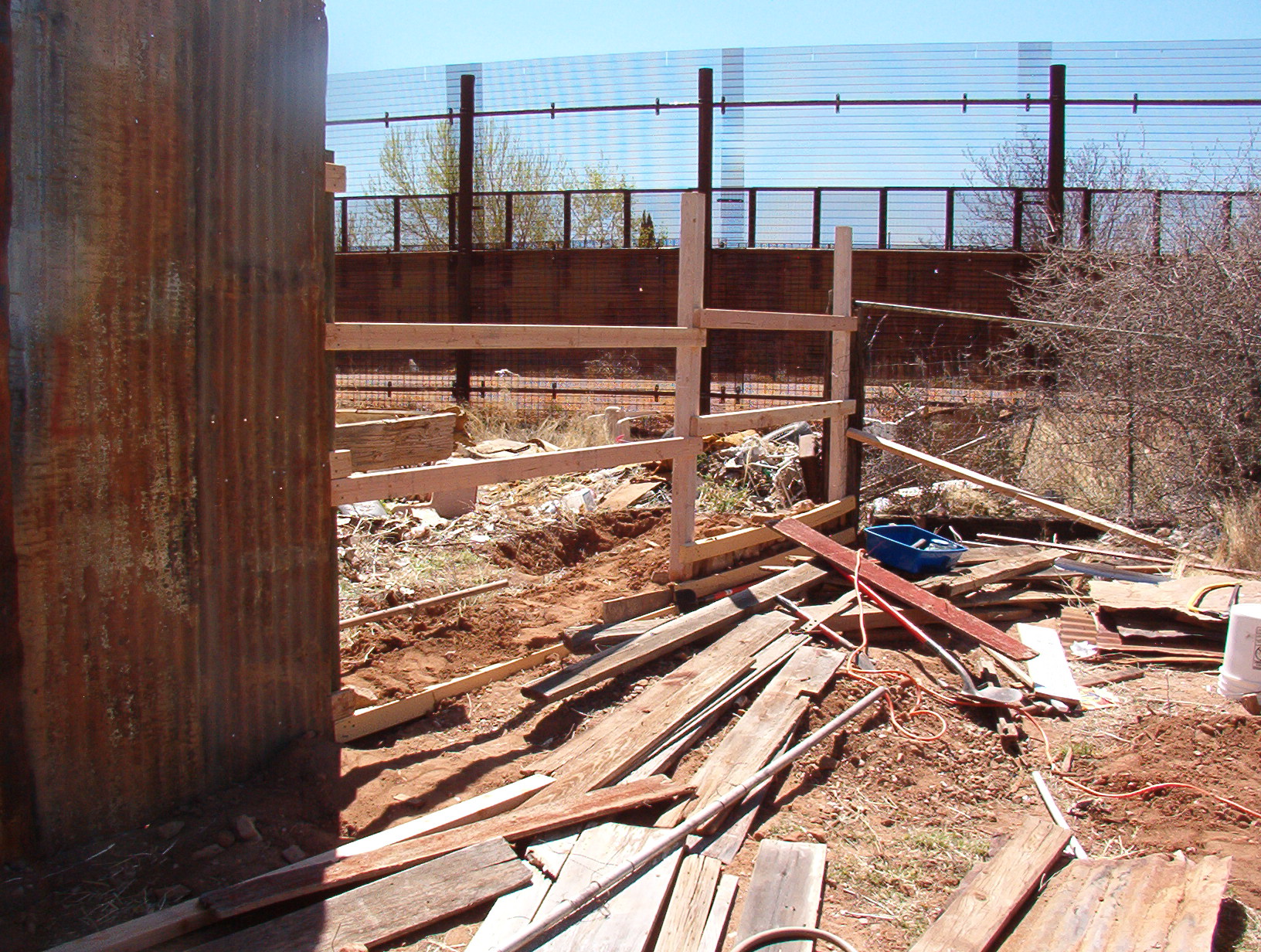
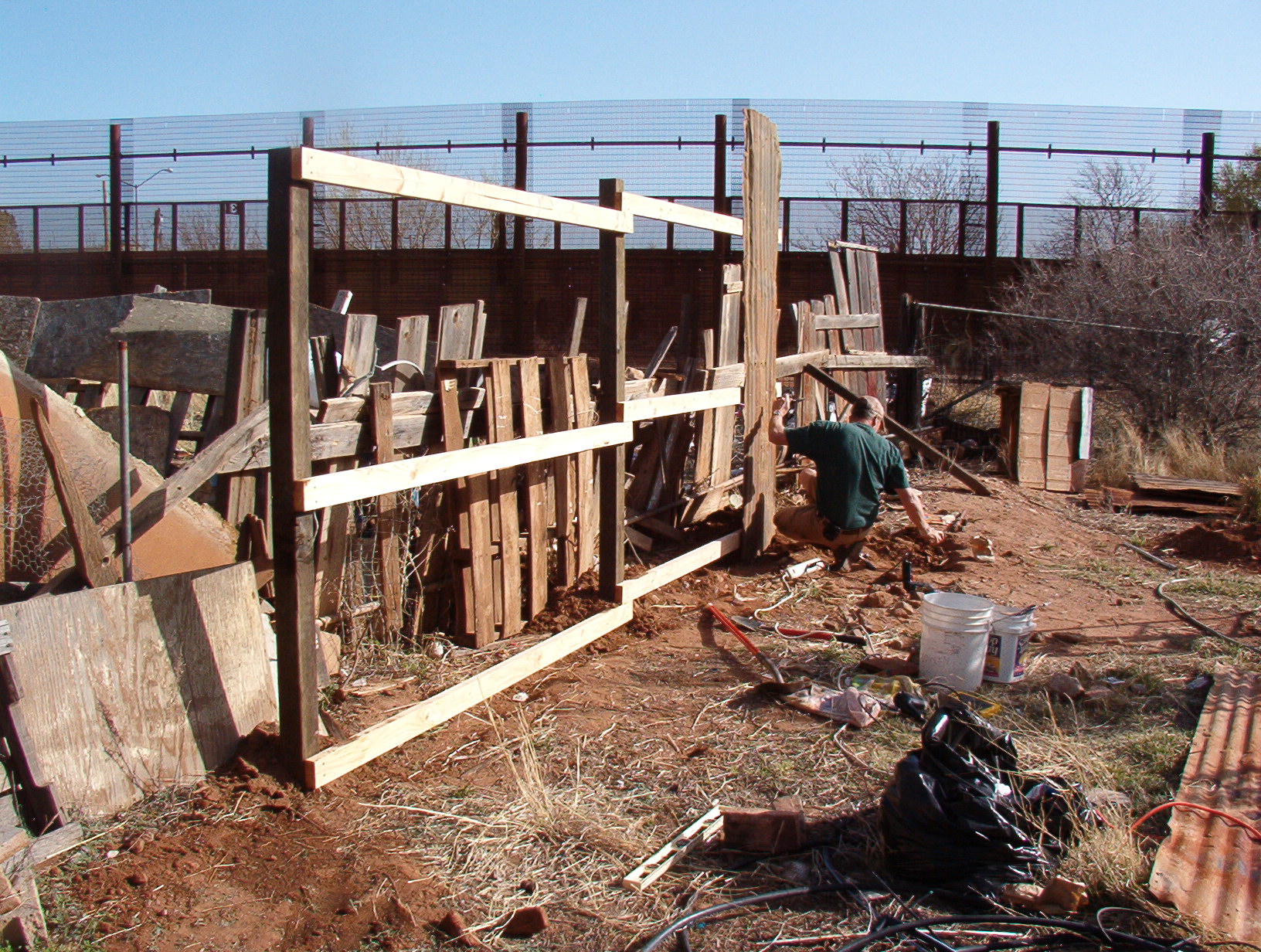
I spent the entire day outside working on the far southeast section of the fence I am building.  All the face boards were in this section previously — really in a big heap!  It felt good to work so hard today.  Every emotion was circumvented in my focused determination to complete this project by sundown.

Which I did – and here are the series of pictures from this project.  Again, those two walls behind me are the American-Mexican border wall.

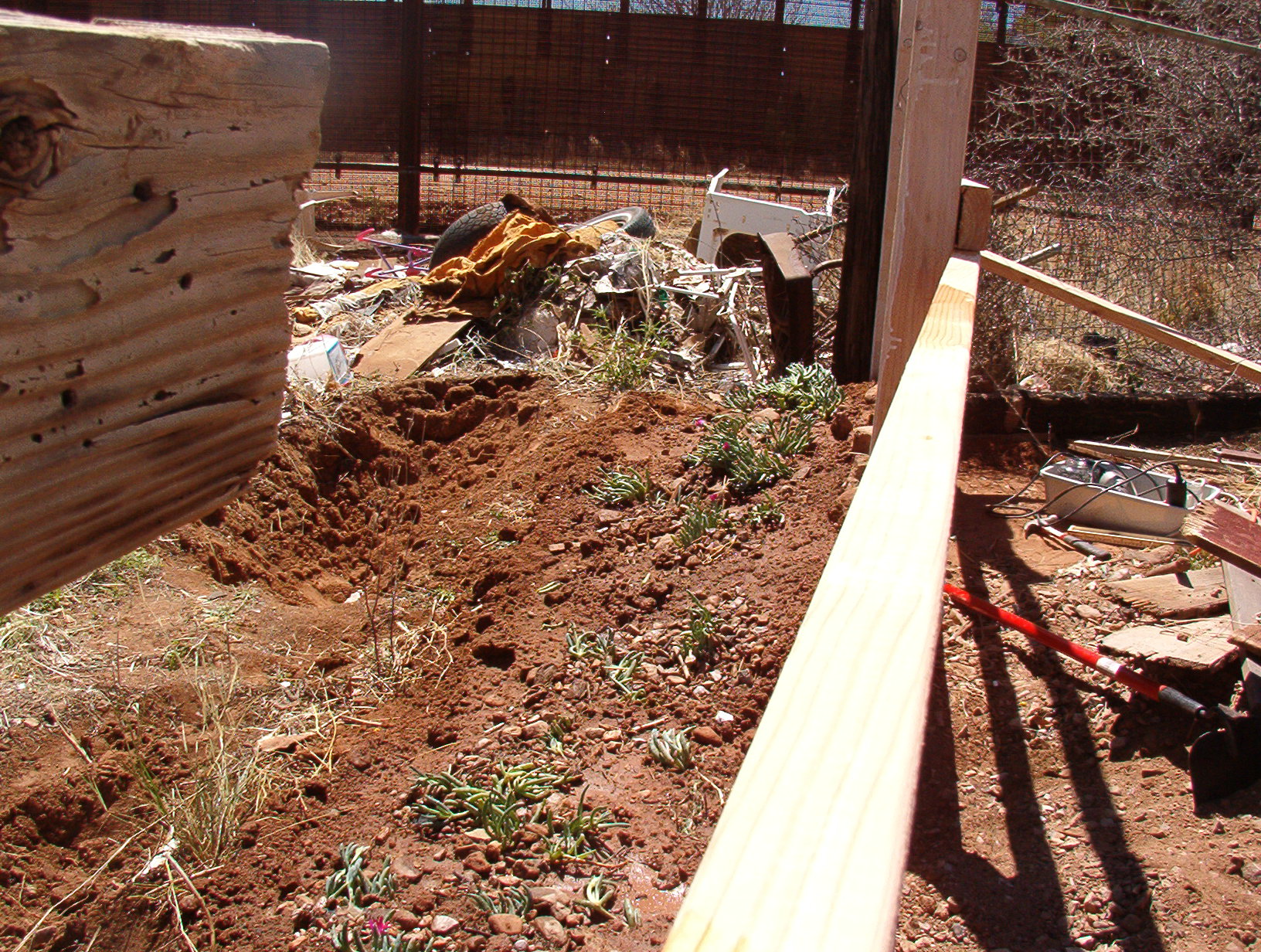
Garbage thrown and left
Border wall looking east
Getting started
I put old boards on the ground behind my fence and covered with dirt - hopefully to prevent critters from digging into the yard. I planted Ice Plant, I can water it and it spreads as a blooming very succulent ground cover.

Fence done by sunset. All recycled boards are very old and very dry. I evened off their tops and drilled holes and used screws rather than nails so the wood wouldn't split. In the spaces between boards are some sticks to fill the gaps.
See the angel up there on post? The furthest post has a smashed salvaged pinwheel on it (no longer spins).
Here she is. Flattened cookie cutter rescued from buried garbage.

+++++++++++++++++++++++++++++++

+WORKING ON MY OWN BOUNDARY WALL

+++++++++++++++++++++++++

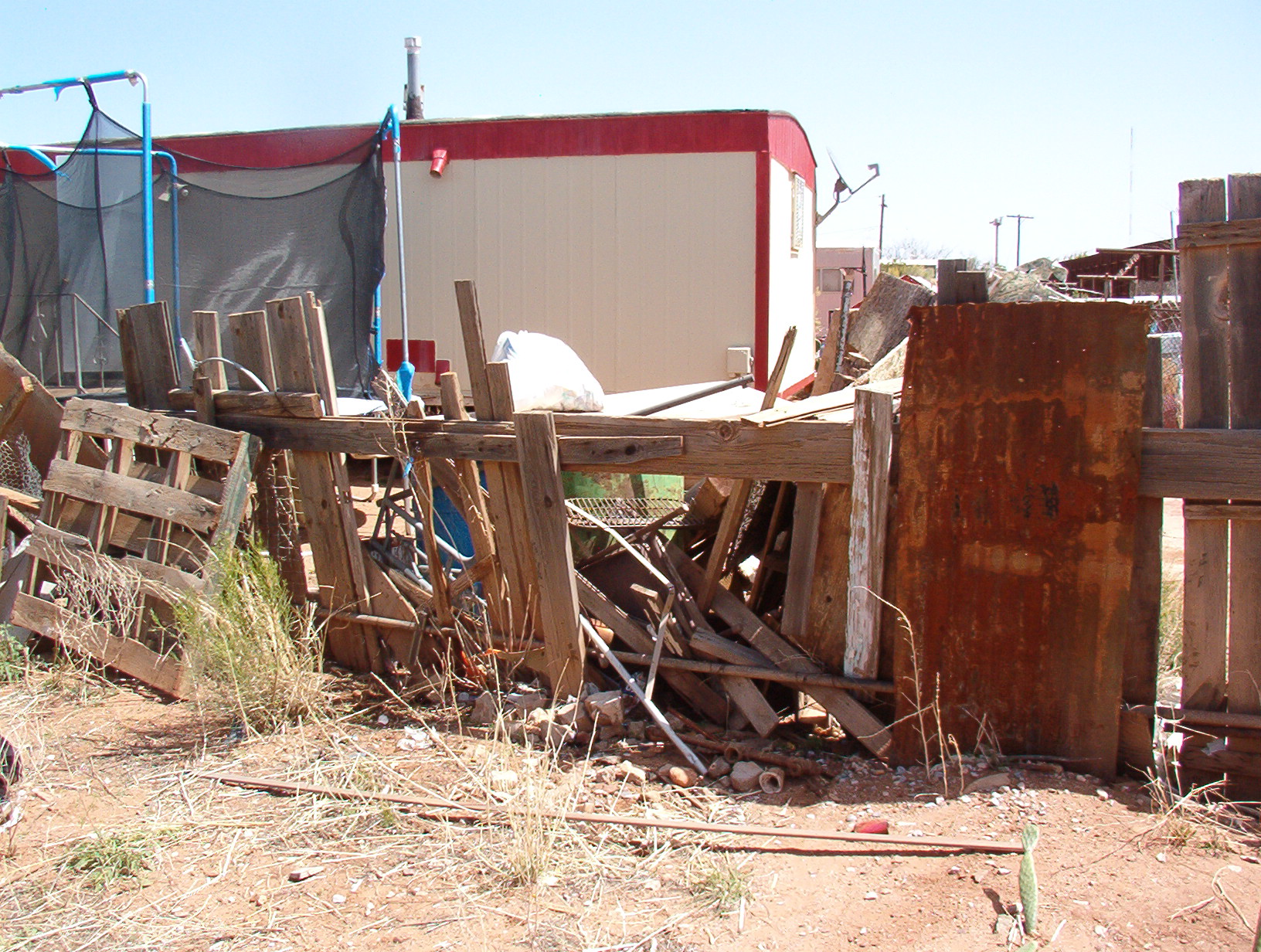
I am feeling neglectful of my blog — because I have been.  My oldest brother was here last week for a visit and left today.  He got me started on a boundary-fence building project in my back yard so I can claim my positive space away from a very negative neighbor (and his piles and piles of stinking garbage).  Budget is extremely limited, so am tearing apart a broken down shed in the back and reusing every scrap of material for the fence.

It’s good to be outside in this warm spring weather.  I’ll be able to sit in my back yard now and gaze at the sky as the brilliant moon glides westward.  I plan to make some adobe blocks to add to my building project, and hope to create some garden space.

Truth be told, I am battling sadness and sorrow.  I refuse to call it ‘depression’ though I know that it is.  I have been watching my dreaming time, and true to my post, +DEPRESSION EVEN GETS OUR DREAMING TIME, my dreaming and my sleeping are not ‘right’ — or at least not like ten years ago.  That fact is hitting me pretty ‘close to the bone’, and is not something I can tell myself I am imagining.

If, somehow, my dreaming-sleeping can improve, I will know it.  I am hoping that I can find ways to be more peaceful with myself, more gentle, more accepting.  I am working in that direction, anyway.

So, I just wanted to make the effort to write something here, even something small.  I’ll include a picture of what I am ‘walling off’ as I set my back yard boundaries, claiming some private, peaceful space for myself where I can be outside, which is good for me and healing.  I’ll post more pictures as the job progresses!

My east neighbor (family of seven) piles weeks' worth of stinky garbage until it falls through this shabby fence, and over it, into my back yard.
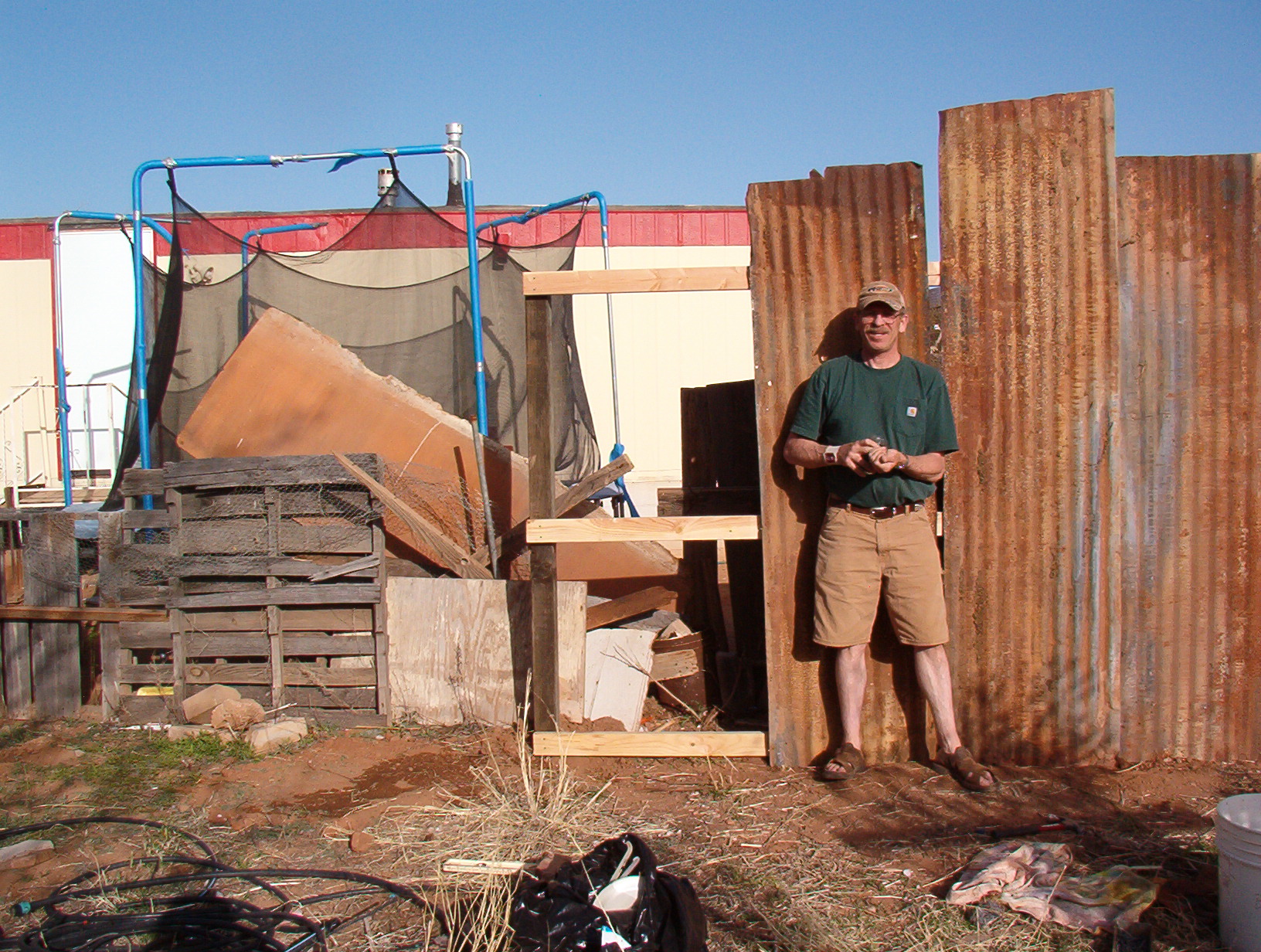
My brother showed me how to set up the 8' sections to cover with rusted corrugated roofing the wind blew off of my (quite poor) shed. But getting this wall started is giving me HOPE for something better - HOPE is something I am struggling with lately BIG TIME (That's the Mexico border there with 2 fences now and a Border Patrol road between them. I'm listening to drug enforcement choppers fly over my house as I write this - but no matter what, I love it here and it is my home. I am grateful.)
The American-Mexico border fence is visible - actually those are 2 parallel fences running alongside one another there.
Well, my fence won't be fancy, but it's a 'step up' and will give privacy. My brother says Texas BBQ places love the rusted tin look! We priced new and it will be $200 to do 16 feet. I have enough rusted stuff to do 32 feet. Not to complain, but being poor is hard on projects - I am glad to have a large yard, and look forward to growing some food.
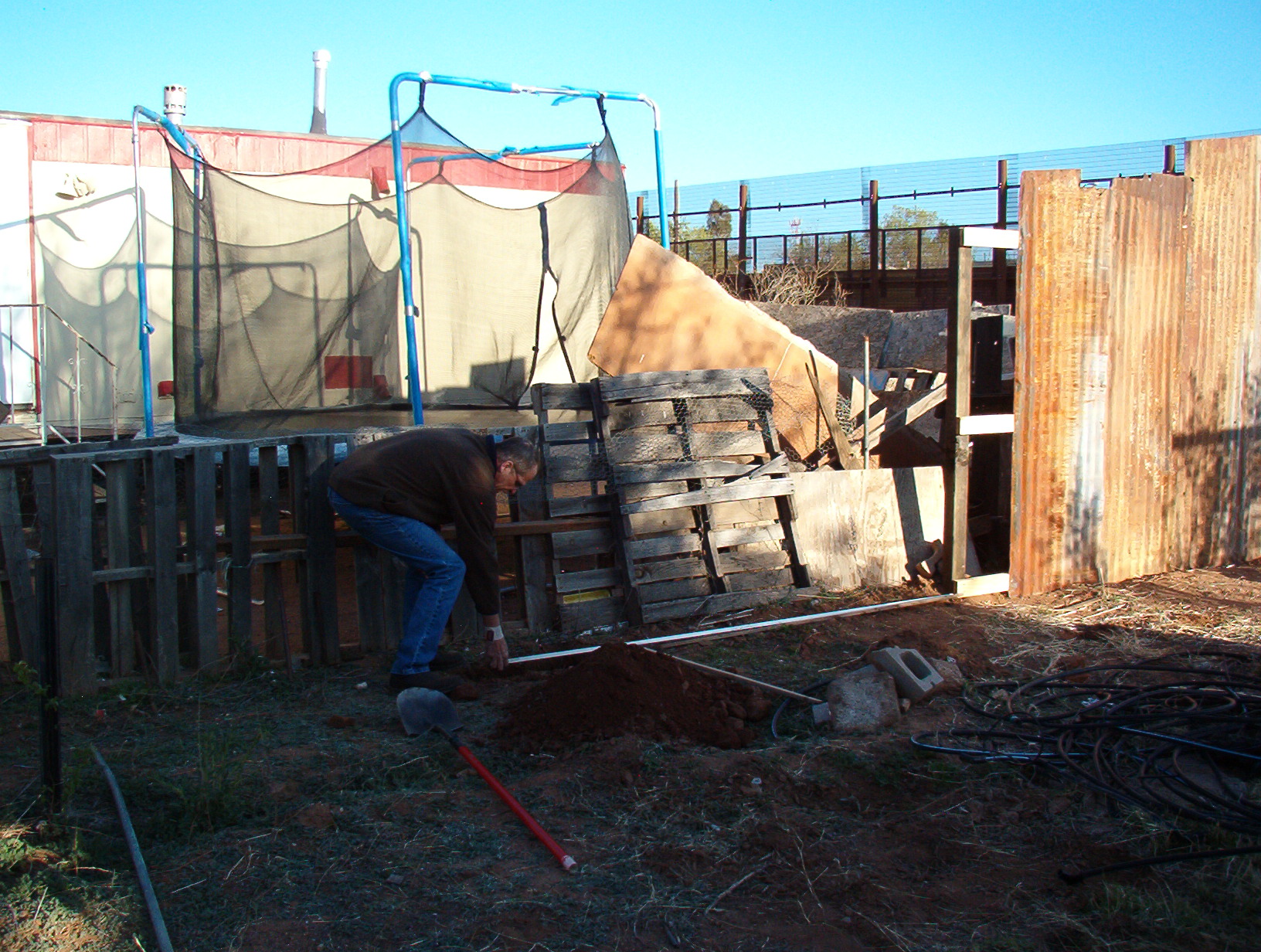
Laying out the line for holes to continue my own border wall - time for some clear boundaries here! Lots left to do, but even with my brother back at home in Illinois, I have confidence that I can do the rest even if it takes time to do it step by step as I can afford lumber and STUFF!

+++++++++++++++++++++++++

+FEELING LIKE THIS

++++++++++++++++++

Sometimes I feel like this

Barely hanging on

To the main trunk of humanity

While those others blossom together

I remain attached

Because I too belong

To the spring time.

++++++++++++++++++

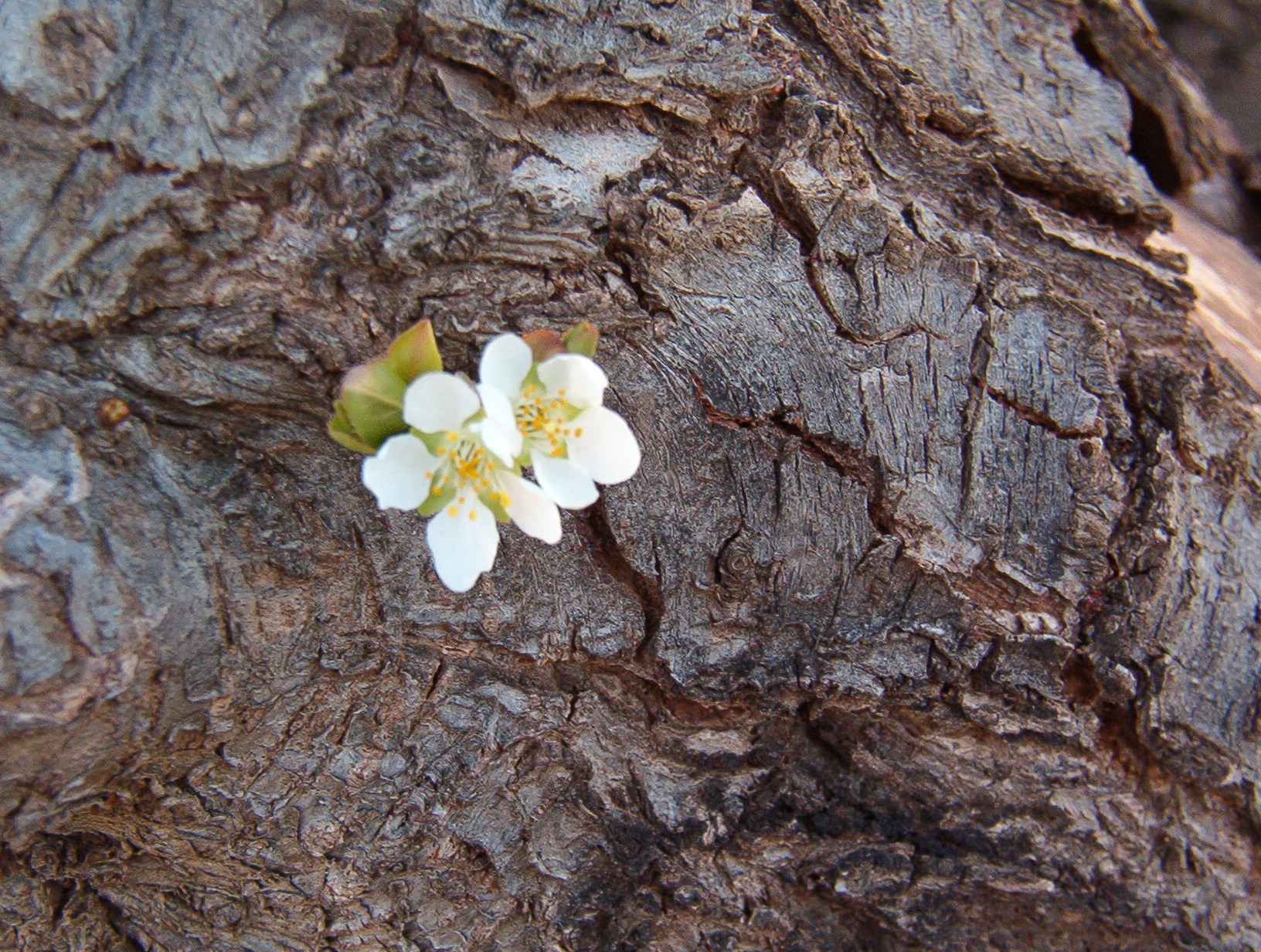
My plum tree -- bloomed over night

++++++++++++++++++

+DEPRESSION EVEN GETS OUR DREAMING TIME

++++++++++++++++++++++

I have known that what is called Rapid Eye Movement (REM) sleep is related to dreaming.  I didn’t know until now that those of us who suffer from depression HAVE TOO MUCH REM sleep and not enough Non-REM sleep (NREM).  Because I woke up at 2:30 this morning and cannot go back to sleep, I thought perhaps this might be the time to take a look at this topic.

I have been thinking about this information regarding the link between depression and disturbances in dreaming from a ‘streaming’ Netflix film I watched.  I found this synopsis of the program which describes another blogger’s reaction to the movie.

From ‘Radiant Recovery’, posted by By:  Arwen, 3/18/2010:

For anybody who watches Netflix, on instant view there is a documentary about sleep called “What Are Dreams?”. It’s a NOVA special. I watched it last night and heard this interesting tidbit. If you watch it the part I’m about to mention starts roughly about 12:30.

Researchers used to think that dreaming happened in REM sleep only (where your eyes are darting about under your eyelids.) It turns out that is not true, that we all also dream in non-REM sleep. They know this from waking dream study participants up during both REM and non-REM sleep and asking them if they had been dreaming, and if so, what they had been dreaming about.

Here’s the interesting part – when asked to describe their feelings coming out of both types of sleep, the words used to describe how they felt after non-REM sleep were positive. The words used to describe their feelings after REM sleep were negative.

The researcher describing this says that these results are surprisingly reliable and consistent among a variety of participants. He mentions that the amygdala, a part of the brain, is highly activated during REM sleep, and the amygdala specializes in processing negative emotions.

Now, here’s where I sort of sat up a little bit – he goes on to note that normally people fall asleep through non-REM sleep. But people with serious depression and depressive disorders – they invariably go right into REM. And “they stay in REM and they spend too much time in REM.”

I have no idea of the connections between the potato/serotonin and any sleep science. But I do know the difference between a potato-night and a non-potato night for me. On a non-potato night I feel like I fall like a heavy rock into a dark place. I feel like I’ve had a heavy sleep, but not necessarily a deep or a sound sleep. More like something has descended on me and I can’t move. But a potato night for me feels almost like I’ve been out running errands mentally, and for the first few minutes after I’m up I feel slightly, barely disoriented. Then I feel strong and vibrant.

Again, no idea if and how any of the stuff we talk about here fits together with any of this. I just thought it was a fascinating tidbit of research and wanted to share it.”

++++++++++++++++++++++

Then, of course, I wanted to take a look at some research about this interruption in the sleep cycle related to depression and located the following:

Human regional cerebral glucose metabolism during non-rapid eye movement sleep in relation to waking (2002)

Sleep is an essential human function. Although the function of sleep has generally been regarded to be restorative, recent data indicate that it also plays an important role in cognition. The neurobiology of human sleep is most effectively analyzed with functional imaging, and PET studies have contributed substantially to our understanding of both rapid eye movement (REM) and non-rapid eye movement (NREM) sleep. In this study, PET [measures levels of brain activity] was used to determine patterns of regional glucose metabolism in NREM sleep compared with waking.

“Whole-brain glucose metabolism declined significantly from waking to NREM sleep. …The reductions in relative metabolism in NREM sleep compared with waking are consistent with prior findings from blood flow studies. The relative increases in glucose utilization in the basal forebrain, hypothalamus, ventral striatum, amygdala, hippocampus and pontine reticular formation are new observations that are in accordance with the view that NREM sleep is important to brain plasticity in homeostatic regulation and mnemonic [memory] processing.”

++++

Conditional corticotropin-releasing hormone overexpression in the mouse forebrain enhances rapid eye movement sleep

This 2009 study used mice that were genetically modified in regard to production of a hormone that is involved in sleep cycles and dreaming states:

“Impaired sleep and enhanced stress hormone secretion are the hallmarks of stress-related disorders, including major depression. The central neuropeptide, corticotropin-releasing hormone (CRH), is a key hormone that regulates humoral and behavioral adaptation to stress. Its prolonged hypersecretion is believed to play a key role in the development and course of depressive symptoms, and is associated with sleep impairment.

“To investigate the specific effects of central CRH overexpression on sleep, we used conditional mouse mutants that overexpress CRH in the entire central nervous system … or only in the forebrain, including limbic structures ….CRH hypersecretion in the forebrain seems to drive REM sleep, supporting the notion that enhanced REM sleep may serve as biomarker for clinical conditions associated with enhanced CRH secretion.”

++++

I found this link to a Text of PowerPoint slides used by Dr. Leibowitz that includes some basic facts about sleep and dreaming.

++++

Depression deprives us of our Non-REM positive sleep stages and drops us into the highly negatively charged amygdala-driven (fear and stress response brain region) REM dream state for most of our sleeping time:

Post by Jen RobinsonOct 27, 2009 Not only do most of our dreams occur in this stage, but REM dreams are also more vivid and emotionally wrought than nonREM dreams. studies conducted during REM sleep also show increased activation of the amygdala…”

++++

Are trauma and abuse survivors continually called to TRY to process overwhelming emotional memories?

Emotional Memory Formation Is Enhanced across Sleep Intervals with High Amounts of Rapid Eye Movement Sleep (2001)

“Recent studies indicated a selective activation during rapid eye movement (REM) sleep of the amygdala known to play a decisive role in the processing of emotional stimuli.

“[Study] Results are consonant with a supportive function of REM sleep predominating late sleep for the formation of emotional memory in humans.”

++++

Serotonin is thought to be intimately involved in the regulation of sleep and waking in humans….”

++++

REM-OFF & REM-ON NEURONS

“It is now well known that the visual-emotional hallucinatory aspects of dreaming occur during REM, whereas more thought-like and verbal ideational patterns are produced during NREM.”

++++

When the Brain Disrupts the Night

++++

Does amygdalar perfusion correlate with antidepressant response to partial sleep deprivation in major depression? (2006)

One night of total sleep deprivation (TSD) or partial sleep deprivation (PSD) produces temporary remission in 40–60% of patients with major depression….”

++++

{I still believe that so-called depression is an immune system response to stressors.]

Stress and Depression: Preclinical Research and Clinical Implications (2008 – Italian and Swedish authors – excellent list of references at this link, many of the cited articles are available online)

“Major depression (MD) is a severe, life-threatening, and widespread psychiatric disorder having an incidence of about 340 million cases worldwide. MD ranks fifth among leading causes of global disease burden including developing countries, and by year 2030 it is predicted to represent one of the three leading causes of burden of disease worldwide [1], [2]. MD is also a risk factor for cardiovascular and metabolic diseases, and a major risk factor for suicide [3]. Despite extensive investigations, the exact mechanisms responsible for MD have not been identified…”

“Stress is usually defined as a state of disturbed homeostasis inducing somatic and mental adaptive reactions, globally defined as “stress response,” aiming to reconstitute the initial homeostasis or a new level of homeostasis after successful adaptation, i.e., allostasis [31][34]. There is wide consensus and support from preclinical and clinical data that stress exposure conceivably plays a causal role in the etiology of MD and depression-like disorders [11], [27], [31], [34]. However, no specific mechanism linking stress exposure and stress response to the occurrence of MD has yet been fully elucidated. Growing evidence indicates several classical candidates, including neurotransmitters and neuropeptides, as well as conceptually novel immune and inflammatory mediators, as likely intermediate links between stress exposure, depressive symptoms, and MD [9], [21], [34][38]. ….

“One of the hallmarks of the stress response has long been considered the activation of the HPA axis. Hypothalamic CRH activation is a pivotal signaling molecule in the regulation of the HPA axis in particular and of the stress response in general. Therefore, comprehension of the mechanism responsible for the negative feedback regulation of CRH is of paramount importance…..”

“Knowledge on the functioning of the HPA axis under acute or chronic challenge is also a key to understanding the intimate link between stress response and the pathogenesis of depression [40]. Indeed, in all MD syndromes, a certain degree of HPA-axis disturbance is often present, visible either at the baseline or with functional tests. Despite the fact that observed changes of HPA regulation are so far not specific for the diagnosis of depression or for any of its clinical syndromes [8], altered HPA-axis parameters are considered important biomarkers, particularly in preclinical studies. Increased circulating hormones such as adrenocorticotropic hormone (ACTH) and cortisol/corticosterone or increased adrenal gland weight are considered biomarkers of stress response in preclinical models [41], including in several papers in this Collection [19], [29], [42][46]. Despite the bulk of data available, surprisingly current knowledge has not yet been developed to a point where HPA-axis reactivity can be rationally exploited for targeted drug treatment, as opposed to the major achievements of drugs targeting the CRH receptors [47]….”

“The link between stress and depression is not novel, and several authors have aimed at identifying new subtypes of depression based on their functional link with stress exposure (e.g., [70][72]).”

++++

BBC film, “Why Do We Dream?”

++++++++++++++++++++++

+INFANT-CHILD ABUSE: WHEN THE BOUGH BREAKS, THE BRAIN CHANGES

+++++++++++++++++++

Early attachment-relationship trauma and abuse changes us.  When all is said and done, someday in the future, I believe researchers will arrive at a logical truth that I can see now — but they evidently cannot.

The research that would feed into the ‘proof’ I would need to ‘prove’ what I already know is just beginning to emerge in the fields of neuroscience, attachment, and infant-child development.  Severe early attachment-related trauma, abuse, and neglect change the way the brain forms in response to PAIN.  The brain changes the development of circuits that process information related to the developing-SELF-in the world.

The central processes of the brain involved in the see-saw process between rest and activity are directly tied to the nervous system process that relate to trauma-response and calm, relaxed connectedness – both to self and to others.  There is — as will be shown — clearly definable trajectories of brain and nervous system changes that DID occur through early trauma within severely abusive people — including parents.

In the present moment fields of study that are beginning to define brain changes in both Borderline Personality Disorder and in schizophrenia that demonstrate these patterns.  As I said in my earlier post, +IS THERE ANY OTHER WAY FOR ME TO ‘BE’ IN THE WORLD?, the concept of ‘coping mechanisms’ does not apply to infant-toddlerhood trauma and abuse survivors.  The term ‘defense mechanism’ does not apply in the OLD way of understanding, either.

When early developmental trauma changes the molecular formation of the early body-brain, opportunities for CHANGE have to be considered in light of potential for conscious CHOICE.  The more trauma was present during early development, the more developmental trajectories changed, the less potential there will be for consciously changing — at some magical later date — patterns of molecular operation in the body-brain.  Wishful thinking does not abrogate this fact.

Researchers in the fields I mentioned are rarely interested in strictly defining the consequences of severe early infant-toddler and young childhood abuse, let alone in stopping these traumas from happening.  I therefore find that reading the research that might hold the answers I am looking for is like performing delicate life-or-death surgery with a butter knife.

Defining the questions and looking for the answers about the causes and consequences of severe early trauma and abuse of infants and young children is an exercise in pandemonium.  If I think in terms of the image of a triangle, I can see that research about so-called ‘mental illness’ and its so-called symptoms takes place near the point of the triangle’s top, nowhere near the ground zero supporting level of the line at the bottom where the causes and the consequences I am talking about actually take place — on the molecular level and in the very real world of unnecessary suffering that many, many people inhabit.

The further and deeper toward the supporting bottom of this triangle we look, the more cause and consequence of early abuse and trauma are connected.  There is nothing glamorous about the kind of research-related thinking it will take to discover this truth.

Severe infant-toddler-young child abuse survivors currently exist within a category society considers to be ‘acceptable losses’.  We are disposable and dispensable people.  We were created within traumatic early environments that were themselves reflections of the kinds of circumstances those who abused us experienced in their own early lives.  None of us are considered valuable enough to REALLY worry about.

We are left to survive mostly on our own, sometimes with supposed assistance from out dated, obsolete theories and treatments.  There is a gross mismatch between what our needs truly are and what we are told are our solutions.  Nobody is going to figure this out in my lifetime.  That doesn’t stop me from trying to understand the rock-bottom truth about what happened to my mother that created the monster she was to me.

This post presents ‘pickings’ related to this topic.  The stretch of thought that must happen to see how these bits of information relate to my topic takes effort.  Nobody is going to do this work for us.  All of us need to be encouraged to try.  Again and again I have stated that from my point of view, informed compassion is the goal, not so-called forgiveness.

Our abusers were very REALLY hurt little people at one point in their lives when it mattered the most.  They in turn hurt us during our developmental stages that in turn hurt us the most.  This doesn’t mean that we must continue to miss the point about what these changes were and what they possibly mean.

+++++++++++++++++++

NEW CONCEPT — ‘first-person neuroscience’

How Does Our Brain Constitute Defense Mechanisms? First-Person Neuroscience and Psychoanalysis

Abstract

“Current progress in the cognitive and affective neurosciences is constantly influencing the development of psychoanalytic theory and practice. However, despite the emerging dialogue between neuroscience and psychoanalysis, the neuronal processes underlying psychoanalytic constructs such as defense mechanisms remain unclear.

One of the main problems in investigating the psychodynamic-neuronal relationship consists in systematically linking the individual contents of first-person subjective experience to third-person observation of neuronal states. We therefore introduced an appropriate methodological strategy, ‘first-person neuroscience’, which aims at developing methods for systematically linking first- and third-person data.

The utility of first-person neuroscience can be demonstrated by the example of the defense mechanism of sensorimotor regression as paradigmatically observed in catatonia. Combined psychodynamic and imaging studies suggest that sensorimotor regression might be associated with dysfunction in the neural network including the orbitofrontal, the medial prefrontal and the premotor cortices.

In general sensorimotor regression and other defense mechanisms are psychoanalytic constructs that are hypothesized to be complex emotional-cognitive constellations. In this paper we suggest that specific functional mechanisms which integrate neuronal activity across several brain regions (i.e. neuronal integration) are the physiological substrates of defense mechanisms.

We conclude that first-person neuroscience could be an appropriate methodological strategy for opening the door to a better understanding of the neuronal processes of defense mechanisms and their modulation in psychoanalytic psychotherapy.”

Copyright © 2007 S. Karger AG, Basel

++++++++++++++++++++

FROM:  Deric Bownds’ MindBlog

His post —  “Brain correlates of Borderline Personality Disorder

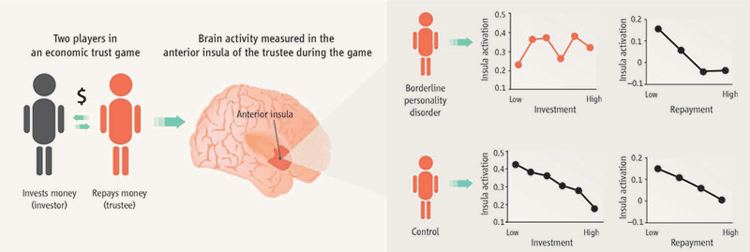
Brownds’ article highlights the fact that the BPD brain does not process the human trust (oxytocin), cooperation and connection arm of the vagus nerve system in ordinary ways:

(Click to enlarge). Activation of the anterior insula is observed during an economic trust game in individuals with borderline personality disorder and healthy controls. Both groups show higher activation in response to stingy repayments they are about to make. However, only players with the disorder have no differential response to low offers from an investor (upper left graph), indicating that they lack the “gut feeling” that the relationship (cooperation) is in jeopardy.

++++++++++++++++++++

Research on trauma survivors of the Chinese Wenchuan 8.0 earthquake, demonstrated “a reduced temporal synchronization within the “default mode” of resting-state brain function.”  READ ARTICLE HERE

This is the same brain area’s operation presented in this next article:

++++++++++++++++++++

Altered brain activity in schizophrenia may cause exaggerated focus on self

January 20, 2009 by Cathryn M. Delude

Graphic courtesy: Susan Whitfield-Gabrieli

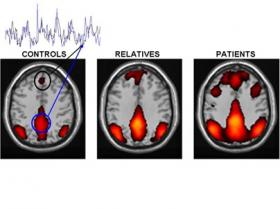
“Altered brain connectivity of default brain network in persons with schizophrenia and first-degree relatives. Colored areas represent an interconnected network of brain regions that show synchronized activity (overlapping black and blue traces) when subjects rest and allow their minds to wander. The amount of synchrony, which reflects the strength of functional connections between the different areas, is increased in patients with schizophrenia. First-degree relatives of persons with the illness also show some increase, although less than patients; this may reflect genetic effects on the brain that increase the risk of developing the disease. Black circle: medial prefrontal cortex. Blue circle: posterior cingulate/precuneus. Graphic courtesy: Susan Whitfield-Gabrieli

(PhysOrg.com) — Schizophrenia may blur the boundary between internal and external realities by over-activating a brain system that is involved in self-reflection, and thus causing an exaggerated focus on self, a new MIT and Harvard brain imaging study has found.

The traditional view of schizophrenia is that the disturbed thoughts, perceptions and emotions that characterize the disease are caused by disconnections among the brain regions that control these different functions.

But this study, appearing Jan. 19 in the advance online issue of the Proceedings of the National Academy of Sciences, found that schizophrenia also involves an excess of connectivity between the so-called default brain regions, which are involved in self-reflection and become active when we are thinking about nothing in particular, or thinking about ourselves.

“People normally suppress this default system when they perform challenging tasks, but we found that patients with schizophrenia don’t do this,” said John D. Gabrieli, a professor in the McGovern Institute for Brain Research at MIT and one of the study’s 13 authors. “We think this could help to explain the cognitive and psychological symptoms of schizophrenia.”

Gabrieli added that he hopes the research might lead to ways of predicting or monitoring individual patients’ response to treatments for this mental illness, which occurs in about 1 percent of the population.

Schizophrenia has a strong genetic component, and first-degree relatives of patients (who share half their genes) are 10 times more likely to develop the disease than the general population. The identities of these genes and how they affect the brain are largely unknown.

The researchers thus studied three carefully matched groups of 13 subjects each: schizophrenia patients, nonpsychotic first-degree relatives of patients and healthy controls. They selected patients who were recently diagnosed, so that differences in prior treatment or psychotic episodes would not bias the results.

The subjects were scanned by functional magnetic resonance imaging (fMRI) while resting and while performing easy or hard memory tasks. The behavioral and clinical testing were performed by Larry J. Seidman and colleagues at Harvard Medical School, and the imaging data were analyzed by first author Susan Whitfield-Gabrieli, a research scientist at the MIT Martinos Imaging Center at the McGovern Institute.

The researchers were especially interested in the default system, a network of brain regions whose activity is suppressed when people perform demanding mental tasks. This network includes the medial prefrontal cortex and the posterior cingulate cortex, regions that are associated with self-reflection and autobiographical memories and which become connected into a synchronously active network when the mind is allowed to wander.

Whitfield-Gabrieli found that in the schizophrenia patients, the default system was both hyperactive and hyperconnected during rest, and it remained so as they performed the memory tasks. In other words, the patients were less able than healthy control subjects to suppress the activity of this network during the task. Interestingly, the less the suppression and the greater the connectivity, the worse they performed on the hard memory task, and the more severe their clinical symptoms.

“We think this may reflect an inability of people with schizophrenia to direct mental resources away from internal thoughts and feelings and toward the external world in order to perform difficult tasks,” Whitfield-Gabrieli explained.

The hyperactive default system could also help to explain hallucinations and paranoia by making neutral external stimuli seem inappropriately self-relevant. For instance, if brain regions whose activity normally signifies self-focus are active while listening to a voice on television, the person may perceive that the voice is speaking directly to them.

The default system is also overactive, though to a lesser extent, in first-degree relatives of schizophrenia patients who did not themselves have the disease. This suggests that overactivation of the default system may be linked to the genetic cause of the disease rather than its consequences.

The default system is a hot topic in brain imaging, according to John Gabrieli, partly because it is easy to measure and because it is affected in different ways by different disorders.”

Provided by MIT

++++++++++++++++++++

Activation of Anterior Insula during Self-Reflection

This link describes yet another research study that links the brain default resting mode to self-reflection, a process that was seriously flawed in my borderline mother:

“The results provide further evidence for the specific recruitment of anterior MPFC and ACC regions for self-related processing, and highlight a role for the insula in self-reflection. As the insula is closely connected with ascending internal body signals, this may indicate that the accumulation of changes in affective states that might be implied in self-processing may contribute to our sense of self.”

++++++++++++++++++++

Processing of autobiographical memory retrieval cues in borderline personality disorder

Affective dysregulation [emotional dysregulation]in borderline personality disorder (BPD) in response to both external stimuli and memories has been shown to be associated with functional alterations of limbic and prefrontal brain areas….

Response “processing in BPD subjects were in line with previously reported changes in anterior cingulate and orbitofrontal cortices, which are known to be involved in memory retrieval. However, BPD subjects displayed hyperactivation in these areas … The deficit of selective activation of areas involved in autobiographical memory retrieval suggests a general tendency towards a self-referential mode of information processing in BPD, or a failure to switch between emotionally salient and neutral stimuli.

++++++++++++++++++++

I believe that emotional pain is as physiologically real as is physical pain.  I also believe that the pain of malevolent early infant-child trauma, abuse and neglect creates changes in the developing brain that result in changes in these pain-reduction brain areas.

FULL ARTICLE FREE ONLINE:

Keeping pain out of mind: the role of the dorsolateral prefrontal cortex in pain modulation

“…the bilateral dorsolateral prefrontal (DLPFC) exerts active control on pain perception by modulating corticosubcortical and corticocortical pathways.” READ FULL ARTICLE HERE

++++++++++++++++++++

Dissociable Brain Mechanisms Underlying the Conscious and Unconscious Control of Behavior

— 2010 – Journal of Cognitive Neuroscience, MIT article

“Cognitive control allows humans to overrule and inhibit habitual responses to optimize performance in challenging situations.   Contradicting traditional views, recent studies suggest that cognitive control processes can be initiated unconsciously…..  [This research study presents]… patterns of differences and similarities between conscious and unconscious cognitive control processes are discussed in a framework that differentiates between feedforward and feedback connections in yielding conscious experience.”

+++++++++++++++++++++++++++++++

RESEARCH ARTICLE ABOUT CHANGES IN THE BORDERLINE BRAIN – CHANGES THAT MY MOTHER NO DOUBT HAD THAT CREATED HER ABILITY TO TORMENT, TORTURE AND TRAUMATIZE ME      —

Please follow the active link for this title to read the full article including full references that I have omitted in these quotes below:

Frontolimbic dysfunction in response to facial emotion in borderline personality disorder: an event-related fMRI study

AUTHORS:  Michael J. Minzenberg, Jin Fan, Antonia S. New, Cheuk Y. Tang, and Larry J. Siever

PUBLISHED:  Psychiatry Res. 2007 August 15; 155(3): 231–243.

“…converging evidence suggests that the social and emotional disturbances of BPD may have a basis in the functional neuroanatomy of social/emotional information processing, supported by fronto-limbic circuitry….

“BPD patients exhibit a number of changes in the structure and function of subcortical limbic areas. This includes volume loss and lower resting metabolism in the amygdala and hippocampus … some studies have found amygdala volume to be preserved … The functional effects of this limbic pathology include elevated amygdala responses to emotional stimuli …and episodic memory deficits … which may be due to intrinsic hippocampal pathology or secondary to amygdala hyperactivity ….

“BPD patients also exhibit deficits in the structure and function of the rostral and subgenual subregions of the anterior cingulate cortex (ACC)….  The ACC may be a key neural region where altered processing of social and emotional information is expressed in some of the hallmark clinical signs of this disorder. The ACC is necessary for the maternal separation distress call of infant squirrel monkeys … and is activated in healthy adult humans both during the subjective experience of social rejection …and during effortful control of subjective emotional responses …. These experimental paradigms are related to clinical phenomena that are very characteristic of BPD, such as social attachment disturbance, rejection sensitivity and emotion dysregulation, respectively ….

+++++++++++++++++++++++++++++++
Neural paths for borderline personality disorder

People prone to stormy social lives display brain activity that may prompt oversensitivity to emotion and an inability to resolve conflicting information
By Bruce Bower

DOES THIS SOUND at all familiar?

“New brain-imaging research suggests that in people with borderline personality disorder, specific neural circuits foster extreme emotional oversensitivity and an inability to conceive of other people as having both positive and negative qualities….  Borderline personality disorder affects one in five psychiatric patients….  Most people have an important capacity for resolving conflict: the ability to perceive both favorable and negative aspects of the same person. Lacking this skill, borderline patients find it easier to veer back and forth between regarding those they know as either wonderful or awful….”

(My mother sure never ‘veered’ in her feelings toward me – no veering whatsoever!  I was completely and totally ‘awful’ while the chosen good child, my sister, was the ‘wonderful’ one.)

+++++++++++++++++++++++++++++++
See also this post on the resting brain default mode:

+SOMETHING WENT TERRIBLY WRONG WITH MY MOTHER’S PRECUNEUS

++++++++++++++++++++