+WHAT REALLY HAPPENED TO US: VIOLENT TRAUMA, MALTREATMENT, ATTACHMENT – BIRTH TO AGE THREE (and beyond)

++++++++++++++++++++++++++++++++++

All survivors of infant-toddler-child violent trauma and maltreatment share a common ground.  Although the information I am presenting here might be difficult for some to read, what is being said here is extremely important.  When I say that it isn’t the exact memories of what specifically happened to any one of us that matters most, it is to the kind of information that follows that I am referring to that DOES matter most.

We survivors have always struggled.

Please spend a little time at least skimming through the rest of this post – if you are a survivor of a chaotic, unstable, violent early life I believe you will feel reverberations in your BODY to this topic.  I don’t believe we can truly follow our pathway through healing if we don’t truly comprehend the impact of the violent trauma and maltreatment we experienced – and what it did to us on all the levels of our development.

++++++++++++++++++++++++++++++++++

What follows comes from this book:

Handbook of infant mental health By Dr. Charles H. Zeanah, Jr.

Publisher: The Guilford Press; Third Edition (July 15, 2009)

From Chapter 12 – The Effects of Violent Experience

(I present this copyrighted material here for educational purposes only – please refer to the actual book article for exact references to research noted)

+++++++++++++++++++++++++++++++++++

Neurobiology

“We noted earlier in this chapter that violent trauma early in life – particularly when involving repeated and severe exposure – impacts the central nervous system, brain development, and the overall health of the individual (McEwen, 2003).  We now review in greater depth the underlying neurobiology of the sequelae of violence exposure in a developmental and relational context.

“Preclinical studies have shown that areas of the brain that are particularly prone to the adverse effects of maltreatment and violent trauma during the first 3-5 years of life include (1) those that have a prolonged postnatal developmental period, (2) those with a high density of glucocorticoid receptors, and (3) those that have the potential for postnatal neurogenesis (Teicher et al., 2003).  These areas include, most prominently, the hippocampus, amygdala, corpus callosum, cerebellar vermis, and the cerebral cortex.

“When a rat infant undergoes severe stress, such as repeated foot shocks, the hippocampus fails to form the expected density of synaptic connections.  Normative pruning of these connections nonetheless occurs later in the prepubertal period, so adult animals who were repeatedly stressed in infancy end up with far fewer synaptic connections in this region (Andersen & Teicher, 2004).  These results support Carrion et al.’s (2007) findings that differences in hippocampal volume in patients with PTSD are more likely due to the neurotoxicity of stress hormones than to a constitutional size difference.  Clinical implications of hippocampal and amygdalar damage due to stress hormones may include increased propensity for confusion of past and present, flashbacks, and dissociative symptoms (Sakamoto et al., 2005).

“The corpus callosum is a heavily myelinated region of the brain that is associated with hemispheric integration.  High levels of stress hormones during infancy and early childhood have been associated with suppressed glial cell division, which is critical for myelination (Berrebi et al., 1988).  DeBellis et al. (2002) observed that reduced corpus callosum size was the most significant structural finding noted in children with a history of maltreatment and PTSD.  Disturbances in the myelination of the corpus callosum and cortex due to excessive exposure to glucocorticoids during the first 3 years of life may explain some of the difficulties that maltreated preschool-age children have in integrating cognitive and emotional information and in taking others’ perspective, in comparison to nonmaltreated age-matched controls (Pears & Fisher, 2005).

“Among the most exciting research that illustrates the interaction of development and traumatic experience is that regarding the differential effects of specific types of maltreatment and violent trauma on the brain at critical periods of development through early adulthood in both animal and human models (Hall, 1998; Teicher, Tomoda, & Andersen, 2006).  For example, repeated episodes of sexual and physical abuse were associated in the same group of subjects with reduced hippocampal volume if the abuse was reported to occur in early childhood, but with reduced prefrontal cortex volume if the abuse occurred during adolescence (Teicher, 2005).  Similar exposure during different, temporally discrete windows of development may have very different clinical implications.

Effects on Memory

The psychological and neurobiological implications of exposure to traumatic events also involve the infant and young child’s developmentally determined capacity to encode, remember, and recall those events in order to subsequently make meaning of their experience.  Recent evidence suggests that even prior to 1 year of age, infants’ capacity to recall events is well underway.  By the end of the second year of life, long-term memory is reliably and clearly present, especially when there have been reinforcing memories (i.e., repeated exposures or explicit reminders), which are unfortunately all too common in cases of maltreatment and family violence (Bauer, 2006; Hartshorn & Rovee-Collier, 2003).  Based on her review of the literature, Fivush (1998) has noted that traumatic events perceived before the age of 18 months are frequently not verbally accessible, whereas events experienced between 18 and 36 months can often be coherently recounted and retained as long-term memories.

“Early chronic and/or severe exposure to violence and/or maltreatment has also been noted to lead to greater pervasive insult to memory functions and to promote dissociative processes that can interfere with memory retrieval (Howe, Cicchetti, & Toth, 2006; Nelson & Carver, 1998).  One mechanism for this biological insult to memory function is thought to be primarily the effect of excessive glucocorticoids, which damage the developing structures involved in memory contextualization and storage, such as the hippocampus (Sapolsky, 2000; Sapolsky, Uno, Rebert, & Finch, 1990).  It is clear that over the course of formative development, exposure to violent trauma and maltreatment can affect the degree and nature of changes in the neurobiology of the brain.

(Pages 203 – 205)

+++++++++++++++++++++++++++++++++++

The Relational Context

“The violent traumatization of an infant or very young child, whether due to maltreatment or exposure to familial, community, war, or terrorist violence, is most significantly a breach in safety.  Unlike older children or adults, very young children experience their world contextually, from within the embrace of the primary attachment relationship (Scheeringa & Zeanah, 2001).  Their sense and expectation of safety are therefore inherently bound to the caregiver.  To appreciate the effects of violence on young children requires an understanding of the goals and mechanisms involved in the attachment relationship as well as the ways in which trauma impacts attachment.”

Attachment, Safety, and Violence

“In the anchoring concept of attachment theory, the ethological wisdom of a caregiver-infant behavioral system is seen as ensuring species’ survival (Bowlby, 1969).  The infant’s drive to maintain safety is paramount and is expressed in attachment behaviors that may phenotypically change over time but that serve the same purposeful goal of achieving “felt security” (Bretherton, 1990).  Perturbations in the infant’s ability to achieve felt security necessarily result in adaptations that may be more or less pernicious, depending on the quality and degree of frustration.  In response to the primary attachment figure’s track record of providing “felt” security, the infant constructs an “internal working model” of self and other.  This internal representation consolidates over the first 3 years of life and guides the infant’s expectations and behaviors in times of stress.

“The experience of violence, with its attendant physiological “felt anxiety” might therefore be conceptualized as the exact affective opposite of felt security.  The young child does not yet have the cognitive ability to mediate feelings of fear that result when exposed to violence, either as a victim or witness.  For young children, the caregiver’s role is to function as external regulator of negative or overwhelming internal affect and sensation.  Several violence scenarios may be imagined in which the caregiver is unavailable to soothe infant anxiety:  when the caregiver is being victimized, when the caregiver is a witness to violence and becomes too hyperaroused or too dissociated/avoidant to provide safety, or when the caregiver is the source of the violence – as in the case of parental child abuse (Carlson, 2000).  A toddler who has internalized a working model in which he or she is unprotected and repeatedly left subject to overwhelming fear – one of the definitional criterion for trauma – may develop what has been termed distortions in secure-base behavior (Lieberman & Pawl, 1990).  Such distortions are, in fact, attempts by the child to manage unmanageable anxiety without the actual or “real time” mentally represented assistance of the caregiver.

“If early childhood is characterized by a relational context in which the child’s ability to manage stress is determined by caregiver response, then the mental health status of the caregiver becomes a vital concern.  Fraiberg, Adelson, and Shapiro (1975) called attention to the profound effects of maternal mental health on the developing child.  The “ghosts in the nursery” that Fraiberg et al. described were malevolent internalized attachment figures who had subjected the caregiver to various forms of maltreatment during his or her own childhood.  Fraiberg et. al. observed that caregiver traumatization in the past resulted in (1) his or her present-day inability to respond appropriately to infant anxiety, or (2) his or her engagement in behavior that actually induced anxiety.  From an attachment perspective, the infant’s working model of self and other is thereby shaped by the caregiver’s disturbed attachment representations.

“Exploring representational models, Fonagy et. al. (Fonagy, Moran, Steele, Steele, & Higgitt, 1991; Fonagy, Steele, Moran, Steele, & Higgitt, 1993) identified the capacity for “reflective functioning” as an awareness of a meaningful relationship between underlying mental states (feelings, thoughts, motivations, intentions) and behavior in and between both self and others.  Fonagy’s group found that caregiver reflective functioning was significantly predictive of infant attachment classification.  The caregiver’s capacity to “read” infant mental states accurately, and with inference of meaning, allows for sensitively attuned responses that create a subjective experience of security/safety and support the infant’s developing capacity for self-regulation (Bretherton & Munholland, 1999).  However, when engaging in reflective functioning leads to the experiencing of highly negative affect, certain aspects of mental functioning may be defensively inhibited (Fonagy, Steele, Steele, Higgitt, & Target, 1994) or excluded (Bretherton, 1990).  A caregiver in a state of defensive inhibition will be incapable of accurately responding to and reflecting the child’s mental state, leaving the child to manage states of arousal and anxiety on his or her own.  Consistent with this formulation is the finding that young children assessed as having a disorganized attachment have caregivers who are often unresolved with respect to past traumatic experience (Lyons-Ruth & Jacobvitz, 1999).  In short, caregiver history of attachment relationships and of trauma exposure determines not only the dyad’s quality of attachment, via reflective functioning, but additionally the manner in which trauma exposure will be processed by both child and caregiver.

“Thus, traumatic violence can interfere with the initial development of a secure and organized attachment or derail a previously secure attachment if the caregiver is sufficiently adversely affected.  Disturbances in attachment, in turn, confer increased [sic] for (1) recovery from trauma exposure by the child and/or caregiver (Fisher, Gunnar, Dozier, Bruce, & Pears, 2006), (2) enactment of maltreatment by the traumatized caregiver (Cicchetti, Rogosch, & Toth, 2006), (3) child exposure to trauma via inadequate caregiver monitoring (Schechter, 2006; Schechter, Brunelli, Cunningham, Brown, & Baca, 2002; Schechter et al., 2005), and (4) subsequent repetition and transmission of risk by the traumatized child and/or caregiver (Weinfield, Whaley, & Egeland, 2004).  Such evidence supports the contention that we must view infant mental health disturbances through the dual conceptual lenses of attachment theory and trauma theory (Lieberman, 2004).”  (pages 205 – 206)

Relational Neurobiology

Like all psychological functions, the child’s expectations in relation to attachment figures have neurobiological correlates.  In addition to the effects of cortisol noted earlier, physical abuse, compounding its clear effects on emotion regulation and separation anxiety within the context of attachment, has been found to be associated with attentional dysregulation and selective biases to angry and negative affect (Pollak & Torrey-Schell, 2003).

“Moreover, from early infancy, children are dependent on their attachment figures to reflect back to them how they are feeling and to make sense of their experience.  Expectation of the contingent responsiveness during early infancy has been described empirically in the work of Gergely and Watson (1996), who also first described the “marking” of the infant’s affect by the primary caregiver – the processing and modulation of that affect, which feeds back a sense of empathy as well as serving a modulatory function for the baby, beginning in the period of the second to fifth months of life.  Subsequently, Gergely (2001) noted that lack of marking and overidentification with the child’s perspective may interfere with affect regulation, particularly around crises and trauma.

“We now know that specific neural circuits in the developing brain, among which the mirror neuron system figures prominently, are crucial to the development of social cognition, self-awareness, affect regulation, and learning (Jacoboni & Dapretto, 2006).  The functional implications of these cortical pre-motor planning and parietal structures in the context of early development are only just beginning to be understood.  The impact of violence exposure on the development of these circuits with respect to expression of aggression remains to be studied.

Myron Hofer (1984) has described multiple “hidden regulators” embedded within the attachment system across mammalian species.  The need for mutual regulation of emotion and arousal in humans lasts approximately as long as it takes for integrative structures in the brain to myelinate and prefrontal cortical areas to develop, all of which serve to assist the child in self-regulation in the face of stress and fear.  In other words, the primary caregiver is, during the first 5 years of life, crucial to the infant’s developing self-regulation.  The hidden regulators embedded within the attachment system include those of sleep, feeding, digestion, and excretion as well as higher functions of emotion, arousal, and attention.  The literature contains many examples of how the sequelae of a caregiver’s experience of violent trauma and maltreatment, PTSD, affective disorders, severe personality disorders, and substance abuse can impair this fundamental regulatory function during formative stages of development, both at the representational and behavioral levels of attachment.  (Lyons-Ruth & Block, 1996; Schechter et al., 2005; Theran, Levendosky, Bogat, & Huth-Bocks, 2005), and contribute to intergenerational transmission of violent trauma and maltreatment.

“Neurobiologically based studies of primates, specifically, macaque monkeys, have helped to elucidate the role of attachment in interrupting versus promoting intergenerational transmission of maltreatment (Barr et al., 2004; Maestripieri, 2005; Shannon et al., 2005).  In Shannon et al.’s study (2005), maternal absence (i.e., neglect) was associated with decreased serotonin replenishment, a finding associated with mood and impulse disorders, as well as with increased alcohol consumption (in Barr e al.’s study, 2004).

“Recent research has also supported transgenerational transmission of biological response to trauma.  Whether this finding proves ultimately to be a risk or resilience factor remains a question.  An affected mother’s exposure to violent trauma during pregnancy (i.e., the 9/11 terrorist attacks on the World Trade Center in New York City) and her glucocorticoid stress response were linked to the glucocorticoid levels, upregulation of the receptor setpoint, and behavior of her infant by 9 months of life (Yehuda et al., 2005)….  Could this transmission of response to shared stress during pregnancy be one example at the very beginning of the organism’s life of adaptation in the service of evolution?  Is the mother’s biology preparing the offspring for expectation of threat?  If so, can one say that the development of PTSD (and/or other posttraumatic psychopathology) is a form of risk if no further threat actually exists, or resilience in the form of potentially beneficial hypervigilance to actual subsequent threat?  [bold type is mine]

“As the hypothalamic-midbrain-limbic-paralimbic-cortical circuits in the caregiver respond jointly to infant stimuli, as has been found in recent neuroimaging studies among normative mother-infant dyads (Swain, Lorberbaum, Kose, & Strathearn, 2007), one can imagine a cycle of dysregulation in which unquelled infant distress becomes a stressor particularly for a traumatized parent.  Indeed, while watching video clips of their children during separation and other stressful moments, group differences between violence-exposed mothers of toddlers and nonexposed mothers have been noted with respect to measures of integrative behavior, autonomic nervous system activity, and brain activation (Schechter, 2006).

“We know that an important determinant of the effects of traumatic exposure (e.g., how long they endure) is the primary caregiver’s ability to help restore a sense of safety via regulation of infant emotion, sleep, arousal, and attention (Laor, Wolmer, & Cohen, 2001; Scheeringa & Zeanah, 2001).  These emerging findings may illuminate the ways in which the experience of violent trauma and its sequelae interfere with this primary caregiving function.  On a positive note, we have also begun to understand how new relationships, most dramatically that of foster care, can curb if not reverse at least some of the effects of early violent trauma exposure (Fisher et al., 2006; Zeanah et al., 2001).

(Pages 206 – 208)

++++++++++++++++++++++++++++++++++++++++++++
+WHEN IS A STORY A STORY?

+++++++++++++++++++++++++

Perhaps if I lived in a different time or a different place everyone around me would understand if I told them, “All I have left in me is one good story.”  That I cannot tell that story to the empty air would also be understood.  I can write and write and write and write, but for me writing is not the same thing as telling.

Where is a story when it’s not being told?  Is it, like our memories themselves lying around in shards and shreds, in pieces and parts within our minds — somewhere?  Or is a story a living thing that has no slumbering existence at all, existing only when it is falling from somebody’s activated lips?

Perhaps it is because so much of the body of my story as I imagine telling it, probably to my daughter, is so much about being alone in solitary confinement, in isolation and in silence (in between the terrors of traumatic abuse over those first 18 years of my life) that my story is frozen there, askew akimbo, in limbo, and cannot take on a life of its own if there is no caring listener to help it be born.

Perhaps my story– spoken (or written) into silence — would be worse than no story at all.  Perhaps, formed THAT way my story would be no story, just an ongoing pause, more of the same, a restless opera hanging around getting parts of itself stuck in cobwebs while the rest of it fades and fades and fades into silence like notes at the end of an echo.

Is a museum a museum if it’s empty?  Is an art gallery a gallery if it doesn’t contain a single piece of art?  Is a story a story if there’s nobody there to hear it but the teller?  I think not.  In all these cases I think not.

++

+BLOGGING HISTORY – NEW WAYS FOR OUR SPECIES TO REMEMBER ITSELF

+++++++++++++++++++++++++

+REPAIRED YESTERDAY’S LINKS – CRITICAL INFO FOR EARLY ABUSE-TRAUMA SURVIVORS

++++++++++++++++++++++

My apologies for the trouble with the links in yesterday’s important post

+EARLY ABUSE AND TRAUMA SURVIVORS NEVER GET A HOLIDAY

I think I have them all straightened out now.  As I Googled myself around regarding the titles and topics represented by those links I found myself being awed for those of us severe infant-child abuse and trauma survivors who actually MOSTLY are able to function!

What a menu of terrible difficulties this area of study contains!  I don’t believe there is ANYTHING more important for us as survivors to understand than the information is you will find at the end of these links.

That no  professional EVER even MENTIONED how early severe trauma and neglect can change an infant-child’s physiological development is, to me, CRIMINAL!!!

There is NO, and I MEAN NO psychological or psychiatric ‘theory’ that can begin to remotely help us if it does not address the neurobiological CHANGES that happened to our growing and developing BODY on all of our levels as we survived our traumas!

The kinds of changes that are described in these articles presented in yesterday’s post are what happened to my mother, to my father — and most definitely happened to ME!

We CANNOT consider our healing as severe early abuse and trauma survivors without understanding the FACTS as these articles present them.  THEORIES are of no use to us WHATSOEVER!

We have to educate ourselves with this critically important information.  Any survivor who is seeing a therapist must determine if that person KNOWS this information.  If they don’t, give them this actual link to my post of yesterday,

+EARLY ABUSE AND TRAUMA SURVIVORS NEVER GET A HOLIDAY

https://stopthestorm.wordpress.com/2010/12/25/early-trauma-survivors-never-get-a-holiday/

If your therapist will not listen to you about this critically important information, I would suggest that you find one that WILL!  So-called ‘mental health treatment’ that does not operate for survivors from this informed foundation of information is no better than BLOODLETTING treatments for disease.

The Trauma Altered Development we endured changed our PHYSICAL body — the same one we have to live within for the rest of our life.  Any treatment for a ‘physical problem’ that is not based on facts is useless!!

+++++++++++++++++++++

+TODAY’S PURSUIT OF HAPPINESS

+++++++++++++++++++++++++

Life, liberty and the pursuit of happiness —  the fundamental human rights declared in 1776 as The United States of America took its form as an independent nation.  Where do abused infants and children look for their portion of these rights?  To their caregivers.

As I work again today out in the sunshine on this glorious day, and as I pay attention to how I feel in my body, I know I am not happy.  I am aware that what I am accomplishing is to lessen my continual sadness.  “What, then,” I ask myself, “might contribute to something MORE than a lessening of sadness?  What — if you use the powers of your mind to think and dream, might actually give you some measure of happiness?”

Well, at least I am in PURSUIT OF HAPPINESS!  That’s the right direction for me to go as far as I can tell.

Happiness is NOT ‘just’ a lessening of sadness.

I’ve also been thinking about the ‘all right’ feeling as being a measure of a state of well-being.  Oh, how seldom, how very, very seldom have I EVER experienced THAT feeling state:  All is right.  I am all right.

Knowing one is all right in the world is, to me, the rock bottom accomplishment given to an infant-child by its attachment-caregivers from birth so it can build this feeling state into its body-brain from the beginning of its life.  From that time forward this feeling state remains built into the body and is therefore accessible to a person.

Being slapped and hit and yanked and punched and dragged around by hair and limb, having one’s skin punctured by grasping talons of fingernails, being screamed at and……..  Well, as I an other severe abuse survivors well know, these threatening, dangerous, traumatic and terrible-terrorizing conditions of infancy and childhood simply COULD NOT POSSIBLY build into our body a feeling of being ALL RIGHT.

Nope.

Never happened.

So here I am in adulthood sunk in the ‘depression’ of terrible sadness in the Meteor Crater I found myself born and battered in (not perched precariously at the top of a high precipice fighting to the death with her anger and rage against all perceived attacks, as my mother was).

Today I am practicing using my mind, thoughts and dreams to see if I can modulate-moderate the feelings of sadness into something that might resemble what I guess happiness is — or at least make progress toward an inner feeling of ALL RIGHT.

This is what I have come up with so far:  If I could finish this garden, and name it The Secret Garden,  then perhaps I could search out programs in this region of Arizona that work with abused children and invite them to come visit.

When I was five, and before our family moved from Los Angeles to Alaska, we visited an immense garden somewhere on a hill.  I have never forgotten that glorious garden, and every single time in all my 54 years since that day when I think of that garden I feel not only a little-bit-less-sad, but for a brief flash of time I feel almost-happy.

Perhaps if I can create a magical garden here, designed especially for the eye level and imagination of five-year-olds, and then these little people who have been traumatized, battered and abused could come wander around here, MAYBE they too could carry within their body-brain-mind-self a memory that would ALWAYS be happy enough to displace their sadness (or rage) and provide for them a glimmer of true — ALL RIGHT — joy!

Big people could come, too — but it is to the little ones’ joy that I now return to my digging and adobe creation.  May all of us today pursue our happiness!

+++++++++++++++++++++++++

+THE DIFFERENCE BETWEEN ‘TOXIC’ AND ‘TRAUMATIZED’ – THE OLEANDER CONTINUED

+++++++++++++++++++++++

The words that go along with these pictures of my oleander killing project have been affected by the poignant comments I received today to this post:

*BEING WITNESS TO MY OWN ABUSE

It became very clear to me as I replied to the comments that what I do with my work out in my yard is not only ‘gardening therapy’ for me, it is an expression of myself in an art form:  Adobe.

Today completes the basic work on destroying these two oleanders in my yard (see: +MY TOXIC MOTHER AND THE OLEANDER).  What interests me about my thinking in response to today’s comments is the similarity I see between this oleander project and my severe infant-child abuse survivorship:  While I do not believe in ‘getting over it and moving on’, ‘putting our abusive childhoods in the past’, ‘forgetting our past’, ‘leaving our abusive childhoods behind’, etc., I do believe in positive change.

I am reminded of the posts I wrote some time ago in which I described my realization that my mother as the abuser and my father as her enabler would have deserved a minimum jail sentence each of 14,500 years for what they did to me — and that was figured using the tip of the iceberg and vastly minimizing my mother’s attacks on me over the 18 years of my childhood.

Crimes against a child that could have/should have resulted in 14,500 years of incarceration is NOT something I can even conceive of resolving for myself with ‘forgiveness’.

This does not mean that I simply accept what happened and how I am today as a result of it mildly!  Nope!  Not this woman!

So, my latest project has been teaching me how I understand that a severe infant-child abuse survivor can emerge from their earliest years being an extremely TOXIC person — or NOT!  Nobody is perfect, but my mother didn’t earn her 14,500 year jail term assessment from me by simply being a little bit flawed.  Nope!

So — my mother and the metaphor of the deadly poisonous oleander.

I would — and I am serious!  Need a bulldozer in this yard to remove the roots of these two hundred year old oleanders — or dynamite.  I have no access to either — and I have no possible way to remove those roots.

Parallel:  I have no way to remove the damage my mother did to me through her mentally ill devastating abuse of me.  The ‘damage’ was built right into my developing body-brain from birth, as I describe so many times on this blog.

But, I can do the best I can to pare all of it down — put boundaries around what was ‘her’ and what was ‘me’ — and most importantly I can CONTAIN and QUARANTINE the toxic poison to minimize what is affecting me ever day — to the best of my ability.

This is, to me most certainly NOT about forgiveness.  This is about continuing to survive the best way that I can.

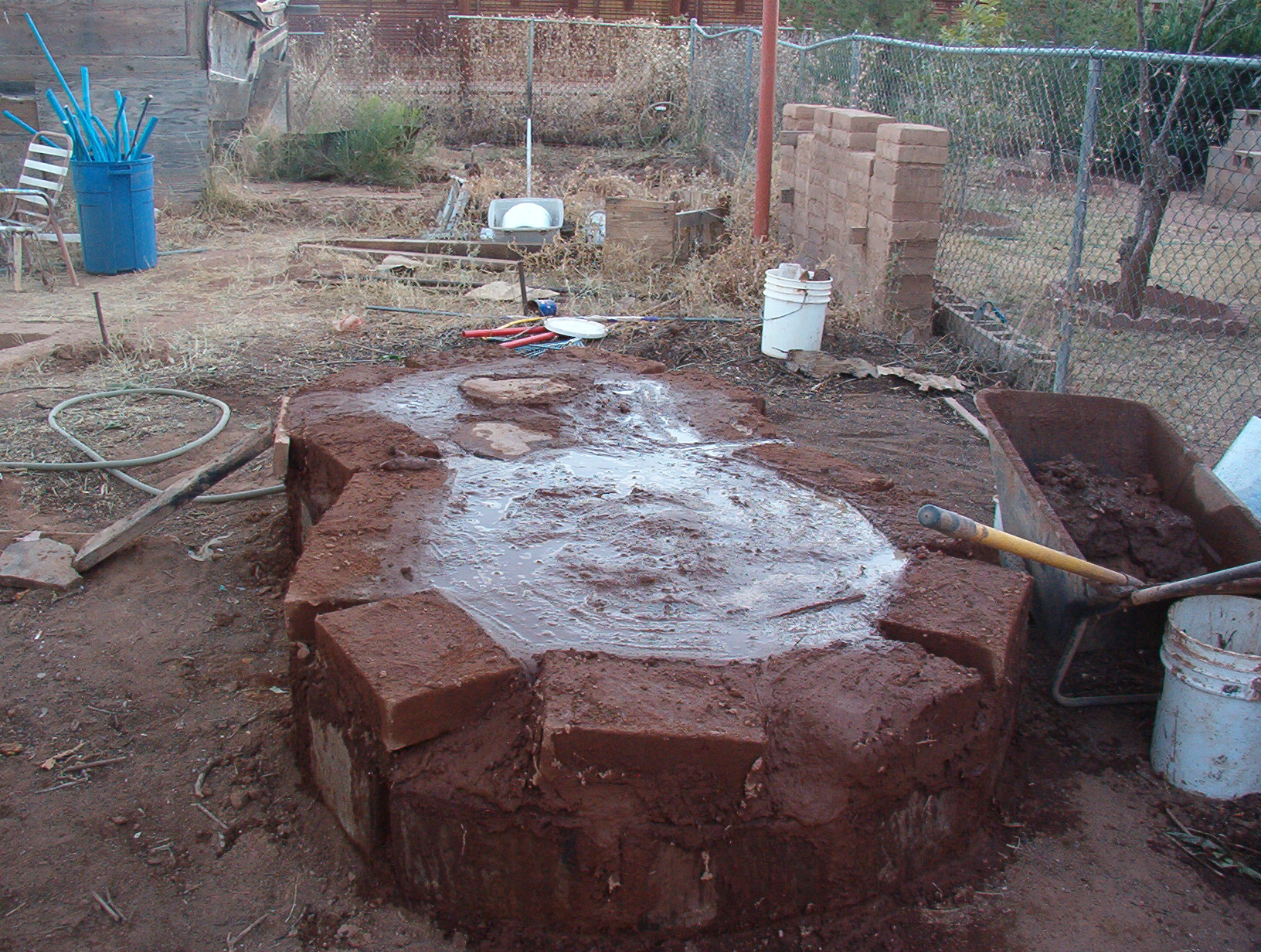
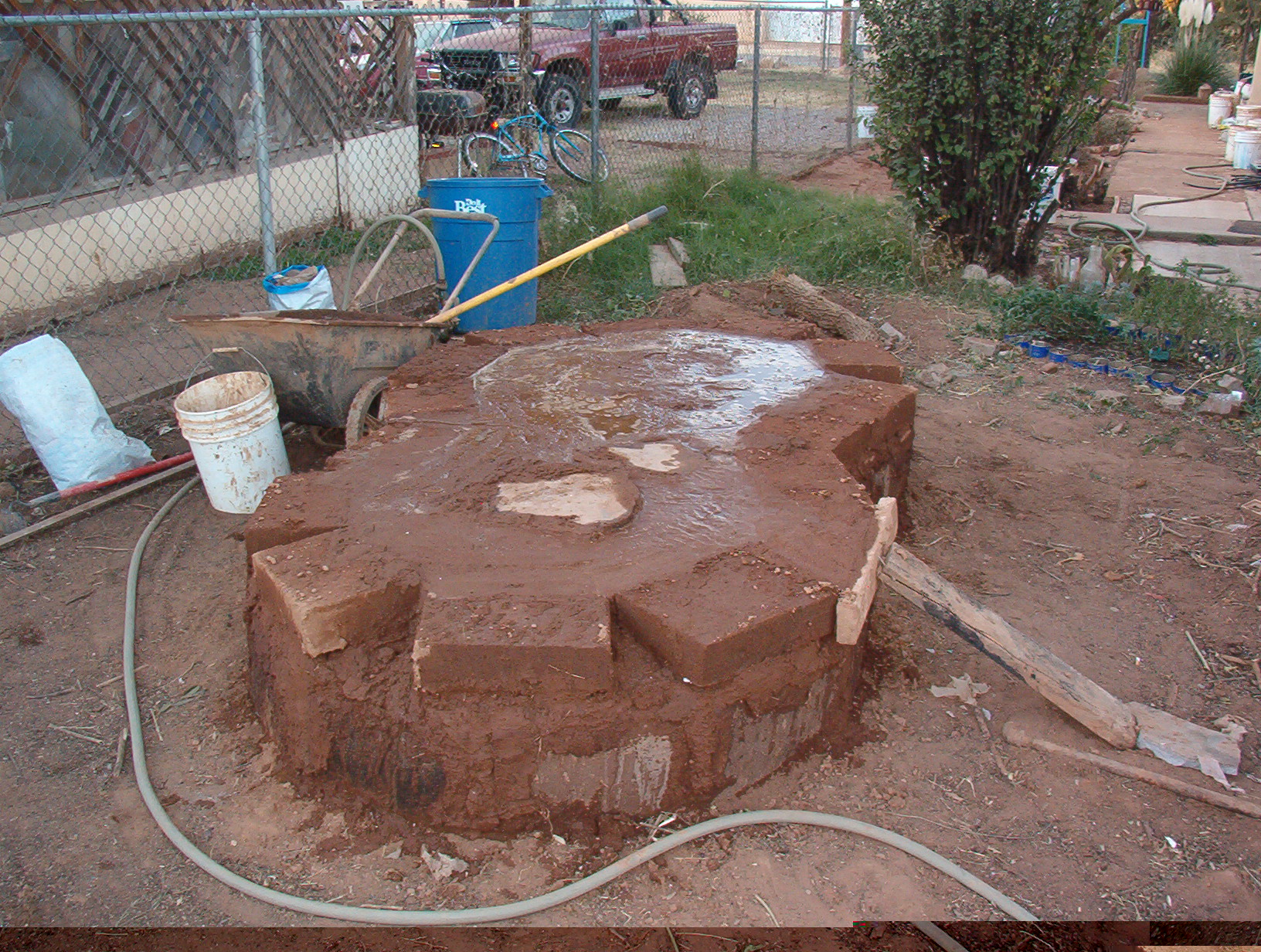
SOOOOOO……  Here are the latest pictures, including one from the previous post showing the start of this project:


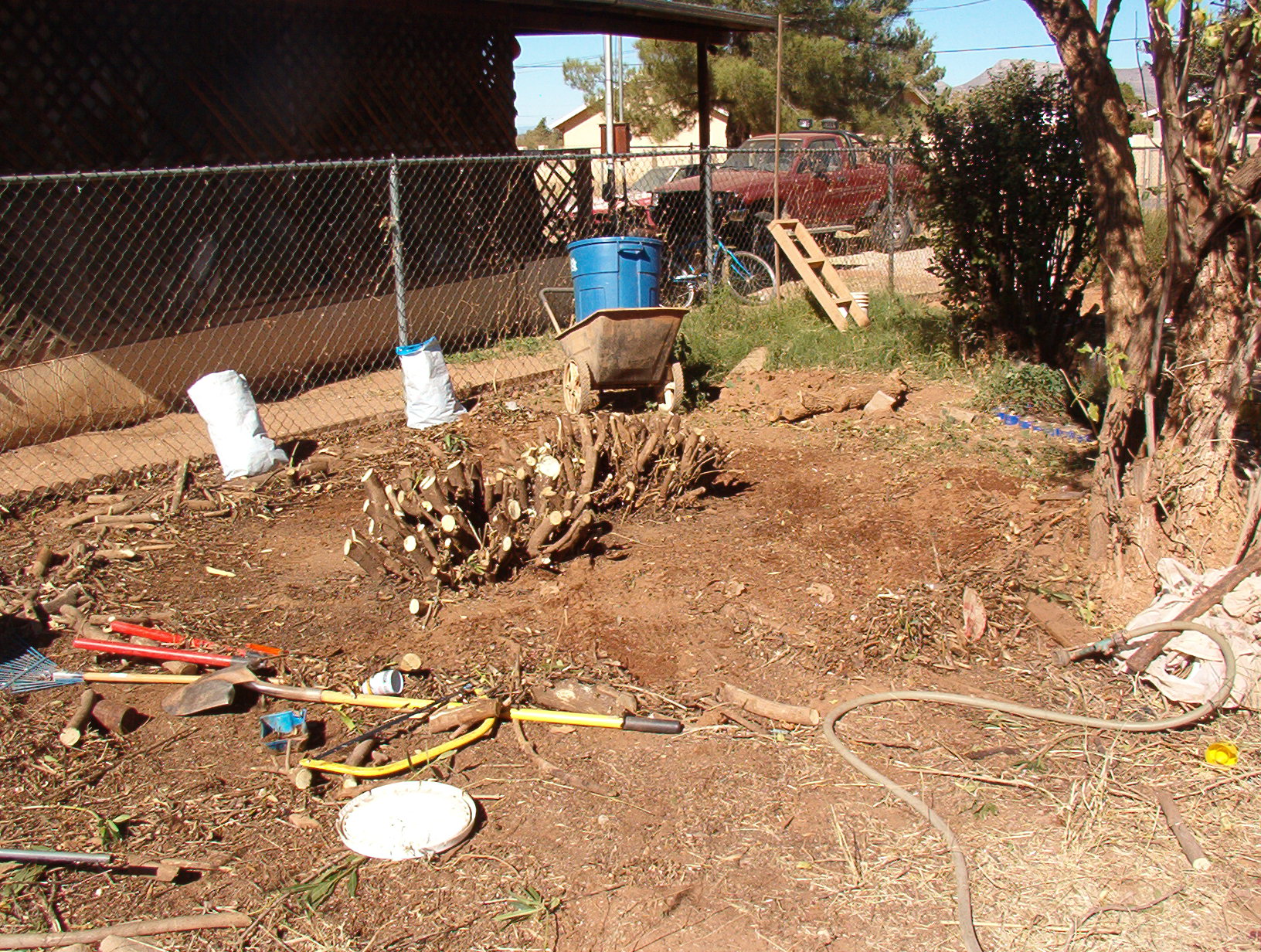
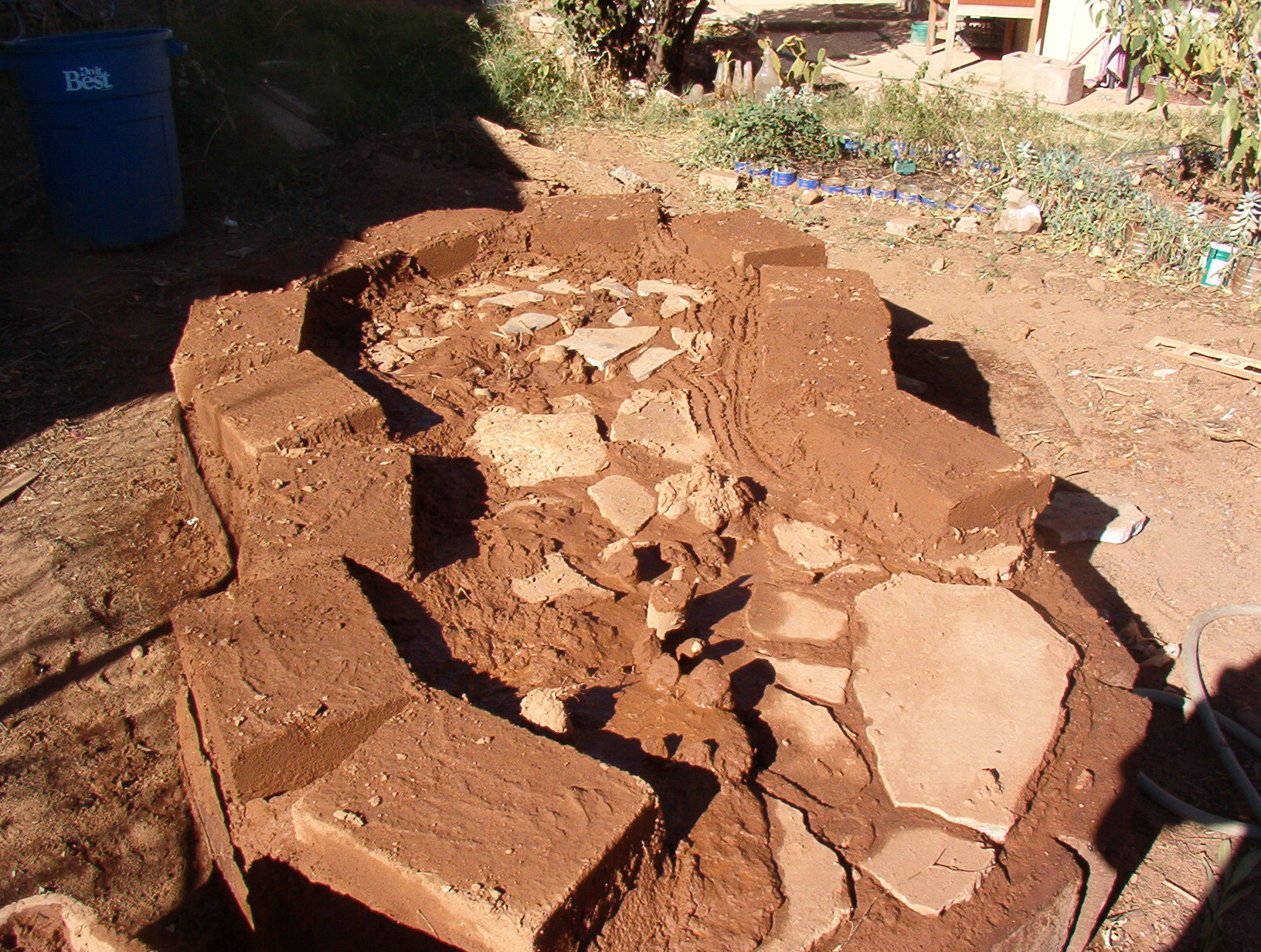
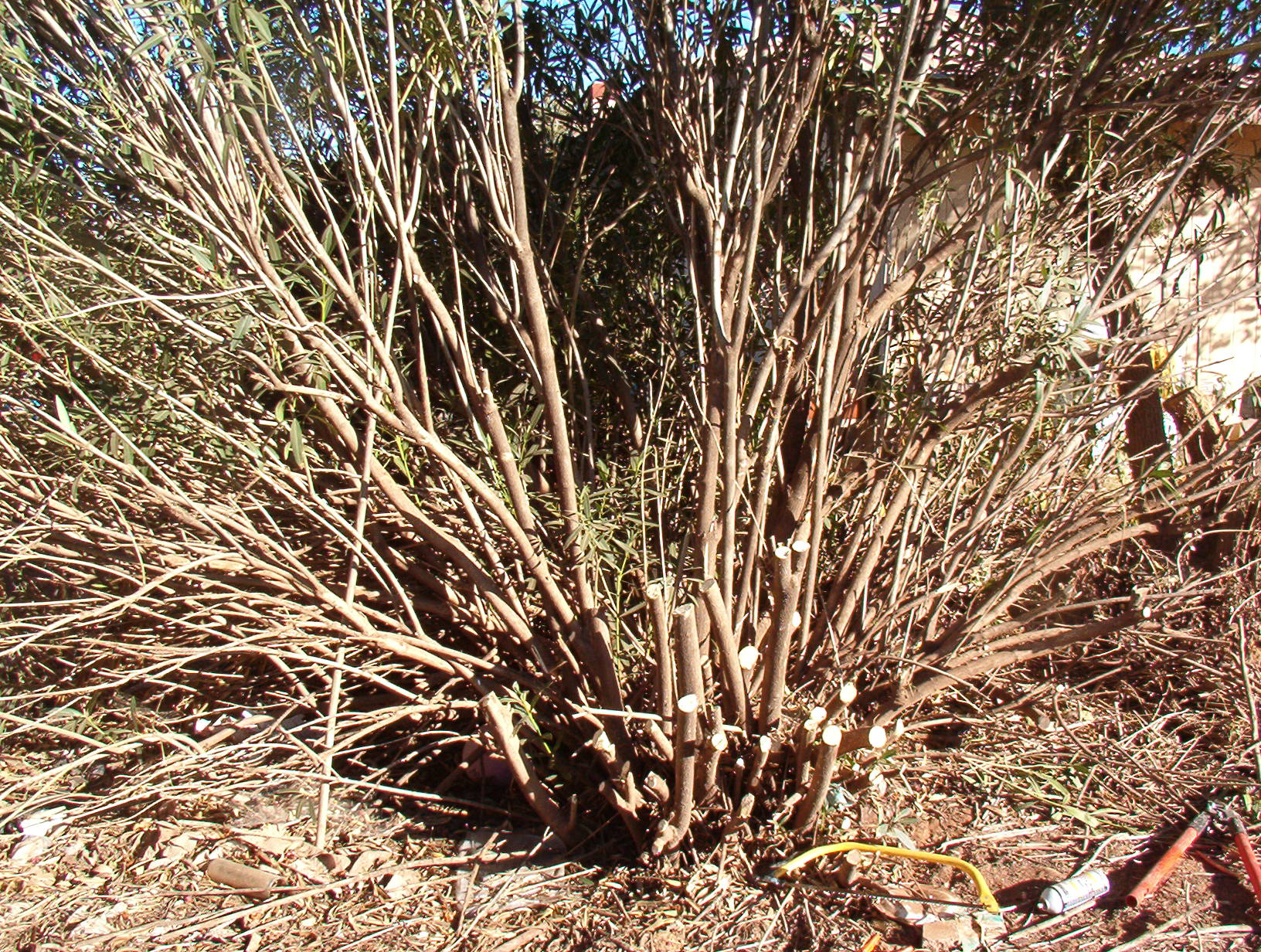
Starting to hack down the two oleanders
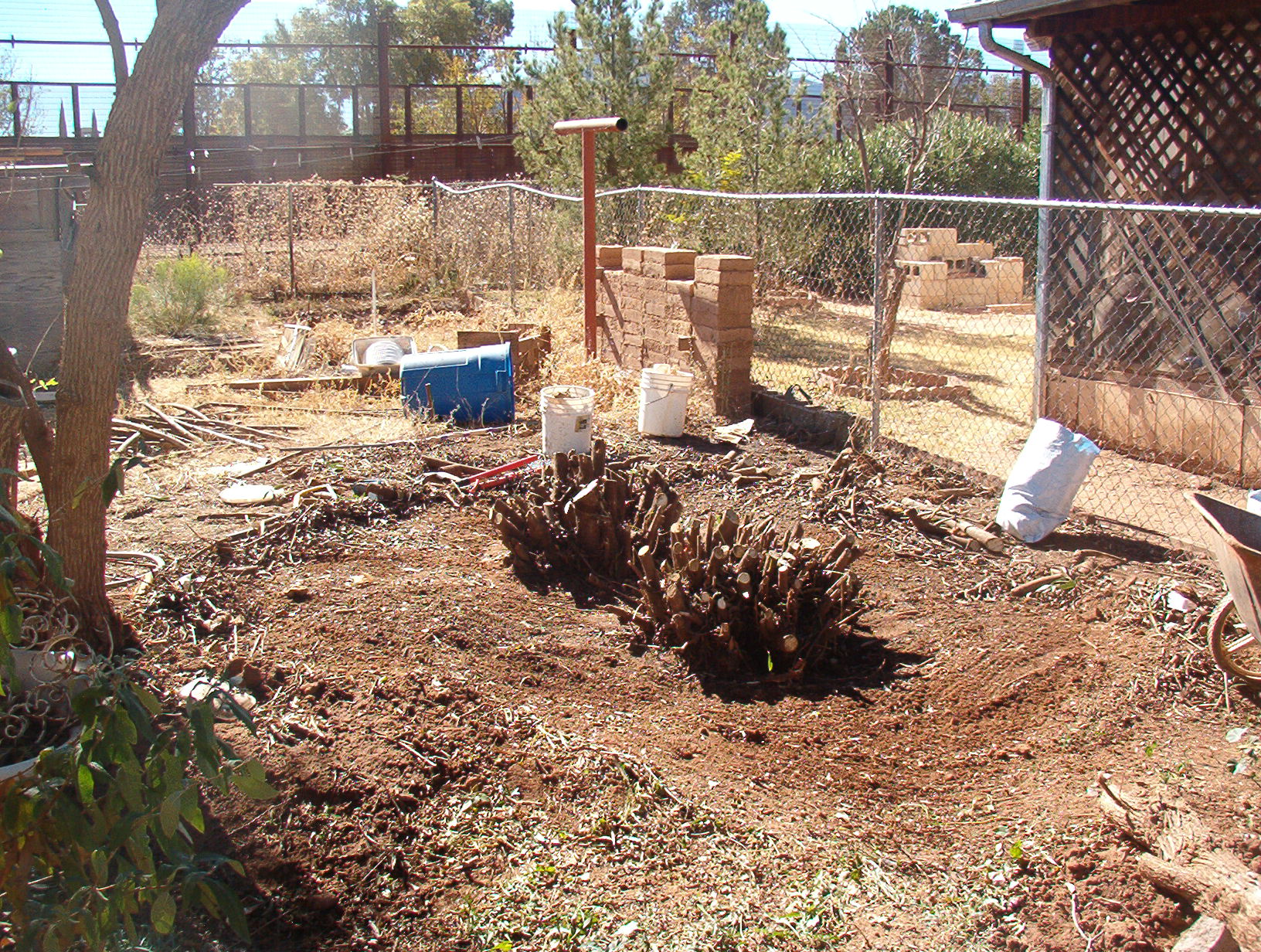
Down to the stumps. All surrounding ground that these plants have polluted is toxic -- I will never be able to grow anything edible in this ground
Without a chainsaw this is as low as I could cut the stumps
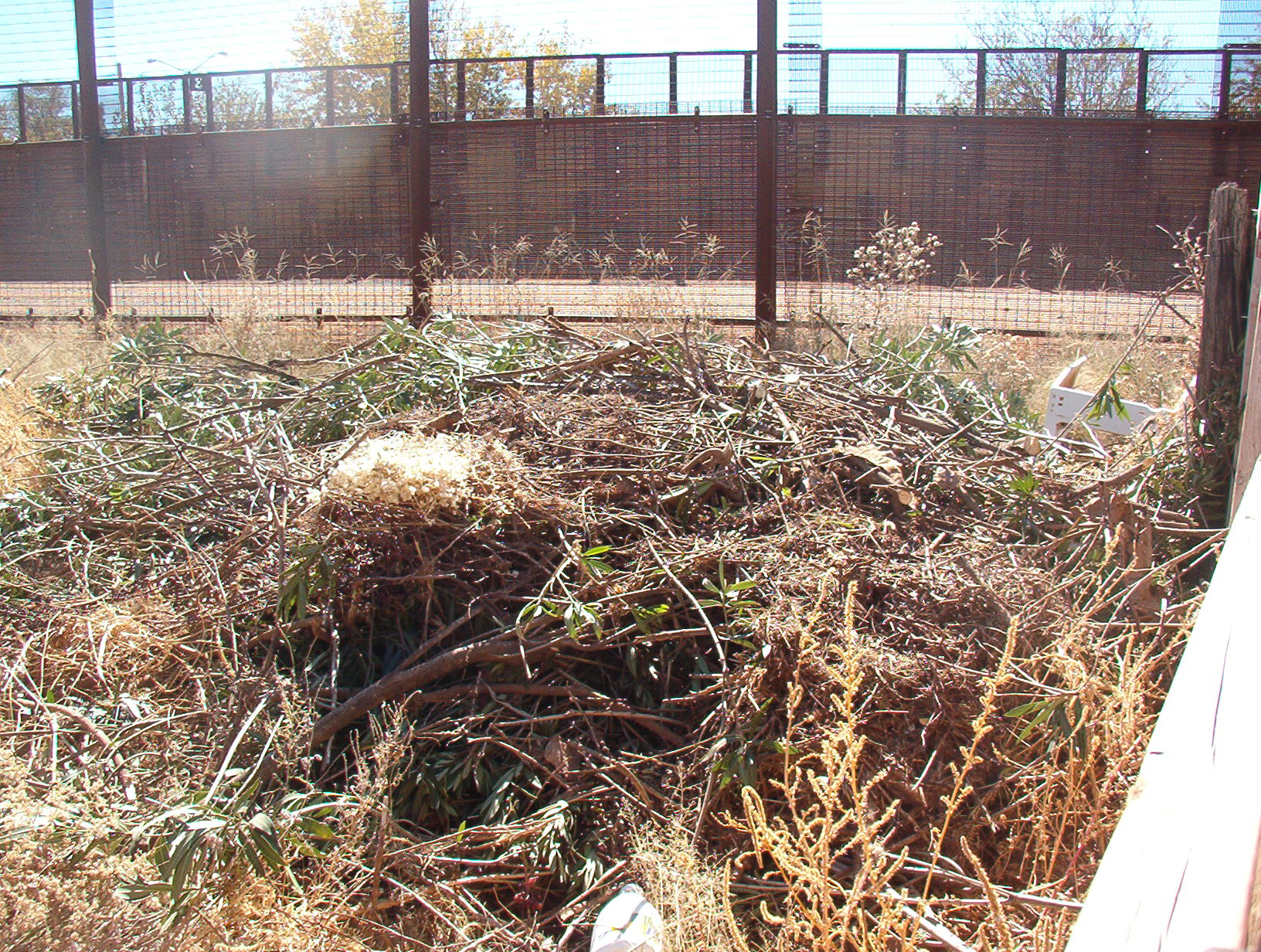
Over the fence into 'no man's land' (Mexican American wall/fences behind the pile) - no way does this picture show the extent of the PILE of scrap I threw into QUARANTINE!
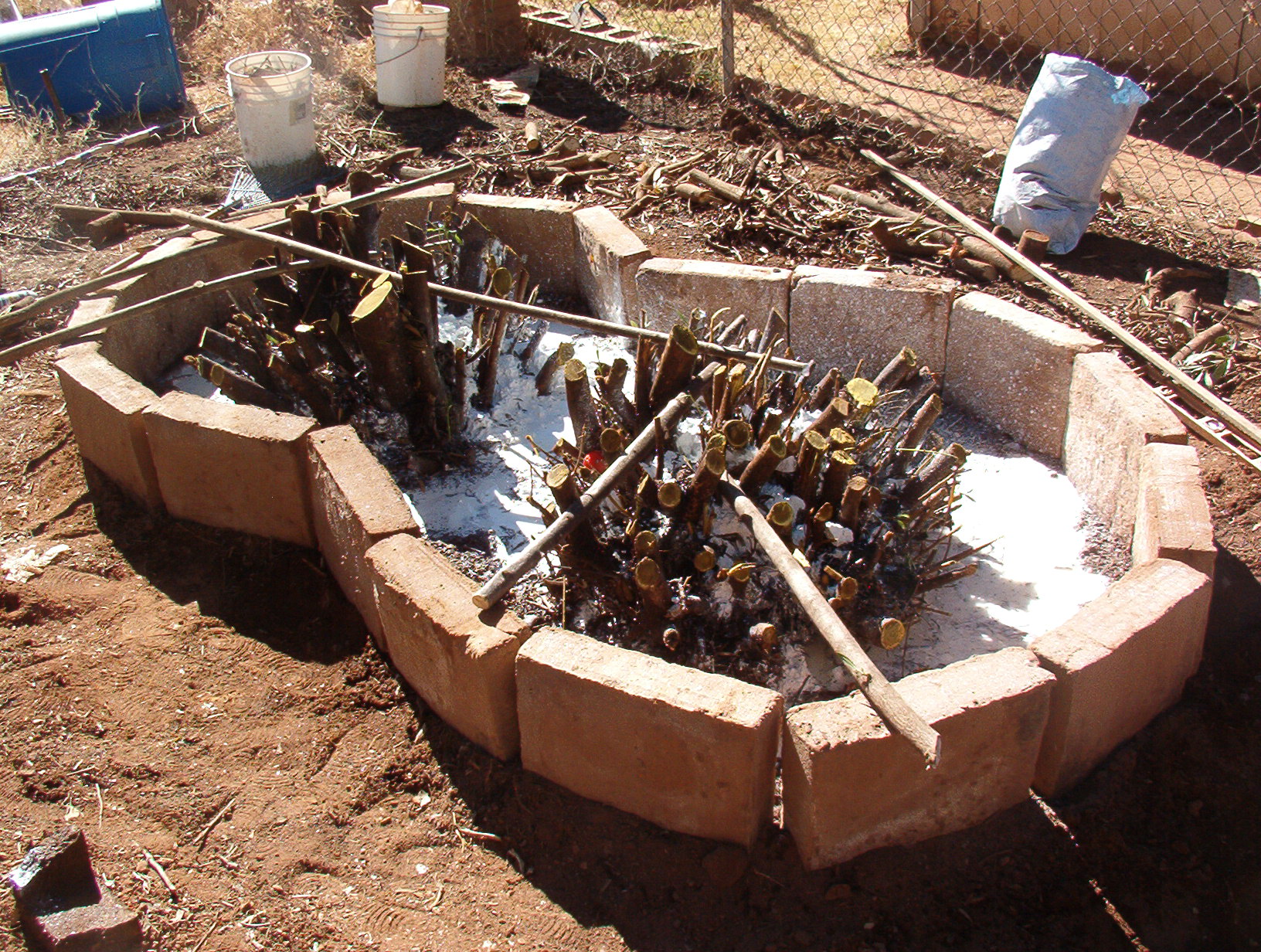
The most toxic thing I had around to use as a weapon against these plants was LIME -- 50 pounds dumped into the ball of stumps (each), whole mess contained within dried adobe blocks -- and salt thrown on tho I wish I had MORE
I felt badly for all the bugs that crawled up out of the soil once the lime was on, so I put these sticks up as bug escape routes -- only the 'smartest' survived, which included spiders but only a few beetles
Here I started covering up stumps with a heavy cement mix of wet adobe mud -- notice the delightfully sickly green the stumps turned with the lime -- YAY!
Layers of cement-adobe, sandwiched with slabs of broken cement from the back of the yard over the stumps
Each wet adobe block weighs 50 pounds (35 pounds dry), each block contains nearly 5 gallons of soil
End of the day today, sunset -- filled UP!
I will need to put another layer down the center over the stumps --

+++++++++++++++++++++++

I WILL make something beautiful out of the mess!  I hope the height of this will be right for bench around the outside — place to put flower pots down the center — I can plant flowers in this toxic soil — I hope to find the money over time to put up a TALL privacy fence along my neighbor’s chain link — the oleander did give some privacy, but at way too high a price!

And every moment I have worked on this project I have thought about my mother and her toxic abuse.  I can’t change what she did to me, but I sure can work to chop it all down to size (perspective-gaining), contain it, quarantine as much toxic parts as possible, and BURY THE HELL out of the mother I have NEVER yet been able to feel ANGER toward.  I hope I am moving in that direction – so I can learn what anger has to teach me and move on from THAT — which is possible — and mine to do!

+++++++++++++++++++++++

+DISSOCIATION: THE SURVIVOR’S GIFT?

+++++++++++++++++++++++++

Never do I consider dissociation to be either a primitive ‘defense’ or a passive coping ‘mechanism’.  I consider dissociation to be a pattern of interaction between brain regions in concert with the nervous system-stress response system that is very simply ONE THING — its own pattern of processing information.

In light of the mention I made in my previous post concerning the difference between calmness and numbness I want to clarify my thoughts by adding that I can consistently count on one of two inner states within myself that, when I can notice them, alert me to the active operation of dissociation in my information processing and response patterns.

I believe these two inner states are actually one and the same.  I notice them as being different only as I experience one AS IT IS HAPPENING and the second IN RETROSPECT after it has happened.  It is, therefore, only how I notice dissociation IN REAL TIME that I am describing when I name these two separately.

Neither of these two states feels comfortable to me.  Neither of these two states would be ones I would choose to experience — if I had ever been given a choice when dissociation was built into my body by severe infant-child abuse in the first place.  Both of these states are equally real.

Because both of these states mean the same thing to me — dissociation is happening/has happened, I will simply pick one by the tail and describe it first.  I will start with “dissociation is happening.”

When I experience dissociation as it is happening — and I mean at the millisecond it occurs — there is ALWAYS a ‘shift in the world’.

I experience this shift as a ‘split’, meaning that what was the millisecond earlier an ongoing, coherent, reasonable pattern of interaction suddenly, and I mean SUDDENLY simply ceases to exist.  What was — comes to a stop, ceases to exist, breaks, shatters, falls apart — and changes into something else.

I NEVER anticipate such a break in my continuity of interaction with or understanding of my experience in the world.  I never did beginning in infancy when these breaks were forced upon me due to my mother’s insanely abusive disruptions of my ongoing experience.

The single word I would use to describe this state of awareness of dissociation as it is happening is this one  — BLANK.  Yet as I write the word I also understand that it is not enough to document what I want to say.  Blank implies that ‘there is nothing there’.  In real time, in real life the experience is exactly the opposite.  EVERYTHING IS THERE AT THE SAME TIME.

Some describe chaos as being a state where all things are possible.  Everything is there at the same time.

I believe that survivors of severe early caregiver terror, trauma, maltreatment and abuse have had the awareness of the state of absolute chaos built into their entire body on all of its levels.  Very few such survivors (I would say NONE) made it through their earliest developmental stages of brain-nervous system development without dissociation being built right into the circuitry of their body as a result of their experiences.

When dissociation happens, when the break in the continuity of millisecond-past experience STOPS and the state of BLANK appears, what we actually have happening is the experience of TOO MUCH INFORMATION.  In other words, we are experiencing the state of being overwhelmed.  That state is a familiar one to us on every level of our being — and it is the same experience as being in chaos.

I INTUITIVELY KNOW THIS IS NOT IN AND OF ITSELF A BAD HAPPENING!  It absolutely is NOT a ‘bad thing’.  It is not ‘sick’ or ‘wrong’.  It is supremely (and I do not use that word lightly) creative.  It is a miracle of life, has a purpose, and can come to good end.

So, what is the problem with dissociation?  Well, for one thing, it can be dangerous.  At the instant that dissociation is happening I am  not ACTUALLY in full awareness of any world at all other than the full perception of all that is possible within my mind and being.  That awareness does NOT keep me safe in my body in real time in a physical world — and hence, I believe, this instant of dissociation is an ACTIVE coping state and not a passive one.

What I know about this statement is that the exact instant of dissociation happens SO FAST it cannot be measured in any normal way.  It happens this fast because the body knows whatever state is being left and whatever state is being created to move into happen in the physical world where body-awareness (certainly not required to be conscious) has to be connected as fast as possible to accomplish ongoing life should a physical danger appear during this time (which an abuse survivor is especially geared to anticipate).

Say you had a working lamp turned on and two extension cords.  The lamp is plugged into one cord which is receiving current from being plugged into a wall socket.  How fast could you disconnect the lamp from one extension cord, plug it into the other one, and switch the cords plugged into the socket?  Could you do this fast enough that the lamp would not visibly flicker?

Believe me, that would not be a passive action.  It would be a very very active one just as I believe dissociation is.  While no human can physically manipulate cords and plugs at or near the speed of light, I (as a lay person) have the image that these interactions, transactions, manipulations and actions as they happen on the level of electrical pulses and impulses within the brain DO happen that fast.

Pretty sophisticated if you ask me, no ‘primitive defense mechanism’ here, even though this ability has been built into the human brain since we began to advance the development of our brain untold centuries ago.  There is nothing shabby or accidental about dissociation.  It has a purpose and a natural intention — to allow us to survive under conditions that are ORDINARILY un-survive-able.

Trauma is, by definition, an experience that is outside the range of ordinary experience.  Trauma is extraordinary, beyond the ordinary, and so are the people who survive it.

++++

I am going to carry my lit lamp and cord switching image on with me into my description of what I call the second state of dissociation.  If I imagine that the information that has been transpiring just prior to a dissociation being triggered as the body-knows overload has been approached, I imagine that the first cord this lamp has been plugged into has instantaneously become one that is too wimpy, too light to carry the load.  A much heavier duty cord is required — and the body-nervous system-brain of trauma survivors just happens to have one handy.

If the heavier cord is suddenly required, and the survivor just happens to have one at hand — why not use it?  Believe me, we do.

What’s the problem?  The switch to the heavier cord designed to carry the full current of what is happening in the real time present moment — AND the load of past traumatic awareness associated with it that lie outside the range of consciousness — does not happen through conscious free choice.

This results in what I call the second state of dissociation — THE DETOUR.

Experience of the first state, the switch that leads THROUGH the experience of blankness is very seldom consciously identified.  Time moves on so fast we cannot actually measure it, and as it does so we are now following a detour.  We are NOT on the same path in the same world in the same way that we were before the millisecond split of dissociation occurred.

Being able to recognize that we are on THE DETOUR path varies by individual and by each dissociated experience we have.  I believe we can live not only seconds, minutes, hours, days, weeks, months IN THE DETOUR, we can live large portions of our life on these altered pathways.  This is a huge topic, and certainly too vast for this post.

++++

Someone on the outside watching dissociation occur can very possibly SEE the blankness when it happens.  Very few people are knowledgeable enough to actually recognize what they are watching, but this does not mean they don’t see it.  My hope is that bringing discussions about dissociational experience out into the open will help all of us understand both our own self and also other people better as we all learn more about what dissociation is, what it feels like, why it is possible, how it happens, what creates the ability within humans, how it is helpful and how it is disturbing.

As I work to become increasingly aware of dissociation when I experience it, I find words that help me connect to my self in both my past and in my present.  This leaves the playing field of the future wide open.  I have two complications currently in two of my main attachment relationships that both involved dissociation when the ‘rupture without repair’ (so far) happened.  I am not free to really talk to either of these two people about my experience.

People who are not severe abuse and trauma survivors seem to want to rush right on past any dissociation-related conversation — because the experience of serious dissociation is NOT a part of their reality and is therefore NOT truly important to them.  They do not want to truly listen to us — and they don’t.  This is NOT OK TO ME.

Yet at the same time when others react this way, and cannot be honest with themselves about the basis of their reactions to a ‘dissociator’ they are in relationship with, they are discounting not only our experience, but OUR SELF at the same time.  Dissociation has been built into us.  It is a part of our body.  It is a part of our patterns of operation and of being alive in the world.  Dissociation is a part of US!

And as a consequence dissociation is BOUND to appear in our interactions with others — both those who mean a lot to us as well as with those who are passing folks in our life.  There will come a time when the dissociations cannot be ignored.  They have to be talked about like any other fact of life.  If these open, honest, compassionate, exploratory, learning conversations do NOT take place, there will be ruptures in our lives that cannot possibly be repaired.

Dissociation is something we are supposed to be curious about.  Dissociation is ALWAYS connected to something extremely important — something that has to do with life and death, with threat of death, with trauma.  As we continue to treat dissociation as something flawed, pathological, wrong, inconvenient, mysterious, troubling, or inconsequential, we are missing out on some of the most important lessons that life has to teach us all:  How do you survive the un-survive-able?  What gifts and abilities enable that to happen?  What are we supposed to learn from trauma?

+++++++++++++++++++++++++

+WHAT DO WE DO WITH UNBEARABLE SADNESS? DISSOCIATION AND THE WILL TO LIVE

++++++++++++++++++++

Like many other people, there are times when I do not fully understand the meaning of my own words.  Many times my thoughts have flitted back and forth between ‘bearable sadness’ and ‘unbearable sadness’ as I have argued with myself, “How can you say you have unbearable sadness if you are still alive, Linda?”

My experience today as I wrote about it in my previous post might contain some of the information I most need to answer my own question.  At least ten-year-old Linda, locked up in the back of an empty semi trailer for fifty years tells me that she does.

But she doesn’t tell me that in words.  As I share a corner of her heart, my heart, our heart I can feel her sadness and it merges a little bit with my own current-day experience.  The sadness I felt by the time I was ten WAS too much to bear.  The amount of that sadness (as if sadness can ever be weighed, judged or measured) was more than I could remain aware of and continue to live in and with my body that felt it.

Looking at these dual Linda’s today in the process of melding that seems to be happening, I see that ten-year-old Linda IS sadder than 59-year-old Linda.  “Thank goodness,” some part of me says.  “I could not live with THAT degree of sadness.”

What this tells me is this:  “Watch out, Linda — both of you, all of you.  This is a delicate and very difficult situation that must be handled with all the care all of you can muster.”

I believe that.  Friday I had one of the saddest days in recent memory — all without ‘reason’.  I was so sad I could hardly stand on my feet.  I could hardly move through the air.  I FORCED myself to remain upright and active, all the time knowing my motions were accomplished through determination and will.

I knew enough not to ask, “What is wrong with you?”  I know about my nervous system’s set point at sadness, as I have mentioned.  But it was intense.  I did some very simple things to take care of myself and thought about a hot air balloon trying to take off when it’s all weighted down.  I thought about little things I could do to cut some ropes and drop some of that load so I could ‘raise my spirits’ up at least a little bit.

It worked.  I was gentle with myself, took simple actions, and floated upwards enough not to get knocked down into my ‘deep well of sadness’ any further.

Today I almost see last Friday as being some sort of a little test — to see for my self how living with the sadness pressure turned way up.  Today I also see why I needed my Friday’s experience to look back on, because I will tell you, this ten-year-old locked away in the semi trailer is sad beyond belief.

That’s OK.  She has kept at bay the bulk of my sadness from my infant-child abuse prior to the age of ten.  How to bear unbearable sadness?  There are ways — none of them easy, but we can survive.  We do survive.

This girl, by the way, is very quiet and speaks very softly, but she does have questions.  Lots of questions, like she has been in a coma for fifty years and has just awakened.

What a trip….

++++++++++++++++++++

+CHICKEN LITTLE AND ‘THE SKY IS FALLING!’ – EXAMINING THE LINK BETWEEN MY SADNESS AND MY ANXIETY

+++++++++++

OK.  Even though my computer seems very jerky – which is unsettling to me – I am going to attempt to write a little comment here on some of my recent thinking regarding the title of this post.

I was into my second day of handwriting my book when I received a call that my dear friend who runs the office I took care of this summer when she was on vacation was in the hospital.  So, an abrupt ‘hard left’ and I have taken the detour the rest of the week to watch the office again until she gets better.  Hence, an abrupt break in my writing process (but will get back to that).

I have been paying attention to my anxiety as it blossomed surrounding the infiltration of evil intention and destructive action — the Trojan virus that took over my computer (and that I am not remotely sure is finally GONE).  Why the anxiety?  Why is it so hard for me to touch this computer?  Why does it feel like I have to build an entirely new relationship with this computer, with myself and my ability to comfortably use it freely?

What about this process has created such a sense of lack-of-safety and security regarding my computer?  Is it the very real violation of ‘my space’ that the evil hacker truly perpetrated against me that bothers me so?  Why is it so hard to get ‘back in the saddle’?  Can I?  Will I?  I have to force myself back here…..  It all seems so strange.

Then in light of my current handwriting-book focus,  A Girl Trapped Alone in Sadness, and with the ‘extra’ time driving these past two days, I have thought about how I will write my story with the understanding that due to the early (birth) onset of my mother’s insane hatred and abuse of me I so absolutely DID NOT get to have peaceful calm built at the center of my nervous system-brain-self.

What IS at my center is sadness.  Terrible sadness.  A sadness I would call unbearable were it not for the fact that I have ALWAYS born it since my first breath.  The alternative?  Death.

So I am trapped in this sadness.  It is at my center.  But ‘professionals’ call this ‘depression’, which is by definition an anxiety disorder.  Anxiety.  Anxiety.  Anxiety.

Since my cancer diagnosis and treatment the anxiety that has ALSO been with me all of my life can no longer be denied, ignored, or vanquished.  Nor can the dissociation.  Nor the PTSD.

So, if I say sadness is at my center — and I know this because I can feel it — what do I ALSO know about these anxiety-related difficulties that were forced into my infant-child development at the same time the sadness was — through 18 years of insane abuse?

(I particularly ask this question because I believe some severe early child abuse survivors have a nervous system set point set not at sadness the way mine is, but at anger-rage, or at fear.  If I feel sadness at my center, then how is my anxiety connected to fear — which I say is NOT at my nervous system center?)

How to I juxtapose these points?  How do I put them together in my thoughts, in my reality?  What do I understand about how I ‘got made’ and about what I live with in this trauma-altered body?

‘The sky is falling!’

I had the thought today that even bugs know perfectly well when their life is in danger, and they REACT in some programmed bug way to attempt to avoid destruction so that they can continue their bug life.

I am no different.

It is very probable that because I have had to (chosen not to suicide, either) continue to bear my life with a nervous system center of unbearable pain (yes, a great paradox), the anxiety is connected because my body was formed with the knowledge that destruction was always very near.  The threat of destruction was as real to me on a daily basis from birth as any threat of destruction could be to a bug — or any other living creature.

So even though sadness is my center, anxiety creates huge problems to me (even anxiety over my computer’s virus) because my body believes that it CAN BEAR NO MORE.  No more stress.  No more DISTRESS (what someone with a serious insecure attachment disorder makes of regular people’s version of ‘stress’).

“I can bear no more forever.  I can bear no more and stay alive.  The very next potential trauma is going to be the straw that broke the camel’s back.  The very next ‘bad’ thing that happens is going to kill me.”

My body believes this.

“So, what the hay?  What, exactly, Linda-self, is the worst that is going to happen if the virus reappears here and steals all my ability to operate my computer away from me?  Is my computer going to E-X-P-L-O-D-E?  Blow up?  Blow ME up?  Blow up this town?  How is a computer virus a life-and-death threat?”

Interesting realization today.

The end of the world, the end of my world, is very near me!  No wonder that being diagnosed with advanced, aggressive breast cancer wakened the terrors of my childhood — all my anxiety.  It WAS a threat to my life — and more than anything else, my BODY knows all of this.  All of it.

If I want to claim and reclaim any part of my own consciously-controlled and chosen life, I have to step into the soup, the volcano, the near-the-edge-of-extinction belief that my BODY has and wrestle back some reason.  “No, Linda.  Nothing about a computer virus is threatening your BODY with extinction.  Only your ability to maneuver in cyberspace.”

And, yes, while everything ‘simple’ becomes very complex for me, anything new I can understand about how my body formed itself in the midst of terrible and terrifying, dangerous, violent, painful, (etc.) conditions from birth, the more I MIGHT be able to creep toward a place where I might not only GLIMPSE some peaceful calmness — but also FEEL IT!

+++++++++++

+WORD WARRIOR NEWS: WHOSE STORY IS WHOSE?

+++++++++++++++++++++++

At one point during my intensive chemotherapy treatment for my breast cancer the chemotherapy affected my vision.  I had previously heard a man who had this experience with his treatment say that once the treatment was finished, he threw away his glasses and retained perfect vision.

How strange it was on those days, sick sick sick sick from the chemo, that I could look at the trees on distant hillsides and actually see their individual leaves.  Not even with glasses could my vision have been this corrected.  My eyes did not keep their distance detail ability.  Yet today in the midst of my inner turmoil I think about this experience I had.

As strange as it might seem to many, I truthfully cannot say that I can tell right now the difference between my abusive Borderline Personality Disorder mother’s story and my own.  I do not have that detail ability to pick out which parts of this story I am looking at and say, “This detail belonged to me as a child and therefore belongs to me now as an adult.  This detail was not and is not my mother’s.”  At the same time I cannot look at ‘the story’ and definitively or definitely say, “This detail belonged to my mother and it is a part of HER story, not mine.”

I hate this fact.  I hate the feelings, the thoughts, the questions, the doubts and the confusion that are a part of this inability to distinguish myself from my mother.

I was born into this state.  I was designed, built and developed within this state.  This state is a part of my story, and I hate it.  This essentially means not that I hate my mother, but that I hate what happened to me — and yes, I hate those parts of myself that were affected on their most basic molecular, neurological level by what my mother did to me.

++++

The closest I can come to truthfully and seemingly accurately describing both WHO I am in the world along with HOW I am in the world is to say that I am closer to being like a ‘wild child’ than I am to being like anyone else.  I was ensconced (meaning sheltered and concealed) within my mother’s delusional universe.  ‘Sheltered’ seems like a strange word to assign to the insane and abusive ‘place’ I grew up in from birth.  Yet for as horrible as it was, I could not escape it and my mother did everything in her power to keep EVERYONE else out of this ‘shelter’ she kept me in.

This shelter was the wilderness I was born knowing nothing about but was taught to accept from my first breath.  I had very little chance to experience anything outside of the range of my mother’s reality that had put little tiny me at the core-center of the mad hate and fear and pain filled hell that SHOULD have simply been hers alone, and had nothing REALLY to do with me at all.

But I had to live ‘in there’ with her.  For 18 years I lived in her hell.  She built her hell into every fiber of my being, beginning with my growing and developing brain.

How much of her hell is still inside of me?  As much as she could humanly cram into another person who was not her own self.

++++

When looking at a group of trees in the distance, even if a person does have the vision to see the details of their individual leaves, it is impossible to tell which leave exactly belongs to which tree.  Only by moving ‘up close and personal’ could we make these distinctions.

I know I have before me a daunting task.  ‘Daunting’ – ‘tending to overwhelm and intimidate’.  I hate this task.  Yet I know this hatred is just the other end of the bizarre umbilical cord of contamination from my birth still connected to my bizarrely messed-up mean mad mother.

I think about what it might be like should I have to dive deep under water without aid of oxygen supplement to retrieve something critically important lost down there.  Or what it might be like to have to enter a raging inferno to do the same.

Yet it doesn’t feel this simple:  I am going ‘in there’ to retrieve myself.

Myself is sitting right here, right now.

Yet what exists, with the exception of the external information contained in my mother’s papers and photographs, DOES lie within me.  Myself has the memories and the intelligence to pick my way through these old shards, these old skeletal remains, these old cinders and ashes — for what?

For two things:  (1) my own story as separate from my mother’s, and (2) the factual truth as far as I can discern it about my bizarrely messed-up mean mad mother.

But wait!  There IS a third component, and this is the hardest one:  (3)  In what ways am I like my mother?

As an infant lies within the womb of its mother’s body it would take a professional expert to be able to know and describe exactly where the mother ends and the infant begins.

Under normal circumstances after birth the infant is allowed and assisted to develop its own self.  Once the shelter of the mother’s womb has been left behind, the offspring is meant to become its own entirely separate entity.

My mother never let me go.  Leaving the shelter of her body in no way allowed me to escape the hell of a shelter that her mind kept me captive within.

I strongly suspect that this pattern is true for any infant-child that experiences severe abuse and maltreatment from its mother.

‘The chord that binds’ these infant-children to their mother was never correctly severed.  Such a mother still believes her offspring not only belongs to her, and is an extension of her, but in severe cases fundamentally IS HER.

As I wrote this sentence I realized that on a foundational level ALL insecure attachment patterns-disorders happen because some degree of inability to recognize the infant as being separate from the mother has occurred.  If a mother does recognize the separateness of her infant fully, she will respond to it as such.  If a mother does NOT recognize the separateness of her infant fully, she will contaminate her interactions with her infant with her OWN — well — CRAP!

The crap that exists within the relationship between a tiny infant and its earliest caregiver does NOT COME FROM THE INFANT.

According to attachment experts the end-goal and consequence of safe and secure early attachments is the development of a healthy AUTONOMOUS self.  Any problems in the earliest relationships an infant has with its caregivers is taking aim at this ‘end goal autonomous’ self of the infant — and wounding-damaging-altering it.

On its most basic level these facts SHOULD not be that difficult to understand.  Dr. Allan N. Schore describes the correct attachment process for infants and their caregivers perfectly in his articles I frequently mention:

Here:

EFFECTS OF A SECURE ATTACHMENT RELATIONSHIP ON RIGHT BRAIN DEVELOPMENT, AFFECT REGULATION, AND INFANT MENTAL HEALTH

At http://www.atlc.org/members/resources/schore1.pdf

And here:

Early organization of the nonlinear right brain and development of a predisposition to psychiatric disorders

At http://www.allanschore.com/pdf/SchoreDP97.pdf

++++

In approximately half of our population these optimal safe and secure attachment patterns DO happen, and those offspring DO grow into adulthood being mostly whole, healthy autonomous selves.

That leaves the other approximate half of our population with some degree of damage which has created trauma altered development in their entire body-brain  which leaves them in their lifetime being LESS THAN AUTONOMOUS.

When an infant’s earliest caregiver is NOT a fully autonomous self, they will NOT form a safe and secure attachment with their offspring, and will pass onto their children not only a lack of whole, healthy autonomy, but also the insecure attachment disorder itself.

The ONLY way these repeating patterns can be avoided is if the infant has MORE than one primary attachment, and SOMEONE important to the body-brain development of the infant IS AUTONOMOUS.  With that autonomous caregiver the infant can form a safe and secure attachment (which then builds THAT circuitry into the body-brain).

++++

I am therefore saying that in every case where an insecure attachment disorder exists within a person’s body-brain, a corresponding degree of non-autonomy is present — and BOTH conditions exist in response to some degree of toxicity and deprivation within an infant-toddler’s unsafe and insecure earliest caregiving malevolent environment.

My story, and the story of my mother, is an extreme example of the patterns I am describing.  My mother was not ever able to let me be fully born.  She was not able to let me leave the shelter of her own existence.  Her lack of autonomy as a self translated into depriving me of mine.

Yes, plain and simple that means the work I am doing right now is a LABOR that has the potential to set me free so that I can give birth to my own self as a differentiated person autonomous from my mother.

That all sounds nice and fine, but in reality, it is only possible to degrees because by being my mother and my primary earliest caregiver,  her interactions with me built my body-brain and the same time they built themselves into me.  It is this non-autonomous body-brain that I must use as I attempt to create my own autonomy.  There is no magic here.  It is not possible to go back to the beginning and start this entire story over again from the start.

++++

I have in my possession my baby book.  Some of you already know something about the significance of this fact.  I have written about it before, and I am now very near the point where I will have to unequivocally find out within myself my own truth about what is in this book.

To review, all of my childhood, and my sibling’s childhood, we were all told that “Linda does not have a baby book.”  My siblings had one.  My mother repeated over and over again as a part of her abuse litany:  “Linda, you were such a bad, horrible, difficult, impossible child from the time you were born that I could find nothing good about you to write in a baby book.  If one has nothing good to say it is better to say nothing at all.  Therefore you do not have a baby book.”

Fast forward to 2002, the year my mother died and one of my younger brothers retrieved  a massive amount of her belongings from a long term storage unit she kept for many, many years in Phoenix.  (There were three other storage lockers full when she died.  One was in Tucson, and two were in Alaska where she died.)

As my brother and I went through this collection, three baby books showed up in that locker.  One belonged to my youngest sister, one to my oldest brother, and one to me.  (The other three books were stored elsewhere).

There it was.  The nonexistent baby book.  I mailed the other two off to my siblings.  When my brother received his in the mail, he told his wife, “If my sister Linda does not have a baby book, I don’t want mine, either.”  He threw it in the trash without opening it.  His wife secretly retrieved it.

I sent my baby book home with one of my daughters years ago for safe keeping because I feared I would destroy it.  Last month when she came to visit me I asked her to bring it back to me, and here it is.

I took it to show a friend of mine when we had lunch last week.  After she carefully read it and looked at all the pictures, she said, “Linda, if I didn’t know you and your story personally, and I looked at this book your mother made, I would not believe a word you said.”

I will probably scan the baby book and post it here, though the small writing on the pages might be hard to read — and it is in my mother’s writings that I can clearly see her madness — though few others would or could.

This all matters to me NOW as I begin work on my own story as it is all blended into my mother’s.  Where is the beginning of this story?  I can’t simply say that my story began with my birth — though I would like to.  Yet I was born into a pattern like a single note appears in the midst of a song.  That pattern was of BOTH of my parents’ insecure attachment disorders — and their corresponding lack of whole, healthy autonomous selves.

++++

When I visited my oldest brother last summer his wife surprised him by bringing out his baby book.  My brother and I sat side by side and went over every picture and every word our mother had put in it.  All the while my sister-in-law sat across the room from us and watched and listened in her very wise silence.

When we were done oohing and aahing over the book, my brother’s wife said, “You don’t hear it, do you?  Neither of you.  Neither of you hear it.”

“Hear what?” we asked her.

She responded, “I can hear hysteria within every word your mother wrote in that book.”

I found this experience comforting.  It helps me to know that someone on the outside of our family, herself sensitized by severe abuse in her own childhood, could detect my mother’s madness in the words she wrote about her darling, precious, much favored first born son even BEFORE she gave birth to me.  Of course anything Mother wrote in his book after he was 14 months old (his age when I was born) would also have been further influenced by whatever happened within my mother when she gave birth to me.

But there my brother and I were, completely oblivious to any shade or tone, any flicker of a clue that our mother’s madness had found its way into HIS baby book.

It is only by finding and recognizing the clues that I find in my work with my story and my mother’s story that I can even begin to know what questions need to be asked.  I have done my research up to this point the best I can about attachment disorders and what trauma altered development can do to a person so very early in their developing years.

At the same time I find patterns that show me what kind of damage was done to my mother, I will also find how her patterns affected my own development (and that of my siblings, although what happened to them is not my story).

Right now I have to give myself permission to accept the fact that I don’t know whose story is whose.  What I do know is that as I looked carefully last night at my baby book, I wanted to snatch that beautiful baby and toddler ME right out of those pictures and whisk her away from her monster of a mother.  As strange as it might seem, I know that the work I am doing right now has the power to accomplish  exactly that act — as much as is humanly possible.

+++++++++++++++++++++++

+THIS GIRL’S GOT GUTS

+++++++++++++++

I am writing myself a kudos post!  I want to give myself credit for the terrific dedication and commitment I have have had over these past, let’s see – – – six years in transcribing my mother’s writings and letters to get them into the form they are in right now.  Today has been an intensely emotional day.  I need to reach out and give myself permission to talk about how I feel with people who love me.  I need to affirm for myself that FEELING is OK.   I have to do this because the part of my work that lies ahead of me is likely to be the hardest of my life.

Thursday my beloveds come – my beloved daughter and my beloved first grandchild who I get to meet for the very first time.  He’s 4 months old now, and even though I am already crying about them leaving before they even get here, I need to let myself feel even that.  Because without my ability to feel what I feel, feel ALL OF WHAT I FEEL, I would miss the breadth and depth and height and absolute miracle of feeling all the love, all the joy, all the hope – – – along with everything else.

I also want to give myself kudos for my courage.  I have one more job to complete before I tackle the really big, hard stuff.  I ‘get’ to put together a total lie of a story about the wonderful time the Lloyd family had on their Alaskan homesteading adventure.  This would be the book far more likely to sell (and Lordy I do need some money) to the general public as an easy-read glance at some American family who decided to – well move to Alaska and homestead.

Over and over again in the 4 volumes I just completed my mother writes that she wanted to write that story.  I don’t think she COULD write it because she — in the end — could not tell the wonderful lie about homesteading that I know she wished were the truth.  Can I write her lie?  Yes, if it will put some food on my table, I certainly can — and I will.

Yet, Linda Girl, how silly is THAT idea?  Perhaps it is the exercise I need — to write the ‘normal family tale’ — well, at least as normal as I can make it while still using my mother’s words.

Contrasted to that will be the book I will write after that.   My guess is that my ++MY CHILDHOOD STORIES will be dropped in between and betwixt the ugly things my mother says about me in her writings (even though she doesn’t begin to tell the truth).  Oh well, I will cross that hot lava volcanic flow when I get to it.

I know I have the courage to write that book.  All I have to do is think about those survivors who suffered abuse as I did, and think about children who are suffering from abuse now — and then try as hard as I possibly can to tell my own truth in hopes that it can help someone SEE why paying attention to what is wrong with a child can shine the light into the darkest places of a child’s life where nobody has ever looked before.

Meanwhile, I have another day to try to move the desert dirt and dust back out of my house.  At least it rained hard yesterday.  The dirt out there is settled for a bit, and that means I can clean inside without it all coming back at me — for now.

And I will practice setting my sadness at my beloveds’ leaving aside for when THAT day comes on the 28th so I can cherish with joy their coming on the 22nd.

+++++++++++++++