+INFANT-CHILD ABUSE: WHEN THE BOUGH BREAKS, THE BRAIN CHANGES

+++++++++++++++++++

Early attachment-relationship trauma and abuse changes us.  When all is said and done, someday in the future, I believe researchers will arrive at a logical truth that I can see now — but they evidently cannot.

The research that would feed into the ‘proof’ I would need to ‘prove’ what I already know is just beginning to emerge in the fields of neuroscience, attachment, and infant-child development.  Severe early attachment-related trauma, abuse, and neglect change the way the brain forms in response to PAIN.  The brain changes the development of circuits that process information related to the developing-SELF-in the world.

The central processes of the brain involved in the see-saw process between rest and activity are directly tied to the nervous system process that relate to trauma-response and calm, relaxed connectedness – both to self and to others.  There is — as will be shown — clearly definable trajectories of brain and nervous system changes that DID occur through early trauma within severely abusive people — including parents.

In the present moment fields of study that are beginning to define brain changes in both Borderline Personality Disorder and in schizophrenia that demonstrate these patterns.  As I said in my earlier post, +IS THERE ANY OTHER WAY FOR ME TO ‘BE’ IN THE WORLD?, the concept of ‘coping mechanisms’ does not apply to infant-toddlerhood trauma and abuse survivors.  The term ‘defense mechanism’ does not apply in the OLD way of understanding, either.

When early developmental trauma changes the molecular formation of the early body-brain, opportunities for CHANGE have to be considered in light of potential for conscious CHOICE.  The more trauma was present during early development, the more developmental trajectories changed, the less potential there will be for consciously changing — at some magical later date — patterns of molecular operation in the body-brain.  Wishful thinking does not abrogate this fact.

Researchers in the fields I mentioned are rarely interested in strictly defining the consequences of severe early infant-toddler and young childhood abuse, let alone in stopping these traumas from happening.  I therefore find that reading the research that might hold the answers I am looking for is like performing delicate life-or-death surgery with a butter knife.

Defining the questions and looking for the answers about the causes and consequences of severe early trauma and abuse of infants and young children is an exercise in pandemonium.  If I think in terms of the image of a triangle, I can see that research about so-called ‘mental illness’ and its so-called symptoms takes place near the point of the triangle’s top, nowhere near the ground zero supporting level of the line at the bottom where the causes and the consequences I am talking about actually take place — on the molecular level and in the very real world of unnecessary suffering that many, many people inhabit.

The further and deeper toward the supporting bottom of this triangle we look, the more cause and consequence of early abuse and trauma are connected.  There is nothing glamorous about the kind of research-related thinking it will take to discover this truth.

Severe infant-toddler-young child abuse survivors currently exist within a category society considers to be ‘acceptable losses’.  We are disposable and dispensable people.  We were created within traumatic early environments that were themselves reflections of the kinds of circumstances those who abused us experienced in their own early lives.  None of us are considered valuable enough to REALLY worry about.

We are left to survive mostly on our own, sometimes with supposed assistance from out dated, obsolete theories and treatments.  There is a gross mismatch between what our needs truly are and what we are told are our solutions.  Nobody is going to figure this out in my lifetime.  That doesn’t stop me from trying to understand the rock-bottom truth about what happened to my mother that created the monster she was to me.

This post presents ‘pickings’ related to this topic.  The stretch of thought that must happen to see how these bits of information relate to my topic takes effort.  Nobody is going to do this work for us.  All of us need to be encouraged to try.  Again and again I have stated that from my point of view, informed compassion is the goal, not so-called forgiveness.

Our abusers were very REALLY hurt little people at one point in their lives when it mattered the most.  They in turn hurt us during our developmental stages that in turn hurt us the most.  This doesn’t mean that we must continue to miss the point about what these changes were and what they possibly mean.

+++++++++++++++++++

NEW CONCEPT — ‘first-person neuroscience’

How Does Our Brain Constitute Defense Mechanisms? First-Person Neuroscience and Psychoanalysis

Abstract

“Current progress in the cognitive and affective neurosciences is constantly influencing the development of psychoanalytic theory and practice. However, despite the emerging dialogue between neuroscience and psychoanalysis, the neuronal processes underlying psychoanalytic constructs such as defense mechanisms remain unclear.

One of the main problems in investigating the psychodynamic-neuronal relationship consists in systematically linking the individual contents of first-person subjective experience to third-person observation of neuronal states. We therefore introduced an appropriate methodological strategy, ‘first-person neuroscience’, which aims at developing methods for systematically linking first- and third-person data.

The utility of first-person neuroscience can be demonstrated by the example of the defense mechanism of sensorimotor regression as paradigmatically observed in catatonia. Combined psychodynamic and imaging studies suggest that sensorimotor regression might be associated with dysfunction in the neural network including the orbitofrontal, the medial prefrontal and the premotor cortices.

In general sensorimotor regression and other defense mechanisms are psychoanalytic constructs that are hypothesized to be complex emotional-cognitive constellations. In this paper we suggest that specific functional mechanisms which integrate neuronal activity across several brain regions (i.e. neuronal integration) are the physiological substrates of defense mechanisms.

We conclude that first-person neuroscience could be an appropriate methodological strategy for opening the door to a better understanding of the neuronal processes of defense mechanisms and their modulation in psychoanalytic psychotherapy.”

Copyright © 2007 S. Karger AG, Basel

++++++++++++++++++++

FROM:  Deric Bownds’ MindBlog

His post —  “Brain correlates of Borderline Personality Disorder

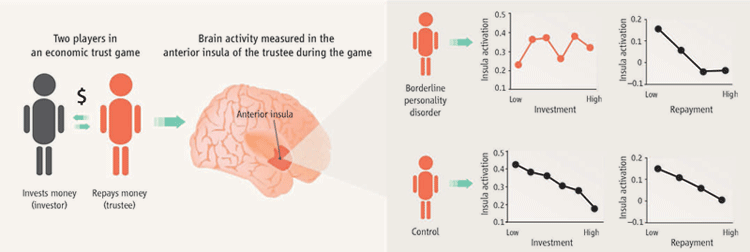
Brownds’ article highlights the fact that the BPD brain does not process the human trust (oxytocin), cooperation and connection arm of the vagus nerve system in ordinary ways:

(Click to enlarge). Activation of the anterior insula is observed during an economic trust game in individuals with borderline personality disorder and healthy controls. Both groups show higher activation in response to stingy repayments they are about to make. However, only players with the disorder have no differential response to low offers from an investor (upper left graph), indicating that they lack the “gut feeling” that the relationship (cooperation) is in jeopardy.

++++++++++++++++++++

Research on trauma survivors of the Chinese Wenchuan 8.0 earthquake, demonstrated “a reduced temporal synchronization within the “default mode” of resting-state brain function.”  READ ARTICLE HERE

This is the same brain area’s operation presented in this next article:

++++++++++++++++++++

Altered brain activity in schizophrenia may cause exaggerated focus on self

January 20, 2009 by Cathryn M. Delude

Graphic courtesy: Susan Whitfield-Gabrieli

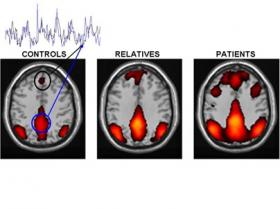
“Altered brain connectivity of default brain network in persons with schizophrenia and first-degree relatives. Colored areas represent an interconnected network of brain regions that show synchronized activity (overlapping black and blue traces) when subjects rest and allow their minds to wander. The amount of synchrony, which reflects the strength of functional connections between the different areas, is increased in patients with schizophrenia. First-degree relatives of persons with the illness also show some increase, although less than patients; this may reflect genetic effects on the brain that increase the risk of developing the disease. Black circle: medial prefrontal cortex. Blue circle: posterior cingulate/precuneus. Graphic courtesy: Susan Whitfield-Gabrieli

(PhysOrg.com) — Schizophrenia may blur the boundary between internal and external realities by over-activating a brain system that is involved in self-reflection, and thus causing an exaggerated focus on self, a new MIT and Harvard brain imaging study has found.

The traditional view of schizophrenia is that the disturbed thoughts, perceptions and emotions that characterize the disease are caused by disconnections among the brain regions that control these different functions.

But this study, appearing Jan. 19 in the advance online issue of the Proceedings of the National Academy of Sciences, found that schizophrenia also involves an excess of connectivity between the so-called default brain regions, which are involved in self-reflection and become active when we are thinking about nothing in particular, or thinking about ourselves.

“People normally suppress this default system when they perform challenging tasks, but we found that patients with schizophrenia don’t do this,” said John D. Gabrieli, a professor in the McGovern Institute for Brain Research at MIT and one of the study’s 13 authors. “We think this could help to explain the cognitive and psychological symptoms of schizophrenia.”

Gabrieli added that he hopes the research might lead to ways of predicting or monitoring individual patients’ response to treatments for this mental illness, which occurs in about 1 percent of the population.

Schizophrenia has a strong genetic component, and first-degree relatives of patients (who share half their genes) are 10 times more likely to develop the disease than the general population. The identities of these genes and how they affect the brain are largely unknown.

The researchers thus studied three carefully matched groups of 13 subjects each: schizophrenia patients, nonpsychotic first-degree relatives of patients and healthy controls. They selected patients who were recently diagnosed, so that differences in prior treatment or psychotic episodes would not bias the results.

The subjects were scanned by functional magnetic resonance imaging (fMRI) while resting and while performing easy or hard memory tasks. The behavioral and clinical testing were performed by Larry J. Seidman and colleagues at Harvard Medical School, and the imaging data were analyzed by first author Susan Whitfield-Gabrieli, a research scientist at the MIT Martinos Imaging Center at the McGovern Institute.

The researchers were especially interested in the default system, a network of brain regions whose activity is suppressed when people perform demanding mental tasks. This network includes the medial prefrontal cortex and the posterior cingulate cortex, regions that are associated with self-reflection and autobiographical memories and which become connected into a synchronously active network when the mind is allowed to wander.

Whitfield-Gabrieli found that in the schizophrenia patients, the default system was both hyperactive and hyperconnected during rest, and it remained so as they performed the memory tasks. In other words, the patients were less able than healthy control subjects to suppress the activity of this network during the task. Interestingly, the less the suppression and the greater the connectivity, the worse they performed on the hard memory task, and the more severe their clinical symptoms.

“We think this may reflect an inability of people with schizophrenia to direct mental resources away from internal thoughts and feelings and toward the external world in order to perform difficult tasks,” Whitfield-Gabrieli explained.

The hyperactive default system could also help to explain hallucinations and paranoia by making neutral external stimuli seem inappropriately self-relevant. For instance, if brain regions whose activity normally signifies self-focus are active while listening to a voice on television, the person may perceive that the voice is speaking directly to them.

The default system is also overactive, though to a lesser extent, in first-degree relatives of schizophrenia patients who did not themselves have the disease. This suggests that overactivation of the default system may be linked to the genetic cause of the disease rather than its consequences.

The default system is a hot topic in brain imaging, according to John Gabrieli, partly because it is easy to measure and because it is affected in different ways by different disorders.”

Provided by MIT

++++++++++++++++++++

Activation of Anterior Insula during Self-Reflection

This link describes yet another research study that links the brain default resting mode to self-reflection, a process that was seriously flawed in my borderline mother:

“The results provide further evidence for the specific recruitment of anterior MPFC and ACC regions for self-related processing, and highlight a role for the insula in self-reflection. As the insula is closely connected with ascending internal body signals, this may indicate that the accumulation of changes in affective states that might be implied in self-processing may contribute to our sense of self.”

++++++++++++++++++++

Processing of autobiographical memory retrieval cues in borderline personality disorder

Affective dysregulation [emotional dysregulation]in borderline personality disorder (BPD) in response to both external stimuli and memories has been shown to be associated with functional alterations of limbic and prefrontal brain areas….

Response “processing in BPD subjects were in line with previously reported changes in anterior cingulate and orbitofrontal cortices, which are known to be involved in memory retrieval. However, BPD subjects displayed hyperactivation in these areas … The deficit of selective activation of areas involved in autobiographical memory retrieval suggests a general tendency towards a self-referential mode of information processing in BPD, or a failure to switch between emotionally salient and neutral stimuli.

++++++++++++++++++++

I believe that emotional pain is as physiologically real as is physical pain.  I also believe that the pain of malevolent early infant-child trauma, abuse and neglect creates changes in the developing brain that result in changes in these pain-reduction brain areas.

FULL ARTICLE FREE ONLINE:

Keeping pain out of mind: the role of the dorsolateral prefrontal cortex in pain modulation

“…the bilateral dorsolateral prefrontal (DLPFC) exerts active control on pain perception by modulating corticosubcortical and corticocortical pathways.” READ FULL ARTICLE HERE

++++++++++++++++++++

Dissociable Brain Mechanisms Underlying the Conscious and Unconscious Control of Behavior

— 2010 – Journal of Cognitive Neuroscience, MIT article

“Cognitive control allows humans to overrule and inhibit habitual responses to optimize performance in challenging situations.   Contradicting traditional views, recent studies suggest that cognitive control processes can be initiated unconsciously…..  [This research study presents]… patterns of differences and similarities between conscious and unconscious cognitive control processes are discussed in a framework that differentiates between feedforward and feedback connections in yielding conscious experience.”

+++++++++++++++++++++++++++++++

RESEARCH ARTICLE ABOUT CHANGES IN THE BORDERLINE BRAIN – CHANGES THAT MY MOTHER NO DOUBT HAD THAT CREATED HER ABILITY TO TORMENT, TORTURE AND TRAUMATIZE ME      —

Please follow the active link for this title to read the full article including full references that I have omitted in these quotes below:

Frontolimbic dysfunction in response to facial emotion in borderline personality disorder: an event-related fMRI study

AUTHORS:  Michael J. Minzenberg, Jin Fan, Antonia S. New, Cheuk Y. Tang, and Larry J. Siever

PUBLISHED:  Psychiatry Res. 2007 August 15; 155(3): 231–243.

“…converging evidence suggests that the social and emotional disturbances of BPD may have a basis in the functional neuroanatomy of social/emotional information processing, supported by fronto-limbic circuitry….

“BPD patients exhibit a number of changes in the structure and function of subcortical limbic areas. This includes volume loss and lower resting metabolism in the amygdala and hippocampus … some studies have found amygdala volume to be preserved … The functional effects of this limbic pathology include elevated amygdala responses to emotional stimuli …and episodic memory deficits … which may be due to intrinsic hippocampal pathology or secondary to amygdala hyperactivity ….

“BPD patients also exhibit deficits in the structure and function of the rostral and subgenual subregions of the anterior cingulate cortex (ACC)….  The ACC may be a key neural region where altered processing of social and emotional information is expressed in some of the hallmark clinical signs of this disorder. The ACC is necessary for the maternal separation distress call of infant squirrel monkeys … and is activated in healthy adult humans both during the subjective experience of social rejection …and during effortful control of subjective emotional responses …. These experimental paradigms are related to clinical phenomena that are very characteristic of BPD, such as social attachment disturbance, rejection sensitivity and emotion dysregulation, respectively ….

+++++++++++++++++++++++++++++++

Neural paths for borderline personality disorder

People prone to stormy social lives display brain activity that may prompt oversensitivity to emotion and an inability to resolve conflicting information
By Bruce Bower

DOES THIS SOUND at all familiar?

“New brain-imaging research suggests that in people with borderline personality disorder, specific neural circuits foster extreme emotional oversensitivity and an inability to conceive of other people as having both positive and negative qualities….  Borderline personality disorder affects one in five psychiatric patients….  Most people have an important capacity for resolving conflict: the ability to perceive both favorable and negative aspects of the same person. Lacking this skill, borderline patients find it easier to veer back and forth between regarding those they know as either wonderful or awful….”

(My mother sure never ‘veered’ in her feelings toward me – no veering whatsoever!  I was completely and totally ‘awful’ while the chosen good child, my sister, was the ‘wonderful’ one.)

+++++++++++++++++++++++++++++++

See also this post on the resting brain default mode:

+SOMETHING WENT TERRIBLY WRONG WITH MY MOTHER’S PRECUNEUS

++++++++++++++++++++

+IS THERE ANY OTHER WAY FOR ME TO ‘BE’ IN THE WORLD?

++++++++++++++++

Is it possible to be very nearly a species of one?  That’s how I feel today as I realize that nowhere in the ‘professional’ literature can I find much of a match for my infant-childhood experiences and how I became a changed being as a consequence.

It seems very rare that researchers ever talk realistically (from my point of view) about the ‘freeze’ response when they talk about the ‘fight or flight’ response.  I think about it as an infant-child abuse survivor because I suspect, more than anything else, it was the freeze response that I most often used in response to my mother’s abuse.

Because I never knew anything OTHER than my mother’s abuse from the time I was born, there was never a time when the flight response came to me.  There was one occasion I know of when I was a preteen that I actually ran from her.  If I hadn’t done so that time, she would probably have killed me.

The rest of the time, beginning in my infancy, I suffered, endured and persisted to live on in spite of my mother’s abuse.  But what was going on inside of me during all these experiences of trauma?  If I could not fight, and I could not escape her, was I forced to use this freeze response that nobody seems to want to talk about?

++++

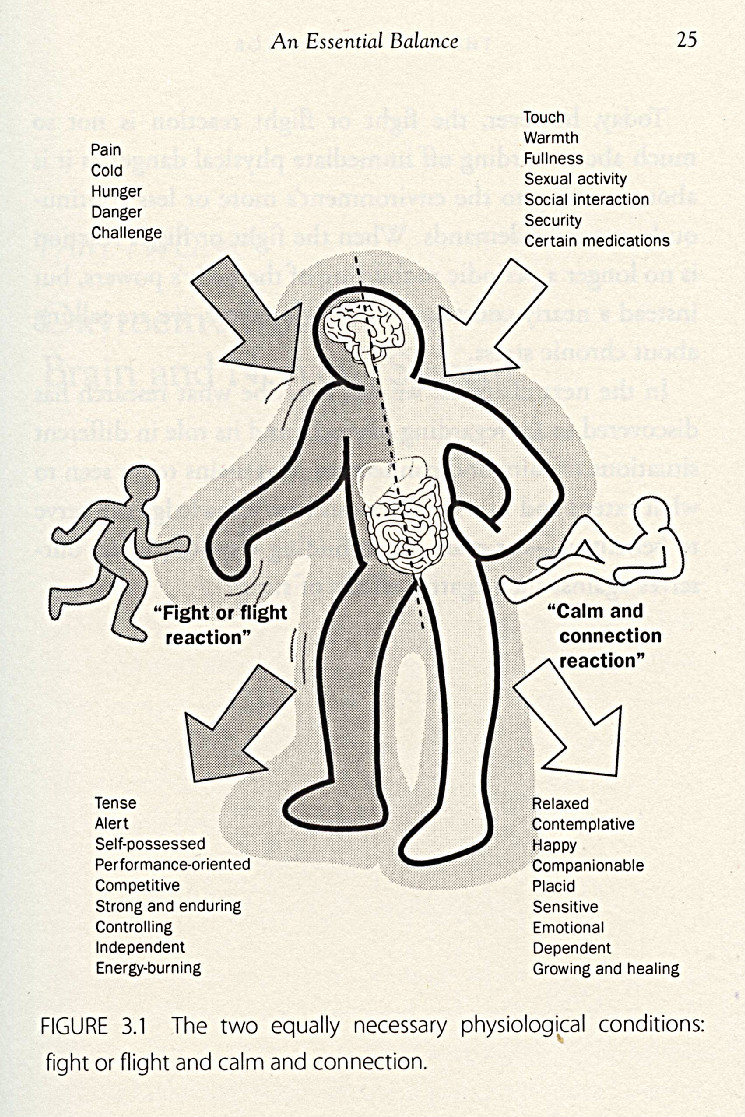
I wonder about this today in regard to this image presented in the book by Dr. Kerstin Uvnas Moberg, The Oxytocin Factor: Tapping the Hormone of Calm, Love, and Healing.

++++

I located this excellent online source of articles on trauma, although I wish the page were more up-to-date!

David Baldwin’s Trauma Information Pages

Contained among these pages is this:

Introduction to Survival Strategies

Paul Valent

This is a modification of a key chapter (chapter 7 by the same name, pp. 115-123) in From Survival to Fulfillment: a framework for the life-trauma dialectic, by Paul Valent (1998). Philadelphia: Brunner/Mazel. Copyright© by Paul Valent.

Valent presents a chart (about half way down his pages) that includes many aspects of the trauma response in detail:  Table 2 – Survival Strategy Components.  This article and table are useful, and worth reading, but Valent does not mention the freeze response, either.

Something is missing.  I don’t find what resonates with me in trauma-response writings because the authors of these writings are missing the point I need in their own thinking about trauma as it applies to many severe infant-early childhood abuse and trauma survivors.

++++

I found this article:

Inducing traumatic attachment in adults with a history of child abuse:  Forensic applications

By Felicity De Zulueta published in The British Journal of Forensic Practice * VOLUME 8 * ISSUE 3 * SEPTEMBER 2006

It presents typical theory and understanding about how particularly disorganized-disoriented insecure attachment is created and how it manifests in infants as well as in adults.  This author, as do others, suggests that the biggest problem with insecure attachment happens when the early caregiver is the source of fear to an infant.  The infant has no one to turn to for safety and security, and is left in a state of ‘fear without resolution’.

Researchers and theorists assume that an infant will do everything in its power to try to get its earliest attachment figure to respond to it appropriately (according to the infant’s needs).  What happens when absolutely nothing the infant can do – within its very limited natural abilities – works?  What happens when the efforts of the infant to generate an appropriate response from its caregiver results in unpredictable, painful, terrifying and completely inappropriate responses to its efforts?

From my point of view, I believe infants and very young children are forced to deal with this state of ‘fear without resolution’ — so that they can ‘go on being’ while in situations that present what other developmental experts call, ‘the unsolvable paradox’ – in ways that all but the most thorough-thinking and astute researchers miss completely.

The infant is left in a frozen state of helplessness that is like suspended animation.  This response shares some of the typical patterns of response assigned to the fight-flight response, but is inherently different.  I do not agree with professionals that assign the term ‘coping mechanism’ to the processes that these severely abused infants and young children are forced to develop within their growing body-brain.

Some discussion of the child response to trauma can be found here:

Childhood Responses to Threat/Coping Strategies

++++

Because my history of severe infant-child abuse happened on the far-far-from-normal range of parenting practices, I personally know that there is a whole other level to early trauma survival that even this information (above) does not address.

A child experiencing abuse develops strategies, which become coping mechanisms which enable day-to-day functioning, but yet help the child detach from the emotional and physical pain of events, especially when abuse continues over a long period of time….

In my thinking a CHILD is a far different entity than an INFANT is.  Most all research statements, like this one, make the assumption that the two stages of being human are the same.

When severe abuse occurs during fundamental, critical window-of-development stages, these so-called ‘coping mechanisms’ do NOT exist as such.  What I experience is a life lived within a body-brain that was changed in its development as a direct consequence of the trauma I was forced to endure.  I know that very real epigenetic changes occur.  I know that nervous system-brain circuitry changes.

SOMETHING ELSE results from early severe abuse.  I even believe it is more than so-called dissociation.  I believe it is more than the fight-flight response.  It is more and different even from the freeze response as presented in these writings.

++++

I am left to explore from within what I can detect about how my body-brain operates in the world – and to try to determine the nature of my experience.  I often return in my thoughts to the presentation of the unique child-woman in the movie “Nell.”  I will never forget my response to this movie the first time I watched it.

For the first time in my life I was presented with an image of a person who was more like me than anyone else I had ever imagined.  And yet even this imagined character was far different than I was.  This character had a bonded attachment at least at one point in her life to her twin sister.  She had a bizarre mother, but not a mother that hated, tormented and abused her.  Unlike me, this character did not seem bonded to the life of the natural world around her as I was growing up in Alaska.

Yet the difference between this character and other people was portrayed adequately enough to let viewers know that there was something so different about Nell that she would never in ten million years ‘be like other people’.

Thoughts of this movie comfort me now.  If you’ve never watched it, please consider doing so.  There are many realms of human experience that can only be presented through forms of art, and the state of being I am more familiar with than not is at least alluded to in this story.  But the film presents no suggestion that Nell was remotely concerned with whether or not she was like other people or if others could understand her.  How freeing that would be to me, if I could ever attain that state!

Nell did not wish to be any other way than how she was in the world.  My problems probably stem mostly from the fact that I do.

++++++++++++++++

+LIVING WITH A BODY BUILT WITH SORROW

+++++++++++++++++++++++

The day I wrote my post on attachment, +HOW DOES THE SELF GET FORMED? HERE’S A WHOLE LOT OF IMPORTANT INFO, I found myself feeling the foreboding, dread and underlying terror that I then wrote about in a second post that day, +LIVING WITH THE AFTERMATH OF INFANT-CHILDHOOD TRAUMA AND TERROR.

Today, after presenting my post on empathy, +EARLY ATTACHMENT ORIGINS OF EMPATHY, I find myself writing a second post today about the other one of the two major emotions that I chronically feel:  overwhelming sadness.

Often these two emotional states, the foreboding and the sadness coexist together at the same time.  Yet, like the other day when the dread was very noticeable, the sadness seemed to be at bay.  Today my experience is the opposite.  I don’t feel the dread, I feel the sadness.  It is this sadness that I wish to say a few words about right now.

++++

This sadness seems to fill the entire inside of my body, as if it exists in all of my cells.  I experience it as I might a loud noise, or sound that cannot be ignored, stopped or controlled.  It is overwhelming and pervasive.

After having just written about empathy, and knowing that empathy operates as we consider another person’s circumstances and feelings, not our own, I realize that at this moment it provides me with a little comfort in knowing that there are other severe infant-abuse survivors who were never loved and were chronically abused who probably know exactly what I am talking about – because they also live with the reality of these feelings on an ongoing basis.

There are times when I can be phony and pretend when I am interacting with others that I feel otherwise than they way I do.  Any reprieve I might attain by distracting myself in one way or the other (including learning my piano) is completely temporary.

I do know that during times over the past 9 years that I could look forward to seeing the man I love, and during every moment I was in his presence, these two feelings vanished completely.  This was such an unusual and foreign experience for me because I had never had it before.  Of course, I miss that reprieve – but it, too, was always temporary.

++++

I have been ‘diagnosed’ with reoccurring major depression, yet knowing that word could be assigned to how I actually feel does not give me comfort.  I continually live and act in spite of this sadness as I would have to do with any other chronic pain.  The pain of this sadness is very real.

I was thinking a few minutes ago about the feeling of being hungry, and about what it might be like to live with that feeling all of the time while nothing I could do could possibly take it away.

I always think that if I can just learn the right piece of information, it would act like a magical key that could unlock the solution that would end my experience of my chronic foreboding-dread and sorrow-sadness.  Mostly I believe it is built into my body-brain in such a way that it is a permanent part of me.  I assure anyone who does NOT experience these chronic states, they are a burden.

I absolutely believe that 18 long years of being despised, abused, hated and maltreated would be enough to engrain these emotions into the cells of anyone’s body.  Had this abuse NOT occurred during my infant-childhood growth and developmental stages, perhaps I could escape these emotions and peel away my experience of them as one can peel dried Elmer’s glue off of the palm of their hand.

I think living with this kind of chronic consequence of severe infant-child abuse requires heroic effort.  It requires courage.  It requires a commitment to those who love us to not find a way to exit the body whose cells retain feeling memories of terror, overwhelming sorrow and trauma.

+++++++++++++++++++++++

+EARLY ATTACHMENT ORIGINS OF EMPATHY

++++++++++++++++++++++++++++++

What is empathy?  The definition given by the authors whose research article on the topic I am presenting today define empathy as “an emotional and behavioral response to another’s emotional state, which is similar in affective tone and is based on the other’s circumstances rather than one’s own.”

Because my blog is concerned with the ongoing consequences a person acquires from having experienced severe abuse, trauma and maltreatment during their infant-childhood, knowing what empathy is and is not matters because we did not grow up – obviously – within an early environment where empathy was shown to us by our earliest caregivers.

At least that’s what I have always assumed to be true until this moment as I prepare this post.  My life as my mother’s victim was entirely distorted by her psychosis and mental illness.  At this moment, a thought has occurred to me that seems almost too bizarre to print – but might also be close to the truth.

Given that my mother did not seem able to operate from a conscious stance in regard to me, it might be possible that she WAS practicing her version of empathy with me.  What if, as an infant and very young child she suffered so much that on her unconscious level she KNEW nobody empathized with her.  What if her treatment of me was (bizarrely) intended to create a human being that COULD empathize with her early feelings?

It is often suggested that a person like my mother splits off her own ‘badness’ and projects it out onto the chosen child so that this child becomes the container for the intolerable self hatred.  That picture matches what I can see of my mother’s treatment of me as she hated and abused me from birth and for the next 18 years I lived in her home.

What if, as a component of this sickness, she also was directly projecting out onto me her own experience of how awful it felt to be made to feel that BAD in the beginning of HER life?  How better to create another human being who could empathize with her own feelings than to reenact patterns of abuse with me that would have the end result of making me feel as BADLY as she did?

I was not human to my mother.  I was the devil’s child.  That much I know.  I was not a separate, unique (wonderful) individual person to my mother.  I was her projection of her own evil badness that somehow she internalized as a very young person herself.  How better to make ME absolutely understand what this process of being bad, of being treated as a bad child could feel like than to force me to ALSO experience this reality?

Of course making someone feel as badly as we do is NOT what the process of empathy is about.  I think about a story my mother used to tell from her young adulthood.  She went horseback riding one summer’s day and happened to be on a misbehaved horse that she evidently lacked the skill to control.  The horse wanted to be in the barn, and solved its problem by racing across a meadow directly under the low lying branch of a tree.  The end result, predictably, was that mother landed on the ground and the horse returned home.

My mother used this experience as a reason that none of her children should ever ride horse.  But more importantly, I want to use this event as an example of bizarre empathy potential.  What if my mother needed to know that somebody else could directly empathize with what that ‘being knocked from the back of an out-of-control horse’ felt like to her?  What if the only way she could guarantee that someone else could empathize with her was by reenacting the same event?

What if she had the power to place her child, say me, upon the back of a similar run-away horse and recreate the experience for me — so that I might exactly know what she felt like on the day it happened to her?  When I look at my mother’s interactions with me from this perspective, I could say that she knew EXACTLY how her treatment of me made me feel.

This is twisted.  There is no better word I can think of than twisted to describe how a mind could work like this.  But twisted my mother’s mind was in regard to me – completely, fundamentally and absolutely.  I would say the same thing about the perpetrator of maltreatment of any helpless victimized infant-child.  At the same time, now that this strange perspective has entered my thinking about what my mother did to me, I understand that my thinking might be absolutely correct.

To the degree that she retained within her own unconscious the terror, pain, misery, helpless hopelessness, and feeling of being overwhelmed as a victimized child (if, in fact, she was – we will never know her true infant-childhood circumstances completely), she certainly communicated to me through her treatment of me what it was like to grow a body-brain-mind-self that included abuse experiences that created similar feelings within me.  She worked very hard to make sure that I felt as terrible as was humanly possible, and she did a very good job.

My mother’s pattern of interacting with me was, of course, the opposite from the definition of empathy as “an emotional and behavioral response to another’s emotional state, which is similar in affective tone and is based on the other’s circumstances rather than one’s own.”  Her only concern was for her OWN experience.  She was not remotely concerned with mine as a separate ‘other’.  She never recognized that I even existed as a person or had my own ‘circumstances’, let alone was separate and different from her self.

My mother’s patterns fit the extreme end of what these authors (below) describe as ‘anti-empathy’.  Whether or not she intended it, my mother certainly communicated to me what it felt like to be an abused child, just as my father communicated to me what it felt like to be a dismissed and avoided child.  As we continue to reenact with others the patterns of attachment that were built into us through our earliest caregiver interactions, we correspondingly ‘help’ others to know how we felt being the recipient of those same attachment experiences our self.  (Be sure to take a look at the EMPATHY MATRIX below.)

NOTE:  When I fell in love with a man that some people might say is like my father, what I now recognize is that they share the similar avoidant-dismissive attachment pattern/disorder that I am extremely familiar with – and that I resonate with!  It is, thus, the attachment pattern that I internally and automatically recognize.  Otherwise, as people, they are far different from one another.  Did I unconsciously recognize this dismissive-avoidant attachment pattern because the feelings created inside myself in response to it are identical between the two relationships?

++++

Today I am presenting information from an article about how early caregiver attachment experiences intertwine with the later ability or disability to experience true empathy.  This article is about ground breaking research on how empathy can be seen to operate within preschooler interactions.  These empathy patterns persist over time.  They do not appear out of nowhere.

For those of us who suffered from abuse, trauma and maltreatment in our infant-childhoods, this information can help us to understand the empathy process that we were prevented from benefiting from when we needed it most – as our body-brain-mind was forming patterns of attachment into our growing and developing self.  (All bold type and underlining is mine, my notes are in italics)

++++++++++++++++++++++++++++++

Individual Differences in Empathy Among Preschoolers:  Relation to Attachment History” — By Roberta Kestenbaum, Ellen A. Farber, L. Alan Sroufe, in New Directions for Child Development, Vol 44, 1989, 51-64

++++

EMPATHY

“The ability to express emotions clearly,

to recognize others’ expressions of emotions,

and to react appropriately to them

are all important for accurate communication and regulation of relationships.  (Kestenbaum/ID/51)”

“…what an individual comes to understand about emotions in the self and others in early relationships may have an impact on later responding to emotional reactions of others.  (Kestenbaum/ID/51)”

EMPATHIC RESPONSE to “another’s emotional state

“…recognizing and experiencing the emotion of the other.  (Kestenbaum/ID/52)”

“Individuals who in the past have had their emotional needs met (for example, through a caretaker’s sensitive and consistent responding) may be better attuned to the emotional needs of others

without confusing them with their own needs,

thus allowing for a truly empathic response.  (Kestenbaum/ID/52)”

++++

++

“affective perspective taking”

cognitive orientation

“empathy as the knowledge or understanding of another’s feelings.  (Kestenbaum/ID/52)”

“affective perspective taking is necessary but not sufficient for empathy  (Kestenbaum/ID/52)”

++

empathy defined also “in strictly affective terms, as a vicarious affective response.  (Kestenbaum/ID/52)”

COMBINING THE TWO APPROACHES ABOVE:

++

“…in essence, both cognitive and affective elements are involved in this response.  (Kestenbaum/ID/52)”

DEFINITION:

AUTHORS’ DEFINITION:

“…an emotional and behavioral response to another’s emotional state, which is similar in affective tone and is based on the other’s circumstances rather than one’s own.  (Kestenbaum/ID/55)”

++

“…empathy is defined as

being able to discriminate the affective states of others, knowing how another feels, and vicariously experiencing the aroused emotion (Feshback, 1982; Underwood and Moore, 1982).

Similarly, Iannotti (1978) has defined empathy as an emotional response to the perspective of another.  (Kestenbaum/ID/52)”

“Hoffman (1978) suggests a broad definition of empathy, with the major criterion being that the individual’s affective response is more suited to the other individual’s situation than to his or her own circumstances.  (Kestenbaum/ID/52)”

++++

[author mentions “emotional contagion” without clarifying how it can “contaminate” (my word) the response of empathy]

“Another issue is whether, for a response to be empathic, an exact match of affect should be required or only a match to positive or negative tone…..Some responses, particularly those by young children, may be excluded not because of insufficient arousal, but because of immature cognitive and motoric abilities to produce an exact match.  (Kestenbaum/ID/52)”

“This investigation is concerned with how the quality of early relationships predicts later responding to emotional distress….relationship experiences are internalized and carried forward to other relationships.  (Kestenbaum/ID/54)”

“The present study was undertaken to look at later effects of early relationships and to compare children who had secure attachment histories with children who had avoidant and resistant attachments.  Infants were tested at twelve and eighteen months of age with their mothers in the Ainsworth Strange Situation.  They were classified as securely attached, anxiously attached-avoidant, or anxiously attached-resistant.  (Kestenbaum/ID/54)”

“Because securely attached children presumably have had their emotional needs met as infants and have received responsive, empathic caregiving, they should have developed the capacity to readily respond empathically.  (Kestenbaum/ID/54)”

“In Bowlby’s (1973) terms, in the context of early relationship experiences, infants and young children develop inner working models of self and other.  This is more than the learning of roles; rather, children internalize the very nature of relationships themselves.  (Kestenbaum/ID/54)”

SECURLY ATTACHED

“Thus, in experiencing sensitive caregiving, the securely attached child not only learns to expect care, but more generally learns that when a person is in need, another responds empathically.  (Kestenbaum/ID/54)”

AVOIDANT ATTACHMENT

“In sharp contrast, children who show avoidant patterns of attachment are thought to have experienced repeated rejection in times of emotional need….though they may become aroused at another’s distress, they will have no framework for responding adequately.  (Kestenbaum/ID/54)”

“They may defend against the feelings that are aroused.  Thus, avoidant children are most likely to appear unempathic, at times displaying attacking behavior or (Kestenbaum/ID/54) inappropriate affect.  (Kestenbaum/ID/55)”

ANXIOUS-RESISTANT ATTACHMENT

“…children who have anxious-resistant attachment histories are thought to have experienced inconsistent care.  (Kestenbaum/ID/55)”

“In the face of strong feelings, they remain anxious, confused, and uncertain.  (Kestenbaum/ID/55)”

“They may show arousal and some responsivity, but because of their disorganization and anxiety, they have difficulty acting empathically.  (Kestenbaum/ID/55)”

Due to problems in maintaining distance between themselves and others, they may be confused as to who is experiencing the distress.  (Kestenbaum/ID/55)”

In this study:

“Empathy was measured in naturally occurring situations of distress during free play in a preschool setting….we chose to focus only on reactions to others’ distress….Children’s responses to others’ distress were rated for the

degree of empathic responding.  To more clearly delineate differences between the groups, we also included

measures of inappropriate affective responding (anti-empathy) and

occurrences of blurring the boundaries between what is happening to another and what is happening to the self.  (Kestenbaum/ID/55)”

++++

EMPATHY MATRIX

Matrix, matron and matter are all related to Latin word “matre”

Thirteen Things to Think About:

WHEN INTERACTING WITH HER INFANT

+ 1.  Degree of accurate versus inaccurate perception of infant’s feelings by the mother.  Projection of her feelings onto the infant is a form of inaccurate perception.

+ 2.  Degree of accuracy of the mother’s perception and consciousness of her own feelings

+ 3.  Degree that the mother can set her own feelings aside when interacting with infant

+ 4.  Degree of accurate versus inaccurate perception of infant’s needs.  Projecting her needs onto the infant is a form of inaccurate perception.

+ 5.  Degree of accuracy of mother’s perception and consciousness of her own needs

+ 6.  Degree that mother can set her own needs aside when interacting with infant

+ 7.  Degree of genuine yet exaggerated-staged quality of emotional reaction in response to a young infant.  (This playful way is what an infant needs to grow its brain correctly.)

+ 8.  Degree of literal quality of emotional reaction in response to a young infant (Young infants cannot tolerate a direct and literal response to their feelings.  This response overwhelms and scares them.  I am not using literal to mean the same thing as genuine.)

+ 9.  Degree of appropriateness of response (expectations – whose need/emotion is it?)

+ 10.  Degree of intent to help – safe/benevolent

+ 11.  Degree of intent to harm – threat/malevolent.  Projection of an ulterior motive onto the infant that it has the intention of harassing the parent in any way is harmful.

+ 12.   Degree of availability and accessibility to infant (investment – attention – two edged sword if the interactions are traumatic and threatening).

+ 13.  Degree of consistency and dependability to infant (builds trust and hope or chronic fear)

++++

[Due to the condition of my mother’s mind, she never had a genuine interaction with any of her children.  Everything my mother thought, did or felt was from the “pretend mode” thinking place as she never left the magical world of her early childhood.

She could not, therefore, experience empathy with anyone.

I don’t think there is anyway to “fix” this.  It might be like color blindness.  If we don’t have empathy, don’t have mindsight, don’t have the ability to mentalize, it’s like not being able to see the color red.  And if a person is color blind, they cannot become a military pilot.  They must do something else.  And that something else might be “choice therapy.”]

++++

Mean age of the 24 children in the study, split equally between girls and boys, was 48.7 months.  Children were part of a longitudinal study at the University of Minnesota.

[I note that they never mention insecure disorganized attachment.  Did those mothers not participate in the overall study]

B – securely attached

A – anxious-avoidant

C – anxious-resistant

“When they were twelve months old and eighteen months old, they participated with their mothers in the Ainsworth Strange Situation to assess the quality of the mother-infant interaction.  In this procedure, the infant has the opportunity to explore a novel situation with and without the mother present, and with and without a stranger present.  Based primarily upon behaviors when the child is reunited with his or her mother after brief separations, the children are classified into one of three groups.  (Kestenbaum/ID/56)”

“Securely attached (B) infants respond positively to mother’s reappearance and can use the other as a source of comfort if distressed.  (Kestenbaum/ID/56)”

“Anxious-avoidant (A) infants actively avoid their mothers when they return and do not respond differentially to mother and stranger.  (Kestenbaum/ID/56)”

“Anxious-resistant (C) children become very distressed during separations but on reunion are not readily calmed.  They often show anger but resist efforts to comfort them.  (Kestenbaum/ID/56)”

[they have a table of empathy and anti-empathy scales used to score the children on p. 57]

++++

teacher’s reports:

items that “form a coherent factor, named empathic relatedness (Kestenbaum/ID/58)”

– Is considerate and thoughtful of other children.

– Is helpful and cooperative.

– Shows concern for moral issues (for example, reciprocity, fairness, and the welfare of others)

– Uses and responds to reason

– Tends to arouse liking and acceptance in adults

– Shows a recognition of the feelings of others; is empathic

– Tends to give, lend, and share

– Can be trusted; is dependable.

++++

“There were few responses of anti-empathy, but of the twelve that were observed, nine incidents were by children with anxious-avoidant attachment histories, two incidents were by children with anxious-resistant attachment histories, and one incident was by a child with a secure attachment history.  (Kestenbaum/ID/59)”

“Six instances were observed in which children appeared to blur the boundaries of who was transgressed.  Of these, four involved children with anxious-resistant attachment histories, and two involved children with secure attachment histories.  (Kestenbaum/ID/59)”

measured children in distress

“…behavioral responses, such as approach or vocalizations of concern, were observed much more often than emotional response…..Thus, it is still not clear what the relation is between affective and behavioral indexes of empathy.  (Kestenbaum/ID/59)”

“…teachers can capture affective-behavioral dimensions of empathy in the Q sort.  (Kestenbaum/ID/60)”

++

“…if prototypic models of self, other, and relationships are forged in early attachment experiences, it is expectable that children experiencing responsive care not only will be able to seek care later, but will be emotionally responsive to others as well. (Kestenbaum/ID/60)”

“…we consider this work on empathy to be strong confirmation of Bowlby’s theory.  (Kestenbaum/ID/60)”

++

“It could be argued that the empathic behavior that we are seeing is a product of current parenting.

Bowlby’s theory states explicitly that development is always a product of past history and current circumstances.

Yet an infant that does not experience empathy gets a different brain.

If a child’s circumstances had changed dramatically, an early history of secure attachment would not guarantee empathic responsiveness.

And yet their brain did form secure circuits.

In this sense, early secure attachment is not seen as causing later empathy.  (Kestenbaum/ID/60)”

Nonetheless, early attachment assessments are viewed as reflecting a developmental process commonly associated with individual differences in empathy.  (Kestenbaum/ID/60)”

++

“The quality of the attachment relationship in infancy was indeed related to empathic responding in preschoolers.  Specifically, children with secure attachment histories were  more likely to have a greater empathic response (behaviorally and emotionally) to another’s distress than were children with avoidant histories.  (Kestenbaum/ID/60)”

“How an individual is accustomed to interacting with early relationships, particularly with a caregiver, will be carried forward as expectations in later relationships.  This creates a self-perpetuating cycle [expectations] in which an individual who expects to interact with others in the same (Kestenbaum/ID/60) way as in previous relationships creates a situation that will realize that expectation.  (Kestenbaum/ID/61)”

creates a situation that will realize that expectation[ I don’t see how they are explaining this part of things.  The children here reacted to situations as they existed.  They did not create them.]

“Thus, children with secure attachment histories have in the past received consistent, sensitive caregiving in times of distress.  These children come to develop a sense of trust and identify with caregivers who respond empathically toward them.  Because their own emotional needs are presumably satisfied, they develop the capacity to respond emotionally, sensitively, and empathically toward others in later relationships.  (Kestenbaum/ID/61)”

“Children with avoidant attachment histories, on the other hand, experienced rejection from their caregivers in times of emotional need.  Without an empathic model to identify with, they are less capable of responding appropriately to another’s distress.  [This is more than having a model – these patterns of responding and processing information are built into the brain circuitry of these children!] As infants, they did not experience consistent emotional support, and later in life, they do not seek it.  Accustomed to avoiding emotions [and this related to their bodies also.  Is this a form of dissociation?] , they continue to do so in later relationships, by not responding emotionally or by responding inappropriately.  Of the twelve incidents of anti-empathy observed in this study, nine were by children with avoidant histories.  The differences observed between the secure group and the avoidant group are probably not due to differences in cognitive abilities such as affective perspective taking, since responding maliciously also requires the ability to realize that another person is experiencing emotional distress.  (Kestenbaum/ID/61)”

“As infants, resistant children had trouble being comforted, and it was expected that as preschoolers they would continue to have difficulties controlling their own affect.  Based on their past histories of inconsistent, ambivalent relationships, it was predicted that children with anxious-ambivalent [they are being inconsistent with their labels here] attachment histories would be

too preoccupied with their own discomfort to react as empathically as the secure group or as unempathically

as the avoidant group.  Statistically, however, the resistant group could not be differentiated from either of the other two groups on present measures of empathy, though their average score fell between those of the other two groups, as predicted.  (Kestenbaum/ID/61)”

IMPORTANT

“Although the anxious-resistant group could not be differentiated by empathy measures, the observations of children who seemed to have

trouble separating another’s distress from their own suggest a more appropriate way of beginning to distinguish this group.  Although only six instances occurred of children

appearing to blur the boundaries of who was experiencing distress, four of them were by children with anxious-resistant attachment histories.  If anxious-resistant children have more

difficulty differentiating between the self’s and other’s emotional states, they will experience the other’s emotional state as their own personal distress and be

less likely to respond empathically…..

Behaviors indicating boundary problems, such as seeking comfort from teachers when another is distressed, should be explored more fully.  (Kestenbaum/ID/61)”

need to “look at the extent of the blurring as well as the cognitive aspects of differentiating the self from other  (Kestenbaum/ID/62)”  — suggestions for future research

It would seem that this is all tied to their preoccupation with their own discomfort.

This would cause them to have difficulties separating another’s distress from their own.

I would suggest that there is a direct link between their inconsistent experiences and this boundary blurring, as well as with the preoccupation.

Because of their preoccupation and blurred boundaries, they will not SEE another’s distress —  so similar to the avoidant group, there would be nothing to respond TO.

– communication patterns and rhythms.

++++++++++++++++++++++++++++++++

+LIVING WITH THE AFTERMATH OF INFANT-CHILDHOOD TRAUMA AND TERROR

+++++++++++++++++++++++++++++

In light of the formative nature of the mother-infant interactions that lead to the development of the human right limbic emotional-social brain as presented in my last post, +HOW DOES THE SELF GET FORMED? HERE’S A WHOLE LOT OF IMPORTANT INFO, it is perhaps one single range of related emotions that creates the most ongoing, lifelong problem:  Terror.

See search:  fear and infant brain development

For those of us who were maltreated as infants, it might well be that this emotional range was not only NOT regulated by our interactions with our mother as this last post describes, but our terror was also AMPLIFIED by the very person who was supposed to protect us and keep us safe and secure.

I suspect that within this emotional range related to terror we live the rest of our lives with both the inability to adequately regulate it — but also with far more terror experience built into us that most people might be able to imagine.

The terror range includes not only fear, anxiety and panic, but also dread, foreboding and uneasiness that includes the sense that we are always waiting for something bad to happen – something scary and overwhelming.

As my last post explained, these emotional reactions were created in us long, long before the reason-able abilities of our brain were formed and developed.  They exist on a very physiological level within our body itself.  Our body, in its feedforward and feedback information signaling loops, keeps us continually aware that danger and threat are not far away.  We cannot rest, relax, or ever assume that we are safe and secure.  Instead, we are always prepared to survive what we cannot see – that which we have anticipated (and often received) since the earliest times of our life = trauma.

Ours is a cellular early warning system.  Ours is a continual state of warning and high alert, operating often well outside our range of conscious awareness.

Our terrorizing and terrifying experiences happened to us often way before we had words to think thoughts with.  They happened while the very brain that we NOW think with was forming itself.  If the mothering we received was inadequate and/or scary, the nameless fear became a fundamental part of who we are from the time of our beginning.

Most of us are thus naturally so used to the presence of this ‘structural terror’ that we cannot imagine ourselves in the world feeling any other way.  This state is a ‘given’ one for us.  If we can be honest with our self, the times when we have truly felt (while not under the influence of a drug) absolutely safe, secure, relaxed and calm are the exception in our life rather than the rule.

If we don’t consciously feel this state of ill-at-ease all of the time, we know it is never far away because we know we risk this terror state overwhelming us unexpectedly and often seemingly out of nowhere.  Our entire body-brain-mind-self exists as a trauma alarm system that never runs out of batteries and never turns itself off.

We can experience this undercurrent of trauma-response in our body as a hypersensitivity to anxiety (e.g. anxiety, PTSD) or as a hyposensitivity (e.g. depression).  If our earliest caregiver-infant interactions were not as positive as the one’s described in my last post, we need to understand and expect that our vagus nerve system and its connection to our autonomic nervous system (ANS – ‘stop’ and ‘go’ branches) have been disrupted.

I just wanted to point this out today in response to the post I just published.  I KNOW what this chronic state of underlying dread feels like.  I live with it nearly every single moment of my life.  I have become unbelievably aware of this fact since my children have all left home.  During the 35 years of my adult life I had dependent children living in my home, my caregiving system’s operation superseded my awareness of my chronic inner state of alarm.  Now that they have left home and live on their own, I notice that my alarm system runs nearly all of the time.

Being able to dissipate the power my inner alarm system has over my states of being requires nearly continual conscious monitoring.  I do not know how to shut it off or how to regulate this inner state of foreboding so that it will go away.  I doubt that is even possible.  At least by studying the kind of information I posted earlier today I at least have a much clearer understanding of where this alarm system came from and how it was formed very early into my right limbic emotional-social brain and body through traumatic early experiences with my out-of-control violent and abusive mother.

+++++++++++++++++++++++++++++++++++

+HOW DOES THE SELF GET FORMED? HERE’S A WHOLE LOT OF IMPORTANT INFO

++++++++++++++++++++++++++++++++++

Browse through or study the information presented in this post about attachment and the early forming right brain – but it is IMPORTANT!  There is a nitty-gritty to attachment and the part it plays in our brain-mind-self development.  When we think about our own self in the world, and as we interact with our self and with others, we are exercising our attachment system as it formed us and formed itself into us.  Empathy may well be what connects the operation of our emotional and social brain – because these operations happen in the same place – our earliest forming right limbic EMOTIONAL-SOCIAL brain.

The information I am going to present today seems complicated because we are not used to thinking about ourselves and others in the terms that most accurately describe our human, social specie’s inner workings – or the behaviors and actions that we accomplish because of how our body-brain actually works.

This information today comes from the writings of Dr. Allan N. Schore, presented in his book, Affect Regulation and the Repair of the Self (2003).  This information comes from the second chapter in his book:  Minds in the Making:  Attachment, the Self-Organizing Brain, and Developmentally-Oriented Psychoanalytic Psychotherapy (pages 33-57)

There’s plenty to think about here.  I left some of my own musings in italics interspersed within these quotations from when I first encountered this information several years ago.  Bold type and underlining throughout is mine.  This is as close to a human operating manual as I think we could find.

++++++++++++++++++++

IMPORTANT

++ the attachment relationship directly shapes [through certain maternal behaviors] the maturation of the infant’s right-brain stress-coping systems that act at levels beneath awareness (schore/ar/44)

++++

The orbital cortex matures in the middle of the second year, a time when the average child has a productive vocabulary of less than 70 words.  The core of the self is thus nonverbal and unconscious, and it lies in patterns of affect regulation.  (schore/ar/46)”

++++

“If attachment is interactive synchrony, stress is defined as an asynchrony in an interactional sequence, and, following this, a period of reestablished synchrony allows for stress recovery. (schore/ar/39)”

[This is what Schore elsewhere calls ‘rupture and repair’.]

++++

“Indeed, psychobiological attunement, interactive resonance, and the mutual synchronization and entrainment of physiological rhythms are fundamental processes that mediates attachment bond formation, and

attachment can be defined as the interactive regulation of biological synchronicity between organisms…. Attachment is thus the dyadic (interactive) regulation of emotion….(schore/ar/39)”

++++

“Thus, regulation theory suggests that attachment is, in essence, the right-brain regulation of biological synchronicity between organisms. (schore/ar/41)

++++

Schore wrote this chapter in 2001, a presentation for the Seventh Annual John Bowlby Memorial Lecture

Bowlby’s ideas on attachment are “the dominant model of human development available to science”  (schore/ar/33)

Research is demonstrating the “clinical relevance of the concepts of mental representations of internal working models and reflective functions” are two fundamental characteristics of “minds in the making”  (schore/ar/33)

“…the new developments that are recoupling Freud and Bowlby come from neuroscience.  (schore/ar/34)”

Schore states that in his ongoing writings he writes “from a psychoneurobiological point of view, a specification of the structural systems of the developing unconscious in terms of recent brain research.  This work on “the origin of the self”…attempts to document the ontogenetic evolution of the neurobiology of subjectivity and intersubjectivity, which I equate with specifically the experience-dependent self-organization of the early-developing right hemisphere.  (schore/ar/34)”

“the structural development of the right hemisphere mediates the functional development of the unconscious mind…. [and is] the repository of Bowlby’s unconscious internal working models of the attachment relationship.  (schore/ar/34)”

“…the system unconscious” … has, according to Schore’s discussion on Freud’s work, “regulatory structures and dynamics”  (schore/ar/35)

is describing a scientific trend toward convergence of “the study of the brain and the study of the mind.  (schore/ar/35)

“The early developing right brain…is the neurobiological substrate of Freud’s system unconscious….A body of research now indicates that the right hemisphere is dominant in human infancy, and indeed, for the first 3 years of life.  (schore/ar/35)

I feel as though I am on the trail of unraveling a great mystery as I approach this chapter.  I want to understand how it was possible that I had so little independent thought before the age of 18.  I want to understand how I endured the thousands of hours of enforced isolation as a child.  I want to understand how I could sit on the side of a mountain at 18 and not think a thought.  I want to understand how exactly I GOT my mother’s mind.  And I want to understand how she GOT her own.

“the right hemisphere contains an affective-configurational representational system, one that encodes self-and-object images

“while the left utilizes a lexical-semantic mode.  In (schore/ar/35)

“greater right than left hemispheric involvement in the unconscious processing of affect-evoking stimuli” in (schore/ar/35)

“unconscious processing of emotional stimuli is specifically associated with activation of the right [unconscious mind] and not left hemisphere [conscious response]” in (schore/ar/35)

“…I suggest that structure refers to those specific brain systems, particularly right-brain systems, that underlie these various mental functions [such as internal cognitive processes like representations and defenses, and content like conflicts and fantasies].  In other words, the internal psychic systems involved in processing information at levels beneath awareness…and structural …models, can now be identified by neuroscience.  (schore/ar/36)”

“…one of the major questions of science, specifically [is], how and why do certain early ontogenetic events have such an inordinate effect on everything that follows?  (schore/ar/36)”

“period of the brain spurt that continues through the second year of life” in (schore/ar/36)

“attachment transactions mediate “the social construction of the human brain” in (schore/ar/36)”

“specifically the social emotional brain that supports the unique operations of “the right mind.”  Attachment is thus inextricably linked to developmental neuroscience.  (schore/ar/36)”

Bowlby placed “attachment at the center of human development.  In (schore/ar/36)

We now know that an infant functions in a fundamentally unconscious way, and unconscious processes in an older child or adult can be traced back to the primitive functioning of the infant.  Knowledge of how the maturation of the right brain, “the right mind,” is directly influenced by the attachment relationship offers us a chance to more deeply understand not just the contents of the unconscious, but its origins, structure, and dynamics.  (schore/ar/37)”

“attachment theory is fundamentally a regulatory theory.  (schore/ar/37)”

“…the psychobiological regulatory events that mediate the attachment process and the psychoneurobiological regulatory mechanisms by which “the right mind” organizes in infancy.  (schore/ar/37)”

++++

“The essential task of the first year of human life is the creation of a secure attachment between the infant and primary caregiver.”

“Indeed, as soon as the child is born it uses its maturing sensory capacities, especially smell, taste, and touch, to interact with the social environment.  (Schore/ar/37)”

++++

“But at 2 months a developmental milestone occurs in the infant brain; specifically, the onset of a criticalperiod in the maturation of the occipital cortex …  This allows for a dramatic progression of its social and emotional capacities.  In particular, the mother’s emotionally expressive face is, by far, the most potent visual stimulus in the infant’s environment, and the child’s intense interest in her face, especially in her eyes, leads him/her to track it in space, and to engage in periods of intense mutual gaze.  (schore/ar/38)”

“The infant’s gaze, in turn, reliably evokes the mother’s gaze, thereby acting as a potent interpersonal channel for the transmission of “reciprocal mutual influences.”  (Schore/ar/38)

“…Face-to-face interactions, emerging at approximately 2 months of age, are highly arousing, affect-laden, short interpersonal events that expose the infants to high levels of cognitive and social information.  To regulate the high positive arousal, mothers and infants…synchronize the intensity of their affective behavior within lags of split seconds.”  (schore/ar/38)

“In this process of affect synchrony, the intuitive … mother initially attunes to and resonates with the infant’s resting state, but as this state is dynamically activated (or deactivated or hyperactivated) she fine tunes and corrects the intensity and duration of her affective stimulation in order to maintain the child’s positive affective state.  As a result of this moment-by-moment state matching, both partners increase together their degree of engagement.  The fact that the coordination of responses is so rapid suggests the existence of a bond of unconscious communication. (schore/ar/38)”

“In this interpersonal context of “contingent responsivity” the more the mother tunes her activity level to the infant during periods of social engagement, the more she allows him/her to recover quietly in periods of disengagement, and the more she contingently responds to his/her signals for reengagement, the more synchronized their interactions becomes…. The primary caregiver thus facilitates the infant’s information processing by adjusting the mode, amount, variability, and timing of stimulation to its [the infant’s] actual temperamental-physiological abilities.  These mutually attuned synchronized interactions are fundamental to the ongoing affective development of the infant.  (Schore/ar/39)”

Reciprocal facial signally thus represents an open channel of social communication, and this interactive matrix

promotes the outward expression of internal affects in infants.

In order to enter into this communication, the mother must be psychobiologically attuned not so much to the child’s overt behavior as to the reflections of his/her internal state.[I don’t have a clue what this means?  I’m probably running into my own “wall of damage” here – How could the infant’s overt behavior deviate from it’s internal state at this point?  Wouldn’t they naturally be in sync?  An infant at this age would not be able to lie!] In light of the fact that misattunements are a common developmental phenomena, she also must modulate nonoptimal high levels of stimulation that would trigger hyperarousal, or low levels that engender hypoarousal in the infant.  (schore/ar/39)”

“Most importantly, the arousal-regulating primary caregiver must

participate in interactive repair to regulate interactively induced

stress states in the infant.  If attachment is interactive synchrony, stress is defined as an asynchrony in an interactional sequence, and, following this, a period of reestablished synchrony allows for stress recovery.  [Boy, I sure missed this one, too!!  Yet I am sure I had lots of “interactively induced stress states” from my mother’s abuse of me!  I am sure I had lost of stress states, and they sure weren’t repaired!  All asynchrony, no synchrony.}  In this reattunement pattern of “disruption and repair” the “good-enough” caregiver who induces a stress response in her infant through a misattunement, self-corrects and in a timely fashion reinvokes her psychobiologically attuned regulation of the infant’s negative affective state that she has triggered.  [My mother certainly invoked a lot of stress with no repair.] The key to this is the caregiver’s capacity to monitor and regulate her own affect, especially negative affect.[And in course when parents were abused themselves as infants, they lack this ability – except with “earned attachment.”] (shore/ar/39)”

“These regulatory processes are precursors of psychological attachment and its associated emotions.

“An essential attachment function is “to promote the synchrony or regulation of biological and behavioral systems on an organismic level”…  Indeed, psychobiological attunement, interactive resonance, and the mutual synchronization and entrainment of physiological rhythms are fundamental processes that mediates attachment bond formation, and attachment can be defined as the interactive regulation of biological synchronicity between organisms….(schore/ar/39)”

IMPORTANT

“To put this another way, in forming an attachment bond of somatically expressed emotional communications, the mother is synchronizing and resonating with the rhythms of the infant’s dynamic internal states and then regulating the arousal level of these negative and positive states.

Attachment is thus the dyadic (interactive) regulation of emotion ….  The baby becomes attached to the

psychobiologically attuned regulating primary caregiver who not only

minimizes negative affect but also

maximizes opportunities for positive affect.  Attachment is not just the

reestablishment of security after a dysregulating experience and a stressful negative state; it is also the

interactive amplification of positive affects, as in play states.

Regulated interactions with a familiar, predictable primary caregiver create not only a sense of safety, but also a

positively charged curiosity that fuels the burgeoning self’s exploration of novel socioemotional and physical environments.  (schore/ar/40)”

“Furthermore, attachment is more than overt behavior, it is internal, “being built into the nervous system, in the course and as a result of the infant’s experience of his transactions with the mother… in (schore/ar/40)”

“…transfer of affect between mother and infant…processes whereby the primary object relations become internalized and transformed into psychic structure…. Work of Trevarthen on maternal-infant protoconversations…”The intrinsic regulators of human brain growth in a child are specifically adapted to be coupled, by emotional communication, to the regulators of adult brains:….  In these transactions, the resonance of the dyad ultimately permits the intercoordination of positive affective brain states.

“Trevarthen’s work underscored the fundamental principle that the baby’s brain is not only affected by these transactions, its growth requires brain-brain interaction and occurs in the context of an intimate positive affective relationship.  These findings support Emde’s assertion that “it is the emotional availability of the caregiver in intimacy which seems to be the most central growth-promoting feature of the early rearing experience” (1988, p. 32) in (schore/ar/40)

“There is consensus that interactions with the environment during sensitive periods are necessary for the brain as a whole to mature.  But we know that different regions of the brain mature at different times.  (schore/ar/40)”

right hemisphere matures before the left – infant’s emotional experience is stored in the right brain in sounds, pictures and images during early brain formation stages —  primary process

left matures later – secondary process functions

“I suggest that in these affectively synchronized, psychobiologically attuned face-to-face interactions the infant’s right hemisphere, which is dominant for the infant’s recognition of the maternal face and for the perception of arousal-inducing maternal facial affective expressions, [boy, talk about magnified arousal when the infant is so sensitively attuned to the mother’s face and her face is full of hate, rage and violence!} visual emotional information, and the prosody of the mother’s voice, is focusing her attention on and is therefore regulated by the output of the mother’s right hemisphere, which is (schore/ar/40) dominant for nonverbal communication, the processing and expression of facially and prosodically expressed emotional information, and the maternal capacity to comfort the infant.  (schore/ar/41)

“In support of this, Ryan and his colleagues, using electroencephalogram (EEG) and neuroimaging data, reported that “the positive emotional exchange resulting from autonomy-supportive parenting involves participation of right hemispheric cortical and subcortical systems that participate in global, tonic emotional modulation” …  In (schore/ar/41)  [this quote isn’t saying if this is in the adult, in the infant’s brain, or in both]

IMPORTANT

CONSCIOUSNESS

SHARING A MOTHER’S BRAIN

“There are clear experimental and theoretical indications that this emotional exchange also effects the development of the infant’s consciousness…. Tronick and his colleagues described how microregulatory social-emotional processes of communication generate

intersubjective states of consciousness in the infant-mother dyad.  In such there is “a mutual mapping of (some of) the elements of each interactuant’s state of consciousness into each of their brains” ….  (schore/ar/41)

++++

“Tronick and his team (1998) argued that the infant’s self-organizing system, when coupled with the mother’s, allows for a brain organization that can be expanded into more coherent and complex states of consciousness.  I suggest that Tronick was describing an expansion of what the neuroscientist Edelman (1989)

called primary consciousness, which relates visceral and emotional information pertaining to the biological self to stored information processing [what does “stored information processing” mean?] pertaining to outside reality.  Edelman lateralized primary consciousness to the right brain.  (schore/ar/41)

++++

“Thus, regulation theory suggests that attachment is, in essence, the right-brain regulation of biological synchronicity between organisms. (schore/ar/41)

According to Schore, Bowlby (1969a) asserted “…that attachment behavior is organized and regulated by means of a “control system” within the central nervous system.  (schore/ar/41)

BRAIN DEVELOPMENT

MATURATION OF AN ORBITOFRONTAL REGULATORY SYSTEM

Mature orbitofrontal cortex – “acts in “the highest level of control of behavior, especially in relation to emotion: … and plays “a particularly prominent role in the emotional modulation of experience” …  (schore/ar/41)”

“The orbitofrontal regions are not functional at birth.  (schore/ar/41)”

Over the course of the first year, limbic circuitries emerge in a sequential progression, from amygdala to anterior cingulated [is this the limbic cortex?  See figure 22 p. 43] to insula and finally to orbitofrontal …  And so, as a result of attachment experiences, this system enters a critical period of maturation in the last quarter of the first year, the same time that working models of attachment are first measures.  (schore/ar/42)”

++++

below – this is all one paragraph

“The orbital prefrontal cortex is positioned as a convergence zone where the cortex and subcortex meet. (schore/ar/42)”

It is the only cortical structure with direct connections to the hypothalamus, the amygdala, and the reticular formation in the brain stem that regulates arousal, and through these connections it can modulate instinctual behavior and internal drives.  (schore/ar/42)”

++ The orbital prefrontal cortex is positioned as a convergence zone where the cortex and subcortex meet.

++ only cortical structure with direct connections to the hypothalamus, the amygdala, and the reticular formation in the brain stem that regulates arousal

++ through these connections it can modulate instinctual behavior and internal drives

But because it contains neurons that process face and voice information, this system is also capable of appraising changes in the external environment, especially the social, object-related environment.  (schore/ar/42)”

++ contains neurons that process face and voice information

++ capable of appraising changes in the external environment, especially the social, object-related environment

Due to its unique connections, at the orbitofrontal level cortically processed information concerning the external environment, (e.g., visual and auditory stimuli emanating from the emotional face of the object) is integrated with subcortically processed information regarding the internal visceral environment (e.g., concurrent changes in the emotional or bodily self state).  (schore/ar/42)”

++ cortically processed information concerning the external environment is integrated with subcortically processed information regarding the internal visceral environment

In this manner, the (right) orbitofrontal cortex and its connections function in the “integration of adaptive bodily responses with ongoing emotional and attentional states of the organism” ….  (schore/ar/42)”

++  (right) orbitofrontal cortex and its connections function in the “integration of adaptive bodily responses with ongoing emotional and attentional states of the organism

++++

“The orbitofrontal system is now described as “a nodal cortical region that is important in assembling and monitoring relevant past and current experiences, including their affective and social values”  .….”(T)he orbitofrontal cortex is involved in critical human functions, such as social adjustment and the control of mood, drive and responsibility, traits that are crucial in defining the ‘personality’ of an individual”  ..  (schore/ar/42)”

++ assembling and monitoring relevant past and current experiences, including their affective and social values

[I did not have a sense of my self over time.  My memories were not connected to one another or to me.  Every incident of abuse was a “first time”]

++ is involved in critical human functions, such as social adjustment

++ control of mood

++ drive

++ responsibility

++ traits that are crucial in defining the ‘personality’ of an individual”

[Well, this area of my brain was damaged —  this has something to do with time – past and current experiences – it must have something to do with what I call dissociation, then – if all the experiences are just left somewhere to languish, without ever being “assembled” and nothing was ever considered “relevant” —  nothing had value —  I had no “right” to be a person, no right to value anything – and I could not override my mother’s injunction that I was not worth anything, and therefore nothing mattered to me – no value, no matter.

The word “drive” is in here – but if this part of the brain is not functioning at birth, do we have any drives at birth?]

++++

cortical-subcortical limbic network

“This frontolimbic cortex is situated at the hierarchical apex of an “anterior limbic prefrontal networkinterconnecting the orbital and medial prefrontal cortex with the temporal pole, cingulated [limbic cortex] and amygdala.  “This cortical-subcortical limbic network is involved in “affective responses to events and in the mnemonic [related to memory] processing and storage of these responses” …  (schore/ar/42)”

++ affective responses to events

++ the mnemonic [related to memory] processing and storage of these responses

[I did not have a sense of my self over time.  My memories were not connected to one another or to me.  Every incident of abuse was a “first time”]

“The limbic system is thought to be centrally implicated in the implicit processing of facial expressions without conscious awareness … in the capacity “to adapt to a rapidly changing environment,”  and in “the organization of new learning” …(schore/ar/42)”

[++ implicit processing of facial expressions without conscious awareness — reading social cues?

++ adapt to a rapidly changing environment — this is very hard for me, part of what is hard about the substitute teaching (that I am going to try again) —-  also, maybe why it takes me more time to answer a question!

++ organization of new learning —  reminds me of this summer, and of learning trig!!]

“Current findings…the limbic system is the site of developmental changes associated with the rise of attachment behaviors.  Indeed, it is held that “The integrity of the orbitofrontal cortex,” the highest level of the limbic system, “is necessary for acquiring very specific forms of knowledge for regulating interpersonal and social behavior”  … in (schore/ar/42)”

++ the limbic system is the site of developmental changes associated with the rise of attachment behaviors

++ the orbitofrontal cortex is the highest level of the limbic system

++ its integrity is necessary for acquiring very specific forms of knowledge for regulating interpersonal and social behavior

++++

Western (1997, p. 542) who asserted that “The attempt to regulate affect – to minimize unpleasant feelings and to maximize pleasant ones – is the driving force in human motivation.”  (schore/ar/46)”

++++

“The orbitofrontal system, the “Senior Executive” of the social-emotional brain, is especially expanded in the right cortex (Falk et al., 1990), and in its (schore/ar/42) role as an executive of limbic arousal it comes to act in the capacity of an executive control function for the entire right brain.  This hemisphere, which is dominant for unconscious processes, performs, on a moment-to-moment basis, a “valence tagging” function, in which perceptions receive a positive or negative affective charge, in accord…with a calibration of degrees of pleasure-unpleasure [pleasure seeking or avoiding]…. It also contains a “nonverbal affect lexicon,” a vocabulary for nonverbal affective signals such as facial expressions, gestures, and vocal tone or prosody …. (schore/ar/43)”

++ orbitofrontal system is Senior Executive” of the social-emotional brain, especially expanded in the right cortex

++ role as an executive of limbic arousal  and has role of executive control function for the entire right brain

++ This hemisphere is dominant for unconscious processes,

++ performs, on a moment-to-moment basis, a “valence tagging” function, in which perceptions receive a positive or negative affective charge

++  in accord…with a calibration of degrees of pleasure-unpleasure [pleasure seeking or avoiding]….

++ It also contains a “nonverbal affect lexicon,” a vocabulary for nonverbal affective signals such as facial expressions, gestures, and vocal tone or prosody

[I think this is what goes way back to the beginning of human life.  SEEKING attachment as a basic survival drive to meet the need of belonging, from which we will assign, discover, discriminate, differentiate all other positive or negative things the rest of our lives.  This is NOT a minor aspect of what is damaged and skewed with infant abuse.  It is core and central.  “appraisal and arousal” system

“good-enough” attachment lets this valence tagging system work well enough for us to function in the socioemotional world.  Without it, we will never be able – automatically or simply or accurately or quickly – to discriminate between what gives pleasure and what doesn’t – what to approach and what to avoid]

“The right hemisphere is, more so than the left, deeply connected into not only the limbic system but also both the sympathetic and parasympathetic branches of the autonomic nervous system (ANS) that are responsible for (schore/ar/43) somatic expressions of all emotional states.  For this reason, the right hemisphere is dominant for a sense of corporeal and emotional self …  Indeed, the representation of visceral and somatic states and the processing of “self-related material” … are under primary control of the “nondominant” hemisphere.  The ANS has been called the “physiological bottom of the mind” …  (schore/ar/44)”

++ right hemisphere is, more so than the left, deeply connected into the limbic system

++ right hemisphere is, more so than the left, deeply connected into both the sympathetic and parasympathetic branches of the autonomic nervous system (ANS) [physiological bottom of the mind]

++ that are responsible for somatic expressions of all emotional states

++ right hemisphere is dominant for a sense of corporeal and emotional self

++ right hemisphere is responsible for representation of visceral and somatic states and the processing of “self-related material

[I did NOT have a sense of self]

“…connections of the highest centers of the limbic system into the hypothalamus (the head ganglion of the ANS and anatomical locus of drive centers)…central role of drive in the system unconscious.  The fact that the right hemisphere contains “the most comprehensive and integrated map of the body state available to the brain” (Damasio, 1994, p. 66) indicates … “drive” as “the psychical representative of the stimuli originating from the organism”… [reaches] the “right mind” …”  (schore/ar/44)”

++ right hemisphere contains “the most comprehensive and integrated map of the body state available to the brain”

++ connections of the highest centers of the limbic system into the hypothalamus (the head ganglion of the ANS and anatomical locus of drive centers)…

++ “drive” as “[to Freud] the psychical representative of the stimuli originating from the organism”… [reaches] the “right mind”

“For the rest of the lifespan, the right brain plays a superior role in the regulation of fundamental physiological and endocrinological functions whose primary control centers are located in subcortical regions of the brain.  Because the hypothalamo-pituitary-adrenocortical axis and the sympathetic-adrenomedullary axis are both under the main control of the right cerebral cortex, this hemisphere contains “a unique response system preparing the organism to deal efficiently with external challenges”  …and thus its adaptive functions mediate the human stress response.  It therefore is centrally involved in the vital functions that support survival and enable the organism to cope actively and passively with stress …  In support of Bowlby’s speculation that the infant’s “capacity to cope with stress” is correlated with certain maternal behaviors (1969a, p. 344), the attachment relationship directly shapes the maturation of the infant’s right-brain stress-coping systems that act at levels beneath awareness.  (schore/ar/44)”

++ For the rest of the lifespan, the right brain plays a superior role in the regulation of fundamental physiological and endocrinological functions whose primary control centers are located in subcortical regions of the brain

++ Because the hypothalamo-pituitary-adrenocortical axis and the sympathetic-adrenomedullary axis are both under the main control of the right cerebral cortex, this hemisphere contains

++ “a unique response system preparing the organism to deal efficiently with external challenges”

++ and thus its adaptive functions mediate the human stress response

++ the right hemisphere is centrally involved in the vital functions that support survival and enable the organism to cope actively and passively with stress

IMPORTANT

++ the attachment relationship directly shapes [through certain maternal behaviors] the maturation of the infant’s right-brain stress-coping systems that act at levels beneath awareness

“The right hemisphere contributes to the development of reciprocal interactions within the mother-infant regulatory system and mediates the capacity for biological synchronicity, the regulatory mechanism of attachment.  Due to its role in regulating biological synchronicity between organisms, the activity of this hemisphere is instrumental to the empathic perception of the emotional states of other human beings…..According to Adolphs and colleagues, “Recognizing emotions from visually presented facial expressions requires right somatosensory cortices” and in this manner “we recognize another individual’s emotional state by internally generating somatosensory representations that stimulate how the individual would feel when displaying a certain facial expression”  (2000, p. 2683).  The interactive regulation of right brain attachment biology is thus the substrate of empathy.  (schore/ar/44)”

++ the right hemisphere mediates the capacity for biological synchronicity, the regulatory mechanism of ++ the activity of the right hemisphere is instrumental to the empathic perception of the emotional states of other human beings [mindsight]

++ right hemisphere somatosensory cortices are required for us to recognize visual presentation of facial expressions

++ we recognize others’ emotional states by internally generating somatosensory representations that are simulations of how that person would feel when displaying that particular facial expression [how did I learn what I did learn of this?  It is an area of shortcoming/disability for me at times.  I understand this to be the beginnings of “thought” – is that why I did not think?  Wonder?  I was thinking today, one must have some experience of something that is different or “other” in order to miss it, or even to imagine it – certainly to be able to hope for it or to have any expectations]

++ The interactive regulation of right brain attachment biology is thus the substrate of empathy [again, this makes me wonder about earned attachment – did I just watch my children and follow their lead?  Did I “join” with them?]

++++

MEMORY

“The right brain stores an internal working model of the attachment relationship that encodes strategies of affect regulation that maintain basic regulation and positive affect even in the face of environmental challenge (schore, 1994).

Because the right hemisphere is centrally involved in unconscious processes and in “implicit learning” … this unconscious model is stored in right-cerebral implicit-procedural memory.

Neuropsychological studies now also reveal that the right hemisphere, “the right mind,” and not the later forming verbal-linguistic left, is the substrate of affectively laden autobiographical memory …  (schore/ar/45)

[So what on earth happens if there is no attachment relationship?  Therefore no encoding of strategies of affect regulation that maintain basic regulation — and certainly no positive affect no matter how challenging the environment is!

Does this lack, then, also affect the right-cerebral implicit-procedural memory storage process?  AND, I did not, for 18 years, have “affectively laden autobiographical memory.”  I never thought about what happened to me.  But I do remember like in 5th grade imagining that I was kidnapped and left alone tied up in the back of a large truck – wondering and hoping if my parents would even care about me to look for me – let alone find me – and the strange thing is, I couldn’t imagine anything else but just this one thing – and I WANTED them to find me.  I wanted them to love me.  Yet even now, I can’t really handle it when people, even my kids, love me – like that part of me is numb, dead, or never developed that had the ability to feel love.  That is a tragedy of my life.  I have no trust of anyone. How do I know that I love others, what I feel is a HUGE feeling, but not be able to feel it if/when somebody loves me?  I think this is related to earned attachment and borrowed attachment. All I know is that I begin to feel a great sadness as I write this, and I fight to keep my distance from it – is it the hopeless despair I am really feeling?

This is part of where I think the “contamination” in professional thinking is – is this truly dissociation, not to remember the incidents once they occur?  And because they are not remembered, there was no possibility that they would or could be linked together.  I would think this would be a huge aspect of having no continuity, no continuousness, no coherent life story!  What does this have to do with consciousness?

Makes me think of that one time I was a senior and I stood and looked at the bathroom in our apartment and said to myself, “Now I am going to look at this and make a choice and decision to remember it.”  I still do.

Which reminds me of what happened – that whole summer of torture – related to leaving that note torn up in that bathroom’s wastebasket.  Why did I leave it there?  I had no consciousness –of the possible, probable consequences – so how well did I know mother’s mind – or my own?  (No reflective function – see below)]

++++

Psychobiological models refer to representations of the infant’s affective dialogue with the mother that can be accessed to regulate its affective state [NOPE, didn’t happen – unless I had models both of her public interactions with me and of her terrible private ones?] …  The orbitofrontal area is particularly involved in situations in which internally generated affective representations play a critical role …  Because this system is responsible for “cognitive-emotional interactions” … it generates internal working models.  These mental representations, according to Main, Kaplan, and Cassidy (1985), contain cognitive as well as affective components and act to guide appraisals of experience.  Recent findings – that the orbitofrontal cortex generates nonconscious biases that guide behavior before conscious knowledge does … codes the likely significance of future behavioral options … and represents an important site of contact between emotional information and mechanisms of action selection …– are consonant with Bowlby’s (1981) assertion that unconscious internal working models are used as guides for future action.  (Schore/ar/45).”

++ orbitofrontal area is particularly involved in situations in which internally generated affective representations play a critical role

++ this system [orbitofrontal area] is responsible for “cognitive-emotional interactions”

++ this system [orbitofrontal area] generates internal working models

++ mental representations contain cognitive as well as affective components and act to guide appraisals of experience

++ orbitofrontal cortex generates nonconscious biases that guide behavior before conscious knowledge does

++ orbitofrontal cortex codes the likely significance of future behavioral options

++ orbitofrontal cortex represents an important site of contact between emotional information and mechanisms of action selection

++++

SOCIAL EDITOR

“According to Fonagy and Target (1997), an important outcome of a secure attachment is a reflective function, a mental operation that enables the perception of another’s state.  [And, as Siegel certainly states, of one’s own mind] Brothers (1995, 1997) described a limbic circuit of orbitofrontal cortex, anterior cingulated gyrus, amygdala, and temporal pole that functions as a social “editor” that is “specialized for processing others social intentions” by appraising “significant gestures and expressions” (Brothers, 1997, p. 27) and “encourages the rest of the brain to report on features of the social environment” (p. 15).  The editor acts as a unitary system “specialized for responding to social signals of all kinds, a system that would ultimately construct representations of the mind” (p. 27).  Neuropsychological studies have indicated that the orbitofrontal cortex is “particularly involved in theory of mind tasks with an affective component” (stone and the others) and in empathy (Eslinger, 1998).  (Schore/ar/45)”

++ limbic circuit of orbitofrontal cortex, anterior cingulated gyrus, amygdala, and temporal pole that functions as a social “editor” that is “specialized for processing others social intentions” by appraising “significant gestures and expressions and “encourages the rest of the brain to report on features of the social environment

++ The editor acts as a unitary system “specialized for responding to social signals of all kinds, a system that would ultimately construct representations of the mind

++ orbitofrontal cortex is “particularly involved in theory of mind tasks with an affective component and in empathy

[So, do I have empathy?  I don’t know!  I think I have compassion – but I don’t really know anything at this point except that I know I have damage here – I have great difficulty with social intentions and the social environment.  How could I not?  I had no social environment – after the first grade coat abuse I never dared play at school again!

I can’t even understand what most people “mean” when the ask me a question – there are always so many possible meanings – and possible answers to each of those possible meanings – at the same time!  (like the Sioux Falls video store incident when I was there with Jan)  I can’t understand humor.  I can’t tell if people mean what they say – not even if they say they love me.  I mean, not even my siblings or my kids!  Love is a social emotion —

Trouble:  limbic circuit of orbitofrontal cortex, anterior cingulated gyrus, amygdala, and temporal pole that functions as a social “editor]

++++

“As previously mentioned, the orbitofrontal control system plays an essential role in the regulation of emotion.  This frontolimbic system provides a high-level coding that flexibly coordinates exteroceptive and interoceptive domains and functions to correct responses as social conditions change; processes feedback information; and thereby monitors, adjust, and corrects emotional responses and modulates the motivational control of goal-directed behavior.  It thus acts as a recovery mechanism that efficiently monitors and regulates the (schore/ar/45) duration, frequency, and intensity of not only positive but negative affect states.  Damasio has emphasized that developmental neurological damage of this system in the first 2 years leads to abnormal development of social and moral behaviors ….  (Schore/ar/46)”

++ orbitofrontal control system [frontolimbic system] provides a high-level coding that flexibly coordinates exteroceptive and interoceptive domains and functions to correct responses as social conditions change

++ orbitofrontal control system [frontolimbic system] processes feedback information

++ orbitofrontal control system [frontolimbic system] thereby monitors, adjust, and corrects emotional responses

++ orbitofrontal control system [frontolimbic system] modulates the motivational control of goal-directed behavior

++ orbitofrontal control system [frontolimbic system] acts as a recovery mechanism that efficiently monitors and regulates the duration, frequency, and intensity of not only positive but negative affect states

++ orbitofrontal control system [frontolimbic system] neurological damage in first 2 years of life leads to abnormal development of social and moral behaviors [this happens when there has been an insecure attachment – or no attachment — with a primary caregiver who has had misattuned interactions with the infant in abusive, neglectful, and traumatic environments]

++++

CORE SELF FORMED

++++

below here is all one paragraph

The orbital cortex matures in the middle of the second year, a time when the average child has a productive vocabulary of less than 70 words.  The core of the self is thus nonverbal and unconscious, and it lies in patterns of affect regulation.  [So, if there has been no affect regulation, I guess that means there is no self by this age.  And if whatever interactions that have occurred between infant and caregiver are extremely violent and terrifying, and peritrauma is chronic, then the brain must, to my thinking, form itself in disassociated fragments – although I don’t think schore uses “disorganized” in this book]

“This structural development allows for an internal sense of security and resilience [NOPE!] that comes from the intuitive knowledge that one can regulate the flows and shifts of one’s bodily based emotional states either by one’s own coping capacities or within a relationship with caring others.

“In developmental neurobiological studies, Ryan, Kuhl, and Ceci (1997) concluded that the operation of the right prefrontal cortex is integral to autonomous regulation, and that the activation of this system facilitates increases in positive affect in response to optimally challenging or personally meaningful situations, or decreases in negative affect in response to stressful events.

“Confirming earlier proposals for a central role of the right orbitofrontal areas in essential self-functions … current neuroimaging studies now demonstrate that the processing of self occurs within the right prefrontal cortices … and that the self-concept is represented in right frontal areas (…  (Schore/ar/46)”

++ orbital cortex matures in the middle of the second year, a time when the average child has a productive vocabulary of less than 70 words.

++ core of the self is thus nonverbal and unconscious, and it lies in patterns of affect regulation

++ This structural development allows for an internal sense of security and resilience that comes from the intuitive knowledge that one can regulate the flows and shifts of one’s bodily based emotional states either by one’s own coping capacities or within a relationship with caring others. [this is the ideal, and happens when there has been a secure attachment with a primary caregiver who has facilitated attuned interactions with the infant in adequate ways – happens in 50 – 55% of the population – otherwise, there are degrees of damage to this region of the brain and its functioning]

++ operation of the right prefrontal cortex is integral to autonomous regulation

++ activation of this system facilitates increases in positive affect in response to optimally challenging or personally meaningful situations

++ activation of this system facilitates decreases in negative affect in response to stressful events.

++ central role of the right orbitofrontal areas in essential self-functions

++ the processing of self occurs within the right prefrontal cortices

++ the self-concept is represented in right frontal areas

++++

“The functioning of the “self-correcting” orbitofrontal system is central to self-regulation, the ability to flexibly regulate emotional states through interactions with other humans (interactive regulation in interconnected contexts via a two-person psychology) and without other humans (autoregulation in autonomous contexts via a one-person psychology).  The adaptive capacity to shift between these dual regulatory modes, depending upon the social context, emerges out of a history of secure attachment interactions of a maturing biological organism and an early attuned social environment.  The essential aspect of this function is highlighted by Western (1997, p. 542) who asserted that “The attempt to regulate affect – to minimize unpleasant feelings and to maximize pleasant ones – is the driving force in human motivation.”  (schore/ar/46)”

++ the orbitofrontal system has a “self-correcting” function that is central to self-regulation

++ the ability to flexibly regulate emotional states through interactions with other humans (interactive regulation in interconnected contexts via a two-person [and on a more social level, more than two people] psychology)

++ and without other humans (autoregulation in autonomous contexts via a one-person psychology)

++ The adaptive capacity to shift between these dual regulatory modes, depending upon the social context, emerges out of a history of secure attachment interactions of a maturing biological organism and an early attuned social environment.

++ “The attempt to regulate affect – to minimize unpleasant feelings and to maximize pleasant ones – is the driving force in human motivation,” and is the essential aspect of this “self-correcting” function

[I suspect that I found a way to “self-correct” as an infant in a world of the monster and me.  There wasn’t anyone else there to help me do it.  It was like being given a spoon and being told to go dig the Panama Canal.  But I did it.  My brain built itself the best way that it could under those conditions.

Now at 55 as I attempt to discover what happened to me and what really went wrong, through studying these books that I have found because I have no other alternative or option available to me, I look around at the people I encounter in the world around me and I don’t see their “affect.”  I see people in “social” environments all being “smiley” to one another.  I don’t see people being real.  And I think to myself, “This must be because I don’t know what their version of being “real” is.”

How could I?  I didn’t get anything like what most of them did.  Not what at least 85% of the population around me did.  I got what the invisible rest of us 15% got, what the “experts” call “suboptimal parenting.”  I received disorganizing chaos of violence and trauma, and I am being told by these books that the only way to “fix” what ails me is to spend lots of time in long-term therapy with the best psychotherapist money could buy.

++++

“optimal developmental scenario[s]…[facilitate] the experience-dependent growth of an efficient regulatory system in the right hemisphere that supports functions associated with a secure attachment. (schore/ar/46)”

“On the other hand, growth-inhibiting environments negatively impact the ontogeny of self-regulatory prefrontal systems and generate attachment disorders, and such early disturbances of personality formation are mechanisms for the transmission of psychopathology.  (schore/ar/46)”

[So he is saying that there is a direct link between disturbances of personality formation and the negative impact on the early development of the self-regulatory prefrontal systems – which generates attachment disorders AND “are mechanisms for the transmission of psychopathology.  He is not specifying WHICH “level” of attachment disorder (or type).

Does one have an “altered” personality under these circumstances, then?  Especially when the SELF does not develop by 18 months correctly?  Or is it that at 12 months, if there is an insecure “enough” attachment that the self doesn’t form?]

“Very recent neuropsychiatric research demonstrates that reduced volume of prefrontal areas serves as an “endophenotypic marker of disposition to psychopathology” …

“…various forms of attachment pathologies specifically represent inefficient patterns of organization of the right brain, especially the right orbitofrontal areas…(schore is quoting himself with refs here)  (schore/ar/47)”  refers here to his writings on trauma

“Yet all [forms of attachment pathologies] share a common deficit:  Due to the impaired development of the right-cortical preconscious system that decodes emotional stimuli by actual felt emotional responses to stimuli, individuals with poor attachment histories display empathy disorders, the limited capacity to perceive the emotional states of others.  An inability to read facial expressions leads to a misattribution of emotional states and a misinterpretation of the intentions of others.  Thus, there are impairments in the processing of socioemotional information.  (schore/ar/47)”

“In addition to this deficit in social cognition, the deficit in self-regulation is manifest in a limited capacity to modulate the intensity and duration of affects, especially biologically primitive affects like shame, rage, excitement [anticipation], elation [joy-enjoyment], disgust, panic-terror, and hopelessness-despair [hopeless despair].

[He is saying “like” here, not that these are all of them – but these are, in slight variation, all he has mentioned thus far]  Under stress such individuals experience not discrete and differentiated affects, but diffuse, undifferentiated, chaotic states accompanied by overwhelming somatic and visceral sensations.  The poor capacity for what Fonagy and Target (1997) called “mentalization” leads to a restricted ability to reflect upon one’s emotional states.  Right-cortical dysfunction is specifically associated with alterations in body perception and disintegration of self-representation (Weinberg, 2000).  [not that I had a self-representation in the first place}  Solms also described a mechanism by which disorganization of a damaged [this is the FIRST I have seen them use this word – oops, go back to quote from top of p 46!!!]  or developmentally deficient right hemisphere is associated with a “collapse of internalized representations of the external world” in which “the patient regresses from whole to part object relationships” (1996, p. 347), a hallmark of early forming personality disorders.  (schore/ar/47)”

[OK and WOW!  That is quite a paragraph!]

++ growth-inhibiting environments generate attachment disorders

++ attachment disorders are attachment pathologies of “various forms”

++ attachment disorders are early disturbances of personality formation – early forming personality disorders

++ attachment disorders are mechanisms for the transmission of psychopathology

++ attachment disorders all share a common deficit

++ attachment disorders represent inefficient patterns of organization of the right brain

++ especially the right orbitofrontal areas

++ growth-inhibiting environments negatively impact the ontogeny of self-regulatory prefrontal systems [making them literally smaller, of “reduced volume”]

++ development of the right-cortical preconscious system that decodes emotional stimuli by actual felt emotional responses to stimuli is impaired

++ right-cortical hemisphere — is centrally involved in attachment functions — is dominant for the perception of the emotional states of others — by a right-posterior-cortical mechanism involved in the perception of nonverbal expressions embedded in facial and prosodic stimuli – is also dominant for “subjective emotional experiences (quoting Wittling)” – and for the detection of subjective objects (quoting Atchley)” – interactive “transfer of affect” between right brains of members of a dyad best described as intersubjectivity” (schore/ar/48)”

++ attachment disorders cause individuals to display empathy disorders

++ their capacity to perceive the emotional states of others is therefore limited

++ an inability to read facial expressions leads to a misattribution of emotional states and a misinterpretation of the intentions of others

++ thus there are impairments in the processing of socioemotional information

++ this is a deficit in social cognition

++ attachment disorders have a deficit in self-regulation

++ this manifests in a limited capacity to modulate the intensity and duration of affects

++ especially biologically primitive affects like shame, rage, excitement [anticipation], elation [joy-enjoyment], disgust, panic-terror, and hopelessness-despair [hopeless despair]

++ under stress such individuals experience not discrete and differentiated affects, but diffuse, undifferentiated, chaotic states accompanied by overwhelming somatic and visceral sensations

++ attachment disorders create a poor capacity for “mentalization”

++ a restricted ability to reflect upon one’s [or others’] emotional states [not having the ability to have a “theory of mind,” which is probably a distinctly human ability]

++ attachment disorder create right-cortical dysfunction, which is specifically associated with alterations in body perception and disintegration of self-representations

++ attachment disorders create a mechanism by which disorganization of a damaged or developmentally deficient right hemisphere can cause a “collapse of internalized representations of the external world” in which “the patient regresses from whole to part object relationships”

++ this is a hallmark of early forming personality disorders

++  I would also add that there is an interference with the development of “consciousness” and “awareness” and there is an interruption in processing the passage of time.  There is also great difficulty with “transitions” between “states of mind.”

++++

“There is consensus that the psychotherapy of these “developmental arrests” [remember:  Damasio has emphasized that developmental neurological damage of this system in the first 2 years leads to abnormal development of social and moral behaviors …Schore/ar/46)” and “Solms also described a mechanism by which disorganization of a damaged or developmentally deficient right hemisphere is associated with a “collapse of internalized representations of the external world” in which “the patient regresses from whole to part object relationships” (1996, p. 347), a hallmark of early forming personality disorders.  (schore/ar/47)”] is directed toward the mobilization of fundamental modes of development … and the completion of interrupted developmental processes …  This development is specifically emotional development. (schore/ar/47)”

[If they are ONLY talking about delay of emotional development, that is ONE THING.  But I believe that as the severity of infant abuse increases, and the severity of insecure attachment increases, so also does the severity of the damage.  If there is ONLY a delay in developing skills to regulate emotions, that is one thing.  Even though these authors are agreeing that a part of the brain, specifically, has not developed properly, I think there is much much more to the picture – and it is a continued disservice to people and to clients not to recognize and then communicate the WHOLE truth – that there is STILL much we don’t know, and that in the more severe situations, it is not merely a “developmental delay” or a “developmental arrest, “ or an “emotional immaturity” that is the problem.  It is in severe cases irreversible brain changes and/or damage.

++++++++++++++++++++++++++++++++++++++++++++++++++++++

+IN MEMORY OF MY MOTHER; LINKS TO INFO ON BORDERLINE PERSONALITY DISORDER

++++++++++++++++++++++

In memory of my mother, and of the monster that ate her, here are some links I am behind on (catching up!) on information about Borderline Personality Disorder.

++++++++++++++++++++++

But — First This, with gratitude to the person who sent me this link:

Eavesdropping on Happiness

Well-Being Is Related to Having Less Small Talk and More Substantive Conversations

++++++++++++++++++++++

+++++++++++++

From Kristalyn Salters-Pedneault, PhD

Your Guide to Borderline Personality Disorder.

It is not uncommon for people with BPD to be misdiagnosed with another disorder before getting the correct diagnosis. Many clinicians who are less familiar with BPD might assign someone a diagnosis of chronic depression, or bipolar disorder, or even an anxiety disorder. Learn more about diagnosis of BPD.

BPD and Violence – The Facts, Not the Stigma Do men and women who have BPD commit more violent acts that the general population? Are all people with BPD violent? To what kinds of violence are people with BPD most prone?

Understanding the Cluster B Personality Disorders While BPD is associated with impulsive violence, there are other personality disorders that are associated with premeditated violence. Learn more about the Cluster B personality disorders.

What is Phone Coaching and How Can It Help You? One important aspect of dialectical behavior therapy (DBT) for borderline personality disorder is phone coaching. What is phone coaching, and how can it help you cope with symptoms?

Understanding Borderline Personality Disorder Learn more about the symptoms and associated features of borderline personality disorder, including emotional and relationship instability, impulsivity, suicidality, self-harm, and more.

Proposed Revisions to the DSM – Are Big Changes on the Way? The American Psychiatric Association (APA) recently posted the proposed changes to the upcoming edition of the Diagnostic and Statistical Manual of Mental Disorders (fifth edition). Find links to the relevant changes and share your reaction.

The Current BPD Diagnostic Criteria If you want to see just how big the changes are, here are the DSM diagnostic criteria for BPD as they currently stand.
What’s In a Name? Many are surprised that the term “borderline” is not being replaced in the DSM-V. Learn more about the history of the name controversy here.
Stigma and BPD For years, in the United States and abroad, public information campaigns have tried to combat the stigma associated with mental illness. Unfortunately, these campaigns don’t seem to have been successful.

BPD versus Bipolar Disorder – How to Tell the Difference The primary reason that some clinicians confuse BPD and bipolar disorder is that they share the common feature of mood instability.

Learn how to tell the difference between BPD and bipolar symptoms.

How is a BPD Diagnosis Made? How is BPD diagnosed? What symptoms contribute to a BPD diagnosis? And who made up these diagnostic criteria anyway? Learn all about BPD diagnosis.

What to Expect from a Good BPD Assessment Many people have been misdiagnosed after an inadequate or incomplete assessment. What should an assessment look like? How do you know you’ve been thoroughly assessed? These guidelines will help you understand how to get a good BPD assessment and what to expect.

Understanding Borderline Personality Disorder Learn more about the symptoms and associated features of borderline personality disorder, including emotional and relationship instability, impulsivity, suicidality, self-harm, and more.

How to Create a Safety Plan This article covers the steps in making a clear and comprehensive safety plan. This is not something that can be done when you are already in the midst of a mental health emergency.

If you don’t already have a safety plan, bring this article to your therapist!

The Pros and Cons Tool This is a great tool to add to your safety plan – at lower levels of crisis, the pros and cons tool helps you make decisions about high risk behaviors.

Build a Social Support Network A key to a good safety plan is to have many sources of social support to rely on so that someone is always available (and so that you don’t burn-out existing supports). But how do you find support when you need it?

For Family and Friends of Individuals with BPD Does someone you care about have BPD? BPD can affect all types of relationships, including friends, family members, and romantic partners. Learn more about how BPD may be affecting your relationship, how to cope when a loved one has BPD, and how you can help..

Must Reads

What is BPD?
Symptoms of BPD
Diagnosis of BPD
Treatment of BPD
Living with BPD

++++++++++++++++++++++

+LOVE AFFAIR BETWEEN A CHILD AND THE LAND – MY AGE 6 DRAWINGS

+++++++++++++++++++

I just discovered these drawings I created in pencil when I was six – what a treat!

from Age 6 – April 1958

We had lived in Alaska nine months when I drew these pictures that I just found in one of the letters my mother wrote to my grandmother in April 1958.  I had turned 6 the 31st of August 1957.

It delights me to discover these pictures almost 52 years to the date later.  It’s obvious to me that I was already in love with Alaska.  Our family had not yet staked claim to the homestead.  April 1958 is the month my father hiked back into the valley and discovered the piece of land that he then laid claim to (I had not seen the homestead when these were drawn).

When we love, we love with detail, and in the specifics of my drawings I can see that love I had and still have for the natural world.

I wonder if that creature I drew with a snail-like head was a moose! Drawn April 1958 (age 6) of the Alaska I loved. Looking closely, I see that I even added grass along the ground line in front of the house, along with the 'ravine' lines on the peaks, and the detail of the jags on the one peak. I was also aware that the bearing-fruit tree had a root structure with an indication that the tree had leaves, branches, fruit AND roots. No eyes on the creature, though!
This is drawn on the other side of the page April 1958 (age 6) with my version of birds at top left, mountains reaching far back with attention to the edge of a ravine, a tree-lined river and a tree with branches. I took a lot of time to carefully draw in all that water!

I believe this land saved me along with this love that I had for this land.  I was absolutely attached to the place of Alaska – everything about the natural world made perfect sense to me.  It fit within me and I fit within it.  We were perfectly made for one another.

What would have happened to me if we had not moved to Alaska and the same abuse had occurred to me without this place and my love of it to sustain and nurture me?  Was I able to utilize some very ancient ancestral DNA memory of being fundamentally connected to the natural world that is, in our culture, being nearly forgotten?  A mother’s love for her child returned here in these 2 simple images.

NOTE:  Interesting, not a flower in sight!  Drawings seem very structural to me, solid, well framed, but no ‘frivolous’ flowers!

++++++++++++++++++++++++++++++++++++

+GENUINE EMPATHY AND COMPASSION: THE ROLE OF ATTACHMENT AND ‘EFFORTFUL CONTROL’

++++++++++++++++++++++++++++

“…effortful control has been related to higher levels of emotion regulation, sympathy and prosocial behavior, internalized conscience, committed compliance, and social competence.”

++++

My thinking never wanders very far away from wondering about how some people react to other people in their lives.  Being somewhat aware of the trauma, drama, stress, distress and duress my daughter is in the middle of right now with her premature newborn, Connor, in neonatal intensive care where she still cannot even HOLD him, kept me from being able to sleep well last night.  As a result, I came into the kitchen for my first morning cup of coffee today with far more questions in my thoughts than I had answers for.

Always when I discover that someone I care about and who is (or has been) an important figure in my life acts (or did act) in ways that are beyond my ability to comprehend I have to wonder what happened ‘way back then’ in their lives that supports and in-forms how they act in their life.

Specifically this morning I was wondering about true and genuine empathy and compassion.  I think again about Dr. Dacher Keltner’s writings even about the difference between a phony smile and the only true and genuine smile – the D-smile.  A genuine smile cannot be physiologically faked.  It corresponds to actual and very real operations within a person’s body and brain that occur in one way and in one way only.

Although we do not pause every time we see a person smile and consciously analyze whether their smile is fake or genuine, this extremely fast (in the fraction of a millisecond range) response is immediately analyzed by us within our own social-emotional body-brain response system so that we KNOW without question – automatically and correctly – how fake or genuine anyone’s smile is as we see it.

Yet all the other human behaviors that are physiologically linked into the same body-brain vagus nerve and autonomic nervous system responses most often are not as clear to us.  A smile, as a single, simple human emotional-social response, is just one of many, many human responses that happen through these same response systems.

++++

I am thinking about my daughter’s heart wrenching sobs that consumed her last night in her grief of not being able to hold her newborn.  As hard as it is for her, this grief is a welcome, most appropriate and necessary response.  If she felt detached and blithe about the absence of her tiny infant from her arms, that baby would be in big, deep trouble.

Yet even in thinking about my daughter right now, I also think about the response of others surrounding her in her life.  Watching the near pandemonium that has resulted from the unanticipated too-early birth of this baby, I can see the difference between what is a natural unfolding drama, and what is happening with others in her life that reeks of trauma drama.

How can we tell the difference?

When do we see overlapping dramas unfolding around us?

My guess is that as we learn to discern the difference between genuine responses to another’s distress from ‘fake’ ones we can at the same time let ourselves know that we are watching the effects of past unresolved traumas operating.  The problem is, if the traumas happened early in a person’s development, particularly in the first year or two of life, the responses that we may be victim to or witness of are not under the conscious control of those displaying them.  The behaviors are automatic and completely tied into the physiological construction of the body brain of the ‘actor’.

++++

Just as we can actually say that a fake smile is NOT a smile – because the only true smile is a genuine D-smile, we can also say that any and all displays connected in their origins to our vagus nerve and autonomic nervous system as they, in turn, connect to our brain result in EITHER a genuine and real display of empathy and compassion, or they result in FAKE empathic and compassionate actions that are not the real thing.

How can this be possible?

I suspect that people can ACT in ways that mimic empathy and compassion in the same way we can mimic a smile.  People can DO things that appear to be generous and considerate, can appear to happen with another person’s interest (rather than self interest) in mind — but in fact, when we analyze the entire picture of the presence or absence of trauma drama in the expression, we can see and know the difference.

Most simply, I can think about how my mother laundered clothes, prepared meals, taught table manners, or accomplished any of the so-called mothering duties that she knew how to perform – and did for her family.  And yet I cannot ever assume that she performed these actions with genuine, empathic, compassionate concern for the well-being of her family.

I do not believe my mother had the physiological body-brain capacity to experience empathy or compassion (in part as shown by her inability to experience true embarrassment or to ever admit she was wrong).

True, real and genuine consideration and caring for other people happens, in my thinking, when people can access the calm, connecting operations of their nervous system and brain.  Some peoples survival and stress response are active ALL of the time.  Everything they do, every action they perform, ALL OF THEIR CONCERN is really about their own survival in the world.  They are constantly assessing the degree of danger and threat their SELF might be in.  Everything they do and say includes on some level (rarely conscious) a consideration of their own – NOT THE OTHERS – degree of well-being.

These people’s inner resources are depleted to the extent that they cannot ever genuinely be concerned for another person’s welfare.  True, they can TRY to do good, feel good, be good – but trying to do and actually doing are not the same thing.  This all becomes most obvious under circumstances when another person is in great need, such as my daughter is right now.

When other people around her go through the motions of caring about her, and even as they try to help, the relative position of the helper’s self to the ‘helpee’ can be seen.  When on any level the helper needs to be congratulated, appreciated and/or recognized for their ‘good deeds’ or ‘good intentions’, suspect that early developmental traumas interfered with the development of the helper’s ability to experience true empathy or compassion.

What is really happening is that the helper-giver feels continually depleted and thus continually needs replenishment from outside of their own self – from others – even the needy one they are trying to offer something good to.  Sometimes the neediness of the helper-giver will show up as passive-aggressive pleas for attention and recognition.  Sometimes it will show us as sarcasm, irritability, even sabotage within the giving situation.

Sometimes it happens that the person who needs assistance simply finds no response helpful forthcoming from those they might expect to help them, or even rely and depend on to help them (as with inadequate parenting of children).

According to attachment experts, when a person has an insecure attachment and their attachment needs are thus never adequately or completely met, this person’s caregiving system will never be able to be activated appropriately, either.  In cases of so-called earned secure attachment, or what I call ‘borrowed attachment’, it is possible that the caregiver’s insecure attachment system (that is never actually deactivated) CAN still caregive.

But at the same time their are inner costs to be paid by both giver and receiver when this pattern exists.  Most simply put, at least within these altered patterns of caregiving past unresolved trauma, and their corresponding trauma dramas are not at front and center.  They simply hang around in the wings exerting less of an influence on ongoing relationships — but they are not absent completely.  As a result, these caregiving patterns can be very precarious, fragile and vulnerable to easy upset should the right conditions show up in the present that threaten these kinds of secure attachment relationships (such as I had and have with my children).

++++

It is completely natural that we hope for, desire, want and at times truly NEED a caregiving response from other people in our lives.  But we need to pay attention to what our gut tells us.  We can tell the difference between giving presented by securely attached versus insecurely attached people in our lives – as surely as we can all, REALLY, tell the difference between a fake and a genuine smile.

When people deprive us of care we need, such as abusive and neglectful parents do to their dependent offspring, these patterns of inadequate caregiving are obvious.  But as adults, these patterns can be far more difficult to detect because of both the subtleties and the complexities of the relationships with have with others.

Any time we sense something negative within our own self tied to any kind of assistance we receive from another, we need to trust this sense.  It is real.  As we become more clear and conscious about how we feel in relationship to how others act toward us, we can become more clear about how UNCONSCIOUS those other people probably are about their own intentions and actions.

Most often we are unaware of how it feels within our own self to have our attachment system activated.  At those times WE NEED from others.  At those times our own caregiving system is either off completely or on idle.  When we are in a state of need ourselves, it can be extremely difficult to give to others.  Yet most of the time we can be completely unaware of how all these related caregiving versus personal need transactions are happening.

++++

Because our emotional-social brain, and all the nervous system connections within our body, were formed during our earliest stages of development, we are most often not going to have the ability to notice how we are responding to those around us.  These early developments within our body-brain were (and are) designed to operate automatically.  We have to choose to become in-formed about how they take over our lives – including our thoughts, feelings and behaviors.

I am going to introduce a simple concept here today (click on the title of the article or go to this blog’s page +Effortful Control for the full manuscript) that is really taking a look at how and where the ability to experience true and genuine empathy and compassion for another person originates.  This glimpse, however, as you will see as you take a look at the following notes from the article, is taking place ‘down the road’ from the earliest brain-nervous system development that takes place from conception to age (about) of six months to a year of age.

Already by the age of toddlerhood the fundamental experience of being a self with emotions has already been built into the body-brain.  What this article is explaining is how outward behavior can already be changed from optimal due to ineffectual and inadequate early attachment patterns with early caregivers, particularly with the mother.  This has to do with our progressed abilities that are built upon the ability to recognize and regulate emotions, an ability (or not) that is built into the earliest forming right limbic emotional-social brain and that affects our abilities to interact with our own self and with others for the rest of our life.

Notes from taken from the article:

Relations of Maternal Socialization and Toddlers’ Effortful Control to Children’s Adjustment and Social Competence

Effortful Control

Some researchers have conceptualized emotion regulation in terms of children’s effortful or voluntary control as opposed to more reactive forms of control

Effortful control has been defined as “the efficiency of executive attention, including the ability to inhibit a dominant response and/or to activate a subdominant response, to plan, and to detect errors”

Effortful control is characterized by the ability to voluntarily focus and shift attention and to voluntarily inhibit or initiate behaviors, and includes behaviors such as delaying; these processes are integral to emotion regulation

For example, effortful attentional processes can be used to regulate emotions, such as turning away from something distressing

Empirical work has shown that orienting behaviors serve a regulatory function during an anger inducing task in infancy

In comparison to emotion regulation, the construct of effortful control is viewed as a broader construct that includes an array of skills that can be used to manage emotion and its expression

Whereas effortful control is seen as reflecting voluntary behavior, reactive control refers to aspects of functioning such as impulsivity and behavioral inhibition

Reactive control refers to behavior in which individuals are undercontrolled and are “pulled” toward rewarding situations (i.e., impulsivity) or behavior in which individuals are overcontrolled and are wary in response to novelty, inflexible, and overconstrained (i.e., behavioral inhibition).

Reactive control is not considered to be part of self-regulation, and reactive undercontrol and effortful control are generally negatively related

Reactive processes seem to originate primarily in subcorticol systems, whereas executive attention, the basis of effortful control, is believed to be situated primarily in the cortex (e.g., the anterior cingulated, lateral ventral, and prefrontal cortex

effortful control is thought to emerge in late infancy and to develop rapidly during the toddler years.

Improvements in inhibitory control are exhibited between 6 and 12 months of age, and it is believed that more mature effortful control is partially evident by 18 months of age and continues to improve greatly from 22 to 36 months of age

Moreover, individual differences in toddlers’ effortful control are relatively stable in the early years and from early childhood to adolescence and adulthood

On the other hand, reactive control likely develops earlier than effortful control and may be intimately related to emotional reactions, such as fear, seen in infancy

The Relations of Effortful Control to Children’s Social Functioning

– attentional regulation (one component of effortful control)

– inhibitory control (another component of effortful control).

– internalizing problems in toddlers (separation distress)

– reactive overcontrol (inhibition to novelty).

– separation distress probably involves the inability to control negative emotions such as anxiety or sadness/depression

Children who are able to control their attention and behavior are expected to manage their emotions, plan their behavior, and develop and utilize skills needed to get along with others and to engage in socially appropriate behavior.

Indeed, effortful control has been related to higher levels of emotion regulation, sympathy and prosocial behavior, internalized conscience, committed compliance, and social competence.

The Relations of Maternal Emotion-Related Socialization to Children’s Effortful Control and Social Functioning

Although children’s effortful control reflects constitutionally based individual differences in temperament, the environment also plays a role in the development of these characteristics maternal sensitivity has been linked with infants’ and young children’s self-regulation and a reduction in negative emotion.

In toddlerhood, children with more responsive mothers have been found to display higher effortful control maternal warmth/support observed in the early years has predicted children’s ability to shift attention at 3.5 years of age, and parental warmth has been linked to children’s appropriate affect expression and regulation of positive affect.

The main goal of the current study was to examine whether toddlers’ effortful control mediates the relation between mothers’ supportive socialization strategies and four constructs reflecting the quality of toddlers’ socioemotional functioning (i.e., separation distress, inhibition to novelty, externalizing, and social competence).

In summary, in this study, we examined the relations of maternal supportive parenting to toddlers’ effortful control and social functioning at 18 months of age and 1 year later.  We began the study when children were quite young because effortful control is thought to make significant improvements in the 2nd year of life, and toddlers’ problem behaviors have been found to predict maladjustment years later.

We chose to measure children’s internalizing and externalizing problem behaviors because these problems often reflect children’s deficiencies in controlling emotions and behavior.   In addition, children’s effortful control likely facilitates social competence. Finally, we used multiple reporters and included observational measures of toddlers’ effortful control and maternal supportive parenting.

++++

As we begin to pay closer attention both to how we interact with others during times of needs, and to how they interact with us (and in our thinking about how our abusive early caregivers interacted with us), we can begin to see that when trauma built the body-brain, effortful control has been affected.  As difficult as it might be to accept, this means to me that perhaps most behavior that harms others IS NOT INTENTIONALLY designed to harm another person.

This is NOT to say that ‘reactive control’ behaviors are not harmful.  What I am seeking to better understand is how these behaviors can happen AT ALL, particularly when they occur in situations where a person is vulnerable (including infant-childhood).  All the above information relates to later, adult stage enactments of trauma dramas.

When true consideration for another person’s feelings and needs cannot overcome a trauma-built person’s OWN feelings and needs, true empathy and compassion cannot exist.  All attachment disorders include some component of this fact.  As a consequence, everyone with an insecure attachment pattern, built into their body-brain through less than optimal early caregiver interactions, suffers from an empathy disorder.

That certainly includes me and many people that I know.

++++

CHILD’S BOOK ON COMPASSION:

Tenzin’s Deer by Barbara Soros and Danuta Mayer

More Children’s Books about Compassionate Action

++++++++++++++++++++++++++++

+HEALING TRAUMA WITH THE TIME ASSET

+++++++++++++++++

I have a few other thoughts related to my encounters with people-families-children at the Saturday children art festival where I did the spinning demonstration.

One collection of thoughts has to do, again, with small and big people and how humans relate to one another in ‘tearing down’ or ‘building up’ ways.  A young man about 12 years old stopped by my demonstration and immediately showed not only rapt interest but quite a bit of knowledge about spinning, weaving and the fiber arts.  His mother was with him, and in talking with these two I was given a picture I’ll try to relay to you here.

Last year this boy enrolled in a beginning weaving class held by Bisbee’s local Fiber Arts Guild.  He was fascinated, learned quickly, warped his own loom at the Guild studio and made his mother a scarf along with a baby blanket for his newborn cousin.  In the middle of the weekend class schedule his mother became ill.  The Guild was notified, and the boy missed three of the 10 week class sessions.  When he was able to return he found not only that the Guild members had passed off his loom with his next project on it to someone else, but they had not bothered to call and ask or tell him this was being done.  The adults participating in these activities were evidently quite demeaning, rude, disrespectful and hurtful to this child.  They let him know they did not want him around.

I have been given a solid and working handmade table top loom that I told this boy I will bring into town and leave off at his home for him.  I will collect all of the related items I can find here that go with the loom, look for a book or two I might have here at home that can help him, and also see what I have in the way of extra yarn I can give him.  Once I have all of this collected, I will pile it all into my trusty 1978 rather worn El Camino and drop it off at his house.

With all the troubles our nation is having in engaging our youth in their own lives, let alone in the life of their community and nation, it is beyond my comprehension how ANYONE could be rude to any child, period!  Let alone to a child like this boy is who is obviously motivated with passion to learn the fiber arts and is committed to doing so!

++++

The next collection of thoughts I have is related to an 8-year-old boy and his parents who stopped by my demonstration.  This child is obviously brilliant, as are his parents.  His father is a professional musician, a drummer.  His mother is a computer programmer web designer.  The child is fortunately home schooled and very much loved.

From the first instant this child spotted the very simple and basic, actually rudimentary gizmos and gadgets that are used in the process of preparing wool and spinning it, I could see that his brain did not work like an ordinary child’s.  His parents sat most patiently for over two hours on a stone bench in the middle of the Central School hallway while their son explored every avenue not only of the wool preparation process, but most noticeably of the equipment – how it was constructed, how it worked, why it worked.

Not knowing anything by fact here, I can still think that this child’s tool region of this brain is forming major connections.  The child certainly wasn’t intimidated by people.  In fact, he hawked the process from his newly found and claimed station at the drum carder.  He instantly memorized every step of the process when I first told him, and continued to instruct every passerby he could rope in about how this all worked.

At one point I was vaguely aware of him giving his spiel while I sat at my spinning wheel visiting with his parents.  All of a sudden I hear the boy say in a rather loud, commanding voice, “Hey!  What’s wrong over there!  Why aren’t’ you working?”  I had to laugh.  There I sat like a broken machine.  He had educated his audience completely up to the point where they needed to see the final stage in process, and there I was having dropped my end of the bargain.

The boy was not being rude, though certainly his attitude could have been interpreted that way.  This boy, I could tell from watching him, treated human beings exactly as if they had gears and mechanisms and programming that made them tick.  He is a brilliant, absolutely brilliant child, but I would not expect him to ever have an ordinarily developed right social-emotional limbic brain.  His brain is special, as he is.

This brings me to mentioning the Asperger autistic spectrum giant, Temple Grandin.  A made-for-television movie about her life has just been released:  “The HBO movie “Temple Grandin” honors its heroine’s priorities, stressing deeds over tearful setbacks and joyous breakthroughs.”  If you haven’t heard about Grandin and her work before now, please spend a little time checking her out.  In the meantime, I will specifically mention that Grandin has a LOT to say about so-called GEEK children who have brains that are gifts to the world.  This little boy might well fit into the schemata of the children Grandin is talking about.

++++

This brings me to my third thought collection for today which is related to yesterday’s post, +SO MANY NEEDY PEOPLE IN DENIAL OF THEIR NEEDINESS.  Due to the insane and terrible abuse I suffered during my childhood from birth, complete with extended manipulation of any opportunities I might have had from tiny on to interact with people, my right limbic emotional-social brain did not have the chance to build itself in an ordinary fashion (as this blog’s readers have heard me write about repeatedly).

As a part of the spectrum of consequences to the adaptive brain changes my body made, I do not read, understand, process, or respond to the emotional-social signals other people send out easily or well.  In some ways, I am realizing that I have a rather unique ability to not automatically buy into the send-receive-respond social signal-cue communications cycles that people with ordinarily built early brains (through safe and secure early caregiver attachment exchanges) are designed for.  I can notice, attend to and translate actions that ordinary-brained people probably miss — because they CAN.

(Similarly, I suspect, to how the 8-year-old boy’s brain gains and processes information about machines that few other brains would, or can, notice.  Temple Grandin’s brain gets this altered information about animals.  These are abilities that do not come primarily from choice.  They reflect in manifestation different body-brain constructions — changed in part or wholly by combinations of genetics interacting with the environment.  Our abilities give us resources that more ordinarily-brained people probably do not have.  These differences and changes are part of what makes us exceptional and extra-ordinary people.)

Lest any of my readers suspect that I am exaggerating the differences I experience in my emotional-social interactional abilities with people, let me again mention that these transactions normally occur in the hundredths of a millisecond response signaling range.  They are happening physiologically about at the speed of light, or however quickly electrical signals are sent and received between neurons and other bodily cells.

These extremely fast, and supposed-to-be automatic electrical signals are operating according to how a person’s body-brain was constructed primarily from conception through age one.  Connections between pathways, circuits, brain regions and the body are constructed very early on and all growth and development past these early critical window stages of development follow along accordingly as we finish our early (and later) development.

This matters in many, many ways.  When, as a commenter to yesterday’s post mentioned (See: +SO MANY NEEDY PEOPLE IN DENIAL OF THEIR NEEDINESS) those of us with these changed brains are faced with awkward, uncomfortable, disquieting if not down right mean interactions with other people, we have an extremely difficult time doing what this commenter suggested when she noted:  Eleanor Roosevelt said “no one can make you feel inferior without your permission.”

Our body-brain does not read social-emotional cues and signals in the same way as Ms. Roosevelt’s no doubt did.  As a result, our attempts to decipher all of the signals other people are sending out in the hundredth of millisecond range do not mean the same thing to us as they do to ordinary brains.  If we are even going to get a clue about what is actually happening in our interactions with others, we need the one thing to happen that SO RARELY DOES HAPPEN that we could consider it impossible.

We need time to slow way, way down.  Because these communication signals are designed (normally) to occur near the speed of light, because they are outward manifestations of electrical impulses traveling invisibly within a person yet STILL manifesting themselves in visual and auditory signals that we are supposed to automatically read, understand and be able to respond back to in kind, we are at a serious disadvantage when it comes to doing what dear Ms. Roosevelt (and this commenter) suggest.

There is a universe, and I MEAN A UNIVERSE of information necessary to process information between people according to this maxim:  “no one can make you feel inferior without your permission.”  The brain has to know who-what the self is completely, it has to know who-what the other is completely, it has to process what-where the boundaries are between them, it has to be able to process the “feel” emotional information appropriately (and FAST), it has to make determinations as to what the emotion means, what the value is connected to the emotion, whether it is an ‘approach’ signal or an ‘avoid’ signal, it has to assess what’s at stake, what the degree of risk of threat to self and/or life is, what is being asked or demanded by this nebulous ‘other’, who has the power, what are the control stakes, where free will and choice (higher cortical functions) can fit into the picture……..  In other words, there is NOTHING simple about humans interacting with humans!  NOTHING!

This brings me to my last critical point.  When infant-children do not enjoy body-brain development in interaction with SOMEONE in the earliest caregiver department that allows for a safe and secure attachment to others, to the self, and to the world as a whole, none of the emotional-social processes the early brain is building itself upon will include the same information as will the body-brain of those who DID have the benefit of these more optimal developmental experiences.

We would be better off to NEVER automatically assume that the person we are engaging with in any way has a NORMALLY built optimal body-brain.  I would never expect that the woman I mentioned who needed to put me down regarding my spinning had an optimal emotional-social brain any more than I would ever expect that the rage filled passive-aggressive (in complete denial) worker at the laundromat I mentioned has one either.  They are operating in survival mode just as I do, just as my mother did.

True, individual personality blends with individual experience to create individually unique selves (by ratio with conscious awareness).  I recognize more and more my own inability to negotiate complex human transactions and interactions BECAUSE I no longer opt out by assuming that my automatic responses are the ones that are best for me.  At the same time – quite literally – TIME is RARELY my friend.

In a culture of hit-and-miss, hit-and-run, of brushing past one another at near breakneck speeds, very few of us are allowed or given the kind of TIME we would need to slow these interactional processes down far enough that we could manage to HONESTLY, with integrity, and ACTUALLY do the kind of processing Ms. Roosevelt must have assumed could happen automatically for everyone always – IF ONLY a person chose to do so.

When the emotional-social brain has not been built optimally, and the corresponding wiring in the body is not either (i.e. vagus nerve, autonomic nervous system, stress versus connection system, etc.), the only hope we have of processing information in any other way than the automatic trauma-built way we are designed for is to have TIME to include conscious processing.  Our social milieu is too invested on shallow and speedy interactions to let this happen.

We end up operating without enough information relevant for the present instant of time we find ourselves in with other people.  Our version of automatic creates ripples upon ripples of inward discomfort that we don’t even usually know about.  As we DO begin to become aware of the changed way other people and ourselves process emotional-social information, we begin to notice details of information – in our feelings, emotions, grounded in our body – that time does not let us process within usual fast moving social interactions.  That does NOT mean we are WRONG if we claim that many of our interactions with others leave us feeling sour inside as if we swallowed a toxic poison.

To no longer deny the truth behind many of the intentions, needs, demands, assessments and assumptions humans in our culture are wont to dish out back and forth – often in disguise so as to appear socially appropriate – means that we are returning back to the very beginning of our emotional-social brain’s formation so that we can do things differently than was done to us.  We are learning to no longer deny what we know on our insides to be true for us.

I believe this is healing, no matter how uncomfortable the process might be to our self or to anyone else.  We must take the TIME we need to figure out these uncomfortable interactions with others and our responses to them.  This, to me, is where the hope for change truly lies – not in therapy chambers, not in pills and drugs.

Hope and healing lies

in our being willing and patient enough

to find our own questions

so that we can find our own way

to answering them.

+++++++++++++++++