+WORD WARRIOR NEWS: PRESENTING MY CURRENT 8 WORKING BOOK TITLES

+++++++++++++++++++++++++++++++++++++

This post includes a copy of the working paper about the 8 books I am currently preparing for publication (you asked for them, here they come – to the best of my ability).  It lists their working titles along with a list of information to include in my BIG BANG BOOK that everything else I ever write is pointing toward.  (I just sent this paper off to my family and friends as fyi.)

I plan to dedicate as high a portion of the profits (above what’s needed to moderately improve my own well-being and my children’s) to the non-profits I mentioned in my earlier post, +WHAT WORD WARRIORS SAY – A BOOK BEING BORN.

I know that money needs to be generated in creative ways to build up the required capitol to afford to pay for at least the first 500 softcover copies (about $3330-$3600).

I am eager to get these projects completed – thank you again to each and every one of this blog’s readers who have affirmed my writing, my work, and my potential.  I am becoming increasingly concerned about not having done what I bet I came into this life to do before (if/when) the advanced-aggressive breast cancer comes back to snatch me.

Along with formalizing information categories into book-size sections so that I can apply for a block of 10 ISBNs (same price for ten as for one), I am forcing myself to finish transcribing my mother’s writings.  I intend to publish them with the titles listed below (barring anyone’s title-changing input) ASAP on Kindle.  I am not sure they will ever appear in hard copy.  They are voluminous and I want them accessible to people without having to cut them apart.

As I can afford it – with money from the Kindle sales if they show up – I will be able to afford a simple and efficient website that will allow for people to pay, download and print their own pdf copy of my mother’s writings if they want to.

I believe that if anyone is truly interested in how a severe Borderline’s brain might work from the outside looking in, especially a severely abusive one, my mother’s writings are a gift to the world toward this end.  Because the Borderline parent can be extremely dangerous to her offspring, and because the Borderline condition even by definition can be extremely difficult for ANYONE to detect, gaining insight into the workings of the Borderline mind has great potential for helping to understand how severe child abuse can happen as it improves all of our potential to both prevent child abuse and to intervene effectively in cases where the abusing parent is a Borderline like my mother.

I believe interested readers of my mother’s words will have to make a commitment to follow her life’s trajectory over time as it unfolds itself in her writing.  Perhaps one of the reasons the abusive Borderline is so difficult to detect is that they are the masters of illusion-delusion.  Magic happens for professionals when they can create the perfect distraction for their audience.  I believe my mother also created so many distractions within herself over time with her constant MOVING in particular, that her magic show simply spilled itself out her front door, into the street, and across the parking lot (like the ‘Porridge Pot’ overflowing in a children’s book).

If conditional so-called love and the withholding of affection, approval along with manipulations of give-and-take ‘mercy’ – in other words, deception, lies and betrayal contribute to Borderline Personality Disorder, maybe the deception builds itself into the BPD changed brain in such a way that it just grows and grows and grows……  (like a cancer).

Someone would have had to notice from a distance, and would have had to care enough to follow the porridge path of my mother’s mad illusions all the way back – inside our home – to the pot itself:  how my mother’s trauma-changed Borderline brain was working inside her skull to produce such masses of bizarre thoughts, behaviors and dangerous actions toward her offspring – that nobody – EVER – noticed.

Well, I better get back to work!! tyl

+++++++++++++++++++++++++++++++++++++

The Devil’s Child: How 18 years of abuse by my mother did not make me like her

(I don’t like “at the hands of “) ———  need your take on this?

+++++++++++++++++++

360 Degrees of Change for Survivors of Difficult Childhoods


(with or without subtitle?)

This title is meant to include degrees related to the range of abuse that can happen, the range of resiliency and risk factors as they work to balance reactions to trauma, the range of dis-ability resulting, as well as the degrees of healing possible.

This book breaks down the scientific information (including attachment) in terms of a Native American format (told to readers or not?) – a circle of 360 degrees – idea that simply reading the book will create changes in people whether they actually realize what those changes are or not.

I do not want to use a calendar based concept – want this to be familiar enough from the 12-step recovery inspiration and daily reminder books – but different without ANY religious intonations.

I don’t want any ‘brain’ disruptions to happen due to ‘OH NO!  I missed March 3rd!  NOW what do I do?”  They need implicit permission to read as slowly or quickly as is comfortable, and to skip around.

Also, don’t want to identify the ‘age patterns’ below specifically, this is to organize my thinking – living with consequences of abuse WILL last a life time.  Either we recognize how abuse might have changed our physiological development or we don’t.

I am creating the subject area breaks (as per below) like they might happen over a natural lifespan, but the idea of this book is that healing happens in its own time and major healing can happen in an instant.  Every time ‘the circle’ is completed (like moving in a spiral) new perspectives are gained, new insights.  The Native elders talk about how we go through these cycles daily – and also go through them every time we are dealing with any particular problem –

I believe that even if ONE significant point (degree? – how do I connect these two ideas?  ‘degree’ and ‘point of fact’?) happens for one person, not only will their life be changed for the better but the changes in one can and probably WILL affect the many.

The Medicine Wheel actually follows ‘natural’ patterns of seasonal change as well as our human developmental life ‘segments’.  (large type underlined below is my ‘section name’)

(1) EAST (air – color yellow – spring – mind) – birth, new beginnings, childhood = ATTACHMENT (0-20)

(2) SOUTH (earth – color red – summer – body) – young adulthood, learning and practicing by ‘doing the work’ – BIOCHANGES (20-40)

(3) WEST (water – color black – fall – emotions) – our more maturing years includes introspection, self-reflection, pondering- SURVIVORSHIP (40-60)

(4)NORTH (fire – color white – winter – healing and wisdom) – our grandparent years, helping the younger generations with our wisdom – DISCLOSURE (60-80 — completes the circle so that 80 is right there with death and birth, oldest and youngest together)

My ‘sorting’ of thoughts related to these – I have around 400 points-degrees-separate pieces of information – haven’t tried sorting into these categories yet – might need to adjust my thinking, certainly need to work it through (after I have mother’s writings on Kindle) – if I keep these categories, need to NOT contaminate one with info too related specifically to a different one, need to keep them as clear as 4-seasons in Fargo are

PROCESS OF MAKING THE UNKNOWN AND THE INVISIBLE – KNOWN AND VISIBLE – THESE THINGS DON’T BENEFIT US BY REMAINING MYSTERIES!  ALL the other writings must point to this one – it’s the peak of the fireworks display!  I will need to be greatly in-spired to do this right, each of the 360 degrees need two paragraphs with a catchy title!  (just made me smile – the first one that popped into my mind as I wrote this was “the mom and pop store’ for the sperm and the egg process!)

++

1st half of the book is more distant, objective and ‘technical’ – inoculate readers to get them ready for the emotional reactions they will have 2nd half

(1) – ATTACHMENT – beginning at the beginning with the involvement of our ‘feel good’ body chemicals as they orchestrate attachment of sperm and egg, zygote attachment to uterus, in placenta and breast milk, connecting attachment with food and social contact in our approach/avoid patterns of life – rupture/repair– etc – all about attachment – what it is, how it forms, clearly and without ‘malice’ describe the possible attachment disorders as they are ‘given’ by parents to children, etc. – and the growing brain – origin of self firm by two – brain tracks to consciousness and conscience – introducing terminology of development:  critical windows of development, windows of tolerance, mirroring, hemisphere growth, feeling felt, theory of mind, magical thinking (tied to denial later on) – being sent off-trajectory – built by good or bad world to represent the conditions of that world to others of our species (starts in womb) – ‘hatching’ and foundation of exploration connected to shame and dissociation in nervous-system and brain –

(2) – BIOCHANGES – all the known possible ‘invisible’ changes that can happen – nervous system, vagus system, stress-calm response system, immune system – clear description of environment-genetic interactions – phenotypes and genotypes – epigenetics – how these forces affect what our cells are going every millisecond of our life time – placing our self in context of evolution, genetic memory in our DNA – changes for a malevolent world –  how we COULD have been different – stuck with memories we cannot even recall that influence our entire lifetime (explain developmental process of memory ability) – what dissociation might be caused by – how stess fries memory region (hippocampus) brain cells for both victim and perp – describing ‘limbic kindling’, emotional dysregulation, inability to self-sooth, no trust region of brain – itty bitty left brain happy center – what brain plasticity really means – describing, say, how completely different from normal a borderline’s brain is – what’s coming down the road in terms of brain research, how that will change ‘mental illness’ categories – resting brain state, consciousness and involvement of the self in brain – how many of these changes (I believe science will show) mimic (and shown to cause in some) emotional limbic kinding/seizures, autistic-symptoms, bi-polar etc – changes in social brain at same time in emotional brain connected to stress-calm response – involvement of internal steroid system – cannabinoid and opioid systems – substance P (pain hormone) – (provide a brain term word glossary – cluster the tech brain terms together – some might skip them or come back) – book has to increase vocabulary so we can include new info in our thinking) –

PREPARING READERS TO LOOK (PERHAPS WITH SORROW, SHOCK AND DISMAY – ALONG WITH DAWNING INSIGHT) at what happens in our survivorship when we don’t have the info already presented in this first half of book as we ACTUALLY entered into our life past childhood) –

2nd half of the book is up close and personal – heading toward transformation – ‘break the bone and set it right’ – opening up realizations (and closed pussy wounds) for new healing

(3) – SURVIVORSHIP – entering our adult life with wrong information, no information – unprepared and wounded and not knowing it – making major decisions while our cortex is completing growth – having no clue what is really wrong, trying to ‘recover’ and gain understanding while most critical info we need is missing – what it’s like to live in a ‘good’ world while we were formed in a ‘bad’ world – trauma drama, etc – looking around and comparing how we are doing with others – measurements of success in our culture, impossible standards, not knowing why we fail, make mistakes, can’t keep up, can’t plan for the future – asking the questions = introspection, preparing for getting the answers – how attachment works ‘invisibly’ in our relationships and parenting – what it’s LIKE living with dissociation – contamination of present with intergenerational unresolved trauma – passing on abuse and attachment disorders and can’t control, don’t understand – stuck in bad relationships – nothing but rocky road if we try to look backwards – no tools (no road grader) to smooth things out – spiritual issues (stemming from attachment disorders) – having no words even to think about what happened (no info) – oh, and NO CHILD WITHIN or ADULT CHILD! – struggle with sensory overload and don’t know why – going to war already ‘broken’ – stuck in peritrauma – too hot, too cold – buying ‘diagnosis’ – drugs – nobody talks about what REALLY happened, taboos, conspiracy of silence – feeling isolated and alone – screwed up feel good feel bad reward system biochem – tracing all back to attachment-designed physiology in the body – trying to hatch into adulthood without secure outer or inner foundation – shutting off attachment needs to experience caregiving system correctly – taking some of what we can find (AA, parenting classes, etc) and using it best we can, always feeling something is missing
(4) –DISCLOSURE – getting real about how what was done to us changed us – need the right information and get it (of course MUCH from this little book) – disclosure is about letting our own self know what happened and about ‘telling’ someone else – gaining the WORDS – knowing how to keep our self safe – not hunting for memories, etc. – comes full circle to growth in infancy, learning to TALK about our story – understanding emotional dysregulation personally – clearing the pathway of obstacles, increasing the ‘coherency’ of our vision of our life, etc – passing our healing changes on to others – being able to clear ‘the wreckage of the past’ (as 12-steppers say) about how our changes hurt others – making new, better, healed connections all the way around in self, body, relationships – gaining informed compassion and coming to terms with what was done to us (and our version of forgiveness) – turning our dis-abilities into gifts by recognizing how changes saved us – recognizing how they affected our choices and decisions so we can LEARN to do it differently while living ‘within our means’ (what is truly POSSIBLE for us considering the changes – knowing our weaknesses and strengths, knowing how to get help, where, limitations within our CULTURE on getting what we need versus NOT and not taking that lack personally – pushing for social change – connecting the circle from victim to survivor to helping victims (prevent, intercede) – reach out and connect to others – discuss healing of attachment (‘earned secure’ versus my term ‘borrowed’) – breaking taboos in breaking the silence that binds (just found a book title for my collection of essays!) –

HAS TO include reading list and resource links along with complete (I wish LEGAL disclaimer – maybe I can find one to copy)

++

I could do

360 Degrees of Change for Survivors of Difficult Survivors:

Study Guide, Workbook and Exercises

Maybe will be generated at same time I am pulling the book together, that would be good – could apply for the ISBN for it

+++++++++++++++++++

For Mother’s writings:

Unspeakable Madness:  No Word in Our Borderline Mother’s Writings about Her Reign of Terror

Book One: Pre-Alaska diaries and letters

++

Unspeakable Madness:  No Word in Our Borderline Mother’s Writings about Her Reign of Terror

Book Two: Alaskan homesteading era diaries and letters

++

Unspeakable Madness:  The Making of an Abusive Borderline Mother

Her Childhood Stories and Background with Commentary

+++++++++++++++++

My adult survivor book:

Disowning Mother:

Travels of a Child Abuse Survivor from Empty Wraith to Empowered Warrior

This works for me – I know what I mean here!

And, I HAVE traveled, all of my life – and my process is directly mirrored in my travels – could organize the material, even, by geographical settings

++++

and last, if I ever pull this together:

Breaking the Silence that Binds:

A Collection of Essays by a Severe Infant-Child Abuse Survivor

++++++++++++++++++++++++++++++++++++++++++++++++
+WRITING ABOUT WORDLESS TERROR IN A CONTAMINATED CHILDHOOD

+++++++++++++++++++++++++++++

I am about to set my feet upon a path today that I will at times lay upon as if I am dying, at times crawl upon, at times slink along, and hopefully at times march along strongly as I try this week to prepare a manuscript of my childhood stories to send to an editor I am blessed to have found who is willing to help pull together this first book on my childhood.

There is bound to be some spill-over as I fight out this battle over words to describe what happened to me in enough detail to convince readers of two things:  I am telling the truth and it matters.

In order to tell this truth I have to use words, and because words were used from the time I was born as viscous and deadly weapons by my mother, all words that I consider and use to tell my story are contaminated by definition.

At this moment as I prepare myself for this week ahead I am afraid.  I can use logic all I want to tell myself that “It’s OK.  You are all grown up.  You survived what was done to you by your mother.  She can’t reach you.  She can’t touch you.  She is dead dead dead.”

But I cannot do this work without going “back there” into the 18 years of hell I spent being inhuman, being evil, being The Devil’s Child sent as a curse upon my mother’s life.  With all the information I now have about how broken my mother was, about how the neglect, maltreatment, abuse, lack of love and acceptance, lack of WHATEVER coupled with WHATEVER dark and toxic forces that shaped my mother’s genetic constitution to permanently remove her from the universe of sanity and reason – I see at this moment no way to take this factual information into my past with me so I can be two places at the same time – here – and there.

It might help to wrap myself tightly within a sort of invisibility cloak as I travel back there to retrieve some version of MY childhood story.  The fabric of this cloak is woven of threads made up of the awareness that I only have to do this once.  One time only.  THIS one time only.

But in order for this journey to be a ‘one time’, I am aware that I have to do it right.  I need protection.  I need a gas mask.  I need a suit to keep my mother’s contamination of my childhood, her contamination of me as her growing daughter off of my skin, out of my airways.

My mind wants to KNOW what the title of this book is as if having the title shuts Pandora’s Box forever with the scary, awful stuff inside.  I don’t WANT to jump inside that box and wrestle again with the demons that infected and overwhelmed, in fact consumed and BECAME the mind of my mother.  I cannot tell my story without being there with her madness because WHO and WHAT she believed me to be WAS the darkness within her.

Only I didn’t know it.  How could I have known it?  From the first breath I ever took on this earth I was already guilty of being a murderess.  “The Devil sent you to kill me while you were being born.”  That being the beginning of my life, the beginning of my relationship with my mother, being just the BEGINNING of her verbal attacks, nothing ever got any better.

My infancy and childhood with my mother happened within a thick, gooey, sticky, slurpy poisonous stew of malevolent darkness.  Sometimes this stew was volcano hot.  Sometimes it was glacial cold.  My mother had all the power in the universe to keep me a hidden captive underneath its scummy, putrefying crust.

But I stop myself here.  I have the power to CHOOSE the words I will put in this book of my infancy-childhood.  I will encounter words that suck me into that horrible place.  I do not want those words.  I am hopeful that I can JUST do my best to tell what few stories I have about what few memories I have and let THAT be THAT.

As I work to write staying on MY path I will need to watch carefully for the defining edges of it so that I don’t fall into the infernos of my mother’s madness.  My mind did not form itself for the first 18 years of my life having any idea at all where the boundary line was between my own self and my own mind – and my mother’s.  Because she was a severe (though undiagnosed) Borderline, the borders of the universes that separated us did not exist.

My childhood was contaminated.  I was born contaminated.  There really is no story to tell.  There is a description of profound contamination that has more in common with being born out of my mother’s womb into a deadly radioactive environment – that exploded while she was in labor with me.

The truth of what happened to me, even of what happened to my mother IS beyond words.  The core of trauma that shaped her and hence shaped me does not exist where words are.  In fact, this trauma acted itself out beyond the range of anyone’s detection as if what cannot be named does not exist.  It is time to name it.

The so-called stories of my childhood?  They are no more about the reality of what happened to me than is my cat’s lose hair stuck to the cushion where she sleeps ACTUALLY my cat.  (Great line for the book’s intro, by the way.)

++++

I think about my piano keyboard right now, and imagine that there are notes that are so high and so low that they don’t actually exist on the keyboard because they lie outside the range of human ability to detect them.

My life with my mother was like that.  What actually happened DID happen because NOBODY detected the ‘notes’ my mother was playing for me.  It is my challenge as a writer to transpose the experience of being raised as my mother’s inhuman, evil devil’s child into a range of notes-words that CAN be heard by others.

Because in the reality of my childhood with my mother words were contaminated weapons, I have to chose words now carefully and run them through a filter so that they can be cleaned and detoxified, decontaminated and made safe for human consumption.

What happened to me from the moment I was born and continued over the next 18 years of my childhood happened ‘under the cloak of darkness’.  My mother was able to effectively construct and maintain two worlds.  One of these worlds on one side of her Borderline was designed to deceive the public.  On the other side of her Borderline was the world that she designed, constructed and maintained JUST FOR ME as her evilness projection.

It is evidently my job to transpose what happened to me on the darkest side of her Borderline into language that can be understood by ‘the public’.  I ask two questions:

(1)  Is it possible write about wordless terror?

(2)  Is it possible to write of this terror beautifully?

++++

In other words, it is time for both me and my newly found writing assistant to become WORD WARRIORS.

+++++++++++++++++++++++++++++

+A REFRESHER ON ATTACHMENT AND RESILIENCY

++++++++++++++++++++++++++++

In writing about attachment as the patterns present in the narration of one’s life story reflect the patterns of secure or insecure attachments, I just came again across this book:

A User’s Guide to the Brain: Perception, Attention, and the Four Theaters of the Brain by John J. Ratey (I am referencing from the Vintage 2001 edition)

with this important statement:

“”Some stress makes us tougher in the face of future adversity.  There is even research that shows that exposure to reasonable challenges during childhood alters the balance of brain chemicals so that children are able to respond better to stress later in life.”  (page 365)

++

This statement, of course, brings questions to mind for those of us who certainly NEVER experienced anything like ‘reasonable challenges’ during our abusive infant-childhoods.  If ‘reasonable challenges’ during childhood can alter ‘the balance of brain chemicals’, imagine what happened to us!!

But, to move to what Ratey covers next  — which includes a description of how important secure attachments are to children — perhaps most significantly for children who do NOT have safe and secure attachments with their primary caregivers.  Ratey also mentions the importance of secure attachment in adulthood:

“Houston psychologist Emmy Werner found evidence for this when she studied the offspring of chronically poor, alcoholic, and abusive parents to understand how failure was passed from one generation to the next.  To her surprise, one-third of the children ended up leading more productive lives than their parents.

“Many social scientists now suggest that while we must continue to study children who fail, there may be much more to learn from children who succeed despite adversity.  Such children, researchers find, are not simply born that way.

“The presence of a variety of positive influences in their lives often makes the difference between a child who fails and one who thrives.  The implications are profound; parents, teachers, volunteers, peers, and all those who are in contact with children can create a pathway to resiliency.

“Werner later studied women who overcame adversity in their adult lives.  She found that several factors made the difference:  at least one person who gave them unconditional love and acceptance; a sense of faith in themselves; the willingness to seek support; and finally, hope.”  (page 365)

See also by Emmy Werner:  Resilience: A Universal Capacity

Related posts:

*RESILIENCY – WHY I’M ALIVE – NOT A MYSTERY

+ATTACHMENT – HOW WE ARE WHO WE ARE

A search of this blog on RESILIENCY HERE for more related posts

++++++++++++++++++++++++++++

resiliency.chap1.id

A search of this blog on RESILIENCY HERE for more related posts

+NOTHING LIKE A MONDAY MORNING ‘HODGE-PODGE’ POST

+++++++++++++++++++++++++

This is a sort of ‘scavenger’ post.  I’ve been thinking about a comment left yesterday, and I wanted to make sure these links were easy to spot in case there might be something in here that might interest/assist!

Considering the fact that our body is a link in a generational and genetic chain, the more we can learn about how the actual circumstances of our individual life affects how our genetic code manifests itself throughout our lifetime, the more we can learn about both the specifics and the overall picture of where we came from and how the history of our species affects us now.

Understanding how our circumstances affect how our genetic code manifests itself through epigenetic processes helps us expand the range of our vision about our self and about our family.

See this blog’s posts:

+ EPIGENETICS

We can think of a load-bearing wall in a house and understand that if that wall is removed without special attention being first made as to how the load that wall is carrying can be handled in some other way the house can collapse.  Our body carries the load of all the combined debits and credits combined.  Learning how the circumstances of our life affect how our body handles the load of our life involves an understanding of what is called allostasis and allostatic load.

See this blog’s posts:

+ ALLOSTASIS AND ALLOSTATIC LOAD

Two other links of interest:

+ Other posts on the vagus nerve

+ DIGESTIVE SYSTEM

See also:  +IS MENTAL ILLNESS THE COST OF OUR SPECIES’ GREATEST GIFTS?

+++++++++++++++++++++++++

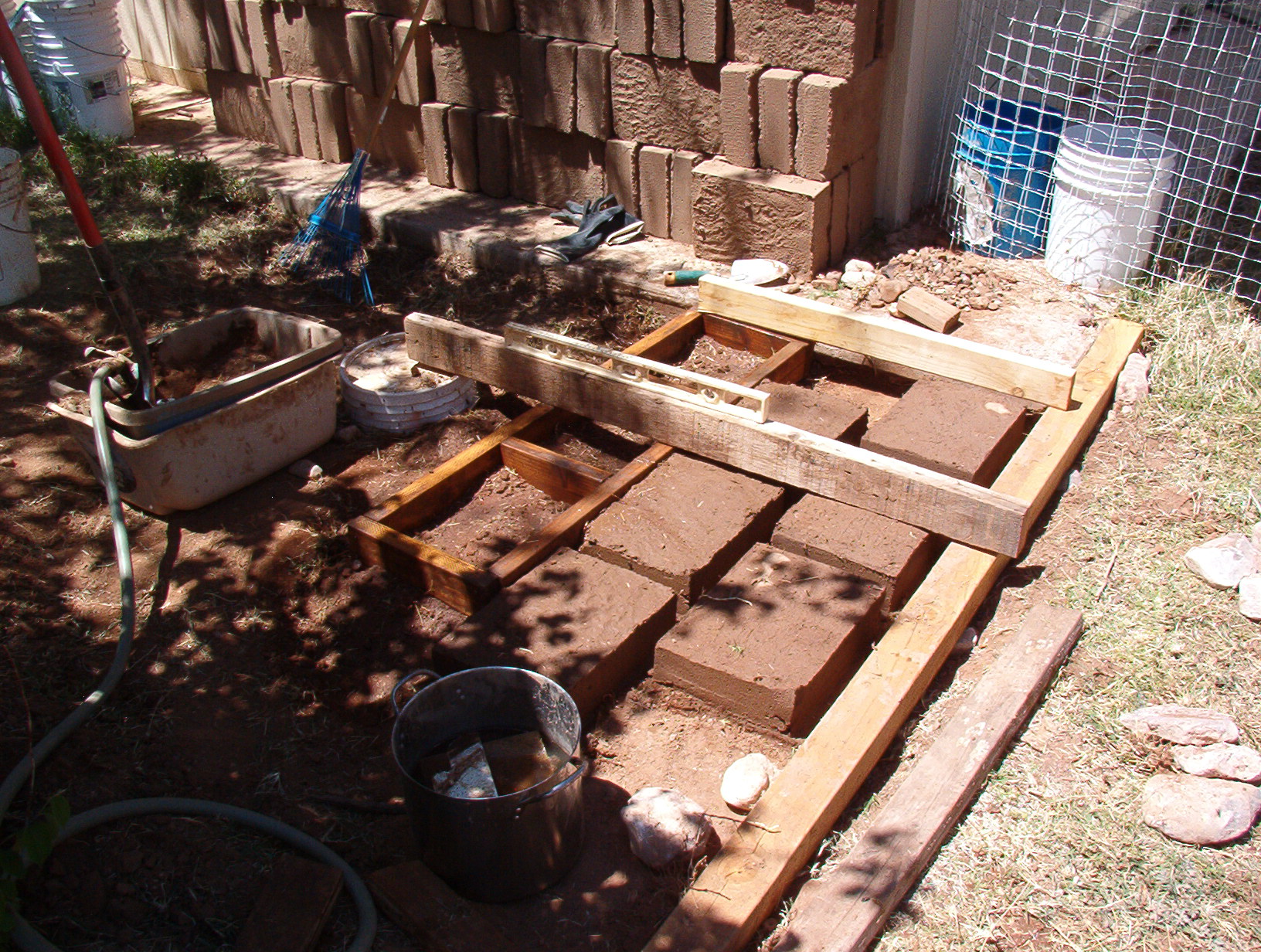
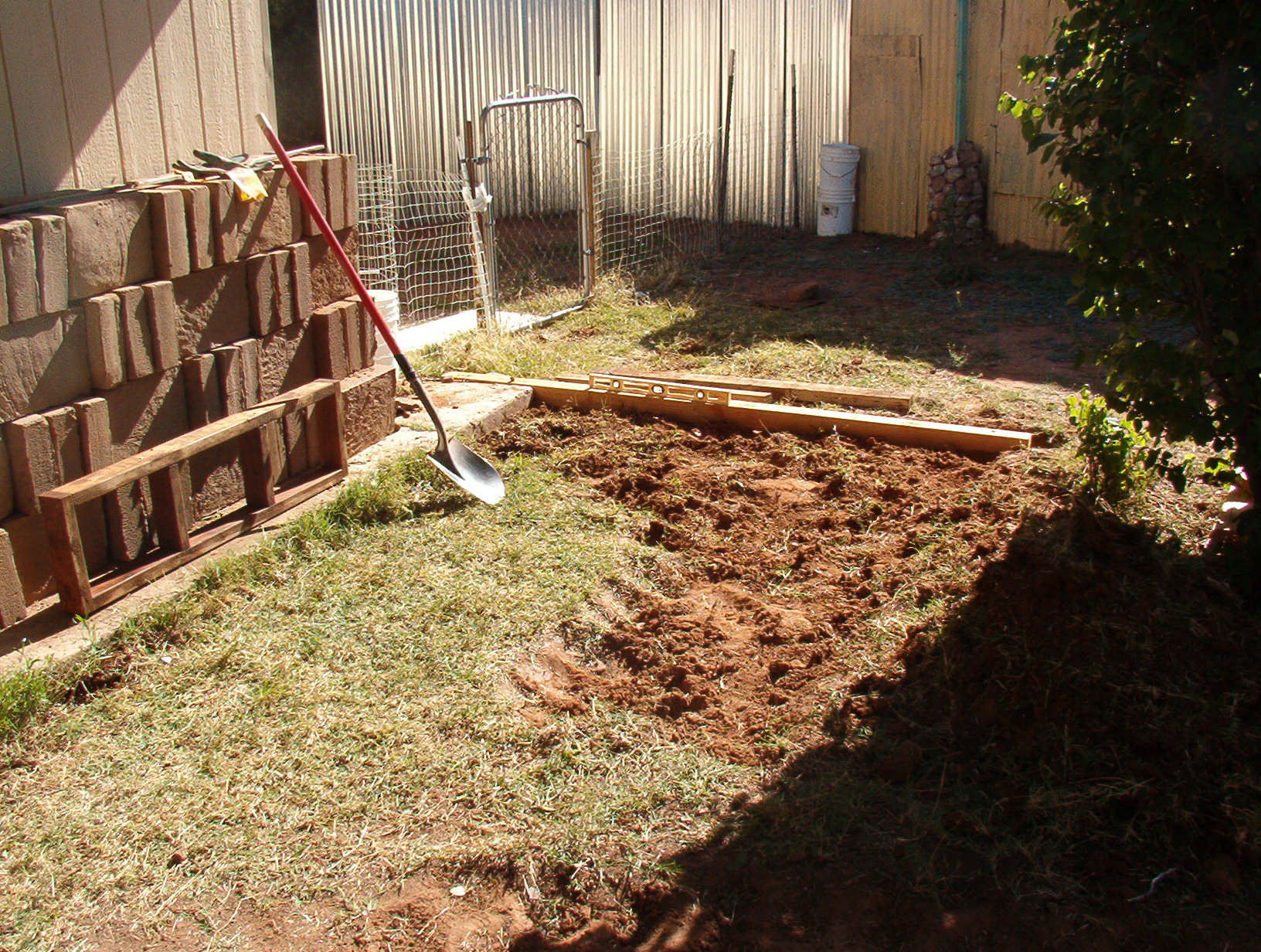
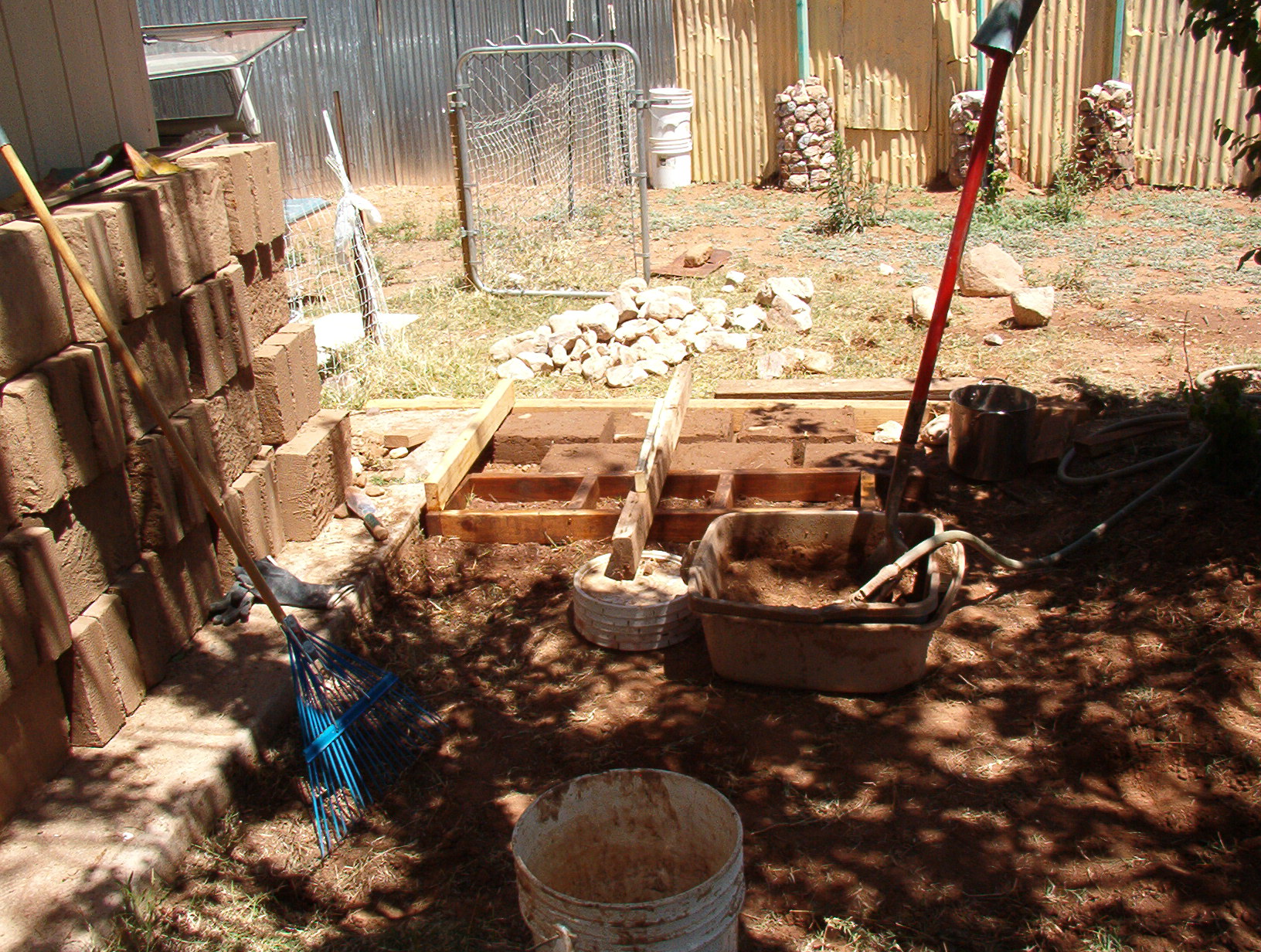
Here are a few pictures of my current mud project.  I want to direct the rain water coming off my south roof line away from the house’s foundation.  Eventually I want to grade the back yard so that the water ends up where I want it:  On the plants and trees!

Years of water pounding down along the sidewalk edge have lowered the soil there so far rain water cannot escape and run into the yard. I need to change that grade and direct the water flow - before the summer monsoon rains come (usually in July). The slope I need is 1/4 inch per foot down away from the house, and level across the width - my civil engineering father would probably cringe if he saw the way I do things!
I had to go collect some rocks from nearby roadsides for this project. The rocks are embedded into the adobes. I find I don't care if I see the stones or not, but suspect that eventually wear on the adobes will expose them. Certainly the stones (and increased cement in my mud mix) will aid in survival of my adobes under the pressures of running water over time.
It's always hard for me to be linear enough (left-brained?) to level anything! It just happens that directing the water requires that I pay at least SOME attention to which way 'what' is going!

I figure it will take several days before the blocks are dry enough that I can go back and fill the cracks - with cement-mud and gravel/small stones.
I don't know the technical name for this species of aloe, but they survive winters and go 'native' - this is what they look like blooming (my neighbor's trailer was put there the day they moved in 3 years ago - has never moved - and I doubt it ever will in my lifetime!)

+++++++++++++++++++++++++

IN MEMORY OF MY BORDERLINE MOTHER:

From Kristalyn Salters-Pedneault, PhD, your Guide to Borderline Personality Disorder

What’s the link between child abuse and BPD? We do know that people with BPD endorse child abuse at a much higher rate than the general population, but does that mean the BPD is caused by abuse?

Child Abuse and BPD– Understanding the Link

Parents of BPD teens and adults often ask why their child has the disorder, and sometimes feel blamed for their child’s symptoms. Yes, sometimes BPD is caused by child maltreatment, but that isn’t the full story– parents are not always to blame.
What is ‘Abusive’ Behavior?

When we talk about child abuse, what exactly do we mean? Learn more about child abuse and maltreatment.
Building a Meaningful Life- Where to Start?

Do you need help finding meaning in your life? Many people with borderline personality disorder (BPD) struggle with feelings of emptiness, identity problems, and depressed mood. Together, the symptoms of BPD can leave you searching for meaning in your life.
This Week’s How-To — Grounding Exercises

Grounding exercises are designed to help you focus your attention on the present moment. They are helpful whenever you are having an experience that is overwhelming, or that is absorbing all of your attention. Grounding exercises are meant to “snap you back into reality” relatively quickly.

Must Reads

What is BPD?
Symptoms of BPD
Diagnosis of BPD
Treatment of BPD
Living with BPD

+++++++++++++++++++++++++

+WHERE IS MY REFLECTIVE POOL OF SELF?

++++++++++++++++++++++++++

I woke up thinking with my brain-mind-soul-self about an opposite condition – if it exists – to Narcissistic Personality Disorder.

Actually, I was wondering.  I didn’t wonder for my first 18 years, either – so I actually think being able to wonder is a gift.

I keep seeing images from movies of situations (sci-fi) in space where ‘life support failure’ means the oxygen in the environment is going to run out.  Who would last longer, a big person who needs to breathe a lot or a little person who needs to breathe less oxygen?

An infant-child is a captive of its early environment.  It is contained in the space with its earliest caregivers and cannot escape or do anything, really, to improve what might be terrible conditions it is living in.  If there is ‘limited life support’, which person is going to get the most and leave whom without, the parent or the child?

If a little person and a big person were both approaching a Black Hole, or if one just suddenly appeared in front of them some distance away, but both are within the gravitational pull-field of the Hole, who would get sucked in first and fastest, the big or the little one?

If a big person and a much smaller person were wandering lost, thirsty without water, and came upon a little clear pool, and were both kneeling on the moist soil at the edge of the pool, bending to take a drink, who would get to the water first and drink the most?

What if this pool is one meant for gaining a ‘narcissistic psychological’ view of one’s self?  What if the big person shoved the little one away?  If I imagine that there’s only enough room on the surface of the pool for only one to get a clear view of their own self reflection there, might only the big one get that clear reflective (mirroring) look?

Yes, in all of these conditions, I can imagine the big person being the hog while the little person does without.  It is nice in environments free from scarcity and trauma when everyone can get what they need.  Yet because I was raised by my Borderline mother, it isn’t hard for me at all to imagine my mother, as the big person, consuming everything she felt that she needed (certainly psychologically) while leaving her children with scraps.

It is much harder for me to imagine what these situations might be like if a mother would self-sacrifice her own self for the benefit of her child.  Is this what nature would want to happen if push came to shove and only one of a ‘big person-little person’ pair (dyad) could survive?  What would evolution say about survival then?

Would Nature determine that the big person mother take what she needed so she could survive and reproduce soon again if and when the environment became less malevolent rather than influencing survival in the direction of the little dependent one who still had so very far to go before it could reproduce?

++++

I don’t want these thoughts and wonderings to fade away as my dreams from last night certainly have already done that spawned these ponderings, yet all I can do is string out these words that seem connected to whatever it was I was processing while I slept and before I woke up this morning.

All I can guess is that my ‘topic’ might be related to mothers who see their own more complete self reflected only in the faces and in the lives and in the presence of their children long after this mother’s solid sense of self COULD have been formed within her under better circumstances from the time she was very, very young herself.

It’s too early in the day for my thinking to be able to get as complicated as it would need to be in order for me to follow my own train of thought past this point.  I lose my own bread-crumb trail through the forest.  All I know is that there are varying conditions where physical deprivation related to supplies of air, water and food can occur in families.  I spoke with a woman in her 60s yesterday whose WWII PTSD alcoholic father consumed most of his income and often left his wife and children hungry during her childhood with no food in the house whatsoever.  This woman built into herself an ongoing, continual concern for her own children that they (and herself) NEVER have a house empty of food.  As this woman told me, “I always made sure there was baking powder, flour and beans in the house.  Then I always knew I could make something for us to eat.”

But what if the scarcity is more invisible?  What if the deprivation is primarily ‘psychological’ like it was in my childhood home?  What if infant-children’s needs to have their little growing self reflected back to them so they can claim it for their own never happens because their parent is consumed with trying to find their own reflection?

Such a parent is psychologically starving to death in their own need to locate and claim their OWN fully formed self.  They not only have little or nothing left over to offer their offspring personally because they are so depleted, they also steal away their children’s opportunities to use vital resources themselves.

++++

So, this leaves me thinking about ‘anti-narcissism’ as it might ‘psychologically’ exist like anti-matter.  If the parents of these anti-matter children cannot help their own children to MATTER, what choice do the children have but to be in a deprivation-of-a-fully-formed-own-self into their adulthood?  Offspring of incompletely-built-self parents were never given the chance to form their own self, either, and on down the generations the scarcity and deprivation-based patterns tumble.

I can’t think my way out far enough away from the Black Hole of the Personality Disorder spectrum to imagine under what conditions an anti-narcissism state of being does not exist in some way within every single one of the Personality Disorders.

As I ponder this morning about a state of ‘anti-narcissism’ I cannot imagine that there is any self-love involved in the process of having to perpetually search for the reflection of an unformed self.  Particularly infants and very young children are SUPPOSED to search for the reflections of their own self being mirrored back to them from others in their beginning of their lives.  What the little ones find mirrored back to them (or not) gets built particularly into the way their brain will operate for the rest of their lives (along with the brain’s connection to all aspects of their body, nervous and immune system).

To NOT have one’s self appropriately and adequately mirrored back leaves a person in a state of ‘unfinished business’ so that the search for self, through mirrored reflection from outside of the self, simply continues on and on and on and on…..

‘Anti-narcissism’  seems to be like a state of hanging around in life in limbo, like in a state of anti-gravity where a person can never completely come into their own body and live their own life from a position of FELT CERTAINTY that they exist as a whole-self person at all.  Developmental neuroscientist, Dr. Daniel Siegel, addresses the ‘problems’ from one point of view:  That a person’s self is always meant to be in a state of flexible, resilient adaptation.

But I believe the first steps of forming a strong, clear sense of self in relationship to others and to the world must be taken correctly for this adaptive, cohesive, coherent self to ever appear at all.  If those first steps cannot be taken, if the new self cannot be reflected back to the ‘new one’ through a mirroring process that includes required information being sent to the ‘new one’ very early in its life, the adaptive whole self simply never takes form, and the searching continues for this whole self that lasts for a lifetime.

++++

If I am using people, situations and circumstances in my life to see my own partially-formed self reflected back to me, what happens to ME when these reflecting ‘surfaces’ change?  If having a WHOLE self means that I am flexible, resilient and adaptive, and if I KNOW I don’t have one of these whole selves, then by definition I am at risk for suffering greatly if the external conditions of my life (that I am dependent upon to shine aspects of my self back to me) change.

Life is about change.  In fact, to me, LIFE IS CHANGE.  Being alive is a guarantee that change is constantly happening.  My suffering happens when I cannot do what a whole self is designed to do – flexibly, resiliently and adaptively adjust to change.

Our capacity to control our ‘reflective surfaces’, be they people, situations or circumstances, is limited.  Those of us who were deprived of the air, water and food we needed ‘psychologically’ to build our whole self in our earliest life, are left feeling disoriented and disorganized, if not overwhelmingly desperate when change leaves us in a void without the ‘reflective surfaces’ we need for our survival.

My guess is that one of the meanest consequences of growing up with ‘mentally ill’ if not truly abusive parents is that we are at extremely high risk for painful disequilibrium to take over our self and our life when life changes take away from us whatever ‘reflective surface’ we rely upon to recognize important parts of our own self.  We are left like a flying kite with a severed string, a bobbing balloon untied and left to the whims of the wind.  We are like an unanchored ship without a rudder tossed around in a raging storm far out at sea, or like a small or giant tree without roots that falls to the earth unable to stand.

One way or the other a human being needs to be tethered inside of their own self to their own whole self.  Even in cultures where the definition of a self means the self is more closely formed in social relationship and less defined by autonomous action, a self that is not tethered will suffer from change that threatens its organization and orientation in a body in the world.

++++

The ongoing processes of life do not stop and wait for any individual to form a whole self.  We are given our infant-childhoods for this job to be mostly completed.  Some attachment experts call this whole self ‘the autonomous self’.  Whatever words we use to culturally describe this whole self, it is the one that possesses what it needs to successfully adapt and adjust itself throughout the changes life brings.

Various self-states of being that exist along the narcissism /anti-narcissism spectrum simply reflect degrees of lack of wholeness that affect a person’s ability to flexibly, resiliently and adaptively adjust to change with a minimal reliance on outside ‘reflective-surfaces’ – or mirrors for the self.

I am one of the dependent searchers.  My inner well-being state right now is completely dependent on where I live.  I am dependent for my safety and security on this house I reside in, on my yard I can grow things in, on the small circle of people I know that care about me.  Any thought of change to my circumstances right now completely threatens to destabilize me.

But I have a huge advantage over what my mother had.  I KNOW this about myself.  I am uncomfortably conscious of my current internal limitations in the same way I am painfully aware of my financial and material limitations.

At the same time I am also aware that the way my mother consumed ‘psychological’ air, water, food and all other resources she could get a hold of in my infancy-childhood left me without all the inner whole self structures that would now let me be more complete and whole myself.  I greatly struggle with my own dis-abilities to live my life as a flexible, resilient and adaptive-to-change person.

This all leaves me today as a high risk for upset person.  I struggle every moment of my life to nurture, feed, strengthen and grow my own root connection to my own authentic, autonomous, whole self so that my own self can be stronger and not be so shakily dependent upon outside conditions and circumstances for its sense of well-being.

Where does the concept of ‘self love’ or ‘love of one’s own reflection’ even enter this picture I am painting in words here this morning?  If one has been left from the origins of their being in a state of searching for one’s self in the reflections we get back from the world around us that might tell us we even exist at all, we can only guess at what it would FEEL like and BE like to know entirely that we even are a self in the first place.

“I feel, therefore I am.”  “I do, therefore I am.”  “I think, therefore I am.”  These are stages of development that we go through from the time we are born.  All of these states of self-development, if accomplished adequately and successfully, most likely lead to this integrative state:  “I am, therefore I am.”

Nobody is exempt from enduring this process in this lifetime according to their physiological abilities.  In this fact we are all the same.  To the degree that this process is joy-filled or pain-filled we take delight or sorrow in the process – and trigger degrees of either state within others around us.  It’s far better that the major stages be accomplished in our earliest years as they are meant to, but if that does not happen, we will be going through them for the rest of our lives.  This seems to me to be the destiny of being human, whether we like it so or not.

++++

I remember telling the first therapist I had ever developed a relationship with right before she moved away that she had been like a sustaining, reflective pool of clear water that I had been able to go to and see myself reflected back to me.  Looking back, I am surprised that I knew exactly what I needed even way back then 30 years ago.  Now I know I want that reflecting pool within my own self.  That is what I work for.  That is what I need.  That is what I want.  That is where my strength and power as a self truly lies.  Having this reflective pool of self within my self is my antidote to feeling fragile and vulnerable throughout my life.  And it is something my mother never had.

(I wonder, is this the difference between being a being that is resource-full rather than being a being that is resource-less?)

++++++++++++++++++++++++++

+’DIS-ASSOCIATION’ BETWEEN RIGHT-LEFT BRAIN HEMISPHERES AND DISMISSIVE-AVOIDANT INSECURE ATTACHMENT DISORDERS

+++++++++++++++++++++++++++++

Dr. Daniel Siegel, in his book The Developing Mind: How Relationships and the Brain Interact to Shape Who We Are (2001), describes how “dis-associated hemispheric processing” between our left and right human brain regions each contribute to differently as he describes in what he calls a “laterality-attachment hypothesis.”  This hypothesis seems to be particularly related to what attachment experts refer to as ‘dismissive-avoidant’ insecure attachment disorders (one I suspect my father had and ‘got’ from his depressed mother).

In this post I am presenting some of Siegel’s creative and thought provoking ideas on the subject:

“Patterns of representations differ markedly between the left and right halves of the brain.  An important distinction, often underrecognized within the fields of clinical psychiatry and psychology, is the distinction between the modes of representation within the two hemispheres of the brain.  The left hemisphere has been described as having a logical “interpreter” function that uses syllogistic reasoning to deduce cause-effect relationships from the representational data it has available to it.  The right hemisphere specializes in the representation of context and of mentalizing capacities.  It is therefore uniquely capable of registering and expressing affective facial expressions, developing a “theory of mind,” registering and regulating the state of the body, and having autobiographical representations.

“How are these bilateral processes relevant to relationships?  Communication is crucial in establishing neural connections early in life and involves the sharing of energy and information.  Levels of arousal (energy) and mental representations (information) are very different on each side of the brain.  The sharing of arousal and representations from one brain to another — the essence of connecting minds — will thus differ between the hemispheres.  One can propose, in fact, that the right brain perceives the output of the right brain of another person, whereas the left brain perceives the left brain’s output.

“In intimate, emotional relationships, such as friendship, romance, parent-child pairs, psychotherapy, and teacher-student dyads, what does this look like?  The left brain sends out language-based, logical, sequential interpreting statements that attempt to make sense of things [in a particular way].  The left brain receives these messages, decodes the linguistic representations, and tries to make sense out of these newly arrived digital symbols.  At the same time, the right brain is sending nonverbal messages via facial expressions, gestures, prosody [the music of speech], and tone of voice, which are perceived by the other’s [sic] right brain.  OK.  So what?

“The “what” of it is that the right brain takes this information and uses its social perceptions of nonverbal communication to engage directly in a few very important processes.

— It creates an image of the other’s [sic] mind (“mindsight”).

— It regulates bodily response while at the same time registering the somatic [body-based] markers of shifts in bodily state.

— It creates autobiographical representations within memory.

— It appraises the meaning of these events and directly affects the degree of arousal, thus creating primary emotional responses.  Intense and primary emotional states are therefore likely to be mediated via the right hemisphere.”

“When we examine these findings alongside the independent set of data from attachment research, certain patterns are suggested.  The early affect attunement and alignment of mental states can be seen as a mutually regulated hemisphere-to-hemisphere coordination between child and parent.  In this view, we can propose that avoidant attachment involves a serious lack of this form of communication between the right hemispheres of child and parent.  The extension of this finding to laterality research raises the possibility that the left hemisphere serves as the dominant mediator of communication between an avoidant child and a dismissing parent.

“In support of this perspective, it turns out that in 1989, [attachment experts] Main and Hesse examined exactly this hypothesis in two large-scale samples of Berkeley undergraduates, each of whom were asked about their degree of right (or left) handedness, as a rough approximation of brain dominance….  At the same time, Main and Hesse had devised a set of self-report items that they considered indicative of a “dismissing” state of mind.  Although this type of scale was not ultimately able to predict AAI [Adult Attachment Interview] classifications [of attachment styles] statistically, and therefore these findings were never published, in keeping with the hypothesis both studies found that the degree of right handedness was significantly correlated with elevated scores of the scale for “dismissing” state of mind.

“Further extensions of these ideas to relationships allow us to look more deeply into why certain couples may be “unable to communicate” with any emotional satisfaction.  When we know about the different languages of the right and left hemispheres, it is possible to make hypotheses  about why interactions may be frustrating:  Individuals may not know how to understand the particular language being expressed by their significant others.  If we then integrate past attachment history in understanding the pattern of these difficulties, it is possible to create a framework of understanding that can help the partners in such relationships escape their well-worn ruts.   [My note:  I would think parents, as well, would benefit so that the intergenerational transmission of dismissive-avoidant insecure attachment patterns could be eliminated.]

“If this laterality-attachment hypothesis is correct, then a logical implication would be that any experiences that help to develop the processing abilities of each hemisphere and/or the integrated activities of the two hemispheres may improve certain individuals’ internal and interpersonal lives.  Such movement toward more coordinated interhemispheric functioning would be quite welcomed by many people (especially the lonely and frustrated spouses [and I would say infant-children0 of dismissing individuals).

“The developmental and experiential histories that have led to a lack of integration of the functioning of the two hemispheres may leave individuals vulnerable to emotional and social problems.  Unresolved trauma and grief, histories of emotional neglect, and restrictive adaptations may each represent some form of constriction in the flow of information processing between the hemispheres.  This proposal of the central role of the dis-associated hemispheric processing in emotional disturbances is supported by the finding that insecure attachments in childhood may establish a vulnerability to psychological dysfunction.

“Emotional relationships that enhance the development of each hemisphere and its unrestricted integration with the activity of the other can thus be proposed to be likely to foster the development of psychological well-being.  In this way, a secure attachment can be seen as a developmental relationship that provides for an integration of functioning of the two hemispheres, both between child and caregiver and within the child’s own brain.

“At the most basic level, right-hemisphere-to-right-hemisphere communication can be seen within the affectively attuned communications that allow for primary emotional states to be shared via nonverbal signals. Left-hemisphere-to-left-hemisphere alignment can be seen in shared attention to objects in the world.  Reflective dialogues, in which language is used to focus attention on the mental states of others (including the two members of the dyad), may foster bilateral integration between the two hemispheres of both child and parent.  The resilience of secure attachments can thus be proposed as founded in part in the bilateral integration that these relationships foster.”  (pages 205-207 – all bold type is mine)

++++++++++++++++++++++++++++++

+DISSOCIATION: MEMORY OF ONGOING EXPERIENCE FROM THE PREY’S POINT OF VIEW

++++++++++++++++++++

I intended today to write a post about dissociation when I went outside to sit with my morning cup of coffee.  What greeted me there was a trauma-drama in full play, and not a pleasant one for me to watch.  Yet I know that life, and nature itself shows us things that often allow our right brain to watch visually as drama and image at the same time our left brain is offered information to THINK about.

I am going to separate my two ‘streams of information’ this morning.  This post is about how a severely abused and traumatized infant-toddler’s body-brain is forced to absorb information about the world, and about itself in the world in relation to its early attachment caregivers.  The information I am going to present in my NEXT post will be the scientific, rational, logical and far more abstract information.  We NEED this more technical information, but as survivors we will not be able to really understand it or make good practical use of the dry information that developmental neuroscientists provide for us if we cannot ASSOCIATE this information with our own ongoing experience.

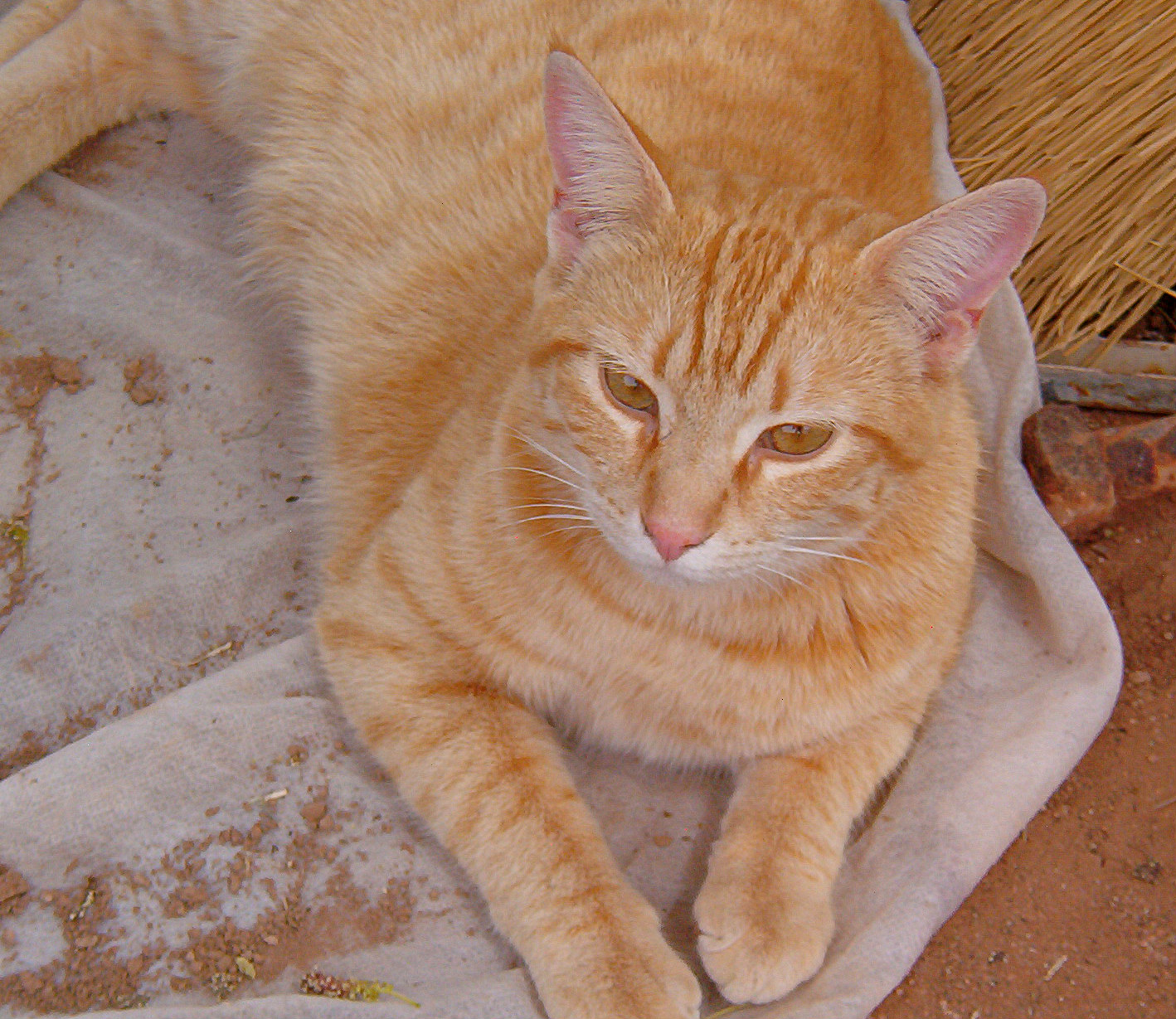
People often use this term in the English language, “a game of cat and mouse.”  What I watched this morning as one of my cats toyed with a furry little mouse could have looked like a game from her point of view.  But what was this experience like for the little, tiny mouse?  Its life was at stake, and there was anything BUT a game going on from its point of view.

Those of us who were raised especially by extremely hate-filled abusive and traumatizing mothers from the time of our birth were like this little mouse.  Yet we were even more helpless against our giant predator.  At least this mouse was fully developed and could use all its possible defense abilities – not that they would in the end be effective at allowing it to escape and go on living.

I knew how this ongoing drama would end.  Yes, my cat WAS playing with her prey.  She was fully focused and concentrated on her ‘game’.  The mouse was fully focused on trying to avoid being killed.  And there I was, the bystander at the same time I was the only hope that little mouse had for staying alive.

++++

The mouse was quick, but the cat was quicker.  Every time I tried to sidetrack the cat she out maneuvered me, grabbed her little ‘toy’ and ran off to continue her ‘hunt’ somewhere else.  How could I help to give the mouse a chance to escape – to where?  There’s nowhere in my yard that mouse would be safe and secure.  There was no way I could catch the mouse and move it somewhere out of danger’s way, either.

There are a lot of mice here.  Part of the reason why, I know, is because my east neighbor whose property I just fenced off from my yard visually, continues to heap all his garbage for a family of seven against that fence, thus encouraging rodents to multiply.  Where there are rodents, there are rattlesnakes to eat them in this country.  Elimination of mice is normally a good thing.  I just didn’t want to WATCH the elimination happen.  Not today.  Not as I prepared to write a victimized-survivor post about dissociation!

But what I thought about as I continued to try to dissuade my cat from continuing her mission was how that little mouse, in the midst of the insecurity and lack of safety involved with its ongoing trauma, would NEVER do anything else but focus on its own survival.

These thoughts became entangled and intertwined with the technical information I was thinking about for my post on dissociation.  Because my mother was a predator, and because I was just as much her ongoing prey as this mouse was to my cat, there was NEVER a time in my infant-toddler-childhood that I was assured of enough safety and security to do ANYTHING ELSE other than survive.

At the same time I was more powerless and helpless than a mouse is under the attack of a cat, my brain, my nervous system, my immune system, my entire being was growing and developing in interaction with the experiences I was having in my early environment.  Nothing else but surviving the trauma of my mother’s attacks against me mattered.  Never was there a TIME when trauma wasn’t immediately threatening and impending, happening in the present moment, or just having finished happening – so that it could happen again.

My childhood was spent in a state of heightened trauma alertness from the beginning of my life.  As I watched my cat, she periodically caught the mouse in her mouth and carried him to another ‘play ground’ where she then let it go long enough that it could run a short distance and do what a little mouse will do:  Hide itself in an area that it thinks MIGHT best conceal it.

Of course the cat knew exactly where the mouse went, and right where it was.  She poked her paws into the spaces in the hiding places, batted the little creature, pushed and prodded it, and when it didn’t come out at a full run, she’s simply stick her head in, grab the mouse again, and move it on to another (to her) intriguing hiding playground.  Of course the most obvious places for this game to go on were in amongst my flower beds, a process which of course would have eventually led not only to the death of the mouse but to the destruction of my much-loved plants!

++++

Yes, watching my cat’s play-filled species determined extermination of this mouse was a trauma trigger for me.  I could not help but try to intervene on behalf of the little one who was going to lose its life if I didn’t.  I couldn’t catch my cat, so I sat out there for a long time chasing her away from the vicinity of the hidden prey.  I opened the back door thinking she would eventually get bored with out-waiting me and venture into the house.  Nope, that didn’t happen.

Instead, two of my other cats wandered out of the house.  They could tell immediately that Goldilocks was after prey, and all I could think of was, “Oh great!  There’s no way out of this.  I’ll take some pictures and then exit the playground so I don’t have to watch what I know is unavoidably going to happen.”

++++

So here are some pictures.  It’s been about an hour since I stopped watching the trauma-drama outside my door.  I just went outside again to see another one of my cats sitting under the Oleander bush satisfyingly smacking its lips and cleaning its jaw daintily with its paw.  “Mouse gone.  Game over.”

So, now in thinking about dissociation as the experts like to write about it, I have to say that nobody, absolutely nobody actually knows what dissociation is, what it does, what it feels like, how it operates, or where it came from like survivors do – particularly and especially those of us who endured and survived repeated, ongoing predatory attacks in our very early life of infancy and toddlerhood by our mothers.

If we then continued to endure trauma, abuse and attacks into and throughout our childhood, there is (in my thinking) no possible way that so-called dissociation did not build itself into our growing and developing body-brain.

I will never believe that dissociation is a so-called ‘defense mechanism’ for such survivors.  Our dissociation is simply HOW our brain regions, circuitry and networks were forced to grow and develop.

The mouse I watched today was in an ongoing peritraumatic state which was broken up A LITTLE TINY BIT by the moments the cat allowed it to nestle within its hiding places.  But these periodic reprieves from direct terror and assault were not enough to ever allow this mouse to go on about its life in anything like an ordinary (safe and secure) way.

Everything that mouse experienced both during direct assaults upon its life and during its reprieves, demanded that trauma-based body-brain operations continue to happen.  Those experiences are completely different in the midst of trauma and its trauma-based allowances of semi-reprieve than are ongoing experiences where trauma is not present or immediately threatened.  When any creature is forced to adapt to trauma environments during critical growth and developmental stages, both the experiences of trauma and reactions to it build themselves in.  The trauma in effect ‘moves in to stay’.

What this means to an early abused and traumatized human is that the emerging self goes into and remains in hiding as surely as this mouse did.  I don’t believe our parental-predators could ever reach our hidden self.  Yes, they could reach our little bodies with the attack of their words and blows, but our inner own self remained protected simply because of the nature of being human.

Every single person is a separate, individual entity that can only be accessed from the inside.  Even though everything that happens to us from the OUTSIDE profoundly affected our development, and could and did change the way our body that our self lives in, our self – its own self – remains ours and ours only.

The problem became one of us not being able to experience our self in our own life.  Experts refer to alterations in memory capacities (which is what the next post is about).  Dissociation means that we do not remember ourselves as being connected to our own ongoing experience in ordinary ways because our capacity to REMEMBER was affected PHYSIOLOGICALLY during our earliest development.

Enough said at the moment.  As you look at the following pictures think of each one as representing an environmental context for ongoing moments of my cat’s life – but from the point of view of the mouse.  No way was it important for the mouse (forget the cat here) to remember itself in one of these ‘pictures’ in any particular order.  All the mouse could do was attempt to stay alive.  The only way it could do that would be if it could find a safe enough place to hide and remain hidden.

Safe enough.  That is what every living creature needs so it can continue to remain alive.  But growing and developing a human body-brain as time moves on and the trauma continues means that the inner experience of being in the midst of trauma never leaves us.  Trauma is not only what happened to us, but became how we grew a body-brain to remember ourselves with.

+++++++++++++++++++++++

It's only a GAME of hide-and-seek if we play it with equal peers. It's only a GAME of cat-and-mouse if you are the predator.
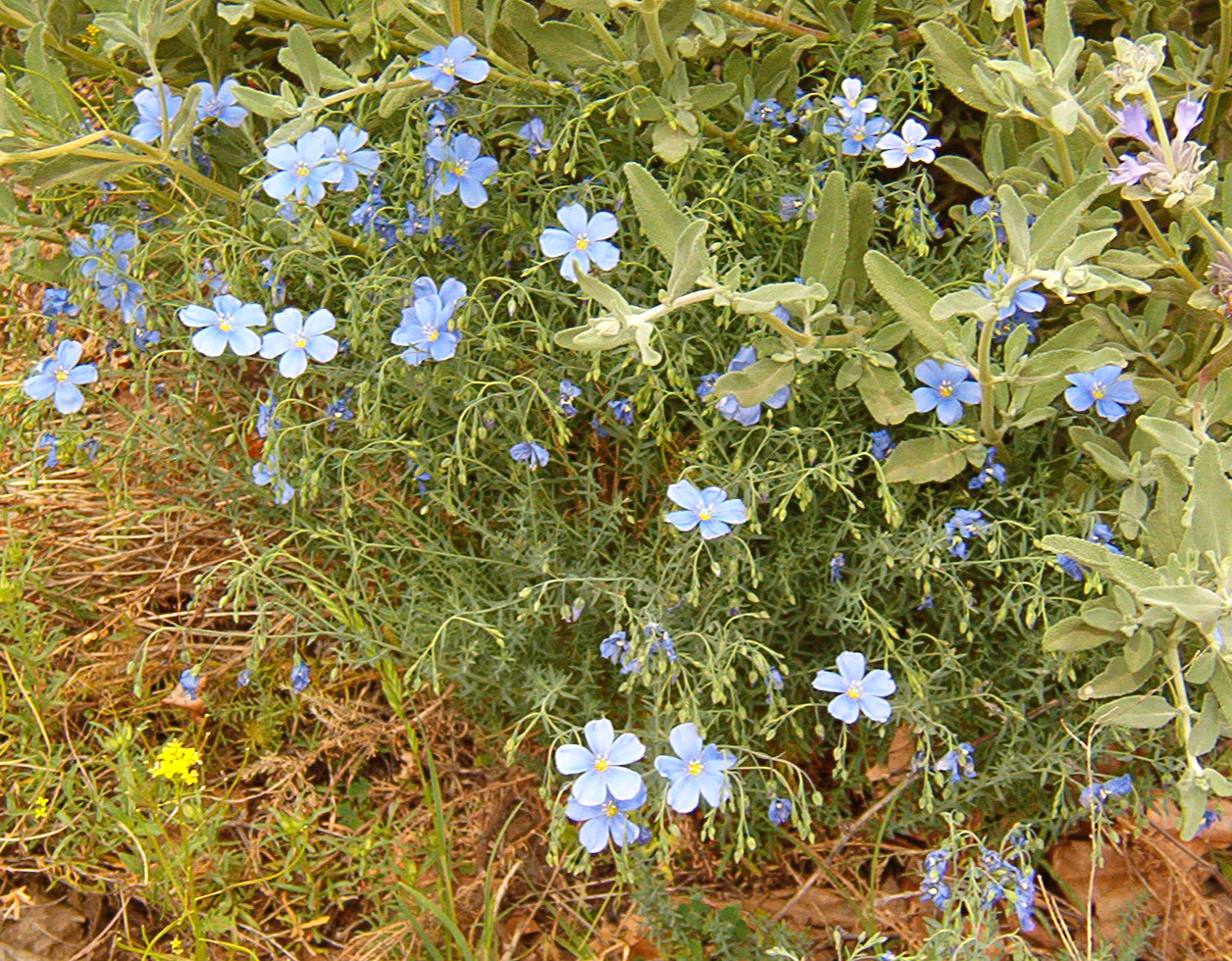
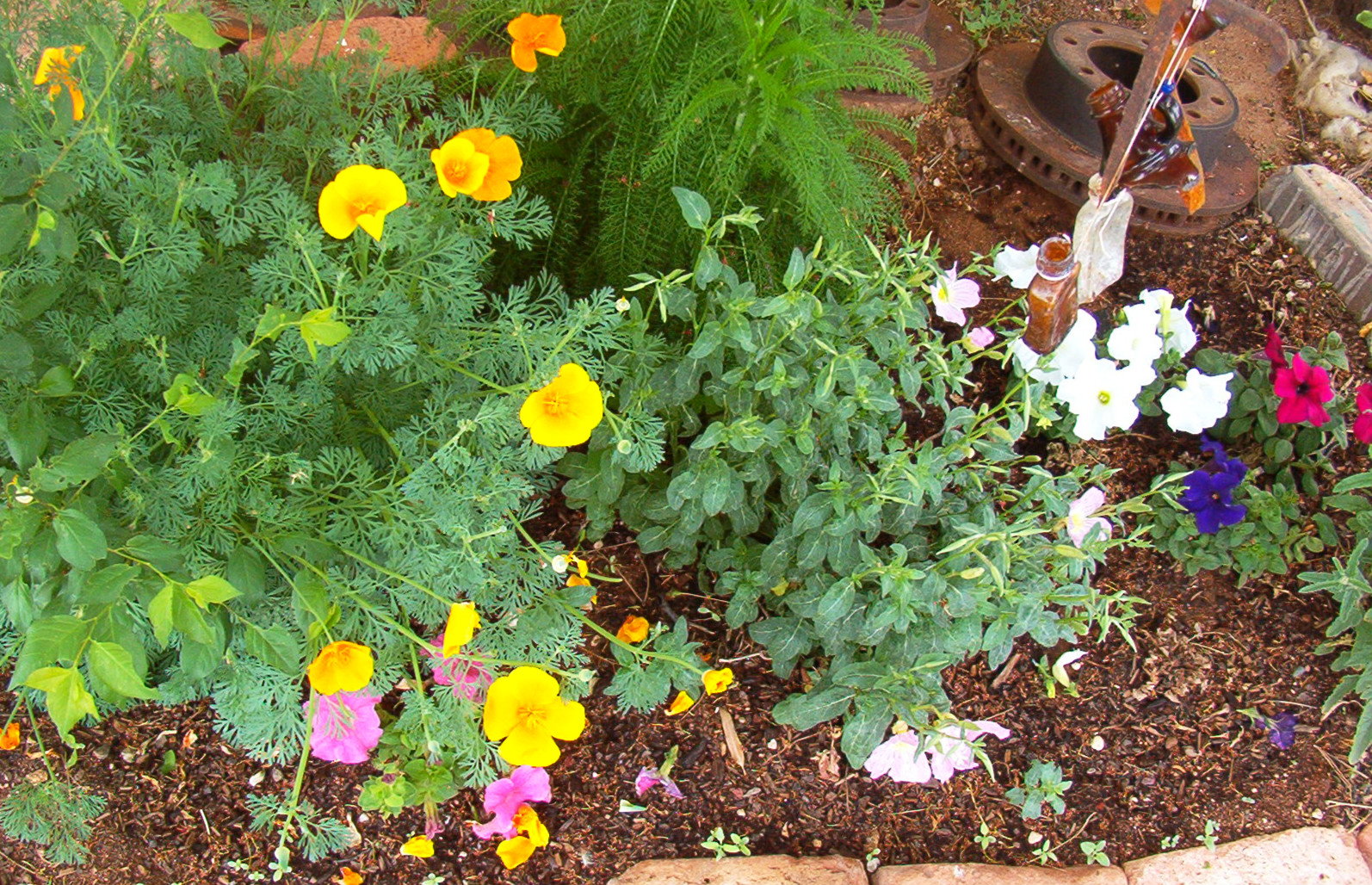
Where could a victimized-prey hide to escape? Under the blue flax and sage bush?
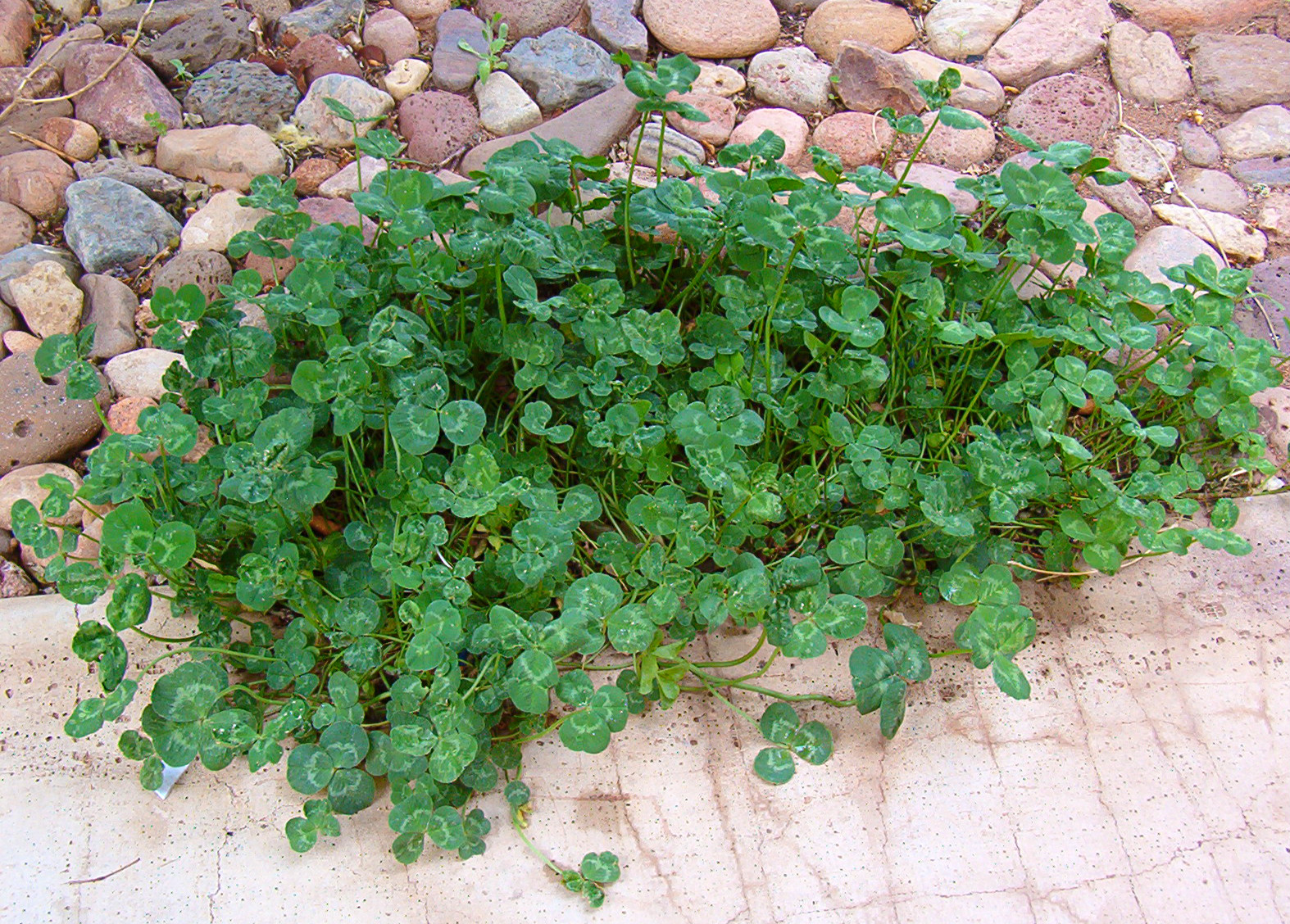
Is there a tiny little self tucked into hiding within the clover?
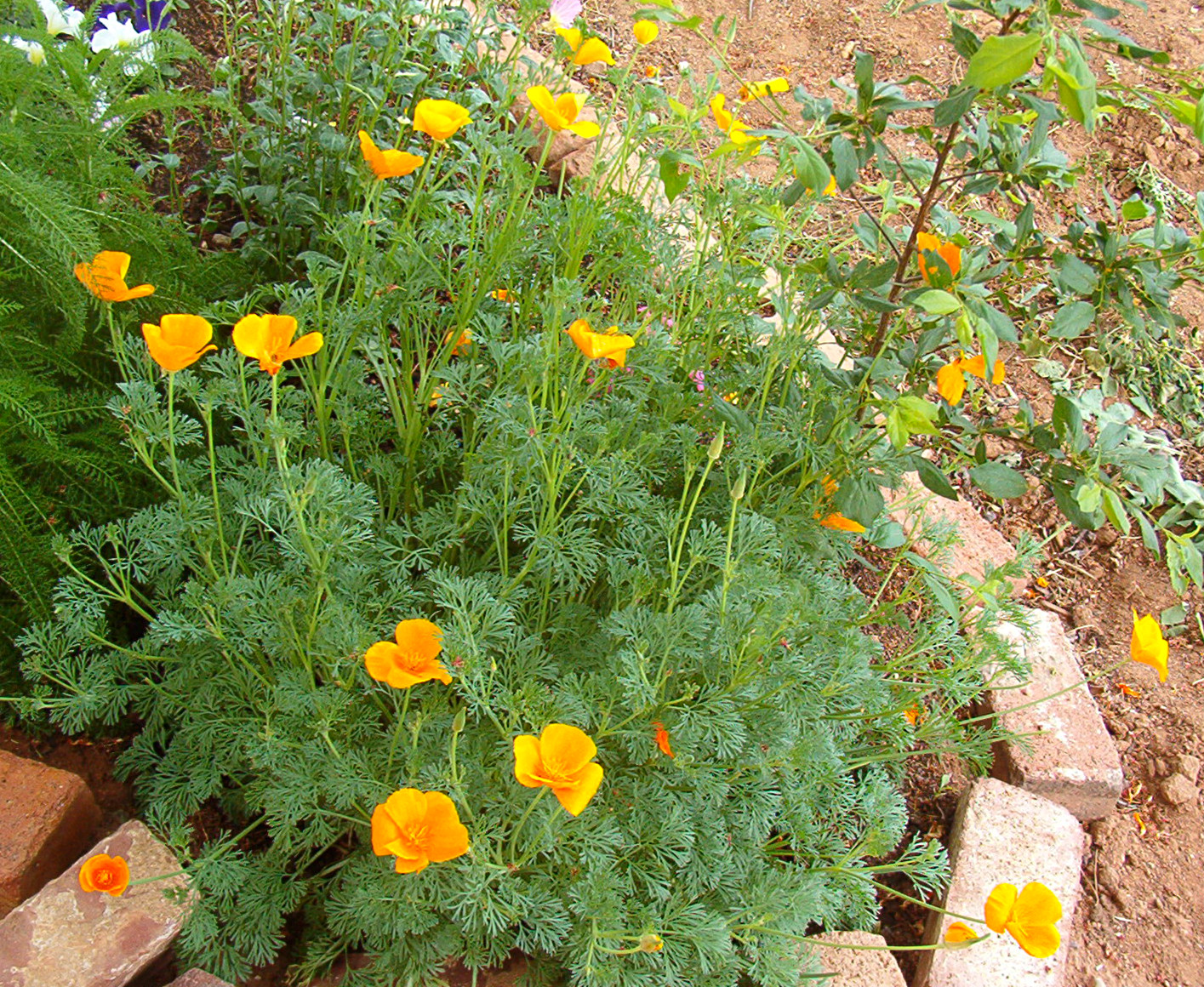
Under the poppies among the petunias? Is this a safe place to hide for survival?
Where is it safe for an abused and traumatized mouse -- or infant-child -- to hide?
Is it safe enough to stay alive under the newly blooming rose bush?
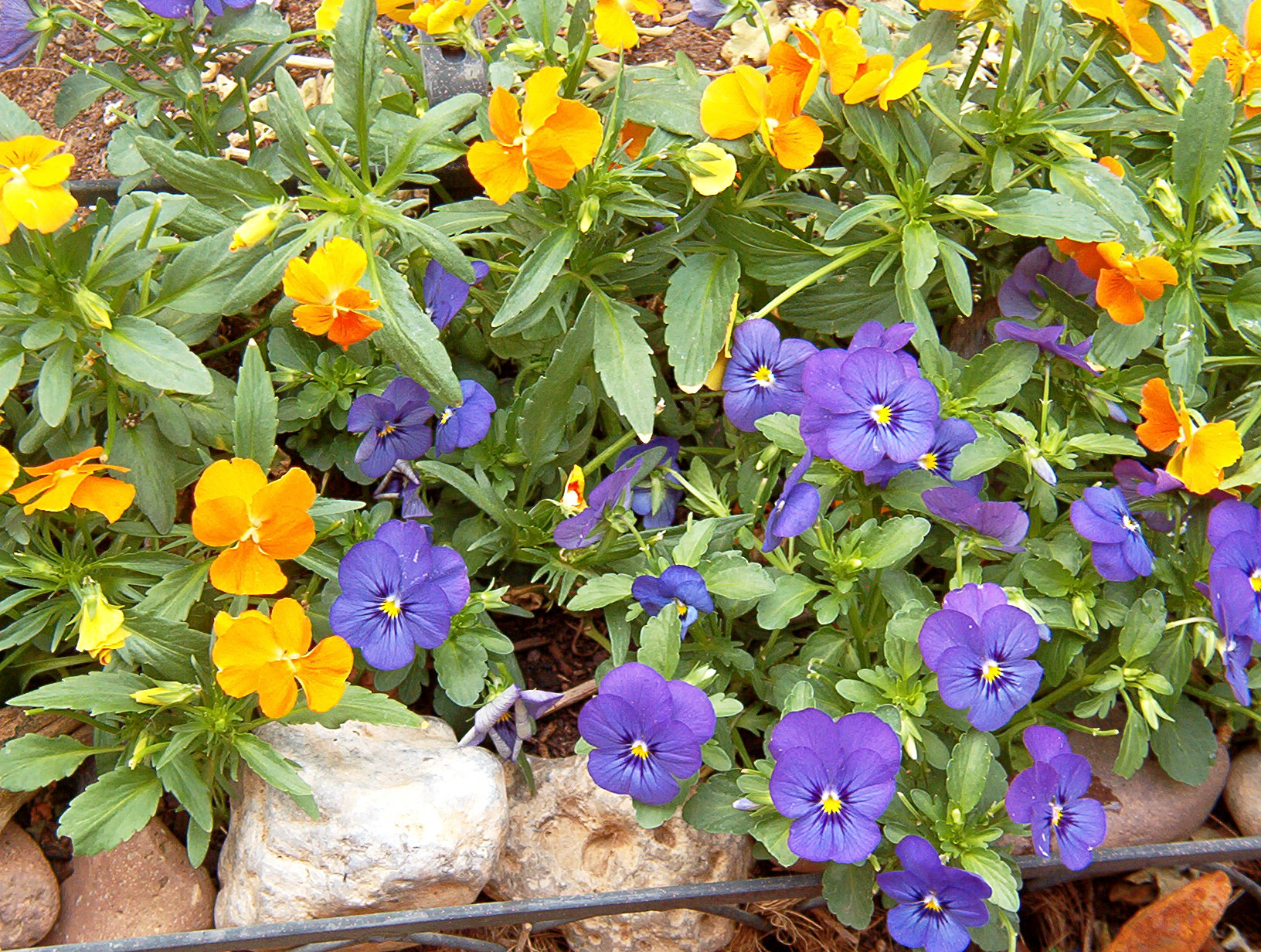
When I finally turned away from the trauma drama, the little mouse had hidden itself here among the tiny pansies.
The mouse was hiding in here last I saw of it. Each of these hiding places can be thought of as a momentary segment of the mouse's endangered life -- like victimized tiny children forming their abilities to remember their self in their life -- the separate events are just that -- dissociated experiences linked together only by one thing: Ongoing experiences of individual events of enduring and surviving trauma. Meanwhile, the SELF remains hidden unless we can contact and connect with 'self' within its own world

+++++++++++++++++++++++

+CRITICAL – OXYTOCIN – THE RELATIONSHIP GLUE

++++++++

Oxytocin is the glue that holds all mammal relationships TOGETHER.  Without oxytocin the opposite of ‘together’ happens.  Infant-child abuse represents a ‘tearing apart’ and a ‘breaking apart’ of relationships rather than a ‘building up’.

I am posting two chapters today from this book, with more to follow in future posts:

The Oxytocin Factor: Tapping the Hormone of Calm, Love, and Healing by Kerstin Uvnas Moberg, Roberta Francis, Kerstin Uvnäs Moberg, and Translated by Roberta Francis (Hardcover – Sept. 16, 2003)

The information on this blog from Moberg’s book is very important.  We cannot think intelligently about infant-child abuse without the ability to think intelligently about attachment, and we cannot think about attachment intelligently without being able to think about oxytocin.

In situations where caregivers abuse and maltreat infants and children under their care – EVERY SINGLE TIME THIS HAPPENS – there is something wrong with the operation of the caregiver’s attachment system.  This means that at those times the perpetrator’s oxytocin-related system IS NOT WORKING PROPERLY.

*Oxytocin – Chapter 4: The body’s control centers

*Oxytocin – Chapter 5: How oxytocin works

++++

There are several posts on this blog that are concerned with oxytocin – FIND THEM HERE.

Of these posts, THESE ARE THE ONES about oxytocin that relate to Dr. Moberg’s work I have posted through today.

++++++++++++++++++++++++++++++++++++++++
From Kristalyn Salters-Pedneault, PhD, your Guide to Borderline Personality Disorder

I am a cognitive behavioral therapist, but not many people know what that means or how cognitive behavioral therapy (CBT) can be used to address BPD symptoms. This week, learn more about whether CBT could help you.

CBT for Borderline Personality

Cognitive behavioral therapy (CBT) is a type of psychotherapy that targets the “cognitive” (thinking-related) and “behavioral” (action-related) aspects of a psychological condition.
Dialectical Behavior Therapy – When Change Isn’t Enough

Dialectical behavior therapy (DBT) is a special kind of cognitive behavioral therapy designed for people with BPD. Dr. Marsha Linehan at the University of Washington noticed that people with BPD need more than just a change-focused therapy, they need better acceptance (by others and of themselves). The solution? DBT.
BPD in the News -Charges Brought in Assisted BPD Suicide

Dr. Lawrence Egbert, the head of the right-to-die group Final Exit Network (FEN) is currently facing charges for allegedly helping a woman with BPD commit suicide.
Life With Borderline Personality Disorder

While BPD can affect many areas of your life, your legal status and physical health, many people with BPD lead normal and fulfilling lives. Learn how BPD might impact you, and how you can improve your quality of life.

Must Reads

What is BPD?
Symptoms of BPD
Diagnosis of BPD
Treatment of BPD
Living with BPD

++++++++++++++

+WHAT I KNOW ABOUT ‘HATE’ AND ‘WRONG’

+++++++++++++++++++++++++++++
My mother certainly made it undeniably clear that she hated me.  On the topic of HATE in regards to how I feel (or have ever felt or will ever feel) about my mother, I went looking this morning for the Webster definition of HATE.   The root origins of the word are connected to CARE.  Maybe I don’t, and don’t seem able to hate my mother because I just don’t care enough about HER to achieve that level of investment.

++++

HATE (noun)

Etymology: Middle English, from Old English hete; akin to Old High German haz hate, Greek kēdos care

Date: before 12th century

1 a : intense hostility and aversion usually deriving from fear, anger, or sense of injury b : extreme dislike or antipathy : loathing
2 : an object of hatred

HATE (verb)

Date: before 12th century

transitive verb 1 : to feel extreme enmity toward
2 : to have a strong aversion to : find very distasteful: to express or feel extreme enmity or active hostility

hat·er noun

hate one’s guts : to hate someone with great intensity

synonyms hate, detest, abhor, abominate, loathe mean to feel strong aversion or intense dislike for. hate implies an emotional aversion often coupled with enmity or malice <hated the enemy with a passion>. detest suggests violent antipathy <detests cowards>. abhor implies a deep often shuddering repugnance <a crime abhorred by all>. abominate suggests strong detestation and often moral condemnation <abominates all forms of violence>. loathe implies utter disgust and intolerance <loathed the mere sight of them>.

++++

About a month ago I had a conversation with a young man who was finishing a painting job on the wood-faced mall complex that contains the laundromat café where I go most Saturday’s morning to visit with my friend while she does her weekly washing.  This Hispanic young man explained to me that his entire family, including his girl friend and young daughter were still living in San Diego.  He had left the area searching for a new place to live and for a better life.  He hopes to eventually convince all the people he cares about to join him once he solidly locates employment.

This young man told me that in the two months that had passed since he left San Diego six of his friends had been shot to death.  He explained how all the homes where his family lives have barred windows and doors.

“It doesn’t do any good to replace windows once the haters have shot them out,” he told me matter of factly.  “Once they see the windows are back, they drive by and shoot them out again.  No place is safe there.  The haters cannot be stopped.  I do not want my family there.  I have to find a new place for us all to live in peace and safety.  Let the haters have it out there.  They already do.”

When I first heard this young man use that word ‘haters’ I wasn’t sure I heard him right.  I asked him about it.  He told me that there used to be a reason for the haters to hate, but there isn’t anymore.  Now they hate simply because that is who they have become.  It is who they are.

++++

I have spent hours thinking about the comment made to yesterday’s post about hate and my mother, trying to find my own truth about the topic.  I’m not sure that truth even exists where I will be able to consciously find it in my lifetime.

I cannot find a place within myself to stand on from which I can hate my mother.  Maybe that means “I cannot stand to hate my mother.”  Maybe it means “I cannot understand hating my mother.”  I am not at all sure, thinking about it, that I have the physiological capacity or ability to hate my mother – and I mean this exactly literally.

Differentiation of emotions from birth happens as the brain is built in the earliest caregiver interactions an infant has with its primary caregiver, most often its mother.  Because my mother (and her psychosis and mental illness) meant that she began to hate me while she was in labor with me, her hate for me met me at the door when I entered this world.

Obviously, her hatred completely overwhelmed little tiny me, and it influenced every interaction she had with me and (again, obviously) influenced the way my body-brain developed.

Differentiation of emotions happens at the same time and through the same process-interactions that the ‘jelling’ of the self happens.  As our earliest caregivers resonate with our infant (and childhood) emotional states, they mirror back to us our self.

My mother was not capable of doing this for me.  As a result, I never went through anything like a normal process of developing either a self or of recognizing, discriminating, identifying, discovering, defining or naming my feelings.  Because The Monster made me in interaction with her, there is no possible way that I could have even began to form an emotional space within my own physiology (brain-body-nervous system-mind-self) where any hate could have existed – most certainly, not toward her.

++++

Through all my thinking about my response to the comment made that I just mentioned, I feel like I have turned my inner house upside-down and inside-out, just as I would if I were searching and looking for something necessary, vital and needed.  I have combed and sifted, moved things around, hunted for it, and I cannot find even a glimmer inside me – nowhere – of hatred toward my mother for what she did to me.

True, as this commenter pointed out, I was nearly 30 years old before I was even able to recognize that I had been abused.  It was only 6 years ago that I began my neurologically-based own research about what damage that abuse TRULY did to me.  At that point I began to understand dissociation, disorganized-disoriented insecure attachment disorders, and I began to understand that the level of abuse, trauma, isolation and deprivation I had experienced from birth until age 18 had changed my physiological development and changed how my genetic potential had manifested itself in my body – and still does.

As I processed what I know about myself and the abuse my mother did to me, I also began to understand that my mother had a different, ‘evolutionarily altered’ body-brain-mind-self herself.  I realized that the minimum sentence my mother COULD and SHOULD have received for what she did to me would have to have been a 14,500-year sentence.  I realized that what I experienced, what I have to consider in my healing, and what was done to me is so far past normal, so far out of the range of normal or ordinary, that it barely, just barely fits anywhere on the map of modern life’s ‘being a human being’.

Even so, perhaps if my capacity for emotion had not been so pervasively, and evidently permanently altered by my mother, maybe I would have the capacity to hate her.  But – reality is reality and it appears that I simply don’t have that ability in the same way that I don’t have brown eyes.

++++

Even when I reached the point of disowning my mother, there was no emotion involved in that process.  As the Webster definition of ‘hate’ mentions, whatever hate is it ‘usually derived from fear, anger, or a sense of injury’.  I felt none of those feelings, nor was I in any related state of mind.

What I recognized through my experience of (unintentionally) abusing my own little son was that my mother never felt remorse for anything she ever did to me.  If there is anything that might be useful for me to examine and understand, it has nothing to do with hate.

Maybe there is something HERE that I can eventually sink my teeth into in some useful way.  What actually WAS it about realizing so profoundly, fundamentally and absolutely that my mother never felt remorse for anything she ever did to me that created such clarity within me at the instant that realization hit me?

If that momentary instant of abusing my son had never happened, I’m not sure I would ever have reached that instant of clarity about my mother and her relationship with me.

At the instant I ‘snapped’ with my son and lashed out at him in blind rage that I NEVER saw coming, that I never knew I was capable of feeling or acting out in such a way, it was like crossing a line where I – for the first time and I think the ONLY time in my life – FELT like I was sharing in the experience of how my mother acted toward me.

As soon as ‘I came to my senses’ and realized what I had done to my son, an entirely new experience consumed me:  remorse.  I felt so completely shocked at what I had done, and so profoundly SORRY for what I had done to him that I have no words to express it.

What HAD to happen at that point is that ACTION needed to follow the experience.

(1) Fully recognizing the WRONG I had done and that this WRONG was WRONG.

(2) Apologizing to my little son the best that I could in my attempts to REPAIR this horrible and horrifying RUPTURE that I had created in his life.

(3) Vowing from the essence of my being that nothing like this would EVER happen again in my lifetime.

(4) Disowning my mother.

++++

I think I instinctively realized at this moment that something was terribly, terribly WRONG WITH MY MOTHER that she never once, for all the thousands and thousands and thousands of instances of abuse of one kind or another that she perpetrated against me, not one single time felt remorse.

Looking at this word I find it fascinating that the word is fundamentally tied in its roots to BITING:

REMORSE

Main Entry: re·morse

Etymology: Middle English, from Anglo-French remors, from Medieval Latin remorsus, from Late Latin, act of biting again, from Latin remordēre to bite again, from re- + mordēre to bite — more at mordant

Date: 14th century

1 : a gnawing distress arising from a sense of guilt for past wrongs : self-reproach
2 obsolete : compassion

synonyms see penitence

++

On the most profound and REAL level I was my mother’s PREY.  She was a predator, and her hate of me gave her full permission to BITE me.  She exercised her predator instinct as fully as she could without actually risking consequence from ‘the outside’.  She was profoundly self-centered (a physiological brain-based reality) and did not kill me, I believe, because of the consequences she would have had to endure if she had.  She was not stupid.

My mother did not feel any guilt for wrongs done against me, no ‘gnawing distress’, no self-reproach, no compassion.

++

This leads me to the most important word of all, and that word is WRONG, not hate:

WRONG

Etymology: Middle English, from Old English wrang, from *wrang, adjective, wrong

Date: before 12th century

1 a : an injurious, unfair, or unjust act : action or conduct inflicting harm without due provocation or just cause b : a violation or invasion of the legal rights of another; especially : tort
2 : something wrong, immoral, or unethical; especially : principles, practices, or conduct contrary to justice, goodness, equity, or law
3 : the state, position, or fact of being or doing wrong: as a : the state of being mistaken or incorrect b : the state of being guilty

synonyms see injustice

++

WRONG is just what it is – WRONG.

I knew what I had done to my son was WRONG.

My realization about my mother coincided at the same instant as I realized she felt no remorse and evidently did not (for whatever reason) EVER consider what she did to me was WRONG.  Not wrong = no remorse.

At this same instant I realized that I had done WRONG, and realized how WRONG my mother had been, how WRONG what she had done to me was, I in effect came face-to-face with the reality of a VOID within my mother where this ‘knowing I did something WRONG in hurting my child’ did not exist within her.  It was at this instant that I realized down to the bottom of my soul that “something was terribly WRONG with my mother.”

++++

I find it interesting that is the exact word my youngest sister had used on what was the very first time anyone in my family had ever talked with me about the abuse I endured as a child.  My sister had come to visit me I believe in 1980, and had said to me, “Linda, if you are not very, very mad for what our mother did to you while you were growing up there is something terrible wrong with you.”

I had nothing inside of me at that time (I was 29) to connect her words to.

++++

I am left here with the thought that this entire hunt about why I don’t hate my mother reminds me of reducing numbers contained in fractions to their lowest common denominator.

I don’t believe (evidently) that the important point for me has anything whatsoever to do with HATE.  Reducing all the terror and trauma, the pain and suffering and torment of my childhood of being hated and abused by my mother reduces down to just that one simple word for me:  WRONG.

I have never in my life personally felt so WRONG as I did the instant after I abused my little son.  At that instant I not only DID the WRONG, but recognized the WRONG, I knew without any possible room for doubt what WRONG really and actually was.

At that instant I finally knew what my sister had tried to tell me.  I finally knew how WRONG my mother was because I finally FELT what WRONG felt like within my own self.  That was the end of any denial I might have felt about my childhood and the end of any foggy inability I had up until that instant to know the truth about my mother and her treatment of me.

I could not ‘ignore’ or ‘pretend’ any more.  I had, for that instant I abused my son, fully become The Monster my mother had always been toward me.  I had become the predator who ‘bit’ my son.

I might not ever really know what HATE is, but I know now what WRONG is.  My WRONG was intimately connected to REMORSE.  My mother’s wasn’t.  Evidently it has never been important for me to hate my mother.  It was important that I learn this single fact:  WRONG and REMORSE belong together.  When they are dissociated from one another it means that something so much bigger is so terribly WRONG that unless some fundamental repair can be made at this level there is no hope for health, wellness or for healing.

I also know in my reality that that none of this has anything to do with HATE toward either of my parents.  Perhaps because I spent 18 years being ‘bitten’ and eaten alive by the hatred my mother had toward me, I see hatred as a predatory state of being I wish to avoid in any way that I can.  I believe I see hatred as being an attribute of The Monster.  I believe it is an endangering state.

Even looking at it physiologically, hate (a stress response)  does not promote compassionate operation of our calmness, caring and connection vagus nerve system.  I would ask, “Why entertain an unwelcome guest?  What goodness does hatred bring to the betterment of life?  Who does hate benefit?  What grows and what dies as a result of its presence?”

In my thinking, if we care enough about something to hate, we can care enough to care in some other, better way.

+++++++++++++++++++++++++++++
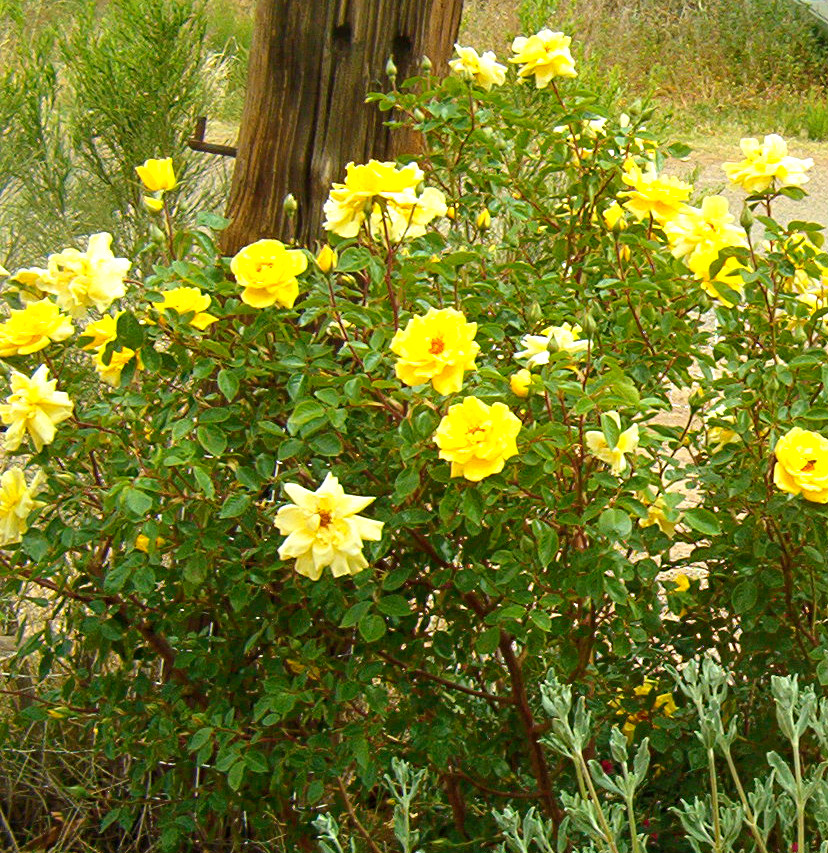
+ARE WE SUPPOSED TO HATE THE PARENTS OF ‘PRECIOUS’?

+++++++++++++++++++++

OK.  OK I found exactly what I was looking for.

All afternoon I’ve had the nagging thought that I need to write a post about what I think about Precious’ mother, Mary.  By the end of the film, Precious: Based on the Novel “Push” by Sapphire, Mary is left as a despicable monster, literally an untouchable.

No matter what, wasn’t Precious’ mother still a human being?  Why would she not be worthy of compassion?  Where is the line we draw that determines who we feel sorry for, who we empathize with, who we have pity or sympathy for, who we hate and who we love?

I have referred to my own mother as ‘a monster’.  I know what she was like, especially when she was in the throes of one of her maniacal rages.  Does this mean that my mother ‘deserved’ to be hated?

Did Precious’ mother deserve to be hated?  Did her father?

The key to this movie’s final, finished finesse lies in the barely perceptible yet still obvious twist of the shoulder of social worker, Ms. Weiss away from her when Mary reaches out a pleading hand and touches her as Weiss walks out of the interview.  Weiss didn’t say to Mary, “You are a sick woman.  You need help.  Here’s a card with a number on it.  Call and there will be someone there who will care about you.”

++

Wanting to rescue an abused child does not require hate for the abuser.  Watching this film, wanting Precious to escape the horrors of her home did not require that I hate her mother, either.  My personal passion as a viewer of this film was focused on waiting for the moment when Precious could separate herself from her mother, from that twisted, hate-filled environment, from danger, from darkness into a place of safety and security.  Had that moment never arrived in this film I would not be writing this post.  Had that moment never come, I would hate this movie, but I would still not hate the mother.

Yet the mother was left in the film as a vulnerable target for us to despise with disgust.  The rapist father?  I consider myself extremely fortunate to not be the victim of rape, incest or of any form of overt sexual abuse.  I cannot possibly know what it would be like to view this film if I did have such a history.

I do have a history of having a parent in the home, my father, who knew my mother’s terrible abuse of me continually happened and did nothing to intervene, protect me or stop it.  In one of the final scenes of this movie, Precious’ mother discloses the details of the first time her boyfriend sexually assaulted her three-year-old daughter and how she did nothing to intervene.  We are told in nearly point-blank terms that Mary suffered from a severe insecure attachment disorder:  “Who would love me?”

Precious’ mother did not protect her daughter.  Instead, her own brokenness demanded of her that she HATE her daughter for ‘stealing’ her boyfriend’s attention away from her.  How are we to forgive a woman who could participate IN ANY OF THIS?  How are we supposed to not HATE her?

It is the power of art – the writing of this story, the directing of this film, the talent of the actresses portraying the characters that designates that we hate this girl’s mother.  If we DO NOT hate her, we have not participated as willing audience members in the intention of this art form.

That’s quite all right with me.  I personally don’t want to be on the side of darkness where hatred breeds and seeds itself into the lives of its victims.  I would rather be able to loosen my mental and emotional grip enough to allow something other than hostile hatred, disgust and a feeling of “She is despicable” to envelope me.

I know that darkness.  I spent the first 18 years of my life in that darkness.  What makes this movie shine is the fact that Precious did not allow the darkness present in her life to consume her.  Never in the film are we shown that Precious swallowed any portion of the force-fed poison of hatred.  That, to me, is the power of being able to turn around finally and walk away into a different world where the abuser is not physically in it.

++++

I was fortunate as I plowed my way through web pages about this movie tonight, and found this year-old post:

Mo’Nique, PUSH Interview, Sundance 2009

By Eric Kohn

The film was evidently still known by it’s literary title, Push, at the 2009 Sundance showing:   Read the entire interview HERE.  What I was looking for appears part way down the interview’s script, as entertainer (comedian, now Oscar winner) Mo’Nique, who played the part of Precious’ mother, responds to the questions posed by Kohn:

You deliver a fairly intense monologue at the end of the movie that really ties it together. Do you see Mary as a sympathetic character?

Yes, I think that all of us know Mary.  I had to put her shoes on.  If I were that person, I would want forgiveness.  You do feel sorry for her because you begin to understand she’s mentally ill.  She ain’t just being a bitch.  She’s sick, and the society that we’re in, they threw her away.  Nobody asked any questions, nobody got involved.  That illness doesn’t just start.  People know for years.  We wanted to bring that world and put it right in your face.  To say, they exist; they’re your neighbor.  It might be your mother; it might be your sister.  It might be you.  What we were trying to do is not make it an action-and-cut Hollywood movie.  I think Mr. Daniels did a great job.

What guidance did he provide?

He said, “I need you to be a monster,” and that was it:  “Be a monster.  I need people to hate that character.”  Then he asked me before we started filming,  “Do you think that everybody gets redemption?”  I said,  “No, especially if you don’t ask for forgiveness and mean it.”  The moment he said action, the monster she was.

You brought to the table what you understood about the character.

Well, I was molested.  The person who molested me was a monster.  So I had to go to that person, because I know what it was like for me.  [Daniels] said action, and be that monster.

There has been talk that the movie is a tough sell. How do you see it working in the marketplace?

It’s honest.  You can’t be afraid, and you have to go and work at being fearless.  If you go into it saying, well, if I don’t believe it, then you won’t believe it.  As long as I believe it, you will believe it.  This is a universal film.  Do you know what I mean?

That’s what I wrote in my review.

It’s all over the world – molestation and abuse, mental and verbal.  It’s all over.  It’s not just black.  It’s not just white.  It’s every color, every walk.  It’s everywhere.  I haven’t met any Martians, but I promise if we have some, it is going on with them, too.

+++++++++++++++++++++

SHARE A PRAYER

O God, refresh and gladden my spirit.  Purify my heart.  Illumine my powers.  I lay all my affairs in Thy Hand.  Thou art my Guide and my Refuge.  I will no longer be sorrowful and grieved, I will be a happy and joyful being.  O God, I will no longer be full of anxiety, nor will I let trouble harass me.  I will not dwell on the unpleasant things of life.

O God, Thou art more friend to me than I am to myself.  I dedicate myself to Thee, O Lord.

– ‘Abudu’l-Baha

in Baha’i Prayers, Baha’i Publishing Trust, 1969

+++++++++++++++++++++