The most important work we can do, individually and globally, is the healing and prevention of traumas so that we don't pass them down to future generations. This blog is a working tool to contribute to this good work.
Monday, April 6, 2015. While I don’t understand my point exactly in writing this post it seems to be one that has moved past the perculation stage into WRITE ME NOW. So here is a little more about my personal conflicts with the concept of “resiliency” as it may be achieving a generic standing within the “healing trauma” circles.
The adult human body is made up of about 37 trillion cells. The United States Census Bureau estimates that the world population exceeded 7 billion on March 12, 2012. To do research that tried to extrapolate meaningful information about ALL cells or ALL people based on a small sample of ONE would be ludicrous.
Nobody can determine each individual’s experiences with trauma in such a way that the data generated could be made useful to anyone, let alone everyone! So naturally what I have lived through and what I know as a result of my studies about what happened to me and how I survived it will never fit into any clear “significant probability” statistic with meaning. I can, however, share parts of my story to illustrate points important to me.
I am sharing a story included on this blog that I certainly am NOT going to read right now. I may never return to read it again. (This is often the case with my own childhood stories once written, which is why my ace professional researcher and writer daughter is my editor for our books. She has not yet proofed the story at this link.)
What I wish to say about the experience detailed in this story as it connects to my standpoint on “resiliency” is that had I NOT gone through this event I do not believe I would have come out of my childhood having ANY sense of what “feeling loved” felt like.
The story is of trauma, true, but for me having my family gathered around me as I was nearly bleeding to death was the ONLY clear time of my 18-year childhood that I felt I belonged to this family. It was the ONLY time that the feeling I lived with all of rest of my childhood from birth that I was at any moment, out of nowhere (my mother was psychotically mentally ill with me as her abuse target as my book at link below describes) going to be brutally attacked was absent.
This event COULD have been a very low spot – what I call a risk factor moment — in my horrifying childhood rather than being the powerful, necessary (to me) resiliency factor moment that I built upon to successfully raise my own children and to care about others. (In my case, I believe in what I call “borrowed secure attachment” rather than in “earned secure attachment” – a online search of terms “stop the storm borrowed secure attachment” will highlight some related posts.)
There is no possible “resiliency measurement tool” that could capture what truly traumatic childhoods are/were like. But in the interest of preserving the integrity of useful data through meticulous research what is found MUST be processed by thinkers steeped in the depths of what early trauma IS. The impeccable artistry and beauty of individual survivor’s lives must not be lost in the mad rush to understand what numbers-only are telling us.
Only with this understanding can any useful thinking about a vague concept like “resiliency” be made to pull its weight in efforts to understand and stop trauma and to assist those who survive it to increase their well-being across their lifespan.
I learned all I was going to find out in the 18 years of my childhood about what love-of-Linda was going to feel like. All I was going to learn about what love might be like PERIOD I learned during those moments. I believe traumatized children notice every possible useful bit of information and make PROFOUNDLY amazing good use of those tidbits. That kind of resiliency, if we are going to call it that, is to me nothing more or less than the will to survive coupled with accumulating the tools necessary to do so.
++++
Here is our first book out in ebook format. Click here to view or purchase –
I think I have them all straightened out now. As I Googled myself around regarding the titles and topics represented by those links I found myself being awed for those of us severe infant-child abuse and trauma survivors who actually MOSTLY are able to function!
What a menu of terrible difficulties this area of study contains! I don’t believe there is ANYTHING more important for us as survivors to understand than the information is you will find at the end of these links.
That no professional EVER even MENTIONED how early severe trauma and neglect can change an infant-child’s physiological development is, to me, CRIMINAL!!!
There is NO, and I MEAN NO psychological or psychiatric ‘theory’ that can begin to remotely help us if it does not address the neurobiological CHANGES that happened to our growing and developing BODY on all of our levels as we survived our traumas!
The kinds of changes that are described in these articles presented in yesterday’s post are what happened to my mother, to my father — and most definitely happened to ME!
We CANNOT consider our healing as severe early abuse and trauma survivors without understanding the FACTS as these articles present them. THEORIES are of no use to us WHATSOEVER!
We have to educate ourselves with this critically important information. Any survivor who is seeing a therapist must determine if that person KNOWS this information. If they don’t, give them this actual link to my post of yesterday,
If your therapist will not listen to you about this critically important information, I would suggest that you find one that WILL! So-called ‘mental health treatment’ that does not operate for survivors from this informed foundation of information is no better than BLOODLETTING treatments for disease.
The Trauma Altered Development we endured changed our PHYSICAL body — the same one we have to live within for the rest of our life. Any treatment for a ‘physical problem’ that is not based on facts is useless!!
Members of our culture are familiar with information that streams down to the general public from the TOP. Unless our current view of society is suddenly flipped over completely, I certainly hold a position as a human being close to the bottom, not the top.
Whether we are talking in general about the ‘haves’ versus the ‘have nots’, or talking in terms of diagnosed ‘mental illness’, or talking about degrees on a continuum of insecure versus secure human attachment acquired during the first year of life as it designs and builds the human nervous system-brain, etc., we can consider the degrees of human well-being as they can be expressed using a Bell Curve image.
The healthier, happier, and more safely and securely attached an infant’s mother is, the same will correspondingly be true for her offspring — for a lifetime. These are the people who will suffer and struggle less and enjoy more over their life span.
The opposite direction happens when the opposite conditions exist. These are the people who will suffer and struggle more and enjoy less over their life span.
Intervention and education can directly improve the odds that well-being for an infant will improve for its lifetime when the quality of earliest caregiver interactions is improved. The degrees I am describing become physiologically wired and built into an infant’s body. I fully believe that increases to the positive will travel on down the generations just as the negative ones do. Which do we desire as individual parents and as a society?
We are not helpless victims. If we truly desire the best well-being possible for all (and this always starts with the quality of care to our infants), we have the power to accomplish what we want.
++++
To be very clear, I write as a survivor of the kind of infant-child abuse that probably ONLY exists in the ‘lowest’ (on the left end of this image) severe maltreatment, trauma and abuse. I was a despised and hated baby from my first breath. My advantage now is that I know this at the same time I know a great deal about how this malevolent treatment changed my physiological development.
Having been born to a severely ‘mentally ill’ (no doubt Borderline) mother who, herself, existed on the devastating neglect and abuse end of the infant attachment spectrum, puts me in what I consider either the LOWEST 5% or the HIGHEST 5% depending upon how one looks at the Bell Curve of infant-child treatment.
I ‘definitely’ received a megasized dose of maltreatment at the same time I was mega-deprived of the RIGHT kind of treatment.
So I write from society’s bottom 5% while most so-called ‘experts’ write from the TOP 5%. This means that much of what I say is as equally challenging for the TOP group of humans to comprehend and believe as THEIR information is to those of us in the bottom 5%.
++++
I am completely comfortable in expanding the size of the group I write to and about from 5% to 15% of our population. While the ‘a little bit higher’ additional 10% above me did not perhaps experience outright hatred from their earliest caregivers, they did NOT receive the quality of tender, loving, adequate care they needed. Their entire physiological development was, I believe, altered in adjustment to their malevolent, insecure and unsafe earliest caregiving (!) environment.
At the same time, even though most attachment experts suggest that fully 50% of our population’s infants DO experience ‘good enough’ early caregiving to end up with a body-nervous system(NS)-brain-mind-self to carry on with the rest of their lives having a primary safe and secure attachment system, I believe that it is ONLY the top 15% who REALLY experience the blessing of ‘optimal’. Those beneficiaries, as a result, can suffer from a kind of blindness that they DO NOT ADMIT. This ignorance stems from their position of privilege.
I believe nearly ALL of our top high-powered ‘professional experts’ came from this top 15%, which means to me that if I am going to wholeheartedly accept as TRUE everything that they tell me, I am accepting their reality as REAL at the same time I discount and deny my own reality.
++++
While I cannot argue with the generalized view point that approximately 50% of our population had a first year of life that has given them a safe and secure attachment system (matched by a properly operating nervous system/brain-stress response system-vagus nerve system-immune system), I ask myself the question, “Why is such a large percentage of our population reliant upon antidepressants to get through their life?”
Developmental neuroscientists know that mothers as an infant’s earliest primary caregiver — and it remains mothers due to biological heritage of our species that has not changed — quite literally download their brain and nervous system patterning into their offspring’s rapidly growing and developing body-brain at the same time they are passing along their own attachment system patterning. This means that in spite of our best intentions NOT to pass trauma patterns on to our offspring — we do.
Yes, while it can be said that much depression is ‘genetic’, it is also true that many genetic combinations that lead not only to depression to also to a wide array of physiological ‘problems’ are directly triggered into operation during the earliest months and years of our human development because of the influence our earliest caregivers have upon us.
++++
So what I would hope could be a ‘clarion whisper’ to others in my writings is this: In today’s complex and hectic mothering environment we need to understand and make very clear that what a mother has experienced in HER life directly impacts the body-brain that her baby will grow.
Perhaps the ‘top 50%’ of our society do not need to directly THINK about this fact. They can go on passing down to their offspring the goodness they have received in their benevolent infant-childhoods. The OTHER 50% needs to understand as much as they can — hopefully PRIOR to creating their children — something we do not talk about in our culture: How their body-NS-brain-immune system-mind-self was formed at the beginning of their life.
This is not so much about thinking, “WHO am I in the world?” This is about thinking about, “HOW am I in the world and HOW did I get to be this way?”
It is very common to see an infant growth and development chart or list of what to look for in regard to visible external signs of advancement. I want to see either a separate chart-list that talks about the INNER invisible critical growth and development of an infant’s attachment system as it affects development of its entire nervous system-brain AND body, or see this information included along with the mention of when to expect rolling over, sitting up, the first tooth and crawling.
Only in rare situations does an infant NOT develop its outward signs of health in a normal-ordinary fashion. And yet we accept that at least 50% of these same infants are NOT being given what they need to develop their INNER responses in a normal-ordinary way.
This means to me that we are willing to accept that less-than-best for half our population’s infants, which will directly influence their lifelong well-being on the down turn, is perfectly OK with us.
It is NOT OK! We CAN influence how the Bell Curve of human safe and secure attachment and BEST physiological development ON THE INSIDE turns out. We can ‘raise the bar’ for everyone and we can at the same time ‘raise the bottom’.
My own terrible infant-childhood maltreatment harmed my development greatly. I did not even begin to understand that what happened to me growing up for 18 years under extremely traumatic conditions was not only NOT NORMAL, but was NOT OK and was extremely harmful. It has only been in the last 6-7 years that I have learned what that ‘harmful’ means in terms of my trauma altered development.
It so happens that so much new information has become available about the needs of infants for optimal development due to advances in scientific technologies paralleled my own need and desire to find out the truth about what happened to me where it mattered most. That information is out there for all of us to find, but it needs to be made accessible and understandable to everyone, especially to new parents.
Even though I came a long, long way in not passing the trauma my mother, and through her that I experienced to my own children — I did so anyway on some significant levels. A very sad and traumatized mother who does NOT know this about herself, and who does NOT know how she is going to pass these patterns down to her infant through her innocent (and best) interactions with it during its first year of life — is going to pass those patterns down to her infant. That is nature’s design.
The very best and most accurate measure of the state of a human society’s well-being is to look directly — and with an informed eye — at its infants prior to the age of one.
What we want to see are infants who are well fed and physically cared for — yes. But what we ALSO and at the same time need to see are infants who are being attended to in safe and secure attachment interactions. These interactions are very real actually PHYSIOLOGICAL ways. Yes, they involve caregiver-mother touch, smell, voice, words, tone — but they also happen through face-to-face expressions that are designed to download particularly a mother’s experience of being in the world to her infant so that her infant can, in turn, adjust its physiological development ON ALL LEVELS to the condition of the world it has been born into.
A baby needs to be attended to and comforted in such a way that its entire nervous system will develop with a state of peaceful calm (safety and security) as its middle set point. Some excitement. Not too much. The right kind of stimulation. Modulation of excitement (both positive and negative) ALWAYS BACK TO THIS CENTER POINT OF PEACEFUL CALM.
The baby needs interactions that stimulate its happiness and joy center’s development in its brain. This happens FROM THE CENTER SETPOINT OF PEACE AND CALM. The baby needs to gradually and eventually begin to tolerate the survival experiences of discomfort, anger, fear and sadness — but always within the best possible parameters set by its caregivers so that the infant is NEVER IN ANY WAY OVERWHELMED BY ANYTHING — EVER!
An infant from birth to one is building its brain neuron and nervous system directly based on the kinds of early caregiver interactions it is receiving. The information it gets from these caregiver interactions are telling its genetic material exactly how safe and secure (benevolent) or how unsafe and insecure (malevolent) the entire universe is — and will be — for the rest of its life. The infant’s physiological INNER development will adjust itself accordingly — and in most ways, permanently.
An infant from birth is at the same time building within itself the platform foundation for its thoughts, beginning with the underlying images that are directly connected to its experiences with its earliest caregivers — primarily its mother. “Can I absolutely trust that someone loves me, knows that I AM HERE, and will come to take care of me?”
From this knowledge — either with a “YES” answer or a “NO” answer (or a “MAYBE?” one) comes not only the foundation of trust, but also the foundation of hope. Eventually an infant around the age of one will be able to HOPE for that wonderful caregiver to come take care of it when the infant experiences a need. With this foundation of trust and hope — or its absence — an infant advances into its stages of being able to move out into the world and explore it on its own knowing on its most basic physiological levels that it can count on being safely and securely attached to and in the world — or not.
AND the infant begins to add into its growing body-brain the ability to THINK in more than senses and images. Every single interaction an infant has with a human being before the age of one is directly influencing where its neurons are going to land in the regions of its brains, whether these neurons will live or die, and how these brain regions will process information — including information the infant needs to build its SELF and its relationship with this SELF.
++++
All of these interactions a billions more directly affect where a maturing human being will end up on this Bell Curve of well-being. Although I was born down there at the lowest 5% point within an extremely malevolent, traumatizing and abusive environment, I can now look upwards and SEE the whole range of possibilities. I can do this because I found a way to learn about how degrees of safe and secure attachment — and its opposite — directly influence the development of ALL OF US.
True, all of us can learn throughout our lifespan, but reality is reality. There are early infant-child critical windows of development during which certain aspects of our physiological development are finalized — and cannot be changed. We need to know as much as we can about what human developmental stages are ON THE INSIDE. We need to know the best we can what happened to us that changed us. Readers of this blog will already know exactly what I am talking about.
As a society we can make up our minds that LESS THAN BEST is not acceptable when it comes to infant care. While we mouth the words ‘everyone is created equal’ we are NOT making sure that everyone is given the same BEST chance to grow and develop the BEST body-brain-mind-self possible. Shame on us.
+++++++++++++++++++++++++
Based on what happens in the womb and during the first year of life, additional critical brain development takes place in the second year of life — and onwards. But ALL future development will be directed by and adapted to the information the infant receives from its earliest caregiving environment before the age of one.
Jul 9, 2007 … CDC: Antidepressants most prescribed drugs in U.S.… She added that 25 percent of adults will have a major depressive episode sometime in …
Depression and Bipolar Disorder question: What percentage of the US takes anti-depressants? Answer More people than you think!!! Could not find it but this …
Here I am this morning at my computer viewing a blank blog page upon which I will dump out words. I don’t know which words, so the only thing I can do is keep on typing until the words appear here.
I feel alone in this job I am doing with my book’s writing right now. I feel alone because I am alone. Mine is a lonely story.
The fact that I wish to write my lonely story so well that it captures the attention, the imagination, the hearts and thoughts of as wide a public as possible reminds me of the word ‘hubris’, a word that came into English in 1884 from the Greek and means ‘exaggerated pride or self-confidence’.
I am afraid of hubris. Right now this fear stands exactly in front of me and in my way. It stops me ‘dead in my tracks’, removes my words from me, and will in itself guarantee hubris is exactly where my writing will end up unless I can give myself permission to know that I have value, my story has value, my words have value, and that this work that I am doing is blessed in ways I cannot mortally comprehend.
Somewhere between hubris and my fear of it lies a wide open pathway that is mine to follow. This pathway is as clearly laid out before me, free of weeds and obstacles and as easy to stroll along, skip over or run along as is the adobe walkway I have been constructing in my own backyard. Yes, there are a few hardy weeds that have popped their new tiny leaves out of the adobe bricks to appear where I don’t want them now that our monsoon rains have come.
But I can simply snip them off with my fingernails and they will all disappear never to trouble me again. And it is only I who can make my fears about my work, what I am writing, and what the end result is going to be go away just as easily.
++++
It is the ‘nature of the beast’ of severe infant-child abuse and the mental illness that spawns and perpetrates it that silence reign. This beast requires a particular kind of silence. I believe that the only way this beast remains alive, and carries itself in the dis-eased form it manifests itself in down through the generations is because the silence it needs to duplicate itself is extremely difficult to break.
Difficult and impossible are not the same thing. It is as if the beast itself is challenging me at this moment, daring me to break the silence that maintains its very existence. It thunders. It roars. It bares its gigantic and terrifying fangs at me. It shakes its shaggy mammoth-sized head at me in rage. But thanks to the author, L. Frank Baum, I have the pitiful antihero, The Wizard of Oz, to remember as I meet my own fear of hubris, vanquish it and move on.
++++
I could end my morning’s verbal sputterings right here, but I am not going to. I am going to turn around right now and stare that beast right in its eyes. “Don’t you threaten ME with extinction, you horrible, putrefying, nasty, deceitful LIAR! I have seen your kind before, and you mean NOTHING to me. DO YOU HEAR ME? Are you PAYING ATTENTION? You STINK! You are forever rotting, forever condemned to exist in the darkness where human fear feeds you three meals a day and lots of snacks. Well, I don’t care if you starve to DEATH yourself! I will no longer heed YOUR lies! In fact, I will no longer heed you AT ALL! You are nothing to me. Nothing. Because that IS what you are, like it or not. NOTHING!”
My, that felt good! Not only has the flimsy immaterial curtain vaporized behind which this invisible beast lurks and groans, but the beast itself has disappeared, though I am not fooled into believing its going is forever.
That beast has resided itself, all tucked in, warm and cozy, amidst every one of my mother’s words I have confronted, do confront, and will confront as I shred apart the lie that fed her life and so harmed me not only as an infant-child, but harmed the me that writes these words, that breathes this air, that has determination to finish a job I began in this world before I left my mother’s belly.
“I WILL NAME YOU!” I shout out with my soul in the directions that beast has fled to. “And if I am going to HATE, it is YOUR existence I will shoot my hatred after. And hear me, oh Beast of Human Misery! You have stolen away the joy from enough lives in my ancestral pool! You will no longer chaw your carnivorous teeth upon my family’s generations. Me thinks you have already stolen more than your fill, and guess what? Not only am I going to vanquish you, not only am I going to do my best to take back from you the joy, health and well-being that you have raked from my family and carried away into your darkness, I am going to make you pay with your life! I am going to break this very silence you require for your survival. And if you happen to be so stupid that you don’t believe me — well — just cower away in your hidden cracks and WATCH ME DO IT — while you still can!”
I have been doing a lot of pondering about my writing over these past few days. It seems that it’s the same $250 to apply for ISBN numbers if for one or ten book titles. I believe I can publish the first title simply on Amazon.com’s Kindle and hopefully generate some capital to publish in print.
I know of two people in town whose cancer is back. If doing this writing, and publishing it is connected to my life’s mission, I am becoming less and less comfortable with putting this off.
So, that’s about it for the moment. I am preparing to spend my Mother’s Day outside working some more on my yard projects. That means I will also be continuing to think about all of this. What I wanted to mention here today is that I am thinking about a title for a collection of essays at some point that will be directly about the ‘rupture and repair’ aspects of attachment.
That thinking brought me face-to-face with a thought I’ve never considered in this light before. While I’ve suspected for a long time is that my attachment to Alaska and to our mountain homestead kept alive and exercised my body-brain’s attachment-related circuitry (so that I could later form at least a skeleton of attachment with people in my life).
What struck me this morning is that our pattern of moving up and down the mountain, on and off of the homestead, was probably VERY helpful to me. While our family was off of the mountain homestead, I grieved for it. I had such a powerful emotional connection with that place that I thought I would die if I could not go back to it.
As soon as I could read it, this book became my personal bible because it contained what I saw as the story of my childhood: Heidi by Johanna Spyri, Scott McKowen.
Even though I never had the thoughts, feelings or words to consider anything about the abuse I endured, I DID understand love for the land and for the place that was home to my soul.
But this morning it came to me that because of the coming and going I was able to expand the operation of my body-brain-mind-self’s attachment related circuitry specifically BECAUSE of these continual patterns of ‘rupture and repair’ that our family’s moves created.
These patterns of rupture and repair – of being there, of leaving there, of my sadness of grief in my absence from the mountain, of my hopes in returning, of my deepest fears that we might not, and my joyful bliss when we did return, all led to exercising my attachment circuitry so that it could grow into a part of me. Certainly no HUMAN relationship offered me that opportunity!
As I think about these processes and about my new discovery, I am understanding that it isn’t JUST having safe and secure attachment to people that matters. In the absence of any safe and secure attachment to humans, children can substitute attachment to pets and to place. If I were to find the simplest words to describe my relationship with our family’s homestead and the place of that mountain valley, I would say:
“I was at home there in the soul of the world.”
Leaving that place and returning to it allowed me to grow myself as I grew into attachment to something outside of myself. The whole process became a part of me so that when I finally had to leave that place for good, I took with me the good of that place and my relationship with it.
Had we simply found the land and stayed there without interruption, the rupture and repair patterns that form the bedrock of safe and secure attachment would not have built themselves into me. Otherwise, as is the reality of unsafe and insecure attachment patterns, I would have been left with nothing but rupture without repair in my life because I would have taken for granted my relationship with that mountain place.
And I experienced the experience of ‘feeling felt’ in seeing my own heart reflected back to me in the story of Heidi. Of course, this fictional character had human relationships of love. But as the story makes very clear, it was not a permanent absence from these people she was attached to that mattered most. It was clear in the story that it was THE MOUNTAIN that was her life. Being taken away from the mountain (rupture) and not being able to return (for repair) made her sick. She was dying so the adults brought her back home – and she thrived.
I’m not sure that there has ever been a child alive who could have known the essential truth within that book the way that I did. My parallel story of rupture and return to that mountain DID save my life. I am sure of it. And through that ‘salvation’ I received I was able to raise my children with as much love as I can muster and without abuse.
Being able to experience the kind of love I had for the homestead AND being able to experience the kind of longing I felt in my absence from it AND being able to experience reunion like a securely attached one-year-old infant will feel when it returns to the safety of its loving mother’s lap is a major part of how I am who I am today. In the epic of my childhood with my mother, whatever took her to that most sacred place enabled me to survive her abuse with a dignity, magnanimity and goodness that I don’t think I would have otherwise known.
Where can severe trauma survivors look for our best-guess for healing? In a way this next direction I am going with my study, reading and writing surprises me. Yet at the same time I am grateful for both this inner guidance system I seem to have that tells me what I most need for healing and for the fact that again and again, I trust and follow this guidance.
Not long ago I wrote a post about an article I had found sometime in the past, printed, and added to the ever expanding pile of papers that grows here on my desk in front of my computer. By the time I picked it up and read it through and wrote my post about it, I had no memory of how, where or when I had found it online. The information I will be working with next for as long as it takes me to understand it as thoroughly as I possibly can comes from a book that was referenced in that article.
I ordered this book, written by this Swedish doctor:
The book is lovely, solid and comforting even in its design and construction. It is well made and well written, and as I hold it in my hands and begin to explore its message and teaching, it gives me great hope of healing for any trauma survivor, especially for those of us whose body-brain was designed and built by, for and within early infant-childhood environments of malevolent treatment.
++++++++++++++++++++++
I first want to share with you a copy of an image that appears within the introduction to this book. It is a simple graphic illustration about what everyone needs, especially trauma survivors who will have to work extra, extra hard to reach this desired balance in our body, nervous system, brain, mind and self between states of alarm and states of calmness:
Infant-child abuse and other survivors of severe trauma DO NOT get to experience what this balanced harmony feels like -- if at all possible, it's time that we DID!
++++++++++++++++++++++
As we look at this picture we are really looking at a visual depiction of what safe and secure attachment gives to us. If this balance had existed in our parents, especially our within our mother from the time we were conceived and born, our physiological systems including our brain would have been able to develop within us to match this desired state for ourselves.
In early environments of threat, danger and trauma, this picture was missing within our universe because it was missing within our earliest caregivers whose job it was to MAKE an equally safe and secure environment for us so that we could have safe and secure attachment relationships that would have built our body-brain into an entirely different one that the one we ended up with.
I believe that the more we can learn about the information presented in this book the better we will be able to begin to recreate safe and secure patterns within our body-brain-mind-self NOW, no matter what our early forming environment was like.
In fact, we might be able to think about our condition in these most simple terms. A trauma-built body-brain, formed through unsafe and insecure attachment conditions, continues to run on the fuel of cortisol and the stress hormones creating patterns of freeze, flight and fight response that translates into ‘anxiety problems’.
On the other hand, early safe and secure attachments design and build a body-brain that can run on the fuel of oxytocin or the ‘feel good’ chemical of peaceful calmness and positive connection to self, others and the world. It is the body-in-balance as the above picture describes that is our goal for our healing. Oxytocin is a critical neurotransmitter of peace and cooperation. Cortisol is a critical neurotransmitter of stress, threat and danger.
++++++++++++++++
I find a powerful confirmation of my intuition that I am moving in the right, good and healing direction in my studies when I read in Dr. Moberg’s introduction that she immediately mentions the biases that exist in MOST mainstream medical research. Those readers who followed the difficult time I had in my struggles with Dr. Dacher Keltner’s book will understand how affirming, comforting and freeing it is for me to find an authority on the subject of human ill- and well-being who recognizes the biases up front that Dr. Keltner seemed to be oblivious to yet relies upon and utilizes heavily in his work.
Moberg notes that fully 90% of published research focuses on the stress response, or sympathetic GO branch of our nervous system while only 10% is devoted to the parasympathetic STOP branch (remember: pair-a-brakes) branch. She states about this bias:
“…an interest in the physiology of performance, exertion, and defense has dominated existing scientific knowledge and current research to an extent that we do not always recognize. This way of looking at things, or shall I say those blinders, has until now kept those of us who work in the medical sciences from seeing the calm and connection response as a separate and valuable physiological system. Thus, for me, studying this system has involved an element of swimming against the tide with respect to the political mainstream in my profession.” (pages xii-xii of her introduction)
This imbalance in research focus HIGHLY impacts infant-child abuse and maltreatment survivors, as it does anyone experiencing difficulties with so-called anxiety (including dissociation, PTSD, depression, personality disorders, etc.) We are in desperate need not only of healing, but of accurate information that can help us DO SO.
As Moberg writes:
“The neglected physiological pattern I will describe in this book is the opposite pole to the fight or flight reaction. Like most other mammals, we humans are able not only to mobilize when danger threatens but also to enjoy the good things in life, to relax, to bond, to heal. The fight or flight pattern has an opposite [effect] not only in the events of our lives but also in our biochemical system. This book deals with the other end of the seesaw, the body’s own system for calm and connection.
“This calm and connection system is associated with trust and curiosity instead of fear, and with friendliness instead of anger. The heart and circulatory system slow down as the digestion fires up. When peace and calm prevail, we let our defenses down and instead become sensitive, open, and interested in others around us. Instead of tapping the internal “power drink,” [of stress-related neurotransmitters] our bodies offer a ready-made healing nectar. Under its influence, we see the world and our fellow humans in a positive light; we grow, we heal. This response is also the effect of hormones and signaling substances, but until now, the connections among these vital physiological effects have not been fully recognized and studied.
“The neglect of this system tells us much about the values that underlie scientific research. The calm and connection system is certainly as important for survival as the system for defense and exertion, and it is equally as complex. Nevertheless, the stress system is explored much for frequently….
“One reason why research has been so slanted may be that goal-directed activity is emphasized so strongly in our culture. We are used to defining activity as something moving, something we can see. But many of the calm and connection system’s processes and effects are not visible to the naked eye. They also occur slowly and gradually, and they are not as easy to isolate or define as are the more dramatic actions involving attack and defense….physiologists have studied the clearly visible fight or flight mechanism but have been less able to perceive the more hidden and subtle calm and connection system.
“The calm and connection system is most often at work when the body is at rest. In this apparent stillness, an enormous amount of activity is taking place, but it is not directed to movement or bursts of effort. This system instead helps the body to heal and grow. It changes nourishment to energy, storing it up for later use. Body and mind become calm. In this state, we have greater access to our internal resources and creativity. The ability to learn and to solve problems increases when we are not under stress.
“I believe that it is extremely important to increase our understanding of the physical and psychological workings of this antithesis to the fight or flight system. We need both, since for each individual in each situation there is an optimal way to react. But it is now well known that long-term stress can produce a variety of psychological and physical problems. If we are to be healthy in the long run, the two systems must be kept in balance.” (pages x-xiii of her introduction)
Moberg states very clearly that her interest in the connection system is rooted in her experience of mothering her four children. Her description of mothering would be the antithesis of my mother’s experience with mothering me. As I have already noted, it is very clear that the vagus nerve and autonomic nervous system of Borderline’s works with a distortion of the stress-caregiving response systems. Moberg’s writings are about how things are SUPPOSED to work:
“In pregnancy, nursing, and close contact with my children, I experienced a state diametrically opposed to the stress I was familiar with in connection with life’s other challenges. I was aware that the psychophysiological conditions associated with pregnancy and nursing fostered something entirely different from challenge, competition, and performance. Inspired more than two decades ago to explore this life experience scientifically, I learned that there is a key biological marker – the subject of this book – on the trail to a physiological explanation of this state of calm and connection.” (pages xiii-xiv of her introduction)
++++
It does not surprise me one bit that it would be not only a female researcher, but also one that has her roots on interested grounded in her experience of mothering that I would now turn to for answers about how the terrible imbalance that survivors of severe infant-child trauma have in their body-brain as a consequence of being formed by trauma can be healed. In profoundly critical ways early abuse survivors were deprived of the safe and secure early attachments – especially with our mothers – that we desperately needed to grow a healthy balance of peace and calmness into our body-brain from the start.
For all the millions and millions of American children and adults that suffer from obesity, depression and other anxiety-related problems, from addictions, from relationships dis-orders, I believe that it will be in gaining factual information about how our body-brain can be rewired for safety, security, connection, and peaceful calmness that our best chance will come for healing. I am most hopeful that Dr. Moberg’s writings will give me many important answers that I seek. I will literally keep you posted on what I discover!
I wonder if there will be a day that we will understand what dissociation really is. It seems that people talk about it and write about ‘as if’ at least someone has actually defined it. Coming from my severe infant-childhood abuse background, I don’t believe anyone is much past the dark ages in terms of actually knowing what dissociation is.
In looking at the abstract for this 2007 article by Dr. MatthiasMichal and colleagues, Depersonalization, Mindfulness, and Childhood Trauma, I can’t even get the first sentence before I find myself in disagreement with one of the main premises of this ‘expert opinion’ of an experience related to dissociation:
“Depersonalization (DP), i.e., feelings of being detached from one’s own mental processes or body, can be considered as a form of mental escape from the full experience of reality. This mental escape is thought to be etiologically linked with maltreatment during childhood. The detached state of consciousness in DP contrasts with certain aspects of mindfulness, a state of consciousness characterized by being in touch with the present moment.”
Here again I see yet another example of what I call ‘sloppy science’. Researchers seem to build their hypothesis into their studies in such a way that they are nearly guaranteed to supposedly prove their own point. Nobody wants to publish failure research.
The gulf that exists between infant-child abuse survivors and those who study us like we are some malformed off shoots of what is considered normal continues to widen because the basic premises researchers use to discover facts about so-called ‘reality’ come from their own ‘mental processes’ that they never question within themselves.
I know what depersonalization feels like because I live with it. My body-brain formed through trauma that did not allow me as a person to exist from the time I was born. So, NO, this cannot “be considered as a form of mental escape from the full experience of reality.” Sorry to disappoint you well-funded and supposedly well meaning wise ones.
Mind, itself, along with its relatives ‘mental’ and ‘mindful’ exist as metaphors for physiological, very real molecular operations within the structures of the body-brain. The operations that are suggested to represent ‘mind’ happen through biochemical interactions. Early experiences from conception onward during the critical growth windows, or periods of specific development form circuits and pathways that are not the same for infant-childhood severe trauma and abuse survivors.
The experience of dissociation, depersonalization and derealization are connected to the physiological changes our early developing body-brain was forced to make in the midst of trauma. In my experience, and I suspect for many other people, what I experience as dissociation is NOT any “form of escape from the full experience of reality.
IT IS MY REALITY.
I cannot “escape from the full experience” of my reality as long as I exist in this trauma-changed-during-development body that does not process information in the same way as the (evidently) NOT trauma changed body of the researchers who define the terms and design the research that names something survivors live with that these researchers will never REALLY know a damn thing about.
++++
“The detached state of consciousness in DP contrasts with certain aspects of mindfulness, a state of consciousness characterized by being in touch with the present moment.”
I am not going to ever say that there is not a contrast between the way I experience life in the body I live in and the way a non trauma built body person experiences life. But what the “H” does “being in touch with the present moment” even BEGIN to mean? What, exactly, does these researchers’ term “detached state of consciousness” even begin to mean?
++++
I will try to describe to you an experience I had yesterday that has brought this subject into my ‘mindful awareness’ tonight. I recognized the experience because it was so familiar to me. I know the state, I know the feeling, I know what it WAS with every sense I possess.
The event was a simple one. Nothing in particular happened at any point yesterday up until the instant I am going to tell you about. I was out running errands in the morning in the small town I live near, and had just driven over to my favorite spot to meet my friend for a simple lunch at our local laundromat café.
I pulled into the spacious, nearly empty parking lot, reached to turn off the motor of my car and as I was in the act of pulling my key out of the ignition I froze in the instant my eyes passed by the ‘visual’ of my steering wheel.
I’ve owned this particular car for over four years. I’ve driven it hundreds of times. There was nothing, absolutely nothing different about my driving it yesterday. And yet in the split second my visual field passed over my steering wheel I had the most strange, bizarre feeling that this was NOT my steering wheel. I had never seen it before. Did someone change my steering wheel and give me a different one? Not likely.
Not only did it not look right, and was not shaped ‘right’, it wasn’t attached to the steering column at the ‘right’ angle. Nothing about the steering wheel looked or seemed remotely familiar to me. I pulled out the key and sat staring at that steering wheel for a full five minutes as my brain scanned for information about both the nature of the wheel itself and the experience I was having in relationship to it.
I searched, just in case, for any kind of button or possible means to shift or tilt the angle of the wheel. The car is a 1978 model that has no such option. The only information that I could possibly find in my brain was the familiar realization that who I was at that moment, sitting in that car behind the steering wheel, was in some way not related to any one of me that had ever been in that car before that instant.
Yes, I knew about every other usual familiar aspect of Linda and of my life. But I was SEEING that steering wheel for the first time in my life. Am I supposed to believe that only at this single instant I simply became ‘mindfully conscious and aware’ of my steering wheel? I wish, oh how I wish the explanation could be that simple.
Was I somehow suddenly in a different reality? Was I somehow (using researcher logic) suddenly in an ATTACHED rather than in a “detached state of consciousness?” Did something magically happen that snapped me into “being in touch with the present moment?” Am I (chuckle, chuckle!) supposed to believe that I have, until that instant, needed some form of “mental escape” from the reality of my automobile’s steering wheel?
Hogwash.
I have thousands and thousands and thousands of running-time and space memories from 18 years of extreme trauma and abuse from my infant-childhood that were simply never actually connected to me. How could they have been when the abuse began at the moment I was born, far before my brain had formed any neurological abilities to process the information of myself in my life beyond the absolute ‘born with’ essentials?
Picture a child’s toy of a spinning top. Pick one tiny point on the top, and imagine it spinning at full speed. Imagine a newborn ‘self’ with senses to the world attached to that single spot as the spinning goes on minute after minute, day in and day out, year after year. Never did the insanity of the abuse of my childhood actually end. Never was I safe. Never did anything make any sense. Never was there any real cause and effect. There was – continually and always – no opportunity for me to form my own thoughts, to have my own feelings, to find my own self, anywhere in my body-brain forming years as my mother’s traumatized daughter.
Evidently, for some inexplicable reason, as I reached to remove the keys from my car’s ignition yesterday, while I was under no particular stress, about to have a good lunch and a relaxing visit with my friend, a millisecond snapshot was taken by my being of exactly and specifically ONE THING – the steering wheel of my car. The top stopped spinning, frozen for one instant of time, as the ME that lives inside this body, and processes my life with this chaos-built traumatized brain saw one particular slice of my life – of my reality — perfectly in focus, absolutely clearly: My steering wheel.
Did I feel remote at that instant? Yes. Did I feel like a stranger in my body, in my car, in that parking lot, at that instant of time? Yes. Do I remember this feeling from my childhood? Yes. Any memory I have of my childhood is a snapshot, or what is called a flashbulb trauma memory.
My brain did not form itself to process information so-called normally. I live in what I call a ‘parallel’ life where time and space are related to one another, and to me through combinations of associations that shift like specks of sand in the wind. If I become ‘mindfully aware’ of this fact, I find myself marveling that there is some core cognizant centralized self of Linda that is aware of itself in this lifetime as being anything other than a figment of a passing (and passed) dream.
So if any Ivory Tower researcher wants to devise a study that might provide any really useful or accurate information about what dissociation, depersonalization and derealization might actually BE, they might want to study the consciousness-invested relationship any severe infant-child abuse survivor might have with their automobile’s steering wheel.
The first time I ever heard anyone talk about feelings was after my 29th birthday when I entered a seven week in-patient treatment program for alcoholism and addiction in 1980. I intellectually understood what the word ‘feelings’ meant, but I had no personal idea what a feeling even was.
The therapists soon realized this, and worked with me through practice sessions so I could begin to learn to identify feelings in my body. They had me sit in a chair and then had me focus and pay attention to the feeling of my feet on the floor, of my butt on the chair, of my hands resting on my knees. “Now shift your weight in your chair and see if anything feels different.”
I felt like a girl version of the wooden puppet Pinocchio. Not only was I unable to feel a SELF inside my body, my SELF could not feel itself inside of my body, either. It took me many years before I could experience my own life in any kind of a feeling way. After that there were many times when I wished I had never begun that journey. Feelings, well, they FEEL.
I was nearly constantly overwhelmed with the feelings of trauma throughout the entire 18 years of childhood with my mother. Positive feelings were forbidden. Once, as an adult, I began to feel, I found (as I now understand far more completely) I could not regulate them. I could not alter their intensity, and once I was in their grip I could not get out of it.
I now understand that the unsafe and insecure infant-childhood I had changed the way my right limbic emotional brain processes emotion — period. I did not learn to self-soothe. I did not learn how to smoothly and easily shift gears between feeling states. In fact, as I mentioned, I did not even know what a feeling really even was.
The exercise I suggest is for readers to just spend a little time looking at first one of these pictures and then at the other. I find it fascinating that I can fully feel the difference IN MY BODY between how my body feels, and therefore how I feel, in response to each of these pictures.
The feeling shift in my torso involves my breathing. As I mentioned in yesterday’s post, we can become mindfully aware of our experience of breathing as we shift from automatic pilot breathing to breathing with our SELF-conscious awareness. These two pictures, to one degree or another, offer an example of how breathing and mindful awareness are connected together.
++++
Picture number one:
+++++++++++++++++++++++++++++
Picture number two:
++++++++++++++++++++++++++++++
I realize the quality of the pictures is pretty shabby, but they still work just fine to demonstrate how our vagus nerve system responds within our body differently as we experience emotion and feeling.
I am posting again today Keltner’s writing about how these photographs were used in research, which is part of the whole chapter on compassion that I posted the other day that includes some writing on altruism.
I just wanted to mention today that in cases of severely abusive parents something is obviously terribly wrong with their compassion-altruism-be good spectrum of response. Research, as I’ve mentioned previously, about Borderlines shows that their vagus nerve system does not operate in a normal way.
Keltner states here:
“With increasing vagus nerve response, participants’ orientation shifted toward one of care rather than attention to what is strong about the self.” (page 234)
I am reminded of my thinking about my mother’s distorted self, about her distorted relationship with this distorted self, and about her distorted relationship with everyone in her universe, most specifically with me.
In her relationship with me my mother was solely occupied with what she unconsciously perceived as being WRONG with herself as she projected ALL of that wrongness onto me — and then punished me for it.
By taking what was WRONG with herself and placing it all on me, she was making her good self STRONGER in some bizarre and distorted way. But she couldn’t even just do this half of her psychosis without doing the other half, which was to ‘personify’ her projection of goodness onto my younger sister as she made her the all-good child in a similar way that she made me the all-bad one.
While Keltner is obviously not talking about child abuse in his writings, there is no way that I can avoid the fact that it is within this same vagus nerve system that these distorted patterns — of ‘strong’ versus ‘weak’, of what ‘belonged’ and what did ‘not belong’ within my mother’s version of herself, along with who she identified with and who she refused to identify with (as being weak versus strong) — operated within my mother.
My mother lacked any normal self-reference point within herself that is necessary for the normal demonstration of the reactions that Keltner describes in this research (see below). Because she did not have any true sense of what was strong about herself, she could not be mindful of the fact that her entire psychic, mental system — and the behavior that was its result — operated through externalized inner dramas that she acted-out, outside of her self as they mostly involved tortured, battered, hated, shunned, and terribly abused ME.
++++
Although the research presented here had nothing overtly to do with infant-child abuse or about a comparison of safe and secure attachment versus unsafe and insecure attachment, I believe absolutely that this research model could be used in combination with these factors.
What would be discovered would be the deeper levels of how shifts between so-called pride and compassion are actually showing the strength or weakness of the SELF. The weaker and more unsafely and insecurely attached a self is in the world, the more distorted their vagus nerve reaction is likely to be on this pride-compassion spectrum.
But what might register in such a study as a tendency toward pride is actually a tendency to NOT be able to recognize any weakness within the self at all. Such a person learned (it was built into their body-brain) that weakness meant threat of death. If the early trauma could not be avoided in any other way, the body-brain simply shuts off any ability to recognize self-weakness at all. Awareness of weakness costs too much — as does weakness itself.
++++
In my thinking, I suspect that the stronger a self REALLY is, the more fluidly that self will be able to afford the cost of recognizing weakness in others. They can afford to allow themselves to resonate with need and weakness through the feeling of compassion. They will also be able to afford to respond with care.
If a self is REALLY weak rather than strong, they cannot afford to identify with another’s weakness. It simply costs too much. “I am strong enough to survive so I can afford to help others to survive” is an entirely different mantra than “I know I am vulnerable and weak (though I can’t even afford to let myself know this) so I must align myself with the strongest (and act like I am one of the strongest) to survive. I cannot afford to give anything to anyone else.”
My mother took all this weakness to another level that made her an extremely dangerous mother. Not only could she not be consciously and mindfully aware of her own weaknesses and vulnerabilities of her own self, she was hell bent on actively destroying her own projected version of weakness — again, of course, ME. Not only could she not appropriately care for me, or have compassion for me, she attacked me as she tried to destroy me. It would not surprise me if these dynamics operate on some level for all severely abusive parents.
If this is true, then abusive parents have the weakest selves possible.
++++++++++++++++++++++++++++++
The part of Keltner’s next cited above related to this particular research:
I was born into a sinister world that is the opposite of the one Dr. Dacher Keltner seems to be considering as the REAL world in his book, Born to Be Good: The Science of a Meaningful Life. I was born into one of those infant-child abusing homes that forced me to grow and develop in a universe that was “upside-down, backwards and inside-out from safe, secure and normal.”
As I explained in yesterday’s post, I don’t believe Keltner. If people are “born to be good” as Keltner suggests, how is it possible that so many people can turn out to be so bad, including my mother and all severely abusive infant-child caregivers?
I suggest in contrary to Keltner’s beliefs that humans are born with all their human abilities to choose between “being good” and “being bad” intact. I then still further believe that even when infant-childhood is ‘good enough’ some people still prefer to choose to do bad. I also believe that some people, like my mother, suffer from enough deprivation, trauma and harm during their earliest brain growth and developmental stages that the ability to consciously choose between doing bad and doing good is removed from them.
In a very literal sense I can agree with Keltner that my mother was BORN to BE good. She had that capacity within her at the moment she was born. But it’s a far cry and a very long shot to believe that she KEPT this ability. I do not believe that she did.
So next I have to consider that I believe DOING good and BEING good are two entirely different things. Can a person still be innately GOOD even though they actual DO very bad things? Was Hitler innately good? Was my mother?
I am not equipped to consider what are probably spiritual questions like the innate goodness or badness of people. I believe enough in the supremacy of God to say that this level of judgment does not belong to human beings. I do not believe that humans can ever have enough of the right kind of information to assess the innate worthiness of anyone.
And because this is true, I cannot judge Hitler any more than I can judge my mother or anyone else. I can, however, keep my eyes and my mind completely open in my thinking about the goodness or the badness of human activities. Keltner’s premise that humans are “born to be good” tells me nothing useful about the real world we all have to live in. It is either a philosophical assertion or a spiritual topic to consider the innate ‘beingness’ of humans.
I therefore have to revise my own thinking as I read the words Keltner wrote in the second half of his chapter on teasing because I see this fundamental difference between “born to be good” versus “born with the capacity to choose to do good or bad.” If something happens during infant-child development that changes this ‘capacity to choose to do good or bad’, the stage is set for all hell to break loose. I know this as a FACT, as do all severe infant-child abuse survivors. There is nothing in Keltner’s book that would suggest to me that he is one of these survivors.
It seems to me that his not being a severe infant-child abuse survivor lets him think about the good actions of humans as if they are a given. I know the opposite to be true. Anything good my mother accomplished in her life seemed to be as much of an unconscious accident as was all the bad she seemed able to do without conscience.
The true value of Keltner’s writings to me is that here I am for the first time beginning to define the goodness that was missing in my mother’s life, and therefore was also missing in the childhood she provided for her children. I am beginning to see, as I have written in my previous posts about Keltner’s book, that the goodness that was missing in my childhood was equally as harmful to me as was the presence of the badness.
I will also say here that I have an additional piece of important information about Keltner’s book that my blog readers don’t. I see that his chapter after the topic of teasing is about touch. Oh, I can assure you, knowing that touch is the next topic Keltner presents has given me pause in my reading. If I don’t let myself become completely clear now in this current topic of teasing, as it relates to my own version of reality from 18 long, long years of all kinds of severe abuse from my mother, I am in for big trouble when it is time for me to think about what I know about the perils of touch.
At the same time I expect to uncover all kinds of information about the goodness of human touch in Keltner’s next chapter, I have no confidence that my own reality is going to be discussed in his words. Now that I see that Keltner is describing a fairy tale world where only human goodness is possible, I can see that he is simply ignoring the perils that exist right along side of the goodness he is presenting as the ONLY reality.
If Keltner cannot begin to think about how terribly BAD what he calls ‘teasing’ can actually become, if he cannot even mention how the aspects of teasing that involve words can actually HURT people, how can I have any confidence that he will be even the least bit sensitive to the realities of people who have survived not only the horrors of severe verbal abuse as well as the horrors of the physical abuses related to touch?
As I presented through links in my post +THE ‘TERROR-ABLE’ CONSEQUENCES OF INFANT-CHILDHOOD VERBAL ABUSE, spoken words along with all the sounds that accompany them, can reach out and touch even the fundamental construction and operation of the human brain (and body) and change it –permanently. The people who have to live for the rest of their lives with one of these changed brains will know things about the bad side of humans that Keltner does not seem able to even begin to imagine.
I have found that reading his words at face value would only be possible if I deny my own reality. I had to wait until the force of my own doubt within me became so powerful, loud and obvious that I could no longer pretend that I agreed wholeheartedly with Keltner that humans are “born to be good.” I have a second filter in place as I read his words on teasing that Keltner does not have. He filters teasing through what is good about humans. I also add the filter of reading his words knowing what is bad about humans.
Whether or not everyone takes their first newborn breath in a state of ‘being good’ or not is outside the range of my concern here. I believe newborns are born with the capacities of doing good and of doing bad, both extremes existing on a continuum of human’s possible behaviors. If, as Keltner asserts the capacity to smile, laugh and tease is hardwired into our human body as a part of our species’ genetic makeup, his logic falls short by the time he gets to his description of teasing.
++++
Research has confirmed that both genuine smiles and genuine laughter involve brain regions in specific ways so that these actions cannot be faked. If they cannot be faked, they are therefore immune from being tampered with. Teasing appears to be a much more advanced activity; one that Keltner mentions is not fully operational in humans until we reach about ten-and-a-half years of age.
So many body-brain-mind-self critical developmental stages of been reached and passed through already by the time we reach this ‘age of teasing’ that we cannot possibly exempt teasing abilities from the influence that all the experiences a child has already had prior to this age from the end result – how this pre-formed child operates in the social environment.
As I have already written, by the time my mother reached this age of ten-and-a-half, I believe something was already so changed about her that there was no hope that the full-blown expression of her brain-mind-self changes was not going to erupt in terrible tragedy down the road of her life. I can see and sense these changes being present in the stories I have that she wrote at this age.
By the time my mother was ten years old she was already an accident waiting to happen. The fuse of her explosive potential had already been lit. As I read what Keltner next says about the topic of teasing, I can see all the places within this context where the potential of humans to harm others resides. Teasing is at best a risky business, even though Keltner seems intent on ignoring this fact.
++++
The entire framework that Keltner uses to describe teasing rests on the assumption that the ability to participate in sincere, coherent verbal thinking and communication has developed within a normally-formed brain-mind. Keltner states: “What gives the tease the playful genius of the jester’s satire are systematic violations of Grice’s maxims.” (page 153)
(remember these are the same maxims used to assess secure and insecure adult attachment) -- page 152 from Keltner's "Born to Be Good" book
What Keltner does not say is that having the ability to ‘systematically violate’ these rules of speech rests on a person’s ability to use them systematically in the first place. There will be corresponding changes in a person’s ability to even think ‘systematically’, let alone communicate with others systematically in accordance with the degrees of developmental brain changes that have happened in a person’s early infant-child traumatic environment.
Keltner does not address how traumas in the early brain developmental stages can plant the seeds of badness within some infant-child abuse survivors. He does not talk about how these seeds can sprout and turn into twisted, distorted patterns of social interaction. I can see the fertile soil in the field of teasing behaviors and motivations that create the dangerous conditions that can lead to abuse.
Keltner is using two powerful examples of human interactions in his description of teasing: play and war. He writes about “the art of the tease” without considering the harmful extremes that are the opposite of what he chooses to describe here.
The art of the tease lies on the spectrum Keltner refers to as ‘playful genius’ that operates according to identifiable principles that are systematic violations of Grice’s maxims – exaggeration, repetition, and rule of manner (directness and clarity).
Keltner: “A first principle is exaggeration, which marks the playfulness of the tease by deviating from Grice’s maxim of quality. Teasing can involve copious detail, excessive profanity, or an exaggerated characterization…. We tease with dramatic and exaggerated shifts in our pitch – we mock the plaintiveness of another with high-pitched imitations, and the momentary obtuseness of another with slow-moving, low-pitched utterances…. We tease by imitating, in exaggerated form, the mannerisms of others….” (pages 153-154
I read in this paragraph a description of the potential for harm contained in verbal abuse. What words would we use to describe the opposite of ‘the art of the tease’? What is the opposite of ‘playful genius’? I know what the opposite sounds like. I know what it feels like. The opposite end of this artful, playful genius of ‘good’ teasing is the use of these characteristics of exaggeration in verbal abuse.
I think of my mother’s abuse litany, of the verbal record of her distorted remembrances of the so-called crimes I had committed from the time I was born that she wielded against me while she beat me over the years of my childhood. Her verbalizations about me were always extremely distorted exaggerations. To say my mother was dramatic would be a terrible understatement. To say that she mocked me would also be a massive understatement.
Keltner continues about the first deviation of Grice’s maxims used in teasing: “Repetition is a classic element of the tease, and violates the rule of quanitity. If a friend says you are a really good neck rubber, you blush with pride. If she says you are a really, really, really, really outrageously fantastic neck rubber, you are likely to bristle a bit, recall questionable massage techniques – the use of your elbows and your nose – you’ve experimented with, wonder what her point is, and rise to defend yourself.” (pages 154-155)
Here, in his own words, Keltner is making reference to the potential for danger and harm that exists on the teasing spectrum. It doesn’t take much effort to imagine what turning up the volume on making someone “bristle a bit” or “recall questionable” or “wonder what her point is” or “rise and defend yourself” would feel like to a victim of verbal abuse.
Those of us who have been victimized by verbal abuse know what this repetitive distortion of Grice’s maxim on quantity sounds like. If the verbal abuse was coupled with physical attacks, which it most frequently is, we know what it sounds and feels like when the rhythm of the words is matched to blows. “I HATE you, I HATE you, I HATE YOU, you horrible, HORRIBLE, HORRIBLE child!” Up goes the volume, up goes the pitch – or down into a threatening animal growl as every word resounds with a violent blow of attack.
Keltner continues about the second deviation of Grice’s maxims used in teasing: “Repetitive formulaic expressions rhythmically placed within social routines signal teasing. These linguistic acts are a reliable part of the quotidian [occurring] life of healthy families. Parents have been known to short-circuit their children’s mutinous reactions to their dinner with repetitive, formulaic expressions (“here’s your dog food”) to make light of, and preempt, their prickly objections.” (page 155)
OK, And I would ask Keltner, “And how do these “repetitive formulaic expressions rhythmically placed within social routines” operate in unhealthy families?” What happens when ‘making light’ turns into a distorted, sinister ‘making dark’? Do we still call this teasing? Those of us with verbal abuse experience know these devious patterns do actually exist. Does Keltner know this fact?
Keltner continues about the third deviation of Grice’s maxims used in teasing: “We violate the rule of manner, or directness and clarity, in innumerable ways to tease. Idiomatic expressions – quirky nicknames and relationship-specific phrases – are a common element of teasing, zeroing in on idiosyncrasies and potentially problematic characteristics of the target. We violate the rules of manner with several vocal cues, including sing-song voice, loud, rapid delivery, dramatized sighs, and utterances that are either louder or quieter than preceding utterances. And of course there is the wink, the very emblem of off-record indirectness. The wink violates the sincere and truthful orientation of direct, straightforward gaze, and recognizes an audience to the side, thus signaling that all is not what it appears to be.” (page 155)
My mother had ‘an audience to the side’, a whole family of terrorized witnesses to her terrible attacks of rage against me. But I can assure you, I don’t believe my mother had the capacity to wink. ‘Quirky nicknames’ used in verbal abuse attacks might replicate the patterns of benign teasing techniques, but there is nothing ‘quirky’ about them. They are devastating indictments against the very core of the self of the victim. Again, read the above paragraph with verbal abuse in mind, and there will be no possible way to doubt that verbal abuse does not make use of these exact patterns of teasing activity that Keltner is describing here.
Keltner next puts these three characteristics of teasing together: “With exaggeration, repetition, and idiomatic phrases, with elongated vowels and shifts in the speed and pitch of our delivery, with tongue protrusions, well-timed laughs, and expressive caricature of others, we violate the maxims of sincere communication, all in the service of teasing. We provoke, on the one had, but artfully signal that nonliteral interpretations of the provocation are possible. We signal that we do not necessarily mean what we say, that our actions are to be taken in the spirit of play.” (page 155)
My, oh my, whose version of play is Keltner describing here? The first image that comes into my mind is of a cat at ‘play’ with its prey. What is the experience of this so-called play from the mouse’s point of view?
This again brings to my mind the absurdity of Keltner’s proposal that humans are ‘born to be good’. He is denying one of the fundamental aspects of our species: We are predatory mammals! Under what circumstances might a cat’s ‘play’ with a mouse not end with the mouse being D-E-A-D? One, if the cat is a completely inept hunter, or two, if the cat is not one single bit hungry.
My mother operated fully from her predatory nature. She was an adept hunter of powerless me, and insatiably hungry. She violated these ‘maxims of sincere communication’ all right, but she was absolutely sincere in her violations. To any objective bystander, my mother must have looked all the world like an ‘expressive caricature’ of a rage-o-maniac (a very convincing one!). She provoked the powerless, and was an extremely skilled signaler of ‘nonliteral interpretations’ that she unfortunately literally believed herself. And she expertly signaled that she DID mean what she said, and that her actions were to be taken in the ‘spirit of play’ that any predatory animal would demonstrate with its soon-to-be-shredded into unrecognizable dinner and devoured prey.
Keltner ignores this entire destructive end of the teasing behavior spectrum as if it does not exist. I am left stepping out into thin air when I read his next paragraph. Nowhere does he present any platform to stand on for those of us who personally know how terror-able the ‘bad’ end of the ‘good’ teasing continuum can be.
Keltner continues: “When we tease…we frame the interaction as one that occurs in a playful, nonserious realm of social exchange. When done with a light touch and style, teasing is a game, a dramatic performance, one filled with shared laughter that transforms conflicts – between rivals in a hierarchy, romantic partners, siblings finding separate spaces – into playful negotiations. It is in artful teasing that we lightheartedly provoke, to discern one another’s commitments. It is with artful teasing that we convert many problems in social living to opportunities for higher jen ratios.” (page 155)
If I had not already carefully constructed my own platform from which to read this paragraph of Keltner’s, I would at this point be completely lost in my attempt to connect what he is saying to my own experience. At the same time I can intellectually understand what he is saying, I also know that there is nothing about his description of teasing in this paragraph that was remotely a part of the 18 years’ experience I had living with my mother.
Keltner has set up the stage in this paragraph upon which only dramatic performances of GOOD teasing, as he defines it, can be enacted. In Keltner’s pretend fairy tale Disney World vision of what good teasing is, he has completely obliterated from his view the reality that bad teasing exits. Because he is ‘the expert’, am I supposed to believe him?
As Chi Chi Rodriguez, played by John Leguizamo so eloquently put it in the movie, To Wong Foo Thanks for Everything, Julie Newmar (1995), “I don’t THEENK so!” What am I REALLY supposed to understand about Keltner’s description of teasing? He is not making the distinction here between ‘good’ and ‘bad’ teasing. Is he saying ‘bad’ teasing does not exist? What can I make of this?
“When we tease…we frame the interaction as one that occurs in a playful, nonserious realm of social exchange. When done with a light touch and style, teasing is a game, a dramatic performance, one filled with shared laughter that transforms conflicts – between rivals in a hierarchy, romantic partners, siblings finding separate spaces – into playful negotiations. It is in artful teasing that we lightheartedly provoke, to discern one another’s commitments. It is with artful teasing that we convert many problems in social living to opportunities…”
My interactions with my mother occurred in an extremely hurtful, deadly serious ‘social realm’ that did not include exchange – unless my terror and pain in response to her can be considered what I ‘gave back’ to her. Hers was the opposite of ‘a light touch’. Her actions were the opposite of ‘style’. Hers was a predator-caught-the-prey ‘game’, and it was certainly a trauma-drama performance. There was never shared laughter and correspondingly, no transformation of conflicts into playful negotiations. Nobody ever had any opportunity to negotiate anything with my mother. There was no lightheartedness in my mother’s home. Lightheartedness happens in safe and secure attachment relationships. My mother provoked responses of terror. Her entire being enacted her unconscious commitment to resolve her inner torment she did not even know she had.
Therefore, according to Keltner’s definition of teasing, my mother was not teasing. This could seem confusing to me because what she did to me followed a distorted pathway through the same Grice’s maxims alterations that Keltner states allow teasing to happen in the first place. If Keltner could at least admit that BAD teasing is as real as GOOD teasing is, I could make better sense out of his chapter. As it is, I feel I have to read his words backwards in a mirror as I seek to understand what I KNOW is true: Bad teasing in the form of verbal abuse uses the same processes that benevolent, benign good teasing does – only uses these patterns in malevolent ways. I have suffered too much to pretend this fact is not true.
++++++++++++++++++
I assure you I would not be putting this much time and effort into trying to understand Keltner’s writings if I didn’t believe there is some important information here that can help those of us who have suffered greatly from severe verbal abuse understand something we need to know about this crime. I am determined to get through the remainder of Keltner’s chapter on teasing in this post, no matter how long it takes me to do it.
I have progressed to the point where I understand that the real truth is that all the human brain-mind processes that go into making the tease happen are the same for both good teasing as they are for bad teasing (verbal abuse). I think of this now as a teasing factory. Teasing comes out of the same factory: The different versions of teasing are the different versions of the product this factory produces most clearly related to connection between people and community. What Keltner says next is about this factory.
Keltner continues: “The philosopher Bertrand Russell argued, “The fundamental concept in social science is power, in the same sense that Energy is the fundamental concept in physics.” Power is a basic force in human relationships.
“Power hierarchies have many benefits. Hierarchies help organize the collective actions necessary to gathering resources, raising offspring, defense, and mating. They provide heuristic [educational], quick-decision rules about the allocation of resources and the division of labor (often favoring those in power). They provide protection for those involved (and peril to those outside the hierarchy).
“Alongside their benefits, hierarchies are costly to negotiate. Conflicts over rank and status are very often a deadly affair…. Given the enormous costs of negotiating rank, many species have shifted to ritualized battles. Displays of strength are exchanged in symbolic, dramatized form, and rank is negotiated through signaling rather than costly physical engagement…..which is a much better alternative than direct combat, injury, and an increased probability of death.” (pages 156-157)
These words are important enough that the deserve a second reading. My mother’s self was disorganized as a direct consequence of having been mis-formed in an unsafe and insecure early attachment environment. Her disorganized self was then not organized adequately within the larger social context. Her Theory of Mind did not form normally, meaning that her ability to understand these ‘rules about the allocation of resources’ that Keltner is describing did not operate normally.
My mother could not take a normal place in the human power and resource hierarchy from the time she was a very tiny child. Her ability to mentalize and to think in representational, symbolic terms was not formed correctly.
Keltner continues: “In humans, teasing can be thought of as…a ritualized, symbolic means by which group members negotiate rank. Teasing is a dramatized performance clearly preferable to the obvious alternative – violent confrontations over rank and honor…. Teasing [is] a ritualized status contest.” (pages 157-158)
Artful teasing is, according to Keltner, “a battle plan for the merry war.” (page 166) My mother never knew a ‘merry war’. Hers was a literal one.
Keltner returns again to the difference as he sees it between teasing and bullying: “…the heart of bullying has nothing to do with teasing. What bullies largely do is act violently – they torment, hit, pin down, steal, and vandalize. This has little to do with teasing.” (page 167)
Keltner is contradicting himself here. There’s a big difference between his statement “the heart of bullying has nothing to do with teasing” and “This has little to do with teasing.” “Nothing” is not the same thing as “little.” Keltner next writes – finally — that indeed there are ‘lighter’ and ‘darker’ versions of teasing as he talks about “artful teasing” versus “teasing that goes awry” (all bolding in type below is mine):
“The more subtle matter we confronted is the paradox of the playground. Scan a playground of any grammar school for fifteen minutes and you’ll see the full spectrum of teasing, its lighter, playful side as well as its darker versions. Children have an instinct for teasing. It emerges early (one British psychologist observed a cheeky nine-month-old mocking her grandmother’s snoring with a delightful imitation). As with adults, teasing can instigate and mark deep friendship. At the same time, teasing can go horribly awry. The teasing of children with obesity problems, for example, has been found to have lasting pernicious [exceedingly harmful] effects upon the target’s self-esteem.
“What separates the productive tease from the damaging one? Data from our studies yielded four lessons about when teasing goes awry, lessons that can be put to use on the playground or in the office. A first is the nature of the provocation in the tease. Harmful teasing is physically painful and zeroes in on vulnerable [sic] aspects of the individual’s identity…. Playful teasing is less hurtful physically, and thoughtfully targets less critical facets of the target’s identity…. The literature on bullies bears this out: Their pokes in the ribs, noogies, and skin twisters hurt, and they tease others about taboo subjects. Not so for the artful teaser, whose teasing is lighter and less hurtful, and can even find ways to flatter in the provocation.
“A second lesson pertains to the presence of the off-record markers – the exaggeration, repetition, shifts in vocalization patterns, funny facial displays. In studies of teasing we have found that the same provocation delivered with the wonderful arabesques of our nonliteral language, the off-record markers, produced little anger, and elevated love, amusement, and mirth. The same provocation delivered without these markers mainly produced anger and affront. To sort out the effective tease for the hostile act, look and listen for off-record markers, those tickets to the realm of pretense and play.
“A third lesson is one of social context. The same action – a personal joke, a critical comment, an unusually long gaze, a touch to the space between the shoulder and neck – can take on radically different meanings when coming from foe or friend, whether they occur in a formal or informal setting, alone in a room or surrounded by friends. Critical to the meaning of the tease is power. Power asymmetries [lack of proportion] – and in particular, when targets are unable through coercion or context to respond in kind – produce pernicious [destructive] teasing. When I coded the facial displays of the twenty-second bursts of teasing in the fraternity study, amid the laughter and hilarity I found that over 50 percent of low-power members showed fleeting facial signs of fear, consistent with the tendency for low power to trigger a threat system – anxiety, amygdalahyperreactivity, the stress hormone cortisol – which can lead to health problems, disease, and shortened lives when chronically activated. Bullies are known for teasing in domineering ways that prevent the target from reciprocating. Teasing in romantic bonds defined by power asymmetries takes the shape of bullying. The art of the tease is to enable reciprocity and back-and-forth exchange. An effective teaser invites being teased. [my note: This paragraph has obvious implications in regard to the context between parent and infant-child where abuse takes place, as well.]
“Finally, we must remember that teasing, like so many things, gets better with age. Starting at around age ten or eleven, children become much more sophisticated in their abilities to endorse contradictory propositions about objects in the world – they move from Manichean, either/or, black-or-white reasoning to a more ironic, complex understanding of the world. [my note: remember the Borderline difficulties with dichotomous thinking and with ambiguity] As a result…they add irony and sarcasm to their social repertoire. One sees, at this age, a precipitous twofold drop in the reported incidences of bullying. And this shift in the ability to understand and communicate irony and sarcasm should shift the tenor of teasing in reliable fashion. [my note: Or not, as in the case of my mother.]” (pages 167-168)
+++++++++++++++++++
Interestingly, Keltner concludes his chapter on teasing with a reference to the lack of teasing abilities among children with the autism-spectrum disorder of Asperger’s Syndrome. I saw myself more clearly described in this part of the chapter than I did in any other part of it. While I don’t have Asperger’s, I do seem to share some of the typical emotional-social brain characteristics of this ‘disorder’ thanks to the brain changes I experienced as a direct consequence of my mother’s abuse of me during my early developmental stages.
Keltner refers to “the disinterested disregard for others” that is part of the “unusual social style” of Asperger’s:
“What proves to be difficult for Asperger’s children are the tools of social connection….eye contact, gentle touch, the understanding of others’ minds, embarrassment or love, imaginative play with others, greeting smiles with smiles, antiphonal laughter. And teasing, as revealed in a study I conducted with my friend and colleague Lisa Capps. If teasing is a dramatic performance, one that requires nonliteral language, where affections, conflicts, commitments, and identities are playfully negotiated, this should be particularly difficult for Asperger’s children. They have difficulties in imaginative play, pretense, taking others’ perspectives, and the elements of the tease, in particular nonliteral communication.
“In our study we visited the homes of Asperger’s children and their mothers, as well as the homes of comparison children and their mothers. We then had them tease each other with the nickname paradigm. Our children were 10.8 years old, on average – the very age that children’s capacities for multiple representations and irony come on line and teasing transforms into a pleasurable social drama. Our comparison children described experiences of teasing that had many positive flavors, in which they navigated the connections and moral notions of preteen life. The Asperger’s children, in contrast, recounted experiences that were largely negative, and made little reference to connection and community. When we coded the brief teasing exchanges between parents and child, we found out why. Asperger’s children were just as hostile in their teasing of their mothers as comparison children, but they showed none of the nonliteral gems of an artful tease – exaggeration, repetition, prosodic [rhythm and tone] shifts, funny facial expressions, imitations, iconic [symbolic] gestures, metaphor. These difficulties with the tease, we also found, could be attributed to the child’s difficulties with taking others’ perspectives.” (pages 171-172)
Right here, from my point of view, is an intergenerational consequence of trauma passed through infant-child neglect, abuse and maltreatment to children that do not have Asperger’s but who still end up without an adequate Theory of Mind: We have “difficulties with taking others’ perspectives” that Keltner describes here. These abilities originate in the foundational emotional-social limbic brain that is formed differently in both autism and in severe infant-child abuse survivors.
As a result, both my brain and my mother’s share in common some of the experience of this Asperger’s child that Keltner refers to in the last sentences of his chapter on teasing:
“As one of our young Asperger’s children said: “There are some things I don’t know so much about…. Teasing is one of them.” Absent teasing, the Asperger’s child misses out on a layer of social life, of dramatic performances where affections are realized, rules are defined, conflicts are hashed out, all in the lighthearted rhetoric of nonliteral language. They miss out on what teasing gives us: shared laughter, playful touch, ritualized reconciliation, the perspective of others – a life beyond parallel play.” (page 172)
++++
It is this stage of parallel play that I don’t believe my mother ever passed out of as a young child. My mother never learned the difference between her world of pretend and the bigger world of reality that included real other people. Parallel play is the developmental stage between ages 2 – 6 that happens before cooperation and negotiation with others can take place. My mother missed this empathic developmental stage because something went terribly wrong in her development through abuse and neglect well before the age of two.
The end results of my mother’s changed brain-mind development included her inability to participate in the prosocial realm of productive, artful teasing that Keltner describes. My mother grew in the opposite direction. The months and years of my mother’s childhood that she spent in solitary play in a room full of dolls did not prepare her brain-mind for human social interactions. I don’t believe she had been given what she needed before she ever entered that room, and as a result, she could never really leave it. Everything she ever did to me, including her verbal abuse of me, was a consequence of this fact.
++++++++++++++++++++++++++
This post should give rise to some very serious thought for those who seek to alter the course of abusive parenting practices. For the truly early-childhood-damaged parent, simply applying ‘rules of good parenting’ in the form of helpful parenting techniques and related information probably amounts to adding a cute band-aid to the wound created when a limb is amputed. Parents who came out of their infant-childhoods being as wounded as my mother was are nearly without hope of ever being adequate parents. We have to know there are circumstances where this fact has to be accepted.
I have no doubt that our human species participated in dance and music long, long before we had the ability to use words in speech. I also know that as a newborn infant I could first experience the terrorizing sounds of my mother’s trauma ‘music’ and feel how she physically treated me through her trauma ‘dance’ long, long before I could begin to comprehend what a word was. Those earliest experiences with my mother affected how my brain developed. I want to go back now and specifically try to heal my ‘infant’ musical brain.
++++
If someone explained to me, for example, that the reason I couldn’t walk as well as others was because my feet had been bound tightly from the time I was very small, and the bindings were not removed until I was a teenager, I would be able to make that connection. I understand what feet have to do with walking.
I took the ability to send and receive spoken word communication and to think in words for granted all of my life until two years ago. After the shocking stress of being diagnosed with advanced, aggressive breast cancer, and then after following through with all the radical treatments, including chemotherapy, that have saved my life, I now have a different understanding of my own speech related processes.
I understand now that my brain did not learn to process language normally. I understand that somehow I was able to continue forward in my infant-child development and all the way into adulthood without anyone, my self included, recognizing that my mother’s severe verbal abuse of me had changed the way my language processing abilities developed, and thus changed the regions of my brain and their operation that language-processing abilities rely on.
What I know about myself now post cancer and its treatment is that what I really did from the time I was very, very small was create the equivalent of a house of cards within my brain that gave me the illusion that I processed spoken language in the same way that other people do. Chemotherapy’s affect on my infant-child abused brain on many levels was that it erased most of the post-critical windows of early development abilities I had ‘learned’ to use so that I could get along in the world. In other words, chemotherapy erased my memory of how I pretended to be normal.
My language processing abilities were not spared. I see the image of a beautiful (and believable) brilliantly colored and intricately designed paper Chinese lantern that represents the ways I managed to incorporate enough of how regular people interact with one another in verbal ways so that even I was fooled into believing I was no different from others. Yet my experience with cancer and its treatment has been that a soaking rain has disintegrated the fragile paper structure of pretending I was ‘OK’.
I am left with a barely flickering candle of what normal human verbal-social interactions are supposed to be like – and none of the extraneous trappings. By finding the developmental brain research and by trying to understand it, I am learning that the balance of information processing between the two hemispheres of my brain has been altered. Not only did my right emotional social limbic brain not develop normally, but neither did my left brain (as a right-handed person).
With the secondary (later learned) structure of my language processing abilities wiped away, I am left with the experience of what my primary language processing abilities are really like. It is only now that I am beginning to gain willingness to look behind the illusions of normalcy for myself that I am beginning to understand what my mother’s extreme verbal abuse of me from the time I was born did to me.
At the same time I consider myself fortunate to be living in the period of human history when understandings about the intricate workings of the human brain are being discovered. I am fortunate also to be living at a time when I can find related important information in my own world through the internet. In some strange way that I cannot pinpoint or name exactly, I also realize that my having cancer, being treated for it, and still being alive – now with this NEW information about the way my brain REALLY processes language combined with access to new brain discovery information – is giving me the fantastic opportunity to combine my personal story of surviving severe infant-child abuse with new-found awareness of how early verbal abuse impacts a young brain during its critical-window periods of rapid growth and development.
I am the living, breathing, walking, talking, hearing, listening result of my mother’s incredible infant-child severe abuse experiment. I don’t suffer from anything as blatantly obvious as having the consequence of bound feet. I suffer from the invisible, internal, brain structural changes that her abuse of me created. At the same time I don’t have any understanding of what brain regions look like. Words used to describe them are foreign to me, and most of them I cannot form my mental tongue around enough to grasp what these words even sound like!
But understand them I must because I am out of the loop of normal social interactions, home alone with an invisible 100% disability that frankly enrages me and causes me great sadness. Not only did my right brain not learn how to read ‘social cues’ or facial expressions normally, my left brain did not grow in such a way that verbally expressed words are connected and associated with the underlying expression of emotion and intention of the speaker in normal ways.
If I were to be given the choice between two gifts, one being a platinum jewel studded necklace worth millions and the other being the information that research such as Dr. Martin Teicher’s presents about how early abuse changes the brain, I would not hesitate to accept the latter. Most unfortunately my body-brain knows within its every fiber what Dr. Teicher is talking about when he writes the following:
“The study on verbal abuse is the first to be published, though the overall hypothesis on distinctive sensory damage has so far panned out when the unpublished work is also considered. The findings of this study “set the stage for what we’re seeing in the other ongoing studies—that sensory systems are vulnerable,” said Teicher. “The brain is probably suppressing the development of sensory systems that are providing adverse input.” That is, children’s brains seem to “turn down the volume” on abusive words, images and even pain. The result is diminished integrity in these sensory pathways.”
At the same time I know it wasn’t JUST the “deleterious effect of ridicule, humiliation, and disdain on brain connectivity” that changed the way my brain grew its language abilities. In fact, I suspect I would be far better off today if the development brain changes I suffered from my mother’s verbal abuse of me had at least WAITED to happen once I even understood what ridicule, humiliation and distain even were. Because my mother’s hatred and abuse of me began at the time of my birth, my body-brain had to change its development from my very beginnings.
My suspicion is that dissociation began to find its way into my body-brain development during the first interactions I had with my mother. As a result, my body-brain has NEVER stored memory in an ordinary way. Because of this fact, I have what is probably an unusual ability to both remember things I should not remember and to NOT remember things that I should. Repeated patterns of abusive interactions, which began at my birth, formed themselves into my body-brain in such a way that dissociation itself became a superhighway of connectivity rather than the desired patterns of association. I can remember my mother’s interactions with me well before I reached the age of words.
This is true because I was born into an infant world that was about as different from normal as it could possibly be. I didn’t forget these patterns of interactions with my abusive mother from birth, either. They built the body-brain I have as they built themselves INTO the body-brain I have. There’s nothing unusual about this fact, either. ALL of us have the patterns of our earliest interactions with our infant caregivers built into us – because they BUILT us.
When an ordinarily-built person encounters a group of strangers, how they interact with them on all levels, including verbal exchange, happens through a remembering of their earliest caregiver interactions that built them.
I find that I am surprised by the next thoughts that entered my mind as I wrote this last sentence. My mind is telling me that I thought I’d made progress as I came to understand that interactions between people, including verbal ones, could be looked at as if they were mostly on one of a continuum or the other. I thought that continuum was about prosocial interactions or antisocial interactions. Now I realize that I see another entirely different continuum that exists in its own right as an entirely different way.
People like me, who suffered enough severe abuse from birth, operate in our human interactions on this other continuum. I suspect that the Austic brain shares the features of this continuum, a continuum that simply shows the degrees of unsocial interactions our brains were built with. The unsocial brain has a different set of rules than does a brain that includes on the ends of its continuum degrees of prosocial or antisocial abilities. The unsocialized brain is based in its foundational construction on dissociations rather than associations. It is a brain built from social isolation and ‘maternal deprivation’.
++++
As I mentioned above, I had no way to know that I had a dissociational unsocialized brain until my experience with cancer and its treatment erased all the secondary human social interactional abilities that I had somehow learned far later, and far down the road from ‘normal’. They could be erased and ‘forgotten’ because they were secondary and not primary. Now I am left with two ongoing parallel experiences. I experience myself with my unsocial brain at the same time I remember when I could ‘act as if’ I had a socialized brain. But I do not believe I can ever get back the secondary socialized brain I had before cancer. That brain, with its complex set of secondary (learned) patterns of ‘normal’ human interactional abilities has vanished as certainly as a paper Chinese lantern in a hard rain.
Because I live with this unsocial brain I can say that two simultaneous experiences I know about first hand are (1) I do not receive or process sensory information normally, and (2) I have a fundamentally altered sense of time – and therefore of timing. While these two aspects of the way my brain formed affect every experience that I have, they create the most difficulty for me as a human being in my relationships with others.
Words become words in any language we might speak because we can recognize where each one starts and where it ends. Next, we understand the agreed upon meaning that each word refers to. If we listen to a language that is not our own, we do not recognize word starts and stops, nor do we understand their meanings.
I now recognize for myself that I don’t actually have a first language at all. The language that I began to learn from the time I was born was a language purely of emotion. Not only that, but the first language I learned was about extremely overwhelming SOUND coupled with physical pain caused by brutal and violent motion. My mother didn’t wait until I had the advanced mental abilities formed into my brain that would have let me begin to comprehend what the words “ridicule, humiliation and disdain” might actually mean.
The associations being made in my infant brain were that the sound, the feel, the look of my mother threatened my existence. I believe my body knew this fact profoundly. My mother’s roaring, screaming voice were coupled with (associated with) the look of her distorted, contorted, twisted, wide-eyed, wide-mouthed psychotically violent hate-filled face. The sound of her, the look of her face, were coupled with (associated with) the rage-dilled steely hard grip of her hands, with her pinches, slaps, thumps, slaps along with the heavy thundering stomp of her feet.
So why would I be surprised now to find that the actual words that fall out of people’s lips are far from being my first concern? Why would I wonder now why there is often a great distance of time between when those words fall out and when I can actually make any logical sense out of them? Why would I wonder that my verbal interactional space is slow and loose and broad and wide with ill-defined edges rather than being tight and clear and succinct and efficient and FAST?
Language spoken by other people (all but those I am closest to and most safe and secure with) is about how the sound of that person first affects me. What they actually say means very little to me at all. If there is stress for me in the interaction, often I can watch a person’s lips move without hearing the sound of their words at all.
Listening to spoken language happens for me mostly in the realm of courtesy and consideration, not because I am comfortable with it – or even need it myself. I am always concerned on my most fundamental levels with assessing information for threat and risk of harm and for another person’s TRUE intentions. That level of meaning is, for me, nearly completely divorced from the actual words a person rattles out of their mouth.
It can, therefore, take me a very long time to understand others’ questions and to respond to them. There is often a wide blank dissociational pause in the conversation while I work very hard inside of myself to negotiate this human social space. Even though I try hardest to determine intention and risk of harm, at the same time I did not build within my brain the normal capacity for reading nonverbal social signals. I now completely understand that social verbal interactions with others are exhausting for me, and that I do not do them well.
++++
That leads me to the next step in my own thinking. At 58 years old I am now approaching my own logical conclusion. I probably had developed within me what might be a supremely musical brain. This suspicion brings to my mind the writings of Daniel J. Levitin about the human brain and music. It makes me think about the writings of Arnold H. Modell on the human mirror neuron system as he describes how the essentials of human movement might be best described in terms of dance from before we are born. It also makes me want to include what Dr. Dacher Keltner says about the brain stem connection between laughter and later-developing human verbal language (Born to Be Good: The Science of a Meaningful Life).
How strange it might seem to think about my mother’s profound abuse of me from birth in these simple terms: The terrible and terrifying noise and sound of my mother was her music toward me. The terrible and terrifying, traumatic movement of her was her dance toward me
If we suspend all the intellectual concepts we are tempted to apply in our thinking about newborns in interaction with their mothers – as they begin to happen to all of us from the moment we are born – and begin to understand that it is the patterns of our mother’s music and of her dance that are impacting our developing body-brain, perhaps we can begin to think in terms of a different kind of medicine that might help in our healing.
About a year before I ever knew I had the cancer, I experienced something that actually scared me. I had bought myself an electric guitar. One day I decided to give myself permission to play with it for as long as I wanted. Four hours went by as if they were four minutes. After I put the guitar backing its case and walked away, I realized that my mind was full of music. Not words, just patterns of notes and rhythms in ongoing streams without beginning or end.
What scared me was that I could not alter this flow of musical patterns for nearly 48 hours except when I consciously forced myself to focus momentarily on some other action. – notice the stop sign ahead of me when I was driving, or going through the actions to make a pot of coffee or a piece of toast.
At that time I was committed to my developmental brain studies and to my writing. I decided not to let myself return to that level of music involvement because I believed it would interfere with my ‘work’. Well, many thousands of hours and probably millions of written words later, I am making the decision to pursue an experiment with myself.
I accept that I will not be able to achieve the kind of mastery over guitar technique that I want or need, so I am making the very big decision to pull $519.95 out of my pitiful total savings of $1,800 and buy myself an electric piano. I am choosing to spend that (to me) very large chunk of money because I am beginning to understand that allowing myself to think in music might be the single best medicine I can provide for my brain. I am also purchasing and Audiogram so I can record myself thinking and go back and follow my conversations with myself – and between my brain hemispheres. (The more perfect-pitch and consistent sound quality, the better)
I don’t have a history of musical study. I cannot (yet?) read music. But the more I come to understand that this last subject I am considering in my studies, how my mother’s verbal abuse of me FIRST affected my brain-body development as a dancing-musical human being, the more profoundly I am beginning to understand that at no time in my life have I actually been ‘normal’ or ‘ordinary’. I was not built that way.
So if wordless music and dance is the human first language, and if it is the language that continued to build my brain far into the stages when patterns of prosocial verbal speech should have taken over my associational brain patterns, then I think it’s time I gave myself permission to think and speak in my own first language.
Who knows? Maybe I can go all the way back in the very structure of my brain and rewrite and overwrite what was put in there by the monster from the very beginnings of when I could listen to sound. Maybe I will find my own first and primary language. Maybe I will create it. I will certainly be able to express it. Of that I have no doubt.
NOTE: Although this might seem to be an unrelated topic, it is not. When I was 13 and in 8th grade, I was able to discover in PE class that I was extremely gifted in playing basketball. If ever I was to know what living in a state of perfect magic is like (other than what I expect to experience now with music), it was the experience of gliding around a basketball court with many other bodies while being oblivious to their existence as real physical objects. There were only three objects on the full and busy court: My body, the basketball, and the hoop. I never took aim. I never thought. And I never missed a shot, not even if that shot took place halfway down the court, over everyone else’s head.
As an out-of-shape 58 year old I don’t expect to ever experience the magic of that game as it was for me when I was 13. I know it was a related ability to autism in some way I don’t quite understand. Part of how it happened was because I lived in dissociated space where self consciousness did not exist. I fully expect to be able to recreate that space in the privacy of my own home, hooked to a perfectly tuned electric piano keyboard through head phones.
+++++++++++++++++
I was going to present today a study of these three brain regions that Teicher talked about in his article, Cutting Words May Scar Young Brains, but evidently there were other things I needed to write about. When I think about his other article, Abuse and Sensitive Periods, from my post +THE ‘TERROR-ABLE’ CONSEQUENCES OF INFANT-CHILDHOOD VERBAL ABUSE, I realize that I already know the truth of what he is saying even if I can’t yet literally understand the specific brain region information he is also writing about. Right now it is more important to me to get my electric piano keyboard ordered and on its way. The rest of this study can happen later.
“Among those who [solely] experienced parental verbal abuse, three statistically significant disturbed pathways emerged:
— the arcuate fasciculus, involved in language processing;
— part of the cingulum bundle, altered in patients with posttraumatic stress disorder and associated with depression and dissociation; and
— part of the fornix, linked to anxiety. The degree of disruption of the normal flow correlated with the severity of abuse.”

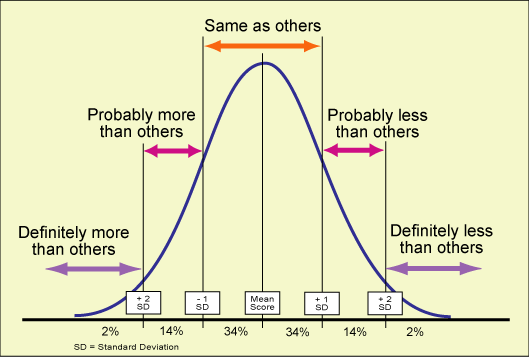
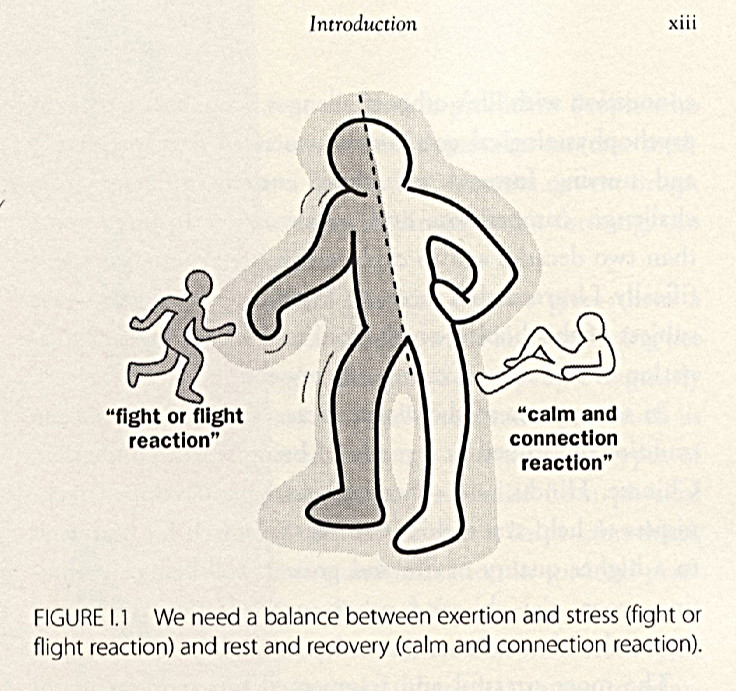

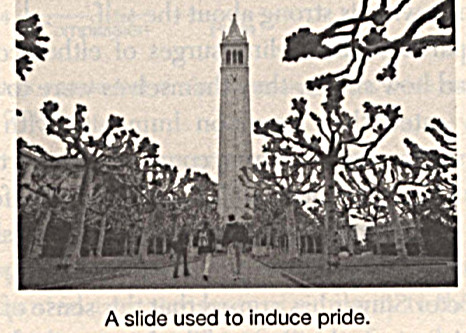
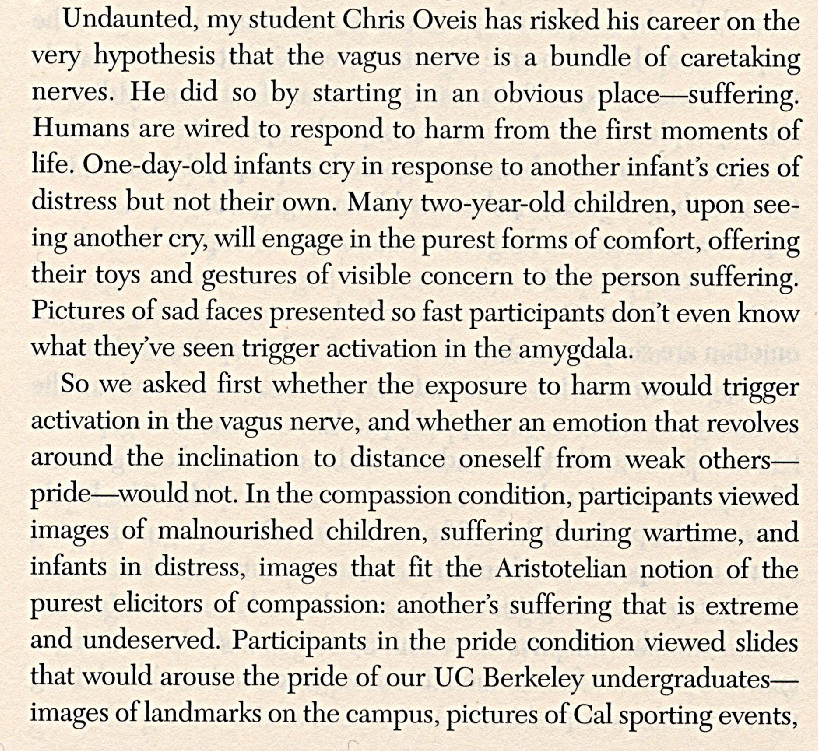
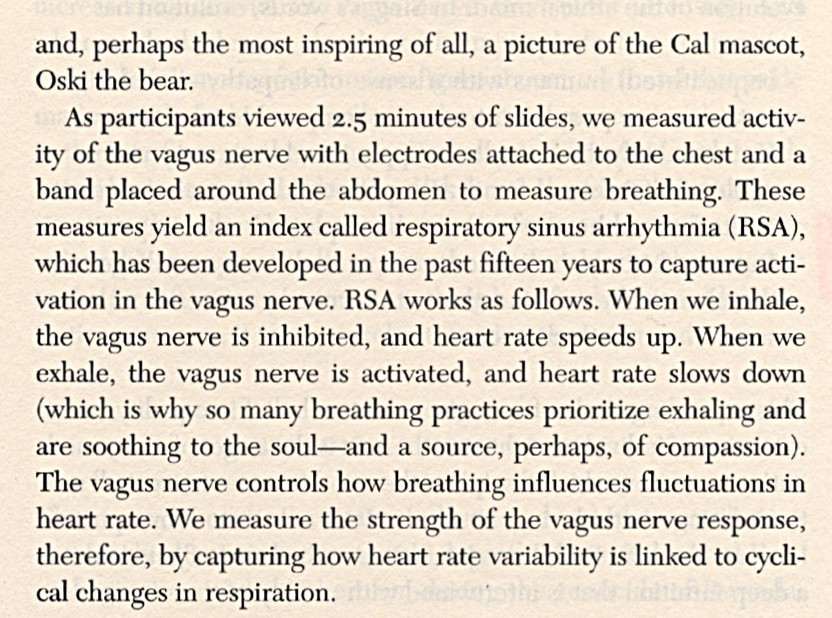
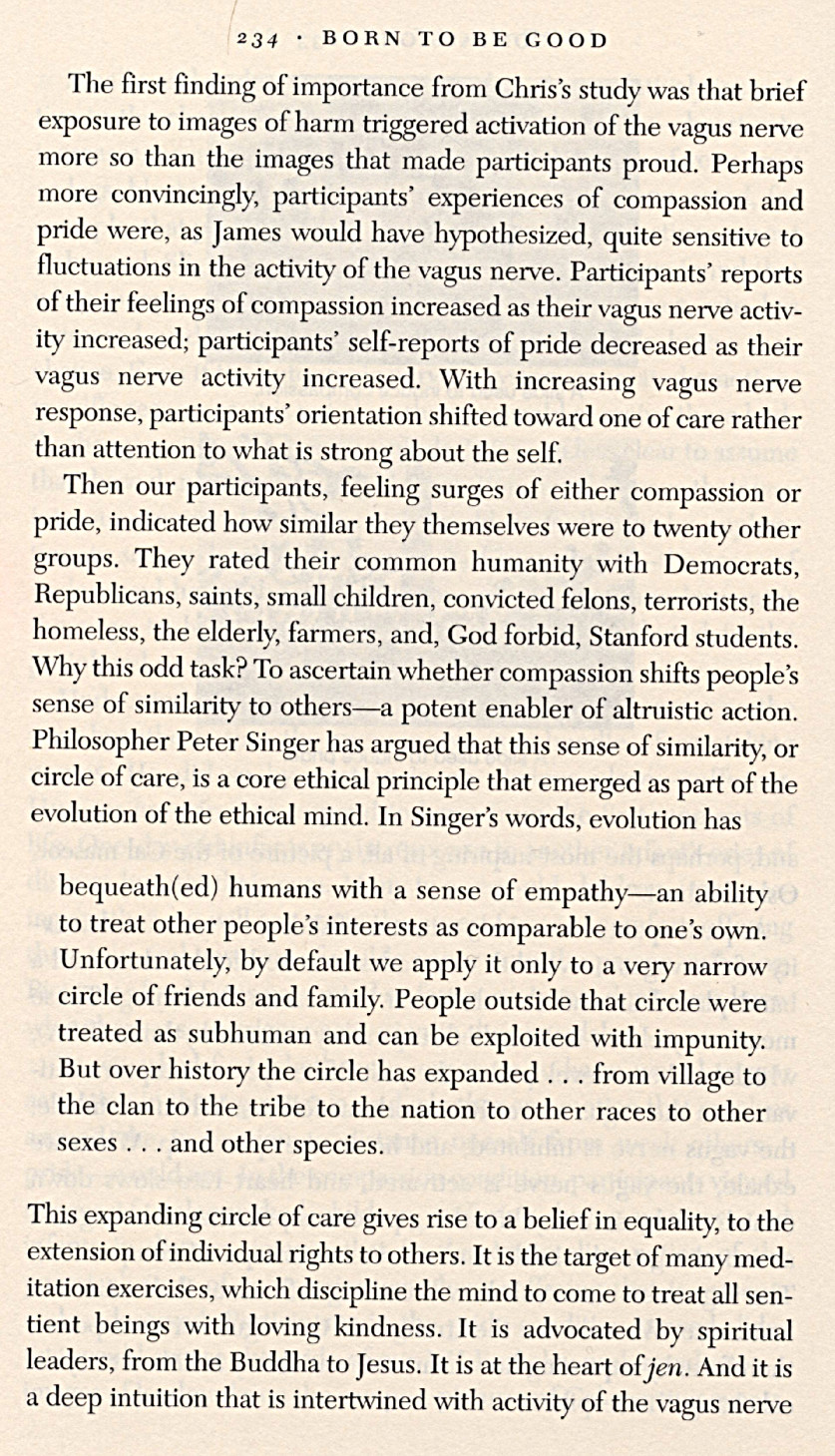
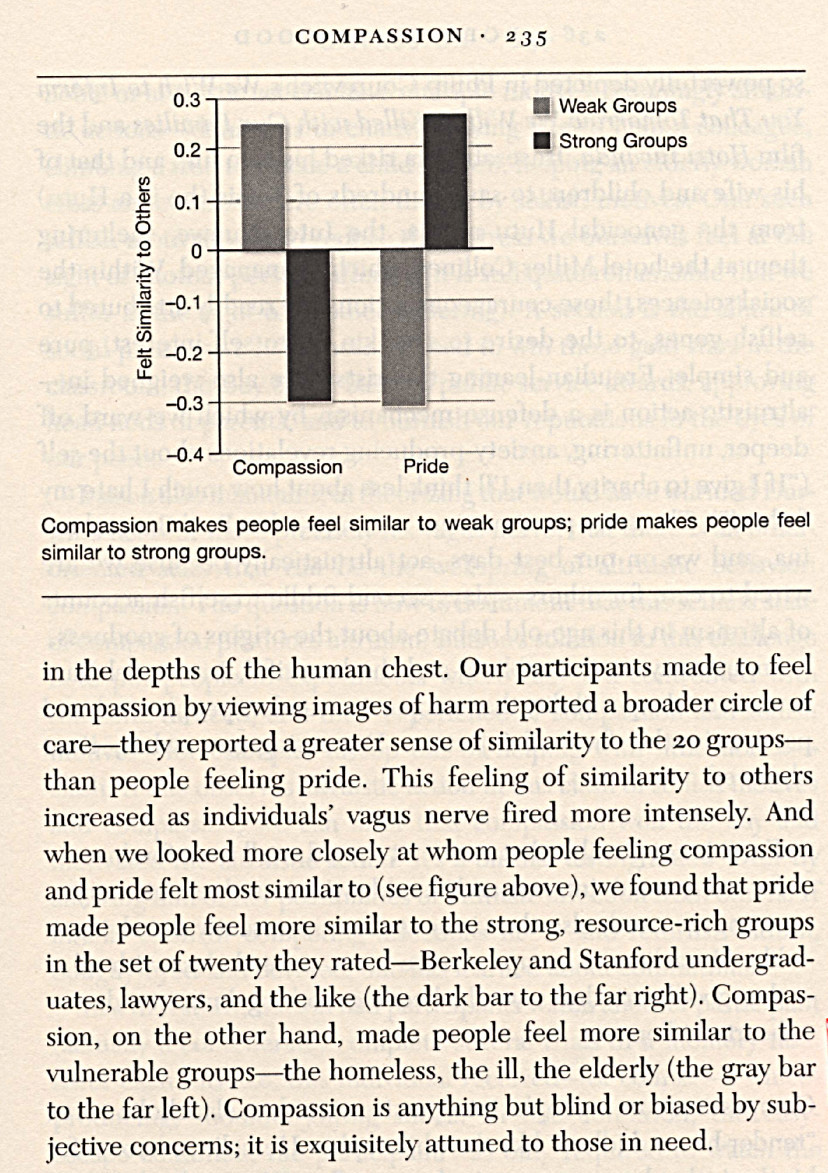

 Stop the Storm

You must be logged in to post a comment.