The most important work we can do, individually and globally, is the healing and prevention of traumas so that we don't pass them down to future generations. This blog is a working tool to contribute to this good work.
When it comes to being outside the circle of ordinary/normal infant/child socialization, I might just about be an expert. SO ‘at least’ my unusual perceptions as an ‘outsider’ allows me to think/perceive/suspect/wonder about things that ordinary/normal people (NOT severely abused and traumatized from birth people) might never consider.
Before I even write another word about resiliency factors I want to introduce the importance of HUMOR (dark, light, gray) when it comes to considering the context of your abusive/traumatic early life. I’m not sure there even IS any other way to think about the unthinkable — what went so RIGHT in an infant/childhood where so much obviously went so WRONG!
Yes, humor can put a different twist on things, shed a different light, allowing us to notice what tends to be invisible and overwhelmed by the darkness of terrifying and terrible infant/child abuse and trauma.
So — with a very important twist of enlightening humor –the following comes to mind…..
So — my mother forced me to spend weeks on end lying in my bed alone as a component of some bizarre punishment scheme of hers or another — at least I had a bed!
So — my mother forced me to stand in corners for days and days from sunup to after sundown — at least we had a shelter to live in — and at least the sun went DOWN though, “SHUCKS, too bad it came back up!”
So — my mother forced 99.5% of her insane abuse on me while my siblings (though witness abuse and trauma bonding must have been their fare) went out to play, ate dinner as a family, dragged in a Christmas tree, WHATEVER they were doing — at least I had siblings and was NOT absolutely alone with my mother as an only child and I had hearing so that I could listen to everyone else having a life…..
So — never once did my father intervene to stop my mother’s abuse, to acknowledge me as a loved daughter (etc….) — at least I knew who my father was, at least he never abandoned his family, at least he had a job and provided for us……
So — I was terrified at school of doing something ‘wrong’ so that my mother would get a ‘report’ from the teacher — at least I got an education and stayed smart and still love learning….
So — my mother belittled and shamed me that I wrote ‘stupid stories’ and drew ‘the ugliest pictures’ — at least our family valued ‘art’ and provided me access to the basics of paper, scissors, pencils and crayons.
So — my mother kept me most of my childhood from going outside to play — at least on our Alaskan homestead I always knew that the perfect beauty of the wilderness was just on the outside of the walls….
So — my mother violently bashed my head and face into the toilet bowl when I was four because she believed I was trying to murder my 2 year old sister when I was just showing her the beautiful bubbles the sunlight made on the pattern of the shadow of the hair ball floating in the water — at least my mother NEVER removed from me my powerful love of beauty…..
So — my mother viciously verbally abused me when my pet rabbit died — at least I had been allowed to HAVE a pet to love….
So — my mother abused me at times with too little or too much food to eat — at least there was always something in the house to eat…..
So — my mother took the family to Alaska when I was five, to a large extent to remove my grandmother from my life — at least I had SOME attention from my grandmother before then and I knew she was alive in Los Angeles….
So — my mother liked to place me in the center of the car’s back seat so she could train the rear-view mirror directly on me so she could stare at me and give me the perpetual evil eye — at least our family had transportation…..
So — we moved a bizillion times in my childhood — at least when my mother was en-captured in her move-a-thons she had less time to traumatize me and at least some of those moves took us up to the homestead I loved….
So — my mother beat me many times ‘to within an inch of my life’ — at least there was always that inch….
So — holidays were among the very, very few times my mother’s direct abuse of me abated — at least there were holidays…
So — ‘being in public’ meant that my mother bit her tongue and restrained her fists — at least there WAS public (sometimes)….
So — my mother let me clearly know she hated it that “Linda is never sick” and let me know she wished I was and that none of her other (precious) children had to suffer (as if it was my fault that I refused to take on THEIR sickness) — at least I had a healthy strong body with incredible stamina that allowed me to endure and endure and endure her…..
So — my mother screeched at me when I was 17, “You are no better than a snake! You would be a terrible mother! I hope God never sees fit to give you children.” — at least I proved her DEAD WRONG!
The comments to my last post have stimulated and challenged my mind. I know myself well enough to say that I will only ‘make sense’ of my own thoughts if I write them. Putting words down in order satisfies both sides of my brain, and I as the participant in the middle need to know what all of me believes in response to those comments.
First of all some part of me wishes to apologize to my readers that my perceptions are so completely limited to my own experience. In conversation with my friend last weekend the point was made that the reason why I absolutely lack the ability to understand ‘normal/ordinary’ (I note my ‘new’ use of slashes as I find a way to expand and include thoughts that are bound together in meaning to me) people’s strong prejudices, biases, and rigid closed-mindness about so many important aspects of being human.
My friend vehemently insisted that the foundation of beliefs that govern people’s values (and their expression in word and action about them) comes from what people LEARN. My friend then treated learning as if it is fact.
I see nothing whatsoever factual about what people tend to believe about themselves in relationship to so many other people. “How,” I ask myself, “can something LEARNED not be continually and fluidly subject to change through MORE and NEW learning? How is it possible that people get absolutely STUCK with something they learned before regarding beliefs that (to me) have no basis in fact AT ALL?”
++
Well, leaving that track of thought I understood that my nearly complete social isolation for the first 18 years of my life (with the exception of pantomiming being a child in school), I MISSED out on the kind of learning that binds and packs people together. And because I missed being socialized on so many levels I did not learn what most people evidently do learn.
Therefore I cannot understand WHAT they learned any more than I can understand HOW they learned it or WHY they can’t learn something new that would be far more conducive to a pleasant world citizenship all the way around!
++
THESE thoughts are feeding themselves into the channel of reactions I am having to the comments to my last post. “What it is about making sense of trauma that MATTERS so much to me? What is it about learning as much information as possible about the CONTEXT of infant-child abuse/trauma that FEELS so vitally important to me?”
I look around and look around and look around at the context of ME as a survivor of nearly constant, continual and terrible abuse for the first 18 years of my life and realize that I can no more expand my thinking about what it might be like for others who DID experience terrible early abuse/trauma but ALSO experienced BREAKS IN THE ABUSE/TRAUMA THEY EXPERIENCED.
The particular context of my history is that there were no breaks of note in the 18 year ongoing panorama of abuse toward me.
So why do I write a blog about abuse/trauma if I cannot form a bridge and cross it between what I know and what other people know?
Good question. My writing is completely biased.
++
So back to making sense of early abuse/trauma and context. Humans have active sensing abilities before we are born. Then we are born with these abilities to gain information through our senses fully active and growing in their power.
To me, ‘making sense’ of all aspects of our self in the world is just a simple, basic fact. That is what being alive MEANS to me.
When I think about connecting all the information that we are constantly sensing from outside our body and from within and THEN take my thinking to the next level, all I see is more of a natural continuum. As humans we take all we SENSE and use this information to ‘make sense’ that we can detect with the complex abilities of our brain.
++
All these words above paved the way for me to think through what I need to say next here: The MOST important tool we have as human beings, no matter WHAT or HOW our life has played itself out since our conception, IS THE POWER TO MAKE SENSE out of ourselves in the world.
When it comes to infant-child abuse and trauma, if we DO NOT gain as much information as possible about the biggest-picture-context of the environment (most importantly about the people in it) we cannot possibly LEARN what we need to know that will assist us to be free of the NEGATIVE impact of what was done to us.
++
I am talking about RISK factors as they are intricately interwoven with RESILIENCY factors.
RISK factors lie on the side of what ruptures safety, security and calm peacefulness.
RESILIENCY factors lie on the side of what repairs the ruptures so that safety, security and calm peacefulness return.
Because we are members of a social species, and because all of our experiences including abuse/trauma happen in relationship to another member of our species (one way or the other), the entire STORY of our life is a story about our degrees of safety, security and calm peacefulness IN RELATIONSHIP WITH AND IN CONNECTION TO OTHERS OF OUR SPECIES firstly and most importantly.
THERE IS NO STORY WITHOUT CONTEXT. THERE IS NO COHERENT STORY WITHOUT SENSE.
IF there is abuse/trauma the story will NOT be truly coherent. The sense of the story will be lost.
I believe that looking for the CONTEXT of one’s life is the most certain way of healing our stories — and therefore our LIFE and our SELF.
++
These conditions I share with all others. I find this fact very comforting.
Everyone’s life has a context. Some people don’t have to pay this fact much attention. Those of us who suffered severe early infant-child abuse/trauma HAVE to find the biggest context possible because it was the power that this CONTEXT had to traumatize US that matters most in our process of healing from the abuse/trauma’s consequences.
The more the CONTEXT of our early life ran us over as individual little people the more we can benefit now from identifying this CONTEXT so that we can separate our SELF from it.
HOWEVER!!!!!! I must say this: The context of our earliest life DID NOT CONTAIN ALL BAD! If it HAD been all bad, we would be dead.
I believe it is extremely important that we locate within the context of our earliest life, no matter how terrible the abuse/trauma was, what the GOOD aspects of our life were at the SAME TIME.
This is where we will find the RESILIENCY factors that WERE there in the midst of the terrors and horrors of our abusive/traumatizing early years.
++
In fact, we cannot find and describe the big picture of the CONTEXT of any part of our life without including these powerfully positive resiliency factors. This is, to me, one of the necessary components of MAKING SENSE of what happened to us — no matter how BAD that part of our experience might have been.
I also believe that we cannot accurately name the risk factors that allowed trauma to topple down the generations and land in/on us without at the same time naming the resiliency factors that ALSO toppled down the generations to land in/on us. CONTEXT allows us to name the BAD of what happened to us at the same time we name the GOOD of what happened to us.
The more information we can INCLUDE in our conscious efforts to heal so we can ‘move on through our life with increased well-being’ means at the same time that there is LESS information being EXCLUDED.
The EXCLUDED information lies in the realm of the ‘secrets’. Unresolved trauma thrives on secrets. Trauma needs to communicate its wisdom toward a better future. When trauma resides in secrets important information it needs to share remains out-of-reach and worse than useless.
Unresolved trauma creates HARM. I believe it does so largely to MAKE US PAY ATTENTION TO IT.
Importantly, when the secrets hidden in unresolved trauma are kept alive, what helps us SURVIVE trauma resiliently remains obscure as well.
++++++++++++
I will say one other thing here: As one commenter pointed out to me, my life story is about what my mother did to survive HER trauma (I think I paraphrased this OK). Nothing about my mother’s infant-childhood abuse/trauma was openly acknowledged and understood — until I investigated the CONTEXT of the abuse that happened to me and came to understand that what happened to me was distinctly a part of the context of how my mother survived what happened to her.
And on down the generations bludgeons unresolved trauma.
As twisted as this may seem at first glance, what happened to me in the context of the bigger picture WAS a good thing. What happened to me was a direct result of how my MOTHER survived what happened to her. If survival is the ONLY real concern, it was all GOOD. If my mother had not found a way to survive the horrors of her own childhood I would never have been born at all.
Looking for and at the resiliency factors that were available to my mother, she used the only ones that were available to her.
Right along with looking at what went so WRONG for my mother in her earliest life (due to risk factors) I ALSO look at the absence of BETTER resiliency factors than the ones she had available — and used.
Moving forward just a little bit along my current thinking here I want to add that it wasn’t JUST the terrible abuse that my mother perpetrated against me that was the RISK factor for me. It was also if not equally a risk factor (and a missing resiliency factor) for me that NOBODY intervened to protect me — just as nobody intervened to protect my mother when she was little, either.
All severe infant-child abuse survivors had heavy-weight risk factors AND heavy-weight resiliency factors. How can we move toward healing if we don’t know the fullest context possible of what happened to us so that we can consider both?
I do not mean for this post to be a morbid one, only an informative one. In looking at the power than unresolved trauma has to follow in families on down the generations I want to write about two discoveries I have made regarding important MEN in my family tree that have to do with the ‘missing’ children, the dead ones, whose initial ‘being in the world’ no doubt impacted the entire lives of these MEN, albeit perhaps invisibly.
Perhaps it is simply my own limited range of thinking and vision that alerts me to the possibility that it is NOT so much the stories that are told in a family — as few or as many as there may be or have been — that truly matters most. It seems more likely to me that it is the stories that are NOT told that are the ones that contain the storms of intergenerational unresolved trauma that can combine to impact future generations in traumatic ways that TRULY MATTER.
Those of us living today receive the benefit of medical advancements that have lessened or eliminated especially the risk of premature death for infants and children. It was not too many generations past that the continued life of one’s offspring could be counted on.
There are schools of thought that suggest that modern efforts toward the protection of children did not come into play until the survival of children was more likely to happen than it did in the past. Before medical advancements came along to help protect the life of people from diseases we can now prevent and treat, so many parents lost their little ones that a sort of emotional (and affectionate) vacuum existed to lessen the profound grief that losing one’s infants and children had on parents in the past.
++
It was not unusual in the past for infants and children to be treated as possession-objects rather than as human beings with needs, feelings and rights of their own. In order to more fully understand how we, as early infant-child abuse survivors experienced the ongoing trauma that DID come down to us from our family’s past history, we need to gather for ourselves as much information as we can about the possible CONTEXT that is NOT told in the stories that belong to and within our family tree.
++
I contrast to what I am writing here don’t consider myself especially interested in a genealogical search for my ancestral connections. Yet at the same time I have devoted many, many hundreds of hours to transcribing the writings of my mother, even of her mother, letters of my father as these words filtered down over time into my possession.
I only through accident have come across two streams of information that directly apply to my words here today.
The first piece of information relates to the contextual history of my own father. The stories told within my family of origin always included the fact that my father was an ‘unwanted’ child that arrived late among his siblings. We were told that his sister (unwillingly) was given responsibility for his care when he was young and ‘raised him’.
Much later when I was an adult over 30 my father told me that during his childhood his mother ‘never left the house unless she had to go to the store’ and ‘never had company come to her home’. This information gives me a sense of the context of my grandmother’s depression and/or sadness that I am quite certain PROFOUNDLY affected my father’s infant-child development.
It has only been in the past few months since my daughter began gathering family records to connect herself to my father’s mother who was a member of the Daughters of the American Revolution that an important NEW piece of information arrived about the context of my father’s family. Included on my father’s birth certificate is the fact that there were FOUR children born living while only THREE were living as my father was born.
A MISSING CHILD among my father’s siblings.
This fact was NEVER mentioned in spoken words at any time that I know of, and yet is SUCH an important one that it has rearranged and changed everything I know about myself, as the daughter of a man who never stood up to his abusive wife, who never ONCE intervened to protect me or any of my siblings from my mother’s insanity and abuse.
I know enough to understand that the grief of losing a child affected my father’s parents — and siblings — and within the bigger picture, the enlarged context of my family of origin — that missing child affected me.
++
This past weekend I had a woman come visit me overnight who has been a friend of mine for 30 years. She lives in Annapolis but was in Arizona visiting her sick brother and popped on down to visit me. My friend has been deeply involved in researching her family tree, and generously spent time online showing me information that can be accessed on my own family history.
I chose to have her look into my mother’s father’s ancestral line. While she couldn’t go back very far, what was found is fascinating.
And NOTHING that we found was EVER mentioned in story by my mother whose parents divorced in 1930 when my mother was five. My mother’s mother remained angry and embittered, full of hatred for her ex husband until her death. She forced her hatred into my mother so that my mother ‘disowned’ her father and never saw him again past about the year 1932.
My mother’s father’s side of the family tree was amputated and erased from the spoken history of our family, but the effects of even this bitterness and the family trauma it was connected to DID affect not only my mother, but also impacted me, and through me, my offspring.
++
We could find no information further back than the 1881 Canadian Census, and moving forward to the 1900 United States Census.
Perhaps because my friend is a member of the Unitarian Universalist Church she immediately noted that my mother’s father’s father (my great grandfather) had listed himself as a member of the Universalist Church on the 1881 census. His father was listed as born in England, his mother as born in France and French speaking. We could not find the name of either one of these ancestors of mine.
We did find that the first Canadian Universalist (Unitarian) church was started in Halifax, Nova Scotia, Canaca in 1937, and that my great grandfather was born there in 1845. (His wife was also born there). These people immigrated to the Boston, MA area in 1882 and by the 1900 census were listing three children: Ada (23) who I know nothing about, her brothers Howard (11) and Charles (9). Charles became my mother’s father.
ALSO included in the census information is the fact that there were FIVE dead children probably between Ada and Howard. No matter what happened to them, that is a LOT OF GRIEF AND TRAUMA that I never heard anyone ever say anything about.
++
What this tells me in simple fact is that my mother’s father was the youngest child in his family as was my father in his. I know enough to suspect that the silent, invisible grief in BOTH of these families affected these MEN — right on down the line.
++
The other piece of information about my great grandfather’s connection to the Universalist Church in Nova Scotia has provided an avenue for continued ancestral search because according to my friend’s online search that church still has all of its records. I have emailed them asking for help. I would like to know if my unknown great great grandparents were involved in the founding of this first church in Canada.
I am also intrigued with the unique religious affiliation that these ancestors of mine had outside of the ‘mainstream’ of Christian culture. Learning this piece of information rearranged how I think about free-thinking self and my own very free-thinking children. That all of these ancestors, all the way back to the French ones (I hope to find my great grandmother’s maiden name from the marriage records of the church in Halifax), were NEVER mentioned by my mother is a clear sign to me that just as there are road signs to unresolved trauma within families carried in the death of children, there are also road signs to unresolved trauma carried within other family history that is encased within silence.
++++
I do not believe that severe infant-child abuse EVER EVER simply pops up within a family out of nowhere. If there is abuse, it came from somewhere and is a part of a much bigger picture of trauma and is part of a much larger context that we MUST find as much information about as we possibly can to further our own healing process.
It might seem like nonsense within our culture to put the emphasis that I do personally on the need for severe infant-child abuse survivors to go back through any safe way they can to gather ANY and ALL POSSIBLE INFORMATION about family history so that our understanding about how unresolved trauma FROM THE PAST directly impacted what happened to us can be broadened.
Trauma does NOT easily resolve itself in silence — not when it happened and not as it passes down through the generations.
I also believe that blaming and shaming the perpetrators of abuse is NOT helpful to gathering the kind of contextual information that we need to know. If, as I suspect, trauma does not resolve itself until somebody, somewhere at sometime LEARNS what the trauma has to teach, we need to learn as much as we can about what the signals/signs/symptoms of unresolved trauma are.
Finding that there are amputated branches from the family tree, such as there are in mine, and finding that we had ancestors that died as babies and children so that the unresolved trauma of grief passed down the generations and no doubt affected our parents IS NOT MEANINGLESS TIDBITS OF INFORMATION.
Every bit of unresolved trauma from ‘back there’ found its way, sometimes in trickles, sometimes in roaring rivers, into the ocean of sadness, violence, confusion, loss and rage that fed the traumatic abuse that happened to us. The more we can know about these histories, the more we can find, hear, tell and learn from the stories (especially in the silent ones carried within families), the more coherent our OWN life story and our telling of our own life narrative will become.
Because the inability to tell a coherent life narrative is the number one sign of an adult insecure attachment system-disorder, it is critically important that we find and use anything we can find that helps us make sense out of trauma. We can make progress this way in smoothing out the pathway that leads through us from the past into the future.
Our individual participation in this ‘smoothing out’ process, gained through knowledge that leads to understanding and compassion, will increasing contribute SOOTHING healing and equally soothing calmness for our own self and for all those we are in contact with as we work to put trauma to rest.
If any reader ever wishes to write a guest post for this blog you are more than welcome to do so! The best way for you to do this is to add your post as a comment at the last tab that appears with the pages at the top of this blog:
We can all describe and document our experiences as infant-child abuse survivors. The growing body of this information, as it is contained in our stories and experiences, is growing online to become a most valuable resource for everyone — no matter what stage of our journey of life we are writing about.
The ‘professional’ community at the ‘top’ has been missing the truth of what we at the ‘bottom’ truly know about living our lifetime in a trauma-changed body that was altered through our experiences of having to adapt our physiological development to an early environment of trauma. It is time for us to find our words to describe a reality that those at and near the ‘top’ (the Pampered Ones) cannot — on their own — even begin to imagine.
As so often happens I have no idea what I need to say until I write it. If I don’t write my thoughts just continue to roll around in a jumble like long scarves swirling around in a tumble drier. I am thinking about how one’s social-emotional early forming right limbic brain develops must appear in action during conversation. (I almost said human-to-human conversation, but is there other kinds? Yes, I do think so.)
If patterns of safe and secure or unsafe and insecure attachment revolve around patterns of rupture and repair, then I suspect these same patterns govern our ‘people’ conversations. (My thoughts are spinning around very quickly so I will have to hope what I pick out of this swirl applies to what I really want to say!)
Resonance and mirroring, sending and receiving signals — along with activated safety and security attachment needs versus the ability to deactivate one’s own attachment system so that caregiving can happen — are a part of human interactions we have with others from the moment we are born.
What about the patterns of rupture and repair in conversations?
I wonder: If true empathy and compassion are present in conversation MUTUALLY do the patterns of rupture and repair never have to occur? Is this kind of conversation, then, the kind that leaves us feeling ‘balmed’ – listened to, hear, appreciated, valued, understood and BETTER for the conversation?
I would contrast these soothing, balming kind of conversations to ones where there is a disturbing competition between the speakers. Who is right? Who is wrong? Who is smartest? Who knows more than the other? How does the competition for the ‘goodies’ of conversation play itself out?
In patterns either of rupture with repair or rupture without repair. And we KNOW the difference. A competitive conversation leaves us feeling disturbed if not distressed like neither participant was able to truly say from the heart what they would have liked to say — and neither truly listened to or heard the other.
++
I believe that some people are by nature, by design, or by trauma-altered early development far more competitive than others. There is a spectrum of aggression and on this spectrum lies those people who thrive on competition and those who find competition troubling and unnecessary.
I am one of those who see very little need for competition. When competition appears in conversation it means to me that someone is trying to override (in disrespect) the other. To me, competition does not happen when there is a mutual acknowledgment of ‘there’s plenty of resources to go around’.
Traumatic backgrounds often leave people feeling desperately unsafe and insecure in the world so that their attachment system never actually turns itself off. Rupture WITH repair allows for attachment needs to be met so that the system can turn itself OFF.
Rupture WITHOUT repair in relationships and conversations happens, I suspect, when one or both people’s insecure attachment systems remain ON so that one or both peoples CAREGIVING system cannot truly (honestly) be activated. Our attachment and our caregiving systems are so linked together than diminishing activation of one system allows for increasing activation of the other. Humans are not designed to operate with these two system dissociated from one another.
I am NOT saying that either attachment or caregiving remain separate from one another. I AM saying that the way that they are always linked together affects our patterns of human interaction either toward a center point of soothing calm or toward a center point of competition for scarce and needed (depleted) resources.
The fact that we are not educated in any way to usefully recognize these patterns so that we can identify them, name them, own them and then bring under our power of conscious choice our ability to ALTER how these patterns are operating creates (I believe) far more unsatisfying than truly satisfying conversations with others people in our world.
I suspect that the more we are in competition with one another (nearly always on the unconscious level) the LESS able we are to help ourselves and others increase our sense of safety and security in the world. This means we are then NOT increasing our ability to feel empathy and compassion because degrees of safety and security are what allows true empathy and compassion to operate.
Our body is designed this way. Our safety and security ‘sense’ system is directly tied to our (anxiety producing) stress versus calm/connection (soothing) response system. I do not believe that genuine connection between people involves active competition — on any level (I am not talking about ‘friendly games’). I also suspect that if a person has unacknowledged need competition with others for scarce resources will be present on some level.
++
For the first 18 years of my life I was nearly completely barred from social opportunities to participate in banter, gossip, or any other (more?) meaningful human conversation (some experts suspect that humans acquired verbal language due to our motivation to include more members of a social group in gossip). I DID witness, listen and watch others any time I was around them. Nearly all of the time to this day some aspect of who I am is involved with this same process — which contributes to my sense of remoteness and disconnection from others. I believe I was wired this way from birth.
Being involved in this kind of remote watching even when I am involved in conversations with others often feels awkward — if not just plain ‘wrong’ — like part of me is spying upon and critiquing ongoing patterns of conversations, detecting what others were built-from-birth to know instantaneously and automatically and can simply accept as givens and ignore.
Because solitary confinement and social isolation was such a large part of the patterns of abuse I experienced the first 18 years of my life I do not believe that ordinary human conversation (even in my native English tongue) will ever be natural to me. I am an ‘outsider’ who can somehow ‘cheat’ in conversation like I am watching a movie and can detect in human conversations what others do not(though I was the one initially who was cheated and deprived of what most people take for granted).
Then after conversations I have participated in I have a whole basket full of information I have gleaned by watching the patterns that I have absolutely NOBODY to share the information with. So today I share this with you.
I was able to sit in my garden this morning to watch the first sun rays touch the delicate leaves of the Ballerina Rose bush I moved yesterday. “Ah-Ha!” I thought to the rose. “I can tell you will be happy there, and I am glad! No longer will you have to wait too long each morning for that light you so desperately need. You will grow into a beautiful plant now. Just wait until next summer. You will see!”
I hope 'my' rose reaches this fullest expression of beauty -- in its own time.
It was cool last night, though still not quite a hard freeze. There is no breath of wind, and I was able to hear each leaf collapsing off the branch of the old Mulberry tree I hard-pruned last summer. Plink! Click! Clatter! Each single leaf marked its falling with a sound hitting the hard adobe walkways.
Does a falling leaf remember its life growing upon the twigs and branches of a tree each year? Does it remember its falling? Can a leaf remember itself once its eaten by a worm and becomes new soil that in turn can feed the growth of something else?
++
I thought about how hard my day was for me yesterday. I realized how critically important my garden is to me — for a reason I have not until now clarified in words.
My garden is a collective storehouse of my memories.
This helped me to understand more clearly that just as a leaf is not likely to remember itself in its life, I cannot really remember myself in my life, either. My memories are not ‘attached’ to me as I suspect ‘ordinary’ people’s memories are attached. My memories are attached externally to objects and to people.
Semantic memory is a memory for facts, I think always available in their connection to descriptive words.
Autobiographical memory is SUPPOSED to form so that a self is in the middle of the memory — because they were in the middle of the experience of not ONLY the experience as it happened in time — but most importantly they were in the experience of HAVING the experience as it happened.
This is connected to the critical FEELING FELT process that is supposed to happen for an infant as its body-brain is building through interactions it has with its earliest caregivers. The nature of the infant-caregiver interactions are SUPPOSED to mirror back to the infant, reflect back to the infant, and resonate with the infant in such a way that the infant begins — through the experience of FEELING FELT — to know that it has a SELF inside of it that is having the experience of feeling its own self in its own life.
I MISSED THIS STAGE OF DEVELOPMENT, and once this stage was missed and the ‘feeling felt’ neurons did not develop in an ordinary way, I have lacked the ability to FEEL FELT in my body in my own life — for ALL of my life.
++
I thought again this morning about the very first time I encountered a literal awareness of the passage of time. When I was 18, fresh away from home and just out of Naval boot camp, I met a man I fell in love with, had a child by, and eventually married (and soon divorced).
This man had friends with money who lived high on a hill somewhere in the San Francisco Bay area. We went to visit them one day and I saw my first hammock. It was pure white, strong and new looking, hanging in the sun from the branches of two trees that overlooked a vineyard.
Nothing should have been especially noteworthy about my seeing the hammock, and there wasn’t until I returned 2 years later on another visit with my partner and encountered the hammock again.
There is STILL something intangible about my experience of having the experience of encountering this hammock a second time. There it was, the same hammock, but now it was sun rotted, broken and shredded, dirty and in threads half hidden in a growth of weeds.
I remember standing there gazing at the hammock in SHOCK!
It wasn’t the hammock itself that I was responding to so much as it was my very first experience of SEEING the passage of time.
++
As I remember this memory this morning — the hammock as I first saw it, the hammock as I saw it next — and as I remember the stunned sensation that filled me at realizing PHYSICALLY in my body that enough time had passed by since I had first walked upon that spot that the hammock and disintegrated into nothing but a tangled web of broken strings — I realize that this is the clearest example I have in my life of how the passage of the time of me in my life is connected NOT to my own internal experience of myself passing through time but is rather connected to how everything I can notice OUTSIDE of myself passes through time.
++
My memory returns to the second experience I am clearly aware of that again involves a physical object (as if these things have a life of their own — like a leaf) with its own ‘life in and over time’.
When I was 20 and first moved with my little daughter to Fargo, North Dakota I was blessed with the sweetest landlady anyone could every have — Lily. Over the few months that I lived in Lily’s basement apartment I often sat with her at her kitchen table and shared coffee with her and visited.
After many such encounters one day something came into my awareness — again with a sense of shock. There on the lowest shelf of her narrow shelves built into the wall next to her kitchen table was the exact same sand-filled, metal-topped, plaid cloth-bottomed ashtray — that had ALWAYS been returned to sit in that same exact spot.
Thinking about my own inner reaction to my realization that the ashtray ‘resided’ in that spot over time reminds me of something my son said when we were eating burgers at a restaurant when he was three. Well, actually, he was NOT eating his hamburger — a fact that created this specific memory for me.
We were ready to leave and as I looked at my son’s plate with its burger still intact I said to him, “You haven’t even touched your hamburger!”
He replied from his three-year-old’s perception, “Here, momma, I am touching it now,” as he gingerly placed the tip of his right pointer finger on the bun.
“Oh,” I said next. “I guess we’ll just have take it home.”
My son, in his young thinking-processing stage was NOT being sassy when he responded back. “But Momma! We can’t take the hamburger home! It already is home! This is where it lives!”
At three years of age and beginning at the end of the second year a child “can construct accurate representations of events that endure and are accessible over time.” These are imprinted into the right brain hemisphere as AUTOBIOGRAPHICAL MEMORY.
++
My son was very much involved in related growth and developmental processes that happen as ‘Theory of Mind’ develops — as he went through them HIS WAY. Eventually, of course, he grew to understand that hamburgers don’t ‘live’ anywhere and don’t have a ‘Theory of Mind’. Hamburgers also don’t have memory — at least not as we usually think of memory.
++
I have a whole collection of sticky notes attached to this growth chart I am looking at. I have been waiting for years to be ready to address them, in all their simply stated accuracy, in my writing. These statements are about critically important inner growth processes that happen from age one to age four. These stages of development are built upon the first foundation of body-brain development that happens from birth to one through early attachment relationships an infant has with its caregivers.
So far I cannot look directly at these next stages of development because I personally know that NOTHING went as it should have in my development up until age one — and therefore all of my future development was altered, as well. I have not wanted to face what all these changes did to me!
Yet I also know that my ability to have ‘ordinary’ experience of having experience with the FEELING FELT in my own body as the experiences happen — and then storing those memories autobiographically — was stolen from me by severe abuse from birth. I was amputated from my own life, separated from it as surely as each leaf I watch plummet to the earth on a windless morning has been amputated from its tree.
++
Identifying specifically HOW I experience my life is hard enough. Finding words to describe it is equally as hard. While I know I am the person who watched those leaves fall this morning, I cannot FEEL it.
As I have worked toward being able to write my own story about my own experience of my severely abusive infant-childhood I have struggled with being able to remember what remembering myself in my first 18 years was REALLY like.
As I do this work I increasingly realize that how I experienced those first 18 years is the same as how I have ALWAYS experienced myself in my life.
Perhaps nature had no better way to assist me in surviving those 18 years of traumatic hell other than to remove from me the ability to truly FEEL myself feeling myself as I went through those experiences.
Instead every experience, as an amputated individual snippet in time, appears to me as if I had remotely WATCHED what happened from a very great distance away (like watching a hammock or an ashtray over time). Today it is becoming even more clear to me that the process I use — have always used — to remember my life is SEMANTIC recall of the facts as they happened and does not involve what ‘ordinary’ people would use as autobiographical memory building and retrieval.
I have always been left outside rather than inside my own life. I believe I lack the neurological underpinnings that would have formed the circuits and pathways inside my body-brain so that I could CONNECT and ASSOCIATE and ATTACH my own self in a ‘feeling felt’ way through time as I live in this body in my lifetime.
On this physiologically-trauma-changed level I ALSO lack those same required neurological pathways and circuits that would enable me to truly feel felt WITH and BY anyone else. I am left wondering what the ‘ordinary’ experience of life is even like for other people — and I truly believe I will never know. Once these emotional-social patterns are built into the body-brain BEFORE THE AGE OF ONE they cannot be changed.
The earliest foundations of body-brain growth and development happened for me in the midst of terrible trauma in such a way that my pathways and circuits were made in a different-than-ordinary way.
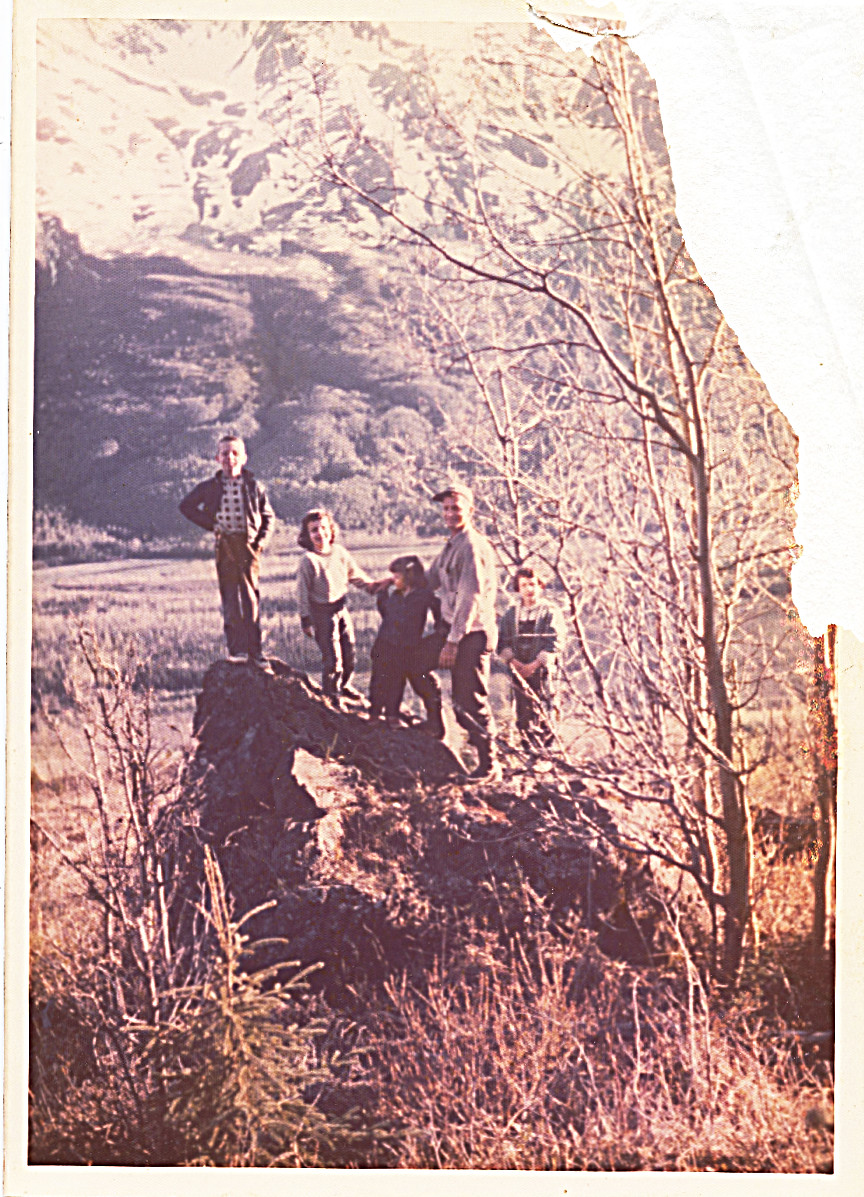
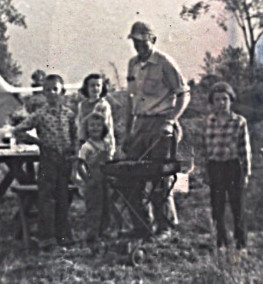
As surely as the body of the little girl me in those two pictures I included in my last post look like they were cutout and pasted into a picture of ongoing life of OTHERS that had nothing to do with the reality of my life, I am STILL a cutout-and-pasted-in person in the midst of a stream of life that I experience very, very differently from others.
Yes, I experience feelings. Intensely. But somehow my emotions are disconnected from my memory process in such a way that the literal facts of events are stored (as they are for everyone) separately from the emotions. In my case the emotional of memory (stored by a different process in the body as it is for everyone) is ALWAYS disconnected, unattached and dissociated permanently from my memory recall.
++
In rewinding the ‘movie’ of my thinking process this morning I need to add in the part about going to visit yesterday’s post commenter’s blog and reading what he says there about Dissociative Identity Disorder from his experience and perspective. As I read I found myself being envious of people who can experience the experience of having ANY identity — from inside their own self — at all!
I think about looking at my newly moved rose bush shining away in the sunshine this morning. I can only begin to try to imagine what the rose bush’s experience MIGHT be like. As I look at my newly planted apple tree, also shining away and gently swaying in the emerging morning breeze I can wonder what it MIGHT be like to be that apple tree.
As I remember myself yesterday I try to IMAGINE what it was actually like to be me, to have my feelings and thoughts as I did yesterday, because I cannot FEEL myself in my memory from yesterday any more than I can feel what it might have been like to be anyone else — yesterday.
I document all of this simply because I know I was formed in an extreme environment — yes, like in a perfect storm. My mother was so insanely focused on what she did to me from birth that she was able to effectively beat, terrorize and remove from me all of my own ability to know what it was like to actually be me in my own life in any way except in the exact present moment as it was/is happening. Not only did she cut me off from nearly all human contact other than with her, she also cut me off from my ability to be in contact with my own feeling-felt self in my own life.
I therefore have a version of Dissociative Identity Disorder without any real, stuck-together, feeling felt version of any identity at all. I exist from one moment to the next because I semantically (factually) KNOW that I do — and because I exist to other people. No wonder I responded powerfully to the quip about “If a tree falls in a forest and nobody is there to hear it, does it make a sound?” when I first heard it shortly after I left home at 18.
This post is for this girl — I am still the same person and feel the same way.
Me left out -- I have felt that all of my life, just a few times less left out - very much feeling this today (me with my father's back turned on me - in a different universe than my siblings were - and I still pay the price for that)So sad. Sadness beyond 'in my bones' - in all the cells of my body -- and still there
I know I can’t think my sadness away, but I spent the day garden-building and trying to ask ‘God and the angels’ to show me what I can learn from it.
I miss the man I love (who prefers another’s company) and I miss my children and all my siblings more as the holidays arrive than usual. I HATE ‘the holidays’.
One of the ‘helpful’ insights today was knowing that I am not alone in how I feel, and ‘things could always be worse’.
Far from happy thoughts — either of THOSE two.
Not that I did actually arrive at any happy thoughts today — but I did end up (perhaps mixing up my holidays) thinking about Jesus on the cross and how alone He was there — but for his Father and the angels.
Then I thought about how easy it might be for humans to forget about God when they are happy with one another — well, I don’t fit THAT picture!
Tomorrow on Thanksgiving I am going to a friend’s house to help her in the kitchen — be with people — eat good food. My friend feeds anyone in the community who wishes to come every Thanksgiving.
I went last year, and ‘hiding’ in the kitchen suit me. Serving food to others suit me. Being quiet suit me. Watching and listening to others (as if they belonged to a different species than I do) suit me. I am not sure that I have ever truly felt any more a part of a group than I did in the picture of my father and his three favored children on the big Alaskan rock.
++
At 59 knowing that I can’t CHANGE how I feel pisses me off more than anything else. I no longer have the false desire to try, either. I am soul tired.
People say, “Everyone feels alone in a crowd sometimes.” I believe it takes a special kind of severely traumatic and abusive infant-childhood for anyone to REALLY even begin to have a glimmer of a clue what ‘feeling alone’ really feels like.
Then I thought some more about Christ on the cross. I thought some more about my horrible, horrible childhood and the ‘special hell’ my mother reserved for me (as my oldest brother put it once). I thought about how NO INFANT or CHILD ever deserves the treatment that some of us had any more than Jesus deserved what happened to Him during His time on this earth.
This thought cheered me up a TINY bit.
Maybe it is because I feel so sad and soul weary that I cannot find any way at all to fight to ‘get better than this’ any more. I can’t run around and ‘try this’ and ‘try that’ and ‘run here’ and ‘run there’ like I used to. I can’t distract myself any more. I can’t fool myself any more. I can’t pretend any more.
I was, most importantly, able to be different for the 35 years of my life that I had a child under 18 in my care to raise. My ‘caregiving system’ was able to combine with my attachment to my children to get me down the road without having to have to FEEL the depths of my sadness.
I know now that the sadness has always been at my center since my insanely abusive mother built it into me from the time I was born. I am so proud of myself that I was able to let my children GO, to let them fly, to let them create for themselves their OWN life. I certainly wish they didn’t live — all three of them — in Fargo, North Dakota!
++
Another train of my thoughts today (again) followed the course of my wandering lost life that seemed to most importantly enable all three of the very special people my children are to be born. Yet I also NEVER felt that the life I lived along the way was mine, meant for me, belonged to me. Maybe it is ONLY to the future that the meaning of my own life will come true — in my children, in their lives, the people they encounter and affect — and in the next generations.
If my body processed experience and stored my memories in a safe and securely attached fashion (autobiographical memory) I know I would feel different and be different today. My dissociational patterns means that all of my memories feel remote to me and NOT a part of ME. That is so WRONG — and so directly connected as a consequence of my having to build a body-brain in the midst of such terrible and continuing trauma.
I don’t believe my memories comfort me in the way that they do more ‘ordinary’ people — and they never have.
++
I think knowing and feeling all of this is directly connected to the most fortunate opportunity I have to work outside with the soil to build a garden.
I laid a big piece of the drip irrigation in the back yard yesterday, and today I planted there. In went poppy seeds, larkspur seeds, pansy seeds — all waiting now for winter rains to nourish them — and for spring.
I planted a lilac today and I planted an apple tree. (I moved a rose bush to a happier place for it with morning light so I could better improve the spot for the apple tree.)
I am digging out an area by the back turquoise wood fence as I imagine perhaps — just perhaps — I can tear down the remains of the old shed on my back fence and use that lumber to build a chicken coop.
I use the adobe from that digging to fill in a long planter along the tall yellow metal fence.
I have an adobe bench back there I can sit on in the sun and watch the apple tree grow now. If I can build a chicken coop I could sit there and watch my chickens. I would LOVE to be able to do that — though I don’t have transportation to get to a feed store to buy them feed — even if I can afford to buy it — and can find three chickens.
And maybe a little rabbit. I could sit like I did when I was a child with my warm fuzzy so-gentle rabbit on my lap — pat it and get to know its spirit.
++
Someday I hope somebody comes to visit me. I find down here in southeastern Arizona that people do not go to one another’s house to be with one another like they do up north. I couldn’t handle the ‘stimulation-noise’ of too many people — or the ‘wrong’ people. But SOMEONE?
My daughter will bring my grandson down about the 4th to the 8th of this January. That will be — well — fantastically wonderful! Then they will go and then I will miss them…….
Meanwhile………. Perhaps the angels like it if I talk to them.
(Oh — and yesterday I laid the drip over the large compost pile filled with delicious garbage and the thousand worms my sister sent me from Seattle! I moved the buried tomb that contained all my mother’s writings into the big compost — and guess what? For the first time in the four years I’ve lived on this property I saw centipedes — nested within my mother’s papers. HOW GROSS! I hate centipedes! Very unsettling, but somehow didn’t surprise me — certainly not after my recent posts about eliminating the hideous oleanders! The wonderful composting worms can have those papers now — and I KNOW they will make me wonderful garden soil out of them by spring!)
I answered it with my response 24 hours later. What I think about the article and the ideas contained within it doesn’t matter to anyone, really. Simply put, leave Maslow’s Pyramid alone.
What interests me most about this topic is my thought process. I took a look at the information when my daughter’s email came in, didn’t have an immediate response, and relegated-delegated any further thoughts on the subject to ‘the future’.
This future arrived suddenly as I worked outside in my yard. I wasn’t remotely aware that I was even ‘thinking’ about this article and my daughter’s request until THERE IT WAS! My response!
The process I evidently went through in this past 24 hours about this silly little subject fascinates me. Once THE ANSWER appeared — literally like it came as a boulder falling out of the sky and hitting me on the head in a cartoon — I now understand a little bit more about HOW I think. (The email I sent to my daughter once I had THE ANSWER appears at the bottom of this post.)
++++
Because of the information I now understand about how I am different as a result of the Trauma Altered Development I had to go through to survive my extremely abusive infant-childhood I am always interested to learn a little bit more about ‘how I work’. On this particular point I have no idea what an ‘ordinary or normal’ thought process might be like so have nothing to compare what I just experienced with.
What I DO know is that humans (I would say ESPECIALLY women!) are capable of ‘thinking’ in ways that our culture might not value. When my daughter presented me with her question I simply tossed the whole dang question ‘into the hopper’ and ‘forgot it’.
Obviously I DID NOT forget it! On all sorts of levels within my body-brain I have evidently been sorting through LOTS of information so that when THE ANSWER appeared, I KNEW instantly it was MY right one.
The image that came to me about this ‘whole body-brain’ ability to ‘think’ is that I didn’t so much toss the question to ‘a committee’ as I did to some part of my being that knows how to run an elevator! Over these past 24 hours that elevator operator has been moving up and down all the floors in the skyscraper of my body-brain. The operator stopped at each floor, opened the door, wandered around the groups of ‘people’ who live and work on each floor, gathering information on the topic from all of them.
Up-down-up-down, returning more than once to some floors to converse again with some members of ‘the group’ until finally a synthesis was made of ALL this information — and (as a commenter said this week) POP!! There was THE ANSWER!
++++
For those of us severe infant-childhood abuse and trauma survivors being able to think without attention and without ‘attachment’ or ‘association’ to the thought process that is going on ‘behind the scenes’ — I believe — is something we learned to do in part because trauma was likely to and did appear ‘out of nowhere’ without our being able to predict or control it nearly ALL OF THE TIME.
Being able to form a MIND at all meant that we grew a body-brain that honed to perfection the human ability to apply the greatest flexibility possible to our knowing and thinking processes. I believe these abilities are connected to ‘dissociation’ — but as my experience of these past 24 hours showed me — our abilities can be amazingly efficient, effective — and impressive!
Life, liberty and the pursuit of happiness — the fundamental human rights declared in 1776 as The United States of America took its form as an independent nation. Where do abused infants and children look for their portion of these rights? To their caregivers.
As I work again today out in the sunshine on this glorious day, and as I pay attention to how I feel in my body, I know I am not happy. I am aware that what I am accomplishing is to lessen my continual sadness. “What, then,” I ask myself, “might contribute to something MORE than a lessening of sadness? What — if you use the powers of your mind to think and dream, might actually give you some measure of happiness?”
Well, at least I am in PURSUIT OF HAPPINESS! That’s the right direction for me to go as far as I can tell.
Happiness is NOT ‘just’ a lessening of sadness.
I’ve also been thinking about the ‘all right’ feeling as being a measure of a state of well-being. Oh, how seldom, how very, very seldom have I EVER experienced THAT feeling state: All is right. I am all right.
Knowing one is all right in the world is, to me, the rock bottom accomplishment given to an infant-child by its attachment-caregivers from birth so it can build this feeling state into its body-brain from the beginning of its life. From that time forward this feeling state remains built into the body and is therefore accessible to a person.
Being slapped and hit and yanked and punched and dragged around by hair and limb, having one’s skin punctured by grasping talons of fingernails, being screamed at and…….. Well, as I an other severe abuse survivors well know, these threatening, dangerous, traumatic and terrible-terrorizing conditions of infancy and childhood simply COULD NOT POSSIBLY build into our body a feeling of being ALL RIGHT.
Nope.
Never happened.
So here I am in adulthood sunk in the ‘depression’ of terrible sadness in the Meteor Crater I found myself born and battered in (not perched precariously at the top of a high precipice fighting to the death with her anger and rage against all perceived attacks, as my mother was).
Today I am practicing using my mind, thoughts and dreams to see if I can modulate-moderate the feelings of sadness into something that might resemble what I guess happiness is — or at least make progress toward an inner feeling of ALL RIGHT.
This is what I have come up with so far: If I could finish this garden, and name it The Secret Garden, then perhaps I could search out programs in this region of Arizona that work with abused children and invite them to come visit.
When I was five, and before our family moved from Los Angeles to Alaska, we visited an immense garden somewhere on a hill. I have never forgotten that glorious garden, and every single time in all my 54 years since that day when I think of that garden I feel not only a little-bit-less-sad, but for a brief flash of time I feel almost-happy.
Perhaps if I can create a magical garden here, designed especially for the eye level and imagination of five-year-olds, and then these little people who have been traumatized, battered and abused could come wander around here, MAYBE they too could carry within their body-brain-mind-self a memory that would ALWAYS be happy enough to displace their sadness (or rage) and provide for them a glimmer of true — ALL RIGHT — joy!
Big people could come, too — but it is to the little ones’ joy that I now return to my digging and adobe creation. May all of us today pursue our happiness!
I don’t want to write this post at the same time that I know I must write it. I don’t believe that what I am about to say is going to make any sense at all to very many people.
If we wrote books so that when we reached the very end of the story we found ourselves exactly right back at the beginning, we might more easily understand that as we look at some things from the inside, we are at the same time looking at them from the outside, as well. I don’t think we would be comfortable realizing the truth of being alive as members of our species if we were forced to understand that what we value so influences our judgments that we cannot easily find that line — the one that separates beginning from end or inside from outside.
My mother judged the world differently from normal — on every single level. Who she was made to be at the beginning of her life was exactly the same person that she was at the end of her life. Looking at my mother this way I understand that there really WAS no middle. Everything that happened to my mother and everything that she did for her entire life was the same — beginning to end — as she followed a pattern that was built within her body from birth. That pattern WAS the choice of her life, and I do not believe that my mother could EVER override it.
She never changed because she could not.
And the pattern that was my mother meant that she could never distinguish what was inside of herself from what was outside of herself.
I believe that it is fortunate that very, very, very few people would ever be able to understand who-how my mother was in her life.
I also believe that as we look around at some others within our species whose actions seem to defy all that we judge to ‘be human’ we are at the same kind of loss-to-comprehend that we would be should we try to understand my mother.
++
I believe that there are extremes at the very, very, very far ends of the pampered-not pampered, of the benevolent-malevolent continuum of environmental conditions infants are born into and formed by.
I can’t imagine an outcome where too much benevolence (too much pampering as I define it as the absence of abuse and the provision of what we consider normal and necessary) could create truly desperate variations in human development that are as destructive as what too much malevolence (too much being not pampered) can and do create.
I do envision outcomes for infant-child development where the malevolence is mixed with inappropriate and false pampering that pushes development off the charts on the destructive-outcome end. (This is a combination that I believe destroyed my mother.)
++
What I need to say here requires for understanding a perspective that lies beyond how I believe most people think. I believe there are circumstances that combine malevolent early infant-childhood deprivation and trauma in such a way that the result is on the long, far end of what Teicher describes as the ‘evolutionarily altered’ brain-being.
I see this as happening when enough external and internal pressure is put on a tiny developing person that something inside of them literally SNAPS. A break occurs that destines the not pampered infant-child down an impossible road of such desperation that no recovery from it will ever be possible.
These little ones grow up to become dangerous people. Their physiological development (I think) so closely matches the most ancient human patterns that kept our species alive in the most desperate circumstances in the most desperate environments we lived in — that few among us today can even begin to imagine those conditions. When THESE people change in their development, all hell breaks loose.
Yet we are doing ourselves a disservice to believe that just because we cannot easily ‘begin to imagine’ something that this something isn’t real.
If we continue to believe this way, we will not be able to critically think about the implications and consequences that are as equally real as ‘that which we cannot begin to imagine’.
We have to recognize this challenge to both our belief and to our ability to think about what we do not want to believe.
++
Enough of wandering in circles here. I will go for the big circle — as ‘long ago’ trauma altered developmental response to terrible malevolent conditions meant the exact same response THEN that it still can today.
There are circumstances where the trauma-altered development of infant-children create monsters.
My mother was such a monster.
Yet if my mother had been a bitch wolf who found herself with a litter to raise in the worst environment of scarcity, deprivation and threat — and if THEN she had chosen to parcel out her attention and resources in such a way that perhaps some of her litter would survive and others wouldn’t — we would not raise our eyebrows very high over her actions.
Truly terrible terrifying trauma can, in some infant-children, trigger altered development that creates horrendous results: “Mothers, limit and/or kill your offspring.”
My mother was astute enough NOT to kill me, but the pattern was there. But I was tough, and I survived the worst she gave me anyway.
++
Picture a primitive, hostile human world of tough times, much threat, dangerously scarce resources: Sexuality and violence changes. Males, having their own physiology, are more likely to end up creating havoc in the wider world (under a biologically-based imperative to ‘find food, create more offspring, expand territory, gather possessions, eliminate competition’), while females create their havoc close to and within their home — which always impacts their children.
We call what these people do in today’s world ‘crimes’ — the most serious, heinous crimes we cannot imagine — until they happen.
My mother was one of these desperate few. And if I am correct in my thinking there is absolutely no mystery whatsoever on its most basic level about why and how she was able to do what she did to me.