+NOTICING INVISIBLE CHILDREN

++++++++++

I posted this one before the brain exercise post, but it seems to have vanished!  Here it is again!  If I find the duplicate (first one) I will delete it and keep this post.  It’s hard to read an invisible post about invisible children?

First I want to say a few things before I return to the most important mother-infant brain building article by Dr. Allan Schore that I introduced two days ago in my post.  I hope readers have found the time to at least begin reading it.  I will get back to talking about the article in depth, but it won’t happen today.

++++

IDEAS ON INDENTIFYING AT RISK CHILDREN:

Kids and activities – I am having some thoughts about this topic stemming from my post about myself as a young first grader as I found them in my mother’s 1958 letters.  My sister and I talked further about her experiences as an active home-schooling mother.  She told me that over the years of raising her children in New Mexico, even the most strict parents were able to allow their children to engage in ordinary and NOISY child play when groups of them were together.  Adults watched them from the sidelines, but they did not interfere, criticize, condemn, punish, or in any way separate their children out from THE GROUP.

My sister and I discussed how it would probably be possible to identify at risk and high risk children who were being raised in homes where their basic human rights as children were not being met by watching parent-child interactions at child-centered events.  Children who continually get into fights, children who seem rigid and unable to join in the play, children whose parents are ‘getting mad’ at them for doing nothing but being a child.  I guess in all the years my sister has been actively involved in all kinds of situations like this, she never noticed such negative parent-child interactions going on.

I found myself thinking last night, “Gee, maybe people like me who were severely maltreated and not allowed to be children are among a very rare group indeed!  Maybe we are in SUCH A MINORITY that we barely exist as a recognizable group at all!”

Then the thought hit me, “Maybe abused children aren’t on the at risk child watch radar outside the home in social situations because abusive and maltreating parents do not take their children to these kinds of social child centered or parent-child centered activities and events in the first place!”

Well, DUH! Linda – of course the latter is most likely true!

I think back to my own infant-childhood and know that the only time anyone was allowed exposure to ‘my mother’s children’ was when she could set up, orchestrate and control the encounter.  I also know that if I didn’t ‘behave’ perfectly, the full consequences of abuse happened when everyone was gone and nobody could see or hear them.

My mother’s letters are full of descriptions about the social conflicts she had with other people.  She starts out once we moved to Alaska defining her discomfort with her neighbors.  By the time we moved up the mountain when I was seven and the ‘homesteading’ began, there were no neighbors near us for miles!  She had herself, and especially ME right where she wanted me.

Except for the brief period of time I was allowed to join Brownies, never after that was I ever allowed to have a friend, go to a friend’s house or have one over to my house.  Never did our family – after our first few months in Alaska – participate in community life.  There were a few brief periods in between all of our moves that mother let her children attend Sunday school, but summers we were her captives, evenings and nights we were her captives, week-ends and holidays we were her captives – me of course – and most of all.

If we think we are going to identify, intervene or prevent severe maltreatment of children, somebody on the outside of the family needs to notice and pay attention.  Which children are always missing from situations that other children are a part of?  How do we know they are even missing?  (This is not even an issue for very young infants and children – how do we know what goes on to harm little ones behind their family’s closed doors?)

I am talking about children who are old enough that NORMALLY and ORDINARILY they would be ‘out there’ in the social world on some level and be seen.  We humans are social beings.  Our need to build a social-emotional brain continues on its path of development all the way through our infant-childhood as our activities within the larger world become more and more varied and complex.  We continue to build our social brain through interacting with others for our entire lives!

How well are teachers and others (especially daycare providers) who interact with young children really trained to recognize and accurately interpret child behavior so they can detect suspicious parenting practices?  No longer are parents likely to send their children to school with visible signs of maltreatment on their little body.  No longer can parents do what my mother did when she kept me out of school for days or weeks so that she could abuse me at home and nobody was ever the wiser.

++++

As more and more families suffer the stresses and distresses related to bringing children in to the world when they cannot stay home and take care of them, most of what used to be ‘ordinary’ opportunities for parents and children to gather together in activities is vanishing, as well.  Adults who DO remain actively involved in these social situations wont’ be likely to even KNOW other children, let alone be able to detect which children are missing – and why.

And yet as I write I also realize that the disintegration of mutual family parent-child activity times is also a sign of the growing malevolent infant-child environment our nation is increasingly experiencing.  Our inadequate 75% of fit-for-military-duty 17-24 year olds didn’t get that way over night.  The conditions within our nation are changing so fast we would be spinning if we understood the implications in terms of how they affect the well-being of children within cohesive, actively involved families.

Who can notice a child today who is really ‘missing in childhood’ even though they are living under their own parents’ roof?  Are so many of our nation’s children simply RESIDING under their parents’ roof while missing most of what children need to grow into healthy social beings?

As I write I try to focus my observations in the direction of severely abused infant-children, but I don’t seem able to do this.  The needs of children must be met all along the continuum of the years they are developing.  Deprivation of need, even far down on the other end of the spectrum for severe abuse and maltreatment changes the course of human development.  Neglect of the fundamental needs of infant-children is a growing problem within our nation, and I can’t ignore this fact.

We have such wide open holes in our childrearing net that literally 75% or more of our nation’s children are falling right through it.  It is no longer a small handful of the most terribly abused, maltreated children that don’t show up for child-centered or child-parent events so that these young ones might possibly be identified as ‘missing in action’ because they are missing the action – the very socially required activities that build children into happy, well-adjusted, safe and securely attached adults.

When the neighborhood children come over this afternoon to decorate the Holiday cut-out cookies that I better get busy baking, I know straight out that if there are any severely abused children living near me, they won’t be the ones who show up.  IF one of them showed up, I also know that I am finely tuned within myself to recognize that something is wrong in their universe.

I live in a town so small it isn’t even a town – it’s a part of the county.  We have a warm climate, and children are outside playing, parents have their doors and windows open, our houses are close enough that we can usually hear raised adult voices and children’s crying.  We still don’t know what goes on behind the closed doors, but we have a better chance of noticing when something is wrong.  (Today’s techno children, experiencing their developmental stages inside a closed house as they miss the rumble and tumble of NECESSARY group childhood play, are missing in action, also.)

We need to know that no adult who maltreats a child is a socially FIT or well-adjusted member of their species!  It is not their priority or their concern to build an emotionally regulated adequate social brain into their offspring.

+++++++++++++++++++++++++

Please feel free to comment directly at the end of this post or on

+++++++

Your Page – Readers’ Responses

++++++++++++++++++++++++++++++++

<!–[if !mso]>

+TO BE OR NOT TO BE A TRAUMA-CHANGED HUMAN — THE QUALITY OF MOTHERING HOLDS THE ABSOLUTE KEY

+++++

Early mothering-infant caregiver interactions build a human body-brain-mind-self from the foundation on up.  We cannot change the way Nature remembers to make a human being.  If Nature’s laws are broken, a surviving infant-child-adult will suffer the consequences from having to change its early physiological development in adjustment to deprivation-trauma for the rest of its life.

+++++++++++

I am again returning to the writings of Dr. Daniel J. Siegel in his book The Developing Mind: How Relationships and the Brain Interact to Shape Who We Are (The Guilford Press, 1999).

Siegel writes:

What are the mechanisms by which human relationships shape brain structure and function?  How is it possible for interpersonal experience – the interactions between two people – to affect something so inherently different as the activity of neurons?”  (page 9)

I have already laid out in my thinking that human infant-children have basic needs that are met through having their Universal Human Rights met as described in the December 12, 1989 United Nations General Assembly document from the Convention on the Rights of the Child.  Yesterday’s post describes my belief that mothers are ultimately responsible for the well-being of the children they bring into the world.  Just as mothers are biologically designed to carry and birth offspring, they are also biologically designed to provide all that is necessary for an infant to continue to develop in the best way possible most critically through the first year of an infant’s life.

If a mother cannot or chooses not to provide for the necessary memory-making processes her infant requires for its best development, another WOMAN can certainly provide these experiences to an infant under the age of one.  What an infant needs, as I will begin to clarify today, is MOTHERING.  I am not using the word ‘mothering’ interchangeably with ‘nurturing’, which is certainly something anyone can provide.  Mothering is based on the biological memory contained within our specie’s DNA that forms the structure of human-being-making.

An infant’s body, including its nervous system-brain, grows best under adequate care provided by its mother.  Next in line for an infant’s best care are other women who also have the ability to adequately meet the developmental needs of the infant.  As I will describe here, those needs are very specific.  The wonder of making a human from ‘scratch’ is that under ordinary circumstances, women have always known from the origins of our species how to meet the needs of infants.  It does not take a rocket scientist to tell us how to mother.  I believe if we have not experienced infant-child deprivation and trauma-related changes in our own development ourselves as women that we are automatically born with everything we need to raise our offspring right – and by right I mean in the best way possible.

Siblings and other children have, I believe, always been important in the early care of infant-children.  They can certainly be adequate for the job on some levels if they have also been built from conception in the best way possible.  But children cannot take over the job because it is an appropriately regulated brain within the mother than interacts with the developing brain of her infant that paves the way for all future development of her offspring.  It is the ‘interpersonal experiences’ an infant has with its mother (or other mothering female) that shape its early forming (foundational) body-brain.

Love between an infant and its father is no less important than mother-infant love.  Fathers are also important to the well-being of an infant’s development, but nature has designed their contribution (other than the obvious first one) to be in the role of provider and protector of the mother and the infant so that the earliest needs of growing humans can be met by women.  Men tend to excite and overstimulate infants.  They are not biologically designed for the early job of establishing all the nerve-growth factors that create a balanced, healthy brain and nervous system in a tiny person.

Fathers are naturally meant to participate actively with their offspring AFTER the first year of life at the time that an infant has grown a body-nervous system-brain (at about a year of age) that allows it to venture away from its mother further and further into the exciting, stimulating bigger world.  Before that time it is the primary safe and secure attachment an infant has with its mothering caregiver that builds the foundation for all growth and development that will follow.

++++

Over the millennia of human evolution mothering has always been a basic, critically important process that happened naturally.  Mothers were adequately mothered in their own development so that nothing interfered with their memory of how to mother, and they were naturally able to go on to have offspring of their own that they, in turn, adequately mothered.

I do not believe that women evolved to share the earliest infant interactional experiences with men.  Women evolved to share these experiences with other women.  Living in cultures that today isolate women from one another is contributing to the difficulties women are facing in being the best mothers they were naturally designed to be.  In today’s world it has become too easy for women to forget what mothering young infant-children is supposed to be like.  I think it is a pitiful symptom of the decline in the value our species has always placed on the mother-infant-child relationship that makes us now have to turn to neuroscience to tell us about the specifics of building a human being that we have always naturally known how to do.

Even though women are biologically prepared to mother, even those fundamental memories can be tampered with, changed and removed through interactions a human mother has with all those around her as her own DNA memories are telling her how to prepare herself for life in the world she is born into.  The more disconnected mothering becomes from its biological roots, the more complicated our return to mothering naturally becomes.

++++

It does no good whatsoever to sit around, whine and wring our hands when any problem appears that needs to be resolved.  If it takes an understanding of brain development to convince women that the mothering of their infant-child is the most important job they will ever do, then so be it.  If it takes an education in the importance of safe and secure attachment experiences before an infant is one year old to build a ‘best’ human body-brain, we better get to work.

If we were not adequately mothered ourselves, these regions that Siegel is describing (below) have already been altered during their early growth periods of our own infant-childhood in direct response to the deprivations-traumas we experienced during our own development.  Pay particular attention to the information Siegel is presenting on the limbic system.  This system is the main area of the brain being built by mother-infant interactional experiences from birth until age one – and is directed in its development by the degree of safe and secure attachment an infant has with its earliest, primary caregiver.

Siegel writes:

The brain is a complex system of interconnected parts.  The “lower structures” include those circuits of brainstem deep within the skull that mediate basic elements of energy flow, such as states of arousal and alertness and the physiological state of the body (temperature, respiration, heart rate).  At the top of the brainstem is the thalamus, an area that serves as a gateway for incoming sensory information and has extensive connections to other regions of the brain, including the neocortex, just above it.” (page 10)

Pausing for a moment, I will note here that human infants are not developed enough when they are born to be able to regulate or modulate much about themselves at all.  Their body can regulate respiration and heart rate, but they are not yet developed enough to even control their bodily temperature.  An infant is born with more fat cells on its back side to keep it warm, which works fine because adults naturally remember that holding a baby close to one’s body keeps its front side warmest!  Adult caregivers, especially the mothering ones, provide all the interactional experiences necessary to ‘train’ a baby during its development so that it can increasingly regulate everything about itself in the world.  This happens through natural processes – we hope.

Siegel continues, and we have to remember that he is describing brain areas and functions that develop within an infant-child during a succession of growth and developmental windows over time (note:  He wrote the following as one paragraph that I am breaking apart for ease of reading):

The “higher structures,” such as the neocortex at the top of the brain, mediate “more complex” information-processing functions such as perception, thinking, and reasoning.  These areas are considered to be the most evolutionarily “advanced” in humans and mediate the complex perceptual and abstract representations that constitute our associational thought processes.”

[My note:  These regions are formed later in an infant-child’s developmental journey.  The neocortex is not fully developed in humans until between the ages of 25-30.  However, as Dr. Martin Teicher notes, traumatized and abused children’s neocortex actually “atrophies early” and never finishes its course of development properly.  For these survivors, the best growth and development of their neocortex has been robbed from them during their Trauma Altered Development that also affected the development of all the other regions – and the nervous system and immune system – of the survivor during all their preceding critical developmental stages.]

The centrally located “limbic system” – including the regions called the orbitofrontal cortex, anterior cingulate, and amygdala – plays a central role in coordinating the activity of higher and lower brain structures.  The limbic regions are thought to mediate emotion, motivation, and goal-directed behavior.  Limbic structures permit the integration of a wide range of basic mental processes, such as the appraisal of meaning, the processing of social experience (called “social cognition”), and the regulation of emotion.  This region also houses the medial temporal lobe (toward the middle, just to the sides of the temples), including the hippocampus, which is thought to play a central role in consciously accessible forms of memory.

The brain as a whole functions as an interconnected and integrating system of subsystems.  Although each element contributes to the functioning of the whole, regions such as the limbic system, with extensive input and output pathways linking widely distributed areas in the brain, may be primarily responsible for integrating brain activity.

When we look to understand how the mind develops, we need to examine how the brain comes to regulate its own processes.  Such self-regulation appears to be carried out in large part by these limbic regions.”  (pages 10-11 – bolding is mine)

++++

If I cut the fluff, I can simply say that a screwed up, dysregulated mother will ‘download’ her screwed up, dysregulated limbic brain directly into her infant’s growing brain – especially the earliest forming limbic structures —  from birth to age one.  It is within the attachment, caregiving interactions a mother has with her infant that the infant’s brain is formed.  These interactions FORM the infant brain through the ongoing interactional experiences that an infant has with its mother.

Evolution has determined that this is the way growing a body-brain happens.  No infant is ever given the choice to say, “Gee whiz!  There’s something wrong with my mother!  She has an awfully dysregulated brain and she is forcing me to grow one, too!  Help!  Somebody get me a different mother NOW!”

Nope.  Doesn’t happen this way unless someone external to the mother-infant relationship is smart enough to helpfully intervene (and this usually means consciously informed in today’s world) because they know that a dysregulated-brained mother is creating a replica of her own brain as she builds the brain of her infant.

++++

Siegel continues, and this information is critically important.  Any of us who have ‘anxiety’ related disturbances in our body suffered changes in our Hypothalamic–pituitary–adrenal axis (HPA axis responsible for regulating the stress response), as it was formed in us through combinations of early deprivation-trauma to these developing regions:

The limbic and lower regions of the brain also house the hypothalamus and the pituitary, which are responsible for physiological homeostasis [Linda note:  or feedback control.  Our earliest attachment experiences build into our body a memory of how to BE in relationship to our center point of balanced equilibrium.  This point is set at CALM in the best safe and secure attachment environment, and is set somewhere else if we experience deprivation-trauma during this early developmental stage.], or bodily equilibrium, established by way of neuroendocrine activity (neuronal firing and hormonal release).  Stress is often responded to by the “hypothalamic-pituitary-adrenocortical (HPA) axis, and this system can be adversely affected by trauma.  This neuroendocrine axis, along with the autonomic nervous system (regulating such things as heart rate and respiration) and the neuroimmune system (regulating the body’s immunological defense system) are ways in which the function of the brain and body are intricately intertwined.”  (page 11)

[My note:  Autonomic Nervous System – ANS: Remember sympathetic GO arm and parasympathetic STOP arm “pair a brakes” as I have written about it earlier in relation to the age one onset of the physiological experience of shame.  I also believe, and I have tracked my thoughts through research, that it is the developing immune system itself that orchestrates through signals to the growing infant whether or not the world is a safe, secure benevolent place to be living in or not.  If the immune system, whose job it is to protect and defend us down to our most basic molecular level,  identifies deprivation-trauma, it signals the entire cascade of Trauma Altered Development to occur.]

++++

I will close today’s post by adding the following description Siegel presents about brain development as it applies most importantly to an infant’s early body-brain development before the age of one:

The activation of neural pathways directly influences the way connections are made within the brain.  Though experience shapes the activity of the brain and the strength of neuronal connections throughout life, experience early in life may be especially crucial in organizing the way the basic structures of the brain develop.  For example, traumatic experiences at the beginning of life may have more profound effects on the “deeper” structures of the brain, which are responsible for basic regulatory capacities and enable the mind to respond later to stress.  Thus we see that abused children have elevated baseline and reactive stress hormone levels.”  (page 13 – bolding is mine)

Researchers seem forced to use the term “may be” in their writings to avoid some kind of potential peer sanction against their own thinking.  There is nothing “may be” about how early experience IS “especially crucial in organizing the way the basic structures of the brain develop.”  What I hope to convey today is how profound and permanent adaptations to deprivation-trauma are in terms of infant body-brain-nervous system-immune system development.

Early attachment interactional experiences that an infant has with its primary mothering caregiver tells all the mechanisms that govern its early development HOW to build themselves in preparation for either a benevolent, safe and secure world or for an unsafe, insecure and malevolent one.  Once all these critical regulatory structural systems have been built – with or without the need for changes – they will operate on an implicit memory unconscious level, guiding a person’s future interactions from within the core of their body, for the rest of their lives.

If infant mothering is inadequate so that deprivations and trauma are allowed to occur during first-year critical growth stages, Trauma Altered Development is GOING to occur.  There is no possible way it can’t.  And there is no possible way to consider Trauma Altered Development without considering the quality of mothering an infant receives because it is those interactions an infant has with its mothering caregiver that either tell an infant’s DNA to respond to trauma or not to.

If deprivation-trauma does exist in an infant-child’s interactions with its mothering caregiver, this ONLY happens because the same kind of deprivation-trauma was built into the infant’s mother at the start of her life.  This is the way dysregulated trauma-based patterns of ‘being in the world’ topple on down through the generations.  It is in this way, and through these processes that the malevolent conditions of the world are signaled through direct mother-infant communications so that Trauma Altered Development –built right into the forming infant body-brain — can change a growing human into one that can survive in a malevolent world both in the present as well as in the future.

Trauma and the memory of the experience of trauma causes physiological developmental changes because they both build the traumatized infant’s body at the same time they build themselves into it.  This is not like knitting a sweater where an identified mistake can be fixed by unraveling the sweater back to the mistake and correcting it, so a person can start over again and do things right.

Trauma-related adaptive physiological changes that happen within a developing human infant cannot be corrected later.  Any future efforts made to give such a survivor a ‘better life’ have to happen WITH and WITHIN the body-brain that was altered in the first place.  Humans do not REALLY get a second chance to mother an infant right, and we need to drop the illusion that we do.

We have no power to change the way Nature remembers how to make a human being.  The way we form, through mothering-infant social-attachment interactions happens according to Nature’s laws.  If those laws are broken through unsafe, insecure, malevolent early experiences, the developing body-brain of the infant will build all that information into its most basic, fundamental trauma-changed structures.  Survivors of infant-child abuse and maltreatment are left to live with and within a trauma-altered body-brain for the rest of their lives.  I kid you not.

++++++++++++++++++++++++++++++++++++++++++++

PLEASE NOTE:  Do not take anything I say as a reason to alter any ongoing treatment, therapy or medication you are receiving.  Consult with your provider if you find something in my writing that brings questions to your mind regarding your health and well-being.

+++++++++++++++++++++++++

Please feel free to comment directly at the end of this post or on

+++++++

Your Page – Readers’ Responses

++++++++++++++++++++++++++++++++

+EARLY TRAUMA MEMORY CHANGES ‘THE BODY’ WE DO ALL OUR REMEMBERING WITH

++++++++++++++++++++++++++++++++++++++++++++

It is not possible to talk about how we developed into the people we are today without talking about memory.  It is not possible to talk about our Trauma Altered Development without first considering how all our experiences were processed by and stored within our body as memory that built us from our beginning.

Experience forms us.  If this were not true, early infant-childhood trauma would not have the absolute power to change our development that it does.  We cannot talk about how a human being develops or how it remembers itself in the world without thinking in terms of early attachment experiences.  Memory is not only built into the body-brain, it builds the body-brain that does the remembering.

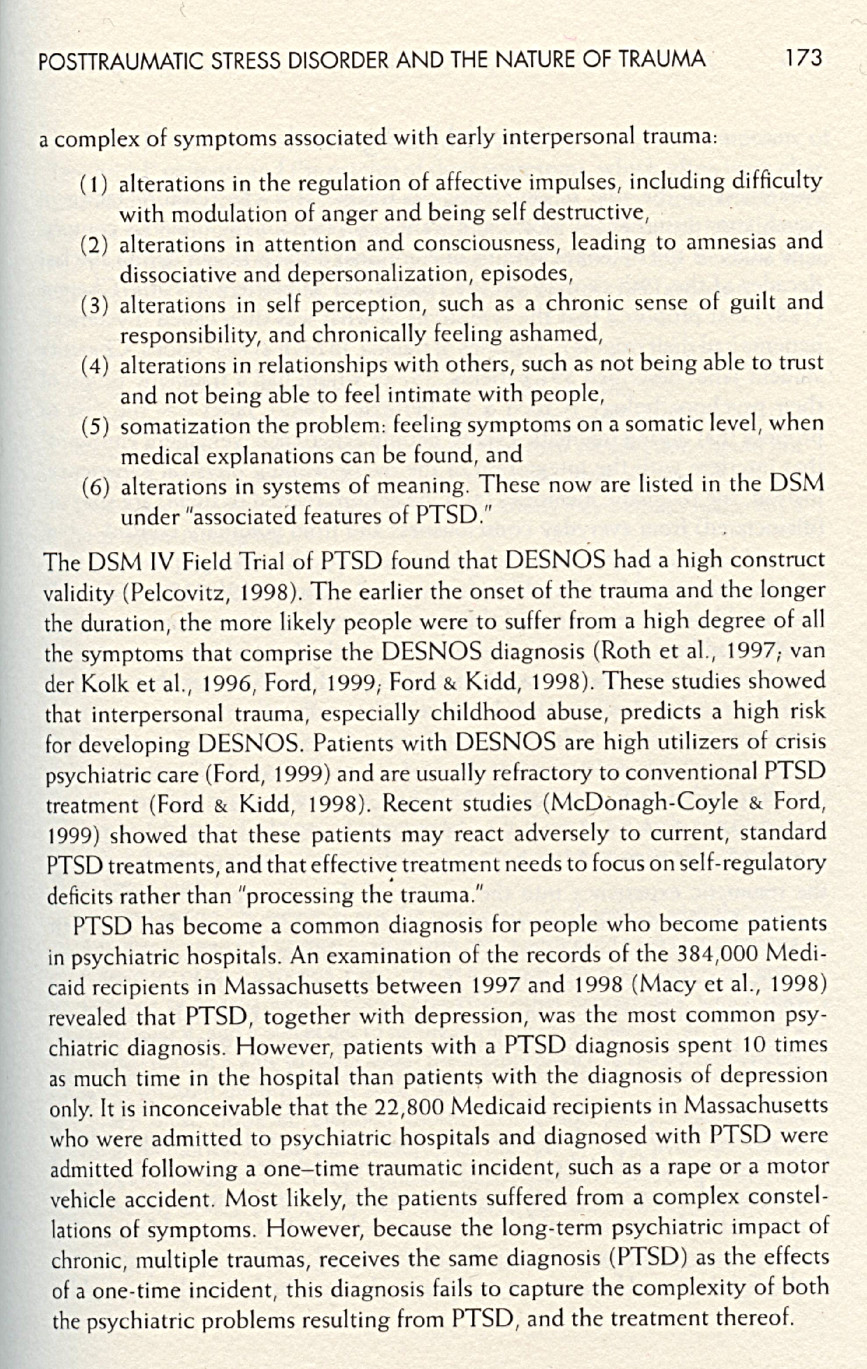
I am including information in today’s post written by Dr. Daniel J. Siegel in his book The Developing Mind: How Relationships and the Brain Interact to Shape Who We Are (The Guilford Press, 1999).  Please see the scanned image below of his chart about the types and characteristics of memory.

It is much easier to think about ‘memory’ in terms of this single, simple word.  But there is nothing simple about memory.  Memory is what our DNA is made of.  We carry genetic memory within us from the instant we are conceived.  From that instant our experiences within the environment begin to tell our DNA about the conditions of the world we find ourselves within so that we can adjust ourselves in every way possible to survive within the conditions of the world we are being made in and for.

++++

All of the terms that Siegel uses in his chart (below) describe different kinds of memory processes.  Siegel says:

From the first days of life, infants perceive the environment around them.” (page 28)

More accurately, humans “perceive the environment around them” — and within them — from the instant of their conception.  Their DNA has already begun the process of adapting within the conditions of a person’s earliest world.  What Siegel is saying here is that the postnatal infant, once it has been born and now lives independently in a body outside of its mother, continues to process experience in the form of memory.  Memory happens at the point an individual encounters the world outside of its own skin, takes information about the world and uses it to create an increasingly advanced ‘self in the world’ (which of course includes the body).

Experience and early growth and development of an infant-child’s entire body, INCLUDING the brain, are intimately, fundamentally and absolutely intertwined and interconnected.  Siegel writes:

At birth, the infant’s brain is the most undifferentiated organ in the body.  Genes and early experience shape the way neurons connect to one another and thus form the specialized circuits that give rise to mental processes.  In this way, experiences early in life have a tremendously important impact on the developing mind.  The differentiation of circuits within the brain involves a number of processes including (1) the growth of axons into local and widely distributed regions; (2) the establishment of new and more extensive synaptic connections between neurons; (3) the growth of myelin along the lengths of neurons, which increases the speed of nerve conduction and thus…enhances the linkage among synaptically connected nerve cells; (4) the modification of receptor density and sensitivity at the postsynaptic “receiving” cell making connections more efficient; and (5) the balance of all of these factors with the dying away or pruning of neurons and synapses resulting from disuse or toxic conditions such as chronic stress….Experiences lead to an increased activity of neurons, which enhances the creation of new synaptic connections.  This experience-dependent brain growth and differentiation is thus referred to as an “activity-dependent” process.”  (page 14)

The entire process described in the above paragraph is how memories make us.  This is not an arbitrary choice.  Memory makes everyone through this same interactive experience-memory-body making process.  Looked at in this way, who and what we are on every level of our existence is a result of how we interact in our biological-physiological very real body with the experiences of our life within the environments we pass through — from conception to death.

++++

MIND is not a tangible ‘thing.’  Brain is not MIND.  MIND cannot operate separately from the physiological body that gives rise to it and informs it for a person’s lifetime.  The entire foundation for our growth and development from birth happens through our earliest interactions with our attachment caregivers.  If our earliest experiences are unstable, toxic, traumatic and malevolent, the direction of our growth and development will be changed.

Siegel writes:

Interpersonal experiences continue to influence how our minds function throughout life, but the major structures – especially those that are responsible for self-regulation – appear to be formed in the early years.  It is for this reason that we will look closely at the early years of life to understand the ways in which the mind develops and comes to regulate its own processes.”  (pages 14-15)

Siegel proposes “…that the mind develops at the interface of neurophysiological processes and interpersonal relationships.  Relationship experiences have a dominant influence on the brain because the circuits responsible for social perception are the same as or tightly linked to those that integrate the important functions controlling the creation of meaning, the regulation of bodily states, the modulation of emotion, the organization of memory, and the capacity for interpersonal communication.  Interpersonal experience thus plays a special organizing role in determining the development of brain structure early in life and the ongoing emergence of brain function throughout the lifespan.”  (page 21)

++++

It is not possible to consider human growth and development without considering the kinds of early attachment experiences an infant has with its caregivers.  In my thinking, the kind of interpersonal signaling that Siegel describes here even governs our conception and all our interactive experiences from the time that conception happens.

It is here that I have to say that because I am a survivor of early and long term severe abuse trauma that caused me to change in my development, I begin to take issue with Siegel’s thinking.   I do not have the luxury of taking the kinds of liberties in my thinking that nearly all non-traumatized people can afford to take.

I have found that research-writers frequently make a giant leap between ‘infant’ and ‘child’ in their thinking and this bothers me.  That is why I use the term ‘infant-child’ most often in my own writing.  An ‘infant’ is not the same as a ‘child’.  There is a universe of critical developmental impact and room for Trauma Altered Development to occur between these two stages of being.  Siegel makes that giant leap here as he continues:

One fundamental finding relevant for developing this “interpersonal neurobiology” of the mind comes from numerous studies across a wide variety of cultures:  Attachment is based on collaborative communication.  Secure attachment involves contingent communication, in which the signals of one person are directly responded to by the other.  Sounds simple.  But why is this type of reciprocal communication so important?  Why doesn’t it happen in all families?  During early development, a parent and child “tune in” to each other’s feelings and intentions in a dance of connection that establishes the earliest form of communication.  Mary Ainsworth’s early studies suggest that healthy, secure attachment requires that the caregiver have the capacity to perceive and respond to the child’s mental state.” (page 21)

++++

“Collaborative communication” even happens inside our own bodies as our cells signal one another.  It happens on our molecular levels as our DNA interacts with the environment we live in.  Without collaborative communication life cannot continue.  Life happens on its fundamental levels through this “dance of connection” that Siegel is describing.  These signaling patterns and the information that they transmit form our entire body on all levels, not ‘just’ the brain.  Our brain, as a part of our Central Nervous System (CNS) processes all the signaling information going on within our entire body.

Siegel states that neuroscience can now describe

“…the mechanisms underlying how these early reciprocal communication experiences are remembered and how they allow a child’s brain to develop a balanced capacity to regulate emotions, to feel connected to other people, to establish an autobiographical story, and to move out into the world with a sense of vitality.  The capacity to reflect on mental states, both of the self and of others, emerges from within attachment relationships that foster such processes.  These patterns of communication literally shape the structure of the child’s developing brain.  These important early interpersonal experiences are encoded within various forms of memory.”  (pages 21-22, bolding is mine)

These earliest attachment experiences do not ‘just’ form the child’s developing brain.  They contribute to the formation of the entire body including the nervous system and the immune system because they are communicating to the growing body information in the form of memories about either the benevolent or malevolent environment the infant-child is preparing to live in for the rest of its life.

++++

My thinking continues to deviate from Siegel’s as he begins in his writing to specifically discuss the impact of memory on an infant-child’s development.  I have to read between his lines and begin to translate what he is saying through the filter of my own experiences from birth.  Siegel states:

Memory is more than what we can consciously recall about events from the past.  A broader definition is that memory is the way past events affect future function.  Memory is thus the way the brain is affected by experience and then subsequently alters its future responses.  In this view, the brain experiences the world and encodes this interaction in a manner that alters future ways of responding.  What we shall soon see is that this definition of memory allows us to understand how past events can directly shape how and what we learn, even though we may have no conscious recollections of those events.  Our earliest experiences shape our ways of behaving, including patterns of relating to others, without our ability to recall consciously when these first learning experiences occurred.”  (page 24 – I added underlining to what Siegel had italicized)

I do not disagree with Siegel’s words, but from my point of view, his thinking is too limited to apply to what I, as a Trauma Altered Development survivor, most need to understand.  DNA is memory.  DNA has recorded within it all the information needed to remember how to make a body from a single cell.  DNA contains the record of what we need to know to be built from conception into a human being rather than into a leaf, a turnip or a toad.

It is not ‘just’ the brain that “experiences the world and encodes this interaction in a manner that alters future ways of responding.”  Our brain does not pursue a course of development that is in any way separate from the ongoing development of our entire body down to its basic molecular operations.  Experience is translated by the mechanisms that tell our DNA what to do every step of the way.  I now have to consider the research discovering and describing epigenetic changes has happened since the 1999 publication of this book.

While Siegel says “this definition of memory allows us to understand how past events can directly shape how and what we learn, even though we may have no conscious recollections of those events” I must expand my thinking to include how “past events” in the form of memories build the entire body.  I have to expand my concept of “learning” to include the learning that is contained within our DNA itself, within the mechanisms that tell our DNA what to do, within the cells of our body that signal one another and receive signals from the larger environment, and within our entire body that contains a brain that eventually grows and develops an ability to inform our mind.

Because I grew and developed from birth in a malevolent environment that influenced my development on all my levels except the fundamental DNA I was conceived with, I cannot take for granted that any of my ensuing development post-birth was not affected by the influence of trauma, and therefore altered.

The only way I can begin to truly understand myself in the world is to begin to understand that trauma and the memory of trauma built my entire body in the first place, and this trauma-formed (trauma in-formed) ‘remembering body built from trauma memory’ is itself the one that I remember every memory with.  Every memory I have, conscious or not, happens within this trauma changed body.

++++

Siegel:

In a direct way, experience shapes the structure of the brain.”  (page 24)

Add to this, in a direct way experience shapes the structure of the body itself.

Siegel:

The infant brain has an overabundance of neurons with relatively few synaptic connections at birth, compared to the highly differentiated and interconnected set of connections that will be established in the first few years of life.  Experience and genetic information will determine to a large extent how those connections are established.  Memory utilizes the processes by which chemical alterations strengthen associations among neurons for short-term encoding and actually activate the genetic machinery required for the establishment of new synaptic connections for longterm memory storage.”  (page 25 – bolding is mine:  I suspect trauma interruptions in the process lead to dissociation)

Experience interacts with our genetic information.  They do not operate separately or independently.  Human beings are created to be adaptable creatures within the realm of what is possible for each of us as individual members of our species.  At its most fundamental levels, all these interactions are stored within our body as memory, and from our beginning these memories are stored as implicit memory that, according to Siegel,

“…involves parts of the brain that do not require conscious processing during encoding or retrieval.  When implicit memory is retrieved, the neural net profiles that are reactivated involve circuits in the brain that are a fundamental part of our everyday experience of life:  behaviors, emotions, and images.  These implicit elements form part of the foundation for our subjective sense of ourselves:  We act, feel, and imagine without recognition of the influence of past experience on our present reality.”  (page 29 – bolding is mine)

People who do not have a body that developed, grew and formed in a malevolent environment of trauma have a different body than does an early traumatized survivor.  The differences in the kinds of early experiences between these two groups formed different memories into the body that will then be the body that remembers everything else in their life time.  That “we act, feel, and imagine without recognition of the influence of past experience on our present reality” includes everything about our self in the world as determined through our earliest caregiving experiences in the world that built us.

People who did not experience Trauma Altered Development do not have to concern themselves with how their past experiences influenced their present reality.  They can roll on down the road of their lives having been built in a ‘good enough’ benevolent world.  Those of us who suffered severe maltreatment during our formative stages will experience the impact of those traumas within the very fiber of our body in which we live our lives.

Nearly all people who experienced Trauma Altered Development have experienced adulthoods that are less than optimal – and most of us eventually are told that we have ‘symptoms’ that place us in some ‘dysfunctional’ category or another.  NONE of us have been told the facts that I just outlined above.  NONE of us have been told that it is not only the terribly harmful things that were done to us that are our problem, not the memory of these experiences that we might or might not consciously remember that is our problem, but that it is the body we live in that was itself built BY THE EXPERIENCES OF TRAUMA we endured and changed as a consequence – through which we live our life and remember everything else with for the rest of our life – that has made us into a different kind of person than non-early-traumatized people are.

This is what Siegel is not telling me.  Severe trauma so changes us in our development that we become what Teicher’s group calls ‘evolutionarily altered’ beings.  I want to know what that means, because I know that without having had these human resiliency factors that allowed me to transform trauma memory from birth into a body that could survive, I would not be here at all.

++++++++++++++++++++++++++++++++++++++++++++

from page 33, "The Developing Mind: How relationships and the brain interact to shape who we are," by Daniel J. Siegel

++++++++++++++++++++++++++++++++++++++++++++

PLEASE NOTE:  Do not take anything I say as a reason to alter any ongoing treatment, therapy or medication you are receiving.  Consult with your provider if you find something in my writing that brings questions to your mind regarding your health and well-being.

+++++++++++++++++++++++++

Please feel free to comment directly at the end of this post or on

+++++++

Your Page – Readers’ Responses

++++++++++++++++++++++++++++++++
+CONSUMERS BEWARE OF TRAUMA TRIGGERS LURKING IN ‘HOLIDAY SEASON MAGIC’

+++++++++++++++++++++++++++++++

The Holiday Season can be a Trauma Trigger Trap for unsuspecting infant-child abuse and trauma survivors.

+++++++++++++++++++++++++++++++

I am still working on my main post for today about the meaning of the word ‘symptom’, but in the meantime I wanted to present this information from About.Com about Borderline Personality Disorder and the Holidays.  I present this information in memory of my mother, and in memory of her traumatic early infant-child history.

I think difficult emotional states surrounding the Holiday experience can be passed on down the generations just as any other trauma can be.  This is particularly true with holidays that are supposedly child centered.  If trauma surrounds a family’s experience of Christmas in the past, it can be especially true that a child will remember Holiday Season traumas – in their body – without having conscious memory of the facts of the related traumas they endured when they were very young.

I found in my mother’s mother’s own 1930 writings a reference to exactly this kind of Holiday Season trauma when she wrote the following:

As I remember, the late fall [1929?] everything was normal and happy at home.  Christmas is always an unhappy strain of feelings to me. Constantly I made conscious effort of not throwing arousing antagonistic attitudes in my husband [sic].

And where did my grandmother’s difficulties with the Holidays come from?  No doubt from her own early experiences in her own childhood that nobody EVER openly talked about.

Adults can try all they want to try to hide family discord from young children, but humans are emotional detection experts from the time we are born.  It is important to remember that the kinds of emotional distress and traumatic family experiences contained within the Holidays has the power to impact infant-children within their BODY memories for the rest of their lives.

The Holidays thus provide an excellent opportunity to practice changing intergenerational patterns of stress, distress and trauma!  Never that I know of was my mother ever able to admit the truth that the Christmas Holidays were NOT always happy, charming, or pleasant during her childhood.  Why are we so willing in America to practice denial about the truth about Holiday Season trauma?

As I have said before, denial is itself a form of childhood wishful magical thinking.  Because the Holidays are supposed to be these perfect childhood blessed magical times, it is probably exactly HERE that we are most likely to find massive denial present.  Childhood magical thinking (that turns into denial in adulthood) is a perfect fit for Holiday Season emotional set-ups for disaster.

The Holiday Season can be difficult for a lot of people.  From my point of view, it will always be those who did not experience infant-childhood safe and secure attachments, and therefore themselves as adults now have some version of an insecure attachment disorder that will probably be the most high risk people for having emotional complications around this season.

++++

Just as the Holidays provide a perfect match between the practice of adult denial and fantasy because, after all, Christmas is SUPPOSED to be a magical season, it also provides a perfect stage for trauma dramas to continue their repetition on down the generations.  No matter how much effort caregivers of young children might exert toward disguising their own emotions and internal traumatic dilemmas about the season, their sensitive – and often already trauma sensitized offspring – will be able to detect the underlying truths.  The Holidays thus continue to be fertile ground for the transmission of ongoing adult unresolved traumas.

Any adult who did not experience safe and secure attachments within a benevolent infant-child environment had some form of emotional dysregulation built into their forming early developing right social limbic emotional brain.  This emotional dysregulation came from their caregivers who also experienced the same patterns in their own childhood.  These patterns are formed not only into the early brain, but also into the early forming nervous system on all its levels.

For those who are trying very hard NOT to pass down their own traumas to their own children, this Holiday Season can provide a perfect opportunity for deep, profound and fundamental learning about how insecure versus secure attachments operate.  Insecure attachments happen when adult early caregivers are so consumed and overwhelmed on their own insides by unresolved trauma experiences that they lack the ability to be present for their children.

Children are supposed to be front and center in their caregiver’s life.  Caregivers are supposed to be able to have their own attachment need system turned OFF so that they can care give to their young ones.  When adults cannot experience their own internal state of safety and security in the world, they cannot provide this experience to their offspring.  We can start our efforts to be present for our children by becoming honest and very clear about the truth of how the Holiday Seasons felt to us when we were young.  Trash the fantasy.  We are fooling no one, not ourselves and certainly not our children.

++++

If you follow the links provided by About.Com concerning helpful information for those suffering with Borderline Personality Disorder and their loved ones, you will find specific ideas about handling the emotional dysregulation that the Holiday Season can so easily present and amplify.  Remember that we are experiencing all of our life with the tools (our brain and nervous system) that were formed in our own early infant-childhood.

Emotional regulatory abilities are not automatically built into an early traumatized little one’s body in an ordinary way.  But it is here that we can begin to practice our growing consciousness about how our changed body-brain-mind-self actually FEELS and how we can consciously change our experience.

We can understand that every difficulty we experience around the Holiday Season is connected to our own early experiences of trauma in unsafe and insecure attachment environments.  Our own unresolved trauma is NOT what we wish to pass down to our children.  How willing and able are we to actually not only KNOW the truth about our own early trauma – and if we had early trauma at all it certainly did not magically skip over the Holiday Seasons of our childhood?  How willing and able are we to actually TALK to our families about the truth of how we feel?

Attachment experts use the presence, absence and quality of child storytelling as a gauge of secure or insecure attachment in children who are old enough to talk.  Adults need to encourage children from the earliest ages to TALK about themselves having the experiences of having the experience of being a person alive in a body in the world.  This is a continuation of the face-to-face emotional-self mirroring processes between an infant and its early caregivers (primarily the mother) that directly build the right brain in the first place.

It is NEVER too late to add safe and secure mirroring processes between people into our lives.  These interactions not only form the early right brain and form the foundation for all future body-brain-mind-self growth and development – but they help to HEAL the same for those of us who did not experience these interactions in the beginning.

++++

Another extremely important point to remember is that for people like me, the Holiday Season can trigger all kinds of dissociated experiences.  My mother’s chronic and severe abuse of me, that started when I was born and happened for the next 18 years of my childhood, was very likely to be suspended during ‘certain’ kinds of experiences:  Picture taking events.  These included birthdays, any kind of holiday in which a pretend safe and secure attachment HAPPY time was created by my mother inside of bubbles that had nothing whatsoever to do with my ongoing REAL experience of being tormented, tortured and abused by my mother.

Because the abuse seemed to be suspended during these events, and because I was more or less allowed to join with the family during them, and because during these events I was given permission by my mother to be ‘happy’, I COULD tend to continue to pretend that these events were truly special, safe, secure and happy.

They were not.  They simply created more dissociational bubbles of experience that I could not remember in any coherent, ongoing story of my life.  Remember, the inability to tell a coherent life story is one of the MAJOR hallmarks-symptoms of adult insecure attachment patterns and of dissociation.  All kinds of pictures still exist of ‘happy Linda’ during these ‘happy events’.  All dressed up, curls in my hair, opening presents, holding an Easter basket – well, come to think of it I don’t know of one picture of me on a birthday being the center of attention.  But, anyway, you get the picture and my point.

See:  *Age 8 – The Reindeer Envelope – My Own Art Work Analyzed By Me – The Art Therapist

My mother’s ‘nicey nicey’ treatment of me on ‘special occasions’ such as holidays fed into, strengthened and perpetuated the trauma bond that I had with her as my caregiver.  You bet my body has the truth about all these memories!

It has taken me a lot of time and effort as an adult to get to the point NOW where I can clearly see that my mother’s creation of ‘happiness bubbles’ around holidays, that supposedly let Linda out of her miserable captivity of trauma and abuse, simply gave me new dissociational experiences that could not be fit into my ongoing experience of myself in my life.  I never even tried.  I was already a refined, expert dissociator by the time these experiences filtered into my reality.

So think about these types of patterns in your own life, and think about how your experiences of them might be impacting your own children’s experiences.  Why perpetuate the hype?  Are we safely and securely attached today in any of our relationships that we can let ourselves know our own internal truth about how trauma has infiltrated all of our experiences, including the supposed ‘happy times’ of our traumatic infant-childhoods?  Are we continuing to try to create dissociated ‘happy bubbles’ out of the Holidays that have nothing to do with the ongoing nature of our reality?

Because current statistics show that about half of our population had safe and secure attachments in their infant-childhoods, we already know, then, that the other half of us suffered from some deprivation related to attachment.  This other half of us ALL experience (my bet is) some form of infant-childhood trauma memory, deep within our body memory if not consciously, related to insecure attachment experiences around the Holiday Season.  This is a REALITY that does not feed into FANTASY.

It is helpful to make this distinction particularly because the Holiday Season is based in fantasy in all but its most direct Christian historical ties.  It is, perhaps more than any other time of the year, a season when unsafe and insecure attachment trauma histories will appear – one way or the other – to give us emotional (from our body’s memory) big trouble if we are not as conscious as possible about the reality of our infant-childhood life. We can take appropriate care not only of ourselves, but of all those around us who depend upon us not to transmit our trauma drama histories on to them.  (HINT:  Think of this as a Trauma Altered Development allergy to all the fantasy perpetuated about the Holiday Season.)

This is so true that we could actually benefit from attaching a huge consumer warning sign to the Holiday Season:  “BEWARE!  This season is most likely to trigger your early traumatic infant-child memories if you have them!”  It is from this point of awareness that many of us need to prepare for the holidays.  What can we learn from — and how can we change and heal from — our own history of early traumas – no matter where they may be lurking?

+++++++++++++++++++++++++++++++

About Borderline Personality Disorder: Distress Tolerance for the Holiday Season

In the Spotlight | More Topics |
from Kristalyn Salters-Pedneault, PhD
The holiday season is a really hard time for so many people. There are expectations that we will be joyful, or surrounded by friends and family. But for many this is not the reality, and the holiday season can bring extra stressors on top of the expectations. This week, start preparing by practicing some new skills to help with distress tolerance.

What are Distress Tolerance Skills?

In the Spotlight
The distress tolerance skills are a set of tools that will help you manage intense emotional states without doing anything destructive. These skills will not necessarily wash away the emotional pain you are feeling or even make you feel less distressed. Instead, the goal of these skills is to prevent you from doing something that will make the situation worse.

Not-So-Happy Holidays?
As the holidays approach, lots of people with BPD (and people with BPD in their families) struggle. Holidays are complicated!

“Go-To” Coping Skills
When you are having an intense emotion, it can be hard to know what to do. Unfortunately, many people with BPD turn to unhealthy behaviors in an attempt to cope with emotional pain (e.g., self-harm, substance use, or aggression).

More Topics

+++++++++++++++++++++++++++++++

Please feel free to comment directly at the end of this post or on

+++++++

Your Page – Readers’ Responses

++++++++++++++++++++++++++++++++
+SURVIVE OR DIE — DISSOCIATION AND THE ORCHID

+++++++

I have heard about endangered species, but until this moment I have not thought in terms of imperiled ones.  I am not certain that this orchid is the one I heard a story about today or not, but I think it is:

Spiranthes delitescens


Family: Orchidaceae  (Orchid Family)
Common Names: Canelo Hills ladie’s tresses, Madrean ladies tresses, Madrean ladies’s tresses

This imperiled plant evidently has a primary custodian:  Desert Botanical Garden

PETITION TO LIST THE

CANELO HILLS LADIES’ TRESSES

Spiranthes delitescens

AS A FEDERALLY ENDANGERED SPECIES

This orchid is also called a ‘sensitive species’

One of the four locations in Arizona where this plant is known to exist is in the mountains of Cochise County near where I live.  Until today I did not know there are native Arizona orchids, so of course I did not know that the very existence of these orchids depends on their relationship to fungi.  The seeds of these Ladies Tresses orchids have no food within them as most seeds do.  Without the fungi to open up the seeds, the plants cannot be born.

And I certainly did not know that there are rare native orchids in the Arizona mountains that bloom underneath the ground.

++++

When I walked away crying from writing this morning’s post, I knew I had reached a very tender place within myself not far from the deep wounds I carry from 18 years of infant-child abuse I experienced from my mother.  I knew I had to be gentle and kind to myself and I knew it was time to come up for air.

So I met my friend at the local laundromat where she was washing her clothes and we sat visiting, eating quiche made there at the small café.  My friend told me the story of how a friend of hers went with one of the professors from our small local college on an extremely difficult hike into the nearby mountains looking for buried orchids that bloom underground.

According to my friend, her friend experienced one of the most memorable moments in her life when she was shown exactly where and how to dig to unearth these orchids.   The story says the orchids were the color of copper.  I didn’t know copper orchids existed, either.

++++

Is an orchid a fragile or a hardy plant?  I certainly do not know.  But evidently these Arizona orchids are at risk because the environment they have always lived in is changing around them in ways to which they might not be able to continue to adapt to.  If they cannot change with the changes happening to their world, they will all die out and become extinct.  (Of course this reminds me of tiny infant-children who have to change and adapt within the malevolent environments of trauma they are developing within, or die.)

I have a personal memory concerning orchids.  Not real live ones, just a memory of my version of the essence of how orchids and raising orchids seems to me.  I think about how we grow up through our early childhood to the point where we begin to have a self that begins to be aware of itself in a body in its life so that it can increasingly have the experience of itself experiencing itself having experiences.  This is similar to how I experience my own experience of the essence of orchids, even though in childhood I had no experience of myself experiencing experience at all.

++++

In 1983 when I left my children with my husband and moved to a town 130 miles away to go through an intensive outpatient treatment program for severe child abuse and trauma survivors, I went through a session one day with the primary therapist who owned this treatment center.  Steve formed a circle with 15 chairs in the middle of the large room that was used for group therapy sessions.  He and I were there alone.  Steve asked me to look into myself and experience as many different versions of myself as I felt safe in doing.

Each time I identified a different version of Linda, I moved to another chair in this circle, sat in it, and allowed that version of me to begin to describe its/my experience.  At one point I found myself as Captain Nemo.  Nemo was a silent, remote, seemingly detached gentleman who shared himself only with the hundreds of varieties of orchids he carefully tended as a hobby when either on land and in his submarine under the sea.  As Nemo began to speak, I learned when Nemo first appeared within me as I learned about his love for orchids.

Every time in the past 26 years since that day when I have had an encounter with orchids I have thought about that therapy session and Captain Nemo.  But never until today did I ever have the image of what it might be like to climb through rocks along a steep and difficult mountain trail until I found a special place on earth where I might dig down and find a sensitive, imperiled, endangered copper orchid in full bloom underneath the ground.

++++

See:  Personal Checklist of the Wild Orchids of North America, north of Mexico

File Format: PDF/Adobe Acrobat – Quick View
North American Native Orchid Journal. June 2007. Revised September 2009 …. Arizona crested coralroot. Hexalectris warnockii. Texas purple-spike forma flavida … copper ladies’-tresses….}

+++++++

Please feel free to comment directly at the end of this post or on

+++++++

Your Page – Readers’ Responses

++++++++++++++++++++++++++++++++
+PTSD AND SEVERE ABUSE SURVIVORSHIP – PART THREE

+++++++++++++++++++++++++++++++++

I find that the only standard I can consistently depend upon in my considerations about what constitutes malevolent treatment versus adequate, benevolent treatment lies within the context of the United Nations Universal Declaration of the Human Rights of Children.  Safe, secure, appropriate and adequate early care that leads to an infant-child’s optimal development lies on a continuum at the opposite end from early malevolent conditions that present nearly a constant challenge and threat to survival itself.

The basic needs of children are defined in this Declaration.  In looking at my own history of survivorhood (I was never allowed to be a child, and therefore I no longer consider that I had a childhood at all) it is clear to me that every one of my rights as an infant-child were violated.  It was in that malevolent environment of deprivation that I was exposed to the degrees of trauma that were severe enough to create within the physiology of my body Trauma Altered Development (TAD).

From my earliest beginnings as a being physically separate from my mother was suffered from a lack of safe and secure attachment.  Deprived of that most fundamental resiliency factor, my body-brain-mind-self had to do the best that I could do to continue to grow and develop within that terrible environment that threatened my very existence.

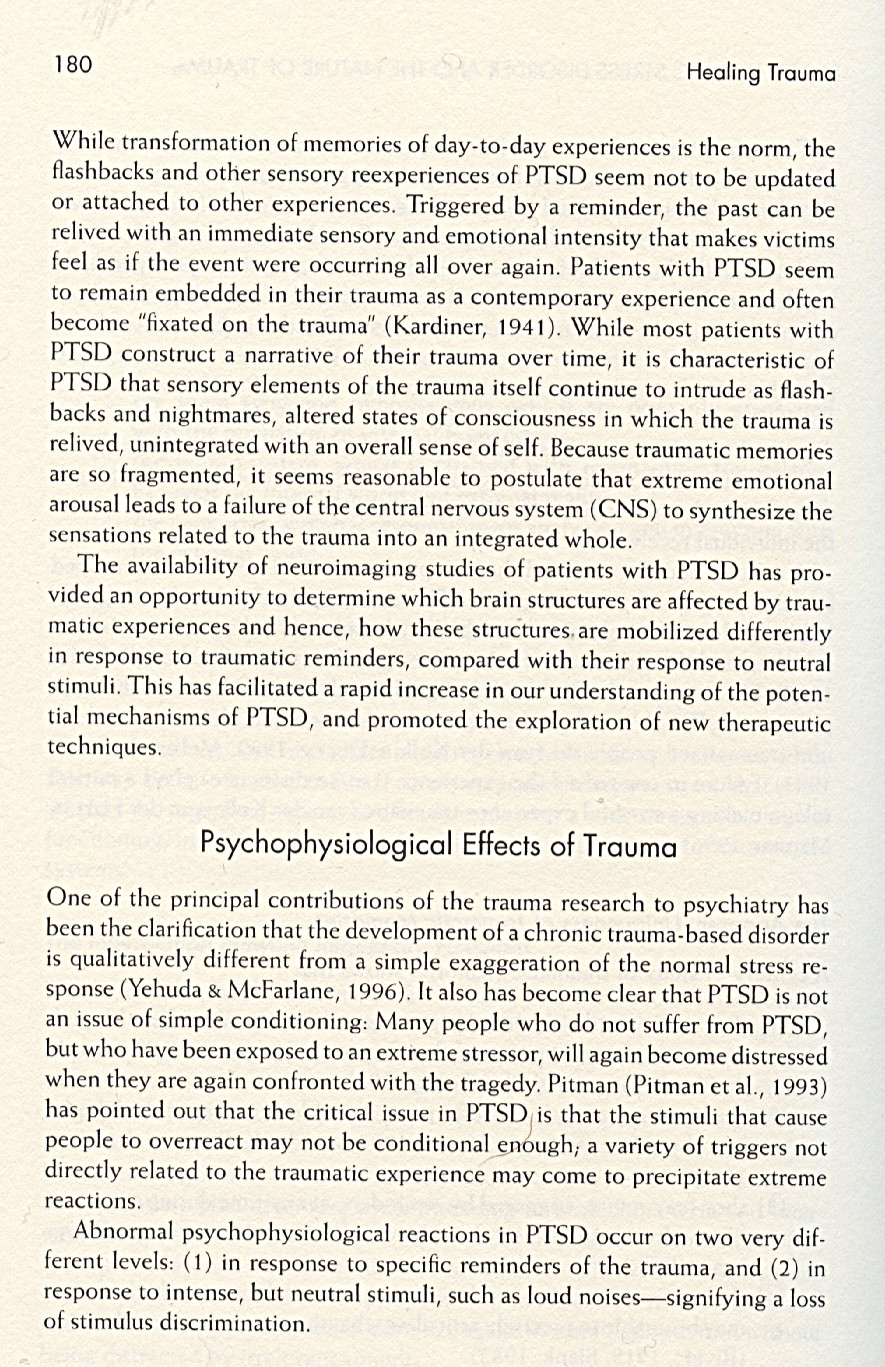
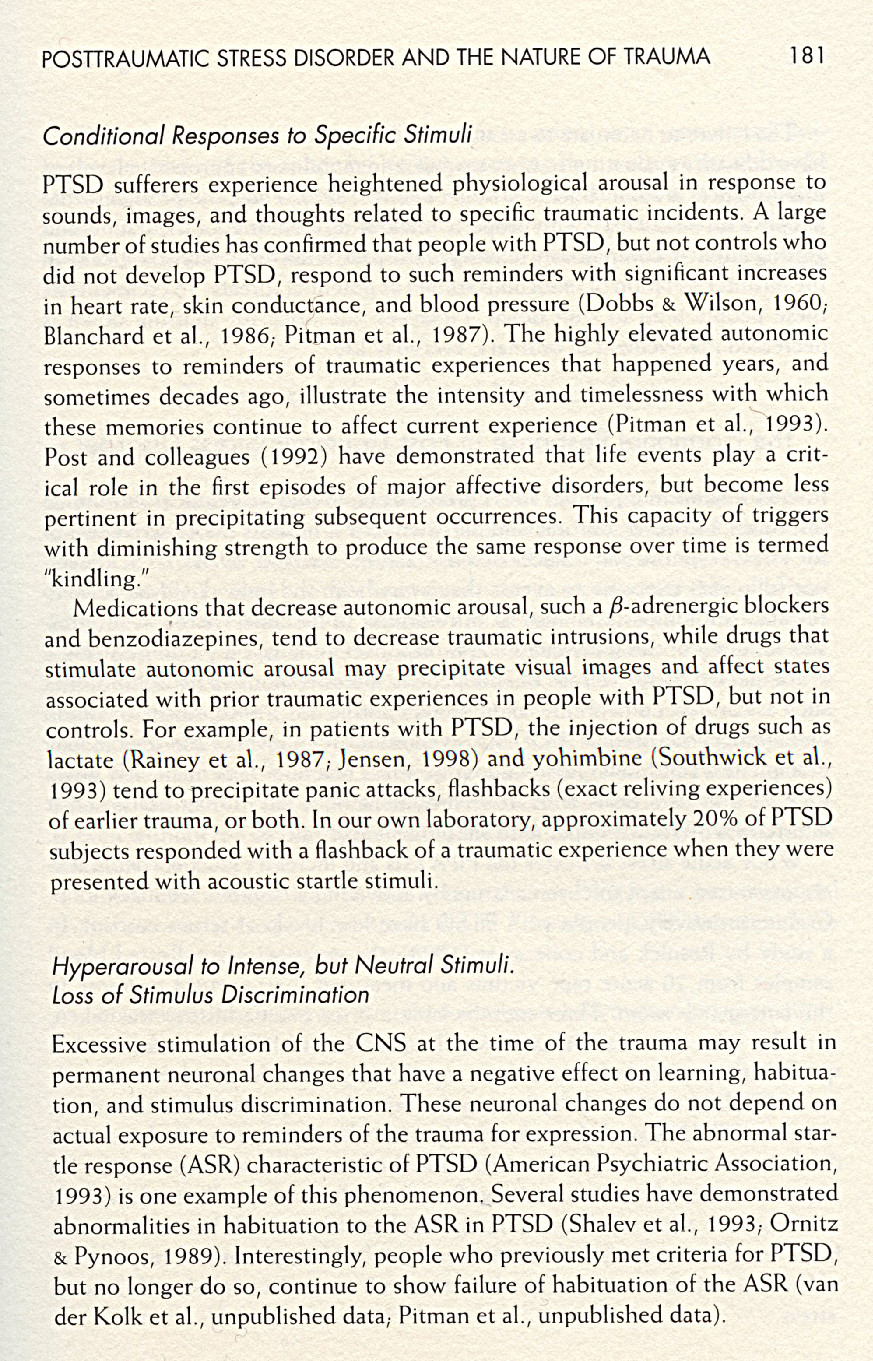
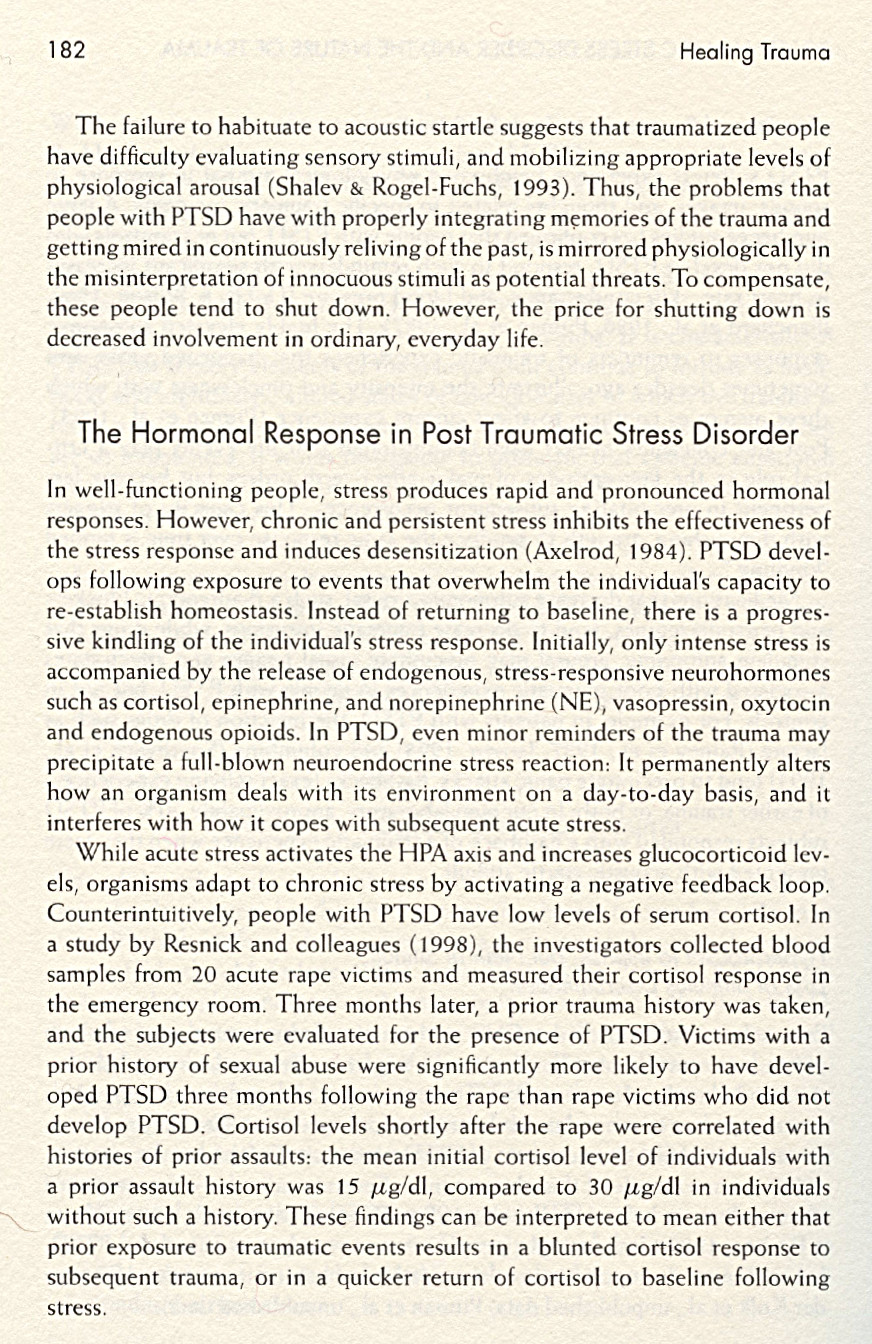
This third post on the topic again continues an exploration of how TAD changes an infant-child abuse survivor’s reaction to ALL trauma.   Van der Kolk writes about posttraumatic stress disorder (PTSD) in the book, Healing Trauma: Attachment, Mind, Body, and Brain – Hardcover (Jan 2003, W.W. Norton and Co.) by Daniel J. Siegel, Marion F. Solomon, and Marion Solomon, chapter 4 (pages 168-195) written by Bessel A. van der Kolk:  “Posttraumatic Stress Disorder and The Nature of Trauma.”

++++

I begin writing today by considering the last sentence of the scanned book pages that were posted on November 30, 2009:

“….progress in understanding the function of attachment in shaping the individual and rapid developments in the neurosciences gave a new shape to these old insights [about the importance of trauma].”  (page 177)

++++

Van der Kolk next considers “The Psychobiology of Trauma” in his writing:

Modern research has come to elucidate the degree to which PTSD is, indeed, a “physioneurosis,” a mental disorder based on the persistence of biological emergency responses.”  (page 177)

In my thinking, naming PTSD ‘a mental disorder’ ignores the overwhelming evidence that the entire human body is included in the ‘persistence of biological emergency responses’ that the author is talking about.  From my point of view, it is the consideration of how severe infant-child maltreatment and abuse changes the development of the ENTIRE BODY of the little one that matters to those of us who survived this degree of early trauma.

‘Biological emergency responses’ BUILT our bodies.  These responses signaled our DNA how to express itself.  These responses signaled our developing nervous system and brain on all levels about how to adapt to trauma.  Our developing nervous system was also intimately involved in these responses as it formed, also.  It is at this most basic, profound level of our physiological development from our beginnings that we have to understand how our development changed in ways that a non-TAD ‘ordinary’ body did not.

The adaptive changes that happened to us took place on far, far deeper levels than just the level of mind.  Mind is simply the topmost layer of our existence that I see as being related to our body as smoke is to fire.  I do not have a ‘mental disorder’.  My entire being is ordered in a very particular way in accordance with what surviving my infant-child trauma required.

It is this Trauma Altered Development that created my survival based, trauma centered ordering of my entire being that I seek to understand.  I am not convinced that van der Kolk has anything more than a passing surface notion of what these TAD changes actually ARE, how they affect us, or even if they legitimately belong to anything like a PTSD diagnostic category.

++++

Van der Kolk continues by saying:

To understand how trauma affects psychobiological activity, it is useful to briefly revisit some basic tenets of neurobiology.”

I do not like the term ‘psychobiological activity’ because it implies that anyone on the outside can ever have any accurate information about what another person’s ‘psyche’ is like.  That is why researchers try to more completely understand the human ability to form a Theory of Mind.  MIND belongs to each of us as individuals, and everyone has their own.  Nobody can ever come to understand what the subjective experience of MIND is like for another person.

‘Neurobiology’ is a different thing.  This is a realistic descriptive word that refers to a part of a person that can, within the current limitations of science, be understood and described because it is physically real on the molecular level.  But neurobiology is not the same thing as MIND.

Van der Kolk continues:

McLean (1990) defined the brain [my note:  The brain is a biological reality as part of our nervous system, from which an individual’s MIND originates.  Brain and MIND are not the same thing.] as a detecting, amplifying, and analyzing device for maintaining us in our internal and external environment.  These functions range from the visceral regulation of oxygen intake and temperature balance to the categorization of incoming information necessary for making complex, long-term decisions affecting both individual and social systems.  In the course of evolution, the human brain has developed three interdependent subanalyzers, each with different anatomical and neurochemical substrates:

(1)  the brain stem and hypothalamus, which are primarily associated with the regulation of internal homeostasis,

(2) the limbic system, which is charged with maintaining the balance between the internal world and external reality, and

(3) the neocortex, which is responsible for analyzing and interacting with the external world.

It is generally thought that the circuitry of the brain stem and hypothalamus is most innate and stable, that the limbic system contains both innate circuitry and circuitry modifiable by experience [my note:  This emotional area of the brain forms through early caregiver attachment interactions birth to age one, forming MUCH earlier than the neocortex], and that the structure of the neocortex is most affected by environmental input (Damasio, 1995).  If that is true, trauma would be expected to leave its most profound changes on neocortical functions, and least affect basic regulatory functions.  However, while this may be true for the ordinary stress response, trauma – stress that overwhelms the organism – seems to affect people over a wide range of biological functioning, involving a large variety of brain structures and neurotransmitter systems.”  (pages 177-178)

++++

I am going to scan in the book pages that follow in van der Kolk’s description of how trauma affects people.  I believe his statement on the bottom half of page 190 is extremely important:

“…the development of a chronic trauma-based disorder is qualitatively different from a simple exaggeration of the normal stress response….”

We need to stretch that concept as far as we possibly can if we are going to understand how severe trauma from malevolent infant-child abuse and neglect changes our entire development – nothing about us is excluded.  Any possible aspect of our development that can adapt its development in order to help us endure and survive early trauma – does so.

Our problem comes when the reality of our early trauma is denied along with the depth, breadth and width of its impact on our development.  What may be true for a non trauma altered development person cannot be assumed to be true for us.  Yes, we know what the following descriptions of consequences FEELS like – but we also know that we never knew any other, different way of being in the world.

Due to the changed development we experienced as we survived our early severe traumas, anything that we might begin to understand now as being more like  ‘ordinary’ in our physical – and correspondingly in our mental — ability to experience our self in our body in our lifetime, will happen as we begin to understand how deeply trauma formed us in the first place so that we will NEVER experience trauma (or life) in the same way as will a person who did not experience Trauma Altered Development when they were little.

++++

The scanned pages below (from the book mentioned above!) is complicated information, but it is a place for us to truly begin to understand ourselves – the way were MADE in the severely abusive and trauma-filled environments we were formed in.

On page 184 van der Kolk notes that “PTSD patients” have problems

“…with “taking in” and processing arousing information, and to learn from such experiences.”

Sorry, but I am not a ‘PTSD patient’.  I am a 58-year-old woman who has suffered from an extra-ordinary body, altered in all its developmental stages in adaptation to trauma, that has never been able to ‘take in’ even ordinary information, let alone ‘arousing information’, or to ‘learn from’ the experiences of my life in an ordinary way.

What on earth do we expect to happen to little people who must continue to develop and survive even while they have little or no access to even their most basic Universal Human Rights?  Infant-child development IS ALTERED under these conditions.  It is time that we realize this is the most truly horrific consequence of early abuse and trauma.  We don’t get to experience ANYTHING the same way as non-early-traumatized people do – not even later traumas.

(note:  I believe in ‘degrees of damage’ – the 75% of our sub-par young adults in this country have suffered some degree of damage that has changed the course of their development away from optimal and BEST!  We cannot afford to ignore that fact – deprivation and violation of the Universal Human Rights of Children causes changes in the way their body and brain develop.  There is a very real, physiological process through which trauma and deprivation get passed on down the generations.  We know it is happening when we see the consequences in degrees of lack of well-being –- which are detectable no matter what our age.)

++++

(The following is from page 186 on left or right handedness and trauma)

++++++++++++++++++++++++++++++

This post follows:

from November 30, 2009 +PTSD AND SEVERE ABUSE SURVIVORSHIP – PART TWO

from November 28, 2009 +PTSD AND SEVERE CHILD ABUSE SURVIVORSHIP – PART ONE

+++++++++++++++++++++++

PLEASE NOTE:  Do not take anything I say as a reason to alter any ongoing treatment, therapy or medication you are receiving.  Consult with your provider if you find something in my writing that brings questions to your mind regarding your health and well-being.

++++++++++++++++++++++++++++++++

Please feel free to comment directly at the end of this post or on

+++++++

Your Page – Readers’ Responses

++++++++++++++++++++++++++++++++

+VIOLATING THE UNIVERSAL HUMAN RIGHTS OF CHILDREN

++++++++++++++++++++++++++++++

When any of the Universal Human Rights of Children are violated, those who violate and those who allow the violation to occur are equally accountable for the criminality of their actions.

Today I am reminded of the biggest picture not only about the condition of the youth, children, infants and their parents within our nation.  This picture is about Human Rights – not only as they apply to adults, but also as they apply to the offspring we are raising among us.

What do these words mean?

Equal Justice, Equal Opportunity, Equal Dignity

I found a wonderful video about Human Rights presented at this above link presented by our friends on their website, Treasures of Wonderment.

I then went to the United Nations website where I found the full text of the Universal Declaration of Human Rights:

On December 10, 1948 the General Assembly of the United Nations adopted and proclaimed the Universal Declaration of Human Rights….Following this historic act the Assembly called upon all Member countries to publicize the text of the Declaration and “to cause it to be disseminated, displayed, read and expounded principally in schools and other educational institutions, without distinction based on the political status of countries or territories.””

++++

Considering my concerns about the current poor condition of the youth of our nation, and thinking about how every passing present moment of our lives are passing continually into the past as we step into the future, I wonder about the decline in well-being that our nation is obviously experiencing as demonstrated not only by this lack of well-being of our youth but also of the parents who raise them.

Do we in America today deny that we have these Universal Human Rights and that our children also have Universal Human Rights?  What are we lacking as a nation that is creating these conditions of distress within our population?  What elements are missing that the required environment of safe and secure attachment to ourselves, to our children, to one another and to the world we live in seems to be increasingly missing within our own nation?

What standards can we use in order to take a clearer look at ourselves?  Why NOT consider the Universal Declaration of Human Rights as the most complete set of guidelines existing on our planet about our concerns?

++++

Every one of the 30 Articles contained within the Universal Declaration of Human Rights are vital to ensure human well-being.  All these Rights fit together into a whole.  It is my particular concern today about the well-being of our nation’s infants, children, youth and their parents that most concerns me, so I paid particular attention to Articles 25 and 26 as I read this Declaration:

Article 25.

  • (1) Everyone has the right to a standard of living adequate for the health and well-being of himself and of his family, including food, clothing, housing and medical care and necessary social services, and the right to security in the event of unemployment, sickness, disability, widowhood, old age or other lack of livelihood in circumstances beyond his control.
  • (2) Motherhood and childhood are entitled to special care and assistance. All children, whether born in or out of wedlock, shall enjoy the same social protection.

Article 26.

  • (1) Everyone has the right to education. Education shall be free, at least in the elementary and fundamental stages. Elementary education shall be compulsory. Technical and professional education shall be made generally available and higher education shall be equally accessible to all on the basis of merit.
  • (2) Education shall be directed to the full development of the human personality and to the strengthening of respect for human rights and fundamental freedoms. It shall promote understanding, tolerance and friendship among all nations, racial or religious groups, and shall further the activities of the United Nations for the maintenance of peace.
  • (3) Parents have a prior right to choose the kind of education that shall be given to their children.

++++

Do the rights of children solely lie with their parents?  What happens if parents do not and cannot ensure the rights of their children?  What happens if and when parents directly violate ANY of the United Nations Human Rights as they apply to children?  What ARE the Universal Human Rights of children?  Do they have any?

On November 20, 1959 the United Nations adopted the Universal Declaration of Children’s Rights.  I found a United Nations page with links on the rights of children, and also found the official version of the Universal Declaration of Children’s Rights.

I also found the following on the United Nations website.  It is in these few words that the picture becomes clear not only about what children need, but what their Universal Human Rights are in plain and simple language:

Declaration of the Rights of the Child – Plain Language Version

1.  All children have the right to what follows, no matter what their race, colour, sex, language, religion, political or other opinion, or where they were born or who they were born to.

2.  You have the special right to grow up and to develop physically and spiritually in a healthy and normal way, free and with dignity.

3.  You have a right to a name and to be a member of a country.

4.  You have a right to special care and protection and to good food, housing and medical services.

5.  You have the right to special care if handicapped in any way.

6.  You have the right to love and understanding, preferably from parents and family, but from the government where these cannot help.

7.  You have the right to go to school for free, to play, and to have an equal chance to develop yourself and to learn to be responsible and useful.

Your parents have special responsibilities for your education and guidance.

8.  You have the right always to be among the first to get help.

9.  You have the right to be protected against cruel acts or exploitation, e.g. you shall not be obliged to do work which hinders your development both physically and mentally.

You should not work before a minimum age and never when that would hinder your health, and your moral and physical development.

10.  You should be taught peace, understanding, tolerance and friendship among all people.

++++

Those who are survivors of any degree of deprivation of any of these rights anywhere on our planet – including within our own nation — are caused suffering through criminal actions.  When any of these Universal Human Rights of children are violated, it is to this that we must pay the closest attention:

6.  You have the right to love and understanding, preferably from parents and family, but from the government where these cannot help.

I do not believe that in our nation the Universal Human Rights of Children should be left to the care of the governments of our separate states.  I believe that the guarantee of these Rights needs to be protected by our federal government.  I believe we need to develop a federal standardization in regards to children’s Rights that is applied equally across all 50 states on every level that impacts the well-being of our nation’s children – from conception forward.

This would include all child protection services, including all services designed to identify maltreatment, all services designed to remedy critical issues within a child’s home of origin in a speedy and competent manner, and all services that are designed to place children in living environments where ALL their Universal Human Rights will be guaranteed.

I also believe that our children’s public education needs to be standardized on a national level and should NO LONGER be left, in any way or on any level, up to the incompetent design and administration of individual states.

It seems obvious to me that considering the findings that 75% of our youth are suffering from serious lack of well-being that even finding ways to shore up inadequate parenting will not resolve the profound problems our nation is facing in regard to Universal Human Rights of our children.  We need an across-the-board revision of our educational system by the federal government, and this need has reached critical proportions.

++++

Either we are a nation that is willing to stand behind these Rights as defined by the United Nations or we are not.  It seems obvious to me where the great grey area of “maybe yes, maybe no” has gotten us.  We have approached a ‘crisis management needed’ stage within our nation.  We need to move up the hierarchy of who is going to take care of our nation’s children – and how.

If parents are not equipped to guarantee the Universal Human Rights of their children, and if our individual states are not equipped to do it, then it is our federal government’s responsibility to step up to its job of guaranteeing these rights through every possible means at its disposal.

Violating the Universal Human Rights of Children is a criminal act.  Allowing anyone to violate these rights is a criminal act.  These Rights are not arbitrary.  They are absolute, fundamental and necessary.  There is no room for grey.  Either we are a nation of criminals or we are not.

+++++++++++++++++++++++

Please feel free to comment directly at the end of this post or on

+++++++

Your Page – Readers’ Responses

++++++++++++++++++++++++++++++++
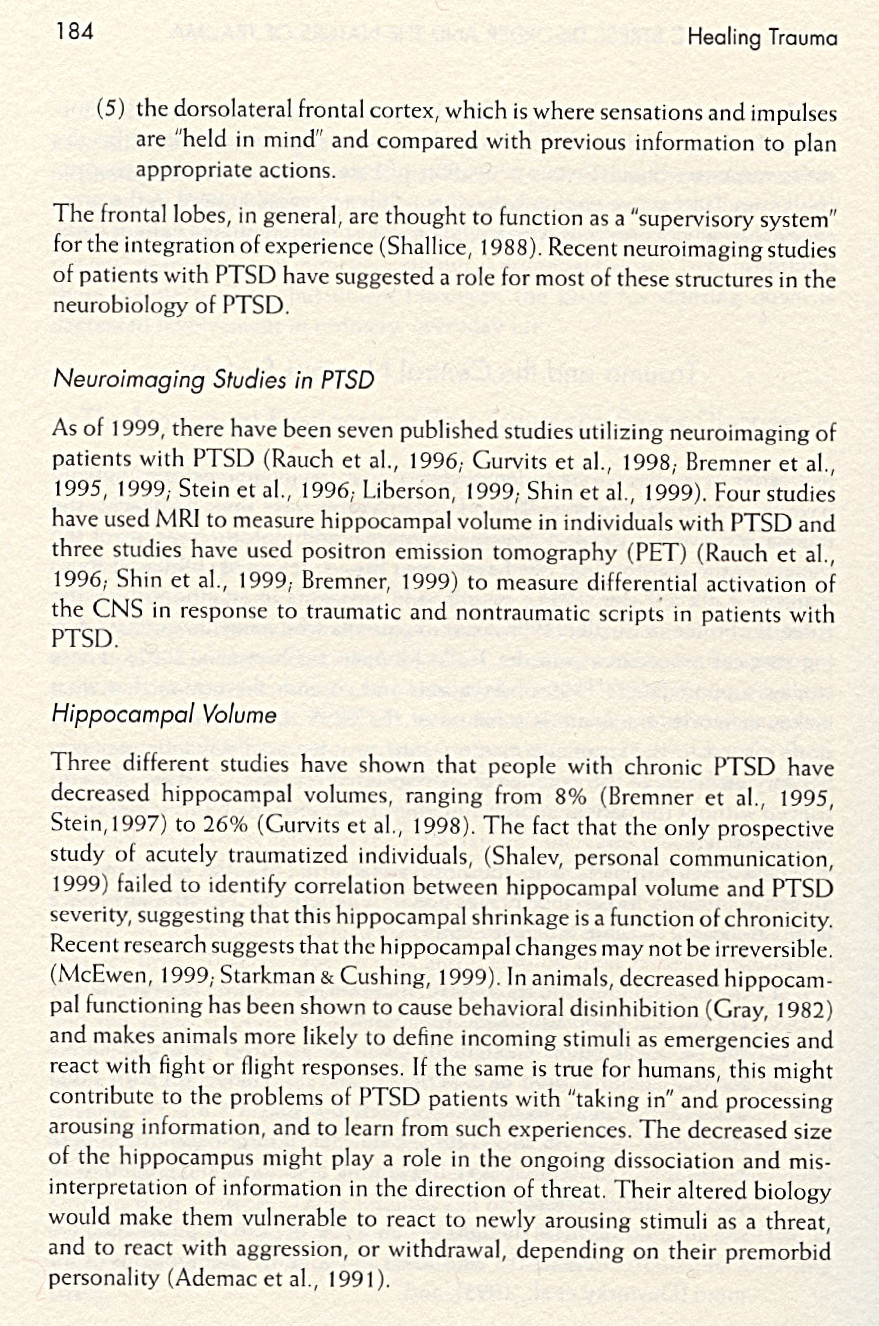
PBS Documentary – The Mind’s Big Bang – evolution of our mind – There’s a free toolbar you can download that open’s up a universe!!

+THREE TOPIC INFORMATION POST

++++++++++++++++++++++++++

FROM THE:

Prevent Child Abuse New York Blog

Early Learning:   Key to National Defense

Posted: 30 Nov 2009 09:36 AM PST

A new press release, published by Mission Readiness says that according to Pentagon data, that 75% of our nation’s 17 to 24-year-olds are unfit for service due to failure to complete high school, past criminal record or are physically unfit. Military leaders are calling on Congress to pass the Early Learning Challenge Grant legislation.

The Obama Administration’s Early Learning Challenge Grant proposal would challenge states to develop effective, innovative models that promote high standards of quality and a focus on outcomes across early learning settings, and dedicate $10 billion over ten years toward this effort.  The goal is to reform and improve early learning programs to deliver a complete and competitive education to every child in America.

Congress is now considering the proposal, which would help states provide more at-risk kids with access to quality early learning programs.  It would provide grants to the states of $1 billion a year for up to ten years to improve the quality of early childhood development programs and expand access to more at-risk kids.

Some of the goals of the fund are to:

  • Drive results-oriented, standards reform across programs, setting a high standard of quality for programs to strive toward, in order to better promote early learning, child development, and school readiness.
  • Fund and implement pathways to improve existing early learning programs, with the goal of increasing the number of low-income young children who participate in higher-quality settings.
  • Ensure that more children enter kindergarten ready, with the healthy cognitive, social, emotional, and physical skills and ability necessary for success.

The military is currently meeting recruitment goals, due in part to the severe economic recession, but the retired leaders said the challenge of finding quality recruits will return when the economy recovers. Rear Admiral Barnett said, “Our national security in the year 2030 is absolutely dependent on what’s going on in pre-kindergarten today. We urge Congress to take action on this issue this year.”

Major General Comstock adds: “I’m a lifelong political conservative, and I believe that government should intervene on a limited and targeted basis.   Early education is not conservative common sense or liberal common sense, it’s just plain common sense. Reaching the most at-risk kids helps increase graduation rates and cut crime, so early education is a matter of national security.”

To view the full press release please visit : http://www.missionreadiness.org/press110509.html

++++++++++++++++++++++++++

THE FOLLOWING IS PRESENTED IN MEMORY OF MY MOTHER:

FROM About.comBorderline Personality Disorder

In the Spotlight | More Topics |
from Kristalyn Salters-Pedneault, PhD
Lots of people with BPD worry about the whether their marriage can weather the storms that can come with the disorder. And many people who are married to those with BPD wonder whether therapy can improve the quality of the relationship.

Can a BPD Marriage Survive?
Couples counseling may be one helpful avenue of treatment, but there are no systematic studies of these types of therapies in BPD couples.

More Topics

Can I Get Better on My Own?
If you or your spouse has BPD, you may be wondering whether treatment is really necessary. Unfortunately, BPD isn’t the kind of disorder that is easily treated through self-help.

Should I Divorce My BPD Spouse?
Of course there is no blanket answer for this one. Some people make their BPD marriage work, and others can’t. But here are some things to consider…

++++++++++++++++++++++++++

I am scanning in the following four pages about the history of the treatment of trauma for your consideration.  It is the last sentence on page 177 that interests me most as I will consider in a future post, but in all fairness to the author and to my readers, the rest of this information needs to be presented here for educational purposes.

These pages are taken from the book, Healing Trauma: Attachment, Mind, Body, and Brain – Hardcover (Jan 2003, W.W. Norton and Co.) edited by Daniel J. Siegel, Marion F. Solomon, and Marion Solomon, chapter 4 (pages 168-195) written by Bessel A. van der Kolk:  “Posttraumatic Stress Disorder and The Nature of Trauma.

++++

++++++++++++++++++++++++++

Please feel free to comment directly at the end of this post or on

+++++++

Your Page – Readers’ Responses

++++++++++++++++++++++++++++++++
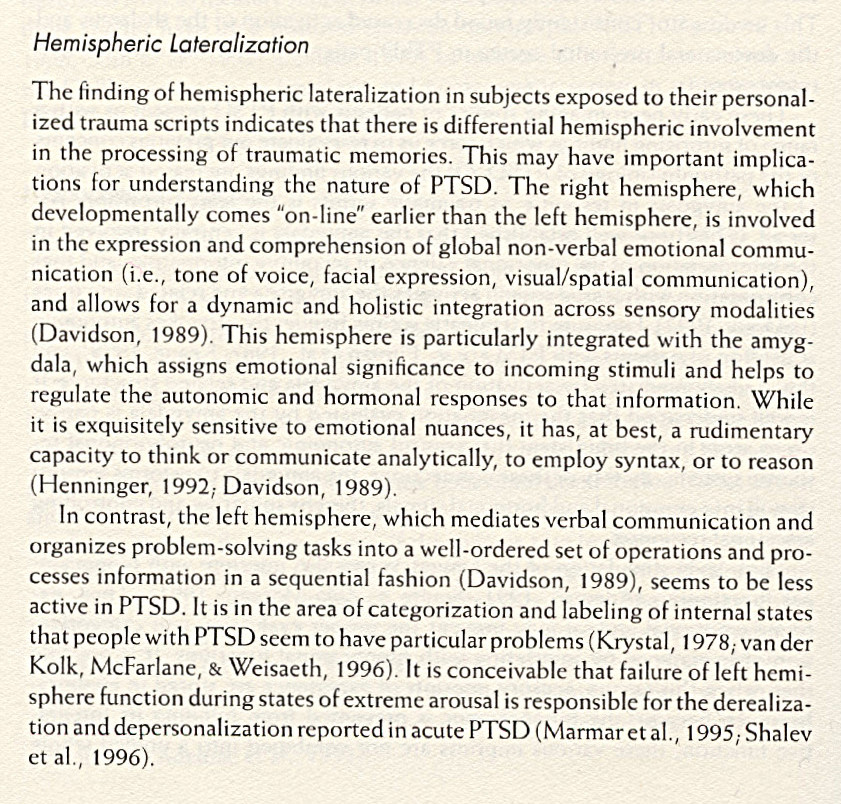
PLEASE NOTE:  Do not take anything I say as a reason to alter any ongoing treatment, therapy or medication you are receiving.  Consult with your provider if you find something in my writing that brings questions to your mind regarding your health and well-being.

++++++++++++++++++++++++++++++++

+PTSD AND SEVERE ABUSE SURVIVORSHIP – PART TWO

+++++++++++++++++++

This second post about Posttraumatic Stress Disorder (PTSD) refers again to a book called Healing Trauma: Attachment, Mind, Body, and Brain – Hardcover (Jan 2003, W.W. Norton and Co.) by Daniel J. Siegel, Marion F. Solomon, and Marion Solomon, chapter 4 (pages 168-195) written by Bessel A. van der Kolk:  “Posttraumatic Stress Disorder and The Nature of Trauma.”

Today’s post follows the November 28, 2009 post

+PTSD AND SEVERE CHILD ABUSE SURVIVORSHIP – PART ONE

PLEASE NOTE:  Do not take anything I say as a reason to alter any ongoing treatment, therapy or medication you are receiving.  Consult with your provider if you find something in my writing that brings questions to your mind regarding your health and well-being.

+++++++++++++++++++

The following is taken from pages 172 of the above text.  I will consider this information in my writing below:

+++++++++++++++++++

It is now easier for me to work with this information because I have described my own version of an alternative way of thinking about the ongoing complications severe infant-child abuse and malevolent treatment survivors face as a direct result not only of the specifics of the actual horrific traumas they lived through, but also because of the very real physiological changes that surviving these traumas created in their infant-child growing and developing body.

(see yesterday’s November 29, 2009 post

+TRAUMA ALTERED DEVELOPMENT (TAD) – A NEW DESCRIPTIVE CONCEPT)

++++

An accurate primary and initial assessment of TAD for those of us who are Infant-Child Severe Maltreatment Survivors would allow us to know immediately how the changes our body-brain had to make created us to be different from ‘ordinary’ people who do not have the history of trauma that we do.

In this TAD assessment two critical resiliency factors would also need to be assessed because these two resiliency factors (one primary, the other secondary) are known to have the ability to nearly completely modify and modulate the power that early trauma has to change our developing body-brain.

The presence of safe and secure attachment to some early primary caregiver is the most basic and important resource an Infant-Child Severe Maltreatment Survivor had.  The current assessment tools available to assess adult secure and insecure attachment need to be simplified, refined and made accessible to the public.

Stemming from the degree of safety and security available through early caregiver attachment, the ability to play is a secondary but critical resiliency factor that impacts an Infant-Child Severe Maltreatment Survivor’s body-brain development.  I believe that assessment criteria and tools to measure this critical factor consistently and accurately can be developed and also made available to the public.

++++

NOTE:  In our new age of technology, the public has the right to be able to access critically important information about themselves and how their early infant and childhood experiences impacted their development.  At present this information remains ONLY available within ‘clinical’ settings, if even there.

++++

As far as I am concerned, anything and everything that is currently lumped under so-called ‘psychological’ categories belongs to the sinking Titanic of dark age medical model thinking that I referred to in yesterday’s post.

Until Trauma Altered Development (TAD) is assessed at the bedrock level of how Infant-Child Severe Maltreatment Survivors changed at their own bedrock (molecular) level, any attempt to moderate so-called ‘symptoms’ remains a crap shoot in the dark.

TAD assessment can connect the consequences of early trauma to altered physiological changes that an Infant-Child Severe Maltreatment Survivor’s body was forced to make to best ensure continued survival in early malevolent environments,

++++

Early caregiver attachment experiences from birth build the body-brain we will live with for the rest of our lives.

Van der Kolk (scanned text above) writes that it is not usually the symptoms of PTSD itself that brings those seeking help to a clinical setting.  Rather, he says that it is “depression, outbursts of anger, self-destructive behaviors, and feelings of shame, self-blame and distrust that distinguished a treatment-seeking sample from a nontreatment-seeking community sample with PTSD.”

Through an accurate TAD assessment, any ongoing difficulty an Infant-Child Severe Maltreatment Survivor has with emotions and social interactions can be traced to inadequate early caregiver interactions in a malevolent environment that built for the survivor an entirely different early-forming right-limbic-emotional-social brain.

When the foundation of the early forming right brain is altered because of maltreatment, the Infant-Child Severe Maltreatment Survivor’s later developmental stages involving shame, guilt and embarrassment will also be off course from ‘ordinary and optimal’ and will cause altered patterns of development in the body-brain.

++++

Van der Kolk states:

The majority of people who seek treatment for trauma-related problems have histories of multiple traumas.”

OK, I can certainly understand this, but here again, as I mentioned above, I do not agree with applying so-called ‘psychological’ and ‘symptom based’ medical model diagnostic thinking used in the author’s next statements.  I absolutely disagree with ever using terms such as ‘character pathology’ in reference to Infant-Child Severe Maltreatment Survivors!

One recent treatment-seeking sample…suffered from a variety of other psychological problems which in most cases were the chief presenting complaints, in addition to their PTSD symptoms:  77% suffered from behavioral impulsivity, affect lability, and aggression against self and others; 84% suffered from depersonalization and other dissociative symptoms; 75% were plagued by chronic feelings of shame, self-blame and being permanently damaged and 93% complained of being unable to negotiate satisfactory relationships with others.  These problems contribute significantly to impairment and disability above and beyond the PTSD symptoms….Focusing exclusively either on PTSD or on the depression, dissociation and character pathology prevents adequate assessment and treatment of traumatized populations.”

TAD assessments will clearly show that ‘impulsivity’, ‘affect liability’, most aggression, and dissociation are directly connected to changes in how an Infant-Child Severe Maltreatment Survivor’s nervous system, including their brain – and here, particularly their right brain – formed differently from ‘ordinary’ due to growth and development in trauma.

Chronic feelings of shame, self-blame and being permanently damaged” are also directly connected to trauma through developmental changes an Infant-Child Severe Maltreatment Survivor’s nervous system, including their brain – and here, particularly their later forming (after age one) left brain – had to make while developing in an early malevolent, trauma-filled environment.

Rather than referring to these changes as ‘character pathologies’, which in my thinking is the maltreatment, abusive stance taken by the medical model toward Infant-Child Severe Maltreatment Survivors, a TAD assessment can accurately and specifically pinpoint the origin of these changes in the body-brain and describe the consequences of them.

Receiving an accurate TAD assessment will show us exactly how our body was forced to adapt during our development through trauma so that we could survive it.   Yes, I do believe we KNOW we are different from ‘ordinary,’ but we are not ‘permanently damaged’.   We ARE permanently changed.

The changes Infant-Child Severe Maltreatment Survivors experience are fundamental and profound!  Everything about us was subject to adjustment for our trauma survival – our body, our nervous system and brain, our immune system, our mind, and our connection between our self and our self and between our self and the entire world around us.  NOT facing the truth and discovering the facts through TAD assessment will NOT resolve the difficulties we face with our continued survival into adulthood.

The only long term solution societies have is to STOP Infant-Child Severe Maltreatment!!!  Part of that solution is to provide the kind of TAD assessment Infant-Child Severe Maltreatment Survivors need, and to make available to us the resources necessary for us to live the best life we can in spite of the changes we had to make in order to stay alive because nobody STOPPED the Infant-Child Severe Maltreatment that happened to us.

It is the pathological character of the society we were born into that allowed what happened to us to happen at all, let alone allowed it to continue to the degree that trauma changed our physiological development.  If there is any self blame to be had, it is on the level far beyond OURS as the Infant-Child Severe Maltreatment Survivors.

++++

That the grand sinking Titanic of the archaic dark age’s medical model about Infant-Child Severe Maltreatment Survivors has at least THOUGHT about throwing us a life boat becomes apparent in van der Kolk’s next words:

As part of the DSM IV field trial, members of the PTSD taskforce delineated a syndrome of psychological problems which have been shown to be frequently associated with histories of prolonged and severe personal abuse.  They call this Complex PTSD, or Disorders of Extreme Stress Not Otherwise Specified (DESNOS).”

Great!  A life boat full of holes!  Gee, why are we NOT thankful for that?

A syndrome of psychological problems” be damned!  Infant-Child Severe Maltreatment Survivors do not suffer from a ‘syndrome’, and ours are not ‘psychological problems’!  For all the reasons I have repeatedly described, we simply need a TAD assessment that will tell us HOW our little body adapted down to our molecular level during our development in the midst of, and in spite of, toxic malevolent trauma.  Then we need resources that inform us how to live NOW with these profound trauma-caused changes that happened to us THEN.

The author continues:

DESNOS delineated a complex of symptoms associated with early interpersonal trauma.”

Again, we don’t have ‘symptoms’.  We have a different body-brain-mind-self that adapted to survival in a malevolent world and caused us to have Trauma Altered Development (TAD).

We don’t have symptoms, we have consequences.  Every single item in the list of so-called ‘complex symptoms’ (see them in the page scan below) that van der Kolk describes are directly connected to our TAD.  EVERY SINGLE ONE OF THESE ITEMS exist within us because of changes our body-brain was forced to make.  They are consequences of the changes our body had to make through our TAD.

The only real progress in the right direction I can see – given to us like faulty patches to a sinking life boat thrown to us from a sinking ship – is that at least an association ‘with early interpersonal trauma’ is finally being considered in the current medical model thinking.

But this tiny droplet of hoped for healing balm offered by the creation of a construct named “Complex PTSD, or Disorders of Extreme Stress Not Otherwise Specified (DESNOS)” is not what we Infant-Child Severe Maltreatment Survivors need in my book.

We need our entire society to understand and accept the truth that the Infant-Child Severe Maltreatment that happened to me and others – and continues to happen to children around us today – is nothing short of a form of parental-selected genocide that did not fulfill its intent to completely destroy us.  We are Infant-Child Severe Maltreatment Survivors because we are still alive, and we ONLY SURVIVED because we were able to adapt our body throughout our Trauma Altered Development to and within the malevolent environments that formed us.

++++

The rest of van der Kolk’s words (below) simply bring into my mind the image of the author being like a modern day Paul Revere, whose horse’s hooves pound along the streets of our nation as he screams a warning.  I am certainly not convinced, however, that even this author knows which message it is that most needs to be delivered.

The Trauma Altered Development that Infant-Child Severe Maltreatment Survivors experienced had no choice but to build itself into every part of who we are BECAUSE we live in a body, and our body had no choice but to change so that we could stay alive.

To describe any aspect of what happened to us in terms of a ‘diagnosis’ or a ‘symptom’, ‘complex’ or not, to call us ‘maladjusted’ or to tell us we suffer from any form of a ‘character pathology’ or ‘psychological problem’ is to continue to condemn us with stigmas and stereotyped prejudice which makes as much sense as applying all of the above labels to someone who is tall versus short, or who has red hair rather than blond.

If we wish as a society to remain in the dark ages about the consequences of Trauma Altered Development for Infant-Child Severe Maltreatment Survivors then at least we should have enough honor and common sense to admit it.  If we are appalled by the ignorance that is still applied to our circumstances, today is the day we can enlighten ourselves and get on with the legitimate task of figuring out how to accurately assess Trauma Altered Development so that we can begin to live well as the changed, extraordinary Infant-Child Severe Maltreatment Survivors that we are.

Our Trauma Altered Development did not affect WHO we are in the world, but it absolutely changed HOW we are in the world.  It is up to all of us to learn what that means.

+++++++++++++++++++

The following is taken from pages 173 of the above text:

Again, it is not a picture of ‘long-term psychiatric impact’ nor a ‘diagnosis’ that Trauma Altered Development affected Infant-Child Severe Maltreatment Survivors need.  We need to understand the changes our body had to make to guarantee our survival and specifically how those changes affect us, and specifically how to improve our quality of life and well-being in the world in spite of our TAD.

+++++++++++++++++++++++++++++++++++++++++

Please feel free to comment directly at the end of this post or on

+++++++

Your Page – Readers’ Responses

++++++++++++++++++++++++++++++++
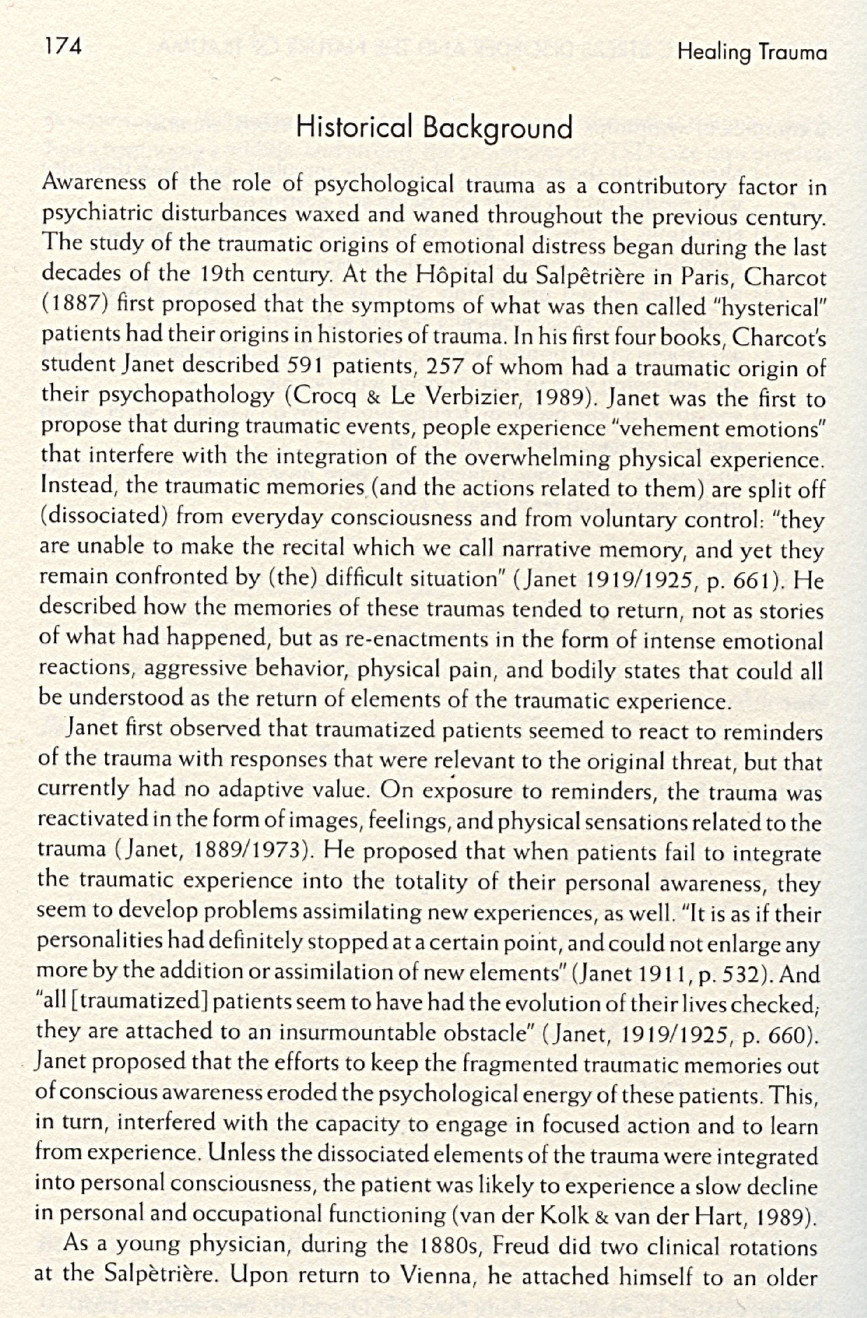
+THREAT OF ATTACK – STAYING NUMB – PTSD AND DISSOCIATION

++++

Something happened inside of me when I reached the end of the post I wrote on November 19, 2009 – +I WILL NEVER BE ORDINARY. IT IS TIME FOR ME TO KNOW THIS TRUTH..  The writing has become so much harder for me to do than it was before.

Do I abandon my efforts?

The ‘transparent moment’ I experienced on November 19 was evidently deeply connected within my body to my present experience of myself in my life.  Evidently transparency does not feel safe to me.  Yet I have courage, stamina and willingness to move forward, though I do not know ahead of time where my writing process is going to take me.

I didn’t know on November 19 that I was writing myself up to that transparent moment.  I didn’t see it coming.  I didn’t predict or anticipate where I was going or where I would end up.  The experience of that transparent moment just happened – but it happened because of the writing.  On some deeper level that I cannot actually SEE within me my instincts say to me – “DON”T WRITE!  STOP!  WRITING IS NOT SAFE.  IT LEADS YOU TO UNKNOW PLACES, AND UNKNOWN IS DANGEROUS TO YOUR WELL-BEING!”

++++

Because it is my basic premise that I cannot separate any experience I have from the disorganized-disoriented insecure attachment system I have as a direct result of my mother’s abuse of me, I have to allow myself to understand that my current state of NOT WRITING is connected to how this system operates to try to keep me safe and secure in the world.

Hiding is, for me, a trauma related response.  I can translate what is going on for me in the present to:  transparency = dangerous = HIDE NOW!  Hiding means that I am hiding from my own words, which are directly connected in the writing process to who I am – all my memories (even those only my body remembers), how I survived, what I am willing to think about, what I am willing to feel – and to the full consequence of the posttraumatic stress disorder (PTSD) that I have along with dissociation that does not allow me to KNOW things in a necessarily ongoing, coherent, integrated fashion.

So, I STOP!

At the same time I am willing to share with you in a somewhat transparent way the following words that are connected to this whole process – as I forced myself to write them across lined sheets of spiral notebook paper —

++++++++++++++++++++++++++++++++++++++++
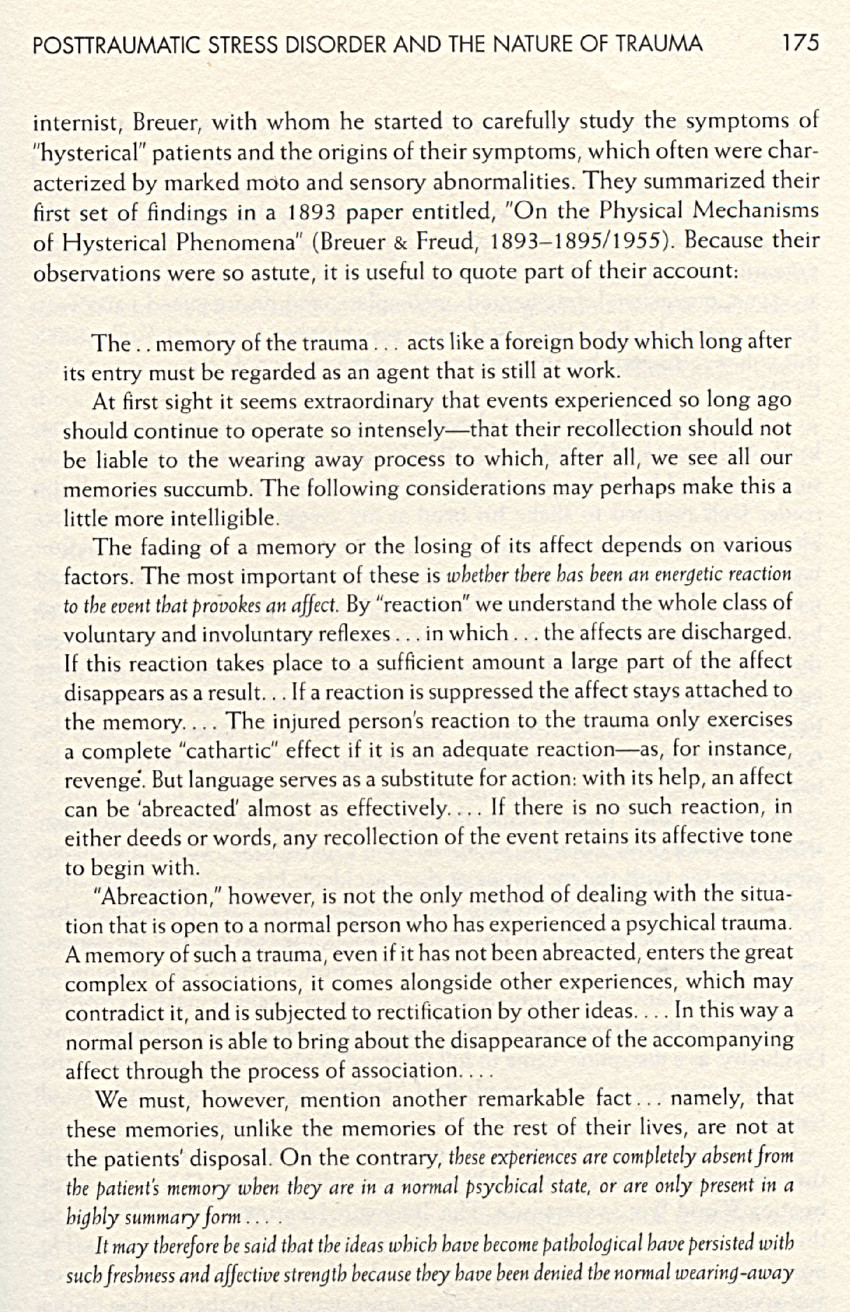
Make a difference in someone’s life

I used to believe in this

Is this a different Linda?

This one doesn’t even want to write any more.

Transitions between states of mind

Sometimes they are WIDE and I fall in.

I don’t know where the writing Linda went

I don’t want the sad one here.

Sometimes things cost too much – does caring?

Without the grief, am I just numb to everything?

A Linda-safer-floating around on a raft – but fragile amidst the sharks of chaos I know are all around me.

Don’t tip the raft.  Don’t look down.

Is that state mostly where I spent my childhood in between my mother’s attacks?

Out of nowhere she would attack me.  The raft of numb would disappear from under me.

I’d be in the ocean full of sharks – attacked again.

++

Cancer was an attack from within.

++

What does that mean

Changing our minds?

Like changing gears?

Or changing jobs?

Or changing our clothes?

Or changing a baby’s diaper?

Making change with money

A change in one’s fortune

A change in the weather

++

Paving stones with spaces between them

Grout between tiles

Mortar between stones or bricks

In PTSD-Dissociation our traumatic experiences are separated by fear and confusion

Cracks in a sidewalk

Shifting plates of the earth’s crust

Water surrounding continents

If I go to a place of what seems ‘calm’ to me

I suspect I am really ‘numb’ instead

Because peaceful calmness was never allowed (and did not build itself into my body)

At times I do not wish to disturb this numbness

Once I leave the numbness I don’t know and can’t predict what will get triggered and what state I’ll end up in next

And I don’t know how long I’ll end up in some other ‘changed state’ or if, when or how I can get back to ‘numb’

So it seems best not to disturb or change anything

Like a great game of hop scotch only I can’t control or predict where I’ll end up next

Leave well enough alone

Don’t think

Don’t feel

Just be

Try to leave everything within me alone

Control = control where I am in the environment

I don’t want to be challenged there, either

For all the same

Reasons

++

It’s like skating on a deep lake with uneven ice

Places that are thick and solid and I’m safe

Places where the ice is thin and I can crash through

But from the top side I can’t tell which is which

Nobody WANTS to fall through

OPTION?  Stay off of the lake

= do not write

I can’t predict where it will take me

++++++++++++++++++++++++++++++++++++
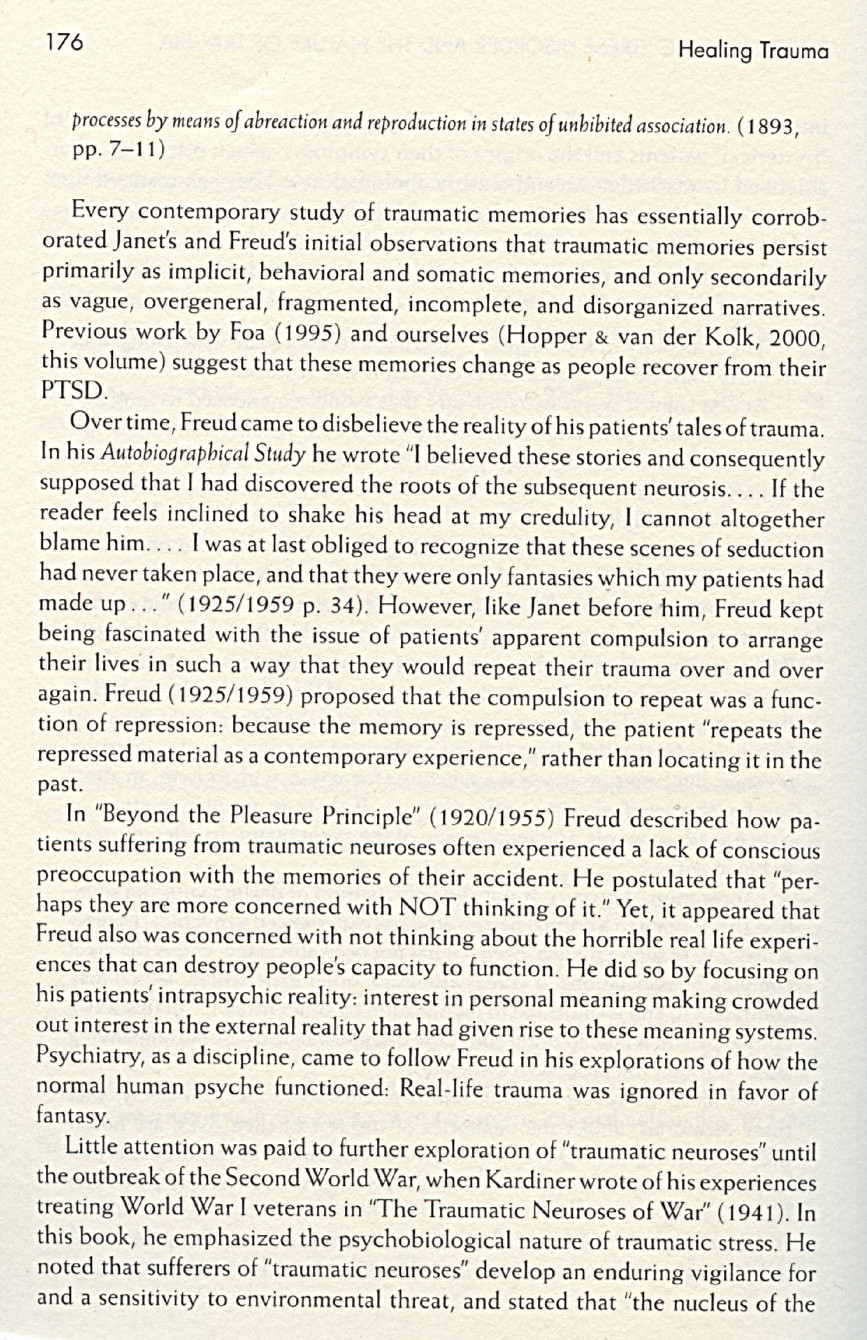
Please feel free to comment directly at the end of this post or on ++++++++++++++++++++++++++++++++
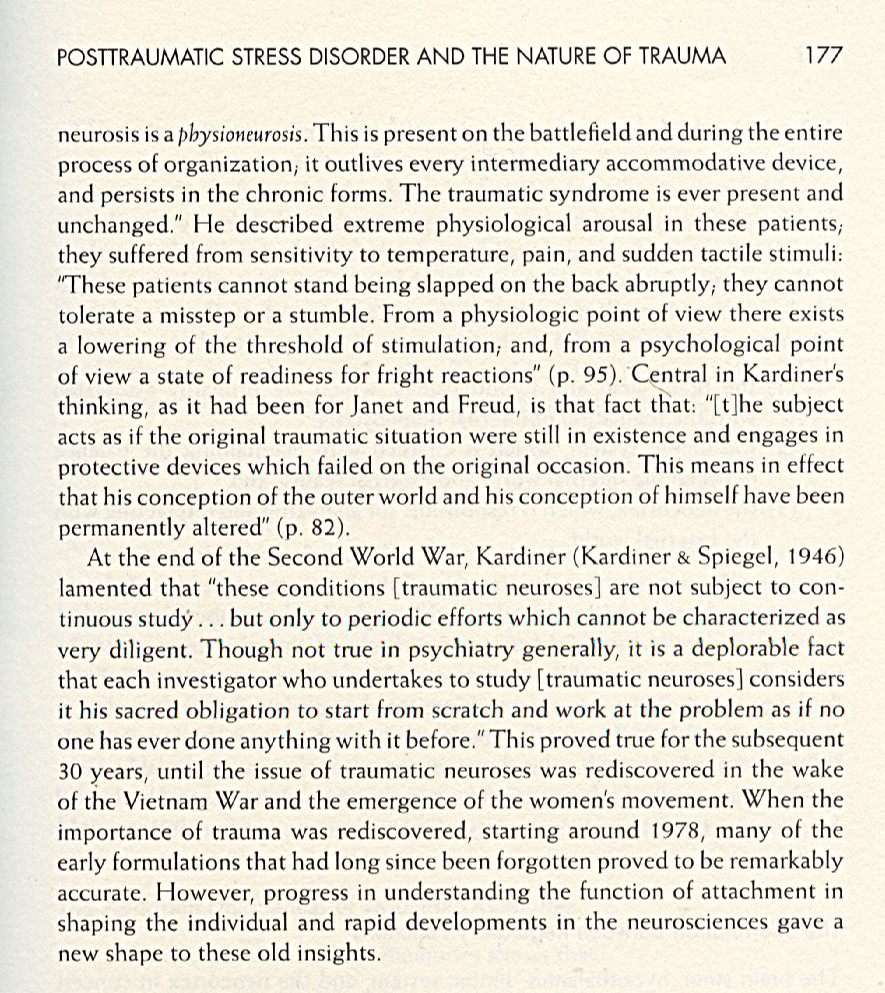
Your Page – Readers’ Responses

++++++++++++++++++++++++++++++++
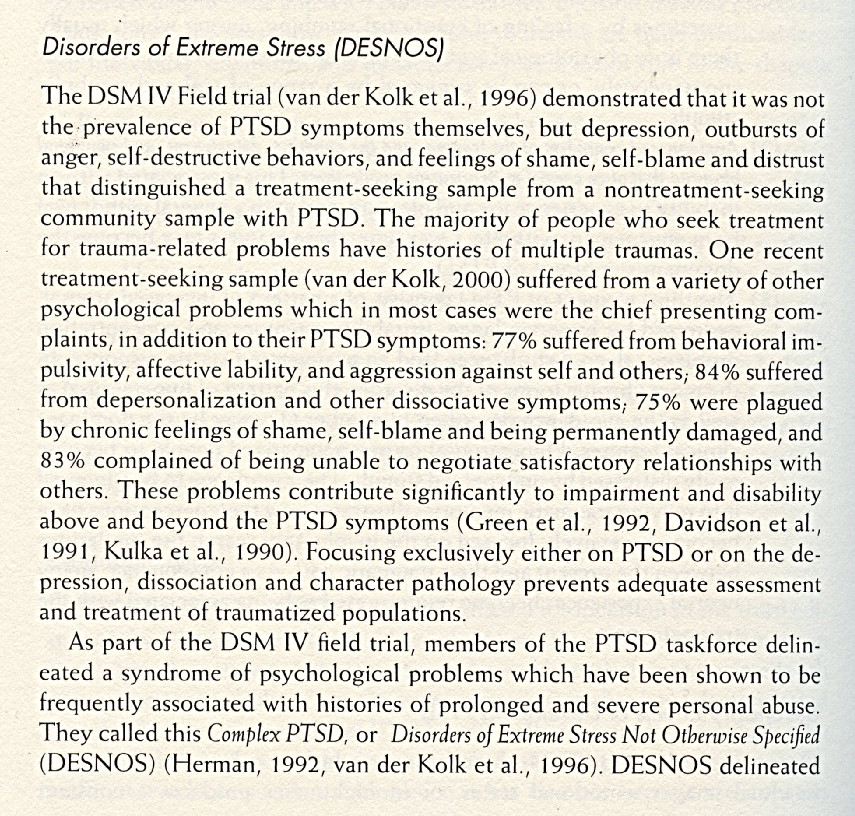
November is National Adoption Month

Posted: 24 Nov 2009 10:14 AM PST

Currently, there are 130,000 children and youth waiting to be adopted. National Adoption Month urges Americans to “Answer the Call” to adopt children and youth from foster care. National Adoption Month intends to raise awareness about the adoption of children and youth from foster care.

The Ad Council’s latest public service “You don’t have to be perfect to be a perfect parent” urges potential parents that perfection is not the goal. Children just need loving, caring environments with stability. This award-winning campaign is a partnership of the Children’s Bureau, the Ad Council, and AdoptUsKids. This year’s ads target the African-American community and finding homes for African-American children in care. The ads feature humorous everyday scenarios illustrating that parents need not be perfect to offer the stability and commitment that a “forever family” provides to a waiting child.

Visit the 2009 National Adoption Month Website for more information: http://www.childwelfare.gov/adoption/nam/

Additionally, The Children’s Bureau Express has a Spotlight on National Adoption Month webpage The CBE has information about how agencies celebrate National Adoption Month, and find out more about the latest adoption resources and research.  They also offer more information and service on:

PSA Campaign Recruits Families for African-American Children
Adoption Month Calendar Features Innovative Activities
National Survey of Adoptive Parents Releases First Data
Post adoption Support Guide
Positive Outcomes for Late-Placed Adoptees
Court Collaboration Expedites Adoptions
Parent-to-Parent Support for Adoptive Families

To view more information please visit their Spotlight on National Adoption Month: http://cbexpress.acf.hhs.gov/index.cfm?event=website.viewSection&issueID=111&subsectionID=8

++++++++++++++++++++++++++++++++++++