+ALL OF ME. I DON’T HAVE ‘A CHILD WITHIN’

++++++++++++++++++++++

In the words of Alice Miller

— Articulating the child’s authentic voice —

from

Pictures of a Childhood: Sixty-Six Watercolors and an Essay by Alice Miller

++++++++++++++++++++++

“Only when I make room for the voice of the child within me do I feel myself to be truly genuine and creative.  I use every means now at my disposal…to help this child to find the appropriate way of expressing herself and to be understood.”  (Page 17)

++

“Those who take a stand in today’s world on behalf of workers, women, or even mistreated animals will find a group to represent them, but someone who becomes a strong advocate for the child and opposes the lies society has tolerated in the guise of child-rearing practices will stand alone.  This situation is difficult to understand, especially when we consider that we were once all children ourselves.  I can explain it only by suggesting that unequivocal advocacy of the child represents a threat to most adults.  For when it becomes possible for children to speak out and confront us with their experiences, which were once ours as well, we become painfully aware of the loss of our own powers of perception, our sensibilities, feelings, and memories.  Only if the child is forced to be silent are we able to deny our pain, and we can again believe what we were told a children:  that it was necessary, valuable, and right for us to make the emotional sacrifices demanded of us in the name of traditional child-rearing.  As a consequence of the adult’s arrogant attitude toward the child’s feelings, the child is trained to be accommodating, but his or her true voice is silenced.  Another arrogant and blind adult is the result.

Is it not senseless, then, to let children speak, to help them to become articulate in an arrogant adult world as long as there is so little hope of their being listened to by adults and when the danger exists that their authentic voice will be silenced as soon as it it heard?  I do not believe it is senseless; it is essential to let their voices, the voices of those who have been afflicted by silence, speak if we hope to prevent the total disappearance of the springs of knowledge and creativity concealed in every childhood.  In this regard, the published reports by former victims of child abuse will be particularly beneficial in exposing the distortion of the truth so widespread in many areas of our life.”  (pages 18-19)

++++++++++++++++++++++

JUST FOR FUN – LISTEN HERE

++++++++++++++++++++++

In my own words:

Blasphemy!  I do not have a “child within me.”  There is only ME within ME.  I am today totally the full sum of every experience I have ever had.  The memory I have of them, consciously or not, and the impact they had on me are all contained within this body that is ME — right here, right now.

Because I have suffered from dissociation since I was born into a malevolent world of abuse, chaos and madness, I cannot afford to pretend there are any more stray parts of me floating around ‘somewhere’ than there already — legitimately — are.  And there certainly isn’t ‘one in there’ I would ever care to name ‘the child within me’.  How silly is that idea?

I believe we do ourselves a great disservice in suggesting that we have some ‘alien’ life force or form within us that we might even begin to think about as our ‘child within’.  We have all integrated our experiences since conception into our bodies, including our brain.  What is the purpose of denying this fact?

If cohesiveness and coherency are the goal that any of us with less than an optimal safe and secure infancy-childhood might be aiming toward, what good does it do us to pretend that some magical, mysterious part of us is supposedly missing from the action of our living, breathing body at exactly this present moment in time?

Not only does the concept of an ‘inner child’ or a ‘child within’ feel demeaning, disrespectful and dishonoring of who I AM as a person no matter what hell I have survived in my lifetime, it also seems blatantly ridiculous.  It’s just too Twilight Zonish for me.  It’s too Alice in Wonderlandish, too Through the Looking Glass weird to me.  I spent the first 18 years of my life in the Twilight Zone.  I don’t need another split second of it now.  No way.

Let those with the luxury to afford to buy this myth — well, buy it.  Not gonna be me….  I work hard to give myself permission to be the whole of who I am, the one who has followed THIS life path from the moment of my conception to this instant in time — there is no possible way I left any part of myself behind, and I know it.  I am.  I am, most grandly, wholly ME — even if the whole of me exists as a thousand dissociated parts, they are MY ADULT parts.

The great thing is to find moments I can actually have fun being ALL OF ME!

++++++++++++++++++++++

*Age 58 – October 28, 2009 – Dollar store paint, crayon and marker images

++++++++++++++++++++++

+JUST A LINK TO A LITTLE “HAPPY” AND A LITTLE “BREATHER” TECHNIQUES

+++++++++++++++++++++++++++++

Here’s a link to a couple of ‘feel good’ tips that caught my eye!  It’s a cool and very wet and gray day here today after last night’s wind.  Excellent to have the moisture, but we desert rats always miss the sunshine!  Thought these ideas might help….

HIT YOUR ZOOM BUTTON TO SEE THESE BETTER!

**Happy Tips and “Take A Breather”

+++++++++++++++++++++++++++++

*Age 21 – Photograph of Me in 1973

+++++++++++++++++++++++++++++

+LIVING IN THE ACCEPTANCE ZONE: WAS THE REAL ME PRESENT AND ACCOUNTED FOR?

++++++++++++++++++

I question the whole 12-step requirement for ‘acceptance.’  I think we can accept ourselves into terribly destructive and unhappy situations, while we all the time blame ourselves if we DARE to whimper or question our lives.  In 1981 the antidepressants I was given (and took) just further erased Linda from the scene of my life.  I was quiet, complacent, and busy trying so hard to BE good and to DO good…..

++++++++++++++++++

I have to say, never in the 10 years I’ve lived down here in the Arizona high desert right on the Mexico line have I ever heard such furious wind gusts as are appearing and disappearing around here tonight.  They come barreling through like they are on rails, intent on taking the house roof with them, and then they are — GONE — and an eerie silence fills my ears.  No big deal, I’m sure.  The power hasn’t even flickered.  I am SO GLAD I no longer live up north with those winters — like my kids in Fargo do!  In 1981 I just accepted living in a place with harsh and long winters — not any more!

++++++++++++++++++

I had just turned 30 when this part of my journals were written in 1981-1982.  I post the writings here just in case there’s something from my “recovery” past that might be of use to someone going through the new stages — or even the later ones — of their own recovery.  There’s nothing spectacular here.  Just one woman, still young, living a humble life, trying to grow, always hoping…..but was I really even there?

My antidepressants have kicked in by this time, and I am zoning along doing what I (and everybody around me) thinks is best.  It really didn’t matter if I was REALLY there in the show or not!  Nobody, myself included, knew the difference.

++++++++++++++++++

*Age 30 Journal – Sept. through Dec. 1981

++++++++++++++++++

Excerpts:

September 7, 1981

Got in touch with a lot of pain and loneliness and realized on a deep level for the first time that is what my “wild” feeling is.”

I used to think about this feeling when it came over me as being like the wind — only a wind that blew right through the outline-shape of who I was in my body.  I knew I had felt it in Alaska, most remembered in the wilderness — hence my name for it, my “wild” feeling.

++

Recovery in families often begins with one single person.  In my case, following my entry and completion of treatment both my husband and his cousin both began recovery for alcoholism.

In that process I entered treatment again out-patient as the spouse of Leo when he began his treatment.  Minnesota treatment models for addiction focus on it being a “family disease.”

I noted on October 1, 1981:

Afraid to look at myself.  I am self-centered to the max and would control everyone around me if I could and yet Lief [therapist] said tonight a lot of anger comes from me not being willing to take the risks I need to get my needs met.  I’m not sure I even know what my needs are.  Everything seems complicated – feels confusing.”

++

October 24, 1981

Oh, and then there were the sex problems……never a good sign!

++

November 17, 1981

Sometimes I feel as though I were haunted by things from my past.  Not as many as before, but just a general feeling like the “real me” is not all here.  Maybe it is the “real me” that haunts me, or the “ideal me” that will never be.”

++

November 19, 1981

Spent an hour reading to the girls tonight and read old Raggedy Ann book from Mom’s and my childhood.  Also Kay saw film about menstruation in school today.  She felt good and so did I that she can talk with me.  She said she used to think her mom was mean because I wouldn’t let her go to the store, etc. but now she sees we can talk where many of her friends can’t talk to their moms.  Thank you God for helping and healing.

++++++++++++++++++

++++++++++++++++++++++++++++++++++++

I do not wish to leave the information contained in these links behind as I continue with my posting.  Please consider them for your study:

+’RED HIGH ALERT’ EMOTIONS AND ASSISTANCE FROM ASTROLOGY

+++++++++++++++++++++++++++++

Well, I had to cook up something entirely different today.  I found yesterday that going back to my age 29 journal was an incredibly difficult and painful experience.  There is nothing easy about any part of my life thanks to the treatment I received at the hands (and mouth) of my psychotic severe Borderline Personality Disordered mother.  So how do I live with, process, understand and begin to heal the powerful, intense and nearly overwhelming emotions I experience — frequently — as a consequence of my childhood?

My emotions reached the ‘Red High Alert’ stage yesterday.  I knew I had to find some way to ‘self sooth’ them down as many notches as I possibly could.  That meant I had to reach for some external resource for help, but which one?

I found and played a tape recording of an astrological reading I had done for me last March of 2009 specifically about the difficulties I have with my emotions by a man I consider to be a blessed and extremely talented and knowledgeable astrologer:  Zane (see Zane’s Page).

I learned a long time ago that because of the severity and extent of the child abuse I suffered, which began at my birth and lasted until I left home at 18, I have to consider and access the best of the best help I can find — anywhere I can find it — in order to live with and try to heal from the consequences of that torture.  Astrology is one of those avenues of assistance I have turned to in some of the toughest times of my adult life.

++++

I believe it takes a full lifetime of study coupled with incredible efforts at self-healing, and a whole lot of gifted talent for any individual to truly practice astrology.  I barely know enough personally to begin to understand the influences that the natural world exercise over me in this lifetime so that I can begin to gain assistance and insight from the best astrologers I can find.

Some people find it helpful to have ‘daily’ sorts of readings through which certain influences on their lives are made more clear as their lifetime progresses.  I am not interested in accessing that kind of astrological information.  I simply need to know what forces operated at my birth, throughout my childhood, and continue to operate during this very difficult lifetime I seem to have found myself in.  Zane is the most skilled and qualified astrologer I have ever found.

The internet provides a wealth of information about the basics of astrology.  There are websites that provide a free natal chart.  As with any search on the web, consumers need to pay careful attention to the information they obtain, but time spent considering the topic is, I believe, time well spent.  If you choose to consult with Zane at Zane’s Page, you can email him with specific questions or to set an appointment with him should you choose to purchase one of his readings.

++++

It is not my intention to either explain or defend astrology in this post.  Today I simply transcribed the reading I had with Zane last March.  I find the information helpful to me, and where I have differences of opinion with Zane, I note them within the text.

If you are interested, please follow this link to the whole report text:

*Age 57 – March 2009 (whole text) Astrological Reading About My Emotions

Transcribed from tape of telephone consultation

++++

Or refer to individual sections of the reading here:

MY EMOTIONS

MY DIFFERENT KIND OF LOGIC

MY FEELING DIFFERENT FROM OTHER PEOPLE

MY MARS AND JUPITER:  BEING A TEACHER

POTENTIAL AND PSYCHOLOGY

SUMMARY AND CONCLUSION

+++++++++++++++++++++++++++++++

+HOW DO WE BUILD A LIFE WHEN WE DO NOT KNOW WHO WE ARE?

+++++++++++++++++++++++++++++++

Sometimes we can go back and pick up the pieces of ourselves we left behind back somewhere in our lives.  In my journal entries right before my 30th birthday I can see one of those clear threads — and threads is an appropriate word!   As a child of a severely abusive Borderline mother, I have found myself a clue about who I am from my own writings half a lifetime ago……

I used to spin and weave back then.  I love it, but I made a decision to pack it all up and walk away.  Today I realized I want very badly to let that part of ME back into my life — and 29 years later I am going to find a way to do it.  I deserve it.

People who do not have to become dissociated from their own self through severe child abuse have, in my thinking, a chance to build a life that reflects who they truly are.  Those of us who were so severely abused that our selves never got to grow in the first place, can have an unbelievably difficult time living a life that is connected to our SELF.  Weaving and spinning was directly connected to ME, and I know that because, even looking back ‘then’, I can FEEL it.

How is it for others who have come from childhoods similar to mine?  Do we all need to pay very close attention on a physical, feeling level to those little clues we might come across that let us know which things in our life truly matter to us?  I tried to ‘reason’ my way through life.  From the time I went into ‘recovery’ onward I have worked to understand that my feelings not only matter, they are critical to letting me know WHO I am.

It can be hard to give ourselves permission to follow up on those clues.  If others are at all like me, I created a whole life of responsibility without knowing who the person was (ME) that was actually creating that life.  It was like I was living in a dream life I had built the best I knew how to, but it was not a healthy one for ME, and it was not built from the center of who I am because I had no idea who I was.  Does that make any sense to anyone out there?

*Age 29 – Journal Entries – Trying to Orient and Organize A Lost Self

+++++++++++++++++++++++++++++++

Try this for fun:

Myer Briggs personality type

http://www.humanmetrics.com/cgi-win/JTypes2.asp

+++++++++++++++++++++++++++++++

+++++++++++++++++++++++++++++++

Borderline Personality Disorder

“…[they] often engage in destructive behaviors not because they intend to hurt you, but because their suffering is so intense they feel they have no other way to survive.”

In the Spotlight | More Topics |
from Kristalyn Salters-Pedneault, PhD
I’ve gotten quite a few questions about the connection between lying and BPD. Lying is not one of the symptom criteria for BPD, but loved ones report that they see a connection between lying and BPD and that this is one of the most difficult behaviors to deal with.
In the Spotlight
Lying and BPD – Is There a Connection?
There isn’t a lot of good research on a possible connection between BPD and lying. However, the fact that BPD is associated with shame and impulsivity may set you up for a tendency to tell lies.
More Topics
Readers Respond: Do You Tell Lies?
This is probably a silly question, because of course everyone lies sometimes. But do you find you tell lies more than other people? What triggers your lying? What do you lie about? Do you agree that there is a connection between BPD and lying, or do you think this is just part of the stigma of BPD?
Will I Have BPD Forever?
At one time, experts did believe that BPD was a life sentence; they thought that BPD was not likely to respond to treatment and that BPD was always chronic and lifelong. Turns out the experts were wrong!

About.com

Borderline Personality Disorder

In the Spotlight | More Topics |

from Kristalyn Salters-Pedneault, PhD
I’ve gotten quite a few questions about the connection between lying and BPD. Lying is not one of the symptom criteria for BPD, but loved ones report that they see a connection between lying and BPD and that this is one of the most difficult behaviors to deal with.

In the Spotlight

Lying and BPD – Is There a Connection?
There isn’t a lot of good research on a possible connection between BPD and lying. However, the fact that BPD is associated with shame and impulsivity may set you up for a tendency to tell lies.

More Topics

Readers Respond: Do You Tell Lies?
This is probably a silly question, because of course everyone lies sometimes. But do you find you tell lies more than other people? What triggers your lying? What do you lie about? Do you agree that there is a connection between BPD and lying, or do you think this is just part of the stigma of BPD?

Will I Have BPD Forever?
At one time, experts did believe that BPD was a life sentence; they thought that BPD was not likely to respond to treatment and that BPD was always chronic and lifelong. Turns out the experts were wrong!

+I FOUND MYSELF TODAY AT HALF MY AGE – MY AGE 29 JOURNAL ENTRIES – 30 DAY ROAD TRIP TO FIND MYSELF

++++++++++++++++++++++++++++++++++++++

I went visiting around on Borderline Personality Disorder (my mother = extremely abusive Borderline) blogs this afternoon.  I got the sense that many readers and posters are probably at a completely different stage of their lives than I am.  What do I remember of my own years of being a mother with young children in my home?  What do I remember, really, of being a much younger adult than I am today?

I decided to randomly pick one of my journals from the many I have written over the years of my adulthood and have never again opened since the day I wrote them.  I ran my fingers over the journals, picked one, pulled it out an opened it.  It turns out that it was written when I was exactly half of my lifetime younger than I am today.

I went through my 7-week alcoholism treatment program in October and November of 1980.  This journal’s first entry is from February 17, 1981, just 3 months after my completion of treatment and entry into the new-found world of my first steps into ‘recovery’.

I had left my children in the care of their father, my husband, and left on a 30-day Greyhound bus trip by myself.  The pages in the following link were written during that trip.  I returned to see my first husband’s parents on this trip.  I returned to the ocean where I met and fell in love with their son when I was 18.  I returned to the town on the beach where our daughter was conceived.  I was trying to heal the hole in my heart that relationship gave me.

I went to see my sister and her family, and we talked about all kinds of things, including about being mothers.  We had not spent any time together as adults, and this was the first time I had confronted any of my feelings about my childhood.  In fact, I was brand new to the concept of feelings at all!  The Minnesota model of alcoholism treatment pioneered the idea that addictions are ‘feeling diseases’.  My journal writings on this 30-day journey show the new baby-feeling-Linda’s first steps into a world I should have been introduced into from the time I was born.

++++++++++++++++++++++++++++++++++++++

*Age 29 – Greyhound bus trip started February 17, 1981 – Journal entries

++++++++++++++++++++++++++++++++++++++

+CRY FOR THE NIGHTBIRDS – SOME CHILDREN NEED TO BE SAVED FROM THEIR PARENTS

++++++++++++++++++++++++++++++++++

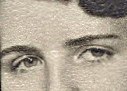
The strangest thing is, for all the many, many, many moves, for all the thousands of miles traveled, for all the years in storage, within this disarrayed collection of my mother’s papers, letters and photographs I am going through, I found my mother’s and my senior high school pictures  — having been somehow brought together at some point in time so that they were stored as I found them this week — laying face to face.

++++++++++++++++++++++++++++++++++

*1943 – Mildred Ann Cahill Lloyd – Senior High School Picture

1943 - mother's eyes

++++++++++++++++++++++++++++++++++

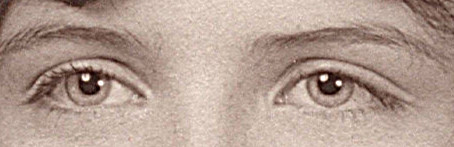
*Age 17 – Linda’s Senior High School Picture 1969

1969 age 17 - my eyes - senior high school picture

++++++++++++++++++++++++++++++++++

I do not like the look of my mother’s eyes.  I do not like the look in my mother’s eyes.  Those readers who were exposed to the insanity of violent rage attacks against them by an adult when they were children no doubt KNOW that look that comes into the face of such an attacker.

I didn’t think about it when I was a child, but when I was 20 I took my young daughter and returned home to visit my family where they were living in Tucson at the time.  I won’t describe the details of what happened there right now, but I saw that look — again — come into my mother’s eyes and I was able to think to myself, “That woman looks like she is possessed.  She looks like a demon has taken over her body!”  The visit did not go well, and I and my daughter escaped.  I never again returned to my parents’ home.

++++++++++++++++++++++++++++++++++

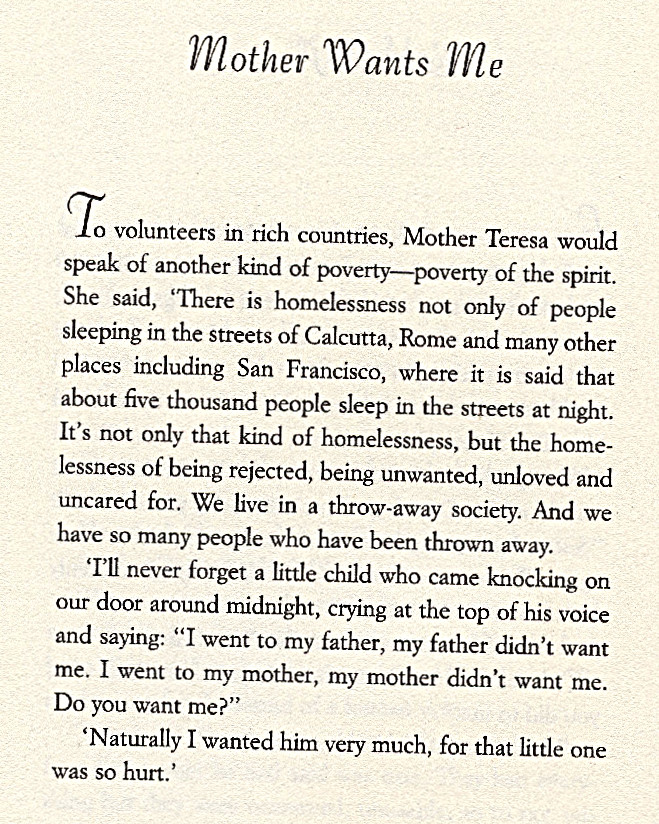
Mother Teresa’s Reaching Out in Love: Stories Told by Mother Teresa by Edward Le Joly and Jaya Chaliha, 1998 (page 66)

To whom -- and with whom -- do the children belong?

++++++++++++++++++++++++++++++++++

I KNOW no child should ever look this sad.  Yet compared to other abused and neglected children, I had it good.

I grew up in a culture that 100%  supported what my mother did to me for 18 years.  I grew up in a culture that 100% supported my father’s enabling of my mother’s abuse of me.  How do I know this to be true?  Because nobody — ever — not one single solitary TIME – EVER looked into my eyes, saw my suffering, and so much as said a word.  Not once did anybody question.  Not once did they blink an eye.  Obviously they were in support!

++++++++++++++++++++++++++++++++++

Click here to listen:

STEVIE NICKS “NIGHTBIRD” LIVE WITH LORI NICKS 1983

++

Nightbird Lyrics

“…And when I call
Will you walk gently
Thru my shadow
The ones who sing at night
The ones you dream of
The ones who walk away
Capes pulled around them tight
Cryin’ for the night
Cry for the nightbird tonite

And the darkened eyes
Thru the net of the lace
In the darkness
It’s hard to see her face
Pulls back the net
And you feel the touch
Of her fingers
And you see she turns the eyes
And you see the eyes of a nightbird
The ones you dream of
Finally the nightbird
Tonite”

++++++++++++++++++++++++++++++++++

This post is dedicated to the nightbirds, to every child who has ever cringed in terror, screamed through tortures, sobbed silently in the darkness of the night without anyone there to hear, to care, or to save them.  It is dedicated to all the adult nightbirds who suffer the same as grownups because of what happened to them THEN still happens to them NOW.

It is not singing for these nightbirds that we need to do, though.  We need to pay attention, look into their sorrow filled eyes, and DO SOMETHING to help them.

I have though long and hard about my next statement:  There are times when a child or children in a family cannot be loved by their parents.  These children, when abuse, violation, violence, and severe neglect is present, need to be permanently removed from their home of origin and placed into families where love is truly present, where safe and secure attachments can be formed, where damage done to these children can hopefully begin to be rectified, and where hope for a better life can be born.

Nobody can ever make anybody love anyone.  It is not humanly possible.  If a parent does not love a child it is because they cannot.  We, as a society, are 100% supportive participants in any abuse that happens to children if we refuse to face this fact and take action on behalf of unloved children.

Children are not objects.  They are not possessions.  Children do not belong to their parents as if they were.  Parents do not own their children.  In my book, children’s rights to get their basic needs met and their rights to be loved and cherished in a safe and securely attached environment completely outweigh the rights of any parent to abuse and neglect them.

That we have an incompetent and inadequate system to care for the needs of unloved children is the problem that needs to be addressed.  No child should ever have to suffer because of adult lack of preparedness.  It is every adult in a society that fails an abused, neglected and unloved child, not just the parents.

I can claim all I want to that I would not have forgone growing up with my siblings.  I can say in the end it was all O.K. with me because I was able to meet, greet and fall in love with the wilderness of our homestead.  At the same time I can see the truth.  It was no kind of childhood at all to be a little one who had only a cold stone snow shrouded distant and remote mountain peak that was the only source I had of comfort and connection.  I needed caring humans.  I needed to be loved.

++++++++++++++++++++++++++++++++++

We can do nothing now about what happened to us when we were children.  We can try to learn how to parent our own offspring better.  We can try to help other children now.  We can learn as much as we can about what our deepest needs for love and attachment were as children, and still are.  I do not wish to leave the information contained in these links behind as I continue with my posting.  Please consider them for your study:

++++++++++++++++++++++++++++++++++

+THE COMPLEXITIES OF SECURE AND INSECURE ATTACHMENT – DO-IT-YOURSELF STUDY LINKS

++++++++++++++++++++++++++++++

One important point to realize about insecure attachment disorders is that in effect, our on-off switch governing our human relationships is not set right, or is nearly broken completely.  We rarely, if ever, truly feel safe, secure and connected to others.  This leaves us feeling pain and anxiety much of the time (Yes, we feel that Substance P).

A securely attached person does not have their attachment system ON all of the time.  It will turn on and off appropriately.  If an attachment system cannot turn itself on and off correctly, none of the other systems will work correctly, either (exploration, caregiving, sexuality).

++++++++++++++++++++++++++++++

In our ‘modern era’ humans seem tempted to believe we are above the rules and laws of nature.  We are not, and if enough of these rules and laws are breached early enough in our development, the ensuing trajectory of all our future development will be sent off into an unhealthy, survival-only-based for the short term, direction.

Our species has evolved over millions of years in such a way that there is a narrow margin for what is most needed for our best development.  As we change how we raise our children from an extended family, tribal and community base, we are placing ourselves and our children at ever increasing risk for suffering from insecure attachment disorders with all their accompanying disruptions for the life span.

What happened to my mother and my father in their earliest beginnings set in motion a chain of predictable consequences that culminated in the 18-year torturous childhood I endured.  They both had insecure attachment early histories with resulting insecure attachment disorders.  Those disorders let the dark rather than the sunshine in to my childhood.

++++++++++++++++++++++++++++++

There is nothing easy about writing this post.  I am tempted to offer a blanket apology for the disarrayed information I am going to post links for you today.  What I WANT is polished, completed perfection.  What I WANT to present to you would look like the information contained in my October 1, 2009 post +CHILDHOOD DISSOCIATION, DEPERSONALIZATION, DEREALIZATION – I NEVER HAD A CHOICE TO BE OR NOT TO BE about the symptoms of childhood dissociation.

I was envious of those few succinct and perfectly chosen words that presented that information on Guidelines for the Evaluation and Treatment of Dissociative Symptoms in Children and Adolescents written by someone for the International Society for the Study of Dissociation.  Then I realized that these concepts were probably part of what could be called a White Paper.  They were no doubt an accumulation of multiple minds working on a problem that needed a solution, and what is presented is the result of a combined effort.

I had some friends when I lived in northern Minnesota who owned 40 acres of sugar maple trees.  Every spring when the sap began to run their entire family would participate in tapping the trees, collecting the sap, and boiling it down in huge vats until it turned into maple syrup.  It took 60 gallons of sap to create one gallon of syrup.

Thinking about secure and insecure attachment feels like a similar process to me.  I can’t begin to imagine the brilliant genius of the minds of the specialists who discover facts and write about the topic.  What I am presenting today is still — only — a collection of their words as I try to gather enough information, and go over it enough times, that I might begin to glimpse the critical significance of their work.

+++++++++++++++++++

Because the experiences of abuse and trauma I endured during the 18 years of my childhood were so extreme, my search of the ‘ordinary’ literature on ‘dysfunctional’ childhoods did not begin to answer my questions about what happened to me and why.  These links I present today contain what I KNOW is critical information about what put both of my parents at risk for turning into monsters.

In order to begin to understand the life of a tree I would not simply study the tip of the topmost and outermost branches.  To understand the bigger picture I would have to study the whole tree, down to the deepest roots that keep it standing in the sky.  I am not content to rely simply on such terms as ‘mental illness’ or ‘Borderline Personality Disorder’ to describe what I might be able to learn about my mother.  I am not content to simply label my father ‘an enabler’.  Who my parents were, why and how they operated the way that they did toward me, I will never actually know.

Attachment research gives me the clearest and most correct platform I have ever found from which I can begin to understand — and therefore begin to apply informed compassion — to the criminal actions my parents took against me.  It also helps me to understand the most important consequences caused by their actions toward me, and helps me learn how to transform them.

+++++++++++++++++++

Even a quick but dedicated quick scanning of the words contained in the following links will have the capacity to change how you look at yourself, your parents, your relationships.  These words are about how early caregiver interactions — good and bad — form the brain-mind.  It is from the foundation of these early beginnings that all future development of an individual arises, in the same way that all the future growth of a tree begins with the cracking of a fertile seed and the growth down of roots and up of its trunk and branches.

The very bare-bones layout of the information in the links covers the difference between secure attachment (about 55% of our population) and insecure attachment (the other 45%).  Most researchers use one set of words to describe the insecure attachment disorder in infants and another for adults related to the exact same patterns.  I see no reason to do this.  What exists in infancy as a disordered attachment remains for a lifetime unless some specific interventions and applied efforts are made toward trying to change the hard-wiring of the infant brain as it was built in the first place so that it becomes more ‘secure’ later in life.

There are breakdowns within the category of insecure attachment that cover what happens to the 45% of people who have less than an optimal early caregiver brain building interaction period in their infancy.  My guesstimate is that about one-third of this 45% fit into each of the following three main categories.

— There are two ‘organized’ insecure attachment disorders/patterns/systems = Avoidant-Dismissive Insecure Attachment and Preoccupied-Ambivalent Insecure Attachment.   The important word here is ORGANIZED, which is in contrast to the third insecure attachment disorder which is NOT organized.

— This is the disorganized  insecure attachment disorder/pattern/system known as the  – Disorganized-Disoriented Insecure Attachment.  Serious dissociation occurs within this group as well as many of the more serious so-called mental illnesses.

There are at least two other attachment categories that may or may not be recognized in the future as having enough merit on their own to remain distinguished from any of the above categories.  They are the ‘earned secure attachment‘ and the ‘cannot classify insecure attachment‘ groupings.

+++++++++++++++++++

I hope that readers will find something useful in these links.  I am a long, long way from coming up with my own version of a simple, clear and succinct ‘white’ paper. What appears in italics in these links are my own words as I processed these technical writings as I read them.

The main references you will find in these links are as follows as they match my codes for citation page numbers (you will also occasionally find a page number inserted in the middle of some paragraphs to note where in a sentence the page number changed):

Siegel/tdm = The Developing Mind: Toward a Neurobiology of Interpersonal Experience by Daniel J. Siegel

Schore/ad = Affect Dysregulation and Disorders of the Self by Allan N. Schore

Schore/ar = Affect Regulation and the Origin of the Self: The Neurobiology of Emotional Development by Allan N. Schore

+++++++++++++++++++

These writings contain many unfamiliar words.  If you are scanning only, skip them.  Or, do a quick Google search using “Webster define _____.”

I believe that the more traumatic a reader’s childhood was, the more they will benefit from gaining an understanding of this information.   It will improve understanding on a more profound level about what happened to their own self development and the development of their early caregivers.  (I need to specify here that I can make no assumptions about how sexual abuse fits into the picture of secure and insecure attachments.  That is not a part of my story, and I cannot and do not make any statements about it.)

++++++++++++++++++++++++++++++

++++++++++++++++++++++++++++++

+I BEGAN TO WRITE ABOUT MY FATHER AND ENDED UP WRITING ABOUT EVIL

++++++++++++++++++++++++++++++++++++++++++++++

Whenever I try to think through my father’s role in our family, I seem to come back around, again and again, to one thing:  He did his job.  He worked as hard as any man possibly could to support us.  He was not a financial deadbeat dad, and he did not abandon us.

This is important.  When I look at these early California pictures I see that we looked like the perfect family.  Gorgeous parents, gorgeous kids, nice houses.  Our family did not fit the poverty stricken profile, even though my parents’ later decisions including homesteading, continual moving, and addition of more children to the family left us with thin resources that certainly placed us on the ‘poorer’ end of the spectrum in terms of food we ate and clothes we wore.  But we did not starve.  While we usually lived in over crowded conditions, we had a roof over our heads.  When push came to shove, somebody went to the doctor.

I think about my mother’s home of origin where past the age of 5, after my mother’s father lost everything in the stock market crash of 1929 and her mother divorced him, it was my educated, motivated and capable grandmother who consistently worked to support herself and her children.  I tie two factors together when I think about how utterly incapable my mother was throughout her lifetime of being able to financially support herself.  If our financial care had been left entirely to my mother as a single mother I know for a fact we would have been in terrible, dire trouble.

I have no way to verify any facts that lie behind the stories I heard growing up about my father’s childhood.  Supposedly my father had been a late, unwanted child.  He was ignored by his mother and raised nearly exclusively by his older sister, Olive.  My mother for some reason despised Olive, and I heard thousands of times in my childhood how much I looked and acted like her.

Right before my father’s brain surgery in the fall of 1990 he came through Albuquerque, New Mexico where I was attending graduate school and my sister had lived for many years.  He was on a mission to return to his childhood home in Holbrook, Arizona in an effort to sadly retrieve some connection to his own self and his own past that had been denied to him during his marriage to my hate filled mother who had demanded that my father disown his family of origin.

On that trip my father told me about his mother that during his childhood remained at home and never left the house except when absolutely necessary to procure goods necessary for survival.  She had no friends and she talked to no one.  My father’s father worked mostly out of town, went through three bankruptcies and died of alcoholism (as eventually did both his only brother and his sister).

My father’s description of his mother was that she might have been severely depressed.  If she had been in that state around the time of his birth and throughout his childhood, my father would have no doubt been forced to develop what is called an avoidant-dismissive attachment disorder.  Most simply put, this means that his brain was never formed to include enough of the right kinds of emotional information to develop a strong, clear healthy self, or to have a strong, clear healthy relationship with anybody else.

The avoidant-dismissive insecure attachment disorders can easily create depressed offspring.  Those same early deprivation experiences with early caregivers can also easily create Narcissistic Personality Disorder offspring.  In order for NPD to develop, I believe other malevolent factors have to exist besides emotional, psychological and mental neglect.  I don’t believe those more malevolent factors existed for my childhood father.  I think he suffered from not being wanted, and therefore from neglect.  In the end, he was anything BUT narcissistic.  I never knew my father to do a single selfish thing — unless ignoring me fit that category.

That made him a perfect fit for my mother, who intuitively would have known, unconsciously, from the first moment she met my father that he would never, ever overwhelm her emotionally.  And he didn’t.  My father’s brain-mind had been created to simply automatically know how to flip inner switches in its circuitry so that he could still function rather than being overwhelmed himself.  He could compartmentalize and dissociate from stimuli coming at him from all directions and still carry an incredibly heavy load on his back as he trudged down the road of his life while his children grew up and his wife abused him.

++++

This morning I woke up from dreams I could not remember with the image of my father carrying the load of the world upon his back like the mythological Atlas.  Atlas was one of the Classical Gods of Ancient Greece, God of Weightlifting and Heavy Burdens.  If the psychologist, Carl Jung, ever identified a human archetype related to the aspects of this god, my father lived that archetype.  When I woke this morning I saw my father in the role of being a work horse tied into the traces of trying to provide for his family.  He was more like a heavily burdened mule than a man.  And because nobody in his early life had probably ever cared about his emotional or physical well being, being able to care for his own or his childrens’ later on was probably just about impossible for him to do.

Meanwhile, my father took on the work not only of fulfilling a demanding professional profession but also took on his Alaskan lifestyle duties as described frequently in my mother’s letters.  He looks in his pictures to be gaunt and exhausted most of the time.  My father never once in his lifetime abandoned the financial care of my mother, and I don’t think she was able to ever know how fortunate she was, and I don’t think she ever appreciated what my father gave to her.  Those inabilities were simply another extension of her mental illness.

The disorganized-disoriented insecure attachment disorder my mother developed in her early childhood manifested as a severe mental illness which was, though unnamed, just another of the heavy burdens my father shouldered and lived with.  Because my mother had 6 children to ‘raise’ it seemed mostly obvious that she would not be the one to financially support the family in any way.  In that era of time, it was mostly common for men to work outside the home and mothers to remain in the home, anyway.  Those roles were rarely questioned.  But if my father had ever reneged on his own obligations that he assumed, I know for a fact our mother could have in no way filled his provider shoes.  We would have starved and frozen to death if that part of our care had been in the hands of my mother.

++++

The family stories about my father’s childhood also included reference to the ‘fact’ that he was a shy child, and by the time he was in 8th grade he was obese and had no friends.  How did the young man who was to become my father respond to the persuasive, seductive charms of the gorgeous young woman who was to be my mother when he met her?  They met through my mother’s brother, who was my father’s university roommate, and were married six months later.  Did he see all hell breaking lose from the start?  Was it a gradual process?

My parents were living in their third Los Angeles house by the time I was four.  My mother berated my father for not being motivated enough to care for the yard at the Atchinson house causing their eviction.  They bought a house in Altadena and only lived in it a brief time before they left that one and bought the one in Pasadena.  I have come to wonder because other people have questioned it, whether it was because of my mother’s rage attacks on tiny me that created a stir in the neighborhoods they lived in so that my parents simply moved out and moved on.  It’s entirely possible that is what happened.

I know that whatever happened during my mother’s labor with me created a fundamental psychotic break in her mind as she believed the devil sent me to kill her and that I was the devil’s child sent as a curse upon her life.  How did that psychosis appear to my father?  To my mother’s mother?  I believe my mother was insane enough, clever enough, and narcissistic enough to preserve her own survival by hiding her feelings about me from everyone around her.  She know how to play the perfect part of being the perfect charming wife, homemaker and mother.  She had her disguises and she chose to use them well.  She had that capacity.

I think about all the Trickster legends in old and traditional lore and legend.  My mother appeared to be an expert at switching in and out of mental and mood states depending upon what environment she was in and on who she was trying to fool.  I think my mother kept my father spinning around and around and around so that putting one foot in front of the other as he hauled his heavy burden with him was all that he could do.  Of the thousand things that were wrong with his life noticing what was wrong with me was so NOT his priority that it never happened at all.  That is what my mother intended, and my mother never missed her mark.

++++

I believe that in most cases all forms of insecure attachment disorders and their resulting so-called mental illnesses progress throughout a lifetime, and their ability to change or even identify what is wrong deteriorates accordingly.  As I grew older both my father and my mother were becoming sicker and sicker.  The more vicious, demanding and mean my mother became, the more fragmented, dissociated and compartmentalized my father’s brain-mind-self must have become to adapt to her.  I do believe that my father took the easiest route out regarding his daughter, Linda.  My mother fed him a poisoned apple regarding my innate badness, and he ate and swallowed it.  I believe that he came to believe my mother.  He ate her bait, ‘hook, line and sinker’.

It is an odd paradox to me that my father seemed to be so emotionally and mentally weak and vulnerable against the evil hatred my mother was toward me.  The more pressure she put on him the more he caved.  My mother did not want my father to love her mortal sworn enemy, Linda.  She used every power she possessed to make her wish come true.  My father, who could carry every one of the other thousand burdens in his life chose not to think or feel for himself regarding me.  I believe my father ‘learned’ not to question my mother regarding me.  Somewhere along the time-line of being my father and his wife’s husband, he gave up and gave in.

++++

The worst thing that could have happened did happen.  My father came to believe my mother’s lies about Linda.  Once that happened, I believe that my father believed that ‘if only’ Linda were not a part of his family life would be better.  He certainly had a perfected ability through his insecure attachment disorder to dismiss and avoid not only me as his child, but evidently any possible thought that my mother and he were either wrong in their thinking or their actions – and in his case, particularly his inactions.  I was doomed.  I would have been better off one or both of them had simply taken me out and shot me.

So my commenter was right that my father’s difficulties in taking the life of a moose meant nothing compared to his treatment of me.  My difficulties in seeing this and knowing this fact originated in 18 years of living under conditions controlled by my mother’s hatred of me and of my father believing her.  I was also fed my mother’s poisoned apple.  I look at these early pictures of baby me, and I can’t put the ‘1 + 1 together’ and come up with 2.  I seem to auger myself deeper and deeper in self loathing as I blame and fault myself that I cannot seem to face the truth about my childhood.

++++++++++++++++++++++++++++++++++++++++++++++

I believe I need to let my thinking wander into an area that I have only one single time seriously considered.  As I describe in +THE MOST IMPORTANT LETTER I’VE EVER WRITTEN – WHEN I DISOWNED MY MOTHER, the only way I was ever able to severe my faulty connection to my mother was when I could consider that evil was present in my childhood.  Never since that time have I allowed myself to consider that thought.

What happens if I can allow myself to add in one more factor into the equation of my childhood?  What happens if I allow myself to understand that evil is not only real, but that it permeated my entire childhood and was present in all the interactions I had with BOTH my mother and my father?  What happens if I say that I was raised in an environment filled with evil, and that both my parents participated in it?

Inside my body I can feel something happening with these thoughts.  I can feel myself separating from the group of others that were my siblings.  At can see it happening inside my body.  Like separating one dull penny from a group of five shiny ones, I am scooped away from them and left isolated and completely alone to suffer consequences that none of them – and this is my truth – cannot ever possibly imagine.

And this is the truth of what happened to me.  I was culled out of the Lloyd children flock because I was evil.  My mother believed that because I was not human, and that because I was the devil’s child, I had the innate power to take my siblings to the devil.  I had the power to contaminate and ruin them, just as I, myself, was ruined.  When I am off by myself in the family photographs, or when I am completely missing from the pictures, it was because I was being held hostage by an evil that I was told existed AS me – not IN me – but AS me.

Thousands and thousands of times that happened in my childhood.  My siblings so grew up in that environment of evil that they could not question it.  The powers of my mother’s brainwashing affected everyone.  That it affected my father is the crime.

I always want to say that I don’t know what evil is, therefore how can I believe in it?  That is a lie.  Yes, I do know what evil is.  At least the part of it that affected every part of me as a child growing up a victim of my mother’s psychosis.  Am I afraid of evil?  Yes, of course I am.  Do I think if I ignore even thinking about evil that I am somehow protected from its powers?  Yes, I think that.

++++

At this point of being willing to allow myself to think in terms of evil in my childhood, I can feel my skin and everything inside of it tighten up as if I have crashed through the ice on some vast frozen lake and fallen into icy water that I might never be able to get out of again.  I can feel my blood curdling like sour milk, and perhaps it won’t be able to flow through my heart.  I want to know, “Is there some invisible dam that does its job of keeping evil out of human lives?”  If there is, something broke through that dam in my mother’s brain-mind and evil rushed into her life and swallowed me up.  It swallowed my mother.  It swallowed my father.  But I, as their child, paid the price of suffering while they seemed oblivious.

If God is Love, which I believe He/She is, then the absence of God is not love.  In a topsy-turvy world of blurred boundaries about what is right and what is wrong, about what is love and what is hate, there I place my mother and that blurred boundary is where her Borderline was.  She crossed it with me.  She not only did not love me, she hated me, and she never wavered from that decision, whenever and wherever and however she made it.  If it happened as a result of a psychotic break while she was delivering me, it happened without her conscious thought.  But once she made her decision that I was her mortal enemy, evil consumed my mother toward me.

I could see it in her eyes when she attacked me.  I could feel it in her being toward me all the rest of the time.  She was turned, again like sour milk.  Once soured, milk cannot be returned to its sweet, good state.  Something rotten does not reverse its course and have its better life returned to it.  All that was sour and rotten within my mother was so thoroughly projected out onto me that her beliefs about me grew themselves into my brain, body and mind.

My father, whether he knew it or not, was her assistant.  He helped her.  He believed her.  He stood by her against me every time he knew what she did to me and did nothing to help me.  He took her side.  He stood by her side.  And by doing so he kept open all the flood gates that allowed evil to exist in his home and in his life as it tortured his daughter, me.

++++

I cannot find it within myself to think at this moment in any other way but to say, it was all a tragedy.  When I look at the definition and origin and relationships of words surrounding tragedy, I see that it’s about the downfall off a man – or a woman.  It’s related to ‘goat’ and to ‘ode’.  There are ancient stories contained within the human race, repeated patterns that happen within our species over and over again.  I was the sacrificial goat in my family – yes, the scapegoat.  But the bigger story, the ancient story was about the interactions between people who are ‘fallen down’ and who involve others, even their children, in this down-falling process.

Yet where does the ‘ode’ fit in?  How is it that I, the sacrificed child, be the one to sing the ode now, the “lyric poem usually marked by exaltation of feeling?”  I see at this moment an image of the Titanic going down with my parents on it.  But I escaped.  I did not go down with them.

I am the one doing this writing.  I am the one that takes a break from these words and goes outside to sit in the sun and listen to the contented chirping of the birds around me.  I just watched a cream colored butterfly with purple spots land on a cream colored pansy with purple spots that I brought into my life.  I am the one who has always, from the time of my earliest beginnings, allayed the power of the darkness that surrounded me.

The Dine people (known as Navajo) use a greeting infused with the idea of living, breathing, and walking in beauty.  I was born with that gift.  I have never lost it.  I have never laid it down and walked away from it.  Nothing has ever removed it from me.  Nothing has that power over me.  Even the name my parents gave me, Linda, is infused with the concept of ‘beauty’, though evidently in its origins it is also tied to the concept of ‘serpent’.

Whatever the role I was forced to play in the trauma drama of my parents’ lives, on my innermost levels I escaped unscathed.  I am no more tarnished by the evil present in their lives than I would be if I was that butterfly or that pansy.  It is on the equally real physiological level, however, of my brain-mind-body that my early and ongoing childhood tortures changed me.  It is with those very real changes that I must live with today no matter what I believe about my parents.

++++

I did not start off knowing I was going to end up today writing about evil.  Yet now I am thinking about another ancient story about Medusa, the snake-haired monster who could not be looked at directly because doing so would turn a person to stone.  Perhaps it is by looking into the mirror of my father as he was in relationship to her that I can better see the monster image of my mother.  Or maybe it was that he looked at my monster mother directly and was himself turned into stone.  So what is it about me that feels a twang of guilt if I think, “Better him than me?”

After all, whose ode am I singing?  If I keep on my own side of the Borderline, I know it is mine and not either one of my parents’.

++++++++++++++++++++++++++++++++++++++++++++++

+SUBSTANCE P – IT’S OUR BODY’S BIOLOGICAL LINK TO FEELING EMOTIONAL AND PHYSICAL PAIN

+++++++++++++++++

What do we know about pain?  What do we know about the connection between physical and emotional pain responses in the body and brain?

It took me many months of online research before I finally came up with what links our physical and emotional pain responses (and our pain thresholds) together.  I found it in

SUBSTANCE P — a small peptide (protein) released upon stimulation in the nervous system and involved in regulation of the pain threshold.  Substance P (P = pain) works the same in our body whether we have a broken bone or a broken heart.

I’m not sure it helps when we HURT from any pain to say to ourselves, “Oh, that pain is just me feeling Substance P.”  But it might help to realize more clearly that there is a direct and definable link between our ability to experience emotional and/or physical pain in our body-brain.  Emotional distress, including sadness, loneliness and anxiety,  is as real a pain in our body as is any physical pain we can ever experience.

And when terrible physical and emotional pain was forced upon us from early child abuse and neglect experiences, I believe the entire balance of how all these complex pain response systems in our body is altered for the rest of our lifetime.

And I also find it fascinating that Substance P is connected to our ‘puke center’.  In our early evolving brain-mind, what was toxic needed to be vomited out ASAP for our continued survival.  As we became increasingly complex beings, we eventually could not puke out mental, emotional and psychological toxins, poisons and traumas.  We had to find ways to endure in spite of them.

(Epigenetic changes are one of the ways we do this – see yesterday’s post.  These changes have a lot to do with where so-called ‘mental illness’ comes from.)

Substance P is connected to our immune system.  That doesn’t surprise me one single bit.  It is intimately involved with maintenance of our well-being – including the healing of all of our wounds.  Once we truly accept the fact that emotional wounds ARE physical wounds, I believe we can better get on with the business of healing.

+++++++++++++++++

Substance P has effects on mood, memory and sleep, and has been implicated in posttraumatic stress disorder (PTSD).

It is involved with depression and the actions of antidepressant drugs.

Substance P is involved with sadness.

Substance P is also involved with anxiety and stress responses and disorders.

+++++++++++++++++++++++++++

FULL ARTICLE (abstract below) CAN BE PURCHASED ONLINE OR ORDERED IN FROM A LIBRARY:

Psychol Bull. 2007 Nov;133(6):1007-37

Substance P at the nexus of mind and body in chronic inflammation and affective disorders.

Rosenkranz MA.

Department of Psychology, University of Wisconsin-Madison, WI 53705, USA. marosenk@wisc.edu

For decades, research has demonstrated that chronic diseases characterized by dysregulation of inflammation are particularly susceptible to exacerbation by stress and emotion. Likewise, rates of depression and anxiety are overrepresented in individuals suffering from chronic inflammatory disease. In recent years, substance P has been implicated in both the pathophysiology of inflammatory disease and the pathophysiology of depression and anxiety by 2 parallel fields of study.

This review integrates the literature from these 2 parallel fields and examines the possibility that substance P dysregulation may be a point of convergence underlying the overlap of chronic inflammatory disease and mood and anxiety disorders.

First, the involvement of substance P in peripheral inflammation and in the immune events associated with chronic inflammatory disease is discussed, with a focus on inflammatory bowel disease and asthma.

Next, the function of substance P in the communication of peripheral inflammation to the brain is considered.

Finally, to complete the bidirectional loop of brain-immune interactions, substance P expression in anxiety and depression as well as its potential role in the neural regulation of peripheral inflammation is reviewed.

PMID: 17967092 [PubMed – indexed for MEDLINE]

+++++++++++++++++++++++++++

From Wickipedia:

In the field of neuroscience, substance P (SP) is a neuropeptide….that functions as a neurotransmitter and as a neuromodulator.[1][2] It belongs to the tachykinin neuropeptide family. Substance P and its closely related neuropeptide neurokinin A (NKA) ….Substance P is released from the terminals of specific sensory nerves, it is found in the brain and spinal cord, and is associated with inflammatory processes and pain.

Function

Substance P is an important element in pain perception. The sensory function of substance P is thought to be related to the transmission of pain information into the central nervous system. Substance P coexists with the excitatory neurotransmitter glutamate in primary afferents that respond to painful stimulation.[11] SP has been associated with the regulation of mood disorders, anxiety, stress,[12] reinforcement,[13] neurogenesis,[14] respiratory rhythm,[15] neurotoxicity, nausea/emesis,[16] pain and nociception.[17] Substance P and other sensory neuropeptides can be released from the peripheral terminals of sensory nerve fibers in the skin, muscle and joints. It is proposed that this release is involved in neurogenic inflammation which is a local inflammatory response to certain types of infection or injury.[18] …. Substance P receptor antagonists may have important therapeutic applications in the treatment of a variety of stress-related illnesses, in addition to their potential as analgesics.

Vomiting

The vomiting center in the brainstem contains high concentrations of substance P and its receptor, in addition to other neurotransmitters such as choline, histamine, dopamine, serotonin, and opioids. Their activation stimulates the vomiting reflex. Different emetic pathways exist, and substance P/NK1R appears to be within the final common pathway to regulate vomiting.[19] Substance P antagonist (SPA) aprepitant is available in the market in the treatment of chemotherapy-induced nausea / emesis.

Pain

Substance P is involved in nociception, transmitting information about tissue damage from peripheral receptors to the central nervous system to be converted to the sensation of pain. It has been theorized that it plays a part in fibromyalgia.

Cell growth

Substance P has been known to stimulate cell growth in culture,[20] and it was shown that Substance P could promote wound healing of non-healing ulcers in humans.[21] It has also been shown to reverse diabetes in mice.[22][23]

Vasodilation

Substance P also has effects as a potent vasodilator. ….As is typical with many vasodilators, it also has bronchoconstrictive properties, administered through the non-adrenergic, non-cholinergic nervous system (branch of the vagal system)

+++++++++++++++++++++++++++