+IN MEMORY OF MY MOTHER; LINKS TO INFO ON BORDERLINE PERSONALITY DISORDER

++++++++++++++++++++++

In memory of my mother, and of the monster that ate her, here are some links I am behind on (catching up!) on information about Borderline Personality Disorder.

++++++++++++++++++++++

But — First This, with gratitude to the person who sent me this link:

Eavesdropping on Happiness

Well-Being Is Related to Having Less Small Talk and More Substantive Conversations

++++++++++++++++++++++

+++++++++++++

From Kristalyn Salters-Pedneault, PhD

Your Guide to Borderline Personality Disorder.

It is not uncommon for people with BPD to be misdiagnosed with another disorder before getting the correct diagnosis. Many clinicians who are less familiar with BPD might assign someone a diagnosis of chronic depression, or bipolar disorder, or even an anxiety disorder. Learn more about diagnosis of BPD.

BPD and Violence – The Facts, Not the Stigma Do men and women who have BPD commit more violent acts that the general population? Are all people with BPD violent? To what kinds of violence are people with BPD most prone?

Understanding the Cluster B Personality Disorders While BPD is associated with impulsive violence, there are other personality disorders that are associated with premeditated violence. Learn more about the Cluster B personality disorders.

What is Phone Coaching and How Can It Help You? One important aspect of dialectical behavior therapy (DBT) for borderline personality disorder is phone coaching. What is phone coaching, and how can it help you cope with symptoms?

Understanding Borderline Personality Disorder Learn more about the symptoms and associated features of borderline personality disorder, including emotional and relationship instability, impulsivity, suicidality, self-harm, and more.

Proposed Revisions to the DSM – Are Big Changes on the Way? The American Psychiatric Association (APA) recently posted the proposed changes to the upcoming edition of the Diagnostic and Statistical Manual of Mental Disorders (fifth edition). Find links to the relevant changes and share your reaction.

The Current BPD Diagnostic Criteria If you want to see just how big the changes are, here are the DSM diagnostic criteria for BPD as they currently stand.
What’s In a Name? Many are surprised that the term “borderline” is not being replaced in the DSM-V. Learn more about the history of the name controversy here.
Stigma and BPD For years, in the United States and abroad, public information campaigns have tried to combat the stigma associated with mental illness. Unfortunately, these campaigns don’t seem to have been successful.

BPD versus Bipolar Disorder – How to Tell the Difference The primary reason that some clinicians confuse BPD and bipolar disorder is that they share the common feature of mood instability.

Learn how to tell the difference between BPD and bipolar symptoms.

How is a BPD Diagnosis Made? How is BPD diagnosed? What symptoms contribute to a BPD diagnosis? And who made up these diagnostic criteria anyway? Learn all about BPD diagnosis.

What to Expect from a Good BPD Assessment Many people have been misdiagnosed after an inadequate or incomplete assessment. What should an assessment look like? How do you know you’ve been thoroughly assessed? These guidelines will help you understand how to get a good BPD assessment and what to expect.

Understanding Borderline Personality Disorder Learn more about the symptoms and associated features of borderline personality disorder, including emotional and relationship instability, impulsivity, suicidality, self-harm, and more.

How to Create a Safety Plan This article covers the steps in making a clear and comprehensive safety plan. This is not something that can be done when you are already in the midst of a mental health emergency.

If you don’t already have a safety plan, bring this article to your therapist!

The Pros and Cons Tool This is a great tool to add to your safety plan – at lower levels of crisis, the pros and cons tool helps you make decisions about high risk behaviors.

Build a Social Support Network A key to a good safety plan is to have many sources of social support to rely on so that someone is always available (and so that you don’t burn-out existing supports). But how do you find support when you need it?

For Family and Friends of Individuals with BPD Does someone you care about have BPD? BPD can affect all types of relationships, including friends, family members, and romantic partners. Learn more about how BPD may be affecting your relationship, how to cope when a loved one has BPD, and how you can help..

Must Reads

What is BPD?
Symptoms of BPD
Diagnosis of BPD
Treatment of BPD
Living with BPD

++++++++++++++++++++++

+LOVE AFFAIR BETWEEN A CHILD AND THE LAND – MY AGE 6 DRAWINGS

+++++++++++++++++++

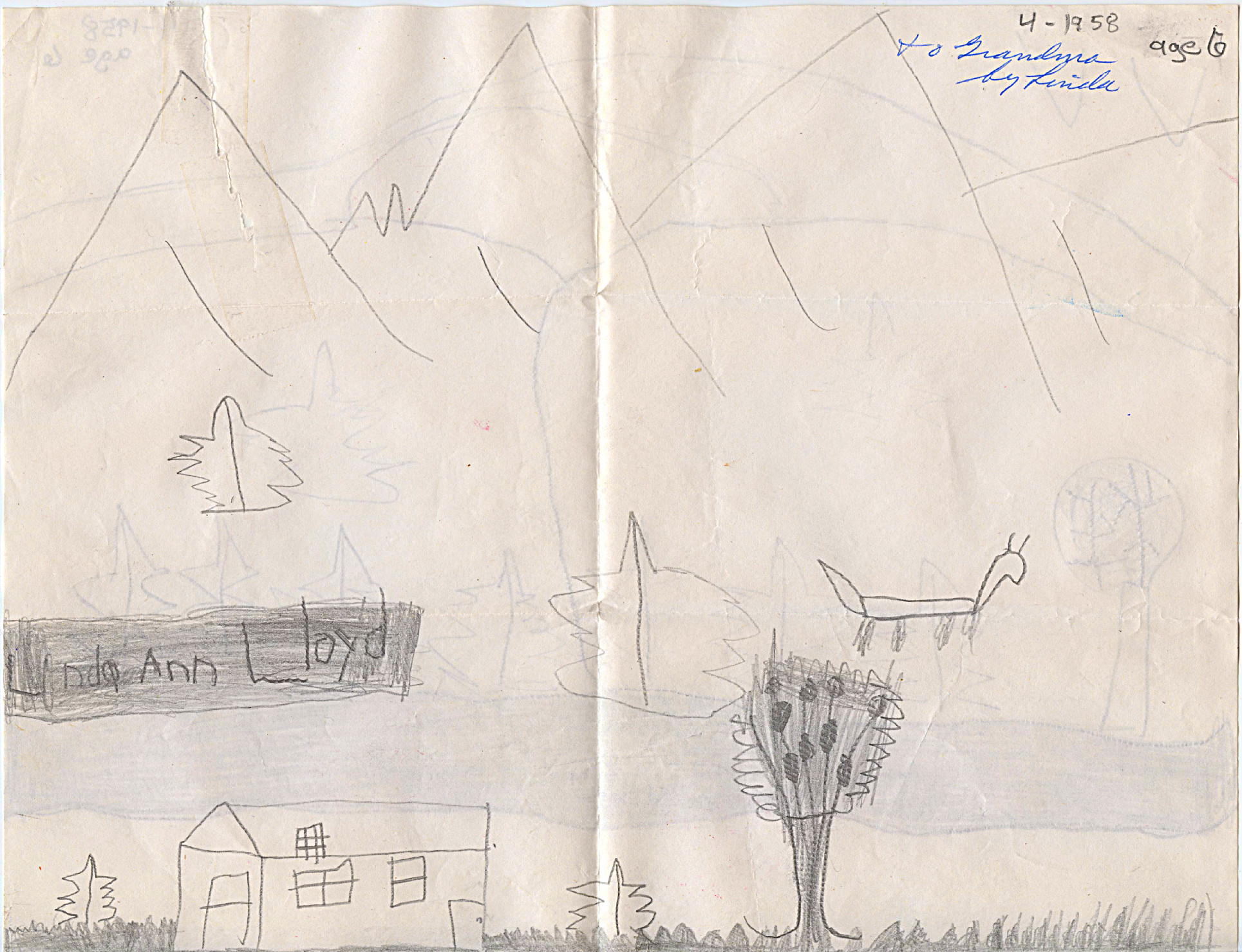
I just discovered these drawings I created in pencil when I was six – what a treat!

from Age 6 – April 1958

We had lived in Alaska nine months when I drew these pictures that I just found in one of the letters my mother wrote to my grandmother in April 1958.  I had turned 6 the 31st of August 1957.

It delights me to discover these pictures almost 52 years to the date later.  It’s obvious to me that I was already in love with Alaska.  Our family had not yet staked claim to the homestead.  April 1958 is the month my father hiked back into the valley and discovered the piece of land that he then laid claim to (I had not seen the homestead when these were drawn).

When we love, we love with detail, and in the specifics of my drawings I can see that love I had and still have for the natural world.

I wonder if that creature I drew with a snail-like head was a moose! Drawn April 1958 (age 6) of the Alaska I loved. Looking closely, I see that I even added grass along the ground line in front of the house, along with the 'ravine' lines on the peaks, and the detail of the jags on the one peak. I was also aware that the bearing-fruit tree had a root structure with an indication that the tree had leaves, branches, fruit AND roots. No eyes on the creature, though!
This is drawn on the other side of the page April 1958 (age 6) with my version of birds at top left, mountains reaching far back with attention to the edge of a ravine, a tree-lined river and a tree with branches. I took a lot of time to carefully draw in all that water!

I believe this land saved me along with this love that I had for this land.  I was absolutely attached to the place of Alaska – everything about the natural world made perfect sense to me.  It fit within me and I fit within it.  We were perfectly made for one another.

What would have happened to me if we had not moved to Alaska and the same abuse had occurred to me without this place and my love of it to sustain and nurture me?  Was I able to utilize some very ancient ancestral DNA memory of being fundamentally connected to the natural world that is, in our culture, being nearly forgotten?  A mother’s love for her child returned here in these 2 simple images.

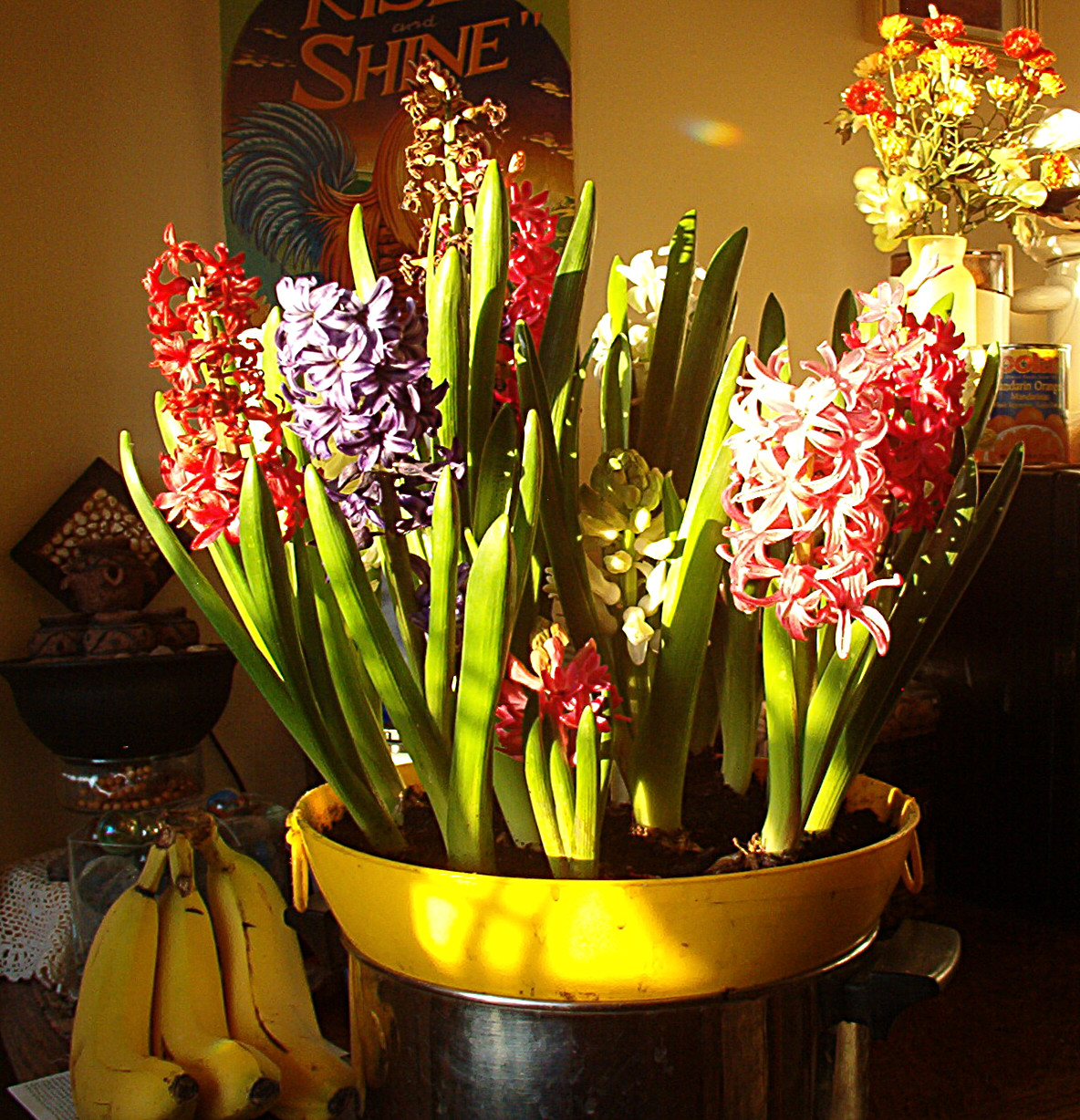
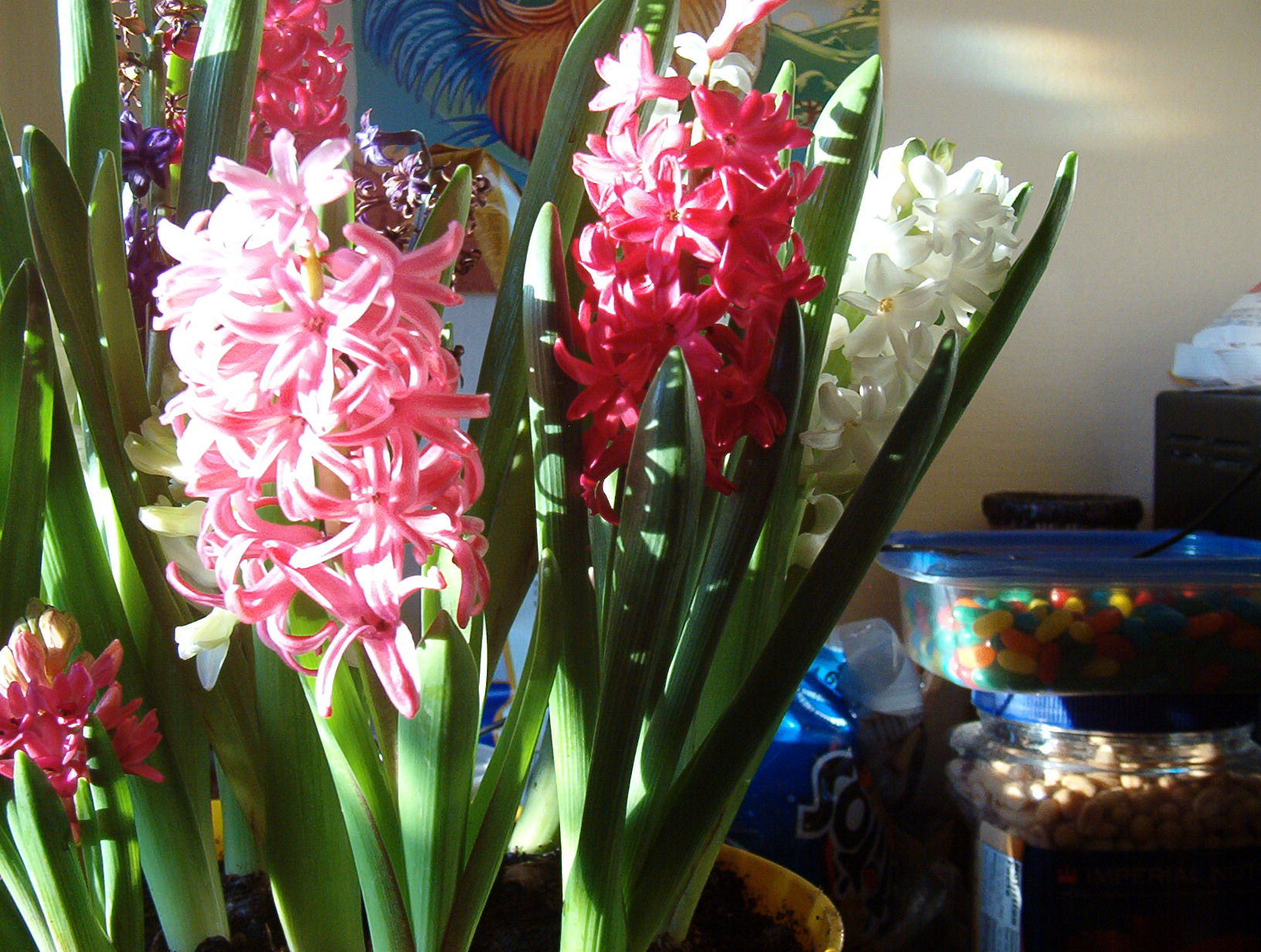
NOTE:  Interesting, not a flower in sight!  Drawings seem very structural to me, solid, well framed, but no ‘frivolous’ flowers!

++++++++++++++++++++++++++++++++++++

+GENUINE EMPATHY AND COMPASSION: THE ROLE OF ATTACHMENT AND ‘EFFORTFUL CONTROL’

++++++++++++++++++++++++++++

“…effortful control has been related to higher levels of emotion regulation, sympathy and prosocial behavior, internalized conscience, committed compliance, and social competence.”

++++

My thinking never wanders very far away from wondering about how some people react to other people in their lives.  Being somewhat aware of the trauma, drama, stress, distress and duress my daughter is in the middle of right now with her premature newborn, Connor, in neonatal intensive care where she still cannot even HOLD him, kept me from being able to sleep well last night.  As a result, I came into the kitchen for my first morning cup of coffee today with far more questions in my thoughts than I had answers for.

Always when I discover that someone I care about and who is (or has been) an important figure in my life acts (or did act) in ways that are beyond my ability to comprehend I have to wonder what happened ‘way back then’ in their lives that supports and in-forms how they act in their life.

Specifically this morning I was wondering about true and genuine empathy and compassion.  I think again about Dr. Dacher Keltner’s writings even about the difference between a phony smile and the only true and genuine smile – the D-smile.  A genuine smile cannot be physiologically faked.  It corresponds to actual and very real operations within a person’s body and brain that occur in one way and in one way only.

Although we do not pause every time we see a person smile and consciously analyze whether their smile is fake or genuine, this extremely fast (in the fraction of a millisecond range) response is immediately analyzed by us within our own social-emotional body-brain response system so that we KNOW without question – automatically and correctly – how fake or genuine anyone’s smile is as we see it.

Yet all the other human behaviors that are physiologically linked into the same body-brain vagus nerve and autonomic nervous system responses most often are not as clear to us.  A smile, as a single, simple human emotional-social response, is just one of many, many human responses that happen through these same response systems.

++++

I am thinking about my daughter’s heart wrenching sobs that consumed her last night in her grief of not being able to hold her newborn.  As hard as it is for her, this grief is a welcome, most appropriate and necessary response.  If she felt detached and blithe about the absence of her tiny infant from her arms, that baby would be in big, deep trouble.

Yet even in thinking about my daughter right now, I also think about the response of others surrounding her in her life.  Watching the near pandemonium that has resulted from the unanticipated too-early birth of this baby, I can see the difference between what is a natural unfolding drama, and what is happening with others in her life that reeks of trauma drama.

How can we tell the difference?

When do we see overlapping dramas unfolding around us?

My guess is that as we learn to discern the difference between genuine responses to another’s distress from ‘fake’ ones we can at the same time let ourselves know that we are watching the effects of past unresolved traumas operating.  The problem is, if the traumas happened early in a person’s development, particularly in the first year or two of life, the responses that we may be victim to or witness of are not under the conscious control of those displaying them.  The behaviors are automatic and completely tied into the physiological construction of the body brain of the ‘actor’.

++++

Just as we can actually say that a fake smile is NOT a smile – because the only true smile is a genuine D-smile, we can also say that any and all displays connected in their origins to our vagus nerve and autonomic nervous system as they, in turn, connect to our brain result in EITHER a genuine and real display of empathy and compassion, or they result in FAKE empathic and compassionate actions that are not the real thing.

How can this be possible?

I suspect that people can ACT in ways that mimic empathy and compassion in the same way we can mimic a smile.  People can DO things that appear to be generous and considerate, can appear to happen with another person’s interest (rather than self interest) in mind — but in fact, when we analyze the entire picture of the presence or absence of trauma drama in the expression, we can see and know the difference.

Most simply, I can think about how my mother laundered clothes, prepared meals, taught table manners, or accomplished any of the so-called mothering duties that she knew how to perform – and did for her family.  And yet I cannot ever assume that she performed these actions with genuine, empathic, compassionate concern for the well-being of her family.

I do not believe my mother had the physiological body-brain capacity to experience empathy or compassion (in part as shown by her inability to experience true embarrassment or to ever admit she was wrong).

True, real and genuine consideration and caring for other people happens, in my thinking, when people can access the calm, connecting operations of their nervous system and brain.  Some peoples survival and stress response are active ALL of the time.  Everything they do, every action they perform, ALL OF THEIR CONCERN is really about their own survival in the world.  They are constantly assessing the degree of danger and threat their SELF might be in.  Everything they do and say includes on some level (rarely conscious) a consideration of their own – NOT THE OTHERS – degree of well-being.

These people’s inner resources are depleted to the extent that they cannot ever genuinely be concerned for another person’s welfare.  True, they can TRY to do good, feel good, be good – but trying to do and actually doing are not the same thing.  This all becomes most obvious under circumstances when another person is in great need, such as my daughter is right now.

When other people around her go through the motions of caring about her, and even as they try to help, the relative position of the helper’s self to the ‘helpee’ can be seen.  When on any level the helper needs to be congratulated, appreciated and/or recognized for their ‘good deeds’ or ‘good intentions’, suspect that early developmental traumas interfered with the development of the helper’s ability to experience true empathy or compassion.

What is really happening is that the helper-giver feels continually depleted and thus continually needs replenishment from outside of their own self – from others – even the needy one they are trying to offer something good to.  Sometimes the neediness of the helper-giver will show up as passive-aggressive pleas for attention and recognition.  Sometimes it will show us as sarcasm, irritability, even sabotage within the giving situation.

Sometimes it happens that the person who needs assistance simply finds no response helpful forthcoming from those they might expect to help them, or even rely and depend on to help them (as with inadequate parenting of children).

According to attachment experts, when a person has an insecure attachment and their attachment needs are thus never adequately or completely met, this person’s caregiving system will never be able to be activated appropriately, either.  In cases of so-called earned secure attachment, or what I call ‘borrowed attachment’, it is possible that the caregiver’s insecure attachment system (that is never actually deactivated) CAN still caregive.

But at the same time their are inner costs to be paid by both giver and receiver when this pattern exists.  Most simply put, at least within these altered patterns of caregiving past unresolved trauma, and their corresponding trauma dramas are not at front and center.  They simply hang around in the wings exerting less of an influence on ongoing relationships — but they are not absent completely.  As a result, these caregiving patterns can be very precarious, fragile and vulnerable to easy upset should the right conditions show up in the present that threaten these kinds of secure attachment relationships (such as I had and have with my children).

++++

It is completely natural that we hope for, desire, want and at times truly NEED a caregiving response from other people in our lives.  But we need to pay attention to what our gut tells us.  We can tell the difference between giving presented by securely attached versus insecurely attached people in our lives – as surely as we can all, REALLY, tell the difference between a fake and a genuine smile.

When people deprive us of care we need, such as abusive and neglectful parents do to their dependent offspring, these patterns of inadequate caregiving are obvious.  But as adults, these patterns can be far more difficult to detect because of both the subtleties and the complexities of the relationships with have with others.

Any time we sense something negative within our own self tied to any kind of assistance we receive from another, we need to trust this sense.  It is real.  As we become more clear and conscious about how we feel in relationship to how others act toward us, we can become more clear about how UNCONSCIOUS those other people probably are about their own intentions and actions.

Most often we are unaware of how it feels within our own self to have our attachment system activated.  At those times WE NEED from others.  At those times our own caregiving system is either off completely or on idle.  When we are in a state of need ourselves, it can be extremely difficult to give to others.  Yet most of the time we can be completely unaware of how all these related caregiving versus personal need transactions are happening.

++++

Because our emotional-social brain, and all the nervous system connections within our body, were formed during our earliest stages of development, we are most often not going to have the ability to notice how we are responding to those around us.  These early developments within our body-brain were (and are) designed to operate automatically.  We have to choose to become in-formed about how they take over our lives – including our thoughts, feelings and behaviors.

I am going to introduce a simple concept here today (click on the title of the article or go to this blog’s page +Effortful Control for the full manuscript) that is really taking a look at how and where the ability to experience true and genuine empathy and compassion for another person originates.  This glimpse, however, as you will see as you take a look at the following notes from the article, is taking place ‘down the road’ from the earliest brain-nervous system development that takes place from conception to age (about) of six months to a year of age.

Already by the age of toddlerhood the fundamental experience of being a self with emotions has already been built into the body-brain.  What this article is explaining is how outward behavior can already be changed from optimal due to ineffectual and inadequate early attachment patterns with early caregivers, particularly with the mother.  This has to do with our progressed abilities that are built upon the ability to recognize and regulate emotions, an ability (or not) that is built into the earliest forming right limbic emotional-social brain and that affects our abilities to interact with our own self and with others for the rest of our life.

Notes from taken from the article:

Relations of Maternal Socialization and Toddlers’ Effortful Control to Children’s Adjustment and Social Competence

Effortful Control

Some researchers have conceptualized emotion regulation in terms of children’s effortful or voluntary control as opposed to more reactive forms of control

Effortful control has been defined as “the efficiency of executive attention, including the ability to inhibit a dominant response and/or to activate a subdominant response, to plan, and to detect errors”

Effortful control is characterized by the ability to voluntarily focus and shift attention and to voluntarily inhibit or initiate behaviors, and includes behaviors such as delaying; these processes are integral to emotion regulation

For example, effortful attentional processes can be used to regulate emotions, such as turning away from something distressing

Empirical work has shown that orienting behaviors serve a regulatory function during an anger inducing task in infancy

In comparison to emotion regulation, the construct of effortful control is viewed as a broader construct that includes an array of skills that can be used to manage emotion and its expression

Whereas effortful control is seen as reflecting voluntary behavior, reactive control refers to aspects of functioning such as impulsivity and behavioral inhibition

Reactive control refers to behavior in which individuals are undercontrolled and are “pulled” toward rewarding situations (i.e., impulsivity) or behavior in which individuals are overcontrolled and are wary in response to novelty, inflexible, and overconstrained (i.e., behavioral inhibition).

Reactive control is not considered to be part of self-regulation, and reactive undercontrol and effortful control are generally negatively related

Reactive processes seem to originate primarily in subcorticol systems, whereas executive attention, the basis of effortful control, is believed to be situated primarily in the cortex (e.g., the anterior cingulated, lateral ventral, and prefrontal cortex

effortful control is thought to emerge in late infancy and to develop rapidly during the toddler years.

Improvements in inhibitory control are exhibited between 6 and 12 months of age, and it is believed that more mature effortful control is partially evident by 18 months of age and continues to improve greatly from 22 to 36 months of age

Moreover, individual differences in toddlers’ effortful control are relatively stable in the early years and from early childhood to adolescence and adulthood

On the other hand, reactive control likely develops earlier than effortful control and may be intimately related to emotional reactions, such as fear, seen in infancy

The Relations of Effortful Control to Children’s Social Functioning

– attentional regulation (one component of effortful control)

– inhibitory control (another component of effortful control).

– internalizing problems in toddlers (separation distress)

– reactive overcontrol (inhibition to novelty).

– separation distress probably involves the inability to control negative emotions such as anxiety or sadness/depression

Children who are able to control their attention and behavior are expected to manage their emotions, plan their behavior, and develop and utilize skills needed to get along with others and to engage in socially appropriate behavior.

Indeed, effortful control has been related to higher levels of emotion regulation, sympathy and prosocial behavior, internalized conscience, committed compliance, and social competence.

The Relations of Maternal Emotion-Related Socialization to Children’s Effortful Control and Social Functioning

Although children’s effortful control reflects constitutionally based individual differences in temperament, the environment also plays a role in the development of these characteristics maternal sensitivity has been linked with infants’ and young children’s self-regulation and a reduction in negative emotion.

In toddlerhood, children with more responsive mothers have been found to display higher effortful control maternal warmth/support observed in the early years has predicted children’s ability to shift attention at 3.5 years of age, and parental warmth has been linked to children’s appropriate affect expression and regulation of positive affect.

The main goal of the current study was to examine whether toddlers’ effortful control mediates the relation between mothers’ supportive socialization strategies and four constructs reflecting the quality of toddlers’ socioemotional functioning (i.e., separation distress, inhibition to novelty, externalizing, and social competence).

In summary, in this study, we examined the relations of maternal supportive parenting to toddlers’ effortful control and social functioning at 18 months of age and 1 year later.  We began the study when children were quite young because effortful control is thought to make significant improvements in the 2nd year of life, and toddlers’ problem behaviors have been found to predict maladjustment years later.

We chose to measure children’s internalizing and externalizing problem behaviors because these problems often reflect children’s deficiencies in controlling emotions and behavior.   In addition, children’s effortful control likely facilitates social competence. Finally, we used multiple reporters and included observational measures of toddlers’ effortful control and maternal supportive parenting.

++++

As we begin to pay closer attention both to how we interact with others during times of needs, and to how they interact with us (and in our thinking about how our abusive early caregivers interacted with us), we can begin to see that when trauma built the body-brain, effortful control has been affected.  As difficult as it might be to accept, this means to me that perhaps most behavior that harms others IS NOT INTENTIONALLY designed to harm another person.

This is NOT to say that ‘reactive control’ behaviors are not harmful.  What I am seeking to better understand is how these behaviors can happen AT ALL, particularly when they occur in situations where a person is vulnerable (including infant-childhood).  All the above information relates to later, adult stage enactments of trauma dramas.

When true consideration for another person’s feelings and needs cannot overcome a trauma-built person’s OWN feelings and needs, true empathy and compassion cannot exist.  All attachment disorders include some component of this fact.  As a consequence, everyone with an insecure attachment pattern, built into their body-brain through less than optimal early caregiver interactions, suffers from an empathy disorder.

That certainly includes me and many people that I know.

++++

CHILD’S BOOK ON COMPASSION:

Tenzin’s Deer by Barbara Soros and Danuta Mayer

More Children’s Books about Compassionate Action

++++++++++++++++++++++++++++

+SOME MORE INFO ON MUSIC, VOICE AND THE BRAIN

++++++++++++++++

In light of the posts I have written about the changes in right brain development that can happen to abused and traumatized infants, and in light of my postings about the harm caused by verbal abuse and the corresponding healing that can happen through music, I want to highlight the link my sister sent me earlier today.

This comes from the following blog, hosted and tended by an Irish gentleman named Kevin Mitchell.  He states this about his blog:

Wiring the Brain

This blog will highlight and comment on current research and hypotheses relating to how the brain wires itself up during development, how the end result can vary in different people and what happens when it goes wrong. It will include discussions of the genetic and neurodevelopmental bases of traits such as intelligence and personality characteristics, as well as of conditions such as schizophrenia, autism, dyslexia, epilepsy, synaesthesia and others.

The specific article my sister referred me to is today’s post on this blog entitled, Wired for Music.  It’s a wonderful post that presents the human being’s ability to recognize patterns of music in the right brain that corresponds to the area we use from before birth to recognize prosody, or ‘the music of speech.”

When very young infants and children are exposed to verbal abuse and nasty, traumatizing alterations in the sound of the human voice, this section of the brain is affected.

Kevin Mitchell writes:

Music has a bizarre power to engage and affect us – to move us emotionally or literally, whether it’s foot-tapping, finger-drumming or booty-shaking.  It seems to have properties that make it automatically and powerfully salient for human beings.  An obvious question is whether this reflects some innate properties of the human brain or whether it emerges over time due to experience with types of music.  Put another way, does the brain shape the music or the other way around?  Does music show particular structures because those are inherently salient and pleasant to humans or is this reaction caused by the brain’s tendency to specialise in processing stimuli that occur with some statistical regularity in its environment?”

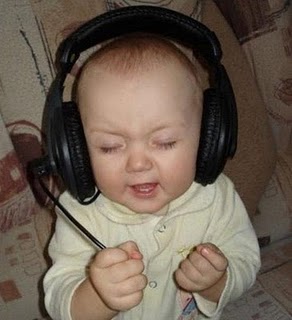
Please click here to read this complete post, which includes this wonderful photograph guaranteed to make you smile:

There are plenty of interesting and informative articles in his posts for his blog – please take a look – and enjoy!

++++++++++++++++

I also want to mention that my first grandchild, little boy Connor, was born yesterday at 5:22 in the morning.  He is currently in neonatal intensive care as he is premature.  He weighed 5 pounds, 13 ounces and was 19 ½ inches long, so he’s well on his way!  He just needs a little more time and some very specialized care to grow a little bit bigger and stronger so he can join his loving family at his own home!

+++++++++++++++++

+NOTHING SIMPLE ABOUT THE TOPIC OF ‘PRIDE’

+++++++++++++++++++++++

How necessary is the “Who is proud of whom for what?” game?

I feel strange.  I am face-to-face with some part of my self that can do things some other parts of my self know nothing about.  I was going to back for a few minutes today and write about something I introduced the other day when I mentioned feeling proud for our children (an for our self?).

From the blog post:  Pride in the successes, achievements and accomplishments of one’s child is just another emotion and state of being that abusive parents are deprived of.  The children of these parents are then deprived of having parents who truly appreciate them for the wonderful people that they are.

I was going to return to one of the chapters I skipped in Born to Be Good: The Science of a Meaningful Life.  He included a chapter on ‘awe’ that I wanted to read this morning because I suspected that the ability to feel awe, an experience connected to the feel good-be good happiness, compassion and connection arm of our vagus nerve system is involved in the experience of pride as well as of awe.

Problem is for me at this moment, I cannot find his book anywhere in my house.  True, I was having problems sorting out what I could believe, accept and understand in Keltner’s writing from what I suspected was grounded in arrogance and bias, but how did I manage to vanquish this book from my sight at the same time I have no memory of doing so?

I have many books on trauma on my book shelves.  Keltner’s book is not among them.  I have searched through every pile of papers, on every table top, every book shelf, in short I have looked everywhere in my house where I could have possibly placed that book once I was done reading it, and the book is nowhere to be found.  I can’t believe I would have either trashed or donated the book without having some memory trace of having done so.  Evidently I really DIDN’T like that book!  Hum…….

So I guess I will have to wing the writing of this post about pride and the vagus nerve as I figure out what I know on my insides about this experience.  Meanwhile, this me of today is very curious about where Keltner’s book is eventually going to make its reappearance in my life!  It HAS to be here some place, but I sure have managed to hide it from myself.

This experience of missing this book makes me wonder how much can we and do we manage to hide from our own self in our life, not even realizing that we are doing so?  I have to wonder at this moment.  How much do we put away, disguise, place ‘out of sight, out of mind’ in our life because our ability to tolerate has diminished something to the point we simply cannot or will not deal with it any more?  (Was I THAT sick of Keltner?)

++++

So at this point, as I continue down the pathway of “What is pride?” on my forensic autobiographical journey, I call not Keltner as my first witness, but my dear sister, Cindy.  When we spoke about the topic on the telephone last night, she mentioned that from the Christian training she had in her young adult lives, she knows that the word and concept of RESPECT is directly tied in its roots to AWE.

She also affirmed that never once to her knowledge was my mother ever proud of me.  Also, in her memory, she knows of only one single instance where she knew absolutely that our mother was proud of her.  That happened when my sister trained our family’s dog for an obedience dog show and they won first place.  Mother didn’t SAY anything to Cindy, but Cindy knew mother was proud of her.

One of my own questions about pride enters my thoughts right now, though I’ll wait for a moment to consider it.  I find myself wondering, “Is the feeling of being proud of another person tied more to conditional love than it is to unconditional love?  Is there a difference between the experience of feeling proud – really for the other or for one’s own self – based on a conditional valuing based on what a person DOES rather than on who a person IS irregardless of what they actually DO?”

But, first, to finish the thoughts from last night’s conversation with my sister, I have to mention that she told me that in all her 56 years, it has been her observation that the topic of pride is a VERY SENSITIVE ONE to many if not most people.  She believe that all of these people suffer their entire lives from a wound that means they continually ACT in ways that they WANT to create a demonstration of pride for them from their parents.

The saddest part of this is that this lack of feeling ‘proud for’ existed in their earliest years and continues to be a part of adults’ feeling reality for their entire lives – and is rarely if ever fulfilled so that the DESIRE is gone.  As a consequence, people then feel empty in a place that is never filled.  It sounds to me like there’s a wound that never heals about this, a hole that’s always there, a continually unmet attachment need that then affects how a person IS in their body, in relationship with their own self and with others, for their entire life time.

My sister understands for herself that the root of ‘awe’ that is a part of ‘respect’ means that when we hear someone say to us, “That is awesome,” we are really receiving from that person a fundamental recognition of our worthiness based on fundamental respect.  My sister believes that once we lose respect for another person, our relationship with them changes – often instantaneously – forever.  Evidently being able to have respect for another person is somehow directly tied to our ability to feel pride for them.

++++

If this is true, I have some searching to do in order that I can understand with clarity within my own self how this respect-awe-pride pathway might actually work.  Even though I cannot locate Keltner’s book anywhere in my house, I know he connected ‘awe’ to the healthy operation of the vagus nerve system just as he did embarrassment, genuine D-miles and compassion – or he would not have included a chapter on ‘awe’ in his book.

I already know that something was wrong with the operation of my mother’s feel good-be good vagus nerve system branch.  I can understand that her stress response was “ON” all of the time.  As a result, her “STOP” arm of her vagus nerve system and of her autonomic nervous system (ANS) could never be activated toward true peaceful calmness and connection to others.  She was not safely and securely attached to her own self or to anyone else.

Now I can add her lack of ability to feel pride for me, and just barely for any of her other children, to the list of ‘symptoms’ of her infant-childhood changed growth and development from trauma, abuse and neglect.

++++

From this point forward in today’s writing I have to make it clear that I think the way I do in a particular way that gives me a bias on the topic that most people do not have – either most fortunately or most unfortunately.  I evidently have some strange immunity regarding the subject of whether other people feel proud of me or not that came from my mother’s abuse of me.

I have written in previous posts that my mother’s demise that led her development down a pathway where she was incapable of experiencing either well-being for her own self or in connection to anyone else happened (I suspect) because of the very traumatic experiences she had with her earliest caregivers as they gave her so-called love that was insanely and unreasonably conditional.  She grew up believing that her personal ‘badness’ caused her caregivers to hate her.  If she could only be ‘good enough’ she could bask in the warmth of their love.

Hers was an environment of terrible and terrifying betrayal.  This betrayal broke her.  I had the benefit of having never been betrayed.  I knew she hated me from the first breath I took.  My mother did not vacillate.  She did not wander away from her first stated course of action toward me from the time I was born.  My mother never swerved off of her course.  In her mind, I was not human.  I was the devil’s child, bad beyond possibility of redemption.

I was never tricked into believing in any way, ever, that there was anything I could do NOT to be hated and abused.  I was never fooled into believing that if I could be ‘good enough’ that she would love me.  I was never given false hope either than I was loveable or that my parents could possibly love me.

True, I am painting a grim picture almost beyond belief.  I can see this even though I know that the picture I am painting was absolutely real.  At the same time I am saying that the absolute devastation of my infant-childhood gave me at the same time the possibility of surviving it as I grew into the person I am now.

I will give you this bizarre yet accurate image:  If we could imagine an infant being born into a world where no air was ever available either that infant would die or it would find a way to endure in spite of the absence of air.  If this is the reality this infant faced, and it did manage to adapt and survive anyway, the concept of ‘air’ and the experience of needing it or of being dependent upon its presence would simply never exist.

Of course we know no human can live without air.  But if we substitute love for air in this image, I can assure you humans can manage to endure without it.  I basically did.  What little bit of love-air I found came from my 14-month-older brother, and very occasionally from contact with my grandmother and father.  Eventually I became an absolute professional at being able to endure and survive on such a pitifully inadequate supply of love-air that it’s almost beyond belief.  But because it was love that I was deprived of rather than of air, my body kept on enduring and growing through its developmental stages because it could adapt to these devastating conditions.

++++

As a consequence, I cannot conceive of the world the way my sister seems to, or in the way that evidently MOST people do.  I have no ability to imagine ever wanting or desiring my mother or father to feel proud of me.  It is not possible for me to do so.  Therefore, I cannot probably empathize with all the other people who ‘have issues’ concerning their need or desire for this ‘feeling proud’ of them by their parents – or anyone else.

On some levels, having just realized this about my self is very scary.  Yet at the same time the benefit of the pattern of abuse I received seems obvious to me.  Nothing my mother did or did not do to me altered my ability to feel proud of or for my own children.

That’s pretty darn amazing!  I could call this miracle, but I understand that in no possible way are my abilities, as they are so different from my mother’s, a miracle.  My abilities, as are everyone’s, lie within me because they are physiologically possible.  My mother lacked these abilities because they were physiologically impossible for her.

My body-brain-mind-self development did not ever include the possibility of my mother loving me, or with the possibility she could be correspondingly proud of me.  Impossible is exactly just that – impossible.  Only when the POSSIBILITY exists of something happening do we ever wish for it, desire it, hope for it, anticipate it, or expect it.    I knew from the moment I was born there was no possibility my mother loved me, conditionally or unconditionally.  Her love for me or her lack of it was never an issue.  Things were simply the way that they were and that was that.

In other words, the issue of ‘sometimes’ or of ‘some of the time’ didn’t exist for me.  Ever.  My mother did not play the tug-o-war, and I mean WAR, game with me of ‘sometimes I will love you’ or of ‘some of the time I love you’ or of ‘I would and could love you if only……”  She just fundamentally hated me.  How strange, and looking at this from this present moment, how freeing for me this ACTUALLY was.

I did not learn how to conditionally love.  I did not learn how to conditionally BE loved.  At the same time, though I don’t call it a miracle, I will say the blessing of this whole pattern in combination with my own particular makeup as a person was this:  I came out of my infant-childhood completely free to love, and I DO.  How cool is that?  Cool, I would say, beyond words or measure!

++++

Physiologically, even though I suffer from trauma and abuse in-built anxiety problems of many kinds, my vagus nerve system as it connects with my STOP and GO autonomic nervous system remained able to operate so that I am free to feel a range of emotion that includes the feel good-be good emotions and their corresponding range of options for actions.  My problem lies in that RECEIVING love and affection in all its forms is difficult if not impossible for me to FEEL.  But I CAN feel these feelings for others, and if I had to make a choice, this is the better one.  It means I can offer to others what I never had myself.

++++

I want to go back for a moment here to the ideas contained in the words ‘respect’, ‘awe’ and ‘pride’ and to very real human experience of and with them.  I suspect that my sister’s thoughts on the root of ‘respect’ might be tied to the Bible’s Hebrew translation into English text rather than to the roots in English of the word itself.  I turn to Webster’s:

RESPECT

Etymology: Middle English, from Latin respectus, literally, act of looking back, from respicere to look back, regard, from re- + specere to look — more at spy

Date: 14th century

1 : a relation or reference to a particular thing or situation <remarks having respect to an earlier plan>
2 : an act of giving particular attention : consideration
3 a : high or special regard : esteem b : the quality or state of being esteemed c plural : expressions of respect or deference <paid our respects>

This description doesn’t go back far enough in its origins for my liking (14th century).  I’ll follow ‘respect’ back to ‘spy’:

SPY

Etymology: Middle English spien, from Anglo-French espier, of Germanic origin; akin to Old High German spehōn to spy; akin to Latin specere to look, look at, Greek skeptesthai & skopein to watch, look at, consider

Date: 13th century

transitive verb 1 : to watch secretly usually for hostile purposes
2 : to catch sight of : see
3 : to search or look for intensively —usually used with out <spy out places fit for vending…goods — S. E. Morison>intransitive verb 1 : to observe or search for something : look
2 : to watch secretly as a spy

This goes back further, to the 13th century, but this still isn’t far enough for my liking.  I want to find the connections as far back as the dictionary will track them (before the 12th century) because only then to I feel at rest knowing I am getting at a root image and concept.  I find that both the word ‘look’ and ‘see’ originated in the English language before the 12th century:

LOOK

Etymology: Middle English, from Old English lōcian; akin to Old Saxon lōcōn to look

Date: before 12th century

SEE

Etymology: Middle English seen, from Old English sēon; akin to Old High German sehan to see and perhaps to Latin sequi to follow — more at sue

Date: before 12th century

Under ‘see’ I can follow ‘sue’.  I find we are now moving forward in time to the 14th century and away from older images in the word, except any reference in word origins to Sanskrit always intrigues me:

SUE

Etymology: Middle English sewen, siuen to follow, strive for, petition, from Anglo-French sivre, siure, from Vulgar Latin *sequere, from Latin sequi to follow; akin to Greek hepesthai to follow, Sanskrit sacate he accompanies

Date: 14th century

The word ‘accompany’ connects to ‘companion’:

COMPANION

Etymology: Middle English compainoun, from Anglo-French cumpaing, cumpaignun, from Late Latin companion-, companio, from Latin com- + panis bread, food — more at food

Date: 13th century

And here I find what makes me happy – a reference to a fundamental image – FOOD!  The necessity for, the procurement, provision, consumption and sharing of this basic element of FOOD is connected to safe and secure attachment in and to the world:

FOOD

Etymology: Middle English fode, from Old English fōda; akin to Old High German fuotar food, fodder, Latin panis bread, pascere to feed

Date: before 12th century

++++

OK, so I don’t see ‘awe’ in this family of word connections in relationship to ‘respect’.  What do I find if I specifically follow the meanings and origins of this word, ‘awe’?  This is interesting, and not what I would have expected (someday if I find Keltner’s book it will be interesting to see how he defines ‘awe’.):

AWE

Etymology: Middle English, from Old Norse agi; akin to Old English ege awe, Greek achos pain

Date: 13th century

1 : an emotion variously combining dread, veneration, and wonder that is inspired by authority or by the sacred or sublime <stood in awe of the king> <regard nature’s wonders with awe>
2 archaic a : dread, terror b : the power to inspire dread

Uh-oh!  Follow that link to pain and find reference to ‘punishment’ and ‘grief’.  So, what about the word ‘pride’ itself?  Can this idea, with roots in our language before the 12th century, be in any way connected to a sense of amazement and awe at and for another person?  The concepts of ‘pride’ and ‘proud’ are fully RELATIONSHIP oriented, contextual ideas that involve social judgment:

PRIDE

Etymology: Middle English, from Old English prȳde, from prūd proud — more at proud

Date: before 12th century

1 : the quality or state of being proud: as a : inordinate self-esteem : conceit b : a reasonable or justifiable self-respect c : delight or elation arising from some act, possession, or relationship <parental pride>
2 : proud or disdainful behavior or treatment : disdain
3 a : ostentatious display b : highest pitch : prime
4 : a source of pride : the best in a group or class
5 : a company of lions
6 : a showy or impressive group <a pride of dancers>

PROUD

Etymology: Middle English, from Old English prūd, probably from Old French prod, prud, prou advantageous, just, wise, bold, from Late Latin prode advantage, advantageous, back-formation from Latin prodesse to be advantageous, from pro-, prod- for, in favor + esse to be — more at pro-, is

Date: before 12th century

1 : feeling or showing pride: as a : having or displaying excessive self-esteem b : much pleased : exultant c : having proper self-respect
2 a : marked by stateliness : magnificent b : giving reason for pride : glorious <the proudest moment in her life>
3 : vigorous, spirited <a proud steed>

Pause for a moment and take a look at the social judgment loading and weight related to this concept.  Look at the synonyms and try to imagine how it is possible that beginning from the time of our birth, as social beings in social interactions beginning with our earliest caregivers, we might move through our childhood and into our adulthood REALLY being able to both understand these concepts let alone being able to negotiate the billions of ways human interactions involve them:

synonyms proud, arrogant, haughty, lordly, insolent, overbearing, supercilious, disdainful mean showing scorn for inferiors. proud may suggest an assumed superiority or loftiness <too proud to take charity>. arrogant implies a claiming for oneself of more consideration or importance than is warranted <a conceited and arrogant executive>. haughty suggests a consciousness of superior birth or position <a haughty aristocrat>. lordly implies pomposity or an arrogant display of power <a lordly condescension>. insolent implies contemptuous haughtiness <ignored by an insolent waiter>. overbearing suggests a tyrannical manner or an intolerable insolence <an overbearing supervisor>. supercilious implies a cool, patronizing haughtiness <an aloof and supercilious manner>. disdainful suggests a more active and openly scornful superciliousness <disdainful of their social inferiors>.

++++

We have to consider the cultural environment that creates the social context of our human interactions – including the religious underpinnings of our culture.  These look to me to be anything but serene, calm, peaceful, safe and secure waters to negotiate!!  How can a very young child, moving through its age 4-6 stage of developing a workable Theory of Mind, even begin to comprehend what’s what socially?

My guess is that for anyone who has a reason to think about the idea of feeling proud for self or others, or of having others feel proud of them, would benefit from taking some time to explore in the real world, in real time, and in the language of the REAL words we use to talk and think about the topic, how incredibly complex it is.  We need to understand that when considering the idea of ‘proud’ we are considering what really is a war zone with mine fields of explosively emotionally dangerous, if not devastating, concepts.  This idea, ‘pride’ and feeling ‘proud’ deserves a warning:  DANGER ZONE!  HIGH RISK HERE!

++++

While all this might look like a Pandora’s Box, if I look among the above definitions carefully, I find the words that can best assist me in my thinking about the topic.  They are not the bold-typed words; they are the humble ones:  ‘just, wise’, ‘reasonable’, ‘having proper self-respect’.  Even the word ‘bold’ is up there, having to do with our ability to exercise our courage (within the origins of the word ‘proud’).  These, to me, are the important words related to the healing possibilities of how we can learn to think about our concerns related to absence and presence of ‘pride’.

These words are connected to the center point of calm in our vagus nerve and autonomic nervous system as they connect our experience within our body and brain.  They reside in the quiet, in the place of cooperation and acceptance, not of competition and judgment.  These are not frenetic words.  They are not restless or demanding words.  At the same time, we need to realize that at whatever point in the continuum of the pride-proud spectrum we stand as we consider our potential related losses and our gains, it is our ability to reach that center point on the teeter-totter that truly matters.

THAT point is where, I believe, our hope for increased resiliency and well-being lies, not with our worrying about who has what or who gives what to whom.  In the end, once a pride-proud transaction has occurred, what matters is that we feel safe, secure and attached within our own self with and to those we care most about.  This is an experience of acceptance, or peaceful ‘OK-ness’ in the world.  What matters is the love expressed, felt and shared.

++++

When I said the other day that abusive parents are deprived of the feeling of being proud of and for their offspring, which then deprives the offspring of the feeling that their caregiver IS proud of them, what we are talking about is actually degrees of love and of attachment as they connect to our emotional experience negotiated in our body-brain by our vagus nerve and autonomic nervous system.

The presence or absence of the positive transactions related to pride-proud happen physiologically just as the shame reaction does.  Both are about ‘rupture and repair’, rejection and acceptance.  Both of these are STOP and GO interactions that share their existence in the same physiological systems that our rest and stress responses do.  We can pay attention to the emotions (and how they feel to us in the body) as we experience them related to both kinds of experiences.

How our earliest caregivers treated us had HUGE influence on how our physiological body-brain developed, but our body-brain-mind-self BELONGS to us, not to them.  My mother’s hate-full treatment of me did not fill me with hate.  Yes, there are many levels of my being that are connected to my corresponding RAGE from being traumatized by her the way I was, but rage is not the same thing as hate.  But even the word ‘hate’ cannot be dissociated from its fundamental root concept in ‘care’:

HATE

Etymology: Middle English, from Old English hete; akin to Old High German haz hate, Greek kēdos care

Date: before 12th century

1 a : intense hostility and aversion usually deriving from fear, anger, or sense of injury b : extreme dislike or antipathy : loathing <had a great hate of hard work>
2 : an object of hatred <a generation whose finest hate had been big business — F. L. Paxson>

Looking carefully at what it says here I have to think about my mother’s hatred of me, and what her hatred REALLY tells me – not about me, but about her:  “intense hostility and aversion usually deriving from fear, anger, or sense of injury.”

Not even a consideration of the word ‘care’ or of all the actions that are connected to it – including early caregiver interactions that we experienced from infant-childhood (and beyond) is a simple or straightforward one:

CARE

Etymology: Middle English, from Old English caru; akin to Old High German kara lament, Old Irish gairm call, cry, Latin garrire to chatter

Date: before 12th century

1 : suffering of mind : grief
2 a : a disquieted state of mixed uncertainty, apprehension, and responsibility b : a cause for such anxiety
3 a : painstaking or watchful attention b : maintenance <floor-care products>
4 : regard coming from desire or esteem
5 : charge, supervision <under a doctor’s care>
6 : a person or thing that is an object of attention, anxiety, or solicitude

++++

Over and over and over again I will say that if there is any one single simple idea I can help to introduce to people, especially to survivors who have suffered early trauma and abuse, it is the idea of what I call INFORMED COMPASSION, which is a reason-able response.

Being gentle and kind within our own self as we seek to heal and grow DEMANDS AND REQUIRES of us that we learn how to expand this gentle kindness to a consideration of those who harmed and hurt us.  I don’t think we can grow gentle kindness within our own self while at the same time withholding it from the stance we take regarding others – because this stance we take comes from within our own self.

Compassion comes from the same systems in our body that create our stress and calmness responses.  It is an option we can exercise with our conscious intention, will, awareness and reflective abilities.  Informing ourselves by thinking about the words we use to think WITH is a critical part of this healing process.  It’s a part of our continued growth and development.  It’s a part of our continuing to grow up as we ‘grow out’ an expanding circle of understanding how incredibly complex it is to be a human being, let alone to be one WELL, in multiple senses of this word.

When we think in terms of pride and proud, we are really at the threshold of thinking about our truest concern:  Are we accepted or isolated?  Are we together-with or isolated and alone?  Are we approved of?  Are we deemed and proved worthy of being a part of the whole – which has to do with our very survival?  Because if we follow these concepts far enough back in our language that is what we are really talking about:  To be or not to be.  It’s about living or dying, being built up or being destroyed.

Fortunately, I was so busy growing up with my own survival in mind that I didn’t have time to learn to worry if the same woman who was so busy trying to destroy me was at the same time feeling proud of me for avoiding her destruction.  (Or proud of me for any other reason:  She was not a reason-able person.)  Looking at the roots of the word ‘proud’, it is my ability to recognize what is wise and just, along with my ability to be bold in pursuing what I know in my own self to be GOOD that I have, access and use my own power.

Nothing my mother did to me took these abilities away from me.  Her unconditional hatred of me seems to have been better for me that would have been her conditional love.  The trade-off seems to be that I have the ability to love unconditionally, which means I feel proud of and for my children because I CAN.

++++++++++++++++++++++++++++++++++++++

+HEALING TRAUMA WITH THE TIME ASSET

+++++++++++++++++

I have a few other thoughts related to my encounters with people-families-children at the Saturday children art festival where I did the spinning demonstration.

One collection of thoughts has to do, again, with small and big people and how humans relate to one another in ‘tearing down’ or ‘building up’ ways.  A young man about 12 years old stopped by my demonstration and immediately showed not only rapt interest but quite a bit of knowledge about spinning, weaving and the fiber arts.  His mother was with him, and in talking with these two I was given a picture I’ll try to relay to you here.

Last year this boy enrolled in a beginning weaving class held by Bisbee’s local Fiber Arts Guild.  He was fascinated, learned quickly, warped his own loom at the Guild studio and made his mother a scarf along with a baby blanket for his newborn cousin.  In the middle of the weekend class schedule his mother became ill.  The Guild was notified, and the boy missed three of the 10 week class sessions.  When he was able to return he found not only that the Guild members had passed off his loom with his next project on it to someone else, but they had not bothered to call and ask or tell him this was being done.  The adults participating in these activities were evidently quite demeaning, rude, disrespectful and hurtful to this child.  They let him know they did not want him around.

I have been given a solid and working handmade table top loom that I told this boy I will bring into town and leave off at his home for him.  I will collect all of the related items I can find here that go with the loom, look for a book or two I might have here at home that can help him, and also see what I have in the way of extra yarn I can give him.  Once I have all of this collected, I will pile it all into my trusty 1978 rather worn El Camino and drop it off at his house.

With all the troubles our nation is having in engaging our youth in their own lives, let alone in the life of their community and nation, it is beyond my comprehension how ANYONE could be rude to any child, period!  Let alone to a child like this boy is who is obviously motivated with passion to learn the fiber arts and is committed to doing so!

++++

The next collection of thoughts I have is related to an 8-year-old boy and his parents who stopped by my demonstration.  This child is obviously brilliant, as are his parents.  His father is a professional musician, a drummer.  His mother is a computer programmer web designer.  The child is fortunately home schooled and very much loved.

From the first instant this child spotted the very simple and basic, actually rudimentary gizmos and gadgets that are used in the process of preparing wool and spinning it, I could see that his brain did not work like an ordinary child’s.  His parents sat most patiently for over two hours on a stone bench in the middle of the Central School hallway while their son explored every avenue not only of the wool preparation process, but most noticeably of the equipment – how it was constructed, how it worked, why it worked.

Not knowing anything by fact here, I can still think that this child’s tool region of this brain is forming major connections.  The child certainly wasn’t intimidated by people.  In fact, he hawked the process from his newly found and claimed station at the drum carder.  He instantly memorized every step of the process when I first told him, and continued to instruct every passerby he could rope in about how this all worked.

At one point I was vaguely aware of him giving his spiel while I sat at my spinning wheel visiting with his parents.  All of a sudden I hear the boy say in a rather loud, commanding voice, “Hey!  What’s wrong over there!  Why aren’t’ you working?”  I had to laugh.  There I sat like a broken machine.  He had educated his audience completely up to the point where they needed to see the final stage in process, and there I was having dropped my end of the bargain.

The boy was not being rude, though certainly his attitude could have been interpreted that way.  This boy, I could tell from watching him, treated human beings exactly as if they had gears and mechanisms and programming that made them tick.  He is a brilliant, absolutely brilliant child, but I would not expect him to ever have an ordinarily developed right social-emotional limbic brain.  His brain is special, as he is.

This brings me to mentioning the Asperger autistic spectrum giant, Temple Grandin.  A made-for-television movie about her life has just been released:  “The HBO movie “Temple Grandin” honors its heroine’s priorities, stressing deeds over tearful setbacks and joyous breakthroughs.”  If you haven’t heard about Grandin and her work before now, please spend a little time checking her out.  In the meantime, I will specifically mention that Grandin has a LOT to say about so-called GEEK children who have brains that are gifts to the world.  This little boy might well fit into the schemata of the children Grandin is talking about.

++++

This brings me to my third thought collection for today which is related to yesterday’s post, +SO MANY NEEDY PEOPLE IN DENIAL OF THEIR NEEDINESS.  Due to the insane and terrible abuse I suffered during my childhood from birth, complete with extended manipulation of any opportunities I might have had from tiny on to interact with people, my right limbic emotional-social brain did not have the chance to build itself in an ordinary fashion (as this blog’s readers have heard me write about repeatedly).

As a part of the spectrum of consequences to the adaptive brain changes my body made, I do not read, understand, process, or respond to the emotional-social signals other people send out easily or well.  In some ways, I am realizing that I have a rather unique ability to not automatically buy into the send-receive-respond social signal-cue communications cycles that people with ordinarily built early brains (through safe and secure early caregiver attachment exchanges) are designed for.  I can notice, attend to and translate actions that ordinary-brained people probably miss — because they CAN.

(Similarly, I suspect, to how the 8-year-old boy’s brain gains and processes information about machines that few other brains would, or can, notice.  Temple Grandin’s brain gets this altered information about animals.  These are abilities that do not come primarily from choice.  They reflect in manifestation different body-brain constructions — changed in part or wholly by combinations of genetics interacting with the environment.  Our abilities give us resources that more ordinarily-brained people probably do not have.  These differences and changes are part of what makes us exceptional and extra-ordinary people.)

Lest any of my readers suspect that I am exaggerating the differences I experience in my emotional-social interactional abilities with people, let me again mention that these transactions normally occur in the hundredths of a millisecond response signaling range.  They are happening physiologically about at the speed of light, or however quickly electrical signals are sent and received between neurons and other bodily cells.

These extremely fast, and supposed-to-be automatic electrical signals are operating according to how a person’s body-brain was constructed primarily from conception through age one.  Connections between pathways, circuits, brain regions and the body are constructed very early on and all growth and development past these early critical window stages of development follow along accordingly as we finish our early (and later) development.

This matters in many, many ways.  When, as a commenter to yesterday’s post mentioned (See: +SO MANY NEEDY PEOPLE IN DENIAL OF THEIR NEEDINESS) those of us with these changed brains are faced with awkward, uncomfortable, disquieting if not down right mean interactions with other people, we have an extremely difficult time doing what this commenter suggested when she noted:  Eleanor Roosevelt said “no one can make you feel inferior without your permission.”

Our body-brain does not read social-emotional cues and signals in the same way as Ms. Roosevelt’s no doubt did.  As a result, our attempts to decipher all of the signals other people are sending out in the hundredth of millisecond range do not mean the same thing to us as they do to ordinary brains.  If we are even going to get a clue about what is actually happening in our interactions with others, we need the one thing to happen that SO RARELY DOES HAPPEN that we could consider it impossible.

We need time to slow way, way down.  Because these communication signals are designed (normally) to occur near the speed of light, because they are outward manifestations of electrical impulses traveling invisibly within a person yet STILL manifesting themselves in visual and auditory signals that we are supposed to automatically read, understand and be able to respond back to in kind, we are at a serious disadvantage when it comes to doing what dear Ms. Roosevelt (and this commenter) suggest.

There is a universe, and I MEAN A UNIVERSE of information necessary to process information between people according to this maxim:  “no one can make you feel inferior without your permission.”  The brain has to know who-what the self is completely, it has to know who-what the other is completely, it has to process what-where the boundaries are between them, it has to be able to process the “feel” emotional information appropriately (and FAST), it has to make determinations as to what the emotion means, what the value is connected to the emotion, whether it is an ‘approach’ signal or an ‘avoid’ signal, it has to assess what’s at stake, what the degree of risk of threat to self and/or life is, what is being asked or demanded by this nebulous ‘other’, who has the power, what are the control stakes, where free will and choice (higher cortical functions) can fit into the picture……..  In other words, there is NOTHING simple about humans interacting with humans!  NOTHING!

This brings me to my last critical point.  When infant-children do not enjoy body-brain development in interaction with SOMEONE in the earliest caregiver department that allows for a safe and secure attachment to others, to the self, and to the world as a whole, none of the emotional-social processes the early brain is building itself upon will include the same information as will the body-brain of those who DID have the benefit of these more optimal developmental experiences.

We would be better off to NEVER automatically assume that the person we are engaging with in any way has a NORMALLY built optimal body-brain.  I would never expect that the woman I mentioned who needed to put me down regarding my spinning had an optimal emotional-social brain any more than I would ever expect that the rage filled passive-aggressive (in complete denial) worker at the laundromat I mentioned has one either.  They are operating in survival mode just as I do, just as my mother did.

True, individual personality blends with individual experience to create individually unique selves (by ratio with conscious awareness).  I recognize more and more my own inability to negotiate complex human transactions and interactions BECAUSE I no longer opt out by assuming that my automatic responses are the ones that are best for me.  At the same time – quite literally – TIME is RARELY my friend.

In a culture of hit-and-miss, hit-and-run, of brushing past one another at near breakneck speeds, very few of us are allowed or given the kind of TIME we would need to slow these interactional processes down far enough that we could manage to HONESTLY, with integrity, and ACTUALLY do the kind of processing Ms. Roosevelt must have assumed could happen automatically for everyone always – IF ONLY a person chose to do so.

When the emotional-social brain has not been built optimally, and the corresponding wiring in the body is not either (i.e. vagus nerve, autonomic nervous system, stress versus connection system, etc.), the only hope we have of processing information in any other way than the automatic trauma-built way we are designed for is to have TIME to include conscious processing.  Our social milieu is too invested on shallow and speedy interactions to let this happen.

We end up operating without enough information relevant for the present instant of time we find ourselves in with other people.  Our version of automatic creates ripples upon ripples of inward discomfort that we don’t even usually know about.  As we DO begin to become aware of the changed way other people and ourselves process emotional-social information, we begin to notice details of information – in our feelings, emotions, grounded in our body – that time does not let us process within usual fast moving social interactions.  That does NOT mean we are WRONG if we claim that many of our interactions with others leave us feeling sour inside as if we swallowed a toxic poison.

To no longer deny the truth behind many of the intentions, needs, demands, assessments and assumptions humans in our culture are wont to dish out back and forth – often in disguise so as to appear socially appropriate – means that we are returning back to the very beginning of our emotional-social brain’s formation so that we can do things differently than was done to us.  We are learning to no longer deny what we know on our insides to be true for us.

I believe this is healing, no matter how uncomfortable the process might be to our self or to anyone else.  We must take the TIME we need to figure out these uncomfortable interactions with others and our responses to them.  This, to me, is where the hope for change truly lies – not in therapy chambers, not in pills and drugs.

Hope and healing lies

in our being willing and patient enough

to find our own questions

so that we can find our own way

to answering them.

+++++++++++++++++

+SO MANY NEEDY PEOPLE IN DENIAL OF THEIR NEEDINESS

++++++++++++++++++++

I have a whole collection of thoughts from my experiences of this last week, but I don’t know which thought – like a star in a constellation – actually belongs in what pattern with other thoughts.  There seem to be three main areas of my observations that are probably divided so:  (1) denial, (2) what empathy isn’t, and (3) many people must feel small.

To begin with, I want to say that being around people I do not know exhausts me.  Of course if I leave my house and go out there into the public domain, that’s who I encounter:  people I do not know.

The tip of the iceberg regarding my observations from last week is that people seem to me to be constantly jockeying for a one-up position when they interact with others.  I see nothing that would lead me to suspect people are conscious of how small they must feel that they need to find ways to make themselves feel bigger than other people.

These patterns would be tiring enough to negotiate even without the fact that people seem most skilled at making themselves feel bigger by finding subtle, ongoing ways to make other people feel smaller.

OK, so I see I am beginning with my third point, though I don’t yet know why.  How do these three topics connect to one another?  If I think about each one of them in terms of being like nets that filter aspects of our human experience, which one of the three has the biggest holes in it?

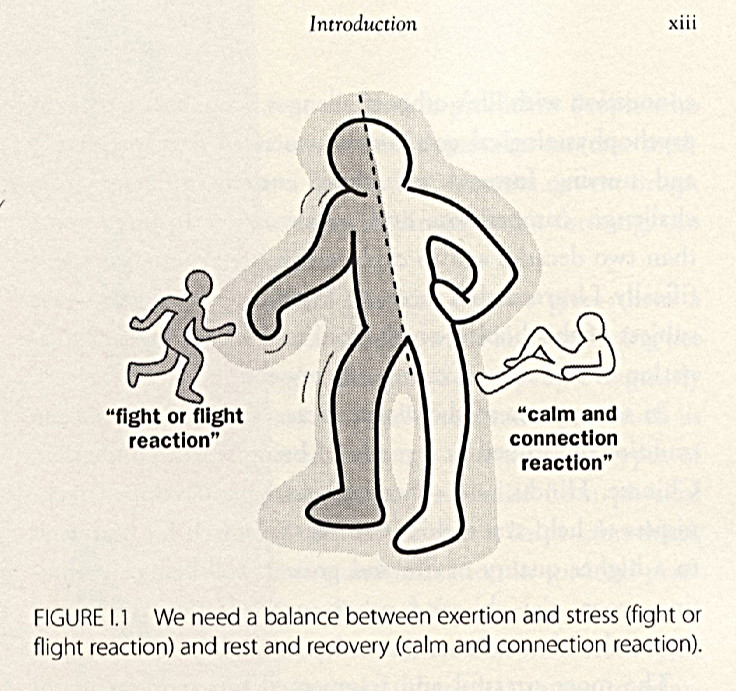
I am thinking in terms, again, of the vagal nerve system and its connection to the flight-flight response or the calm, connecting, caregiving, compassionate response.  What I sense around most people when I have to interact with them is that it doesn’t take very long at all before what is supposedly communication disintegrates into some strange kind of invisible power negotiation.  In that power negotiation one person works to feel bigger and more power-full by in some way denigrating, devaluing, and disrespecting someone else.  In other words, the OTHER must be made to feel smaller.

Language experts have found that fully two-thirds of human language interactions concern some form of gossip.  Taking those patterns as a given, what does it actually FEEL like to be in interactive communication with people?  How much of what goes on are we supposed to automatically IGNORE – and surprise!  Surprise!  Here is a direct connection to my first point above:  DENIAL.

Is denial actually the main tender that we use to negotiate most human-to-human interactions?  When people are not consciously aware of their own needs, or their wants, and instead constantly denigrate others to get these needs and wants met, aren’t they expertly practicing denial?

And then, on the other hand, the recipient of the denigrative comments is NOT supposed to consciously be aware of the true nature of the interactions.  We are supposed to unconsciously, automatically and in a state of denial of our own perceptions ACT our part in return.

Let me give you just one simple example from an interaction I had with a woman who is evidently a spinner.  This woman passed by my spot in the hallway yesterday at the public art carnival for children where I was demonstrating and stopped to have what is probably a typical kind of accepted human interaction with me.  I had never seen her before.

One of the facts that this woman evidently was oblivious to is that when a spinner is showing anyone, especially a child, how the wheel is sending a twist into the collection of wool fibers being held in one hand so that the twist creates yarn, one has to keep this section of the process clearly visible to the child.  This means that when I spin on my own I hold the fibers differently in my hands, usually meaning much farther away from the wheel.

So this woman found no reason at all not to just tell me with a snicker and a snide look on her face, “You are obviously doing that wrong.”  And then she proceeded to instruct me on what I was doing wrong – exactly – and to tell me how to do it better.  During this whole verbalized judgment and criticism process, during this denigrating, shaming, down-putting ICKY experience, did I tell her to shut the hell up!

I am proud of myself that I didn’t fall into the trap of explaining to her why I was holding my hands in a position other than the supposedly correct one she was asserting.  I did not defend myself.  But I did not tell her my truth in any other way, either.  I just suffered along with her in this transaction.

I have been spinning off and on for 35 years.  I know what I am doing.  I spin what I want the way I want.  My spinning is a part of me.  Nobody, and I mean nobody has the right to criticize this process that is a part of who and how I am in the world in my lifetime.  I mean that.  Literally.  Nobody has that right.  If they do it, I know without denial that this person is throwing their ugliness at me and I want NO PART of it or of them, either.

This would be no big deal if I didn’t understand what I do now in my heightened sensitivity state.  What I DO KNOW, if I let go of denial, is that this interaction is exactly typical of most human interactions I witness.  These transactions are meant to victimize someone else.  They are bullying transactions.  I hate them, and as a consequence, I don’t like to have any more to do with other human beings at this point in my life than I absolutely HAVE to.  There is nothing pleasurable or good about constantly having to be on guard against these subtle and no so subtle attacks on one’s selfhood.

++++

My simplest terminology I use for myself is that many people are just simply passive-aggressive.  The truth is, they are geared to fight.  I can sense another person’s denied rage in the isle of a grocery store, when I walk into a laundromat, when I stand in line a bank.  We are all familiar with road rage.  We can spot drivers who are displaying aggression with the way they handle their vehicle.  The way people handle themselves in their body is no different.  The signals are plain.

On my side of the center line, I can say that it’s too bad I don’t have the energy or the motivation to feel either empathy or compassion, barely even tolerance, when I put myself in any position to have to interact with such people.  I do not have the energy for it, the desire to engage, or any hope that anything I can do will sooth these people in any way.  I just plain don’t wish to be around them.

The truth is that I can no longer play this denial game.  It never does any good to stick up for myself, to take a stand on my own behalf.  I find that the only way not to escalate the denied rage in others is to pretend it’s all OK, to remain silent, to let them do their digs and get away with it.

That woman was victimizing me yesterday.  She appeared to need to assert her ‘betterness’ by stabbing me in any way that she could.  I might feel sorry for her, but I am frankly tired of that!  Do I expect that strangers could ever walk up to one another and clearly state, “I am feeling small.  Please, I need you to help me feel bigger” in a culture that has somehow managed to create so many of us that feel so small in the first place?

++++

I happened to meet a young man who came through town for a few months with his wife and children and moved on again last week.  He radiated.  I’ve so rarely seen such perfect joy, happiness and well-being in a grown up that I’d almost forgotten what it looks like.  Never, in one single interaction with this gentlemen (who temporarily took a job working in the local laundromat and cafe) did I ever feel anger.  Not his, not my own.

I went to visit my friend there while she did her laundry the other day, and this young man’s position has been filled by a woman who carries around her denied rage that I find absolutely tangible.  I cannot escape that she is toxic; nor can I pretend that I don’t notice her rage that fills the expanse of that building.  I will never again step into that business as long as she works there.

My thinking travels next to my second point above:  empathy.  I don’t want to empathize with her.  I don’t want to be anywhere around her.  I don’t have the energy to pretend I don’t notice, to dodge all the hatred she sends out with her every word and action.  I will not be her unconscious target.  I spent my 18 years of childhood taking my mother’s rage, and I don’t play that game any more.

For me, these are no-win transactions.  Now, the young shining man I mentioned can move throughout his life and his presence heals.  There is something about him that vanquishes rage from the space he inhabits in ever expanding circles.  I am not strong enough to do that.  I know that.  I admit it.

Another problem I have being out in public is that these transactions I am describing are not isolated or sporadic events.  They happen continually.  They don’t happen only in rapid succession to one another, they happen on top of one another and simultaneously!  People are at battle with one another in this small-big war and they don’t even know it.

Evidently to be social beings we are all supposed to operate in denial about what’s going on between us.  If this is supposed to be a dance, it’s an ugly one.  Perhaps if I hadn’t grown up with so much isolation as a part of the abuse I experienced, I would have gradually received some sort of inoculation that would allow me to go through my entire life being able to comfortably negotiate these sad interactions that so few people seem to even notice.

But I do notice them.  Like I mentioned in my last post, evidently I am geared to live comfortably in a perfect world where people appreciate one another, respect one another, affirm rather than condemn one another, build something positive when they interact rather than tear one another down as they tear them apart.

I see little that is calm, compassionate or connecting about most human-to-human interactions.  Sadly, this makes someone like the gentleman I mentioned appear to me like a rare angel of goodness.  Sure, I’d like to be more like him.  But cutting out denial, the truth is I am not.  Evidently the best I can do right now is sit here alone at my computer and whine about what I see out there without having a single darn thing to offer about how to make things better – except to suggest that honest awareness about our own internal states might let us be more gentle and kind not only with our self, but with other people.

But while the public is out there begging for attention and affirmation by insidiously and unconsciously trying to steal ‘bigness’ from others so they don’t have to feel so small, I would rather just avoid the whole ugly mess.  These emotional pariahs, these unconscious beggars will continue to ply their skills with everyone they meet.  I, quite simply, have absolutely nothing to give them.  I just want to stay out of their way.

I am too worn out to be constantly on guard to defend myself from their attacks.  I don’t want to fight back against them and to even try would only escalate every single situation.  I have to step back and let the safely and securely attached people like this gentleman I mentioned go out there and walk among the people who seem to be so emotionally wounded.  I don’t believe he carries the same kind of woundedness within himself, so he probably doesn’t even have to notice the war that IS going on.  He carries a natural immunity, and as a result he can heal just by his shining.  I thank the universe for the existence of people such as him.  We need to make more people just like him.

++++++++++++++++++++

POSTSCRIPT sent to me by my sister:

I think this is related to the ‘one up, one down’ mentality…

Brooke: Your findings related to crime and imprisonment rates seem to be particularly illustrative of the way inequality can lead to social corrosion.

If you grow up in an unequal society, your actual experience of human relationships is different. Your idea of human nature changes: you think of human beings as self-interested.

Richard: We quote a prison psychiatrist who spent 25 years talking to really violent men, and he says he has yet to see an act of violence which was not caused by people feeling disrespected, humiliated, or like they’ve lost face. Those are the triggers to violence, and they’re more intense in more unequal societies, where status competition is intensified and we’re more sensitive about social judgments.

http://www.yesmagazine.org/happiness/want-the-good-life-your-neighbors-need-it-too

+++++++++++++++++++++

Here are some photos that go with this post!

+THE LIFE ENHANCING NATURE OF SHARED THOUGHTS

++++++++++++++++++++

+PTSD: DANCING FOR THE FALLEN DANCERS

++++++++++++++++++++++

Sometimes serendipity tugs not only at my mind, but at my heart strings.  I almost feel guilty now beginning this post because what I wanted to talk about is how my Posttraumatic Stress Disorder (PTSD) is acting up this week.  In way of a visual image I saw dancers on a stage, only the stage is lumpy and bumpy, with lose boards, even with some missing.

I committed myself to participate in a community art project tomorrow.  I have no real idea at all about what this event is going to be like, but these people asked the local Fiber Arts Guild for a spinning demonstrator for it.  Most of the Guild is going to a workshop tomorrow, so I thought, “What the heck.  I used to do these demos all the time 30 years ago and I did just fine.  It will be good for me to get out of the house, be in public, do something nice for somebody else.”

Added to that, as I look back over my self this past week, I went a bit too far in my eager attempts to take myself out of the house into the wider world (remember, I live in a small town, so I am not talking major PUBLIC).  So, tomorrow will be my 4th day OUT.  Only already the consequences of my PTSD are causing me trouble.  I am like a dancer on a shoddy stage, I swear.

My sensitivity to sensory input of any kind is astounding!  I had lunch yesterday with my friend at a downtown restaurant I have been to with her many, many times.  Only yesterday I could not tolerate the music blaring through the loudspeakers.  My friend told me it was no different that it’s ever been before.  I could not sit in the booth facing the window.  I could not tolerate the sunshine, even in the distance, so my friend and I had to change sitting places in the booth.  By the time our meal was done, the din of voices from other diners sent me reeling out the door.

This is no fun.  This doesn’t feel like the me I knew in my past.  I see the image of a roulette wheel spinning and spinning, slowing down — that’s me.  I need to be WAY slowed down.  This all makes me think about running down a hill.  All my life I’ve been able to stay ahead of the house-sized boulder rolling along behind me.  Not now.

This also makes me think about dissociation, about how handy dissociating has been in my life.  I used to have access to a confident, competent, socially gracious Linda that has vanished from view.  I am raw when I go out.  I no longer have an ability to ‘make things go away’.  I no longer seem to switch into different versions of myself that used to be able to participate fairly appropriately in different scenes, with different stimuli or different demands.

I don’t know how tomorrow’s event will play out for me.  I will load up all my equipment and show up like a good soldier.  But I won’t do this to myself again.  I evidently have to pay a high price internally to now do even the simplest things.

This has made me think today about those of us with PTSD, that maybe we are so burned out, physiologically, from what we’ve endured that there just isn’t enough life force left to tackle life head on any longer.  It’s like my body-brain wants to be in a PERFECT WORLD now.  I need that sense of peaceful calmness around me in my environment as if the world ever COULD be perfect.

PTSD has our entire system on hyper-vigilant super-scanning while at the same time we have a severely diminished capacity to tolerate stimuli.  To give you an example of what today showed me:  My friend works at a building with low income roomers that has a washer and dryer.  Once a month she collects the quarters, and I go through them looking for the 1976 bicentennial ones as I roll the rest of the quarters into their paper wrappers.  I’ve done this for a long time!  But today, from an arm length away I could barely stand the metallic smell of the money in the box my friend brought them to me in.

I mean, how ridiculously overly sensitive  is THAT!  Even the sound of them dropping into the little plastic tube thing we put them in to make sure there’s $10 worth in each paper was hard.  This little sound was a roar to me!  I swear!!

So, then I thought I’d look for an image of a fallen dancer online because of its connection in my thoughts to PSTD — and found this terribly sad story.  I had told my kids a week ago that I can no longer tolerate watching the Olympics because of the tension I feel knowing how much these athletes have invested in their art.  I can’t bear even the anticipation that one of them might fall.  I somehow care too much!  And now I see this, a tragic, tragic tragedy:

FALLEN DANCER

Liu Yan, considered one of the top classical dancers in China, was seriously injured while practicing a solo routine for the opening ceremony for the Olympics in Beijing, and she may be paralyzed from the waist down for the rest of her life. On July 27, the 26-year-old dancer was practicing in the National Stadium when a platform malfunctioned and she fell 10 feet, landing on her back and suffering nerve and spinal damage. At the moment, she cannot feel anything below her chest, and she cannot move her lower body. Organizers for the opening ceremonies initially told witnesses and friends to not disclose the accident until after the Olympic Games, but news began to leak after several newspapers began inquiring about Liu. [NY Times]”

dance for the fallen – Korean dance performance Suwon

Who will love all of us enough to dance for us?  Can we find a way to safely dance for ourselves?

++++

This IS really what I am talking about.  Every single one of us who suffer from PTSD and trauma-related changes ARE fallen dancers.  My heart goes out to this fallen Chinese dancer and to all of us who have suffered so from trauma — and I need to include ME in the US.  I need to not judge myself harshly because the smell of quarters or the brilliance of sunshine or even the sounds of voices sets my nerves to vibrating worse than fingernails on the chalkboard.  I need to learn what this all means to me, having PTSD and now only really being fit for a perfect world.

++++++++++++++++++++++

+A WORD ON TRAUMA TRIGGERS AND FALLING APART

+++++++++++++++++++++++

Have you ever played the Jenga Stacking Game?  Have you ever felt so emotionally and mentally fragile that if even one block of what gives you calmness and stability is removed that you and your life will topple into a pile of rubble?  It is far too easy for severe infant-childhood trauma and abuse survivors to stumble and crumble if our inner and outer resources are at times not adequate to meet the unforeseen challenges of our adult lives.  We need to anticipate events that might trigger our trauma overload reactions ahead of time if we possibly can.

I’ve never played this game, but my sister brought the image of it up tonight in our telephone conversation about the life long consequences of living within a body that was built in childhood by trauma.  Players are supposed to pull blocks out of the stack with care without toppling the tower.  My sister was talking about how fragile infant-child trauma survivors really are, and about how we have to be so very careful when changes have to be made in our lives not to topple over whatever precarious sense of safety and security we might have constructed within our lives.

I am thinking again about the image I posted yesterday:

I have no idea how life is for people who were not abused as children.  From my point of view as a survivor, finding ways to fill the positive side of this scale is a full time job.

I also want to note that as hard as I try to be in my posts about the possibilities and opportunities we can find for healing, trauma survivors have to ALWAYS be realistic.  When the trauma side of the scale is overloaded, and when our body-brain formed within these terrible conditions, not only is our center point not set at calm and balanced equilibrium in our body-nervous system, but terrible pain and suffering is also built into us.

We need to know, identify, understand and recognize not only the factors in our lives that trigger our pain, but also the signs that we are being triggered and are in danger of melt-down.  We need to know the nature of our woundedness.  Because of the unsafe and insecure attachment experiences we had as our body-brain formed, we can think of our vulnerabilities to threats to our present safe and secure attachment to and in the world as if we have a severe, deadly allergy that if triggered without adequate resources to combat our reaction can destroy us.

If and when we reach a point where our full-blown trauma reactions have been triggered, we are in a state of emergency that is every bit as life threatening as any other kind we can imagine.  The emergencies happen to us when in-built, body-brain based infant-childhood traumas (or any other unresolved, overwhelming traumas) emerge beyond what we have the inner and outer resources to handle, regulate and resolve.  We need to learn how to avoid, if at all possible, reaching these critical states because once we do reach them, we will be caught within what is, for severe trauma survivors, a reaction that is as completely understandable and natural for our body-brain as it CAN be predictable.

As we begin to understand how trauma built our physiology we begin to realize that we have to be as careful as possible to not topple our internal tower.  Not only did our emotional right brain not receive what it needed so that we can smoothly and easily regulate our emotional states, but our emotions were overloaded early in our lives.  These emotions for the most part have gone NOWHERE.  They remain in our body and can overwhelm us in our present life when stress, threat, danger and trauma threaten us just as they did when we were very small.

I remember years ago telling someone that if I ever (so-called) “got in touch with my pain” that I would start crying and never stop.  I knew there was an ocean of tears inside of me.  One time I got myself into a relationship with a man — well, skipping the story — I will just say that the relationship patterns triggered my insecure attachment patterns.  I of course did not know this.  At one point my ancient infant-childhood emotions caused by my severely traumatic childhood exploded through a fissure created in my present within this relationship.

I started crying.  I could not stop crying.  I cried for three weeks.   I cried myself to sleep.  I woke up crying and I could not stop.  (Talk about puffy, sore eyes!)  I fortunately had many close women friends at that time in my life.  One by one they came to visit me, sitting beside me on my bed, stroking my back, patting my hand, bringing me and my children food.  I could not talk about the pain, I could only cry it out and it took a long time for this pain outbreak to begin to diminish.

I do everything I possibly can in my life today to avoid that precipice.  I cannot afford to let the depth of my pain overwhelm me again if I can possibly help it.  That kind of crying is like having an emotional jugular vein sliced wide open.  We can hemorrhage tears like we are imploding and bleeding to death.

As I have written about the chemical that signals our body that we are in pain — Substance P.  Pain, the physiological signaling of it and the experience of the pain itself,  is equally as real for emotional pain as it is for any physical pain.

We cannot afford to allow this pain we carry to be triggered if we can find any way to avoid it.  We need to realize our well-being is at best precarious.  We need to realize that a proactive consideration about how to make changes in our lives, especially major ones, can mean the difference between life and death.  We have to understand that there are times when our inner resources will not be available to match the demands of situations that stress and distress us.

No matter what else happened to us, our deepest and truest childhood trauma, at its core, was our lack of safe and secure attachment at the time of our beginnings.  We have to remember that child trauma survivors who were deprived of the benefits of safe and secure early attachments that would have built a well-regulated emotional right brain translate stress immediately into distress on occasions in adulthood when their safety and security is threatened.

These threats can be caused by such things as change in relationship status including loss and absence of loved ones (including ’empty nest’), threat of loss and of actual loss of financial security including job loss and change, moves, sickness — you name it, anything that makes our precarious tower of safety tremble if not collapse.

Even though these types of situations might not seem to be directly related to our infant-childhood traumas, we need to realize that anything that threatens our degree of safety and security is a trauma trigger because we did not escape our earliest trauma with a strong sense of safety and security built into us as it should have been.  It is also important to realize that some people will react violently, radically and drastically to threat that triggers pain, loss and sadness because they CAN come up with ways to escape the experience of their own pain (dismiss-avoid and/or fight back actively or passively).

These people cannot tolerate the experience of their own childhood pain and will defend themselves against it (often true of men but also true for my mother).  These people will protect and defend themselves first, and anyone dependent upon them is at risk for some kind of harm.  All trauma reactions are un-reason-able because they are automatic and come directly from body memory connected to an unregulated right emotional brain and trauma built nervous system.  Our body-brain does not process threat or stress information ‘normally’ in a way that includes the slower reason-able processes of the higher cortex.

At those times that circumstances of our life threaten to or actually trigger the pain of our deepest traumas, we can so lose our sense of safety and security, of calm, peacefulness and connection in the present that our self seems to completely disappear.  We can become overcome and overwhelmed with the physiological experience of our body, including its emotions.  In this maelstrom it is critical that we find ways to reestablish the anti-distress, anti-trauma conditions that support and affirm our SELF so that we can regain the functions of our higher cortex as we find ways to address the conditions that triggered the severe trauma reactions in the first place.

As my sister mentioned tonight, we need to be careful not to topple the tower of our lives if we can possibly avoid it.  If we have found ways to begin to fill up the un-stressed side of our inner selves, the sense of balance we might be able to finally feel in our lives MUST be maintained.  Our life can depend on it.

We need to understand what our trauma triggers are so we can avoid inner disaster.  The threat and the danger of crumbling inside is very, very real and I do not believe we can survive it without supportive and appropriate help from others.  (So few of us can access the kind of quality therapy we need that I can’t even consider therapy a realistic resource.)

I believe that human beings are more than the sum of our parts.  We are more than the automatic physiological reactions that our body creates in response to threat and trauma in our lives.  We most need to find a way to connect with our own sense of our strong, clear SELF at those times that we experience our ‘falling apart’.  Of course proactive prevention is best for us, but when our trauma is triggered knowing that we are able to accomplish this critical action of regaining our own SELF in the midst of the storm empowers and heals us beyond words.

PLEASE NOTE:  The experience of severe and overwhelming emotion that is related to right limbic brain sensitivity, irritability and lack of adequate ability to regulate emotion — due to having been formed in early infant-childhood malevolent environments — not only FEELS like some kind of ‘seizure activity’, but actually IS closely related.  Please spend some time taking a look at some of the online information about emotional KINDLING in the right limbic brain and its connection to infant-child abuse.

Think of our emotional injuries affecting us like deep splinters and bad burns and other wounds do — all sharing the Substance P physiological pain signaling systems within our body-brain.  Severe infant-childhood trauma and abuse leaves us bruised and battered inside.  Even as we heal gradually over time, we will always still have scars.  Some of us have a broken heart that will never heal in this lifetime.  We have to try to be as gentle and kind to ourselves as we possibly can.

This process must include our being as aware as we can possibly be of what is coming down the road at us so we can be prepared to take wise and protective steps to take care of our self before we get overrun with the ongoing changes and traumas that everyone’s life is prone to.

++++++++++++++++++++++

+HOPE FOR HEALING TRAUMA IN THE BODY

+++++++++++++++++++++++

Where can severe trauma survivors look for our best-guess for healing?  In a way this next direction I am going with my study, reading and writing surprises me.  Yet at the same time I am grateful for both this inner guidance system I seem to have that tells me what I most need for healing and for the fact that again and again, I trust and follow this guidance.

Not long ago I wrote a post about an article I had found sometime in the past, printed, and added to the ever expanding pile of papers that grows here on my desk in front of my computer.  By the time I picked it up and read it through and wrote my post about it, I had no memory of how, where or when I had found it online.  The information I will be working with next for as long as it takes me to understand it as thoroughly as I possibly can comes from a book that was referenced in that article.

I ordered this book, written by this Swedish doctor:

The Oxytocin Factor: Tapping the Hormone of Calm, Love, and Healing by Kerstin Uvnas Moberg, Roberta Francis, Kerstin Uvnäs Moberg, and Translated by Roberta Francis (Hardcover – Sept. 16, 2003)

The book is lovely, solid and comforting even in its design and construction.  It is well made and well written, and as I hold it in my hands and begin to explore its message and teaching, it gives me great hope of healing for any trauma survivor, especially for those of us whose body-brain was designed and built by, for and within early infant-childhood environments of malevolent treatment.

++++++++++++++++++++++

I first want to share with you a copy of an image that appears within the introduction to this book.  It is a simple graphic illustration about what everyone needs, especially trauma survivors who will have to work extra, extra hard to reach this desired balance in our body, nervous system, brain, mind and self between states of alarm and states of calmness:

Infant-child abuse and other survivors of severe trauma DO NOT get to experience what this balanced harmony feels like -- if at all possible, it's time that we DID!

++++++++++++++++++++++

As we look at this picture we are really looking at a visual depiction of what safe and secure attachment gives to us.  If this balance had existed in our parents, especially our within our mother from the time we were conceived and born, our physiological systems including our brain would have been able to develop within us to match this desired state for ourselves.

In early environments of threat, danger and trauma, this picture was missing within our universe because it was missing within our earliest caregivers whose job it was to MAKE an equally safe and secure environment for us so that we could have safe and secure attachment relationships that would have built our body-brain into an entirely different one that the one we ended up with.

I believe that the more we can learn about the information presented in this book the better we will be able to begin to recreate safe and secure patterns within our body-brain-mind-self NOW, no matter what our early forming environment was like.

In fact, we might be able to think about our condition in these most simple terms.  A trauma-built body-brain, formed through unsafe and insecure attachment conditions, continues to run on the fuel of cortisol and the stress hormones creating patterns of freeze, flight and fight response that translates into ‘anxiety problems’.

On the other hand, early safe and secure attachments design and build a body-brain that can run on the fuel of oxytocin or the ‘feel good’ chemical of peaceful calmness and positive connection to self, others and the world.  It is the body-in-balance as the above picture describes that is our goal for our healing.  Oxytocin is a critical neurotransmitter of peace and cooperation.  Cortisol is a critical neurotransmitter of stress, threat and danger.

++++++++++++++++

I find a powerful confirmation of my intuition that I am moving in the right, good and healing direction in my studies when I read in Dr. Moberg’s introduction that she immediately mentions the biases that exist in MOST mainstream medical research.  Those readers who followed the difficult time I had in my struggles with Dr. Dacher Keltner’s book will understand how affirming, comforting and freeing it is for me to find an authority on the subject of human ill- and well-being who recognizes the biases up front that Dr. Keltner seemed to be oblivious to yet relies upon and utilizes heavily in his work.

Moberg notes that fully 90% of published research focuses on the stress response, or sympathetic GO branch of our nervous system while only 10% is devoted to the parasympathetic STOP branch (remember:  pair-a-brakes) branch.  She states about this bias:

“…an interest in the physiology of performance, exertion, and defense has dominated existing scientific knowledge and current research to an extent that we do not always recognize.  This way of looking at things, or shall I say those blinders, has until now kept those of us who work in the medical sciences from seeing the calm and connection response as a separate and valuable physiological system.  Thus, for me, studying this system has involved an element of swimming against the tide with respect to the political mainstream in my profession.”  (pages xii-xii of her introduction)

This imbalance in research focus HIGHLY impacts infant-child abuse and maltreatment survivors, as it does anyone experiencing difficulties with so-called anxiety (including dissociation, PTSD, depression, personality disorders, etc.)  We are in desperate need not only of healing, but of accurate information that can help us DO SO.

As Moberg writes:

“The neglected physiological pattern I will describe in this book is the opposite pole to the fight or flight reaction.  Like most other mammals, we humans are able not only to mobilize when danger threatens but also to enjoy the good things in life, to relax, to bond, to heal.  The fight or flight pattern has an opposite [effect] not only in the events of our lives but also in our biochemical system.  This book deals with the other end of the seesaw, the body’s own system for calm and connection.

“This calm and connection system is associated with trust and curiosity instead of fear, and with friendliness instead of anger.  The heart and circulatory system slow down as the digestion fires up.  When peace and calm prevail, we let our defenses down and instead become sensitive, open, and interested in others around us.  Instead of tapping the internal “power drink,” [of stress-related neurotransmitters] our bodies offer a ready-made healing nectar.  Under its influence, we see the world and our fellow humans in a positive light; we grow, we heal.  This response is also the effect of hormones and signaling substances, but until now, the connections among these vital physiological effects have not been fully recognized and studied.

“The neglect of this system tells us much about the values that underlie scientific research.  The calm and connection system is certainly as important for survival as the system for defense and exertion, and it is equally as complex.  Nevertheless, the stress system is explored much for frequently….

“One reason why research has been so slanted may be that goal-directed activity is emphasized so strongly in our culture.  We are used to defining activity as something moving, something we can see.  But many of the calm and connection system’s processes and effects are not visible to the naked eye.  They also occur slowly and gradually, and they are not as easy to isolate or define as are the more dramatic actions involving attack and defense….physiologists have studied the clearly visible fight or flight mechanism but have been less able to perceive the more hidden and subtle calm and connection system.

“The calm and connection system is most often at work when the body is at rest.  In this apparent stillness, an enormous amount of activity is taking place, but it is not directed to movement or bursts of effort.  This system instead helps the body to heal and grow.  It changes nourishment to energy, storing it up for later use.  Body and mind become calm.  In this state, we have greater access to our internal resources and creativity.  The ability to learn and to solve problems increases when we are not under stress.

“I believe that it is extremely important to increase our understanding of the physical and psychological workings of this antithesis to the fight or flight system.  We need both, since for each individual in each situation there is an optimal way to react.  But it is now well known that long-term stress can produce a variety of psychological and physical problems.  If we are to be healthy in the long run, the two systems must be kept in balance.”  (pages x-xiii of her introduction)

Moberg states very clearly that her interest in the connection system is rooted in her experience of mothering her four children.  Her description of mothering would be the antithesis of my mother’s experience with mothering me.  As I have already noted, it is very clear that the vagus nerve and autonomic nervous system of Borderline’s works with a distortion of the stress-caregiving response systems.  Moberg’s writings are about how things are SUPPOSED to work:

“In pregnancy, nursing, and close contact with my children, I experienced a state diametrically opposed to the stress I was familiar with in connection with life’s other challenges.  I was aware that the psychophysiological conditions associated with pregnancy and nursing fostered something entirely different from challenge, competition, and performance.  Inspired more than two decades ago to explore this life experience scientifically, I learned that there is a key biological marker – the subject of this book – on the trail to a physiological explanation of this state of calm and connection.”  (pages xiii-xiv of her introduction)

++++

It does not surprise me one bit that it would be not only a female researcher, but also one that has her roots on interested grounded in her experience of mothering that I would now turn to for answers about how the terrible imbalance that survivors of severe infant-child trauma have in their body-brain as a consequence of being formed by trauma can be healed.  In profoundly critical ways early abuse survivors were deprived of the safe and secure early attachments – especially with our mothers – that we desperately needed to grow a healthy balance of peace and calmness into our body-brain from the start.

For all the millions and millions of American children and adults that suffer from obesity, depression and other anxiety-related problems, from addictions, from relationships dis-orders, I believe that it will be in gaining factual information about how our body-brain can be rewired for safety, security, connection, and peaceful calmness that our best chance will come for healing.  I am most hopeful that Dr. Moberg’s writings will give me many important answers that I seek.  I will literally keep you posted on what I discover!

++++++++++++++++++++++++++++++++++++++