The most important work we can do, individually and globally, is the healing and prevention of traumas so that we don't pass them down to future generations. This blog is a working tool to contribute to this good work.
I asked libramoon, a member of an online group, if I could post her words and my reply to them on my blog today and my request was accepted:
“In rereading this with the other jumble of thought/impressions from other readings today, I am wondering: Are what we think of as psychological “conditions” reactions to a social atmosphere that largely negates the natural? I am speaking of both the larger natural environment and the internal natural development of the individual. If we are stunted in development by traumatic events along the way which become defined by normative values which keep us stuck in an unnatural frame, perhaps we need to look to nature for a healthier framing and way out?
I am also thinking about the article you posted regarding pain. Pain is a symptom of something out of whack in the system. The social norm is to block the pain rather than look to restoring balance in the system. Is this part of the mindset that sees nature as outside of conquering man? Is this part of the mindset that honors bullying, control, power and victimization because we are defeating nature rather than honoring wisdom?”
+++++++++++++++++++++++++++++++++++
I was thinking about libramoon’s words last night and the post I wanted to write in response to them when I went to sleep last night thinking only one word as I passed into my world of dreams – NATURE.
I woke out of my sleep this morning with one single word in my mind in return – FRACTALS.
This thought was soon followed by another one: Nature is nothing more and nothing less that SHARED INTELLIGENCE.
Then, as I wandered through my house in my still-waking-up state, pausing to open the curtains in my living room to let the morning light in, pausing to open the door to let all three of my eager cats in from their night of play, and on into the kitchen to start my pot of coffee, I had an entire phrase come into my mind: “At this point in our specie’s evolution, human beings are ‘children of the half-light.”
Then, as I waited for my coffee, I opened my email to find these heart wrenching words:
All of these pieces of thought were preceded by the November 30, 2009 Time Magazine (must read) article by Tim McGirk on our returning war veterans and PTSD-depression that I read yesterday as I ate my delicious lunch at our local laundromat café:
I am humbled by the rich display of humanity already presented here today in the stories presented in the words above that I have already collected upon this page.
When I read about FRACTALS I begin to wonder if this same explanation might apply to all of us as human beings within the realm of so-called NATURE as we simply exist:
“A fractal is “a rough or fragmented geometric shape that can be split into parts, each of which is (at least approximately) a reduced-size copy of the whole,”[1] a property called self-similarity.”
+++++++++++++++++++++++++++++++++++
I could go on here to talk again about how without the pristine perfection of the Alaskan homestead my parents staked claim to, without the purist life force on that mountain and valley land and my bonding with it I would not have survived my childhood. I could talk about how at 18, after I was ‘put into the Navy’ by my parents and flew thousands of miles away from my home that I was completely without conception of what being a human being among humans even meant.
I could talk about how in my mid-twenties I was attracted to Native American teachings because I thought among those people I could AT LAST and AT LEAST find comrades that understood what NATURE was and what it meant to be so in love with that natural world that humans remained simply as diminutive representatives of the Life Force that sustains us. I could talk about how disappointed I was to find that the forced assimilation-genocide our nation had used to destroy the People’s connection to Nature had been so effective that barely a trace of the Original Connection to the Natural World even remained alive.
I could talk about the PTSD article and say that our military is refusing to apply the two simplest measurements of both risk and contribution to PTSD-depression that could mean the difference between life and death, well-being and ill-being for our service people and their loved ones for generations to come: (1) assess the dominant hand used by these soldiers which relates to how their brain hemispheres process ALL information, most importantly the information contained in traumatic experiences, and (2) accurately assess these soldiers’ attachment systems, which would then clearly describe how their body-brain was built either with or without trauma at its center.
I could talk today about how nature’s SHARED INTELLIGENCE might well save us all at this ‘half-lit’ juncture in human evolution. If we ALL, all of life, is connected in one body, and if the accurate sending and receiving of communication signals all the way down to life’s molecular levels is what intelligence is all about, then we have given ourselves a most valuable tool to assist us in gaining the kind of wisdom our species now so desperately needs: We have the technology of computers and of the internet.
This means that those of us who are so fortunate to have access to this world wide web of vital information have an unspoken obligation to use it – and use it wisely. I believe we are doing that.
SHARED INTELLIGENCE means that we all, each and every one of us, have something critical to offer toward the betterment of life on this planet. Right here. Right now.
We are speaking. We are reading. We are listening. We are thinking. We are sharing. We are learning. We are sending and receiving signals between members of the body of our species in ways that have never happened before in the history of our species.
++++
While I certainly can’t say that it doesn’t exit, I can’t find the whole in the boat of my thinking. Life continues to exist on this planet because information is signaled through communications between all of its elements – and that intimate fabric of life does not exclude human beings.
As I return to the top of this post in my thinking I note one single word in libramoon’s statement that most captivated me: STUNTED.
Can we be, as libramoon suggests, “stunted in development by traumatic events along the way?”
I find myself wondering why it took me so many years to buy a bag of Hyacinth bulbs so that I could stick them into a pot of dirt and watch them grow into one of my most favorite flowers. But this year I did buy them, and every day I watch them grow and develop. In this case every one of the 12 bulbs is receiving the identical resources. One bulb rotted. Eleven are growing greener and taller every day. I can see their sturdy outer leaves part as the bud of each one’s flower begins to form close to the soil.
Yet not one of the plants is the same. There is one that is twice the size of the rest of them. Standing at nearly seven inches it towers over the smallest which only yesterday showed its first greenery at all. Given this band-width of normal development, what would have happened should any or all of them have suffered some degree of trauma in their development.
Do I compare the tallest and the shortest and the middle plants and say that some are stunted and some are not? Or is it the truth that each separate plant is simply fulfilling its own individual nature by growing in the only way that it can – in its OWN way?
++++
The presence or absence of traumatic influences during human development simply signals through molecular pathways in the body what the condition of the world is like so that the growing body-brain of the infant-child can adjust and adapt itself in the best way it can to survive in, and even thrive in, the world it is being built for.
These beautiful Hyacinth plants I am watching are crowded together in an old plastic yellow colander I bought at our local thrift store. The soil then has excellent drainage. It sits in my kitchen sink directly in the even light provided by my west facing window. I can carefully monitor the needs of this whole tribe of plants equally. But nothing I can provide for them will change them into anything else other than what they started out being.
No matter what influences an infant-child’s development, no matter how much they have to adapt in their body-brain development to trauma, they will always come out of these earliest stages of development in the best way they possibly can. Each one will always be a unique representation of their potential as members of our species. But none of us, not one single one of us, can ever overcome the boundaries that make us human. None of us can become something nature did not intend us to be.
And because of this we each represent the environment that made us in ‘natural’ ways.
Given the information in her earliest environment that my mother’s body-brain-mind-self had to work with (from both within and from outside her body), it is natural that my mother became who she was. Given who she became, it is natural that the outflow of her condition would be what it was. Given what my mother did to me during my development, it is natural that my body-brain-mind-self would make the kinds of adaptations and adjustments that it/I did. There is nothing, to me, unnatural about any of this.
What happened to me, however, is that once I left my home of origin I began to look around me as I became a part of what libramoon refers to as a “social atmosphere.” Before that time I simply had no points of reference either outside of myself or within myself that I could use for comparison. I had no inner compass other than the natural one that I had been formed with.
My Hyacinth plants have no ability (that I know of) to compare themselves to one another. It is only once the signaling communication that we participate in achieves some level of the ability to compare our reality with some other reality that the trouble really begins. Before that time I believe we simply exist within the natural world in the same way that any other part of nature does.
Once we have reached what I believe to be an evolutionarily advanced state that allows for a point of reference, we enter an expanded universe of thought that includes the ability to CONTRAST some aspect of something to, with and against some aspect of something else. Without a reference point, we cannot COMPARE or CONTRAST anything any more than my Hyacinth plants can.
The human ability to access reference points so that we can compare and contrast allows us to also form opinions as it allows us to exercise conscious choice. Using these abilities does not separate us from NATURE. Thinking is as natural as breathing once we have that ability.
And just as we humans breathe the same air that our planet provides for us, we think by using the same neural abilities that everyone else does. True, my own individual lungs breathe in and exhale particular molecules. True, my brain’s particular molecules are thinking my own thoughts as I go through life. But at the same time these are sharing operations. Nobody can tell me, “No! Don’t breathe THAT air!” or “No! Don’t think THOSE thoughts!”
My body can breathe without my conscious awareness. My body can also think without my conscious awareness. Again I return to another critically important concept that I see implied in libramoon’s writing: MINDFUL.
I can choose to be mindful of both my breathing and of my thinking. I can accomplish this because I have gained the evolutionary advantage point of HAVING a reference point. While my mother could no doubt have gained mindfulness of her breathing, I’m not certain that in her entire life my mother could gain mindfulness in regard to her thinking. In fact, ‘mindfulness’ is one of the primary concepts applied to recovery within the so-called Borderline condition because the ability to live a mindful life has been altered – I believe through early developmental trauma – in a Borderline’s body.
++++
I believe that the ability to obtain the ability to have a reference point within one’s self is an evolutionarily provided gift. Having a reference-point ability gives us powers to discriminate, to contrast and to compare so that we can think in mindful ways. I don’t think my mother had this ability any more than my Hyacinth plants do.
Does this mean that trauma stunted my mother’s development? Is a plant stunted because it has no reference point and cannot compare and contrast itself to any other aspect of existence? No. Simply put, a gift is missing in both circumstances.
Our ability to think mindfully happens because we operate within a social atmosphere that feeds information back to us at the same time we have degrees of ability to receive this information even before we are born. Information comes to us as forms of nutrients that build our body-brain just as surely as water, soil and light are nutrients that are building my Hyacinths. These are shared natural processes.
If, however, a developing human being does not receive enough information about its own individual self-in-the-world, the gift of mindfulness will not come into bloom in the same way that if my Hyacinths do not receive the nutrients they need RIGHT NOW as they grow, they will not be able to form blossoms. In this way, mindfulness is the gift of the flower of humanity.
In this way, also, I see that my mother was not stunted; she was robbed of the evolutionarily advanced gift of mindfulness. She was not fed with the necessary nutrients within the social atmosphere of her infant-childhood to build a self that could in turn possess a viable reference point that she needed in order to accurately compare and contrast her own self within a world of others. She could not, therefore, share a gift of mindfulness that she never received.
++++
My choice to mention both breathing and thinking together is not an arbitrary one. Research on the human vagal nerve system is showing that it is directly connected to our physiological reactions to what we see ourselves ‘a part of’ and what we see ourselves ‘a part from’ as it regulates our breathing and our heart rate.
Reacting as ‘a part of’ stimulates the STOP arm of our Autonomic Nervous System (ANS). Our heart rate and our breathing slow down. We then find ourselves on the cooperative rather than the competitive pathway, or the prosocial one.
If we react with an ‘a part from’ reaction, our heart rate and our breathing escalate with stimulation of the GO arm of our ANS, or our fight/flight response.
In this way, I suggest that WE ARE WHAT WE BREATHE and the more conscious and mindful we can become about our fastest physiological reactions within our body the more mindful we can become about our self in relationship with the entire world we live within. The STOP reactions we have release our breath in an exhale. The GO reactions that we have catch us with an inhale. If we can learn to pay attention to this most basic signal from our body, we can increasingly notice with mindfulness the orientation we are taking from our internal reference point – our individual self.
Even without our mindful conscious perception, our naturally constructed social species’ body-brain is continually evaluating our degree of safety and security in the world through finely tuned assessments about what belongs and what doesn’t – what is safe and what isn’t. These are comparing and contrasting operations that our body has formed itself to assess so that we can increase our chances of staying alive.
The more traumatic our earliest environment was the more automatic and the less mindfully conscious these patterns operate within our body because we were naturally built this way. As we experience a lifetime of mostly automatic reactions, our body itself has taken over the reference point position, not our conscious mind.
As we begin to practice mindfulness we are creating our own bloom. We can choose to grow this gift even if nobody gave us this gift pro bono. Traumatized infant-children are given censored, erroneous information. The building of an ever increasingly mindful self requires access to and sharing of truthful and accurate information. Because we are a social species, this growth always happens through give and take within a social atmosphere, even if that atmosphere mostly exists between our own mind and our own self in online exchanges with others.
The more we access, utilize, process and digest new information the less hold any trauma we have ever experienced will have on our mindful self, and the more we will grow and blossom into being the evolutionarily advancing people nature has intended us to become. Mindfulness, the blossom of our specie’s evolution, concerns all the information about our experience that we can consciously share with our self. Mindfulness defines the social atmosphere we create within our self with our self. This is the area where our healing will show its greatest accomplishments. “Go bloom, everyone! Go bloom!”
++++
NOTE: In consideration of the tendency for some people to think that humans are separate from nature and/or superior to the natural world, all this means to me is that the ‘a part from’ pathway has been chosen rather than the ‘a part of’ pathway. The reference point of the self has compared and contrasted itself and has made up a thinking-based fiction that has nothing to do with reality.
When life takes us on a wild and dangerous ride before we have the skills to handle it, is the choice for goodness erased from the picture?
Reading further in Keltner’s chapter on compassion my mind stumbled into its own thoughts – as it often does. Is this, again, simply a process of taking a detour through the memories of my own experiences so that I can begin to better understand both what Keltner is saying and how his research on ‘being good’ relates to the topic of my blog – the causes and consequences of early trauma and maltreatment in infant-childhood?
I am remembering a brief wonderful friendship I had with a woman who moved from New Mexico to this region of Arizona where I live for about a year. I first met Mary at a craft show in town. A tiny woman, with thick curly nearly white hair, Mary had a way with people coupled with a life force that made me feel – well – LIKED!
Mary came from a severely abusive childhood home, but if nothing else could be said about this woman, one could say that she flew out of that childhood with colors flying like a warrior from some ancient time. She was an attendee at the 1969 Woodstock Festival. And for the past nearly 30 years everywhere this woman moved to she brought along with her a sort of extended body that included 4 horses and a mule.
That might not seem like any particular accomplishment unless one knows that Mary was poor. She’d always been poor. Keeping livestock is not a cost-free endeavor. Mary’s love for those four-legged big animals was a joy for me to see.
During the months that Mary lived in Arizona, living in a camp trailer with her not employed husband, I was able to muck for her horses in exchange for Mary’s teaching me the fundamentals of riding. Saddling up, she took me on leisurely training rides through the native tall grass fields that bank the San Pedro River. We were never in a hurry. Mary showed me how to guide the horse I rode so gently that I felt a part of its great body. How sad I was the day she packed up her tack and moved back to their home in the Sandia Mountains above Albuquerque.
I stayed in touch with Mary for months after she left here, and was even able to go spend a week with her as we worked together to strengthen the fences that kept her small herd from running wild in the brushy mountains. One day we saddled the horses and went out for a ride. Perhaps Mary thought she’d trained me well enough that I could handle her big mare that day. Perhaps she was right.
That mare was in heat, and as soon as we headed away from the barn she took off running with me sitting on top of her like a gangling piece of fire wood. Up the rocky mountain trails and down she raced, mane flying in the wind. I did the only thing I could do, flying instant by flying instant. I hung on for dear life.
I can tell you for certain that horse didn’t care one bit that I was on her back. She had no concern for my needs as her rider. I was clearly the one with all of the needs for that full-run half hour that horse took off in the Sandia foothills like she owned them.
I think about that horse and Mary this morning because what Keltner really is describing next in his chapter on compassion is how human beings respond to the needs of others, a response that can be measured in the trunk of the body by the activity of the vagus nerve system that regulates breathing and heart rate in response to the environment around us. I think about humans’ ability to respond to the needs of others as a negotiation that involves resources.
When I remember my wild ride on the back of Mary’s gorgeous red mare, I think about how all of my attention – and I mean ALL of it – was solely focused on my own survival while I tried to ride her. There was no possibility until that horse slowed her gait (by her own free will) that I could either think about anything else, or could have responded to anything else in the environment around me. All of my resources were focused on my own one single need – remaining attached to the back of that horse.
For the duration of that ride there was no chance in hell that I had anything to give to anyone else. Nothing. My breathing and heart rate were in a pell-mell state of high gear gallop right along with that mare’s. That means that if someone had been able to measure the activity of my vagus nerve wandering nerve bundle the results would have paralleled that fact. During that ride I had nothing to give and could not possibly have been able to respond to anyone else’s need – no matter what.
++++
When I think about the results of the research study on Borderlines and their vagus nerve, and combine that thinking with the results of the compassion versus pride research Keltner describes (in his chapter on compassion from his book Born to Be Good: The Science of a Meaningful Life), I come up with the idea that at no time when we are in a fight/flight condition because our own survival is threatened are we free to worry about what others might need. At those times we simply do not have any extra resources available to offer to anyone else.
At those times when we are most intensely focused on keeping ourselves alive we don’t even have the resources available to pause to even think about anyone else. Any decisions we are able to make while we are in full fight/flight are made in the body, as quickly as possible, and are not the consequence of slow higher cortical thinking. As that red mare was in full flight mode, and I was in full fight mode to stay on her back, I did not have the ability to think about anything else.
However it actually happened in my mother’s earliest childhood that her body came to understand my mother was not any more safely or securely attached in the world than I was as I clung to that racing horse, her body made adjustments that meant forever more that the fight/flight state would be the main state of her existence, no matter what. That is what having an evolutionarily altered body and brain means to me.
If I had had more experience, better skills, more competence and confidence before I swung my leg over the back of that mare before the ride ever began, of course my entire ride would have gone differently. But a newborn, born into a traumatic and malevolent world, has no prior experience. Everything their body-brain comes to know about being in the world will be built into them through their earliest experiences in the world.
I understand, certainly, that people who have a body-brain built in early safety and security can still make terrible choices in regard to the needs of others. Again, the important word here is CHOICE. While I had the choice to climb onto that horse, while Mary had the choice, knowing my complete inadequacies as a rider, to let me climb onto that mare in her season, once those choices were made the rest of the ride was predictable.
I suspect that my mother’s unconscious state mirrored my own as she rode the horse she’d been placed upon from the time she was born. In a state of desperation, in a condition of emergency, my mother never wavered from the task she saw put before her in the beginning of her life. I’m not sure she ever had a choice to pause for a moment to consider the needs of anyone else because she was as fully occupied with her own survival throughout her lifetime as I was as I tried to stay safely and securely attached on the back of that footloose, headstrong happy horse.
This means to me that measurements of the operation of the vagus nerve within our body tells us not so much what our capacity for compassion is, but actually tells us how dangerous we feel the world is. Measurements of the vagus nerve’s response tell about a body’s perception of need to stay alive in a word of threat, danger and deprivation. Only when a person feels safe and secure enough in the world — because their own survival is assured — are they free to choose ‘be good enough’ to offer resources of caring compassion through kindness to somebody else.
++++
At the end of this story I will say that I have lost any hope of contact in the future with Mary unless she someday makes contact with me. Last I heard from her two years ago she and her husband had divorced, their home had burned to the ground, and Mary was living in the barn with her four horses and her mule. Her cell telephone number is no longer attached to her, and while Mary will always have a warm place in my heart, I don’t expect to ever hear from her again in this lifetime.
I feel sad, and I will always miss her. At the same time I know that if anyone can survive a merry romp through the tragedies of life it will be Mary. With the hundreds of miles of weathered wrinkles on her shining face, I have no doubt whatsoever that if Mary is still breathing air she is happy while she does it.
++++++++++++++++++++++++++
MORE INFORMATION ABOUT BORDERLINE PERSONALITY DISORDER IN MEMORY OF MY MOTHER AND MY CHILDHOOD WITH HER, WITH THANKS TO:
The most common questions I get from readers are about BPD relationships– many people in relationships with people with BPD struggle to understand the disorder and their role in their loved one’s recovery.
Borderline relationships are often tumultuous and chaotic. The effects of borderline personality disorder (BPD) on family members, friends, romantic partners, and children can be very broad, and are often devastating for loved ones. Understanding Abandonment Sensitivity
A key symptom of BPD is fear of abandonment. This symptom may cause you to need frequent reassurance that abandonment is not imminent, to go to great lengths to try to avoid abandonment, and to feel devastated when someone ends a relationship with you. The BPD Marriage – Can it Work?
Many different kinds of close relationships are affected by BPD, but perhaps none more than marriage. Borderline Friendships
Is our species still on this planet because we are equally wired for both kindness and selfishness/self-preservation? Someone was ‘kind enough’ yesterday to post the ScienceDaily December 9, 2009 article (included below) about the ‘goodness’ research coming out of Berkeley to an online group I belong to. Someone else responded with a comment that they disagree with this “theory”.
How does it happen that what was once considered theory comes to be known as fact? I wonder how long it took the ‘discovery’ that the sun was at the center of our solar system to permeate public thinking. How long did it take the ‘discovery’ that our planet is round to infiltrate common knowledge? Whatever people thought about the rotations of our solar system or the shape of our planet certainly had no affect on how things actually are in reality. So what is the process by which erroneous thinking becomes supplanted with new thoughts that directly contradict the old?
++++
I could say that I staked my career on a losing hand of cards. I could say that even in light of what I have since come to understand about my own limitations, about the body-brain physiological changes that my mother’s severe abuse of me created. I understand now that dissociation happens to me on a regular basis. I understand now that the stress response systems within me were built in trauma and do not allow me to experience my life in ordinary ways. I understand now that going all the way before my brain’s language centers were built trauma changed how my emotional-social brain operates. But all of this new information that I have doesn’t change the basic fact that I staked my career on the stars while I walked down here in the mud.
I trained myself with a BA in psychology and a MA in art therapy specifically to work with sexually abused children on Native American reservations. THAT didn’t work. But I had to go through a PROCESS of learning and understanding how I fit into a world that I did not create.
I found that after the U.S. government rescinded its laws in 1974 that had been put into place to make sure that indigenous people within the borders of our nation did not practice their traditional spiritual beliefs, the tribal people where I lived had to resurrect their ceremonies and ancient teachings into the new world they found themselves now living in. It had been the intention of our government to disempower the people. What has been called ‘assimilation’ was nothing more than an invisibility cloak thrown over the true intention of genocide.
Our government was joined by private interest forces that were allowed to help destroy the tribal structure of our nation’s indigenous people through greed. Our government was also joined by religious interest forces that introduced the gangrene of sexual abuse into Native communities through boarding schools, which also operated to erase traditional languages, customs, beliefs and practices and destroy clan and family systems.
Included in the history of terrible abuse and trauma that was perpetrated against our nation’s so-called enemy, is a pattern of dishonoring treaties that should make any conscience-ridden nation so ashamed of itself it could not exist. But exist America does, in spite of these actions which to this day remain so buried, hidden, disguised, condoned and still practiced that it is amazing our nation can ignore them.
What does any of this have to do with me? As far as I know I have no indigenous American ancestry. What I did was take my newly acquired credentials, acquire a job as an art therapist on a reservation, and set to work to ‘help’ the little 2-10 year-old members of my 40 child caseload to ‘recover’. Of these children, all of them had been sexually abused along with being victimized by neglect and maltreatment, many from before they were born through drug and alcohol usage of their mothers. Seventy percent of my caseload were little boys.
What ‘good’ did I think I could do for these children? I had children on my caseload who could name 55 cousins they were sexually active with. I found that in many cases adults knew this was happening and ignored it. There were ‘rape gangs’ of older children who tricked or kidnapped younger children, taking them far into the woods to sexually initiate them, if they hadn’t already been molested from the time they were babies.
There were stories of children watching their father chop their mother to death in the household kitchen with an ax because he was on acid. There were stories of foster parents putting their own and their foster children to sleep at night by putting plastic bags over their heads until the children passed out. When the older children could be taught to do this themselves so that the foster parents could go out an party, guess what happened? While eventually the children were removed from these parents’ care, nobody ever prosecuted for abuse.
And on this reservation where it wasn’t uncommon for people to be killed by being buried alive, I found it got even worse. I had little children on my caseload whose mother had run away from their abusing father. The father’s parents went to medicine people and asked in retaliation that the spirits attack their grandchildren. The spirits complied. The children suffered through sickness and threat of death. And if all of this wasn’t bad enough, sooner rather than later these same ‘bad’ people asked that bad medicine be used not only against me (as the foreign intruder that I was), but also against all three of my children.
My response? I was fortunate to have the same ‘good’ medicine man I brought my caseload’s children to for assistance and healing perform ceremonies that removed this bad medicine from me and from my children. Then I turned tail and ran. I abandoned my work with the children, took myself and my own children, left the area and disappeared.
++++
Before I left the area I did some serious questioning of people ‘in the know” about how and why the spirits could participate in this kind of evil. I was told that most of the spirits that Indigenous people have always been able to access through ceremony are neutral. They can be accessed as power to work either good or ill. The choice is within the humans who are the ones who ASK them, or COMMAND them to either help or harm others.
Yet for all of this, what I most often think about is something my then 7-year-old son told me one warm early spring day as he and I were walking down an old logging road through the forest. It was early on in my art therapist days on the reservation, and I was struggling with something that disturbed me greatly.
I asked my son, who was and is very wise, “What am I going to do if some day I am asked to work with some of the adults or older teens that are the perpetrators of these great harms against little children? I don’t think I can do it, and I don’t think I will be given the choice. Do you think there’s any hope that abusers can change?”
I wasn’t looking at my son while I asked him these questions while we walked. I was looking into the forest at the tiny little brilliantly green leaves that were sprouting from the trees. When I looked to my right my son was no longer beside me. I stopped and turned around to see him standing a ways back on the road in the sunshine with his feet spread apart, his hands resting on his skinny little hips, his head cocked to the side, staring at me.
“Well, MOM,” he said, obviously perturbed with me. “Don’t YOU KNOW?”
I turned around and walked back to him, standing in front of him I responded, “KNOW WHAT?” Obviously I didn’t have a clue.
“Well, MOM, you SHOULD know this! Everyone decides when they are in their mother’s tummy if they are going to be good people or bad ones. They’ve made that decision before they are born and NOTHING ANYONE can ever do is going to change them.”
I was stunned by his insistent sincerity. And only for a moment did I doubt him. “Well, honey, how can that be possible?” I wanted to know in my adult logical way. “Babies can’t make those kinds of decisions before they are born. How could they even have enough information to even begin to think about such things, let alone make such a huge decision that will determine the course of their lives?”
Again, as if amazed and almost disgusted with my ignorance, my son responded, “Mother, don’t you KNOW? Babies talk to the angels all the time they are in their mother’s tummy. They know what they are doing when they decide. Once they are born they will just be who they have already decided to be, and nobody, nothing, not even you, can change them.”
I have never been able to convince myself that my son didn’t know exactly what he was talking about. I strongly suspect that it is entirely possible that what he told me on that glorious spring morning was the truth.
It took another few years before I began to understand how pervasive and how powerful the bad choices could be.
++++++++++++++++++++++++
This brings to mind my fascination with wolverines that I had as a child as soon as I found out this animal existed. Although I don’t think they lived in the Alaskan valleys or on the mountains anywhere near where my family staked claim to our homestead, certainly stories of them floated in the air around me in childhood.
I knew there was something special about their fur so that if a ruff was made out of it around a parka hood one’s breath would not accumulate moisture and freeze on the ruff. I know they were MEAN and people were afraid of them. I knew they were smart and could disarm traps intentionally so that humans could not catch them.
I heard they were the only animal that intentionally bullied others. I heard they could chase away wolves from their moose kill and then spray the meat so it stunk so badly no other animal could eat it. The wolverine was selfish. It wasn’t one bit hungry or interested in the meat. It just liked to be mean. Wolverines stayed alone, liked or needed nobody, and as far as I could tell nobody liked them. Wolverines seemed to embody powerful fear at the same time they were immune to it themselves.
Probably as a combined consequence of the terrible ongoing abuse I suffered, coupled with the fact that I had access to no information that would have helped me be able to THINK about anything that happened to me, I liked and admired wolverines even though I never got to meet one personally.
My fascination and respect for this animal continued to crystallize in my mind all the way through my 20s. I searched for and read everything I could find about them. In some mythological, unconscious way I seemed to understand that perhaps the only being strong enough to overcome the badness that was my mother would have to be badder than her. Wolverines seemed to be the essence of bad. I knew my mother had nothing on them. If my mother ever met one, she would NOT win that battle. That thought delighted me!
Few probably equate the potential for badness in animals that we project onto humans. Nobody is going to teach or influence a wolverine to be ‘good’ or ‘nice’. Wolverines occupy an environmental niche that belongs to them. They were always, to me, about the opposite of what I could imagine tame, domesticated or civilized could be. “Take a walk on the wild side” named both who this animal was and who it would always be. Even now, there is something comforting to me about knowing that there is a legitimate place for badness and a place it belongs.
My mother might have been vicious and incredibly abuse and mean, but even though she shared these characteristics with a wild beast, she had NOTHING on a wolverine. At the same time I know that no degree of early developmental trauma could change any other animal into a wolverine. They ARE born to be mean. That’s their nature.
Early trauma CAN change the course of physiological development of humans. As researchers clarify the wiring in humans that operates in our goodness, it is also clarifying a critical area of our body that can be changed through trauma in our earliest developmental stages so that these systems will operate differently from normal.
What this tells me is that we need to listen to the newest information about how trauma influences human development every step of the way. We have to consider the largest, broadest picture we can about the influence that traumas have not only on individuals, not only on families, but within cultures and societies. As resiliency factors are removed through trauma at the same time that risk factors are increased, the intergenerational affect that trauma has on human development can actually physiologically reduce the human capacity to both experience goodness and to choose it.
ScienceDaily (Dec. 9, 2009) — Researchers at the University of California, Berkeley, are challenging long-held beliefs that human beings are wired to be selfish. In a wide range of studies, social scientists are amassing a growing body of evidence to show we are evolving to become more compassionate and collaborative in our quest to survive and thrive.
In contrast to “every man for himself” interpretations of Charles Darwin’s theory of evolution by natural selection, Dacher Keltner, a UC Berkeley psychologist and author of “Born to be Good: The Science of a Meaningful Life,” and his fellow social scientists are building the case that humans are successful as a species precisely because of our nurturing, altruistic and compassionate traits.
They call it “survival of the kindest.”
“Because of our very vulnerable offspring, the fundamental task for human survival and gene replication is to take care of others,” said Keltner, co-director of UC Berkeley’s Greater Good Science Center. “Human beings have survived as a species because we have evolved the capacities to care for those in need and to cooperate. As Darwin long ago surmised, sympathy is our strongest instinct.”
Empathy in our genes
Keltner’s team is looking into how the human capacity to care and cooperate is wired into particular regions of the brain and nervous system. One recent study found compelling evidence that many of us are genetically predisposed to be empathetic.
The study, led by UC Berkeley graduate student Laura Saslow and Sarina Rodrigues of Oregon State University, found that people with a particular variation of the oxytocin gene receptor are more adept at reading the emotional state of others, and get less stressed out under tense circumstances.
Informally known as the “cuddle hormone,” oxytocin is secreted into the bloodstream and the brain, where it promotes social interaction, nurturing and romantic love, among other functions.
“The tendency to be more empathetic may be influenced by a single gene,” Rodrigues said.
The more you give, the more respect you get
While studies show that bonding and making social connections can make for a healthier, more meaningful life, the larger question some UC Berkeley researchers are asking is, “How do these traits ensure our survival and raise our status among our peers?”
One answer, according to UC Berkeley social psychologist and sociologist Robb Willer is that the more generous we are, the more respect and influence we wield. In one recent study, Willer and his team gave participants each a modest amount of cash and directed them to play games of varying complexity that would benefit the “public good.” The results, published in the journal American Sociological Review, showed that participants who acted more generously received more gifts, respect and cooperation from their peers and wielded more influence over them.
“The findings suggest that anyone who acts only in his or her narrow self-interest will be shunned, disrespected, even hated,” Willer said. “But those who behave generously with others are held in high esteem by their peers and thus rise in status.”
“Given how much is to be gained through generosity, social scientists increasingly wonder less why people are ever generous and more why they are ever selfish,” he added.
Cultivating the greater good
Such results validate the findings of such “positive psychology” pioneers as Martin Seligman, a professor at the University of Pennsylvania whose research in the early 1990s shifted away from mental illness and dysfunction, delving instead into the mysteries of human resilience and optimism.
While much of the positive psychology being studied around the nation is focused on personal fulfillment and happiness, UC Berkeley researchers have narrowed their investigation into how it contributes to the greater societal good.
One outcome is the campus’s Greater Good Science Center, a West Coast magnet for research on gratitude, compassion, altruism, awe and positive parenting, whose benefactors include the Metanexus Institute, Tom and Ruth Ann Hornaday and the Quality of Life Foundation.
Christine Carter, executive director of the Greater Good Science Center, is creator of the “Science for Raising Happy Kids” Web site, whose goal, among other things, is to assist in and promote the rearing of “emotionally literate” children. Carter translates rigorous research into practical parenting advice. She says many parents are turning away from materialistic or competitive activities, and rethinking what will bring their families true happiness and well-being.
“I’ve found that parents who start consciously cultivating gratitude and generosity in their children quickly see how much happier and more resilient their children become,” said Carter, author of “Raising Happiness: 10 Simple Steps for More Joyful Kids and Happier Parents” which will be in bookstores in February 2010. “What is often surprising to parents is how much happier they themselves also become.”
The sympathetic touch
As for college-goers, UC Berkeley psychologist Rodolfo Mendoza-Denton has found that cross-racial and cross-ethnic friendships can improve the social and academic experience on campuses. In one set of findings, published in the Journal of Personality and Social Psychology, he found that the cortisol levels of both white and Latino students dropped as they got to know each over a series of one-on-one get-togethers. Cortisol is a hormone triggered by stress and anxiety.
Meanwhile, in their investigation of the neurobiological roots of positive emotions, Keltner and his team are zeroing in on the aforementioned oxytocin as well as the vagus nerve, a uniquely mammalian system that connects to all the body’s organs and regulates heart rate and breathing.
Both the vagus nerve and oxytocin play a role in communicating and calming. In one UC Berkeley study, for example, two people separated by a barrier took turns trying to communicate emotions to one another by touching one other through a hole in the barrier. For the most part, participants were able to successfully communicate sympathy, love and gratitude and even assuage major anxiety.
Researchers were able to see from activity in the threat response region of the brain that many of the female participants grew anxious as they waited to be touched. However, as soon as they felt a sympathetic touch, the vagus nerve was activated and oxytocin was released, calming them immediately.
“Sympathy is indeed wired into our brains and bodies; and it spreads from one person to another through touch,” Keltner said.
The same goes for smaller mammals. UC Berkeley psychologist Darlene Francis and Michael Meaney, a professor of biological psychiatry and neurology at McGill University, found that rat pups whose mothers licked, groomed and generally nurtured them showed reduced levels of stress hormones, including cortisol, and had generally more robust immune systems.
Overall, these and other findings at UC Berkeley challenge the assumption that nice guys finish last, and instead support the hypothesis that humans, if adequately nurtured and supported, tend to err on the side of compassion.
“This new science of altruism and the physiological underpinnings of compassion is finally catching up with Darwin’s observations nearly 130 years ago, that sympathy is our strongest instinct,” Keltner said.
I didn’t get very far in my thinking this morning about infant-child abuse, the vagus nerve, and my Borderline mother before I encountered a speed bump with a big sign beside it that read: CONTEXT. I was intending to continue studying what Dr. Dacher Keltner writes next in his chapter on compassion (in his book Born to Be Good: The Science of a Meaningful Life), but I was immediately forced into taking an investigative detour.
Keltner shares with other researchers a “hypothesis that the vagus nerve is a bundle of caretaking nerves.” (page 232). As he begins to present some research that his student, Chris Oveis designed and accomplished, he states:
“…suffering Humans are wired to respond to harm from the first moments of life. One-day-old infants cry in response to another infant’s cries of distress but not their own. Many two-year-old children, upon seeing another cry, will engage in the purest forms of comfort, offering their toys and gestures of visible concern to the person suffering. Pictures of sad faces presented so fast participants don’t even know what they’ve seen trigger activation in the amygdala.” (page 232)
It turns out that what Keltner writes about next is related to ‘prosocial initiation’ that is a human process directly connected to our wandering vagal nerve system in our body. Oveis’ research shows that both the experience of compassion and the experience of pride are wired into this system and show themselves through directly opposite physiological reactions of the vagus nerve.
Tied to this is the fact that our physiological experience of compassion happens as concern for the individual self is depleted in favor of a concern for others. Pride, on the other hand, was shown in these studies to operate with an inflation of self interest with a corresponding narrowing and limiting circle of concern for others.
++++
After reading this information (see starting on page 232 in the chapter on compassion previously posted), I hit the CONTEXT speed bump as my thinking turned in what seemed to be a bizarre direction. Because I already know that my mother’s insanely abusive treatment of me in my infant-childhood involved a ‘distorted self’ component in that she entirely projected her own ‘badness’ out onto me and then spent 18 years beating me for it, a strange thought came to me today.
While very few Americans might want to admit this (think: denial = stage of childhood magical thinking), don’t we REALLY worship the SELF in our culture as we practice the religion of INDIVIDUALISM? In following this train of thought I can easily arrive at a very disturbing conclusion: My mother was a fanatical devotee to this religion. Nobody mattered in my mother’s universe except herself. That her self’s development had been sent spinning off into a distorted course of development through the circumstances of her own infant-childhood doesn’t change the fact that if her self-as-she-experienced-it hadn’t been allowed the freedom to rampage as she saw fit within her home, my life would have been far different.
I think about an example of this worship of SELF and the religion of INDIVIDUALISM in American culture as it is provided in the context of my mother’s infant-childhood. There was my remote and selfish grandfather, rich and high-powered stock broker that he was (until the crash of ’29 stripped him). He had five childless years of marriage to my grandmother, herself a mastered degree professional ‘liberated’ woman, before he was forced into the role of fatherhood.
If the course of my grandfather’s intimate life could be used as a measure of the quality of his prosocial commitments, he failed miserably. If the way my grandmother’s daughter turned out could be used as a measure of the quality of mothering my mother received from her, my grandmother also failed miserably.
So off my investigative mind went today in a search for CONTEXT related to childrearing as it appears in culture. Because Keltner presents research that clearly shows that humans are capable of prosocial reactions from the first day of life, because those abilities are wired into our body, when, how, why and through what influences can things go so wrong that someone like my mother can severely abuse her offspring from birth and for the next 18 years – while nobody, including my father, cared?
++++
Simply put, does typical American-Western culture worship the SELF in a religion of INDIVIDUALISM in direct contrast to Chinese-Eastern Confucian culture where the highest value is placed on a prosocial self in a religion of relationship?
If this is true, and in light of the research on the social operation of our vagus nerve system in our body, then the influences on infant-child development within these two opposing cultures must influence our entire physiological development – of our body-brain – in accordance with how the self is formed in relationship to others.
Please take some time to read and think about the text I present below in terms of how the differences in cultural values provides the CONTEXT for childrearing – even as it also influences both the occurrences of severe maltreatment of infant-children and how that maltreatment influences the developmental changes that happen as a consequence of early relational traumas.
+++++++++++++++++
I am presenting part of a chapter (below) from the 2002 book, Handbook of affective sciences, by Richard J. Davidson, Klaus R. Scherer, H. Hill Goldsmith (Refer to full chapter online HERE — Chapter 20 – Dynamic development of component systems of emotions: Pride, shame, and guilt in China and the United States, by Michael F. Mascolo, Kurt W. Fischer, and Jin Li). (Please note: Refer to the authors’ listing of references in the original article – I have mostly excluded them from the text I include here for educational/study purposes only)
++++++++++++++++
“American individualism is founded on the primacy of individuals in personal, social, moral, and civic relations. American individualism values freedom to pursue personal happiness, equality before God and the law, and individual choice in matters of social relations. In this way, Americans can be said to construct selves that are relatively bounded and separate from others…. At least in the Anglo middle class of American culture, individuals tend to make relatively clear distinctions about what to consider me and mine as opposed to you and yours. These individualist beliefs are organized around a morality based on principles of individual rights, justice, and equality…. Persons possess universal inalienable rights. Social relations are based on freely negotiated contracts and agreements. Although individualist systems demand that individuals refrain from actions that bring harm to others, there are no superogatory moral obligations to sacrifice the self on the behalf of others…. With exceptions (such as relationships to one’s children), individuals are not constrained strongly by a priori obligations of duty, loyalty, or service to others, whether those others include one’s spouse or extended family, employer, or nation. These beliefs follow from the priority placed on both freedom to pursue individual happiness and freedom from arbitrary constraint….
“Consistent with these beliefs, Americans place considerable value on individuality…, independence…, and personal achievement…. Persons are seen as unique individuals and are encouraged to express their personal feelings and desires and to develop their particular talents. Children are socialized to depend on themselves rather than on others in performing any given task. In consonance with these beliefs, Americans place considerable importance on self-esteem…, which is seen as both a determinant and product of personal achievement. Many Americans believe that in order to succeed, individuals must believe in their abilities (e.g., have self-confidence) and develop positive self-esteem. Because of the importance placed on self-esteem, Americans praise their children’s successes and protect them from shame. In this way, personal achievement is outcome, rather than process, oriented. That is, the main focus of achievement activity is on producing specific outcomes rather than on the process of learning, developing, or achieving per se…. As such, although effort and hard work are valued (e.g., the Protestant work ethic), they are seen as means to reaching desired ends rather than as valuable in themselves. Perhaps because of value placed on demonstrating one’s uniqueness, individuals often attribute their successes and failures to individual ability rather than to effort or hard work….
“The situation is quite different in many Asian cultures. For example, Chinese Confucian conceptions of self and social life are organized around the idea of self-perfection as a relational process (Tu, 1985). This notion is embodied by the dual assumptions that (1) individuals develop through a lifelong process of self-cultivation and (2) the self is a nexus of social relationships (Tu, 1979, 1985). With regard to the first assumption, Confucianism maintains that individual development consists of a lifelong process of self-cultivation and self-perfection, sometimes called the Way (Tu, 1979). Through this process, one literally learns to become human. Confucianism specifies a series of ultimate life goals…. These include ren (benevolence), yi (righteousness), and li (ritual propriety). Of these, ren is the most important, as it specifies the fundamental quality of being human. From this view, self-cultivation is a lifelong process of cultivating a moral and spiritual character – to become the most benevolent, sincere, and humane person possible.
There are several important implications of the cultivation of ren. First, self-cultivation refers to a lifelong process rather than a search for a fixed and attainable outcome. In this sense, the cultivation of ren is never complete. Any concrete achievement in life is seen as but a single step or milestone in a long, long process of learning to become ren. As such, particular developmental outcomes are secondary to the Way. Second, the search for ren involves a highly disciplined search for the good life, which cannot be reached without sustained effort and lifelong devotion. The search for ren is similar to the process of becoming a mathematician (or any other type of learned scholar). Although a rudimentary sense of numeracy may exist from the start, one cannot become a great mathematician without conscious effort and cultivation. In this way, effort functions as the primary tool in developing ren because it puts desire into action…. Today the notion of continuous self-perfection through hard work continues to be a primary value of Chinese people….
“However, self-cultivation is not an individualist process. Ren, the fundamental human quality of benevolence, is an inherently social and moral value. To become sincerely benevolent and humane requires that one put others first. This is a reflection of the primacy that Chinese Confucianism places on social harmony within hierarchy. In Confucianism, individuals are not isolated units; they are born into a web of social relationships that are organized in terms of a richly ordered hierarchy. As such, one is inherently connected to others as part of a hierarchically structured whole. One cultivates the self through relationships with others. Development is a lifelong process involving an “ever increasing awareness of the presence of the other in one’s self-cultivation” (Tu, 1985, p. 232). As further articulated by Tu, “A Confucian self devoid of human-relatedness has little meaningful content of its own…. A Confucian man’s self-awareness of being a son, a brother, a husband, or a father dominates his awareness of himself as a self-reliant and independent person” (p. 233). To become a harmonious being within the social hierarchy, self-cultivation occurs as one willingly learns to suppress one’s own desires and define oneself in terms of the needs and wishes of others within the family and broader society. To maintain social harmony, it is necessary to praise others and efface the self in social relations….
“The social process of self-cultivation begins in the family. The indigenous concept of filial piety…is central to Chinese self and socialization. Yang (1988, 1996) has demonstrated that the traditional value of filial piety continues to be represented in Chinese culture today. Filial piety refers to the strict moral obligations that exist between children and parents. Filial piety establishes the absolute authority of parents over children and brings with it reciprocal obligations of parents to children. It specifies standards for how children relate to their parents and other family members, living or deceased. It specifies how they are to honor and respect their parents and family name (especially in the traditionally sacrosanct father-son relationship), to provide for them in old age, and to perform ceremonial rituals of worship. According to the Book of Rites…, a son demonstrates his filial piety in three ways: by honoring his father, by not disgracing him, and by caring for him in old age. It is difficult to overestimate the importance and scope of filial piety in shaping Chinese selves.
If a man in his own house and privacy be not grave, he is not filial; if in serving his ruler he be not loyal, he is not filial; if in discharging the duties of office he be not serious, he is not filial; if on the filed of battle he be not brave, he is not filial. If he fail in these five things, the evil [of the disgrace’ will reflect on his parents. Dare he but be serious? (Tu, 1985, pp. 237-238)
“It is important to note that although filial piety is often understood in terms of obligations of children to parents, it is fully mutual and reciprocal. Parents have a duty to sacrifice for and support their children throughout their lifespan. It is the parental commitment to children that provides the basis for children’s filial devotion (xiao) in the first place.
“The Classic of Filial Piety is defined as “raising one’s reputation in order to exalt one’s parents” (cited in Yu, 1996), a definition that accentuates the importance of maintaining face and familial honor…. Hu (1944) proposed two basic aspects of face in Chinese society and social relations. Lian refers to an individual’s moral character in the eyes of others, and it develops as one exhibits faithful compliance to moral, ritual, and social norms. To say that a person buyaolian (“doesn’t want face”) indicates that the person is “shameless” or “immoral”; it is one of the worst insults that can be cast against a person. In China, the second aspect of face is mianzi, referring to one’s reputation or social prestige. Mianzi is earned through success in life, attaining a high or respected social position. To say that a person meiyoumianzi means that one is not deserving of honor or respect. Although still insulting, it is less harsh than being characterized as “shameless” (lacking lian). According to Hu (1944), although Westerners have a concept of “face” similar to mianzi (i.e. “social prestige”), it does not have the strong moral implications of the concept of lian. Face is a driving force in social relations among the Chinese, and failures to show lian, or mianzi bring dishonor, disgrace, and shame to one’s family, self, and other significant relationships….
“To promote the cultivation of ren, self-effacement, and self-harmonization with others, Chinese parents adopt relatively strict socialization processes. Although efforts to socialize children begin soon after they begin to talk and walk, strict discipline increases precipitously at the “age of reason” (dongshi, around 5 years of age). A central value is affective control: Children are taught to control their impulses and not to reveal their thoughts and feelings. Violence is strictly forbidden and is met with severe consequences. Socialization may involve corporal punishment, which becomes unnecessary as soon as children are able to cease prohibited actions on demand…. To promote filial piety, proper behavior, benevolence, and love of learning, parents draw on a variety of shaming techniques. If, for example, a child were to show inadequate learning in school, a parent might say, “Shame on you!,” “You didn’t practice hard enough!,” “Everyone will laugh at you!,” “I have no face with your teachers!,” or “You show no filial piety!” The use of shaming techniques and the creation of strong emotional bonds promote the self-cultivation of relational selves….
Cultural Organization of Self-Evaluative Emotions
“Social, self-evaluative emotions exist across cultures, but their specific forms are strongly shaped by cultures…. Figure 20.4 [see online link page 386] outlines the organization of social self-evaluative emotions within the contexts of American individualism and Chinese Confucianism. Whereas Americans tend to make sharp distinctions between the moral and the conventional…, under Confucianism all domains of human action are seen as having a strong moral component (Tu, 1979). For example, under American individualism, achievement is an important social value, but it is not considered a moral imperative or obligation. In contrast, under Confucianism obligations to family and social groups, to lifelong learning and self-cultivation, and to physical/sexual/civic mores are all connected as part of the larger system of explicitly moral obligations to harmonize oneself with others (Tu, 1979, 1985).
American Individualism: Separation of Achievement and Morality
“Two separate routes to the experience of self-evaluative emotions within American individuals are social achievement…and moral conduct…. Within achievement domains, if people succeed at an important task, they may become proud of the self’s ability or accomplishment. Pride is a manifestation of self-esteem and is acceptable as celebration and sharing of one’s worthy self and accomplishments with others. Pride becomes negative when taken to the extreme, evolving into hubris…. Conversely, upon failing in an achievement domain, people may become ashamed of their lack of ability…. In individualism, shame can arise from an uncontrollable flaw in the self, which is damaging to self-esteem…. As a result, shame engenders hiding, social withdrawal, and self-reproach….
“A second pathway to self-evaluative emotion under individualism is through moral violations. When people violate a moral norm (e.g., harm another person, violate their rights), they may experience guilt, shame, or both, depending on their appraisal of the situation. If they focus on their responsibility for an immoral outcome, they experience guilt and attempt to fix the situation, making reparations, or confess…. If instead they view themselves from the eyes of another and see themselves as an immoral, bad, or evil person, they experience shame…. In this way, in individualist systems guilt functions primarily as a moral emotion, whereas shame can function as either a moral emotion or an emotion of social evaluation.
Chinese Confucianism: Morality and Self-Harmonization
“The situation is quite different under Confucianism. Instead of making a sharp distinction between the social evaluative and the moral, Confucianism treats social/familial obligations, learning, and physical/sexual mores as all primarily moral concerns…. Because of the value placed on harmony within hierarchy in Chinese society…, not the feeling of and enactment of pride are explicitly discouraged…. If one meets one’s social and familial obligations, one brings honor to the family, not pride to oneself. Similarly, in light of the Confucian ideal that individuals are not viewed as isolated from their social relations, an individual’s worthy accomplishments are not attributed exclusively to the self. Instead, they are seen as products of one’s relationships with family and other social groups with whom individuals identify and from whom they gain their support. (Li, 1997, in press). As such, a person who has produced a worthy outcome brings honor not primarily on the self but instead to his or her family and other significant social groups. Thus, when a person performs a worthy action, the appropriate response is not self-celebration but instead modesty, self-effacement, and praise for the other….
“The practice of modesty and self-effacement can be illustrated through an analysis of Chinese politeness strategies. In an analysis of Chinese and American responses to social compliments, Chen (1993) reported that Americans used for basic politeness strategies: accepting (39%), returning (19%)m deflecting (30%), and rejecting (13%) compliments. In contrast, Chinese respondents showed three basic strategies but used primarily one rejecting (96%), in contrast to thanking and denigrating the self (3%) and accepting the compliment (1%)….
“This practice cannot simply be viewed as a kind of “false modesty” or impression management. Markus and Kitayama (1991) studied the role of culture in the organization of emotional experiences and found that although both Japanese and American participants discriminated between socially engaged versus socially disengaged feelings, the affective valence of their reactions differed greatly (see also Kitayama, Markus, & Matsumoto, 1995). Socially engaged positive feelings include being together (feelings of closeness, friendliness, respect), whereas socially disengaged positive emotions cast individuals apart from each other (feelings of pride, superiority, being on top of the world). For Japanese in contrast to Americans, ratings of socially engaged emotions were more strongly correlated with general positive emotions (e.g., feeling happy, relaxed, calm, or elated…). Conversely, ratings of positive disengaged emotions were more strongly correlated with general positive feelings for Americans than for Japanese. That is, “feeling good” is strongly related to feelings of social engagement among the Japanese and to feelings of pride and superiority among Americans. Markus and Kitayama argue that individual attributes are important dimensions of self to Americans, but maintaining harmonious relationships is more central to Japanese sense of self. They suggest that the motivation for self-effacement among the Japanese is neither false modesty, lack of self-esteem, nor impression management, but self-harmonization – the desire to maintain a conception of self as part of a harmonious relationship with the other. We suggest that Chinese self-effacement similarly reflects genuine self-harmonization rather than false modesty.”
(from page 384-387 – Chapter 20 – Dynamic development of component systems of emotions: Pride, shame, and guilt in China and the United States, by Michael F. Mascolo, Kurt W. Fischer, and Jin Li)
Note: I am not advocating either a matriarchal or patriarchal social system here, but reading this chapter today brought to my mind the complete imbalance in my family or origin created in part by disrespect of and disregard for the father. Once my grandmother divorced her husband when my mother was five, she did everything in her power to disrepute that man. As a result my mother was disallowed a relationship with her father in her childhood, and did not in her adulthood pursue a relationship with him. We know next to nothing about our family’s ancestry of my maternal grandfather.
In turn, my mother disreputed my father’s entire family. My mother effectively influenced my father to disown his family. After nearly 40 years of marriage to my mother, once my father divorced her he realized what a loss he suffered, but by that time his father, mother and brother were all dead.
And most certainly my mother did not in any way honor or respect her husband, nor did my father demonstrate that he honored or respected himself.
I am thinking this morning about this job I have taken on to try to learn how what happened to my mother when she was a little girl ended up turning her into the monster that tormented and traumatized me from the time I was born. Today the word ‘investigator’ rings in my thoughts. I think about accident investigators, criminal investigators, child protection investigators, and I think about myself as an investigator in the case of what happened to my mother.
Can we learn to tell the difference between child abuse that is a crime and child abuse that is an accident? Is the dividing line between the two really about conscious, willful choice and intention? Where does ignorance fit into the picture? Negligence? Limitations due to very real disabilities?
What role does assigning blame, fault or accountability fit into the investigation of the causes and consequences of infant-child abuse, neglect and maltreatment or of any other accident, crime or trauma?
Obviously nothing can ever be done to change history, including my 18 year history with my mother. Yet it is one of the qualities of being human that allows us to both learn from history and then take what we learn to try to create a better future. Hindsight and foresight have been human allies for many, many thousands of years. While other animals are certainly capable of learning, of applying what they learned in the past to new situations in the future, it seems to be only our human species that can utilize one single, most important gift: Insight.
++++
There will come a day in the future when I no longer concern myself with my forensic autobiographical investigative study about what happened to my mother. When that day comes, it will be because I have had my curiosity sated, because I gave up, or because I am dead. Today isn’t that day.
Right now I am turning the light of my conscious investigation into the crime or the accident that was my mother’s entire approach to having me as her daughter. I am moving my search into a new direction. I want to know what my mother’s vagal nerve system had to do with the disaster that was her life, both as my mother and as a human being.
I posted the scanned images of Dr. Dacher Keltner’s chapter on compassion from his book, Born to Be Good: The Science of a Meaningful Life, on January 30, 2010. I am putting his words under my microscope today as I search specifically for what he says in this chapter about the vagal nerve system.
What, most simply, is the vagal nerve system? The WiseGeek states:
“The vagusnerve is either one of two cranial nerves which are extremely long, extending from the brain stem all the way to the viscera. The vagus nerves carry a wide assortment of signals to and from the brain, and they are responsible for a number of instinctive responses in the body. You may also hear the vagusnerve called Cranial Nerve X, as it is the 10th cranial nerve, or the Wandering Nerve. A great deal of research has been carried out on the vagusnerve, as it is a rather fascinating cranial nerve.
Vagusis Latin for “wandering,” and it is an accurate description of this nerve, which emerges at the back of the skull and meanders in a leisurely way through the abdomen, with a number of branching nerves coming into contact with the heart, lungs, voicebox, stomach, and ears, among other body parts. The vagus nerve carries incoming information from the nervous system to the brain, providing information about what the body is doing, and it also transmits outgoing information which governs a range of reflex responses.
The vagus nerve helps to regulate the heart beat, control muscle movement, keep a person breathing, and to transmit a variety of chemicals through the body. It is also responsible for keeping the digestive tract in working order, contracting the muscles of the stomach and intestines to help process food, and sending back information about what is being digested and what the body is getting out of it.
When the vagus nerve is stimulated, the response is often a reduction in heart-rate or breathing. In some cases, excessive stimulation can cause someone to have what is known as a vaso-vagal response, appearing to fall into a faint or coma because his or her heart rate and blood pressure drop so much. Selective stimulation of this nerve is also used in some medical treatment; vagus stimulation appears to benefit people who suffer from depression, for example, and it is also sometimes used to treat epilepsy.
Most of the time, you don’t notice the actions of the right and left vagus nerves, but you probably would notice if this nerve ceased to function as a result of disease or trauma, because the vagusnerve is one of the many vital nerves which keeps your body in working order. Without the functions of the vagusnerve, you would find it difficult to speak, breathe, or eat, and your heartbeat would become extremely irregular.”
++++
While this might all sound very technical, medical and boring, I am trying to understand more about this wandering nerve system because there seems to be a major link between the Borderline Personality Disorder condition and changes in how this system works in a Borderline’s body.
I posted the other day from a research study done by Austin, Riniola and Porges about Borderline’s and their vagal nerve system that concluded:
There was something terribly wrong with my mother’s STOP and GO physiological process! As I begin to study about what might have been terribly wrong with her wandering vagal nerve system I begin to move from a consideration of how her brain-mind didn’t work right into the realization that her problem was probably much bigger: It was in her BODY as well.
++++
Turning to what Keltner says about compassion I see that he directly places the human ability to experience sympathy and compassion within the responses of this wandering vagal nerve system in our body. I’m not after hindsight or foresight right now. I’m after insight. What is this mysterious “bundle of nerves” and what might it have to do with my mother’s ability to traumatize little me?
Keltner states that this bundle, known as the vagus nerve,
“…resides in the chest and, when activated, produces a feeling of spreading, liquid warmth in the chest and a lump in the throat. The vagus nerve…originates in the top of the spinal cord and then winds its way through the body…, connecting up to facial muscle tissue, muscles that are involved in vocalization, the heart, the lungs, the kidneys and liver, and the digestive organs. In a series of controversial papers, physiological psychologist Steve Porges has made the case that the vagus nerve is the nerve of compassion, the body’s caretaking organ.” (page 228 from Keltner’s book cited above)
I notice that Porges is one of the researchers who accomplished the Borderline vagal nerve study I mentioned above. It seems that emotional information that would make a normal person’s Autonomic Nervous System’s (ANS) slow-down or STOP branch kick into gear instead had the reverse affect on these Borderlines. Their ANS-vagal nerve system not only did not slow down, it sped up into a GO state directly connected to fight/flight. Somehow, it seems, anything like a normal slow-down compassionate response was missing from their body-brain.
While it’s true that “all that glitters is not gold,” these research findings more than make me think about my mother and her treatment of me! Her capacity to attack me was the opposite of normal!
Think about the actions of any abuser you might know as you read what Keltner next writes about both Porges’ and his own work:
“…Porges notes that the vagus nerve innervates the muscle groups of communicative systems involved in caretaking – the facial musculature and vocal apparatus. In our research, for example, we have found that people systematically sigh – little quarter-second, breathy expressions of concern and understanding – when listening to another person describe an experience of suffering. The sigh is a primordial exhalation, calming the sigher’s flight/flight physiology, and a trigger of comfort and trust, our study found, in the speaker. When we sigh in soothing fashion, or reassure others in distress with our concerned gaze or oblique eyebrows, the vagus nerve is doing its work, stimulating the muscles of the throat, mouth, face, and tongue to emit soothing displays of concern and reassurance.
“Second, the vagus nerve is the primary brake on our heart rate. Without activation of the vagus nerve, your heart would fire on average at about 115 beats per minute, instead of the more typical 72 beats per minute. The vagus nerve helps slow the heart rate down. When we are angry or fearful, our heart races, literally jumping five to ten beats per minute, distributing blood to various muscle groups, preparing the body for fight or flight. The vagus nerve does the opposite, reducing our heart rate to a more peaceful pace, enhancing the likelihood of gentle contact in close proximity with others.
“Third, the vagus nerve is directly connected to rich networks of oxytocin receptors, those neuropeptides intimately involved in the experience of trust and love. As the vagus nerve fires, stimulating affiliative vocalizations and calmer cardiovascular physiology, presumably it triggers the release of oxytocin, sending signals of warmth, trust, and devotion throughout the brain and body, and ultimately, to other people.
“Finally, the vagus nerve is unique to mammals. Reptilian autonomic nervous systems share the oldest portion of the vagus nerve with us, what is known as the dorsal vagal complex, responsible for immobilization behavior: for example, the shock response when physically traumatized; more speculatively, shame-related behavior when socially humiliated. Reptile’s autonomic nervous systems also include the sympathetic region of the autonomic nervous system involved in flight/flight behavior. But as caretaking began to define a new class of species – mammals – a region of the nervous system, the vagus nerve, emerged evolutionarily to help support this new category of behavior.” (pages 229-230)
++++
As I read this information I think about Dr. Martin Teicher and his Harvard research group’s suggestion that infant-child abuse alters brain development toward one that is ‘evolutionarily altered’. As I combine this information with what Keltner just described I begin to think that it might be entirely possible that early infant-child maltreatment can alter the development of the vagal nerve system ‘evolutionarily altered’ ways, as well.
I would doubt that these changes could possibly happen independently of one another. My bet is that if the brain is forced to change in its development in a malevolent early environment, the vagus nerve system is probably changed at the same time through similar processes of adaptation to trauma. Hence, if this is the case, the complete meltdown of my mother as a normal, healthy, happy woman!
In fact, my investigative mind suspects that it is the operation of an infant-child’s vagus nerve system that collects the vital information – in its body — about the condition of the world the tiny one was born into that then feeds this information to the developing brain. As it turns out, the vagus nerve is directly tied to our immune system. I’ve often said that it seems completely logical to me that infant-child developmental changes in response to early trauma are an immune response to threat and toxic conditions within a malevolent environment that affect how our genes form the body-brain during critical windows of growth and development.
At the same time I realize that I live in a very brain-head-boss oriented culture, rather than in a vagus nerve-body-boss oriented culture. What if the real truth is that it is the information our vagus nerve collects from our body that signals our immune system to design our brain according to the conditions of our earliest environment from the start of our life?
This makes perfect sense to me. I am going to digress here for a moment and include some information from a completely different source that I believe fits into this picture I see being painted in front of me about how our vagus nerve might govern our most critical responses to our environment.
I am referring to the writings of Daniel J. Levitin as he presents them in his 2007 book,This Is Your Brain on Music: The Science of a Human Obsession. Levitin is talking about the development of the human brain’s music system in relationship to our brain systems that support our speech:
“The close proximity of music and speech processing in the frontal and temporal lobes, and their partial overlap, suggests that those neural circuits that become recruited for music and language may start out life undifferentiated. Experience and normal development then differentiate the functions of what began as very similar neuronal populations. Consider that at a very early age, babies are thought to be synesthetic, to be unable to differentiate the input from the different senses, and to experience life and the world as a sort of psychedelic union of everything sensory. Babies may see the number five as red, taste cheddar cheeses in D-flat, and smell roses in triangles.
“The process of maturation creates distinctions in the neural pathways as connections are cut or pruned. What may have started out as a neuron cluster that responded equally to sights, sound, taste, touch and smell becomes a specialized network. So, too, may music and speech have started in us all with the same neurobiological origins, in the same regions, and using the same specific neural networks. With increasing experience and exposure, the developing infant eventually creates dedicated pathways and dedicated language pathways. The pathways may share some common resources….” (pages 127-128)
++++
When I apply my investigative thinking about how infant-child abuse, neglect, maltreatment and trauma changes body-brain development to both my mother and to myself, I am looking backwards in time at the impact of these malevolent experiences on the kinds of developmental processes that Levitin is describing here. These synesthetic experiences happen to us even before we are born, and most certainly happen within our infant body well before our nervous system-brain has finished development.
I see no possible way that the vagus nerve cannot be centrally involved in these earliest stages of our development. All the information an infant’s body gathers from the conditions of its earliest caregiver interactions, that communicate to the growing body-brain either a safe and secure benevolent world or an unsafe and insecure malevolent world, would occur to a large extent through the vagus nerve system. I suspect that all this information is communicated to the immune system so that adjustments in development can be made as necessary.
I will pursue these trains of thought in future posts about our wandering vagus nerve system…..
I was looking for something a friend had asked me for today and found, in a very unlikely place, an envelope that included my first grade picture, first grade report card, second grade report card and others. Against my own wishes, I scanned them in and post the links to them here. I really can’t say at this moment what the point of this even is.
What I did discover, as mentioned in the link for my first grade report card, is that I was absent 23 days in my first grade year of school. I was not a sickly child, and even if I had missed a few days here and there for normal childhood sicknesses, 23 is a lot of days.
What is confirmed for me here is that my mother kept me out of school throughout my childhood on occasions when she was in a beating, abusive frenzy. Part of me says today, “Well, I don’t want to even know that little girl. I don’t want to know anything about her. She was not me.”
Yes, she was me. Yes, I am she. Obviously what she/me experienced is what this blog is about. But I don’t want to think about any of it today. Not one single part of it except to scan in this information and post the links. Not particularly helpful to anyone, I don’t expect, but it will have to do.
++++
The other thing that’s been on my mind today was a dream I had last night that I actually remembered having this morning when I woke up. I died in my dream last night. I don’t remember how I died, or the actual dying itself. But first in the dream I was alive, and then later in the dream I was dead.
I find it interesting that the whole dream took place at the home of the woman who found my mother dying in her shabby motel room in 2002. This woman, I call JV, first met and befriended my mother when we moved to Alaska in 1957, and was the only person that maintained a relationship/friendship with my mother over all those years.
JV was strong enough in some unusual way to stay my mother’s friend for 45 years. In my dream I was with a group of friends and family at JV’s house when I died. Nobody could see me then but her. I could see everyone else. JV didn’t act like anything had changed, even though I knew she knew I was dead. I’m not going to worry about the ‘meaning’ of the dream — just having it and remembering it is unsettling and strange enough.
So for now, I will go do my 45 minute walk-jog and then do simple things, like eat supper. I wish everyone well — and I’ll be back here perhaps more chipper tomorrow. (PS – I hit ‘publish’ for this post and my Firefox crashed. Glad it saved the post FIRST!)
I used to remember my dreams. Now I remember remembering the dreams.
Years ago I belonged to a circle of women who met with the elder Grandmothers to learn about teachings. One time I traveled to a Canadian reserve with some of these women to visit our Grandmother elder, Mary. I brought Mary some tobacco so I could ask her about a dream I had a few days before.
Mary accepted my tobacco. She sat across the living room from me on her couch, staring down at her shoes while I talked. I told her my dream about the group of Native American men that stood talking among themselves on the sidewalk across the street from where I stood talking with a group of women.
Suddenly I looked down at my palms and saw each of them had a hole in it I could see through. Shocked, I turned to my friends and showed the women, “What happened to me?” I asked them. “What can we do about this?”
None of the women had a clue. As I looked up I saw the most handsome young man with long black hair glistening down his back crossing the street toward me, looking straight into my eyes. When he reached me he gently took each of my hands into his, one at a time, raised them to his lips and blew his breath through each hole, never taking his eyes off of mine.
When he released my hands, the holes were gone, and the man turned and sauntered back across the street without saying a word. Oh, I was in LOVE! I wanted to follow him more than anything, but the women restrained me.
“Oh, no, Linda, you can’t go where the men are. The men have men things they have to do. We women have our women things we have to take care of. Stay here. You cannot go to be with that man. Leave that man alone.”
So, I didn’t follow him. I dutifully stayed with the women, glancing across the street now and then, until finally I saw him get into his car and leave.
++
At no time while I was telling Grandmother Mary about this dream did she move a muscle. She did not look at me for a few minutes after I had stopped talking, either. I sat, barely breathing, waiting for her profound interpretation of what this dream might mean. Finally, Mary shifted her weight, turned toward me and said with the straightest of faces, “Well, honey, all I can tell you is this. Next time you have that dream about that man, you call me. I’ll help you get into his trunk.”
What if a single research key exists that fits into the lock that will open the door for me to find out what was REALLY wrong with my severely abusive Borderline mother?
I used to think that if I could name one single fact about my mother that allowed her to so terribly abuse me from birth and for the next 18 years of my childhood, I would say that my mother lacked a conscience. Search as I might, I cannot actually find anyone who can begin to say exactly what ‘conscience’ is let alone where it might physically reside in a person’s body-brain.
Today I am beginning to understand that there is another word I can use to think about what my mother did to me. My mother completely lacked the ability to feel compassion for me. Compassion, it turns out, IS an aspect of human beings that does seem to be connected biologically, physiologically, neurologically to very real systems in our body-brain. I like that. I can learn about this.
The most fundamental human do-good, be-good system in our body is evidently our vagal nerve structures. Before I present my informational links for today, I want to first present this single piece of research that shines a clear, bright light on what might be the very system within my mother’s body that was – most simply put – unable to help her not to harm me!
Marilyn A. Austina, Todd C. Riniolob and Stephen W. Porges (2007)
References and further reading may be available for this article. To view references and further reading you must purchase this article.
Abstract
The current study provides the first published evidence that the parasympathetic component of the autonomic nervous system differentiates the response profiles between individuals diagnosed with borderline personality disorder (BPD) and controls.
Respiratory sinus arrhythmia (RSA), a non-invasive marker of the influence of the myelinated vagal fibers on the heart, and heart period were collected during the presentation of film clips of varying emotional content.
The BPD and control groups had similar initial levels of RSA and heart period. However, during the experiment the groups exhibited contrasting trajectories, with the BPD group decreasing RSA and heart period and the control group increasing RSA and heart period.
By the end of the experiment, the groups differ significantly on both RSA and heart period. The correlation between the changes in RSA and heart period was significant only for the control group, suggesting that vagal mechanisms mediated the heart period responses only in the control group.
The BPD group ended in a physiological state that supports the mobilization behaviors of fight and flight, while the control group ended in a physiological state that supports social engagement behaviors.
These finding are consistent with other published studies demonstrating atypical vagal regulation of the heart with other psychiatric disorders.
FULL ARTICLE IS PUBLISHED IN:
Brain and Cognition Volume 65, Issue 1, October 2007, Pages 69-76
Social Cognitive and Affective Neuroscience: Developmental and Clinical Perspectives
Marilyn A. Austina, Todd C. Riniolob and Stephen W. Porgesc, ,
aDepartment of Human Development, University of Maryland, College Park, College Park, MD, USA
bDepartment of Psychology, Medaille College, Buffalo, NY, USA
cDepartment of Psychiatry, University of Illinois at Chicago, Psychiatric Institute, Chicago, IL, USA
+++++++++++++++++++++++++++++++++++
GREAT SHOW!! GREAT SHOW!! GREAT SHOW!! GREAT SHOW!!
THE SCIENCE OF HUMAN GOODNESS
ONLINE – FREE – RADIO PROGRAM
LISTEN HERE (scroll down their web page for title)
Dr. Moira Gunn talks with UC Berkeley Psychology Professor, Dacher Keltner and the editor of Greater Good magazine, Jason Marsh, about how humans are naturally programmed to be good and what separates those who are from those who are not.
Interview with the authors Dacher Keltner and Jason Marsh ABOUT —
The short, accessible essays…underscore empathy, forgiveness, gratitude, happiness, trust, and apology…. A readable digest of current work in positive psychology for a general audience. (E. James Lieberman – Library Journal )
Book Description
Leading scientists and science writers reflect on the life-changing, perspective-changing, new science of human goodness. In these pages you will hear from Steven Pinker, who asks, “Why is there peace?”; Robert Sapolsky, who examines violence among primates; Paul Ekman, who talks with the Dalai Lama about global compassion; Daniel Goleman, who proposes “constructive anger”; and many others. Led by renowned psychologist Dacher Keltner, the Greater Good Science Center, based at the University of California in Berkeley, has been at the forefront of the positive psychology movement, making discoveries about how and why people do good. Four times a year the center publishes its findings with essays on forgiveness, moral inspiration, and everyday ethics in Greater Good magazine. The best of these writings are collected here for the first time.
A collection of personal stories and empirical research, The Compassionate Instinct will make you think not only about what it means to be happy and fulfilled but also about what it means to lead an ethical and compassionate life. 25 illustrations.
Today I scanned the next chapter in Dr. Dacher Keltner’s book, Born to Be Good: The Science of a Meaningful Life on Compassion. I initially purchased this book out of my interest in what Keltner had to say about the human neural circuits that appear to have evolved specifically to help us live a good life in the world having to do with the Polyvagal Theory, or the vagal components of our nervous system.
It is here in his chapter on Compassion that Keltner begins to talk about this vagal nerve system (and about its direct connection to our immune system). Please take a few moments to read this. I present this chapter for discussion and educational purposes – please follow the active book title link above to purchase your copy:
I was born into a sinister world that is the opposite of the one Dr. Dacher Keltner seems to be considering as the REAL world in his book, Born to Be Good: The Science of a Meaningful Life. I was born into one of those infant-child abusing homes that forced me to grow and develop in a universe that was “upside-down, backwards and inside-out from safe, secure and normal.”
As I explained in yesterday’s post, I don’t believe Keltner. If people are “born to be good” as Keltner suggests, how is it possible that so many people can turn out to be so bad, including my mother and all severely abusive infant-child caregivers?
I suggest in contrary to Keltner’s beliefs that humans are born with all their human abilities to choose between “being good” and “being bad” intact. I then still further believe that even when infant-childhood is ‘good enough’ some people still prefer to choose to do bad. I also believe that some people, like my mother, suffer from enough deprivation, trauma and harm during their earliest brain growth and developmental stages that the ability to consciously choose between doing bad and doing good is removed from them.
In a very literal sense I can agree with Keltner that my mother was BORN to BE good. She had that capacity within her at the moment she was born. But it’s a far cry and a very long shot to believe that she KEPT this ability. I do not believe that she did.
So next I have to consider that I believe DOING good and BEING good are two entirely different things. Can a person still be innately GOOD even though they actual DO very bad things? Was Hitler innately good? Was my mother?
I am not equipped to consider what are probably spiritual questions like the innate goodness or badness of people. I believe enough in the supremacy of God to say that this level of judgment does not belong to human beings. I do not believe that humans can ever have enough of the right kind of information to assess the innate worthiness of anyone.
And because this is true, I cannot judge Hitler any more than I can judge my mother or anyone else. I can, however, keep my eyes and my mind completely open in my thinking about the goodness or the badness of human activities. Keltner’s premise that humans are “born to be good” tells me nothing useful about the real world we all have to live in. It is either a philosophical assertion or a spiritual topic to consider the innate ‘beingness’ of humans.
I therefore have to revise my own thinking as I read the words Keltner wrote in the second half of his chapter on teasing because I see this fundamental difference between “born to be good” versus “born with the capacity to choose to do good or bad.” If something happens during infant-child development that changes this ‘capacity to choose to do good or bad’, the stage is set for all hell to break loose. I know this as a FACT, as do all severe infant-child abuse survivors. There is nothing in Keltner’s book that would suggest to me that he is one of these survivors.
It seems to me that his not being a severe infant-child abuse survivor lets him think about the good actions of humans as if they are a given. I know the opposite to be true. Anything good my mother accomplished in her life seemed to be as much of an unconscious accident as was all the bad she seemed able to do without conscience.
The true value of Keltner’s writings to me is that here I am for the first time beginning to define the goodness that was missing in my mother’s life, and therefore was also missing in the childhood she provided for her children. I am beginning to see, as I have written in my previous posts about Keltner’s book, that the goodness that was missing in my childhood was equally as harmful to me as was the presence of the badness.
I will also say here that I have an additional piece of important information about Keltner’s book that my blog readers don’t. I see that his chapter after the topic of teasing is about touch. Oh, I can assure you, knowing that touch is the next topic Keltner presents has given me pause in my reading. If I don’t let myself become completely clear now in this current topic of teasing, as it relates to my own version of reality from 18 long, long years of all kinds of severe abuse from my mother, I am in for big trouble when it is time for me to think about what I know about the perils of touch.
At the same time I expect to uncover all kinds of information about the goodness of human touch in Keltner’s next chapter, I have no confidence that my own reality is going to be discussed in his words. Now that I see that Keltner is describing a fairy tale world where only human goodness is possible, I can see that he is simply ignoring the perils that exist right along side of the goodness he is presenting as the ONLY reality.
If Keltner cannot begin to think about how terribly BAD what he calls ‘teasing’ can actually become, if he cannot even mention how the aspects of teasing that involve words can actually HURT people, how can I have any confidence that he will be even the least bit sensitive to the realities of people who have survived not only the horrors of severe verbal abuse as well as the horrors of the physical abuses related to touch?
As I presented through links in my post +THE ‘TERROR-ABLE’ CONSEQUENCES OF INFANT-CHILDHOOD VERBAL ABUSE, spoken words along with all the sounds that accompany them, can reach out and touch even the fundamental construction and operation of the human brain (and body) and change it –permanently. The people who have to live for the rest of their lives with one of these changed brains will know things about the bad side of humans that Keltner does not seem able to even begin to imagine.
I have found that reading his words at face value would only be possible if I deny my own reality. I had to wait until the force of my own doubt within me became so powerful, loud and obvious that I could no longer pretend that I agreed wholeheartedly with Keltner that humans are “born to be good.” I have a second filter in place as I read his words on teasing that Keltner does not have. He filters teasing through what is good about humans. I also add the filter of reading his words knowing what is bad about humans.
Whether or not everyone takes their first newborn breath in a state of ‘being good’ or not is outside the range of my concern here. I believe newborns are born with the capacities of doing good and of doing bad, both extremes existing on a continuum of human’s possible behaviors. If, as Keltner asserts the capacity to smile, laugh and tease is hardwired into our human body as a part of our species’ genetic makeup, his logic falls short by the time he gets to his description of teasing.
++++
Research has confirmed that both genuine smiles and genuine laughter involve brain regions in specific ways so that these actions cannot be faked. If they cannot be faked, they are therefore immune from being tampered with. Teasing appears to be a much more advanced activity; one that Keltner mentions is not fully operational in humans until we reach about ten-and-a-half years of age.
So many body-brain-mind-self critical developmental stages of been reached and passed through already by the time we reach this ‘age of teasing’ that we cannot possibly exempt teasing abilities from the influence that all the experiences a child has already had prior to this age from the end result – how this pre-formed child operates in the social environment.
As I have already written, by the time my mother reached this age of ten-and-a-half, I believe something was already so changed about her that there was no hope that the full-blown expression of her brain-mind-self changes was not going to erupt in terrible tragedy down the road of her life. I can see and sense these changes being present in the stories I have that she wrote at this age.
By the time my mother was ten years old she was already an accident waiting to happen. The fuse of her explosive potential had already been lit. As I read what Keltner next says about the topic of teasing, I can see all the places within this context where the potential of humans to harm others resides. Teasing is at best a risky business, even though Keltner seems intent on ignoring this fact.
++++
The entire framework that Keltner uses to describe teasing rests on the assumption that the ability to participate in sincere, coherent verbal thinking and communication has developed within a normally-formed brain-mind. Keltner states: “What gives the tease the playful genius of the jester’s satire are systematic violations of Grice’s maxims.” (page 153)
(remember these are the same maxims used to assess secure and insecure adult attachment) -- page 152 from Keltner's "Born to Be Good" book
What Keltner does not say is that having the ability to ‘systematically violate’ these rules of speech rests on a person’s ability to use them systematically in the first place. There will be corresponding changes in a person’s ability to even think ‘systematically’, let alone communicate with others systematically in accordance with the degrees of developmental brain changes that have happened in a person’s early infant-child traumatic environment.
Keltner does not address how traumas in the early brain developmental stages can plant the seeds of badness within some infant-child abuse survivors. He does not talk about how these seeds can sprout and turn into twisted, distorted patterns of social interaction. I can see the fertile soil in the field of teasing behaviors and motivations that create the dangerous conditions that can lead to abuse.
Keltner is using two powerful examples of human interactions in his description of teasing: play and war. He writes about “the art of the tease” without considering the harmful extremes that are the opposite of what he chooses to describe here.
The art of the tease lies on the spectrum Keltner refers to as ‘playful genius’ that operates according to identifiable principles that are systematic violations of Grice’s maxims – exaggeration, repetition, and rule of manner (directness and clarity).
Keltner: “A first principle is exaggeration, which marks the playfulness of the tease by deviating from Grice’s maxim of quality. Teasing can involve copious detail, excessive profanity, or an exaggerated characterization…. We tease with dramatic and exaggerated shifts in our pitch – we mock the plaintiveness of another with high-pitched imitations, and the momentary obtuseness of another with slow-moving, low-pitched utterances…. We tease by imitating, in exaggerated form, the mannerisms of others….” (pages 153-154
I read in this paragraph a description of the potential for harm contained in verbal abuse. What words would we use to describe the opposite of ‘the art of the tease’? What is the opposite of ‘playful genius’? I know what the opposite sounds like. I know what it feels like. The opposite end of this artful, playful genius of ‘good’ teasing is the use of these characteristics of exaggeration in verbal abuse.
I think of my mother’s abuse litany, of the verbal record of her distorted remembrances of the so-called crimes I had committed from the time I was born that she wielded against me while she beat me over the years of my childhood. Her verbalizations about me were always extremely distorted exaggerations. To say my mother was dramatic would be a terrible understatement. To say that she mocked me would also be a massive understatement.
Keltner continues about the first deviation of Grice’s maxims used in teasing: “Repetition is a classic element of the tease, and violates the rule of quanitity. If a friend says you are a really good neck rubber, you blush with pride. If she says you are a really, really, really, really outrageously fantastic neck rubber, you are likely to bristle a bit, recall questionable massage techniques – the use of your elbows and your nose – you’ve experimented with, wonder what her point is, and rise to defend yourself.” (pages 154-155)
Here, in his own words, Keltner is making reference to the potential for danger and harm that exists on the teasing spectrum. It doesn’t take much effort to imagine what turning up the volume on making someone “bristle a bit” or “recall questionable” or “wonder what her point is” or “rise and defend yourself” would feel like to a victim of verbal abuse.
Those of us who have been victimized by verbal abuse know what this repetitive distortion of Grice’s maxim on quantity sounds like. If the verbal abuse was coupled with physical attacks, which it most frequently is, we know what it sounds and feels like when the rhythm of the words is matched to blows. “I HATE you, I HATE you, I HATE YOU, you horrible, HORRIBLE, HORRIBLE child!” Up goes the volume, up goes the pitch – or down into a threatening animal growl as every word resounds with a violent blow of attack.
Keltner continues about the second deviation of Grice’s maxims used in teasing: “Repetitive formulaic expressions rhythmically placed within social routines signal teasing. These linguistic acts are a reliable part of the quotidian [occurring] life of healthy families. Parents have been known to short-circuit their children’s mutinous reactions to their dinner with repetitive, formulaic expressions (“here’s your dog food”) to make light of, and preempt, their prickly objections.” (page 155)
OK, And I would ask Keltner, “And how do these “repetitive formulaic expressions rhythmically placed within social routines” operate in unhealthy families?” What happens when ‘making light’ turns into a distorted, sinister ‘making dark’? Do we still call this teasing? Those of us with verbal abuse experience know these devious patterns do actually exist. Does Keltner know this fact?
Keltner continues about the third deviation of Grice’s maxims used in teasing: “We violate the rule of manner, or directness and clarity, in innumerable ways to tease. Idiomatic expressions – quirky nicknames and relationship-specific phrases – are a common element of teasing, zeroing in on idiosyncrasies and potentially problematic characteristics of the target. We violate the rules of manner with several vocal cues, including sing-song voice, loud, rapid delivery, dramatized sighs, and utterances that are either louder or quieter than preceding utterances. And of course there is the wink, the very emblem of off-record indirectness. The wink violates the sincere and truthful orientation of direct, straightforward gaze, and recognizes an audience to the side, thus signaling that all is not what it appears to be.” (page 155)
My mother had ‘an audience to the side’, a whole family of terrorized witnesses to her terrible attacks of rage against me. But I can assure you, I don’t believe my mother had the capacity to wink. ‘Quirky nicknames’ used in verbal abuse attacks might replicate the patterns of benign teasing techniques, but there is nothing ‘quirky’ about them. They are devastating indictments against the very core of the self of the victim. Again, read the above paragraph with verbal abuse in mind, and there will be no possible way to doubt that verbal abuse does not make use of these exact patterns of teasing activity that Keltner is describing here.
Keltner next puts these three characteristics of teasing together: “With exaggeration, repetition, and idiomatic phrases, with elongated vowels and shifts in the speed and pitch of our delivery, with tongue protrusions, well-timed laughs, and expressive caricature of others, we violate the maxims of sincere communication, all in the service of teasing. We provoke, on the one had, but artfully signal that nonliteral interpretations of the provocation are possible. We signal that we do not necessarily mean what we say, that our actions are to be taken in the spirit of play.” (page 155)
My, oh my, whose version of play is Keltner describing here? The first image that comes into my mind is of a cat at ‘play’ with its prey. What is the experience of this so-called play from the mouse’s point of view?
This again brings to my mind the absurdity of Keltner’s proposal that humans are ‘born to be good’. He is denying one of the fundamental aspects of our species: We are predatory mammals! Under what circumstances might a cat’s ‘play’ with a mouse not end with the mouse being D-E-A-D? One, if the cat is a completely inept hunter, or two, if the cat is not one single bit hungry.
My mother operated fully from her predatory nature. She was an adept hunter of powerless me, and insatiably hungry. She violated these ‘maxims of sincere communication’ all right, but she was absolutely sincere in her violations. To any objective bystander, my mother must have looked all the world like an ‘expressive caricature’ of a rage-o-maniac (a very convincing one!). She provoked the powerless, and was an extremely skilled signaler of ‘nonliteral interpretations’ that she unfortunately literally believed herself. And she expertly signaled that she DID mean what she said, and that her actions were to be taken in the ‘spirit of play’ that any predatory animal would demonstrate with its soon-to-be-shredded into unrecognizable dinner and devoured prey.
Keltner ignores this entire destructive end of the teasing behavior spectrum as if it does not exist. I am left stepping out into thin air when I read his next paragraph. Nowhere does he present any platform to stand on for those of us who personally know how terror-able the ‘bad’ end of the ‘good’ teasing continuum can be.
Keltner continues: “When we tease…we frame the interaction as one that occurs in a playful, nonserious realm of social exchange. When done with a light touch and style, teasing is a game, a dramatic performance, one filled with shared laughter that transforms conflicts – between rivals in a hierarchy, romantic partners, siblings finding separate spaces – into playful negotiations. It is in artful teasing that we lightheartedly provoke, to discern one another’s commitments. It is with artful teasing that we convert many problems in social living to opportunities for higher jen ratios.” (page 155)
If I had not already carefully constructed my own platform from which to read this paragraph of Keltner’s, I would at this point be completely lost in my attempt to connect what he is saying to my own experience. At the same time I can intellectually understand what he is saying, I also know that there is nothing about his description of teasing in this paragraph that was remotely a part of the 18 years’ experience I had living with my mother.
Keltner has set up the stage in this paragraph upon which only dramatic performances of GOOD teasing, as he defines it, can be enacted. In Keltner’s pretend fairy tale Disney World vision of what good teasing is, he has completely obliterated from his view the reality that bad teasing exits. Because he is ‘the expert’, am I supposed to believe him?
As Chi Chi Rodriguez, played by John Leguizamo so eloquently put it in the movie, To Wong Foo Thanks for Everything, Julie Newmar (1995), “I don’t THEENK so!” What am I REALLY supposed to understand about Keltner’s description of teasing? He is not making the distinction here between ‘good’ and ‘bad’ teasing. Is he saying ‘bad’ teasing does not exist? What can I make of this?
“When we tease…we frame the interaction as one that occurs in a playful, nonserious realm of social exchange. When done with a light touch and style, teasing is a game, a dramatic performance, one filled with shared laughter that transforms conflicts – between rivals in a hierarchy, romantic partners, siblings finding separate spaces – into playful negotiations. It is in artful teasing that we lightheartedly provoke, to discern one another’s commitments. It is with artful teasing that we convert many problems in social living to opportunities…”
My interactions with my mother occurred in an extremely hurtful, deadly serious ‘social realm’ that did not include exchange – unless my terror and pain in response to her can be considered what I ‘gave back’ to her. Hers was the opposite of ‘a light touch’. Her actions were the opposite of ‘style’. Hers was a predator-caught-the-prey ‘game’, and it was certainly a trauma-drama performance. There was never shared laughter and correspondingly, no transformation of conflicts into playful negotiations. Nobody ever had any opportunity to negotiate anything with my mother. There was no lightheartedness in my mother’s home. Lightheartedness happens in safe and secure attachment relationships. My mother provoked responses of terror. Her entire being enacted her unconscious commitment to resolve her inner torment she did not even know she had.
Therefore, according to Keltner’s definition of teasing, my mother was not teasing. This could seem confusing to me because what she did to me followed a distorted pathway through the same Grice’s maxims alterations that Keltner states allow teasing to happen in the first place. If Keltner could at least admit that BAD teasing is as real as GOOD teasing is, I could make better sense out of his chapter. As it is, I feel I have to read his words backwards in a mirror as I seek to understand what I KNOW is true: Bad teasing in the form of verbal abuse uses the same processes that benevolent, benign good teasing does – only uses these patterns in malevolent ways. I have suffered too much to pretend this fact is not true.
++++++++++++++++++
I assure you I would not be putting this much time and effort into trying to understand Keltner’s writings if I didn’t believe there is some important information here that can help those of us who have suffered greatly from severe verbal abuse understand something we need to know about this crime. I am determined to get through the remainder of Keltner’s chapter on teasing in this post, no matter how long it takes me to do it.
I have progressed to the point where I understand that the real truth is that all the human brain-mind processes that go into making the tease happen are the same for both good teasing as they are for bad teasing (verbal abuse). I think of this now as a teasing factory. Teasing comes out of the same factory: The different versions of teasing are the different versions of the product this factory produces most clearly related to connection between people and community. What Keltner says next is about this factory.
Keltner continues: “The philosopher Bertrand Russell argued, “The fundamental concept in social science is power, in the same sense that Energy is the fundamental concept in physics.” Power is a basic force in human relationships.
“Power hierarchies have many benefits. Hierarchies help organize the collective actions necessary to gathering resources, raising offspring, defense, and mating. They provide heuristic [educational], quick-decision rules about the allocation of resources and the division of labor (often favoring those in power). They provide protection for those involved (and peril to those outside the hierarchy).
“Alongside their benefits, hierarchies are costly to negotiate. Conflicts over rank and status are very often a deadly affair…. Given the enormous costs of negotiating rank, many species have shifted to ritualized battles. Displays of strength are exchanged in symbolic, dramatized form, and rank is negotiated through signaling rather than costly physical engagement…..which is a much better alternative than direct combat, injury, and an increased probability of death.” (pages 156-157)
These words are important enough that the deserve a second reading. My mother’s self was disorganized as a direct consequence of having been mis-formed in an unsafe and insecure early attachment environment. Her disorganized self was then not organized adequately within the larger social context. Her Theory of Mind did not form normally, meaning that her ability to understand these ‘rules about the allocation of resources’ that Keltner is describing did not operate normally.
My mother could not take a normal place in the human power and resource hierarchy from the time she was a very tiny child. Her ability to mentalize and to think in representational, symbolic terms was not formed correctly.
Keltner continues: “In humans, teasing can be thought of as…a ritualized, symbolic means by which group members negotiate rank. Teasing is a dramatized performance clearly preferable to the obvious alternative – violent confrontations over rank and honor…. Teasing [is] a ritualized status contest.” (pages 157-158)
Artful teasing is, according to Keltner, “a battle plan for the merry war.” (page 166) My mother never knew a ‘merry war’. Hers was a literal one.
Keltner returns again to the difference as he sees it between teasing and bullying: “…the heart of bullying has nothing to do with teasing. What bullies largely do is act violently – they torment, hit, pin down, steal, and vandalize. This has little to do with teasing.” (page 167)
Keltner is contradicting himself here. There’s a big difference between his statement “the heart of bullying has nothing to do with teasing” and “This has little to do with teasing.” “Nothing” is not the same thing as “little.” Keltner next writes – finally — that indeed there are ‘lighter’ and ‘darker’ versions of teasing as he talks about “artful teasing” versus “teasing that goes awry” (all bolding in type below is mine):
“The more subtle matter we confronted is the paradox of the playground. Scan a playground of any grammar school for fifteen minutes and you’ll see the full spectrum of teasing, its lighter, playful side as well as its darker versions. Children have an instinct for teasing. It emerges early (one British psychologist observed a cheeky nine-month-old mocking her grandmother’s snoring with a delightful imitation). As with adults, teasing can instigate and mark deep friendship. At the same time, teasing can go horribly awry. The teasing of children with obesity problems, for example, has been found to have lasting pernicious [exceedingly harmful] effects upon the target’s self-esteem.
“What separates the productive tease from the damaging one? Data from our studies yielded four lessons about when teasing goes awry, lessons that can be put to use on the playground or in the office. A first is the nature of the provocation in the tease. Harmful teasing is physically painful and zeroes in on vulnerable [sic] aspects of the individual’s identity…. Playful teasing is less hurtful physically, and thoughtfully targets less critical facets of the target’s identity…. The literature on bullies bears this out: Their pokes in the ribs, noogies, and skin twisters hurt, and they tease others about taboo subjects. Not so for the artful teaser, whose teasing is lighter and less hurtful, and can even find ways to flatter in the provocation.
“A second lesson pertains to the presence of the off-record markers – the exaggeration, repetition, shifts in vocalization patterns, funny facial displays. In studies of teasing we have found that the same provocation delivered with the wonderful arabesques of our nonliteral language, the off-record markers, produced little anger, and elevated love, amusement, and mirth. The same provocation delivered without these markers mainly produced anger and affront. To sort out the effective tease for the hostile act, look and listen for off-record markers, those tickets to the realm of pretense and play.
“A third lesson is one of social context. The same action – a personal joke, a critical comment, an unusually long gaze, a touch to the space between the shoulder and neck – can take on radically different meanings when coming from foe or friend, whether they occur in a formal or informal setting, alone in a room or surrounded by friends. Critical to the meaning of the tease is power. Power asymmetries [lack of proportion] – and in particular, when targets are unable through coercion or context to respond in kind – produce pernicious [destructive] teasing. When I coded the facial displays of the twenty-second bursts of teasing in the fraternity study, amid the laughter and hilarity I found that over 50 percent of low-power members showed fleeting facial signs of fear, consistent with the tendency for low power to trigger a threat system – anxiety, amygdalahyperreactivity, the stress hormone cortisol – which can lead to health problems, disease, and shortened lives when chronically activated. Bullies are known for teasing in domineering ways that prevent the target from reciprocating. Teasing in romantic bonds defined by power asymmetries takes the shape of bullying. The art of the tease is to enable reciprocity and back-and-forth exchange. An effective teaser invites being teased. [my note: This paragraph has obvious implications in regard to the context between parent and infant-child where abuse takes place, as well.]
“Finally, we must remember that teasing, like so many things, gets better with age. Starting at around age ten or eleven, children become much more sophisticated in their abilities to endorse contradictory propositions about objects in the world – they move from Manichean, either/or, black-or-white reasoning to a more ironic, complex understanding of the world. [my note: remember the Borderline difficulties with dichotomous thinking and with ambiguity] As a result…they add irony and sarcasm to their social repertoire. One sees, at this age, a precipitous twofold drop in the reported incidences of bullying. And this shift in the ability to understand and communicate irony and sarcasm should shift the tenor of teasing in reliable fashion. [my note: Or not, as in the case of my mother.]” (pages 167-168)
+++++++++++++++++++
Interestingly, Keltner concludes his chapter on teasing with a reference to the lack of teasing abilities among children with the autism-spectrum disorder of Asperger’s Syndrome. I saw myself more clearly described in this part of the chapter than I did in any other part of it. While I don’t have Asperger’s, I do seem to share some of the typical emotional-social brain characteristics of this ‘disorder’ thanks to the brain changes I experienced as a direct consequence of my mother’s abuse of me during my early developmental stages.
Keltner refers to “the disinterested disregard for others” that is part of the “unusual social style” of Asperger’s:
“What proves to be difficult for Asperger’s children are the tools of social connection….eye contact, gentle touch, the understanding of others’ minds, embarrassment or love, imaginative play with others, greeting smiles with smiles, antiphonal laughter. And teasing, as revealed in a study I conducted with my friend and colleague Lisa Capps. If teasing is a dramatic performance, one that requires nonliteral language, where affections, conflicts, commitments, and identities are playfully negotiated, this should be particularly difficult for Asperger’s children. They have difficulties in imaginative play, pretense, taking others’ perspectives, and the elements of the tease, in particular nonliteral communication.
“In our study we visited the homes of Asperger’s children and their mothers, as well as the homes of comparison children and their mothers. We then had them tease each other with the nickname paradigm. Our children were 10.8 years old, on average – the very age that children’s capacities for multiple representations and irony come on line and teasing transforms into a pleasurable social drama. Our comparison children described experiences of teasing that had many positive flavors, in which they navigated the connections and moral notions of preteen life. The Asperger’s children, in contrast, recounted experiences that were largely negative, and made little reference to connection and community. When we coded the brief teasing exchanges between parents and child, we found out why. Asperger’s children were just as hostile in their teasing of their mothers as comparison children, but they showed none of the nonliteral gems of an artful tease – exaggeration, repetition, prosodic [rhythm and tone] shifts, funny facial expressions, imitations, iconic [symbolic] gestures, metaphor. These difficulties with the tease, we also found, could be attributed to the child’s difficulties with taking others’ perspectives.” (pages 171-172)
Right here, from my point of view, is an intergenerational consequence of trauma passed through infant-child neglect, abuse and maltreatment to children that do not have Asperger’s but who still end up without an adequate Theory of Mind: We have “difficulties with taking others’ perspectives” that Keltner describes here. These abilities originate in the foundational emotional-social limbic brain that is formed differently in both autism and in severe infant-child abuse survivors.
As a result, both my brain and my mother’s share in common some of the experience of this Asperger’s child that Keltner refers to in the last sentences of his chapter on teasing:
“As one of our young Asperger’s children said: “There are some things I don’t know so much about…. Teasing is one of them.” Absent teasing, the Asperger’s child misses out on a layer of social life, of dramatic performances where affections are realized, rules are defined, conflicts are hashed out, all in the lighthearted rhetoric of nonliteral language. They miss out on what teasing gives us: shared laughter, playful touch, ritualized reconciliation, the perspective of others – a life beyond parallel play.” (page 172)
++++
It is this stage of parallel play that I don’t believe my mother ever passed out of as a young child. My mother never learned the difference between her world of pretend and the bigger world of reality that included real other people. Parallel play is the developmental stage between ages 2 – 6 that happens before cooperation and negotiation with others can take place. My mother missed this empathic developmental stage because something went terribly wrong in her development through abuse and neglect well before the age of two.
The end results of my mother’s changed brain-mind development included her inability to participate in the prosocial realm of productive, artful teasing that Keltner describes. My mother grew in the opposite direction. The months and years of my mother’s childhood that she spent in solitary play in a room full of dolls did not prepare her brain-mind for human social interactions. I don’t believe she had been given what she needed before she ever entered that room, and as a result, she could never really leave it. Everything she ever did to me, including her verbal abuse of me, was a consequence of this fact.
++++++++++++++++++++++++++
This post should give rise to some very serious thought for those who seek to alter the course of abusive parenting practices. For the truly early-childhood-damaged parent, simply applying ‘rules of good parenting’ in the form of helpful parenting techniques and related information probably amounts to adding a cute band-aid to the wound created when a limb is amputed. Parents who came out of their infant-childhoods being as wounded as my mother was are nearly without hope of ever being adequate parents. We have to know there are circumstances where this fact has to be accepted.
The sad truth is, I cannot blindly agree with Keltner that humans are “Born to Be Good.” If we eliminate the bad and try to only keep the good about humans, we are eliminating the whole realm of ambiguity that defines us as a species. I know that kind of thinking. It was my mother’s.
++++
I recognize that I might have troubles with the murky gray regions of ambiguity in human relationships because of being raised by my Borderline mother who allowed no ambiguity whatsoever to exist in her world regarding me. I was not allowed to be a human child. I was evil from before I was born (the whole trying to kill her in labor thing, sent by the devil to accomplish this sinister act).
Not having normal experiences or non-threatening experiences within the realm of ambiguity did not allow me to learn (in my growing body-brain) how to negotiate my way around in Grayville, that marginal land where the boundaries and borders between what might be happening are more unclear that what IS definitely happening in real time. There was no “might be” space in my mother’s universe. There was only the space of “This is the way things are because I say so.” My mother lived in a world of absolutes that she defined, irregardless of any other person in her universe.
I bring this up because I am finding it very difficult to understand what Keltner is saying about teasing in the second half of his chapter (in his book, Born to Be Good: The Science of a Meaningful Life). His writing about the ambiguities within the teasing social realm is ambiguous! Does he mean to be this obtuse? Or is it that I am so uncomfortable myself with ambiguity that reading what he is saying about the invisible line between legitimate teasing as a GOOD thing and illegitimate teasing that crosses this borderline and becomes bullying as a BAD teasing thing seems impossible for me to find?
Do normal people with normally built prosocial brains simply intuitively and distinctly know the difference automatically? I am confused. I must have a need to sort Keltner’s information into black and white categories of “this teasing is good” and “this teasing is bad.” In fact, I thought I understood Keltner to say earlier that bad teasing is simply not teasing at all, it is bullying. So, which is it? Is bullying teasing or is bullying NOT teasing? Is there both good teasing and bad teasing? Is their right and wrong teasing? Or is teasing, by definition, only teasing if it is good and right so that bad and wrong teasing is something else all together?
I hate being in Grayville. I am tempted to scrap my project, entirely skip the remaining half of Keltner’s teasing chapter. I am as uncomfortable with reading Keltner’s chapter on teasing as I am with the experience of being teased itself.
++++
From what I can tell, teasing as a good, right aspect of human behavior is not something normal-prosocial brain people ever have to think about or question. Bullying, on the other hand, remains a chronic problem within human social interactions of the playground, in the workplace, even in people’s homes.
Do teasing and bullying exist as two separate branches of a single trunk of human relational abilities? Are they completely separate trunks? Do they exist as aspects of a single trunk? Personally, as I read Keltner’s reading, although he might be one of the world’s expert researchers on the subject, I cannot tell the difference. I wanted him to tell me. I wanted to know for sure. Am I missing something here, or is he really as confused about the issue as I am and is just misleading me by telling me that anyone can really tell the difference – and know the truth?
++++
I returned back to Keltner’s chapter on laughter because he is saying that both genuine laughter and teasing are related to a uniquely human ability to play. He states:
“The thesis that laughter represents a critical evolutionary shift in hominid evolution is not as far-fetched as one might imagine. It is a point that evolutionists…have made. The laugh might rightfully lay claim to the status of tool-making, agriculture, the opposable thumb, self-representation, imitation, the domestication of animals, upright gait, and symbolic language – an evolutionary signature of a great shift in our social organization, accompanied by shifts in our nervous system. What separates mammals from reptiles are the raw materials of laughter – play, and the ability to communicate with the voice.
“More striking is how human laughter differs from that of our primate relatives… Human laughter…is stunning in its diversity and complexity: It is a language unto its own.” (pages 124-125)
Well, first of all, Keltner’s list of evolutionary landmarks is disturbingly out of order. Why did he choose to place “the opposable thumb” after “tool-making” and “agriculture?” Why is “the domestication of animals” listed before “upright gait?” This unsettling presentation of human evolutionary advances is further confused by the mention of human “symbolic language” abilities in the same paragraph where he is defining what “separates mammals from reptiles.”
His writing is escalating my confusion. He is not giving me confidence that I will be able to trust him as the expert on such a delicate topic as how teasing is not related to abuse if I have to decipher his mish-mash of historical information about human laughter so that I can translate any of this information into something that makes logical sense to me! I don’t like to have to work this hard to understand what this man is saying!
How can I trust him to disambiguate the ambiguous topic of the ambiguities of teasing? How can I hope to repair some of my own problems with both ambiguity and teasing? Uh-Oh! Is Keltner in danger of toppling off of his expert-on-the-topic pedestal?
++++
One of the uncomfortable qualities of ambiguity is doubt. There is a cost in being able to entertain doubt. Doubt seems to be one of those run-on experiences that cause many people to desire, “Get to the POINT, already!” What can we constructively make out of doubt? In my body, doubt is a state that needs resolution. It is an open ended invitation to figure something out and get on with life as usual.
My ongoing discomfort with a state of doubt seems to be related to trauma in my experience. Ongoing trauma does not in itself offer either solution or resolution. Ongoing trauma leaves people in a state of needing to transition into something better and safer and more known. The unknown conditions of trauma are connected in my body to the unknown conditions of the 18 years of trauma I experienced with my mother. I hate doubt!
++++
I am going to allow myself to go back to the place in Keltner’s writings on laughter where I first encountered my doubt that he was going to answer my personal question about where the line is drawn between true human prosocial interactions and those that are abusive. This is what I found that led up to my first moment of doubt. Keltner writes about laughter something that is his lead-in for his discussion about teasing:
“Laughter is not simply a read-out of an internal state in the body or mind, be it the cessation of anxiety and distress or uplifting rises in mirth, levity or exhilaration. Instead, laughter is also a rich social signal that has evolved with play interactions – tickling, roughhousing, banter – to evoke cooperative response in others. The laughter as cooperation thesis brings together scattered findings in the empirical literature….” (page 135)
“Perhaps laughter is the great switch of cooperation. It is a framing device, shifting social interactions to collaborative exchanges based on trust, cooperation, and goodwill.”
“This theorizing, though, it in need of a bit more precision. We cooperate in many ways – through gifts, soothing touch, compliments, promises, and acts of generosity. Laughter must be associated with a more specific brand of cooperation.” (page 136)
This all sounded fine with me the first time I read Keltner’s words, but the very next paragraph is where doubt began to enter into my consideration of Keltner’s thinking. What he says in this next paragraph on laughter is dropped like a pile of you-know-what on the sidewalk and then left there. Nowhere in the remaining pages of his chapter on laughter does Keltner ever go back and talk about the very important idea that he drops into his chapter here. Nowhere does he actually come back to talking about how BAD laughter relates to GOOD laughter on the human laughter continuum. He states here:
“Counterexamples to the laughter as cooperation hypothesis readily leap to mind. Bullies routinely laugh at their aggressive acts of humiliation…. Some torturers at Abu Ghraib were heard to laugh at their victims. Thomas Hobbes wrote that laughter is the “sudden glory” produced by “the apprehension of some deformed thing in another” that makes people “suddenly applaud themselves” – a view that does not surprise given his portrayal of a dog-eat-dog world. Clues to a more precise conceptualization of laughter are found in its origins – in how play and laughter emerge in children, and what is being achieved, socially and conceptually, in the process.” (page 136)
The very title of Keltner’s book, Born to Be Good: The Science of a Meaningful Life, of course suggest to me that this author might take a very biased look at human behavior. Knowing this, I ignored and excused this last paragraph the first time I read it. Yes, Keltner goes on in his writing taking great pains to present this “more precise conceptualization of laughter” as it can be grounded in origins in play. BUT!!!! How can he simply turn away from the very BAD aspects of laughter he just presented and pretend that they do not exist? Never again in his chapter on laughter did he return to talk about what he just said in his words here.
++++
The first time around I simply ignored this inconsistency and read on. But I carried my own doubt along with me. Now I have reached a point in trying to understand what Keltner is saying about teasing where I can no longer allow my thinking to blithely follow along this author’s pathway. For me, as a severe infant-child abuse survivor, I need to know what Keltner is not saying about the dark side of human nature that seems to be conveniently amputated from this text.
Keltner might as well be saying, “The dark and bad, hurtful, abusive side of humor, laughter and teasing does not exist because I am going to make it go away. I am going to ignore it. I am going to drop this turd of truth onto the sidewalk of my writing and then turn away and leave it to feed my readers’ doubts. But I am not going to give them any useful information about this dark side. I don’t have to. I’m the expert and this is, obviously, my book.”
Well, at this point I am going to let my doubt shine. Keltner’s pattern of separating the dark from the light here — of brandishing the gleaming sword of higher purpose in the good side of human nature while he banishes the bloody sword of how humans can also terribly and darkly wound and hurt one another – is resonating within me with my personal knowledge of how my mother incorporated these same patterns of thinking into her Borderline brain.
If I take the light of my own doubt out and use it to clarify what my experience is with Keltner’s words, I know that I recognize Keltner is splitting an archetype of wholeness into good versus bad so that he can ignore the bad. The side of human nature that Keltner presented in his paragraph (above) is not minor or insignificant, and it does exist.
My mother’s psychosis split the whole archetype of good and bad in this same way. I was assigned the not human bad and evil half of the archetype. I could do no good, no right. My mother assigned the other half of the archetype to my sister. She suffered under the punishing weight of not being allowed a childhood, or even to exist in her own right as a human being, because my mother projected out onto her all goodness. My sister could do not wrong.
So what my doubt is telling me is that I have been down this road before. There is nothing ambiguous about this fact. For 18 long and terrible years I lived in this reality. I was dumped like a turd onto my mother’s sidewalk from the moment I was born. She then continued on to form a life (distorted as it was) with all my siblings without me in it. She only turned toward me with her continued rage-filled, violent hatred and let me know she would rather that I didn’t exist at all.
My mother could not tolerate any of her own badness to exist inside of herself. So she accomplished a similar magical act that Keltner does. She also banished badness. She simply projected all of hers out onto me. I was the demon. My sister was the angel. My mother wanted to keep the goodness. She wanted to destroy the badness. Keltner seems to be doing the very same thing. He keeps the goodness and vanquishes the badness by simply ignoring it and pretending it does not exit.
++++
No wonder my thinking got all tangled up as I tried to decipher the second half of Keltner’s chapter on teasing. My doubt has been telling me the truth, and just because what I know is not contained in Keltner’s thinking does not mean that he has left this truth out of his book.
Keltner dances around the truth throughout the entire rest of his chapter as if he is trying to make his way around a thousand active vipers. For every step he takes in his made-up world of all human goodness, he has to step over and around the unspoken truth that within the realm of teasing the bad and hurtful potential of human nature is just as present as the goodness. If I dare to say it, the problem with ambiguity, with the ambiguous realm of human nature, lies within Keltner’s writings and certainly not solely within me (or within my mother).
I am reminded of the profound and simple Hans Christian Andersen children’s story, “The Emperor’s New Clothes.” Go figure! Reading Keltner’s book while allowing my doubt to remain buried in doubt itself is nothing more than allowing myself as a reader to participate in Keltner’s delusion. There’s a technical term for this: Participation Mystique. I will no longer participate in Keltner’s world of illusion. Been there, done that with my mother.
Keltner is probably no more aware of his deceptive thinking than my mother was. M. Scott Peck, in his book People of the Lie: The Hope for Healing Human Evil, offers the most straight forward explanation of the good that doubt does for us that I have ever seen. Doubt is our internal warning that we are in the presence of the deception of a lie. Peck does not hesitate to connect the presence of a lie with the presence of evil. I don’t have to go that far, personally.
What I do know is that without my taking this detour today to let the light of my doubt show me the truth of my own experience while attempting to read and understand the second half of Keltner’s chapter on teasing, I would simply not be able to read another word of his book at all. I will not follow along with Keltner’s words, dancing over the poisonous vipers of what is ALSO possible for humans just because Keltner seems to be hell bent on ignoring it. I will not participate with him in his version of dichotomous thinking.
Humans are NOT “born to be good.” We are born to hopefully be able to make choices between good and bad. We are supposed to have the full potential to accomplish both. Because of my 18 years of abuse from my mother I have my own reasons to doubt that all humans end up being equal in the conscious choice department. But that exploration is ongoing for me.
What is important to me today is that I have MYSELF introduced the Grayville potential of ambiguity into my thinking about Keltner’s thoughts on teasing. Now that I see he eliminated ambiguity from his own thinking by splitting off the bad, and now that I can include ambiguity in my own thinking as I read his split keep the white, throw out the black-world thoughts, perhaps I can yet learn something else from this book after all – other than the fact that this man seems to follow thought patterns that are very much like my mother’s were.
I don’t have the luxury of being able to lull myself into believing the bad in humans does not exist with equal potential as the good. I will not dance blind and asleep in the vipers’ den. I know the truth, and no verbal magical sleight of hand denial of the bad side of human nature, even if done by an ‘expert’, is going to convince me that humans are “Born to Be Good.”
That may be true in the fairy tales, but in real life we have to consider the reality of choice. If choice is removed from a person such as I believe it was from my mother in her childhood, then we are left with the very worst of what a human being CAN do. I know vipers. I was raised by one. Some people can choose to be vipers. Some people seem to turn into vipers by accident. But I will not pretend that these people do not exist, as Keltner seems to want to.
The absence of goodness and of prosocial interactions (like teasing) in my childhood home of origin impacted me equally with the presence of my mother’s abusive badness. The presence of abuse in infant-childhood tragically turns a little one’s entire universe upside-down, backwards and inside-out from safe, secure and normal. The more I study about the good side of being human, the more I realize that it isn’t just the presence of abuse that is so damaging. The absence of goodness astronomically multiplies the impact that the presence of badness has on developing offspring.
++++++++++++++++++++
I return again today to the chapter on teasing in Dr. Dacher Keltner’s 2009 book’s (Born to Be Good: The Science of a Meaningful Life). Non-child abuse survivors can probably read Keltner’s information on teasing without having to first think about verbal abuse. Infant-child abuse survivors, however, can easily bring memories of verbal attacks into their thinking about teasing.
Keltner’s writings about smiling and laughter didn’t present me with the same challenge as the one I face when he moved on to teasing. Smiles and laughter are by nature not verbal, although they very often happen within the varied verbal arenas people participate in with one another. Teasing, from the human perspective, often involves the use of words. Infant-childhood verbal abuse survivors can well remember how words can slice, dice and shred the innocent into greatly wounded tiny pieces.
Because verbal abuse is so harmful to the developing infant-child, it can make it even more important for survivors to follow Keltner’s descriptions about what teasing is, and what teasing is not. He begins his chapter on teasing by presenting us with the image of the famous peacock’s tail. This tail is often referred to scientifically in terms of how it is a ‘reproductive fitness indicator’ because it is a high cost item for the peacock to present. The healthier the tail, the more resplendent its appearance, the healthier the peacock is – which simply means that this bird has had enough resources available to it within its environment to produce a tail that is closest to the ‘best possible tail’.
If the peacock’s tail is shabby and forlorn, however, that tail indicates that there were not enough resources in the environment for this peacock to create a ‘best possible tail’. The shabby-tailed peacock could not afford to make a better one. Allusions to the quality of the peacock tail’s display are often transferred to considerations of ‘mental illnesses’ as those genes exist toward the gifted end of the human continuum of abilities. The more creative, say, or talented a person is, the more likely they are to be at higher risk for developing negative complications if their earliest environment was malevolent rather than benign. The continued presence of human giftedness and ‘mental illness’ is thought to relate to ‘reproductive fitness indicators’ because of the high cost that giftedness carries with it to ‘end up right’.
++++
Although perhaps they might not seem as dramatic as a peacock’s tail in terms of being obvious and visible reproductive fitness indicators, the presence or absence, as well as the quality of humor and happiness ‘displays’ such as genuine smiles, laughter and teasing do reflect to other people both our individual fitness and the fitness of the early environment that builds the circuits and pathways into the brain that allow humor displays to happen in the first place.
Unlike physical prowess or musical and artistic giftedness, the presence of humor-related abilities is directly tied to our prosocial brain. Ongoing early unsafe and insecure attachment experiences deplete our human prosocial brain abilities. The continued absence of humor – call it happiness – directly signals humans that unfortunate early circumstances deprived the brain of its ability to establish all the prosocial (safe and secure attachment) regions and circuits a brain needs to process happiness information on both the personal and the social level.
++++
Keltner tells his reader at the beginning of his chapter on teasing that no matter how well-built and flourishing a peacock’s tail might be, there is another aspect to the tail that is not so often mentioned. When a male peacock meets a potential mate, the first thing he does is turn his tail’s display away from the female. This is the teasing interaction in a most basic and simple form.
The male is testing the female’s interest and intention. If she turns and walks away, obviously no matter how resplendent the male’s tail is, the female is not impressed. If, however, the female pursues a ‘relationship’ with the male, she will move around toward the head of the peacock and a ‘relationship’ can continue. As Keltner notes, if the female shows no further interest once the male has teased her by turning away, “he has acquired critical information about her lack of commitment. He can factor this information into his decision about whom to mate with and whom not.” (pages 146-147)
Of course humans are far more complicated than peacocks are, yet we also use a wide array of nonverbal signals as cues in our communications with others. Most simply put, no matter what our original genetic makeup might have been, the conditions of attachment in our earliest body-brain developmental stages moderate and modulate our abilities to both send and receive our species’ signaling cues. Teasing is one of these cues.
Prosocial actions happen to signal cooperation in an environment of plenty. Antisocial actions signal competition in an environment of scarcity. Unsocial actions communicate an absence of social interactional abilities that are most closely tied to an early environment of nothing at all – or isolation.
Keltner states about teasing:
“The importance of provocation and teasing in our social evolution is suggested by how pervasive teasing is in the animal world…. Sexual insults are as reliable an occurrence in human social life as food sharing, greeting gestures, patterns of comfort, flirtation, and the expression of gratitude.” (page 147)
“The perils of teasing are patently clear. “Just teasing” is invoked as a last defense by the grammar-school bully and the incorrigible sexual malfeasant at work. But what they are referring to with the claim “I was just teasing” upon closer inspection is not teasing at all but aggression and coercion, pure and simple. Bullies steal, punch, kick, spit on, torment, and humiliate. They don’t really tease. Sexual predators grope, leer, and made crude, at times threatening, passes. They’re pretty ineffectual flirts. In contrast, teasing is a mode of play, no doubt with a sharp edge, in which we provoke others. We turn to the playful provocation of teasing to negotiate the ambiguities of social living – establishing hierarchies, testing commitments to social norms, uncovering potential romantic interest, negotiating conflicts over work and resources.” (page 148)
++++
As I’ve already described about genuine smiles and laughter, both scarce and nearly missing entirely from my childhood home, so also was teasing missing along with any other safe and secure display of playful behavior. What was present was my mother’s unremitting bullying actions toward me, and her near complete malevolent control over everyone else in her household.
There was no joking or kidding around in my mother’s monkey house. We all lived under her malevolent reign of terror. We were not ‘vaccinated’ as Keltner describes. We were poisoned. Our home was not a practice ground for developing prosocial human interactional abilities. Our home was a practice ground for one thing: how to survive a childhood with my mother.
Keltner delineates the social nature of teasing:
“The consensus was [in the scientific world] that teasing is “playful aggression.” Clearly, though, teasing does not equate to all kinds of playful aggression. Unintended playful aggression – accidentally elbowing a fellow train passenger’s nose while you’re hustling money with your imitation of Harp Marx – is clearly not teasing (at least I hope you don’t think so). More general references to play are ambiguous. Many forms of childhood play, such as role playing (children acting as princesses or ninja warriors), roughhousing, highly structured playground games like tag or four square, and the ritualized jokes and conversational games that fill the air of school buses – are not teasing. The same is true of many forms of adult play: We tell amusing stories, exchange playful repartee, and josh around in ways that are not teasing.
“…[M]y colleagues…and I defined a tease as an intentional provocation accompanied by playful off-record markers. We referred to provocation instead of aggression because a tease involves an act that is intended to provoke emotion, to discern another’s commitments. The provocation is evident in the content of the verbal utterance or some physical act, like a poke in the ribs, the proverbial pinch of the cheek, or a tongue protrusion. The tease, in a funny way (and I’m not teasing), is like a social vaccine. Vaccines are weak forms of pathogens (for example, small pox) that, when injected, stimulates the recipient’s immune system – the inflammation response, killer T cells that recognize the dangerous pathogen, bind to it and kill it. The tease seeks to stimulate the recipient’s emotional system, to reveal the individual’s social commitments.
“The more mysterious element is what is unsaid in the tease. This family of linguistic acts we called off-record markers. These are the nonverbal actions that swirl around the hostile provocation and signal that it is not to be taken literally but instead in the spirit of play.” (pages 150-151)
++++
I found it fascinating that what Keltner writes about next in his chapter on teasing is directly connected to expert assessments of adult attachment. Keltner uses the same Grice’s Maxims as rules for sincere communication that adult attachment researchers use to measure safe and secure versus unsafe and insecure attachment patterns. Keltner presents the four simple rules governing the ability to converse coherently as follows:
“Sincere communication, according to Grice, involves utterances that are to be taken literally. These statements should adhere as closely as possible to four maxims…. Statements should follow the rule of quantity – avoid the Strunk and White catastrophes of being too wordy or opaquely succinct. Statements should be relevant and on topic and avoid meandering into digressions, irrelevances, or stream-of-consciousness flights of fancy. Finally, in honoring the rule of manner, statements should be direct, clear, and to the point….” (page 151)
Adult attachment researchers have discovered that disintegration in the ability to follow these simple four rules of sincere (coherent) communication is a direct sign of insecure adult attachment. The more the rules are broken, the more unable an adult is to tell their life story in accordance with these rules, the more certain it is that early relational trauma was present during the adult’s early body-brain developmental stages. The lack of the ability to tell a coherent life story is the number one signal that an adult insecure attachment ‘disorder’ exists.
Keltner is not making this connection in his writings, but from my point of view, if a person cannot follow these rules in the telling of their life story, and therefore have an insecure attachment pattern built into their body-brain, they will not be able TO BREAK THESE RULES APPROPRIATELY in order to participate in appropriate teasing interactions. The presence, absence and quality of appropriate teasing abilities might well be a very simple way to assess how pro-socially a person’s body-brain was built from the start of their life. (I, for example, am extremely unskilled and uncomfortable in the teasing arena!)
How can we intentionally break rules that we do not inherently understand in the first place? The more I examine what Keltner says about teasing, the more I think about the connection between having a discomfort with teasing that parallels a discomfort with ambiguity in general. A Borderline Personality Disorder brain does not seem to be able to process ambiguous information in anything like an ordinary way. It seems very probable to me that insecure attachment, lack of the ability to tell one’s life story according to Grices’ Maxims, the inability to regulate emotion, the inability to tolerate ambiguity and the inability to participate in the teasing arena are ALL related disabilities within the Borderline condition, disabilities that are anchored within the Borderline body-nervous system-brain-mind-self. I know they were for my mother.
One cannot use what one does not possess. Nor can one give away what they don’t have in the first place. My mother’s disabilities created the environment within our childhood home that, in turn, robbed my mother’s children (especially me) of being able to obtain healthy prosocial interaction abilities, either. Thus the consequences of unresolved trauma, including insecure attachments to self and others, are built into the body-brain of offspring and tumble down the generations.
++++
Keltner continues in his explanation of how genuine insincerity is intentionally communicated through teasing:
“When we intentionally violate Grice’s maxims, we signal that alternative interpretations of the utterance are possible. We say “this” with our words, and “not this” with violations of Grice’s maxims, pointing to other possible meanings of our utterance. We signal “not this” by resorting to obvious falsehoods or exaggerations of the truth (which violate the rule of quantity). We can provide too much information, for example in systematic repetition, or too little information, thus violating the rule of quantity. We can dwell in the irrelevant to violate the rule of relation. And we can resort to various linguistic acts – idiomatic expressions, metaphors, oblique references – that violate the rule of manner and its requirements of clarity and directness.
“As important as sincere speech is to our social life, so too is this realm of nonliteral communication. Our brief utterances can take on the opposite meaning of what the words denote (irony, satire). We can connect disparate concepts in communicative acts that leap beyond narrow literal denotation (metaphor). We can endow our utterances with multiple layers of unbounded, aesthetically pleasing meaning (poetry). (page 152)
Keltner’s words make me think about my suspicions that part of what was wrong with my mother’s brain was related to her not having transitioned successfully out of her childhood stage of magical thinking. That stage is when a child learns about what is real and what is not, about multiple and varying ways that other people have of experiencing the world, and about negotiating a developing self comfortably and cooperatively in an ever expanding shared social world. That is what forming an appropriate Theory of Mind is all about, and my mother didn’t get one.
My mother never learned how to negotiate conflict.
I can easily stretch my thinking about what Keltner is saying about the rules of sincere coherent communication and how we break those rules in certain ways for certain reasons to also include what Keltner says next about polite speech as I think about my mother. Verbal abuse, any verbal abuse, is NOT teasing and it is NOT polite speech. Never once in the 18 years of my childhood, did my mother treat me politely! Child abuse is inconsiderate and rude!
Sure, she knew how to practice polite speech as a part of her public persona, but within the confines of her own domain, politeness was not remotely her concern. As I already described in my post on Keltner’s description of embarrassment, my mother’s lack of this ability was evidently tied back in its roots into her problems with Grice’s maxims related not only to teasing, but also to polite speech.
Keltner writes.
“The relevance of Grice’s maxims to teasing, ironically enough, is revealed in linguists Brown and Levinson’s 1987 classic, Politeness. Brown and Levinson carefully document how in the world’s languages speakers add a layer of politeness to their utterances when what they say risks embarrassing the listener or themselves. Politeness is achieved through systematic violations of Grice’s four maxims.
“Consider the simple act of making a request. If someone asks you for the time, or directions, or to pass the rutabagas, or not to talk so loudly during the previews, that act is fraught with potential conflict. The recipient of the request is imposed upon and risks being revealed as incompetent, boorish, or disinterested in social conventions. The requester risks being perceived as intrusive and impolite. To soften the impact of requests and other potentially impolite acts such as recommendations, or criticism, people violate Grice’s maxims to communicate in more polite fashion…. We break the rules of sincere communication to be polite. Equipped with this analysis of nonliteral communication, a careful examination of the tease reveals that teasing and politeness are surprisingly close relatives.” (pages 152-153)
It is not surprising, then, to find that the lack of teasing and the lack of politeness in my mother are connected. I suspect these abilities to also be distorted or missing in all severely abusive parents. (I am not talking about the hundreds of ‘social rules’ my Boston-raised mother enforced such as putting our knife down and switching hands every time we cut a piece of meat on our plate, keeping our elbows off of the dinner table, or brushing our hair before we ever showed up at the table in the first place.)
++++
I have only made it half way through Keltner’s teasing chapter here today. There is certainly enough information here to provoke some insightful thought about ourselves, those we know, and about the conditions in our childhood home – especially if abuse was present.
I feel like a social anthropologist, carefully brushing away tidbits of clay to reveal patterns in my mother’s antisocial interactions that I’ve never specifically thought about before now. A human being might be more than the sum of their parts, but taking this close a look at some of the parts my mother was missing helps me to more clearly see more of the whole picture of who she was – in large measure according to what she was missing – a prosocial brain with its matching abilities.
+++++++++++++++++++++++++++
MORE ON BORDERLINE PERSONALITY DISORDER IN MEMORY OF MY MOTHER:
from Kristalyn Salters-Pedneault, PhD
If you have BPD, do you find yourself sometimes creating obstacles to your own success? Some people with BPD describe this kind of self-defeating cycle– just as they get close to success, they sabotage it. Maybe you quit therapy just as you are making progress, or a job when it looks like good things are happening. Does this pattern describe you?
In the Spotlight
Don’t Give Up! Reasons to Stay in Therapy
Research shows that about 47% of patients with BPD leave treatment prematurely. Before you make a decision about dropping out of therapy, however, here are some things to consider.

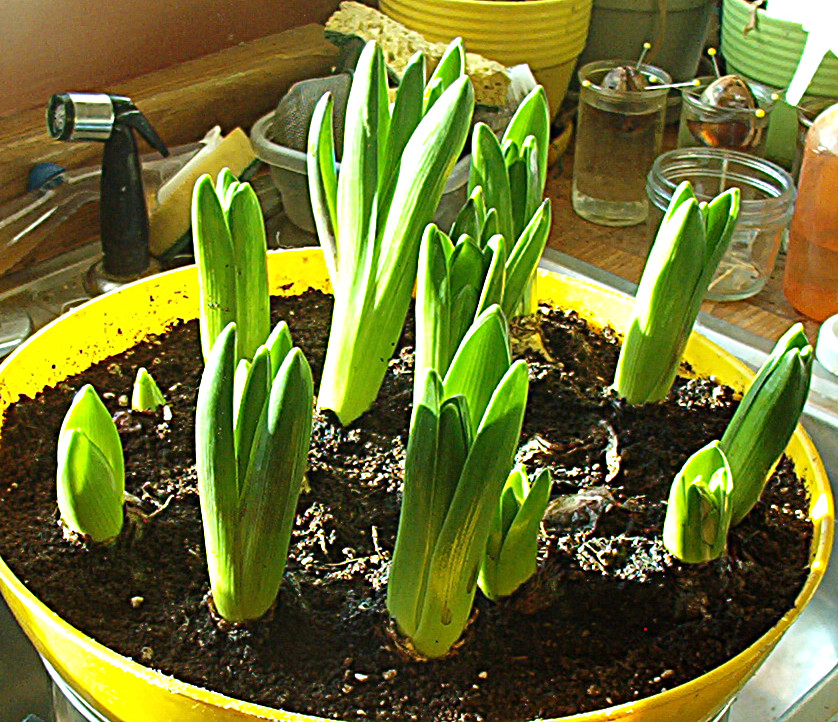


 Stop the Storm
You must be logged in to post a comment.