+HARDHITTING ON THE TOPIC OF BAD RELATIONSHIPS

++++++++++++++++++++++++++

Of all the tragedies that life can find to place in our way along our path from start to finish, those connected to our early histories of growing up in homes with what the Center for Disease Control refers to as Adverse Childhood Experiences could become the easiest ones for us to spot.  Sure, there are plenty of self help books and programs that more and more of us eventually discover that tell us how to ‘get better’, but are they really telling us anything like the REAL truth about who and how we are in the world?

Is there anything like a product guide, a user’s guide, or a reliable guarantee of ‘full disclosure’ as we leave our abusive homes of origin and seek to join the mainstream world, jumping into the flow of major life choices and their resulting consequences?  Of all the things we leave our abusive homes not knowing anything about, perhaps the one that follows along with us the longest is our mistaken idea that we can somehow create safe and secure adult relationships between partners who do not have an early history of safe and secure attachments.

We are heroic in our attempts to build sandcastles to live within as if they will shelter us from the storms we face in life, as if they can withstand the onslaught of storms that sweep over and around us over the years of our life time.  How hard it is to let ourselves know that we are really homeless in the world of our partnerships, that no matter what any self help book tells us, those of us who survived an infant-childhood filled with trauma, abuse and madness will not live long enough to learn enough to begin to change enough to be able to sustain and maintain a mate relationship of safe and secure attachment.

So many people, especially in today’s unsafe and insecure economic environment, are facing limitations of choice to exit unstable, abusive, and simply put, very BAD relationships, especially if they are still caring for dependent children.  Those now left without the ability to create a sustainable exit plan out of one of these BAD relationships will experience increasing levels of stress for themselves and for their children.

These children, growing up with the pressure and strain of Adverse Childhood Experiences of their own are likely to seek attachment relationships themselves that are the equivalent of sandcastle and cardboard box partnerships that will never do more than temporarily appear to be sustainable.  What the self help books don’t tell us, is that we would be far better off building a concrete vault to sustain ourselves within independently and autonomously than we would be pretending that we have the first clue what a safe and secure attachment relationship is – because we don’t.

++++

Which is harder, learning to avoid getting into these unsustainable relationships in the first place or trying to get ourselves out of them after we have committed our hearts and entangled our lives?  Actually, I could be accused of cheating and that accusation would be correct.  At age 58, I am far enough down the road of life to be able to look backwards at my own life and sideways at the lives of others to see that a sustainable, autonomous, independent and FREE life alone has – the way I see it from here – so much more to offer me as a severe infant-child abuse survivor that I can no longer even pretend that I even WANT another sandcastle or cardboard box attachment relationship in my lifetime.

Coming out of abusive childhoods leaves many people prepared to continue struggling against insurmountable obstacles for the rest of their lives.  If the goal is to survive given the difficult conditions of life, then we are experts at trying to reach our goals.  Over and over again, on and on we go repeating our efforts to make a truly crappy situation and/or relationship into a good one.  We learned at the start of our life that to give up is to die.  We can continue to apply our simple rules of trying to stay alive to all kinds of situations that we would be better served simply walking away from.

++++

The goal of a truly sustainable infant-childhood is to form, through safe and secure attachment relationships with our caregivers, our own clear, strong, independent and autonomous self that can then continue down the road of life with enough inner resources to appropriately interact empathically, responsibly, appropriately and compassionately with others.  The more I learn about the physiological body-brain changes that are a direct result of growing and developing within malevolent early environments, the more I see that we survivors were simply never given what we needed to create one of these best-selves-possible.

Our handicaps show up in some way in nearly every choice we make.  Our choices for our adult attachment relationships are probably the most volatile and unsustainable ones we make.  While we continue to believe that somehow if we work hard enough we can perform the magic act of alchemy to transform ourselves in our relationships and that our partners can also transform themselves, we are most often struggling to accomplish the impossible.  We are like the dolphins caught in tuna nets who struggle until they die.

From my age 58 perspective I am beginning to finally understand something that appears to be one of the greatest paradoxes, if not downright ironies of life:  Those people who are most able to sustain themselves comfortably as independent and autonomous people outside of a mate relationship are the ones that will be able to sustain themselves – AND THEIR PARTNER – in a safe and secure attachment relationship – IF THEY EVER CHOOSE TO HAVE ONE.

While this might seem obvious, simplistic, and intellectually believable, severe infant-child abuse survivors are likely to NEVER TRULY GET THIS POINT.  I think back nearly 30 years ago when I was going through a treatment program designed to address my ‘child abuse issues’.  I was unhappily married for the second time.  My therapist told me and my husband that unless and until we each, on our own, separately and independently improved our own well-being, that ‘working on the marriage was impossible.  This therapist told us that otherwise it would be like scraping two piles of mold from different corners of the bottom of a refrigerator into one pile and expecting something good and healthy to come of the effort.

He was right.  I will grant him that point.  But I was not told NEXT what I now know, and needed to be told THEN.  I could apologize here for mentioning what I am going to say next, but with my advancing years I now see this as the rest of the story.  Never in my lifetime is it possible for me to make enough so-called changes so that I will ever be able to have a sustainable mate relationship with anyone.

That’s an extremely harsh reality, but reality it is.  I can spend the rest of my life, literally working to improve my independent, autonomous, sustainable own self and while I can make progress within myself, I do not believe that I have a long enough lifetime to make myself into this kind of self.

Even if my therapist in 1983 had told me this fact, it’s doubtful I would have believed him.  I would have thought, “Well, that might be true for others, but I am special.  I can be the exception.”  That would have been a delusion I could freely have believed in.  But sooner or later things that are true remain standing, like stone pillars strong enough to withstand millions of years of erosion.  That’s one of the things that the truth actually does:  It remains standing when all else has crumbled and vanished away.

++++

Knowing this fact now, that unless and until I can become an independent, autonomous, sustainable single self I will not be capable of forming safe and secure attachment with a mate, actually gives me a point of reference that acts like a true-north orientation of myself in relationship to my entire life.  I can kick and scream, deny and try to make deals, compromise, suffer and struggle, sacrifice and fantasize that somehow I can escape the consequences of having been forced to grow and develop a body-brain in a horribly abusive, deprived, malevolent world that in no way created a physiology in me that operates the way a safely and securely-built attachment physiology operates.  Or I can accept the facts and begin to realize that life offers me an acceptable alternative – the freedom of being alone that I need to heal what can be healed inside of my own self.

I say this as I come to realize why I cannot ever be with the man I love completely.  As I understand that WHY from inside my own body I am at the same time gaining understanding about the WHY as it relates to his attachment physiology.  I know of no attachment therapy approach that even begins to explain the facts of what makes our relationship so much more than difficult.  Our relationship is impossible.  Survivors need to be told what is really going on for us.  Dancing around the facts of our changed attachment physiology continues to give us the illusion that there really is ‘hope’ for such impossible relationships.

++++

Anyone who reads this post is of course perfectly free to take their own stand and make their own choices regarding any relationship they may be in.  I am simply stating my own point of view based on what I have learned about the nature of terrible infant-childhoods and how they change our physiological development.  These changes operate in unsafe and insecure attachment patterns that are visible and definable once we understand how basic and fundamental these patterns truly are.

These changes are, I believe, the root causes of all the trauma dramas we enact in our lives.  They are at the root of our suffering.  They created a lack of ability to smoothly and consciously regulate our emotions – in our body, our brain and our mind – through safe and secure attachments between ourselves and the world we live in.

As a result we are more like unstable nuclear reactors than we are like independent, autonomous, sustainable people.  It is at this level of woundedness – in our trauma-changed body-brains — that our problems with mates and relationships actually originates.  It is at this level, for those of us who are survivors of traumatic infant-childhoods, that our physiology does not support recovery.  We had no opportunity to create in the first place what would help us to go ‘back’ and ‘recover’ now.  We cannot ‘recover’ what we never had in the first place.

All human actions and interactions are ultimately about regulating our individual physiology, including our emotions.  That is what being a human being living in an Earth Suit really means.  The experiences of our early attachment relationships tailor fit our Earth Suit accordingly.  We need to understand ourselves and others at this most basic physiological-change level if we want the misery-patterns of our lives to end.

It’s not the relationships we participate in that we need to change.  It’s the Earth Suit we live in while we have these relationships.  Changing the Earth Suit we live in while in the midst of trauma drama is about as impossible as flying into the sun.

++++++++++++++++++++++++++++++++++++++
+WHO CAN GET TO AND RESCUE THE SUFFERING BABY?

++++++++++++++++++++++++++++++++

Even though I am not able to be with her right now, I am so grateful for the wonderful telephone conversations I am able to have with my daughter who is expecting her firstborn, a son in the third week of April.  They are entering their 31st week of pregnancy.  I have never been a grandmother before.  It’s all new, to all of us, to baby boy’s mother and father, his grandparents, his auntie and uncle.  I think it’s because of last night’s telephone call with mommy-to-be that the dream came to me last night.

Many thoughts crowd into my mind as I start to write about this dream.  There were two newborn babies, a boy and a girl.  There were two women.  But looking back on the dream as if remembering a movie I know these two women were really four:  My grandmother, my mother, myself and my daughter.  Between the four of us we took turns at being one of the two women in the dream.

There was no doubt in the dream that the boy newborn was loved.  He was not left to cry, alone, hungry, isolated in the dark.  He was cared for, picked up and held, swaddled in soft blankets and cuddled closely to the breast as he was fed.  I was aware that the tiny newborn girl was alone.  I could sense where she was, far away in the shadows of a big empty room.  If she was fed at all it was through a cold glass bottle propped on a rolled blanket laid beside her head.

I could FEEL the sad forlornness of the little girl, but I was powerless myself to reach her, or to in any way convince her mother to go rescue her from her living tomb of isolation.  Her mother shifted from being my grandmother with the baby being my mother, to being my mother and the baby girl being me.  The mother of the little boy shifted from being my daughter to being me, but the little boy, I knew clearly in the dream was going to grow and develop in a completely different way than how that little unloved girl would.

Although I cried and pleaded in the dream for someone to let me go get and breast feed the little girl, nobody heard me and I was prevented from going to find her.  I could only know she was there.  I could empathize with her aloneness of being lost in an unending huge world of dim shadows where nobody loved or wanted her.

The woman in the dream that lovingly cared for the newborn boy as she held him closely in her arms and fed him from her breast, shifted from being my daughter with her son, to being me with my son, to being my mother with her firstborn son, my brother who was 14 months old when I was born.  Even though I know my mother never breastfed my brother, in the dream I knew she was able to give him what he needed as if she did.

++++

I knew in the dream that both babies were equally needy, equally deserving, equally perfect.  I knew in the dream that it would not have mattered to that little girl who picked her up and held her closely, who gazed into her little tear strained eyes, who nursed and nurtured her, who touched her tiny hands and stroked her soft, smooth cheeks.  I also knew in the dream that the little girl, being treated with cold, hard, uncaring disdain from birth was not going to develop the same nervous system, body or brain as this well-loved and cared for little boy would.  I was able to see the end in the beginning, yet I could change nothing.

I think of this dream now on Valentine’s Day and know that there is no more possible picture of perfect love than that between a mother in intimate caring with her infant.  Next to this, there is no more perfect Valentine picture than that of SOMEONE, anyone, offering the kind of nearness and tender, loving care to an infant-child.  It’s not the picture of swooning and/or devoted adult lovers that comes into my mind today.  My dream made sure of that.  It is this picture of the perfect love that our species is designed to give to offspring, that can go so terribly wrong, that I see in my heart’s eye.

I also know that for all the efforts at healing ourselves that severe infant-abuse survivors participate in, nothing is going to undo the damage that being harmed during our earliest, neediest developmental stages did to us.  We have to include, without fantasy, denial or blame, the circumstances going back through the generations that created environments of deprivation and trauma to occur between mothers and their helpless, perfect infants.

I try to think of some adequate and accurate word I can use to describe a feeling that came to me both in the dream and in my morning’s waking, but the only one that sits in my mind is ‘gratitude’.  It’s not the right word.  I know it’s not.  It makes me think of the eight pound bag of delicious oranges in my kitchen that I would turn into juice if I only had one simple piece of kitchen equipment:  one of those little plastic or glass juicers.  I would simply slice the fruit in half, plop them onto this gadget and twist away until the juice was free and running.

There is nothing I can use for a substitute to make juice out of these oranges.  I looked in all the stores in the little town I live near yesterday and could not find one.  Searching for the word I want to describe how I feel about the fact that I could love my babies and that my daughter will be able to love her son leaves me at a loss.  Gratitude is only a tiny sliver of the meaning I want to portray.

I think of the word ‘awe’.  I think of the word ‘grace’.  I think of the word ‘blessing’.  None of these are the right word.  I wonder what word I could use to describe how I would feel at the instant I experienced safe passage after a near head-on collision at high speeds on a freeway.  ‘Relieved’?  ‘Stunned’ and ‘amazed’?  ‘Grateful’?

Any word I can think of seems only to be like the plastic external wrapping of an object that I would tear off and throw away.  I cannot think of the real word for how I feel knowing that it is so completely possible to not only not pass onto our offspring what was done to us, but to feel about and act toward our offspring through loving that is the opposite of what we ourselves experienced from the world around us when we were tiny.

At the same time ‘empathy’ and ‘compassion’ or ‘sympathy’ are completely inadequate words to describe how I feel for the little ones that are unloved, left alone, battered, neglected, abused, maltreated and traumatized.  For all the words we have in our language there are gaps where no adequate words exist at all.  There are times when I reach for words to describe how I feel and find them as missing as is an orange juice squeezer from my kitchen.

What I am most left with, then, is the word ‘recognition’.  I recognize the missing words by their absence.  I recognized the patterns of infant treatment in my dream.  I recognized the changes in how those patterns happened between my grandmother, my mother, my self and my daughter.  I recognize through my own research what the implications are for the developing body-brain of the most helpless and dependent and innocent and needy beings of our species depending upon the way they are treated from the time they are born.

I recognize that the most important element of human relationship is invisible:  the self.  I could see and feel the self both within the little newborn infant I held and nursed in the dream as strongly as I could sense the desperate, hurting self of the tiny newborn girl I could not reach.  I could sense the self within the shifting forms of each of the women in my dream.  Somewhere at the edges of my mind every term related to self I know scratches away at the truth of what this dream showed me.

From ‘self worth’ to ‘self esteem’ to ‘self centeredness’ to ‘selfishness’, every concept we might use to describe and explain how any human being is in the world is really first describing the relationship that each one of us has with our own conscious-unconscious self.  As we look at our most central relationship between our own self and our own self, we have to consider that everything we know is connected to how our ability to choose was formed within our body-brain from the start of our existence.

While I believe that how my mother developed from that maltreated newborn left alone crying in the dim, remote shadows of my grandmother’s world, and recognize that my mother’s powers of choice were consequently all but eliminated from her consciousness, I hold my grandmother accountable for her treatment of my mother.

I saw my grandmother in this dream as being self-centered and selfish, having made a choice not to love her newborn daughter.  I then experienced my mother without a choice in how she treated me.  I also saw her interacting with my brother, my mother’s newborn son, not as an action designed to foster the well-being of her son’s self, but in action to preserve her own self.  Perhaps if my birthing had not completely threatened the physical life of my mother (and her extremely fragile, ill-formed self), she would have been able to enact the ‘mother with her dolly’ roll with me just as she was able to do with my five siblings.

In some ways I am surprised that looking back it is to my grandmother that I attribute responsibility for what happened, in turn, to me.  I find that I believe my mother didn’t receive what she needed as an infant-child from her mother because my grandmother did not WANT to love my mother.  My mother did not give me what I needed and harmed me instead because she COULD not love me.

Somehow, in ways I do not comprehend completely, I had the choice to love my children and I did.  My daughter has the ability to choose to love her son, and she does.

What gave me the ability to choose to love my children?  Why DID I choose to love my children?  Why, if my grandmother had the ability to choose, did my grandmother choose NOT to love my mother?

++++

There was another level to this dream that I cannot recall or remember.  It had to do with seeing clearly that when an infant such as the little girl in this dream is developing a nervous system that is always caught in the ongoing scream of DANGER, something can intercede to sooth and change the direction this nervous system is developing.  I know in the dream that this soothing factor did not come from where it was supposed to come from – a warm and loving human caregiver.

It was something else entirely, but I cannot remember what it was.  It seems it was some innate human ability, that would lie within the range of possibilities within the infant itself, which can influence the development of the DANGER and DANGEROUS based nervous system (which would include the brain).

I am left with the sense that this ‘something else’ is a gift, that it creates a miracle within the developing infant that alters physiological destiny.  If such a gift-ability does exist, I had access to it and my mother did not.  Again, I come around full circle to the fact that the simple word ‘gratitude’ for my having received this gift does not come any closer to describing what I feel than would ‘compassion’ describe how I feel for my mother who did not have access to this gift.

I am simply left to question mysteries that I believe will be fully understood by infant-child developmental researchers in the future.  In the meantime, someone needs to do what I could not do even within my own dream:  get to and rescue the suffering baby.

++++++++++++++++++++++++++++++++++++++++++
+REVISIONS FOR THE ‘MENTAL HEALTH BIBLE’ – DO YOU HAVE SOMETHING TO SAY?

++++++++++++++++++++++++++++++

When a consumer seeks help from a ‘mental health’ professional they seldom think first about the credibility of the ‘mental health’ professional system itself.  Yet this powerful system is not infallible.   As of February 10, 2010 the American Psychiatric Association (APA) has a website up and running for the public to make comments  and suggestions during the revision of the very ‘bible’ that is used to ‘diagnose’ everyone who seeks ‘mental health’ assistance.  If we have something to say, NOW is the time to do so.

From what I can tell the following links only work for dues-paying members of the American Psychiatric Association (APA), which few of us are!  So please use the comment suggestion categories presented here and either send them snail mail or email to:

American Psychiatric Association
1000 Wilson Boulevard, Suite 1825, Arlington, Va. 22209-3901
phone: 703-907-7300 email: apa@psych.org

REMEMBER:  Surviving severe infant-child trauma, maltreatment and abuse — which created alterations in our young developing body-brain — is the single most likely experience to lead to a ‘mental health’ diagnosis!  What appears in the Big Bible Book of the APA matters to us!

Suggestions/comments have been categorized into one of five types. Please select the type that best fits your suggestion or comment:

  • Submit comments that serve to alert us about problems, limitations, or shortcomings with DSM-IV-TR (without specific suggestions about how to fix them). Miscellaneous comments that do not fit into the other categories go here as well.
  • Submit suggestions for specific changes to diagnostic criteria or diagnostic class groupings.
  • Submit suggestions for a new subtype to be added to an existing disorder.
  • Submit suggestions for a new disorder to be considered for addition to DSM-V.
  • Submit suggestions for deletion of an existing disorder.

++++

SEE:   psychdiagnosis.net for more information about this subject, including stories about a variety of kinds of harm caused directly by psychiatric diagnosis and six different solutions to problems of diagnosis.

++++

I am presenting a paper about the revision process currently under way for the American Psychiatric Association’s (APA) Diagnostic and Statistical Manual of Mental Disorders (DSM-V), sometimes known as “the therapist’s Bible,” that was recently included in a post by a member of an online group I joined.  The revision of this manual is slated for publication for 2013.

++++++++++++++++++++++++++++++

WEBSITE: THE ASSOCIATION FOR WOMEN IN PSYCHOLOGY

Psychiatric Diagnosis: Too Little Science, Too Many Conflicts of Interest [i]

BY: Paula J. Caplan, Ph.D.
Harvard University

The Concerns

There is a lot of pain and suffering in the world, and it is tempting to believe that the mental health community knows how to help.  It is widely believed, both by mental health professionals and the general population, that if only a person gets the right psychiatric diagnosis, the therapist will know what kind of measures will be the most helpful. Unfortunately, that is not usually the case, and getting a psychiatric diagnosis can often create more problems than it solves, including a lifetime of being labeled, difficulties with obtaining affordable (or any) health insurance (due to now having a pre-existing condition), loss of employment, loss of child custody, the overlooking of physical illnesses and injuries because of everything being attributed to psychological factors, and the loss of the right to make decisions about one’s medical and legal affairs. The creation and use of psychiatric diagnosis, unlike, for instance, psychiatric drugs, is not overseen by any regulatory body, and rarely does anyone raise the question of what role the assignment of a psychiatric label has played in creating problems for individuals. [ii]

The Problematic History

Contrary to popular belief, the enterprise of psychiatric diagnosis is largely unscientific and highly subjective (Caplan, 1995; Caplan & Cosgrove, 2004). Therapists often disagree about which label to assign to a given patient, and there is perhaps surprisingly little definitive research to prove that, “A person with diagnosis X will benefit from and not be harmed by treatment Y.”

These serious limitations have not prevented the authors of the American Psychiatric Association’s (APA) Diagnostic and Statistical Manual of Mental Disorders (DSM), sometimes known as “the therapist’s Bible,” from making expansive claims about their knowledge and authority and wielding enormous power to decide who will and will not be called mentally ill and what the varieties of alleged mental illness will be. The DSM’s current edition is called DSM-IV-TR, and it was preceded by the original DSM (in 1952), then DSM-II (1968), DSM-III (1980), DSM-III-R (Third Edition Revised) (1987), DSM-IV (1994), and DSM-IV-TR (2000). The DSM-V is currently in preparation and slated for 2013 publication.  Each time a new edition appears, the media ask whichever psychiatrist is the lead editor why a new edition was necessary, and like clockwork, each editor replies that it was because the previous edition really wasn’t scientific (Caplan, 1995).  And each time a new edition appears, it contains many more categories than does the previous one.  For instance, DSM-III-R contained 297 categories, and DSM-IV contained 374 (Caplan, 1995).

I served as an advisor to two of the DSM-IV committees, before resigning due to serious concerns after witnessing how fast and loose they play with the scientific research related to diagnosis (Caplan, 1995).  The DSM is widely used, not only in the mental health system, but also in general medical practice, in schools, and in the courts.  I have been involved since 1985 in trying to alert both therapists and the public to the manual’s unscientific nature and the dangers that believing in its objectivity poses.  Since then, I have watched with interest a national trend toward gradually increasing openness to the idea that psychiatric diagnosis (A) is largely unscientific, (B) is highly subjective and political, and (C) can cause untold harm, ranging from the patients’ lowered self-confidence to loss of custody of children to loss of health insurance (because any psychiatric label can be considered evidence of a pre-existing condition) to loss of the right to make decisions about their medical and legal affairs.

What many do not consider is that psychiatric diagnosis is at the foundation of much of the harm that is done in the mental health system.  Without assigning a diagnosis, a therapist is not supposed to choose what treatments to use or even whether or not to suggest treatment.  And rarely are patients prescribed psychotropic drugs or told they need psychotherapy unless they get a psychiatric label.  This is not to say that psychotherapy and medication is never helpful for anyone but simply that the first step toward the harm that sometimes results from these is assignment of a diagnosis.  Furthermore, increasingly people have learned about the connections between drug companies’ concealment of the harm their products can cause and some professionals’ pushing of particular drugs while being paid well by the drug companies.  It has been well documented that some of the professionals who help write the DSM are on drug companies’ payrolls (Cosgrove, Krimsky, Vijayraghavan, & Schneider, 2006).

Coming Up Next: DSM-V and Secrecy

With the next edition of the DSM in preparation, and perhaps due to increasing scrutiny and questioning of the process of creating psychiatric categories and an increasing public awareness of the harm that results from their use, the current DSM team has tried to envelop the process of compiling the next edition in a shroud of secrecy (Frances & Spitzer, 2009).  Interestingly, the editors of the current and previous editions, Allen Frances and Robert Spitzer, respectively, in a letter to the APA’s Board of Governors described the DSM-V process as characterized by a “rigid fortress mentality” that included asking that those compiling the new edition to sign a statement agreeing to keep confidential the deliberations about it (Frances & Spitzer, 2009).  This seems a curious requirement for a group that has often claimed that it bases its decisions strictly on scientific evidence.

In addition to this secrecy, as I learned when asked by Ms. magazine in 2008 to write an article about the future of the category “Premenstrual Dysphoric Disorder” in the DSM-V, those joining DSM-V committees have been told that they must divest themselves of most drug company connections.   However, it turns out that this divestment is only temporary, and connections can resume once work on the DSM is finished.  Furthermore, as one DSM-V committee chair told me in a telephone interview, this requirement delayed the process of committee formation substantially, because it was difficult to find enough people who were willing to go through with the divestment (Fawcett, personal communication) .

Some Problems Already Identified in DSM-V Plans

In keeping with the tradition of DSM editors claiming that, in contrast to previous editions, their edition will be scientific, a proposal apparently receiving serious consideration is the creation of an entirely new system of organizing categories within the DSM-V (Frances & Spitzer, 2009), yet this proposed system is riddled with problems and does not even appear to be a particularly useful – not to mention valid – system for helping people with emotional problems.

In addition, despite the secrecy surrounding the process, additional alarming information about what committee members are considering has already appeared.  For instance, a committee was appointed to consider whether “racism” should appear in the DSM-V, a step that would disguise a social evil by making it seem “merely” an individual problem, a mental illness.   One danger of such a diagnostic category is that people who commit hate crimes would blame their crimes on alleged mental illnesses and thus avoid criminal punishment (Profit, 2004).  This is similar to the category of “rapism,” which was proposed for DSM-III-R and which feminists successfully battled (Caplan, 1995).

In a different realm altogether, one prominent DSM author has proposed that “relational disorder” be added to the manual (Caplan & Profit, 2004). “Relational disorder” would be applied to a couple, neither of whom individually might be considered mentally ill but whose relationship would be considered sick.  One of the category’s inventors has suggested that this would provide a terrific opportunity to try out psychotropic drugs. But there are serious ethical problems involved in prescribing drugs to treat people who are not individually diagnosed as mentally ill. It is revealing to picture this scene:   Two people sit in a psychiatrist’ s office; neither of them is considered mentally ill, though their relationship is; the psychiatrist removes a pill from its bottle…where does the psychiatrist put the pill?   Clearly, the ethics, absurdities, and dangers of DSM-V proposals must see daylight and be thoroughly debated as soon as possible.

This Website

Even during the preparation of past editions of the manual, changes have been rapidly and often surprisingly made by various DSM subgroups and by those at the top of the hierarchy.   For this reason, it would be almost impossible to write a book about concerns related to the DSM-V process.   As a result, sponsored and supported by the Association for Women in Psychology (AWP), which has long had as a primary social action objective the understanding of psychiatric diagnosis and prevention of harm that results from it, a task force of academics and clinicians has produced the articles on this website.   Most of the articles are about particular diagnostic categories, some are about particular “isms” such as sexism, classism, and racism, and many involve elements of more than one of these.   This website is a grassroots project of AWP, and due to limitations of time and personnel, we have only attempted to critique some (though a wide variety) of the 374 different diagnostic categories listed in the current DSM and some that are being considered for inclusion.   Furthermore, the secrecy surrounding the DSM-V process makes it impossible to know much the new categories being proposed.  So with this website, we offer a sampling of the kinds of problems and concerns that we want to urge professionals and the public alike to watch for as the DSM-V steamroller moves on.  In fact, several of the categories addressed on this site have been proposed in major mental health journals and books as DSM-V diagnoses. Unfortunately, many changes in past editions have been made at the last minute and without the public’s knowledge, so that serious problems have become widely known only after the editions were published; those problems have persisted for many years. Indeed, in the case of the widely publicized claim in the early 1970s that “homosexuality” was being removed from the next edition of the manual – a claim that is still generally believed to be true – it emerged that “ego-dystonic homosexuality” actually remained in the next edition after all (Metcalfe & Caplan, 2004).[1] Situations like this make it difficult to think how to protect the public and how to educate the public and professionals about ways to stop the DSM-V authors from causing harm. We hope that this website will provide some resistance to the DSM-V steamroller.

References

Caplan, P. J. (1995). They say you’re crazy: How the world’s most powerful psychiatrists decide who’s normal. Reading, MA: Addison-Wesley.

Caplan, P. J., & Cosgrove, L. (2004). Bias in psychiatric diagnosis. Lanham, MD: Rowman and Littlefield.

Caplan, P.J., & Profit, W.E. (2004). Some future contenders. In P. J. Caplan & L. Cosgrove (Eds.), Bias in psychiatric diagnosis (pp.249-54). Lanham, MD: Rowman & Littlefield.

Cosgrove, L., Krimsky, S., Vijayraghavan, M. & Schneider, L.  (2006). Financial ties between DSM-IV panel members and the pharmaceutical industry. Psychotherapy and Psychosomatics, 75, 154-160.

Fawcett, J. Personal communication.

Metcalfe, W.R., & Caplan, P. J. (2004). Seeking “normal” sexuality on a complex matrix. ”? In P. J. Caplan & L. Cosgrove (Eds.), Bias in psychiatric diagnosis (pp.121-6). Lanham, MD: Rowman & Littlefield.

Profit, W.E. (2004). Should racism be classified as a mental illness? In In P. J. Caplan & L. Cosgrove (Eds.), Bias in psychiatric diagnosis (pp.81-8). Lanham, MD: Rowman & Littlefield.

[1] The category “Ego Dystonic Homosexuality” appeared in the manual, thus leading to the labeling as mentally ill many people who were not thoroughly comfortable and happy with being homosexual. The fact that in a homophobic society, the lack of total comfort with being homosexual should hardly be construed as proof of mental illness was not acknowledged. Even today, although the words “homosexual,” “lesbian,” “gay,” and “bisexual” do not appear as diagnostic categories in the manual, the category “Sexual Perversion Not Otherwise Specified” does appear, and that is so broadly defined that it could certainly be applied to anyone who is not heterosexual, as long as their particular therapist decides that their sexual orientation is a perversion.

++++

SEE:   psychdiagnosis.net for more information about this subject, including stories about a variety of kinds of harm caused directly by psychiatric diagnosis and six different solutions to problems of diagnosis.

[ii] The Association for Women in Psychology, the Society for Menstrual Cycle Research, and the National Women’s Health Network, sponsored by Congresswoman Louise Slaughter and cosponsored by many other organizations, held a Congressional briefing about some of these concerns, and a second briefing was held by the author of this paper (Caplan, Paula J. (2002). You, Too, Can Hold a Congressional Briefing: The SMCR Goes to Washington About “Premenstrual Dysphoric Disorder” and Sarafem. The Society for Menstrual Cycle Research Newsletter, Summer, 1-5. Reprinted in Women’s Health: Readings on Social, Economic, and Political Issues. Fourth Edition. Nancy Worcester & Mariamne Whatley (Eds.). Kendall-Hunt: Dubuque, IA, pp.246-9.) However, no Congressional action to propose hearings or legislation about psychiatric diagnosis has yet resulted from these briefings.

http://awpsych. org/index. php?option= com_content&view=article&id=102&Itemid=126

Bias in Psychiatric Diagnosis: Concerns about DSM-V


Mission:
To provide information for people (including but not limited to professionals and journalists) about biases and other problems in psychiatric diagnosis, an especially important goal in light of the American Psychiatric Association’ s preparation for the 2013 publication of the next edition of the psychiatric diagnostic manual.

NEWS FLASH
1.[i] see psychdiagnosis.net for more information about this subject, including stories about a variety of kinds of harm caused directly by psychiatric diagnosis and six different solutions to problems of diagnosis.

2. Click Here for an important article in New Scientist about problems in the preparation for DSM-V

3. Click here to go to a website that is presented as allowing anyone who wants to make suggestions about DSM-V to do so.

Note:  AWP’s Committee on Bias in Psychiatric Diagnosis does not know what plans may have been made by the DSM-V authors to consider these suggestions.

4. Call for papers for a special issue of Social Science and Medicine, Sociology of Diagnosis

5. PSYCHOUT – A conference for organizing Resistance against Psychiatry – Call for submissions

+++++++++++++++++++++++++++++++++++++++++++++
+++++++++++++++++++++++++++++++++++++++++++++

Given even the physiological developmental changes that happened to our body-brain as a result of having to adapt to severe traumas in our early infant-childhood, the following is still the very best ‘advise’ we can probably ever follow.  Our new power, our increased self-respect, and our advanced experience are tied into learning — for the first time in our lives — what these developmental body-brain changes are, how they actually happened, how they affect us, and how we can still work to vastly improve our well-being in our life time.

++++

“Be not the slave of your own past. Plunge into the sublime seas, dive deep and swim far, so you shall come back with self-respect, with new power, with an advanced experience that shall explain and overlook the old.”

Ralph Waldo Emerson

US essayist & poet (1803 – 1882)
+++++++++++++++++++++++++++++++++++++++++++++
+OUR STRESS RESPONSE IS WHAT WE PASS DOWN TO OUR KIDS

++++++++++++++++++++++++++++++++

It is not so much the nature of any particular trauma or stress that we experience in life that matters most; it is how well equipped we are with both the inner and outer resources to respond to them.  It is our response patterns that most affect our children.  It is our response patterns that we pass down to them.

The vagal nerve is directly tied both to our stress response system and to our ability to act with compassionate caregiving.  I believe that it is our response to trauma and stress in relation to how compassionately we can take care of our children that matters most to them during their early growth and developmental stages.

++++

How can this fact (as presented in my last post) not be of central concern to everyone living in America?

44 percent of American children — that’s nearly half of all children in the U.S. — live in families that face serious struggles to make ends meet.”

Poverty is a stressor that affects not just the adults caring for this 44% of our nation’s children, but also impacts each and every one of the children in some way.  How do we care for ourselves and others when our stress response system is itself overly and chronically stressed?

Poverty is not a single problem that can be dissociated from the ever expanding circles of society that create both the poverty conditions and the solutions for these conditions.  My concern with the vagal nerve system and its connection to the capacity to care-give compassionately or not lead me to finding the information I am presenting today.  Parents still have to take care of their children no matter what lack they may be experiencing in their external resources.  Yet it is the actual condition of a parent’s body and brain that influences how all of their caregiving actions take place in every situation – stressful or not.

If parents experienced severe stress and trauma during their own early developmental stages, their stress response system has most likely changed in response.  This altered stress response system is the only one they have available in their body-brain to use for the rest of their lifetime.  Because how the stress response system operates is directly connected to the vagal nerve system, and because parental interactions with their children directly influence the development of their little one’s stress response-vagal nerve system, these stress responses can easily be automatically passed on down the generations – often along with poverty.

Even though the current economy is creating an ever widening circle of financial stress on families in our nation, it is the response TO THE STRESSORS that are perhaps more significant in the long run than are the actual experiences of lack of financial well-being themselves.  The more we can all understand how our body-brain handles stress, anxiety and trauma the more empowered we can be to intercept automatic responses to children in our lives that will harm their body-brain development in ways that will create physiological lack of well-being for their lifespan – no matter what their financial conditions end up to be.

++++

Two important words that emerged for me today as I read this information presented below are ‘inspiration’ and ‘expiration’.  True, this article is talking about our breathing and our heart rate.  But it is more than that.  The more flexible we can be in every single way the more ‘inspiration’ we can experience in our lives that will counteract the hardships we encounter.  Stress responses in our body, through the operation of our vagal nerve system, happen in response to threats to our actual life as well as to threats against our self esteem (and to our actual ‘self’).

Mindful consciousness over our stress response actions empowers us.  Becoming mindfully conscious of how we are in-the-moment allowing our own stress responses to affect our children MATTERS to their physiological development.  Once we begin to more fully understand that our stress response system IS THE SAME SYSTEM that operates in connection to our breathing and heart rate, through our vagal nerve, that is ALSO  OUR COMPASSIONATE CAREGIVING SYSTEM we can learn to take every possible precaution not to pass the stress onto our children through the way we directly offer caregiving to them.

Yes, children need the most basic physical necessities of life, but it is most likely to be the way caregivers respond to children on the personal level of interactions with them that is most likely to cause our children permanent growth and development harm if we aren’t care-full – not poverty or other external factors.

The way parents experience and handle stress is directly passed down to their offspring.  These patterns are built right into the developing body-brain of infant-children and will have profound affect on how these children will handle stress and regulate their emotions and social interactions themselves for the rest of their lives.  It is from this perspective that I present the following information today on the vagal nerve system and the stress response.

++++++++++++++++++++++++++++++++

What is Vagal Tone?

The parasympathetic nervous system influences the tonic or resting heart beat by means of signals from the tenth cranial nerve, the Vagus nerve.  In the resting or baseline state the heart rate will fluctuate with the breathing cycle; inspiration is accompanied by heart rate elevation and expiration is accompanied by heart rate depression….  [in the example given at this LINK page 69] you will see an example of this phenomenon.  The top tracing is the heart beat, the middle tracing is the respiratory cycle (up for inspiration, down for expiration), and the bottom tracing is the heart rate from the ratemeter.  Notice the coincident rise and fall of heart rate with each respiratory cycle.  This event is termed the respiratory sinus arrhythmia or RSA.  The extent of the RSA is a rough measure of Vagal control over the resting heart beat, referred to as Vagal tone.  The size of the RSA (degree of variability of the heart rate for each respiratory cycle) is what is determined by the Vagus nerve.  When the heart rate varies considerably for each respiratory cycle, then we say there is good or high Vagal tone.  When the heart rate is relatively steady with low variability for the respiratory cycle, we say there is poor or low Vagal tone.  In general Vagal control over the heart rate lessens during stressful experiences when sympathetic activity is heightened, thus allowing the heart rate to rise to meet the challenge.” (page 68)

Personality and Vagal Tone

Vagal tone has been related to temperament (the innate building blocks of personality) and stress vulnerability in children.  Children who show behavioral inhibition in novel situations (somewhat comparable to shyness) have low Vagal tone as evidenced by higher and less variable resting heart rates.  Preschoolers who fail to show emotional expression also have low Vagal tone and are vulnerable to later depression and anxiety. [my note:  These children may well be exhibiting early manifestations of insecure attachment disorders.]  There is also evidence that adults who are extremely shy or behaviorally inhibited have higher and less variable resting heart rates.  Also adults with high Vagal tone may have lower blood pressure responses to stress, making them less vulnerable to hypertension and coronary heart disease.  Interestingly, adults with high Vagal tone are more susceptible to hypnosis.  [my note:  And high Vagal tone ‘superstars’, as Keltner notes, show more compassionate, caring response to others.]  The exact relationship between the autonomic nervous system’s regulation of physiological responses and personality is unknown, but many hypothesize that the innate sensitivity and reactivity of the nervous system may be the fundamental mechanism for biasing personality development and expression.”  (page 69) [my note:  bolding is mine — and this sensitivity and reactivity of the nervous system and brain are directly influenced in development by the nature of early infant-child interactions.]

++++

Because a person’s resting and responsive Vagal nerve system is tied to overall degrees of well-being in the world, it is helpful to understand how this system operates on both the physiological and ‘psychological’ level.

Heart Rate

Heart rate is the number of beats per minute of the heart (BPM) and it is determined by factors intrinsic to the heart as well as regulatory pathways from the brain and hormonal signals for the adrenal glands.  Once again, when the brain is involved, psychological states may show themselves in the peripheral response [my note:  in the body.]

The obvious purpose of the heart beat is to move blood around the body.  The rate of the heart beat is one factor which influences cardiac output and the volume and speed of delivery of the blood to body cells.  Clearly, there are times when the blood needs to reach those cells more or less quickly.  Exercise, responding to stressors, and even just standing up may create greater cellular needs for oxygen and blood nutrients (mainly glucose).  Relaxation, sleeping and other vegetative states generally create a reduced cellular need.  Sensors in the brain stem and hypothalamus provide feedback regulation of the heart rate to meet the demands of body cells.  Responding to stressors involves the activation of higher limbic system structures [my note:  Remember, this region of the brain forms early and is hypersensitive in its formation to the conditions of the earliest environment, especially ‘good’ and ‘bad’ signals sent to the infant from its earliest caregiver interactions.] such as the amygdala and hypothalamus, which then send signals via the autonomic nervous system to increase (or decrease) the heart rate.  Neurotransmitter signals from the sympathetic branch [“GO” branch] (norepinephrine) increase the heart rate (by binding to beta 1-adrenergic receptors), while neurotransmitter signals from the parasympathetic branch [“STOP” branch] decrease the heart rate (by binding to muscarinic cholinergic receptors).

There are individual differences in the resting heart rate which are related to genetics [my note:  Which includes environmental influences over the mechanisms that tell our genetic code what to do, and epigenetics], gender (females generally have faster heart rates than males), and to physical condition (state of health as well as fitness).  Also, there are individual differences in the size (and sometimes the direction) of the adaptive changes which take place to environmental events.  Some of these differences are related to personality, psychological state, and perhaps fitness as well.”  (pages 65-66)

++++

All of the factors that affect our well-being are influenced in early development of the body-brain by the condition of an infant-child’s environment, particularly by early caregiver interactions.  This includes the operation of our nervous systems – including our autonomic nervous system.

Please read the following keep in mind how a very young developing body-brain can be altered in response to stress and trauma so that the adult operation of the stress response system is altered for a life time.  Also keep in mind that it is the mother’s ability to reflectively and appropriately modulate her own emotions as she interacts with her young infant that builds (or does not build) emotional regulational abilities into her infant’s early forming right limbic brain and autonomic nervous system.  (Here again, too much over stimulation, even too much ‘happiness’ stimulation can overtax and overload an infant’s developing body-brain regulatory abilities.)

Also note in the writings below the introduction of dissociation – which is a body-brain reaction that involves both the body and the brain equally on occasions where it occurs in connection to stress triggers including anxiety.

++++

Psychological States and Cardiovascular Responses

Cardiovascular responses have been studied most often in the context of arousal and emotional states.  The stress response (fight or flight) is a physiologically adaptive set of bodily changes in the presence of a life threat or a threat to one’s self worth.  In general, activity of the sympathetic nervous system is enhanced, bringing about elevations in heart rate and blood pressure necessary to deal with the perceived threat.  These responses are adaptive in the short and generally improve human performances which require speed, strength, and endurance.  Human performance which requires fine motor skills or complex cognitive processes is generally affected in a curvilinear fashion;  performance is enhanced with moderate or optimal levels of the stress response, but hindered with high levels of the stress response (as anyone who plays the piano knows).

Studies have shown that anxiety, frustration, anger, fear, anticipation of pain and other negative emotional states can bring about elevations in heart rate and/or blood pressure.  Positive emotional states of excitement, joy, and interest can also bring about elevated cardiovascular responses.  There are, however, individual differences in the nature and the extent of cardiovascular responses in emotional states.  [my note:  Think about early developmental changes along with what this author writes about next.]  Some of these differences stem from the nature of the individual personality (for example cynicism and hostility…) and some stem from the nature of the environmental demands.  Complicating the picture is the fact that heart rate and blood pressure may disassociate in response to environmental events.  [my note:  bolding is mine.]  Research has supported the idea that tasks which require environmental intake or monitoring, cause heart rate lowering (blood pressure may rise or remain unchanged), while tasks which require environmental rejection (events which are aversive or bring about escape motivations) result in heart rate and blood pressure elevations.  [my note:  As can be seen in the research on Borderline Personality Disorder and their vagal nerve response.]  Similarly, it has been shown that tasks which tend to produce anxiety and self-focus (for example giving a speech if you have presentation anxiety) tend to elevate heart rate and blood pressure, while tasks which tend to produce anxiety and environmental-focus (for example listening to a lecture that you will be tested on later) tend to reduce heart rate while blood pressure may elevate or remain unchanged.”  (pages 67-68)

From:  Chapter 5,  Experiment HP-5:  Heart Rate, Blood Pressure, and Vagal Tone

READ WHOLE ARTICLE INCLUDING THE EXPERIMENT AT THIS LINK:

Human Pyschophysiology HP-5-1 (through page 14) – no author or further reference information given —

++++

References on Personality and Vagal Tone (even though older research, still presents excellent background information)

Cole, P.M., Zahn-Waxler, C., Fox, N.A., Usher, B.A., & Welsh, J. D. (1996).  Individual Differences in Emotion Regulation and Behavior Problems in Preschool children.  Journal of Abnormal Psychology, 105(4), 518-529.

Eisenberg, N., Fabes, R.A., Karbon, M., Murphy, B.C., Carlo, G., & Wosinski, M. (1996).  Relations of School Children and Comforting Behavior to Empathy-related Reactions and Shyness.  Social Development, 5(3), 300-351,

Jemerin, J.M. & Boyce, W.T. (a990).  Psychobiological Differences in Childhood Stress Response.  II.  Cardiovascular Markers of Vulnerability.  Journal of Developmental Behavioral Pediatrics, 11(3), 140-150.

Jemerin, J.M. & Boyce, W.T. (a990).  Psychobiological Differences in Childhood Stress Response.  II.  Cardiovascular Markers of Vulnerability.  Journal of Developmental Behavioral Pediatrics, 11(3), 140-150.

Porges, S.W. (1992).  Vagal tone:  A Physiological Marker of Stress Vulnerability.  Pediatrics, 90(3), 498-504.

Thayer, J.F., Friedman, B.H. & Borkovec, T.D. (1996).  Autonomic Characteristics of Generalized Anxiety Disorder and Worry.  Biological Psychiatry, 39(4), 255-266.

++++++++++++++++++++++++++++++++++++++++
+WHEN LIFE IS HARD AND THE POOR GET POORER

+++++++++++++

“Poverty is the single best predictor of child abuse and neglect.”

44 percent of American children — that’s nearly half of all children in the U.S. — live in families that face serious struggles to make ends meet.”

FROM:

Prevent Child Abuse New York Blog


Almost Half of American Children Live in Families that Struggle to Make Ends Meet

Posted: 10 Feb 2010

Basic Facts about Low-Income Children, a new fact sheet from the National Center for Children and Poverty (NCCP), tells a disturbing story.   44 percent of American children — that’s nearly half of all children in the U.S. — live in families that face serious struggles to make ends meet.   Parental employment, parental education, family structure and other variables each play an important role in predicting the likelihood that a child will endure economic hardship.

The very youngest children— infants and toddlers under age three — are particularly vulnerable with 44 percent living in low-income and 22 percent living in poor families.

Families are considered “poor” when they live below the federal poverty level, defined in 2009 as $22,050 for a family of four, $18,310 for a family of three, and $14,570 for a family of two.   Research suggests that, on average, families need an income equal to about two times the federal poverty level to meet their most basic needs.   Families with incomes below this level are referred to as low income: $44,100 for a family of four, $36,620 for a family of three, $29,140 for a family of two.

The fact sheet breaks down facts and figures about children facing economic hardship into four additional age groups: under 6, ages 6-11, ages 12-17, and under age 18.   It also describes the demographic, socio-economic, and geographic characteristics of children and their parents, highlighting the important factors that appear to distinguish low-income and poor children from their less disadvantaged counterparts.

A PDF of the fact sheet is available here

+++++++++++++

America’s economic pain brings hunger pangs

By Amy Goldstein

Washington Post Staff Writer
Tuesday, November 17, 2009

The nation’s economic crisis has catapulted the number of Americans who lack enough food to the highest level since the government has been keeping track, according to a new federal report, which shows that nearly 50 million people — including almost one child in four — struggled last year to get enough to eat.

The magnitude of the increase in food shortages — and, in some cases, outright hunger — identified in the report startled even the nation’s leading anti-poverty advocates, who have grown accustomed to longer lines lately at food banks and soup kitchens. The findings also intensify pressure on the White House to fulfill a pledge to stamp out childhood hunger made by President Obama, who called the report “unsettling.”

The data show that dependable access to adequate food has especially deteriorated among families with children. In 2008, nearly 17 million children, or 22.5 percent, lived in households in which food at times was scarce — 4 million children more than the year before. And the number of youngsters who sometimes were outright hungry rose from nearly 700,000 to almost 1.1 million.  READ FULL ARTICLE HERE

+++++++++++++

AMERICAN HUMANE WEBSITE — Protecting Children and Animals Since 1877

Reports:

“Every day in America, approximately 2,463 children are determined to be victims of abuse or neglect (USDHHS, 2007).”

“An estimated 3.3 to 10 million children a year are at risk of witnessing domestic violence, which can produce a range of emotional, psychological or behavioral problems for children. Children who are exposed to domestic violence are at a greater risk of being abused or neglected themselves (CDF, 2005).”

Poverty and Homelessness are Pervasive Problems Among America’s Children

  • Poverty is the single best predictor of child abuse and neglect. Children who live in families with an annual income less than $15,000 are 22 times more likely to be abused or neglected than children living in families with an annual income of $30,000 or more. Abused and neglected children are 1.5 to 6 times as likely to be delinquent and 1.25 to 3 times as likely to be arrested as an adult (CDF, 2005).
  • After falling for seven consecutive years during the 1990s, the number of children living in poverty rose for four years in a row to 13 million in 2004; in all, 37 million Americans live below the poverty line. Child poverty has increased by over 1.4 million children since 2000, accounting for more than a quarter of the 5.4 million people overall who have fallen into poverty. More than one out of every six American children were poor in 2004 (CDF, 2005).
  • For every five children who have fallen into poverty since 2000, more than three fell into “extreme poverty,” a term describing families living at less than one-half of the poverty level. This means that these families had to get by on less than $7,412 a year, or $20 a day (CDF, 2005).
  • In 2004, 13.9 million children under age 18 (19 percent of all children) lived in “food-insecure” households (CHP, 2004).
  • Children make up nearly 40 percent of all emergency food clients (CHP, 2004).
  • Families are the fastest growing segment of the homeless population, now accounting for 40 percent of the nation’s homeless (CDF, 2005).

+++++++++++++

Poverty – Limits Options When Abuse Exists (and skews abuse statistics)

“While on the surface, it may appear that low levels of income go hand-in-hand with higher levels of domestic violence, one must keep in mind that available income has significant weight on the options available to victims. While a low-income mother with three small infants might appear on statistical reports when getting a restraining order, when entering a domestic violence shelter, or when applying for TANF services due to family violence, the white collar mother with two in college might flee to a hotel for a few weeks, file for divorce, and move back to the city where the bulk of her family resides. In these scenarios, the low-income victim shows up all over the place in various statistical reports (from the court, from the shelter, and from the social services agency) while the white collar victim only shows up on a hotel register, on a civil court docket for divorce, and in the records of the local moving business. In other words, violence against her and/or her children, while every bit as dangerous and abusive, simply doesn’t exist – on anyone’s official paper.”   READ MORE HERE

NOTE:  My mother (nor I as her victim) ever showed up on ‘anyone’s official paper’ either, nor was our family among the ranks of the official poor.

+++++++++++++

+NOTES ON COMPASSION

++++++++++++++++

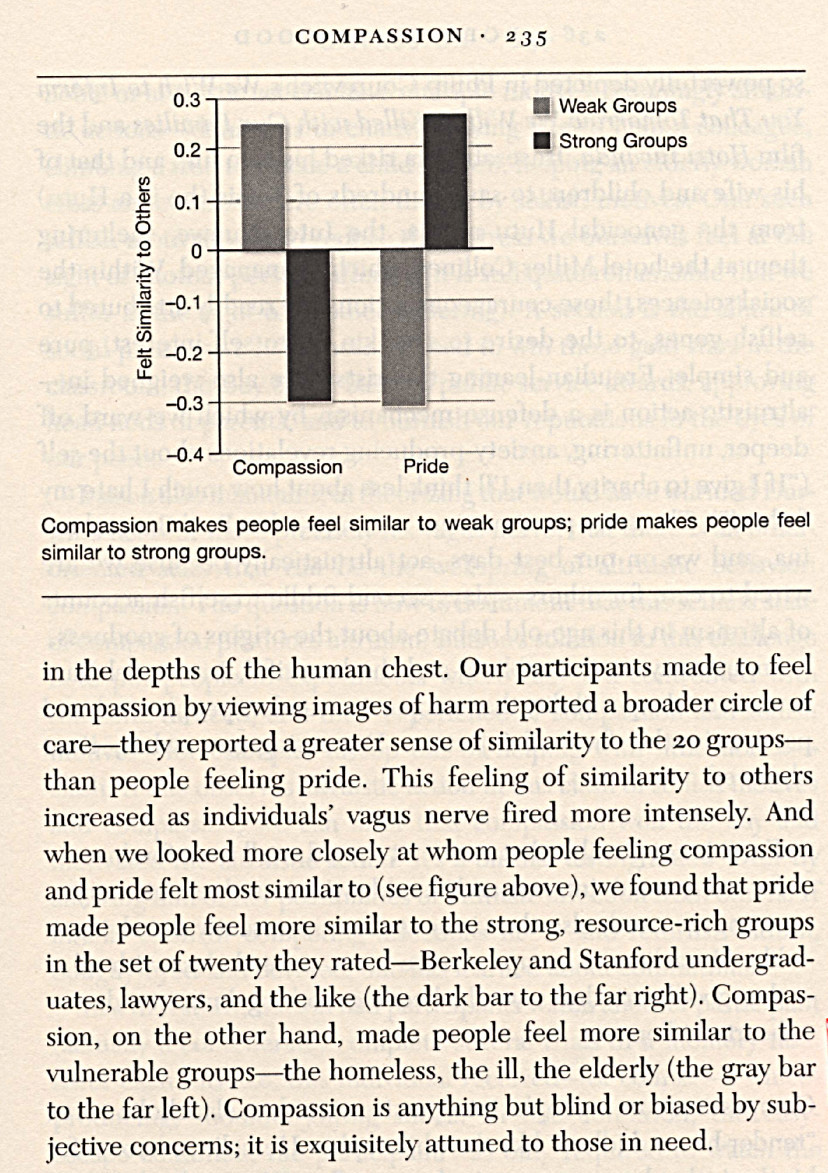
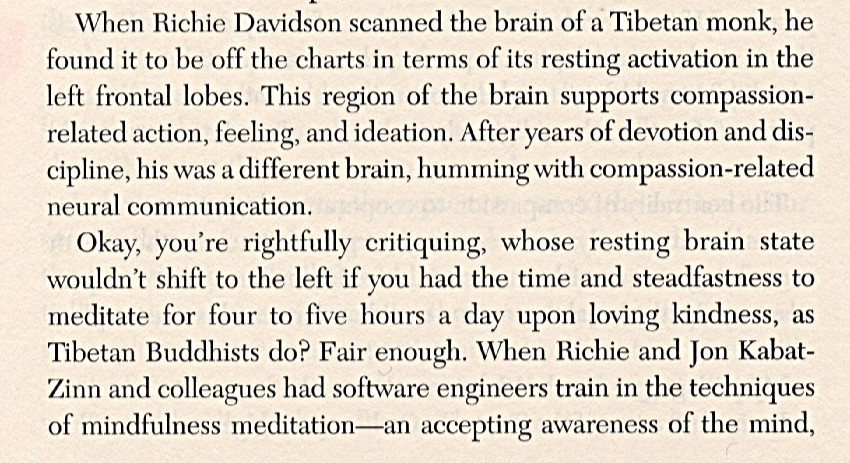
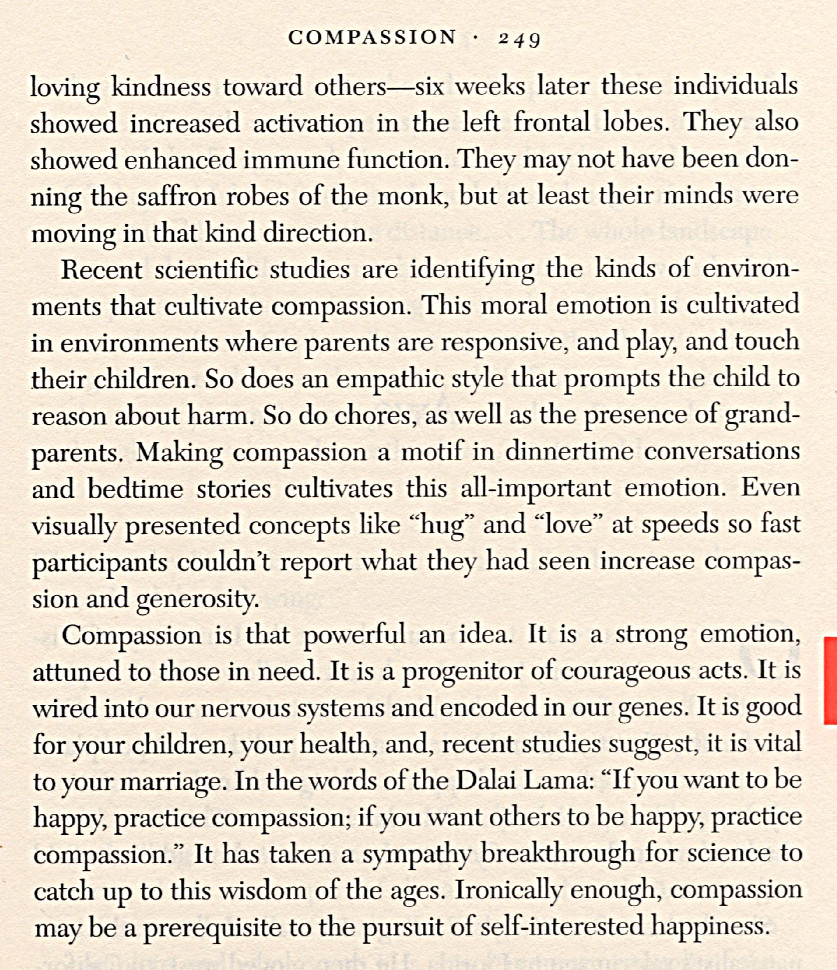
Cultivating compassion, in Dr. Dacher Keltner’s chapter on compassion (from his book Born to Be Good: The Science of a Meaningful Life).

++++++++++++++++

++++++++++++++++

From Kristalyn Salters-Pedneault, PhD, Your Guide to Borderline Personality Disorder. It is not uncommon for people with BPD to be misdiagnosed with another disorder before getting the correct diagnosis. Many clinicians who are less familiar with BPD might assign someone a diagnosis of chronic depression, or bipolar disorder, or even an anxiety disorder. This week, learn more about diagnosis of BPD.

BPD versus Bipolar Disorder – How to Tell the Difference
The primary reason that some clinicians confuse BPD and bipolar disorder is that they share the common feature of mood instability. Learn how to tell the difference between BPD and bipolar symptoms.
How is a BPD Diagnosis Made?
How is BPD diagnosed? What symptoms contribute to a BPD diagnosis? And who made up these diagnostic criteria anyway? Learn all about BPD diagnosis.
What to Expect from a Good BPD Assessment
Many people have been misdiagnosed after an inadequate or incomplete assessment. What should an assessment look like? How do you know you’ve been thoroughly assessed? These guidelines will help you understand how to get a good BPD assessment and what to expect.
Understanding Borderline Personality Disorder
Learn more about the symptoms and associated features of borderline personality disorder, including emotional and relationship instability, impulsivity, suicidality, self-harm, and more.

+WHEN TOO MUCH OF TOGETHER BEGS AGAIN FOR DISSOCIATION

+++++++++++++++++++++++++

Voices in the crowd — Sometimes voices combine, sometimes they diminish and quieten, sometimes some are angry, many times they are sad.

Faces in the mirror — Sometimes pieces of the broken mirror of my infant-childhood combine and we see far more of the picture reflected in that collection than the rest of us can easily handle.  Often times it is best that most of us don’t know — all together at the same time — what we do not come forward to speak.

After writing this morning’s post I am largely still wandering that beach of slaughter, where so many end up suffering for the rest of their lives from what was done to them that changed them when they were so tiny, so innocent, so helpless — and hence, so wounded.

I often suspect that to a large extent why I did not grow up to be an abusive mother like my mother did is that I did not come out of my childhood with a single-point self.  Instead, I exist as a collection of we.  There was no combined force that could manage, as my mother did, to orchestrate a mutiny against all semblance of sanity, rightness or goodness.

Yet on some days, such as today, when too many pieces of we are facing in the same direction at the same time looking at the same part of the picture of the devastation of my childhood, we can only hang on until some of us get tired and go away to some farther corner of the universe within the body we all live inside.

We cannot stand together for very long knowing what we know about a childhood that really happened in a place not unlike the beach of Normandy.

There is a blessedness in the oblivion of smallness, of a not united front, of letting the trauma this body has found a way to transcend in the moment go again, out with the tide.

+++++++++++++++++++++++++

+INFANT-CHILD TRAUMA CHANGES THE VAGUS NERVE’S DEVELOPMENT

+++++++++++++++++++

If a shark ate my legs off, how well would I run?

In a “born to be good” fairy tale world such as the one I continue to read about in Dr. Dacher Keltner’s chapter on compassion (from his book Born to Be Good: The Science of a Meaningful Life), I wouldn’t have to have the image within my mind that I do, and I sure wouldn’t have to write about it.  But I cannot continue to read Keltner’s chapter on compassion without first stopping to pick up the pieces of broken tales that Keltner can evidently simply ignore and omit from his “born to be good” story.

I am imagining infant-childhood to be like the time of life a person is growing a body-brain in a sea of experience that little ones have no power to escape from or to change.  Eventually, as time goes on and as one grows up, they get to either swim to the shore or get washed up on the beach of adulthood where they will live the rest of their adult lives.

Keltner suggests that all are given equal opportunity in this sea of childhood to grow into their “born to be good” body as if it is some entitled right that everyone shares as members of the human species.  I beg to differ, and when I say this I mean, “I REALLY BEG TO DIFFER!”

As Keltner continues his writing about the vagal nerve system and its connection to the good life of well-being, he cites research that shows that people with a good resting vagal tone seem to experience more joy in life, are more prone to experiencing life events in positive, growth enhancing ways, have more friends, more close connections to others, and can share easily in compassionate, altruistic exchanges with people around them.

Keltner calls such people with the better resting vagal nerve tone “Vagal Superstars.”  He counters the image of these ‘superior’ humans with the limitations faced beginning in early childhood by those that are ‘born shy’ as he states about these differences:

That fearful 4 month old [shy babies – implied connection between high anxiety and low resting vagal tone], startled and distressed at the presence of a new toy, fight or flight physiology throbbing in the veins and throughout the body, is likely to lead a life of restraint, inhibition, and hesitation in the fact of intimacy.

“If the vagus nerve is a caretaking organ, then one would expect individuals with elevated vagus nerve activity to enjoy rich networks of social connection, to show highly responsive caretaking behavior, and for compassion to be at the center of their emotional lives.  New studies are finding this to be the case.”  (page 241)

++++

Nowhere in his chapter on compassion does Keltner make any mention of the fact that the resting state of the vagus nerve bundle, as well as its ongoing operation, can be directly shaped, influenced and changed by early infant-childhood attachment trauma.  Because I KNOW this to be true, I inwardly bristle when I read Keltner’s following words:

Elevated vagus nerve activity, then, orients the individual to a life of greater warmth and social connection.  Nancy Eisenberg has found that seven- and eight-year-olds with a higher resting vagal tone are more helpful in class, more sympathetic to those in need, more pro-social toward their friends, and experience more positive emotions.  College students with higher resting vagal tone are better able to cope with the stresses of college – exam periods, career choices, the vicissitudes of romantic life.  Following the loss of a married partner, people with high resting vagal tone recovered more quickly from the depressive symptoms that often accompany bereavement.  And on the other end of the continuum, people experiencing severe depression, and its accompanying impoverishment of social connection, have been shown to have low resting vagal tone.”  (pages 242-243)

All these words tell me is that some people – who I will never believe to be innately superior beings as I think Keltner’s writings suggest – happen to make it through their body-brain early infant-childhood developmental stages with safe and secure attachments in a benevolent world that DID NOT rob from them the beneficial abilities of a benevolently-formed body-brain, which most certainly and definitely includes a wonderful “higher resting vagal tone.”

What Keltner is really describing here is the way the life of a traumatized infant-child suffers for the duration of their lifetime from the abuse and malevolent treatment they received while their body-brain formed.  Everything about their life is changed as a consequence of the influence of early trauma, maltreatment and abuse.

++++

Going back to my ocean image.  I see Keltner sitting comfortable on some warm, sunny beach in the comfort of his lounge chair, adjustable umbrella overhead, sipping some luscious beverage, clipboard in hand, scribbling his assessment notes as he watches people reach the ocean’s shore.

Some of these people emerge from the ocean of their infant-childhood beaming with joy, smiling, laughing, teasing, and eagerly running off into the future of their abundant life.  Others are washed up onto the shore already dead.  Some have no legs at all, having had them chewed off long ago by vicious sharks that devoured their future abilities while these victims had no possible way to fight them off or to escape.

Do researchers such as Keltner then applaud, reward and congratulate those who were privileged enough, who were advantaged enough, and who were lucky and fortunate enough to emerge from the waters of their early life unscathed by awarding them the label “vagal superstar” while at the same time suggesting that there is something innately wrong and defective with those who could not possibly emerge whole because of the traumas they suffered during their most vulnerable and important growth and developmental stages?

If what I am sensing in Keltner’s writing, and in the perspective of the research he is citing, I would ask, “Where is reality in this picture?  Where is the humble gratitude shown when the gift of a safe and secure, benevolent infant-childhood results in unwounded people being given these wonderful vagus nerve-related stupendously valuable super abilities?  Where is the compassion for suffering others that Keltner so vocally values?”

I see another possible scene on that beach where infant-childhood survivors of terrible malevolent trauma emerge so terribly wounded.  I see every rescue vehicle, every team of rescue personnel imaginable assembled on that beach rushing to assist every victim.  I see those who have emerged from the waters of childhood unhurt being shown how to care for those who make it to the shore injured, suffering and dying.  And I see other good, caring, compassionate, altruistic people entering the water in masses to address what’s happening in those oceans of childhood that is creating this kind of injury in the first place so the wreckage of this carnage can be stopped at its source.

++++

In my version of reality I will point to this kind of research, performed in 2009 in Ontario, Canada:

ABSTRACT:

The experience of child maltreatment is a known risk factor for the development of psychopathology. Structural and functional modifications of neural systems implicated in stress and emotion regulation may provide one mechanism linking early adversity with later outcome.

The authors examined two well-documented biological markers of stress vulnerability [resting frontal electroencephalogram (EEG) asymmetry and cardiac vagal tone] in a group of adolescent females exposed to child maltreatment (n = 38; M age = 14.47) and their age-matched non-maltreated (n = 25; M age = 14.00) peers.

Maltreated females exhibited greater relative right frontal EEG activity and lower cardiac vagal tone than controls over a 6-month period. In addition, frontal EEG asymmetry and cardiac vagal tone remained stable in the maltreated group across the 6 months, suggesting that the neurobiological correlates of maltreatment may not simply reflect dynamic, short-term changes but more long lasting alterations.

The present findings appear to be the first to demonstrate stability of two biologically based stress-vulnerability measures in a maltreated population. Findings are discussed in terms of plasticity within the neural circuits of emotion regulation during the early childhood period and alternative causal models of developmental psychopathology.” © 2009 Wiley Periodicals, Inc. Dev Psychobiol 51: 474-487, 2009

Research Article

Stability of resting frontal electroencephalogram (EEG) asymmetry and cardiac vagal tone in adolescent females exposed to child maltreatment
Vladimir Miskovic , Louis A. Schmidt, Katholiki Georgiades, Michael Boyle , Harriet L. MacMillan

Published in

Developmental Psychobiology

Volume 51 Issue 6, Pages 474 – 487

Published Online: 23 Jul 2009

++++

This research, and other similar research, clearly show that not only is the right brain hemisphere a ‘stress-vulnerability’ area that can be changed in its development by early infant-child maltreatment, but so also is the vagal nerve bundle.

Attachment researchers suggest that between 40 and 65% of adults in our culture came out of their early formative years with a safe and secure attachment-built body-brain-mind-self.  That means that between 35 and 60% of adults DO NOT!  Because the vagal nerve bundle is vulnerable to alteration through the effects of maltreatment, neglect and trauma that happen WITHIN early unsafe and insecure attachment conditions, I can clearly see that Keltner’s work, as enlightening as it is in regard to how a high resting vagal tone operates throughout the lifespan to improve well-being, it is not enlightening in regard to the profound impact that the conditions present in a human being’s earliest years affect the early growth and ongoing operation of this most important ‘be good’ nerve system.

Nor do I yet find in Keltner’s book any suggestions about how people with less than super vagal tone can actually, physiologically improve the operation of this important nerve system.  I will have to search elsewhere for this critically important information.

++++++++++++++++++++++++++++++++++++++++++
+MY MOTHER COULD NOT ‘SIGH’ FOR ME

++++++++++++++++++++++++++

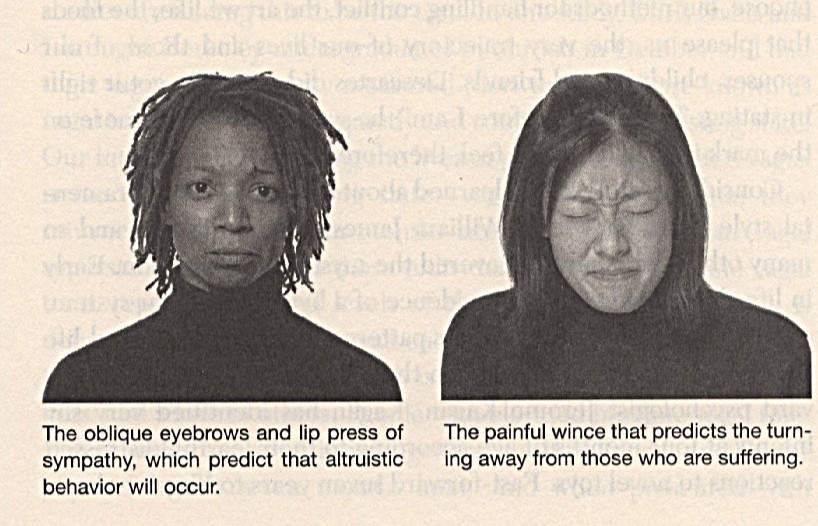
If we cannot ever stop wincing from our own internal, unconscious pain we will never be able to truly sign from another’s.

++++++++++++++++++++++++++

I had a dream last night that I cannot remember.  All I know is that it had something to do with improvement in well-being that can happen in more than one way and involves the vagus nerve system.  Some of those ways of positive change could happen consciously and some of them could happen automatically and unconsciously.  In my dream these changes seemed to be linked like spokes of a bicycle wheel to a center hub – which was the vagus nerve.

Feeling a little puzzled this morning about what this dream was telling me, I returned yet again to Dr. Dacher Keltner’s chapter on compassion (from his book Born to Be Good: The Science of a Meaningful Life) where he writes about the methods developed about fifteen years ago that measure the activity of the wandering vagus nerve bundle that have shown:

When we inhale, the vagus nerve is inhibited, and heart rate speeds up.  When we exhale, the vagus nerve is activated, and heart rate slows down….  The vagus nerve controls how breathing influences fluctuations in heart rate.  We measure the strength of the vagus nerve response, therefore, by capturing how heart rate variability is linked to cyclical changes in respiration.”  (page 233 – also included with yesterday’s post).

At the same time that I was having this dream last night, I was also having the sense that for all the work I’ve put into trying to ‘technically’ understand the dynamics of my mother’s abusive relationship with me, this single vagus nerve-hub-image is the most important one I have discovered thus far.  As I think about it all this morning in the light of this cloudy, gray day, I also realize that yesterday’s post directly about the hub of the vagus nerve and my mother’s self-weakness brought the fewest numbers of readers to my post of any in many, many months.

As I to suppose that I have ended up at a dead end in the labyrinth of my thinking about the causes, consequences and hope for ‘cure’ for those of us who suffer from severe early abuse histories reflected in the dearth of interest shown by readers to my yesterday’s post?

My dreams have never, in the six years I have been studying the case history of my mother’s severe abuse of me, been wrong.  They have never led me astray.  Many times my dreams have opened a new direction in my search and thinking that have allowed my past thinking to gel so that some new thinking can emerge.  Last night, I know, was no different and the images that I remember upon waking are no doubt correct.  My dream is pointing me toward something important.

++++

I find that Keltner next directly ties the physical measurement of vagus nerve activity not only to the experience of compassion versus pride, but also to altruistic acts.  Nobody except those concerned with infant and child abuse would probably ever have a need to think about appropriate and adequate parenting of offspring in terms of altruism.  Isn’t loving one’s babies and children something humans simply do automatically and instinctively?

Obviously, from the point of view of severe infant-childhood abuse, neglect, and malevolent abuse survivors, NO it is not!

Although the research that Keltner describes was not designed to target the vagus nerve bundle as the being the seat of abuse, as soon as he described it as the probable seat of compassion he is suggesting to me that it is.  Keltner cites research in his chapter on compassion that documents “that this selfless state of compassion produces altruism.”  (page 237), and that when faced with a situation that can trigger either “pure self-interest” or “the swell of compassion” in the chest (page 238) the reaction of the vagus nerve system will show corresponding activity as one of the branches of the Autonomic Nervous System (ANS) responds:  either the GO fight/flight arm related to pride and self-interest or the STOP arm related to compassion.

The research findings about the vagus nerve and compassion have shown in these studies that (as mentioned in yesterday’s post):

Participants’ reports of their feelings of compassion increased as their vagus nerve activity increased.  With increasing vagus nerve response, participants’ orientation shifted toward one of care rather than attention to what is strong about the self.
Then our participants, feeling surges of either compassion or pride, indicated how similar they themselves were to twenty other groups….  Our participants made to feel compassion by viewing images of harm reported a broader circle of care – they reported a greater sense of similarity to the 20 groups – than people feeling pride.  This feeling of similarity to others increased as individuals’ vagus nerve fired more intensely.

“And when we looked more closely at whom people feeling compassion and pride felt most similar to…we found that pride made people feel more similar to the strong, resource-rich groups in the set of twenty that they rated….  Compassion, on the other hand, made people feel more similar to the vulnerable groups – the homeless, the ill, the elderly….  Compassion is anything but blind or biased by subjective concerns;  it is exquisitely attuned to those in need.”  (pages 234-235)

++++

Why am I bothering to again repeat Keltner’s words here?  My dream last night showed me that while these findings lie very close to the heart of the infant-child abuse perpetrator’s problem, they are not what is actually at the very center of the hub.

These words are talking about an inner alignment that is supposed to happen in our body as it corresponds to the activity of the vagus nerve in response to either stimulus that appropriately creates a pride reaction or appropriately stimulates a caring reaction.  Infant-child abusers, in my thinking, cannot possibly be experiencing appropriate responses along this continuum.

Keltner is describing here that these pride versus caring reactions are associated with how the self aligns itself on a continuum of power and resources.  Pride corresponds to an alignment with ‘power-full’ others while caring corresponds to an alignment with ‘power-less’ others.  The resource being considered here is POWER.

I cannot see a way that anyone’s self can consider power as it relates to others without at the same time considering power as it relates to their own self.  If a person’s own self was formed in a malevolent, unsafe and insecurely attached environment that self will not automatically have a sense of itself as being ‘power-full’.  Such a self, because it suffered from degrees of powerlessness in the face of overwhelming traumas as it was growing, will have formed itself with depletion rather than with plenty at its center.  Such a self will continue to negotiate itself in power-related situations in different ways than will a self that was formed in a benevolent, safe and secure attachment environment.

++++

I believe that we are close to the hub of what is wrong with infant-child abuse perpetrators when we read these few words in Keltner’s statement:  “With increasing vagus nerve response, participants’ orientation shifted toward one of care rather than attention to what is strong about the self.” (page 234)  The three key words here are ORIENTATION and ATTENTION and the action of SHIFTING.

A strongly formed self can choose – consciously or unconsciously — to accomplish this shifting of orientation and attention away from self and toward others smoothly and appropriately in ways that a weakly formed self cannot.  The activity of this shifting can be measured with the vagus nerve response.  This measured vagus nerve response shows the degree of orientation and attention to the self versus orientation and attention to the other.

Three key and fundamental factors of being an ‘evolutionarily advanced’ member of the human species are altered in these early malevolent self-forming environments:  (1) the nature and recognition of the individual self, (2) the nature and recognition of the ‘other’s self’, and (3) the nature and recognition of the boundary that separates ‘self’ from ‘other’.

A weak self, formed in an early environment of malevolent, overwhelming trauma, will NOT be strong enough to shift its orientation or attention away from its own self-preservation. In addition, because a weak self is formed in unsafe and insecure early attachment relationships, it has no clear idea about its own self in relationship with any other self.  To miss or to ignore these facts is to entirely miss and ignore the very heart of infant-child abuse cause and consequence.

I believe this very heart can be measured if not actually SEEN in the response of an infant-child abuse perpetrator’s vagus nerve.

++++

I am not going to try to shorten what Keltner says next.  Within his words is a clear example of the vagus nerve response already operates when we are very young along with what Keltner refers to the “clarifying point” that determines what a person is actually likely to DO in response to another person’s weakness/vulnerability/need:

Stronger evidence still would link selfless, altruistic action to activation in the vagus nerve.  Nancy Eisenberg has gathered just this kind of data.  In one illustrative study, young children (second-graders and fifth-graders) and college students watched a videotape of a young mother and her children who had recently been injured in a violent accident.  Her children were forced to miss school while they recuperated from their injuries in the hospital.  After watching the videotape, the children were given the opportunity to take homework to the recovering children during their recess (thus sacrificing precious playground time).  Those children who reported feeling compassion and who shoed heart rate deceleration – a sign of vagus nerve activity – as well as oblique, concerned eyebrows while watching the video (see figure below) were much more likely to help out the kids in the hospital.  In contrast, those children who winced, who reported distress, and who showed heart rate acceleration – that is, those children who winced, who reported distress, and who showed heart rate acceleration – that is, those children who reacted with their own personal distress – were less likely to help.  These findings make a clarifying point:  It is an active concern for others, and not a simple mirroring of others’ suffering, that is the fount of compassion, and that leads to altruistic ends.”  (pages 239-240 – bolding is mine)

At the center of the hub of the wheel of my mother's self, she had this wince -- an unconscious pain that evidently did not allow her to respond to the suffering she caused me

What is fascinating about this “clarifying point” that Keltner is making is the fact that it is when early infant-child mirroring activities between early caregiver and the little one in the attachment environment, while its self is forming well before the age of two, that these response patterns between self and other form the nervous system and brain.  In traumatic early environments, a different nervous system, brain and self are formed that will operate differently throughout the lifespan.

What Keltner is describing here is the HUB OF THE WHEEL of the caring-compassion response that was changed in my mother, and I would say within all infant-child abusing caregivers.  Because their self formed with the distress being a part of the self, because the self did not form with the power to make the distress STOP, wincing will always be the vagus nerve response rather than the sigh.

But a self formed like my mother’s was seals off from consciousness any awareness of the self’s distress, pain or ‘wince’.  Such a self also seals off from conscious awareness its own inherent power-less state.

When the self contains its own perpetual pain, distress and powerlessness, when it cannot clearly identify who its own self in or who the self of any other is clearly, when it cannot define clearly where the boundary lies between its own self and another self, it will never be able to respond appropriately to pain – its own or anyone else’s.

The center point of the hub of the wheel where humans negotiate self and other seems to lie in the vagus nerve response, where orientation and attention to the self can shift toward others – or not.  That the entire array of responses can be narrowed down to the difference between a wince or a sigh makes perfect sense to me.

My mother did not know where her own self started and stopped.  She did not know where I started and stopped.  My mother never stopped wincing from her own (unconscious) pain.   My mother could never appropriately sigh for anyone else, certainly not for me.

(Post subject to be continued…..)

++++++++++++++++++++++++++++++++++++++
+ABUSIVE PARENTS HAVE THE WEAKEST SELVES POSSIBLE

++++++++++++++++++++++++++++++

The first time I ever heard anyone talk about feelings was after my 29th birthday when I entered a seven week in-patient treatment program for alcoholism and addiction in 1980.  I intellectually understood what the word ‘feelings’ meant, but I had no personal idea what a feeling even was.

The therapists soon realized this, and worked with me through practice sessions so I could begin to learn to identify feelings in my body.  They had me sit in a chair and then had me focus and pay attention to the feeling of my feet on the floor, of my butt on the chair, of my hands resting on my knees.  “Now shift your weight in your chair and see if anything feels different.”

I felt like a girl version of the wooden puppet Pinocchio.  Not only was I unable to feel a SELF inside my body, my SELF could not feel itself inside of my body, either.  It took me many years before I could experience my own life in any kind of a feeling way.  After that there were many times when I wished I had never begun that journey.  Feelings, well, they FEEL.

I was nearly constantly overwhelmed with the feelings of trauma throughout the entire 18 years of childhood with my mother.  Positive feelings were forbidden.  Once, as an adult, I began to feel, I found (as I now understand far more completely) I could not regulate them.  I could not alter their intensity, and once I was in their grip I could not get out of it.

I now understand that the unsafe and insecure infant-childhood I had changed the way my right limbic emotional brain processes emotion — period.  I did not learn to self-soothe.  I did not learn how to smoothly and easily shift gears between feeling states.  In fact, as I mentioned, I did not even know what a feeling really even was.

++++

I mention this today because I am going to present two pictures here from Dr. Dacher Keltner’s chapter on compassion (from his book Born to Be Good: The Science of a Meaningful Life) along with a bit of the text he includes with them.

The exercise I suggest is for readers to just spend a little time looking at first one of these pictures and then at the other.  I find it fascinating that I can fully feel the difference IN MY BODY between how my body feels, and therefore how I feel, in response to each of these pictures.

The feeling shift in my torso involves my breathing.  As I mentioned in yesterday’s post, we can become mindfully aware of our experience of breathing as we shift from automatic pilot breathing to breathing with our SELF-conscious awareness.  These two pictures, to one degree or another, offer an example of how breathing and mindful awareness are connected together.

++++

Picture number one:

+++++++++++++++++++++++++++++

Picture number two:

++++++++++++++++++++++++++++++

I realize the quality of the pictures is pretty shabby, but they still work just fine to demonstrate how our vagus nerve system responds within our body differently as we experience emotion and feeling.

I am posting again today Keltner’s writing about how these photographs were used in research, which is part of the whole chapter on compassion that I posted the other day that includes some writing on altruism.

I just wanted to mention today that in cases of severely abusive parents something is obviously terribly wrong with their compassion-altruism-be good spectrum of response.  Research, as I’ve mentioned previously, about Borderlines shows that their vagus nerve system does not operate in a normal way.

Keltner states here:

With increasing vagus nerve response, participants’ orientation shifted toward one of care rather than attention to what is strong about the self.”  (page 234)

I am reminded of my thinking about my mother’s distorted self, about her distorted relationship with this distorted self, and about her distorted relationship with everyone in her universe, most specifically with me.

In her relationship with me my mother was solely occupied with what she unconsciously perceived as being WRONG with herself as she projected ALL of that wrongness onto me — and then punished me for it.

By taking what was WRONG with herself and placing it all on me, she was making her good self STRONGER in some bizarre and distorted way.  But she couldn’t even just do this half of her psychosis without doing the other half, which was to ‘personify’ her projection of goodness onto my younger sister as she made her the all-good child in a similar way that she made me the all-bad one.

While Keltner is obviously not talking about child abuse in his writings, there is no way that I can avoid the fact that it is within this same vagus nerve system that these distorted patterns — of ‘strong’ versus ‘weak’, of what ‘belonged’ and what did ‘not belong’ within my mother’s version of herself, along with who she identified with and who she refused to identify with (as being weak versus strong) — operated within my mother.

My mother lacked any normal self-reference point within herself that is necessary for the normal demonstration of the reactions that Keltner describes in this research (see below).  Because she did not have any true sense of what was strong about herself, she could not be mindful of the fact that her entire psychic, mental system — and the behavior that was its result — operated through externalized inner dramas that she acted-out, outside of her self as they mostly involved tortured, battered, hated, shunned, and terribly abused ME.

++++

Although the research presented here had nothing overtly to do with infant-child abuse or about a comparison of safe and secure attachment versus unsafe and insecure attachment, I believe absolutely that this research model could be used in combination with these factors.

What would be discovered would be the deeper levels of how shifts between so-called pride and compassion are actually showing the  strength or weakness of the SELF.  The weaker and more unsafely and insecurely attached a self is in the world, the more distorted their vagus nerve reaction is likely to be on this pride-compassion spectrum.

But what might register in such a study as a tendency toward pride is actually a tendency to NOT be able to recognize any weakness within the self at all.  Such a person learned (it was built into their body-brain) that weakness meant threat of death.  If the early trauma could not be avoided in any other way, the body-brain simply shuts off any ability to recognize self-weakness at all.  Awareness of weakness costs too much — as does weakness itself.

++++

In my thinking, I suspect that the stronger a self REALLY is, the more fluidly that self will be able to afford the cost of recognizing weakness in others.   They can afford to allow themselves to resonate with need and weakness through the feeling of compassion.  They will also be able to afford to respond with care.

If a self is REALLY weak rather than strong, they cannot afford to identify with another’s weakness.  It simply costs too much.  “I am strong enough to survive so I can afford to help others to survive” is an entirely different mantra than “I know I am vulnerable and weak (though I can’t even afford to let myself know this) so I must align myself with the strongest (and act like I am one of the strongest) to survive.  I cannot afford to give anything to anyone else.”

My mother took all this weakness to another level that made her an extremely dangerous mother.  Not only could she not be consciously and mindfully aware of her own weaknesses and vulnerabilities of her own self, she was hell bent on actively destroying her own projected version of weakness — again, of course, ME.   Not only could she not appropriately care for me, or have compassion for me, she attacked me as she tried to destroy me.  It would not surprise me if these dynamics operate on some level for all severely abusive parents.

If this is true, then abusive parents have the weakest selves possible.

++++++++++++++++++++++++++++++

The part of Keltner’s next cited above related to this particular research:

++++++++++++++++++++++++++++++