+PORGES’ IMPORTANT NEW BOOK TO HELP INFANT-CHILD ABUSE SURVIVORS

++++++++++++++++

I have absolute confidence that this new book authored by Dr. Stephen W. Porges that is nearing its release will be of the greatest help to survivors of severe early infant-child abuse and trauma:

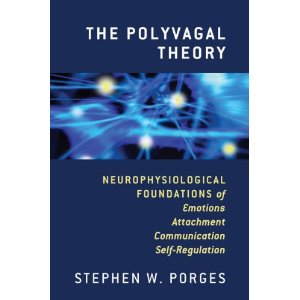
The Polyvagal Theory: Neurophysiological Foundations of Emotions, Attachment, Communication, and Self-regulation

This title is available for pre-order at Amazon.com by clicking on this title, and at a very reasonable price!

Product Description

A collection of groundbreaking research by a leading figure in neuroscience. This book compiles, for the first time, Stephen W. Porges’s decades of research. The world’s leading expert on the autonomic nervous system, Porges is the mind behind the groundbreaking Polyvagal Theory, which has startling implications for the treatment of anxiety, depression, trauma, and autism.

About the Author

Stephen W. Porges, PhD, is a professor of psychiatry and the director of the Brain-Body Center at the University of Illinois at Chicago.

++

I encountered reference to Porges’ work on the polyvagal theory several years ago, and as patience would have it – here comes HIS BOOK!

I posted this reference a week ago to his Australian seminar to be held November 2, 2011:

Polyvagal theory, oxytocin and the neurobiology of love and attachment:  A two day seminar with Stephen Porges and Sue Carter

The objective of this workshop is to describe current research and theory in behavioural neuroscience that can be translated into demystifying the features of many emotional, psychological and behavioural problems faced by children, young people and adults. It will provide invaluable insights into breaking maladaptive cycles to enable clients to experience states of calmness and to feel safe with other people.

++

I fully believe that Porges’ book will do exactly this:  “…provide invaluable insights into breaking maladaptive cycles to enable clients to experience states of calmness and to feel safe with other people.

In this short sentence I found a great resonance with what my body knows:  I DO NOT feel safe with other people!

What does Porges’ work have to teach me about this consequence that was built into my body from birth at the same time that GREAT harm and danger ‘from other people’ so traumatized me?

I am most curious to find out!

++++++++++++++++

+WHAT MATTERS MOST – THE MOTHER-INFANT RELATIONSHIP

+++++++++++++++++++++

My daughter and my 9-month-old grandson are down here visiting me in Arizona from North Dakota for three very short days.  I, of course, am in heaven as I bask in the delight of every single instant of their presence.  And in every interaction I observe between this most loving mother and the tiny growing person who is her son I am learning, learning, learning!

Yesterday as I waited in the lobby for my fuel assistance appointment I glimpsed a magazine picture of some primate specie’s mother and her infant.  The caption described how that mother would not put her baby down for the first four months of its life.  What has happened to humans in our culture that has made them actually believe that a baby under the age of one can be ‘spoiled’?  How bizarre.  How dangerous, and how bizarre!

++

Knowing what I do now about human infant development I know that what I witness of my daughter’s interactions with her infant son are building the neuronal wiring of his brain along with its connection to the way his entire body (nervous system and immune system included) that he will live in and with for the rest of his life.  There is NOTHING on earth that could possibly match the job she is doing in its vital importance.  NOTHING!

++

They are both snuggled under a warm down comforter on the big soft guest bed at the moment.  The little one was exhausted, but if there’s one thing that little person HATES it is sleeping!  His mantra must read, “WOE IS ME!  Sleeping is such GREAT SORROW!”  As I watched her take the time to tenderly sooth him into sleep (which of course can happen more easily because he has no siblings to be demanding his mother’s attention) I noticed that even with his eyes glued shut in near-slumber his tiny fingers continued to move and their stillness marked his final succumbing passage into his much-needed state of sleep.

As I silently witnessed the half hour process that baby and mother were engaged in I could see how she is my grandson’s external EMOTIONAL regulator at the same time she is helping him gain his own physiological abilities to regulate his emotions AND his body.  Both are intimately intertwined and at this stage of his development are also intimately intertwined with his mother’s assistance at regulation that he will eventually be able to accomplish on his own.

But NOT YET!  He needs his attachment to his mother — and reciprocally her attachment to him — to continue his growth and development as much as he needs air to breath.  When he needs her, and returns to the snuggles of her most-loving embraces I watch as he DEVOURS her presence with ALL of his senses.  His entire BEING is engaged in relationship with her.  I do not believe that it is possible for an infant to be more safely and securely attached to his mother than my grandson is to his.

There is NOTHING — NOTHING — on this glorious earth of ours that could make me happier than to know this!

++

As my grandson so struggles NOT to sleep, no matter how tired he his, I can at the same time clearly see four power-full characteristics within this infant that I can rest knowing will NEVER be taken away from him by his parents:  His desire (passion), his will, his determination and his stamina.

He WANTS and DESIRES to be most actively engaged with everything in his world.  He has great WILL that HE can make continuous active engagement possible at the same time he is determined that what he desires can happen if he applies himself — ENOUGH!

Of course at his young age he cannot yet mediate any of these streams of his life force consciously, but as he gains increasing ability to regulate his own body-brain-mind-self he will be able to.  He must have his early caregivers ‘carry’ him through his first critical stages of growth and development until he can.  His caregivers are literally sharing his life with him at the same time he can ‘borrow’ from them all the appropriate regulatory functions that a big body has and a little one doesn’t.

What my grandson’s parents have given this baby so far SHINES from his entire being with true joy and a love for human interaction.  His ability to communicate with his mother is comprehensive and complete.  She guarantees to him a safe haven from which he can continue to expand himself into the world around him.

I notice that many of the most important interactions between mother and infant happen (as Dr. Allan Schore describes) in the millisecond-speed range.  I placed myself 8′ away from him on the living room floor and invited him to come to me.  At nearly the speed of light he turned his head backward toward his mother, located exactly where she was, caught her smile, her nod and the look in her eye — INSTANTLY — as he received all the information he needed to begin his movements toward me.

The word ‘stanchion’ comes to mind.  She is his safety and security ‘prop’ at the same time she is the ‘archway’ through which he is growing into his own body and his own self.  All of these interactions are BUILDING him on all his levels — literally within his physiology.

++

My daughter is a more than full-time worker.  Her son has primarily been cared for by his father when she is gone, sometimes by a part-time babysitter, but at 9 months of age it is CLEAR that his primary attachment is with his mother — as nature intends it.  From now until he reaches about-age-one his primary attachment to his mother will matter THE MOST no matter where he is physically in relationship to her.

His INNER attachment to her, the patterns of rupture and repair created by his distance and nearness to her will continue to build themselves into the body-brain-mind-self platform within him that will govern his THOUGHT patterns, his stress-calm response system patterns, and how many of his genes will manifest themselves for the rest of his life.  My grandson is most importantly building his relationship with his MOTHER into himself at the same time the nature and quality of that primary relationship is BUILDING HIM.

My greatest joy is that everything is happening optimally for this little new human being.  At the same time I know that everything that is going so right for my grandson and my daughter is showing me what went so wrong between my mother and me.

Never did my mother peacefully sleep with infant me wrapped in love beside her.  My daughter asked me if it makes me feel sad to know all of this now.

No, I honestly don’t think that it does.  I believe I have cleaned my ‘mother-daughter’ house so well now that all that is left are the facts — the reality of what went so wrong for my mother as an infant changed her into the monster that could not mother me.

What matters to me is on the side of the positive:  What is necessary for mothering an infant to go RIGHT?  What happens when these necessary factors are missing in a mother-infant relationship is a tragedy that was/is nearly ALWAYS preventable.

THAT is what matters to me.

++++++++++++++++++++++

+IN THE MIDST OF CYCLES OF TRAUMA: THE ANGUISH-ANGER CONNECTION

+++++++++++++++++++++

I have frequently said on this blog that I don’t believe the actual specifics of our infant-child abuse and trauma experiences matter in the bigger picture as we work to heal ourselves as adults.  All survivors have a history or a herstory that CAN contain the specifics we might remember.  I don’t encourage people to ‘go back’ to look for the specifics of abuse experiences, either.  In the end I believe that what matters MOST to all survivors is how the early infant-child trauma and abuse we suffered, most often coupled with and a result of inadequate caregiving that deprived us of the safe and secure attachment we so naturally and desperately needed, changed the course of our physiological development in our body-brain.

THOSE changes are what we need to discover and begin to describe to our self and to others.  Those changes that our Trauma Altered Development caused in our body determine what kind of a life experience we have.  Those changes are ALWAYS related to our having had an overtaxed stress response system at the same time we had an underdeveloped or undeveloped safe and secure attachment system built into us.

++

By means of illustration I will present here a very taxing and stressful experience that I have been involved with for the past three months that finally today reached completion.  There is a federal fuel assistance program administered by each state – on the county level through Community Action Programs.  The rules change at the same time they make NO common sense.  I will not go into the details here, but being poor and having to rely on the ‘system’ is ALWAYS stressful.

With my extreme anxiety problems, including my social anxiety and my inability to utilize spoken language when under duress are direct consequences of the severe abuse I suffered PARTICULARLY before the age of one.

Every single nasty, horrible, terrifying, abusive and traumatic experience I endured with my mother for the 18 years of my infant-childhood of course contributed to the mess my nervous system and brain are in today.  At the same time, as I repeat, it isn’t that on this or that particular day my mother hit me with a belt versus a wooden coat hangar versus a flapjack turner.  It doesn’t matter specifically that on this or that day she forced me to eat a bar of Dove hand soap versus swallow heaping tablespoons of black pepper or spoonfuls of laundry soap.

What matters is that I experienced Trauma Altered Development as my body-brain developed as a consequence of the extreme stress-duress I was exposed to.

I suffered all the way through these past three months trying to jump through the right hoops at the right time in the right way to get the fuel assistance I needed.  What today’s’ final leg of the journey brought to mind is that the anxiety, fears, distress of this experience built itself over this time into a state for which I only had one word:  ANGUISH.

I recognized this state, this emotion in my body and realized how fundamentally familiar it is to me from the abuse experiences of my childhood.

Then I went to online Webster’s for the definition of ANGUISH and discovered that in its roots it is directly related to ANGER.

Anguish, to me, feels more related to sadness, so what is the anger connection?

This led me to reconsider my own ideas about the patterns of stress response to a challenge in the environment that leads first through

anger:  trying to meet the challenge successfully using skills we have used in the past – if this works, we are supposed to move back to a center set point in our nervous system-body of peaceful calm.

– if anger doesn’t work, we move into the next spot on a stress response cycle – fear.  In this state we realize that what we have learned in the past is NOT going to solve the problem.  Quickly we utilize whatever we can figure out to move BACK into the anger state where energy is available to get us out of whatever mess we are in.  Sometimes simply freezing, running, etc. is all we have

– but if NOTHING we can find to do, nothing whatsoever works, then we move into sadness – which can turn into hopelessness and despair.  But in this spot on the cycle-wheel-circle we are MOST prepared to learn something entirely new – if we are open to this possibility and often just plain fortunate.

++

So, as I considered the connection today between anguish and anger in our English language I began to wonder if this emotion is the connection point between sadness and anger if we DON’T get stuck in sadness but end up experiencing emotions far more powerful – and to me, far more disturbing.

Anguish happens when we are pushed to our limits and are forced to endure anyway.

As I remember the anguish of my childhood, as I think for example about my mother’s beatings that could go on and on and on and on in FULL force – that feeling without words of “I CAN BEAR NO MORE” – for me – is the place that anguish has past anything like ‘ordinary’ pain and sadness.

When we are in fact in true NEED of something and at the same time dependent upon especially ANOTHER PERSON to get our needs met, on our own we cannot escape the anguish state easily.

++

I figured out for myself years ago that my anger is ALWAYS connected to a true injustice.  ALWAYS.

That I do not tend to recognize the anger doesn’t probably mean that it doesn’t exist.  I was NEVER angry at my mother – never – even today.

But, true, I AM angry at the idiocy of our government’s ineptitude when it comes to making programs for those in poverty accessible.  I could write a LOT about this point – and my heart breaks for those in much worse situations than mine – also a topic I could write a LOT about.

But to make this short, I will simply say that those of us who were severely abused as infant-children are the MOST likely to be the MOST poor and in the MOST need for help – specifically BECAUSE of the consequences of the abuse that altered our physiological development in all KINDS of ways that continue to make life difficult for us for our lifetime.

ANGUISH is very nearly an intolerable state – but I believe also that it is the state we survivors spent MOST of our developmental years in.  Anger – as I define it is the most active start point for our stress response system to enter when we are challenged by difficulties.  Our little body could NOT overcome the monsters that hurt us, and we were left to degenerate along the stress response cycle points without reprieve or resolution.  Our entire body-brain has paid a price for that – and in the end it is our experience of the emotional-physiological state of ANGUISH that most closely mirrors the state we spent our infant-childhoods within.

What followed today for me finally was a solution that means I will receive the fuel assistance funds I need.  This means I can experience RELIEF which soothes away the ANGUISH – at least for now and in connection with this situation.

How did RELIEF feel to me at the end of a long drawn out horrible beating when I was little?  Did I feel ‘good’ when the beating ceased?  Not possible.

These conditions built my body-brain at the same time they built themselves into it/me.  To have experiences as an adult that create parallel emotions within me is very difficult.  We don’t need someone to physically BEAT us to experience the same cycles within our body that we did when we were little and in the midst of trauma.

And that is a fact.

+++++++++++++++++++++

+WHEN IS A STORY A STORY?

+++++++++++++++++++++++++

Perhaps if I lived in a different time or a different place everyone around me would understand if I told them, “All I have left in me is one good story.”  That I cannot tell that story to the empty air would also be understood.  I can write and write and write and write, but for me writing is not the same thing as telling.

Where is a story when it’s not being told?  Is it, like our memories themselves lying around in shards and shreds, in pieces and parts within our minds — somewhere?  Or is a story a living thing that has no slumbering existence at all, existing only when it is falling from somebody’s activated lips?

Perhaps it is because so much of the body of my story as I imagine telling it, probably to my daughter, is so much about being alone in solitary confinement, in isolation and in silence (in between the terrors of traumatic abuse over those first 18 years of my life) that my story is frozen there, askew akimbo, in limbo, and cannot take on a life of its own if there is no caring listener to help it be born.

Perhaps my story– spoken (or written) into silence — would be worse than no story at all.  Perhaps, formed THAT way my story would be no story, just an ongoing pause, more of the same, a restless opera hanging around getting parts of itself stuck in cobwebs while the rest of it fades and fades and fades into silence like notes at the end of an echo.

Is a museum a museum if it’s empty?  Is an art gallery a gallery if it doesn’t contain a single piece of art?  Is a story a story if there’s nobody there to hear it but the teller?  I think not.  In all these cases I think not.

++

+BLOGGING HISTORY – NEW WAYS FOR OUR SPECIES TO REMEMBER ITSELF

+++++++++++++++++++++++++

+BLOGGING HISTORY – NEW WAYS FOR OUR SPECIES TO REMEMBER ITSELF

+++++++++++++++++++++++++

Blogging our way through time — recording our histories — recording our histories in the making — reading histories in the moment — What I found at the end of one of Dr. Bruce Perry’s articles (link below) makes me think about how new and different our perspectives on the passage of time and our places in it are today as we participate with advances in technology to record ourselves as a species in a new way.

++

“Learning the language of trauma and translating the verbal and non-verbal elements of this language will require many more years of investigation. Yet, as this investigation is underway, it is the task of all of us working with maltreated children [ME:  and adult survivors] to educate our peers and the rest of society that this language exists…. To educate our society that traumatic events, like other experience, change the brain. Further, that the brain stores elements of the traumatic events as cognitive memory, motor memory, emotional memory and state memory, altering the functional capacity of the traumatized individual. And, in the end, by robbing the individual potential of millions of children each year, childhood trauma and neglect robs the potential of our families, our communities and our societies. (page 16)”

Info above and below is from this article:  Memories of Fear: How the Brain Stores and Retrieves Physiologic States, Feelings, Behaviors and Thoughts from Traumatic Events by Bruce D. Perry, MD, PhD

++

Beginning at the end of page 16 Perry talks about trauma and history – and what is human history but what we remember of what happened?  I am copying this portion of the text found at this link into this post – in part because it reminds me so much of what all bloggers are doing today – recording our history and our perspectives on history-in-the-making in the ongoing moments of the present.

++

“The memory of trauma is carried not only through the life of the individual by their neurobiology but it is carried in the life of a family through family myths, childrearing practices and belief systems. Major traumatic events in the history of a people or culture become memorialized, as well, and carried forward across generations in our literature, our laws and our very social structures.

“It is the unique property of living systems to carry forward elements of past experience – indeed, for all living systems, the present is contingent upon and a reflection of that past experience. In a very true sense, a body collective – a group – is a living, dynamic system. And, as the individual carries its own history forward using the apparatus of neurobiological mechanisms related to memory, each living group carries its memories forward in time. Yet living groups – families, clans, societies – carry this information forward using different mechanisms of recording and storage.

“Over the history of humankind, the methods for recording and storing the experiences of the group have evolved. In our distant past, humans living [in] groups passed experience from generation to generation using oral tradition – and sociocultural practices – language, arts, belief systems, rules, law – all were reflections of the past – and with each generation, modification, amendment, and alteration of the past ‘memory’ was modified by present experience. With the development of written language, information could be passed across generations more efficiently. Sociocultural advance occurred at an increased rate, made possible by more efficient ‘remembering’ of the lessons (good and bad) from the past. The ‘brain’ of humankind – the libraries of the world — kept ‘civilization’ alive through its darkest moments – and even if generation after generation during a given period in history did not take advantage of this ‘memory’ – the information was not lost to humankind.

“Later in history, again, with the introduction of the printing press, the past was more efficiently stored and passed on. Books became available for everyone. More people became literate. Information of all sorts – arts, science, social studies– was stored in books. Again, a tremendous advancement in human sociocultural evolution can be traced to this process – to literacy and widespread education. Information from the past – primarily cognitive information – enriched the present. The rate of creativity was accelerated; invention and innovation – new ideas, machines, products, processes – were facilitated by the more efficient sociocultural ‘memory’ allowed by books and literacy. Now, in the span of a lifetime, the accumulated and distilled experience of thousands of generations could be absorbed – and acted upon to create sociocultural advances.

And now, we are in the first generations of a new era of recording, storing and transmitting information – electronic media – tapes, photographs, videos, films – all immortalize the experiences of humankind. The electronic media allow a unique and

different form for the memory of an individual, family, community and society to pass from generation to generation.

“There is great hope for humankind in these advances. In the past, the inefficient methods of recording, storing and passing on the horror of war, rape, neglect, abuse, starvation, misogyny, slavery – allowed these lessons of living to be edited, modified, distorted and, with tragic consequences, forgotten. Only elements of the experience of war were passed across generations – the heroism of an individual, the success of the nation — and the emotional ‘memory’ of war – the hate, rage, death, loss – has been transformed, altered and, all too often, forgotten.

“Creative artists have always played the role of ‘emotional’ memory for a culture. In ways that standard recording of simple facts and figures cannot convey, a painting, poem, novel, or film can capture the emotional ‘memory’ of an experience. But in a society where access to and ‘artistic’ literacy is low, the emotional lessons of the past are easily lost. And when the last veteran of each distant war died, an element of the emotional ‘memory’ of that horror died as well. Unable to carry the emotional memory of war to the next generation – history could much more easily repeat itself – or more honestly, we could much more easily repeat history. But with documentary and creative film and video, which can convey both the fact and the emotion, maybe it will be harder for us to forget the past – and we, therefore, will be not so doomed to repeat it.

“Yet the ever present danger of recording, storing and passing on false images, false stories, false history can be equally destructive. The responsible use of film, video, electronic storage may allow us to use these advances to promote and pass on those qualities which create, sustain and grow our humanity and, over many generations, to leave behind those qualities which rob our humanity (racism, misogyny, factionalism).

Can we change our world to create fewer traumatic memories to carry into the next generations – fewer traumatic events to shape our children who will create our future social structures?

“How can we heal the scars of individual and group trauma that haunt us today? Can we ever make racism, misogyny, maltreatment of children – distant memories? There are solutions. These conditions are not the inevitable legacy of our past. When an individual becomes self-aware, there is the potential for insight. With insight comes the potential for altered behavior. With altered behavior comes the potential to diminish the transgenerational passage of dysfunctional or destructive ideas and practices.

“And so it must be for groups. As a society, we cannot develop true insight without self-awareness. Enduring socio-cultural changes in racism, misogyny and maltreatment of children cannot occur without institutional and cultural insight and the resulting altered institutional and cultural behavior. The challenge for our generation is to understand the dynamics and realities of our human living groups in a way that can result in group insight – which, inevitably, will lead to the understanding that we must change our institutionalized ignorance and maltreatment of children. (pages 16 – 18)”

+++++++++++++++++++++++++

+HONEST THINKING ABOUT DISSOCIATION AND DEATH

++++++++++++++++++++++

I have an honest yet disheartened post in me today.  I might as well write it so I can move on.  I am spending time working to digest the information presented in visual form on a PowerPoint page I posted the link to recently that comes from the work of Dr. Bruce Perry.

Neurodevelopmental Impact of Childhood Trauma:  Adaptive Responses to Childhood Trauma – Focus on Dissociation

A ChildTrauma Academy Presentation

I haven’t yet gone to look for any text that might accompany the diagrams, graphs and images that this site presents.  Nor can I tolerate considering the facts on this webpage for very long at a time.  Because this information concerns me so personally as a severe infant-child abuse survivor who suffered Trauma Altered Development, it all just plain hurts too much.

++

This webpage is visually clarifying the difference between an infant-child who responds to trauma with HYPERAROUSAL compared to one who responds to trauma with DISSOCIATION (as a HYPO- rather than a HYPERarousal state).

As I have been outside working on building my garden today I have found myself thinking that having patterns of HYPERAROUSAL built into one’s body from birth might be far more useful in the long run that DISSOCIATION can ever be.

It seems that hyperarousal would give one a fighting chance.

Then I think about my mother and HER fighting chance!  Oh my GAWD the harm she was able to do, particularly to little tiny ME!  (Considering the link between shame-dissociation as an opposite physiological response to trauma than hyperarousal is, maybe I don’t have to wander very far at all in my wondering about why-how my mother never had a shame reaction for what she did to me — as her FIGHT over-arousal escalated for my entire 18-year infant-childhood into violence against me.)

Dissociation, even as it is contrasted to hyperarousal on this webpage seems to be directly connected not only to the vagus nerve system, but in the bigger picture to the calm end of the stress response system — the “STOP” arm of the Autonomic Nervous System (ANS) that halts the overwhelming experience of TOO MUCH “GO!”  When I am dissociating my body is regulating the physiology of my body back to CALM in the way that was built into it from birth.

(“Rest in peace.”  Death must be the ultimate calm!  I find it interesting that in online Google searching there does not appear to be the same direct line of thoughts appearing that connect DISSOCIATION with suicide like there are connecting DEPRESSION to suicide.  Someone is missing a very BIG BOAT!)

(By the way:  The neurological-physiological dissociation response pattern that the above webpage describes appears to be nearly indistinguishable from the neurological-physiological reaction of SHAME that developmental neuroscientist Dr. Allan Shore describes as a one-year-old infant experiences it as soon as their body has developed far enough to have the physical capacity to feel its first shame reaction. See also:  The Shame Transaction and PTSD AS A SHAME DISORDER)

Also see:

Childhood abuse, household dysfunction, and the risk of attempted suicide throughout the life span: findings from the Adverse Childhood Experiences Study.

++

Because I have an appointment with and oncologist on the 6th of January I find myself thinking a lot about what I want and what I need.  I have suffered increasing stress complications most definitely escalating my preexisting PTSD, depression and dissociation I suffer as a consequence of being a survivor of sever infant-child abuse after having the doctor who treated my advanced and aggressive breast cancer (there were two cancers) tell me on my last session 2 ½ years ago, “By the way, I wouldn’t bother having breast reconstruction if I were you.  You aren’t going to live long enough to enjoy them anyway.  Besides, we’d just have to cut them off again when the cancer comes back.”

I am going to request a body scan that will show whether or not I have cancer NOW or NOT.

Then I think about the fact that I have no desire or intention of fighting the cancer if I do get it back.  (Knowing I felt this way when the first diagnosis came around created a profound conflict of emotions within me during the grueling chemo-surgery treatment regime I went through so that I can be alive today.)

Then I think about how the dissociation reaction described visually in the webpage I am referring to MUST be tied to both ‘passive’ and ‘active’ suicide.  Dissociation as a ‘going away’?  Death as the ultimate ‘going away’?

Then I think about my mother’s mother who gave up and died.  I think about my father who gave up and died.  I think about my mother who gave up and died.

The deaths of both of my parents was directly tied to a lack of desire to seek and receive appropriate medical care for conditions that were treatable.

That’s exactly the same thing I see myself doing if cancer returns in my body.

++

Hyperarousal?  It looks for this webpage as if this is a reaction that older children and adults utilize, not helpless tiny infant-toddlers who are overwhelmed by abuse and trauma from the time of their birth.  I don’t HAVE a useful hyperarousal reaction.  I believe I experience all the ‘symptoms’ of it listed on page 2 on this webpage (keep track of page numbers in the gray bar at the top of the pages).  But all that hyperarousal response does to me is open my dissociation floodgate – and I am DISSOCIATED again.

And what if the link between hypoarousal-dissociation means that sometimes people simply cannot find the hyperarousal energy continuum necessary for them to continue using their will-life force to FIGHT for their own continued life?  This seems especially likely if dissociation was formed into a person’s body due to extreme abuse and trauma during infant-toddlerhood so that a person has been forced to dissociate all of their lives due to overwhelming pain.

See: +SUBSTANCE P – IT’S OUR BODY’S BIOLOGICAL LINK TO FEELING EMOTIONAL AND PHYSICAL PAIN

++++++++++++++

I found this post online today.  I believe it’s critical to realize that people like me (and my parents) who suffered ENOUGH ALREADY do not want a LONG LIFE.  Some do not want their suffering to continue and continue and continue.  I believe I am one of those people.

What I do know is that refusing medical care must be related to dissociation in some way — dissociation from pain?  Dissociation from a future?  I will be spending much more time on the site I mention above — it has certainly gotten me thinking about connections with me that go all the way back to how my body-brain was made in/by nearly continual trauma and abuse from my mother from the time I was born.

++++

Suicide and Mental Health: They’re Cooking the Books

— Thought provoking post on a healthyplaces.com blog

++++++++++++++++++++++

+THE MISSING MONTHS OF THE ‘ANTWONE FISHER’ MOVIE-STORY: WHAT WE MOST NEED TO KNOW

+++++++++++++++++++++++

I rewatched the movie “Antwone Fisher” yesterday.  This movie is about an adult working to heal from terrible child abuse inspired by a true story and marks Denzel Washington’s directorial debut.

From my point of view, what the movie never describes is what probably makes the biggest difference in the outcome of this story.  What were Antwone’s first foster parents like?  Did they love that parentless infant RIGHT?  Did they form a safe and secure attachment with the baby?

According to the story Antwone was removed at age two from his first foster home he had been placed in when he was two months old.  For all concerns about interfering with early bonding-attachment relationships, I do not believe that age two is a permanently damaging age to change primary early attachments.  In this case the child was moved to a horribly abusive home, but nothing in the story addresses the nature and the quality of the earliest, most critically important caregiver attachment patterns BEFORE the age of two that impact the direction that all fundamental physiological development follows.  (See update in comment section to this post.)

I would say by looking at the story as it is presented in this movie that Antwone’s first two years HAD to have taken place within an adequately non-malevolent caregiver-attachment environment.  The remarkable recovery that occurs post-terrible LATER abuse would NOT have followed the same course it did if Antwone’s physiological body-brain development had been changed by severe trauma during his infancy.

When looking at our own recovery from our own severe child abuse it remains MOST IMPORTANT that we understand how profoundly our physiological development is impacted by our earliest experiences in our environment.  If we continually struggle to overcome the horrors of severe abuse experiences that we KNOW about, and can never manage to ‘get our wings’ and soar out of the ugly mire of abuse we know we experienced, I would ALWAYS say that it’s most likely that our body-brain development was changed by trauma in profound ways during the earliest months of our life.

I personally know that if the first two years of my life had been perfectly FINE I would not be in the same body NOW that I am in – no matter how severely I had been abused post-two-years-old.  It is the Trauma Altered Development that happened to me before that age because I was BORN into a malevolent, abusive and traumatic malevolent environment that has created these lifelong difficulties that I (along with all infant-toddler severe trauma-abuse survivors) continue to struggle with.

Because the presentation of Antwone’s story in this film completely ignores those first two MOST CRITICAL years of the child’s life we are left guessing that all infant-child abuse survivors could recover by following a pathway such as this survivor did.  Not so.  Not so.  Not so!

It is not ‘getting lucky enough’ to benefit from high quality therapy that makes the biggest difference.  It is not ‘being willing enough’ to face our traumatic childhood memories of experience that makes the biggest difference, either.  It is not ‘being genetically superior’ or even ‘being resilient enough’ that matters most.

As Dr. Bruce Perry clearly states, children are not born resilient.  They are born MALLEABLE.  When the earliest environment deprives a rapidly growing and developing infant-toddler of what it needs for its body-brain to follow an optimal pathway, Trauma Altered Development will occur – BECAUSE of this malleability.  The resilience a little person needs in order to develop a body most able to ‘deal with’ severe traumas anytime after the age of two comes in ONE WAY and ONE WAY only – FROM THE PEOPLE WHO CARE FOR THAT BABY from the time it is conceived UNTIL it has ESPECIALLY reached the developmental milestones a body has built into it by two years of age.

As far as I can tell a description of these first critical months of experience are complete missing from the Antwone Fisher story.

Is this same time-frame description missing from your child abuse story?  If you continue a struggle to heal from early traumas you DO know about in a body that does not seem to be operating ‘quite right’, my guess is that whatever description of your first months of life that you GUESS happened to you needs to be closely examined in the bright light of reality.

None of us just happened to end up in a Trauma Altered Development body through bad luck.  We were built this way because we grew from (conception) birth in a caregiving environment that did NOT do exactly that:  Give us the care we needed prior to age two so that we could have a body healthy and resilient enough to fully process and recover from our later abuse.

+++++++++++++++++++++++

+BOYCOTTING FACEBOOK – A COMMUNITY OF NON-CARERS ABOUT INFANT-CHILD ABUSE?

+++++++++++++++++++++

For any human being to care about infant-child abuse SHOULD be, in my thinking, a part of BEING HUMAN — a part of one’s life, and NOT merely a ’cause’ that some people choose to be concerned about while everyone else ignores it.

Today for some reason this topic flashed into a raging inferno for me, and in response to my Facebook friend community’s complete non-reponse to even ONE of my occasional postings about the topic of infant-child abuse, I have canceled my membership in that community.

The suffering of any infant-child under the terrible burden of maltreatment HAS to be the concern of EVERY MEMBER of a healthy human community.  Those of us who are survivors of the kinds of trauma I write about on this blog know absolutely that what happened to all of us happened because NOBODY cared enough to notice, to prevent it, to intervene, to protect us, or to STOP IT.

++++

I am not talking about a trivial matter.  I am talking about CRIMES against helpless, powerless infants and children.  From what I see around me — on Facebook included — “If it didn’t happen to me and it isn’t happening to my children, WHO CARES?”

A HORRIBLE attitude in my thinking that makes those who refuse to place the well-being of ALL infants and children at the top of our personal and societal pile of concerns as guilty as the perpetrators!

The body-brain that severely abused, neglected, traumatized and maltreated infant-children develop is NOT maladaptive in the bigger picture because it suited a specific environment surrounding the infant-child that REQUIRED that these adaptations happen so that the victim could survive – PERIOD.  Most often perpetrators of the abuse I write about are among trauma-altered survivors themselves — and the abuse they cause is merely a symptom of that fact.

+’SUPER INFANT-CHILD ABUSE’, WORSE THAN WAR CRIMES, IN THE REALM OF GENOCIDE-INFANTICIDE

EVERY responsible and humane adult in our society needs to take infant-child abuse most seriously.  EVERYONE needs to educate themselves about what it IS, what it does to its survivors for a lifetime, how to notice, how to intervene, how to help prevent — and evidently HOW AND WHY TO CARE.

++++

The neurobiological consequences of early stress and childhood maltreatment.

Neuroscience and Biobehavioral Reviews 27 (2003) 33-44

Martin H. Teicher, Susan L. Andersen, Ann Polcari, Carl M. Anderson, Carryl P. Navalta, Dennis M. Kim

“In our hypothesis, postnatal neglect or other maltreatment serves to elicit a cascade of stress responses that organizes the brain to develop along a specific pathway selected to facilitate reproductive success and survival in a world of deprivation and strife.  This pathway, however, is costly as it is associated with an increased risk of developing serious medical and psychiatric disorders and is unnecessary and maladaptive in a more benign environment.  [page 39 – found by clicking on article title above]

++

The same super-materialistic, spiritually deprived, selfish, object-oriented society that allows infant-child abuse to exist at all is the same one that DOESN’T care.  Facebook appears to me simply a mirror of that society and I want no part of it.

++

+REPAIRED YESTERDAY’S LINKS – CRITICAL INFO FOR EARLY ABUSE-TRAUMA SURVIVORS

+EARLY ABUSE AND TRAUMA SURVIVORS NEVER GET A HOLIDAY

+++++++++++++++++++++

+REPAIRED YESTERDAY’S LINKS – CRITICAL INFO FOR EARLY ABUSE-TRAUMA SURVIVORS

++++++++++++++++++++++

My apologies for the trouble with the links in yesterday’s important post

+EARLY ABUSE AND TRAUMA SURVIVORS NEVER GET A HOLIDAY

I think I have them all straightened out now.  As I Googled myself around regarding the titles and topics represented by those links I found myself being awed for those of us severe infant-child abuse and trauma survivors who actually MOSTLY are able to function!

What a menu of terrible difficulties this area of study contains!  I don’t believe there is ANYTHING more important for us as survivors to understand than the information is you will find at the end of these links.

That no  professional EVER even MENTIONED how early severe trauma and neglect can change an infant-child’s physiological development is, to me, CRIMINAL!!!

There is NO, and I MEAN NO psychological or psychiatric ‘theory’ that can begin to remotely help us if it does not address the neurobiological CHANGES that happened to our growing and developing BODY on all of our levels as we survived our traumas!

The kinds of changes that are described in these articles presented in yesterday’s post are what happened to my mother, to my father — and most definitely happened to ME!

We CANNOT consider our healing as severe early abuse and trauma survivors without understanding the FACTS as these articles present them.  THEORIES are of no use to us WHATSOEVER!

We have to educate ourselves with this critically important information.  Any survivor who is seeing a therapist must determine if that person KNOWS this information.  If they don’t, give them this actual link to my post of yesterday,

+EARLY ABUSE AND TRAUMA SURVIVORS NEVER GET A HOLIDAY

https://stopthestorm.wordpress.com/2010/12/25/early-trauma-survivors-never-get-a-holiday/

If your therapist will not listen to you about this critically important information, I would suggest that you find one that WILL!  So-called ‘mental health treatment’ that does not operate for survivors from this informed foundation of information is no better than BLOODLETTING treatments for disease.

The Trauma Altered Development we endured changed our PHYSICAL body — the same one we have to live within for the rest of our life.  Any treatment for a ‘physical problem’ that is not based on facts is useless!!

+++++++++++++++++++++

+EARLY ABUSE AND TRAUMA SURVIVORS NEVER GET A HOLIDAY

++++++++++++++++++++

I know that I am not alone on this 2010 Christmas Day in my awareness that nothing special about this cultural holiday is going to alter who I am or how I am in the world as a severe infant-child abuse and trauma survivor.  Forty three people have come to my Stop the Storm blog already this morning – and it for them that I offer this post because considering the lifelong forced physiological adaptations an abused-traumatized little body makes leaves us on EVERY day of our life to face its consequences.

For all of us who on this Christmas Day find ourselves having to think about this topic, I say that what follows is the tip of the iceberg of what truly happened to us as a consequence of the early infant-child severe abuse and trauma that we have survived — and that changed our physiological development.

++++++++++++++++++++

Although this article isn’t the newest one on the block (1995), I absolutely trust its foremost author, Dr. Bruce Perry, and therefore know that it is an important one for what I am thinking about today.  This entire article can be read online by clicking on the following link:

Childhood Trauma, the Neurobiology of Adaptation, and “Use-Dependent” Development of the Brain:  How “States” Become “Traits”

Abstract

“Childhood trauma has profound impact on the emotional, Behavioral, cognitive, social, and physical functioning of children.  Developmental experiences determine the organization and functional status of the mature brain.  The impact of traumatic experiences on the development and function of the brain are discussed in context of the basic principles of neurodevelopment.  There are various adaptive mental and physical responses to trauma, including physiological hyperarousal and dissociation.  Because the developing brain organizes and internalizes new information in a use-dependent fashion, the more a child is in a state of hyperarousal or dissociation, the more likely they are to have neuropsychiatric symptoms following trauma.  The acute adaptive states, when they persist, can become maladaptive traits.”

Conclusions

“Children and infants use a variety of adaptive response patterns in the face of threat, and, in a use-dependent fashion, internalize aspects of these responses, organizing the developing brain.  There are a variety of neuropsychiatric symptoms that result when these patterns of neural activation persist.  This has implications for research, clinical assessment, intervention, and prevention.

“More important, however, is that understanding the impact of experience on the developing child by using a neurodevelopmental conceptualization offers certain directions for our culture….  Profound sociocultural and public policy implications arise from understanding the critical role of early experience in determining the functional capacity of the mature adult – and therefore our society.  Persistence of the destructive myth that “children are resilient” will prevent millions of children, and our society, from meeting their true potential.  Persistence of the pervasive maltreatment of children in the face of decreasing global and national resources will lead, inevitably, to sociocultural devolution.

“It need not be so.”

++

In other words, these patterns not only BUILD the brain, they are BUILT INTO the brain (and nervous system, stress-calm response system, immune system).  This is the same process that Dr. Perry is describing is the one Dr. Martin Teicher concludes leads to “an evolutionarily altered brain.”

+++++++++++

Maltreatment and Its Effects on Early Brain Development

Language Development and Reactive Attachment Disorder in Children

Attachment Disorders

The post-traumatic response in children and adolescents

Aggression and Violence: The Neurobiology of Experience Bruce D. Perry, MD, PhD

Altered brain development following global neglect in early childhood by Bruce D. Perry, MD, PhD and Ronnie Pollard, MD

Biological Relativity: Time and the Developing Child by Bruce D. Perry, MD, PhD

Brain Structure and Function I: Basics of Organization by Bruce D. Perry, MD, PhD

Brain Structure and Function II: Special Topics Informing Work with Maltreated Children by Bruce D. Perry, MD, PhD

Child Development And Post-traumatic Stress Disorder After Hurricane Exposure by Alan M. Delamater, PhD, and E. Brooks Applegate, PhD

Childhood Experience and the Expression of Genetic Potential: What Childhood Neglect Tells Us About Nature and Nurture by BRUCE D. PERRY, MD, PhD

Childhood Trauma, the Neurobiology of Adaptation and Use-dependent Development of the Brain: How States become Traits by Bruce D. Perry, MD, PhD, Ronnie A. Pollard, MD, Toi L. Blakley, MD, William L. Baker, MS, Domenico Vigilante

Curiosity, Pleasure and Play: A Neurodevelopmental Perspective by Bruce D. Perry, MD, PhD, Lea Hogan, MEd, and Sarah J. Marlin

Curiosity: The Fuel of Development by Bruce Duncan Perry, MD, PhD

Decoding Traumatic Memory Patterns at the Cellular Level by Thomas R. McClaskey, DC, CHT, BCETS

Dysregulation of the Right Brain: A Fundamental Mechanism of Traumatic Attachment and the Psychopathogenesis of Posttraumatic Stress Disorder by Allan N. Schore

Emotion: An Evolutionary By-Product of the Neural Regulation of the Autonomic Nervous System by Stephen W. Porges

Homeostasis, Stress, Trauma and Adaptation: A Neurodevelopmental View of Childhood Trauma by Bruce D. Perry, MD, PhD and Ronnie Pollard, MD

Incubated in Terror: Neurodevelopmental Factors in the ‘Cycle of Violence’ by Bruce D. Perry, MD, PhD

Memories of Fear: How the Brain Stores and Retrieves Physiologic States, Feelings, Behaviors and Thoughts from Traumatic Events by Bruce D. Perry, MD, PhD

NEUROBIOLOGICAL SEQUELAE OF CHILDHOOD TRAUMA: Post-traumatic Stress Disorders in Children by Bruce D. Perry, MD, PhD

Neurodevelopmental Adaptations to Violence: How Children Survive the Intragenerational Vortex of Violence by Bruce D. Perry, MD, PhD

Neurodevelopment and the Psychobiological Roots of Post-Traumatic Stress Disorder Texas Youth Commission Prevention Summary

NEURODEVELOPMENT AND THE PSYCHOPHYSIOLOGY OF TRAUMA I: Conceptual Considerations for Clinical Work with Maltreated Children by Bruce D. Perry, MD, PhD

NEURODEVELOPMENT AND THE PSYCHOPHYSIOLOGY OF TRAUMA II: Clinical Work Along the Alarm-Fear-Terror Continuum by Bruce D. Perry, MD, PhD

Neurodevelopmental aspects of childhood anxiety disorders: Neurobiological responses to threat by Bruce D. Perry, MD, PhD

The posttraumatic response in children and adolescents by Bruce D. Perry, MD, PhD

Neuroscience Tutorial The Washington University School of Medicine

Neurodevelopmental Impact of Childhood Trauma: Adaptive Responses to Childhood Trauma: Focus on Dissociation (A ChildTrauma Academy Presentation) by Bruce D. Perry, MD, PhD

Neurodevelopmental Impact of Child Maltreatment: Implications for Practice, Programs and Policy (A ChildTrauma Academy Presentation) by Bruce D. Perry, MD, PhD

The Meaning in Words by Dr. Bruce Perry

Noradrenergic and Serotonergic Function in Posttraumatic Stress Disorder by Steven M. Southwick, MD, John H. Krystal, MD, J. Douglas Bremner, MD, C. A. Morgan III, MD, Andreas L. Nicolaou, PhD, Linda M. Nagy, MD, David R. Johnson, PhD, George R. Heninger, MD, and Dennis S. Charney, MD

Persisting Psychophysiological Effects of Traumatic Stress: The Memory of ‘States’[DOC] Download by Bruce D. Perry, MD, PhD, Leslie Conroy, MD, & Al Ravitz, MD

Phenomenology and Psychobiology of the Intergenerational Response to Trauma by Rachel Yehuda, PhD, Jim Schmeidler, PhD, Abbie Elkin, BA, Elizabeth Houshmand, BA, Larry Siever, MD, Karen Binder-Brynes, PhD, Milton Wainberg, MD, Dan Aferiot, MSW, Alan Lehman, MSW, Ling Song Guo, MD, Ren Kwei Yang, MD (1997)

The Effects of a Secure Attachment Relationship on Right Brain Development, Affect Regulation, and Infant Mental Health by Allan N. Schore

Smaller Hippocampal Volume Predicts Pathologic Vulnerability to Psychological Trauma by Mark W. Gilbertson, Martha E. Shenton, Aleksandra Ciszewski, Kiyoto Kasai, Natasha B. Lasko, Scott P. Orr, and Roger K. Pitman

The Effects of Early Relational Trauma on Right Brain Development, Affect Regulation, and Infant Mental Health by Allan N. Schore

The Impact of Abuse and Neglect on the Developing Brain by Bruce D. Perry, MD, PhD and John Marcellus, MD

The Neurophysiology of Dissociation and Chronic Disease by Robert C. Scaer

The Neuropsychological Basis of Potential Co-occurrence of Mild Traumatic Brain Injury With Posttraumatic Stress Disorder by Robert B. Sica, PhD, BCETS

The Contribution of Early Traumatic Events to Schizophrenia in Some Patients: A Traumagenic Neurodevelopmental Model by JOHN READ, BRUCE D. PERRY, ANDREW MOSKOWITZ, AND JAN CONNOLLY

Effects of Traumatic Events in Childhood by Bruce Perry

Surviving Childhood by Bruce Perry

Traumatized Children: How Childhood Trauma Influences Brain Development by Bruce D. Perry, MD, PhD

Violence and Childhood: How Persisting Fear Can Alter the Developing Child’s Brain Special ChildTrauma Academy Web Site version of: The Neurodevelopmental Impact of Violence in Childhood  Bruce D. Perry, MD, PhD

+++++++++++


May we find increasing peace and calm -- photograph "Quinault Waterfall" by Robert Kraft from publicdomainpictures.net