+WHAT DO WE KNOW ABOUT TRAUMA?

+++++++++++++++++++++++++++

I would think that in their own way everyone in our great nation recognizes today as the 8th anniversary of one of the most terrible crisis that ever occurred within the boundaries of our country.  Our hearts continue to go out to all those who suffered terror and unimaginable trauma as a result of the destruction brought upon them by the acts of terrorists whose own agendas allowed them to kill and destroy wantonly.  At the same time we remember each person and their loved ones whose lives have been touched in the aftermath of war, destruction and bloodshed that has followed 9-11 and the World Trade Center attacks.

+++++++++++++++++++++++++++

The most devastating consequences of trauma to humans can never be measured in financial terms.  Neither do we yet know the true reality of the way humans respond to extraordinary traumatic stressors.  Continued research into the ongoing, intergenerational consequence of the Holocaust’s traumatic effects shows that trauma can be CLEARLY passed down to offspring.

Researchers will be working to uncover the long range consequences of trauma caused by 9-11 for a long time to come.  They know that babies of women pregnant during the 9-11 terrorist attacks have been found to be born with the ‘markers’ for Posttraumatic Stress Disorder (PTSD) as a result of their mother’s exposure to the attacks.

We are learning more and more both about how resilient humans are and about our fragility.  Every-day people do not usually pay attention to the results of millions and millions of dollars spent on research about the consequences of trauma to humans, and yet this research can inform our thinking in new and more enlightened ways.

The Atlanta study looked at genetic potential as it interacts with children’s responses to trauma.  It found, among other things, that a child’s safe and secure attachment to ANY adult in its life influences to the positive that child’s ability to overcome traumatic experiences.  In another corner of the world researchers have discovered the same thing.  Although exposed equally to unimaginable terrors and traumas, the children of South Africa end up with severe longterm traumatic responses while the children of Kenya do not.

The more damaged South African children live in a country long torn apart, in fact all but dismantled by generations of influences that have destroyed the secure social attachment fabric of their culture.  Kenya has not suffered this intergenerational destruction of its ongoing cultural strengths so that their children have the benefit – in spite of current terrible traumas and tragedies – of being ‘held’ within a culture that still has its social supports and secure attachment systems somewhat in place.

+++++++++++++++++++++++++++

We cannot realistically consider the long range consequences of traumatic experience without considering the attachment contexts that form and support (or don’t) the members of any human society.  These attachments begin before birth, as the responses of infants still very much physiologically attached to their mothers during 9-11 demonstrated.

Children are held and supported by the fabric of the attachment support net that their parents either do or do not have in their lives.  Without firmly safe and secure human attachments from the beginning of our lives, we are at astronomically increased risk of suffering long term devastation in our adult lives from any traumatic experience that we might later have.  It is time that all of us realize that attachment is the single most important aspect of our lives because we are a social species.

What this means to me is that all of us, including and perhaps most importantly any mental health expert that works with troubled people of all ages, must begin to include attachment disorder understanding, concepts and vocabulary into our cultural base of knowledge about what makes our lives ‘good’ and what makes them ‘bad’.  I doubt that more than a small handful of mental health experts EVER talk with their adult clients about insecure attachment disorders.

We reserve any discussion or awareness of secure and insecure attachment disorders ONLY as it might relate to ‘troubled’ children.  Where do we think child attachment disorders disappear to once someone magically crosses some invisible line into adulthood?  They go nowhere.  Our attachment orders or disorders are as much ingrained into us as any other physiological response system our brain, body, nervous and immune system has.

We HAVE to begin talking about our attachment system as it operates in our adulthood because it formed who we are and affects how we respond both to the good and to the bad in our lives – at all times!  Those who might be having the most difficult time recovering from the devastating trauma of 9-11 are no exception.  But has ANYONE ever talked to them about their attachment system?

I am willing to bet that any adult who was formed in an extremely malevolent childhood environment and who did not have the benefit of having a safe and secure adult attachment person in their childhood life, is among those who lack the necessary resiliency to recuperate fully from any traumas that they experience.  We are doing nobody any favors by ignoring the absolute, fundamental reality of how our secure or insecure attachment system governs our ability to cope with trauma.

I therefore encourage readers to spend some time investigating some of the information connected to the live-links provided in this post.  You might help yourself beyond belief, or be able to assist someone you know in their efforts to deal with any ongoing traumatic consequences in their lives – including their ability to parent effectively.

Trauma is not bliss, and neither is ignorance.  It is the response-ability of all of us to arm ourselves with any and all information that can help us understand what we can better do to improve secure attachments in the world – no matter who we are, what age we are, or what we have experienced.

Thank you for reading this post.  Comments are welcome and appreciated.

+ATTACHMENT: SMART AND STUPID RESEARCH

+++++++++++++++++++++++++++

+UPDATED JAN. – APRIL 1959 LETTERS

*January 1959 Mother’s Letters

+++++++++++++++++++++++++++

*February 1959 Mother’s Letters

+++++++++++++++++++++++++++

*March 1959 Mother’s Letters

+++++++++++++++++++++++++++

*April 1959 Mother’s Letters

+++++++++++++++++++++++++++

+”I WANT MY LETTERS NOW PLEASE”

+++++++++++++++++++

I can’t help but stop and ponder the portion of my mother’s letter I copied below.  My ‘sick’ mother would no doubt be turning over in her grave at the thought of her daughter, Linda, DARING to be so audacious as to take on the ‘coveted’ task of working with these ‘coveted’ letters.

My mother was cremated, so no grave to turn over in.  Her ashes were spread over her beloved homestead.  I was not there when this was done.

But I am here with this collection of 50-year-old letters, and for whatever reason it seems that I BELONG to this task that my mother could never complete herself.

I believe that in the next world our sicknesses are removed from us.  In that world, my mother can love me.  She can love herself.  In that world I do not believe that my mother minds that I am working on the task of putting order to this disheveled collection of envelopes, mixed up undated letters, journal fragments and thoughts that she wrote those 50 years ago.  And in both worlds, I can love my mother.

++++

In my mind there is some version of ‘mothering my mother’ going on for me here.  I can never fully explain and can never justify the insane abuse that she perpetrated against me, no matter WHAT the stress level was in her and my father’s life.

I work with these pages with love, care and gentleness.  I offer in my small way the kind of post-loving to my mother’s lifetime homesteading legacy as if she were one of my children.  I was able to love my children in spite of the terrible abuse that was done to me.  I believe a major contributing factor to my ability to love came from being on that mountain.

If she had not loved that mountain, had not, with my father, somehow found what it took to get that homesteading done, my ability to love would not have been exercised enough in my brain to allow those circuits and pathways to evolve, develop and grow.

My mother’s mental illness would have followed ME anywhere during my childhood.  It began with my birth and certainly flourished in its terribly sick way in Los Angeles LONG before I was moved to Alaska a month before my 6th birthday.  My mother’s mental illness was intertwined completely with her homesteading experience.  But the mountain was pure and sustaining.  It did help her.  It helped me.  I know this.

So when I read these following words that my mother wrote to her mother about the letters that she sent to my grandmother and WANTED BACK I understand that they DID belong to my mother during her lifetime.  She is no longer here to claim them.  They were her legacy that has somehow been passed on to me, as ironical as that seems to me to be.

Or is it irony?  Is it some strange kind of opportunity to orchestrate a healing of some kind between us?  How do I set aside the insanity and abuse as I work with these letters she wrote 50 years ago, knowing at the same time that behind the scene of her words existed a brutal, terrifying, dangerous, violently destructive mother toward me — really just me — that does not seem to appear anywhere on these pages that she wrote?

I am not going to waste this opportunity.  I have no solid or clear idea about what good use transcribing these letters is to anybody other than me — and perhaps my family.  I only know that I am MOVED to put them into order, to do what my mother could not do — was prevented by her mental illness from doing in her lifetime.

Somehow through all the progressive years of mental deterioration my mother’s mind went through long after I left home and until the time of her death in 2002, she did somehow manage to retain and protect these letters.

I feel I am honoring my mother in some kind of precious way by helping to construct a more coherent life story for her, and for each of her six children that shared our childhoods with her.  After all, the disorganized, disoriented incoherency of an insecure attachment disorder is more than reflected in this mess of papers as well as in the story they tell.  That does not mean — in spite of the unbelievable suffering she caused me when she threw her ‘fits of rage’ during the 18 years of abuse toward me that she could not STOP — that there is not still something beautiful to be found in anybody’s life, including hers.

Because life itself is a precious gift.  Because once my mother left THIS world I believe she left her terrible illness behind her.  She also left these letters.  Which voice of my mother’s do I now want to hear?

+++++++++++++++++++

Monday, May 18, 1959

“Dear Mother,

*I’ll be expecting all letters back in next mail!!  [Linda note:  So that 50 years later I can transcribe them now, put them in order, and let their words tell her story — now!]

Received your latest letter on the way to town.  Idea of book, good, but as you know it’s been my idea from beginning but rush job NO – Please send me back my letters now – I write to you instead of keeping notes – I don’t want a review.  I want my letters NOW PLEASE if you want to really know all that happens this is the only way I can keep you informed but you must send each letter right back so I can put it in my 3 hole note book in order.  So please send my letters back [from] March on

I have so much to write and my ideas are endless and there were none at apartment so at least the tough homesteading brings release of ideas and who knows, perhaps some day a book or a movie but it must be done in my way or not at all.  You alone can understand that….they are MINE and MINE ALONE…. They are MINE to do with as I want.  You must never use them in any way.  Promise???”

+++++++++++++++++++

Read the rest of this letter here:

*May 1959 Mother’s Letters

+++++++++++++++++++

+HOMESTEADING STRESS 1959 (I WAS 7)

+++++++++++++++++++++++++++++++

I was seven years old and in 2nd grade when this letter was written.  It makes me think about the research on the Borderline Personality Disorder condition that shows that stress to a Borderline becomes distress, and that it’s about the worst thing a Borderline can experience.

This is an amazing letter, about an amazing process — and if I had no understanding about the ‘other sides’ of my mother, I would simply have to state that both of my parents were amazing people!

Does the terrible abuse that went on in my home negate the amazing side of their nature?  Read this letter — what do you think?

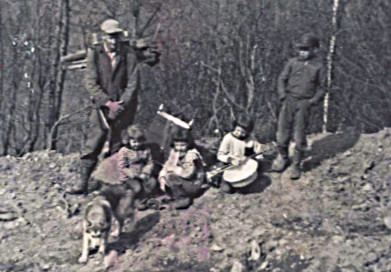
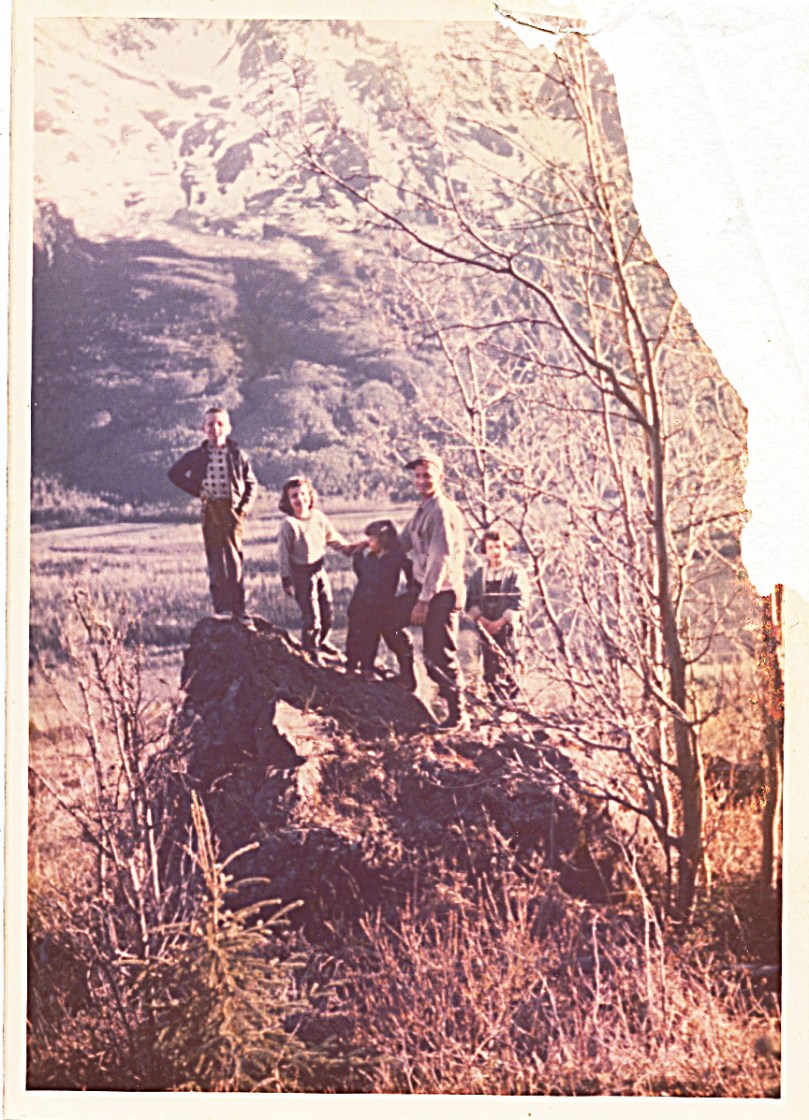
(By the way, I hope to have photo illustrations from these years soon!)

+++++++++++++++++++++++++++++++

*Age 7 – 5-3-1959 Letter – Classic Homesteading Stress

+++++++++++++++++++++++++++++++

*Age 7 – 5-18-1959 Letter – More Classic Homesteading Stress

The rest of the homesteading letters as I am working to transcribe them can be read HERE!

+++++++++++++++++++++++++++++++

+HUMAN AND HORSE MOTHERING – WHAT’S IN COMMON?

+++++++++++++++++

I wanted to share something from a book I’m reading, The Body Language of Horses by Tom Ledbetter, Bonnie Ainslie.  My brother gave it to me while I was visiting him in Alaska.

I’ve never really had the longed for luxury of being able to spend time with horses.  I’ve always been too poor, too involved in keeping my children clothed and fed with a roof over our heads.

I find as I read this book that I feel like the authors are talking about me.  How can that be?  I am not a horse, yet I am like them.  Because of the extreme abuse I suffered from the time I was little, and because of the overall and overriding insanity present in the home I grew up in, I did not grow up to be an ordinary person.

I have tried to fit in.  I’ve tried to learn the ‘human language’ that others speak not most importantly with their words, but with their body language and the expressions on their faces.  Because my mother was psychotic, because she could not interact with me normally, I simply did not get the same brain circuitry.  Not even the regions of my brain developed according to ‘ordinary’ experiences or patterns, as I have been explaining in my writings.

I can, therefore, more closely relate to what these authors are saying about horses than I can any book I ever read about people.  I might understand a book about all sorts of other kinds of animals if one was written like this one is, but these authors express a rare and comprehensive understanding of how it is to be a horse.  I am amazed and I am feeling calmer as I read it.

Ainslie and Ledbetter explain that every time a human overwhelms a horse with human demands and misconceptions, the horse has no choice but to act like less than what it is – less than a horse.  I understand.  I was not allowed to be a child.  The way my mother treated me did not allow me to be a child just like some humans do not allow horses to be horses.

All the many parallels I find between horses and myself create inside of me a sense that I am so much more correct in my understanding of the changed body and brain of a severely abused child compared to how a child is SUPPOSED to have been allowed to develop that I really do feel like I am a member of nearly a completely different species than are ‘ordinary’ people.

And I know I am not alone.  Therefore, as I share this single paragraph from this book (so far) I wish readers to understand that human mothers create in their offspring the kind of person their infants and children grow into.  I am aware that genetics plays a part in who we become, but researchers are becoming more and more clear that severe abuse alters how genetic potential expresses itself.

Every time an infant and a young child is not given what it needs to develop into its optimal self some life long consequence to the negative is going to appear.  Only in situations where the most important resiliency factor of the AVAILABILITY of some other adequate early caregiver’s interference in the harmful influence of the severely maltreating mother is there, in the end, hope that the effects of the mother’s severe abuse will not permanently and seriously alter the person her offspring turns out to be.

I encourage readers to FEEL the following words.  Enlarge your perspective and imagine what these words are saying if you think about them in terms of the variances in the quality of human mothering and caregiving.  In human terms mothers are not forced, for the most part, to compete with other mothers for what is needed to care for their infants and children.

And yet the end result of a human continuum of living a quality, happy and successful life is still directly connected to what our mothers (or other early caregivers) gave to us.  Harm and hatred to infants DOES NOT allow them to develop into fundamentally happy people – and I don’t care how financially well-off such an offspring turns out to be.  Look at their relationships as well as financial standing.

+++++++++++++++++

From The Body Language of Horses by Tom Ledbetter, Bonnie Ainslie:

“The lead mare wins dominance by physical and psychological means.  She rules as long as she remains vigorous.  Her powers serve twin purposes – first choice of food and space (a) for herself and (b) for her young.  By natural selection, the other mares organize in declining order of priority, with the lowest and most subservient getting the last and least for herself and her foal.  Unless the pasture is inhumanely crowded, everyone subsists.  But the psychological effects on the foals are substantially important.  As Number One in its own age group, the lead mare’s baby becomes habituated to the deference of its peers and their dams.  If well bred, soundly constructed and not too severely disoriented by premature weaning, the Number One foal emerges as Number One weanling, most likely to succeed in what humanity calls the Game of Life.”  (P. 64)

+++++++++++++++++

We are not used to thinking about human success, including psychological success, in these terms.  We do not FIRST and FOREMOST understand that it is the health and well-being of mothers (early caregivers) that MOST affects the lifelong outcome of her offspring.

In American, in particular, we want to believe that everyone is equal, and that all can “make it” if they want to and if they work for it.  We do not want to face the fact that deprivations of a serious enough nature from conception to age 2 (and then through age 7) can so set a person off course that they will never be able to completely make up the difference.

Yes, humans may be far more complicated than horses are.  That means to me that we are at an even higher risk for negative consequences from malevolent mothering – not less.  Once our culture truly understands this fact, they will be able to give us the chances we TRULY need to find a way to live well in spite of our malevolent childhoods.

In my thinking, we have to be very clear and very careful about how we assess who and how we are in the world made mostly by people who had the benevolent childhoods we all deserved – and some received the opposite of.  Most do not become members of the ‘lower hierarchy’ because we choose to be there, any more than a horse chooses to me maltreated by a human being.

+++++++++++++++++

+LINKS FROM THE PAST – MY MOTHER AND HER MOTHER – A LETTER

+++++++++++++++++++++++++++

All Borderlines, all abusive parents had mothers of one kind or another.  I am always asking the questions in the back of my mind, “What kind of mother was my grandmother to my mother?  What kind of mother was my great grandmother to my grandmother?”

It is of course extremely difficult for me to engage in my forensic autobiographical search to find any answer to my questions.  Yet I do have the written words of both my mother and my grandmother contained in these piles of old letters I am in the process of transcribing.

This is the link to the first of my grandmother’s letters I have transcribed.  Like drawing a single drop from a vast ocean, this single letter remains as only that single drop, yet also contains within it some reflection of the ocean of interactions my mother had over her lifetime with her own mother.

++++

Follow this link and see what you think!

*Grandmother’s 10-2-1961 Letter to Mother

++++

I just completed transcription of an earlier letter from my grandmother to my mother.  It contains these words of wisdom:

“Get a hot water bottle and a new diaphragm, Mil.”

*Grandmother’s 3-3-1960 Letter to Mother

++++

Newest transcriptions:

*Grandmother’s 1-9-1960 Letter to Mother

++++

*Grandmother’s 3-2-1960 Letter to Mother

++++

*Grandmother’s 3-19-1960 Letter to Mother

++++

*Grandmother’s 4-9-1960 Letter to Mother

++++

*Grandmother’s 4-17-1960 Letter to Mother

++++

+LINK – “WHAT DO BABIES THINK?”

++++++++++++++++++++++++++

NPR – National Public Radio Program

Radio program and transcript on ‘What Do Babies Think?”

Alison Gopnik, author of The Philosophical Baby, dug into the long-avoided question about what’s going on in little ones’ noggins. Psychologists have long thought of babies as incomplete adults, but Gopnik thinks they’re smarter than we think, and even, in many ways, more intelligent than adults……….

++++++++++++++++++++++++++

As we consider that severe abuse changes the way the young brain develops, it is important to gain some insight on how babies are designed to think — naturally!  Check out this link!

++++++++++++++++++++++++++

+NEWLY TRANSCRIBED – MY MOTHER’S 1960 LETTERS

++++

Please note that only the last letter for November 1960 is newly added today

++++

+LINK TO TODAY’S WRITING: MEETING MY BORDERLINE MOTHER’S FRIEND

+++++++++++++++++++++

J.V. was probably the calm to my mother’s storm.  J.V. was unshakable.  She was invincible.  She was consistent, steady, not emotionally involved, clear, outspoken and wise.  My mother could not throw the lasso of her insanity around J.V. and yank her in.  She could not employ J.V. to join with her in craziness in any way.  My mother could not cajole J.V. into any role in her ongoing destructive drama of her life.  Somehow J.V. had something rarer than any precious gem.  She had the ability to be a severe borderline’s friend for 46 years.

This link below connects to this piece that I wrote today about my visit in Alaska with my mother’s friend:

+++++++++++++++++++++

*Age 58 – MEETING MY MOTHER’S FRIEND

+++++++++++++++++++++

+LEFT, RIGHT, CENTER AND HIGHER BRAIN: MY RIGHT TO WRITE!

+++++++++++++++++++++++++++++++++++++

While Dr. Martin Teicher and his Harvard Medical School research group have at least – and at last – finally told us the facts about how early brain development can be altered from extreme early child abuse, I can find no one who talks about what this altered brain feels like from the inside.

I am living with such an altered brain.  Every day I discover how that changed brain impacts on my ability to life anything like a quality life.

Since my return from Alaska, and since my decision to actually write a book rather than simply pouring all my words down the hole (whole) in the cup of my blog, I find that I cannot do it.  I think I know part of the reason why.  Perhaps if I articulate what this seems like I can move past what it is that is stopping me?

As Jill Bolte Taylor describes it in her book ‘My Stoke of Insight’, the right brain does not process anything like a sequence of time.  It also cannot write a book by itself.  Taylor describes how her thoughts operated in words even though she lost the ability during her left brain stroke to either verbalize or to comprehend others’ spoken words.  I wonder how a brain allows us to speak to ourselves within our skulls in word-thoughts even at those times that we cannot use language to communicate outside of ourselves?

++++

When my brother described how writing a book is like forming a shape from carving a block of wood, my right brain understood exactly what he was saying.  Yet I am now stuck with the dilemma of knowing that a book is a tangible, physical THING.  That means to me that my creative right brain efforts must become directed to the formation of an object.  That must require a multiple level of word-thinking, goal direction and focus that I don’t seem able to do – at least not right now until I LEARN how!

My experience with making anything creatively is that I enter what I understand is a right brain creative space that does not require words.  Some might call this FLOW.  In fact, only during brief periods of needing to organize specific actions (like getting materials together, or actually deciding how big to make something, etc.) do words ever enter my ‘making’ process.

How, then, do I creatively write a book?  My brain seems stuck in this dilemma.  Blogging is writing.  It is not about making a tangible, physical object.  I can evidently utilize my familiar brain circuitry and patterns while blogging that do not seem remotely available to me if I try to force my brain to make the switch to ‘writing the book’.

How interesting!  And currently, how impossible!  I suspect that an ‘ordinarily formed’ brain can enter FLOW space and not lose its orientation and organization in the process.  Based on my current experience, I don’t think my ‘evolutionarily altered’ brain can do that!

I understand that it is the higher cortical areas of the brain that are designed to direct the entire show of how we use our brain-minds to BE in the world.  Teicher’s group and other infant brain development specialists talk about how extreme early child abuse alters the development of BOTH brain hemispheres, of the corpus callosum that lies between them and sends information back and forth between them, and also changes how the higher cortices develop (causing early atrophy rather than normal development).  And these are certainly not the only regions, circuits and operations that are affected!

Great!  And we are supposed to live an ordinary, normal life with THAT brain?  Or write a book with it!  I can make jewelry, crochet rugs, make mosaics, draw a picture, make a clay pot, spin wool, weave, make a garden – in short, do all kinds of creative things with this brain because ‘making things’ has always been a part of who I was born to be.  But the process, or the FLOW of making things seems dissociated for me in certain ways from being able to set a concrete goal toward a specific concrete expression of that FLOW.

Throughout my childhood my mother berated and belittled me for being a stupid child because I sat in the middle of the living room floor making and remaking necklaces out of pop beads before I was two years old.  I doubt that as a young child I had any plan as my tiny fingers ‘worked’ with those beads.  I could interact between process and objects in the material world so that some ‘thing’ came out of it.  It was a natural, nonarticulated process that could happen without any higher cortical goal in mind, without self-censorship, and without any ‘attachment’ to outcome.

How do I do that with words?  Taylor has a lot to say in her book about how silent her brain became as her left brain lost its ability to ‘run the show’.  She applauds the benefits of finding ways to access that silence for ourselves as a good thing even when our whole brain is in operation.  (After eight years of focused and dedicated effort Taylor repaired her brain after her stroke at age 37.)

I say that along with thousands of other suggestions given by people who had safe and securely attached childhoods and were thus able to build ‘ordinary’ brains, that those of us with these malevolently-formed changed brains need to be very careful about taking what an ordinary brain person says about how THEIR ‘ordinary’ brain works and applying it across the board to ourselves.

I can assure you that having a silent brain caused by disconnection with the left hemisphere, and having predominantly right brain experiences without correct cooperative processing of information with the left brain, and being denied ordinary-kind supervision and direction from an ordinarily-formed higher cortex is NOT a blissful experience.  It is unsettling, difficult, challenging, disorienting, disorganizing, and SCARY!

Again, I highly recommend reading My Stroke of Insight: A Brain Scientist’s Personal Journey by Ph.D., Jill Bolte Taylor.  It at least gives us a clear language and frame of reference to BEGIN to understand – from deep within our own altered experience – how an ‘ordinary’ brain works in contrast to how our ‘evolutionarily altered’ brain does!

++++

Enough words about this for the time being.  I do not have a co-writer or a publisher or an invested editor to help me write my book – or to act in place of the higher cortex I need to complete this task as I wish to accomplish it.  I have to find a way to argue this out for myself.  If I cannot do this, the blog will remain as my continual FLOW repository for words that seem to stream out easily in this format, but flee into invisibility if I try to direct them toward a final, finished, tangible, physical object – a book!

The silence that Taylor describes as her left brain shut down was in part about the vanishing voice of judgment and criticism that the left brain seems so prone to offer us.  Blogging is not about being right or wrong, not about succeeding or not, not about approval or any of the operations and expectations that the left brain sinks its teeth into.

If my efforts at ‘making a book’ are being sabotaged by my left brain’s critic, does it have to respond by holding its ability to process language at bay where my right brain can’t get to it?  Does it have to seal my words off from my writing, creating right brain that needs them?  “Come on, you two!  Let’s do better than that!  Cooperate, already!”

+++++++++++++++++++++++++++++++++++++

Speaking of books, I am in the process of  reading my way through two of them:

This Is Your Brain on Music: The Science of a Human Obsession by Daniel J. Levitin

The World in Six Songs: How the Musical Brain Created Human Nature by Daniel J. Levitin

I am not reading them for any particular insight into music, per se.  Levitin mentions that the word for song and the word for dance are the same in many world languages because singing involves body movement.  I know that we had both abilities, and their corresponding brain networks firmly implanted within us long before the 140,000-year-ago benchmark when our FOXP2 gene became activated and we evolved to speak.

It seems obvious to me that we evolved ways to express ourselves and to communicate through song, dance, drama, pantomime and all sorts of gestures from our earliest beginnings.  It was only after those brain regions and circuits were very well formed that we were able to use them – MUCH LATER in our development – to talk and think in words!

I am reading this book because I am looking for ways to think about how screaming, shouting, yelling and all forms of verbal violence and auditory assault in the world of the unborn and the very young child affect the development of sound (and language) processing in the developing brain.

+++++++++++++++++++++++++++++++++++++