+THINKING ABOUT THINKING (PART THREE): ‘GROUPTHINK’ and ‘GROUPFEEL’

+++++++++++++++++++++++++

Day two of the ‘frozen pipes’ saga.  As most readers know, I live in southeastern Arizona with the Mexican-American border wall (actually two fences here) in my back yard.  This is about as far south as I can go and still remain in the Western U.S.  Having been mostly raised on an Alaskan mountain homestead, and having spent much of my adult life around Fargo, North Dakota, I know ‘life in the north’.  But here?

As I mentioned, most of us in this rural area have no insulation in our houses and only the flimsiest of single-pane windows.  Last night our temperatures dropped to 5 degrees above with a windchill of minus 20.  Because of the lessons I thought I learned yesterday (as I mentioned in Part One) I was all geared up last night before I went to bed to do things RIGHT.

I thought about it and decided that rather than tax the hot water heater (and its corresponding gas bill) that it would probably be ‘good enough’ if I just left my cold water faucets running enough to keep them from freezing.  OK, but then comes the part I didn’t anticipate — along with some more DUMB LUCK.

My cold water was still running out of my faucets this morning — but!!!  I’m not sure how my luck allowed this to happen, but both of my sinks were filled within a quarter inch of their brim as the sewer lines appear to be frozen.

I did not anticipate THAT, and boy am I glad I didn’t wake up to completely flooded floors!

So, where is the problem?  In thinking about it, I really don’t know.  I don’t know if these frozen lines are ONLY MINE or if they are frozen just in this trailer court my house sits in the middle of or if they are frozen in this entire unincorporated little town of 700 people.  I COULD ask someone, but I am much more aligned personally with the ‘wait and see’ solution.

Meanwhile I notice the town itself is eerily quiet this morning.  Because over 98% of the town has connections in Mexico, I imagine that many families (if they are having problems in their homes similar to mine) simply packed up and headed south to their family there.

I know the poverty on THAT side of the border is far worse than it is on this side, but I also understand that even if all of the town’s water and sewer lines are frozen ‘down south’ that wouldn’t make a whole lot of difference to these people.  I have watched these families over the 11 years I have lived among them and know that BEING TOGETHER is their best solution to everything — good or bad.

And here I am, Ms. White Chick (not sure at 59 that I’m still a chick, but??) alone in my house wondering — thinking — about all of this.

Of course my children living in Fargo know cold (as I well remember it) far worse than ours here.  But they EXPECT the cold up there and are far better prepared in every way to cope with the problems it does and can create.  At this point in my life  ‘down south’ is where I choose to be — alone or not!

++++

This all has me thinking about how likely it seems to me that bonds that connect members of our social species evolved within environments where we directly and immediately NEEDED ONE ANOTHER.  Most importantly, WE KNEW THIS FACT!

In today’s very urban America it seems that perhaps many of us do not live lives where our need for one another IN THE BIG PICTURE remains on our mental ‘front burner’.  In thinking about the growing gaps in the world between those that HAVE more than they need materially in contrast to those that DO NOT HAVE enough of what they need, I also think (wonder about) the fact that what is true in the United States is equally true around the globe.

For the most part the wealth-gap planet wide exists between those in the NORTH versus those in the SOUTH.  This is demographically very true in the United States at the same time it is true around the globe with the economic well-being and lack of well-being split that exists between humans who live in the Northern hemisphere versus those that live in the Southern hemisphere.

++++

I am not a Scholar so I am not mentally prepared to contemplate the answers to the many questions I find myself asking about ‘life’ — particularly human life.  Due to the way my body-brain was changed in its physiological development due to severe, extreme, chronic terrible abuse and trauma from the time of my birth, I already DO KNOW that the way my OWN right and left brain hemispheres do not collect, process, store or contemplate any information in a ‘normal or ordinary’ way (like it is meant to and does with people who benefited from safe and secure attachment relationships in their earliest body-brain formative years).

I mention this because I can FEEL my own questioning in MY BODY.  My questioning exists probably primarily in my right brain hemisphere, fed by my feelings that my body feeds to my right brain — but my questions seem to lie mostly in some unseen vast deep ocean ‘over there’ where my rational, logical, linear, sequential, verbal language-based LEFT brain hemisphere can’t get to them!

Even this experience of WONDERING can be an extremely intense and difficult to regulate emotional state.  WONDERING — connected to HOPE on the one end and to FEAR and awareness of the unknown on the other.

I don’t expect that our species made huge progress toward survival by being stuck very often in the state of simply WONDERING.  WONDERING when the next big animal was going to pounce, or when the next rival tribe was going to appear for a competitive slaughter, or wondering where the herbs needed to heal MIGHT be — or wondering how to stay warm in the north, or wondering how to even care for a newborn — NOPE!  Minimal survival benefit to being stuck in the wondering stage UNLESS it can stimulate thinking toward a positive solution.

++++

BUT, for our species thinking ALONE probably had little to do with our mutual survival as a species unless the thoughts of the ONE were shared with the MANY.  I believe we are designed for this GROUPTHINK.  If I add here a fact that is primarily left out of the Western worldview way of thinking, and that is that FEELINGS are also a form of thinking without words, I would also say that GROUPFEEL is just as important as GROUPTHINK.  In fact, if feelings are left out of the equation for survival, we suffer from our own LEFT-RIGHT brain hemisphere split that in itself creates a form of poverty for humans individually and collectively.

When I feel-think this morning about the probable evacuation of many of my neighbors over the southern border as they seek to be among those closest to them right now in this rare cold spell and the problems it is causing, I am the one out-of-place in being alone.  As I think about the global economic North-South split I think about the cultural worldview differences that seem to mean that so many in the north are alienated from feeling-thinking unity in their own body as they are split off from feeling-thinking in GROUP.

That means to me that the true values that matter most are abundant within the economic poverty of the Southern arm of the human species, while these most important GROUPTHINK (groupfeel) connections are far more likely to be shattered into tiny fragments in the North.

If I think about HUMANS being HUMANS’ most important resource, it isn’t the isolated materialistic disconnected (even in one’s own body between feelings and ‘thoughts’ — body and mind) Northern (European-rooted-‘Western’-thinking) arm of our species that has kept this resource at the center of their lives, their value systems and their civilization.  If I connect my feeling thoughts with my word thoughts I know that being ‘a part’ (which is the foundational assumption in the mechanistic Western worldview) leaves us being apart from one another in profound ways that do not happen among members of our species who have NEVER truly adopted the Western worldview.

I can sit here alone, heating large pans of water to pour down my drain in hopes I can thaw frozen sewer lines IF they are frozen only at MY source, my house, all I want to.  At the same time my heart-of-hearts would much rather be ‘over the border’ in a different land so that I could be ‘a part’ of a much larger connected community.  I would rather be sitting in a tiny adobe house crammed with all ages of people from babies to old people joshing around in a sea of warmth, humor and community as we together pass time while a mutual solution is found to all problems one moment to the next using GROUPTHINK that INCLUDES GROUPFEEL

+THINKING ABOUT THINKING (PART ONE): WHOSE PROBLEM IS IT?

+THINKING ABOUT THINKING (PART TWO): FIRST, SELF-RECOGNITION

+++++++++++++++++++++++++
+DISORGANIZED-DISORIENTED INSECURE ATTACHMENT – 2 ARTICLE LINKS

++++++++++++

This article provides an excellent, clear and informative description of the purpose of attachment systems and of the variations that can be noted in the attachment patterns of infants:

Explaining Disorganized Attachment:  Clues from Research on Mild-to-Moderately Undernourished Children in Chile

By Everett Waters and Marta Valenzuela — in J. Solomon & C. George (Eds). Attachment Disorganization. (1999) New York: Guilford Press  [See Table of Contents for this book]

++++

And – and interesting study on the early research toward the ‘disorganized/disoriented’ insecure attachment category:

This study reanalyzed the attachment relationships of a sample of 12-month-old maltreated and nonmaltreated infants using the Main and Solomon (in press) classification system for disorganized/disoriented (Type D) attachments. As predicted, we found a preponderance of disorganized/disoriented attachments in the maltreatment group (82%). In contrast, only 19% of the demographically matched Aid to Families with Dependent Children (AFDC) comparison group exhibited such Type D relationships.”

Disorganized/disoriented attachment relationships in maltreated infants.

Carlson, Vicki; Cicchetti, Dante; Barnett, Douglas; Braunwald, Karen

Developmental Psychology, Vol 25(4), Jul 1989, 525-531.

++++++++++++++++++++++++++++++++++


+24 HOURS LATER – MORE BAD NEWS FOR VULNERABLE CHILDREN

+++++++++++++++++++++++++

I just wrote a post on about the wonderful results the Healthy Families project has been generating for at risk children in New York: +NEW YORK’S ‘HEALTHY FAMILIES’ PROGRAM — GREAT FINDINGS! However a day later this distressing news comes through from the Prevent Child Abuse New York blog:

Governor Cuomo’s Budget Proposal Eliminates Funding for Healthy Families New York

Governor Andrew Cuomo’s proposed state budget eliminates funding for one of New York’s most cost-effective and cost-savings programs, Healthy Families New York home visiting. This proposal would dismantle a program that has a proven record of preventing child abuse and also would make New York ineligible for federal grants that would improve the lives of more of our states’ most vulnerable children and families.

Healthy Families New York (HFNY) serves at-risk pregnant and new mothers in 38 of the state’s highest need communities. Cost savings begin immediately with healthier babies delivered, and continue for years with fewer incidents of child abuse, lower child welfare costs, and greater success in school leading to less need for special education services.

“We are dismayed that the Governor proposes ending the Healthy Families New York program, given the proven outcomes for children and the potential for significant additional federal funding for the state,” said Christine Deyss, Executive Director of Prevent Child Abuse New York. “This action would undo 16 years of work to develop one of the best state systems for early childhood home visiting in the country.”

A seven-year randomized trial evaluation of HFNY demonstrates:

  • Low birth weight deliveries are reduced.
  • Children’s preventive health care is improved.
  • Physical abuse is reduced and parents’ use of non-violent discipline increased.
  • Parents at the highest risk have fewer founded cases of abuse and neglect.
  • Fewer children need special education or repeat a grade.
  • More children do well on standardized test and are in gifted programs.

The average annual cost to provide HFNY services to a family is about $4,600. For low birth weight babies, additional medical costs in the first year of life range from $25,000 to $90,000, primarily paid by Medicaid and state sponsored insurance plans. The average annual cost to the state for foster care for a child who has been abused is more than $24,000; total federal, state and local expenditures on child welfare services in our state are approximately $2.7 billion. Special education services more than double the cost of a child’s education.

For families who had prior histories of child abuse or neglect, the program generated a return of more than $3 for every dollar spent in seven years, due to reduced involvement with the child welfare system and other government programs.

Prevent Child Abuse New York brought Healthy Families New York to the state, and we’ll continue to fight to keep the program going. We need all the help we can get! Please join our movement to reinstate funding for HFNY. You can start by signing up for our e-newsletters and action alerts so you can stay up-to-date on the latest developments in what will surely be a long and difficult struggle on behalf of New York’s most vulnerable children.

+++++++++++++++

This is exactly what I have been posting about!  As if we should EVER have to beg for help for our nation’s children by assigning a dollar value to their lives — as if they are objects with price tags attached!!

See series:

WE the U.S. and the WORLD

AND – OH OUR POOR BABIES!!!

Veteran Suicides Outnumber US Military Deaths in Iraq and Afghanistan

+++++++++++++++++++++++++

+ADOBE MOMMA NEWS – SLOWER WORK

++++++++++++++++++++++++

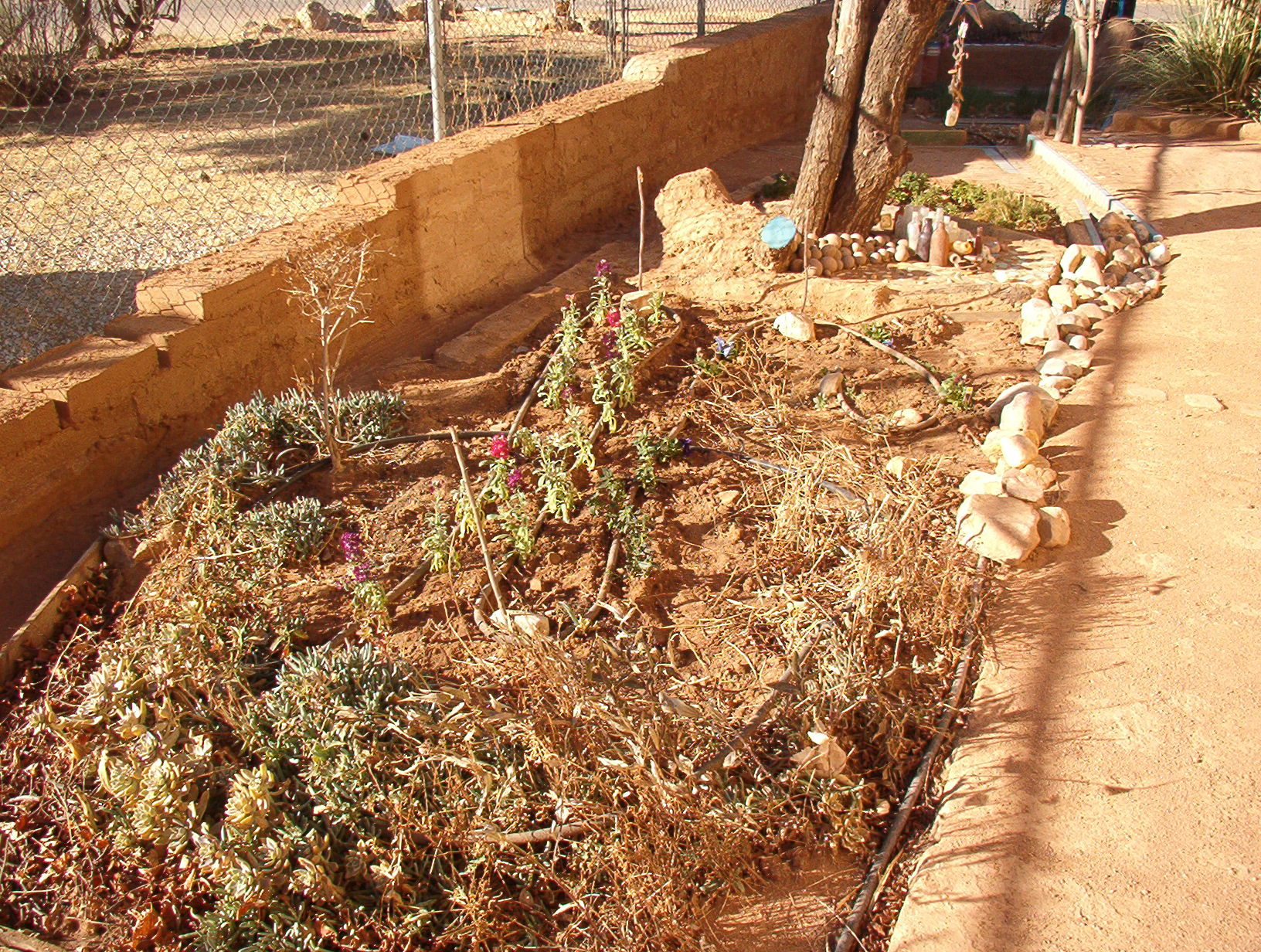
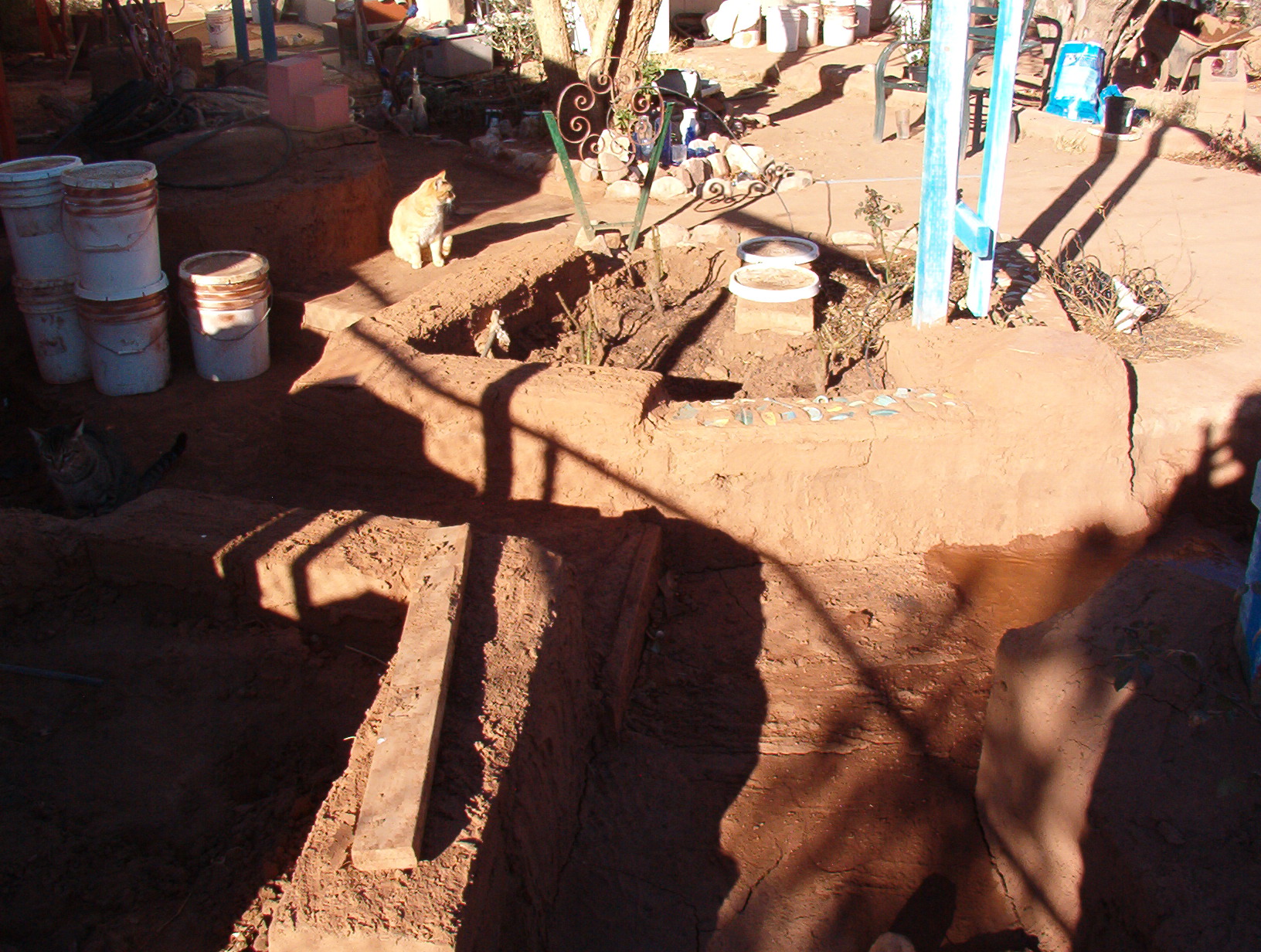
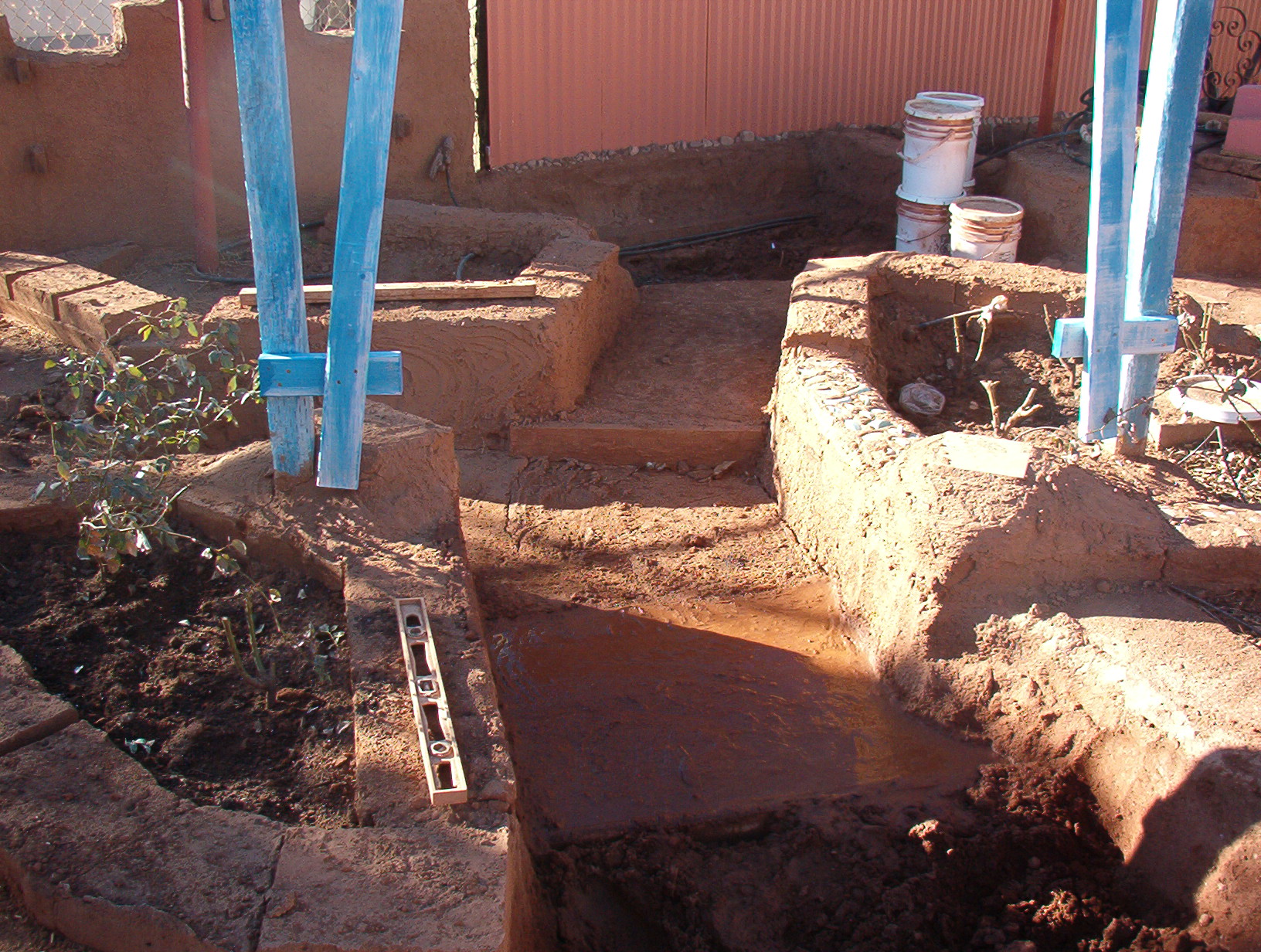
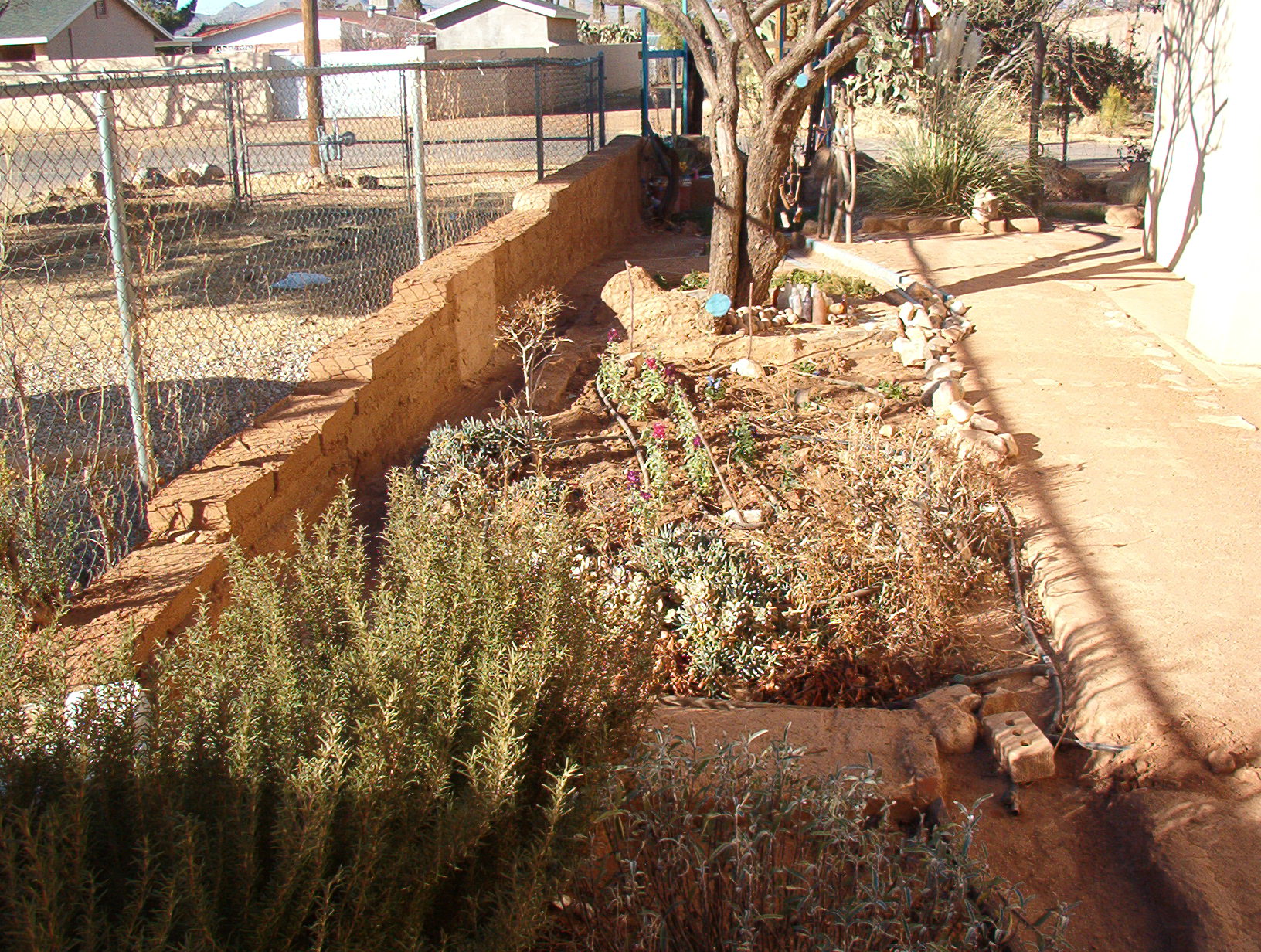
Thought I’d take a few pictures of recent work in the backyard – new bare-root roses in and new walkways being built…..

Along west side of house looking north
I think the Harvester Ants ran away with the seeds I had in along the soaker, so just added some winter plants - cold but not dead
On west side, out back door, newest 10' tall 40' long metal fence - I put in an extra support post for its north end on Sat. just in time for more WIND
Newest adobe planter going in on top of adobe block I put over the quince tree I want DEAD
New compost by fence
Newest roses planted and Goldilocks
Newest sunken pathways going in at back

++++++++++++++++++++++++

+THINKING ABOUT THINKING (PART TWO): FIRST, SELF-RECOGNITION

++++++++++++++++++++++++++++++++++

My good guess is that we must have a SELF to be able to THINK. What are some of the identifiable developmental processes involved that allow the thinking self to appear?  We know that degrees of secure versus insecure attachment can be clearly measured by the time an infant is one year old.  The next stage of infant development that can be identified when it ‘comes online’ is what is called ‘self-recognition’ – which happens for our close primate relatives just as it does for human infants.

++

SELF RECOGNITION IN APES (video) [Especially note the point where the ‘little guy’ returns to his mother for the safe-secure attachment HUG!  At about at the 2:50 mark]

“Scientists believe self-recognition is essential for our survival.  We can live in large groups because we recognize similar features of our own in others.  We can tell friend from foe.  But is self-recognition uniquely human?  Show a monkey a mirror and it thinks its another monkey.  It attacks.  But how will our closer relatives, the great apes, react when faced with their own image?

“This three-year-old Chimpanzee has never seen a mirror before.  He’s not sure what to make of it.  Erect fur is usually a sign of fear or anger.  But his fear is soon replaced by curiosity.

“When chimps see themselves in mirrors the first time they naturally assume it’s another chimp the way a human being who has never seen their self before does, and begin to play with mirror image.”

“Soon this chimp will know it’s looking at it’s self, just like these older chimps.  They know exactly what mirrors do.

“This chimp appears to know that’s her tongue and those are her teeth.

“Chimpanzees seem to have a concept of a bodily self that allows them to look into a mirror and say, “THAT image is equivalent to THIS body.

“But how can we prove that humans and chimpanzees really identify the figure in the mirror as themselves?  Psychologists set a Wellman Test for this.  It’s called the Mark Test.  A researcher marks a child’s cheek.  The child then looks in a mirror.  He moves his hand up to the mark.  He recognizes himself.  By age two, half of all children can recognize their self.  Soon, they all do.

“So, can our ape cousins pass this test?  A keeper places a mark on a female orangutan.  Next, they put her in front of a mirror.  She has seen her reflection before, but this time she recognizes that something has changed.  Her hand goes to the mark.  All the great apes, gorillas, orangutans, chimps and bonobos, pass the mark test by a certain age.”

++

Sense of self and the “mark test” – infant and chimpanzee results (video)

SELF RECOGNITION DEVELOPMENT (video)

+++++++++++++++

Here are some reading links to very early research that sought to clarify any link between infant maltreatment as it impacts the security or insecurity of infant attachment and an infant’s ability to first self-recognize.   After scanning through this information and other related research I quickly came to understand that researchers didn’t find that the quality of secure versus insecure attachment determines the developmental-maturational timeline along which any infant comes to self-recognize itself in the various mirror image ‘Mark Tests’, but it does effect the quality and nature of this first visual self-recognition by an infant.

Importantly, researchers did discover that the quality of attachment and degrees of maltreatment an infant has received DOES affect the emotional reaction an infant experiences and displays in response to its recognition of its own self in a mirror.

My next post will also present research that shows two other factors that ALSO appear to affect an infant’s emotional reaction to its first self-recognition that happens for all but a very few infants between the age 15 months and 2 years.  I believe both of these factors can be directly influenced by an infant’s experience of maltreatment that happen in CONJUNCTION with unsafe and insecure early infant-caregiver interactions.

++

…[This empirical study]  considered the interaction between affect and cognition, focusing on both security of attachment and the emergence of visual self-recognition (Schneider-Rosen and Cicchetti, 1984).  The sample consisted of 37 infants, all from families of low SES [socioeconomic status].  Of the infants, 18 had been maltreated while living in their natural homes, while 19 infants comprised the comparison group.  The infants ranged in age from 18 months to 20 months.  The mother-infant dyads were observed in the Strange Situation procedure, and infants were administered the standard mirror-and-rouge paradigm (Lewis and Brooks-Gunn, 1979) to assess visual self-recognition.

“It was found that 12 (67%) of the maltreated infants were classified as insecure…whereas 6 (33%) were classified as secure.  In contrast, 5 (26%) of the 19 matched comparison infants were classified as insecure…whereas 14 (74%) were classified as secure….

An interesting pattern of findings emerged with regard to the interaction between maltreatment, quality of attachment, and visual self-recognition.  There were no differences in the number of maltreated and comparison infants who were able to recognize themselves.  For the group as a whole, infants who manifested visual self-recognition were significantly more likely to be securely attached to their caregivers.  A different pattern of results was revealed, however, when the maltreated and comparison infant groups wee analyzed separately.  Of the comparison infants who recognized themselves, 90% were classified as secure…  In contrast, there was no significant relationship between visual self-recognition and security of attachment for the maltreated infants.  Of those maltreated infants who recognized themselves (N=5), three were insecurely attached and two were securely attached to their caregivers.  These findings suggest that the effects of maltreatment may be sufficiently potent to disrupt the expected relationship between quality of attachment and visual self-recognition. The process by which maltreatment might have such an effect, however, has yet to be determined.”

Child Abuse and Neglect: Biosocial Dimensions (Foundations of Human Behavior) by Richard J. Gelles and Jane Lancaster (Dec 31, 1987) — (above is from pages 288-289)

++

Examined the association among child maltreatment, socioeconomic status (SES), visual self-recognition, and emotional responses to mirror images. Children were assessed cross-sectionally at 18, 24, and 30 mo. The nonmaltreated children spanned 2 SES groups (lower and middle), and the maltreated children came from the lower SES. Maltreated children did not differ from the lower- or middle-SES comparison children in the development of visual self-recognition. Differences between the samples were observed in the quality of affective reactions to mirror self-images. Hierarchical loglinear modeling was used to test for associations among the variables of self-recognition, age, SES, maltreatment, and affective reactions to mirror images (positive, negative, and neutral, as well as coy affective responses). Results are discussed in terms of the complex interactions among these variables, indicating that the ontogenesis of self-knowledge is determined by multiple interrelated influences.”  (PsycINFO Database Record (c) 2010 APA, all rights reserved)  [bold type and underline added]

Early self-knowledge and emotional development: Visual self-recognition and affective reactions to mirror self-images in maltreated and non-maltreated toddlers.

Schneider-Rosen, Karen; Cicchetti, Dante

Developmental Psychology, Vol 27(3), May 1991, 471-478.

++

+THINKING ABOUT THINKING (PART ONE): WHOSE PROBLEM IS IT?

+++++++++++++++++++++++++++++++

+THINKING ABOUT THINKING (PART ONE): WHOSE PROBLEM IS IT?

+++++++++++++++++++++

I readily admit this:  My thinking today is happening in wide circles and loops, not unlike the course a high-flying kite might take as it sours, dips and changes directions erratically as it’s caught in strong and unstable wind currents.  This matters especially today because the trail I am trying to follow is exactly about HOW I THINK!

While at this moment I WANT to think about what I WANTED to think about, at the same time I am distracted by the fact that even though I live down south here in the U.S. on the Mexican border line, I also live at nearly a 5000 foot elevation.  This simply means that when the temperature drastically drops here at night – because I and many others in this region have NO insulation in our houses – our water pipes are at great risk of freezing.

Mine are frozen!

As I think about thinking about thinking I understand that I am the only one to blame for my frozen pipes.  I am the only person who lives in this house.  I looked online yesterday and saw our forecast for night temps down to 11°.  But I ‘forgot’ to pay attention to what I needed to do last night:  Leave my faucets open to allow water to move through my pipes all night.  I doubt they would be frozen now if I had NOT neglected to take that precaution.

Will my pipes burst?  A fear.  I don’t know.  Where are they blocked by ice?  I don’t know.  It’s hard not to fear the worst!

++

My thinking is following an overall direction of trying to ‘get a handle’ on the fact that so many of our nation’s little ones and their families are increasingly suffering from deprivations and traumas while it appears that so few are noticing – let alone taking action to help them.

Did we as a nation – DO WE as a nation – notice this problem?  Do we anticipate what the far-reaching harmful consequences will be if the suffering of our offspring is not alleviated?  Do we know (as I did with my pipes!) what a solution would be?  How is it that so many in our nation seem perfectly capable of denying and/or ignoring the growing problems not only within our own nation, but across the globe?

When I ask myself how it was that I completely ‘forgot’ what I knew I had to do to protect my house’s water pipes, I can’t really find an answer!  I just plain ‘let it go’ and here I am with trouble!  How BIG a trouble I don’t know yet.

So, I am hanging in the balance between fear of the worst consequences and hope for the best.  My hope is that even though our day temperature today isn’t supposed to be very high, that at least the stream of sunshine will somehow (magically?) unthaw those pipes without any damage occurring.

I am at the “wait and see” point.

++

But, WAIT!  I just discovered that in my bathroom on the east side of my house where the sun has been shining for hours already my pipes in THERE are flowing.  WHEW!  What a grateful sigh of relief!

Now, what about the pipes on the west kitchen side of the house?  Back to the waiting…..

++

Which makes me think that given the economic troubles that are so contributing especially to the problems of increasing numbers of our nation’s little ones, and given the troubles that so many millions of other people around our globe have been and are facing, how long will our species have to wait before we see the full-blown potential of GREAT HARM to show that lets us all know we denied and ignored all the warning signs while there was still time for us to avert what might amount to global disaster?

++

Given that I live in  the richest country on earth – and given that I have never traveled to see the suffering that billions of other people in other places on this globe endure – I ask myself, “What part do I play in contributing to problems in our nation and around our globe and what part might I be able to play in solving these problems?”

Because this is a two-part question, I am finding I have to look at the first part before I can move forward to consider the second part.  This seems to be an important process I feel I need to undertake because I don’t believe much in DUMB LUCK!  It’s only dumb luck that my house’s east pipes seem to be OK.  I would feel much better about myself if I had done my own responsible part in preventing my pipe problems in the first place!

++

In response to the work I have been doing these past days with my posts (HERE) I am coming to understand that at this point that our national and global troubles are not without solution.  Yet what appears to be needed for us all to get busy on the plus-side of solving our problems might on the one hand be the SIMPLEST thing we can do AT THE SAME TIME it might be the HARDEST!

I say this because from my own ‘point of view’, from my own ‘worldview’, what all of us need to do – is, well – DO-ABLE!  What I am learning is that we, especially in America and in the richest global nations in Europe, evidently follow a societal-cultural WESTERN worldview pattern of thought (and corresponding pattern of actions) that we CAN examine, understand, evaluate – and CHANGE!

The other part of this picture is that we certainly aren’t going to do this if we see absolutely no reason to do so!

++

Thinking about the frozen water pipes I imagine that it wasn’t ‘my job’ to go door-to-door last evening and warn my neighbors about the impending problems – or to tell them about the preventative solution.

My job was within my own boundaries.

Why would I CARE if my neighbors’ pipes froze?

What if I imagine that every individual dwelling near me was actually a nation?  If I take care of my nation and let others take care of theirs – where’s the problem?

What if taking care of my own pipes somehow meant that I had to harm my neighbors’?

Without repeating any of the information presented in my recent posts, I will just say that in fact what the rich nations of this globe are doing IS harming on BIG LEVELS!

Perhaps it will only be when the harm we are doing ‘to our neighbors’ pipes’ as we ‘take care of our own’ comes around in a boomerang-effect to spill the troubles, problems and damage right back inside our own nation’s boundaries that we give a real HOOT – enough to examine our own contribution to the whole mess worldwide and to help find a solution.

++

I believe this is exactly what is beginning to happen.  Ask those on the poor end of our nation’s wealth-poverty dichotomy and they will say they’ve known all along.  Ask those on the richest end, and they are most likely to deny any responsibility for anything that troubles anyone else – anywhere.

For my part, I THINK I need to understand how I THINK about all of this.  Because I am bound up in a society that so profoundly influences my THINKING, I have to THINK about those influences, too.

But for the moment I will think about changing my mind.  Maybe there is such a thing as Dumb Luck!  All my pipes are thawed out now, and I didn’t say any flood of water spewing out from under my house, so I think I escaped the consequences of my lack of taking appropriate preventive action last night that tonight I vow I will.

Next post:

+THINKING ABOUT THINKING (PART TWO): FIRST, SELF-RECOGNITION

+++++++++++++++++++++

+THE HUMAN RACE IS GROWING UP – WE CAN’T IGNORE OUR GROWING PAINS

+++++++++++++++++++++++

This series is a “for educational purposes only” presentation of information from the book, America’s Sacred Calling: Building a New Spiritual Reality (2010) by John Fitzgerald Medina.  Medina writes:

Moving Toward a Holistic View of Reality

“When one considers the egregious [conspicuous, flagrant] level of abuse, corruption, and exploitation prevalent in the world today, it becomes quite clear that it is impossible to build a well-functioning world order on the defective foundation of global capitalism.  As stated in the Baha’i publication, Century of Light, Western civilization has erected a capitalist-based global system that is “morally and intellectually bankrupt.” [page 135]  Fortunately, the Baha’i Faith is not alone in recognizing this.  Indeed, as detailed in my first book, Faith, Physics, and Psychology:  Rethinking Society and the Human Spirit, a diversity of movements from various fields of study (including economics, psychology, physics, religious studies, history, medicine, education, sociology, political science, and others) have started to challenge the underlying ideologies, theories, and philosophies of Western civilization.  Within this context, capitalism itself, the golden idol of many modern people, has come under intense scrutiny and criticism.

“The various movements that are challenging the Western paradigm are based on worldviews that are radically different from the Cartesian-Newtonian worldview.  Like the Baha’i perspective, these movements maintain that, before we can resolve the major social, economic, political, and environmental problems facing us, we must leave behind the false, materialistic, Cartesian-Newtonian view of reality.  Also, like the Baha’i Faith, such movements assert that we need to adopt a holistic view of reality that is capable of recognizing the oneness of humanity and the oneness of the cosmos and of integrating science and religion, as well as acknowledging the unity of mind, body, and spirit.  Along these lines, Theodore Roszak, a well-known advocate of the holistic paradigm, asserts,

It is as [Ernst Friedrich] Schumacher [a Rhodes Scholar in economics, and a highly respected holistic advocate] tells us:  “When the available ‘spiritual space’ is not filled by some higher motivations, then it will necessarily be filled by something lower – by the small, mean, calculating attitude to life which is rationalized in the economic calculus.”  If that is so, then we need a nobler economics that is not afraid to discuss spirit and conscience, moral purpose and the meaning of life, an economics that aims to educate and elevate people, not merely to measure their low-grade behavior.”  [see:  Small is Beautiful:  Economics as if People Mattered, page 9.]

In short, any global order that aspires to honor the exalted nature of the human soul must be able to integrate the spiritual and the sacred with the material and the secular.  This is something that the capitalist paradigm, almost by definition, cannot achieve.  Thus, it has planted the seeds of its own ultimate destruction because it is virtually incapable of truly edifying and inspiring the human soul – the real source of power for any sustainable economic system.  [bold type is mine]

“Since spiritual transformation and material transformation must go together, it is essential for individuals to remain cognizant of the economic, political, social, and environmental state of the world.  People of faith must also be directly engaged in helping to transform the world rather than retreating into comfortable “spiritual enclaves.”  Baha’u’llah states, “Be anxiously concerned with the needs of the age ye live in, and center your deliberations on its exigencies and requirements.”  [see:  Gleanings from the Writings of Baha’u’llah, (2005) no 106.1]

“In essence, a faith without physical deeds is dead.  According to the Baha’i Faith, some of the noblest of all human beings are those who have been educated, trained, and spiritually inspired for a life of service to humanity.  Along these lines, ‘Abdu’l-Baha’s following statement regarding the importance of service is highly pertinent to the discussion in this chapter regarding the plight of many who are currently being held in the claws of tyranny and oppression:

Without action nothing in the material world can be accomplished….  It is not through lip-service only that the elect of God have attained to holiness, but by patient lives of active service they have brought light into the world….  Therefore strive that your actions day by day may be beautiful prayers.  Turn towards God, and seek always to do that which is right and noble.  Enrich the poor, raise the fallen, comfort the sorrowful, bring healing to the sick, reassure the fearful, rescue the oppressed, bring hope to the hopeless, shelter the destitute!…  If we strive to do all this, then are we true Baha’is, but if we neglect it, we are not followers of the Light, and we have no right to the name.”  [see:  Paris Talks, (2006) no. 26.5]

“Related to the discussion above, the Baha’i teachings assert that humanity is involved in an evolutionary process that is inevitably moving humankind toward maturity and away from destructive ways of thinking and acting.  This, however, does not mean that individuals should sit idly by and just wait for the process to take its natural evolutionary course.  Indeed, this process seems to be an interactive, mutually reinforcing, synergistic progression – the more that individuals strive for spiritual transformation and the more that individuals strive to implement spiritual virtues and deeds in the material world, the grater the evolutionary shifts for the overall society.  Conversely, any positive shifts in the overall society help people to make further internal changes as individuals.

“Many holistic advocates believe that we are already beginning to experience a paradigm shift toward holism and away from the Cartesian-Newtonian worldview (and its capitalistic system).  Similar to the Baha’i perspective, such holistic advocates believe that humanity is presently undergoing an evolutionary jump toward holism as a result of major leaps in human spiritual consciousness.  Indeed, Baha’is and holistic advocates both believe that the paradigm shift toward a holistic view of reality is not coerced, but rather, it is a natural process of spiritual transformation that is moving humanity from its adolescent stage of development to its stage of maturity (the coming of age of humanity).  Along these lines, The Baha’i publication Century of Light states:

And for a Baha’i the ultimate issues are spiritual.  The Cause [Baha’i Faith]is not a political party nor an ideology, much less an engine for political agitation against this or that social wrong.  The process of transformation it has set in motion advances by inducing a fundamental change of consciousness, and the challenge it poses to everyone who would serve it is to free oneself from attachment to inherited assumptions and preferences that are irreconcilable with the Will of God for humanity’s coming of age.  Paradoxically, even the distress caused by prevailing conditions that violate one’s conscience aids in this process of spiritual liberation.  In the final analysis, such disillusionment drives a Baha’i to confront a truth emphasized over and over again in the Writings of the Faith:  “He hath chosen out of the whole world the hearts of His servants and made them each a seat for the revelation of His glory.  Wherefore, sanctify them from every defilement, that the things for which they were created may be engraven upon them.”  [see:  Century of Light, page 136]

“Thus as agents of spiritual and material transformation we all have the responsibility to purify ourselves from “every defilement” and “to free” ourselves “from attachment to inherited assumptions and preferences that are irreconcilable with the Will of God for humanity’s coming of age.”  The sentiments expressed in the quote above bring us full circle to the concept of responsibility that we discussed at the beginning of this chapter – according to the Baha’i writings, the American Baha’is in particular have a “staggering responsibility” to cleanse themselves from the “faults, habits, and tendencies which they have inherited from their own nation” and then to help eradicate “such evil tendencies” from the lives of their fellow American citizens.  Indeed, the Baha’i writings emphasize that America will not manifest its exalted destiny until this “staggering responsibility” is fulfilled.  It is my hope that this chapter has made it plainly evident that, capitalism, a manifestation of the materialistic Cartesian-Newtonian worldview, is an “evil tendency” that must be acknowledged and properly redressed so that America can assume its exalted destiny as the nation that “will lead all nations spiritually” as prophesied by ‘Abdu’l-Baha.”  [see:  in Shoghi Effendi, Citadel of Faith, (1965) page 35] (all of the above from pages 202-205 of Medina’s book)

++

Recent related posts:

+HERE’S A TAKE ON THE RICH RICH RICH RICH AND THE POOR POOR POOR POOR

+FINDING MY COURAGE TO TAKE A LOOK AT ‘WHAT’S WRONG WITH AMERICA’

+ONGOING TRAUMAS: AMERICA’S BIG MONEY PERPETRATORS

+WHERE THE BAD PEOPLE HIDE: ‘AMERICA FAR WORSE THAN A BULLY’

+CRITICISM NOT ALLOWED IN A BLACK-AND-WHITE WORLD

+MULTINATIONAL CORPORATIONS — ECONOMIC VAMPIRES WORLDWIDE

+CONTINUED HUMAN EVOLUTION: WE MUST LOSE THE BAD AND IMPROVE ON THE GOOD

+WHEN LITTLE MATTERS MOST — WE NEED A BETTER WORLD FOR OUR GLOBE’S CHILDREN

+++++++++++++++++++++++

+WHEN LITTLE MATTERS MOST — WE NEED A BETTER WORLD FOR OUR GLOBE’S CHILDREN

+++++++++++++++++++++++++

In my ongoing mental travels to try to gain a workable perspective about why so many of our nation’s offspring are suffering such a lack of well-being – as are their families – I am gaining at least a little bit of clarity.  The ‘problem’ IS tied to the reality that poverty exists in our nation – and severe extremes of it exist around our globe with nearly one billion members of our human family starving to death.  Poverty hurts.  Yet also knowing that such vast amounts of our nation’s and our globe’s wealth is concentrated in the possession of so few (as my work on recent posts is describing) seems to make the whole global picture worse.

As I work to untangle my own thinking and feelings related to these topics, I wanted to mention a book that sadly I have yet to read!  Ernst Friedrich Schumacher, a Rhodes Scholar in economics and a highly respected holistic advocate, stated,

Simplicity and non-violence are obviously closely related. The optimal pattern of consumption, producing a high degree of human satisfaction by means of a relatively low rate of consumption, allows people to live without great pressure and strain and to fulfill the primary injunction of Buddhist teaching: ‘Cease to do evil; try to do good.

In his book, Small Is Beautiful:  Economics As If People Mattered, Schumacher directly approaches the reality that Western economics are causing damage and that within the Western capitalistic-materialist worldview no workable solution can ever be found to solve the globe’s major problems.  It will be necessary for our species to adapt on all levels to a sustainable holistic worldview and practice if we are going to survive.

On the website WorldInc is this description of Small Is Beautiful:  Economics As If People Mattered:

“One of the most fateful errors of our age is the belief that ‘the problem of production’ has been solved.” So begins this classic of commonsense economics, a book that The New Republic called “Enormously broad in scope, pithily weaving together threads from Galbraith and Gandhi, capitalism and Buddhism, science and psychology.”

E.F. Schumacher (1911-1977) was a Rhodes Scholar and respected economist who throughout his long career worked with the likes of J.M. Keynes and J.K. Galbraith. From 1950 to 1970 he served as Chief Economic Advisor to the British Coal Board — with over 800,000 employees, one of the largest organizations in the world.

An early proponent of the idea of “sustainable development,” he opposed neo-classical economics by declaring that single-minded concentration on output and technology was dehumanizing. Furthermore, he asserted that one’s workplace should be dignified and meaningful first, efficient second.

In 1955, while traveling in Burma, he first developed the principles of what he called “Buddhist economics,” based on the notion that good work was essential for proper human development and that “production from local resources for local needs is the most rational way of economic life.”

First published in 1973, Small Is Beautiful is a collection of essays that brought Schumacher’s ideas to a wider audience at a time when an energy crisis was shaking the world and people had begun to realize that petroleum and other natural resources are finite (that is, such resources should be treated as nonrenewable capital rather than as expendable income, to be exploited and used up without thought for the future). Widely translated into many languages, Small Is Beautiful was named among the 100 most influential books published since World War II by The Times Literary Supplement.

His work also dealt with various other emerging trends, such as the environmental movement and economic globalization. In his view, for a large organization to function properly, it must behave like a group of related smaller organizations. Schumacher’s attitude toward nature reflects his theories on business and the workplace:

Ever bigger machines, entailing ever bigger concentrations of economic power and exerting ever greater violence against the environment, do not represent progress: they are a denial of wisdom. Wisdom demands a new orientation of science and technology towards the organic, the gentle, the non-violent, the elegant and beautiful.”

To learn more about this forward-looking and prophetic thinker, visit:

+++++++++++++++++++++++++

+CONTINUED HUMAN EVOLUTION: WE MUST LOSE THE BAD AND IMPROVE ON THE GOOD

+++++++++++++++++++++++

This series is a “for educational purposes only” presentation of information from the book, America’s Sacred Calling: Building a New Spiritual Reality (2010) by John Fitzgerald Medina.  Medina writes:

Rearranging the Deck Chairs on the Titanic

“A few words should be said regarding the Baha’i idea of civilization.  Baha’u’llah wrote, “All men have been created to carry forward an ever-advancing civilization.  [Gleanings from the Writings of Baha’u’llah, no. 104.2]”  Obviously, the civilization that is intended here is not the kind of civilization that was first conceived by Rene Descartes, Isaac Newton, John Locke, Adam Smith, Charles Darwin, and other Western intellectuals who promulgated an anti-spiritual mentality.  Indeed, in the following passage, Baha’u’llah uses the words “infernal engine” in reference to Western civilization:

In all matters moderation is desirable.  If a thing is carried to excess, it will prove a source of evil.  Consider the civilization of the West, how it hath agitated and alarmed the peoples of the world.  An infernal engine hath been devised, and hath proved so cruel a weapon of destruction that its like none hath ever witnessed or heard.  The purging of such deeply rooted and overwhelming corruptions cannot be effected unless the peoples of the world unite in pursuit of one common aim and embrace one universal faith.”  [Tablets of Baha’u’llah, page 69]

“In relation to the quote above, it is significant to note that capitalism, if anything, actually encourages immoderation.  For instance, it encourages the ideas of unbridled competition, insatiable desires, unrestricted individualism, boundless accumulation of wealth, and absolute freedom (laissez-faire).  It also promotes the cynical assumption that self-interest and profit motivation are the primary forces between individuals in society.  This ultimately leads to self-indulgence and greed.

“Fortunately, some Christians have begun to recognize that, in order to maintain a biblical perspective, they must challenge and transcend, in thoughts and actions, the existing socioeconomic materialistic paradigm.  For instance, Ron Sider, a professor of theology, holistic ministry, and public policy at Eastern Baptist Theological Seminary, states,

We need to ask, “Are we really biblical?”…  Cheap grace results when we reduce the gospel to forgiveness of sins only…when we embrace the individualism and materialism and relativism of our current culture….  [E]mbracing Jesus…means embracing [Him] as Lord as well as Savior….  [I]t means beginning to live as a part of his new community where everything is being transformed….  [T]he mission of the church is both to do evangelism and to do social ministry….  That means…a concern for justice for the poor.  It will mean concern for creation care [care for the environment], for human rights, and for peacemaking.”  [Ron Sider as cited by Stan Guthrie in “The Evangelical Scandal,” Christianity Today, April 13, 2005]

“In his recent book, The Scandal of the Evangelical Conscience:  Why Are Christians Living Just Like the Rest of the World?, Sider maintains that many Christians have conformed their thinking and actions to the prevailing un-biblical materialistic paradigm.  This, he asserts, has seriously compromised their worldview and has crippled their ability to transform the society around them based on the Word of Christ.  Indeed, Sider cites a plethora [excess, abundance] of studies, polls, and statistics showing that many Christians live very much like the general American population in terms of materialism, hedonism, racism, sexual immorality, and other traits.  For instance, he shows that, even though today’s American Christians are the wealthiest generation of Christians in world history, their charitable giving, as a percentage of income, has gone down.  Sider also asserts that, as a group, they do not take care of the poor.  He points out that, in particular, the tithing of Christian Evangelicals (the group most likely to attend church regularly) has gone down every year for several decades.  He argues that these negative conditions will persist so long as mammon (money) remains on the throne as the idol of worship.  [See:  Ron Sider, The Scandal of the Evangelical Conscience:  Why Are Christians Living Just Like the Rest of the World?]

“It is also troubling to note that considerable numbers of Christians now subscribe to a point of view that merges their religious beliefs with a staunchly nationalistic, capitalistic ideology that often promotes and defends the American-dominated global economic order even at the expense of other nations and peoples.  Regarding this, S.R. Shearer, an Evangelical Christian who runs his own ministry, points out that it is truly disturbing and ironic that capitalist ideology enjoys a significant amount of support from Christian Americans.  He maintains that it is virtually impossible for Christians to justify the immorality of the American-dominated capitalist global order [he calls it the “American New World Order System”], especially in light of the following passages from the Bible:

Lay not up for yourselves measures upon the earth….  But lay up for yourselves treasures in heaven….  For where your treasure is, there will your heart be also…  Matthew 6:19-21

[I]f thou wilt be perfect, go sell (all) that thou hast, and give it to the poor,…and come and follow me [Christ]. Matthew 19:21

No servant can serve two masters:  for either he will hate the one, and love the other; or else he will hold to the one, and despise the other.  Ye cannot serve God and mammon [material wealth or possessions]. Luke 16:13

“Many Americans, including many religious believers, may believe that our cultural paradigm is fundamentally sound and that we can resolve our global problems simply by implementing an assortment of reforms, adjustments, and tweeks to the system here and there.  Such attempts to reform the system, however, without confronting the underlying destructive materialistic worldview are tantamount to rearranging the deck chairs on the Titanic.  Solutions to our global problems cannot be found within the same despiritualized system that created these problems.

“Based on information provided in this chapter [see links below to previous posts], it should be evident that some of the people who have been most negatively impacted by the immoderation of Western civilization have been the indigenous peoples of the Americas.  Indeed, countless indigenous cultures have been decimated by the relentless wayward march of the West.  This destructive process has continued even into modern times.  For instance, the genocide against the Guatemalan Mayan Indians and the “water wars” against the Indian people of Bolivia (both of these situations were described earlier) are good examples of this destructive process.

“It is important to note that man Latin American nations have very large populations of American Indians, and in fact, in some countries, Indians make up the majority of the population.  Unfortunately, Indians throughout Latin America continue to face deeply ingrained racism on the part of Whites (people of European descent) who still wield disproportionate levels of economic, political, and social power.

“In light of the information above, it is truly fascinating that, as noted earlier, ‘Abdu’l-Baha prophesied that if the Indians become “educated and guided” in the teachings of Baha’u’llah, “there can be no doubt that they will become so illumined as to enlighten the whole world.”  [see:  ‘Abdu’l-Baha, quoted in Shoghi Effendi, Citadel of Faith, (1965) page 16]  Considering the fact that the indigenous people of the Americas are now some of the most impoverished and marginalized peoples in the world, this prophetic passage seems truly remarkable.  This may be a case of God using the downtrodden and dispossessed to show the true power of spirituality to positively transform the material world.

“In 1977, a group of Indian people presented three papers to some of the nongovernmental organizations of the United Nations located in Geneva, Switzerland.  In these documents, the American Indian authors raised “a call for a consciousness of the Sacred Web of Life in the Universe.”  The passage below is an excerpt from one of these documents.  Please note the similarity between the sentiments expressed by Baha’u’llah in the quote above and the sentiments expressed by the indigenous authors of the statement below:

Today the species of Man is facing a question of the very survival of the species.  The way of life known as Western Civilization is on a death path on which their own culture has no viable answers.  When faced with the reality of their own destructiveness, they can only go forward into areas of more efficient destruction.  The appearance of Plutonium [nuclear technology] on this planet is the clearest of signals that our species is in trouble.  It is a signal which most Westerners have chosen to ignore….  The air is foul, the waters poisoned, the trees are dying, the animals are disappearing.  We think even the systems of weather are changing.  Our ancient teachings warned us that if Man interfered with the Natural Laws, these things would come to be.  When the last of the Natural Way of Life [traditional Native way of life] is gone, all hope for human survival will be gone with it.  And our Way of Life is fast disappearing, a victim of the destructive processes….  Our essential message to the world is a basic call to consciousness.  The destruction of the Native cultures and people is the same process which has destroyed and is destroying life on this planet.  The technologies and social systems which have destroyed the animal and the plant life are also destroying the Native people.  And that process is Western Civilization which old the promise of unimaginable future suffering and destruction.  Spiritualism is the highest form of…consciousness.  And we, the Native peoples of the Western Hemisphere, are among the world’s surviving proprietors of that kind of consciousness.  We are here to impart that message.”  [see:  Akwesasne Notes, ed., Basic Call to Consciousness (1978), pages 77-78]

“True solutions will have to be based upon perspectives, ideas, values, and assumptions that lie outside the confines of the prevailing Western view of reality.  In this regard, Baha’is believe that the teachings of Baha’u’llah are intended to create an entirely new peaceful, just, and unified global order that will wipe away, at their very root, the maladies of the current age.  The following passage from the Baha’i writings eloquently enunciates this concept of renewal:

The call of Baha’u’llah is primarily directed against all forms of provincialism, all insularities and prejudices.  If long-cherished ideals and time-honored institutions, if certain social assumptions and religious formulae have ceased to promote the welfare of the generality of mankind, if they no longer minister to the needs of a continually evolving humanity, let them be swept away and relegated to the limbo of obsolescent and forgotten doctrines.  Why should these, in a world subject to the immutable law of change and decay, be exempt from the deterioration that must needs overtake every human institution?  For legal standards, political and economic theories are solely designed to safeguard the interests of humanity as a whole, and not humanity to be crucified for the preservation of the integrity of any particular law or doctrine.”  [see:  Shoghi Effendi, The World Order of Baha’u’llah, (1991) page 42]  (above from Medina’s book, pages 196-202)

Next post:  Moving Toward a Holistic View of Reality

++

Recent related posts:

+HERE’S A TAKE ON THE RICH RICH RICH RICH AND THE POOR POOR POOR POOR

+FINDING MY COURAGE TO TAKE A LOOK AT ‘WHAT’S WRONG WITH AMERICA’

+ONGOING TRAUMAS: AMERICA’S BIG MONEY PERPETRATORS

+WHERE THE BAD PEOPLE HIDE: ‘AMERICA FAR WORSE THAN A BULLY’

+CRITICISM NOT ALLOWED IN A BLACK-AND-WHITE WORLD

+MULTINATIONAL CORPORATIONS — ECONOMIC VAMPIRES WORLDWIDE

+++++++++++++++++++++++

+NEW YORK’S ‘HEALTHY FAMILIES’ PROGRAM — GREAT FINDINGS!

+++++++++++++++++++++++++

I would like to mention a commendable program to assist ‘at risk’ children in New York as described on the Prevent Child Abuse New York Blog.  According to their post on January 26, 2011

New Study Finds Healthy Families New York to be a Great Investment in Children and Their Families

A new study by the state Office of Children and Family Services and the State University of New York shows that Healthy Families New York (HFNY) has had a profound impact on the lives of children and their families; resulting in fewer incidents of child abuse, fewer low birth weight babies and greater success in school for kids whose mothers participated.

HFNY believes strongly in enhancing the healthy child development of all children in New York and the program promotes optimal child health, connecting families with medical providers for prenatal and well-baby visits and immunizations. It also helps parents to develop strong, positive relationships with their children and assesses children for developmental delays.

From the time the program began in 1995 through the end of 2009, HFNY provided 777,000 home visits to more than 25,760 families. Participants are screened to identify risk factors and stressors the family may face. Each family is offered long-term in-home services until the child is in school or Head Start.

The findings of the seven-year randomized controlled trial include the following:

  • Across the seven years, mothers who received HFNY reported many fewer incidents of serious physical abuse than mothers in a control group did.
  • At ages 2, 3, and 7, young, first-time mothers who entered the program early in pregnancy consistently reported and were repeatedly observed using lower levels of harsh parenting as compared to their counterparts in the control group.
  • From the study’s start through age seven, HFNY mothers who had substantiated child maltreatment reports prior to random assignment had markedly lower rates of involvement in confirmed CPS reports for neglect (38% vs. 57%), confirmed reports for physical abuse (3% vs. 13%), and preventive, protective, and placement services (38% vs. 60%) as compared to a subset of similar women from the control group.
  • Overall, HFNY mothers were more likely to be observed using parenting strategies that stimulated the child’s cognitive skills and to report using nonviolent discipline strategies.
  • Children in HFNY were more likely to participate in a gifted program at school, less likely to receive special education services, and less likely to report skipping school. Educational advantages were even more striking among children born to first-time mothers under age 19 who were offered HFNY in early pregnancy. These children were half as likely to repeat a grade and considerably less likely to score below average on a standardized vocabulary test.
  • In addition to impacts on parenting and children’s education, women who enrolled in HFNY at or before 30 weeks of pregnancy were about half as likely to deliver low birth weight babies. This effect was especially notable among black and Latina mothers, two groups that persistently experience high levels of poor birth outcomes.

In terms of dollars and cents, the study also found that with mothers who had histories of engaging in child abuse or neglect, Healthy Families New York generated a return of more than $3 for every dollar spent due to reduced involvement with the child welfare system and other government programs.

++++

Again, as note in the book, America’s Sacred Calling: Building a New Spiritual Reality (2010) by John Fitzgerald Medina, even for all the wealth that might exist in our nation, ‘We the People’ are barred from access to all but 17% if it.  That means within our current economic paradigm, the best use possible needs to be made of the portion of our nation’s wealth that we CAN access to help especially the most needy of our nation’s infants, children and their families.

“The gap between the rich countries and the poor countries of the world is rapidly increasing as noted above; however, equally disconcerting is the fact that the gap between the rich and poor is also increasing within the United States itself.  It may surprise some to know that the United States now has the most unequal income distribution of any industrialized country.  [bold type is mine]  Alarmingly, super-rich Americans who represent the top one percent of the U.S. population control forty percent of America’s total wealth.  Meanwhile, the top twenty percent of Americans, as a group, control eighty-three percent of America’s total wealth.  This means that the overwhelming majority of Americans are competing for only the remaining seventeen percent of the wealth after the super-rich and the rich take their lion’s share.”  [posted HERE]

+++++++++++++++++++++++++