+CHECKING IN – COMPUTER PARANOID ME….

++++++++++++++++

Checking in — I SO don’t trust my computer any more after that virus attack!  I just have to keep checking in on it and wait to see what happens.  More attacks??  Paranoid, paranoid me!

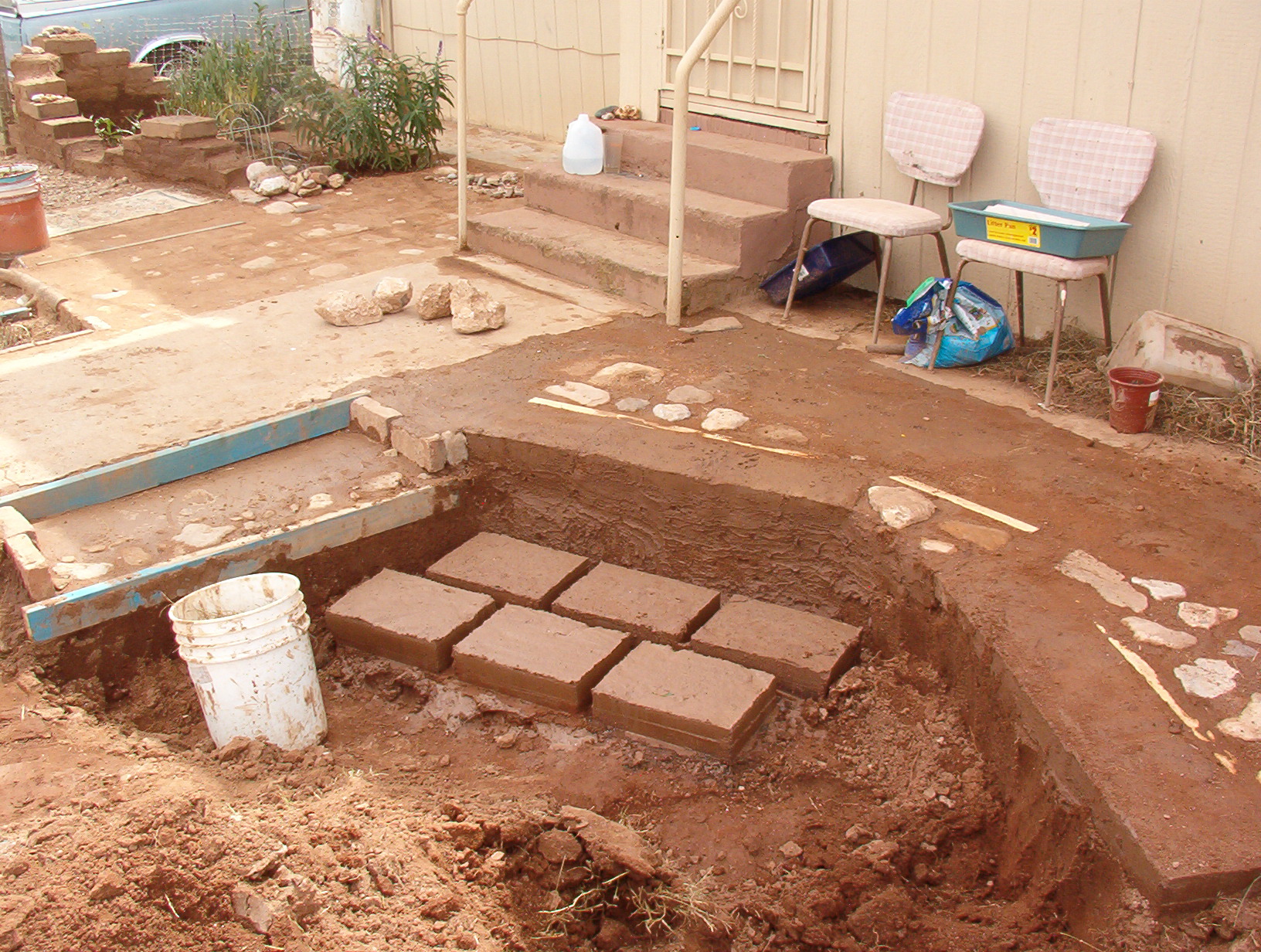
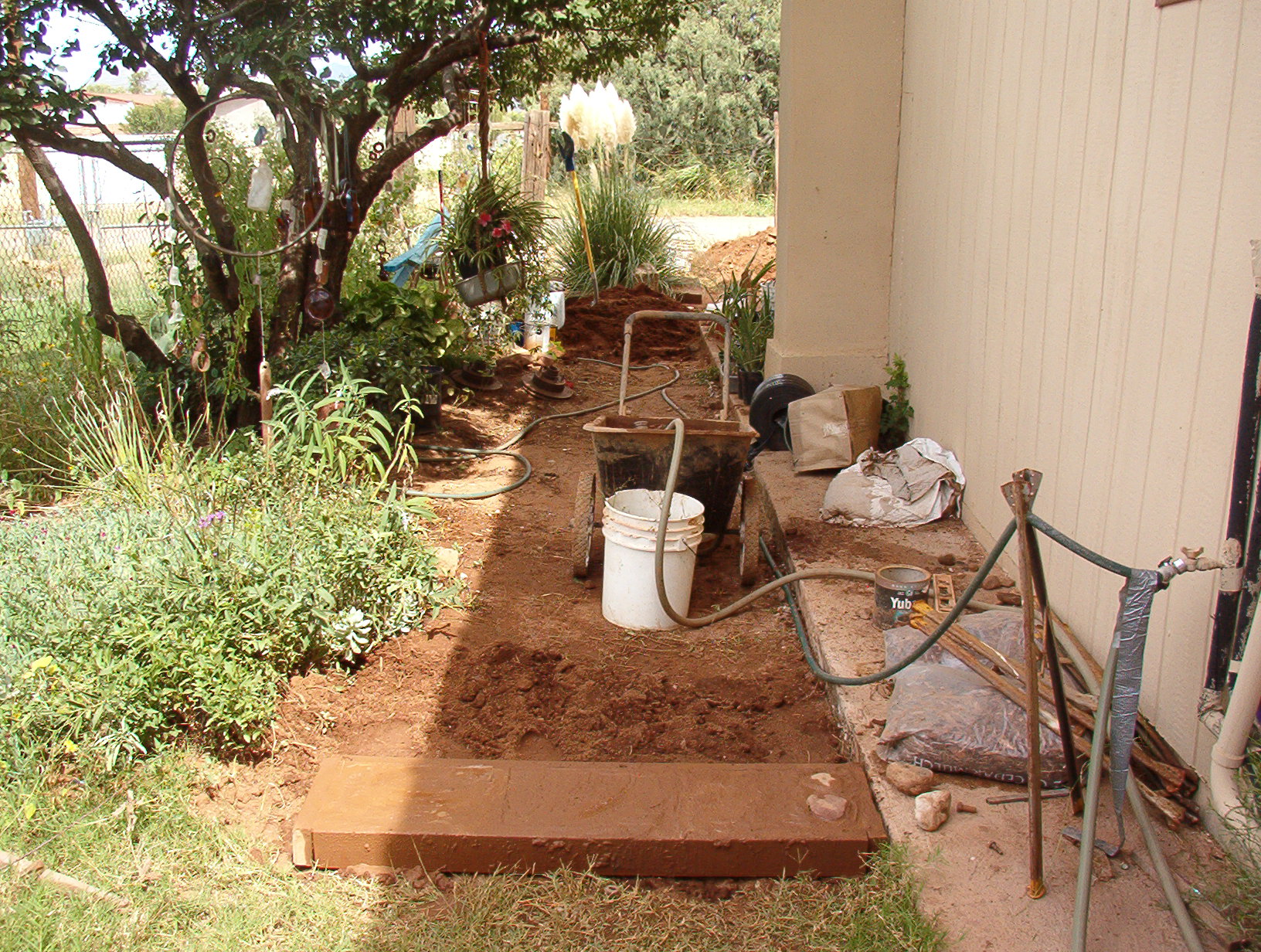
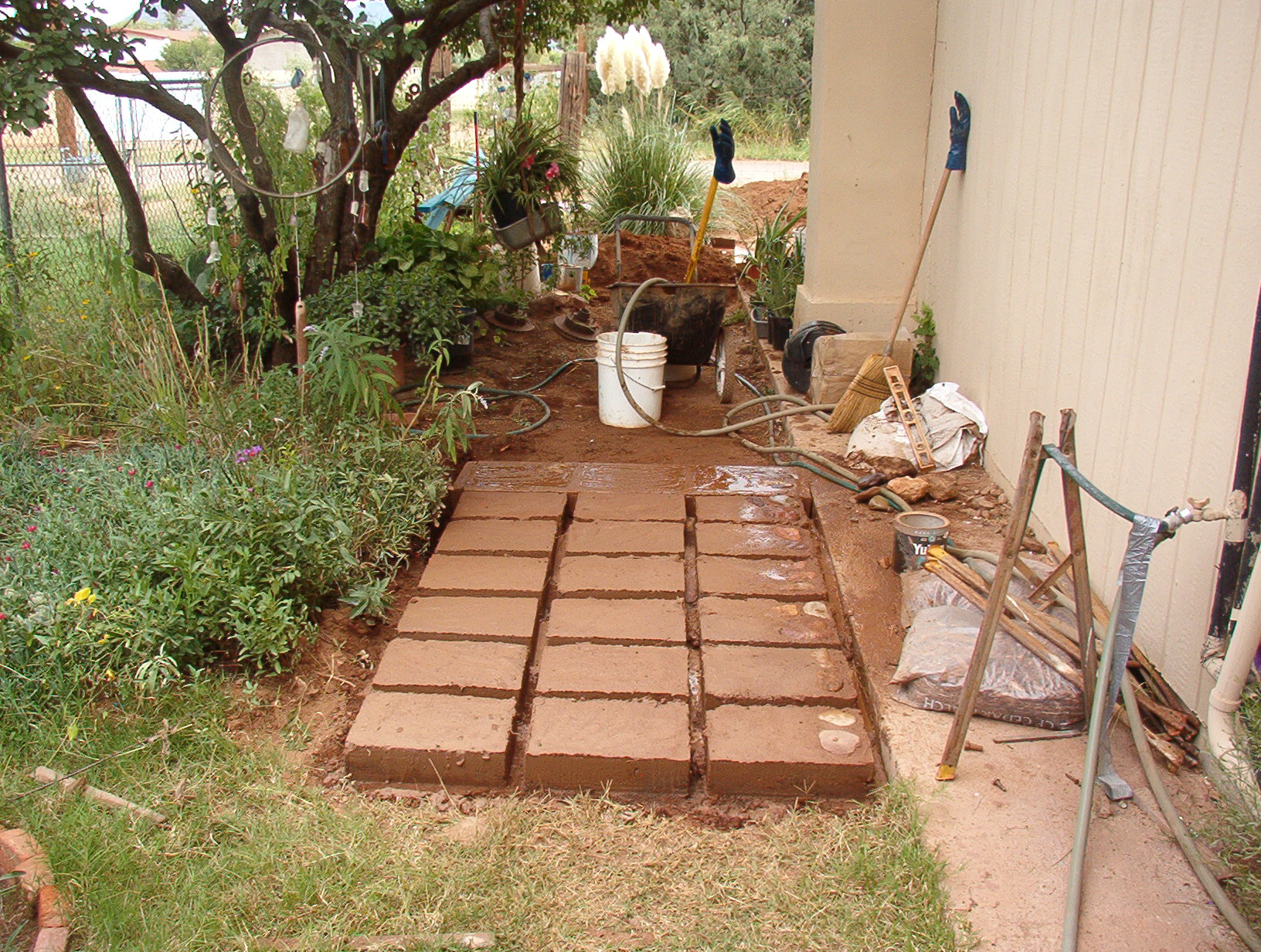
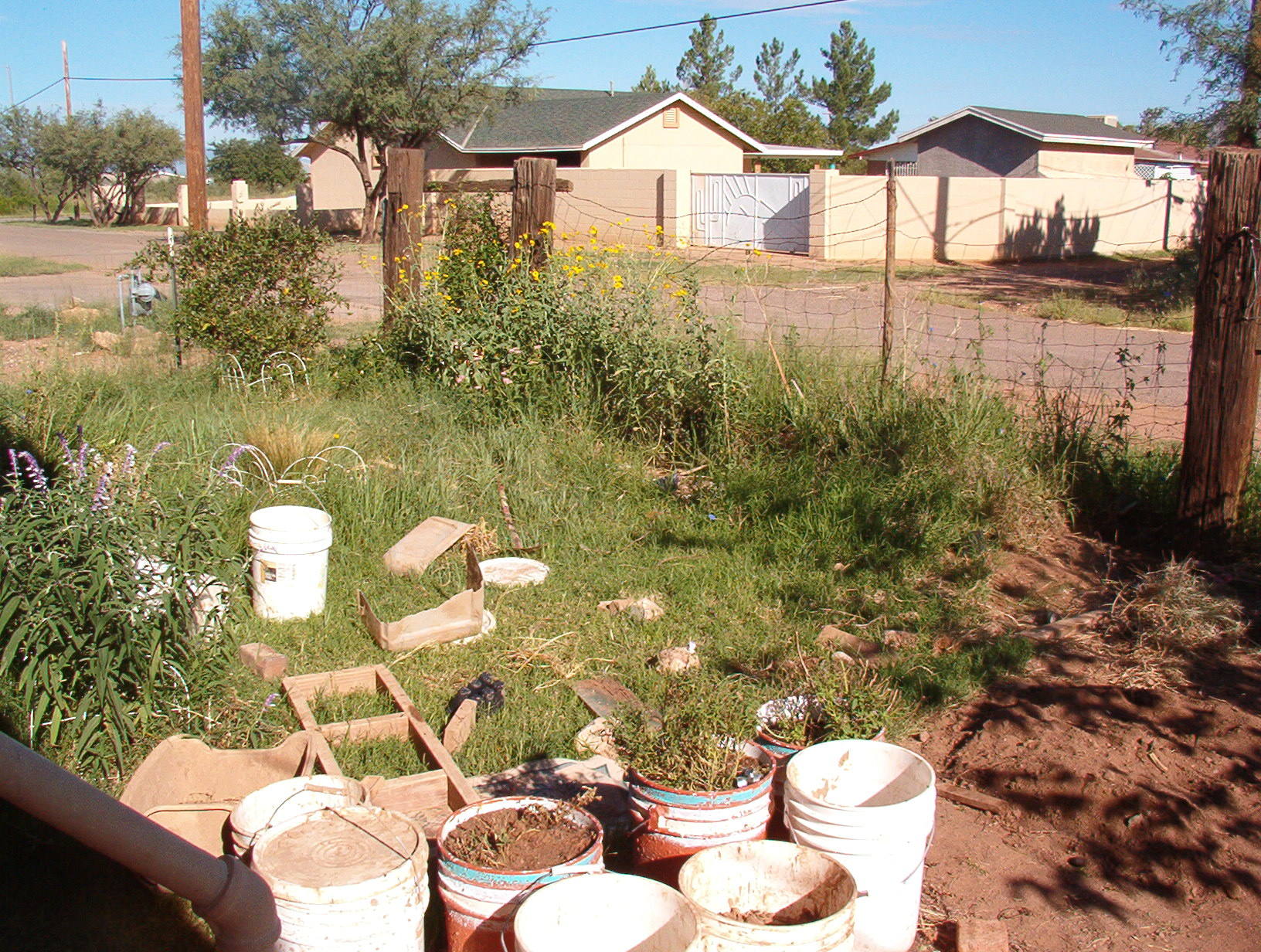
I am preparing more pictures on the front adobe project to post…..so……  will give that a try!

++++++++++++++++

+DISSOCIATION AND ASSOCIATION — THEY CANNOT BE ‘TAKEN APART’

++++++++++++++++++++

I have something to say today, so I am braving the dangers of cyber virus crimeland to write this.  I have to write this because I can feel my passion within this thought.  What I am going to say has roots deep in very important personal relationships that I will not speak about directly.  My truth within my words is no less meaningful even with this most personal omission.

Dissociation is very real.

Today I am very clear that the way this term is used, and especially as it is used within the ‘mental illness diagnostic category’ of Dissociative Identity Disorder (DID) is only half true and half accurate.

I believe that every time we, as individuals and as a collective human global society, choose to use the term ‘dissociation’ to describe very real physiological brain and nervous system patterns of operation, we are at the same time neglecting to speak about the whole picture, the entire truth of what we are referring to.

Dissociation is so intimately connected to its other half that these two processes CANNOT BE DISCONNECTED OR DISSOCIATED from one another.

The other half of the whole is — ASSOCIATION.

When I personally experience ‘dissociation’ all that is REALLY and ACTUALLY happening is that my brain-nervous system is connecting myself within my ongoing experience of being alive in a body in a DIFFERENT way than what either I or those around me might WANT or EXPECT or even DEMAND of me.

Dissociation is NOT understood.  So called ‘professionals’ continue to use this word without any REAL understanding of what it IS.  Dissociation is most often used in the negative, as if it is describing what DOES not exist rather than what DOES exist.

When dissociation happens what is ACTUALLY happening is that an ASSOCIATION is being made within the brain-nervous system of a person in a way that appears unusual and unique.  Human social connectiveness happens to the most part because most people have an unspoken, unarticulated understanding that humans behave (and this includes on our neurological-physiological level) in certain common ways.

People (like myself) whose earliest development was changed because of early severe abuse, neglect, trauma and malevolent treatment simply experienced Trauma Altered Development.  Most simply put we were wired as our young body-brain developed for DANGER and unpredictability within a terrible, terrible world.

I have no doubt that nearly ALL of us, or ALL of us, were created from conception with the same abilities everyone else has to form a best-case scenario body-brain-nervous system.  We were deprived of that luxury within our terrible infant-childhoods.

Our body-brain simply HAD to grow itself differently.  We had no choice.  We are wired differently.  There is nothing WRONG with this fact.  It is a fundamental natural LAW that a developing infant (or anyone at any other age) either be able to adapt to traumatic environments — or DIE.

++++

All simple until it comes to very real every day interactions with other people.  I am coming to realize as a FACT that very, very few people — even among those closest to us — are going to be either able or willing to take the time needed to understand us the way we actually ARE (the way our brain-nervous system-body ACTUALLY operates).  Either we operate the way the want us to, expect us to, or — WHAT?

Rupture without Repair.

Yes, our case is about discrimination.

Yet because we might not ‘look’ any different than ‘normal and ordinary’ it is highly likely that the lack of communication and understanding that causes so many of our interpersonal problems is NOT going to be resolved (repaired).

And today?  Yes, I feel pissed off!

I feel helpless and hopeless.  I feel like I am at a dead end.  I did not choose to be a hated, terrorized, terrified and abused infant — or child.  Yet one cannot maltreat especially an infant from birth and very young child and expect that the ASSOCIATIONS formed within its tiny, rapidly growing and forming little body-brain can POSSIBLY come out the same as it will for nonabused, loved infant-children.

We will ALL end up with what ‘looks like’ dissociation when what we REALLY have is a changed — and yes, different — associational process that was the natural and logical — and very real consequence — of the treatment we received from our earliest caregivers — that formed us the way we are!

Say we have an Association Disorder?  Who ever heard of THAT?

There is nothing ‘disordered’ about either my ‘association’ or my ‘dissociation’.  What I am is a terrible trauma from birth survivor and THIS is the way I was made!

Don’t like it?  Don’t like me?  Discriminate?

What do YOU know about trauma?

++++++++++++++++++++

+CHECKING IN HERE

+++++++++++++++++

I haven’t been online since last posting.  I am struggling with dissociation from my computer.  Evidently when I get ‘burned’ I instantly get ‘burned out’.

Have been out in the front yard working hard sunrise to sunset – will post pictures soon — racing against winter.

Began only yesterday (finally) to think about writing ‘my book’.  Want to NOT write anywhere around digitalville or my computer.  But, I have few words these days – that’s OK, too.  Hope all readers are fine and enjoying the wonders of fall!  Will be back hopefully in a few days (no sign of virus these past two times I have booted this beast up).

+++++++++++++++++

+HAVE BEEN FIGHTING A COMPUTER TROJAN VIRUS – A NASTY ONE!

++++++++++++++++

Thank you to all of you who have visited my blog in my absence.  I have been struggling to reclaim my computer from a very nasty Trojan virus.  In the 12+ years I have had a computer this is the first infection I have had to deal with — and what a doozy!  With my son’s much appreciated long distance assistance I can at least, for the moment, write a word or two here.  We have done every malware and virus scan we can, but I don’t think the virus is off of this computer, and I do not have the funds to take this gizmo anywhere to get it fixed.  Please know I will be back as soon as possible!  At the moment I am waiting for the nasty window to pop up from the virus that gives a 60 second count for me to go purchase something from their site! Yeah, like I am going to do that!  It disguises itself as AVG virus protection software, and disables the REAL AVG.  So, all for now, folks!  I wish you all WELL!

++++++++++++++++

+MOST AMAZING MOVIE — HOW WE CAN EASILY FEED THE WHOLE WORLD!

+++++++++++++++++++++

I was able to watch this absolutely amazing and inspirational movie about how to feed the world:

MOVIE:  Establishing a Food Forest

Join Geoff Lawton on a Permaculture adventure as he demonstrates how to grow a food forest from start to finish. Over 90 minutes of quality information to get you on the right track in creating your own garden of Eden.

You can ORDER THE MOVIE HERE.

The movie really comes alive once Geoff leaves the classroom where he spends a few minutes explaining how a forest builds itself before he heads out to the land — where you won’t believe what you see and learn!

Here’s the TRAILER – check this OUT!

+++++++++++++++++++++

+MORE MUD WORK — ADOBE CONTINUES

++++++++++++++++++++++++++++++

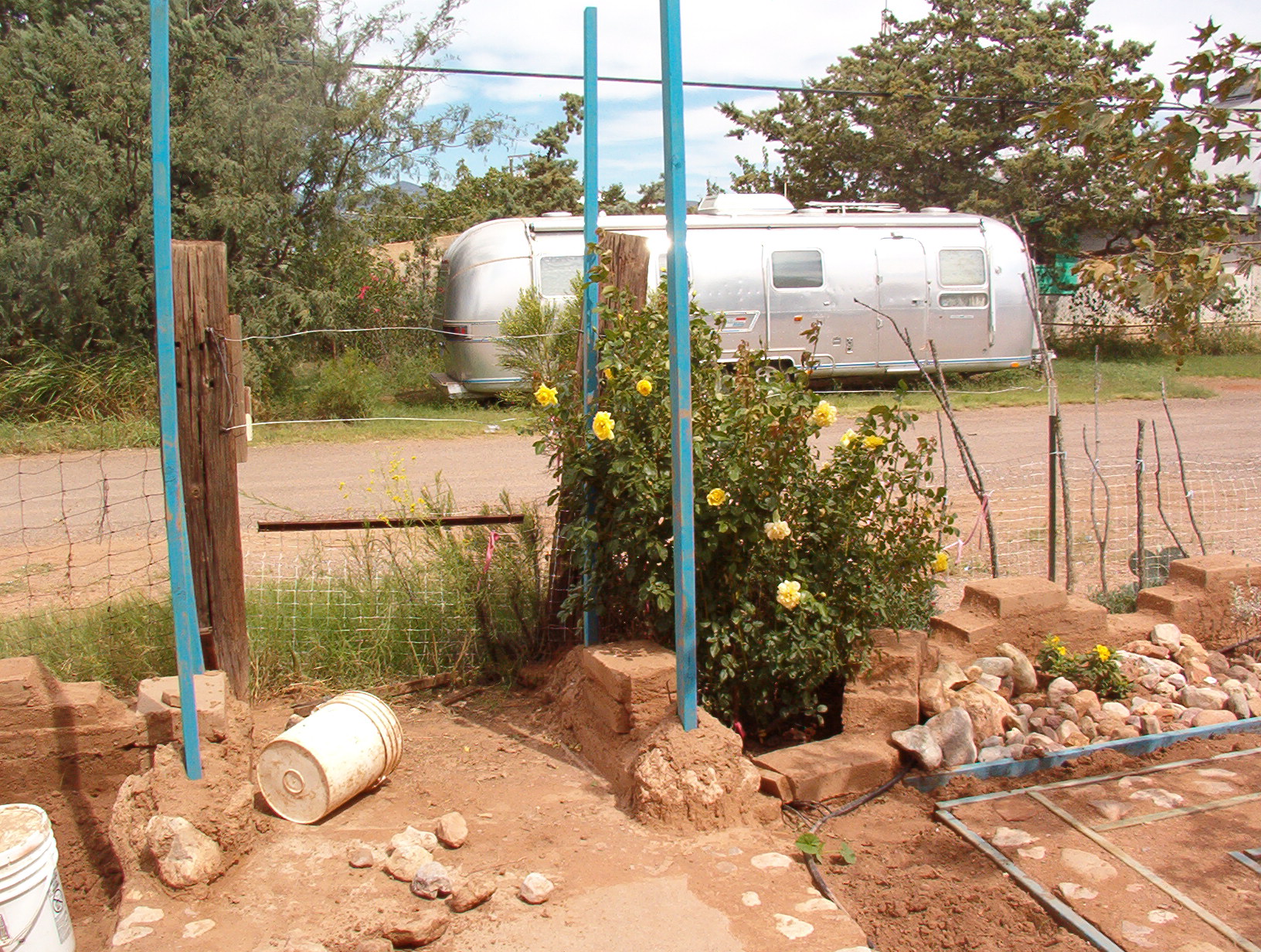
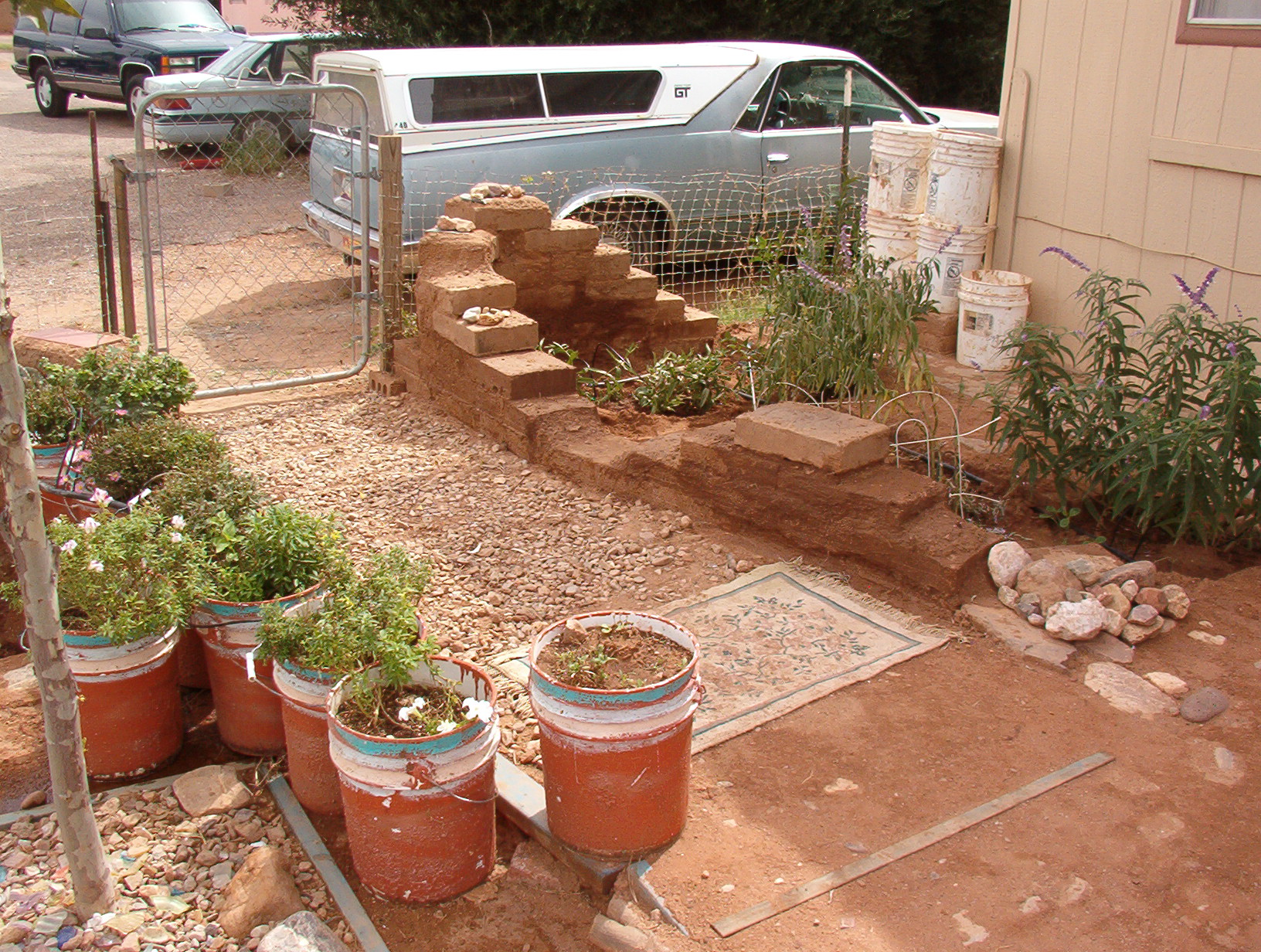
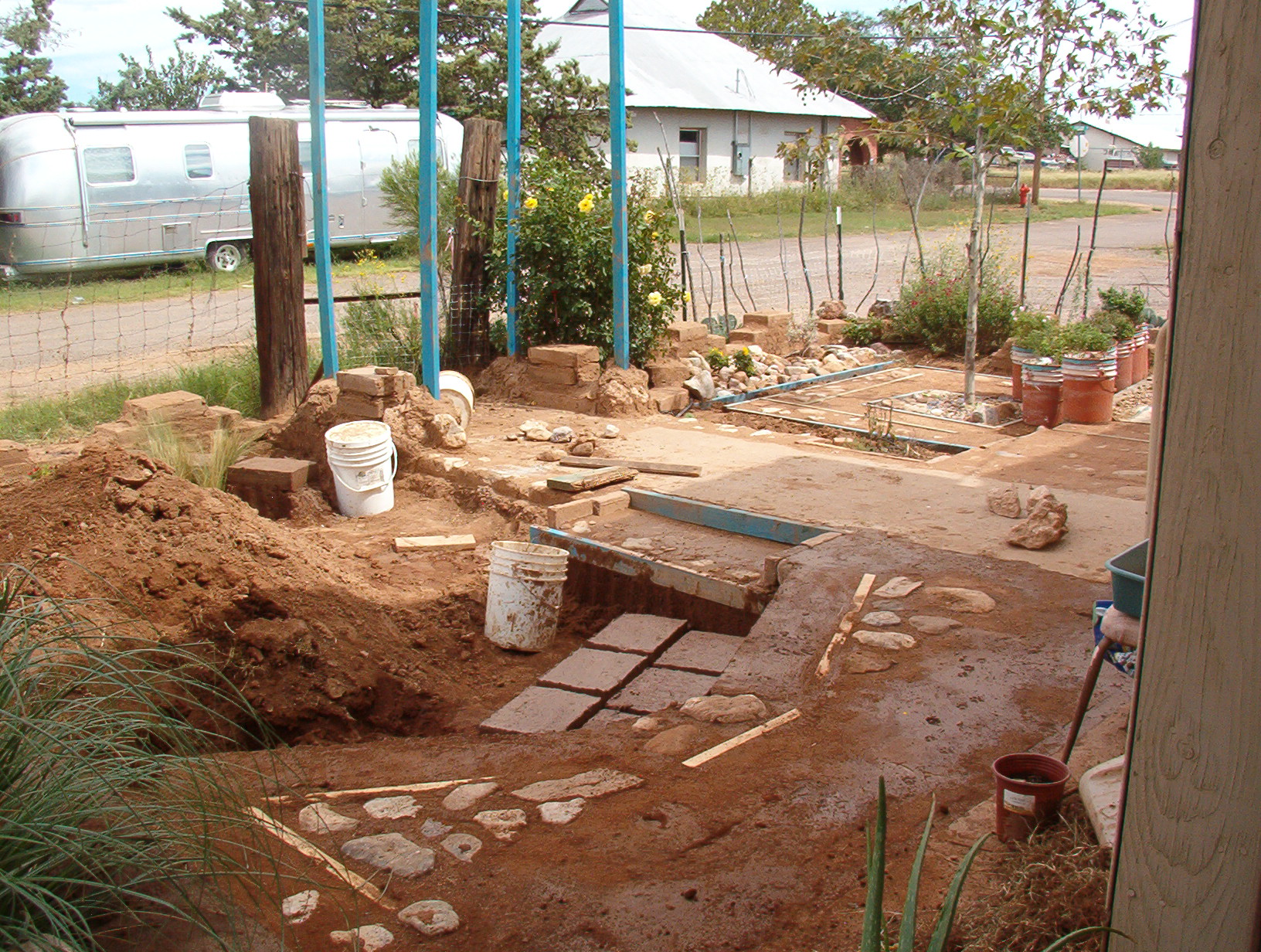
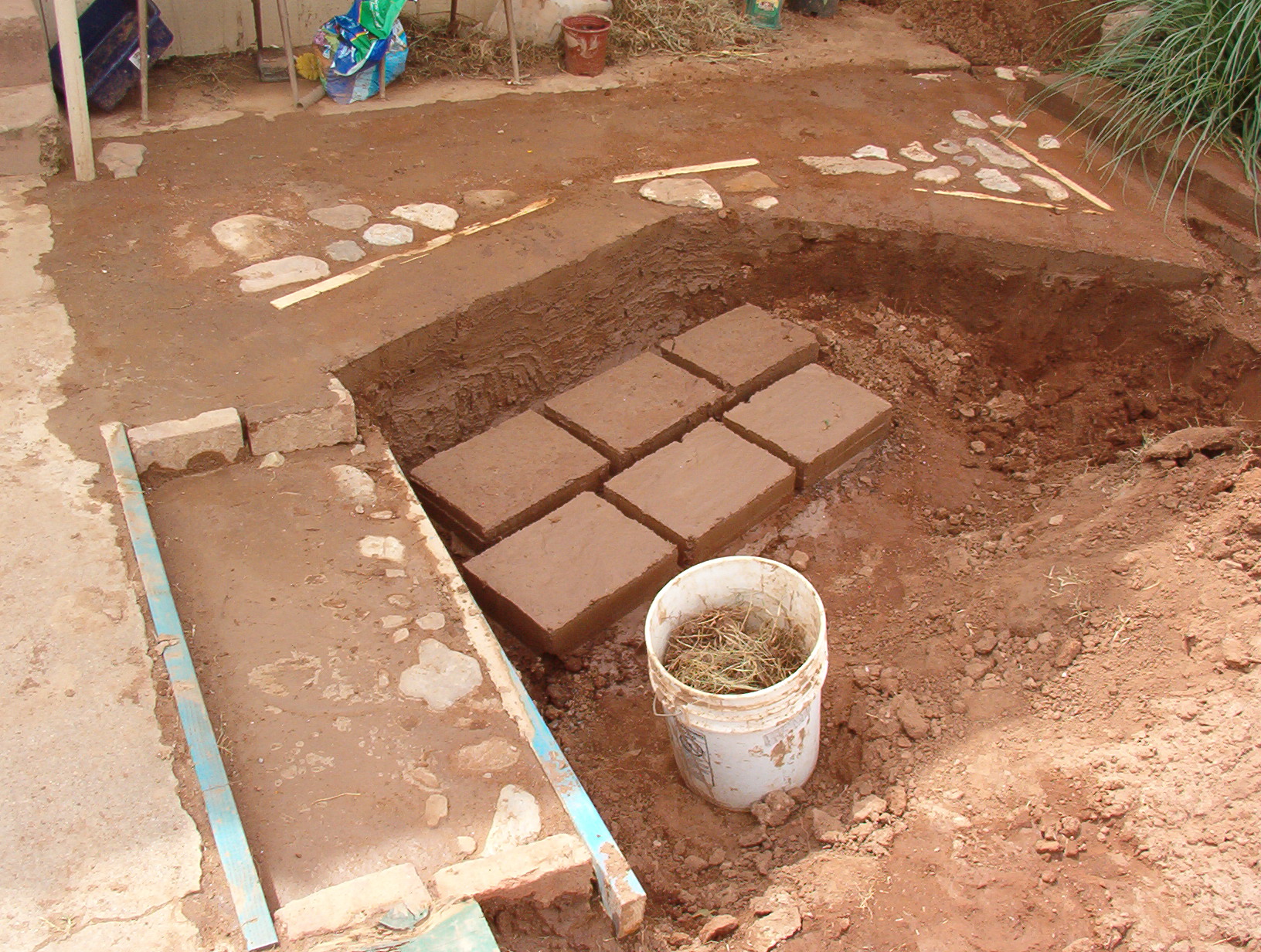
Here are a few pictures of my adobe work moving to the northwest and west part of the yard.  It was an overcast day, not too hot and perfect for this work:

Blue 8' posts for the rose arbor -- this job is currently on hold awaiting more funds for more 2' X 4' boards -- rose seems happy with its new drip system! (Pardon the warping boards - not kiln dried, sun dried and BENDING!)
The north bed - not 'fine tuned' finished yet
Far top left of picture is a honeysuckle and a jasmine -- that corner of yard is bone dry! Still awaits its dripline, need to see how the new beds form up. I am going to try to figure out how to channel rainwater from the roof over to that corner of the yard - eventually!
New little 'patio' and lower walkway forming - due to rainwater coming off this roof-line, this soil is perfectly moist for 'deep digging'!
Built adobe planter around the Pompas (looking due west)
Looking northeast, new spot being dug for another climbing rose beside the blue arbor - pile of dirt will make bricks on west of house, entire area there will be dug out and removed down 2' - 3'
Step down from sidewalk, lower walkway below it is forming

Started walkway on west side of house today -- soil lies one block depth below the sidewalk -- BIG pile of dirt being excavated in center of front yard will be used to make these bricks
west walk continued

Just to remember, this was how it looked in the beginning

The nasty Bermuda grass roots and runners DO go down 2 feet! Thus, added need to dig, dig, dig -- and shaking roots and picking out tiny pieces is SLOW work! Along with picking out the earth worms (YAY!) and watching out for little frogs in the moist dirt!

++++++++++++++++++++++++++++++

+SOME PRIMARY LINKS ON INFANT VERBAL ABUSE

+++++++++++++++++++++++++++++

A reader passed through the pages of this blog last week using these search terms to get here:  NEW MOTHER VERBALLY ABUSING INFANT.  According to recent statistics, 1 in 50 infants suffers from nonfatal abuse.  Even in reports from 2005 – 2006 our nation had almost a million children experiencing malevolent interactions with their caregivers that reached the attention of child protection services.  We are not talking about a problem to sneeze at!!

TAKE INFANT VERBAL ABUSE EXTREMELY SERIOUSLY!  These links below explore some of the permanent consequences of verbal abuse to tiny, growing and developing people!  In my opinion there is very little RIGHT in the life of an infant who is being verbally abused – and physical abuse is simply the other ‘hand’ of the problem:

Scholarly articles for verbal abuse brain development

The Effects of Verbal Abuse on a Fetus | eHow.com

Verbal abuse in childhood may result in brain abnormalities

Childhood Abuse, Brain Development and Impulsivity

Providentia: Does Child Abuse Affect Brain Development?

Early verbal abuse may reduce language ability

Annual Research Review: Parenting and children’s brain development: the end of the beginning

++

What is Infant Mental Health?

++

Child abuse: How to tell if something’s wrong

Recovery from Abuse · Prenatal and Infant Abuse

Child Abuse Prevention During Infancy: Intervention Implications for Caregivers’ Attitudes Toward Emotion Regulation

Scholarly articles for infant abuse intervention

Home Visiting as an Intervention in Infant Mental Health

Intervention with infants at risk for abuse or neglect.

From Science to Public Policy:  Early Intervention for Abused and Neglected Infants and Toddlers

MultiCare > Child Abuse Intervention

(2005)  Preventing Child Abuse in Infants

IMPORTANT from the American Humane Association:  LINK ON INFANT-CHILD EMOTIONAL ABUSE

++

Scholarly articles for infant abuse risk factors

Stressed parents with infants: reassessing physical abuse risk factors (1999)

INFANT EXPOSURE TO DOMESTIC VIOLENCE PREDICTS HEIGHTENED SENSITIVITY TO ADULT VERBAL CONFLICT

World Association for Infant Mental Health

Defining infant mental health as the ability to develop physically, cognitively, and socially in a manner which allows them to master the primary emotional tasks of early childhood without serious disruption caused by harmful life events.  Because infants grow in a context of nurturing environments, infant mental health involves the psychological balance of the infant-family system.”

WAIMH Handbook of Infant Mental Health, vol 1, p.25

++

Center on Infant Mental Health and Development

The mission of the Center on Infant Mental Health and Development (CIMHD) is to promote interdisciplinary research, education and practice and advance policy related to the social and emotional development of all children during the first five years. This work is framed within a universal awareness of the importance of these early years and is aimed at supporting relationships between caregivers and young children.”

++

Because the First Three Years Lasts a Lifetime

Who We Are

Vision

Every child has the right to the early nurturing relationships that are the foundation for life-long healthy development.

Mission Statement

The Center on Infant Mental Health and Development promotes interdisciplinary research, education and practice and advances policy related to the social and emotional development of all children during the first five years.

Goals

  • To advance knowledge about infant mental health and the centrality of early relationships to the healthy development of young children.
  • To promote collaborative university-community partnerships for infant mental health education and training, advocacy, and clinical research;
  • To offer educational opportunities in infant mental health at the undergraduate and graduate levels;
  • To promote the mental and emotional health of young children and their families through effective preventive approaches to children’s emotional, social and behavioral problems;
  • To conduct longitudinal and clinical research to increase our understanding of the development of vulnerable children, and effective community and family intervention efforts on their behalf;
  • To devote special attention through research, education and services to improve the social and emotional health of vulnerable children who already exhibit developmental delays, and those whose families experience risk factors such as domestic violence, extreme poverty, homelessness, absence of social supports, substance abuse or mental illness.

++

Why is Infant Mental Health Important?

++

ZERO TO THREE – HOMEPAGE

OUR MISSION

ZERO TO THREE is a national, nonprofit organization that informs, trains, and supports professionals, policymakers, and parents in their efforts to improve the lives of infants and toddlers.

Our mission is to promote the health and development of infants and toddlers.

++

RESOURCES —  Early Childhood Mental Health, Social-Emotional Development, and Challenging Behaviors

++

All kinds of helpful links will appear if you do a Google search for the terms:  INFANT VERBAL ABUSE

Even more with a Google search for the terms:  INFANT ABUSE

The most important information you can arm yourself with – either as an infant caregiver committing or at risk for committing verbal and physical abuse of an infant – or as a person concerned about the well-being of an infant not your own, please begin to inform yourself further by following links that come up with a Google search on these terms:  INFANT ABUSE BRAIN DEVELOPMENT as well as with INFANT ABUSE ATTACHMENT

+++++++++++++++++++++++++++

+BEING PROACTIVE TO TRAUMA TRIGGERS: WHAT DOES OUR BODY AND OUR TWO BRAINS KNOW?

++++++++++++++++++

Something on my blog’s admin page under ‘Top Searches’ has again especially caught my attention:

how to proactively look for triggers from abuse

My first response was, “What an excellent question?”

That this searcher at least temporarily made some kind of contact with my blog in response to these search words make me wonder if I have anything here that actually answered any part of this question in any way.

Of course I have no idea what part of the ‘abuse’ spectrum this searcher was inquiring about, but the question itself tempts me to believe that because the word ‘triggers’ is included in the search, the abuse was severe.  At the same time, this searcher did not use the word ‘trauma’, so the field of inquiry was obviously limited to ABUSE rather than to any other kind of overwhelming and negative event.  Yet a concern with ‘triggers’ would be the same whether a person thinks in terms of a specific abuse or in the more general terms of ‘trauma’.

++

To me, abuse and difficult traumas share an important underlying condition — that of feeling (and/or BEING) overwhelmed by an event that is harmful to one’s well-being.  Therefore the issue of competence to counteract the event as it happened comes into play along with degrees of POWER and POWERLESSNESS.

This searcher’s question alerts me to a very positive relationship with these issues.  Our work toward learning how to be proactive involves both an effort to improve our competence and our ability to have as much power over our lives as we can healthfully manage to have.  This is resource management.

To be most healthily prepared for our entire lifetime in this world we need to be as flexible (not rigid) and as resilient as we possibly can.  TRIGGERS can interfere with both of these well-being aspects because what happens to us inside of our body in response to any trigger most often happens in our body — automatically — and without our conscious effort.

We need to increase our conscious ability to MANAGE all the inner resources including our responses to the world we live in.  In order to increase our conscious participation in our life we MOST need one very critical resource — INFORMATION.

When our body is receiving and responding to information without our having the ability to consciously manage its (our) response, our body is having access to information that our BRAIN-mind-self is missing.

I think about above ground and below ground information-getting and information-responding.  Above ground information that moves through our conscious awareness by nature requires the involvement of what might be called our ‘higher brain’s involvement’.  Below ground information is received and processed by our body automatically WITHOUT these ‘high brain regions’ being a part of the information-gathering or the information-responding loop.

When we introduce abuse and trauma into the topic, it is critical to remember that involvement of our higher brain abilities is SLOWER.  Much, much slower, and far, far more efficient as well as most-likely-to-succeed in response to immediate threat to our well-being and our life.

Automatic below ground processing is VERY VERY FAST.  Our body has evolved over many generations and throughout many cycles of difficulties as a part of our species to USE this below ground immediately available, rapidly generated and unconscious response-ability to maintain the life of our species.

If our body has in the past been told through abuse and trauma encounters that we are not safe and secure — enough — in the world, the balance of power in our body will automatically — and very naturally shift toward the unconscious immediate response end of our competent-response spectrum.

WHY?  Because in the majority of cases, these rapid automatic unconscious responses are far more likely to SAVE us than are the slower, pondering (in comparison) conscious ‘higher brain’ responses.

Plain and simple.

So, if we have experience with overwhelming abuse and trauma under circumstances in which there was nothing at the time we could do to THINK OUR WAY out of the situation or to THINK OUR WAY past the horror as it immediately happened to us, our fast responses kicked into play — and they are far more likely to do so in the future than if we had never experienced severe abuse and trauma in the first place.

++

So if we introduce on our own behalf the idea that we wish to take back control over the mutineers of our body who usurped our conscious power — in our own best interests — we have to begin to gain information that BOTH levels of our SELF can work with.

First of all, we must work on the level of having a safe and secure attachment to the world, in our body, and within our own mind.  This will NOT happen easily if we had an unsafe and insecure early beginning as an infant-child that built trauma response into our growing and developing body-nervous system-brain.

Early trauma survivors have a much greater task to accomplish if they wish to gain increasing ability to be PROACTIVE — and therefore increasingly CONSCIOUS — about how they are responding to ALL aspects of being alive in a changeable world.

The more conscious INFORMATION we can gain about who we are, how we are formed, how our body operates, about the nature of the abuse and traumas we experienced, and about how our body thinks it is BEST PREPARED to respond to threat and danger — the more power we will have to apply to our efforts to be proactive in response to possible abuse and trauma triggers that we may encounter in ‘the future’.

++

One of the key and central consequences to trauma reactions as they build themselves into our body is — as I mentioned recently — an altered sense of time in the body.  Once we have experienced trauma that forced us to experience ‘a peritraumatic altered sense of time’, on some level our body has learned a critically important piece of information:  Trauma can happen ANY TIME, ANYWHERE!

If we are working toward being prepared to live a proactive life, we MUST understand that our body has only two ends to its sense-of-time continuum:  Being alive or Being dead.

In between these two ends of the time spectrum the body has come to understand that there is only one very long (hopefully – because being DEAD greatly shortens this line!) ongoing experience — BE CONSTANTLY PREPARED BECAUSE THE THREAT IS CONSTANTLY PRESENT.

The more severe the traumas we have experienced (including the younger we were when they started) the harder it will be to convince our body that our ‘higher brain’ part of who we are is capable of protecting us.

The automatic trauma responses that our body is continually preparing itself to carry out happen in a very FAST world where trauma can happen again out of nowhere INSTANTANEOUSLY.  The body is not going to let go of its competence in being emergency-prepared.  The body lives on this very FAST time track, and to gain increasingly conscious powers to determine the ACTUAL course of our life we have to learn how to be a TIME bandit.

The body has usurped the power to experience time and all possible responses within the span of the time of our lifetime.

If our higher conscious brain wants some of this power over time for its own needs and purposes, it has to negotiate with the body (in my opinion) over this most central issue — TIME, which is our lifetime.

++

In essence, this negotiation has to happen in a cooperative environment — between our RIGHT brain which is the spokesperson for our body and all that it knows, and our LEFT brain which is the spokesperson for our higher (slower) thought and reaction processes.

The ONLY way this negotiation process is going to move toward positive ends is IF a person has the lowest possible level of overall stress and reactivity in the environment of their life.

Nobody can ever control for all the possible unforeseen traumas that might pop up out of nowhere at any time.  BUT being proactive is to recognize this fact at the same time life can slow down and be ENJOYED, not only endured and survived.

In order for this negotiation between the time bandit of the body with its automatic and unconscious immediate response, and the time bandit of our slower conscious brain abilities to steal back some ‘control’ over how the time of our lifetime is actually spent, is for a PERSON on all levels to be living in an inner state where they can access peace and calm — both consciously felt and physiologically experienced.

That happens when safety and security that fosters a safe and secure attachment to and in the world, is present.  Safety and security along with access to states of peace and calm are the antidotes to trauma and abuse.

++

Our most ancient body responses happen to keep our body alive so that we can procreate and/or take care of our offspring.  Our most ancient body memory doesn’t care a HOOT if we are peaceful, calm or happy — just that we survive.

If we want ‘control’, or the ability to consciously manage our reactions to our environment, we have to understand with the deepest possible admiration and gratitude that our very fast automatic body-based responses are our most powerful asset.  Our body is not our enemy.

Cooperation and negotiation happens where and when mutual respect and appreciation exist.  This is where peace and calm lie.  And when we think about what our right brain knows and does, and what our left brain knows and WANTS us to do, I find it helpful to think about these two brains we have as if they are each a great and powerful nation — neither one to be taken for granted or tampered with.

We talk about our two brains in terms of the right hemisphere and the left hemisphere.  I find it useful to add into my consideration about what each of these two hemispheres evolved to best accomplish in keeping us alive thoughts about the two distinct and different CULTURES that each hemisphere lives with.

If we wish to become more proactive in our life on every level, and especially if we wish to become more proactive regarding our response both to trauma and to its triggers, it is ALWAYS helpful to investigate these two cultures.  The more information the entire brain, our entire self has about our two brain hemispheres the better!

++

Our two brain hemispheres each have TIME terms within them that are vastly different from one another.  The left brain has regions devoted especially to sequencing actions.  That is the area of our entire brain that had to be highly developed BEFORE we could begin to make good use of the FOXP2 gene that we carried for a long time before it could be activated for our verbal language abilities to appear about 140,000 years ago.

That sequencing part of our left brain is what we rely on to make good of our intentions to be proactive about anything.  Being proactive means that we are taking control over TIME along with TIMING.  It allows for things to be put into the perspective of past-then, NOW, and future-then.  Proactive is about accessing information from the past as it applies not only to our present but also as it helps us to proactively prepare for the future.

++

NOT SO within the culture of the right brain hemisphere.  EVERYTHING IS ALWAYS PRESENT in that world.  The right brain is friends with chaos because it was designed by nature to hold within it ALL POTENTIAL FOR ALL POSSIBILITIES.  And because life can be so unpredictable, the right brain is also friends with trauma (trauma being such a close relative to chaos).

That might seem to be a strange concept, but without having an ability to ‘stay friends with the fact of trauma’ we could not have evolved.  While nobody has ever LIKED trauma, everyone knows it continues to exist just like we do.

++++

I am going to pause here and throw in something my right brain hemisphere wants to mention.  Yesterday morning I had a friend over to visit who works at our local thrift store.  The store is connected to a very well-established local effort that supports low-cost housing.

I have a collection of indoor aloe vera plants that cannot survive outside in the winter’s cold.  They have spent the entire summer multiplying in pots under the shade of my plum tree.  Yesterday’s plan was to have my friend help me divide all these babies so we could plant each one in a little paper cup.  They will be taken into the thrift store and sold.

All fine and good.  We were out there with our chairs under the shade of the plum tree’s leafy umbrella, armed with our spades, cups, and big dish of moist sandy soil.  I pulled out one full tray of confused plants.  We divided and potted away until suddenly the potential for trauma appeared.

Key word:  suddenly the potential for trauma appeared

This blog’s readers know I spend as much time as possible outside.  I dig and work and landscape.  In the back of my mind I HAVE to have known that such a potential for trauma MIGHT appear.  But after yesterday’s event, believe me I am going to have caution much more up-front in my body and brain.

I pulled out the fourth big tray of plants from under the tree, and suddenly there on the moist dark ground coming right for my friend’s feet was the largest scorpion I have ever seen.  I have lived here in this high desert going on eleven years and never have I seen such a large scary critter with legs.

In the four years I have been in this house, I haven’t seen even ONE scorpion.  But there it was!

++

One of the most important steps we can take in our efforts to increase our ability to be proactive regarding trauma and its triggers it to pay very close attention to HOW we react.  I can scrutinize my response yesterday, while at the same time being aware of the ‘shoulds’ and the ‘should nots’ that are naturally a part of the scrutinizing process.

The scrutinizing process is SLOW!  ALWAYS it is slow!  And when it comes to baseline survival reactions, SLOW is DANGEROUS — and we need to let our body know this.  We need to ALWAYS give our body permission to step in FAST with its lifesaving abilities when that is our best course.

AND, as the body knows, when in doubt — let the right brain with its deep roots into our body have the ball.

++

So, what did I do?  The scorpion stopped its movement about two feet from my friend and I.  As soon as I saw the critter (about 2 1/2 inches long in its body with its nasty toxic tail swung in a high arch over its back), I FROZE.

TIME again.  Think TIME.

Dissociation, one of the major consequences of long-term, early trauma exposure, is NOT necessarily EVER our conscious choice.  It scares me that my own dissociation is NOT predictably and dependably my strongest asset when it comes to reacting in the moment to a threat.  (This is what a disorganized-disoriented insecure attachment style-pattern-disorder can do to sabotage effective survival strategies.)

My brain hemispheres took the time to think about how I was going to respond.  Here was this dangerous predator, small as it was compared to us humans, way too close for comfort.  Yes, it had a right to live.  Yes, on some level it was a ‘bad thing’ for me to kill it.

Where was the wisdom in this situation?

How much TIME — and therefore increase risk of harm — did my LEFT brain need to decide how I was going to respond?

Yes, this is a small illustration of the topic of trauma and trauma response, of preparedness and the power of being proactive, but I did respond.  I told my friend to lift her feet off the ground and onto her chair as I slowly — not to startle the critter into movement — walked between the scorpion and my friend’s chair to grasp my long handled shovel.

I then returned with shovel poised in the air — and experienced my instant of self doubt knowing that I cannot trust  my aim to ever be entirely accurate because of the interference of my own self-doubts — as I brought the end of the shovel (hopefully) straight down on the body of the scorpion.

I caught its head under that edge, but so fast I could hardly detect what it was doing the scorpion used its front legs to dig down into the soil, under the shovel edge, so that it could lower its head into the dirt and escape.

My next response WAS as fast as it was instinctive and automatic.  Up down up down up down I raised the end of my shovel and slammed it into the soil as the scorpion turned and ran backwards.  Yes, I chopped it into little tiny pieces and killed it.

++

My newly reawakened proactive lesson from this?  No more being care-less stupid in sticking my ungloved hands in amongst my plants to move them, to pull weeds, to try to define root structures so I can try to pull the Bermuda grass out of them.  The experience also brought into my clear conscious awareness the fact that diamond back rattlesnakes are giving live birth to their pencil-sized offspring this month.  It is a dangerous time, and because we have been blessed with amazing amounts of rainfall much of the soil is moist, damp and cool.  Critters in this region — along with their potential for harm — can be hiding anywhere.

++++

In other words, considering that the name we have given to our own species means ‘The Wise Ones’, the more we can learn about not only potential traumas, and about their triggers, but also about how we are patterned both as a species and as individuals to both prevent where possible and to survive traumas, the better off we will be.

There is a TIME and a purpose to all of the abilities we possess.  What so often happens through exposure to abuse and trauma is that our BALANCE between the wise use of our resources for self-protection has been upset.

That, again, is where the healing balm of peace and calm has its OWN power to help us.  Peace and calm, the state that was SUPPOSED to be built into the center of our body-nervous system-brain-mind-self is the state in which we can examine our self, our reactions, and think about the environment we live in.

The state of peace and calm is the middle ground between our fast and our slow reaction abilities.  It is the state where negotiations between the cultural hemispheres of our left and right brain can come together and converse.

The state of peace and calm corresponds to the STOP arm rather than the GO arm of our autonomic nervous system (ANS), and is the place where true REST occurs.  In this state TIME is not acting to put pressure on any part of who we are.

This state of peace and calm is vital to our ability to repair ruptures and to restore our self from the demands of continuing to move forward in our life.  It is a place where risk, direct action, threat, active harm and consequence only come into play as we pay attention to anything we think or feel that is connected NOT to the present moment where our state of peace and calm resides, but EITHER to the past or to the future.

And when push really comes to shove, it is during the time of rest while we are asleep and dreaming that the two cultures of the two hemispheres of our brain have the TIME to process information they each have accumulated while we are awake.  To also learn how to let our two brain hemispheres work together while we are awake is a very good thing.

To live a life of increased well-being we can begin to more consciously understand the balance we need between the SLOWER and the FASTER reaction potential that lies within us.  This is how our highest brain functions can help us live an increasingly proactive (offensive) — rather than reactive (defensive) — life.

NOTE:  Now that it has been written I realize this post is about our reaction to trauma and its triggers, not about “how to proactively look for trauma triggers.”  I need to think about that separately.

(It is important to realize that over the time span of our specie’s evolution nature dictated that our growing and evolving brain NOT duplicate the ability to accomplish tasks because it was efficient and vital that our brain not get too BIG!  Our two brains didn’t each get their own separate house.  They reside together in a duplex!

Between these two living areas is a common space, called the Corpus Collosum, where under the best circumstances information is freely transmitted between our two hemispheres to be processed and understood equally by both regions of our brain – and thus our whole self.)

++++++++++++++++++

+TRAUMA DRAMA: WHEN IS THERAPY MORE OF THE SAME?

++++++++++++++++++++++

I would like to highlight a recent comment-reply about ‘therapy’ that is at the end of this post:

+THOUGHTS – INCLUDING DISMISSIVE-AVOIDANT INSECURE ATTACHMENT DISORDER

I have said this before on this blog, and it’s time to say it again.  If you are in therapy, there is nothing about the experience that means you need to set aside what you know about yourself.  “Listen to your gut.”

It is a fact that our earliest forming right social-emotional brain is the part of our brain that gathers all the information our body has to tell us about ‘its’ experience in the world.  When you hear the expression, “I had a gut reaction” or “I knew it in my gut,” the right brain with its physiological roots in our body experience and awareness is what the ‘gut’ truly is.

The other, more accurate way to say this is, “I am having a visceral reaction.”

++

VISCERAL

Date: 1575

: felt in or as if in the viscera : deep <a visceral conviction>

: not intellectual : instinctive, unreasoning <visceral drives>

: dealing with crude or elemental emotions : earthy <a visceral novel>

Definition of VISCERA

plural of viscus

1  : an internal organ of the body; especially : one (as the heart, liver, or intestine) located in the great cavity of the trunk proper

++

We are taught that ‘feelings’, including the identified physical ones like touch, heat, physical pain, are not ‘reasonable’.  That is a myth.

What we all need is for the information our right brain knows to be passed over the ‘wall’ to our left brain so that they can — TOGETHER — cooperate jointly, equally and in a balanced way with our living.

++

I meant what I said in the reply to the comment I mentioned above.  There is nothing particularly extraordinary about therapists.  Most of them, I would guess, come from troubled pasts of their own.  If they have not explored the new research about the formation of our ‘attachment’ circuitry from birth — especially as it is altered through traumatic early infant-child conditions of unsafe and insecure with our caregivers — a therapist really has no REAL (and therefore reason-able) idea what ‘attachment’ really is, what it does, what it is meant to do, what it does NOT do if our early development was changed by trauma, or how to FIX our attachment ‘problems’.

Simply being told that we ‘won’t make progress’ or ‘won’t get better’ if we don’t ‘form an attachment with them’ belongs — in my thinking — to the trauma drama side of the fence.

With these simplified, often inaccurate demands often made by therapists clients are left believing there is ‘something wrong’ with them that they can’t or won’t or don’t want to form one of these illusive ‘attachments’ to their therapist.

Your gut (your viscera) will tell you when the trauma drama wheel is in full motion in your therapy.  There is nothing more important in my thinking than for a ‘client’ to be allowed to trust the information their gut (through their right brain and in cooperation with their left brain) is telling them.

++++

True, most clients in therapy today probably have had traumatic pasts.  If the trauma happened early in their life, if they were born into trauma drama, they will be caught in the web of trauma drama in their own life at the same time that they have an unrecognized, unexplored, and unexplained INSECURE ATTACHMENT DISORDER.

Telling a client whose physiology was changed early in their development because their entire body-brain-mind-self had to change and adjust to survive trauma that what will ‘fix’ them is the formation of an ‘attachment’ with their therapist is like telling that same client that, like Dumbo, all their problems will get better if they only do what it takes (being told “You can do it if you want to and are willing”) that they can FLY.

HOGWASH!

If, as I mentioned in my reply mentioned above, any therapist has not thoroughly studied current developmental neuroscience about human attachment, in my book they do not know what they are talking about.

CONSUMER BEWARE!  CONSUMER, BE AWARE!

++++

What I have been writing about in my recent posts about insecure attachment styles-patterns-disorders, resentments, Grice’s maxims and trauma drama applies here.

If our body, through particularly the experience of our right brain, is telling us that we are NOT feeling peaceful calm, then at the same time we are not feeling safe and secure (the essence of secure attachment).

If we do not have peace and calm built into the center of our nervous system-brain because of our altered development in infant-child environments of trauma and abuse, having someone, even a therapist telling us to ‘get there’ – form ‘an attachment’ – ‘feel safe and secure’ – feel peace and calm — will NOT magically make this state appear in our body, our brain, our nervous system, in our mind — or in our self!

What, in my opinion, so often happens in therapy IS a continuation of trauma drama if

(1) there is too much of the wrong information given

(2) there is not enough of the right information given

(3) the information being given is not REALLY (or reason-able) accurate to what is really important and is therefore ACTUALLY IRRELEVANT

(4) the TRUTH about the facts is MISSING

When this happens a client’s BODY will tell this this is the current state IF peace and calm is not an increasingly more present state between the client and the therapist.

True, there are many therapeutic theories and strategies that encourage what is called PROJECTION — whereby the client explores feelings from the PAST in therapy as if they are connected to the therapist rather than to the person who actually committed the abuse and harm in the first place.

These same schools of thought (and therapist thinking and action) also ASSUME that if a client forms this mysterious ‘attachment’ to the therapist this entire process will not only HAPPEN — but effectively help a client to ‘heal’.

I am not going to argue with these thoughts.  What I am going to say is that if no one — not the therapist, not the client — REALLY knows what human attachment is PHYSIOLOGICALLY — what it does and why — the core difficulties within the client are not going to be changed in the way both the therapist and the client hope that they will.

++++

Anyone who is reading this post has access to relevant information necessary to become — most of the time — more educated about attachment than their therapist is likely to be.  Simply Google search attachment and child abuse, or attachment and brain development, or attachment and ANYTHING and begin to educate yourself by exploring what pops up on your screen.

In my book, it is critically important that trauma survivors, especially infant-child abuse survivors, find and learn this information.  All of our physiology is affected by our human attachment system — no matter how it was formed.  Please follow the links presented in the comment-reply cited above!  To be in therapy to resolve trauma drama difficulties while being exposed to more of the same patterns in the therapy itself is NOT helpful — in my book.

++++++++++++++++++++++

+THE POWER OF LEARNING HOW TO SHORTCUT THE TRAUMA CYCLE

+++++++++++++++++++++++

Over the past thirty years since I first encountered the 12-step program’s emphasis on the absolute necessity of ‘letting go’ of resentments, I have until this past week always considered that what made resentments tick is anger.  Buried anger, sideways anger, justified or unjustified anger, recognized or unrecognized anger — any way I have looked at resentments from the viewpoint of my interpretation of what the 12-steppers say about resentments is that they carry within them the seed-kernel of anger.

From my recent experiences of having to re-look at the topic of resentments, it is NOW clear to me — from my own inner knowing place — that what I can tell about other people’s continuing resentments is that they do not carry anger.  They carry hurt from deep, unrecognized, undealt with, unhealed wounds.

Looking again at Grice’s Maxims as several of my recent posts have mentioned, I realize that the misinformation being communicated when a person expresses a resentment — the information that is OVERLY focused on in the expression, the irrelevant information that is expressed, and the truthful, powerful, important information that is NOT being expressed all end up pointing toward a wound that is too big to cope with in any other known way.

++++

Yes, resentments APPEAR most often to be anger focused and anger driven.  Anger holds a very specific (and special) place on the full circle of the stress-not stressed nervous system-brain survival response system.

I see peace and calm as being what we need at the center of this system.  Anger is at the “GO” area of the ‘fight’ stress response.  When anger is connected to good, effective, manageable, known tools for improving the chances of continued survival it is useful.  It is tied to both confidence in known abilities to solve problems and to competence.

In effect, anger says, “I have seen this problem before and kicked its butt.  This is how I did it, and I know if I use these same tools and abilities THIS time it will lead to the same positive results.  The problem will be solved and the ‘threat’ will be beaten.”

++

If the stress-calm response system is operating effectively, when it is seen that the anger-fight response was NOT successful, a person automatically moves into the next quadrant of the response system — FEAR.

Fear, of course, can be tied to continual experience of anxiety.  What matters is that fear lead forward into something effective for solving the threat-conflict-challenge.

Fear is designed to give us the information that what we tried before to solve a similar problem was NOT effective this time around — on this particular problem we face.  The fear is the body’s response to the recognition of lack of competence to overcome and ‘beat’ the challenge, and thus to the feeling state of lack of confidence.

Fear says, “Uh Oh!  THAT sure didn’t work!  Now I am in big trouble!  I better learn something new here, and learn it fast or I am Bye Bye!”

It’s great if a person can jump off of the twirly stress-calm response carousel right here by learning something new from the situations surrounding THIS particular trauma.  They can simply take a shortcut back to the anger quadrant of the circle and get to work — and WIN — whatever that entails — so that they can as quickly as possible return to the center point of peace, calm and well-being.

++

But what if nothing can be discovered to cope in a new effective way with the immediate challenge?  What if one tries their darnedest and comes up with — ZIPPO?  Oh, dear, and you guessed it!  The person moves on to the next quadrant of this response circle into sadness.  And oh this can be just as big a problem as ending up stuck in either of the previous two spots of anger or fear.

BUT — and this is something I thought a lot about about a year ago.  SADNESS is one of the most positive points on this circle a person can reach because if any particular problem that has not responded to all known attempts to apply what is known fail, this is the most productive spot for learning something very new, very different, very creative — and very productive.

At the same time in our current culture sadness can be the most difficult state to move out of.   It is like finding oneself stuck in a giant pothole or trying to get over a giant hill.  When in sadness, our life force, our energy, our confidence, our sense of competence to solve problems in a great way so we can get back to peace and calm are at its lowest.

And it is at THIS point on the stress-calm response system circle that I think resentments lie — not at the anger spot.

Resentments, though they do not usually seem to concern themselves directly with a REAL problem, only some fantasized version of an irrelevant problem, are actually probably about sadness — hopelessness — despair.  What is lacking at this particular point on this system-wheel is most often the ability to access the needed external support and encouragement from other people.

Tossing resentments around at others does not quite motivate them to step in with warmth and compassion to lend a willing helping hand.

Resentments thrown at others is most often (in non-trauma drama conditions) to bring this response.  “I have no idea where you are coming from and I am not remotely interested in finding out.  When YOU figure it out, let me know.  I am NOT going to join you in THAT misery.”

++

I haven’t yet mentioned what I see as the 4th point on this survival wheel.  While it is a response point that is BEST entered FIRST when a challenge appears to ongoing life and/or well-being, it can also very commonly be the LAST point we enter.

But no matter whether we get there first when we receive a challenge, or last if we are faced with something we have no effective first response for, it is the one that benefits us as do no others.

If a challenge does not overwhelm our abilities to respond to it effectively, we simply leave our center point of peace and calm into the quadrant of confident competence — and deal with it.  From there, once the problem has been solved, we can take the very simple and very short step back to our center of peaceful calm.

I used to include joy and happiness in my thinking about this survival response wheel, but I no longer do.  Feeding my suspicions is the physiological fact that our ‘happiness center’ resides in a particular very small area in our later forming LEFT brain, not in our earliest forming, directly-body-connected, more ancient emotional-social RIGHT brain.

All the processes I am describing within the stress-survival wheel happen in connection with perceived threats that are fundamentally challenging our well-being on a deeper level than do those that simply challenge our more peripheral ‘happiness center’.  This state of happy joy is, in my thinking, a more highly evolved condition that relies upon all the other systems in our body to work profitably and effectively.

++

If a person has ‘learned’ adequate responses to solve problems and knows how and when to use these responses, the ‘fight’ or anger quadrant of our survival response never needs to be entered.  Neither does the fear one, or the sadness one.

But few of us are so fortunate to ‘win’ in every situation first time around.  We are left in vulnerable bodies feeling vulnerable and have to WORK and LEARN as we go on through life.  Getting stuck in any place around the wheel means that we are deprived of the benefits of spending the majority of our time in the life-nurturing center of peace and calm.

++

So, when I think about some of the resentments other people who are important to me tossed in my direction lately, I do agree that their resentments do not accurately follow Grice’s Maxims of reasonable conversation or ‘polite speech’.  The resentments are not ‘on topic’ for the situations that stimulated their appearance.  The resentments are NOT providing enough of the right, accurate, truthful information about what the problem that person is facing REALLY is.  Hence, the resentments are not relevant.

Resentments are fantastic.  They are tied into a fantasy that by tossing out these particular ‘words’ nobody will really detect the true state of hopeless sadness that is, in fact, feeding the real problems.  Resentments are a cover-up for missing confidence and actual competence for solving problems that have created wounds that are not healing.

So, yes, it would appear that genuine empathy and compassion would be the most accurate response a resentment-receiver could make.

Not so simple as it might sound.

Because resentments are themselves signals that there is unresolved ongoing trauma in a person’s life, it can be very difficult to negotiate a non-trauma drama response in feeling, thought, word and action.  How to relate to a person who has just thrown the glove of combat while NOT responding in kind — and while avoiding stepping into the quicksand of ongoing trauma drama?

As far as I can tell the first step is for me to recognize that a problem-challenge has presented itself.  The second step is to try to accurately define what the challenge ACTUALLY is.

These two steps must be taken on some level every single time we are challenged with a problem, large trauma or not.

The third step is for me to assess my abilities to respond effectively and appropriately.  That I am having to stop and do this step AT ALL lets me know I lack the confidence in my competence to immediately solve the conflict-problem for myself (1st or is it the 4th point on the survival wheel?)

Well, in my case this won’t be the first step on the wheel.  I have to work through my anger, my fear, my sadness — and arrive hopefully at the fourth position of appropriate and effective response IN TIME.  It is not happening instantaneously.

I could be stuck in anger at the person, at the situation, at myself for not knowing how to actively cope with it effectively.  I could be stuck in fear that I did something wrong, that I am stupid, that I am going to lose this relationship forever.  Then I could be stuck in hopeless sadness.

OR, I can take the benefit from being in movement around this wheel which is — I am presented with the opportunity to LEARN SOMETHING NEW that will be effective THIS time, and possibly in the future as well.

If I CAN learn something new that works and might work in the future, I can possibly spare myself all this trouble next time!

What I do know is that because there is a problem-challenge (rupture) to my abilities that my known responses did not resolve (repair) I am left NOT feeling peaceful and calm.

While I am not responsible for how other people ARE or for what they DO, I am responsible (by choice) for finding new ways to process my way through life that do not involve me jumping into the quicksand of trauma drama — not my own, not anyone else’s.

++

What I suspect is most devastating about not having the RIGHT response to a problem-challenge immediately available (known and tested) is that as we then enter into the stress response wheel we lose our connection to that center place of peaceful calm.  What I want to explore here for myself in this new opportunity for learning that has been presented to me is this:  “Is there a way to allow myself to move around this very natural wheel of what it takes to learn something new to repair a rupture while I STAY CONNECTED to the powers that the/my center of peace and calm provide to me””

Because I have trauma altered development due to growing up from birth in an insanely abusive, traumatizing, malevolent world, I at the same time have two related ‘disabilities’.

(1) I have a disorganized-disoriented (dissociating) insecure attachment pattern built into my physiology — which includes my nervous system-brain-mind-self AND my stress-calm response system.

(2) I have co-occurring emotional regulation difficulties.

So what I want to practice is how to stay in contact with my peace and calm center, which lets me know that I am safe and secure no matter what at the same time I allow myself to feel all the other emotions that exist in my body, as they are processed, and as the information about how I feel is fed to my attention from my right brain.

In other words, how to I peacefully and calmly experience this state along with the other multiple and difficult emotional states at the same time — and ALSO continue to work my way through the stress circle to come out with a non-trauma effective solution?

Good question.  Very good question.  And I don’t yet have the answer but I have confidence at least that my efforts are positive.

I am also aware that I am working on the level of my physiology as I apply myself to this effort.  That alone is great progress for me, to know that I cannot live my life without my body being a part of every experience that I have!  I cannot simply try to THINK my way through this without feeling all of it also.

The other most important point for me to realize is my commitment to working my way through these present conflicts without dissociating.  It seems like a lot to ask of myself — like believing I could pick up 40 gallon milk jugs and begin to juggle them through the air like some imagined pro would.

Nope, wrong information.  Right brain, wrong image.  That’s as silly a thought and as useless and irrelevant as any resentment is.  I cannot resent myself for not knowing how to do everything perfectly.  It is not productive for me to fault myself for not knowing all the answers.

Rather I can encourage myself and think about all the things I have done competently.  And I can know that no matter what the problem-challenge, all of us can always learn something new, useful and effective!  And as we do this learning work we are wearing an ever deepening rut around the stress-trauma-calm response wheel so that every next time we are challenged we can move around it faster (or skip it all together) so that we spend less time in the difficult states and more time in the center state where peace and calmness supply us with our well-being.

+++++++++++++++++++++++