
+OUR NATION’S SUFFERING OFFSPRING: WE MUST EXAMINE HOW WE THINK ABOUT THEIR SUFFERING

++++++++++++++++++++++++++++++

One word or two?  Webster’s online dictionary says ‘common sense’ is two words.  A Dictionary of Sociology (1998) uses the one-word version:  commonsense.

Is this sense simply something that we share with all ‘lower life forms’?

Common Sense

According to Aristotle, the common sense is an actual power of inner sensation (as opposed to the external five senses) whereby the various objects of the external senses (color for sight, sound for hearing, etc.) are united and judged, such that what one senses by this sense is the substance (or existing thing) in which the various attributes inhere (so, for example, a sheep is able to sense a wolf, not just the color of its fur, the sound of its howl, its odor, and other sensible attributes.)

It was not, unlike later developments, considered to be on the level of rationality, which properly did not exist in the lower animals, but only in man; this irrational character was because animals not possessing rationality nevertheless required the use of the common sense in order to sense, for example, the difference between this or that thing….

Or does ‘common sense – commonsense’ require a social awareness of our selves as being connected to other members of our species on a conscious level?

Is there anything about ‘common sense – commonsense’ that requires of us that we use our higher-specie’s more complex abilities of rational thought and critical thinking?

“”Fluid Intelligence” directly correlates with critical thinking skills. You are able to determine patterns, make connections and solve new problems. When you improve your critical thinking skills you also improve your fluid intelligence which also helps increase your problem solving skills and deep thinking elements. All of these skills relate to one part of the brain, and the more you use them the easier it will be to put your skill to the test.”

According to the Wickipedia entry for Critical thinking, it calls for the ability to:

  • Recognize problems, to find workable means for meeting those problems
  • Understand the importance of prioritization and order of precedence in problem solving
  • Gather and marshal pertinent (relevant) information
  • Recognize unstated assumptions and values
  • Comprehend and use language with accuracy, clarity, and discernment
  • Interpret data, to appraise evidence and evaluate arguments
  • Recognize the existence (or non-existence) of logical relationships between propositions
  • Draw warranted conclusions and generalizations
  • Put to test the conclusions and generalizations at which one arrives
  • Reconstruct one’s patterns of beliefs on the basis of wider experience
  • Render accurate judgments about specific things and qualities in everyday life

Oh dear.  Sounds like WORK to me!  As opposed to critical thinking, commonsense (I will use this one word because I like it better) seems to simply become a part of us by osmosis.  We simply grow into adults who have naturally absorbed the ‘common’ understandings about people-in-the-world in alliance with what our culture suggests to us.  Questioning either/or our understandings or those of our culture TAKES WORK – and work takes time and committed focus and effort.

In my own thinking if I divide commonsense in half I come up with two other important words:  MYTH and DEBUNKING.  Unless we choose to think critically using fluid intelligence about matters of grave importance to the well-being of people, we can be contributing to other people’s suffering through perpetration of harmful myths without even knowing it – because we haven’t THOUGHT about the problems using the higher brain functions our species has been gifted with.

When it comes to the well-being of infants and children in our nation, commonsense and cultural mythical thinking appears to have the upper hand.  Few wish to examine the actual facts about the increasingly abysmal conditions that REALLY exist for our nation’s little ones so that CREATIVE SOLUTIONS can be found and implemented to improve those conditions.

I am left feeling hopeless, helpless, overwhelmed, and full of sorrow, concern and fear about the lack of well-being for at least half of our nation’s infants, toddlers, children and teens in America whose optimal needs are not being met during the critical growth periods of their development.  As our nation’s offspring suffer so too is our nation suffering.

The FACTS of the situation are grim.  As long as we deny the facts by sticking to commonsense opinions that are NOT based on facts, we as a nation are going to continue to slide backwards.  As a nation we need to take off our ‘rose colored glasses’ and begin to examine what we think we know about the well-being of infant-children by examining HOW we think about the problems they face and the suffering they are enduring.  It’s the least we can do – and hopefully it will help us move into the myth debunking stage of our thinking that we – and our nation’s offspring — so desperately need.

++++++++++++++++++++++++++++++

Commonsense Knowledge

This refers, unsurprisingly, to routine knowledge we have of our everyday world and activities.

“Different sociological approaches adopt different attitudes to commonsense knowledge… [as it] refers to organized ‘typified’ stocks of taken-for-granted knowledge, upon which our activities are based, and which, in the ‘natural attitude’, we do not question. …, commonsense (or, as it is frequently termed, ‘tacit’) knowledge is a constant achievement, in which people draw on implicit rules of ‘how to carry on’, which produce a sense of organization and coherence…. the central aim of sociology is seen as explicating and elaborating on people’s conceptions of the social world, and sociological analysis must always be rooted in these conceptions.”

++

Sociology and common sense

By Elizabeth M. Young

“Sociology is the science of human interaction and social behavior.  Common sense is the indigenous knowledge that comes from living and interacting in the real world and coming to conclusions that are passed on orally.  Science looks for either evidence or a compelling argument that is supported by serious examination of the evidence or by the best possible theoretical design and testing of hypotheses.

“Sometimes they are the same.  Sometimes they are vastly different in the rigors of testing and confirmation of deductions and inferences.  Sometimes both deal with very complex matters and sometimes both deal with simple matters.

“Common sense can be indigenous knowledge that has developed and been proven to be successful over long periods of time in dealing with the world, people, society and nature.

“Over time, common sense identifies the productive, defensive and reactive practices that result in success and survival.  In some cases, there is no objective, factual support for some practices.  In other cases, the predictability of nature provides the factual and logical support for certain practices.

“Generalization is more possible with Sociological conclusions that are made from data that comes from wider sources, is less personalized and is collected in greater detail.  Generalization can be less possible with common sense because of the limited, localized and personalized nature of experience, observation and understandings.

“Some taxpayers use common sense to assume that welfare recipients are mostly lazy people who just want to live off of the dole and who do not want to work.  The reality is that a majority of welfare recipients are either elderly, disabled, or otherwise unable to work, are only temporary recipients, or are fully employed but making low enough wages to qualify for specific welfare benefits and programs.

“Sociologists can access the databases of the social services agency and make rigorous examination of the detailed welfare information.  The average taxpayer usually has access to media reports and very limited data that is filled with non objective opinion, bias and factual error.

“Sociologists might study the economic, political, social and other conditions under disciplines of objectivity, ethics, rigorous methods of quantifying and collecting data, proving causality, modeling and other methods that can be more limited and capricious when developing common sense conclusions.

“The results are always to be tested against common sense that comes from real world, practical applications of ideas, policies and programs.  All regional, national or international programs are implemented at peril of being found inadequate to handle localized realities.  Thus, common sense, through surveys, notice and comment periods, and even lawsuits, is often taken seriously when large programs are being developed.

“To complicate matters, there may have been more objectivity when the common sense understanding was developed, while the sociological result might have involved less objectivity.  Both science and common sense might be supported by factually volatile oral histories, casually completed records, or by detailed records that  can are [sic] highly reliable.

“In summary, common sense develops from interacting personally and locally with the world and developing informal understandings and conclusions that explain things to personal and local satisfaction.  Sociology uses the scientific method to get to the reality and truth of matters in ways that can be challenged and tested again and again and that generalize to more of the world.

“In reality common sense, indigenous knowledge, and scientific method work together as the backbones of the social sciences.”  [all bold type emphasis is mine]

++++

Sociology in Our Times: The Essentials by Diana Elizabeth Kendall (Dec 2, 2008)

Sociology promotes understanding and tolerance by enabling each of us to look beyond intuition, commonsense, and our personal experiences.  Many of us rely on intuition or common sense gained from personal experience to help us understand our daily lives and other people’s behavior.  Commonsense knowledge guides ordinary conduct in everyday life.  However, many commonsense notions are actually myths.  A myth is a popular but false notion that may be used, either intentionally or unintentionally, to perpetuate certain beliefs of “theories” even in the light of conclusive evidence to the contrary.  (page 5)”  [bold type for emphasis is mine]

++

Sociology and Common Sense

Sociology and other social sciences focus on the study of certain aspects of human behavior. Yet human behavior is something with which we all have experience and about which we have at least a bit of knowledge. In our daily lives, we rely on common sense to get us through many unfamiliar situations. However, this knowledge while sometimes accurate is not always reliable because it rests on commonly held beliefs rather than systematic analysis of facts.  Sociology and other social sciences focus on the study of certain aspects of human.

Common sense is knowledge and awareness that is held communally (shared by majority of people). It does not depend on specialist education and in some respects states the obvious….  Many sociologists have responded that common sense is wrong and obvious truths are not so obvious.”

++

Common sense, “based on a strict construction of the term, consists of what people in common would agree on : that which they “sense” as their common natural understanding. Some people (such as the authors of Merriam-Webster Online) use the phrase to refer to beliefs or propositions that — in their opinion — most people would consider prudent and of sound judgment, without reliance on esoteric knowledge or study or research, but based upon what they see as knowledge held by people “in common”. Thus “common sense” (in this view) equates to the knowledge and experience which most people already have, or which the person using the term believes that they do or should have. Another meaning to the phrase is good sense and sound judgment in practical matters.”

++

Debunking is a process of questioning actions and ideas that are usually taken for granted.  It refers to looking behind the facade of everyday life.  It refers to looking at the behind-the-scenes patterns and processes that shape the behavior observed in the social world (Andersen & Taylor, 2001:6).” (Based on the work of Dr. Peter Berger)

++

According to Martin Teicher, MD, PhD, director of the Developmental Biopsychiatry Research Program, “science shows that childhood maltreatment may produce changes in both brain function and structure. These changes are permanent. This is not something people can just get over and get on with their lives.”

++

+U.N. REPORT CARD ON CHILD WELL-BEING AMONG GLOBE’S 24 RICHEST COUNTRIES: AMERICA FLUNKS!

+THE UNITED NATION’S REPORT CARD ON AMERICA’S CHILD WELL-BEING – THE WIDE GULF BETWEEN THE HAVES AND THE HAVE-NOTS: AM I IMPASSIONED OR EMBITTERED?

+CLEAR ARTICLE ON LIFELONG INFANT-CHILD TRAUMA CONSEQUENCES

++++++++++++++++++++++++++
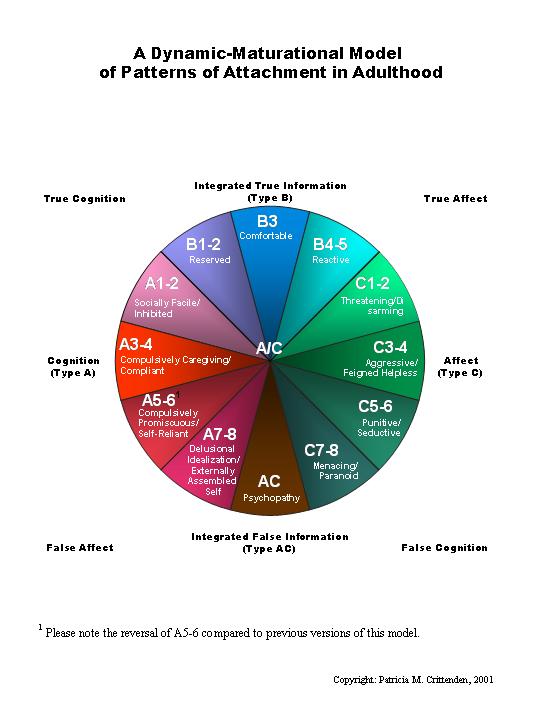
+ENCOURAGING A READ OF THE ADULT ATTACHMENT ASSESSMENT INTERVIEW (protocol link here)

+++++++++++++++++++++++++++

This is the first time I have encountered the literal text and process of the Adult Attachment Interview (AAI) Protocol by Mary B. Main (The Berkeley research for this interview also included Herman Hesse.).  The site that hosts this information specifically requests that the material not be reproduced without permission of the author.  Please click on this active link and take a look for yourself if you have any curiosity at all about how anyone could accurately measure secure or insecure attachment in adults.

As I read this protocol and try to imagine how I would respond to these questions in an Attachment Interview I can immediately see what a terrible scrambled up mess my own narrative-story of my childhood (and adulthood!) would be!  I suspect the same reaction would be true for any other severe infant-childhood trauma and abuse survivor.

It’s worth the time to clock on the links above just to confirm for yourself – were your earliest experiences calm and soothing and happy – or not?  As I understand it, nobody can fake their responses to the questions such an interviewer would use from this protocol.  For all the marvelous information this interview can provide us about our adult attachment patterns, unfortunately for the lay public access to a certified interviewer is all but impossible to achieve.  We certainly will never find a therapist who could guide us through the healing of our responses to the questions posed in this protocol, either.

Instead of wading around in and drowning in the sloppy mess of a field that ‘mental illness treatment’ has become, how much more efficient, accurate and effective it would be for all severe early abuse survivors to be given access to our ATTACHMENT history and patterns coupled with therapy about the TRUTH of our lives rather than be given any other diagnosis.

We MUST understand that it isn’t any specific ACTUAL memory that we might recall during the AAI that matters.  What matters is HOW we tell our story not the WHAT our story is about.

I think about driving at night with my headlights on.  While I am driving I cannot see the actual headlamps — the source of the light.  Our earliest experiences operate within us in a similar way.

What happened to us conception to primarily age one in terms of our interactions with our primary caregivers MATTERS MOST.  Either we had safe and secure attachment patterns with them as we needed to form our earliest body-brain correctly or we did not.

From conception to age three in fact builds the most important parts of who we are IN OUR PHYSIOLOGY — and THESE attachment experiences that lead us through our most critical brain-body stages of development determine the HOW of telling our story.  This interview measures that HOW though we will seldom have conscious memory of these experiences that built us.

++++++++++++++++

Attachment Theory, Psychopathology, and Psychotherapy:  The Dynamic-Maturational Approach

Patricia M. Crittenden (2005)

Attachment theory is the newest major theory of adaptive and maladaptive functioning, but, in the roughly 50 years since its initial formulation by Bowlby (1969/1982, 1973, 1980), it has attracted a great deal of attention and many variants. The approach discussed here is the dynamic-maturational model (DMM) of attachment theory. In the DMM, attachment is a theory about protection from danger and the need to find a reproductive partner (Crittenden, 1995).

As a developmental theory, it is concerned about the interactive effects of genetic inheritance with maturational processes and person-specific experience to produce individual differences in strategies for protecting the self and progeny and for seeking a reproductive partner. These strategies, i.e., the patterns of attachment, provide both a description of interpersonal behavior and also a functional system for diagnosing psychopathology. It is unlike other theories of psychopathology in that its perspective began with infancy studies and progressed forward developmentally, rather than beginning in adult disorder and attempting to reconstruct the developmental precursors of disorder.

As a theory of psychopathology, it is concerned with the effects of exposure to danger and failure to find a satisfying reproductive relationship on psychological and behavioral functioning. Attachment theory is not, however, a theory of treatment. Instead, the dynamic-maturational model of attachment theory can help to redefine the problem, offer new methods of assessment, and suggest when and with whom to use the various existing tools for psychological change.”

++

**Siegel – Attachment Measurement (kid and adult)

++++++++++++++++

+NEEDY PEOPLE AND BUMPY CONVERSATIONS (GRICE’S MAXIMS, AGAIN!)

++++++++++++++

Someone posted this essay to an online group I belong to today.  It’s from The Philosophical Society.com and presents a picture of very common patterns that appear frequently in conversations.  Reading it made me think again about

Grice’s Conversational Maxims

Maxim of Quantity:

1. Make your contribution to the conversation as informative as necessary.

2. Do not make your contribution to the conversation more informative than necessary.

Maxim of Quality:

1. Do not say what you believe to be false.
2. Do not say that for which you lack adequate evidence.

Maxim of Relevance:

Be relevant (i.e., say things related to the current topic of the conversation).

Maxim of Manner:

1. Avoid obscurity of expression.
2. Avoid ambiguity.
3. Be brief (avoid unnecessary wordiness).
4. Be orderly.

These maxims are considered to be reflected within rational ‘cooperative discourse’, and have been incorporated into the rating structure of the Adult Attachment Interview (AAI) used clinically and in research to assess adult attachment.

++++

This article (below) makes the point that often people are in direct competition with one another for the resource of attention in their conversations.  Competition and cooperation seem to me to usually be opposite one another on a continuum of resource availability.  The recent reading I have been doing (and posting about) that states human’s essentially cry to elicit attention from SOMEONE who will offer to them assistance and caregiving also reminds me that we often try to elicit this same response from other people with our words.

Conversations happen when there are patterns of rupture and repair between people.  The idea of balance comes into play in my mind.

If we are suffering with conditions in our lives that make us feel less than safe and secure, often the activation of our attachment system that these conditions can create greatly diminishes our own ability to ‘care give’ another person – including our ability to truly listen and to pay attention to someone else.

We can easily describe the patterns of rupture and repair – or rupture without repair – that happen between people in social interaction from birth until death in terms of give and take.  Taking often happens when someone has a need that has activated their attachment system in response to ‘insecure’ conditions.  The call goes out (one way or the other) to someone who can/will respond with caregiving (the giver).  The essay below uses the term ‘shift-response’ to identify when these ruptures take place.

We have become a nation in which well over half of our population suffers from some form of an unsafe and insecure attachment disorder and corresponding empathy disorder.  These disorders-patterns can be assessed through the Adult Attachment Interview (AAI) which is based on Grice’s Maxims and can be used to identify discrepancies in a person’s telling of their life narrative (coherent or incoherent life story).

The end goal of safe and secure attachment-building in infancy (as those patterns build the human body and brain from birth during critical windows of development) is that an adult be created that can most optimally explore in the world.  The fullest exploration of life becomes the sign of a healthy safely and securely attached individual (who has had the opportunity to build peace and calm into the center of their body-brain-being as their normal resting state).

As the following essay suggests, the prize that can appear in conversation between two equally matched COOPERATIVE conversationalists (when neither partner is feeling needy (or greedy) with an activated insecure attachment system) would be the exploration of IDEAS.

++++

Conversational Narcissism

“I was saying,” continued the Rocket, “I was saying — what was I saying?”

“You were talking about yourself,” replied the Roman Candle.

“Of course; I knew I was discussing some interesting subject when I was so rudely interrupted…”

— Oscar Wilde, “The Remarkable Rocket”

“Without attention being exchanged and distributed, there is no social life,” the sociologist Charles Derber wrote in his influential study The Pursuit of Attention. “A unique social resource, attention is created anew in each encounter and allocated in ways deeply affecting interactions.”

“Derber observed that the social support system in America is relatively weak, and this leads people to compete mightily for attention. In social situations, they tend to steer the conversation away from others and toward themselves. “Conversational narcissism is the key manifestation of the dominant attention-getting psychology in America,” he wrote. “It occurs in informal conversations among friends, family and coworkers. The profusion of popular literature about listening and the etiquette of managing those who talk constantly about themselves suggests its pervasiveness in everyday life…”

What Derber describes as “conversational narcissism” often occurs subtly rather than overtly, because even the dim-witted among us know that it’s rude not to show interest in others, and prudent to avoid being judged an egotist.

Derber distinguishes the “shift-response” from the “support-response.” The difference between the two is evident in these examples:

“John: I’m feeling really starved.

Mary: Oh, I just ate. (shift-response)

John: I’m feeling really starved.

Mary: When was the last time you ate? (support-response)

John: God, I’m feeling so angry at Bob.

Mary: Yeah, I’ve been feeling the same way toward him. (shift-response)

John: God, I’m feeling so angry at Bob.

Mary: Why, what’s been going on between the two of you? (support-response)”

“Conversational narcissism involves preferential use of the shift-response and underutilization of the support-response,” Derber notes. Excessive use of the shift-response is actually not common because it is patently egocentric and disruptive. According to Derber, a “more acceptable — and more pervasive — approach is one where a conversationalist makes temporary responsive concessions to others’ topics before intervening to turn the focus back to himself. The self-oriented conversationalist mixes shift-responses with support-responses, leaving the impression that he has interest in others as well as himself.”

The example Derber gives below is a fine illustration of this point:

“Jim: You know, I’ve been wanting to get a car for so long.

Bill: Yeah. (support-response)

Jim: Maybe when I get the job this summer, I’ll finally buy one. But they’re so expensive.

Bill: I was just thinking about how much I spend on my car. I think over $1500 a year. You know I had to lay out over $750 for insurance. And $250 for that fender job. (shift-response)

Jim: Yeah, it’s absurd. (support-response)

Bill: I’m sick of cars. I’ve been thinking of getting a bicycle and getting around in a healthy way…

Jim: I love bikes. But I’m just really feeling a need for a car now. I want to be able to drive up the coast whenever I want. (shift-response)

Bill: Uh huh…(support-response)

Jim: I could really get into a convertible.

Bill: Oh, you can go anywhere on a bike. I’m going to borrow John’s bike and go way up north next weekend. You know, a couple of weekends ago Sue and I rented bikes and rode down toward the Cape… (shift-response)”

At first glance such a discussion might appear to be reciprocal, but in fact both conversationalists at different points try to steer the conversation back into the orbit of self.

The dynamic of conversational narcissism is of course more complex than these few examples suggest. Derber sees class and gender influencing people’s propensity to gab or to listen. An influential or powerful person will naturally demand a captive audience (unlike, say, the lowly philosopher, to whom no one need pay any attention). Even today, a “good,” “feminine” woman is expected to be generous with support-responses, and listen to assertive men, even if they have nothing particularly illuminating to say. The therapist-client relationship is built on the tacit understanding that the therapist will listen empathetically and keenly to the patient, offering only support-responses, while the patient is given free rein to discuss any aspect of his life.

The ideal conversation would occur when neither party seeks to monopolize it, and when the direction is governed not by individual will or emotional neediness but by the flow of ideas. In such a circumstance, people would only speak to up the intellectual ante — not in any competitive or adversarial way, but in a spirit of wanting to nourish the intellectual rigor of the conversation.

As Derber points out, the ideal is very hard to attain, because people often enter into conversations seeking to receive attention rather than to give it. This norm is unlikely ever to change in a society that is increasingly impersonal and atomistic, and conditioned to award attention to those with status rather to those who might actually have something interesting to say.”

http://www.philosophicalsociety.com/Archives/Conversational%20Narcissism.htm

Further Reading

Nancy Chodorow, The Social Reproduction of Mothering (1977)

R.D. Laing, The Politics of Experience (1967)

Christopher Lasch, The Culture of Narcissism (1978)

David Reisman et al., The Lonely Crowd (1950)

Richard Sennett, The Fall of Public Man (1977)

++++++++++++++

+MALEVOLENT-TOXIC INFANT-CHILD DAY CARE

++++++++++++++++++++++++++

I have too much emotional investment in the subject of this post right now to write about it objectively.  I am presenting an example of a toxic-malevolent in-home private (licensed) day care environment controlled by a woman who has NO knowledge of infant-child stages of development – to put it most mildly.  I am also including some background links about infant-child development.  It is ALWAYS the job of infant caregivers to PROTECT babies and to know how to do this job appropriately.

— Letter (below) written January 17, 2011 by a home-based day care provider as requested by the infant’s mother describing care provided January 12 – 14, 2011 (cost of care:  $135 per week) — Due to changes in his parent’s employment schedule C now requires full time care outside of his home

— Infant being described was born 6 weeks prematurely and turned 10 months old on January 11, 2011

— Other children present in the home were the provider’s 9-month-old and 2 ½ year old and another 11-month-old infant under her care

— C is at his peak critical stage of attachment, had been sick and traveling for two weeks prior to these three days, has been primarily an ‘at-home’ infant with limited ‘social experiences’ and none with his ‘peer group’.

— While C did not hold his own bottle on the first day of care he learned to do so overnight.  When his mother explained to the provider on day two that C has been held, cuddled, loved and nurtured during every bottle feeding and had simply not been encouraged to hold his own bottle, the provider appeared stunned and uncomprehending about infants’ attachment needs

— While C does not crawl using his hands, he creeps like lightening using the propelling power of his entire forearms on the floor with the full intent of exploring EVERYTHING he can get to

— This provider suggested verbally to C’s mother that her infant shows signs of being sociopathic and that he needed ‘behavioral health services’

— C and this letter were immediately taken to a pediatrician who described C as entirely developmentally normal and stated, “This woman should NOT be caring for babies.”

— Copy of this letter and full description of the experience has been reported by C’s mother to the local day care licensing professional

— C is now displaying extreme terror at bath time which he never showed prior to his 3-day experience with this provider which will also be added to this report

— C is my grandson and his mother is my daughter who is starting C in care today at a multiple caregiver preschool (cost of care:  $153 per week)

++

Letter from provider – bold type/underlining is mine

“When playing with the other babies C’s age [see links below, babies do not ‘play with’ babies], he demonstrated unprovoked aggressive behavior. He crawls on top of the other kids, pulls their hair, claws at their face, and bites them. lf he has a toy in his hand he hits them with it. I have removed C from the area [she moved him to the other side of the room and replaced him on the floor], redirected his attention with a new toy, and looked him in the eye while verbally reprimanding his behavior.  But I wasn’t able to get any reaction from him. He doesn’t seem to understand the word no. And even when I used a very assertive tone saying things like, “that’s NAUGHTY!  We don’t hit!” He showed no reaction to me as though I was whispering praise.

[I have to say here this sentence gives me the creepy-goose-bump-chills.  I remember my own severely disturbed, abusive, psychotic Borderline mother had a day care center!  This is something my mother would have said — exactly!]

He wasn’t startled by my tone at all.  Redirection does not work for him. He would just drop whatever toy he had and head straight back to the child I just pulled him off of. This situation repeated itself 5 or 6 times before finally I decided that I needed to put C in an exer-saucer so he couldn’t get at the other children. When he was crying, wanting to be held and I wasn’t able to he would throw a fit and SCREAM at the top of his lungs. When I was finally able to pick him up, he pinched/scratched me and bit my shoulder. He would stop crying instantly when held and would throw an absolute fit the second he was let down.

I am concerned by his inability to self-regulate.  [see links below]  He is unable/un-willing to hold his own bottle while lying on the Boppy pillow. He also couldn’t soothe himself during nap time. He cried for 3 hours. When I went in to check on him he would stop, then when I left, he would start again. Eventually he should be able to cry himself to sleep, but he didn’t. Whenever he did not have one on one adult attention, he would scream and cry. While in my care he was 100% dependant on me for everything. He displays to [no] ability or desire to be independent. (Crawl on his hands and knees, hold his bottle, and open his mouth for a spoon.) He has the social and emotional development of a baby half his age.

It is because of the preceding behavioral issues that I do not feel comfortable/able to care for him any longer. I have a duty to the other parents of children in my care to keep them safe and give them attention as well. I’m sorry that I was unable to provide the kind of care that C needs.  It is my belief that he would do best with a nanny or in a setting where he has one on one care working with a professional that can help him socialize with other children safely.”

++++

Infant-child development – play

Cognitive and Emotional Development through Play

The Importance of Original Play in Human Development

Social Development (Scroll down and look at TWO)

Social and Emotional Development in Children

Infant Aggression – “Most children do not have the cognitive capacity to comprehend aggression fully until their 3rd or 4th year (Maccoby, 1980).”

Aggression During Early Years — Infancy and Preschool

Clinicians and researchers agree that problematic expression of aggression is related to disinhibition and poor self-regulation. As capacity for self- regulation and inhibition is being modulated in the first 30 months the frequency of physical aggression increases and then decreases steadily (Tremblay et al., 2004).”

Physical aggression during early childhood: trajectories and predictors.

Although it is unusual for young children to harm seriously the targets of their physical aggression, studies of physical aggression during infancy indicate that by 17 months of age, the large majority of children are physically aggressive toward siblings, peers, and adults.”

This study was designed “… to identify which family and child characteristics, before 5 months of age, predict individuals on a high-level physical aggression trajectory from 17 to 42 months after birth.

CONCLUSIONS:  “Most children have initiated the use of physical aggression during infancy, and most will learn to use alternatives in the following years before they enter primary school. Humans seem to learn to regulate the use of physical aggression during the preschool years. Those who do not, seem to be at highest risk of serious violent behavior during adolescence and adulthood. Results from the present study indicate that children who are at highest risk of not learning to regulate physical aggression in early childhood have mothers with a history of antisocial behavior during their school years, mothers who start childbearing early and who smoke during pregnancy, and parents who have low income and have serious problems living together. All of these variables are relatively easy to measure during pregnancy. Preventive interventions should target families with high-risk profiles on these variables. Experiments with such programs have shown long-term impacts on child abuse and child antisocial behavior. However, these impacts were not observed in families with physical violence. The problem may be that the prevention programs that were provided did not specifically target the parents’ control over their physical aggression and their skills in teaching their infant not to be physically aggressive. Most intervention programs to prevent youth physical aggression have targeted school-age children. If children normally learn not to be physically aggressive during the preschool years, then one would expect that interventions that target infants who are at high risk of chronic physical aggression would have more of an impact than interventions 5 to 10 years later, when physical aggression has become a way of life.”

[Research is showing that smoking is strongly linked to lifelong depression and both are linked to an early history of Adverse Childhood Experiences in early trauma, abuse, neglect and maltreatment adult survivors.]

+++++++++++++++++++++++++++++

+MORE LINKS ON TEARS, CRYING AND WEEPING

++++

Why We Evolved to Cry

By JOHN TIERNEY

What’s the use of crying when you’re sad? Other animals shed tears, but humans may be unique in shedding tears of grief, and Robert Provine says that he knows why: to send a signal.

“Emotional tears are a breakthrough in the evolution of humans as a social species,” says Dr. Provine, a neuroscientist at the University of Maryland, Baltimore County. Writing in Evolutionary Psychology (pdf), he reports the first experimental demonstration of what he calls the “tear effect.” The subjects in the experiment were asked to rate the sadness of photographs of people crying, but in some of the photos the tears were digitally removed. (The experiment used actual photographs of people, not the cartoon images shown above.) When the tears were removed, the people were rated less sad, and their faces were often mistakenly interpreted as expressions of awe, puzzlement or concern. Dr. Provine concludes:

Emotional tears resolve ambiguity and add meaning to the neuromuscular instrument of facial expression, what we term the tear effect. Tears are not a benign secretory correlate of sadness or other emotional state. Emotional tears may be exclusively human and, unlike associated vocal crying, do not develop until a few months after birth. The emergence of emotional tearing during evolution and development is a significant but neglected advance in human social behavior that taps an already established secretory process involving the eye, a primary target of visual attention.

Dr. Provine says that so little is known about why adults cry that there are lots more questions to answer. “Do tears, for example, make a person appear more needy, helpless, frustrated, or powerless, as well as sadder?” he asks. “Do tears amplify a perceived emotional expression, add a unique message, or contribute a subtle nuance interpreted as sincerity or wistfulness?”

++++

Crying, Sex, and John Boehner: Not So Fast

Why the claim that women’s tears signal, ‘not tonight, dear,’ is probably wrong.

[but not by much!]

The scientists’ conclusion: “Women’s emotional tears contain a chemosignal that reduces sexual arousal in men” even though the men “did not see the women cry” or know that they were sniffing tears. Added Sobel, “This study reinforces the idea that human chemical signals—even ones we’re not conscious of—affect the behavior of others.”

The study is, predictably, getting a lot of media attention (WOMEN’S TEARS SAY, ‘NOT TONIGHT, DEAR’), but experts on tears and crying aren’t so sure the findings mean what the Weizmann scientists say they do. “I like their study very much, and I think their results are fascinating, but I have my doubts about their interpretation,” says Vingerhoets. “I suspect the sexual effect is just a side effect: testosterone, which was reduced when men sniffed the women’s tears, isn’t only about sex: it’s also about aggression. And that fits better with our current thinking about tears.”

++++

February 9, 2010

The benefits of crying

Dr. Oren Hasson, a professor at Tel Aviv University, recently conducted a study in which he studied different types of crying and the benefits of crying.  He speculated that the evolutionary advantage of crying comes from crying with your peers.  When you cry, you show vulnerability because your vision is blurred.  This allows someone who cares about you to take care of you while you are in a weakened state. According to Hasson, this is beneficial to both the caretaker and receiver because it creates a stronger relationship bond.  This means that a positive comes out of the negative situation which caused the crying in the first place.”

++++

Why Adults Cry So Easily in Animated Kids Movies – TIME Healthland

Oct 11, 2010 Why Adults Cry So Easily in Animated Kids Movies. By Belinda Luscombe Monday, The most interesting is that animated movies can be more affecting than movies with real people in them. Editors’ Picks. Research

++++

For crying out loud – Times Union

Jul 2, 2010 The most extensive research into this particular aspect of human behavior to More elucidating studies — from a parent’s perspective, was fine to reach for the tissues during moving moments in movies. And, it seems, adults cry for pretty much the same reason babies do: we want attention.

++++

Emotional Intelligence Gets Better With Age

A recent study conducted by the University of California, Berkeley (in conjunction with Arizona State University,) concludes that emotional intelligence peaks as we enter our 60s.

++++

see also:

+A START ON THE TOPIC OF TEARS, CRYING, WEEPING, THE ANS AND ATTACHMENT….

++++

+HOORAY!

+++++++++++++++

Housing inspector just came and left — HOUSE PASSED!  He was very impressed on how pretty and nice everything is and how well the house and yard have been cared for.  He knows this 100 year old border-built house can’t be perfect — but HE PASSED IT!  I am so happy, grateful and relieved!  Now a little office paperwork and all should be settled into place.  WHEW!  What a RELIEF!

+++++++++++++++

+TO BE ‘WALKED RIGHT THROUGH’ – WHAT MY BODY REMEMBERS ABOUT MY NONEXISTANT SELF

+++++++++++++++++++++++++

I suspect that knowledge of the threat of death, even if existing only on a cellular level within our DNA, must accompany a newborn infant into this world.  Why else would a person’s life force naturally accomplish all that is possible to remain alive?  Is safe and secure attachment to caregivers designed to somehow banish this awareness of the threat of death?  Is this part of the mechanics of change that severe infant abuse/trauma (especially) maltreated survivors never lose when we never had those attachments?

When the caregivers are NOT the source of protection but are rather the transmitters of harm and great violence, what THEN happens to this awareness of the threat of death?

++

It seems almost strange to me that as I wait this morning for the HUD housing inspector to park in my yard this afternoon it is the awareness of the continuity throughout my entire life since my birthing of this awareness of the threat of death that is being fed into my thinking directly from the way my body is feeling right now.

As I pay attention I understand that ‘being walked right through’ is a big part of what I am sensing in my body connected to its memory.  Yes, this inspector will ‘walk right through’ this entire personal, sacred, precious space of my home that is so much a part of ME right now.

The ‘being walked right through’ feels both extremely threatening to me right now and extremely familiar.  It brings to mind my memory of being 21, walking around the northern town I lived in alone late at night in a snowstorm as I stood with my bare hands out in front of me, looked at my palms and heard a ‘voice’ say to me from within:  “I am a wraith.”

At that time I didn’t even ‘logically’ know what the word wraith meant.  Searching online I find that it is used mostly this way:

1 –an apparition of a living person supposed to portend his or her death.

2 — a visible spirit.

The origins of the word appear to be unclear though either Scottish or Celtic origins are suspected.  Most of my genetic heritage is linked to these cultures.

For all the thousands of physical attacks I endured during the 18 years of my childhood, never – not one single time – did I experience of a sense that I as a person-self existed in the body that was being pummeled.  I didn’t have that sense because I DIDN’T exist.  And it wasn’t until that instant in that snowstorm that the first vague and distant clue arrived that I, in fact, did exist.

Until that instant there had never been a connection for me between my BODY and a ME-SELF capable of realizing anything about my own existence.

The two pieces of information had simply never built themselves into the associational networks in my brain.  For this connection between body and awareness of self to come to me, and then for a connection to be made between the self as being connected to that body to happen SO LATE in my life would be nearly unbelievable to me if I didn’t know my own life story.

MY SELF-self HAD always been ‘walked right through’.  My self, as existing not connected to my body, did not receive the physical blows that would have let it know it existed in time and space.  My body obviously knew this information.  It had suffered greatly.

My invisible self, my wraith self – contrary to definition in the dictionary – appeared for the first time when I was 21 not because I was on the verge of DYING but because I was on the verge of COMING ALIVE.

++

Today I struggle with staying in and with my body as I go through this distress-provoking experience related to my well-being.  My body, with its in-built ancient DNA instinctual wisdom DID endure, DID persevere.  But this SELF I am with my awareness of my SELF existence remains only tenuously connected.  The two can very easily become disassociated rather than associated with one another.

My SELF does not want to become nonexistent.  I am very aware that in my case, given my unique history, that the fight to self-preserve happened IN MY BODY, but not in any way with this SELF I work to identify with today.

It is this self, who recognized herself for the first time when I was 21 in those words, “I am a wraith,” who knows what it was like to have no existence so that it could be ‘walked right through’ for my first 18 long years of torture.

++

This is not an easy day……

+++++++++++++++++++++++++

+BLOGGING AND THINKING WITH A TRAUMA-CHANGED BRAIN

++++++++++++++++

I live in and with an over-sensitized, over-sensitive, anxiety-trauma-built body.  Among the changes that happened in my physiological development is that ALL of me was changed in adaptation to severe abuse and violent trauma from the moment I was born and during the following 18 years I could not escape my mother.  This includes how my brain was structured from the beginning of life so that NOW it operates differently from ‘ordinary’.

These facts of course affect not only my thinking, but my writing as well.  I FORCE myself to think in words, which is an essential process that I do not obscure in my writing.

Although I am not ‘autistic’ my patterns of thinking can be as disconcerting to follow verbally as an autistic person’s can be.  I do not – because I really cannot – attempt to obscure from my writing how my brain (hence, I) move forward in time within the realm of words.

++

Blogging has comfortingly allowed me to write in loops and circles.  What my body knows (as with everyone’s) provides information through my right brain that must then be handed over to my left brain for linear-logical-verbal exposure to consciousness.  In order for this process to happen, all this back-and-forth has to involve the ‘bridge’ between my two brain hemispheres – my corpus callosum.  As is well known and is much written about today, the development of both brains and the bridge between them is greatly affected by severe abuse, neglect, trauma, violence and malevolent treatment during the brain’s most critical early stages of growth.

I suffer from these consequences.  But I am determined and courageous.  It is my intent to make the most good possible come out of my disastrous early beginnings, and as is my prayer every day of my life, to at least offer something that might help someone else.

When I began this blog in April of 2009 I could not go back and reread or edit in any way anything that I wrote.  Whatever state I was in when I wrote was not one I could return to even in the immediate future.  I had no tolerance for my own words as if I was deadly allergic to them.  What I wrote about had been deadly toxic to me – and remained so.

I have made SOME progress, although most of the time I have to ‘look the other way’ as the words come out.  Having entirely lacked any concept of ‘being a self’ or of ‘having a self’ for the first 18 years of my life has left me with that all too familiar dissociational condition of being ‘depersonalized’ so that once a single instant of time has passed by in my life it becomes the ‘dereal’ past – not directly connected to me in any way unless I consciously, logically FORCE an awareness of a connection.

But I do not FEEL connected to myself as a ‘past entity’ or as a ‘future entity’.  All perception of time was built into my body-brain in the midst of ongoing severe trauma, and I now believe that if there is NEVER a sense of safety or security (as expressed in human attachment relationships), when there is no safe and secure time to REST between experiences of trauma, the acute trauma stage with its altered sense of time becomes permanent.

This also affects me as I think in written words.  I am ‘mind blind’ to words that are going to follow one another.  I have to, again, ‘look the other way’ rather than anticipate where my thoughts are going.  I believe when Dr. Daniel Siegel speaks of ‘Mind Sight’ he is referring to consequences such as I suffer from.  In my courage and determination I do not let these alterations stop me.

++

Sometimes my posts must seem redundant to this blog’s faithful readers.  Every post I write has to have enough inner integrity that it can be found through someone’s future online search, read, and understood in context.  This is an example of this process in motion over time:

Posted yesterday in comment to a post:  +A LONG, THOUGHTFUL LOOK AT VERBAL ABUSE AS MALIGNANT TEASING

Word Count: 5876

I googled “teasing as verbal abuse” because i wanted to read something exactly like this.”

This post is a long one.  Yet somehow within its structure of words it held something of helpful meaning to this reader – and I am glad it did!

++

Because of my brain being built in the midst of severe trauma my emotional right limbic brain and the body that feeds it information IS overly sensitive-sensitized.  I will struggle with ‘failure’ on a primal level within me for the rest of my life, so when a comment comes in like this one, I struggle directly with the ‘rejection’ that it triggered:

Posted yesterday in a comment to post:   +INSECURE INFANT ATTACHMENT, DAY CARE AND EMOTIONAL NEGLECT

Word Count: 1234

I’ve been skimming your recent posts (sorry, they’re a little long)

And this post was a relatively short one.  Of course I welcome all comments.  My discomfort has nothing to do with the words of the commenter – nearly everything about being alive in my body is a trauma trigger to me, so pervasive was the malevolent trauma that built me!

++

Now, THIS post is a very long one and I thought about perhaps figuring out a way to impose some structure on it at the time it was posted.  And yet dividing one of my thought stream writing processes into segments, like chapters, doesn’t work well in this blog’s format.  Although it easily contains enough words for 4-5 posts, it needs to remain a ‘stand alone’ piece for someone to discover sometime in the future as a ‘whole thing’ with its context intact.

January 16, 2011 post:  +TO BE OR NOT TO BE — HUMAN OR OBJECT: EARLY ATTACHMENT PATTERNS DECIDE AS THEY BUILD OUR ANS

Word count: 4095

++

Computerized reading is nicely designed to allow for scanning and skimming.  Any post can also be read in parts over time – put down and picked up again like a book.

Somehow, to me, the nature of my writing-thinking process is integral to the purpose of this blog.  Nothing comes easily.  Nothing comes without effort.  When a severe infant-child abuse survivor attempts to accomplish a lifespan in a body-brain that was altered and changed in its development by trauma, nothing about our life happens in a simple straightforward way.  This can be especially true with our patterns of processing words that match our experience.

++

NOTE:  It is always best to come directly to the blog post as it exists in real time because I DO now often go back after the post is published and make changes — exactly as I am at this moment.

++++++++++++++++++++++++++++

+THE ABSENCE OF SAFE AND SECURE ATTACHMENT AND THE NEED TO SELF-PRESERVE

+++++++++++++++++++++++++++++++

This will not be an easy day for me, nor did the event I anticipate happening today let me have much sleep last night.  Because I try as hard as I can to learn something useful out of every difficulty I encounter, the experience I am having right now must have a pearl at the center of it somewhere.

Being quite low income (fixed disability) I put my name on the local HUD Section 8 Rental Assistance program waiting list over three years ago.  My name came up.  Fortunately my kind, supportive, caring, helpful, loving and very clear-thinking daughter was willing to take care of the first level of paperwork when she came down to visit earlier this month.  This afternoon the housing inspector comes over to take a look around.

There is no way that I can escape the anxiety this entire scenario creates for me.  And this level of anxiety, because it threatens the entire safety and security of my life, disorganizes and disorients me.  In short, it hurts.

++

Older houses in this border region were never built by rich people.  They don’t match anyone’s ‘building code’.  In the four plus years I’ve been renting this one I, and my loving brother when he comes to visit, have made every improvement that my limited budget could afford.

I have been cleaning and painting – and rearranging – and waiting – and stressing in my own unique distressed way for weeks.  Knowing the wiring in this house is really inadequate, and that my usual string of extension cords would be a dead give-a-way to that fact, I have worked to eliminate them.  Then there’s heating the inspector won’t like.  There’s all kinds of things about this house the inspector might not like.

Will he, can he make exceptions to his rules?  Will he overlook things in this poor house so its poor tenant can continue to live here?

Not knowing.  The unknown.  The helplessness and powerlessness and vulnerability and fear – no terror – I feel.  Dare I hope?

This is my home.  This and my gardens.  This spot on the earth I have found.  I do not want to move.  I cannot imagine moving.  Moving would be a malevolent traumatization to me that I can not imagine enduring or surviving.

If this house does not pass inspection, will my landlord alter-fix what needs to be done to make it pass?

I don’t know that, either.

If it comes to having to move from here to keep my valuable rental assistance voucher – what will I decide to do?

I do not know.

++

Vulnerability is not good for me.  Being of low resources is not good for me, but it is the way my life is and I am grateful for all the programs I receive help from – at the same time I feel guilty, and feel sad for all those much needier than me, those with young children, all those who struggle – and I think I should have let my expiration date pass when my cancer came instead of fighting it, enduring, remaining alive, consuming resources that I cannot earn or pay for on my own.

++

There’s a lot at risk.  There’s a lot at stake.  This strange man will come into my house, do his job, prowl around with his critical and meticulous eye, doing his job.  Will he look into every crack and crevice, every cupboard, every closet, peer here and there asking his questions, and will I be able to remain calm enough – not panic – not dissolve into the too-familiar tears that often come now when my anxiety erupts into escalated disaster-based emotions?

My home is my solace.  My infant-childhood abuse and trauma-related disabilities keep me mostly HERE in this place of my safety, security and comfort – such as I can wrest now from this world I abide in.  I do not leave here often, and do not go very far.  I can’t.

++

Yesterday as I forced myself through the final stages of preparation for what FEELS LIKE an attack on my hard won well-being in my tiny corner of the world, I became very aware of my heightened depression and of its connection to one critically important state of existence.

In part because of my recent readings and study about how ALL attachment relationships are about PROTECTION first and foremost – protection of the BODY that holds the SELF – I realized that what triggers my deepest sadness (and it was triggered yesterday and certainly here it is today) – is the most ancient pervasive overwhelming state that I spent the first 18 years of my life in:

NOBODY is here to help me.  NOBODY is here to protect me.  NOBODY cares if I live or die (as an infant-child I was very aware they wanted me dead).  I am IN THIS ALONE.  I am desperate.  I am threatened.  My extinction is imminent.

I have to pause here and wait through my disorganized-disoriented storm, searching for words, for a pattern of thinking in words that I can reach for, grab onto, and follow as if dragged forward through time from this moment into the next one and the next one.

What?

I know I know it.  I know I know what I want to say.  I know that I am a self and that this self knows.  I know this scrambling is directly connected to how trauma formed my brain – my right brain, my left brain, the middle of the two – all changed by trauma so that thinking in words can be impossible at the same time emotions consume my body.

What?

I go back to the beginning.  No protection.  AHH!  That’s the word:  Self-preservation.

From the instant I was born if I was going to stay alive in the midst of violent trauma and abuse, if I was going to stay alive it was up to me to preserve my own self.

NOBODY as a tiny infant-toddler-child born tiny and helpless and needy and vulnerable and dependent SHOULD EVER HAVE TO KNOW THIS FEELING.

This is what I felt so strongly yesterday as I dragged my great depression and growing sadness about this inspection and all that hangs weighted in the balance.  This terrible sadness I drag around through my life as a ball-and-chain.

Being deprived by violent trauma and abuse without having a safe and secure attachment to ANYONE for 18 years – and surviving that IN SPITE of this fact – I self-preserved.  I persevered in my self-preservation – but there was and is a high, high cost.

That cost is sadness.

That cost is hurt.

When I read in the article posted yesterday about child abuse consequences that Substance P IS INVOLVED – as I know it is – I can now hang my sadness on that hook.  Being not only deprived for 18 years of ANY protection because I was deprived of ANY attachment – at the same time I was continually attacked by those same people nature had designated to be my caregivers – self-preservation grew and grew and took the place of what I needed and was SUPPOSED to have at the same time great pain and sadness grew within me at the same time.

Facing this inspection today with all the threat to my safety and security it entails, threatens also to overwhelm me with this sadness.  My abilities to self-preserve are coupled with this pain.

++++++++++++++++++++++++++++

+2011 REVEREND DR. MARTIN LUTHER KING, JR. DAY – A SIMPLE TRIBUTE

++++++++++++++++++++++++

I have a Dream

I have a dream that grown men will stop beating on our mothers.
I have a dream that people will stomp out tobbaco and all of them get jobs.
I have a dream that people will stop killing or hurting each other.
I have a dream that it won’t be prejudice in schools, neighborhoods, jobs, and out in the streets.
I have a dream that they will stop child abuse.
Those are my dreams. I want everyone to get in the habit of doing or believing in their dream. I hope these dreams will take over the world.

By Taven
5th Grade
Delmar Elementary

GlobalClassroom.org

++

“Our lives begin to end the day we become silent about things that matter.” — Dr. Martin Luther King, Jr. (1929-1968), leading American civil rights activist and winner of Nobel Peace Prize [see:  Child Abuse article HERE]

Video of Dr. King’s “A Time to Break Silence” speech

“In the End, we will remember not the words of our enemies, but the silence of our friends.” – Dr. Martin Luther King, Jr.

“The time is always right to do the right thing.”  — Dr. Martin Luther King, Jr.

“The quality, not the longevity, of one’s life is what is important.” Dr. Martin Luther King, Jr.

“Morality cannot be legislated but behavior can be regulated. Judicial decrees may not change the heart, but they can restrain the heartless.” Dr. Martin Luther King, Jr.

“We will have to repent in this generation not merely for the hateful words and actions of the bad people but for the appalling silence of the good people.” Dr. Martin Luther King, Jr.

“Nothing in the world is more dangerous than a sincere ignorance and conscientious stupidity.” Dr. Martin Luther King, Jr.

“Our lives begin to end the day we become silent about things that matter.”- Dr. Martin Luther King, Jr.

“There comes a time when one must take the position that is neither safe nor politic nor popular, but he must do it because conscience tells him it is right.” – Martin Luther King, Jr., 1968

From:  Martin Luther King, Jr. – Quotes

++

“In 1967, Dr. King spoke to the Southern Christian Leadership Conference about the concept of “divine dissatisfaction”—that we should not rest and should not be satisfied until justice has come for every single person in America. In that spirit, then, let us continue to be dissatisfied—until that day when every child is able to fulfill her or his destiny, to learn, to thrive, and to assume the mantle of leadership in their time.”

From:  Martin Luther King Jr.’s Legacy and the Indisputable Rights of Children

++

“Myth #1: Anger is unhealthy and you should strive to be happy all the time.
Anger can actually be a very healthy emotion. It can help energize you to take action when coping with stress, defend your self-esteem, and help you motivate yourself to get out of a bad situation. Even people like Jesus Christ and Martin Luther King, Jr. got angry. Martin Luther King, Jr. used his anger to promote social change and equality for all.”

From:  Are there certain anger myths that you subscribe to that could be harming your health?

++++++++++++++++++++++++