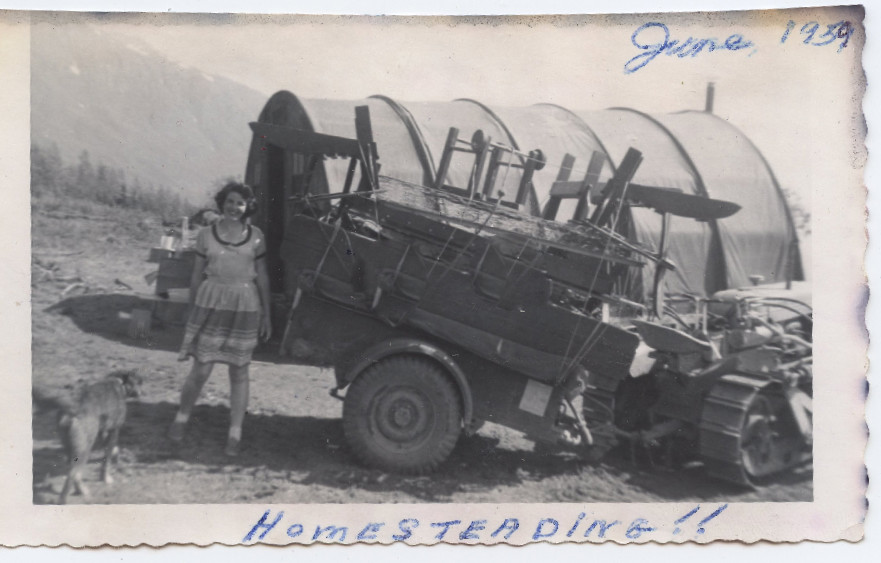
+VOLUME THREE OF MILDRED’S LETTERS DONE TODAY

++++++++++++++++++++++++++++++++++

My daughter found this today:  http://en.wikipedia.org/wiki/Cahill

We have no idea who put my mother on Wikipedia as “Alaskan Homesteader!”  In her own writings Mildred spells her middle name “Anne.”  We do not have a copy of her birth certificate, but I might need to get one before I spell her name on these books!  She homesteaded as Mildred (Ann?  Anne?) Cahill LLOYD, though!

Well, I DID IT!  Today I completed volume three of my mother’s writings and here is the link – (links at bottom for first two volumes — and there’s no good way to do columns straight on this WordPress blog – oh well!):

*HOPE FOR A MOUNTAIN: MILDRED’S ALASKAN HOMESTEADING TALE – VOLUME THREE – IN THE THICK OF HOMESTEADING

PART ONE:  THE WORLD MUST STAY WIDE OPEN AND WE’LL CRACK IT

ONE                I wish, I want – WHAT?

TWO              We Did It Just In Time

THREE         Treat of Hot Rolls and Celery

FOUR            Today Is Today and I’ll Figure Next Winter Later

FIVE              We’ve Proved We Can Take It Hard and Tough

SIX                  I Must Straighten Out My Life First

PART TWO:  WONDER IF I’M DOING RIGHT EVEN FOR ONE SUMMER 

SEVEN          Anything Is Possible

EIGHT           I’m Fed Up To the Gills with Living Like This

NINE               One Step Forward and Ten Backward

TEN                  It Was a Thoroughly Mixed Up Affair

ELEVEN          360 Pounds of Meat

TWELVE        Maybe When We Return Someday

++++++++++++++++++++++++++++++++++

*HOPE FOR A MOUNTAIN: MILDRED’S ALASKAN HOMESTEADING TALE – VOLUME ONE – BEGINNING A DREAM

PART ONE:  WAITING AND THE LOVE LETTERS

ONE               Don’t Ever Leave Me Again (14)

TWO             Find Me a House So I Can Come Home (49)

THREE          If You Care About Me and Our Future (73)

FOUR           Fear of Sand in the New Car (108)

FIVE              The Worst Is Over With (140)

PART TWO:  ARRIVING NORTH AND SETTLING IN

SIX                  So Keen on Alaska (172)

SEVEN          No Hicks Here (197)

EIGHT           Now That the Trees Are Bare (235)

NINE              He Will Do the Winter Driving (262)

TEN                All Mean Well I Guess (As Women Can) (297)

++++++++++++++++++++++++++

*HOPE FOR A MOUNTAIN: MILDRED’S ALASKAN HOMESTEADING TALE – VOLUME TWO – LIVING FOR THE LAND

PART ONE:  IT WILL WORK OUT ONE MOVE AT A TIME

ONE             Bill Will File on the Land Tomorrow

TWO            On a Merry Chase from Morn to Morn – and I’m Not Kidding

THREE        I’ll Homestead In Summertime, thank you!

FOUR          Oh How, Oh How Will I Ever Manage??

FIVE            We’re Both So Upset and Yet Determined

SIX               I’ll Give Up Anything for Our Homestead

PART TWO:  SUCH BEAUTY FOR INSPIRATION AND PEACE THAT CAN’T BE FOUND IN TODAY’S CIVILIZATION

SEVEN           Little Pieces of This Rock

EIGHT           Stick To My Land Here Like Glue

NINE              How Much Of a Beating Can We Take?

TEN                We Belong On Our Land for All Time

ELEVEN        It’s Really an Almost HOLY Feeling

TWELVE       Homesteaders Even In Alaska Are Becoming Extinct


++++++++++++++++++++++++++++++++++

+MILDRED’S WRITINGS – WHAT ‘STUDY GROUP’ QUESTIONS DO THEY PRESENT?

+++++++++++++++++++++++++++

I do want to add one thing here before I lose this little piece of pink-pad paper that I scrawled these notes down on last night after I completed the major edit-proof of the second volume of Mildred’s writings I just posted links to.  I know there are some important levels to my mother’s story – some that are obvious and some that are not.  Each of these levels can contribute something to the overall study of human nature, and I believe each of them is worthy of ‘book study group’ investigation.

The history of the roles of women is a big theme behind all womens’ lives, but especially so for my mother who was born (1925) into a family with a professional (and soon divorced – 1930) mother.  My mother was the product of one of the first kinds of ‘broken homes’ that have since swept America.

What were the limitations imposed on my mother as a result of her choice to be a ‘housewife’ and ‘homemaker’ rather than a ‘career woman’?  What does it mean to ‘have a home’ and ‘to make a home’?

Mildred’s story also contains a powerful example of America’s obsession with WEIGHT as well as with America’s obsession with MONEY (including the consequence of sickness and the costs of medical attention).  I can write a series of ‘study group’ questions about these concerns, as well.  Another important thread is the topic of parenting and the developmental stages of children (and their rights) — which I believe is closely tied to the topic of love for the land itself:  What is our personal feeling relationship with this glorious planet we live on?  (Yes, my mother could love that mountain and its valley at the same time she could commit terrible acts of harm against a child.  What went so wrong?)

What ‘used to happen’ to womens’ talents and gifts – and now?  What did it mean to be a brilliant woman?  An educated one?  What about choices for women to marry or not, bear children or not, ‘wear the pants in the family’ or not?  What has it always meant to girls and women when the ‘boys’ in the family were so cherished – spoiled – favored – and not the girls?  How do male relations influence the development of girls?

Of course the history of American pioneer women relates to this story.  Although my mother asserts that her husband ‘was behind’ the move to Alaska and the homesteading itself, I don’t believe he was.  How many women actually were behind their family’s immigrations and pioneering efforts — rather than the men?  And thus changed the course of history?

What do we value?  What do we want?  What do we hope and dream for?  What are the obstacles we face, and what do we do about them?  What are ALL our resources – how do we identify them, expand them, control them and use them?   How do we plan for the future?  How do we learn from our mistakes — and what do we learn?  How do we incorporate the changes that ‘growing through a lifespan’ gives to us – no matter what?

What is the truth, the REAL truth about our closest relationships?  What is the truth about how we were raised as children and about how our parents treat us as adults?  What do we, particularly as women, believe about friendships with women?  Who supports us in our greatest hours of need?

What have we learned from our ‘culture’ – particularly from the culture of our families ‘back then’ as immigrants to this great nation who brought with them their cultures-of-origin?  How does our ‘social standing’ affect how we see ourselves and others?  How does our culture, including our stereotypes and prejudices limit us?  How do we OUTGROW ideas and beliefs that are not helpful to well-being?

What do we disclose about our ‘personal’ and ‘intimate’ life?  How do we decide what to ‘expose’ and what to bury away and keep hidden at all costs?  This invisible ‘boundary’ and ‘borderline’ dividing the two has changed rapidly in recent American history.  What do these changes mean to us all?  (My mother would have died of rage and mortification and  made sure I left this world with her if she had ever known what I (her despised daughter, especially) was going to do with her ‘private’ words!  Yet the law states when a person dies (and she IS dead 2002) their rights to any words they leave behind dies with them.)

The unrecognized mental illness, of course, completely taints my mother’s story at the same time that her severe child abusing actions are omitted.  After I completed my efforts last night these ‘study group’ questions immediately popped into my mind and then out onto this little piece of pink paper:

What is mental illness?

Where does it come from?

Who gets it?

How do we recognize it?

What can be done about it?

Is it a doomsday sentence?

Does it make a person ‘flawed’ or ‘bad’?

Will it get better?

How does it affect the people we love and who love us?

Is there hope for new choice, change and healing?

++++

Once I have completed all four of these volumes, the bigger picture of my mother, Mildred, and of her life’s many different patterns will emerge.  Those intermixing threads will then be identified and examined individually and as they intermingle with one another.

I do not believe that what we so blithely refer to as ‘bad genes’ that ’cause mental illness’ operate in a vacuum.  A combination of powerful early developmental forces combine their influence to send a tiny growing child off on a trajectory that can END UP being extremely problematic.  My mother’s Alaskan homesteading story is a case study as well as an historical document about one single women — who, yes, dared to go where only a small handful of ‘modern women’ chose to go.

What, on all its multiple levels, can we learn from her story?  I personally have yet to find out.

AND most importantly, how do we recognize child abusing parents and protect their children?

++

NOTE:  Any blog readers that wish to, please post comments including ‘study group’ topic suggestions (and questions for them) at the end of the volumes of my mother’s writings at these links I present (or at the end of this post):

*HOPE FOR A MOUNTAIN: MILDRED’S ALASKAN HOMESTEADING TALE – VOLUME ONE – BEGINNING A DREAM

*HOPE FOR A MOUNTAIN: MILDRED’S ALASKAN HOMESTEADING TALE – VOLUME TWO – LIVING FOR THE LAND


+++++++++++++++++++++++++++

+MY MOTHER’S NAME IN WICKIPEDIA – NEED TO WRITE HER AN ARTICLE THERE

++++++++++++++++++++++

Interesting, my daughter just sent me this from Wickipedia:

Mildred Ann Cahill (1925-2002) Alaskan homesteader”

My mother’s rich, rich brother isn’t listed there.  Click on link, interesting info on origins of Irish name, “Cahill.”  They make no note in this entry of her married name, “Lloyd” here.

Does make me realize that I don’t think my mother spells her own middle name in her writings, and we don’t have her birth certificate so I don’t know if the “e” is attached to her middle name or not — from this Wickipedia info, I guess NOT!

I probably need to have someone who knows computer code help me post a page on Mildred on Wickipedia before the books are published (I can’t do it, I don’t know coding).  Once the four volumes are completed I will have my family help me with that project!

These chapter headings I chose from her words are worthy of ‘homesteading history’ exploration — as is the entire story itself:

*HOPE FOR A MOUNTAIN: MILDRED’S ALASKAN HOMESTEADING TALE – VOLUME TWO – LIVING FOR THE LAND

PART ONE:  IT WILL WORK OUT ONE MOVE AT A TIME

ONE             Bill Will File on the Land Tomorrow

TWO            On a Merry Chase from Morn to Morn – and I’m Not Kidding

THREE        I’ll Homestead In Summertime, thank you!

FOUR          Oh How, Oh How Will I Ever Manage??

FIVE            We’re Both So Upset and Yet Determined

SIX               I’ll Give Up Anything for Our Homestead

PART TWO:  SUCH BEAUTY FOR INSPIRATION AND PEACE THAT CAN’T BE FOUND IN TODAY’S CIVILIZATION

SEVEN           Little Pieces of This Rock

EIGHT           Stick To My Land Here Like Glue

NINE              How Much Of a Beating Can We Take?

TEN                We Belong On Our Land for All Time

ELEVEN        It’s Really an Almost HOLY Feeling

TWELVE       Homesteaders Even In Alaska Are Becoming Extinct

++++++++++++++++++++++

I am now going to take a much needed ‘vacation’ before I tackle the formation of the ‘final files’ for the other two volumes of her writings and get ready for my family coming to visit — and to get ready!!!

++++++++++++++++++++++++++

See also:

*HOPE FOR A MOUNTAIN: MILDRED’S ALASKAN HOMESTEADING TALE – VOLUME ONE – BEGINNING A DREAM

PART ONE:  WAITING AND THE LOVE LETTERS

ONE               Don’t Ever Leave Me Again (14)

TWO              Find Me a House So I Can Come Home (49)

THREE          If You Care About Me and Our Future (73)

FOUR            Fear of Sand in the New Car (108)

FIVE              The Worst Is Over With (140)

PART TWO:  ARRIVING NORTH AND SETTLING IN

SIX                  So Keen on Alaska (172)

SEVEN          No Hicks Here (197)

EIGHT            Now That the Trees Are Bare (235)

NINE              He Will Do the Winter Driving (262)

TEN                All Mean Well I Guess (As Women Can) (297)

++++++++++++++++++++++++++

+SECOND VOLUME OF MY MOTHER’S WRITINGS IS READY

+++++++++++++++++

Here is the link to the next volume that is now ready:

*HOPE FOR A MOUNTAIN: MILDRED’S ALASKAN HOMESTEADING TALE – VOLUME TWO – LIVING FOR THE LAND

+++++++++++++++++

+WORD WARRIOR NEWS: VOLUME ONE LETTER DUPLICATION HAS BEEN CORRECTED

+++++++++++++++++++++++++

If any readers noticed the duplication of about twenty letters in the first volume, the error has been corrected.  My sister pointed out ‘the problem’ to me, and I greatly thank her!

Also, my daughter interviewed JV today.  She emailed me the notes she made, but I am going to wait to read them until my daughter — and YAY! My 3 month old grandson!!! — are here for their few days’ visit next Thursday!

++++++++++++++++++++++++++

*HOPE FOR A MOUNTAIN: MILDRED’S ALASKAN HOMESTEADING TALE – VOLUME ONE – BEGINNING A DREAM

++++++++++++++++++++++++++

+THE IN-TENSE JOB OF EDITING-PROOFING MY ABUSIVE MOTHER’S LETTERS

++++++++++++++++++++++++++

Oh my, I have to say, what an intense process this is — doing what is nearing the final edit-proofs of my mother’s writings!  I have worked for ten hours today on the second volume and have only made it through 130 of the over 300 pages it contains!

I know this about myself, that I have an almost ‘strange’ ability to focus on work I am doing at times.  I suspect strongly that this ability is tied to my dissociation (as odd as that might seem).  The level of focus it is taking me to work my way through this edit-proofing process is astounding even me!  I am ‘up for air’ right now.  Or rather, I am nearly off to sleep at this hour (1:00 in the morning my time now).

I believe this effort will literally ‘pay off’ — and hopefully soon.  I received my first compliment from my sister today, who followed the link to Volume One I sent her today, and reported that she couldn’t leave ‘the story’ until she finished it.  It took her four hours — and she is an extremely fast reader.

Part of what is tricky about this process I am engaged in — said if I leave completely out of the picture WHO my mother was and WHAT she did to me — is that my mother wrote in a literary format that is becoming obsolete in today’s world.  My mother ‘speaks’ over and over and over again in the body of this text of her words that she ‘wants to write’ — while at the same time being completely engrossed in her act of writing!

Yet I sense that her form of letter writing lies as some sort of ‘mongrel cross’ between the actual ‘literary tradition’ and the ‘oral nonliteray tradition’.  Yet because her writing is being carefully crafted to fit a published book format — at the same time that I am attempting to preserve THE literary voice she uses to transmit information (most often to her mother) — I have to pay close attention not ONLY to the words she writes, but also to the pauses, the spaces, her nearly flamboyant and chronic use of dashes, her omission of punctuation — so that in the end readers will be able to follow the story Mildred is telling without falling through the ‘gaps’ that are as much a part of her writing style as are the words themselves.

++++

This process I am engaged in is, to put it mildly, quite BIZARRE!  I am polishing, if not honing my mother’s ability to present a complete facade of herself as being a ‘one kind of woman’ at the exclusion of the ‘other kind of woman’ that my mother was essentially extremely capable of being.  Right now I cannot think about ‘any of that’ because this job I am currently doing would be an impossible task for me to complete.

Maybe I have to ‘go to’ some dissociated and disconnected ‘place’ while I do this job that has more in common with the ‘dissociated and disconnected place’ my mother was able to ‘go to’ while she WROTE these words!  That could be an eerie and unsettling awareness if I let it breach my quasi-professional ‘role’ I have myself in right now.

Partly what concerns me, and I mean this as in ‘involves me’, is that a STORY (according to some very professional International Storytellers I was honored to converse with once upon a time) exists in its OWN RIGHT separate from its teller.

I have written about this before on my blog, how I see the history of our species’ story contained in our DNA itself, how I see genetic memory as being the living of a living story that is so ancient, and so much larger than any single separate entity that calls herself-himself human.

I am — most essentially — pursuing a course of action that I have chosen.  I am being the Fair Witness to this STORY that my mother is telling.  It is HER VERSION of this STORY that is in her words.  Yet Mildred’s husband and all of her children, along with fellow homesteaders, acquaintances (Mildred could not form friendships), and random strangers all had some part in this story.

Storytellers in the oral nonliterate tradition will speak about the requisite involvement of ‘audience’ with ‘story’.  Both the living audience and the living story combine to FORM a living work of art — in time — in space.  I am actively involved with the telling of this story so that it can become a story an audience can participate with.

Horror of Horrors, how can this be?  I certainly know my mother was vilely violent, a child abusing maniac, a dangerous, MEAN and awful mother.  I certainly also know she is not presenting THIS part of herself in this story!  No real surprise there to me any longer — though it greatly amazed and puzzled me for a long time during ‘my process’ with Mildred’s written words.

But because I have chosen my Fair Witness role, and because I have chosen to create the narrative chronicle of the shards and fragments of my mother’s writings as her completely disorganized papers came to me originally after her death, and because I am choosing not to analyze or interpret ANYTHING she says (there will be probably close to 800,000 words here in these four volumes – my guess), all I need to do is FOCUS and DO THIS WORK.

++++

The image that just came to me as I wrote these last words was of taking a piece of paper and some crayon or pencil — something — and finding a pattern, laying the paper on top of it, and rubbing, rubbing, rubbing — until the image becomes clear on the paper.  No, the evil genie is not going to appear through this rubbing process.  Just an image.  Just a story.  Just a version of a story, seen through my mother’s particular keyhole.  It is her perspective, and my job I have assigned myself is to rub this story, polish it, bring it forth as crystal-clearly as possible — so that THIS story, this strangely-NOT-the-mother-I-knew-wrote-this-story – story — will appear.

The next image that comes to me is of a clean room, like the ones they use at Intel, where nobody can go in THOSE rooms.  If they do, they wear suits, or they work with strange gizmos in their hands through glass.  Because I know that my mother’s story IS CONTAMINATED.  It has to be deadly toxic – somewhere — because she was.

But I leave all that alone right now.  I work with her words as if I never met this person before in my entire lifetime.  And on some strange, twisted, yet very real level, I probably never did meet THIS woman, who wrote THESE words in this story I plan to just plain publish!

++++++++++++++++++++++++++

*HOPE FOR A MOUNTAIN: MILDRED’S ALASKAN HOMESTEADING TALE – VOLUME ONE – BEGINNING A DREAM

++++++++++++++++++++++++++
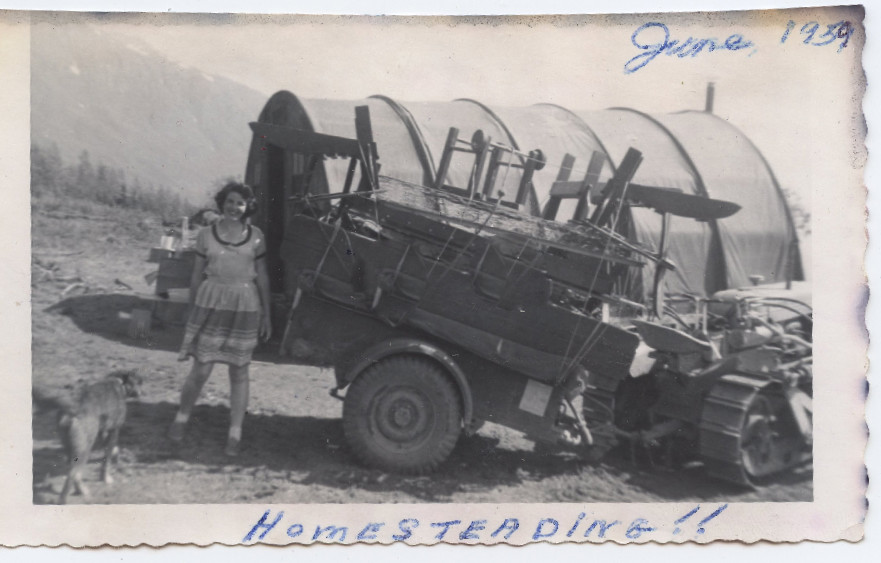
+OK – TRYING THIS NEW BLOG ‘THING’ AGAIN!

+++++++++++++++++++++++++++

I really do not enjoy the learning curve required for me to accomplish anything that has to do with this new digital world!  I canceled the first blog I just made for my mother’s book(s) and made another one!

HOMEPAGE LINK:  http://hopeforamountain.wordpress.com/

LINK for the first volume of my mother’s complete letters:

*HOPE FOR A MOUNTAIN: MILDRED’S ALASKAN HOMESTEADING TALE – VOLUME ONE – BEGINNING A DREAM

at

http://hopeforamountain.wordpress.com/hope-for-a-mountain-mildreds-alaskan-homesteading-tale-volume-one-beginning-a-dream/

NOW to see if any of these links actually publish over on THIS blog LIVE!  They sure didn’t with the last blog I just trashed!  If I have to change this new blog to the same theme format as this one is so that I can publish links over here from that one (GEEZE!) — well, I will do that!

I am NOT having fun yet!  Oh, and this Volume One contains over 172,000 words, so it is a BIG page and may load slowly!

Well, time to test fly this baby!!

OOPS!  I see the links are not live — WHY?????  I have to figure this out!

Believe me, an email is off to WordPress tech support at this very instant!

In the meantime, I will try this — I had to go through multiple (and irritating!) steps to get the links from the new blog to ‘get live’ over here!  On the other blogs I simply copy and paste and VOILA!  They are INSTANTLY live over here when I publish them!  GRR-R-R-R!

http://hopeforamountain.wordpress.com/

*HOPE FOR A MOUNTAIN: MILDRED’S ALASKAN HOMESTEADING TALE – VOLUME ONE – BEGINNING A DREAM

+++++++++++++++++++++++++++

+MADE A NEW BLOG FOR MY MOTHER’S WRITINGS

+++++++++++++++++++++++++++

SCRAP THIS!  I AM GOING TO START THE NEW BLOG OVER AGAIN!

I am slogging my way through the creation of a new blog dedicated to the publication of my mother’s writings.  All is NOT going completely right.  This is what I have so far, though I cannot figure out how to change the actual HOME address of the blog:

HOME is reading:  http://alchemynow.wordpress.com/

The first volume of my mother’s writings is HERE – be prepared for a slow page load as this is a big file:

http://alchemynow.wordpress.com/volume-one-beginning-a-dream/

I also cannot get the ‘add a page’ toolbar to show its lower half so that I can insert WORD text!  All this ‘work’ is making my computer sound like it is VERY unhappy!  Oh, well — I will continue to slog along for as long as I can — headed generally in the direction I wish to go!

+++++++++++++++++++++++++++

+FACING OUR OWN IDEAS ABOUT MONSTERS

There’s a woman who comes to the small free art class I voluntarily teach on Saturday afternoons whose entire being lights up when she talks about gardens.  Not any old kind of garden, but rather truly beautiful ones, hidden ones, secret ones, places where people could come to find peace and beauty and untroubled sanctuary.

This same woman always thinks about gates and doorways at the same time.  The images are connected.  These gates are not ordinary, either.  Down here in the southwest we perhaps have more images in our minds about walled courtyards and gates that are sealed off from public view by all manner of creative and appealing gates.  Some have small windows in them up high where adults can peer through to see into the secret places.

This woman has never read the children’s story or seen the movie of ‘The Secret Garden,’ though I am recommending it to her as a homework assignment to discover this story.  While in art therapy graduate school we learned much about how the psyche of humanity communicates to us in and through image.  Neuroscientists are now beginning to suspect that our brains process all incoming information into memory storage in a poetic, metaphoric fashion.  All this information is stored in our limbic, emotion, right brain and is only available to our left ‘logical’ brain when we talk about something very specific that is in some way connected to our metaphoric memories.

In the case of secret gardens and private sealed off worlds, I think about the ‘bigger picture’ of the history of two things in our collective minds:  mazes and labyrinths.  Mazes are often about what amazes us.  This might be something that we have puzzled about and are at the edge of understanding but not quite there yet.  What kinds of things amaze us?  What things capture our imaginations and captivate our thoughts?  Things that we wonder about in the world.  Wonder is an amazing mental operation of its own, and something that I as a child abused from birth could not do.  I had no points of comparison so there was no wonder in my young life.

I think about Pelzer’s book, “A Child called It,” and about how he fought back against his abuse even in his mind.  One has to have some means to compare one’s own experience in their private world with what one knows others experience in the public world.  If a child is abused from birth and there is no reprieve, no opportunity to spend lengths of time in interaction with a sane caregiver, then that infant’s brain will simply accept as reality all that it has experienced and had built into its brain about what the world is like.  We never question a certain reality unless our minds have the freedom to reach toward and devour the possibility that there are worlds ‘out there’ that are different.

Along with this student’s delight in imagining secret gardens comes the collective imaginal idea of labyrinths.  If you do a Google search for “labyrinth minotaur” you will bring yourself face to face with a world of not only delightful possibilities, but also bring yourself to a place that presents a collective image of the monster within us.  At the center of the labyrinth our imagination holds there an image of the minotaur, a horrible creature that both scares us nearly to death and one that is also our strongest ally and protector.

Someone mentioned to me the other day that as I clarify and focus my blog and my thoughts about who I am really writing for, I will find that my section, + Art and Creativity, is out of place and does not belong on my site.  The brain of our species is the most complex and creative ‘object’ in existence on our planet.  I believe that to live our lives to the fullest we need to exercise our connection between the two hemispheres of our brain so that we know more and more about who we are and how we are in the world.

Through artistic exploration we allow the more hidden (in our American culture) aspects of ourselves access into our lives.  Most of us keep our own poetry, our own metaphor perspectives on our lives, sealed and walled off from the world in our internal secret gardens and labyrinths.  When we allow our images to come forth, even through the spoken word, we can honor ourselves by encouraging not only further and continued access, but also exploration of meaning for ourselves.

If a person has these particular hidden, secret garden and maze-labyrinth images popping around where they can actually recognize them consciously, then a further pursuit into the images can connect to all sorts of fascinating wisdom.

As the world acclaimed astrologer, Zane,’ (SEE: http://www.zanestein.com/CentaureanAstrology.htm) describes in relation to the asteroid Nessus, we all have a monster inside of ourselves that we usually cannot face.  In Carl Jung’s thinking, this monster lies sealed off in our personal shadow, a place that he says we put all that we are afraid of about ourselves — both the best of us and the worst of us.  If a student begins to allude through their art exploration to something like mazes and labyrinths, it becomes a fascinating study to encourage that student to pursue the images until they can present into consciousness the reality of whatever ‘mythological’ base they are connecting to.

Through the infant brain development and growth years a person learns what to do with the ‘devil and the angel’ within themselves.  Normally we make adjustments so that our mind knows (coming from the operation of our brain) how to live in a world of extremes.  An infant’s brain knows at a very early age, usually beginning clearly by the third month of life, who is safe to trust and who is not.  If an infant is growing in a malevolent world this distinction obviously becomes impossible to make in a useful and healthy way.

A growing child’s brain has to learn how to sequence and prioritize information — both what is coming in from the outside and what is accumulating in ever increasingly complex formats on their inside.  If an infant and then later a young child is being raised in an environment of conflict, torture, and terrorism, it is obvious that these processes are either aborted or completed in unhealthy and inadequate ways.

But we need to know that ALL of us have a Jungian shadow, and all of us have a secret garden and a secret labyrinth whose center contains a monster that we believe is us.  This monster has power — power to destroy and power to protect.  If our brains were allowed to at least develop a minimal pathway through our cortex that allows us to use our higher cortical thinking abilities, we do not allow the monster to wreck havoc in our own or anybody else’s life.  But because our relationship to these ‘states’ was set in motion from birth, we must work as adults to access all the information that we know about these things and bring them into consciousness as we learn who, in fact, we are, who we fear we are, who we fear we could become, who we hope we could become.

I don’t know what my student holds behind the secret door in her being.  If she chooses to explore through the images in art work what she knows ‘in there’ we will all be able to share in her process.  If a young child is being raised by monsters, the boundaries between one’s own monster/protector and the monster/protector of its caregivers will be all mixed together in some kind of very nasty and unpalatable soup.  But we can never just throw the whole pot out and start over.  We have to work with what we were given beginning at the time of our birth.

We have not only the ability to safely and wisely do this work, but we have the obligation and right to do it.  Safely is the key word here.  It is because we were not SAFE from birth that we have the nasty soup in the first place.  But even if we were safe, as social beings in a social world we all made distinctions between what was acceptable about us and what wasn’t.  Most of us never go back as adults and take a good, creative look behind the secret doorways.  We need to, because what motivates us and creates our highest priorities lies in there — whether we know it or not, or even WANT to know it or not.

+WHICH HAND DO YOU USE?

Actually, handedness is crucially important when considering the way the brain processes all kinds of information.  In my personal studies about posttraumatic stress disorder (PTSD) I found that the following search led me off into some fascinating areas.  If you do a Google search for ‘ptsd lateralization risk’ you will get the gist of what researchers are discovering.  In light of the risk factors for developing PTSD being greatly increased for anyone with left and/or what they call mixed handedness, I suspect that similar factors probably affect us as far as depersonalization and derealization are concerned, as well.  I don’t understand why all militaries, for example, don’t simply screen for handedness and then they would prevent serious trauma reactions if they did not send anyone into combat that wasn’t entirely right handed with a right handed parental history.  The processes that determine our lateralization or handedness are triggered as humans when we are only 4 cells old, and are the same processes that make sure all the organs of a species end up in the same place.  They tell cells to go either up or down, forward or backward, right or left as we develop.  I guess if one could put all critters in nature in a line facing the same way, they all have the same strong side and the same weak side.  (I am getting practice with this as I have been learning from being with horses how this works for them.)  Because nature used this process so effectively throughout evolution, all critters naturally know their own strong side and their prey’s weak side.  In natural order, critters don’t have time to stop and think about this as they attack or are being attacked.  I suspect that it is probably only we humans, due to our many gifts of intelligence, that have managed to survive with 10% of our species being left handed and even more being mixed handed.  How this relates to depersonalization and derealization will be discovered through further research, I have no doubt.