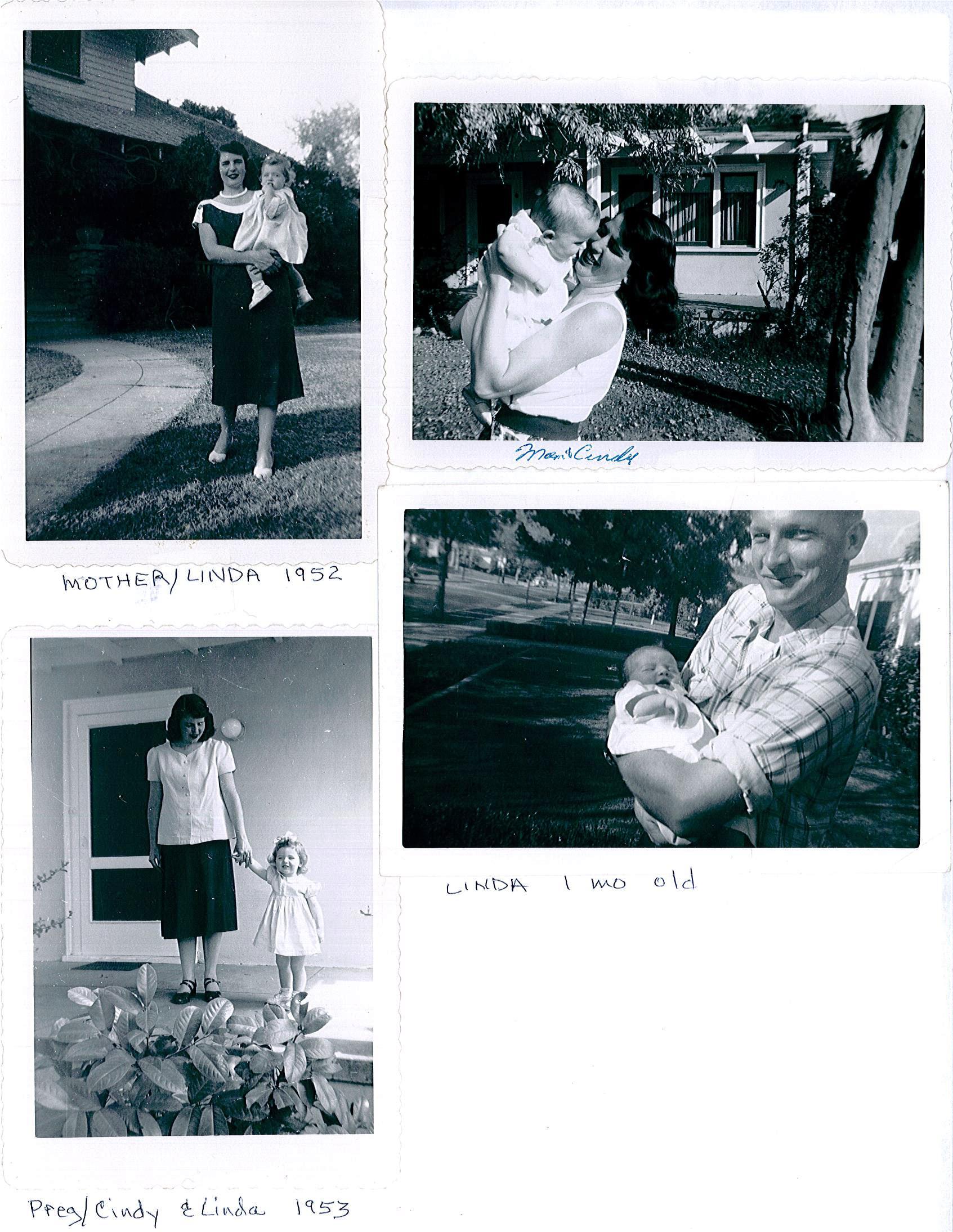
+TRANSPARENT ENDING TO MILDRED’S STORY

++++

As I reach the end of my self-assigned task of presenting the collection of my mother Mildred’s papers I see myself facing the transparency of time.  As I struggle to recreate the history of the homestead dwelling I also find myself left with this part of history as it has been preserved not in Mildred’s letters but rather in this small surviving pile of photographs such as they show me where my parents created within ever-changing walls a version of home as it was meant to separate the lives of those who lived within them from the wilderness that surrounded and encapsulated our family.  There is also a transparency that has appeared as the story told by Mother fades into what is left of her story as it survives within me.

There is a certain quietness that surrounds the ending of a story as the words belonging to it vanish with an inevitable certainty into the vastness of the future.  I am left thinking about the very language of homesteading itself, homesteading as the law defined it, homesteading as my father’s one word snatched our family’s history from the legal parameters of fulfilling specified requirements to obtain ownership of a tract of land equalling 160 acres.  “Entrymen” is what the government called those who pushed past a boundary of civilization into an area whose natural history did not include humans.

As Father was the entryman of our family, Mother was the entrywoman and we six were the entrychildren.  From what I know of myself it was the wilderness that entered me.  I resided for only a short period of time within the final homestead dwelling that had been built from the beginning only upon poplar tree posts set upon that land high on a mountainside a short distance below timberline.  Because it was my experience to be the chosen child for Mildred’s mentally ill psychotic abuse, the walls of the shelter that protected us from the elements of nature at the same time trapped me inside of them with Mother.

I therefore have many sets of memories connected not only to the passage of time covered in Mildred’s words, but also to every one of the physical structures our family lived inside with her, especially the homestead dwelling.  It was there that she could do whatever she wanted to do outside of the range of human comprehension.  At the end of the literal road that led to the door of our home I have finally found my way to the end of my task to set to order the shambled record of all that can be known of the Lloyd family’s Alaska homesteading saga except as that history continues to exist in my memory and within the memories of my five siblings.

At this point I pass through the invisible transparent portal of time past into time present.  Any step forward I might now take leads me into my own story and out of my mother’s.  I welcome that transmission.  I have, in reality, worked in some way all of my life to reach exactly this point in time. 

A few chosen pieces of Mildred’s writings have been passed into the hands of my youngest daughter who asked for them.  All of the rest of Mildred’s papers are gone.  I buried them in the earth, watered the dirt, introduced garden worms that I received through the mail from my sister to the east of me and from my sister to the west of me, and then I waited for nature to take its course.  After a few short months there was nothing left but some twisted rusted wire spirals left behind from Mildred’s journals.  Everything else was consumed to become rich, palatable soil that supports new life.  I cannot imagine a better ending for Mildred’s story as she recorded it in her own words.

++++

Please click here to read or to  Leave a Comment »

++++

+SOMETHING ELSE I NEED TO SAY….

++++

Having just finished my last post – +THERE I AM – SKINNY 16-YEAR-OLD ME – there is more I need to say about me and the story that is not going into these seven books of my mother’s writings I have nearly completed.  It matters to me today to discover I am cooking on a hot plate – rather than on a full size stove with an oven that I KNOW was in that spot – at SOME TIME – because I have a memory – I will only mention now – that I have never written about – that I have not known WHEN it exactly happened – that involved in my memory a STOVE in THAT spot.

In the very lowest corner on the right of the picture in my last post where I am so sweetly smiling as I make candied apples (carmel?) you can see the raw end of a painted 2’x4′ board.  That was the edge/top of a little wall that gave just enough room behind it to turn around and sit down at the table you see there in the bottom picture.

In my memory Mother had flown into one of her deadly rages at me.  I have never yet written about the tortures of doing the family’s dishes.  I always washed all of them.  Only me.  I had been doing so since I was 9, in 4th grade.  It is marked in Mother’s letters where that began.  I found it.

Dishes.  100 rules to doing the dishes.  Perfectly.  100 steps.  All of them had to be done in order and done perfectly.  I am not ready to write about the beatings I suffered because I could not do the impossible.  Even when I tried my absolute hardest — then I didn’t do them FAST enough.  When I tried to do these dishes by all 100 steps, never forgetting ONE of them, never doing one of them out of order — when I did this all faster, then I MADE TOO MUCH NOISE.  Hundreds of times I had to write the 100 steps.  Over and over and over again.  Beginning when I was 9.

But that’s not what I think of as I look at this picture of me at 16.  What I want to know is WHERE IS THE STOVE as I feel a strange kind of shock at seeing a hotplate where the stove should be – because I have a crystal clear memory of my two sisters standing behind that little wall as Mother Mildred was in one of her abusive rages at me – because I had not cleaned the top of the stove well enough after doing the dishes (one of the 100 steps).  At the instant Mildred grabbed my right hand and forced my pointer finger into the exposed pilot light of the STOVE – I see the instantaneous look of ABSOLUTE HORROR on the faces of my beautiful sisters.

When I look at this hotplate picture, and realize the date this was taken – Halloween 1967 has to be it — which leaves this horrible memory belonging to the following year when I was 17, my sisters 15 and 13.  I do not discount the details of my memory even though there’s a hotplate instead of a stove.  This just informs me that the stove must not have appeared in that spot until after this Halloween age-16 picture was taken.

++

This leads me around in a circle to another post recently published here – +WHAT IN THE WORLD IS ADULT ATTACHMENT?.  In the second paragraph of the article mentioned in this post the author states this:  Such conflict and inconsistencies indicate the operation of parallel memory systems and the dissociation of painful affect. The AAI is designed to detect conflict and inconsistencies in the discourse and narrative style of the interviewee.

Parallel memory.  Nearly every single memory from the 18 years of my abusive childhood exists as ‘parallel memory’.  I know this WAS me sweetly smiling making sweet treats.  I also know there was another time I was forced to stand in nearly that exact spot while another kind of memory was being formed.  Parallel memory.  How well I know what THAT kind of memory is.

I stay away from those memories, most of my memories.  I write what I need to — when I need to — for very specific reasons.  There’s another kind of memory I have.  I remember why I LET my mother hold my finger in the pilot light.  Yes.  There was something I could have done to stop her.  One thing.  Only one thing.

I could have killed her.

That is the ONLY action I could possibly have taken to stop my mother from doing what she did to me.  This is the truth.  I remember this truth along with everything else.

++++

Please click here to read or to  Leave a Comment »

++++

+THERE I AM – SKINNY 16-YEAR-OLD ME

 ++++

I did not finish my work today with the last ten pictures out of the probably 300 that I have already sorted and planned where they belong in these 7 volumes of my mother’s writings.  Ten pictures.  I feel like I accidentally discovered a wormhole.  Ten little pictures that show portions of the changing stages of our family homestead dwelling.

I feel like I am taking some kind of final exam.  “How much did you really learn about your family story through all of your forensic work, Linda?”

500,000 of my mother’s words, all these scrambled up, fire damaged, undated pictures — all finally in a dang good straight line for the first time EVER — and I am stuck at the very end of this journey — on the story of a HOUSE?

I am a stranger in a strange land.  There are too many refracting rays of light coming at me from so many directions.  These pictures pertain to a segment of my childhood I have spared myself from writing about for the most part, spared myself from thinking about — having told myself I would get to this part of my abuse history — later.  Much later.  MUCH MUCH MUCH later?

Certainly I did not anticipate staring my 16-year-old self in the face in a picture in THIS series of books.  I mentally looked the other way, not preparing myself in the least for whatever it is I am going through now as I am SO CLOSE to finishing this part of my work.

I am reminded (strangely, it seems) of what the developmental neuroscientists say about very young babies who are overly stimulated by interactions with people.  This happens even when the interactions are entirely playful – and positive.  The fact of the matter is, too much of ANY kind of stimulation to an infant is harmful.  Babies will instinctively take care of their needs for down-regulation and self-soothing — by simply turning their head and facing away from the source of the stimulation.

We can watch that happening in the middle of this research video (if this link doesn’t work just Google this) –

Still Face Experiment: Dr. Edward Tronick – YouTube

The turning away is only one of MANY stress reactions this infant in the video displays.  But it is the one I am thinking about now.

Because a baby younger than one year old is so rapidly building their right limbic social-emotional regulatory brain hemisphere, most of the time the baby will turn away to the LEFT – which means it is processing information in the RIGHT side of its brain.

I have been choosing to turn away from any information about myself in my teens.  For the most part I have not gotten up close and personal with my teen self – even though I have written some of my ‘stories’ from that time in my life.

Here I am finding myself — of all places — showing up right here in this book’s writing process as I try to make sense out the changes the very structure of our family home went through.  I am IN THE HOUSE.

Today, IN THE HOUSE – means more to me than I have ever thought about before.  I can tell my mother’s madness was literally IN THE HOUSE – in the fibers of that canvas Jamesway – in every material and every object in that house — or should I call it a SHOEBOX?  384 square feet for 8 people – it wasn’t any bigger than a shoebox.  BUT, as I discovered today as I examine one particular photograph closely — the top one here – (I have no way to divide these scanned pictures at present) – 2 pics me in kitchenI see my teen self – this must have been Halloween 1967 – I was 16 – such a thin 16 – smiling as if I had never had a care in the world and BOY did I have cares!  I am sweetly making carmel apples for my family…….  So thin, remembering how often I was HUNGRY.  Noticing the details of this little kitchen in our ever-morphing house — noticing the metal bread box I had to keep meticulously clean, same with the little metal matching spice cans I can see there…..

BUT — what shocked me most today is the fact I am cooking on a hot plate.  In our shoebox we did not evidently have a stove.  Nor, as I can see in this picture ’cause I know where SOMETIMES there was a refrigerator — did we have a refrigerator at the time this picture was taken.  No running water, but we did have an electric generator (power plant, light plant) — but we didn’t run it all of the time.  It would not have supported an electric refrigerator.

Well, I don’t know where this part of the story about the living-crazy-house is going.  I have not run that guantlet all the way through yet.  The lower picture is of our father, and the two youngest of the six of us kids.  I can tell by the tablecloth and the little Santa cups on the table…… what season this was, but the YEAR?  I can see the addition was on the living room end of the house by this time.  I guess the shoebox had grown a bit.  But that is all a part of tomorrow’s work……..

++++

Followed by this related post – +SOMETHING ELSE I NEED TO SAY….

Please click here to read or to Leave a Comment »

++++

+BUGS IN TELLING OUR STORIES

++++

I just emailed some people dear in my life to whine to them about the fact that at this moment I am severely plagued by an attack of mental fleas.  How to write coherently when each demands attention from me?  In the end I might consider what each of these fleas might have to say in the bigger story — but right now I would rather shove them all in a flea circus box and send them packing off to perform — somewhere else — hopefully for money.

Story.  Healing story.  As I think about how important this topic is to me all I begin to see are concentric rings like ripples in some gigantic lake upon whose shores each human alive resides — somewhere — in a box, under a tree, inside a mansion or a cute little mobile home on wheels.

The point is there is no beginning or end to the interplay of one part of a story with another part.  Healing the story of our family as we heal our own story — as we bring coherency into a tangled chopped apart disowned-sectioned arena of story — we are healing ALL story known to this planet.  The past is part of our story.  Even the future is part of our story.  Our shared story.  Our great big tale of what it means to be human alive within a complex world of creation that we belong to as it belongs to us.

But one cannot open one’s writing mouth and out-shout an entire story at one time!  NO!  A story requires a particular kind of attention.  It requires a deep listening, down and through the center of the earth, all around its circumference, out into the farthest (spellcheck does not like this word) reaches of our expanding universe to the edges that have not even formed themselves yet.

I see a problem in the fact that if we are not willing to listen to and tell even to our own self our own true story how are we going to be able to listen to anyone else’s?

Splitting off what parts of the story we want to hear from those parts we do not want to hear keeps our own story in broken pieces (sick) at the same time this brokenness contributes to the brokenness of the entire story of the human race.

And.  Then.  There are the mental fleas.  I suppose they are most used to feeding off of cut-off emotions, lost story lines, confusion, fear, distress, shame, and mass denial.  Well, I am here today to deal with at least some of the fleas that happen to be pestering me.  I have a story to tell — and as I work to tell it, against all available odds, I will turn each flea into a dragonfly with magnificent multi-colored wings, or a lightning bug, or into some other fantastical creature I cannot even imagine — because those imaginings belong within the edges of someone else’s story where their ripples overlap mine.

++++

Please click here to read or to Leave a Comment »

++++

+WHAT IN THE WORLD IS ADULT ATTACHMENT?

++++

Because I am in a holding pattern today waiting for someone my landlord told me yesterday would show up today to ‘look at’ the frozen water pipe situation at this house – although it’s already half an hour past when that person was slated to arrive – I can’t quite think straight about anything else.  (Of course I am realistically fearing the worst on this pipe situation.)

In the mean time I thought I’d take a diversionary trip into an area I believe I will at some point in my book writing have to take a serious and thorough look at:  Adult attachment.

I found an interesting website whose information I am going to post here today FOR INFORMATION and EDUCATIONAL PURPOSES ONLY.  It’s on a British website that is a Register of Trauma Specialists in London.  The title of the piece is Four Patterns of Adult Discourse Observed in the Adult Attachment Interview written by Paul Renn.

Coherence is a central construct in attachment interviews. Coherent discourse is based on what the linguistic philosopher Grice calls the ‘Cooperative Principle’. This has four maxims, namely:

> Quality: be truthful and have evidence for what you say

> Quantity: be succinct, yet complete

> Relevance: be relevant

> Manner: be clear, brief and orderly

The Adult Attachment Interview (AAI) is a semi-structured interview devised by George, Kaplan and Main, based on Grice’s principle. It provides researchers with a standardized method to assess adult mental representations of childhood attachment experiences, the influence of these experiences as perceived by the interviewee and the current relationship with one’s parents. The participant is also asked about loss of loved ones and about other traumatic experiences. During the interview, the interviewee is faced with the dual tasks of producing and reflecting upon memories related to attachment while simultaneously maintaining coherent discourse with the interviewer.

Bowlby drew attention to the ways in which information is stored in distinct systems of memory. Episodic or explicit memory consists of information that is stored in the form of temporally dated autobiographical details. Each remembered event or episode has its own distinctive place in the person’s life history. By contrast, semantic or implicit memory consists of generalised information about the world and the person’s sense of self in relation to significant others. Such generalised information is encoded in internal working models and mediates the person’s attachment-related thoughts, feelings and behaviour in a largely non conscious or procedural way. Implicitly encoded information may be at great variance with information stored in the explicit memory systems. This gives rise to cognitive and emotional conflict and to gross inconsistencies between the generalisations a person makes about his or her parents and what is explicitly implied or actually recalled in terms of specific episodes. Such conflict and inconsistencies indicate the operation of parallel memory systems and the dissociation of painful affect. The AAI is designed to detect conflict and inconsistencies in the discourse and narrative style of the interviewee.

The AAI operationalizes Bowlby’s construct of the “internal working model” as a “state of mind with respect to attachment”, as expressed in discourse about early relationships. The researcher shifts attention from the content of autobiographical memory to the form of discourse in which those memories are presented. For example, the mother’s state of mind in respect of her attachment history may be classified as secure-autonomous and her child as securely attached, despite her having experienced early trauma in the form of separation, loss and/or abuse. Such findings indicate the resolution of trauma and the attainment of ‘earned security’ via subsequent secure attachment experiences which, of course, may include a therapeutic relationship. AAI classifications, then, reveal differences in discourse style, in access to attachment memories, and in ability to coherently discuss past attachment experience.

The following four patterns of adult discourse in the AAI have been observed:

Secure-Autonomous: Adults termed secure-autonomous provide discourse that is open, free, coherent and collaborative, presenting even difficult early attachment experiences in clear and vivid ways. Discourse includes no contradictions between semantic and episodic memories of childhood attachments, a focus on the goal of the discourse task and rich use of language and expression. The interviewee demonstrates an ability to discuss and reflect upon personal attachment experiences in collaboration with the interviewer without disorganization, lack of memory or passivity of thought. These interviews are characterized by recognition, acceptance and forgiveness of imperfections and injustices in parents and in self, reflecting an integration of positive and negative feelings. As noted above, even adults with extreme and abusive attachment histories, who have come to understand coherently their early difficulties, may provide a coherent and autonomous narrative.

Discourse termed insecure or non-autonomous may show one of three patterns:

Dismissing: Transcripts coded as dismissing tend to be excessively brief and are characterized by notable contradictions in the interviewee’s discourse about early attachments, with generalised representations of history being unsupported or actively contradicted by episodes. Strong idealization of caretakers is common, along with contradictory and impoverished memories of actual events. The interviews are notable for restriction in coherence and content, indicating a deactivating strategy with respect to potentially painful memories. Some adults in this group minimize the importance of close relationships and derogate or dismiss the influence of attachment experiences, emphasizing, instead, extraordinary self-reliance.

Preoccupied: The transcripts of adults termed preoccupied may be excessively long and embellished, including information that is irrelevant to the discourse task. Interviewees are not able to describe their attachment biography coherently and show an inability to move beyond an excessive preoccupation with attachment relationships. There are frequent examples of passive speech, sentences begun and left unfinished and specific ideas that disappear in vague expressions. The boundaries between present and past and self and other are often confused. There is a diffuse self-concept and a notable inability to reflect upon experience. In some transcripts coded as preoccupied there is notable anger, passivity or fear, which is displaced from past childhood events to the present discourse task, indicating a continuing intense involvement and preoccupation with attachment experiences. The reliving of the affective experience of historical events interferes with the interviewee’s consciousness of the current discourse task.

Unresolved: Transcripts of adults are termed unresolved/disorganized when there is evidence of substantial lapses in the monitoring of reasoning and discourse, specifically surrounding the discussion of traumatic events involving loss, physical or sexual abuse. The interviewee may briefly indicate a belief that a dead person is still alive in the physical sense, or that this person was killed by a childhood thought. The individual may lapse into prolonged silence, engage in eulogistic speech or enter a trance-like dissociated state. It should be noted that the unresolved classification is made solely on the discussion of trauma, abuse or loss experiences and is superimposed on one or other of the three main attachment classifications.

Findings from research utilizing the AAI show that psychopathology is associated with non-autonomous patterns of attachment and that people classified as preoccupied and unresolved/disorganized are strongly over-represented in clinical samples.

All rights reserved – Copyright 2009 ©

 ++

My own interest in thinking about the Adult Attachment Interview has to do with the largest picture of the writing and publishing work I am involved in.  I have an idea (I can hardly call it a theory) that the work we do to heal our own trauma story has great power to heal us.

I am deeply engaged in preparing for publication seven volumes of mostly by severely abusive psychotic Borderline Personality Disorder mother (as regular readers of this blog clearly know).  Mother Mildred left behind her a completely disorganized mess of letters and diary notes containing around a ½ million words.  Among these papers were some of her childhood stories, her age-19 diary, her early 1950s diaries, and her entire collection of saved letters about the details of her move to Alaska and of her homesteading experience.

Any mother as deeply troubled as Mildred was leaves behind in the body of her children patterns of the same broken trauma history stories that she had herself.  So broken were the patterns of our family’s life that until I did the work of organizing Mildred’s papers, which allowed me to create a time line of events including many, many moves that Mildred dragged her family through, her children had no way to place memories in either time or place.

No matter what good and bad events occur during a childhood, without having access to a coherent story as it provides a context for when and where those events took place, we cannot create for ourselves a coherent story of our own life.  I absolutely know that is true for me.

It seems to me that most often the facts about how our earliest attachment experiences conception to age 2 shape the way our body, brain, nervous system, stress-calm response system, memory storage and retrieval system, even our immune system and the way our genetic information manifests itself over the course of our lifetime, is left out of nearly all so-called ‘healing’ and ‘recovery’ work.  Very few therapists have training in what matters most.  Once we move through the corridor of the first 33 months of our early development we already have all the systems in our body physiologically set to follow the main course of our life.  Either we were made in, by and for a safe and secure world or we were not.

That these patterns can display themselves through how we tell our life story – through how we remember ourselves in our own life both consciously and unconsciously – seems extremely important to me.  However, I also deeply know that when the words of our story are not available to us for whatever reason, and available to us in a coherent form, these stories will tell themselves through DRAMA.  These trauma drama reenactments usually tell the story of our own and of our family’s unresolved traumas until these stories have been given words.

This suspicion I have about the healing power of healing our story suggests to me that given the fact that very, very few people in America can actually access or afford any kind of quality ‘mental health’ care, we are left on our own to figure out what we need and how to get our needs met.  Working out our story is something we can do on our own.  It is lonely, difficult and very scary work.  But this work MATTERS and I believe it is possible.

This is enough words right now.  I leave readers to ponder the British piece on adult attachment.  Although there is more to the story this is a very good place to start gaining perspective on the connection between how we FEEL in our body in our life – as it connects to what we know of our story.

++++

Please click here to read or to Leave a Comment »

++++

+WHEN LIFE TAKES A DOUBLE TWIST OF STRANGE

++++

If nothing else, the events I mentioned in my previous post have stopped me dead in my book writing tracks.  Nothing thawed out.  I now have the water turned off to the house at the main.  Tonight is again supposed to be super cold — and my house with its poor pipes is a sitting duck for absolute freeze in every one of its pipes.  There is nothing I can do – but stew.

I certainly have not had the heart to return to the work I was so engrossed in last night.  Until the words that belong in the Lloyd family story are set to the music of their accompanying photographs, there is no possible way anyone other than my siblings could begin to imagine what our living environment and conditions actually were.  In fact, as I worked my way through details I have never thought about before last night, I realized that I have never truly let myself know the bigger picture of what all of the Lloyd children lived through.

There are a few pictures here that are descriptive of a very late transformation process of our ‘home’

*Adding wood ends onto the Jamesway (circa 1968?)

These pictures tell a bit of the story about how the original Jamesway got up the Alaskan mountain to our homestead

*1959 – Jeep Truck With Jamesway, Pollard, Tractor

This shows the location of the Jamesway that continued to go through changes for the next 9 years

*1959 June – Two Views of Hut and Mountains

It is far too big a story to tell here — but last night my youngest sister called.  It was through our conversation that I was set upon an intense thought and study journey until midnight that contributed to my dilemma of my frozen water pipes.

Not only did our family move over and over again a nearly countless number of times during our childhood, but as of last night I began to realize how insane the changes were that happened to that Jamesway even during times we actually did live on the mountain (instead of one of many rentals ‘in town’ over the years).

My sister helped me focus on a very specific period of time that belongs to an incredible memory both she and I share, and one that I have not spent time thinking about because I know it is not nearly time for me to write my own ‘crime report story’ — certainly not of my teen years — yet.

That period of time was the winter of 1967.  All these years I knew we lived in an apartment that year in the small town of Eagle River — and not on the homestead.  My sister was in 6th grade that year and I was in 10th.  As my sister talked with me about our ‘sister memory’ the focus on the exact time this memory event happened led me to understand that somehow during this 1966 – 1967 winter we DID spend time on the mountain.

Did we live in two places at the same time?  Thanks to our psychotically mentally ill Borderline Personality Disorder mother that did happen on occasion.

Did we live in the apartments but spend time perhaps on weekends or holidays from school on the mountain?

Did we move entirely out of that apartment on the 1st of April 1967 and back to the homestead?  I say this because as I have been so involved in working with the family photograph history it is clear we were in the apartment on March 23, 1967 – when one of my brother’s turned 6.  (Dang!  Too busy writing this – burned my corndogs!  Writing carries certain risks….)

Meanwhile, back in memory lane…..  I have worked my way through hundreds of disorganized, undated family pictures as I specify where each one of them is to be dropped (after scanning which my son will do) into their exact spot in the text of 7 volumes of my abusive mother’s writings.  At the moment my sister called last evening I was contemplating the final pile of scrambled pictures (no idea WHEN they were taken) as I worked to complete this stage of the books’ process.

We talked.  Afterwards I wrote and thought so intensely I let my water pipes freeze.

I was not DONE figuring things out.  From what I can tell at this moment all that existed of a dwelling on the homestead at that time in 1967 was the very middle section that I THOUGHT corresponded to a revision of the original 5 sections of the canvas Jamesway.  Our father had raised up the sides of the canvas and added wooden walls with windows in them.  When I gave up to head to bed last night at midnight (finding my water pipes already frozen at that time) I was at the point of being STUNNED that it appeared the only structure on the mountain in April 1967 contained a total of 320 square feet.

Before I tell you how many of us were living in that thing — I will say that it took me hours to realize there were six sections of Jamesway in the middle part of this ‘house’, not five as I have always thought.  If you look at the 3rd link I posted above, you will see what I mean when I say each of those canvas sections was 4′ wide.  The whole structure was then 16′ wide as the floor boxes laid end to end were made of 4′ x 8′ sheets of heavy plywood.

NOW I realize that rather than living in 320 square feet, now that I see there was an additional section on the left end of the house (from the front), I see we lived in — 384 square feet.

That’s it.  Stuck in that tiny structure without electricity, running water or a phone — in the Alaskan wilderness on the side of a mountain with NO NEIGHBORS anywhere around us — were eight of us as we moved back to the mountain probably April 1, 1967.  The oldest was 16, I was 15, then came my sisters aged 13 and 11 — and then the two youngest who were 7 and 2.  Plus the madwoman and Father.

384 square feet.

Never before last night have I faced the reality of this fact.  This horrific fact.

It was within this crucible that the ‘sister memory’ climaxed.  It is important to know the kind of context my work is creating for our family.  There was so much chaos and continual moving around — and as I am beginning to realize even continual morphing of our mountain dwelling — that none of the Lloyd children can place any memory exactly in time OR IN place.

++

This has led me to another profound epiphany since last night.  I understand a big part of the reason I left home at 18 to enter a completely foreign world of adulthood while not having a single CLUE consciously that I had been abused — is that the homesteading part of my childhood alone was so profoundly NOT SOMETHING ANYONE COULD COMPREHEND or relate to — that I never bothered to try to tell anyone ‘where I had come from’ in any way.  Not telling them (or even myself) about my severe abuse history was a part of this exact same process.

I realized last night that not only did I come from ONE completely strange universe — I came from TWO of them.

Who else was I going to talk to who grew up being able to count 27 moose grazing in their homestead fields as they were all visible out the dining room window?  Who else was I going to talk to that had a clue what being abused from birth by a psychotic BPD mother was like?  I didn’t try.  Not on either account.

++++

Please click here to read or to Leave a Comment »

++++

+FAULT: ACCIDENT, MISTAKE, INTENTION

++++

It is now 3:30 in the afternoon.  My current stress/distress began last midnight.  I assure myself that the troubles I face are fully of my own making.  So what?

I live at around 5,000 feet in the high American southwest desert.  I does get cold here, but last night was one of the worst.  We’ve had this cold spell for days now.  I’ve lived up north all of my life.  I know there are times when inside faucets have to be left running to prevent pipes from freezing.  This is even more true down here where most houses have no insulation, truest when temperatures drop below 15 degrees, which certainly happened last night.

A main line into the house is frozen.  There is no water moving anywhere.  I have no idea where the freezing in the lines is.  The sun is warming the west side of my house right now, but only for a little more time.  Nothing has thawed yet.  I dragged my blue 100′ extension cord out the door (which means I can’t shut my doors, which means I am losing heat in here).  I have my hair dryer running on high aimed at the main water line in the nasty dirty shallow crawl space under the house.  I dragged a fan out there which is also aimed to blow under the house.  Not a drip is stirring.

Of course I can’t control the weather, but I could have done things differently starting with going online last evening to see what temperatures were expected.  Usually I head to bed at 10 p.m. and turn on a kitchen faucet then.  Last night I was so engrossed in my work on the 8th book going into line for publishing I lost track of time.  I came up for air at midnight, was readying for bed, went to turn on the faucet to drip — and not a drop.  Too late.

I spent so many hours last night focusing so hard on my work I did not flush the toilet for hours.  I did not turn on any faucets.  I just worked — and there was a price to pay — a price still be determined.

If nothing thaws today — I hate to think what’s going to happen in the cold of tonight.  I can’t imagine a single water line in this house that isn’t going to freeze solid.  True, this is a rental — but there’s a limit to ‘what Linda can get away with’.  This is all my fault.

Is this an accident?

Is this a mistake?

No, I did not intentionally let my water lines freeze — but so what?  Frozen they most definitely ARE!

Why – last night on a record low temperature night did I HAPPEN to run the course of time the way that I did?  Never do I go that many hours in a row without using some water — somewhere!

Just chalk this up to more of the cost of doing business on these books.  But I cannot blame the weather.  Dare I blame myself?

More importantly, do I dare NOT TO BLAME MYSELF?

++++

Please click here to read or to Leave a Comment »

++++
+THE DYNAMICS IN THESE PICTURES FASCINATE ME

++++

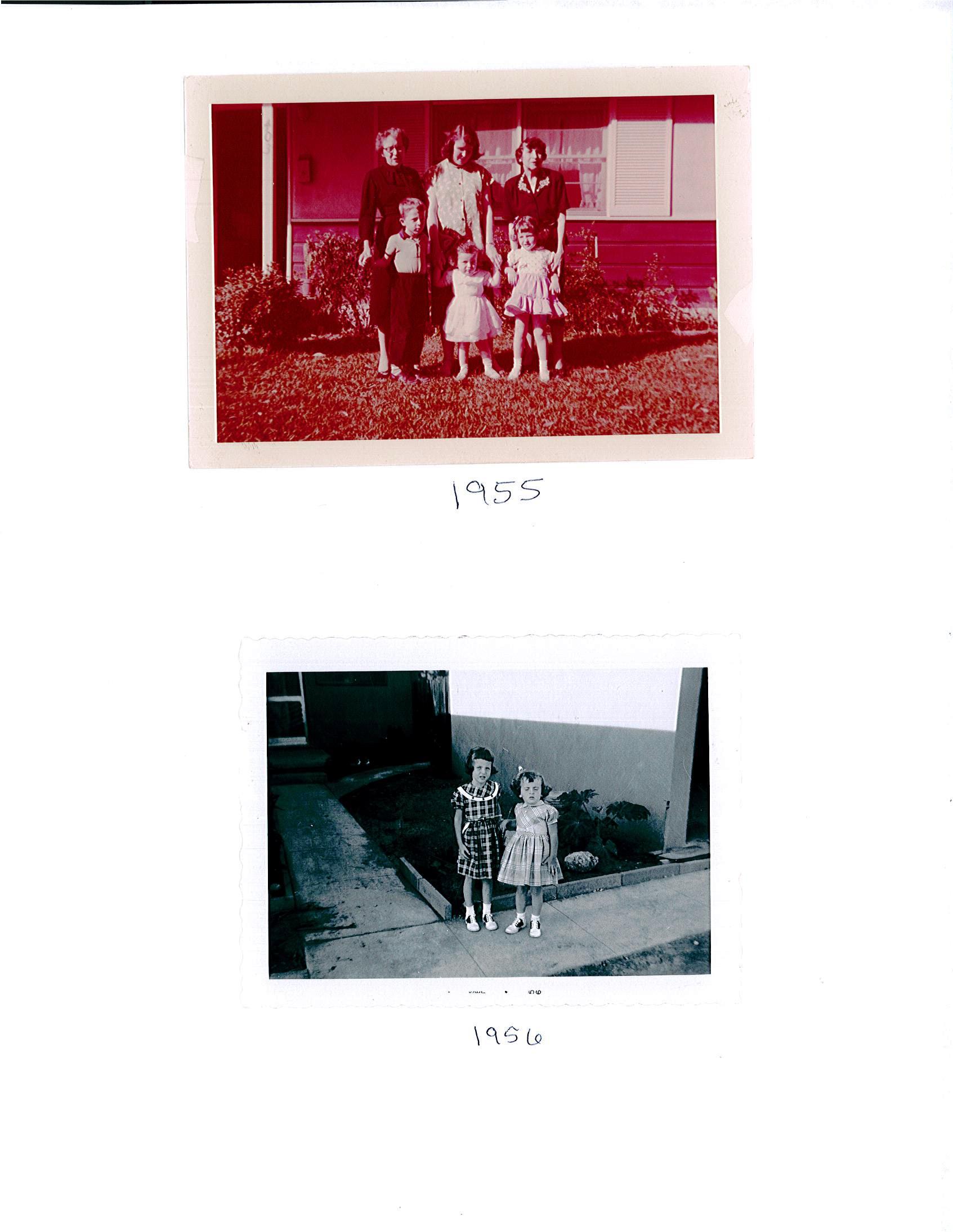
Well, I drove up to our local office supply store today with my handful of old pictures I found this week to have them scanned.  I have no way to divide these apart from one another — so here I go with another sketch job!!

Page0001

Sorry for all the blank white space, nothing I can do about that right now!  First picture – the tall woman with the glasses was my mother’s friend.  I believe her name was Natalie.  She’s gripping my brother, John.  Next comes sister Cindy who was turning 2.  Mother is pregnant with my sister Sharon, so this had to be 1955.  I am under the grip of my grandmother.  I was 3 nearly 4, John was 4 nearly 5. 

This is one of those pictures that lets me know once we children were outside of the prison we were little WILD THINGS!!!

In the lower picture I would have been 4 nearly 5, Cindy 2 nearly 3.  We don’t look like happy campers.

Oh, my angel brother John.  13 1/2 months older than I was – he saved my life!!!!  Such love he had for me, so protective, so watchful, my guardian angel!

Page0002

Page0003

I LOVE this lower one!  That is the ME that MADE IT!  I am 4, not quite 5.  With my two sisters.  I bet if she could have my abusive mother would have KILLED me to get rid of that spunk I had!!!  But – she managed over time to beat it nearly out of me.  But NOT!  I wish I had a poster of this!  This week is the first I’ve seen any of these photographs.

Then moving up – me trapped holding a not happy baby – HELP!!!

And the top one – oh the dynamics in THAT picture!!!!  My grandmother on the left of the picture – 2-year-old me who is LEAVING — Mother Mildred with that LOOK!  Holding sister Cindy – and look at the expression of my protective brother, John!  Not missing a thing!  Sister in NEED!   By the way, that should have read 1953 beside that picture, not 1955!

This is the ONLY picture I have ever seen that even begins to catch a glimmer of what the OTHER mean Mildred could look like.  There I am!  Right square in that little body being ME!!!

Page0004

In a normal world this picture of my pregnant mother (with Cindy) and me would be precious and priceless.  Maybe in some ways it was.  The dynamics so changed when Cindy was born and BPD Mildred then had her split-world God’s child.  I can see that in the top right picture of Mother and Cindy – that interaction, that dyad, that expression in Mother’s being with her loved baby — I NEVER felt that from her.  Not once in my entire childhood.

My father holding me when I was one month old – BPD Mildred had to work on that man to turn him against me – but she did it.  He lost himself to HER — and I lost my father once that had happened. 

The top left is Mother holding me. 

Such mental illness in that woman — and NOBODY noticed!!!!  So much horrific abuse — I am quite certain, as a friend of mine pointed out, that the moving from house to house my parents did before we moved to Alaska before my 5th birthday had to do with neighbors hearing what happened to me in one house — asking questions — and on mother moved.  There are three different houses in these pictures….  And there was nothing wrong with ANY of these houses.

++++

Please click here to read or to Leave a Comment »

++++
+WHERE CAN THE ESSENCE OF A CHILD GO?

++++

This post won’t be much more than a sketch of a collection of thoughts that are swirling around in the shadows of my mind this morning.  I will capture a few of them here, but most of them will have to be patient and wait until I am more ready to take them out and put them together into the structure of a more formal writing.

I have been deeply involved for weeks now in sorting through the messy collection of my family’s photographic history.  I don’t have the savvy or the computer power to scan and work with digitalizing this collection, which is most frustrating to me.  I am finding the pictures that correspond to the text of 8 books as I go, but there are other pictures that I know will belong in books that have yet to be written and that don’t even begin to have a structure or a title at this point in time.

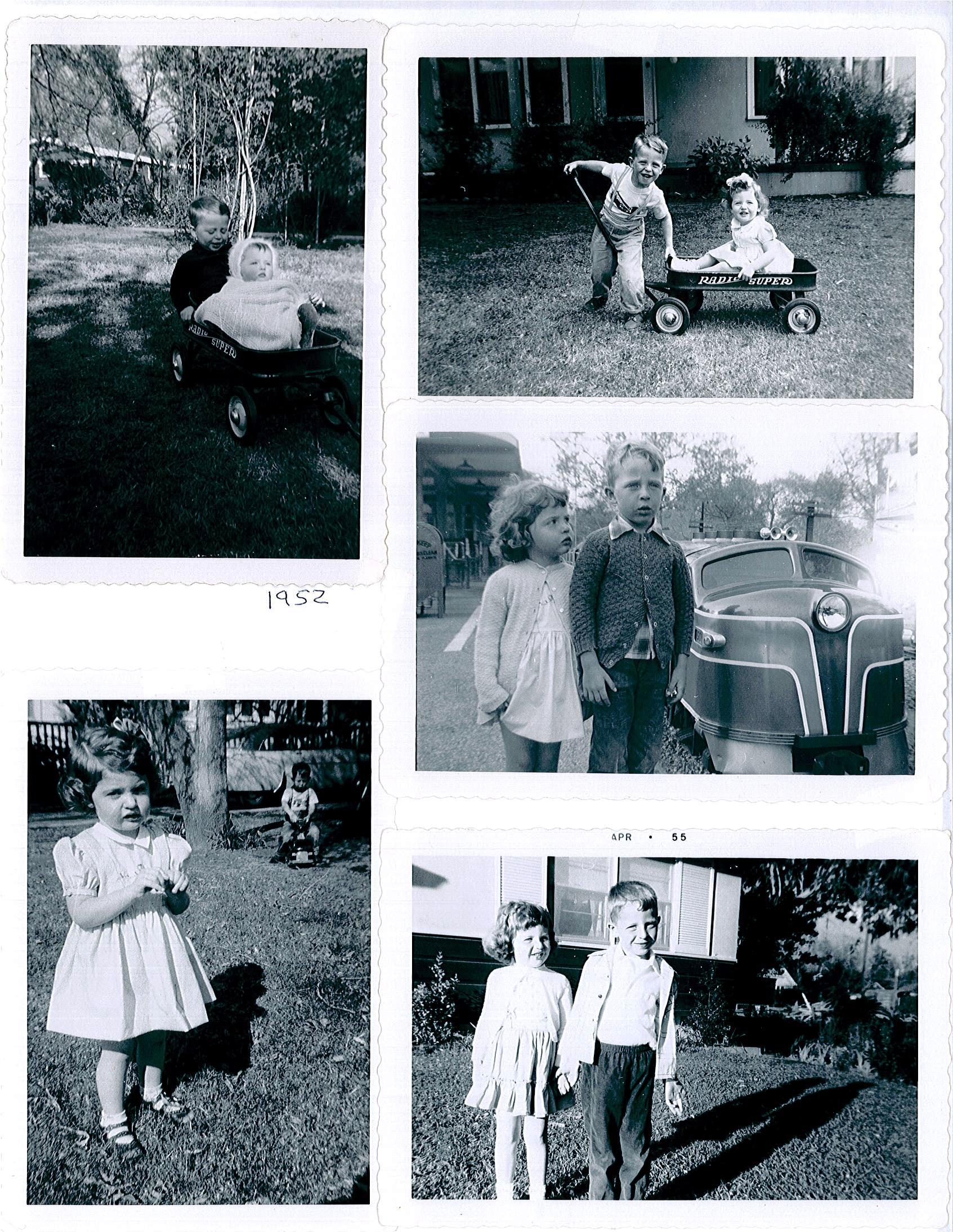
Among those pictures are ones of myself before the age of five that also include pictures of my siblings who were also very young at the time those photographs were snapped in California before our family moved to Alaska to begin our homesteading saga.  These pictures tell stories all by themselves!

Back in the 1950s there was great expense in processing films.  Pictures of children were most often taken on some kind of picture taking event like a birthday, Easter or Christmas.  In some of these holiday pictures Mother and Grandmother are literally hanging onto we children to keep us still long enough for a picture to be taken.  Behind the body language in these pictures I envision WILD CHILDREN being captured momentarily, grabbed by the wrist, as adults tried to freeze the energy in our body as we were so awkwardly frozen in time to be framed in a picture.

I can see myself — the INSIDE of myself — bursting through over 50 years of time as if I only stop being who I was then, who I can see, only when I LOOK at these pictures.  The rest of the time little me — being only a fraction of inches tall as I romp around within the space those little pictures hold me within — is trapped waiting to be remembered.

I end up thinking this morning about myself as a severely abused child — and about my siblings who witnessed that abuse — as we could not HELP at those young ages being ourself with our full expression of emotion, feeling, attitude — in action.

As time goes on children begin to learn to make conscious choices, the best that they can (as I imagine the scenarios) to PLEASE the adults upon whom they owe their survival AND when abuse is present to try to avoid harm.

Little people cannot possibly be adept at doing either of these things.  When emotion and reaction live in little children’s bodies they cannot be selected at will to present an ‘acceptable’ version of who they are to either gain praise or avoid retribution.  Little children are ALIVE.  They feel and they begin to think at a very, very young age.

When who the child is is not acceptable to the grownups in their life, where does the free-flowing energy of childhood go to?  Where CAN it go?

In families where the essence of the small child as a person is not tolerated, when any free thought or natural expression of emotion is not allowed, and then when – in cases such as mine was – the person of the child is deemed to be essentially evil and bad no matter WHAT the child does — what happens to the development of the self of the child?

When a child is raised in a healthy family socially acceptable parameters for behaviors — which include the appropriate and healthy expression of the full range of emotions — are gradually introduced as these behaviors are gradually modulated by healthy adults who understand that their little charge was BORN as an individual person.  Abuse and violation of the person of the child is NOT part of the picture.

Because my history involves a mother who most likely suffered from Borderline Personality Disorder (BPD) with a definite psychosis, my perspective is biased.  Things go wrong in all kinds of families in which BPD is not present.  I cannot sort out how much of what I detect of what went wrong in my family as it was run and run over by BPD Mother could possibly apply to other kinds of families in trouble.  All I know is that Mother lacked empathy and did not actually know what a person even was.

To Mother her children were puppets, props, dolls, toys — NOT human beings.  We were in her mind things that could be manipulated, arranged, controlled.  There are some early photographs of Mildred’s children that were taken as little ones were enjoying doing what children do.  At those times we were only accidentally doing something right and approved of in Mildred’s world.

In other pictures we were supposed to be doing something else other than being our own little person.  It is at those times and in photographs of those times that the dynamics appear in body language and expressions that show the contrast between (especially for me) what I was SUPPOSED to look, behave, act and feel and how I truly DID experience myself in my life.

I cannot yet add the photographs into my writing.  There is a whole long process to get to that stage.  What I am writing here in words is simply a kind of narration of an invisible play because the pictures to be submitted as evidence are still being processed.  In the meantime I am processing ideas related to what good use I can put some of these pictures to in my future writing. 

I am wondering where the self of a child GOES when that self is not allowed to grow up even existing within its own body in its own life.  It’s not like a child has a choice to change itself in for a different self that can manage (somehow) to make all the right choices so that conflict with its mother-parent can be avoided.  Nor can a suffering child trade in its caregiver for a better one, either.

The only thing I can think of that might be useful is that somehow conveying stories means that we can convey information that can be thought about, talked about, learned from — somehow.  I wish I had more answers than I have questions.

++++

Please click here to read or to Leave a Comment »

++++

+’BABIES UNDER FIRE’ — THE UMBRELLA OF MY WRITINGS

++++

I began my independent research in 2004 after my last child of three entered the Air Force and left home.  I needed to understand where the depths of my sadness came from and why I could not ease it or make it go away.  I could find no other way to begin to meet my needs that to tackle my problems on my own.

The first book I read was about a man imprisoned in the 1950s by Communist Chinese who exerted every effort over years to control their prisoner’s mind.  As I read this man’s survival account I instantly recognized that this man could not be broken because he had  strength within his inner core-self that had been put there through loving interactions he experienced with others – especially with his mother – from the beginning of his life.  At the same time I this fact I understood that I had never been given the gift that this man had.  I also understood that not only did this man not recognize the source of his survival but also that very few if any others reading his account would recognize this fact, either.  (Unfortunately I do not remember the name of this man or of his book.)

I found the exact same pattern present in the writings of Dave J. Pelzer in his book A Child Called “It”: One Child’s Courage to Survive (1995).  Pelzer (and I suggest, also his readers) seemed to be oblivious to the power that his relationship with his mother before her horrific treatment of him began when he as nearing school age had to form the foundation within his body-brain that allowed him to endure and to survive all that came upon him later.  The movie, Buck, about the child-abused horse whisperer also completely misses this same critically important point.  In his narration for this movie Buck Brannaman states clearly more than once what a wonderful, loving mother his was before she died when he was in his middle childhood, at which he was left with his brother in the care of his severely abusive drunk of a father.  (Why had the mother remained with this man when she knew he was abusing her boys?  Nobody addresses this point in that movie.)

I was only a little ways behind the curve when I found in 2004 a book that began to profoundly change my thinking that had been published in 2001 (there is a new edition out now):  The Developing Mind: How Relationships and the Brain Interact to Shape Who We Are by  Daniel J. Siegel M.D.

I carefully sifted my way word by word through this book, and then discovered my next stairway to truth in this 2001 book:  Traumatic Relationships and Serious Mental Disorders by Dr. Jon G. Allen.  There was no stopping me then, and on I moved into additional serious readings of Dr. Allan Schore and other developmental neuroscientists.  The 2007 book by Dr. Bruce Perry and Maia Szalavitz, The Boy Who Was Raised as a Dog: And Other Stories from a Child Psychiatrist’s Notebook–What Traumatized Children Can Teach Us About Loss, Love, and Healing, gave me the first opportunity to see this critically important information about what happens to ‘Babies Under Fire’ © translated into lay language those of us in the grass-root trenches can understand.

While there are many books and many theories about how to supposedly heal trauma in personal lives, I have learned that for those of us who were indeed one of the ‘Babies Under Fire’ there is not really going to be a single useful piece of information for us to be found in any so-called healing approaches that do NOT clearly, truthfully and accurately give us the knowledge we need about how the lack of safety and security in our earliest attachment relationships — primarily with our mother — permanently altered the way our body-brain developed during the most ‘Critical Windows’ of formative growth in our lifetime.

While ‘Babies Under Fire’ does not give us a pleasant image to hold in our minds, it does give us an accurate place to begin to look for the origin of the widest array of difficulties humans face when we don’t get MOTHERING right.

++++

Please click here to read or to Leave a Comment »

++++