+THE RISK OF LOSING OUR BODY = THE RISK OF LOSING OUR SELF: WHAT EARLY ABUSE SURVIVORS KNOW

++++++++++++++++++++++++++++++++++

As I continue to process what happened to me last week that disrupted my equilibrium so that I felt like the floor dropped out from under my inner world as I fell into my troubling disorganized-disoriented insecure attachment patterns I find myself pondering a series or a collection of words.  Perhaps by exploring what these words mean and how they might be connected and related to one another I can better understand the dynamics of these dissociating shifts that happen within my body-brain as they leave me feeling lost, depleted, confused and dysregulated.

MAINTAIN comes to mind:

1: to keep in an existing state (as of repair, efficiency, or validity): preserve from failure or decline <maintain machinery>

2: to sustain against opposition or danger: uphold and defend <maintain a position>

3: to continue or persevere in: carry on, keep up <couldn’t maintain his composure>

4a : to support or provide for

Origin of MAINTAIN

Middle English mainteinen, from Anglo-French maintenir, maynteiner, from Medieval Latin manutenēre, from Latin manu tenēre to hold in the hand

First Known Use: 14th century

Related to MAINTAIN

Synonyms: conserve, keep up, preserve, save

++

SUSTAIN also comes to mind, and I wonder how this word might be different than MAINTAIN:

1: to give support or relief to

2: to supply with sustenance: nourish

3: keep up, prolong

4: to support the weight of : prop; also : to carry or withstand (a weight or pressure)

5: to buoy up <sustained by hope>

6a : to bear up under b : suffer, undergo <sustained heavy losses>

7a : to support as true, legal, or just b : to allow or admit as valid <the court sustained the motion>

Origin of SUSTAIN

Middle English sustenen, from Anglo-French sustein-, stem of sustenir, from Latin sustinēre to hold up, sustain, from sub-, sus- up + tenēre to hold — more at sub-, thin

First Known Use: 13th century

Related to SUSTAIN

Synonyms: nourish, nurture

++

And then I think of the word RETAIN:

1a : to keep in possession or use b : to keep in one’s pay or service; specifically : to employ by paying a retainer c : to keep in mind or memory : remember

2: to hold secure or intact

Origin of RETAIN

Middle English reteinen, retainen, from Anglo-French retenir, reteigner, from Latin retinēre to hold back, restrain, from re- + tenēre to hold — more at thin

First Known Use: 15th century

Related to RETAIN

Synonyms: hold, reserve, keep, withhold

++

And finally, the word DRAIN:

1:  obsolete : filter

2a : to draw off (liquid) gradually or completely <drained all the water out> b : to cause the gradual disappearance of <drain the region’s wealth> c : to exhaust physically or emotionally <feeling drained at the end of a long workday>

3a : to make gradually dry <drain a swamp> b : to carry away the surface water of <the river that drains the valley> c : to deplete or empty by or as if by drawing off by degrees or in increments <drained the country of its resources> d : to empty by drinking the contents of <drain a mug of beer>

4: drop 7c, sink <drained the putt>

Origin of DRAIN

Middle English draynen, from Old English drēahnian — more at dry

First Known Use: before 12th century

Related to DRAIN

Synonyms: bleed, draft, draw (off), pump, siphon (also syphon), tap

++++++++++++++++++++

All of these four words invoke and involve activity of some kind that either contributes to holding onto life or contributes to its decline.

As I have aged, as I have continued to endure and survive, I find now that my margin for staying on the plus or positive side of well-being has become a very narrow one.  It takes very little depletion now for me to feel it as it happens.

My inner storehouse of sustenance seems to be minimal.  When faced with stimulation from my environment that creates a challenge to me, I have trouble maintaining not only my slim margin of well-being, but more critically I have trouble maintaining-retaining my sense of self.

As I look backwards through time at the circumstances of severe abuse and trauma that were ongoing major stressful challenges to my developing body-brain during my most critical growth stages I am filled with wonder.  How did I come out of that horrible hell being a person at all?  I certainly was never treated as one!

At the same time I try to reason with myself by letting my self know that it shouldn’t surprise me now that this marginal sense of self that I have come to know can so easily dissolve into oblivion when I am in situations that make demands on this self in ways that deplete my inner resources rather than help me maintain or sustain them.

If I were to imagine my ongoing life as being a road, I would say that I don’t have enough power in my motor to make it smoothly and easily over even the smallest of bumps that might appear in my path.  Challenges tax me and drain me.

++++

Part of what brings these four words to mind today – maintain, sustain, retain and drain – has to do with looking back at the few simple interactions I had with people last Thursday when I left the safe-secure-predictable seclusion of my home.  I felt very different depending on which person I was interacting with where.

I am quite fine when interacting with people I am familiar with and that I have a history of positive interaction with.  These people ASSIST me in being able to maintain, sustain and retain my connection with myself – they do not drain me.

As I examine the circumstances of my recent difficulties I see that what each of these positive-impact people seem to have in common is that I can detect each of these people’s own SELF in their eyes, in their voice, in their words, in their body language.

None of these people appear depleted to me.  They each seem to be running down the road of their life with full power.  There is no ‘game’ with them.  There is no conflict present on any level.  These people radiate a kind of empowered JOY and ENJOYMENT of life that has nothing but a positive impact on me.

++

While I might hate it that what I have suffered in my life has so contributed to my own vulnerability and fragility of my self-in-the-world, I cannot escape the fact that I seem to have used up whatever inner resources I seemed to enter my adulthood with that allowed me to raise my own children and make it to menopause.  I have to live with the facts.  And if I don’t want to feel this depleted and drained, disorganized and disoriented after every minor excursion I take into the world away from my home I want to try to learn what the dynamics seem to be that seem to so drain me.

I met nobody last week in my excursion that was actively mean.  But I am so sensitive inwardly to ‘energy transactions’ that when I was interacting with people who also seem to be as fragile, vulnerable and inwardly depleted as I am, those interactions created demands on me that I don’t know how to screen out at the same time I have no resources of my own to give them what they communicate that they need.

++

This is one of those ‘documenting’ posts that I write sometimes because I don’t have any answers.  At the same time I also know that everything I am describing relates to the process of having survived unbearable traumas for the first 18 years of my life.  I paid a heavy price for surviving, and it is that price that I seem to be most involved in paying here in my later years.  I feel, most simply put, worn down and worn out.

While I don’t mean for this to be a negative post, I do mean for it to be a realistic one.  As our society considers the cost of allowing infant-child abuse, neglect and maltreatment to continue the consequences that survivors will live with for the rest of their lifespan must be included in the ‘budget package’.

++

As I allow and encourage my SELF to express its awareness and its experience today, I know that my RIGHT brain with its connections to what my body knows has given over to my LEFT brain not only these four words today, but also its knowledge that the images contained in the words themselves hold great body-based deeper meaning:

MAINTAIN – to hold in the hand

SUSTAIN – to hold against thinning

RETAIN – also to hold against thinning

DRAIN – to hold against drying

These words are about holding onto versus losing the essential elements life needs to preserve itself.  In my case, I am looking at the needs my SELF has, not only the needs of my body that holds me.

These are words that relate to nourishment – physiologically the food and water my body needs.  What I experience when I feel drained of my SELF means that the food and water my SELF needs is just as real a need as what my body needs.  These are life and death concerns.

Looking at the word HOLD itself I see in its origins that it has a connection both to ‘rapid’ and to ‘agitation’.  People who never experienced severe trauma during their earliest developmental years probably never have to experience concern about holding onto not only the life of their body but also to the life of their SELF.  They probably never experience how rapidly their self can disappear (dissociate) or how the inner agitation feels when a SELF cannot at times be held onto.

But for many severe early trauma survivors being able to hold onto our SELF becomes as much of an ongoing concern as it is for us to keep our BODY alive.  For us, the risk of losing one is just as great as it is for losing the other.  Our abusers made certain of that.

Note:  I suspect that the risk of losing my self is GREATER THAN the risk of losing my body!

++++++++++++++++++++++++++++++++++
+HIDE-AND-SEEK

++++++++++++++++++++++

No matter how hard I try I do not feel like myself today.  Just going out yesterday to do my monthly shopping leaves me feeling today like a different person, like a foreigner in my own body, in my yard and in my home.  This ‘derealization’ feeling leaves me without grounding as if I am not the same person now that I was before my venture out yesterday.  Like I left in the morning and came back as somebody else.

The world around me does not feel the same, either.  This is a dreamy sort of feeling and I don’t like it — but neither can I find a way to rush things back to the way they were.  Intellectually I know that the world including the people in it are continually changing.  But I also know that we are supposed to remain with a sense of intactness as time moves forward.

All I know to do now is to be patient.  Take it easy, be gentle with myself and be patient.  There is nothing I can do to rush away this unreal feeling.  There is nothing I can do to convince myself this unreal feeling isn’t real.  It is real.  Very very real.

I let myself know this is a sort of sickness feeling, a sort of un-wellness that is a part of my life.  I allow myself to feel grateful that I don’t always feel this way at the same time I feel grief and loss for myself in my life that actions as simple as running a day full of errands can so disorient me, so unsettle me — so that I feel I left a bread crumb trail from my home-self yesterday that I should have been able to follow to get back to myself — but it didn’t work.  The bread crumb trail is gone.

These feelings and this sense of derealization is a part of what it is like to live with a trauma changed body-brain.  I didn’t ask for this.  I didn’t ask for any of the horrors that happened to me when I was so young and so little — trying to grow up in a world of pain and terror.

But here I am anyway feeling lost to myself no matter what I tried to (or did) accomplish this day.  It doesn’t help me that the wind is racing and tearing around today.  I never do well here in these winds, but they go away.  They do not last forever and this feeling — though it is likely to come upon me again in the future — is also going to go away before too long.

(This is like losing my place when reading a book and having to try to find that place again — in a complex book that is the story of my life.)

I wait this out knowing that my usual work in my yard is greatly about grounding myself in my body in this world, and that yesterday I had to break that stride, break that rhythm because those errands had to be done.  But it feels like I left myself behind yesterday when I left my home and when I returned I wasn’t anywhere to be found.  Perhaps I could see humor in this but I can’t.

I am going away now.  I will be back when I am back.

++++++++++++++++++++++

+ORDER OUT OF CHAOS BRINGS ME CALM PEACEFULNESS

++++++++++++++++++++++++++++++++++
I am paying attention to myself as I walk somewhere between fearfully and courageously into the next moments of my life to my process.  HOW am I doing that?  HOW am I using my efforts and life energy to order and organize myself at the forefront — at the leading edge — of this sense of chaos I am trying to overcome rather than being overwhelmed by?

This is a personal inexact science.  I realize this at the same time I marvel at my self as I notice how I do this.  I find myself realizing that after I left my miserable home of origin and entered my adult life the pattern I notice TODAY is probably the same one I have used ALL OF MY ADULT LIFE!

What I did from the instant I posted my last piece of writing was look around the universe that is my tiny little piece of the world and asked, “What around me NEEDS me to take care of it?  What around me needs me to work with it so that it can achieve its own natural progress in its own life?”

As I asked these questions I realized that part of what probably contributes to altered development of an early abuse survivor’s left brain is that — as happened to me — is that nobody ever let me set my own individually-based PRIORITIES!  (My single priority as an infant-child-teen, unconscious and body-based as it was, was solely to endure and survive!)  Nobody was ever concerned with what I NEEDED or with what I WANTED.  So how could I begin to ‘train my brain’ to process my own priorities?

Priorities, I just now realized very clearly, are what humans use to ORDER and ORGANIZE their self in their life — which means moving through time one instant at a time.

My priority as an adult has most centrally always been to help, or to caregive to, someone else.

‘Experts’ say that it is only when our own internal attachment system is turned off that we are free to caregive.  They describe these two systems of being connected to one another like the ends of a teeter-totter.  One up/on the other down/off.

Well, I believe from inside my own life that in cases of severe abuse survivors we can operate differently.  I certainly did as a mother and I see myself doing the same thing today:  Taking care of someone/something outside of myself IS taking care of ME!

I had a terrible, nearly fatal reaction to my last child leaving home.  It was so far past ‘ordinary empty nest’ that I could almost laugh at the concept itself.  My entire BEING was ordered and organized around caregiving my children — and doing that job the best possible way.  No more kids at home?  Linda as a self disappeared again into the invisibility I spent my entire first 18 years surviving in.

++

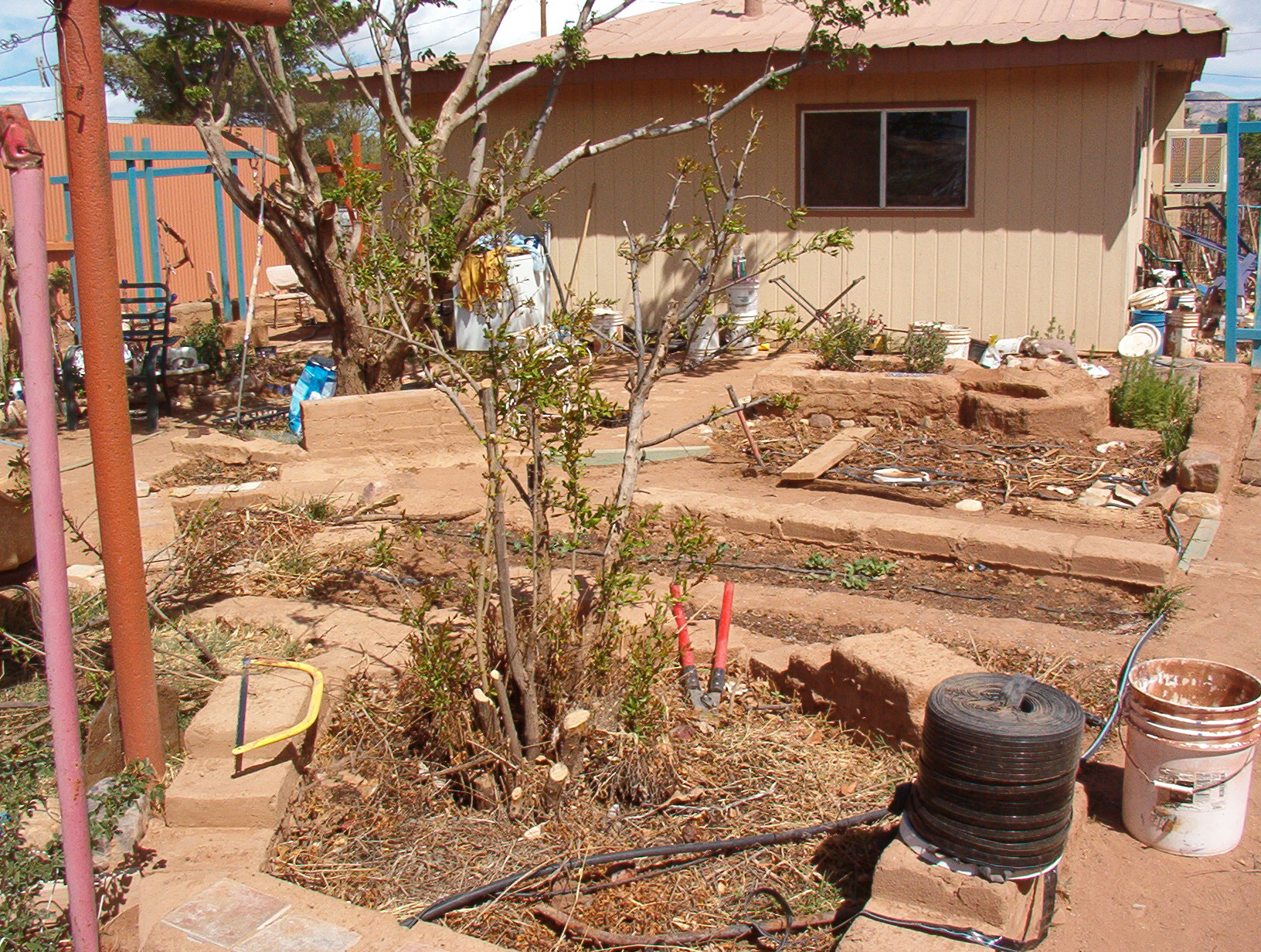
So my pick-for-the-start-of-ordering and organizing my self for this day?  The priority?  I headed outside, dull clippers in hand, to salvage my Pomegranate tree!  As its tiny new deep green leaves began to appear last week I realized that I had neglected to even consider that last winter’s 2-below-zero nights of freezing might have killed that tree!  But, oh does it look SAD!  A few leaves here, a few leaves there — among masses of obviously dead dead dead brown brittle branches.

While it might be somebody else’s priority to wash the dishes or put away all the goodies that litter the kitchen floor in plastic bags, doing so is NOT my heart’s desire!  THIS is Linda, not somebody else.  This is ME that desires to be outside and a part of the gentle wind, under the scooting shadows of the rare desert sky cloud cover, warmed by the sun but still needing several layers of clothing to stay warm out there.

It gives me joy to know that I have the power to act upon the future of that tree in such a way that I CAN save its life.  At the same time I know that helping that tree into a thriving future benefits me because its fruits are luscious and SO GOOD FOR ME!  I can productively apply myself to caregive that tree – and it is my priority at this moment and my desire and my passion to do so.

As I FOCUS on this job all anxiety leaves me.  There is no pressure to do this job ‘right’ because I am confident in my ability to automatically accomplish this task in the best way possible.

It strikes me that I intuitively and instinctively had this same sense as I raised my children.  True, my efforts with my firstborn (conceived when I was 18) were not what they grew to be later on.  But I know about myself that when I follow my OWN inner priorities I do the best I possibly can as I try in some small way to help the world become a better place.

++

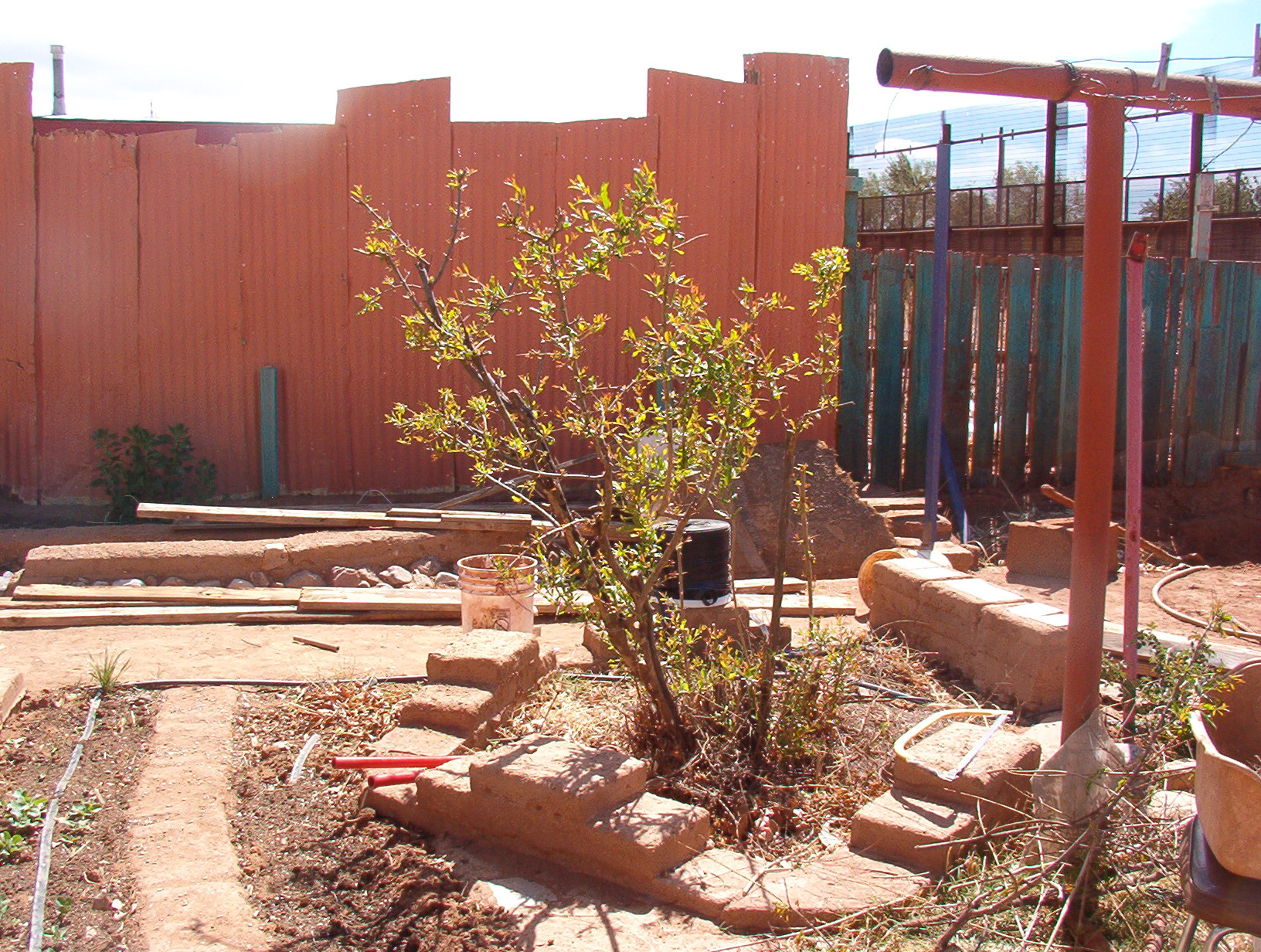
All that's left of the Pomegranate tree now -- kind of like all healing work, what's dead harms the whole unless it's gone!
I'm sure willing to bet that this tree will now thrive again. Today's cooler temps and my extra clothes did the job for pruning this tree with its 4" sharp thorns! Caregiving ALL life is the responsibility of the human race - I believe I learned that as a child on our Alaskan mountain homestead as the land took care of me!

++

Next priority for this day:  Create the best home possible for the hundreds of red wiggler worms by beloved Seattle sister sent me for the garden!  Yup!  Caregiving worms so they can caregive the garden so it can feed me is part of The Bigger Plan for my life.  Gotta love this life!

++

Previous post: +BEFRIENDING CHAOS? (EARLY ABUSE SURVIVORS AND CHOICE)

++++++++++++++++++++++++++++++++++
+BEFRIENDING CHAOS? (EARLY ABUSE SURVIVORS AND CHOICE)

+++++++++++++++++++++++

I can’t imagine that any severe early abuse survivor would say that they LIKE this feeling, the one that exists at the edge of where being OK meets ‘dissociation’.  But while I will never LIKE this feeling it is a reality of my life and my concern today is that somehow I learn how to peacefully co-exist with it knowing the feeling itself was built into my body-brain through trauma and abuse from the moment I was born.

I have written recently about my efforts to discriminate between the feeling of what I used to call continual foreboding and the one I more recently named prescience.  Today I would call it a chronic wariness state, one that is tied to chronic anxiety but that also seems to lie at an edge-line where I still retain the power of careful and conscious choice contrasted to the state that lies across this line in which full-blown stress-anxiety takes over the show.

When my personal ‘show’ becomes ruled by my body’s physiological reactions to stress dissociation is most likely to place me in a state of lessened powers of conscious choice.  I would rather have the power to choose how I am going to handle ‘things’ as my day progresses.  And, yes, all of this feels like work to me – often intangible work but work nonetheless.

++

Backing up a day to yesterday…..  I went into town with my monthly income and spent nearly all of it on necessities which included material to finish my chicken pen and coop roof.  The back of my 1978 (gas hog) El Camino is filled with bags of potting soil, stucco lathe, stucco wire (which is far cheaper than chicken wire) to enclose the pen, 2’ x 4’ boards for the roof.

My kitchen floor is covered with food staples to pack away that will hopefully last me until my disability check comes in again the first of next month.  There are also bags from our new ACE hardware store containing various boxes and paper bags full of nails and screws.  There is plant food, various useful findings from the local thrift store, and many cans of ‘no sugar added’ canned fruit that was on sale at the only grocery store we have in town.

I am good to go!

Or am I?

++

What is actually contributing to my current ‘on the edge of anxiety’ state is that there are TOO MANY THINGS here which places me in a state of TOO MANY CHOICES of where to go from here.

I think about this in relation to my recent posts about the work of Dr. Martin Teicher regarding the kinds of very real physiological changes that happened to my earliest developing body-brain.

Making conscious choices is an activity handled best by a balanced flow of information between my left brain (changed in its development) and my right brain (also changed in its development) ALONG WITH the assistance of the super highway corpus callosum region of my brain in the middle that is meant to send information back and forth between my two brain hemispheres (also changed in its development).

What all these changes contribute to my FEELING and to my AWARENESS states is a quality of being overwhelmed by possibilities!

“Aren’t possibilities supposed to be a good thing?”  I ask of myself.

“Yes,” I respond, “but all these possibilities sit very closely in my reality to the state I knew ALL OF THE TIME as a little person – CHAOS!”

Some say that chaos is the realm where all possibilities exist co-currently, simultaneously and that it is only by a CHOICE being made and a DECISION being implemented that a tiny piece of chaos is changed into a more useful and constructive reality.

“OK, then,” my inner dialog continues.  “I think I understand these feelings that I am caught in like a gigantic spider web a little bit better.  Because I was so overwhelmed by abuse for the first 18 years of my life, and because I was left with so little opportunity to actually make conscious self-initiated choices and decisions regarding my own self-reality-life, my decision-making left brain did not develop itself to process any of these interactions!”

From the inside of me (not from the Ivory Tower outside of me) I know what all this feels like to me right at this moment.  My body-brain has to fight its way up for air – which is to say it has to fight itself up to the conscious level where I can PEACEFULLY order and organize my own thoughts, desires, efforts, feelings and actions MY OWN SELF.  I have to FORCE my body-brain to calm itself down, to be OK, to feel safe and secure enough at this moment in time to know that I not only have the RIGHT to order and organize myself and my life the way I want to – but that also have the ability to do this!

Choice and decision making – creating organized order out of overwhelming chaos – is an activity that was SUPPOSED to grow into my body-brain from the time I was born.  This is how the SELF of a new human being becomes integrated into all aspects of its life in the world.

As this happens during ‘Critical Windows of Development ’ the substructure that allows everything to flow cooperatively together to accomplish a lifetime of tasks (large and small) is wired into the developing body-brain on the physiological level.

Severe early abuse, neglect, trauma and malevolent treatment of little people sabotages the ‘normal/ordinary’ development of these abilities.

++

Enough said about all of this for this moment.  This blog is packed full of information about all of those changes in development.  What I need at the moment is to accept this reality as it exists in my body-brain (still, at my age of 59 ½) – so that if I can’t find a way to become friends right this moment with my body-brain as it was created, at least I can find ways to NOT be its enemy.

Being angry at my reality, being full of misery and suffering because of it, remaining in a feeling-awareness state of blocked mobility in my actions for the day will not help me one little bit!  How can I ACTUALLY organize and orient myself today so that I can move forward?  How do I settle this being-overwhelmed-in-the-sea-of-chaos (too many possibilities) DOWN?

++

This disorganized-disoriented insecure attachment-built body-brain that I live in/with doesn’t get to pick and choose when, where, how or why it operates because it is directly built into my entire physiology.  I will always believe that it is ONLY through conscious application of new information about me that can free me from my physiological natural state so that I can experience some peaceful calm that does NOT automatically exist in my body-brain.

I relate everything I am experiencing this morning back to Teicher’s writings (recently posted) including what it IS like and FEELS like to have an apt-to-kindle right limbic brain (which is intimately tied to what it knows of our body).  I have to (in essence) take my finger out of the pot of boiling water!!  Boiling water might be what my body-brain essentially knows, but I AM here, and I CAN make different choices today rather than let this perpetual peritraumatic acute trauma-reality state rule my day.

I can tell myself that all stimulation that happens in life is NOT BAD – nor is it automatically overwhelming!  While this is the reactive state that is most familiar to me, it is not the ONLY state that exists.

Can I take my own hand and in partnership if not in friendship discover how to move forward in time as I change inner CONFLICT awareness into calm peacefulness?  Let me see………

+++++++++++++++++++++++

+MAYBE WE CAN’T BE FOOLED – THIS IS NOT A BENIGN WORLD!

+++++++++++++++++++++++++++++++++++
I have a lot of thoughts this morning as I wait out the dawn for the sun to rise.  I am thinking about the book that was recommended to me by a therapist nearly 30 years ago – the one I read that led to my finally being able to disown my mother.  In People of the Lie: The Hope for Healing Human Evil by M. Scott Peck I found something I needed:  How to tell truth from untruth by listening to what my body tells me in my gut.

This morning I put this thought together with the concluding paragraphs Dr. Martin Teicher includes in one of his important articles about how the stress caused by infant-child abuse, neglect and trauma changes the development of the brain:

In our hypothesis, postnatal neglect or other maltreatment serves to elicit a cascade of stress responses that organizes the brain to develop along a specific pathway selected to facilitate reproductive success and survival in a world of deprivation and strife.  This pathway, however, is costly as it is associated with an increased risk of developing serious medical and psychiatric disorders and is unnecessary and maladaptive in a more benign environment.”

I am questioning my own conclusion that I reached after discovering Teicher’s work.  “Who says that severe early abuse survivors hatch out from their first malevolent environment when they leave home into a “more benign environment?”  Does an environment that lacks direct assault constitute a benign environment?”

No.

I woke up this morning thinking about the interactions I had with my neighbor children yesterday (ages 6 and 12).  The 6 year old is still young enough to be oblivious to many of the stresses present in the world she is growing up in and for.  The child who just turned 12 two days ago is increasingly showing great signs of inner conflict and distress.  She is vastly overweight, receives blatant derogatory comments at school about her weight, and openly admitted to me yesterday that the teasing she receives at school makes her feel ‘mean’.  And mean she can be!  She is not a happy child.

I also think about a friend of mine (alcoholic/addict) who has the sweetest heart and who is running his body directly into the ground.  I hadn’t seen him for many months.  He stopped by this week for a visit and brought a friend of his who must have repeated to me six times that his ex-wife ‘ripped him off’ after 34 years of marriage, etc.

I found myself after he told the story once wondering why he repeated it again – and again – and again…..  Then I found myself completely without compassion realizing that I don’t give a hoot about what happened to him.  He is a complete stranger to me.  In my world if something that happens in your life continues to trouble you, deal with it!  Grapple with it!  Wrestle with it!  Examine the conditions surrounding the events that cling on and on and on – and get over it!

UNLESS!!!  I reserve for the category of ‘there’s no way this one will ever leave me’ for victims of early infant-childhood trauma and abuse the reality that because that trauma changed the course of our physiological development permanently so that we ended up with a different body-brain our trauma built us and built itself INTO us.  As long as we live in our body the consequences of our earliest traumas reside within us.  We cannot leave those traumas behind.

SO…..

I did ask both my addicted friend and the friend he brought with him what their childhoods were like.  The addict insists that his earliest years were ideal.  OK.  Addictions can hit without early trauma.  The other man admitted that his early years were awful.

OK

“So go back to the beginning,” I wanted to tell him.  “Go back there and find the beginning of your own path through life and follow it.  Untangle it where you can.  Expose your early sufferings where you can.  But what good will it do you — or others who are weighted down by repeated exposure to a boring story of ‘gee my ex was so mean’ – to hear about something that has nothing to do with us?”

Am I getting harsh in my aging years?  Probably so…..

But

These thoughts are connected for me today as I received a lightening bolt realization:  None of us – no matter what nation we live in – are living in a perfect ‘BENIGN’ world.  As long as anyone is suffering, the world is not benign.

But

We have to look at the biggest picture possible.  This world and the civilizations upon it are supposed to be maturing and advancing, evolving, growing up.  Once this process is complete, only THEN will this world be benign.

Even within the boundaries of our great (rich) nation nearly a quarter of our children go to bed hungry because they don’t have enough food to eat.  Forty percent of our nation’s children are living in unstable housing.  Never mind the numbers of our children that are obese, that don’t make it through high school, or the numbers who cannot read well or think for themselves even if they do graduate.

This is NOT a benign environment, Dr. Martin Teicher.

I have, on some profound levels, bought (as Mr. Peck would say) that lie!

This is not a world where every human being is cherished.  This is not a world that does everything possible to make sure everyone has what they need from conception onward to thrive as the best person they can be as they live a life of well-being.

This COULD be a different, benign benevolent world – but it ISN’T one yet.

Just because those of us who suffered terrible things during our earliest years might have escaped one level of trauma as we stepped away from our home of origin and escaped our childhoods does NOT mean that we entered a wonderful world!

If we are going to define what is good for us and what isn’t, we have to think about what the world COULD be like and not pretend that the world is REALLY that world we imagine.

And perhaps those of us who survived our terrifying and terrible earliest years happen to have a body that is not, as Teicher states, designed ONLY for living in a malevolent world.  Perhaps we have a body that craves that better world that isn’t here yet at the same time that we ALWAYS know that this world we are in is NOT the benign world that most people seem intent on believing it is.

Perhaps we WANT more, NEED more in more intense and direct ways because we have suffered so much already.  Perhaps we crave a truly peaceful, safe-and-secure, fair, just, compassionate and caring world because we know so well how bad things can be – and that stepping out of our home of origin was REALLY only one small step in perhaps a better direction – but NONE of us are ‘there’ yet!!  Making the world a better place is a mutual job that everyone has to work on together.

“It is no measure of health to be well adjusted to a profoundly sick society.” -Jiddu Krishnamurti

+++++++++++++++++++++++++++++++++++

+THE LIVING AND THE DYING IN MY GARDEN – SEEING MYSELF IN THE LIFE OF MY PLANTS

+++++++++++++++++++++++++++++++++

I am up and wide awake (Such an odd expression – what exactly is the alternative to being ‘wide awake’?) at 4 a.m. this morning.  It is a perfect temperature outside.  I hear the first single rooster crowing up the sun across the border in Mexico.  A part of me is eager for the morning light to flood my yard so I can go rescue one of the native southwestern plants I bought that I know – of all of them – is NOT thriving where I planted it.  In fact, it is dying.

I don’t know what is troubling my Henry Eiler’s Quilled Black Eyed Susan, but it was supposed to be the showcase plant in the back yard!  It was supposed to grow into a thriving and glorious giant!  Nope.  Not doing that!  It is shriveling and losing all of its baby leaves as if it is sinking into the earth rather than growing in the opposite direction!

All I can think of is to carefully dig it out and put it back into a pot.  I need to move it where I can watch it carefully, like my precious grandson was watched in his intensive care neonatal environment after he was born six weeks prematurely.

Will it survive?  Can I provide for this little plant what it needs so it can grow past this life-or-death stage?  What am I doing WRONG for it?  Can I figure that out so I can do it RIGHT?

I am a complete newbie when it comes to drip irrigation.  I don’t understand the living complexity of this (for me) massive system I am still in the process of installing in my growing garden.  Only the RIGHT amount of water, at the RIGHT amount of pressure, streaming CORRECTLY through the RIGHT amount of line is needed.  If the ‘zone’ length is too long water comes out at the front end too MUCH and doesn’t make it to the back end of the line.  How do I adjust all of this so that I can guarantee every single plant, each with its own particular and special growth needs just the RIGHT amount of water at the RIGHT periods of time?

I don’t know.  And I hate to sacrifice the life of any individual plant as I work as hard as I can to figure all of this out!

We are evidently in a period of drought down here in southeastern Arizona.  I don’t actually understand what it is about ME that is stimulating me to work so hard to have a yard filled with living, thriving and blooming plants that will bring beauty to this piece of earth IN SPITE of the harsh conditions present here.

I am challenging myself.  I have a WANT and a DESIRE and the INTENTION of trying to cooperate within the limitations of this climate and of this soil and of these growing conditions on this little patch of ground I am living on to MAKE LIFE HAPPEN and to MAKE THAT LIFE BEAUTIFUL.  Of course that suggests (truly) that bare dusty reddish-brown soil on its own is not beautiful to me.  I am suggesting that THINGS CAN BE BETTER if I try hard enough, work hard enough, am determined enough, sacrifice enough.

I want to do something DIFFERENT and SPECIAL here in my little life, my little yard.  I want to figure all of this out!  At the same time, except for needing the vital resource of WATER to move around on this soil to bring life to these plants, I want the garden to be sustainable.  I desire that this garden find its own thriving balance point, its own ‘tipping point’ and stay there provided I can do my part to take care of it correctly.

++++

On the other hand as I look at my own situation as a human being I know that nothing was done for me during the first 18 years of life (other than being given the physical necessities of shelter, water, food, etc.) correctly.  Me, like the tiny Brown Eyed Susan in my yard spent my entire infant-childhood on the verge of dying.  Not only did nobody NOTICE, nobody CARE, but my parents continually cooperated with each other to make things WORSE for me, never BETTER.

So in a way I guess my gardening here in this arid high desert land is a sort of trauma drama reenactment for me, an effort to ACT out a way to create a beautiful, thriving garden IN SPITE of similar (parallel-symbolic) conditions to my own infant-childhood as they attack these plants.  Can I protect them?  Can I take adequate care of them?  Can I give them what they need?  Can I help them to thrive IN SPITE of all the detriments within this environment that are working against them?

And in the case of this single plant that seems to be losing its battle/struggle to remain alive let alone to GROW, can I-we win this battle?  Can I figure out what is WRONG and make it BETTER?  Can I ‘repair’ the ‘rupture’ in the patterns of this plant’s existence so that it can actually continue to BE on this earth?

Today I will try.  I will do everything in my power to help this plant.

++

RECENT POSTS:

+ADOBE MOMMA NEWS: COOP WINDOWS (AND A FEW FLOWERS)

+’BAD MEDICINE’: PRETENDING EARLY ABUSE SURVIVORS HAVE AN ‘ORDINARY’ BODY

+AS DR. MARTIN TEICHER STATES — EARLY ABUSE, ALTERED BRAIN DEVELOPMENT AND THE SCARS THAT WON’T HEAL

+++++++++++++++++++++++++++++++++

+ADOBE MOMMA NEWS: COOP WINDOWS (AND A FEW FLOWERS)

+++++++++++++++++++++++++++

I have been able to count on my memory returning for each adobe coop building step I have taken.  I had an amazing woman as a mentor when I lived in Taos, New Mexico over 15 years ago who taught me how to build with the mud.  Here I am, however, having grown this little coop just about up to its roof line and I am finding I have no memory clue whatsoever about how to put that roof on there so it won’t blow off in one of our frequent strong, gusty, fitful and naughty-nasty wind storms!

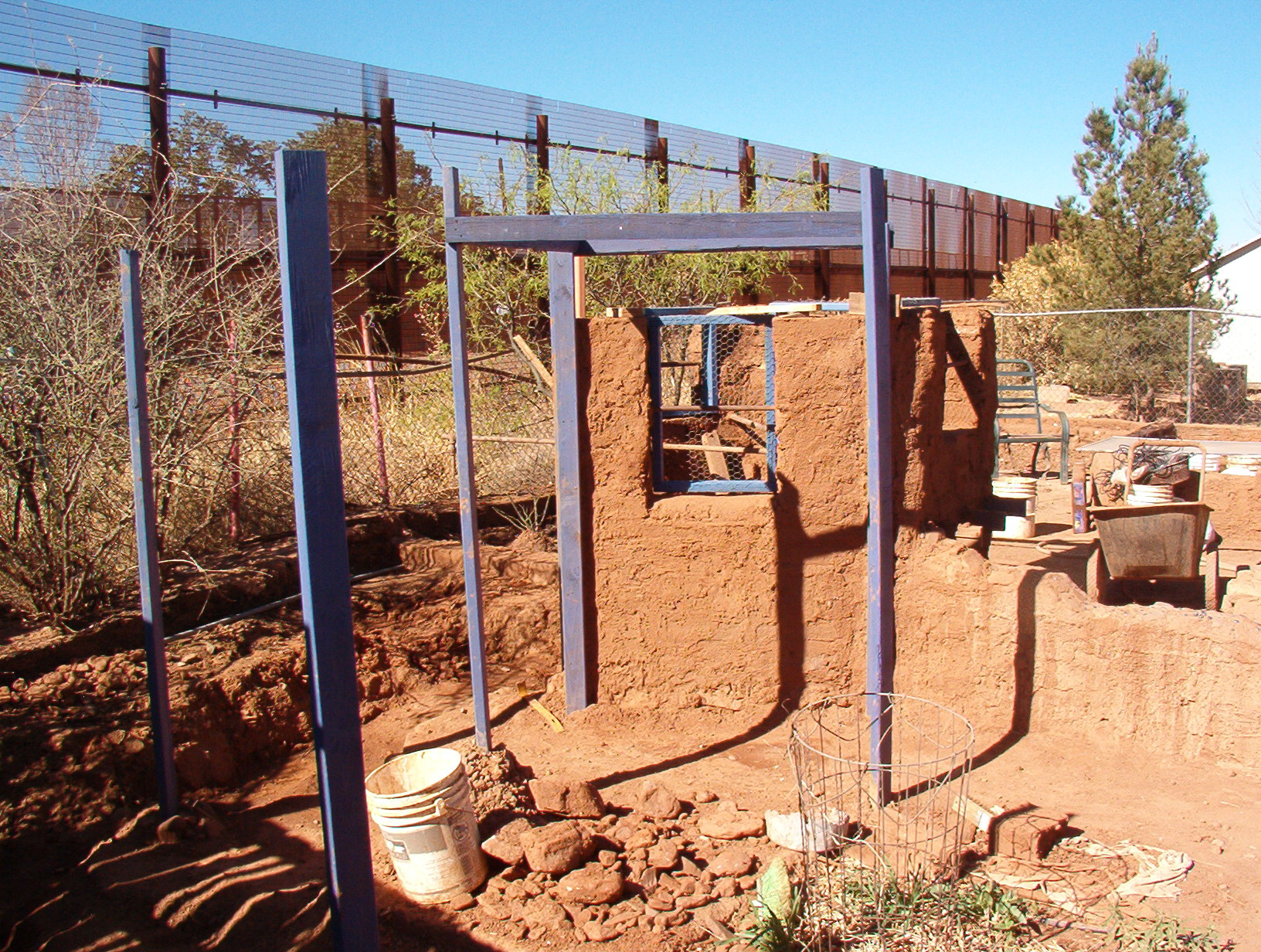
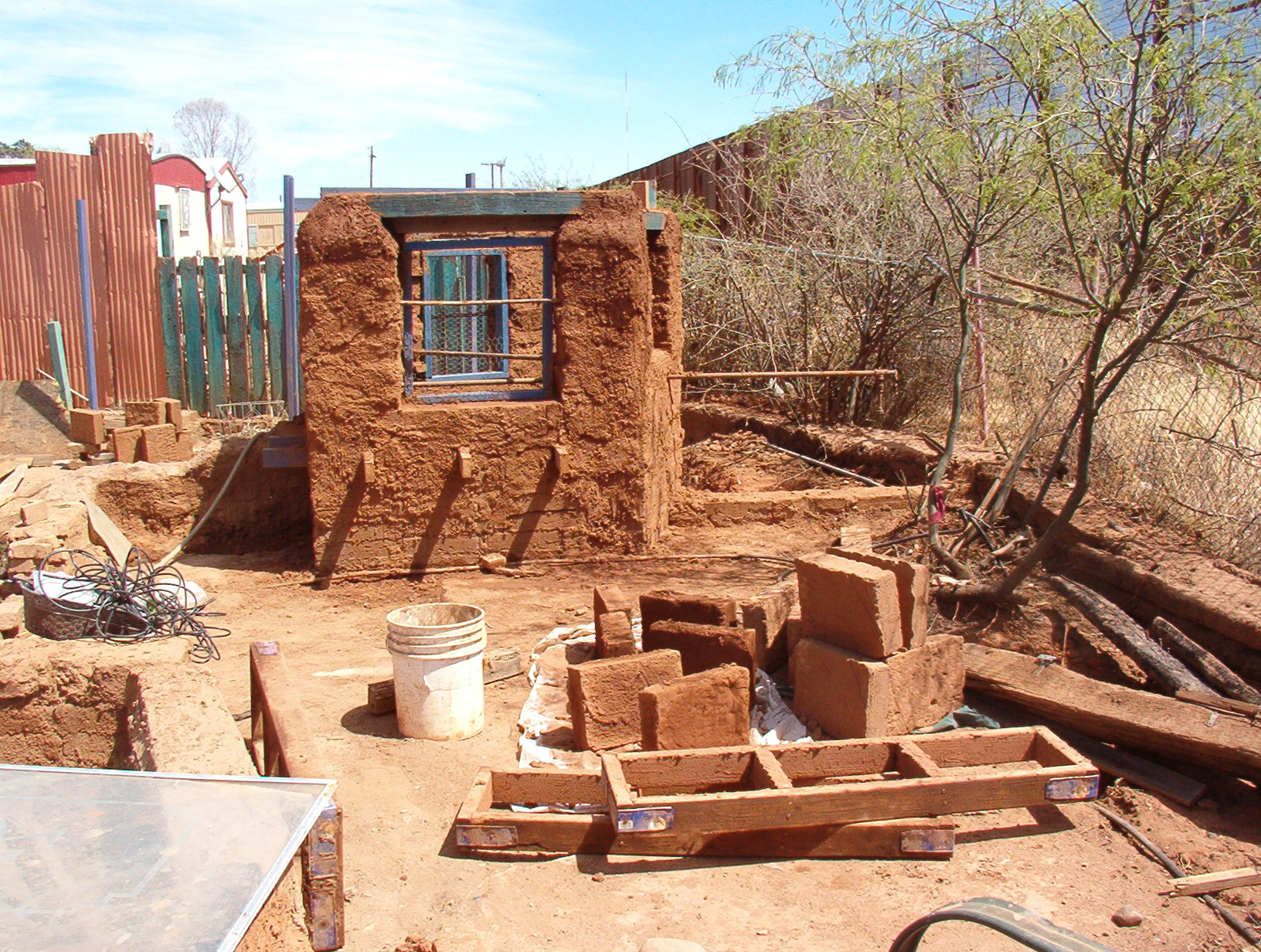
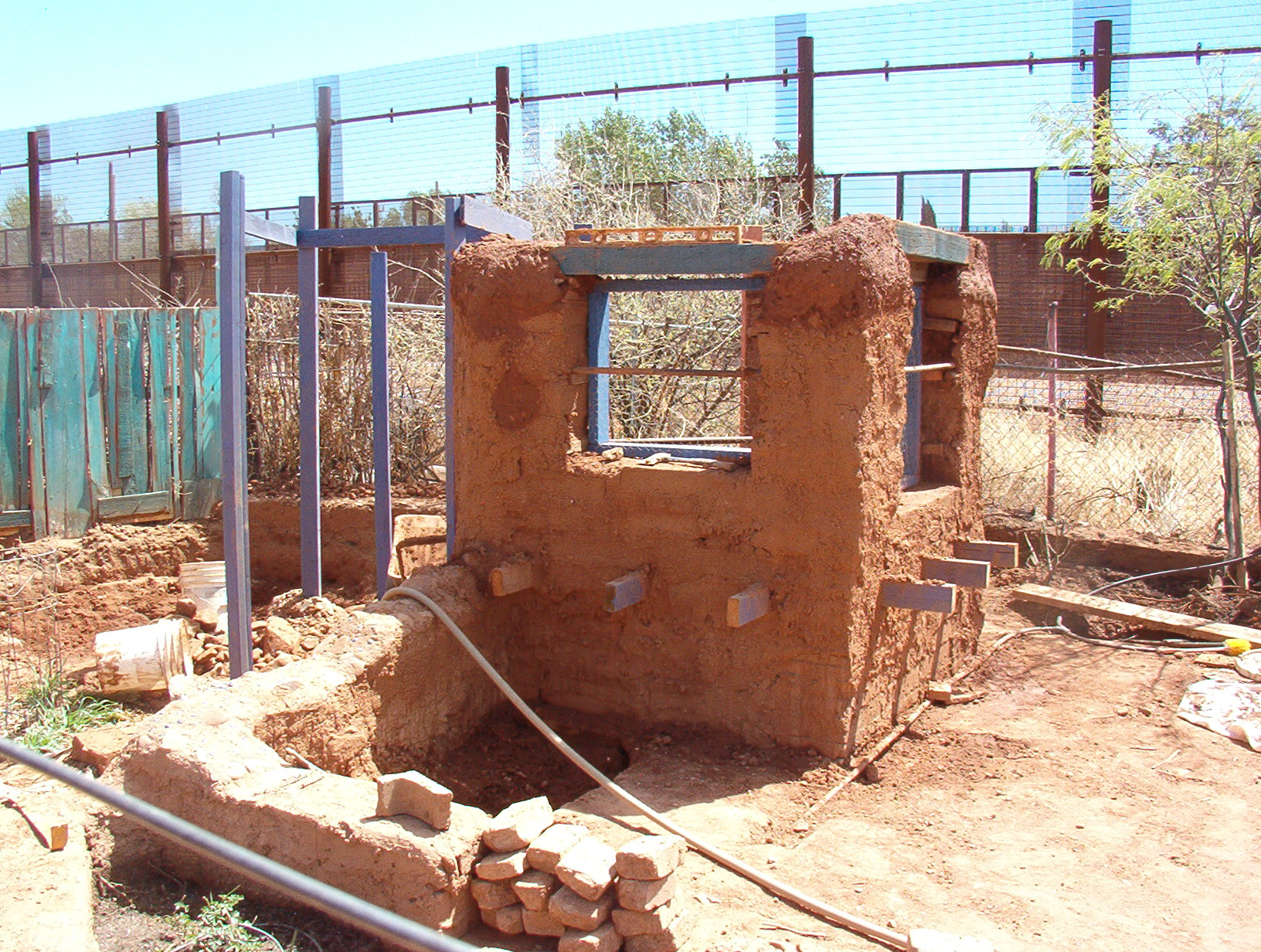
Today the window frames went in, covered with wire and placed behind bars that I thought might help keep out marauding animals intent on a chicken feast.  Not sure that idea will work out, but at least the bars add some structural strength into this little piece of mud work!

From the east.... Now up go the wood pieces over the openings
From the west....with what I hope are nearing the last of needed adobe blocks -- I am running out of dirt! They are drying on the cement slab where that old shed once stood. Of course I will have to go back and straighten walls by adding mud - NOT one for a plumb line - no way this thing's gonna fall down!
Good ole Mexican border fences...
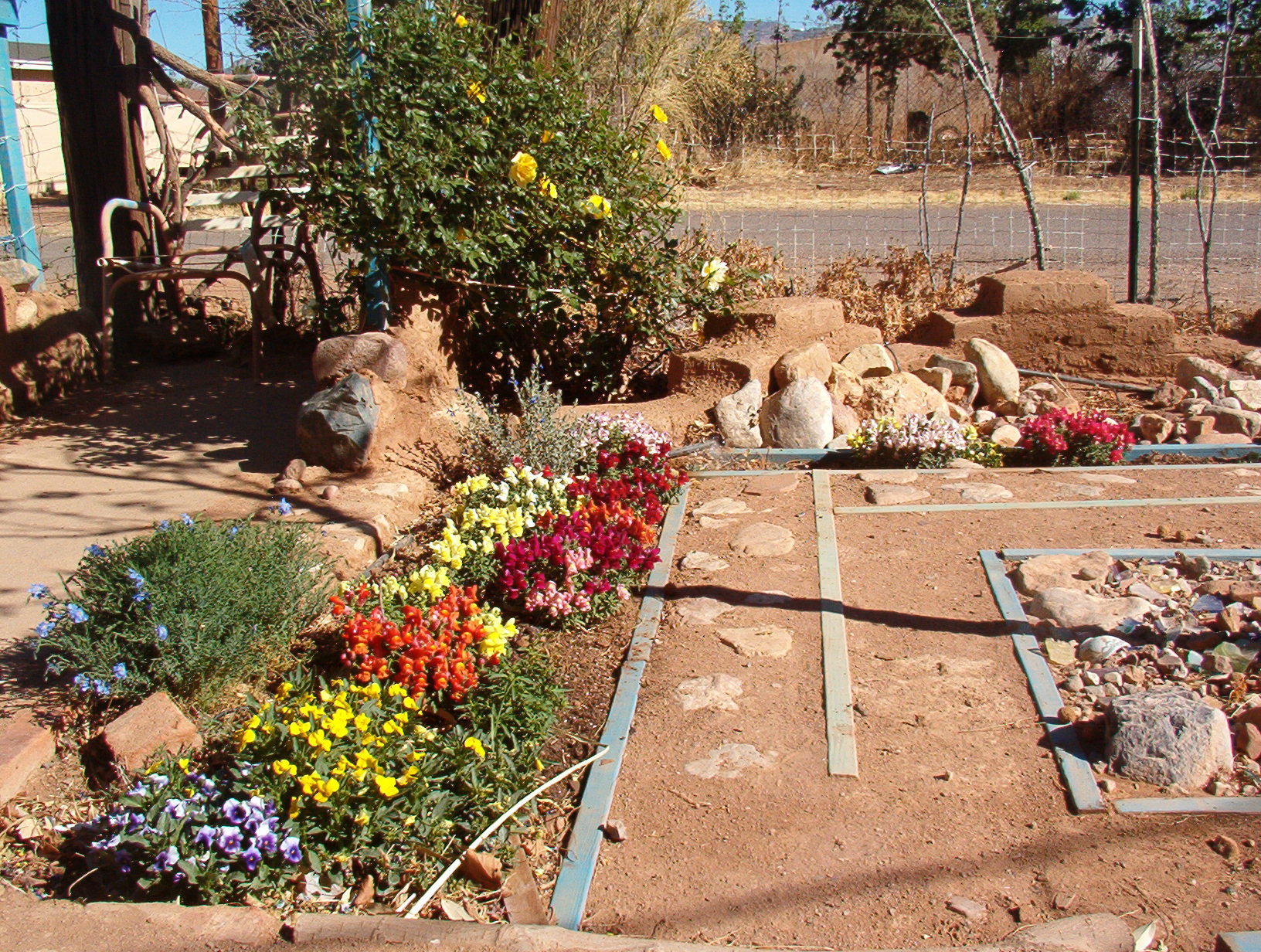
First of the front yellow rose blooms - along with the flowers that made it through that 2-below cold snap to resurrect and bloom!
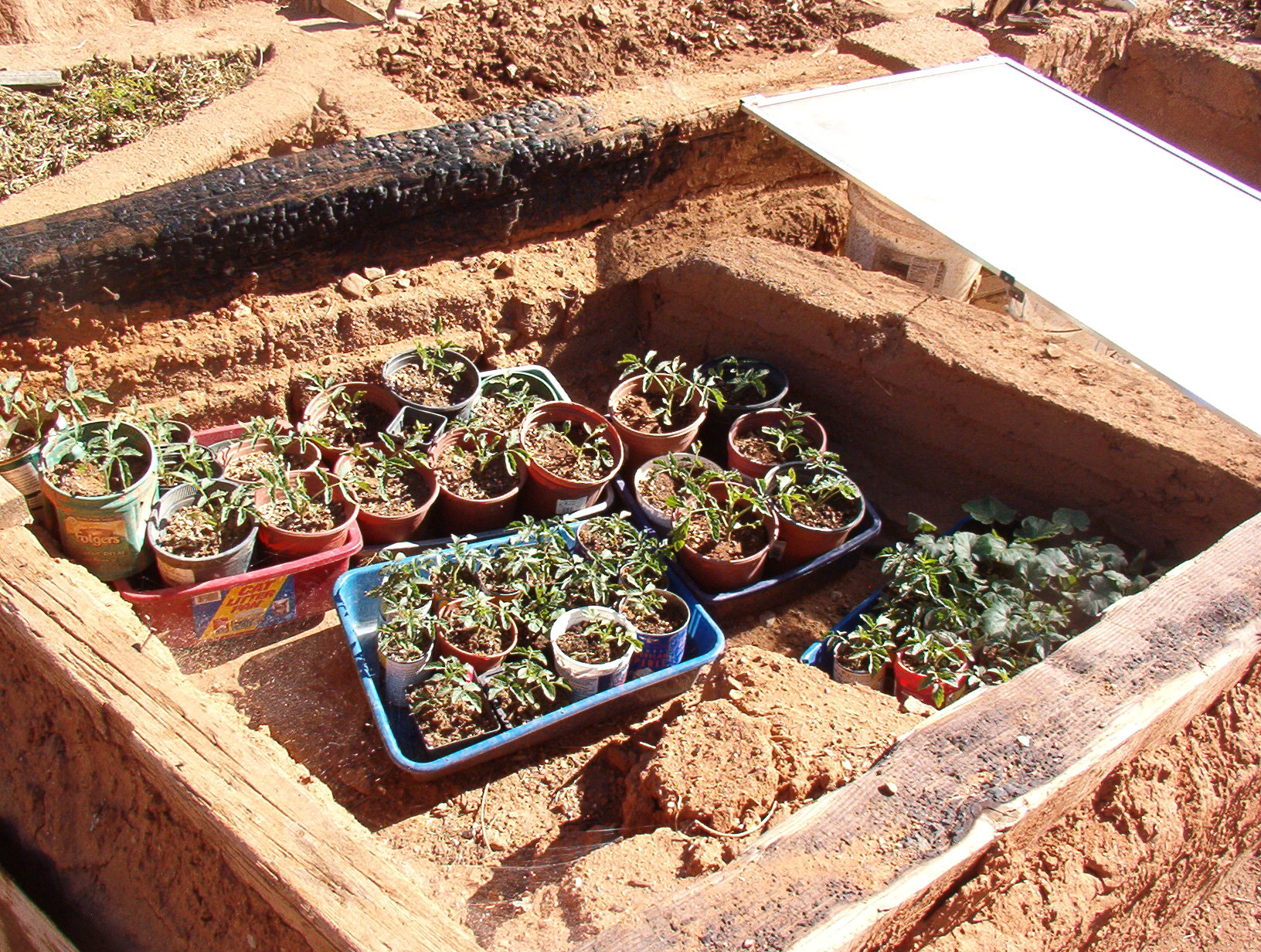
For now, happy 40 tomato plants. Not sure if the frozen-dead-rotting cactus I buried in my garden spots will be decomposed enough -- in time to plant! "Rot, cactus, ROT!"

+++++++++++++++++++++++++++

+AS DR. MARTIN TEICHER STATES — EARLY ABUSE, ALTERED BRAIN DEVELOPMENT AND THE SCARS THAT WON’T HEAL

+++++++++++++++++++++++++++++++++++

Sometimes I try to figure out how the kinds of altered brain development that happened to me through severe abuse and trauma especially during the early years of my growth actually FEEL like from the inside of me.  Today, as this poor parched and unusually dry earth sends back to me a dull hollow thumping sound when I send a stream of water from the hose upon it, I think about what it feels like to be that kind of thirsty.

I contrast that thought with the knowledge that too much water upon the earth is equally as harmful as too little is.  Then I find myself wondering, “Are the left brain hemisphere developmental changes abuse survivors experience a consequence of too much harmful experience or are they a consequence of too little positive experience?  Are the changes created by a combination of both, or are they created by something else entirely?”

Does anyone know?

While it might not be possible for the very earth that provides all life to experience both severe drought and severe flooding in the same place at the same time, as I read SCARS THAT WON’T HEAL: THE NEUROBIOLOGY OF CHILD ABUSE —By Martin H. Teicher I am beginning to understand that what he describes of the changes that happen to the developing brain of a traumatized infant-child in fact creates a similar – and therefore very possible – reality as the combined flooding and drought at the same time would be like.

++

I encourage readers to please take a look at this entire article by clicking HERE.  (It includes a mention toward the end about Borderline Personality Disorder, as well.)  I am going to skip down to the end of the article to post today what Teicher says in conclusion [I added underlining for emphasis]:

Adaptive Detriment

Our team initiated this research with the hypothesis that early stress was a toxic agent that interfered with the normal, smoothly orchestrated progression of brain development, leading to enduring psychiatric problems. Frank W. Putnam of Children’s Hospital MedicalCenter of Cincinnati and Bruce D. Perry of the Alberta Mental Health Board in Canada have now articulated the same hypothesis.  I have come to question and reevaluate our starting premise, however.  Human brains evolved to be molded by experience, and early difficulties were routine during our ancestral development.  Is it plausible that the developing brain never evolved to cope with exposure to maltreatment and so is damaged in a nonadaptive manner? This seems most unlikely. The logical alternative is that exposure to early stress generates molecular and neurobiological effects that alter neural development in an adaptive way that prepares the adult brain to survive and reproduce in a dangerous world.

What traits or capacities might be beneficial for survival in the harsh conditions of earlier times? Some of the more obvious are the potential to mobilize an intense fight-or-flight response, to react aggressively to challenge without undue hesitation, to be at heightened alert for danger and to produce robust stress responses that facilitate recovery from injury.  In this sense, we can reframe the brain changes we observed as adaptations to an adverse environment.

Although this adaptive state helps to take the affected individual safely through the reproductive years (and is even likely to enhance sexual promiscuity), which are critical for evolutionary success, it comes at a high price. McEwen has recently theorized that overactivation of stress response systems, a reaction that may be necessary for short-term survival, increases the risk for obesity, type II diabetes and hypertension; leads to a host of psychiatric problems, including a heightened risk of suicide; and accelerates the aging and degeneration of brain structures, including the hippocampus.

We hypothesize that adequate nurturing and the absence of intense early stress permits our brains to develop in a manner that is less aggressive and more emotionally stable, social, empathic and hemispherically integrated.  We believe that this process enhances the ability of social animals to build more complex interpersonal structures and enables humans to better realize their creative potential.

Society reaps what it sows in the way it nurtures its children. Stress sculpts the brain to exhibit various antisocial, though adaptive, behaviors.  Whether it comes in the form of physical, emotional or sexual trauma or through exposure to warfare, famine or pestilence, stress can set off a ripple of hormonal changes that permanently wire a child’s brain to cope with a malevolent world.  Through this chain of events, violence and abuse pass from generation to generation as well as from one society to the next.  Our stark conclusion is that we see the need to do much more to ensure that child abuse does not happen in the first place, because once these key brain alterations occur, there may be no going back.

+++++++++++++++++++++++++++++++++++

+’BAD MEDICINE’: PRETENDING EARLY ABUSE SURVIVORS HAVE AN ‘ORDINARY’ BODY

+++++++++++++++++++++++++

As my daughter and I prepare to write our book, it is so important to me that SHE understands what I mean when I tell her, “It’s NOT the individual specific details of what my mother did to me as contained in any story I could tell about my severely abusive infant-childhood that truly matter.  What matters MOST is what the trauma my mother caused me DID to change my physiological development.”  The article contained in my last post, +WHAT EARLY ABUSE/NEGLECT SURVIVORS MOST NEED TO KNOW (AND ARE LEAST LIKELY TO BE TOLD) is EXACTLY what I mean.  Yet the changes highlighted in that article are only the tip of the ‘trauma changed physiological development’ iceberg.

It is critical to me that what my daughter and I write will communicate that it isn’t the actual specific details of ANYTHING that happened to ANY of us as survivors that TRULY changed us — or our entire lives.  As a result of the physiological impact of the stress hormones our body was forced to create in us in response to trauma, abuse and neglect we ended up with a DIFFERENT body-brain with which we process every experience of our lives — then and now.

I personally believe it is criminal that early severe maltreatment survivors are NOT GIVEN THIS INFORMATION.  Everything any of us hope to achieve in the way of healing hinges upon how we learn about the trauma-changed body we live in/with so that we can identify how we are different from OTHERS who are not early severe maltreatment survivors.  We do NOT have the same body that they do — and EVERYONE needs to understand this fact — and what it means.

It is so easy for ‘professionals’ to ‘diagnose’ my ‘condition’ with labels and categories at the same time the important information about my trauma-changed physiological development is left completely out of the picture.  I am sorry, but the truth is that I have done amazingly well considering the changes my body-brain was forced to make!!  But simply suggesting something like “You have an anxiety disorder” does nothing to reflect my true reality.

Tell me, rather, what ‘limbic kindling’ really is, what it feels like, what it means to me from the INSIDE of my body.  Tell me what ’emotional dysregulation’ really is, what ‘the inability to self-sooth’ really is, what is really happening when my right brain, my left brain, and the region that processes information between them was built differently from ordinary under terribly traumatic and stressful conditions.

If there are practicing professionals out there that do not KNOW about the information such as Teicher’s article presents — and at this point this includes nearly ALL OF THEM —  then in my mind they are unethically applying inappropriate techniques AND MEDICATIONS to their clients.  These professionals — all of them including doctors — need to obtain the education about these facts before they EVER begin to treat early abuse survivors for ANYTHING!

Excuse me, but not only our lives but the quality of our lives depends on our being told when we ask for help what trauma altered development is, how and why it happens, what it means, and how we can live a better life with the trauma altered developmental changes that happened to us.

+++++++++++++++++++++++++

+WHAT EARLY ABUSE/NEGLECT SURVIVORS MOST NEED TO KNOW (AND ARE LEAST LIKELY TO BE TOLD)

++++++++++++++++++++++++++

This research article is over a decade old, but it contains the kind of information severe early abuse and neglect survivors MOST NEED TO KNOW and are LEAST LIKELY TO BE TOLD!  Please take a look:

McLean Researchers Document Brain Damage Linked to Child Abuse and Neglect

December 14, 2000 — Belmont, MA McLean Hospital researchers have identified four types of brain abnormalities linked to child abuse and neglect, providing the first comprehensive review about the multiple ways in which abuse can damage the developing brain.  In the Fall 2000 issue of Cerebrum, the researchers also review evidence that suggests this early damage to the developing brain may subsequently cause disorders like anxiety and depression in adulthood.

“The science shows that childhood maltreatment may produce changes in both brain function and structure,” says Martin Teicher, MD, PhD, director of the Developmental Biopsychiatry Research Program at McLean, and author of the paper.  Although a baby is born with almost all the brain cells (neurons) he will ever have, the brain continues to develop actively throughout childhood and adolescence. ”  A child’s interactions with the outside environment causes connections to form between brain cells,” Teicher explains.”  Then these connections are pruned during puberty and adulthood.  So whatever a child experiences, for good or bad, helps determine how his brain is wired.”

The McLean team identifies four types of abnormalities caused by abuse and neglect. “These changes are permanent,” says Teicher. “This is not something people can just get over and get on with their lives.”

Limbic irritability:

The limbic system is a network of brain cells sometimes called the “emotional brain.”  It controls many of the most fundamental emotions and drives important for survival.  The McLean researchers found evidence that abuse may cause disturbances in electrical impulses as limbic nerve cells communicate, resulting in seizures or significant abnormalities on an EEG, a diagnostic test that measures brain waves.  The researchers studied 253 adults who came to an outpatient mental health clinic for psychiatric assessment.  A little more than half reported being physically and/or sexually abused as children.  The researchers developed a checklist (the Limbic System Checklist-33 or LSCL-33) to determine how often the patients experienced symptoms similar to those that occur in patients with temporal lobe epilepsy.  They found that patients who experienced abuse scored much higher suggesting an underlying disturbance in the limbic system.  Follow-up studies of 115 children admitted to McLean were conducted to measure EEG disturbances.  Patients with a history of abuse were twice as likely as non-abused patients to have an abnormal EEG.  Interestingly, all of the extra EEG abnormalities affected the left hemisphere of the brain.  EEG abnormalities were associated with more self-destructive behavior and more aggression.

Arrested development of the left hemisphere:

The brain is divided into two hemispheres, with the left controlling language and the right responsible for visual-spatial ability, perception and expression of negative affect.  In six separate studies and analyses, the smallest involving 20 people and the largest involving 115, the researchers reviewed medical records, conducted neuropsychological tests to measure left- and right-brain abilities, examined the results of MRI scans to provide pictures of the brain at work, and studied the results of sophisticated EEG coherence tests, which provided information on brain structure as well as function.  These studies provide evidence of deficient development of the left brain hemisphere in abused patients, so that the right hemisphere may be more active than in healthy individuals. The researchers speculate that the left hemisphere deficits seen in abused patients may contribute to the development of depression and increase the risk of memory impairments.

Deficient integration between the left and right hemispheres:

The corpus callosum is a major information pathway connecting the two hemispheres of the brain.  The researchers reviewed MRI brain scans from 51 patients admitted to McLean’s Child and Adolescent Psychiatry Program, and compared them to 97 MRIs of healthy children obtained from the National Institute of Mental Health.  In abused children, the corpus callosum was smaller than in healthy children.  After reviewing the medical records, the researchers found that neglect was associated with a 24 percent to 42 percent reduction in the size of various regions of the corpus callosum in boys, but sexual abuse had no effect.  In girls, sexual abuse was associated with an 18 percent to 30 percent smaller size in the corpus callosum, but neglect had no effect.  They also found that abused patients shifted degree of activity between their two hemispheres to a much greater extent than normal.  They theorize that a smaller corpus callosum leads to less integration of the hemispheres.  This in turn can result in dramatic shifts in mood or personality.

Increased vermal activity:

The cerebellar vermis is a part of the brain that is involved in emotion, attention and the regulation of the limbic system.  The McLean researchers used a new functional MRI technique known as T2 relaxometry, which provides information about blood flow to the brain during a resting state, to measure vermal activity in both abused and healthy individuals.  Thirty-two adults participated, including 15 with a history of sexual or intense verbal childhood trauma but no physical trauma.  The higher a participant’s LSCL-33 score, the greater the degree of vermal activity or blood flow.  The researchers theorize that the abused patients had higher vermal activity in order to quell electrical irritability within the limbic system.  They hypothesize that the cerebellar vermis helps to maintain emotional balance, but that trauma may impair this ability.

After documenting these four types of brain abnormalities, the McLean researchers examined animal studies to determine how such damage might occur.  Such studies show that neglect and trauma increase production of cortisol and decrease production of the thyroid hormone, which affect development of neurochemical and neurotransmitter receptors in the hippocampus, amygdala and locus coeruleus, parts of the brain that regulate fear and anxietyBased on these studies, the McLean team theorizes that the stress caused by child abuse and neglect may also trigger the release of some hormones and neurotransmitters while inhibiting others, in effect remolding the brain so that the individual is “wired” to respond to a hostile environment.

“We know that an animal exposed to stress and neglect early in life develops a brain that is wired to experience fear, anxiety and stress,” says Teicher.  “We think the same is true of people.”

[All bold type and underlining is mine for emphasis!]

++++++++++++++++++++++++++